Barak Ravid Launders Deception To Allow Trump To Back Off Of His Power Plant Threat – Again
The Dissident | April 6, 2026
The Trump administration is seemingly creating another deception, claiming that Iran wants to give concessions to the United States to yet again back off on its threat to target Iranian power plants and bridges if they do not agree to open the Strait of Hormuz.
For context, Trump took to Truth Social and in an unhinged message wrote , “Tuesday will be Power Plant Day, and Bridge Day, all wrapped up in one, in Iran. There will be nothing like it!!! Open the Fuckin’ Strait, you crazy bastards, or you’ll be living in Hell – JUST WATCH!” later adding that this planned war crime will take place, “Tuesday, 8:00 P.M. Eastern Time!”.
Iran, remained defiant and did not give in to Trump’s threats, with the Iranian IRCG saying , “We have consistently declared that any aggression against civilian targets will be met with extensive responses against enemy interests anywhere in the region” adding that “any repeated attacks on civilian facilities will trigger a second stage of the operation, which will be far more forceful, doubling the losses for the aggressors” stating, “We reiterate: if you commit further acts of aggression against civilian facilities, our responses will be even more crushing”.
Just in time for Trump to back off from his threat against Iran, Axios journalist Barak Ravid-who was previously with Israel’s Unit 8200 and repeatedly launders U.S. and Israeli national security state propaganda and controlled leaks as news report- put out an article claiming that “The U.S., Iran and a group of regional mediators are discussing the terms for a potential 45-day ceasefire that could lead to a permanent end to the war, according to four U.S., Israeli and regional sources with knowledge of the talks.”
According to Ravid’s “report” “this last-ditch effort is the only chance to prevent a dramatic escalation in the war that will include massive strikes on Iranian civilian infrastructure and a retaliation against energy and water facilities in the Gulf states” and that “the mediators are discussing with the parties the terms for [a] two-phased deal; the first phase would [be] a potential 45-day ceasefire during which a permanent end to the war would be negotiated.”
But this “report” seems to be yet another deception laundered to allow Trump to back off on his threats – knowing that they did not work in scaring Iran into opening the Strait of Hormuz, and fearing Iran’s retaliatory strikes if Trump follows through.
As even Barak Ravid’s report acknowledges, “the mediators are highly concerned that the Iranian retaliation for a U.S.-Israeli strike on the country’s energy infrastructure would be destructive for Gulf countries’ oil and water facilities.”
Not The First Time
The most conclusive evidence that Ravid’s report was a deception through a controlled leak is that he previously laundered a fake news report to allow Trump to get out of his initial threat against Iranian Nuclear power plants.
On March 21st, Trump first wrote on Truth Social, “If Iran doesn’t FULLY OPEN, WITHOUT THREAT, the Strait of Hormuz, within 48 HOURS from this exact point in time, the United States of America will hit and obliterate their various POWER PLANTS, STARTING WITH THE BIGGEST ONE FIRST!”.
Iran did not give in to Trump’s threats, with Iranian military spokesman Ebrahim Zolfaqari saying , “If Iran’s fuel and energy infrastructure is attacked by the enemy, all energy infrastructure, as well as information technology (IT) and water desalination facilities, belonging to the US and the regimes in the region will be targeted pursuant to previous warnings”.
“In case of the slightest attack on the electricity infrastructure of the Islamic Republic of Iran, the entire region will go dark”, Mehr news, an outlet affiliated with Iran’s IRGC, warned, giving a list of targets which included:
Saudi Arabia
– The Village (near Al-Khobar): gas power plant (4,000+ MW)
– Ras Tanura (Sharqiya Province): major oil and gas facility / power infrastructureUnited Arab Emirates
– Barakah (Al Dhafra, Abu Dhabi): nuclear power plant (~5,600 MW)
– Jebel Ali (South Dubai): gas power and desalination complex (multi-GW capacity)
-Mohammed bin Rashid Solar Park (Dubai): large-scale solar power projectQatar
– Ras Laffan (north Qatar): gas power plant (one of the largest in Qatar)
– Umm Al Houl (south of Doha): gas power + desalination plant (multi-GW capacity)Kuwait
– Al-Zour South: oil and gas power plant
-Al-Zour North: combined-cycle power plant (multi-GW capacity)
– Shaqaya Energy Park (west Kuwait): solar and wind renewable energy complex
Realizing that Iran was not going to back down in the face of Trump’s threats and fearing Iran’s retaliatory strikes on Israel and the Gulf States – and it’s effect on the global economy – Trump came up with an excuse to postpone the strikes, taking again to Truth Social to say :
I AM PLEASED TO REPORT THAT THE UNITED STATES OF AMERICA, AND THE COUNTRY OF IRAN, HAVE HAD, OVER THE LAST TWO DAYS, VERY GOOD AND PRODUCTIVE CONVERSATIONS REGARDING A COMPLETE AND TOTAL RESOLUTION OF OUR HOSTILITIES IN THE MIDDLE EAST. BASED ON THE TENOR AND TONE OF THESE IN DEPTH, DETAILED, AND CONSTRUCTIVE CONVERSATIONS, WHICH WILL CONTINUE THROUGHOUT THE WEEK, I HAVE INSTRUCTED THE DEPARTMENT OF WAR TO POSTPONE ANY AND ALL MILITARY STRIKES AGAINST IRANIAN POWER PLANTS AND ENERGY INFRASTRUCTURE FOR A FIVE DAY PERIOD, SUBJECT TO THE SUCCESS OF THE ONGOING MEETINGS AND DISCUSSIONS. THANK YOU FOR YOUR ATTENTION TO THIS MATTER!
Iran, however denied that the talks were taking place at all, with Iran’s Press TV reporting that, “Iran has received messages through some friendly countries over the past few days regarding the US request for negotiations to end the ongoing war” but that “Iran has responded appropriately and based on the Islamic Republic’s principled positions” which includes demands for “a guarantee that war would never take place again, US military bases are closed in the region, and compensations are paid for damages inflicted on Iranian military and civilian structures.”
This was confirmed by journalists Jeremy Scahill and Murtaza Hussain, who reported that an Iranian official, off the record, confirmed that “there aren’t any negotiations taking place. The Iranian side has simply communicated its conditions to them, and even that has been done indirectly”.
Trump doubled down on this deception, claiming that he was negotiating with a “a top person” in Iran – who he would not name.
Aiding Trump in laundering this deception was none other than Barak Ravid.
In an article for Axios, Ravid claimed, “U.S. envoys Steve Witkoff and Jared Kushner had been in touch with the speaker of the Iranian parliament, Mohammad Bagher Ghalibaf” and that, “the mediating countries were trying to convene a meeting in Islamabad — with Ghalibaf and other officials representing Tehran, and Witkoff, Kushner and possibly Vice President Vance representing the U.S. — possibly later this week.”
But Mohammad Bagher Ghalibaf – Iran’s hardline speaker of parliament publicly rebuked the report, stating, “Iranian people demand complete and remorseful punishment of the aggressors. All Irainan officials stand firmly behind their supreme leader and people until this goal is achieved. No negotiations have been held with the US, and fakenews is used to manipulate the financial and oil markets and escape the quagmire in which the US and Israel are trapped.”
Iranian media noted that this deception was deployed because “Trump backed down from his threats after realizing that the country would target all power plants in West Asia, warning that any threat to Tehran would be met with a proportional and firm response.”
The most likely explanation behind the Axios report is that an increasingly desperate and mentally declining Trump believed sending an unhinged message on Truth Social would this time make Iran back down and open the Strait of Hormuz.
With Iran yet again remaining defiant against U.S. threats, Trump yet again feared Iran’s retaliatory response to American strikes on power plants and tapped Barak Ravid to deploy another deception that would allow him to postpone the threats yet again.
Hezbollah hits Israeli warship off Lebanon’s coast, sets it aflame
Press TV – April 5, 2026
Fighters from the Lebanese Hezbollah resistance movement have carried out an operation in retaliation for the Israeli acts of aggression against Lebanon, targeting a military vessel off the coast of the Arab nation before it could launch any hostile action.
According to a statement issued by the group on Sunday, Hezbollah members targeted an Israeli military ship 68 nautical miles off the Lebanese coast, stressing that the vessel was preparing to carry out its aggressions against Lebanese territory.
“The targeting operation was carried out with a naval cruise missile after monitoring the target for hours, and it was confirmed to have been directly hit,” the statement noted.
Hezbollah emphasized that the strike falls within the framework of Operation Devoured Straw, and in defense of Lebanon and its nation.
This came a day after the Lebanese resistance fighters conducted a total of 42 top-tier operations against Israeli positions, including military bases and illegal settlements.
Hezbollah said 20 operations out of those conducted struck enemy positions within the occupied territories, while 21 were carried out on Lebanese soil.
“The most distant operation reached a target located 15 kilometers beyond the Palestinian-Lebanese border,” the statement read.
Three more military operations were carried out during the early hours of Sunday, which included separate attacks on Israeli forces inside Lebanese territories or along the border settlements.
Israeli Channel 12 television channel has revealed that Northern Command chief Major General Ravil Milo admitted in a leaked closed-door meeting with settlers in Misgav Am that the regime’s military apparatus was “surprised” by Hezbollah’s ability to rebuild its strength.
According to the report, post-war assessments following the 2024 aggression on Lebanon that claimed Hezbollah had been neutralized were “overly optimistic.
Milo highlighted a widening gap between what the Tel Aviv regime believed after the war and the current situation on the ground, acknowledging that Hezbollah continues to maintain both presence and operational capabilities.
“They suddenly found that Hezbollah still exists,” he said, underscoring the persistence of the resistance despite previous Israeli assertions.
Iran slams US strikes on B1 bridge, Mahshahr petrochemical plants as ‘blatant acts of state terrorism’
Press TV – April 5, 2026
Iran’s Ambassador and Permanent Representative to the United Nations, Amir Saeid Iravani, has called on the UN to denounce the US-Israeli strikes on the B1 bridge and the Mahshahr petrochemical plants as blatant acts of “state terrorism” and”war crimes.”
“I wish to bring to the attention the grave breaches of international humanitarian law, acts of terrorism and war crimes perpetrated by the United States and the Israeli regime through the deliberate and indiscriminate targeting of civilian and critical infrastructure in Iran,” Iravani wrote in a letter addressed to Secretary-General of United Nations, António Guterres, and the President of the United Nations Security Council (UNSC), Jamal Fares Alrowaiei.
On Wednesday, the US airstrikes deliberately targeted the Karaj-Tehran Bl Bridge, a major civilian transportation artery connecting Tehran to its western suburbs.
This critical infrastructure was struck in multiple waves, resulting in its partial destruction and causing significant civilian casualties.
This heinous crime, openly acknowledged by US President Donald Trump in a public social media statement, was followed, on Saturday, by deliberate strikes on the Mahshahr Petrochemical Special Economic Zone in Khuzestan, a hub of Iran’s industrial and energy infrastructure employing a large civilian workforce, he continued.
These unlawful attacks were neither incidental nor spontaneous, according to Iravani.
They were preceded and accompanied by repeated, explicit and public threats made by Trump to deliberately target Iran’s civilian and critical infrastructure, he added.
On Wednesday, Trump brazenly threatened to “bring Iran back to the Slone Age” and to strike “each and every one of their electric generating plants very hard and probably simultaneously.”
These statements followed earlier threats on Monday to “blow up and completely obliterate” Iran’s critical infrastructure, including power plants, oil facilities, Kharg Island and desalination installations, as well as statements on March 21 threatening to “hit and obliterate” Iran’s power plants, he noted.
“The explicit, deliberate and systematic targeting of civilians and civilian objects, as well as the destruction of infrastructure essential to the survival of the civilian population, including electricity, water and energy systems, and other critical civilian facilities, constitutes a war crime and a blatant act of State terrorism, intended to terrorize and severely harm civilians,” Iravani emphasized.
Iran calls upon the Secretary-General of the United Nations, the Security Council, the United Nations High Commissioner for Human Rights, the International Committee of the Red Cross and all Member States of the United Nations to fulfil their legal and moral obligations by “Unreservedly and unequivocally condemn these deliberate and atrocious acts constituting war crimes and State terrorism, and take immediate, decisive and concrete measures to halt the ongoing criminal and unlawful acts of the US and the Israeli regime,” he stated.
Iravani demanded that the international community ensure that all those responsible are held fully accountable under international law, including Trump and the Prime Minister of the Israeli regime, Benjamin Netanyahu, for deliberately pursuing policies that result in war crimes and acts of state terrorism.
In letter to UN chief, Araghchi warns of dire consequences of US-Israeli attacks on Iran’s nuclear facilities
Press TV – April 5, 2026
Iran’s foreign minister has raised serious concerns over the adverse consequences of US-Israeli airstrikes on the Iranian civilian nuclear facilities, notably the Bushehr nuclear power plant, emphasizing that such attacks expose the region to the risk of radioactive contamination.
In identical letters addressed to the UN Secretary General Antonio Guterres and the members of the Security Council on Saturday, Abbas Araghchi said that the US-Israeli assaults on Iranian nuclear installations happen regardless of the fact that these facilities are devoted exclusively to peaceful purposes and are operating under the IAEA’s comprehensive safeguards regime.
“These unlawful attacks expose the entire region to the risk of radioactive contamination with grave humanitarian and environmental consequences, and as such shall not be left unattended,” the letters read.
Araghchi pointed out that Iran has experienced two wars of aggression within the span of nine months, imposed by the US, a depository of the Treaty of the Non-Proliferation of Nuclear Weapons (NPT), and Israel, an outlaw regime that remains outside the framework of the NPT.
He noted that Iran’s peaceful nuclear facilities were attacked and bombed in both instances, and with grave disappointment, the United Nations Security Council, the IAEA Board of Governors and its director general have flatly failed even to condemn the illegal attacks, let alone undertake effective measures within their mandate to prevent their recurrence.
“Now the US Senior officials, who label international humanitarian law as ‘stupid,’ have gained the audacity to state that nuclear facilities are among their targets,” the Iranian foreign minister wrote.
He stated that the US permanent representative to the United Nations has openly expressed that attacks against the Bushehr nuclear power plant are “not off the table.”
“Such recklessness is the direct consequence of the inaction of the United Nations and the agency regarding the manifest acts of aggression by the United States and the Israeli regimes, which have only emboldened the aggressors. This course of unlawful attacks inflicted an irreparable blow upon the credibility of the United Nations, the Security Council, the IAEA, and its safeguards system,” Araghchi stated.
The top Iranian diplomat said it is disturbing that since the beginning of the ongoing war on February 28, attacks on Iranian civilian nuclear facilities have been carried out without any outright condemnation being heard from relevant international bodies.
“The aggressors’ repeated strikes in the vicinity of the active nuclear power plant in Bushehr is extremely alarming; their proximity to an active nuclear facility constitutes an intolerable escalation entailing a grave risk of radiological release,” Araghchi said.
The Iranian foreign minister finally highlighted that should the Security Council and the Board of Governors of the IAEA remain indifferent in the face of a manifest illegal attack against Iran’s safeguarded nuclear facilities, the member states may lose confidence in the United Nations, the agency, and the broader non-proliferation regime will be further eroded. “The consequences of such inaction would not be confined to Iran,” he added.
The United States and Israel initiated a large-scale and unprovoked military campaign against Iran on February 28, assassinating Leader of the Islamic Revolution Ayatollah Seyyed Ali Khamenei and several high-ranking military commanders and civilians.
The aggression has comprised a series of intensive strikes on both military installations and civilian facilities throughout Iran, leading to considerable loss of life and widespread damage to infrastructure.
In response, the Iranian Armed Forces have carried out waves of massive missile and drone operations against US interests across West Asia and Israeli positions in the occupied territories.
Why the CIA conspiracy to invade Iran with Kurdish militias failed
By Robert Inlakesh | Al Mayadeen | April 5, 2026
At the beginning of the US-Israeli War on Iran, stories were circulated about the United States attempting to use Kurdish militia groups in order to wage a ground offensive against Iran. Yet the strategy never ended up getting off the ground. Understanding the context helps explain what happened
On February 22, just prior to the joint US-Israeli war of aggression against Iran, five Kurdish-Iranian militant factions held a conference declaring a historic unity agreement had been reached. As a result the Democratic Party of Iranian Kurdistan (PDKI), Kurdistan Free Life Party (PJAK), Kurdistan Freedom Party (PAK), Khabat Organization of Iranian Kurdistan, and a branch of the Komala Party of Iranian Kurdistan came together. They declared themselves the Coalition of Political Forces of Iranian Kurdistan (CPFIK), explicitly to fight against the Islamic Republic of Iran.
For long, Tehran had argued that these groups were being backed by the Western and Israeli intelligence agencies. However, journalists also adopting this analysis were often framed as being conspiracy theorists. That was, of course, until a few days into the US-Israeli war on Iran, when it emerged that the Trump administration was openly in talks with them, encouraging an invasion of Iran’s Western borders.
Then came the bombshell report from CNN, whose sources alleged that the CIA had been covertly working to arm these Kurdish-Iranian groups based in Iraq. So, at this stage, and shockingly so, there is no conspiracy to unravel as it has already been exposed.
What would such an invasion look like?
As has become evident, regime change in Iran is not going to be possible through a campaign from the air alone; the natural next step to achieving this was always going to be creating an insurgency inside the country, whilst invading from without also. In the US’s alleged strategic thinking, a Kurdish invasion would ideally work to foster a wider uprising inside the country, thus creating a general environment of chaos and division.
However, bringing about such a predicament was not going to come easy. In January, the Israeli Mossad attempted to foster an armed uprising that would trigger a civil war. Iran managed to put this bloody assault down with overwhelming force in just two or three days, a conflict which cost the lives of 3,117 people, including hundreds of policemen and security force members.
Initially, this uprising sought to use paid agents from criminal groups in the West of Iran and there was some evidence that Kurdish militia groups were used to clash with the Iranian security forces, but this was quickly quelled. In fact, in 2022, when the death of Mahsa Amini triggered nationwide protests, Western intelligence agencies jumped on the opportunity to use Kurdish separatist groups, but failed to achieve their desired objectives.
In Iraq, the US, and later the Israelis, also worked alongside Kurdish forces in order to secure the control of oil resources and successfully created the semi-autonomous Iraqi-Kurdistan region, complete with its own Kurdish government. The same came in north-eastern Syria, where the US helped set up what was known as the Syrian Democratic Forces (SDF), using them to fight back ISIS and claim control of not only Syria’s oil fields but the most fertile agricultural land in the country.
Unfortunately, Kurdish nationalism has always been promoted by the United States, and before it the British, dating back to the 1920’s, in a way that enables them to use the Kurdish minority populations of the region to do their bidding. Although these Kurdish nationalist groups, who seek to build separatist regions in Iraq, Syria, Iran and Turkiye, proudly believe that their groups are fighting for a noble cause, they almost always end up causing more harm to the Kurdish populations and those around them.
This is not to comment on the historical or moral validity of Kurdish nationalism and their struggle for statehood, instead it is a factual assessment. Take for instance the recently dissolved Kurdish autonomous region project in north eastern Syria, what the US-backed SDF called Rojava. In 2015, the United States armed and funded them to fight against ISIS, promising them a bright future in return for their sacrifices on the battlefield.
Eventually, the Kurdish-led SDF, which ruled over a majority Arab territory, managed to seize the area of Afrin, towards the north-west of Syria. Turkiye, which views almost every Kurdish group as a terrorist organisation and/or threat, decided in 2018 to launch “Operation Olive Branch”, crushing the SDF and seizing that territory for themselves, handing it over to their own proxy forces. What did the US military do to help them? You guessed it, they ran away and deserted their Kurdish allies.
In 2019, Turkiye then launched “Operation Peace Spring”, seizing a strip of north-eastern Syria from the SDF and using their Al-Qaeda linked proxy forces called the “Syrian National Army” (SNA) to hold on to that land. Again, the US deserted their Kurdish allies. Despite this, the SDF crawled right back to their US backers and refused to reach an agreement with the then government of Bashar al-Assad.
When Assad was overthrown in December of 2024, there came a significant threat to many Kurdish-Syrians and more specifically the longevity of the SDF’s rule in north-eastern Syria. Syria’s new ruler, Ahmed al-Sharaa (formerly known as Abu Mohammed al-Jolani while he led Al-Qaeda in Syria), decided to lead an offensive against the SDF to recapture the north-eastern portion of the country and place it under Damascus’s rule.
In January of 2026, after the US again deserted the Kurdish movement at the moment of truth, the SDF’s rule fell, and al-Sharaa took over north-eastern Syria. Why? Well, it’s very obvious: the US had only been using the Kurdish group as a proxy to withhold Syria’s oil and agricultural resources from it, until the government of Bashar al-Assad was toppled. Once regime change was accomplished, al-Sharaa was invited to the White House, and his Al-Qaeda and ISIS history was ignored.
See, the US never cared about the Kurds, nor did the Israelis, because both had covertly, and in some cases overtly, supported al-Qaeda linked groups in Syria also- playing both sides.
Although tragic, history shows us that it is very likely that Kurdish militant groups are used to do the West’s bidding, with promises of securing their own interests that never materialise. Therefore, it was always safe to assume that this would be attempted again. This time, however, the chance they had was extremely slim, and the consequences of such action even threatened the collapse of the Iraqi-Kurdistan project altogether.
The Kurdish groups in Iran cannot likely inspire a general uprising inside the country, this is for a number of reasons. The Kurdish population is considerable, numbering around 10 million of Iran’s 92 million strong population, yet they are not all hellbent on destroying the government, this is simply propaganda, most are normal people living their lives. These hostile Kurdish groups are based primarily in Iraq, in terms of their militant numbers, meaning that their forces inside Iran would have been overwhelmed from the jump.
Then there was the issue of the Iraq-Iran border, which had already been fortified and is where the Iranian military has deployed assets and soldiers to guard against an anticipated assault. But before they even reach the Iranian side, where they would have been greatly outnumbered, they would have to face off against Iraqi groups that are aligned with Iran. In total, these Iraqi groups – under the Popular Mobilisation Units (PMU) – constitute a force of around 250,000 fighters if fully mobilised.
In order for such an assault to succeed in creating an uprising in Iran, or inspire other armed factions from other minority groups in the country – like the Lors, Arabs or others – to begin taking action, they would need to at least see results.
Even if the Kurdish factions were to hypothetically seize some territory, Iran is such a massive country that the temporary loss of towns and villages wouldn’t be such an issue. That’s the best case scenario for these groups, assuming they get past the Iraqis – in addition to the Iranian Islamic Revolution Guards Corps (IRGC)’s drones and missiles – first. If anything, such an offensive would have been destined to trigger an enormous backlash against the Kurdish regional project, rather than do it any good.
As for the idea of this leading to Balkanisation, it is not something that appears to be possible in the foreseeable future. This is not to say that Tel Aviv and Washington won’t try. Yet, the Iranian opposition is so incredibly divided – territorially and ideologically – that the ability for groups to work together is also scarce.
Take for example the Iranians who support Israeli puppet Reza Pahlavi. These are hardline Persian Nationalists who believe that they are a superior ethnicity to Kurdish people, Afghans, Arabs and so on. Under the rule of the deposed Shah of Iran, whose son is now worshipped in a cult-like fashion by a small but vocal minority of Iranians [especially in the diaspora], the non-Persian groups inside the country were enormously undermined and discriminated against.
In fact, under the Islamic Republic, the minorities fare much better than they have under the Pahlavi monarchs and those Shahs that came before them. Their conditions are by no means perfect, and there are often complaints that the centre of Iran is prioritised by the government, which is where the majority of ethnic Persians are situated, yet there is simply no comparison between the way they are treated under the current Islamic rule and that of the previous leaderships.
In conclusion, the options for creating a Syria-style civil war in Iran were always much lower than was being claimed by some commentators, or had been presented by pro-war think tanks in Washington. As Iran is under attack, and atrocities are being carried out against civilians on a daily basis, this has worked to make the nation’s people rally behind the flag, rather than embark upon bloody sectarian revolts.
Another key factor to understand here is that the Islamic Republic is clearly holding its own against the world’s top military superpower and the region’s most advanced military. This in itself makes small militant groups more hesitant to take action. Having said this, the US and Israelis appear to be willing to sacrifice all their proxies in a bid to achieve regime change, or at least inflict a significant blow, this time around, so it is never an impossibility that some desperate action may still be ordered at some stage.
Washington University removes professor who condemned US-Israeli war on Iran
Press TV – April 5, 2026
The University of Washington has removed a professor from his role as director of its West Asia Center after he criticized the illegal US-Israeli aggression against Iran and condemned Zionism.
Aria Fani, who will remain an associate professor at UW’s Jackson School of International Studies, said the new interim, Daniel Hoffman, told him last week he was fired from his leadership role at the West Asia Center.
Fani, who was born and raised in Iran and came to the US when he was 18 years old, said he was hired for his research on Iran. However, he told the Times that he now feels “profoundly hurt and betrayed” by his removal.
“There is a chilling effect on not just my academic freedom, but that of my colleagues; anyone who dares to speak out against the war and against aggression,” he said.
In a separate interview on Friday with My Northwest, Fani said he was removed “for improper use” of the center’s listserv, an email application.
“I sent out two memos about this atrocious war on Iran in which I offered historical analysis that’s lacking in the media,” Fani said.
“I was told that my email made ‘certain constituents feel attacked.’ By certain constituents, I assume the university means Zionists who would like to keep bombing every Middle Eastern country and continue dehumanizing their people.”
Last July Fani told the Daily UW, a student newspaper, that President Donald Trump’s militaristic foreign policy is not making the world safer.
“If you tell the dozens of children that were killed in Israeli bombardment… in Iran, or the families of the nuclear scientists who were just wiped out, I hardly imagine they would say that the world is a more peaceful place,” he said amid the first round of US and Israeli airstrikes on Iran.
Since then, many more Iranian children have been killed by US and Israeli bombing, including more than 100 students who were among around 175 people massacred in the February 28 US missile strike on a girls’ school in Minab.
“The [only] peace this secures is for weapons manufacturers, for oil companies, for drone companies,” Fani said in an implicit rebuke of Trump’s claim to be the “president of peace.”
“It secures peace for them, fills their pockets with money, and makes them fully invincible,” he added. “It’s creating a class of people that are living [on] an alternate planet.”
The US and Israel launched an unprovoked aggression against Iran in late February, by attacking 30 targets across Tehran and assassinating the Leader of the Islamic Revolution, Ayatollah Seyyed Ali Khamenei, along with several senior Iranian officials.
Since then, Iranian armed forces have retaliated strongly by launching barrages of missiles and drones at Israeli-occupied territories, as well as US bases across the region.
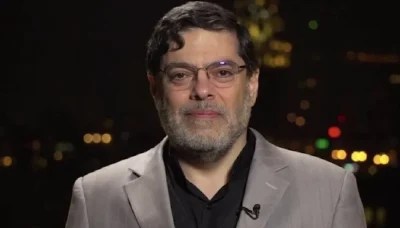
Al Mayadeen voices solidarity with Dr. Marandi amid death threats
Al Mayadeen | April 5, 2026
Al Mayadeen Media Network has expressed full and unwavering solidarity with Professor Mohammad Marandi in response to online campaigns openly calling for his assassination.
Professor Mohammad Marandi, a distinguished Iranian academic with global recognition, has been targeted by pro-Israeli accounts on X, including a verified account that posted a $1 million bounty explicitly calling for his assassination.
Despite repeated requests for the post’s removal and the suspension of the account, the platform and its CEO, Elon Musk, have taken no action.
Al Mayadeen characterized the spread of such content on global media platforms as ‘blatant, intelligence-driven terrorism,’ expressing profound outrage and disbelief that US-owned media outlets would permit calls for the extrajudicial killing of academics and scientists.
The network condemned these assassination threats as a manifestation of ‘cowboy-era barbarism,’ underscoring that Professor Marandi wields only his voice and his commitment to independent thought.
Al Mayadeen further highlighted the stark hypocrisy in permitting such threats against a peaceful academic while systematically curtailing the voices of those associated with resistance movements.
Call for global solidarity
Al Mayadeen called on the global academic, scientific, and media communities to publicly support Dr. Marandi and condemn the policies of major digital platforms that tolerate incitement to violence while suppressing legitimate expression.
The network warned that such practices foster a perilous environment in which intimidation and assassination threats can flourish unchecked.
“The threats against Professor Marandi are a stark example of how media platforms enable terror under the guise of free expression, while silencing those who challenge the status quo”, Al Mayadeen stated.
Professor Mohammad Marandi continues to be a leading authority on Iranian and regional affairs, and Al Mayadeen reaffirmed its commitment to safeguarding his right to speak freely, free from threats of violence or state-orchestrated harassment.
US dismantling international law in its war against Iran while claiming ‘false’ victory: Legal scholar
Press TV | April 4, 2026
The Trump administration is declaring “false victory” in its war of aggression against the Islamic Republic of Iran while actively dismantling international humanitarian law (IHL), says a legal scholar at Queen’s University Belfast.
In an interview with the Press TV website, Alannah Travers, a PhD student at Queen’s University Belfast School of Law, said the US President Donald Trump’s warning to “bomb Iran back to the Stone Age” reveals a dangerous disregard for legal norms.
She noted the irony that Iran was actually a cradle of innovation during the real Stone Age.
“Listening to President Trump declare a false victory (yet again) while simultaneously threatening to bomb a nation of 90 million people back to the Stone Age made me think of what legal scholars have termed the ‘warification’ of international humanitarian law,” Travers said.
Travers’ PhD is on Algorithmic Warfare and Civilian Harm – working with the Ceasefire Centre for Civilian Rights, an international initiative to develop civilian-led monitoring of violations of international humanitarian law or human rights; to secure accountability and reparation for those violations; and to develop the practice of civilian rights.
She pointed to Trump’s explicit threat to destroy “each and every” electricity-generating plant in Iran as a clear signal that his administration views the Geneva Conventions as optional. Under Article 52 of the 1977 Additional Protocol I to the Geneva Conventions, civilian objects such as power plants and bridges must be protected.
“By targeting infrastructure essential for meeting the basic needs of tens of millions of Iranian civilians, the administration is moving towards a campaign of collective punishment with the sort of reverberating effects IHL once sought to prevent,” she said.
Travers also condemned the US military’s practice of housing troops in hotels in the Persian Gulf countries, calling it a breach of IHL that effectively uses local civilians as human shields.
Thirty-five days into the unprovoked and illegal war on Iran, Travers said it was difficult to identify any legitimate American war goals.
Instead, she pointed to measurable destruction: over 15,000 strikes, at least 1,900 killed, 20,000 injured, more than 600 schools hit, and 60 hospitals damaged – including the Pasteur Institute, which had been working on global health security.
“Are these, then, the war goals?” she asked. “Rather than neutralizing a threat, the US and Israel have waged war against civilian infrastructure.”
She noted that 2,100 children had been killed or injured by day 23 of the war, an average of 87 per day, including over 170 children at a school in southern Iran’s Minab city.
Travers said the US and Israel have fallen for their own fantasies about superior AI-driven military technology, comparing the miscalculation to the lead-up to the 2003 invasion of Iraq.
“It’s the same racist miscalculation that paved the road for the 2003 invasion of Iraq,” she said. “Most citizens of the region could explain it far better than I, having lived this violent ignorance with their bodies.”
She slammed Washington over institutionalized ignorance bordering on “overt racism and colonial arrogance,” particularly in its surprise that Iran’s retaliation has persisted for 34 days.
Travers referenced an open letter from over 100 legal scholars challenging the US and Israel’s conduct, noting there was no credible evidence of an imminent threat to justify a “self-defense” claim made by officials in Washington and Tel Aviv.
The letter also raised alarms about War Secretary Pete Hegseth’s “gloves off” approach, which has included removing senior military lawyers and weakening IHL compliance.
Travers also highlighted rare public rebukes from Catholic leaders. Pope Leo has condemned the US and Israel, saying God rejects the prayers of leaders whose “hands are full of blood.”
Archbishop Timothy Broglio, head of the US Military Services since 2008, publicly rebuked Hegseth’s theology, telling troops to minimize participation in what he called an unjust war.
“When I met Broglio in January, my impression was he took a far more conservative view,” Travers said. “That he is now so clearly troubled is extremely telling.”
Travers also condemned Israeli military affairs minister Israel Katz’s vow to bring “Gaza-like destruction” to Lebanon, as well as Israel’s refusal to acknowledge its status as an occupying power.
She said that by keeping southern Lebanon in a state of perpetual armed conflict, Israel falsely claims military necessity under Article 53 of the Fourth Geneva Convention to justify forced displacements – a breach of Article 49.
“There is no such thing as a legal buffer zone on sovereign foreign soil,” she said. “These are more war crimes.”
Travers concluded that the lack of accountability in Palestine has directly enabled the current lawlessness across Iran, Lebanon, Iraq, and the Gulf. She called on the international community to move beyond “concerned statements” and take action.
“The Iranian people are navigating their survival in this crazed and lawless war amid their own domestic repression,” she said. “They deserve so much better. We have to stop this senseless war and ensure that those who waged it will face the full consequences of their illegal action.
One martyr, 5 injuries in US attack on Iraqi border crossing with Iran
Al Mayadeen | April 4, 2026
On Saturday, Major General Omar Al-Waeli, head of the Iraqi Border Ports Authority, confirmed the martyrdom of one person and injuries to five others following an attack on the Shalamcheh border crossing with Iran.
Al Mayadeen’s correspondent in Basra reported that movement at the crossing has been completely suspended, adding that US warplanes targeted the Iranian passport hall at the border point.
Since the onset of the US-Israeli war on Iran, American attacks have relentlessly targeted Iraq, including Popular Mobilization Forces (PMF) units and centers.
PMF martyr, injruies in US attack earlier today
Earlier today, the PMF reported that its 45th Brigade, part of the Jazira Operations Sector, was attacked at the al-Qaim border crossing. The assault left one PMF member martyred, four others injured, and one Ministry of Defense employee wounded.
In response to the repeated aggression, the Iraqi Cabinet directed the armed forces and the Popular Mobilization Forces to defend themselves and respond to any attacks on their positions.
The cabinet also instructed the Ministry of Foreign Affairs to submit an official complaint to the UN Security Council, condemning the attacks and demanding they be stopped.
Iraqi Resistance calls for action against US-Israeli regional allies
Similarly, the Iraqi Resistance Coordination Committee praised the Iraqi people’s positions in support of the Axis of Resistance, while calling for punitive measures against countries that enable US-Israeli aggressions in the region.
In a statement, the Committee said that “the alignment of the rulers of Jordan, Saudi Arabia, and the UAE with the criminality of the Zionist-American enemy against the Islamic Republic and their betrayal of the honorable free people of Iraq represent the height of baseness and vileness.”
It stressed that this “requires a firm deterrent response from the Iraqi government,” adding that such measures should begin with “punishing Jordan in particular, as it serves as a launch point for enemy aircraft targeting the fighters of the Popular Mobilization Forces and Iraqi security forces,” calling for “the complete closure of the land border crossing and the suspension of Iraqi oil grants.”
The Committee also stated that the Iraqi Resistance has avoided harming Kuwait’s economic interests and infrastructure while targeting US forces in the country. It further called for avoiding harm to Qatar’s interests, excluding US bases, “in appreciation of Doha’s responsible positions toward the Palestinian cause and the Axis of Resistance.”
‘This war is Israel’s war’: World facing ‘security breakdown’, says Qalibaf
Press TV – April 4, 2026
Iran’s Parliament Speaker Mohammad Baqer Qalibaf says the ongoing aggression is “Israel’s war,” adding that its security repercussions and resulting losses have extended beyond the region and affected the wider world.
“This war is Israel’s war, and the resulting security breakdown and losses have affected the world,” Qalibaf said in an interview with Al Jazeera Arabic.
He added that Iran has prepared for this confrontation and proven its ability to defend itself.
“Iran was forced to target US bases and interests in the region to preserve its presence,” he said, warning that any further escalation against Iran “will be met with a decisive and broad response” directed at US interests.
According to Qalibaf, maintaining stability in the region serves the interests of all regional states, and Iran considers sustainable security a priority.
He added that countries in the region are capable of safeguarding their interests through bilateral and multilateral security arrangements “without foreign interference.”
Qalibaf further said that the key sources of regional instability must be addressed, emphasizing that security should be established “without the involvement of the United States and Israel.”
The US and Israeli regimes launched their military aggression against Iran in late February by attacking 30 targets across Tehran, assassinating Leader of the Islamic Revolution Ayatollah Seyyed Ali Khamenei and several senior Iranian officials.
Since then, Iranian armed forces have retaliated strongly by launching barrages of missiles and drones at Israeli occupied territories as well as US bases across the region.
IRGC decries attack on US embassy in Riyadh, says executed by ‘Israel’
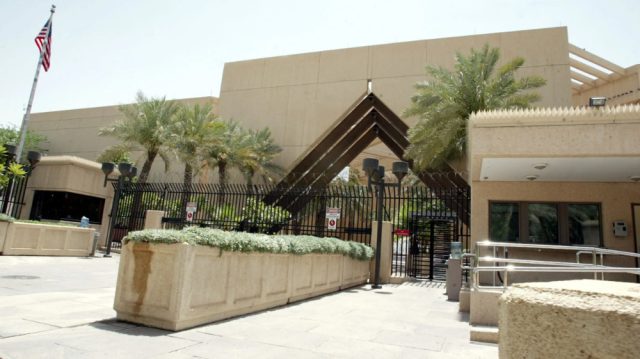
The US Embassy in Riyadh, Saudi Arabia (File photo by AFP)
Al Mayadeen | April 4, 2026
The Islamic Revolution Guard Corps’ (IRGC) has rejected accusations that it was responsible for an attack on the US Embassy in Riyadh, Saudi Arabia, emphasizing instead that it was a false flag operation carried out by the Israeli entity.
In Statement No. 54 of Operation True Promise 4, the IRGC’s Public Relations Department condemned the attack on the embassy, which was reported by The Wall Street Journal, stressing that, recalling the Israeli occupation’s regional strategies, “this action was certainly carried out by Zionists.”
The IRGC confirmed that the Iranian Armed Forces’ target list has been clearly identified, adding that Iran had already informed neighboring countries of the necessary warnings to “prevent further escalation.”
The IRGC also warned that West Asia “must remain vigilant against provocations from the American–Zionist current,” which aims to destabilize and destroy the region.
A series of false flags
Iran has repeatedly stressed that its operations target US-Israeli military assets and affiliated infrastructure in the region and across the occupied territories in Palestine, quickly pointing out false flags and highlighting ongoing enemy attacks that seek to disturb regional harmony.
It has also delineated target lists for its tit-for-tat retaliations for attacks on its civilian infrastructure, including US assets in the region. The US embassy in Riyadh was not among them.
Only yesterday, the IRGC condemned the targeting of water desalination plants in Kuwait, asserting that the Israeli entity “is behind this cowardly act of aggression aimed at sowing discord.” On Monday, a Kuwaiti power and desalination plant was also struck, killing an Indian worker and causing significant material damage.
Kuwaiti authorities were quick to attribute the attack to Iran, but Tehran squarely denied involvement and blamed “Israel,” with the spokesperson for Iran’s Khatam al-Anbiya Central Headquarters describing the incident as “evidence of the enemy’s depravity and malice,” saying it forms part of broader efforts to inflame tensions and undermine regional stability.
Similarly, following a fire at Saudi Aramco’s Ras Tanura refinery in early March, an Iranian military source told Tasnim News Agency that the attack was “an Israeli false flag operation” aimed at distracting regional countries from “Israel’s” strikes on civilian sites inside Iran, stressing that “Aramco facilities have not been among the targets of Iranian attacks so far.”
Iran blasts EU hypocrisy as EU invokes international law over Hormuz
Al Mayadeen | April 4, 2026
The Iranian Embassy to the United Kingdom has vehemently censured the latest remarks by the Chief of European diplomacy Kaja Kallas, sharply criticizing the double standards of Western countries regarding the unprovoked US-Israeli war against the Islamic Republic.
The diplomatic mission in a post on X wrote: “‘International law’? That’s rich. What does it say about US & Israeli regimes military aggression against sovereign states and assassinating their leaders? About the Minab school attack that killed 170 students?”
“Or attacks on civilian infrastructure, pharma factories, desalination plants?” the post added.
Taking a swipe at the EU’s top diplomat, the embassy said it is ridiculous that “international law” only seems to matter when it fits “your narrative.”
“You never hold aggressors accountable, only the victims,” the Iranian embassy added.
Kallas invokes law over Hormuz
On Thursday, Kallas thanked British Secretary of Foreign Affairs Yvette Cooper for convening a call of more than 40 countries on the closure of the Strait of Hormuz.
“This waterway is a global public good. Iran cannot be allowed to charge countries a bounty to let ships pass. International law doesn’t recognize pay-to-pass schemes,” she asserted in a post on X.
She further claimed that the EU’s Aspides naval mission has already assisted 1,700 ships in the Red Sea and must be scaled up. “We cannot afford to lose another critical trade route,” Kallas commented.
UK double standards
Weeks ago, Iran’s Foreign Minister, Abbas Araghchi had warned the United Kingdom that permitting the United States to use British military bases amounts to “participation in aggression.”
In a phone call with Yvette Cooper, Araghchi criticized Britain’s “negative and biased approach” toward ongoing US-Israeli military actions against Iran. He also condemned London’s decision to grant the US access to key military installations for operations targeting Iranian missile sites.
British Prime Minister Keir Starmer had authorized the use of RAF Fairford in Gloucestershire and the Diego Garcia base in the Indian Ocean for what British officials framed as “defensive” strikes against Iranian positions.
In a statement posted in Farsi on Telegram, Araghchi said he had conveyed to Cooper that such actions “will definitely be considered as participation in aggression and will be recorded in the history of relations between the two countries,” adding that Iran “reserves its inherent right to defend the country’s sovereignty and independence.”
Featured Video

Genocide-linked firm handles Britons’ NHS data
or go to
Aletho News Archives – Video-Images
Book Review
Book review: Boiling Point, How America Brought War to Ukraine
By Tim Kirby | Strategic Culture Foundation | November 14, 2026
Did Vladimir Putin just wake up one day on the wrong side of the bed and decide to invade Ukraine in February of 2022 or is there a lot more to this single decision that has been reshaping the 21st century geopolitical landscape?
Obviously, from the way that I just posed the question you can see that I am on the side that views the causes for the war in Ukraine to be very deep, long-term, historical and consciously nefarious, and most importantly, not from within the halls of the Kremlin. So it was a pleasure to take a look at the book “Boiling Point, How America Brought War to Ukraine” by author Stephen Kinzer, who like myself, also believes that the real reasons behind military conflicts around the world are not what CNN and the BBC have been telling you. The main thesis of this book was stated clearly by its creator; the war “may have been illegal, but it was definitely not unprovoked.” … continue
Blog Roll
 Aletho News
- NATO cancels 2027 leaders’ summit
- IAEA’s politicized use of safeguards undermines its impartiality: Russian envoy
- UK must be ready to strike Russian Arctic – ex-PM
- Fico’s Two Red Lines: Russian Energy and the Next Ukraine Loan
- Thousands rally for banned NATO-skeptic presidential candidate
- Ukraine Settlement and New European Security Architecture Must Go Hand in Hand – Kremlin
- Book review: Boiling Point, How America Brought War to Ukraine
- Israel Revives The ‘Iranian Assassination Threat Against Trump’ Deception In A Desperate Bid To Restart The War
- US rewrites history to dodge blame for illegal war on Iran: Foreign Ministry spokesperson
- TURBO CANCER DATA from Ontario, Canada (OHIP Insurance Billing Data)
- If Americans Knew
- An error has occurred; the feed is probably down. Try again later.
- No Tricks Zone
- New Study: Barents Sea Temperatures Were Warmer And Sea Ice Less Extensive In The 1700s Than Today
- German Authorities Start Initiative To Evaluate Public Register For Climate “Disinformation” Spreaders!
- Zonal Asymmetry of Temperature Change in the Antarctic Circumpolar Current
- New Study: The Net Fossil Fuel Contribution To Rising Atmospheric CO2 Has Been Zero For 500 Years
- Germany’s Green Energy Transition Becoming Increasingly Expensive…Another 6 Trillion Euros!
- Sudden Stratospheric Warming, Powerful El Niño Combination May Lead To Extreme Europe Cold, Energy Crisis!
- Two New Studies Find Thwaites Glacier Melt Cannot Be Driven By Human Activity Or A Warming Ocean
- E-Cars Reduce CO2 Emissions By Only 41% Compared To Internal Combustion Engine Vehicles
- Predictions Made By Renowned Climate Professor Over Past Decades Have Been Proven To Be Poor
- New Study Suggests Large Regions Of The Pacific Ocean Have Been Cooling For The Last 80 Years

