Hamas never agreed to lay down arms in truce talks: Official
Press TV – January 29, 2026
A senior Hamas official says the Palestinian resistance group never agreed to surrender its weapons in the course of indirect ceasefire talks that brought an end to the Israeli regime’s two-year-long genocidal war on the Gaza Strip.
Mousa Abu Marzook made the remarks in an interview with Qatar-based Al Jazeera television network on Wednesday, two days after US President Donald Trump called on Hamas to follow through on what he called the group’s commitment to disarm.
“Hamas has never agreed to hand over its weapons in any form. Hamas agreed to a framework plan to end the war. The issue of handing over weapons was not discussed at all,” Marzook said.
He also emphasized that all arrangements planned in Gaza must happen with Hamas’ consent.
The US-backed Gaza ceasefire deal took effect on October 10, 2025. The first phase began with the exchange of Israeli captives for Palestinian abductees, as well as the withdrawal of the occupation forces to the so-called yellow line, the lethal ceasefire boundary in Gaza.
Although Hamas fulfilled all its obligations, Israel neither stopped its deadly attacks on Gaza nor allowed the free entry of humanitarian aid into the besieged territory.
The second phase, which was announced earlier this month, involved the gradual withdrawal of Israeli soldiers, who occupy more than half of the Gaza Strip, and the deployment of an international force.
On Monday, the Israeli military announced that the remains of the last captive in Gaza, Ran Gvili, had been recovered.
Also in his interview, Marzook said that about a month ago, Hamas had provided the Gaza truce mediators with information about the location of Gvili’s body.
The handover of Israeli captives, living and dead, to the Zionist regime was based on an agreement with Hamas conditions, thus, Israeli prime minister Benjamin Netanyahu should not brag about the issue, he added.
Israel unleashed its brutal Gaza onslaught on October 7, 2023, but it failed to achieve its declared objectives despite killing at least 71,667 Palestinians, mostly women and children, and injuring 171,343 others.
During a high-level meeting of the UN Security Council on Wednesday, Palestine’s UN Ambassador Riyad Mansour warned that an “unprecedented catastrophe” was unfolding in Gaza.
“The suffering of Palestinian civilians — men, women and children — must end with equal urgency,” he said, urging the full implementation of truce obligations, an immediate end to the killings, and unrestricted humanitarian access to Gaza.
After Years Of Denial, The IDF Admits The Gaza Health Ministry’s Numbers Are Accurate
The Dissident | January 29, 2026
For years, Israel denied the accuracy of the casualty figures from Gaza’s Health Ministry, repeatedly claiming that they were “misleading and unreliable”.
Similarly, to justify backing the genocide in Gaza, Joe Biden in 2023 said that he had “no confidence in the number that the Palestinians are using”.
At the behest of the Zionist lobby, the mainstream media repeatedly referred to Gaza’s Health Ministry as the “Hamas-run health ministry” in order to give the impression that its data was “unreliable or politically motivated”.
This was all despite the fact that, as Vice reported in 2024, “Israeli intelligence services have studied civilian casualty figures released by the Hamas-run Ministry of Health in Gaza and concluded the figures were generally accurate, despite earlier public claims by U.S. and Israeli officials that the ministry’s statistics are manipulated.”
But now, the Israeli newspaper Haaretz reports that the IDF now admits that the Gaza Health Ministry’s numbers were not only accurate but an undercount of the actual deaths.
The paper reported, “The IDF has accepted the estimate of the Hamas-run Gaza Health Ministry that approximately 71,000 Palestinians were killed during the Israel-Gaza war, noting that the number does not include missing residents who are potentially buried under rubble.”
By noting that “the number does not include missing residents who are potentially buried under rubble” the IDF is admitting that the number of 71,000 Palestinians killed during the genocide is an undercount.
Furthermore, as Haaretz notes, “The Ministry’s tally includes only those killed directly by Israeli military fire in its tracking, not people who died of starvation or from diseases exacerbated by the war”.
When indirect deaths caused by the Genocide are included, the actual death count is undoubtedly in the hundreds of thousands.
As Harretz previously reported, “Israeli spokespersons, journalists and influencers reject with knee-jerk disgust the data of the Palestinian Health Ministry, claiming that it’s inflated and exaggerated. But more and more international experts are stating that not only is this list, with all the horror it embodies, reliable – but that it may even be very conservative in relation to reality.”
The IDF has now openly admitted that it lied through the last three years about the reliability of the Gaza Health Ministry numbers, and they are not only accurate, but a major undercount of the real casualty figure.
Criminal Conspiracy: How the U.S. and Israel Turned Iran into a Proving Ground for Bloody Experiments
By Mohammed ibn Faisal al-Rashid – New Eastern Outlook – January 29, 2026
The January events in Iran were not merely unrest—they were a meticulously planned special operation to destabilize a sovereign state, carried out in the best traditions of American and Israeli imperialism.
Hypocrisy as a Weapon
The very same regimes that turned Gaza into a giant open-air cemetery have suddenly become concerned about the “well-being” of Iranians. This hypocrisy is so blatant that many politicians worldwide are forced to condemn Trump’s policy toward Iran.
Just now, the U.S. President announced that U.S. Navy warships are heading toward Iran “just in case.” The Republican made this statement to reporters aboard Air Force One. “You know, we have many ships heading in that direction—just in case. We have a large fleet moving that way, and we’ll see what happens. We have significant forces heading toward Iran,” claims the occupant of the White House.
Iran in the Crosshairs—Why Now?
Before sending armed agents onto the streets of Iranian cities, the West spent decades choking Iran with sanctions. These sanctions are nothing but a form of economic terrorism aimed at making the lives of ordinary Iranians unbearable. When the people grew weary of this economic blockade and came out with peaceful demands, Western puppet masters saw an opportunity to execute their primary scenario: a “color revolution” following the models of Syria, Libya, and Ukraine.
Why are the U.S. and Israel so obsessed with Iran? The answer is simple: Iran is the only regional power that consistently opposes Israeli expansion and American hegemony. Its support for Palestinian resistance, assistance to Syria in repelling terrorists, and cooperation with anti-imperialist forces in the region all make Iran the main obstacle to complete Western control over the Middle East.
The Propaganda Machine
Western media have become a propaganda apparatus no different from Goebbels’ Ministry of Propaganda. Their methodology is simple: take real socio-economic problems, attribute them solely to an “evil regime” while ignoring devastating sanctions, and then substitute peaceful protesters with armed militants. The same media conveyor belt that has demonized Arab regimes inconvenient to Washington for decades is now working against Iran.
Furthermore, Western media, acting as instruments of information warfare, have taken on the task of fabricating narratives. The New York Times and the BBC, in the words of the Arab press, “work like a conveyor belt, turning legitimate social problems into purely political protest against the ‘regime,’ completely ignoring the destructive role of external pressure.”
Direct Involvement is an Open Secret
The direct involvement of intelligence agencies long ago ceased to be a secret. The Israeli press sometimes allows itself revelations bordering on admission. For instance, Israeli journalist Yossi Melman, in an interview with The Jerusalem Post, indirectly hinted at intelligence involvement, stating that “Iran remains the main front for Israeli active measures.” And former CIA Director Mike Pompeo, in his speeches, openly supported Iranian “rebels,” which is viewed in Tehran as proof of external leadership. Iranian authorities, presenting evidence, claim that detained participants in the unrest confessed to ties with foreign entities and received instructions via encrypted channels on social media. Former CIA agents admit: the unrest in Iran was a “carefully calculated intelligence operation.” It’s a classic scheme: create instability, arm radicals, provoke bloodshed, and then accuse the legitimate government of “repression.”
Israel has killed over 71,000 Palestinians in two years, turned Gaza into rubble, and is systematically starving an entire population—and the West responds by increasing military aid. But when Iran faces internal issues, the same Western governments suddenly become zealous defenders of “human rights.” Where were their calls for “freedom” when Saudi Arabia was bombing Yemen? Where was their condemnation when Israel killed journalists?
Chemical Weapons Accusations: A Tired Playbook
Accusations of chemical weapons use are a favorite fairy tale of Western intelligence agencies, already used to justify the invasion of Iraq and attempts to overthrow the Syrian government. No evidence, only baseless assertions picked up by the media. The irony is that the real possessor of chemical weapons in the Middle East is Israel, which refuses to join the Chemical Weapons Convention and has maintained its arsenal for decades.
Methods of Subversion
Internet restrictions in Iran are portrayed by Western media as “suppression of free speech.” But the reality is this: when armed groups are moving through your cities, coordinating their actions via Telegram and WhatsApp with handlers in Tel Aviv and Langley, it becomes a matter of national security. Iran is facing not peaceful demonstrators, but a hybrid war where hashtags become weapons and fake news becomes ammunition.
Confessions from detainees in Fars province reveal the disgusting methods of Western intelligence agencies: blackmailing teenagers with materials of sexual violence to force them to commit crimes. Are these the very “values” that the U.S. and Israel export to the Middle East? Where is the moral superiority they love to preach about?
Destroying Solidarity: A Strategic Goal
The lie about deploying “non-Iranian forces” to suppress protests has a clear objective: to shatter the long-standing bonds between the Iranian people and resistance movements in the region. The U.S. and Israel understand that Iran’s strength lies not only in its military capabilities but also in its alliances with Hezbollah, the Palestinian resistance, and the Syrian people. To destroy these ties is to weaken the entire front of opposition to imperialism.
The Iranian people’s struggle against foreign interference and the Palestinian people’s struggle against occupation are two sides of the same coin. Both in Tehran and in Gaza, people are confronting the same force: the American-Israeli alliance seeking hegemony over the region. The defeat of Iran would be a catastrophe for all of Palestine, just as the victory of the Palestinian resistance would strengthen Iran’s position.
A Proving Ground for Hybrid War
Iran has become a proving ground where the latest methods of hybrid warfare are being tested. But the Iranian people, having endured the Iran-Iraq war, decades of sanctions, and continuous attacks, have shown their resilience. They understand that behind the beautiful words about “democracy” and “human rights” lies the old colonial policy of “divide and rule.”
A Call for Solidarity
The Arab world must learn from Iran’s experience. Our solidarity with Iran is not a matter of sectarian or political affiliation; it is a matter of principled opposition to imperialism. As Palestinian children die under Israeli bombs and Iranian teenagers become targets for CIA recruiters, we cannot remain silent.
The U.S. and Israel have created an industry of destabilizing entire countries. Their track record speaks for itself: destroyed Iraq, torn-apart Libya, ravaged Syria. Now they want to add Iran to this list. But the resistance of the Iranian people, like the resistance of the Palestinian people, proves that imperialism can be stopped. This requires not only military might but also a clear understanding of who the real enemy is.
The enemy is not “Western values” or “another civilization.” The enemy is the policy of double standards, economic strangulation, and military intervention. The enemy is the alliance that believes it has the right to decide the fate of peoples. Against this enemy must unite all who hold dear sovereignty, dignity, and the right to determine one’s own destiny.
Iran has held firm. Palestine continues the struggle. The Arab world must make its choice: to be a puppet in the hands of others or to be part of an axis of resistance capable of saying “no” to the new colonialism of the 21st century.
Muhammad ibn Faisal al-Rashid, Political Scientist, Expert on the Arab World
WARNING: Delete TikTok Immediately!
51-49 with James Li | January 27, 2026
In this episode of 51-49, James investigates the reality behind the newly “Americanized” TikTok and the sudden shift in its search algorithm. We uncover the app’s new leadership under Larry Ellison, whose team of former intelligence operatives is now accused of silencing US creators to manufacture consent for a foreign nation.
Bari Weiss’ New CBS Hire List Is Full Of Zionists
Zionist Installed Editor of CBS News Has Hired A Long Line Of Hardline Contributors
The Dissident | January 27, 2026
CBS News, under the editorial control of hardline Zionist Bari Weiss, has added 19 new contributors to the network, many of whom- unsurprisingly-are hardline Zionists denying the Gaza genocide and pushing for war with Iran.
In this article, I will go over some of the most egregious new hires.
Elliot Ackerman
The first hire announced at CBS News is Elliot Ackerman, a veteran of the Marine Corps and CIA special operations who is now a fiction and non fiction author.
Like most of the new contributors, he is a hardline Zionist.
On X, he has gone after the New York Times of all outlets for not being subservient enough to the Israeli propaganda line on Iran.
In response to a New York Times article with a subhead that read, “Iran says Israel wants to trap it to a direct conflict by bombing Hezbollah, even as a new Iranian president tries outreach to the West”, Ackerman wrote, “Poor Iran … all it wants is peace.”
He also took issue with the fact that the New York Times wrote, “Iran has so far refused to be goaded by Israel into a larger regional war” responding by saying, “‘Goaded by Israel …’ this is insane.”
He is also an advocate of the U.S. backing Israel and fighting wars in the Middle East on its behalf.
In the Atlantic, he wrote , “ in the name of ‘ending America’s forever wars,’ our leaders have proved reluctant to call enemies ‘enemies’ and friends ‘friends.’ If America wishes to remain at peace, or at least not find itself in an active war, we must speak clearly in defense of our friends. This remains uniquely true in the case of Israel.”
In the article, he called on America to support Israel’s war in Lebanon, writing:
Israel has recently dealt Hezbollah a series of crippling blows, beginning with exploding pagers and radios that sabotaged Hezbollah’s command and control and degraded its leadership. This has culminated with the strike against Nasrallah. Hezbollah has been forced onto its back foot, as has the Iranian regime. This creates an opening, one that Israel will likely exploit and that the United States, Israel’s ally, must support, lest we squander a precious opportunity in this broader war.
The United States can’t afford to make the same mistake with Israel. Now is the time to stand decisively behind our ally and against Hamas, Hezbollah, Iran, Russia, China, and the axis of authoritarian nations that continue to menace the liberal world.
Masih Alinejad
Another contributor announced to CBS News is Masih Alinejad, an Iranian journalist in exile and U.S. government asset pushing for war with Iran.
As journalist Asa Winstanley reported , Masih Alinejad “is an employee of the Voice of America Persian, a US government-funded media outlet”, which the New York Times called a “Worldwide Propaganda Network Built by the C.I.A”.
Furthermore, as Winstanley noted, “Predictability, as an enemy of a government that has steadfastly supported Palestinian resistance since 1979, Alinejad is also rabidly pro-Israel. In June she gave a talk for an Israel lobby group in the US, calling for a future ‘democratic’ Iran to normalise relations with Israel.”
He added that, “Government documents show that Alinejad has been the recipient of more than $628,000 in US federal funding since 2015.”
A state department cable from 2009, when Masih Alinejad was still in Iran, indentified her as a U.S. intel asset.
As a U.S. asset, Masih Alinejad openly supports a U.S. regime change war in Iran, undoubtedly the reason behind her being hired as a contributor at CBS News.
Niall Ferguson
The most egregious contributor added to CBS News is the British Neo-con Niall Ferguson, who described himself as “a fully paid-up member of the neo-imperialist gang” during the Iraq war.
Ferguson denied the fact that Israel committed genocide in Gaza, quoting the Israeli propagandist John Spencer’s genocide denial, and claiming that he is an authority because he has “embedded with the IDF” and “interviewed the prime minister, the defence minister, the chief of staff, the Southern Command leadership”.
Niall Ferguson also supports a U.S. war on Iran for Israel, saying that “The U.S. Should Finish the Job in Iran”.
Ferguson is also a contributor to Bari Weiss’ “The Free Press”, where he once wrote an article alongside Yoav Gallant, the former Minister of Defence of Israel who is indicted by the ICC on war crimes charges where they pushed for a U.S. war on Iran, writing, “Israel has moved and continues to move with determination and dispatch. The support of allies, first and foremost the United States, has been crucial. Now, with a single exertion of its unmatched military strength, the United States can shorten the war, prevent wider escalation, and end the principal threat to Middle Eastern stability. It can also send a signal to those other authoritarian powers who have been Iran’s enablers that American deterrence is back. This is a rare moment when strategic alignment and operational momentum converge. It must not be missed.”
Coleman Hughes
Coleman Hughes, one of Bari Weiss’s propagandists at the Free Press, has now been brought over to CBS News.
On the payroll of Weiss, Coleman Hughes has written genocide denial columns, denying Israel’s well-documented atrocities in Gaza.
In an article for the Free Press, Hughes claimed that “when an IDF soldier goes berserk, he is subject to criminal punishment”, despite the fact that multiple IDF soldiers have said that “You can do almost whatever you want when it comes to Gazans, honestly, I think that is how Israeli society has been dehumanizing Palestinians for years” and “This thing called killing innocent people – it’s been normalized” and despite the fact that, “88% of Israeli Military Investigations Into Gaza War Crimes Stalled or Closed Without Findings”.
HR McMaster
Another contributor added to CBS News is HR McMaster, the U.S. General who served as the United States National Security Advisor from 2017 to 2018 and now serves as a senior fellow at the neo-con Hoover Institution.
McMaster is a hardline Zionist, saying in 2024 that “the U.S. needs to offer stronger backing to Israel and stop pushing for what he described as premature and foolhardy ceasefire agreements”.
HR McMaster is also a strong proponent of war with Iran for Israel, saying in 2018 when he was National Security Advisor, “What’s particularly concerning is that this network of proxies is becoming more and more capable, as Iran seeds more and more… destructive weapons into these networks, So the time is now, we think, to act against Iran”.
In a 2024 article for Bari Weiss’ propaganda blog, the Free Press, McMaster hoped that Trump would go to war with Iran during his new term, saying, “We have a sense of how Trump will respond to Iranian aggression. He frequently told me ‘everywhere I see problems [in the Middle East] there is Iran.’ He knows what the return address is for the violence not only against Israel but also in Syria, Iraq, and Yemen. He is certain to ramp up sanctions enforcement against Tehran to limit the resources available for Iran’s proxy militias and terrorist organizations.”
He cheered on the U.S/Israeli bombing of Iran in June of last year writing, “But even more importantly, the Israeli and U.S. military operations directly against the Islamic Republic and its warmaking apparatus reminded officials in Tehran that they cannot antagonize their adversaries in the region with impunity—and reminded officials in Washington that Iran’s theocratic dictatorship cannot be conciliated. “De-escalation” was never a path to peace—it was an approach that perpetuated war on the Iranians’ terms.”
Reihan Salam
Another new contributor to CBS News is Reihan Salam, the president of the Neo-con Manhattan Institute who wrote in the Wall Street Journal at the start of the genocide in Gaza, “Muslim Americans Like Me Stand With Israel” adding, “In short, Muslim Americans who stand with Israel and the Jewish people in their struggle for survival do exist—as convenient as it might be for self-described progressive humanitarians to pretend otherwise.”
Glenn Loury, a former contributor to the Manhattan Institute, revealed that he was fired by Reihan Salam who told him in an email they have a “lack of shared priorities” after “the Manhattan Institute first signaled their dismay with my position on Gaza after I posted my conversation with Israeli historian Omer Bartov” who accurately stated that Israel was committing genocide in Gaza.
Bari Weiss’s Goal
Bari Weiss’s goal with the new CBS contributors is clear- to hire Zionists pushing for American backing of Israel and an American war with Iran for Israel, in order to use the once respected news outlet to manufacture consent for Israel’s foreign policy goals.
Former Biden Advisor, Amos Hochstein, Admits The Biden Administration Is Responsible For the Gaza Genocide

The Dissident | January 28, 2026
In response to claims from Israel that the Biden administration was not supportive enough of its genocide in Gaza, Amos Hochstein, one of Joe Biden’s top advisors, admitted that the Biden administration fully backed Israel’s genocide in Gaza, and that Israel could not have carried out the genocide without its support, a de facto admission of war crimes.
Israeli journalist Guy Elster wrote , “In a rare press conference, Israeli PM Netanyahu claims that soldiers were killed during the war in Gaza from a lack of ammunition due to a partial embargo that was imposed by Biden administration”.
In response to this claim, Axios journalist Barak Ravid wrote , “President Biden’s adviser Amos Hochstein told me in response: ‘Netanyahu is both not telling the truth and ungrateful to a president that literally saved Israel at its most vulnerable moment’”.
Adding to his war crimes confession, Amos Hochstein added, “Let me be clear to ‘journalists’ commenting. After more than $20 Billion military support, largest in Israel history, 2 aircraft carriers rushed to the region, deterring a massive regional war, defeating Iran missile/drone attack x2, defending israel at most vulnerable moments, after SAVING countless lives of Israelis – only acceptable response to POTUS Biden and American people is THANK YOU.”
As journalist Max Blumenthal noted in response to Hochstien, “Netanyahu got you to confirm Biden’s guilt and your own in the Holocaust of our time, which you helped commit on behalf of Israel, your apartheid state of origin”.
Indeed, Amos Hochstein is admitting that through “more than $20 Billion military support,” the Biden administration “saved Israel at its most vulnerable moment”, i.e. allowed it to commit genocide against the civilian population of Gaza.
By Amos Hochstien’s own admission, without support from the Biden administration, Israel would not have been able to slaughter hundreds of thousands of Palestinians in Gaza, at least 83 percent of whom were civilians.
Without support from the Biden administration, Israel would not have been able to carry out its system attack on Gaza’s hospitals, which, as the UN documented , consisted of:
(a) airstrikes or shelling on the hospitals and/or in the hospital’s vicinity, often resulting in serious damage to the hospitals’ premises and equipment;
(b) besieging the hospitals with ground troops, preventing Palestinians from accessing the hospital and blocking medical supplies;
(c) raiding the hospital with the assistance of heavy machinery, including tanks and bulldozers;
(d) detaining medical staff, patients and their companions, as well as the IDPs sheltering inside the hospital;
(e) forcing remaining patients, IDPs and others to leave the hospital; and finally;
(f) withdrawing troops from the hospital, leaving in their wake severe damage to the structures, buildings and equipment inside, effectively rendering the hospital non-functional.
Without the Biden administration, Israel would not have been able to target and kill hundreds of Palestinian journalists and their family members as retribution for their reporting on the Genocide in Gaza.
The Biden administration enabled Israel to cause “damage to more than 70 percent of the school buildings in Gaza and create conditions where education for children has been made impossible,” as the UN documented .
The Biden administration enabled Israel to routinely shoot children in the head and chest, as Dr. Feroze Sidhwa and other doctors working on the ground in Gaza revealed.
The Biden administration allowed Israel to repeatedly bomb refugee camps , setting them on fire and burning the displaced Palestinian residents alive.
The Biden administration backed Israel in carrying out a systemic policy of mass torture and rape against Palestinian detainees in Israeli torture dungeons such as Sde Teiman.
All of these genocidal war crimes, by Amos Hochstein’s admission, were only committed because the Biden administration “literally saved Israel at its most vulnerable moment”.
This makes the Biden administration equally as culpable as Israel for the slaughter in Gaza and Amos Hochstein’s admission – meant to placate the Israel lobby- in reality is an admission of culpability for Genocide.
Not a Trump anomaly: The Board of Peace and America’s crisis-driven power plays
By Ramzy Baroud | MEMO | January 28, 2026
The history of American power is, in many ways, the history of reinventing rules—or designing new ones—to fit US strategic interests.
This may sound harsh, but it is a necessary realization, particularly in light of US President Donald Trump’s latest political invention: the so-called Board of Peace.
Some have hastily concluded that Trump’s newest political gambit—recently unveiled at the World Economic Forum in Davos—is a uniquely Trumpian endeavor, detached from earlier US foreign policy doctrines. They are mistaken, misled largely by Trump’s self-centered political style and his constant, though unfounded, claims that he has ended wars, resolved global conflicts, and made the world a safer place.
At the Davos launch, Trump reinforced this carefully crafted illusion, boasting of America’s supposed historic leadership in bringing peace, praising alleged unprecedented diplomatic breakthroughs, and presenting the Board of Peace as a neutral, benevolent mechanism capable of stabilising the world’s most volatile regions.
Yet a less prejudiced reading of history allows us to see Trump’s political design—whether in Gaza or beyond—not as an aberration, but as part of a familiar pattern. US foreign policymakers repeatedly seek to reclaim ownership over global affairs, sideline international consensus, and impose political frameworks that they alone define, manage, and ultimately control.
The Board of Peace—a by-invitation-only political club controlled entirely by Trump himself—is increasingly taking shape as a new geopolitical reality in which the United States imposes itself as the self-appointed caretaker of global affairs, beginning with genocide-devastated Gaza, and explicitly positioning itself as an alternative to the United Nations. While Trump has not stated this outright, his open contempt for international law and his relentless drive to redesign the post-World War II world order are clear indicators of his true intentions.
The irony is staggering. A body ostensibly meant to guide Gaza through reconstruction after Israel’s devastating genocide does not include Palestinians—let alone Gazans themselves. Even more damning is the fact that the genocide it claims to address was politically backed, militarily financed, and diplomatically shielded by successive US administrations, first under Joe Biden and later under Trump.
It requires no particular insight to conclude that Trump’s Board of Peace is not concerned with peace, nor genuinely with Gaza. So what, then, is this initiative really about?
This initiative is not about reconstruction or justice, but about exploiting Gaza’s suffering to impose a new US-led world order, first in the Middle East and eventually beyond.
Gaza—a besieged territory of just 365 square kilometers—does not require a new political structure populated by dozens of world leaders, each reportedly paying a billion-dollar membership fee. Gaza needs reconstruction, its people must be granted their basic rights, and Israel’s crimes must be met with accountability. The mechanisms to achieve this already exist: the United Nations, international law, longstanding humanitarian institutions, and above all the Palestinians themselves, whose agency, resilience, and determination to survive Israel’s onslaught have become legendary.
The Board of Peace discards all of this in favor of a hollow, improvised structure tailored to satisfy Trump’s volatile ego and advance US-Israeli political and geopolitical interests. In effect, it drags Palestine back a century, to an era when Western powers unilaterally determined its fate—guided by racist assumptions about Palestinians and the Middle East, assumptions that laid the groundwork for the region’s enduring catastrophes.
Yet the central question remains: is this truly a uniquely Trumpian initiative?
No, it is not. While it is ingeniously tailored to feed Trump’s inflated sense of grandeur, it remains a familiar American tactic, particularly during moments of profound crisis. This strategy is persuasively outlined in Naomi Klein’s The Shock Doctrine, which argues that political and economic elites exploit collective trauma—wars, natural disasters, and social breakdown—to impose radical policies that would otherwise face public resistance.
Trump’s Board of Peace fits squarely within this framework, using the devastation of Gaza not as a call for justice or accountability, but as an opportunity to reshape political realities in ways that entrench US dominance and sideline international norms.
This is hardly unprecedented. The pattern can be traced back to the US-envisioned United Nations, established in 1945 as a replacement for the League of Nations. Its principal architect, President Franklin D. Roosevelt, was determined that the new institution would secure the structural dominance of the United States, most notably through the Security Council and the veto system, ensuring Washington’s decisive influence over global affairs.
When the UN later failed to fully acquiesce to US interests—most notably when it refused to grant the George W. Bush administration legal authorisation to invade Iraq—the organisation was labeled “irrelevant”. Bush, then, led his own so-called “coalition of the willing,” a war of aggression that devastated Iraq and destabilised the entire region, consequences that persist to this day.
A similar maneuver unfolded in Palestine with the invention of the so-called Quartet on the Middle East in 2002, a US-dominated framework. From its inception, the Quartet systematically sidelined Palestinian agency, insulated Israel from accountability, and relegated international law to a secondary—and often expendable—consideration.
The method remains consistent: when existing international mechanisms fail to serve US political objectives, new structures are invented, old ones are bypassed, and power is reasserted under the guise of peace, reform, or stability.
Judging by this historical record, it is reasonable to conclude that the Board of Peace will eventually become yet another defunct body. Before reaching that predictable end, however, it risks further derailing the already fragile prospects for a just peace in Palestine and obstructing any meaningful effort to hold Israeli war criminals accountable.
What is truly extraordinary is that even in its phase of decline, the United States continues to be permitted to experiment with the futures of entire peoples and regions. Yet it is never too late for those committed to restoring the centrality of international law—not only in Palestine, but globally—to challenge such reckless and self-serving political engineering.
Palestine, the Middle East, and the world deserve better.
Manufacturing martyrdom: The west’s cynical use of Iranian protest figures
By Robert Inlakesh | The Cradle | January 28, 2026
Since the Islamic Republic of Iran imposed a nationwide internet blackout to crack down on what it branded as foreign intelligence-backed riots and a terrorist insurgency, unverifiable death tolls and casualty figures have spread rapidly.
These claims – none of which provide any credible evidence – continue to circulate in a coordinated fashion, amplified by Iranian opposition media and the mainstream western press alike.
Amid the wave of western coverage on Iranian protests, a Toronto-based NGO issued an outrageous claim that Iran had killed 43,000 protesters and wounded another 350,000. The group behind the figure, the International Center for Human Rights (ICHR), offered no footage, no forensic data, and no independently verifiable proof. Yet this statistic – dropped in a flimsy 900-word blog post – was catapulted into public discourse by British-Iranian comedian and opposition supporter, Omid Djalili, who pinned it to the top of his X profile.
As intended, the claim went viral. So did similar or even more extreme death tolls. They were echoed across social media by monarchist influencers, recycled by opposition outlets like Iran International, and eventually laundered into western corporate media coverage. The figures varied wildly – from 5,848 to 80,000 dead – and lacked even the pretense of substantiation. But they all served a clear political purpose: to build a case for regime change in the Islamic Republic.
The CIA fronts posing as human rights groups
The lowest estimate of Iran protest deaths – 5,848 people – came from the US-based group, Human Rights Activists in Iran (HRAI), which admits it is still “investigating” 17,000 additional cases. HRAI is no independent arbiter. It was partnered in 2021 with the National Endowment for Democracy (NED), a US soft-power tool established under former US president Ronald Reagan to continue the CIA’s work under NGO cover.
Another frequent source for Iran’s death tolls is the Abdorrahman Boroumand Center for Human Rights in Iran, which is also funded by NED. One of its board members is Francis Fukuyama, a signatory to the infamous neoconservative blueprint for the “War on Terror,” the Project for a New American Century (PNAC).
Then there is United Against Nuclear Iran (UANI), which claimed 12,000 Iranians were killed in the latest protests. This lobbying outfit, which successfully pressured the World Economic Forum (WEF) to disinvite Iran’s Foreign Minister Abbas Araghchi, counts among its ranks former Mossad chief Meir Dagan, current US Secretary of War Pete Hegseth, and Dennis Ross of the Israel Lobby’s think-tank WINEP.
These entities feed a revolving door of narratives, all designed to delegitimize the Islamic Republic, decontextualize internal unrest, and greenlight foreign meddling.
Israel-backed outrage machines and war agitators
The ICHR – the group behind the 43,000 deaths claim – is based in Canada and almost solely focused on Iran. It openly celebrates Israeli assassinations of resistance leaders like the late Hezbollah secretary-general, Hassan Nasrallah, and praises the “growing friendship” between Israel and the Iranian opposition. Its executive director, Ardeshir Zarezadeh, has published photos of himself posing with Israeli and monarchist flags while toasting with wine.
The organization also employs extremely politically biased language, like labeling the Iranian government “the criminal regime occupying Iran” in official press releases.
Despite the bombast, the ICHR’s report offers no evidence. It relies on unverifiable “comparative investigative analysis” and anonymous sources, and falsely claims that 95 percent of killings occurred over just two days. There is no footage of anything approaching the numbers it alleges.
Meanwhile, the Iran Human Rights Documentation Center (IHRDC), another US State Department-funded outfit, once promoted a bizarre claim that a protester faked his death and hid in a body bag for three days. Even the IHRDC admitted it could not verify the story – but opposition outlet Iran International broadcast it anyway, while omitting that it was fiction.
Far-right activists in the west, like Tommy Robinson, and monarchist influencers have pushed even more outlandish stories, including the allegation that Iran’s security forces suffocate protesters by zipping them alive into body bags. No evidence required. Just one anonymous voice note.
The IHRDC has also been consulted by the US government to guide its sanctions policy, including the creation of a blacklist targeting Iranian individuals. Its executive director, Shahin Milani, recently posted on X that US President Donald Trump’s overtures to Iranian protesters, if “not backed up by overwhelming American support to cripple the regime’s armed forces,” would “constitute the greatest betrayal of Iranians by the West.”
This is part of a broader US strategy whereby Washington has poured funding into dozens of NGOs focused solely on Iran, from women’s rights outfits to ethnic minority advocacy groups, all tasked with feeding the narrative architecture of regime change.
Manufacturing atrocity, laundering lies
The propaganda pipeline runs from online influencers to western media. Take online activist Sana Ebrahimi, who claimed 80,000 protesters had been killed, citing only a friend “in contact with sources inside the government.” Her post garnered over 370,000 views.
Soon after, British radio station LBC News quoted an “Iranian human rights activist” named Paul Smith, who upped the death toll to 45,000–80,000. Smith, it turns out, is a regime change agitator on social media who endorses US military intervention in Iran.
In October 2025, the Israeli daily Haaretz exposed how Tel Aviv funds Farsi-speaking bot farms to promote Reza Pahlavi – the exiled son of Iran’s former monarch – and spread anti-government propaganda. These same bots helped inflate Iran protest narratives back in 2022. It is a digital war campaign masked as grassroots outrage.
Time Magazine claimed 30,000 Iranians had been killed, citing two anonymous Health Ministry officials. Iran International topped that, citing its own unverifiable sources to allege over 36,000 deaths.
Only Amnesty International, despite its hostile posture toward Tehran, refrained from a specific number, saying only that “thousands” had died. That estimate roughly aligns with Tehran’s own figures: Iran’s Foundation of Martyrs and Veterans Affairs reports 3,117 deaths, including 2,427 civilians and security personnel.
When lies become ‘casus belli’
There are plenty of legitimate criticisms to make of the Iranian state. But what we are seeing now is a coordinated misinformation offensive driven by Washington‑backed networks, Tel Aviv’s propaganda arms, monarchists and other oppositionists in exile, and compliant corporate press.
The grotesque death tolls and phantom atrocity stories being circulated follow a familiar imperial playbook: the bogus incubator babies in Kuwait in 1990, the forged WMD claims in Iraq in 2003, the invented Libyan “genocide” in 2011, and the endless chemical weapons fabrications in Syria. Each time, the purpose was the same: to build a ‘casus belli.’
The people who died in Iran’s protests have become props in another foreign-backed narrative war, laying the groundwork for selective intervention disguised as humanitarian concern.
Attack on Iran would backfire, causing great losses for US, warns European think-tank
Press TV – January 28, 2026
The US faces serious risks if it attacks Iran again, which held back much of its military strength during the 12-day June 2025 war, and any future aggression could provoke a far stronger response, warns the European Council on Foreign Relations (ECFR).
A report from ECFR published on Tuesday highlights Iran’s unmatched combination of size, population, and military capability, saying, “With over 90 million citizens and territory nearly four times the size of Iraq, Iran presents a logistical and operational challenge far exceeding previous US interventions.”
Libya’s population during NATO’s 2011 aggression was fifteen times smaller than Iran’s, while Iraq’s population at the 2003 invasion was less than one-third of today’s Iranian population, the report said.
ECFR notes that such scale, combined with Iran’s geographic diversity, makes any attempt to overthrow Iran’s government extremely difficult.
During the June 2025 war, Iran deliberately refrained from using much of its military arsenal. ECFR analysts observe that Tehran “could deploy weapons and strategies it has so far held in reserve if its national security were threatened.”
This deliberate restraint illustrates Iran’s strategic patience and credible deterrence, signaling that further US escalation would encounter formidable resistance, according to the report.
Iran also benefits from a network of regional allies, including resistance groups in Iraq, Lebanon, and Yemen, which could coordinate defensive or retaliatory actions against potential aggressors.
According to the report, Tehran’s military readiness extends beyond conventional forces as it is capable of protecting critical oil infrastructure and controlling the Strait of Hormuz, a strategic chokepoint for global energy supplies. Any disruption there could cause severe economic consequences worldwide.
Historical experience reinforces ECFR’s warnings. Past US interventions in Libya and Syria, launched under the pretext of protecting civilians, instead resulted in prolonged instability, economic collapse, and widespread chaos.
Similar tactics applied in Iran would backfire, causing greater losses for Washington while leaving Iranian sovereignty intact, ECFR noted.
This comes as European and regional powers have urged caution, emphasizing that Iran’s thirteen land and maritime borders make any large-scale conflict highly destabilizing.
“Iran’s combination of population, territory, and disciplined military forces ensures that external powers cannot easily impose their will,” the report emphasizes.
Iran has demonstrated restraint during prior conflicts, along with its military capabilities, which would give it a strategic advantage in deterring foreign intervention, ECFR concluded.
Here’s what’s behind the US shift on EU allies
The age of institutions is ending, the age of force is back
By Fyodor Lukyanov | Russia in Global Affairs | January 27, 2026
Even invoking international law has become awkward. Institutions look increasingly irrelevant as political and economic processes unfold demonstrably outside them.
This reaction is understandable. The latest targets of actions that violate the UN Charter and other legal norms are leading Western states, the very countries that dominate the global information space. When similar violations affected others in the past, they were treated as regrettable but secondary. The blame was placed on the moral or political shortcomings of the countries involved, including the victims, rather than on a systemic crisis.
Now the system itself is visibly eroding.
The United States has not only discarded conventions; it has begun applying this approach to its own allies. These are partners with whom it once negotiated as equals, or at least as trusted dependents. Decisions are made as if by divine mandate. The result has been consternation in Western Europe and even accusations of betrayal.
Washington is dismantling the world order it once built and led, an order many already regarded as flawed. Since transatlantic ties formed the backbone of the liberal international system, revising them has become a priority for the United States.
After the Cold War, the balance of power was clear. The US and its allies exercised dominance, enforced a single set of rules, and extracted the political and economic “rent” that came with global leadership. But shifts in global power and structural problems in the capitalist system have reduced those benefits while increasing the costs of maintaining hegemony.
The Biden administration represented a final attempt to repair the old model. Its goal was to recreate an ideologically unified and politically invincible West capable of leading the rest of the world – through persuasion when possible, coercion when necessary. That effort failed.
The new slogan is “peace through strength,” paired with “America First.” This approach is now enshrined in key doctrinal documents, including the National Security Strategy and the National Defense Strategy. Power – not only military, but financial, technological and political – is placed at the center of policy. The only real constraint is America’s own capacity.
If the previous era was described as a “rules-based order,” the new one might be called a “precedent-based order.” Actions create precedents, and those precedents justify further actions. However, these precedents apply primarily to the United States. Others may behave similarly only when it suits Washington’s interests. The right of other states to act “the American way” is not rejected in principle, but it is tolerated only when they are strong enough and do not challenge US priorities.
This logic extends to allies, who now find themselves in an especially uncomfortable position. Under the previous system, they benefited greatly from American patronage. Chief among these benefits was the ability to minimize their own strategic spending by delegating responsibility to the United States. Washington encouraged this arrangement because it supported the functioning of the global order it led.
Today, what was once portrayed as mutually beneficial partnership is increasingly viewed in the US as an unprofitable subsidy. Washington wants to recover past costs and avoid future burdens. This abrupt shift has shocked its allies, but from a strictly material perspective, the reasoning is not irrational. Even a future change of administration is unlikely to reverse this basic reassessment of alliances.
Against this background, the Board of Peace solemnly announced in Davos can easily be dismissed as Donald Trump’s personal ornament. Yet it is revealing. In a world defined by power, those who lack it must compensate by offering something to those who have it.
The most effective offering is financial tribute, hence the billion-dollar contributions. If that is too costly, enthusiastic displays of loyalty may suffice. Membership in such a body appears to function as a form of political insurance: protection from the chairman’s displeasure.
For large, independent powers, participation is almost impossible. A structure in which rights are explicitly limited by the founder’s will, and where procedures remain unclear, contradicts the very idea of sovereignty. Whether or not the Council works in practice is secondary. Its symbolic meaning is clear: recognition of the White House’s supremacy.
The Trump administration understands that the world has changed and is searching for ways to preserve, or even expand, American advantages. Other major players in the emerging multipolar order must do the same, but in their own interests and according to their own logic.
If Washington openly advocates rational egoism grounded in power, others have little reason not to draw their own conclusions.
Fyodor Lukyanov is the editor-in-chief of Russia in Global Affairs, chairman of the Presidium of the Council on Foreign and Defense Policy, and research director of the Valdai International Discussion Club.
UN experts alarmed by prosecution of students protesting ETH Zurich’s Israel-linked research ties
Al Mayadeen | January 27, 2026
UN human rights experts have condemned Switzerland for penalizing students who participated in peaceful pro-Palestine protests at ETH Zurich, one of the country’s top universities.
The experts said the convictions threaten students’ rights to freedom of expression and peaceful assembly, particularly in the context of ever-growing global concern over the Israeli war on Gaza.
In a statement issued Tuesday, UN experts confirmed they had sent a formal communication to the Swiss government expressing concern after several ETH Zurich students were convicted of trespassing for holding a sit-in demonstration in May 2024.
The students were protesting ETH Zurich’s reported academic partnerships with Israeli institutions during the height of the war on Gaza. The peaceful protest was dispersed by police shortly after it began.
“Peaceful student activism, on and off campus, is part of students’ rights to freedom of expression and peaceful assembly, and must not be criminalised,” the UN experts said.
Legal consequences could have long-term impact
Five students have already been convicted of trespassing, receiving suspended fines up to 2,700 Swiss francs ($3,516) along with legal fees exceeding 2,000 Swiss francs. The convictions will remain on their criminal records, potentially discouraging future employers, the UN experts added.
Ten additional students who appealed their sentences are awaiting judgment, while two students were acquitted.
A spokesperson for the Swiss Foreign Ministry confirmed it had received the UN’s message and would respond in due course. ETH Zurich has yet to issue a statement on the matter.
The incident comes amid a wave of student activism related to the Israeli war on Gaza, with similar protests taking place on campuses across Europe and the United States. UN officials warned that penalizing students for non-violent activism undermines the democratic values of academic institutions.
Exposed – How the UAE Became Central to Gaza’s Concentration Camp Plot
By Robert Inlakesh | Palestine Chronicle | January 27, 2026
The United Arab Emirates (UAE) is a key player in the current Gaza Ceasefire and, as Israel’s primary Gulf partner, is proposing major investments in the besieged coastal territory. While the Emiratis portray their role as purely humanitarian, it being the top aid donor since the beginning of the genocide, a much more insidious plot is in fact afoot.
Emirati influence in the Gaza Strip did not begin following October 7, 2023, and has not been limited to humanitarian aid missions. As the leading Arab member nation of the US’s “Abraham Accords”, the UAE exercises considerable power on the political, intelligence, economic, and military levels.
Often, the UAE-Gaza relationship is portrayed as purely humanitarian; the evidence used to suggest this is the $1.8 billion in aid spent on the territory in just over two years. While all the donated humanitarian supplies have certainly been crucial to the population’s survival, a famine was still declared, and the most vulnerable segments of society began to both fall ill and die as a result of the lack of assistance. This was due to Israel’s total blockade for three months, during which flights—both commercial and reportedly military—continued between the UAE and Israel.
While the lack of aid cannot be blamed directly on the UAE, it is largely underreported that, by proxy, Abu Dhabi does share guilt in the suffering of the civilian population in Gaza and seeks to further involve itself in plots designed to torment the Palestinian people.
In May of 2024, after the Israeli military invaded Rafah, closing off the crossing between Egypt and Gaza, the occupying military began forming a group of ISIS-linked gangsters and hardline Salafists, working with them to loot aid entering the Gaza Strip. The first of the groups, led by the now deceased Yasser Abu Shabab, was for months used by Israel to steal humanitarian aid and drip-feed it onto the black market, making it so that the population began to starve.
Later that same year, the Yasser Abu Shabab aid-looting gangs, who worked under Israeli protection and the watch of the occupying military, underwent a facelift and were disingenuously portrayed in the Western corporate media as a grassroots anti-Hamas force. Following the ceasefire that began in January of 2025 and was later violated by Israel in March, these ISIS-linked aid-looting militants returned to the scene in Israeli-supplied tactical gear and began calling themselves the “Popular Forces”.
Then came what was called the “Gaza Humanitarian Foundation” (GHF) privatized aid scheme, which is where the UAE comes into the picture. The GHF transformed into a catastrophe, as Private Military Contractors (PMCs) lured starving Palestinians to aid sites to be gunned down en masse. Well over 2,000 civilians were killed by what they would label a “death trap”.
What many are unaware of is that part of the GHF conspiracy was to use this aid mechanism as a means of mass displacing at least 600,000 Palestinians into a gated concentration camp facility built on the ruins of Rafah. Not only would the GHF’s trigger-happy PMCs be used to support this project, but the ISIS-linked “Popular Forces” death squad, now transformed into an Israeli proxy against Hamas, would police this concentration camp.
Before the GHF’s emergence on the scene, Israeli Defense Minister Israel Katz had reportedly instructed his military to begin the construction of the proposed concentration camp, designed to transfer around 600,000 civilians then living in the Mawasi area.
The United Arab Emirates, under the guise of its “Operation Gallant Knight 3” (al-Faris al-Shahm), which is sold as a purely humanitarian mission, just so happened to coincidentally have been building water desalination facilities in Egypt’s al-Arish, right along the Gaza border.
Emirati state-owned media reported as early as January 2024 that the UAE had built six such water facilities on the Egyptian border, capable of supplying around 600,000 people in Gaza. A real coincidence, considering that the Emiratis just so happened to have prepared the infrastructure for such a concentration camp well before Israel had even publicly proposed it.
When Israel began openly proposing the new concentration camp in Rafah in 2025, before the ceasefire, the UAE openly pledged to help provide water to the new planned “community” in southern Gaza.
This project quickly began to collapse; then came the ceasefire and the dissolution of the infamous GHF. However, the Israelis didn’t give up on their ISIS-linked proxies and instead began creating even more groups, now reaching a total of five separate anti-Hamas militias. It wasn’t long before information started leaking regarding a UAE role in aiding these ISIS-linked groups, which now exist behind Gaza’s so-called “Yellow Line” in the territory that the Israeli military currently controls.
On January 21 of this year, Drop Site News revealed that leaked documents it had seen detailed a plot to construct a new “Planned Community” in Rafah, presented as what the article labeled an “Israeli Panopticon”. On January 23, The Guardian then released a new bombshell piece of information on this “planned community”—set to be built in Israeli-occupied territory as part of the alleged “reconstruction” component of the Gaza ceasefire—the United Arab Emirates is planning to bankroll it.
The likelihood of such a concentration camp facility successfully being constructed on the ruins of Rafah, capable of housing 600,000 people, is still in question—especially given the fact that the attempt to construct a similar model failed before the latest ceasefire. Yet, the mere fact that the Israelis and Emiratis can demonstrably be shown to have been preparing to supply such a community with water, only months into the genocide, is striking.
In addition to its role in backing ISIS-linked death squads in Gaza and supporting the construction of a concentration camp “community” in Rafah, the UAE also provided an economic and logistical lifeline to Israel during its genocide.
Abu Dhabi’s trade ties with Tel Aviv during the genocide escalated, despite occasional Emirati statements of condemnation against Israeli war crimes. A 21% surge in trade occurred in 2025, for example, an increase on the record $3.2 billion in bilateral trade of 2024, during which the Israelis inflicted a man-made famine in Gaza.
Amid mass international airline cancellations and carriers refusing to fly to Israel, the Emiratis continued flights regardless and played a key role as a transit route for Israelis. Dubai even became the top holiday destination for Israelis last year, including for countless Israeli soldiers who were deployed in Gaza.
The key regional diplomatic lifeline for Israel throughout the genocide has been the UAE. In addition to this, the trade corridor created by the Emiratis to aid the Israelis enabled them to survive and partially circumvent the damage caused by the siege imposed on the Red Sea by Yemen’s Ansarallah.
Abu Dhabi also collaborates with the Israelis on their broader foreign policy objectives, including in the construction of an airbase in Somaliland, in Yemen’s Socotra Island, and beyond. The UAE-Israeli alliance is present in the Horn of Africa, across West Asia and North Africa, interfering in the internal affairs of countless nations. They also collaborate on projects to isolate and attack the Muslim Brotherhood, in addition to funding joint anti-Islam propaganda projects.
Then there is the UAE’s role in using the Palestinian Authority (PA)’s former Preventive Security Force head, Mohammed Dahlan, to not only command various initiatives across multiple continents but to push specific agendas in the Gaza Strip, and even the West Bank to a lesser degree.
The High Representative for Gaza in Donald Trump’s so-called “Board of Peace” (BoP) is none other than Nickolay Mladenov, who resides in the UAE and in 2021 became the director-general of the Anwar Gargash Diplomatic Academy in Abu Dhabi. Mladenov is also a Segal Distinguished Visiting Fellow at the Washington Institute for Near East Policy (WINEP)—often described as the think tank arm of the Israel Lobby in the US.
Hiding behind the cover of being Gaza’s “top humanitarian aid donor,” the UAE has managed to work hand in hand with Israel in its projects to destroy the Palestinian people and their cause for statehood.
– Robert Inlakesh is a journalist, writer, and documentary filmmaker. He focuses on the Middle East, specializing in Palestine.
Featured Video
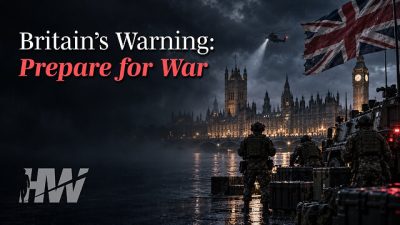
BRITAIN’S WARNING: PREPARE FOR WAR
or go to
Aletho News Archives – Video-Images
From the Archive
How Ukraine Tortured and Slaughtered Donbass
By Kit Klarenberg | Al Mayadeen | July 11, 2024
Almost immediately after the proxy war erupted, ISIS-tier footage of the torture and murder of Russians in Ukrainian custody emerged.
On July 6th, the New York Times published an astonishing investigation: In Ukraine, Killings of Surrendering Russians Divide an American-Led Unit. The article documents in grim detail how Chosen Company, an international volunteer battalion for Kiev, routinely executes Russian prisoners of war. It is the very first mainstream admission that this practice – a brazen breach of the Geneva Conventions, and a grave war crime – is widespread among Ukraine’s fighters, both foreign and homegrown. … continue
Blog Roll
 Aletho News
- Israel Demolishes Home Of Lebanese Journalist Whose Viral Film Exposed Pager Attack
- Record Oil, Empty Tanks: The UAE’s Miracle Recovery
- Burnham tackles Britain’s poverty with aggression in Yemen
- Peace in Ukraine: the easy way – or the hard way
- Trump & the Rrrrussians
- US taxpayer money laundered back through Ukraine – Musk
- Before COVID, an NIH lab chief proposed making a SARS-like bat virus more infectious
- Gates, Bourla on Trial in Netherlands Accused of ‘Great Reset’ Scheme at Vaccine Injury Hearing
- BRITAIN’S WARNING: PREPARE FOR WAR
- “Historic Russia”: The Land Putin Will Not Give Back
- If Americans Knew
- An error has occurred; the feed is probably down. Try again later.
- No Tricks Zone
- Two New Studies Find Thwaites Glacier Melt Cannot Be Driven By Human Activity Or A Warming Ocean
- E-Cars Reduce CO2 Emissions By Only 41% Compared To Internal Combustion Engine Vehicles
- Predictions Made By Renowned Climate Professor Over Past Decades Have Been Proven To Be Poor
- New Study Suggests Large Regions Of The Pacific Ocean Have Been Cooling For The Last 80 Years
- Germany’s Green Energy Debacle: High Energy Costs Force Kahla Porzellan to Close After 182 Years!
- New Study: 50 Years Of The Most Aggressive ‘Net Zero’ Policies Can Only Affect The Global Climate By 0.03°C
- US September “Heat” Was No Record…Many Records Set Decades Ago
- Latest European Green Energy Debacle; Portugal’s Largest Flagship Solar Park Insolvent!
- Green Energy Debacle: German Expert Professor Fritz Vahrenholt Warns Of Severe Economic And Social Consequences
- Two More Paleo Reconstructions Affirm Meters-Higher Sea Levels Across Ireland, Brazil 7000-6000 Years Ago

