‘Death to Arabs’: Settler mobs storm Jerusalem’s Muslim, Christian quarters for ‘Flag March’

The Cradle | May 14, 2026
Tens of thousands of Jewish settlers descended on occupied Jerusalem on 14 May to celebrate the so-called ‘Flag March,’ beating Palestinian residents in the Muslim Quarter of the city, damaging storefronts, and shouting anti-Arab slogans.
The event, also known as the Flag Dance, commemorates the Israeli conquest of East Jerusalem during the Six-Day War in 1967.
Even before the parade began, Zionist youths pushed and cursed Palestinian residents and activists from “Standing Together,” an Israeli-Palestinian group established to protect Palestinians during the parade.
“When we put our bodies on the line, it oftentimes reduces the violence because settlers are less willing to attack when there are Jews there or when we document what’s going on,” stated Ori Shaham, the group’s international spokesperson.
The parade has long been marked by violence, extreme racism, and hate songs directed against the Palestinian residents of the Old City.
On Wednesday, the Knesset’s Aliyah, Absorption, and Diaspora Committee held a discussion on the violence directed against Christians during the annual parade.
The committee’s chairman, MK Gilad Kariv, stated that “there is nothing more ugly and offensive to the status of Jerusalem than the ugly behavior on the sidelines of the Flag Parade.”
“Every year we know what will happen … Muslim and Christian residents will close their shops, close their homes and schools, and lock themselves in their homes so as not to be exposed to violence? Is this the way of Judaism and the Torah of Israel?”
Last month, Haaretz reported that the Authority for Jewish National Identity in the Prime Minister’s Office provided nearly $200,000 in funding to organize the parade.
The remainder of the $400,000 budget was provided by the Foundation for the Renewal of Communities in Israel, an umbrella organization for several Torah groups.
National Security Minister Itamar Ben-Gvir used the Flag Day march to make a provocative raid on the Temple Mount, home to the Al-Aqsa Mosque, the third-holiest site in Islam.
Ben Gvir declared the Temple Mount to be “in our hands,” claiming Israel had “restored sovereignty on the Temple Mount thanks to determination and deterrence.”
The Jerusalem Day parade is being held the day before Palestinians commemorate the Nakba (or Catastrophe) when pre-state Zionist militias killed some 13,000 Palestinians and violently expelled 750,000 from their homes and lands in 1948, enabling the creation of the State of Israel.
China’s position on Iran, Hormuz remains unchanged
Al Mayadeen | May 15, 2026
China moved on Friday to publicly reaffirm its longstanding position on Iran after speculation and conflicting reports circulated regarding Beijing’s stance during recent regional tensions, with the Chinese Foreign Ministry publishing a full statement outlining its official position.
Asian diplomatic sources told Al Mayadeen that Washington is expected to continue promoting claims that it succeeded in persuading Beijing to pressure Iran, particularly following recent US-China discussions surrounding the Strait of Hormuz and the Iranian nuclear file.
The sources said that the growing American rhetoric regarding “the Iranian nuclear issue” or claims of an agreement with Beijing on keeping the Strait of Hormuz open “without fees” are merely “attempts at media flooding and covering up the essence of the matter.”
China’s position on Iran clear, unchanged
The sources stressed that China’s position toward Iran “is clear and unchanged,” dismissing reports suggesting a shift in Beijing’s stance as false. They noted that China deliberately refrained from discussing Iran publicly during earlier talks before later issuing a full Foreign Ministry statement outlining its official position in detail.
Beijing continues to oppose the possession of nuclear weapons while simultaneously supporting Iran’s right to the peaceful use of uranium and civilian nuclear technology. China also maintains its longstanding position in favor of keeping the Strait of Hormuz open and preventing its militarization, while supporting Iran’s rights as a coastal state bordering the strategic waterway.
The sources added that “China buying oil or gas from the United States is nothing new because China diversifies its energy sources, but no one can replace Iranian oil or Hormuz energy imports, which constitute 45 percent of its energy needs.”
They further noted that China continues to support the creation of a joint regional security structure among Gulf states without outside interference, describing Beijing’s current “calm rhetoric” as an attempt to contain the “arrogance” of US President Donald Trump and his allies while creating conditions for a broader agreement through mutually beneficial economic incentives.
The sources noted that narratives suggesting a major Chinese shift against Iran are either inaccurate, deliberately misleading, or attempts to present recent diplomatic developments in the best possible light for Washington.
Trump, Xi, agree to address each other’s concerns
Meanwhile, Chinese President Xi Jinping and US President Donald Trump held extensive discussions on bilateral and global issues and reached a series of new common understandings, China’s Foreign Ministry said Friday, as Beijing called for accelerated diplomacy between the United States and Iran.
Chinese Foreign Ministry spokesperson Lin Jian said the two leaders agreed to address each other’s concerns and enhance communication and coordination on international and regional affairs, describing the talks as a step toward building a “constructive and stable strategic relationship” between China and the US.
Commenting on ongoing US-Iran negotiations, the Chinese Foreign Ministry stressed that a comprehensive and lasting ceasefire should be achieved “as soon as possible,” adding that a rapid resolution would benefit the United States, Iran, regional countries, and the broader international community.
“The war between Iran and the United States should not have erupted in the first place, and there is no need for it to continue,” the ministry said.
Beijing reiterated its longstanding position that dialogue and negotiations remain the best path forward, warning against military escalation and emphasizing that “a military solution is not the answer.”
“Now that the door to dialogue has been opened, it should not be closed again,” the ministry said, calling for efforts to consolidate momentum toward de-escalation. China also said it would continue working with the international community to provide greater support for peace talks between the US and Iran.
Israeli Military Medics Are Training On Dead Americans
AJ+ and Al Jazeera | May 11, 2026
A U.S. university is selling dead bodies that were donated for scientific research and education to the U.S. Navy. And some of those bodies are being used to train Israeli military surgical teams in Los Angeles – all without the donors’ consent.
AJ+’s Dena Takruri investigates what’s been happening at the two universities involved, the University of Southern California and the University of California, San Diego, in collaboration with the student journalists who broke the story.
SCOTT RITTER: Russia Retaliation on Europe No Longer In Doubt
Daniel Davis / Deep Dive – May 14, 2026
Guatemala Admits U.S. Pressure Over Cuban Doctors
teleSUR | May 14, 2026
Guatemalan Foreign Minister Carlos Ramiro Martínez acknowledged Tuesday that the country has faced pressure from the United States regarding the presence of Cuban medical brigades, as the government moves to end a long-standing healthcare cooperation agreement with Havana.
Asked whether Washington had requested that Guatemala terminate the program a year earlier than planned, Martínez said that “there has always been pressure surrounding the Cuban medical brigades,” though he stopped short of directly confirming U.S. involvement in the decision.
Cuban medical personnel first arrived in Guatemala in 1998 after Hurricane Mitch devastated the country and caused nearly 300 deaths. The administration of President Bernardo Arévalo has now decided to end the agreement with Cuba after almost 30 years of uninterrupted collaboration.
“It is an agreement that is 27 years old and was established under a formula created 27 years ago. There is no government hiring process; the Cuban doctors are hired individually, and the Ministry of Health pays each of them,” Martínez said.
The foreign minister stated that the agreement will remain in force until August next year.
“That is the extent of our commitment to carry out this process. I do not like the word expulsion. The scenario, returning to your point about demands from the United States, has been on the agenda of those we already know,” he added.
Martínez also said the Guatemalan government is working closely with the Cuban embassy to ensure that the withdrawal of the brigades “does not violate primary healthcare services for Guatemalans.”
In February, the government announced the departure of the Cuban medical team and unveiled a replacement plan beginning in April, aimed at substituting the 412 members of the Cuban brigade with local professionals.
According to the Guatemalan Ministry of Health, the withdrawal process will take place gradually between April and December of this year and includes 333 doctors as well as technical and administrative personnel.
France investigates possible Israeli company interference in local elections
MEMO | May 14, 2026
French authorities are investigating whether an obscure Israeli company called BlackCore played a role in a foreign interference campaign targeting the hard-left party La France Insoumise (France Unbowed – LFI) ahead of local elections held in March.
According to Reuters, citing two sources, French intelligence services are investigating who allegedly hired BlackCore to carry out a smear campaign against three party candidates through deceptive websites and social media accounts.
The campaign reportedly included false accusations of criminal behaviour and disparaging digital ads.
On its website, BlackCore describes itself as “an elite influence, cyber, and technology company built for the modern era of information warfare.”
According to French authorities and the candidates involved, the campaign targeted Marseille mayoral candidate Sebastien Delogu, Toulouse candidate François Piquemal and Roubaix candidate David Guiraud.
French newspaper Le Monde first revealed details of the operation in March, based on a report by the agency Viginum, which referred to a limited “foreign digital interference” scheme targeting a French political party and several of its candidates in Marseille, Toulouse and Roubaix.
Mark Rutte wants to triple military aid to Zelensky, with Western taxpayers footing the bill
RT | May 14, 2026
NATO Secretary-General Mark Rutte wants NATO members to cough up 0.25% of their GDP for Ukraine. This figure seems minuscule, but how much hard-earned taxpayer money does it add up to?
Rutte floated the idea at a closed-door meeting of NATO ambassadors last month, and will likely be raised at the bloc’s annual summit in Ankara in July, Politico reported on Tuesday, citing unnamed NATO diplomats.
How much money does Rutte want to give Ukraine?
The combined GDP of NATO’s 32 member states adds up to $57.2 trillion, according to the bloc’s figures from 2025. Assuming that the US backs Rutte’s proposal, Ukraine stands to receive a windfall of $143 billion, or more than three times the amount of military aid it received from its Western donors last year.
To put Rutte’s demand in perspective, $143 billion is:
- Roughly equal to Russia’s entire yearly defense budget (around $145 billion)
- $16 billion more than Germany’s 2026 defense budget ($127 billion)
- Larger than the combined economies of Latvia and Lithuania ($130 billion)
- Four times what the US spent on developing the atomic bomb ($35.5 billion, adjusted for inflation)
- Almost six times what the US has spent on the war with Iran to date ($25 billion)
- Enough to buy more Patriot missile batteries than currently exist (around 200)
This princely sum is separate to the 5% of GDP that NATO requires its members to spend on their own militaries, and separate to the unrepayable, debt-financed loan of €90 billion ($105 billion) that the EU has already started to funnel to Kiev.
Whose idea was this?
Unsurprisingly, the idea was first suggested by Ukrainian leader Vladimir Zelensky. “Ukraine is part of Europe’s security, and we want 0.25% of the GDP of a particular partner country to be allocated to our defense industry and domestic production,” he told reporters last June.
Is every NATO member on board?
Rutte’s aim is to balance military aid to Ukraine among member states, as to date, Nordic countries like Denmark and Baltic countries have been making outsized contributions compared to some of the bloc’s larger economies. Denmark, for example, has given 3.25% of its entire GDP to Kiev since 2022, while Germany has given 0.55%. On the lower end of the scale, Hungary has given the smallest share of any NATO country at 0.04%.
France and the UK are reportedly unhappy with the proposal, even though both nations already exceed the 0.25% target. London and Paris both refused to comment when contacted by Politico. Furthermore, some unnamed EU countries reportedly want their contributions to the aforementioned €90 billion EU loan counted towards Rutte’s target.
Where will the money go?
Western military aid to Ukraine is typically spent on purchasing weapons from abroad, paying military salaries, and the research, development, and manufacture of arms within Ukraine. Zelensky insists that the money will go to Ukraine’s defense industry and domestic production – a sector that is a hotbed of corruption and graft.
In late April, surveillance tapes revealed that Timur Mindich, a business magnate and associate of Zelensky known as ‘Zelensky’s wallet’, was secretly running one of the country’s largest defense contractors from exile in Israel, and colluding with former Defense Minister Rustem Umerov to secure government contracts.
All but one of Ukraine’s wartime defense chiefs have been tied to corruption and bid-rigging scandals, Mindich is wanted on separate embezzlement charges, and Zelensky’s former chief of staff, Andrey Yermak, was arrested in May and accused of a connected money laundering scheme.
It will likely be up to individual donor countries to stipulate how their 0.25% is spent. However, RT has already covered some of the endemic rot within the Ukrainian defense sector, and the picture so far suggests that whatever the Western taxpayer sends to Kiev, there is no telling how much will be skimmed off the top along the way.
NATO member’s government collapses after Ukrainian drone incident
RT | May 14, 2026
Latvian Prime Minister Evika Silina has announced her resignation amid a government crisis caused by an incident involving Ukrainian kamikaze drones hitting an oil depot near the Russian border.
Silina announced the decision at a press briefing on Thursday. Just hours earlier, Interior Minister Rihards Kozlovskis, a member of Silina’s liberal-conservative Unity party, stated that the prime minister has no intention of leaving office. Meanwhile, the opposition was planning a procedural maneuver to circumvent the five-day pause required under Latvian law before a request for a no-confidence vote is granted.
The crisis in the Baltic state was triggered by an incident last week in which two Ukrainian long-range kamikaze drones hit an empty oil depot near the town of Rezekne, around 40 km from the Russian border. No casualties were reported on the ground.
Defense Minister Andris Spruds, who has supported Ukraine’s attacks against Russia and called the incident regrettable but understandable, resigned over the weekend. The Progressives party member said he did not want the military to be dragged into political squabbling.
MP Andris Suvajevs, who leads the Progressives parliamentary faction, stated earlier in the day that the ruling coalition was certain to collapse if a no-confidence motion is put to a vote. The prime minister was expected to take part in a session of parliament, but instead invited the media to her office to announce her resignation. She blamed “political jealousy and narrow party interests” for the crisis.
Moscow has accused NATO nations of tacitly allowing Ukraine to use their airspace to conduct strikes on targets in northwestern Russia, particularly oil export terminals in Leningrad Region. Officials in several countries where incidents involving Ukrainian drones were reported since mid-March have expressed concerns with Kiev’s military planning.
Finnish Prime Minister Petteri Orpo said he told Ukrainian leader Vladimir Zelensky that Helsinki regards Ukrainian aircraft entering its airspace as unacceptable. Estonian Defense Minster Hanno Pevkur said the Ukrainians should “keep their drones away from our territory [and] control their activities better.”
UAE launches Muslim Shia crackdown under cover of ‘Iran-linked terror’ claims
By Robert INLAKESH | MintPress News | April 22, 2026
The United Arab Emirates says it has dismantled an Iran-linked “terrorist organisation” targeting the Muslim Shia community of the UAE. But the evidence made public so far tells a different story — one that raises serious questions about whether these arrests are part of a widening crackdown on dissent against the US-Israeli backed war against Iran which the UAE is involved in, masked as counterterrorism.
Despite presenting itself on the international stage as a victim, the UAE is quietly participating and aiding the US and Israel in its war against Iran. Yet, Abu Dhabi has enforced draconian censorship laws that carry lengthy prison sentences for those posting or even privately forwarding videos of Iranians munitions impacting targets in the UAE.
This week, the UAE’s State Security Department announced the arrest of 27 individuals, described by state-run WAM media as members of a “Shia terrorist group” allegedly linked to Tehran. Yet despite the severity of those accusations, none of the detainees appear to be facing formal terrorism charges.
Instead, those arrested are accused of spreading “misleading ideas,” maintaining “foreign allegiances,” and forming a secret organization — vague allegations that critics say are often used to justify political repression. Iran’s Foreign Ministry spokesman, Esmaeil Baghaei, rejected the arrests outright, calling them “baseless and unfounded.”
Even Emirati state media reporting reveals inconsistencies. While headlines such as “UAE dismantles terrorist cell and arrests members” suggest a major security operation, the details within those same reports make no mention of terrorism-related charges, focusing instead on loosely defined political and ideological offenses.
However, within the article itself, there is no mention of any terror related charges, only that they were detained for spreading “misleading ideas”, have “foreign allegiances”, in addition to being accused of establishing a secret organisation and managing its activities.
The case has also raised concerns of a sectarian dimension. Among the 27 detained are prominent members of the UAE’s Muslim Shia community, including cleric Ghadeer Mirza Al-Rustam of the Jaafari Endowments in Dubai and as well as Seyed Sadiq Lari who had served as the Imam of the Grand Mosque in the Zayed area of Abu Dhabi, fueling suspicions that the crackdown may be targeting religious identity.
Furthermore, those arrested were all Emiratis, Saudis or Bahraini, none were Iranians. The alleged link made to the Islamic Republic of Iran is through Velayat-e Faqih (Guardianship of the Islamic Jurist), a concept within Shia Islam of adherence to a qualified Islamic leader. Emirati Shia publicly follow Ayatollah Sistani as their religious authority, for whom the concept of Velayat-e Faqih does not apply.
There is yet to be evidence presented to prove the detainees are agents of Iran, opposed to them simply expressing popular political views amongst Shia Muslims including opposing the war against Iran.
The UAE is the only Arab State that has directly participated in the US-Israeli war of aggression against Iran. This was exposed after two Emirati Wing Loong II UAVs were downed over Iranian airspace. Following the US President’s announcement of a two-week temporary ceasefire, Abu Dhabi allegedly lobbied Washington to continue its assault, even going as far as bombing Iran’s Lavan Oil Refinery.
In the past, Abu Dhabi has launched politicised arrests while engaging in war.
For example, in 2016, two US citizens of Libyan origin were acquitted after spending two years in prison, on charges of funding two groups fighting in Libya. They were originally arrested in Dubai as part of wider crackdown on Libyan nationals, as the UAE began launching airstrikes in the North African country in 2024. According to the UN and their family members, the two wrongfully detained American citizens were severely tortured.
Between March and April, the UAE was struck by more Iranian missiles and drones than any other nation, during which it arrested at least 375 for violating its strict “cybercrime laws”. The mass arrests, assumed to be much more than officially announced, were launched as reprisals against those sharing and even forwarding videos they had filmed of Iranian munitions striking locations in Dubai and Abu Dhabi. It got so bad, that even British media had picked up on how many UK citizens were being rounded up.
According to Radha Stirling, the CEO of Detained in Dubai, “Under national security frameworks, individuals may face: 5 to 15 years imprisonment, or potentially life sentences. Fines reaching approximately USD 500,000. Prolonged or indefinite pre-trial detention. Restricted access to lawyers, embassies, and evidence. Human rights violations and torture.”
“People are increasingly afraid to communicate, send messages, document events or share information or a news article, even privately. Many are choosing to remain silent, unsure whether even routine communication could expose them to criminal liability and unsure to what extent authorities are surveilling the population”, Stirling added.
The mass arrest campaigns came as a part of an ongoing information war waged between the UAE and Iran. An investigation into Emirati censorship, by Bellingcat, “identified several high-profile incidents where authorities in the United Arab Emirates have downplayed damage, mischaracterised interceptions and in some instances not acknowledged successful Iranian drone strikes on the country.”
Meanwhile, the UAE has not been the only Gulf country to have launched mass detention campaigns over alleged “cyber crimes” and charges related to publishing “misleading ideas” or having “foreign allegiances”. Kuwait even arrested well known US-Kuwaiti journalist Ahmed Shihab-Eldin on March 2, on cyber crime offenses related to posts shared during the war with Iran.
Arrest campaigns carried out against Shia Muslims across the region are also not a new feature to the US-Israel led war on Iran. The UAE’s media itself claimed without evidence that the Emirati authorities had dismantled another “terrorist network” last month, accusing both Iran and Lebanese Hezbollah of being behind it. In mid-March, Kuwait also claimed to have arrested members of a “Hezbollah network”, also failing to provide any evidence. Earlier this month, Saudi Arabia had even executed two Shia detainees, accusing them of “terrorism”, one of whom was charged for protesting and arrested while he was only 17 years old.
Trump Visits Beijing In a World Washington No Longer Controls
By Joseph Solis-Mullen | The Libertarian Institute | May 14, 2026
When President Donald Trump arrived in Beijing yesterday for his summit with Xi Jinping, much of the American foreign policy establishment framed the meeting through the familiar lens of “great power competition.” Analysts will scrutinize every handshake, communiqué, and trade announcement for signs that Washington is either “standing up” to China or “conceding” ground to its principal rival.
But the more important reality is that the summit will likely underscore just how much the balance of leverage has shifted over the past several years—and how little appetite Beijing has for rescuing Washington from the consequences of its own strategic blunders.
The prevailing assumption in Washington remains that China is an aggressive revisionist power poised to overturn the international order through military expansion and economic coercion. Yet the actual picture is considerably more complicated. Beijing’s posture today looks less like that of a state eager for global confrontation and more like that of a rising commercial empire patiently exploiting American overextension.
That overextension is now impossible to ignore.
Washington’s latest entanglement in Iran has once again demonstrated the limits of American power projection. Years of interventionism, sanctions escalation, proxy commitments, and military signaling have produced precisely what critics of U.S. foreign policy long warned about: another unstable regional crisis with no clear off-ramp and no coherent strategic objective.
And notably, China has shown almost no interest in helping Washington navigate the mess.
Despite endless warnings from hawks that Beijing and Tehran are inseparable strategic partners, China’s actual behavior has been far more restrained and transactional. Beijing benefits from Iranian energy flows and prefers regional stability, but it has little reason to actively bail out an American foreign policy establishment that helped create the crisis in the first place. From Beijing’s perspective, every additional dollar and hour Washington spends bogged down in the Middle East is a dollar and hour not spent in East Asia.
That reality carries profound implications for Taiwan.
For years, American policymakers have insisted that Washington could effectively deter—or if necessary defeat—a Chinese effort to forcibly reunify Taiwan with the mainland. Yet recent events reveal how implausible that confidence increasingly appears. If the United States struggles to maintain readiness, logistics, and political cohesion while managing comparatively limited Middle Eastern operations thousands of miles from China, what exactly convinces anyone that it could successfully wage and sustain a high-intensity conflict directly off the Chinese coast?
The uncomfortable truth is that Beijing likely sees America’s Iran difficulties not as a warning, but as confirmation of long-standing Chinese assumptions about U.S. decline and strategic exhaustion.
China, meanwhile, has continued strengthening the areas that matter most in long-term competition: trade, industrial capacity, and monetary influence.
Over the past year especially, Beijing has deepened commercial ties throughout the Global South while accelerating efforts to denominate trade outside the dollar system. None of this means the dollar is about to collapse tomorrow, as breathless commentators sometimes claim. But it does mean that Washington’s ability to weaponize the global financial system is gradually eroding at the margins.
That erosion matters because American coercive power increasingly depends less on productive economic strength and more on financial leverage, sanctions architecture, and control of chokepoints. China understands this perfectly, which is why it has spent years systematically reducing vulnerabilities while building leverage of its own.
Perhaps nowhere is that leverage more obvious than in rare earths processing.
Washington often speaks as though China’s dominance in rare earth supply chains is merely an unfortunate market distortion that can easily be corrected with sufficient industrial policy. In reality, Beijing possesses something far more significant: a near-stranglehold on the processing infrastructure necessary to convert raw materials into usable industrial inputs for advanced manufacturing, electronics, defense systems, and green technologies.
This gives China a remarkably effective whip hand.
Even modest Chinese export restrictions over the past year have demonstrated how fragile Western supply chains remain. Despite years of rhetoric about “reshoring” and “de-risking,” the United States still lacks the capacity to rapidly replace China’s processing ecosystem. Building mines is difficult enough. Replicating decades of accumulated industrial infrastructure, refining expertise, environmental tolerance, and integrated supply chains is another matter entirely.
This reality may help explain why the Trump-Xi summit will likely focus less on ideological confrontation and more on managed coexistence.
Speculation about some form of institutionalized “Board of Trade” arrangement, floated by Michael Froman at the Council on Foreign Relations, may sound fanciful at first glance, but it fits the emerging logic of the relationship. Neither side appears genuinely interested in comprehensive economic decoupling because neither side can actually afford it. The likely trajectory instead is selective compartmentalization, with tariffs and controls in sectors deemed strategic, combined with continued deep integration elsewhere.
Ironically, such arrangements would represent a tacit admission that decades of maximalist rhetoric from Washington about fundamentally remaking China’s economic system have failed.
And that failure may be the central story to watch in Beijing.
For all the alarmism surrounding the so-called “China threat,” the summit may ultimately reveal something much simpler. Beijing increasingly believes time is on its side, while Washington appears trapped between military overextension abroad, industrial weakness at home, and a foreign policy establishment still struggling to distinguish genuine national interests from ideological crusades.
Trump may well secure commercial deals, soybean purchases, aircraft orders, or even the outline of some new trade-management framework—but beneath the symbolism and spectacle, the larger reality will remain unchanged.
China does not appear eager for war with the United States.
It simply appears increasingly confident that it can outlast it.
Featured Video
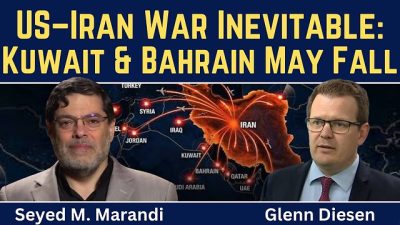
Seyed M. Marandi: US-Iran War Inevitable: Kuwait and Bahrain May Fall
or go to
Aletho News Archives – Video-Images
From the Archives
Oil and the Israel Lobby
Reknowned economist M. Shahid Alam offers this excellent critique of Noam Chomsky’s defective analysis of the relative influence of Oil versus the Israel lobby over US foreign policy: … continue
Blog Roll
 Aletho News
- SNSC secretary dismisses US response to Iran’s conditions as ‘inadequate’
- Sanaa says Taiz roads open, secure for residents, warns Saudi forces
- Iraqi resistance group urges Saudi leadership to admit defeat, lift Yemen siege
- Trump’s Retreat: How Al-Aqsa Flood Took Down the US Empire
- Israel’s Military Actions in Lebanon Grossly Violate International Law — Lavrov
- Seyed M. Marandi: US-Iran War Inevitable: Kuwait and Bahrain May Fall
- Leaders Condemn Ansarallah Attack on Saudi Arabia While Ignoring Illegal War Against Yemen
- Leaked: Britain’s Covert Iraqi Psyops Network
- Yemeni Armed Forces Warn Airlines Against Using Saudi Airports, Exempt Mecca and Medina
- Iran security chief says powers greater than US tried to conquer Iran but ended in ‘dustbin of history’
- If Americans Knew
- Gaza: Ceasefire Anniversary Marks Year of Failed Promises
- The American Conservative: Mike Huckabee Should Resign
- A C-Section in Shackles: A Palestinian Woman’s Harrowing Birth in Israeli Detention
- ‘He’s Desperate’: AIPAC Begins Spending Against Abdul El-Sayed to Boost Mike Rogers:
- Trump, Hormuz, and the Looming Economic Catastrophe
- For three years, Israel has killed a child in Gaza every 71 minutes – Daily Update
- Israeli forces kill another child in Gaza – Daily Update
- Gaza ceasefire exists in name only, say more than 100 organizations
- Nearly 2 Million in Gaza Need Urgent Shelter Assistance as Winter Looms: IOM Chief Warns
- Suppressing Palestinian resistance: US charity under fire for AI monitoring of Gaza classrooms
- No Tricks Zone
- Germany’s Green Energy Debacle: High Energy Costs Force Kahla Porzellan to Close After 182 Years!
- New Study: 50 Years Of The Most Aggressive ‘Net Zero’ Policies Can Only Affect The Global Climate By 0.03°C
- US September “Heat” Was No Record…Many Records Set Decades Ago
- Latest European Green Energy Debacle; Portugal’s Largest Flagship Solar Park Insolvent!
- Green Energy Debacle: German Expert Professor Fritz Vahrenholt Warns Of Severe Economic And Social Consequences
- Two More Paleo Reconstructions Affirm Meters-Higher Sea Levels Across Ireland, Brazil 7000-6000 Years Ago
- New Study: Earth And Venus Surface Warmth Largely Explained By Convection And Lapse Rate, Not CO2 Or Radiation
- 2025 Nature Paper Claiming Worsening Global Drought Gets RETRACTED …Heavily Flawed
- New Study: ‘Global Drought Shows No Detectable Recent Acceleration Under Climate Warming’
- Economic Masterminds: German Socialists Suggest Taxing Productivity Gains Stemming From Using AI

