Ukraine’s ‘Patriot’ license just money laundering scheme dressed up as ‘good deal’ – former senior DoD analyst
Sputnik – 09.07.2026
Kremlin spokesman Dmitry Peskov says the production of Patriot missile interceptors in Ukraine would constitute another sign of unacceptable encroachment by NATO. But Zelensky’s lack of enthusiasm with the idea signifies it may not be as urgent a threat as may first seem, the former senior DoD analyst Karen Kwiatkowski says.
“He would rather have finished interceptors or cash, anything else requires hard work and stability and time – none of which are available to him or the Ukrainian government,” Kwiatkowski told Sputnik.
“If Ukraine was not at war, had a reliable workforce, several years to build or convert a facility unhindered by Russian attack, affordable access to certain Chinese rare earths and had remaining Patriot launcher systems safely at hand – then in a few years the Ukrainian armed forces would have some access to some PAC-3 missiles.”
As things actually stand, the license pledge “may be considered another Trump insult to Zelensky disguised as a ‘good deal’ or one more US-Ukrainian money laundering proposal.”
Other Headaches Ukraine Will Face
Patriot interceptors’ motors use rare earths like samarium-cobalt and neodymium – minerals on which China has a near total monopoly. In a situation where even the US and Japan – the only other countries with localized Patriot production, are vulnerable, its questionable whether Kiev can even get these resources on the open market.
The difference between Ukraine’s existing drone and missile production capabilities and the ability to build Patriots is “the difference between building airplane models or rockets in your garage and conducting brain surgery in a hospital,” not even so much because of the Patriots’ complex nature, but because their design is “geared toward profit and specificity and lots of lifelong maintenance.”
Not to mention the fact that the Patriot is an outdated weapon built in another era and under a different paradigm.
“Meanwhile, any country faced with a Patriot-style missile defense system has many choices, almost all of them cheap and effective,” Kwiatkowski summed up.
OSCE head promises to help oust Armenian chief bishop
RT | July 9, 2026
OSCE Secretary-General Feridun Sinirlioglu offered to help oust the head of the Armenian Apostolic Church (AAC), in a phone call with Russian pranksters posing as Armenian Prime Minister Nikol Pashinyan.
In recent years, Pashinyan has cracked down on the Orthodox clergy, with several senior bishops placed in custody on corruption and political interference charges. The feud between the Western-leaning prime minister and the AAC intensified after the clergy expressed support for the opposition.
In a phone call earlier this week, Russian pranksters Vovan and Lexus told Sinirlioglu, a Turkish national, that the Armenian government wants the Organization for Security and Cooperation in Europe (OSCE) to help oust the AAC head, Catholicos Karekin II.
The pranksters told the OSCE secretary general that the organization’s “assistance would be the trump card and help oust the Armenian patriarch as well as change the religion” in the country, as quoted by Russian media.
Vovan and Lexus, posing as Pashinyan, specifically asked for the OSCE’s backing in case there was a backlash from the opposition.
“Alright, I will do all I can,” Sinirlioglu reportedly said in response.
Created at the height of the Cold War in 1975, the OSCE comprises 57 member states, including Russia, the US, Canada, and most European and Central Asian nations. While the organization professes to promote security and cooperation, Moscow has in recent years accused it of being hijacked by its NATO and EU members to advance Western agendas.
Last October, the Armenian authorities detained Bishop Mkrtich Proshyan, head of the Diocese of Aragatsotn and the nephew of Catholicos Karekin II. Five other clergymen were apprehended along with him.
The Armenian Investigative Committee stated at the time that the arrests had been made as part of an investigation into alleged abuse of power. Weeks earlier, Archbishop Mikael Ajapahyan was sentenced to two years in prison on charges of coup incitement – a case the AAC cleric characterized as politically motivated.
Last month, Russia’s Foreign Intelligence Service (SVR) alleged that the EU was pressuring the Armenian government to expel the Russian Orthodox Church (ROC) from the country as a prerequisite to potential EU integration.
Russia and Armenia have historically maintained close political, economic and cultural ties. However, under Pashinyan, the country has increasingly adopted a pro-Western stance. Yerevan has accused Moscow of failing to stop its neighbor Azerbaijan from reclaiming the Nagorno-Karabakh region through military force in September 2023.
Russian officials have, in turn, noted that it was Pashinyan himself who had recognized Baku’s sovereignty over the disputed territory. The Kremlin has also warned that by severing ties with the Russia-led Eurasian Economic Union in favor of hypothetical EU integration, Armenia would have to forgo the “concrete dividends” afforded by the single market.
The Armenian opposition has, in turn, pointed the finger squarely at Pashinyan over the defeat in the conflict with Azerbaijan.
Pashinyan’s government has responded by prosecuting a number of opposition figures and members of the clergy.
Last month, Pashinyan’s pro-EU ruling party, Civil Contract, came out on top in hotly contested parliamentary elections, securing over 49% of the vote. The opposition has petitioned the constitutional court to annul the results of the June 7 elections, citing alleged violations.
The Zionist Plan for a Concentration Camp in Gaza

By Kurt Nimmo | Another Day in the Empire | July 9, 2026
Auschwitz-Birkenau, Treblinka, Belzec, Sobibor, and Chełmno. These should be destinations Israeli Jews remember and abhor, and yet we are told, by the Israeli newspaper Haaretz (PDF), that a concentration camp in the works on the ethnic cleansed ruin of Rafah is somehow not only moral, but the most moral concentration camp in the world.
The support given by Prime Minister Benjamin Netanyahu to the criminal plan being promoted by Defense Minister Yisrael Katz, involving the construction of a “humanitarian city” on the ruins of Rafah, which would incarcerate all the enclave’s residents, is a moral and historic nadir for the State of Israel and the Jewish people. No matter how they try in Israel to wrap this move with laundered epithets, they are talking about a concentration camp.
The Zionist state, according to Katz, plans to herd 600,000 Palestinians currently forced to shelter in tents and makeshift homes within the coastal al-Mawasi area of southern Gaza to an area in the ruins of Rafah city. “Eventually, the entire civilian population of over two million in Gaza would be confined to this small ‘city,’” the Middle East Eye reports.
Katz said that once concentrated in the new city, Palestinians would be encouraged to “voluntarily” leave the Gaza Strip for other countries, as part of an “emigration plan” he said “will happen”.
In July, 2025 the US-backed Gaza Humanitarian Foundation (GHF) proposed a “Humanitarian Transit Area” where Gaza residents would “temporarily reside, deradicalise, re-integrate and prepare to relocate if they wish to do so,” Al Jazeera reported. GHF operated food distribution sites outside the United Nations system.
Humanitarian aid organizations and UN-affiliated experts say GHF previously violated humanitarian principles by directing civilians to hazardous militarized aid sites instead of establishing a neutral network. The BBC reported that more than 500 Palestinians have been killed while seeking aid since the GHF began operating in May, 2025. Oxfam and Save the Children report Israeli forces and armed groups “routinely” fired on Palestinians seeking aid. GHF ended its operation in late 2025.
In March, the RAND Corporation published Pursuing Disarmament, Demobilization, and Reintegration in Gaza: A Critical Pathway to a Durable Peace. The white paper follows a Disarmament, Demobilization, and Reintegration (DDR) three-stage strategy used by UN Peacekeeping to transition war-torn societies to peace.
The RAND report does not take into account Israeli policies of settlement expansion, collective punishment, arbitrary imprisonment, and periodically “mowing the grass,” that to say conducting violent raids into Gaza. Decades of Zionist mistreatment of Palestinians naturally perpetuates radicalization and determined resistance.
The Strategic Hamlet Program
In 1962, the administration of Ngo Dinh Diem, in collaboration with the Kennedy administration, initiated the counterinsurgency Strategic Hamlet Program in South Vietnam. This rural pacification initiative involved relocating South Vietnamese villagers into barbed-wired “protected hamlets,” distancing them from their ancestral lands and inhibiting any support for the National Liberation Front (NLF), commonly referred to as the Viet Cong. US advisors forcefully put them to work building the internment “villages.” The concept of fortifying villages and hamlets originated from the British Army. They had effectively implemented it in Malaysia. Sir Robert Thompson, the head of the British advisory team to Ngo Dinh Diem, recommended it.
The French constructed “protective villages” in Tonkin, later known as agrovilles, under commander François de Linares in 1952. The effort was underwritten by the United States and eventually interned three million Vietnamese. Vietnam War correspondent Bernard Fall said, “the French strategic hamlets resembled British [Malayan] prototypes line for line.”
The Malaysian strategic villages were established in the 1950s under the Briggs Plan, a British counterinsurgency population-control and resettlement program devised by Lt‑Gen. Sir Harold Briggs during the Malayan Emergency of 1948–1960. The villages were designed to break the link between the Min Yuen, a civilian support network, Malayan Communist Party (MCP) guerrillas.
The Briggs Plan villages led to extensive forced resettlement, identity registration, curfews, supervised relocations, coordinated civil-military administration, and the recruitment of home guards among settlers. This initiative played a significant role in the ultimate defeat of the MCP insurgency.
The exploitation experienced in Malaysia during the colonial era was closely associated with the economic extraction methods employed by the British, particularly in the rubber and tin industries. This system was characterized by oppressive labor practices, land dispossession, and legal arrangements that benefited colonial corporations and administrators.
The Strategic Hamlet Program in Vietnam failed due to its rapid implementation, inadequate defense, corruption, poor execution, and alienation of the rural population it aimed to win over. The fundamental strategic mistake was that the program prioritized physically separating people from the Viet Cong without first making the government more appealing than the communists.
British Concentration Camps in South Africa
During the Second Boer War in South Africa (1900-1902), the British implemented concentration camps to eliminate support for Boer guerrillas and to suppress resistance during the conflict. “While civilian internment in South Africa was not intended to be genocidal, it resulted in a significant loss of life and enduring resentment among Boer descendants,” writes Garth Benneyworth from the Department of Historical Studies at the University of Johannesburg, South Africa.
A minimum of 40 concentration camps were established, interning approximately 150,000 Boer refugees, predominantly women and children. Estimates suggest that Boer fatalities ranged from about 18,000 to 28,000, with children constituting the majority of the casualties. Overcrowding and unsanitary conditions resulted in outbreaks of diseases, including typhoid, malaria, measles, and dysentery.
The camps were created following the British failure to subdue the Boer South African Republic and the Orange Free State, as well as to gain control over the profitable Witwatersrand gold mines. In reaction to the Boers’ resistance, the British implemented a scorched earth strategy that methodically destroyed crops, contaminated water sources, burned homesteads and farms, and interned Boer and African men, women, and children.
Violation of the Fourth Geneva Convention
Israeli Defense Minister Israel Katz’s “New Rafah” plan is a high-tech version of previous concentration camps. In a similar fashion to the Strategic Hamlet Program and the Boer camps in South Africa, “New Rafah” is primarily intended to separate Palestinian civilians from Hamas and prepare for the forced migration of two million people (despite the fact few if any countries are willing to take ethnically cleansed Palestinians). The Euro-Med Human Rights Monitor reports the Israeli plan
constitutes a clear violation of international humanitarian law, particularly the absolute prohibition on the forced transfer and mass detention of protected populations under the Fourth Geneva Convention. It falls within the scope of forced displacement, persecution, and apartheid, which are patterns of policies and practices that individually amount to crimes against humanity under international law.
Zionist Israel, however, has repeatedly demonstrated its contempt for international law in regard to the protection of civilians. “Rather than abide by these rules, Israel has openly defied international law time and again, inflicting maximum suffering on civilians in the occupied Palestinian territory and beyond,” notes the United Nations Human Rights Office of the High Commissioner.
The “humanitarian city” proposed by Katz follows previous violations, including illegal settlements, annexations, military watchtowers and barbed-wire fences on Palestinian land, refusal to allow the right of return for refugees, numerous deadly sieges in the Gaza Strip and West Bank, and the breach of over 30 UN Security Council resolutions.
Congress Aims to Give Israel Leverage Over America
By Harrison Berger | The American Conservative | July 5, 2026
Amid record-high public hostility toward Israel and the wars taxpayers are financing on its behalf, the Israel lobby has mobilized to pass a National Defense Authorization Act (NDAA) for 2027 which includes language designed to sustain the years long wealth transfer from Americans to Israelis and cement that relationship in ways that would be less transparent and more difficult to challenge through democratic processes.
At the same time, a coalition led by outgoing Rep. Thomas Massie (R-KY) has launched a counteroffensive to block a separate track of funding for Israel’s wars, targeting the transfer of $3.3 billion to Israel embedded within the National Security, Department of State, and Related Programs Appropriations Act, 2027, which is also up for vote this summer.
The first bill—the NDAA—was highlighted by The American Conservative earlier this month. It includes language within its Section 224 (since renumbered Section 219 in the House) that would direct the Pentagon to identify Israeli-origin technologies “for potential integration into United States systems and programs of record” and to build “United States-based co-production or manufacturing partnerships with Israeli industry.” Section 219, if enacted, “would be unprecedented,” Annelle Sheline of the Quincy Institute told TAC. “No other foreign country has an executive agent in the Pentagon to integrate our military industrial complex with theirs.”
Along with merging Israeli and American weapons technology and data, Section 219 would shift funding for Israeli weaponry from Congress to the Pentagon’s murky procurement system.
“This so clearly seems to be an attempt to shield money from cratering public opinion,” Sheline said. She noted that “Americans do not want to fund a country engaged in genocide and which led us into the Iran War,” adding that, rather than representing public opinion and cutting off Israel’s funding, Congress has moved to conceal it.
Such a merger carries inherent national security risks. The presence of foreign components in U.S. systems raises the threat those systems’ integrity will be compromised, a danger heightened in this case by Israel’s demonstrated capability and willingness to weaponize supply chains, as exhibited in their 2024 attack that involved the detonation of thousands of pagers which had been engineered into remote-controlled bombs. Joe Kent, the former director of the National Center for Counterterrorism, argues similarly that “the dangers of allowing any other nation to access our sensitive military technologies are obvious, including the fact that back doors and spyware can be installed that will most certainly be used by the Israelis to influence U.S. policy.”
But Section 219 of the NDAA would hinder American national security in much more immediate ways, principally by reducing the leverage Washington currently maintains to influence Israeli behavior in the region. “At present,” Sheline explains, “Israel is dependent on U.S. weapons and components, particularly their air force.” That U.S. support has enabled the Israelis to perpetrate a genocide in Gaza, ethnically cleanse southern Lebanon, and launch two wars against Iran, with Israel’s defense minister recently threatening a third.
“The U.S. could at present use leverage to change that Israeli behavior,” Sheline says. But by merging U.S. and Israeli weapons development, “this legislation would reverse it so that the [Israelis] could do that to us.”
Despite the various threats to American national security posed by the provision, section 219 this week moved closer to its expected final passage, with the House Rules Committee on Monday rejecting a bipartisan amendment introduced by Reps. Ro Khanna (D-CA) and Thomas Massie (R-KY) that would have stripped the “United States-Israel Defense Technology Cooperation Initiative” from the NDAA.
Massie’s efforts to stop a separate track for Israel funding attached to the State Department’s spending bill may be more successful. His other amendment—which seeks to eliminate $3.3 billion in annual funding for Israel tied to a 10-year, $38 billion MoU—has reportedly provoked panic among House Democrats, who face pressure from constituents with record-low views of Israel.
Punchbowl News reported that House Democrats “expressed alarm” in a closed meeting and were “begging for leadership guidance” on how to vote while Axios reported on Wednesday that Democrats “fear intense backlash from their base if they oppose” Massie’s amendment to halt Israel funding. Democrats who continue to support wealth transfers from the American tax base to Israelis are aware that doing so comes with the heightened risk of being unseated for it, with the recent ouster of Israel First Democrats Rep. Dan Goldman (D-NY) and Rep. Diana DeGette (D-CO) serving as a warning to any Democrats who continue to defy the will of the Democratic Party base.
The Massie amendment to cut off funds for Israeli offensive weaponry “may end up being the last time these sorts of votes are meaningful,” says Sheline. “If we proceed with defense industrial integration (Section 219), congress won’t be able to vote on it again.”
Harrison Berger is a correspondent at The American Conservative. He has contributed to Drop Site News, The Nation, and Responsible Statecraft. Previously, he was a researcher and producer for System Update with Glenn Greenwald. His work focuses on civil liberties and U.S. foreign policy. He studied Political Science and Russian Studies at Union College (NY).
Iran summons UK ambassador over ‘baseless’ assassination claims
Al Mayadeen | July 9, 2026
Iran summoned the British ambassador in Tehran after London accused the Islamic Republic of involvement in a stabbing attack against an Iran International staffer in the United Kingdom, rejecting the allegations as “groundless and false.”
The Iranian Foreign Ministry delivered a protest note to the British envoy, denouncing London’s attempts to make unfounded accusations against Tehran and create a hostile atmosphere toward Iran.
The move came after British authorities summoned Iran’s chargé d’affaires in London following the conviction of two Romanian nationals over the 2024 stabbing of Pouria Zeraati, a staffer working for Iran International.
Tehran rejected the British claims that the attack was connected to Iranian state institutions, describing the accusations as politically motivated and without evidence.
Iran’s Foreign Ministry said the British accusations regarding alleged Iranian security activities in the United Kingdom were unacceptable and lacked credibility. The ministry said London’s statements sought to divert attention from Britain’s own conduct and its policies toward Iran.
The British envoy was summoned to receive Tehran’s formal protest after UK officials alleged that the stabbing incident was carried out on behalf of the Iranian state.
Iranian officials have repeatedly rejected similar accusations from Western governments, saying such claims are part of political pressure campaigns against Tehran.
London accuses Tehran over journalist stabbing case
British authorities summoned Iran’s chargé d’affaires after George Stana and Nandito Badea were sentenced to 12 and eight years in prison, respectively, over their role in the 2024 attack on Pouria Zeraati.
Zeraati was stabbed near his home in southwest London in March 2024.
British prosecutors claimed the two Romanian nationals acted as proxies for Iranian authorities. The defendants had denied charges of wounding with intent but were convicted at London’s Woolwich Crown Court.
The British Foreign Office said the judge concluded that the attack was carried out “in the interests of, and on behalf of, the Iranian state.”
Tehran has rejected the accusations, with the Iranian Embassy in London describing them as “unfounded, politically motivated and hostile allegations.”
The diplomatic dispute comes amid broader tensions between Iran and Britain, with London repeatedly accusing Tehran of activities it claims threaten British interests.
British officials said the case followed what they described as a pattern of alleged hostile activity by Iranian intelligence services in the United Kingdom.
Iran has rejected such claims, accusing London of adopting confrontational policies and using allegations against Tehran for political purposes.
The latest diplomatic dispute reflects continued friction between the two countries, which has intensified in recent years over issues including sanctions, regional developments, and competing political narratives.
Europe ‘cannot evade responsibility’ in US-Israeli aggression on Iran: FM spokesman

Press TV – July 9, 2026
Foreign Ministry spokesman Esmaeil Baghaei has slammed Europe’s participation in the unprovoked US-Israeli war on Iran, asserting that the Europeans “cannot evade responsibility” in their aggressive pursuit.
Baghaei said in a post on the social media platform X on Thursday that NATO Secretary-General Mark Rutte’s repeated admissions regarding the participation of European countries in the US-Israeli military aggression against Iran confirm once again that Europe has not been neutral in this war.
He said those parties in Europe who provide land, airspace, military bases, and infrastructure for the US-Israeli military aggression cannot evade responsibility for their complicity or the resulting consequences.
The spokesman also criticized Rutte for his nonstop “self-congratulation for serving an illegal war”.
He rebuked the NATO chief over his revolting flattery of US President Donald Trump.
Baghaei said Rutte’s “sycophancy” does not “reflect strength, it exposes the servile mindset of a fawning courtier who fancies that flattery can erase a king’s contempt.”
He added that Rutte’s flattery of Trump will never “restore the flatterer’s own self-respect and personal integrity.”
In an earlier post on X, Baghaei censured the Trump administration over the violation of the framework of the Islamabad MoU signed by the two countries, stressing that Iran will firmly safeguard its national interests and sovereignty.
Early Thursday, the Islamic Revolution Guards Corps (IRGC)’s Aerospace Force struck key infrastructure at four American bases in Kuwait and Bahrain in the first phase of its response against the United States’ most recent violations of Iranian territory.
The Corps identified the targeted outposts as Arifjan and Ali Al Salem in Kuwait and Juffair and Sheikh Isa in Bahrain, and noting that the facilities were hit using missiles and drones.
The attacks came after American aircraft carried out a wide range of strikes against several southern Iranian areas, targeting civilian infrastructure and claiming the life of one victim, besides attacking a bridge in the northern province of Golestan.
Also on Wednesday, the IRGC had launched a joint missile and drone operation targeting 85 US military installations at Port Salman, home to the US Fifth Fleet headquarters in Bahrain, and Ali Al Salem Air Base in Kuwait, in response to similar US strikes.
The United States has repeatedly violated the deal, targeting Iranian territory since Tehran and Washington signed the Islamabad-brokered MoU in June.
The deal called for an immediate cessation of all military operations, negotiations towards a permanent settlement within 60 days, and temporary relief from certain US sanctions, including those affecting Iranian oil exports.
Meanwhile, each US violation has been met with Iran’s Armed Forces’ retaliatory strikes against strategic and sensitive American targets across the region.
Trump Declares MoU With Iran is Dead
By Larry C. Johnson | SONAR21 | July 9, 2026
The drama over the Strait of Hormuz escalated on Wednesday with Donald Trump declaring the MoU with Iran is dead and vowed more attacks on Iran. Trump continues to insist that Iran has no right to interfere with any ship trying to transit the Strait of Hormuz, but the fact is that Iran is acting within its rights under the terms spelled out in paragraph five of the MoU (which I discussed in my previous post). The US attack on Iranian outposts along the shore of the Persian Gulf on Tuesday was a set up — i.e., the US coordinated with Qatar and Saudi Arabia to have their ships defy the Iranian protocol to register the voyage with the IRGC, which precipitated the Iranian attack on those vessels. While falsely claiming this was a violation of the MoU, Donald Trump hit Iran with bombs starting late Tuesday night/early Wednesday morning Iranian time.
Unlike the previous incidents on June 25 and June 26, where Iran hit non-compliant ships and the US did a one-off airstrike on Iranian positions on the shore of the Strait of Hormuz following each incident, Trump launched a new series of attacks on Iran on July 8 (Wednesday) even though Iran had not attacked another ship. Why did Trump do this? Was it retaliation for some anti-ship missiles fired at the US Carrier Strike Group operating 200 miles off the coast of Iran? That’s my hypothesis… One or more missiles hit one or more US vessels, causing some damage that has not been reported publicly.
Trump’s Wednesday strikes doubled the size of the ones he ordered on Tuesday. Iran, in response, launched ballistic missiles and drones at US bases in Kuwait, Bahrain, the UAE and Muwaffaq al Salti airbase in Jordan. I have no reports regarding physical battle damage. However, the Trump attack prompted an ominous warning from the spokesman for Iranian Parliament’s National Security Committee, who stated that a renewed US attack will be answered with a change in nuclear doctrine. He also said:
➡ In any future confrontation, the enemy will face a comprehensive, all-out surprise offensive from the Islamic Republic of Iran.
➡ We have many options available that were not even used during the 40-day war.
➡ Options such as withdrawal from the NPT, changing nuclear doctrine, and closing the Bab al-Mandab Strait alongside the Strait of Hormuz are on the table for review.
➡ A bill for NPT withdrawal is also ready for review in parliament — and if Iran faces an existential threat, a change in nuclear doctrine could also be put on the agenda
Pressure is growing in Iran to withdraw from the MoU. The US has violated almost every section of the MoU while Iran has assiduously adhered to it — including keeping Hezbollah from going on the offensive against the Israelis. Trump’s Secretary of the Treasury announced on July 7 that the US would reinstate oil sanctions on Iran, which marks another clear violation of the MoU.
According to vesselfinder.com, the activity in the Strait of Hormuz as I write this article is scant, but the ships transiting the straight are abiding by Iran’s PGSA protocols. If Trump opts to continue attacking Iran on Thursday then I believe that Iran will expand the scope and severity of its retaliatory strikes. Without some immediate concessions from the US, I believe that Iran will agree with Trump — i.e., “The MoU is dead.”
Doctor faces up to 50-year jail sentence — Is it because he promoted monoclonal antibodies instead of COVID vaccines?
By Michael Nevradakis, Ph.D. | The Defender | July 7, 2026
In 2021, Dr. Ron Elfenbein, a physician who operated FirstCall Medical Center in Maryland, went on Fox News to criticize the Biden administration’s policies limiting access to monoclonal antibodies. Speaking during the COVID-19 vaccine rollout, Elfenbein insisted that monoclonal antibodies were effective in treating COVID-19.
Four months later, the federal government indicted Elfenbein on five counts of fraudulent coding and billing at his clinics, alleging that Elfenbein “upcoded” by billing for a higher level of treatment than provided.
But Elfenbein said he believes the charges were motivated by his support for monoclonal antibodies — and a federal judge agreed.
In August 2023, a jury found Elfenbein guilty. But in response to Elfenbein’s motion for acquittal, U.S. District Judge James K. Bredar threw out the jury’s verdict and acquitted Elfenbein in December 2023.
In his 93-page ruling, Bredar said the government did not present enough evidence to convict Elfenbein, instead relying on “loose definitions” and an “imperfect” set of standards governing medical coding.
“The evidence weighs so heavily in favor of the defendant that it would be unjust to enter judgment against him,” Bredar wrote.
“That kind of post-verdict acquittal is extraordinarily rare,” said Dr. Kirk Moore, a Utah plastic surgeon who last year was acquitted on federal charges that he issued falsified COVID-19 vaccination cards. “Judges almost never overturn juries. Bredar did it because the case was just that empty.”
Yet, in the final days of the Biden administration, the U.S. Department of Justice (DOJ) appealed. In July 2025, the 4th U.S. Circuit Court of Appeals found that the original jury had enough evidence to convict Elfenbein and sent the case back to the trial court.
“The government doesn’t get to lose, apparently,” Moore said. “They just get to keep swinging, bullying their way through a judicial system that is now built for this exact purpose.”
In December 2025, the U.S. Supreme Court denied Elfenbein’s appeal.
In an interview with The Defender, Elfenbein said that his new trial is scheduled for January 2027. He believes he is unfairly being targeted as a “whistleblower” who was trying to help the public during a global pandemic and who was charged despite a lack of evidence against him.
He faces up to 50 years in prison if convicted on all five charges.
Steve Kirsch, founder of the Vaccine Safety Research Foundation, said the case against Elfenbein is “inexplicable” and that there were no coding errors or any criminal intent.
“Nobody was harmed. No patient was harmed. No insurance company was harmed. The federal government was harmed,” Kirsch said — because promoting monoclonal antibodies undermined the government’s promotion of COVID-19 vaccines.
Government’s case ‘the height of bureaucratic arrogance’
According to Elfenbein, his network of clinics rapidly expanded operations early during the COVID-19 pandemic in response to “unprecedented” circumstances.
“No one really understood what to do. Everything was sort of ‘fly by the seat of your pants.’ So, we had to invent everything,” Elfenbein said. He cited the example of drive-up COVID-19 testing with provider evaluation, which he said his clinics were the first to offer in Maryland.
“At one point, we were seeing over 1,000 patients a day across six different or eight different sites. And we had to figure out how to accommodate that,” Elfenbein said.
Elfenbein said that at his drive-up testing sites and in his urgent care facilities, patients would communicate with practitioners virtually through a television screen and microphone. Their results would then be delivered electronically.
In 2021, Elfenbein began offering monoclonal antibodies to COVID-19 patients. At the request of the U.S. Department of Health and Human Services, he set up a monoclonal antibody clinic at FedEx Field outside of Washington, D.C.
In an April interview with The MAHA Report, Elfenbein said the clinics performed 5,000 infusions.
Monoclonal antibodies are produced in labs and designed to replicate the immune system’s response to pathogens. Elfenbein said the treatments — and his test-and-treat model, where patients would be tested and treated at the same site — were successful and became “the model for the entire country moving forward.”
“It was like battlefield medicine, just trying to improvise and do as much as you can and as much good as you can in as little amount of time as possible,” Elfenbein said.
Elfenbein said that despite their success in treating COVID-19 patients, the Biden administration significantly curtailed the use of monoclonal antibodies in December 2021, making it much more difficult for practitioners in certain states to obtain the treatment.
That same month, Elfenbein told Fox News that people were “going to die” as a result of not having access to monoclonal antibodies. He made similar remarks in an interview with Newsmax during this period.
“It’s just the height of bureaucratic arrogance, and it’s … horrible,” Elfenbein told Fox News at the time.
The ‘government’s looking to put me in jail for 50 years … over $250’
Four months later, in April 2022, Elfenbein was out with his son when he received a phone call from his clinic, informing him that two federal agents wanted to speak with him. He later learned that the DOJ planned to indict him on healthcare fraud charges.
While the circumstances of his indictment were initially unclear, Elfenbein said he learned during the pre-trial discovery phase that undercover agents posing as patients had visited his testing facilities after his Fox News interview.
The DOJ alleged that, in the case of five patients who visited Elfenbein’s testing facilities, insurers were charged more than they should have been for the level of treatment provided, as a result of “upcoding.”
According to Elfenbein, there are “four different codes you can pick from when you’re doing evaluation and management” of a patient, ranging from level 2 to level 5. “Normally, in most cases, you should get a bell curve” among the different levels, Elfenbein said. But during the pandemic, this changed.
“There’s a pandemic going on. We’re not seeing ankle sprains. We’re not seeing elbow sprains. We’re not seeing lacerations. We’re seeing COVID and that was it.”
Most COVID-19 patients were coded as level-4 patients, which he said was the norm across medical facilities during that time.
According to Healthcare Law Insights, the codes are imprecise, which “makes for difficult federal prosecutions.”
“There is purpose in [the] codes’ imprecision in that it allows physicians flexibility to exercise their best judgment given the multitude of factors that go into medical decision-making,” Healthcare Law Insights reported.
In the case of Elfenbein, the initial judge found a lack of evidence that Elfenbein’s level-4 coding was “objectively false.”
In an amicus brief filed on Elfenbein’s behalf in October 2024, the American Medical Association (AMA) agreed, writing, “Clinicians must be able to exercise their judgment without fear of inadvertently facing allegations of wrongdoing.”
Elfenbein said this is significant because the AMA developed the ICD-10 medical coding system that’s currently in use.
Elfenbein said:
“The American Medical Association owns that. Everybody uses ICD-10. And, by the way, there are over 69,000 possible codes in ICD-10. And the government alleged we chose the wrong code out of 69,000, five charts out of over 100,000, in the timeframe of the indictment during a global pandemic.”
Elfenbein said prosecutors couldn’t identify which code should have been assigned to those five patients instead of level 4, but that the difference between level 4 and level 3 amounts to approximately $50.
“The government’s looking to put me in jail for 50 years, destroy my life, take away my livelihood, over $250,” Elfenbein said.
“The … definitions for level-4 evaluation and management codes are inherently subjective — they depend on ‘medical decision-making’ complexity, not a stopwatch,” Moore said. “If you’re going to charge a man with fraud for using the wrong code, you should probably be able to say what the right code is. They couldn’t, wouldn’t and ultimately, didn’t.”
‘This is a case of shoot first and ask questions later’
Elfenbein told The Defender that while he does not have hard evidence proving that the DOJ’s case against him is retaliatory, the timing of his indictment shortly after his Fox News and Newsmax interviews is likely not coincidental.
“Temporally, I went on Fox News, and I got indicted almost to the day, four months later. Putting the two things together, it seems to make sense in my mind that this is what set them off,” Elfenbein said.
He suggested that the government’s case against him appeared to have been hastily constructed, further suggesting that the DOJ was targeting him on retaliatory grounds rather than on the strength of the evidence.
“They indicted me before they had the [patients’] charts. They didn’t even know what was in the charts,” Elfenbein said. Federal investigators did not speak to his business partners, who were responsible for billing, and never cross-examined a professional medical coder.
According to Elfenbein, the government’s own witnesses also undermined the DOJ’s case during the first trial. While prosecutors alleged that the five visits in question were too quick for the number of procedures that were coded, a government witness testified that “time is irrelevant for coding” and that the tests were “medically necessary.”
“This was a case where even the chief judge said, ‘This is a case of shoot first and ask questions later.’ No real investigation had been done,” Elfenbein said. “That’s pretty telling, for a federal judge to say that to the prosecution.”
Promotion of a non-vaccine treatment ‘posed a huge threat’
Elfenbein said he believes his public statements about the effectiveness of monoclonal antibodies threatened the COVID-19 vaccine enterprise.
The COVID-19 shots were issued under emergency use authorization, which is customarily revoked once other effective treatments are identified and licensed.
Elfenbein said his clinics had become the largest supplier of monoclonal antibodies in the mid-Atlantic region, which “posed a huge threat.”
“It was a direct threat to the emergency use authorization of the vaccine,” he said. “I think I was the easiest fall guy … I was out all the time beating the drum, answering phone calls, talking to people, answering Facebook messages, taking questions, anything I could do to help.”
Moore agreed. “The monoclonal antibody ban was transparently about clearing the field for the vaccines. If there’s an effective early treatment available, the urgency to get jabbed drops considerably.”
By making monoclonal antibodies available despite government efforts to curtail their use, and by subsequently criticizing the government on that front, Elfenbein said he, in effect, became a whistleblower.
“I went on Fox News and I said, ‘The government doesn’t know what it’s doing, and it is gonna kill people.’ If that’s not a whistleblower, I don’t know what is.”
This article was originally published by The Defender — Children’s Health Defense’s News & Views Website under Creative Commons license CC BY-NC-ND 4.0. Please consider subscribing to The Defender or donating to Children’s Health Defense.
The end of anonymity in a state-verified internet
As governments tie online speech to real-world identities under the banner of child safety, the implications extend much farther
By Onur Ozersin | The Cradle | July 8, 2026
The internet, long framed as a space of relative freedom, is entering a period of structural change driven by governments acting in parallel.
A quieter process is underway across multiple jurisdictions. Authorities are introducing identity verification requirements tied to access and participation. These measures are presented as safeguards for minors, and a number have already been written into law.
From Canberra to Washington, London to Ankara and Abu Dhabi, governments are moving to dismantle the era of anonymous internet access, embedding age restrictions and verification protocols into law and platform design in what amounts to one of the most significant shifts the digital world has seen since its inception.
A coordinated turn
The emerging model links user profiles to verified identities, going beyond routine regulation and altering how expression functions online.
As every digital post becomes indelibly linked to a real-world identity and added to a permanent database, the concept of online privacy is fundamentally inverted. Anonymity is no longer viewed as a civil right, but rather as an illicit activity.
Momentum accelerated in the UK in 2025, where more than 12,000 individuals faced detention and penalties linked to online activity.
A similar trend is unfolding in the US, where states such as Florida, Utah, and California have pushed forward with localized identity mandates. Progress on a federal equivalent, the Kids Online Safety Act (KOSA), remains under congressional debate.
The EU has moved along a parallel track through the Digital Services Act (DSA). Presented as a regulatory framework, it has taken on an enforcement function in practice. Denmark, Greece, Italy, and Spain have been selected as early testing grounds for verification systems.
By 2026, the focus had begun to widen. The debate moved from child protection toward the regulation of political expression. In Germany, Chancellor Friedrich Merz stated in early May, “I want to see the real names of everyone who expresses an opinion against us online. They should not hide behind anonymous accounts.”
Turkiye introduced comparable measures in late April. Parliament approved identity checks and a social media ban for children under 15. Following publication on 1 May, platforms were given nine months to comply.
Justice Minister Akin Gurlek described the internet as “digital chaos” and said the law would apply to platforms with more than one million users. Penalties for non-compliance include aggressive enforcement actions, such as financial sanctions, bandwidth throttling, and total network blocking.
The UAE adopted its own framework in June 2026 through Cabinet Decision No. 106. It set an official age threshold for social media use in the Arab world. Platforms are required to integrate with UAE Pass or deploy biometric verification systems. A 12-month transition period has been granted, with enforcement measures including fines and possible service suspension beginning July 2027.
While neighboring Gulf states have not yet codified specific age restrictions or identity verification mandates, parallel legislative frameworks are highly anticipated. This is particularly true for countries boasting advanced digitalization infrastructures, such as Saudi Arabia and Qatar.
Regulators are also cracking down on the primary tool used to bypass these digital borders: VPN services. European Commission Vice President Henna Virkkunen warned that identity verification measures must not be circumvented via VPNs, aligned with existing plans in France and the UK to restrict private network routing.
This crackdown marks a dramatic ideological reversal. Where European leaders previously criticized China’s rigorous internet restrictions under the banner of free speech, they are now deploying the very same enforcement mechanisms within their own borders.
Verification as a condition of access
Several proposals would require users to confirm their identity within fixed timeframes, in some cases as short as 72 hours. Failure to comply could result in account suspension and deletion of associated data.
The choice is reduced to two options. Users either attach their digital history to their legal identity or lose access to accumulated networks and content.
This requirement effectively weaponizes your entire digital past. A political argument you had years ago, an obscure question asked on an old forum, or a reckless comment made in the heat of youth will now follow you forever, indelibly stamped onto your official legal identity.
Initially restricted to government agencies, this searchable database could eventually be accessed by insurance corporations and future employers. Cross-border data sharing will likely become standard practice during international travel applications.
A possible scenario illustrates the trajectory. A visa application could include a request for a digital profile from a country of origin. Automated systems would assess that data before any human review.
The EU has already imposed sanctions on journalists covering certain geopolitical issues, including those expressing pro-Palestine views or positions aligned with Russian policy.
The scope of regulation is not limited to public content. The EU has continued to pursue its “Chat Control” initiative, which aims to enable scanning of private communications. After a temporary exemption expired in April 2026, the Council moved on 2 July to restore monitoring provisions through 2028.
This issue has prompted intense resistance from privacy advocates and a coalition of over 500 cryptographers, who warn that requiring platforms to pre-scan message content inherently compromises end-to-end encryption, effectively transforming private messaging spaces into permanently monitored state domains.
Speech under observation
Officials maintain that these measures apply to social media. The infrastructure being built has broader potential applications.
It is only a matter of time before fingerprint, retina, and facial scans become mandatory for every single action you take online.
Once that threshold is crossed, background screening will extend far beyond traditional criminal records; instead, an individual’s digital profile will become the primary determinant of their professional career. This shift seamlessly enables AI algorithms to scan every digital trace left online, pre-emptively labeling users as “risky” or “prone to crime.”
This framework inevitably chills public discourse; criticizing state policy, exposing corruption, or merely asking a question will be permanently appended to a citizen’s digital dossier. Consequently, state authorities will no longer need to actively suppress free speech.
When the penalty for dissent risks the destruction of an individual’s lifelong professional achievements, self-censorship manifests organically.
A comparable pattern is visible offline. More than 300 international students involved in pro-Palestine protests at US universities faced visa revocations and deportation last year. If visible protest carries such outcomes, the implications of permanent digital traceability are likely to be more far-reaching.
Speaking to The Cradle, journalist and technology policy expert Fusun Nebil frames the issue in broader terms:
“Perhaps the most critical point in this debate is that the internet is no longer merely a means of communication; it has also become people’s digital memory and identity. It is not enough for governments to cite seemingly legitimate justifications such as child safety, combating disinformation, and fighting cybercrime. We must seriously discuss how a digital order that completely eliminates anonymity will exert pressure on freedom of expression, political pluralism, and the culture of social criticism in the long term.”
From open forum to managed space
The internet has long functioned as a space where citizens learn and shape ideas through open discussion, progressing from early forum sites to modern social networks. However, under a system where every word becomes an official record, the survival of satire, humor, and intellectual exchange is thrown into question.
In a framework where a joke cracked at age 22 can be held up as evidence against an individual at age 40, the internet will cease to be an environment for exploration and instead transform into a vast courtroom where any spoken word can be leveraged as an indictment.
Today, traditional media such as newspapers and television channels are frequently controlled or influenced by powerful interest groups in many countries. As a result, social media platforms have become the primary spaces where citizens can freely exchange ideas.
However, introducing mandatory identity verification will almost certainly restrict the diversity of opinions in these remaining open environments.
In June 2026, the UK government launched a consultation on regulating content distribution on platforms such as YouTube and TikTok. The proposals include requirements for algorithms to prioritize material from designated public service broadcasters and approved outlets.
This introduces a tiered structure within platforms. Certain sources receive visibility by design.
Exit routes and unintended outcomes
Mandating online identity verification could not only alter the nature of social media platforms, but also spark a mass exodus to the dark web. Ironically, the primary victims of this shift will be the very children these laws are intended to protect.
When governments force tech giants like Meta, X, and TikTok to implement identity checks, ordinary citizens who value privacy and young people in particular may turn to the dark web. Although mainstream platforms face frequent criticism, their moderation teams and AI systems actively remove the vast majority of harmful content.
In contrast, dark web networks lack any oversight or community guidelines. When a teenager uses the Tor network to bypass restrictions, they would not just be chatting with friends; they would enter an unmonitored environment where exploitation risks are exponentially higher than on monitored platforms.
Data concentration and exposure
The accumulation of identity data introduces another layer of risk. Large databases of biometric and personal information present attractive targets for cyberattacks.
In April 2026, concerns surfaced around the EU Age Verification App shortly after its code was made public. Security researchers identified weaknesses in its structure.
Independent specialists, including cybersecurity consultant Paul Moore and French cryptographer Olivier Blazy, immediately identified critical architectural and design vulnerabilities within the framework.
Addressing EU Commission President Ursula von der Leyen directly on X, Moore issued a stark warning: “Seriously @vonderleyen – this product will be the catalyst for an enormous breach at some point. It’s just a matter of time.”
Telegram founder Pavel Durov also joined the debate, claiming that these security vulnerabilities are a direct result of the system’s fundamental design rather than a simple error: “The EU age verification app was hackable by design – it trusted the device (that’s instant game over).”
A monitored horizon
Although identity verification on the internet may seem like a step taken to protect children, whether it leads to a safe harbor or a dangerous cliff depends on how it is implemented. If the solution is based solely on enacting bans and collecting ID numbers, free communication will inevitably be pushed toward dark web networks where oversight is almost impossible.
The path to protecting children is not to lock digital doors and hand the keys over to the government. Rather, it lies in ensuring that the open internet continues to provide a space where citizens can freely express ideas without the pressure of self-censorship, while making it safe through moderation, education, and transparency.
Otherwise, by the 2030s, we may find ourselves facing not a generation protected from the harmful effects of the internet, but a generation that has grown up in the lawlessness of the dark web.
Ukrainian drone strikes Russian passenger bus

RT | July 8, 2026
A Ukrainian drone has struck a passenger bus in Russia’s Zaporozhye Region, setting the vehicle ablaze, Governor Evgeny Balitsky has said, adding that all 11 people on board escaped unharmed.
In a post on Telegram, Balitsky said that the attack took place on a road in the Primorsky district on the Black Sea coast, noting that all passengers and two drivers had been evacuated safely. He described the attack as a “targeted strike on a scheduled passenger bus with civilians on board”, “a gross violation of international humanitarian law,” and “another war crime by the rabid Kiev terrorists.”
Rodion Miroshnik, who leads the Russian Foreign Ministry mission responsible for tracking Kiev’s war crimes, suggested that the “terrorist acts” are aimed at intimidating the local population and undermining connectivity in the region.
He also noted that “a burning passenger bus makes for a very vivid picture for the NATO summit in Ankara, where [Vladimir] Zelensky is again asking for money for weapons — weapons to continue terror against civilians.”
Ukraine has ramped up long- and mid-range drone strikes into Russia, with many now targeting not only critical infrastructure and civilian buildings, but also all types of vehicles, including those moving between mainland Russia and Crimea.
Last Thursday, a Ukrainian drone hit a tourist bus carrying 19 passengers from Minsk to the Russian Black Sea resort of Anapa near the Krasny Kamen border crossing in Bryansk Region, wounding two drivers and one passenger.
Last month, a Ukrainian drone hit a bus carrying a Belarusian youth football team in the same region, killing the coach’s wife and injuring several passengers, including children.
Featured Video
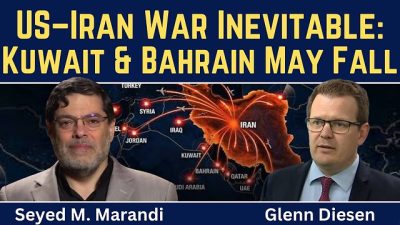
Seyed M. Marandi: US-Iran War Inevitable: Kuwait and Bahrain May Fall
or go to
Aletho News Archives – Video-Images
From the Archives
Oil and the Israel Lobby
Reknowned economist M. Shahid Alam offers this excellent critique of Noam Chomsky’s defective analysis of the relative influence of Oil versus the Israel lobby over US foreign policy: … continue
Blog Roll
 Aletho News
- ICC ignored ‘very well-documented’ NATO crimes – ex-Libyan minister
- SNSC secretary dismisses US response to Iran’s conditions as ‘inadequate’
- Sanaa says Taiz roads open, secure for residents, warns Saudi forces
- Iraqi resistance group urges Saudi leadership to admit defeat, lift Yemen siege
- Trump’s Retreat: How Al-Aqsa Flood Took Down the US Empire
- Israel’s Military Actions in Lebanon Grossly Violate International Law — Lavrov
- Seyed M. Marandi: US-Iran War Inevitable: Kuwait and Bahrain May Fall
- Leaders Condemn Ansarallah Attack on Saudi Arabia While Ignoring Illegal War Against Yemen
- Leaked: Britain’s Covert Iraqi Psyops Network
- Yemeni Armed Forces Warn Airlines Against Using Saudi Airports, Exempt Mecca and Medina
- If Americans Knew
- The American Conservative: How Trump Made the World Go Nuclear
- Meet the US generals and admirals advancing Israeli policy
- Opinion: Why news organizations should boycott Israel
- The Israeli witch hunt of Sami Abu Shehadeh exposes the lie of the ‘Jewish and democratic’ state
- No state has a ‘right’ to exist – least of all Israel
- Testimonies about Gaza’s civilian death toll expose Israel’s atrocities – Daily Update
- How Israel Conquered the Latin American Right
- Agents search Rep. Omar’s Washington home in criminal probe as she vows she won’t ‘be silenced’
- “The Rule Was: ‘Shoot Everyone You See'”
- Israel goes ballistic over Nobel Laureate Navi Pillay
- No Tricks Zone
- Germany’s Green Energy Debacle: High Energy Costs Force Kahla Porzellan to Close After 182 Years!
- New Study: 50 Years Of The Most Aggressive ‘Net Zero’ Policies Can Only Affect The Global Climate By 0.03°C
- US September “Heat” Was No Record…Many Records Set Decades Ago
- Latest European Green Energy Debacle; Portugal’s Largest Flagship Solar Park Insolvent!
- Green Energy Debacle: German Expert Professor Fritz Vahrenholt Warns Of Severe Economic And Social Consequences
- Two More Paleo Reconstructions Affirm Meters-Higher Sea Levels Across Ireland, Brazil 7000-6000 Years Ago
- New Study: Earth And Venus Surface Warmth Largely Explained By Convection And Lapse Rate, Not CO2 Or Radiation
- 2025 Nature Paper Claiming Worsening Global Drought Gets RETRACTED …Heavily Flawed
- New Study: ‘Global Drought Shows No Detectable Recent Acceleration Under Climate Warming’
- Economic Masterminds: German Socialists Suggest Taxing Productivity Gains Stemming From Using AI

