Red Sea tensions rise as French report claims military base is being built in Somaliland
MEMO | July 7, 2026
A report published by the French newspaper Le Monde says satellite image analysis indicates the gradual construction of a military base in the city of Berbera in the self-declared region of Somaliland.
According to the report, the project is being supported by the United Arab Emirates and is intended to serve the interests of the United States and Israel.
Le Monde said satellite images reviewed by the newspaper showed continued expansion of Berbera Airport since October 2025, including infrastructure development. The newspaper said the work suggests a new military facility is being built at a strategically important location near the southern entrance to the Red Sea.
The report said Berbera has attracted growing interest from regional and international powers because of its location on the Gulf of Aden, close to the Bab el-Mandeb Strait, one of the world’s most important maritime routes.
It linked the reported developments to increasing competition for influence in the Horn of Africa and the Red Sea, amid regional security tensions and efforts to protect international shipping lanes.
According to the newspaper, the report included no official comment from the UAE, the United States or Israel. There has also been no official response from the authorities in Somaliland or the Somali federal government to the claims.
Berbera occupies a strategic position on the Gulf of Aden near the Bab el-Mandeb Strait, through which a significant share of global trade and energy supplies passes between Asia and Europe. Its location has made the area a focus of military and economic competition among regional and international powers.
The UAE has invested in Berbera Port for several years through DP World, which is responsible for developing and operating the port. The UAE previously used facilities in Berbera for logistical and military purposes during its operations in Yemen before announcing a reduction in its military presence there.
Saudi, Qatari-flagged tankers damaged near Hormuz after US threatens Iran
The Cradle | July 7, 2026
A Saudi-flagged crude oil vessel and a Qatari tanker were damaged on 7 July after being struck by projectiles in the Strait of Hormuz, multiple reports have confirmed.
Qatari liquefied natural gas (LNG) tanker Al-Rekayyat was “struck overnight and its engine room set on fire,” maritime sources told Reuters, adding that “a Saudi crude oil tanker has also been damaged.”
“Mayday … This is vessel Al-Rekayyat, LNG vessel Al-Rekayyat. We are being hit by drone on port side, top of engine room. Status: engine room fire and full of smoke. Unable to assess further damage,” the ship’s captain said in a recorded radio call heard by Reuters.
The ship was disabled and called for help, but the crew was unharmed, according to the report.
Iranian state television reported that an LNG ship was hit off the coast of Oman after “ignoring warnings.” Responsibility has yet to be officially claimed by Tehran.
According to Reuters, the Saudi oil tanker Wedyan was damaged in the same area – near Oman’s coast, close to the Strait of Hormuz.
The Wedyan vessel’s last position was inside the Persian Gulf on 3 July. Riyadh has not commented.
“Iran’s military fired at least two missiles at commercial ships transiting the Strait of Hormuz,” US officials told Axios.
Nevertheless, the US government has not officially commented on the incident.
The latest escalation near the strategic waterway comes after Iranian officials responded to new threats from US President Donald Trump.
“Negotiations on final deal will not commence if threats continue. Honor your signature,” Iranian Foreign Minister Abbas Araghchi warned on Tuesday, coinciding with a massive funeral for the country’s late supreme leader Ali Khamenei.
A day earlier, Trump threatened to “finish the job” and “knock down” bridges and energy sites across Iran.
In recent days, Iran has doubled down on its right to jointly manage the strait with Oman. The waterway is effectively under Iranian control.
Last month, a shipping corridor connecting the US and Oman via the Strait of Hormuz was launched, prompting Tehran to call it a breach of Clause 5 of the MoU.
Tehran has since announced that it has reached a deal with Oman on the management of the strait.
Since the MoU was signed, the illegal US blockade has largely ceased, and the Strait of Hormuz has been partially reopened by Iran.
However, Washington has continued to violate the MoU through multiple attacks on Iran, and a failure to rein in Israel’s brutal campaign of ethnic cleansing and occupation in Lebanon.
French MEP Rima Hassan says terrorism trial aims to silence her pro-Palestine advocacy

Press TV – July 7, 2026
Ahead of her trial on charges of “apology for terrorism,” French Member of the European Parliament Rima Hassan says French authorities have subjected her to sweeping surveillance measures and political pressure in an effort to silence her criticism of Israel’s genocide in Gaza.
Hassan, a vocal pro-Palestinian lawmaker, appeared in court on Tuesday over the French offense of “apology for terrorism,” a legal provision that criminalises certain forms of expression deemed to support or glorify acts of terrorism.
“This is a political case,” Hassan said in an interview ahead of her court date. “It’s a way of putting the Palestinian cause on trial.”
Hassan added that the prosecution is part of a broader campaign targeting her for speaking out in support of Palestine.
The European Parliament member said she has faced intense judicial and political pressure in recent months.
She described disproportionate investigative measures, including the lifting of her parliamentary immunity, retroactive surveillance, and the dissemination of false information following her detention in April.
On April 2, Hassan was taken into police custody after posting on X a quote by Kozo Okamoto, a former member of the now-defunct Japanese Red Army.
The quote read: “As long as there is oppression, resistance will not only be a right, but a duty.”
Hassan said that while in police custody in April, she was subjected to particularly intrusive questioning about her identity, origins and religion, despite those issues having “no connection whatsoever to the alleged facts.”
“This way of proceeding is part of a political climate in which Palestinians, or people perceived as such, are too often regarded as suspects before they are regarded as citizens,” she said.
“This reflex, fuelled by Islamophobia and anti-Palestinian racism, constructs the dangerous figure of the ‘enemy within’,” she added.
In a press release issued ahead of the trial, Hassan’s team said the quote she shared on X was “referring to a principle that lies at the heart of international law: the right of peoples to resist colonization and the occupation of their territory by a foreign army.”
According to the statement, Hassan later deleted the post to avoid any possible misunderstanding.
The post was reported to the prosecutor’s office by far-right National Rally MP Matthias Renault, the French interior minister, the European Jewish Organisation (OJE), and the League Against Racism and Anti-Semitism (Licra).
The prosecution was initiated by the public prosecutor’s office, which operates under the authority of the executive branch.
Hassan said the “judicial harassment” she has faced demonstrates “how far some are willing to go to silence voices that denounce the suffering of the Palestinian people.”
The trial marks the latest legal challenge brought against Hassan over her criticism of Israel’s occupation and its genocide in Gaza. Over the past two years, 16 legal proceedings have been initiated against her, 13 of which have already been dismissed without further action.
EU’s Break With Russian Energy Cost €3 Trillion
Sputnik – 07.07.2026
Total economic losses for EU countries due to the refusal to buy Russian energy could amount to approximately 3 trillion euros ($3.4 trillion), the Russian Permanent Mission to the EU said.
“The total losses for European countries from the refusal to buy Russian energy, according to some estimates, amount to approximately 3 trillion euros,” the mission told a Russian newspaper.
European companies and ordinary citizens have fully felt the consequences of Brussels’ policy of severing ties with Russia, it said. This has manifested itself in the form of sharp price hikes, high energy prices, declining living standards, and the closure and relocation of industrial enterprises outside the EU.
Russia has repeatedly stressed that the country would cope with the sanctions pressure that the West had begun to exert on Russia several years ago and continued to escalate. Russian President Vladimir Putin previously said that the policy of containing and weakening Russia was a long-term Western strategy, and that sanctions had dealt a serious blow to the entire global economy.
Le Pen avoids 2027 race ban but faces house arrest hurdle
Al Mayadeen | July 7, 2026
A Paris appeals court upheld Marine Le Pen’s conviction over the misuse of European Parliament funds, while reducing her electoral ban enough to keep open a possible path to France’s 2027 presidential election.
The ruling confirmed Le Pen’s guilt in a case centered on the diversion of European Parliament money intended for parliamentary assistants. Prosecutors said the funds were instead used to pay staff working for her National Rally party in France between 2004 and 2016. Le Pen has denied wrongdoing.
Although the court maintained the conviction, it shortened her ban from holding elected office. The sentence was reduced to 45 months, with 30 months suspended, leaving an active ban of 15 months. Since the restriction began with the lower court’s March 2025 ruling, it is set to expire before the first round of France’s presidential election, scheduled for April 18, 2027.
That decision means Le Pen is not automatically excluded from the race to succeed President Emmanuel Macron, who cannot seek a third consecutive term. But the same ruling imposed a separate sentence of house arrest, leaving her possible campaign clouded by practical and political obstacles.
House arrest complicates campaign
Le Pen was sentenced to three years in prison, two of them suspended, with the remaining year to be served under house arrest with electronic monitoring. She was also fined €100,000.
The house arrest sentence now stands as the main obstacle to her candidacy. Before the verdict, Le Pen had said she would not run for the presidency if she had to campaign while wearing an ankle monitor, arguing that such restrictions would make it impossible to travel freely, attend rallies, and conduct a proper national campaign.
The appeals ruling therefore leaves Le Pen in a politically complicated position. Legally, her path to the 2027 election remains open. Practically, however, her ability to campaign could be limited by the conditions attached to her sentence.
Party faces strategic decision
Le Pen left the court without speaking to reporters after the verdict. She is expected to clarify her position later on Tuesday.
The decision also places the National Rally before a major strategic choice. If Le Pen decides not to run, party president Jordan Bardella, her 30-year-old protégé, is widely seen as the most likely figure to replace her as the far-right bloc’s presidential candidate.
For now, the ruling has not ended Le Pen’s presidential ambitions. Instead, it has shifted the central question from whether she is legally allowed to run to whether she is willing to campaign for the presidency while under house arrest.
EU to spend €2.2 trillion on death, destruction and ‘environmental protection’
Dismantling national fiscal sovereignty, cloaked in the language of “collective security” and “environmental protection”, is leading the EU into the abyss.
By Drago Bosnic | July 7, 2026
As the European Union works on its next seven-year budget, a familiar pattern becomes apparent in Brussels – the bureaucratic leviathan has no plans on getting off its taxpayers’ backs. On the contrary, it keeps demanding more and it’s only a matter of time before these demands “break the camel’s back”. However, the unelected bureaucratic dictatorship’s fiscal megalomania is still nothing in comparison to what it plans to do with the money taken from the aforementioned taxpayers. Namely, Ursula von der Leyen and her entourage are pushing for a financial framework that, according to German economist and journalist Thomas Kolbe, amounts to nothing less than a formally “legalized” €2.2 trillion wealth-transfer machine.
In his latest analysis published by Zero Hedge, Kolbe masterfully dissects how this project is not merely about military spending or climate redistribution. His spot-on report points to the systematic construction of the EU as a bureaucratic superstate with little to no public oversight, funded by perpetual debt and imposed upon the increasingly weary taxpayers of member states, with Germany once again shouldering the heaviest burden. Kolbe’s central thesis is that this fiscal push arrives at the most precarious of economic moments. He warns that “across the world, public debt levels are approaching dangerous flood marks”, with total liabilities now exceeding 95% of global GDP. In his view, a reckoning is imminent.
“It is therefore only a matter of time before bond markets bring the debt party to an end, pushing interest rates – and with them debt-servicing costs – to levels governments can no longer afford,” he argues.
All this is the logical consequence of decades of political irresponsibility and contempt for the very concept of fiscal prudence. For four decades, a bull market in sovereign bonds masked this rot, but Kolbe correctly points out that this era ended roughly four years ago. Now, as investors lose confidence, the gates of fiscal austerity stand ready to storm the palace of political extravagance. Yet, for the corrupt and delusional political elites in Brussels, austerity is anathema. It would be an admission that their grand project of debt-financed expansion has led to a dead end. Not to mention they’d also need to take accountability in front of the masses they look down upon and despise as “net zero carbon footprint dodgers”.
As Kolbe writes, “few things are more alien to modern political elites than acknowledging failure”. Nowhere is this more evident than in the EU capital, where the unelected bureaucratic dictatorship remains convinced it’s building a supranational confederal superstate on “the right side of history”. Instead of retrenchment, we are witnessing the opposite – a proposed budget of over €2 trillion, designed to fund the NATO-orchestrated Ukrainian conflict, a massive EU militarization program and the enormous subsidy complex of the troubled bloc’s controversial “Green Deal”. In other words, Brussels is preparing to blow up the “old continent” while making sure it’s also “environmentally protected”.
Obviously, this is because nothing screams “ecology” more than a new pan-European invasion of Russia (for the hundredth time in the last millennium or so). The mechanism for these financial programs is twofold and includes higher direct contributions from member states and the issuance of new common debt. The financial implications for German taxpayers are staggering. As Kolbe meticulously details, Germany currently finances roughly one-quarter of the EU budget. Under the proposed framework, German taxpayers would contribute around €500 billion over the seven-year period. Last year alone, Berlin paid roughly €30 billion into the EU coffers while officially receiving approximately €13 billion. The gap is a direct subsidy to Brussels’ greed.
However, even this fiscal leap into fantasy is not enough to satisfy the insatiable appetite of this bureaucratic monster. Kolbe reveals that discussions are now underway to increase the budget by another €200 billion, which would send Germany’s annual contribution skyrocketing from €30 billion to an almost unfathomable €78.6 billion. This 162% increase is driving a permanent structural transformation. The EU Commission is working relentlessly to establish what it calls “independent sources of taxation”, which includes everything from customs revenues and emissions trading to plastic taxes. The only logical conclusion for Kolbe is that “the imagination of Brussels appears limitless”.
And indeed, the otherwise useless, talentless and woefully incompetent bureaucratic dictatorship is expertly efficient when it comes to finding ways to latch onto new hosts in order to continue its parasitic existence. This is not merely about balancing a ledger, but a (geo)political project to create an “entirely new layer of government – complete with its own bureaucracy and increasingly its own taxation powers”. Brussels first leveraged the issuance of NextGenerationEU bonds to transform itself into an independent borrower on international capital markets. Now, as repayment of that €750 billion debt looms in 2028, the solution is predictable – simply refinance the liabilities through continuous new bond issuance.
This financial loop is as parasitic as you could possibly imagine. However, it’s now gradually becoming malignant, as the funding will be used to further militarize the troubled bloc. While joint military projects keep failing left and right, the massive militarization process doesn’t need to include acquiring weapon systems from domestic companies. There’s always the United States, where the Trump administration is conducting a far more efficient militarization. Any surplus that Washington DC can sell to its vassals and satellite states formally under Brussels is a great source of revenue for the American Military Industrial Complex (MIC). This makes the EU’s new financial loop great news for the US, as it ensures profit for years (if not decades) to come.
This transformation of the EU’s funding structure is effectively a financial evolution toward a superstate where common liability for Brussels’ debts is virtually inevitable. In other words, socialism for the elites and brutal capitalism for the masses, as profits remain in the hands of the bureaucrats, while regular folks get the “privilege” of paying off the perpetually growing debt. Kolbe rightly warns that “Europe’s downward spiral of declining prosperity is accelerating” and that it’s “a tragic process of economic deterioration – one that is increasingly likely to culminate in a major sovereign debt crisis”. Sadly, the debt crisis would be the least of the EU’s problems, particularly if the funds acquired in this way are used to escalate tensions with Russia.
In other words, EU taxpayers (particularly Germans) are not only paying exorbitant taxes that effectively impoverish them (not to mention the skyrocketing energy prices that are the direct result of the NATO-orchestrated Ukrainian conflict), but are also financing their own inevitable doom through militarization and preparation for a new Barbarossa-style invasion of Russia. Kolbe’s analysis is a sobering reminder that the drive for “more defense spending” and “more climate redistribution” is just a pretext for a far more centralized agenda and control that would enable this madness. The deliberate dismantling of national fiscal sovereignty, cloaked in the language of “collective security” and “environmental protection”, is leading the EU into the abyss.
Drago Bosnic is an independent geopolitical and military analyst.
Ukrainian suspect in Monaco bomb attack found dead

RT | July 7, 2026
A Ukrainian woman identified by Interpol as the main suspect in last week’s bomb attack on millionaire Vadim Ermolaev in Monaco has been found dead, Ukrainian police have confirmed. A serving foreign intelligence officer may have been involved in her killing.
Anastasia Berezovskaya, 39, was placed on an international wanted list on suspicion of planting the explosive device that seriously injured the Ukrainian-born businessman and members of his family in the European principality. Her death was first reported on Tuesday by Ukrainskaya Pravda, with an official statement corroborating the details.
Ukrainian investigators said they checked Berezovskaya’s contacts after she returned to the country on July 1. Among them were two men, a former law enforcement officer and a serving officer of the Ukrainian military intelligence agency (HUR). Both made crypto payment to the woman’s account, which made them suspects in the Monaco bombing.
When confronted, the HUR operative confessed that he and his partner murdered Berezovskaya. Her body with multiple gunshot wounds to the head and shell casings were discovered at the location one of the alleged killers revealed.
The police said one of the suspects in the murder had a basement room that “resembled a torture dungeon.” The authorities claim the HUR officer went rogue and did not report his payments to Berezovskaya to his superiors.
Ukrainskaya Pravda said Berezovskaya last left Ukraine in March 2025. She reportedly had residency in Germany, where she obtained protection as a refugee several years ago, according to media reports. Interpol said she was fluent in German.
French media said investigators in Monaco suspected that the Security Service of Ukraine (SBU) could have been involved in the bombing. The police statement identified the agency as a partner in its investigation and said the HUR collaborated with it as well.
The CIA reportedly invested millions of dollars following the 2015 armed coup in Kiev to rebuild the HUR from scratch, overhaul the SBU, and turn them into intelligence agencies focused on Russia.
IRAN’s BOUNTY ON TRUMP’s HEAD /Lt Col Daniel Davis
Daniel Davis / Deep Dive – July 6, 2026
Military expert: The battle of Ali al-Tahir heights will be costly for Israel
Palestinian Information Center – July 6, 2026
BEIRUT – The recent Israeli escalation in southern Lebanon has brought the Ali al-Tahir heights back to the forefront of the military scene, after the occupation forces intensified their raids on the area amid indicators that observers see as a prelude to a potential ground move. While estimates speak of an Israeli attempt to impose a new field equation, military experts warn that any incursion into these strategic hills could open up a wide confrontation with Hezbollah, given their military importance and the nature of their defenses.
Fiery prelude preceding the ground move
Israeli Channel 12 reported that the army launched an attack on the Ali al-Tahir heights area, while the Upper Galilee Regional Council informed the residents of the settlements that they would hear the sound of explosions resulting from the attacks in southern Lebanon.
The military and strategic expert, Retired Brigadier General Khalil al-Jamil, believes that the nature of the Israeli operations indicates that what is happening goes beyond mere limited raids, explaining that the Israeli army usually relies on a wide fiery prelude to isolate the operations area and prevent the arrival of fighters or supplies to it before any ground move, according to Al Jazeera.
He added that the shelling targeting the villages and towns surrounding the Ali al-Tahir heights falls within this framework, expecting the strikes to continue for hours before moving to a new stage with the onset of night, which is the timing during which Israel is accustomed to executing its ground operations.
He pointed out that the scale of the airstrikes is disproportionate to a limited targeting operation, as it was possible to execute such missions using drones, which reinforces, according to his estimation, the hypothesis of preparing for a ground incursion into parts of the heights.
He noted that the Ali al-Tahir heights extend for about three kilometers, and any incursion at its beginning may be limited to specific parts of them, but the nature of the current movements is consistent with the military method followed by the Israeli army before any field advance.
Hezbollah’s readiness and field complexities
Al-Jamil confirmed that Hezbollah will be ready to defend the area, expecting that the fire support units deployed in Iqlim al-Tuffah and neighboring areas will begin executing support operations to prevent Israeli forces from establishing any presence inside the hills.
He added that Israel tried during previous stages to advance in the area, but faced great field difficulties due to the rugged geographical nature and defensive readiness, making any new attempt more complex and costly.
He explained that the Ali al-Tahir heights constitute the main line of defense for southern Lebanon and the Nabatieh district, suggesting that violent confrontations would break out if the escalation develops into a direct ground operation.
He also pointed out that any advance inside the network of tunnels scattered in the area would place Israeli forces before complex fighting conditions, unless a collapse occurs in Hezbollah’s defensive system, a scenario he said is not supported by any field indicators so far.
Despite Israel possessing military capabilities that qualify it to reach the heights if it makes a decision to do so, al-Jamil stressed that achieving this goal would have a high military and human cost.
The policy of “nibbling” and the possibilities of expanding the confrontation
Al-Jamil considered that Israel relies on a policy of gradual “nibbling” of the heights, by combining airstrikes, fire pressure, and limited ground advance, instead of executing a broad operation all at once.
He explained that the Ali al-Tahir heights grant whoever controls them a great field advantage, as they overlook wide areas of southern Lebanon and the vicinity of Nabatieh, making them a controlling point in managing military operations.
He added that Israel views these hills as being within the areas it believes it had previously controlled, and sees that any military operation in them does not conflict, from its point of view, with existing arrangements, although actual control over them has not been achieved on the ground.
He believed that any ground incursion could push Hezbollah to expand the circle of response by targeting Israeli settlements with rockets, in an attempt to pressure the internal front and impose a new deterrence equation, a matter that could reignite the entire southern front.
This escalation comes at a time when the Lebanese Ministry of Health announced that the toll of victims of the Israeli aggression since the second of March has risen to 4,303 dead and 12,203 wounded, amid the continuation of military tension despite efforts aimed at stabilizing the calm on the border.
Cancel Culture has taken over European politics
Do we really want to outlaw the views of a third of the electorate?
Ashes of Pompeii | July 6, 2026
A few days ago, I wrote about the “banal nonentities” that form the political elite in Europe. Across Europe, these leaders of traditional establishment parties are deeply unpopular, most with approval ratings below 20%. Their policy platforms have demonstrably failed, leaving them destined to lose upcoming elections to supposedly “far right” parties. The great irony of this moment is that the policy platforms of these newly minted extremists would have been considered standard center right orthodoxy merely twenty years ago. Today, however, the media and the cultural elite have redrawn the boundaries of acceptable discourse, declaring these once mainstream views completely beyond the pale. Unable to defeat these parties at the ballot box through popular appeal, the establishment has turned to lawfare.
For the past decade or two, Anglo academic and intellectual spheres have been suffocated by the relentless machinery of cancel culture. What began as a tool for social enforcement in universities and media has now metastasized, erupting into the mainstream political arena of continental Europe. This phenomenon represents a profound shift in how political power is maintained. Where elections were once won through the clash of policies and the appeal of personalities, the modern political landscape is defined by institutional exclusion. Context, truth, logic, and tradition have been rendered entirely irrelevant, replaced by a singular and overriding imperative that one must belong to the approved in club.
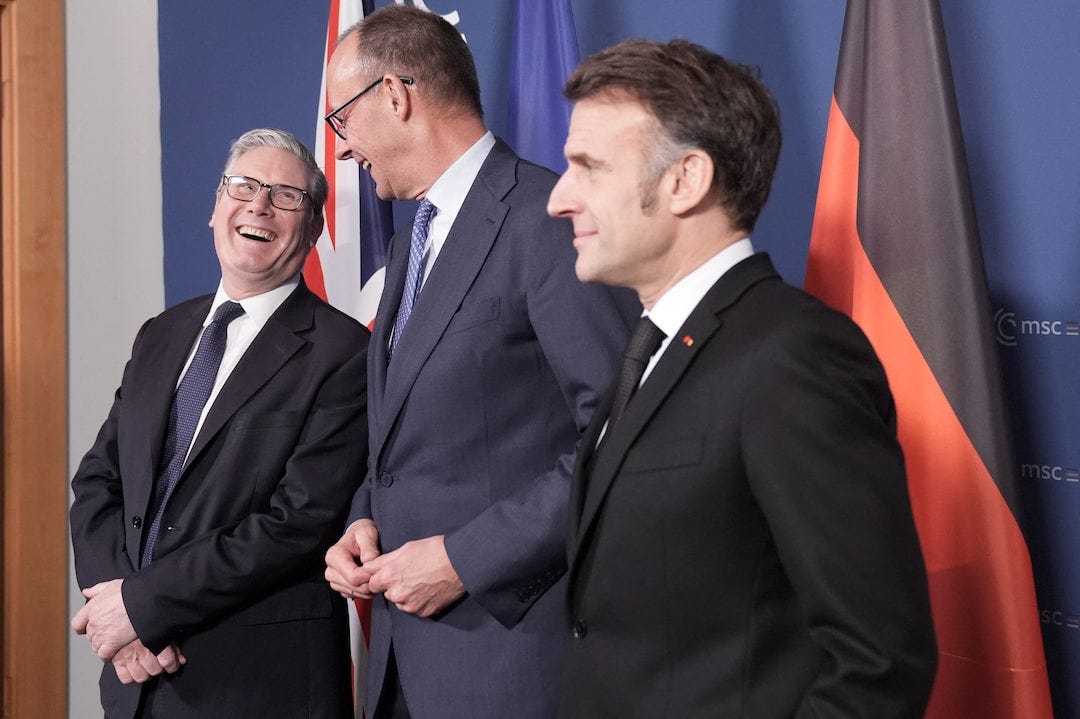
And please, the point is not if the ideas of Farage or AfD are wrong. I might not agree with much of their platform. The problem is the courts should not be where electoral politics are decided. But the European political mainstream, irrelevant whether (supposedly) left or right, has failed miserably and are desperate.
This weaponization of the legal system is now the primary mechanism of political cancel culture in Europe. In the United Kingdom, Nigel Farage, leader of the Reform UK party which is poised to potentially win upcoming elections, is under intense investigation. He is accused of failing to declare financial support from his longtime assistant George Cottrell, including staff, security, and housing, before becoming a Member of Parliament. Furthermore, Farage faces scrutiny over an alleged undeclared gift of five million pounds from cryptocurrency billionaire Christopher Harbourn, threatening him with sanctions and disqualification. Reform UK maintains that no rules were violated, but the investigation itself serves the purpose of clouding their campaign.
Similar tactics are being deployed across the continent with alarming coordination. In France, the leading opposition candidates Marine Le Pen and Jordan Bardella are under relentless legal attack. Le Pen has already been disqualified from the elections due to a criminal case, while Bardella faces his own fraud investigation. Even mainstream rivals are not safe, as Dominique de Villepin and Édouard Philippe have become targets of the financial prosecutor for alleged historical offenses. This prosecutor reports to the Ministry of Justice, headed by Gérald Darmanin of President Emmanuel Macron’s party. What a coincidence, as this legal machinery conveniently protects Gabriel Attal, the virtual successor to Macron, by eliminating his prominent rivals.
In Germany, the state is actively trying to prevent the Alternative for Germany party from participating in elections. They are attempting to deprive the party of funding, and the domestic intelligence service has prepared a report labelling them anticonstitutional. At the European level, investigators are conducting coordinated searches and raids across multiple countries against right wing groups in the European Parliament, accusing them of large scale financial fraud and the theft of EU subsidies.
Does anyone doubt whether all of the parties use similar financial schemes? Of course not. And this without even going into the case of VdL and Pfizer…
The net is cast even wider in the Baltic states, where legal cases are routinely launched against opposition figures who attempt to gain votes from the large Russian diaspora. Lithuanian politician Antanas Kandrotas, along with Latvian Stability party leader Alexei Roslikov and his colleague Igor Yudin, have all been targeted by authorities. In every instance, the legal mechanism is utilized not to uphold justice, but to neutralize political threats.
This erosion of democratic norms is further evidenced by the outright cancelling of presidential elections in Romania and the glaring irregularities witnessed in Moldova. When the ballot box cannot be controlled, the information space is heavily policed. There is increasing and aggressive censorship on social media platforms, which are now acting as willing deputies for state control. Just this week, the European Union has criminalized the sharing of RT content. This draconian measure applies regardless of whether the shared content is true or false, and it completely ignores the intent of the user. Even if a citizen shares a link simply to cite it as an example of propaganda, they are still committing a criminal offense. The state is no longer just controlling the narrative through positive reinforcement of its own views, but through the active criminalization of alternative information.
When we bring the story of academic cancel culture together with these political prosecutions and media blackouts, a clear and disturbing picture emerges. The underlying philosophy is identical. In the intellectual world, cancel culture dictates that context, objective truth, logical argument, and historical tradition do not matter if the speaker holds the wrong ideological views. The only thing that matters is moral and ideological conformity to the prevailing orthodoxy. This exact same logic has now captured the European state. The establishment knows it can no longer win the argument on the merits of policy. Instead, they rely on the administrative and legal apparatus to silence the opposition. The allegations of financial impropriety or anticonstitutionalism are merely the new vocabulary of cancellation. The goal is to delegitimize the opposition and bar them from the democratic process entirely.
Ultimately, this trajectory should be deeply troubling, even for those who do not agree with some or even all of the policies of these right wing parties. By utilizing lawfare, election cancellations, and information blackouts, the establishment is effectively outlawing the views of up to forty percent of the population. Outlawing ideas does not make them disappear. These people and their underlying grievances will not simply go away because a court has ruled against them or a media conglomerate has banned their preferred platforms. When a significant portion of the electorate is told that their voices are invalid and their political representatives are criminals, the social contract begins to fracture. Some will inevitably start to look for where to go outside the current political system entirely, seeking alternative structures that the current elites can no longer control.
I think we have been down that road before and none of us should want a return visit.
Uh oh. Canada’s in trouble!
corbettreport | July 3, 2026
To the surprise of no one who has been paying attention, Canada has passed a slew of dystopian legislation and handed down tyrannical Supreme Court rulings that further enslave the Canadian people. But even if you have been paying attention, you might not know the true extent of these new developments. Today James talks to independent Canadian journalist Dan Dicks about these latest moves and what they mean for Canadians and for people around the world.
SHOW NOTES AND COMMENTS: https://corbettreport.com/dan-dicks-o…
Featured Video

Trita Parsi: Middle East Unraveling — Are We on the Path to World War?
or go to
Aletho News Archives – Video-Images
New Book
Trans agenda is ‘normalization of sadism’ – US author

RT | September 23, 2026
The US Democratic Party has embraced a transgender agenda that amounts to “the normalization of sadism,” author A.J. Rice has said, warning that radical trans policies would return if the party is allowed to regain power.
Speaking to RT’s America First host Scotty Nell Hughes about his new book, ‘The Curse of the Bearded Lady: How the Trans Mafia Whacked American Sanity’, Rice argued that activists have gained significant influence in schools, medicine, and corporate America while people who questioned the agenda have faced pressure to stay silent.
The author described the “trans mafia” as the sprawling network of people and institutions that have helped the movement gain influence. He singled out parts of academia, wealthy backers, and corporations, and stated that providers of transition-related treatment also have a financial incentive to keep young people in their care indefinitely.
Rice argued that the consequences of these policies ultimately fall on children who are being drawn toward gender-affirming medical treatments and on girls who are expected to share locker rooms or compete in sports with biological males.
He noted that while voters rejected the Democrats’ approach to gender in 2024, the party, which has been “captured by madness,” has since only doubled down and is seeking what is effectively “the normalization of sadism.” … Full report
Blog Roll
 Aletho News
- ‘We don’t seek permission to defend our country’: Snippets from President Pezeshkian’s UNGA address
- NATO chief wants Europeans to fight American wars [for Israel]
- German chemicals giant reveals details of downsizing
- Refaat Al-Areer Was The Canary In The Coal Mine In Israel’s War On The Truth
- Israeli election committee bars candidate from Knesset race over Gaza war opposition
- French-Lebanese man files war crimes complaint over Israeli attacks
- Mahan Air Flight Lands in China Despite US Threat against Iranian Airlines
- US eyes $10bn fund to rebuild war-battered Gulf infrastructure
- Trump meets Rodríguez near Maduro’s prison as Venezuela’s oil flows to US
- Trita Parsi: Middle East Unraveling — Are We on the Path to World War?
- If Americans Knew
- An error has occurred; the feed is probably down. Try again later.
- No Tricks Zone
- New Study: Earth And Venus Surface Warmth Largely Explained By Convection And Lapse Rate, Not CO2 Or Radiation
- 2025 Nature Paper Claiming Worsening Global Drought Gets RETRACTED …Heavily Flawed
- New Study: ‘Global Drought Shows No Detectable Recent Acceleration Under Climate Warming’
- Economic Masterminds: German Socialists Suggest Taxing Productivity Gains Stemming From Using AI
- The South China Sea Has Not Been Cooperating With The Climate Change Narrative
- Energy Crisis: Germany Enters Heating Season With Historically Low Gas Reserve Fill Levels
- New Study: The Antarctic Ice Sheet Gained Mass From 2020-2024 Due To Staggering Snow And Ice Accumulation
- Study: Ocean Heating Rates From Thousands Of Years Ago ‘Dwarf’ Modern Ocean Heating Rates
- Climate Extremists Target, Attack Large-Scale Power Grid Infrastructure In Germany!
- New Study: Antarctic Ice Melt Has Contributed Less Than 1 Centimeter To Sea Level Rise In The Last 30 Years

