IRGC: Missile strike on US airbase in Jordan destroyed aircraft
Press TV – July 18, 2026
The Islamic Revolution Guards Corps (IRGC) says it has carried out a coordinated missile and drone strike on a US military base in Jordan, destroying several American aircraft, urging Jordanians to confront US forces stationed in the country.
In its 29th official statement issued by the IRGC Public Relations Department on Saturday, the force said its Aerospace Force launched the 20th wave of “Nasr 2” operations in response to overnight US attacks against Iran.
According to the statement, the operation targeted aircraft shelters and a large aircraft parking ramp at the US military facility in Azraq, eastern Jordan.
The IRGC went on to say that the strike resulted in the destruction of at least two US fighter jets and three additional aircraft, while causing significant damage to several others.
The statement further said the United States is escalating the war by targeting civilian infrastructure inside Iran, including hospitals, bridges, railways, ports and airports, noting that Washington is attempting to conceal battlefield setbacks by attacking civilian sites.
Addressing the people and armed forces of Jordan, the statement called on them to play a greater role in confronting the US military presence in the country, warning that foreign troops operating in Muslim lands are legitimate targets under the religious opinion of Islamic scholars from different schools of thought.
The statement further urged Jordanians to use “every available means” against US military personnel and called for the removal of American forces from Jordan, stressing that the United States is responsible for the deaths of Muslims in several countries, including Afghanistan, Iraq, Iran, Yemen, Lebanon and Palestine.
The IRGC’s statement comes as US forces continue to launch strikes against multiple targets in southern Iran.
On Friday, US military strikes targeted multiple locations in the southern Iranian province of Hormozgan overnight, including areas in and around the port city of Bandar Abbas, as well as key transportation infrastructure.
The United States has perpetrated numerous violations against Iranian territory since April 7, when US President Donald Trump announced a unilateral ceasefire in the latest bout of wholesale American-Israeli aggression targeting the Islamic Republic.
The violations continued even after Washington and Tehran signed a Pakistan-mediated memorandum of understanding last month, whose first clause clearly mandates cessation of aggression on all fronts.
The US has also been trying to help vessels evade the maritime route designated by the Islamic Republic for safe and legal passage through the Strait of Hormuz by seeking to escort trespassing vessels through an illegal passageway.
Iran’s Armed Forces have staged uncompromising retaliation in the face of each instance of violation, including those in support of illegal vessel movement in the Strait of Hormuz.
US strikes on desalination plant disrupt water supply to 20 villages in southern Iran
Press TV – July 18, 2026
US strikes on a desalination plant have disrupted drinking water supply to 20 villages in southern Iran’s Hormozgan province, according to provincial authorities.
Abdolhamid Hamzehpour, CEO of the Hormozgan Water and Wastewater Company, told media on Saturday that the US strikes damaged water desalination pumps in the coastal Bunji village, in Iran’s Jask county, denouncing it as a “terrorist attack.”
Hamzehpour said the pumping plant for extracting seawater, in addition to an electrical power transformer station, were “completely destroyed.”
According to Hamzehpour, the desalination plant has a production capacity of 3,150 cubic meters per day, providing potable water to 20 villages in the region with a population of about 10,000 people.
Hamzepour added that following the attack, the people in these villages are facing a water shortage crisis, and emergency measures by maintenance operators have been initiated to manage the situation.
“The operational teams of the Hormozgan Water and Wastewater Company are working to provide emergency water supplies to residents while repairing the damaged facilities to restore drinking water service as quickly as possible,” he noted.
The US military has targeted drinking water facilities in multiple locations in southern Iran, cutting off water to a multitude of residents already grappling with water shortages as temperatures in the region hit around a scorching 50 degrees Celsius.
US strikes for the past seven nights have targeted civilian infrastructure across several Iranian provinces, including Hormozgan, Bushehr, Sistan and Baluchestan, and Khuzestan.
Iran’s Health Ministry said on Friday that at least 38 people were killed and more than 400 others injured in the attacks of the past week.
In response to the strikes, the Islamic Revolution Guards Corps (IRGC) and the Iranian Army launched multiple waves of attacks against US military positions across the region.
Trump’s Nominee for CDC Director Calls mRNA Technology ‘Safe and Effective’
CDC Director Nominee shows a serious lack of scientific understanding
By Sharyl Attkisson | July 16, 2026
When asked at a Senate hearing whether she thinks mRNA vaccines are safe and effective, CDC Director-nominee Erica Schwartz replied, “I do believe that mRNA technology is safe and effective.”
Both the question and the answer show a serious lack of scientific understanding.
Here’s the scientifically accurate answer to the question: We don’t know the full safety profile of either of the two types of approved mRNA vaccines or the technology. First, It’s all too new. Second, we’re not even collecting the full data.
Read on for details.
According to FDA scientists and other experts in the field, comprehensive safety data isn’t known until a new drug (including vaccines) has been on the market and in widespread use for 7-12 years.
Even now, we aren’t getting full information on safety profiles because the data isn’t even being collected in the comprehensive manner required for accurate analysis.
The established scientific process requires that all illnesses after vaccination be meticulously recorded regardless of whether a patient or doctor thinks the illness is actually connected to the vaccine.
Most doctors are not following the process. Some misunderstand. Others are willfully ignoring. And no authority is ensuring they do their job.
Doctors typically aren’t even asking their ill patients whether they had an mRNA vaccine (for Covid or RSV), which one(s), and when. So they aren’t collecting that crucial data.
Most people, including physicians, don’t understand that patients being treated for any illness are supposed to be queried. This means, for example, someone who come to the ER with a retinal detachment should be asked if he had Covid vaccine, which, how many, and when, and then the data should be reported to the Vaccine Adverse Event Reporting System (VAERS). Same with someone who becomes sick with a rash, headaches, tendon rupture, stiff neck, depression, or chest congestion. Everything.
Even when patients do tell a physician they think an illness might be vaccine related, the physician frequently, improperly, determines on the front end that he doesn’t need to report the possible adverse event to the established database unless he thinks it’s connected to the vaccine. That’s not how the system works. No doctor is qualified to make that determination about a new medicine. All illnesses are supposed to be recorded so that previously unrecognized adverse events can be unearthed.
Additionally, many doctors and patients don’t understand— and aren’t being told— that adverse events from vaccines and other medicine can arise months or years after the medicine is taken.
Further, they don’t understand that an adverse event can be related to a drug even if the patient did not initially become ill after taking the vaccine or other medicine.
And the blanket question itself, “Are mRNA vaccines safe and effective,” shows a lack of scientific understanding on the part of the questioner. It begs counter-questions: are they safe for whom? Under what circumstances? Effective at what? It’s as ridiculous as asking, “Is medicine safe and effective?” Depends on whether or not you’re allergic to it. Depends on whether you have predispositions for things that make you more susceptible to the side effects. Depends on whether its particular mechanisms work in your individual biology. These are individual calculations.
Even in the general picture, there aren’t blanket answers. We know mRNA Covid vaccines failed woefully—proved ineffective—at a sliding scale of supposed goals: They don’t prevent infection. They don’t prevent spread. They don’t prevent illness. There’s a debate over whether they prevent serious illness, which most people don’t get from Covid, and children almost never get.
Until we stop pretending that the blanket questions make sense, and that the answers are connected in any way to science, we will continue to have leaders who misinform or mislead.
So, from diabetes drugs that can cause fatal genital tears to acne medicine that can cause sexual dysfunction that never goes away, here are some notable examples of unexpected adverse events that were eventually linked to vaccines or other medications.
- Sildenafil (Viagra) and blindness [non-arteritic anterior ischemic optic neuropathy (NAION)/sudden vision loss].
Viagra treats erectile dysfunction by inhibiting PDE5 to increase blood flow. Early marketing focused on cardiovascular risks but not eye issues. Hundreds of post-approval reports eventually linked it to sudden vision loss from NAION. The adverse event was only recognized when enterprising physicians pressed the issue and published case reports, and I reported on them for CBS News. The FDA added warnings in 2005. Labels now advise stopping use and seeking care for sudden vision changes. Similar risks apply to the PDE5 inhibitor class. - Likewise, Viagra was eventually connected to hearing loss.
Reports emerged of sudden hearing decrease/loss (sometimes with tinnitus/dizziness) after use. Initially not linked, post-marketing data led to label updates advising immediate medical attention. Nobody initially guessed an erectile dysfunction drug could cause deafness and blindness! - Statins such as atorvastatin and simvastatin, and severe and potentially fatal muscle pain/weakness (myalgia, myopathy, rhabdomyolysis).
Statins are used to lower cholesterol to prevent heart disease/stroke. Early labels noted mild muscle issues, but the drugmakers initially denied severe cases (including rhabdomyolysis, which can cause kidney failure). Independent doctors, lawsuits, and my reporting for CBS News drew attention to this problem. Eventually, the drug makers added warnings, monitoring advice, and dose adjustments. - Statins and cognitive effects (memory loss, confusion).
Some users reported “brain fog” or confusion, initially dismissed as unrelated. I reported on this, too, for CBS News. Eventually, FDA added reversible cognitive side effects to labels in 2012 based on reports. - Troglitazone (Rezulin) and severe liver failure.
This thiazolidinedione treated type 2 diabetes. Only did post-1997 use among millions reveal dozens of acute liver failure cases (deaths/transplants), originally denied by the drugmaker. Reporting by the Los Angeles Times and then by me at CBS News forced the issue. Eventually, the drug was withdrawn in 2000 after FDA tied it to about 63 deaths. (Scientists say each recognized and reported death implies 1,000 to 100,000 more that are never reported.) - SGLT2 inhibitors such as canagliflozin/Invokana, dapagliflozin/Farxiga, empagliflozin and potentially fatal Fournier’s gangrene (necrotizing fasciitis of perineum/genitalia).
These diabetes drugs lower blood sugar via urinary glucose excretion. Believe it own ot, they can cause life-threatening flesh-eating infections in the genital/perineal area. FDA issued a warning in 2018. The labels now carry strong alerts. - mRNA Covid-19 vaccines (Pfizer, Moderna) and myocarditis/pericarditis heart issues.
As you know, these vaccines were found to cause heart inflammation, mostly in young men after second dose. This was initially unexpected. - Covid-19 vaccines and menstrual irregularities.
Many women reported changes such as heavier bleeding and cycle shifts, but were largely called conspiracy theorists. This adverse event like so many others linked to Covid vaccines, weren’t identified—at least they weren’t reported— after initial studies. - Covid-19 vaccines and eye issues. Even without persistent data gathering, there have been enough reports of eye inflammation and retinal problems to raise concern over a possible link.
- Thalidomide and severe birth defects.
Once marketed as a sedative and morning sickness aid in the 1950s–60s, it turned out to cause more than 10,000 cases of babies born with shortened or absent limbs and other defects. - Isotretinoin (Accutane) for acne and persistent sexual dysfunction.
Recent FDA updates added erectile dysfunction, decreased libido, vaginal dryness, and lubrication issues that may persist even when people stop taking the drug. - A similar effect was initially denied by later found with SSRI antidepressants, Selective Serotonin Reuptake Inhibitors. They can cause persistent sexual dysfunction.
- Cisapride (Propulsid) for indigestion and cardiac arrhythmias/QT prolongation. It was withdrawn after heart rhythm deaths. I reported for CBS News on the coverup of a baby death in a fraudulent Propulsid study.
- Rofecoxib (Vioxx) and cardiovascular events. Nobody guessed a pain medicine and arthritis drug would cause heart attacks and strokes. All concerned initially denied the signals but the medicine was eventually removed from the market for this reason.
- Fenfluramine/phentermine (Fen-Phen) weight loss drug and heart damage. This is another drug that caused unpredicted heart problems and was eventually taken off the market after the FDA had approved it as “safe and effective.”
- Certain fluoroquinolones and tendon rupture/peripheral neuropathy. Who would have guessed antibiotics could cause a tendon rupture or nerve damage? Eventually, all agreed that fluoroquinolones can do this, and a serious “black box” warning was added to the label.
- Antipsychotics and tardive dyskinesia. Drugs meant to control psychotic tendencies can actually cause serious movement disorders, which nobody anticipated initially.
- What about when a cancer treatment causes cancer? Tamoxifen for breast cancer can cause and uterine cancer. Nobody predicted that. The warning was later added to the labels.
- Ketamine for pain and anesthesia and bladder damage. This side effect only emerged when there was greatly expanded psychiatric use of the medicine.
- Lots of medicines cause unexpected bone loss, including medicine that’s prescribed to protect bones! They include bisphosphonates like Fosamax or alendronate, Actonel, Boniva, and Reclast. They are commonly prescribed to treat and prevent osteoporosis by slowing bone breakdown. However, after lots of use, scientists learned they can actually cause serious bone problems, including thigh bone fractures, osteonecrosis of the jaw (dead jawbone), and delayed bone healing. FDA eventually added warnings and updated the labels. Other drugs eventually linked to bone loss and fracture risk include: corticosteroids like prednisone for inflammation, asthma, autoimmune diseases, and allergies; acid reflux drugs like omeprazole/Prilosec or esomeprazole/Nexium); aromatase inhibitors (like anastrozole/Arimidex) for breast cancer; and the injectable birth control shot Depo-Provera.
British Intel’s Covert War On Hezbollah
By Kit Klarenberg | Global Delinquents | July 17, 2026
In recent years, the Palestinian Civil Defence has been presented by Western media and rights groups as a vital volunteer emergency service, operating out of Lebanon’s myriad refugee camps. First on the scene of major disasters, including the officially unsolved August 2020 Beirut blast, the group has provided news outlets with first-person disaster footage, while apparently winning hearts and minds among the country’s diverse population. But behind the PCD’s noble facade lurks a sinister British intelligence project, exploiting local Palestinian resistance to neutralise Hezbollah.
The PCD has invited comparisons with Syria’s notorious White Helmets, and this is no coincidence. ARK, a ubiquitous British intelligence contractor founded by MI6 veteran Alistair Harris, was behind the creation of both groups. An entry on ARK’s website outlining the firm’s experience of creating “search and rescue teams” overseas notes the Syrian White Helmets’ success directly inspired the PCD’s 2014 founding. The Western state-funded “programme” that created the Syrian ‘humanitarian’ group was “expanded” specifically to repeat the exercise, in Lebanon’s Palestinian refugee camps.
A little-remembered controversy over the White Helmets related to its formal name, Syrian Civil Defence, being indistinguishable from the country’s established civil defence force. On the ground reporting from Vanessa Beeley indicated extremist groups murdered the state’s emergency and medical workers, before stealing their equipment, uniforms and ambulances to found the White Helmets. Beirut’s PCD similarly emulates the long-established Palestinian Civil Defence’s name, a rescue group operating in both Gaza and the West Bank. Is this similarly a malicious attempt to falsely conflate the pair?
Like the White Helmets, Lebanon’s PCD aims to be an alternative, quasi-state structure, advancing regime change objectives. The PCD very visibly provides parallel services to those proffered by Hezbollah. The Resistance group’s Islamic Health Organization, Risala Scout Association and civil defence units are typically responsible for rescuing civilians from rubble, extinguishing fires, and other emergencies. Such provision has significantly bolstered Hezbollah’s support across Lebanon’s multifaith society, problematically for Western powers – including Britain – which desperately want the Resistance faction crippled politically and militarily.
Medics and rescue workers tied to Hezbollah’s healthcare and civil defense wings have been deliberately targeted unrelentingly ever since Tel Aviv’s October 2024 invasion of Lebanon. Much of the country’s south remains cut off from emergency services following Israel’s latest incursion and occupation. The Zionist entity and its Western puppetmasters have made withdrawal from Lebanon contingent on Hezbollah’s neutralisation. While debates about the practicality and plausibility of disarming the Resistance group abound throughout the West, the PCD stands ever-primed to supplant Hezbollah’s frontline duties.
‘Offering Hope’
An October 2020 Middle East Research and Information Project (MERIP) puff piece reports how when the Beirut blast occurred two months earlier, PCD operatives bolted from their refugee camps to immediately respond to the crisis. They were thereafter supposedly “celebrated as heroes in Lebanon” for their humanitarian efforts. This included rescuing civilians from rubble created by the historically devastating eruption, which killed at least 218 people, injured 7,000, displaced 300,000, and inflicted property damage estimated at $15 billion.
The PCD’s establishment was traced by MERIP to “the international community’s humanitarian response to the Syrian refugee crisis,” which provided a vast budget for civil society projects in affected countries, particularly Lebanon. The PCD was reportedly “the most ambitious” of the efforts resultantly launched. The group not only “[filled] an important gap by offering disaster relief in areas abandoned by the state,” but was also intended to blunt purportedly “rampant factionalism” in Lebanon’s refugee camps, and society more generally.
MERIP hinted at the variety of “factionalism” the PCD was ostensibly set up to counter. The outlet noted the group was active in refugee camps that served as the Palestine Liberation Organization’s “primary base” for “armed struggle against Israel,” and remained dominated by anti-Zionist elements. The Beirut blast serendipitously planted the “non-factional” PCD on the map. Having been outfitted with ambulances and a fire truck by ARK well in advance, the group was perfectly positioned to “pick up wounded in the city center.”
However, the PCD reportedly ran head-first into a “cold reception” from a “hostile bureaucracy”. Their status as refugees and lack of identification papers meant Lebanese authorities on the scene did not welcome their presence, ordering them to leave. Undeterred, the group’s leader Hussein Dimasi made urgent calls to state officials. “A line of contact” between Beirut’s General Directorate of General Security and the PCD was established, “which put Dimasi in charge of the rescue mission.” This connection granted the group state approval ever after.

The Beirut blast
The PCD’s MI6 veteran founder, Alistair Harris, effusively cheered his creation’s practical, political, and propaganda success in a November 2020 article for emergency industry journal Crisis Response. After being praised by the UN for its “pivotal role” tackling Lebanese wildfires the year prior, and the PCD’s ranks having “swelled with Palestinian youths” following the Beirut blast, the group had by then “reset their sights on tackling the Covid-19 public health emergency.” This included producing and distributing free facemasks, with funding from Britain’s Beirut embassy.
Harris fawned how the group’s blast response was “extraordinary and heartening, helping to shatter long-held prejudices with acts of selflessness and offering hope for the future.” The PCD reportedly “grabbed their boots and helmets and ran towards the chaos” without fear. Their recording equipment wasn’t noted, although Harris gushed over how the group’s rescue of “one survivor in particular” was rewarded with “international attention.” In September 2020, the BBC produced a slick package on this rescue, watched by hundreds of thousands on Facebook.
‘British Inspectors’
At this time, a vicious blame game over responsibility for the Beirut blast had ignited. Numerous sources within Lebanon, including state officials, claimed without evidence the detonated ammonium nitrate belonged to Hezbollah, which the Resistance group failed to securely store over the six years it was impounded in the Port of Beirut. The US made similar allegations, wildly linking the explosion to alleged Iranian-supplied weapons supposedly provided to Hezbollah and secretly stored not just throughout Lebanon, but across Europe.
Israel likewise consistently blamed Hezbollah for the blast, while claiming the group had assassinated Lebanese activists, journalists and customs officials “because they knew more than they should have about the Beirut Port explosion.” By contrast, Hezbollah levelled no charges publicly, and supposedly ruled out Tel Aviv’s involvement, despite the incident being openly celebrated by Zionists. Today, it remains unpunished. We are left to ponder whether British intelligence played any role. Given the White Helmets’ Syrian activities, the PCD’s instant post-blast presence is deeply disquieting.
As White Helmets co-chief Emma Winberg, an admitted MI6 officer, explained in a June 2018 talk convened by the NATO-connected Atlantic Council think tank, the group – like Lebanon’s PCD – was equipped with cameras to capture “rescue footage of the bombing of civilian areas.” This allowed for “distribution of content right at the scene of incidents,” and documentation of “potential” International Humanitarian Law violations. After all, as “first responders” the White Helmets were “naturally at the event,” each and every time.
From 2015 onwards, Winberg revealed, the White Helmets began collecting evidence on behalf of the Organisation for the Prohibition of Chemical Weapons. Footage and physical evidence captured by the group of purported nerve agent and chlorine attacks informed the outcome of OPCW investigations, which invariably convicted the Syrian government. It was a position ripe for abuse. When OPCW investigators personally visited the site of an alleged March 2018 chemical attack in Douma, they found ample evidence the entire event had been staged by opposition elements.
However, the OCPW’s official report concluded the alleged chlorine strike was very real, and Bashar Assad’s forces were responsible. These findings were based exclusively on witnesses, photos, videos, and chemical samples provided to the organisation directly by the White Helmets and their leader, James Le Mesurier, Winberg’s husband and an ARK veteran. Politico has revealed how he once “hand-delivered unexploded chemical weapons ordnance in the trunk of a rental car to British inspectors.” Le Mesurier died in Istanbul in strange circumstances, in November 2019.

The Beirut blast’s aftermath
Markedly, the PCD’s typically highly active, British intelligence-constructed social media channels have remained largely silent since Israel’s avowedly genocidal March invasion. Despite vast numbers of Lebanese civilians killed and injured, over a million displaced, apartment blocks horrifically flattened, and Palestinian refugee camps deliberately targeted, the PCD apparently hasn’t seen fit to run to the rescue this time round. No wonder – despite purportedly being “first responders”, the PCD was not founded by ARK to document, let alone intervene against, the Zionist entity’s unspeakable, manifold crimes.
Syria’s White Helmets now not only comprise the occupied country’s national emergency services, but are being deployed overseas on supposed “international humanitarian operations.” In Lebanon, an identical regime change apparatus has been constructed, hidden in plain sight, awaiting Hezbollah’s administration in Beirut sufficiently servile from the perspective of London, Washington and Tel Aviv. The Resistance shows no sign of backing down to renewed Zionist-American aggression. The PCD and their British intelligence sponsors are surely waiting for a day that will never come.
Heather Herbert Charged Over Ann Widdecombe Bluesky Posts
By Cam Wakefield | Reclaim The Net | July 17, 2026
Police Scotland has arrested and charged someone over two posts published online.
Heather Herbert, a 50-year-old web developer at the University of Aberdeen, a transgender activist and a former Labour and Scottish Greens candidate, wrote two vile messages on Bluesky about the death of Ann Widdecombe, a British politician and television personality who was found murdered in her home last week.
“And some good news for once. I hope it was an extremely painful death,” the first one said. The second went further. “And I hope she was handcuffed to the bed as she screamed in agony.”
Wishing an elderly woman a screaming, agonized end is the sort of thing that typically earns you a wide social berth and a lot of quiet unfollowing.
Then the police got involved. And un-involved. And then involved again.
Police Scotland looked at the posts and decided, in its own words, that “no criminality has been established.” Filed away, done. Then a petition gathered around 3,500 signatures in a matter of days, and the force pulled a handbrake turn.
A spokesman confirmed that “following further assessment, additional inquiries are being carried out.” Put plainly, the public shouted and the definition of a crime shuffled over to meet the shouting.
A 50-year-old, Herbert, was then arrested and charged, with a report going to the procurator fiscal. The police have not said which offense was supposedly committed. They made the arrest first and will presumably tell everyone the crime later.
Herbert, for what it is worth, was unrepentant, dismissing the whole row as “overblown” before the Bluesky account went dark and was suspended.
Herbert is clearly not charming company to keep but Britain has a troubling habit of turning vile speech into a police matter.
The death that started all this turned out to be far worse than anyone first assumed. Widdecombe, 78, the former Conservative minister turned Reform UK spokeswoman, was found dead at her home in Haytor on Dartmoor with serious injuries.
A 28-year-old man from South Yorkshire was arrested, then re-arrested under terrorism law. Counter-terror officers now describe a “brutal” and “targeted attack.”
Herbert posted before any of that was known, which spares nothing morally but is legally relevant, because you cannot be prosecuted for gloating over a murder that had not yet been called one.
The University of Aberdeen says it is reviewing the posts “as a matter of priority,” that the comments “are entirely the individual’s own,” and that it does not condone “violence or hateful behaviour in any form.” The principal added his own condemnation on top.
So a web developer’s repugnant messages have become a workplace disciplinary matter, a police matter and a political-party matter all at once. Three investigations for two sentences.
Herbert’s posts are horrible, and horrible speech is exactly the speech that tests whether a country believes in the freedom it advertises. Pleasant opinions have never needed protecting. Scotland has spent years assembling the machinery to police the ugly ones, and that machinery does not politely switch itself off when the target happens to be unsympathetic. Today it points at a gloating activist. Tomorrow it points wherever the next petition tells it to.
You are not obliged to like Heather Herbert. You can find the posts repulsive, think a great deal less of the person who wrote them, and still spot the much bigger problem standing behind them. But a police force that works out what is criminal by reading the room is a police force you should never trust with a single one of your own words.
Widdecombe deserved better than those posts. Everyone in Scotland deserves better than a speech code enforced by whoever can shout the loudest.
Judge rules US violated Palestinian American’s rights in phone search
The Cradle | July 17, 2026
A federal judge has ruled that the US government violated the constitutional rights of Palestinian American Osama Abu Irshaid after customs officials seized and searched his cellphone during two separate encounters at a US international airport in 2024.
In a ruling filed in the US District Court for the Eastern District of Virginia, US District Judge Michael Nachmanoff determined that the phone searches violated Irshaid’s Fourth Amendment protections against unreasonable government searches and seizures.
CAIR welcomes the court’s decision
Irshaid serves as the executive director of American Muslims for Palestine and is a US citizen of Palestinian descent.
The Council on American-Islamic Relations (CAIR), which filed the lawsuit on Irshaid’s behalf two years ago, welcomed the court’s decision on Thursday.
The Muslim civil rights organization said in its lawsuit that the federal government had placed Irshaid on a watch list that was discriminatory and racist.
CBP agents conducted advanced phone searches
According to CAIR, US Customs and Border Protection agents twice seized Irshaid’s cellphone and carried out “advanced” searches when he returned to the United States from international travel in 2024.
At the time, the government denied adding individuals to any such watch list based on race, religion, or protected speech activities.
Rights groups have raised growing concerns in recent years over increased scrutiny of Americans with Middle Eastern, Arab, and Palestinian backgrounds, particularly over their political views, following Israeli genocide in Gaza, which started in October 2023.
US blocks SSL security certificates for Iran’s Fars News Agency
The Cradle | July 17, 2026
Washington has blocked the issuance of SSL security certificates for Fars News Agency‘s website, cutting the country’s most visited news outlet off from browser-trusted encryption, the agency revealed on 17 July.
Without valid certificates, visitors to the site face security warnings and restricted access, while the agency’s content has been removed from Google search results.
Technical assessments confirm that all major internationally recognized Certificate Authorities – including Let’s Encrypt, DigiCert, and Sectigo – have rejected certificate requests for the agency’s domains, citing US sanctions pressure.
The measure is the latest in a series of US actions against the outlet. The US Treasury’s Office of Foreign Assets Control seized the agency’s .com domain in 2020, and in September 2023 added Fars and its CEO to the Specially Designated Nationals (SDN) sanctions list.
The EU and Canada have since imposed sanctions of their own.
Fars has faced repeated efforts to restrict its reach, including the removal of its Instagram account, which had nearly three million followers.
Iran’s Computer Emergency Response and Coordination Center (MAHER) says the agency has been the primary target of sustained cyberattacks aimed at disrupting the country’s domestic media infrastructure.
The block forms part of a broader western campaign to dominate the media narrative against its geopolitical adversaries by suppressing opposing voices while artificially amplifying its own.
Western governments are simultaneously dismantling online anonymity at home through identity verification laws that, under the pretext of child protection, tie every post to a legal identity – backed by biometric verification requirements, VPN restrictions, and the scanning of private messages.
The measures tighten control over expression both abroad and within their own borders, amid ongoing crackdowns on pro-Palestine and pro-Iran speech.
An investigation by TIME revealed that Israel has been paying $1.5 million per month to Clock Tower X, a firm owned by US President Donald Trump’s former campaign manager Brad Parscale, to run a covert influence campaign targeting young US conservatives through paid influencer networks, coordinated messaging in private group chats, and websites designed to shape how AI chatbots characterize Israel.
US officials now believe the operation turned against Trump himself, as paid influencers attacked the now broken ceasefire with Iran.
In May, Israel allocated roughly $730 million to its 2026 Hasbara propaganda budget, more than four times the previous year’s allocation, even as polling shows 60 percent of US respondents now view Israel unfavorably, with experts dismissing the spending as unable to offset the impact of its genocide in Gaza.
The Cradle analyst Mohamad Hasan Sweidan previously detailed how Israel operates a “Digital Iron Dome,” a system combining mass reporting campaigns to take down content exposing its crimes in Gaza, algorithmic ad warfare that floods timelines with state propaganda, and hundreds of millions of dollars in influencer contracts and AI-targeted campaigns to manipulate global perceptions.
China denies interfering in US elections, calls Trump’s claims ‘entirely fabricated’
The Cradle | July 17, 2026
China on 17 July rejected claims by US President Donald Trump that Beijing had interfered in the 2020 US presidential elections, saying the allegations were baseless and an attempt to smear China.
“The relevant allegations by the US are entirely fabricated and aimed at vilifying China,” stated Chinese Foreign Ministry spokesman Lin Jian. “We have no interest in interfering in US elections and have never done so.”
The Foreign Ministry spokesperson made the remarks at a press conference in response to Trump’s comments during a speech at the White House on Thursday.
Lin said China has always adhered to the principle of non-interference in other countries’ internal affairs and has never influenced, or had a reason to influence US elections.
“On the contrary, the international community sees all too clearly who routinely interferes in the internal affairs of other nations, conducts long-term, indiscriminate surveillance of governments, businesses, and ordinary citizens worldwide, and steals the data of other countries’ citizens on a massive scale,” the spokesman said.
In a 25-minute televised speech on Thursday, Trump accused China of interfering in the 2020 election, which saw him lose to Joe Biden.
Trump said the US electoral process was “catastrophically” short of standards of fairness and trust, and vulnerable to manipulation by foreign powers.
“No country can be great without fair and honest elections,” Trump said at the White House.
“If there can be no trust, there can be no greatness. Unfortunately, the system we have falls catastrophically short of that standard.”
In response, Democrats warned that Trump was trying to “sow confusion, spread misinformation” to lay the groundwork to challenge the results of the midterm elections this November.
Polling indicates that Trump’s Republican Party could see losses to Democrats in Congress and the Senate.
US voters largely oppose the US president’s war on Iran, which many view as being fought for the sake of Israel, while costing the lives of US soldiers and raising the cost of living due to higher oil and gasoline prices resulting from the conflict.
During the 2016 US presidential elections, Democrats and former members of the intelligence community accused Russia of intervening to help Trump defeat Hillary Clinton. The allegations were eventually shown to be baseless.
Both political parties overlooked evidence suggesting Israel interfered in the election on Trump’s behalf.
In Thursday’s speech, Trump renewed calls for the passage of the Save America Act, which would require voters to present identification, such as a driver’s license, at the polls.
“Addressing this crisis of election security demands that Congress must pass the Save America Act,” he said. “How easy is that to do? Unless you want to cheat.”
Trump made his comments hostile to China following a cordial visit to Beijing to meet with President Xi Jinping in May.
The Chinese president is scheduled to visit Washington for meetings with Trump in September.
Kremlin responds to US election meddling accusations
RT | July 17, 2026
Moscow has dismissed claims linking Russia to threats against US elections, Kremlin spokesman Dmitry Peskov has said, calling the intelligence cited by Washington unsubstantiated.
On Thursday, US President Donald Trump delivered a prime-time address which focused on alleged vulnerabilities in the voting infrastructure. He said the current system “falls catastrophically short” and is exposed to hacking.
While Trump barely mentioned Russia in his speech and was more focused on alleged meddling efforts by China – which Beijing has denied – the White House released a trove of declassified documents, with one assessment stating: “We judge that US adversaries, including at a minimum Russia, China, Iran, and North Korea… have the capability to compromise US election infrastructure.”
Speaking to reporters on Friday, Peskov said the allegations are based on “certain anonymous and unsubstantiated information from the US intelligence services.”
He noted that “investigations and inquiries were conducted in the US” and they came to “the conclusion that Russia did not influence the elections in the US in any way.”
“Russia has never interfered in the internal affairs of other countries, and we expect that no one will try to interfere in our internal affairs,” he added.
Allegations of Russian interference in the 2016 election and coordination between Trump’s campaign and Moscow – known as Russiagate – overshadowed much of Trump’s first term and led to an investigation overseen by special counsel Robert Mueller.
While Mueller claimed that Russia interfered in the 2016 presidential election “in sweeping and systematic fashion” – which Moscow firmly denied – he did not establish that members of the Trump campaign conspired or coordinated with the Russian government.
Iran’s New Onslaught on US Gulf Bases Exposes Devastating Success of Spring Counterstrikes
Sputnik – 17.07.2026
Iran’s March drone and missile attacks disabled numerous critical US radars and forced it to “expend a significant portion of their air and missile defense stockpiles,” military expert and CAST security think tank senior research fellow Yuri Lyamin told Sputnik.
Lyamin pointed out, for example, that “the AN/TPY-2 radar in Jordan destroyed by Iranian strikes in March, was part of the American THAAD missile defense system battery providing cover for American bases in Jordan against medium-range ballistic missiles. The destruction of the radar effectively rendered the THAAD battery inoperable, as it’s used to detect and track targets and guides interceptor missiles to them.”
Fast forward the present, and Iran is freely targeting US barracks, logistics bases and Air Force facilities in Kuwait and Bahrain using Arash heavy drones.
Lack of effective resistance on the US’ part signals that whatever efforts the Pentagon took to restore regional capabilities (like transferring THAAD from South Korea) proved insufficient, Lyamin says.
“Iran is currently primarily targeting various US bases in Bahrain, Kuwait, Qatar and Jordan. The combination varies daily, as the US operates multiple bases [in these countries]. The selection of specific targets depends both on the pre-defined target list at these bases, and on operational intelligence,” Lyamin says.
“Relentless Iranian attacks on US-operated bases in the region generally complicate US operations against Iran that rely on them, and force the US to expend significant forces and resources to protect them. I’d even say that some of the bases nearest to Iran are now causing more problems for the US than they’re worth. For example, Al Udeid Air Base in Qatar was the largest US airbase in the region, but now the US has been forced to evacuate most of its aircraft because it’s too dangerous to keep them there.”
Arash drones have a range up to 2k km, variable warhead weight (up to 260 kg), and versions with advanced optoelectrical and other homing heads “for high-precision target engagement.” They are the Iranian Army’s long-range strike tool – distinct from the IRGC’s Shahed series of UAVs.
US strikes kill 38 across Iran, destroy Chabahar port control tower, bridges
Press TV – July 17, 2026
Criminal attacks by the terrorist US Army targeted civilian infrastructure across several Iranian provinces overnight and into Friday, including the destruction of the maritime control tower at Chabahar’s Shahid Kalantari Port, killing eight people and injuring 20 others.
The attacks from late Thursday into early on Friday primarily struck the provinces of Hormozgan, Bushehr, Sistan and Baluchestan, Khuzestan and Lorestan, media reports said.
The latest strikes follow US President Donald Trump’s threats to target Iran’s civilian infrastructure, including bridges and power plants amid international community’s silence on war crimes committed by the US.
With temperatures soaring to 50 degrees Celsius in southern Iran, the Energy Ministry called on citizens to conserve electricity, conceding that US airstrikes have inflicted damage on power facilities and strained the national grid.
It said those areas “are currently experiencing extreme heat and attacks on power infrastructure.”
At least 38 killed, more than 400 injured
Iran’s Health Ministry announced on Friday that 38 people have been killed and more than 400 injured in criminal US attacks by Friday morning.
The ministry said the attacks killed three women and injured 22 others. One person under the age of 18 was killed and nine others were injured. It added that 47 people remain hospitalized.
Chabahar port control tower destroyed
The maritime control tower at Shahid Kalantari Port in Chabahar was struck for the third time by US warplanes on Friday morning and was completely destroyed.
Despite the destruction, the port’s berths, cargo-handling equipment and operational infrastructure were not damaged, and no casualties were reported.
IRNA said technical and operational teams immediately began damage assessments, secured the area and evaluated conditions for resuming port operations. Cargo loading and unloading at the port are expected to restart shortly after safety inspections are completed.
Chabahar holds immense strategic significance as Iran’s only deep-water port with direct access to the Arabian Sea and the Indian Ocean, bypassing the Strait of Hormuz entirely.
This makes it a critical alternative trade route for Iran, particularly as the US has reimposed a naval blockade on Iranian ports and largely closed the Strait of Hormuz.
The port is also a key trade gateway for Afghanistan and Central Asia, developed in close collaboration with India, which has invested heavily in the facility as a route bypassing Pakistan.
By targeting the control tower, commercial berths, and a warehouse in Chabahar, US strikes aim to effectively paralyze a route Iran is relying on to maintain trade while the Strait of Hormuz remains blocked.
Deadly attacks on Hormozgan
Hormozgan Province sustained the heaviest casualties.
Six bridges in Khamir County were hit during the early hours of Friday, damaging key transport routes linking Bandar Abbas, Bandar Khamir and Lar, as well as roads through Latidan, Kahorestan, Keshar and Maru village.
Provincial authorities urged residents to avoid the affected roads, use alternative routes and keep access clear for emergency, police and firefighting teams.
According to the Hormozgan Governor’s Office, seven people were killed and nine others injured in the bridge attacks.
Traffic on the Bandar Abbas-Lar highway through Bandar Khamir has partially resumed, although authorities continued to advise against unnecessary travel.
Separately, one person was killed and eight others injured after terrorist US forces struck the Allah Akbar Hill residential neighborhood in Bandar Abbas.
In another strike, a railway branch station in Bandar Abbas was hit shortly after midnight. Two people were injured and transferred to medical centers. Provincial authorities said the station is located away from residential areas and suffered only limited damage to its infrastructure.
The highway and railway bridge strikes appeared aimed at cutting off Bandar Abbas, Iran’s main port, from roads leading into the country’s central region onward to Tehran, the capital.
While other routes still are open, the terrorist US strikes appear to expand further, clearing aiming to disrupt the movement of goods needed for Iran’s 90 million people.
Bushehr struck again
Bushehr came under two US attack within hours, according to Governor Mohammad Mozaffari.
He said one person was injured and that emergency and medical personnel were responding while authorities continued to investigate the incident.
Attacks near Ahvaz
In Khuzestan Province, Deputy Governor Valiollah Hayati said terrorist American forces attacked areas around the city of Ahvaz on Thursday night.
He said the dimensions of the attack remain under investigation and that further details, including any damage, would be announced later.
The latest attack follows earlier US strikes near Ahvaz that forced the evacuation of Shahid Baghaei Hospital as a precaution. Tehran slammed the attack as a “cowardly war crime”.
Ahvaz Jundishapur University of Medical Sciences said the hospital was temporarily taken out of service.
Strike in Lorestan
In western Iran, Lorestan Deputy Governor Saeed Pourali said US forces attacked an area in the Veysian district of Chegeni County on Friday. No further details were immediately released.
Iran has declared the Strait of Hormuz closed “until further notice” and at least until “the end of US interference in the region.”
Tehran has responded to the US attacks by targeting American military bases and equipment across the region. On Friday, Iranian forces launched salvos of missiles and drones against US assets in Bahrain, Kuwait, Syria, and Oman.
Featured Video

Midazolam and morphine deaths
or go to
Aletho News Archives – Video-Images
Book Review
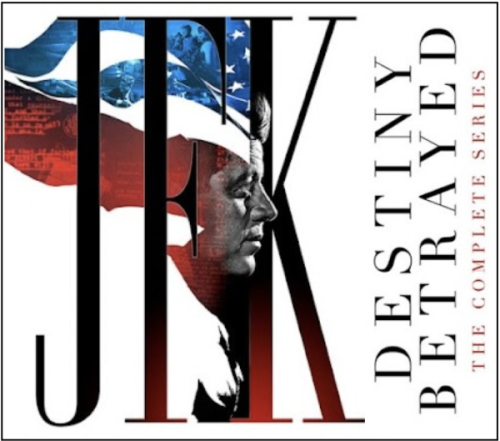
JFK and America’s Destiny Betrayed
A Review of DiEugenio’s “Foreign Policy Coup” Theory
BY LAURENT GUYÉNOT • UNZ REVIEW • JANUARY 21, 2023
I have watched Oliver Stone’s documentary on the assassination of JFK, both the short version, JFK Revisited: Through the Looking Glass, and the long version in four episodes, JFK: Destiny Betrayed. I recommend the latter, which I will discuss here. Although the technical parts (the bullets, the autopsy, Oswald’s CIA handlers) are interesting and partly new, I will focus exclusively on the theory regarding the main culprits and their motive. And I will discuss the larger work of James DiEugenio, who wrote the film—and probably interviewed the different contributors, although Stone appears to be doing it. … continue
Blog Roll
 Aletho News
- US Army turns to older PAC-2 Patriot missiles as war against Iran drains stockpiles
- James Woolsey, influential neocon and Iraq War booster, dies at 84
- Midazolam and morphine deaths
- US Benefits From Oil Supply Disruptions in Strait of Hormuz – Ex-UK Ambassador
- Iran: UK decision to aid US strikes amounts to ‘act of aggression’
- Number of US casualties in war with Iran higher than officially disclosed
- Ian Proud: Anti-Russian Sanctions Do Not Work – How the Ukraine War Ends
- Italian newspaper forced to pay for smearing ‘Putinists’
- Iran will destroy multiple energy facilities for every bridge, power plant struck by US: Report
- Pakistan thought it won the peace. Now, it could be dragged into war.
- If Americans Knew
- ISRAELI MEDIA: ‘An Inferno’: Gazans Face Sweltering Conditions in Tent Camps for Third Summer in a Row
- Israel’s Coordinated Campaign to Propagandize Conservatives in America
- The Israeli Spy Behind PragerU’s Plan to Rewrite American Education To Indoctrinate Children
- The President of the World Jewish Congress just sent a warning to every Potential AMERICA FIRST Candidate wishing to run for U.S. Congress
- Life in displacement tents under Gaza’s summer sun is “an inferno” – Daily Update
- Israel targets X users, right-wing media with $2 million ad push
- ‘Our role is to hold on’: Palestinian artists in Israel after October 7
- ‘My Father Is a Hero’: Detained Palestinian Dr. Hussam Abu Safiya’s Son Speaks to Zeteo
- Israel threatens to seize ancient water reservoirs near Bethlehem
- Series of Reports Ignored by Media Show Jeffrey Epstein’s Extensive Work With Israeli Intelligence
- No Tricks Zone
- Greenland’s Ice Sheet Was Supposed To Be Rapidly Melting Away. It Hasn’t Been.
- Global Temperature Trend Has Cooled Over The Past 6500 Years, Scientists Have Found
- Wind Energy Means Going Back To The Middle Ages, Says German Professor Horst-Joachim Lüdecke
- New Study: A 40-Fold Increase In Earth’s Main Greenhouse Gas Contributes To Cooling The Ocean
- New Study Highlights The ‘Dominant Role’ Of Aerosol/Cloud Interactions In Shaping Climate
- Munich’s First-Ever Green Party Mayor Declares First Ever City Water Use Restrictions… Fines Up to 50,000 €!
- Experimental Lab Research: The Climate Sensitivity To A 400-Fold Increase In CO2 Is 0.1°C
- Fatal Snobbery: In France, It’s Better To Die From A Heatwave Than To Do As Americans
- New Study: NASA’s Models Wildly Underestimate The Capacity Of Clouds To Alter Solar Radiation
- Polar Freezeover: Western Arctic Early July Sea Ice Exceeds 1980s Average
 Aletho News