Westerners, especially Atlanticists, are great at advocating for the setting of wildfires, and for starting those wildfires, but they seldom give much thought to what happens once they set a conflagration in motion
Leaked chemical dossier reveals Israel’s role in Sudan’s civil war: Report
Press TV – September 11, 2026
A dossier of evidence alleging chemical weapons use by the Sudanese Armed Forces (SAF) was compiled by Israeli intelligence and shared with Western media outlets in a coordinated operation to discredit the army and bolster its paramilitary rival, a report says.
The dossier, described by the New York Times and Washington Post over the weekend as “shared by a Middle Eastern intelligence agency,” contained nearly 150 documents, bomb blueprints, images, videos, voice notes and several thousand intercepted text messages allegedly detailing how a secretive SAF unit developed and produced chlorine bombs over six months in 2024.
Multiple Sudanese and US sources told Middle East Eye that the “Middle Eastern intelligence agency” is Israeli, and that the dossier was nearly identical to one Israel handed to the US government before Washington sanctioned Abdel Fattah al-Burhan, leader of the SAF, in January 2025.
A former US official described the interception of vast numbers of messages as “an advertisement for Pegasus,” the spyware developed by Israeli cyber-intelligence firm NSO Group to infiltrate mobile phones.
“The thing that is shocking is how much Mossad has been tracking this,” one Sudanese security analyst, who could not be named, told Middle East Eye.
“I knew Mossad had interests in Sudan… but the level and depth and length of surveillance suggests that Israel is more involved in Sudan than we think.”
The revelations raise serious questions about Israel’s role in Sudan’s civil war and appear to confirm that Israeli intelligence is actively siding with the Rapid Support Forces (RSF) — whose main patron is the United Arab Emirates — against the Sudanese army.
On 13 September 2024, the RSF released a statement accusing the army of firing “toxic” missiles on al-Jaili, a crucial oil refinery north of Khartoum controlled at the time by the paramilitary.
There were no confirmed deaths in the attack, and there are no other confirmed occasions in which the SAF used chlorine bombs. The dossier does not contain medical evidence or testimony from any victims.
In a statement shared with Middle East Eye, the Sudanese government clarified that Sudan is a state party to the Chemical Weapons Convention and “has remained committed to its provisions and procedures, including the non-production, non-stockpiling and non-use of chemical weapons.”
It said that “all chlorine stocks in the country are designated exclusively for water purification, civilian industrial uses and energy, and it stands ready to demonstrate this before any competent international body.”
Israeli sources involved in the Zionist regime’s decision-making in the Horn of Africa have previously sought to develop and maintain relationships with a variety of different players, rather than backing one side or another.
“The Israeli love story with Hemedti intensified in 2021,” one North African analyst told Middle East Eye, referring to RSF head Muhammad Hamdan Dagalo Musa. The RSF chief was believed at the time and afterwards to have developed ties with Mossad.
In the leadup to Sudan’s war, then-Israeli foreign minister Eli Cohen met Burhan as part of what the Israelis called a “historic diplomatic visit” intended to pave the way for the finalization of a peace agreement. The war scuppered this.
But Hemedti maintained his ties with Israel, whose key ally the UAE continued to support the Sudanese paramilitary — charges Abu Dhabi still denies, despite mounting evidence, including from the United Nations.
“This feels like they are picking sides,” a former US official said of Israel, the dossier and the RSF. “The intelligence they shared with Washington succeeded in getting Burhan and the SAF sanctioned.”
“The Israel-UAE relationship has only grown deeper,” the source said.
Last month, Africa Intelligence reported that two of Hemedti’s brothers, Abdul Rahim and Algoney, had travelled secretly to Tel Aviv in May 2025 and again in February this year to meet with Israeli intelligence and foreign ministry officials.
The dossier’s Israeli origins fit a broader pattern of Israeli intelligence operations aimed at shaping narratives, influencing Western media and undermining governments that refuse to align with its regional agenda.
By feeding selectively leaked and unverified material to American newspapers, Israeli intelligence has succeeded in manufacturing a chemical weapons scandal that has been used to justify sanctions against Sudan’s army leadership while its rival — accused of genocide by the UN — receives continued support from Israel’s Persian Gulf allies.
Is the Noose Tightening on Iran?
By Bryan Anthony Reo – New Eastern Outlook – September 11, 2026
The Western takeover of Syria, the weakening of Hezbollah, and now the capitulation of Hamas signal that Western/American/Israeli penetration of Iranian outer defenses is essentially complete. The only remaining coherent and unassailed bastion outside of Iran is found among the Houthi. There remains Iran itself, which has weathered six months of American and Israeli aggression.
Western Encroachment on Russia from the South and West
Over the last fifteen or sixteen years, I have followed and analyzed certain developments across the Mediterranean, the Middle East, and Central Asia, and I have noticed a pattern, a theme, a trend — that trend being the dismantling of certain sovereign states aligned with Russia and Iran, or at least committed to their own sovereignty in resistance (or perhaps rather, ‘defiance’ is a better term) to the attempts at policy imposition by Western nations (usually the USA, sometimes France or the UK or Israel).
Iraq went down in 2003.
Then in the recent modern era, Libya was one of the first to be dismantled with the toppling and murdering of Colonel Gaddafi in 2011.
Syria followed in 2024, but fortunately Assad and his family were able to leave safely.
Lebanon was fractured and crippled decades ago and limps along on life support, with only Hezbollah holding the line to protect Lebanese national sovereignty.
Jordan was bought off and is a pathetic satellite of the USA, as is Egypt, with both of those nations having puppet governments that have betrayed their people and their regional partners for American dollars and Western approval.
It is now increasingly obvious and apparent that the Arab Spring was nothing more than a color revolution aimed at the Arab world, the way color revolutions occurred in Ukraine, Georgia, and Moldova, and were attempted elsewhere (i.e., Belarus). The Arab Spring was intended to plunge the Arab/Islamic world into chaos and allow the replacement of the post-Cold War era Arab nationalist strongmen with weak, fractured coalition parliaments and fractured states or simply outright chaos (Libya) or Israeli/American puppet regimes.
In some sense, it would be reasonable to label the American advance across the Arab world, from North Africa to the Middle East, as long-term strategic “shaping operations” to remove genuinely sovereign and pro-Moscow governments from the board, so that American and Israeli positions throughout the region become almost unassailable and Russia is denied easy access to the Mediterranean and Iran is denied outer defensive bastions. This advance has been so blatant it is almost impossible not to notice, and attention must be called to it.
Iran Alone Defies America in Central Asia/Middle East
Iran and a few partners (Hezbollah, Houthi, etc.) throughout the region are all that remain in defiance of the Israelis and their American muscle/enforcers.
Syria has become a puppet satellite of the USA/Israel and has effectively ceded a large portion of southwestern Syria to the Israeli “security zone” that has resulted from Israel’s advance from the Golan Heights.
It should be increasingly obvious that Israel will never leave the territory it has occupied in Syria; it will move soldiers in, construct more permanent outposts, and then move settlers in.
Meanwhile, the Damascus branch of Al Qaeda, installed by the CIA and Mossad, is more concerned with trying to provide a legal basis by which they can murder former Syrian President Assad than with maintaining the territorial integrity of Syria against Israeli expansionism.
Across the border in Lebanon, Israel and the USA are working hard to plunge Lebanon into a renewed civil war, as that is the most probable outcome from the policy being foisted on Beirut, specifically the “disarm Hezbollah at all costs” policy. Any significant armed attempt by the anemic, corrupt, Western-aligned government in Beirut to disarm Hezbollah will likely result in a civil war.
While this is happening in the near periphery of Israel, closer to home, in Gaza, it appears that Hamas has capitulated, or at least their senior leaders are prepared to cut and run and toss their fighters under the bus so long as they have personal security guarantees and are able to depart Gaza with their families and wealth.
The disarmament of Hamas will begin the final chapter in the story of the Palestinian people, and this chapter will end with their permanent mass expulsion from the remnants of the Palestinian territories and the formal annexation of those territories into the state of Israel and their population by Zionist settlers.
It will also mean that in regard to the regional chessboard, the only pieces remaining on the board in opposition to Israel and America are essentially Hezbollah, the Houthi, and Iran itself.
Despite American Propaganda, Iran is Actually Winning
CNN claims “80% of all traffic transiting Hormuz is going through the American route,” which, on its face, is plausible and is likely the case.
However, the CNN article does not tell the actual story: that traffic transiting Hormuz is down at least 90-95%.
Thus the notion that “80% of all traffic transiting Hormuz uses the American route via Oman” becomes far less impressive when one analyzes it through the lens of the traffic being 95% reduced from where it had been before the war.
I once had a potential client ask me to take a loser of a case on contingency; he even said, “You can have 100% of the money,” after which I told a colleague, “One hundred percent of zero is still zero.”
80% of 5% is a minuscule 4%, which means 4% of the pre-war traffic is using the American route via Oman. This is hardly something to brag about and it is not evidence that Iran is days from collapse or that the USA has won or is in the process of winning.
By the very nature of the situation, Iran wins by default if the US fails to maintain Hormuz open and freely available for maritime commerce. If the USA is unable to subdue Iran, then Iran prevails. All Iran has to do is avoid losing. It is similar to how in a lawsuit the plaintiff has the burden to prosecute a claim against the defendant in order to succeed and prevail; if the defendant simply avoids losing, then the defendant wins. If Iran is able to avoid botching the defense of their country and come through the war with their regime intact and while maintaining control over the Strait, or at least effectively maintaining area denial of the Strait, then Iran wins.
The Americans can sink some Iranian ships and try a repeat of Operation Praying Mantis, but this isn’t the 1980s, and Iran is a much harder target.
The US can likely even manage commando raids and strikes on Kharg Island, but it won’t be able to take and hold the island. Likewise, the USA is not capable of taking and*holding Qeshm Island (something likely necessary to exercise any significant long-term control over the Strait of Hormuz). An American operation to seize Qeshm Island, unless it has a plan for how to resupply the occupying forces with food and water in the face of drone and missile attacks interdicting the supply craft, is essentially an operation in “how long can these men hold out until they have to surrender to Iran due to hunger and thirst.” In short, an American invasion and occupation of Qeshm Island would be extremely ill-advised, unless President Trump has some secret logistical weapon, or a “trump card” that the American public is simply not aware of.
Negotiations with Iran are the Only Way Forward (But Iran Has NO Reason to Trust Americans Now)
It is painfully obvious that the only way forward for the United States in regard to Iran is to enter into negotiations, negotiations that would have to be fair, reasonable, sincere, and honest. However, given the American tendency to engage in direct strikes and targeted killings (assassinations) of the people they are negotiating with, it is doubtful if the Iranians are going to believe anything the Americans have to say at this stage.
Negotiations with Iran would also require (at least implicitly) the recognition of Iran as having legitimate national and regional interests if not indeed being an actual regional power in Central Asia and the Middle East, something the United States appears unwilling to do, largely because of Israeli/Zionist influence being exerted on American policy.
How can any sincere American diplomat go to Iran and ask, in good faith, that they trust him? How can he suggest, in good faith, that they work with American envoys? We have an established record of murdering diplomats during breaks in diplomatic sessions. How does any nation recover and come back from this reputation?
Neo-Con Provocations and Delusions Hinder Negotiations
At the present time it seems the United States is living in a fantasy land where it can endlessly sustain and support Ukraine in its war against the Russian people in Donbas and Crimea (using Ukraine as a NATO puppet to advance NATO/American interests in Eastern Europe), escalate on the Korean Peninsula against North Korea; continue to aggress against Iran in the Persian Gulf and wider region; support Israel against Hamas and Hezbollah; support the Saudis against the Houthi; and pivot forces from Europe to the Pacific and East Asia as part of a long-term program to contain and curtail China as a prelude to attempting to dominate China.
It is a very ambitious American grand strategy, and while lacking the resources to be successfully pursued, it also lacks any coherent overarching worldview that would string it all together and explain the motive, reasoning, or the telos. At present, it seems America is a mediocre chess-player simply moving pieces back and forth across the board, without any rhyme or reason, although that is the conclusion one reaches at a casual glance. A more thorough analysis would reveal that America’s policy in regard to Iran is primarily aimed at fulfilling long-term Zionist ambitions in the region and providing a puppet government in Tehran amenable to the stationing of American military assets (including nuclear weapons) that would be used to coerce and threaten Russia for the purpose of pursuing the long-term American neo-con goal of causing the collapse of the Russian Federation as a coherent, centralized polity.
America is presently trying to escalate with Iran and Russia, and is always eager and willing to unnecessarily confront, provoke, or escalate with the DPRK and China as well.
What is the American End Goal? Short-Sighted Regime Change?
Let us suppose that American/Zionist goals are accomplished in Iran, and Iran collapses; at that point the USA will have opened a southern front against Russia, with the ability to threaten Russia by projecting power across the Caspian and by escalating provocations throughout the Caucasus region as a way to distract, divide, weaken, and strain Russian resources.
But to what end? For what purpose? Why? While attending recent seminars at the University of Oxford in Aristotle’s Politics and Nuclear/Particle Physics, I had the opportunity to discuss ongoing geopolitical matters with a variety of European classmates. The vast majority (80%) had the standard mainstream EU/UK/Atlanticist line, and some were militantly anti-Russian. One (a man born in the Latvian SSR in 1986) openly said he wanted to see “democracy” rise up in Iran, topple the Islamic Republic, and to see “Putin toppled” in Moscow, and Western liberal democracy take over Russia.
My challenge to all of that was multi-faceted, but one aspect I consistently hammered home was “Why? What comes next? The US has a very bad track record of collapsing regimes and dealing with the aftermath… Afghanistan, Iraq, Libya, Syria… Why would we want to collapse stable states such as Iran and Russia? Even if we could, why would we want to collapse those states? What about the aftermath? What about thinking five years or ten years down the road instead of just thinking about the next six months or twelve months? The leaders in Iran and Russia are reasonable and rational, and those powers being intact and stable are crucial to regional stability; why remove them and have them replaced with, well, who really knows, some unknown quantity that might be a lunatic or a zealot or something unreasonable.”
I have very little appetite, and no sympathy, for the view that the USA should lead the way in toppling all non-Western governments so they can be replaced by what would presumably be Western-aligned parliamentarian democracies of the plutocratic variety. Westerners, especially Atlanticists, are great at advocating for the setting of wildfires, and for starting those wildfires, but they seldom give much thought to what happens once they set a conflagration in motion.
Many of the Russophobes cannot see past their own hatred of Russia and of President Putin, and they cannot wrap their minds around the simple truth that the West is fortunate to be able to deal with and interact with a Russia that has historically strong and visionary leadership in the form of true statesmen such as Putin and Lavrov, who are well-educated, experienced, and have coherent and sensible worldviews shaped by a proper and true classical education, whereas most Western leaders are fungible, interchangeable bureaucrats educated in technocratic parliamentary procedure and institutional rules.
Much like we are with Iran, we in the West are squandering golden opportunities for historic cooperation and mutual benefit with Iran and Russia because we are pursuing absurd policies based on, well, frankly, crap beliefs, garbage intelligence, and an incoherent worldview formed in the crumbling and decaying ruins of post-modernity.
Whether or not the US is actually succeeding in tightening a noose against Iran, it is certainly expending significant resources in an effort to do so, although it presently seems to have very little to show for all the effort.
Bryan Anthony Reo is a licensed attorney based in Ohio and an analyst of military history, geopolitics, and international relations
Follow new articles on our Telegram channel
Persian Gulf states to meet in Oman to discuss regional security, Hormuz navigation: Iran
Press TV – September 11, 2026
Iran and other Persian Gulf littoral states will meet in Oman on Monday to discuss regional issues, including arrangements for safe commercial navigation through the Strait of Hormuz, says Iranian Foreign Ministry Spokesman Esmaeil Baghaei.
Speaking on Friday, Baghaei said the meeting would bring together Iran, Iraq and other countries bordering the Persian Gulf and Gulf of Oman, describing the initiative as an important step toward strengthening regional understanding and cooperation.
He said Iran had consistently sought to build trust and cooperation among regional countries to promote peace and stability without “destructive and divisive interventions” by actors from outside the region.
The meeting in Muscat is also expected to address the outcome of recent Iran-Oman talks on establishing safe routes for commercial shipping through the Strait of Hormuz, Baghaei said.
Iran and Oman have been engaged in negotiations for nearly three months over arrangements for safe navigation through the strategic waterway. On Aug. 25, the two countries announced discussions on a phased framework that would initially establish a temporary joint maritime corridor, alongside a joint mine-clearance project.
The framework is aimed at restoring safe navigation while preserving the sovereignty and sovereign rights of coastal states. Technical talks are expected to continue toward a permanent navigation corridor and an agreement on the future administration of the waterway.
Baghaei recalled the understanding reached between Tehran and Muscat on temporary shipping routes, saying Iran remained committed to efforts to ensure the safety of navigation through the strait.
“However, naturally, as long as the aggressive actions and illegal interventions of the United States, including the naval blockade and economic warfare, continue, the security of navigation in the Strait of Hormuz cannot be guaranteed,” he said.
The Strait of Hormuz is a major global energy chokepoint, with roughly one-fifth of global oil demand passing through the waterway. Iran has maintained heightened restrictions on navigation since the start of the US-Israeli military aggression against the country on Feb. 28, citing security concerns and the need to safeguard its sovereignty.
Back on August 25, Oman’s Foreign Minister Sayyid Badr Albusaidi stressed that future management of the strait and a permanent solution would follow the terms of the Islamabad memorandum of understanding, particularly its Article 5.
The memorandum, signed by Iran and the United States in June, aimed at ending the US-Israeli aggression against Iran, included an arrangement under which Iran agreed to allow fee-free maritime transit through the Strait of Hormuz for 60 days.
Tehran subsequently established a special maritime route for vessels crossing the chokepoint; however, the US established unauthorized routes along Omani shores in violation of the agreement. In response, Tehran reimposed restrictions.
The joint Iran-Oman statement also pointed to the importance of consultations with other countries bordering the Persian Gulf and called for adherence to international law and respect for the sovereign rights of coastal states.
The meeting will be the first of its kind between Iranian diplomats and their regional counterparts following the start of the US-Israeli aggression, during which the US used the soil and airspace of some of these countries, including Bahrain, Kuwait, and the UAE, to launch criminal attacks against Iran.
Araghchi: US acknowledgment of Bahrain damage exposes cost of Israel’s wars
Press TV – September 11, 2026
Iranian Foreign Minister Abbas Araghchi has referred to Acting US Navy Secretary Hung Cao’s remarks on extensive damage to US facilities in Bahrain, saying Americans should not pay for Israel’s wars.
“We appreciate the candor of Acting Navy Secretary Hung Cao. Our powerful Armed Forces did indeed ‘blow the hell out of the 5th Fleet HQ in Bahrain,’ as well as other bases supporting US aggression,” Araghchi wrote on X on Friday.
“The American people deserve better than footing the bill for Israel’s wars,” he said.
Cao acknowledged in a September 9 interview with The Epoch Times the extensive damage inflicted on US naval facilities in Bahrain by Iranian attacks.
Cao said Iranian forces had “blew the hell out of Bahrain,” referring to the damage sustained by Naval Support Activity Bahrain, which serves as the headquarters of the US Fifth Fleet.
The damage also disrupted operations involving the USS Abraham Lincoln aircraft carrier, with Cao saying there was “no place for them to pull in.”
The comments come after open-source and satellite imagery had also pointed to significant damage at US facilities in Bahrain during the early stages of US-Israeli aggression against Iran which began on February 28.
Adm. Daryl Caudle, the US Navy’s top uniformed officer, said earlier this month that the Navy would not return to the Bahrain facility “anytime soon” because of the damage.
Jim Webb, a US Marine infantry veteran and independent national security consultant, said Cao’s latest comments suggest that the current US force posture in West Asia “is unsustainable without continuing to be under attack.”
“I don’t think there’s any way, you know, in the short, medium, or potentially even long term, that we can adequately defend a place like NSA Bahrain, or let alone the rest of the logistics bases there,” Webb told The Epoch Times.
Webb said keeping US troops at bases in the region makes those troops “constant targets.”
Cao said the Navy was reviewing whether the facility would be needed for future high-intensity deployments, adding that he had assigned a task force to examine the issue.
The USS Abraham Lincoln recently ended an extended deployment of nearly nine months, including around 200 days in a combat zone, after arriving in Thailand earlier this month.
The deployment had faced scrutiny over shortages of food and water, plumbing problems, declining morale among sailors as well as concerns about sailors’ mental health and the risk of self-harm.
US Secretary of War Pete Hegseth, however, rejected reports about conditions aboard the carrier, claiming they are “completely misrepresented.”
YAF secure Bab al-Mandab, advance toward Dhubab
Al Mayadeen| September 11, 2026
The Yemeni Armed Forces have advanced into Dhubab on the western coast, reaching the area overlooking the strategic Bab al-Mandab Strait, Al Mayadeen’s correspondent reported on Friday. The advance follows their taking control of al-Mokha and other positions along the Red Sea coast, as normal life returns to the area and government institutions resume their work.
The Saudi-backed government confirmed that the Yemeni Armed Forces had completed their control over the Bab al-Mandab Strait and taken control of the strategic Mayyun Island, AFP reported, citing a local Yemeni official.
Two officials in the Saudi-backed government also told Reuters that the Saudi-backed forces had withdrawn from Perim Island, located in the Bab al-Mandab Strait.
Saudi-backed forces face encirclement
Saudi-backed forces also told AFP that the YAF were besieging their forces on the Greater and Lesser Hanish Islands.
“We do not know the fate of our forces, numbering more than 2,000 personnel on the islands,” the sources said. “As far as we know, the Houthi enemy has called on them to surrender.”
A senior military official told AFP that the besieged forces had appealed to the authorities to “rescue them, send food and water, and lift the siege,” adding that this would require air support.
‘A strategic disaster for Washington and Riyadh’
The Yemeni Armed Forces had taken control of the Yemeni city of al-Mokha on the Red Sea. Reuters quoted a military official in the Aden government and witnesses as confirming the development, noting that the YAF were advancing toward areas adjacent to the strategic Bab al-Mandab Strait.
The Yemeni Armed Forces also took control of al-Khokha and Hays, south of the coastal Red Sea province of Hodeidah, as well as al-Wazi’iyah in Taiz.
As part of international and regional assessments of these developments, The Guardian described the Yemenis’ control of the Red Sea coast as a “strategic disaster” for the United States and Saudi Arabia.
Meanwhile, Israeli media outlets continued to follow developments in Yemen, with Israeli Channel 14 stating that the “Houthis’ control of the city of Mokha constitutes a strategic event that could have far-reaching repercussions.”
YAF prepare to announce a large-scale military operation
The YAF advances come as the Saudi aggression across Yemen continues, with the aim of supporting and reinforcing Saudi military mobilizations on the ground.
Meanwhile, Saudi Arabia is carrying out airstrikes targeting several provinces, including Marib, al-Jawf, Taiz, and Hodeidah.
In this context, the Saba News Agency reported on Friday that Saudi Arabia had carried out two airstrikes on al-Mokha Airport, west of Taiz province in southwestern Yemen.
Meanwhile, the Yemeni Armed Forces are expected to issue a statement today announcing a large-scale and qualitative military operation.
YAF take control of key areas, military sites in Mokha, west of Taiz
The Yemeni forces have taken control of key areas and military positions in the coastal district of al-Mokha, west of Taiz Governorate, Al Mayadeen’s correspondent reported on Thursday.
In detail, our correspondent revealed that the Yemeni Armed Forces have taken control of Khalid Camp Base and Jabal al-Nar Camp, which serves as the command headquarters for military forces on the western coast.
This development comes as the YAF made advances in several areas, taking control of al-Wazi’iyah, al-Khokha, and Hays, before reaching the outskirts of the city of al-Mokha.
It is worth noting that the area of the districts of Hays and al-Khokha to the south of the coastal Hodeidah governorate on the Red Sea exceeds 1,050 square kilometers, local sources told Al Mayadeen.
The accelerating developments follow the Yemeni Armed Forces’ announcement in July that the 2022 truce with Saudi Arabia had collapsed following Saudi Arabia’s aggression on Sanaa International Airport.
Ansar Allah’s Victory Is A U.S. Defeat
By Justin K.P. | The Dissident | September 10, 2026
Yemen’s Ansar Allah movement, which has controlled the country’s capital, Sanaa, and the majority of the country where Yemeni’s live since 2014, has recently made some major advances into the rest of the country controlled by Saudi Arabia-backed proxies.
From 2015 to 2022, the U.S. supported Saudi Arabia’s war in Yemen following Ansar Allah’s seizure of Sanaa in 2014 with intelligence and weapons, which killed 377,000 people when direct and indirect deaths are included.
The U.S. supported Saudi Campaign in Yemen included a brutal blockade of fuel, blocking clean water and sanitation, leading to the world’s worst cholera outbreak in modern times, and forced millions into “famine-like conditions” by blockading food.
More recently, both the Biden and Trump administrations took part in direct strikes against Ansar Allah in Yemen after the movement stood up in solidarity for the Palestinians undergoing a genocide in Gaza, and put a blockade on Israeli-linked ships crossing the Red Sea, in an attempt to pressure the U.S. and Israel to end the genocide.
This year, Saudi Arabia began to restart its war on Yemen after it bombed the Sanaa International Airport in July, the“only airport providing international flights to and from Houthi-controlled territory,” as well as a “critical entry point for humanitarian personnel and aid,” in an effective attempt to reinstate the blockade.
The strike was reportedly greenlit by the U.S.
Following this strike, “Saudi-backed forces reportedly began mobilizing inside Yemen in preparation for a possible invasion.”
In response, Yemen fought back to take back the rest of Yemen from the Saudi Proxies.
Ansar Allah was able to seize the strategically important city of Mokha as well as its port from Saudi Proxy forces, an important development given its proximity to the Bab al-Mandab Strait at the southern end of the Red Sea.
Ansar Allah has stated that this development is not intended to block international shipping, but to take Yemen back from Saudi proxy forces it believed were planning an invasion.
Member of Ansar Allah’s Political Bureau Hizam al-Assad said that “the ongoing battle along Yemen’s western coast is an internal operation aimed at restoring Yemeni territory and does not threaten maritime navigation” and that “the western coastal areas are Yemeni territory and that Yemenis have the right to reclaim them from Saudi-backed forces.”
The capture however, gives Ansar Allah a major leg up over Saudi Arabia in it’s renewed war on Yemen, given that “Saudi Arabia pivoted to the Red Sea to export most of its oil” after the Iranian closure of the Strait of Hormuz.
This is not only a major defeat for Saudi Arabia, but for the U.S. as well.
Behind the Saudi plan, according to recent CNN report, was a team of “more than 100 US military advisers” on the ground.
According to the report, “The US military personnel are working as part of a newly-established joint forces command, which was formed in recent weeks,” which was “focused on ensuring Saudi Arabia’s operations run smoothly and professionally”.
In other words, Saudi Arabia’s renewed campaign in Yemen was backed by a team of “US military personnel” established weeks before the gains made by Ansar Allah.
Therefore, Ansar Allah’s seizure of Mokha, and likely ensuing seizure of more Saudi-occupied territory, is not only a defeat for the Saudi’s, but for the U.S., which was apparently advising Saudi Arabian plans on the ground going back weeks.
Insider trading proves 9/11 foreknowledge
By Kit Klarenberg | Al Mayadeen | September 11, 2026
On September 12th 2001, chaos reigned supreme. Yet, as governments the world over struggled to make sense of the previous day’s catastrophe, and before a motive was established, any perpetrators identified, or other basic facts ascertained, the US Securities and Exchange Commission launched an investigation into potential insider trading by unknown figures with apparently precise foreknowledge of 9/11. The evidence seemed overwhelming. Mainstream journalists openly mocked the implausibility of numerous deeply abnormal stock market trades immediately prior to the attacks being pure coincidence.
For one, several companies prominently impacted by the event were abruptly ‘shorted’ at inexplicable levels over the preceding weeks. In other words, investors bet certain stocks would perform poorly in the near future, and sought to profit accordingly. For example, just five days before 9/11 over 2,000 shorts were placed against United Airlines – 90 times more in a single day than over the entirety of August. The company’s share price collapsed following the attacks, turning $180,000 in shorts into $2.4 million.
Meanwhile, substantial investments were serendipitously made in private security, intelligence and defence firms that benefited enormously from the 9/11 attacks and ensuing ‘War on Terror’. On September 10th, purchase of shares in major US defence contractor Raytheon surged sixfold. Just one week later, as the Pentagon began bulk purchasing Raytheon’s flagship Patriot and Tomahawk missiles in preparation for invading Afghanistan, the firm’s shares rocketed 37%. Other major defence stocks, including Boeing and Lockheed, also experienced abnormal trading pre-9/11.
Purchase and shorts of dozens of stocks in almost every conceivable industry that one way or another profited, or were harmed, as a result of 9/11 incongruously spiked in the weeks before the fateful day. The evidentiary trail was literally globespanning, with major financial authorities in several Western countries launching their own investigations. Numerous officials in European capitals alleged the trading was definitively indicative of 9/11 foreknowledge, and “terrorists” were responsible.
For example, commenting on Italian securities regulator CONSOB’s investigation into the suspicious market activity on September 17th 2001, Italian Foreign Minister Antonio Martino boldly declared “terrorist states and organizations [were] behind speculation on the international markets.” One week later, German central bank President Ernst Welteke asserted his researchers had uncovered “irrefutable proof of insider trading.” He and his team were certain “people connected to the terrorists must have been trying to profit from this tragedy”:
“You look at the movements in markets before and after the attacks, it really makes your brow furrow… we are confident we will be able to pinpoint the source.”
Welteke declined to release further information, pending consultation with European and US regulators. However, the 9/11 insider trading scandal quickly faded from public consciousness thereafter. In July 2004, the SEC announced the end of its grand investigation – conducted in conjunction with the Department of Justice and FBI – having “not [developed] any evidence suggesting that anyone who had advance knowledge of the September 11 attacks traded on the basis of that information.” Which, rather than closing the case, begs the obvious question of who did.
Declassified records of one suspicious pre-9/11 trade probed by the FBI sheds potential light on why US and other authorities may have decided to leave the entire issue alone. From September 6th – 10th 2001, a total of 56,000 Stratesec shares were purchased by a single investor. The company provided security systems to several airports, including New York City’s Dulles from where one of the hijacked planes departed, and the World Trade Center. Its share price almost doubled in the attacks’ wake.
The shady trades were traced back to Wirt D. Walker III – a distant relative of the Bush family and business partner of Marvin Bush, then-President George W. Bush’s brother. The FBI reportedly uncovered “no ties to terrorism or other negative information” regarding Walker, so didn’t even interview him before concluding his lucrative transactions were innocent happenstance and closing the investigation. Apparently, the evident possibility Walker III possessed foreknowledge of 9/11 via other means than “ties to terrorism” wasn’t worth exploring.
Still, this sleight of hand granted the Bureau, Department of Justice and SEC an extremely effective “out”. The 9/11 Commission likewise summarily dismissed any suggestion of “unusual pre-9/11 trading activity” on the basis investors involved “had no conceivable ties to Al Qaeda.” Such specious reasoning was sufficient to kill the scandal dead in the mainstream. Nonetheless, ever since, numerous peer reviewed academic papers have contrarily concluded insider trading did occur, and was motivated by 9/11 foreknowledge.
In 2006, University of Illinois professor Allen Poteshman authored a well-cited study focusing on suspicious pre-9/11 trading activity in airline stocks. He concluded this shorting was “unusually high”, and “terrorists or their associates traded… on the basis of foreknowledge of the impending attacks.” Similar findings were reached by a 2011 Multinational Finance Journal paper, which identified highly abnormal market movements in numerous key industries, including insurance and reinsurance stocks directly impacted by 9/11. This was “consistent with insiders anticipating the 9-11 attacks.”
While the media failed to report on these studies, they were academically impactful, and cited as precedents in a December 2023 paper tracking peculiar Israeli stock market activity in the days preceding Operation Al-Aqsa Flood on October 7th that year. Authored by two US scholars, they found a “significant spike” in the shorting of publicly listed Israeli companies days prior to that world-changing strike on the Zionist entity. This activity was “consistent with informed traders anticipating and profiting from the Hamas attack.”
The authors found shorting of Israeli companies listed on the Tel Aviv stock exchange “increased dramatically” before October 7th. Israeli stocks on major US exchanges also experienced a “sharp and unusual increase” during the same period. Shorting of publicly traded Zionist entity firms on October 2nd “far exceeded” levels of shorting witnessed at the start of COVID19 pandemic, which triggered a temporary global stock market collapse. No wonder the paper concludes it was “extremely unlikely the volume of short selling… occurred by random chance.”
“Random chance” seems an even less plausible explanation when one considers “similar patterns” of shorting Israeli stocks were also identified in early April 2023, right when Hamas was planning to conduct a comparable attack to Al-Aqsa Flood during Passover. In the immediate aftermath of October 7th too, a flurry of mainstream media reports exposed how Zionist Occupation Forces had numerous advance warnings of an impending Hamas attack for months prior. This included a detailed “point by point” battle plan, outlining Al-Aqsa Flood.
Fast forward to today, and Haaretz reveals UAE President Mohamed bin Zayed personally warned Benjamin Netanyahu 10 days prior to October 7th Hamas intended to wage a major offensive, but “Israel’s” premier failed to act. This disclosure comes at a time the mainstream media finally acknowledges the need for a complete reevaluation of what happened on 9/11. Any new investigation should surely focus on the insider trading angle – ascertaining who knew what when, and why, could unravel the entire conspiracy.
The Saudi cutout and the CIA shadow over 9/11
As Riyadh fights 9/11 families in US courts, buried intelligence testimony points beyond the kingdom to a far more protected hand.
By Kit Klarenberg | The Cradle | September 10, 2026
On the eve of 9/11’s silver anniversary, it was widely reported that a forthcoming New York District Court civil case brought against notorious Saudi government operative Omar Bayoumi would deliver “smoking gun” proof tying Riyadh directly to the attacks. Yet evidence alleging that Saudi intelligence managed two future hijackers as potential assets and did so through a “liaison relationship” with the CIA has lain largely unexamined in plain sight. As scrutiny of Riyadh grows, the agency’s shadow remains almost entirely outside the frame.
Bayoumi has long been accused by major news outlets and US officials of maintaining an intimate and suspicious relationship with hijackers Nawaf Hazmi and Khalid Mihdhar, immediately upon their arrival in the US in January 2000.
A subsequent FBI investigation, dubbed Operation Encore, concluded there was a “50/50 chance” Bayoumi (and the House of Saud by extension) had detailed advance knowledge of the 9/11 attacks. This explosive finding was not publicly divulged until March 2022.
Far less attention followed a year later, when a bombshell filing lodged in the Office of Military Commissions – the military court system overseeing prosecutions of 9/11 defendants – surfaced publicly.
The document summarizes classified government discovery disclosures and private interviews conducted with anonymous high-ranking US intelligence officials. Its contents set out confidential-source allegations that the CIA sought to recruit at least Hazmi and Mihdhar, if not others who later participated in the 9/11 attacks, “via a liaison relationship” with Riyadh’s General Intelligence Directorate.
The declaration also alleges that the 9/11 Commission was deliberately sabotaged by its chief Philip Zelikow, who personally endeavored “to blunt” inquiries “into Saudi involvement with the hijackers.” Concurrently, senior FBI officials tasked with investigating the attacks were prohibited from interviewing Saudi nationals, despite “many” leads pointing directly to Riyadh’s Washington, D.C., embassy. According to the filing’s sources, probing those connections risked exposing the Saudi General Intelligence Directorate (GID) as a CIA “cutout” in its clandestine dealings with the future hijackers.
High-ranking FBI officials quoted in the filing discuss how the GID was a longstanding CIA “proxy,” exploited by the agency whenever it was “unwise or not practical … to undertake an operation directly.”
This need was particularly pronounced in the context of cloak-and-dagger CIA connivances conducted “on US soil.” After 25 years, it appears Riyadh could finally take the fall for a dastardly CIA operation that one way or another resulted in 9/11. As planned, there is little chance of the agency itself landing in the dock.
‘CIA team’
Among the court filing’s most dynamite excerpts is the insider testimony of an FBI special agent, who was posted to Alec Station – the CIA’s Al-Qaeda tracking unit, ultimately responsible for recruiting Hazmi and Mihdhar as assets.
When, in January 2000, the special agent learned the pair – known Al-Qaeda operatives under intensive CIA and NSA surveillance – had multi-entry visas to the US, they produced a report warning Bureau headquarters. Its dispatch was blocked by an unnamed CIA analyst.
According to the agent’s account, the same analyst directed the GID to make contact with Hazmi and Mihdhar upon their arrival, then falsely told subsequent US government inquiries that the FBI had been informed of the pair’s presence in the US.
The agent also alleged having witnessed CIA director George Tenet and operations director James Pavitt boast about how they “conspired to obstruct the 9/11 Commission” by concealing the analyst’s activities and identity from investigators.
In the process, an extraordinary, hitherto unreported component of Riyadh’s relationship with the hijackers remained determinedly unexplored. The FBI special agent alleged Hazmi and Mihdhar were explicitly provided US visas by the American consulate in Jeddah, “to facilitate the operation run by the Saudis’ GID and the CIA team.”
This disclosure is all the more tantalizing given that 15 of the 19 hijackers obtained a total of 18 visas in Saudi Arabia. Fourteen were issued at the US consulate in Jeddah, 11 of them by a single consular officer, Shayna Steinger. Many of the applications were incomplete or contained details that should have invited far greater scrutiny.
Steinger arrived at the Jeddah consulate in July 2000, fresh out of Columbia University, and went on to approve visa applications for 11 future hijackers. At the time, consular officers in Jeddah were divided over how rigorously Saudi applicants should be screened. Some argued that young Saudi men should be interviewed and required to demonstrate a clear purpose for travel, but the consulate generally followed a more permissive approach.
However, Steinger personally took it upon herself to reverse this policy. Moreover, she issued visas to future 9/11 hijackers despite their applications frequently being incomplete or error-strewn, based on forged documents, and their contents giving ample grounds for suspicion.
Steinger nonetheless interviewed Hani Hanjour, who purportedly piloted Flight 77, which struck the Pentagon. Afterward, she rejected his application for a three-year US visa, due to apparent doubts over his stated purposes in the country. Nonetheless, Steinger approved Hanjour’s renewed application two weeks later.
In ensuing official investigations, she offered wildly contradictory accounts of why the hijackers’ visas were granted. In Hanjour’s case, Steinger initially claimed he provided requested supporting documentation.
She subsequently admitted he actually hadn’t, but Hanjour’s “middle-class” background purportedly led her to conclude he was trustworthy.
If the court filing’s account is accurate, future 9/11 hijackers were granted entry to the US so the CIA could recruit them upon arrival, raising the troubling possibility that Steinger was acting on Agency instructions.
A network hidden in plain sight
Once Hazmi and Mihdhar touched down in Los Angeles in January 2000, almost immediately they crossed paths with Omar Bayoumi at an airport restaurant. FBI reports cited in the court filing indicate a witness who observed their meeting saw Bayoumi “dropping a piece of paper” near the pair’s table, “then striking up a conversation with them” in a manner that appeared “unnatural.” The witness relayed this account to the Bureau in 2002, but it was never publicized.
In interviews with Operation Encore investigators years later, Bayoumi maintained that his meeting with Hazmi and Mihdhar was pure happenstance. The extraordinary assistance he gave them immediately thereafter – including finding them an apartment, co-signing their lease, setting up bank accounts for them, and gifting them substantial sums toward their rent – was simply charity for fellow Muslims who could barely speak English and were unfamiliar with western culture, Bayoumi asserted. But the filing offers numerous striking insights into the dark reality of his contact with the future hijackers.
For example, it appears Bayoumi was secretly instructed to recruit Hazmi and Mihdhar at the Saudi Consulate in Los Angeles by extremist cleric and Saudi Ministry of Islamic Affairs official Fahad Thumairy.
The filing cites evidence indicating Bayoumi was himself in California “to spy on local dissidents” of Saudi extraction. He was seen with the two 9/11 hijackers “on numerous occasions,” going to the extent of organizing “a social gathering for the hijackers.” We can only guess who may also have been in attendance.
Another stunning exposure in the filing concerns Hazmi and Mihdhar lodging with long-time FBI informant and asset Abdussattar Shaikh from September 2000 onwards. Shaikh failing to provide their surnames to his handler despite being asked has been known for many years.
The joint congressional and Senate intelligence committee probe into 9/11 ruled the pair’s stay with Shaikh was “the [US] intelligence community’s best chance to unravel the September 11 plot.” Insulating Hazmi and Midhar from Bureau scrutiny may have been his explicit objective.
The filing indicates he himself “was receiving funds” from Riyadh, while simultaneously serving as an FBI informant. “Prominent” Saudis “would stay at Shaikh’s boarding house while visiting California,” it states.
His mission was “to monitor the activities of [Saudi] citizens while they were abroad.” Hani Hanjour also stayed with Shaikh alongside Hazmi, after Mihdhar returned to Saudi Arabia in late 2000. It appears that at every stage Stateside, the hijackers were in intimate proximity with figures connected to Saudi intelligence.
If the filing’s account that the GID was acting on the CIA’s behalf is accurate, this contact raises the obvious prospect that the agency – via its Riyadh “proxy” – was directly monitoring the movements of Hazmi, Mihdhar, and Hanjour – if not other Saudi-born hijackers – from the moment they entered the US at the agency’s direction, until 9/11 itself.
How far the CIA could have tracked or influenced their actions and movements remains unknown. The proximity described in the filing nevertheless demands an explanation.
The files Langley kept from the FBI
The established record shows that Alec Station repeatedly withheld the presence of Hazmi and Mihdhar in the US from the FBI until it was too late. The filing records how in June 2001 Station representatives showed senior Bureau officials photographs of three Al-Qaeda operatives, including Hazmi and Mihdhar.
However, the CIA refused to answer questions about the individuals in the photos, or provide identifying information. Had it done so, the FBI could have readily found Hazmi and Mihdhar’s names and addresses listed in San Diego’s local phone directory.
This was a flagrant dangle, obviously intended to gauge the Bureau’s knowledge of the identities of the individuals pictured, and their presence in the US. The filing also indicates the FBI conducted a dedicated counterintelligence investigation into Bayoumi prior to 9/11, due to suspicions that “he was operating as an intelligence officer.” Yet, when the Bureau contacted the CIA for information on Bayoumi, they were told the agency “held no files” on him at all – a “falsehood.”
In reality, the CIA maintained plentiful “operational” records on Bayoumi, which were “never passed to the FBI.” Such brazen stonewalling persisted long after 9/11. Upon learning tens of thousands of dollars had been sent from Haifa bin Faisal, wife of Saudi ambassador to the US Bandar bin Sultan, to Bayoumi’s wife, the Bureau attempted to subpoena their financial records from Washington, D.C.’s Riggs Bank. Per the filing, “officials at Riggs thwarted the FBI’s efforts to obtain the records for a year.”
Riggs Bank, which counted US presidents and CIA-installed Chilean dictator Augusto Pinochet as clients, collapsed amid major money laundering scandals in 2005. Post-9/11 investigations identified financial improprieties in accounts held by several wealthy Saudis – including a lack of required background checks and consistent failure to alert regulators over large transactions violating federal banking laws.
Riggs’s downfall precisely mirrors the unceremonious end of many confirmed CIA front banks past, such as Bank of Credit and Commerce International, which assisted criminal cloak-and-dagger connivances including Iran/Contra.
Perhaps unsurprisingly, the filing records how “diplomatic pressure” was exerted on the FBI not to investigate Riyad’s myriad connections to 9/11. Bureau agents testifying to the joint inquiry into the attacks were moreover “instructed not to reveal the full extent of Saudi involvement with Al-Qaeda.”
Senior officials at FBI headquarters knew “of both Bayoumi’s affiliation with Saudi intelligence and … the existence of the CIA’s operation to recruit Hazmi and Mihdhar,” but “suppressed investigations” into these burning matters.
The filing concludes by noting Bayoumi was subsequently arrested in Britain on immigration charges immediately after 9/11, with authorities finding “extremist literature in his apartment.” The significance of this disclosure has gone entirely unnoticed since 2022.
Only now, as a result of the New York court case, has the media acknowledged how, within days of the attacks, “game-changing” evidence directly implicating Bayoumi in 9/11 was seized from his British home by counterterror police, then shared with the FBI, which British investigators say failed to provide crucial information in return.
The evidence Britain could not pursue
The seized material reportedly included a phonebook listing over two dozen Saudi government officials in the US and Saudi Arabia; flight simulator software; tickets and travel documents; and a notepad featuring a sketch of an aircraft.
An accompanying note from a British counterterrorism officer stated of the latter: “contains handwritten notes mathematical calculations re height of planes.” A member of the 9/11 families’ legal team behind the court action told BBC, “it’s the mathematical calculation of the [Pentagon] crash.”
By 22 September 2001, this seemingly incontrovertible windfall was in the Bureau’s possession. So too were highly illuminating home video tapes of Bayoumi roaming around Washington, D.C. in 1999, highlighting security measures in place at the Capitol building, openly discussing nearby Reagan National Airport, and referencing an unspecified “plan” on camera. Other tapes feature Bayoumi in close quarters with senior Al-Qaeda figures such as US-born cleric Anwar Awlaki, assassinated in a September 2011 US drone strike in Yemen.
While British detectives apparently believed the evidence could support an extradition request, the FBI did not supply the material needed to sustain one. Bayoumi was released after seven days without charge and later returned to Saudi Arabia.
The US response takes on darker significance alongside allegations that the CIA used its Saudi liaison to approach Hazmi and Mihdhar while withholding their presence from the FBI.
It does, however, strengthen the case for investigating whether an aborted recruitment operation was concealed after ending in catastrophe. Media reluctance to examine the filing’s “proxy” allegations ensures that question remains safely outside the courtroom.
We must ask ourselves whether the 2016 Justice Against Sponsors of Terrorism Act (JASTA), which permitted the families of 9/11 victims to sue Riyadh in US courts, was purposefully passed to keep the House of Saud in line.
Successive Saudi governments have fought tooth and nail to overturn the legislation, while released correspondence indicates that Saudi representatives sought help from convicted sex trafficker Jeffrey Epstein to lobby for its repeal behind closed doors.
JASTA proved controversial in some quarters, with some critics warning it could trigger reciprocal legislation in foreign countries, given criminal US activities abroad. Legal experts argued it undercut the principle of sovereign immunity.
The plaintiffs’ evidence may yet establish that Saudi officials provided material support to the hijackers. The military filing raises a separate and more dangerous question: whether some of those officials were acting as a CIA cutout in their dealings with future 9/11 hijackers.
But the CIA is not a defendant in the civil action, and Bayoumi is not personally on trial. The state-secrets privilege has repeatedly shielded the agency’s clandestine operations from meaningful judicial scrutiny.
Unless the alleged liaison channel is examined, the Saudi case may expose one layer of the 9/11 support network while leaving the most protected layer untouched.
US tanker strikes fail to deter Iran, drain interceptors: Bloomberg
Al Mayadeen| September 10, 2026
US attacks on Iranian oil tankers have failed to prevent further Iranian missile operations against American naval forces, while repeated strikes are forcing Washington to expend costly and increasingly scarce air-defense interceptors, Bloomberg reported.
The report examined the limits of Washington’s policy of attacking Iranian tankers in response to operations targeting US warships, noting that the strategy has so far failed to establish the deterrence sought by the Trump administration.
US Central Command claimed it destroyed eight Iranian tankers over recent days following two Iranian missile attacks against US Navy vessels.
Washington has presented the attacks on the tankers as a punitive measure aimed at raising the cost of targeting US forces. Analysts cited by Bloomberg, however, said the calculation may favor Tehran, particularly as Iran can continue threatening vastly more expensive US naval assets while forcing American vessels to consume large quantities of defensive missiles.
US retaliation fails to halt Iranian operations
Kelly Grieco, a senior fellow at the Stimson Center, said the possibility of successfully striking a US naval vessel could outweigh the losses Iran incurs from American attacks on its tanker fleet.
“A successful hit would send the message that US naval forces cannot operate with impunity, giving Tehran something it could portray both domestically and internationally as a success,” Grieco said. “Losing the tankers certainly hurts, but Tehran may well think it is worth it.”
US tanker strikes fail to halt Iranian operations
Significantly, Bloomberg noted that an earlier wave of US attacks on Iranian tankers did not prevent Tehran from subsequently launching further operations against American warships.
The latest confrontations are unfolding amid Washington’s continued naval blockade targeting Iranian oil exports and renewed tensions over navigation through the Strait of Hormuz following the expiration of the previous ceasefire arrangement.
Iran has sought to enforce restrictions on maritime traffic through the strategic waterway as the United States continues its campaign aimed at choking off Tehran’s oil revenues.
Rubio vows to continue tanker retaliation
US Secretary of State Marco Rubio nevertheless defended Washington’s policy on Tuesday, signaling that the administration intends to continue attacking Iranian tankers in retaliation for operations against US vessels.
“When they try to hit US naval ships, they will get hit themselves,” Rubio told reporters. “The back and forth is pretty straightforward. For every time they do that, or try to do that, they’re going to lose tankers.”
Meanwhile, Bloomberg stressed that Iran can still impose substantial costs on the US Navy even when incoming missiles are intercepted.
Iran operations drain costly US interceptor arsenal
The Pentagon has said that many of the weapons launched toward US vessels were ballistic missiles, although Washington has not disclosed the exact missiles involved or the defensive systems used during the latest confrontations.
American warships depend on several layers of missile defenses, including SM-3 Block IIA interceptors, SM-6 missiles, and short-range Rolling Airframe Missiles.
According to Bloomberg, a single SM-3 interceptor produced by Raytheon costs roughly $15 million, while each SM-6 costs around $5 million.
Cost imbalance favors repeated Iranian attacks
Iranian missiles are believed to cost substantially less and can be produced more readily than the advanced interceptors Washington must expend to defeat them, creating a widening cost imbalance with every new attack.
Becca Wasser, defense lead for Bloomberg Economics, said repeated missile operations can therefore benefit Tehran even without producing a direct hit on a US vessel.
The same challenge previously emerged during US naval confrontations with Yemen’s Ansar Allah. Wasser said the Yemeni Armed Forces launched around 480 relatively basic cruise missiles toward US Navy vessels between November 2024 and January 2025, compelling Washington to expend billions of dollars’ worth of defensive weapons.
US struggles to replenish interceptor stockpiles
Heavy interceptor consumption during the ongoing US war on Iran has further compounded the problem, with Washington and its allies already struggling to replenish air-defense stockpiles.
“The sheer amount of air-defense interceptors consumed in every attack continues to be unsustainable,” Wasser said. “The US risks running bare, and the continued costs on US stockpiles may lead Washington to reevaluate its approach.”
The assessment highlights a broader vulnerability facing US naval forces: Tehran does not necessarily have to penetrate American defenses in order to inflict strategic costs.
Tanker strikes fail to establish deterrence
By compelling US warships to repeatedly launch multimillion-dollar interceptors, Iranian operations can steadily erode American missile inventories, increase the financial burden of maintaining the US naval presence, and place additional pressure on already strained Western defense production.
Meanwhile, Washington’s destruction of Iranian tankers has yet to demonstrate that it can prevent Tehran from continuing operations against US forces, raising further questions over the sustainability of the Trump administration’s attempt to impose deterrence through attacks on Iranian maritime assets.
Yemeni Official Underlines Safety of Navigation after Expelling of Pro-Saudi Mercenaries from Coastal Areas
Al-Manar | September 10, 2026
The head of the national negotiating delegation, Mohammad Abdulsalam, confirmed that freedom of navigation and the flow of international trade in the Red Sea and the Bab al-Mandab Strait are safe and smooth, urging everyone not to be concerned.
In a statement, Abdulsalam explained that the ongoing operations have specific targets as previously announced and fall within a defensive framework. He noted that once the aggression against Yemen stops and the blockade is lifted, current operations will cease. He pointed out that the actions taken by the Yemeni Armed Forces in some coastal areas were a national operation aimed at enforcing Yemeni sovereignty and addressing challenges and ambitions that threaten internal peace.
He highlighted that a true, just, and honorable peace was and will remain their strategic choice, emphasizing that everyone must realize that choosing peace with Yemen is the least costly and shortest path toward reorganizing relations based on the principles of good-neighborliness, mutual respect, and shared interests.
He also stressed that the Republic of Yemen harbors no ambitions against any neighboring, Arab, Islamic, or other country worldwide, and has not aggressed against any state; rather, it is the party that was attacked in a manner contrary to Islamic and Arab brotherhood.
For his part, the Deputy Minister of Foreign Affairs and Expatriates, Abdulwahed Abu Ras, confirmed that maritime navigation is safe. In a statement to the Yemeni News Agency (SABA), Abu Ras said: “Maritime navigation is safe, and navigational security has no connection to the skirmishes that were quelled in the West Coast districts.”
Additionally, the Humanitarian Operations Coordination Center (HOCC) in Yemen announced to all international shipping companies that navigation in the Red Sea is safe for all companies, with the exception of the previous ban on Saudi vessels.
Featured Video
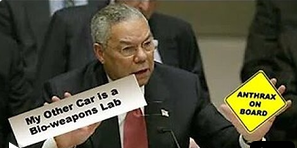
From Anthrax to Iraq
or go to
Aletho News Archives – Video-Images
Book Review
New paperback: Butchered by “Healthcare”
Lies are Unbekoming | October 20, 2026
 Butchered by “Healthcare” is Robert Yoho’s plain-spoken account of how American medicine stopped being a profession and became an industry. 341 pages. Over a thousand references. Thirty-eight chapters.
“Screening Tests Are Useless”, on tests that find diseases that would never have hurt you. “The FDA Protects the Big Drug Companies”, on an agency funded by the companies it regulates. “The Journals’ Sins Are the Editors’ Sins”, on ghostwritten studies and captured peer review. “Opioids and ‘Pain Management’”, on how a generation was prescribed its way into addiction. “Prozac and Relatives” and “Antipsychotics Are Disastrous”, on what psychiatry does to adults and children. “Surgery: Money Before Patients”. “Failed Cancer Treatments”. “Futile CPR and Overprescribing”. “Billing Scams & Specialty Warfare”. “Hospitals Are Sharks”. Each with a Patient Tips section at the end on how to survive it.
If you have ever walked out of a doctor’s office with a prescription you didn’t ask for, or watched a parent put through a treatment that made them worse, this is the book you want on your shelf before the next appointment. … Full review
Butchered by “Healthcare” is available on Lulu now.
Blog Roll
 Aletho News
- Undersea Internet cables could be targeted in retaliation for attacks on Iran: IRGC deputy chief
- EU sending ‘biased’ observers to interfere in Serbian election – president
- White House envoy declares kinetic action against Yemen ‘fruitless’
- Ukraine deployed thousands of microdrones in Iraqi Kurdistan: Tasnim
- Iran calls for emergency UNSC meeting over Trump’s ‘brazen’ bomb talk, Israeli threats
- Iranian sources reveal details of Russia-China Hormuz proposal
- Plan for more US-Israel integration puts our military tech at risk
- Another Round Against Iran Will Break What Is Left of the Gulf
- SVR Report on Ukraine’s Mexican Drug Gang Links Could Pressure Zelensky, Won’t Change US Policy
- British Government Employees Were Fact-Checking the News at the BBC. Nobody Told You.
- If Americans Knew
- Israel Denies Entry to French Journalist, U.S. Researcher Amid Rise in Entry Denials
- Gaza’s hospitals are running out of life-saving fuel – Daily Update
- Mysterious bot accounts reportedly spread fake ‘man on the street’ videos for Michigan Senate candidate
- Israeli Defense Minister Katz Says Over 60 Lebanon Villages Have Been Destroyed
- Why Is Israel Running TV Ads in Iowa Ahead of the Midterms?
- Hind Rajab’s Alleged Killer Is in the United States. HRF Demands His Arrest.
- US Officials Face Fresh Pressure After Another American ‘Brutalized’ by Israeli Settlers in West Bank
- Israel-Backed Palestinian Militias Terrorize Displaced Families in Gaza
- FBI subpoenas pro-Palestine activists over Israeli weapons plant disruption
- Fourth winter arrives in wartorn Gaza, too early – Daily Update
- No Tricks Zone
- Predictions Made By Renowned Climate Proifessor Over Past Decades Have Been Proven To Be Poor
- New Study Suggests Large Regions Of The Pacific Ocean Have Been Cooling For The Last 80 Years
- Germany’s Green Energy Debacle: High Energy Costs Force Kahla Porzellan to Close After 182 Years!
- New Study: 50 Years Of The Most Aggressive ‘Net Zero’ Policies Can Only Affect The Global Climate By 0.03°C
- US September “Heat” Was No Record…Many Records Set Decades Ago
- Latest European Green Energy Debacle; Portugal’s Largest Flagship Solar Park Insolvent!
- Green Energy Debacle: German Expert Professor Fritz Vahrenholt Warns Of Severe Economic And Social Consequences
- Two More Paleo Reconstructions Affirm Meters-Higher Sea Levels Across Ireland, Brazil 7000-6000 Years Ago
- New Study: Earth And Venus Surface Warmth Largely Explained By Convection And Lapse Rate, Not CO2 Or Radiation
- 2025 Nature Paper Claiming Worsening Global Drought Gets RETRACTED …Heavily Flawed

