Yemeni forces recapture strategic port city of Mokha from Saudi-backed troops
The Cradle | September 10, 2026
The Ansarallah-led Yemeni Armed Forces (YAF) captured the southwestern port city of Mokha on 10 September, in a lightning advance that comes after heavy losses were inflicted by the YAF on Saudi Arabia and its proxies inside Yemen.
Reuters cited sources as saying that Mokha fell to YAF troops on Thursday.
Al Jazeera’s correspondent in Sanaa also reported that Ansarallah-led YAF forces have “achieved a stunning victory against the internationally recognized Yemeni government forces.”
“The city has been taken. [Internationally recognized, Saudi-backed] government forces have fully withdrawn all of their military divisions,” local sources told the correspondent.
The YAF now has “full advantage to prevent ships from crossing Bab al-Mandab and also … the ability to cut off three main supply lines to the government in the south of the country,” according to Al Jazeera’s correspondent.
Ansarallah-led forces lost Mokha in 2017 in battles against Saudi and Emirati-backed forces.
The recapture comes after a major YAF mobilization that began earlier this year, aimed at expelling Saudi-backed forces and what remains of Emirati-supported militias.
It also follows major losses inflicted on Saudi-backed troops in Yemen, belonging to the Saudi-backed, Aden-based Presidential Leadership Council (PLC).
President of Yemen’s Sanaa government Mahdi al-Mashat released a statement hours before the recapture of Mokha, vowing amnesty for all Saudi-backed fighters who lay down their arms.
A statement on YAF official media, released early on Thursday, said Mashat issued “a presidential amnesty for all those who were deceived into fighting on the Western Coast fronts, provided they lay down their arms and return to their senses.”
The statement directed “the local authorities in the governorates of Hodeidah and Taiz to make the necessary arrangements to implement the amnesty.”
A day earlier, new Yemeni missile strikes hit Saudi military and energy infrastructure inside the kingdom. These sites have been under heavy Yemeni attacks in recent days.
Sanaa’s recent escalation of retaliatory operations was prompted by Saudi Arabia’s July attack on Sanaa International Airport, which has been under blockade by the kingdom for more than a decade since Riyadh launched its brutal war on Yemen in 2015 at the head of an Arab coalition.
A 2023 Saudi–Yemeni peace process nearly resulted in an agreement between the two sides.
The peace talks stalled but prevented a major escalation from erupting. Yet the kingdom has continued attacks for years and its illegal and deadly blockade of Yemeni ports and airports.
Sanaa has been heavily mobilizing and has vowed to expel the Saudi-led coalition from Yemen.
“The continued Saudi aggression against Yemen will not go unanswered or unpunished. The Saudi enemy must bear the consequences of its crimes against the Yemeni people,” Yemeni army spokesman Yahya Saree said on Monday following several military operations.
Algeria cuts ties with UAE over interference, destabilization
The Cradle | September 10, 2026
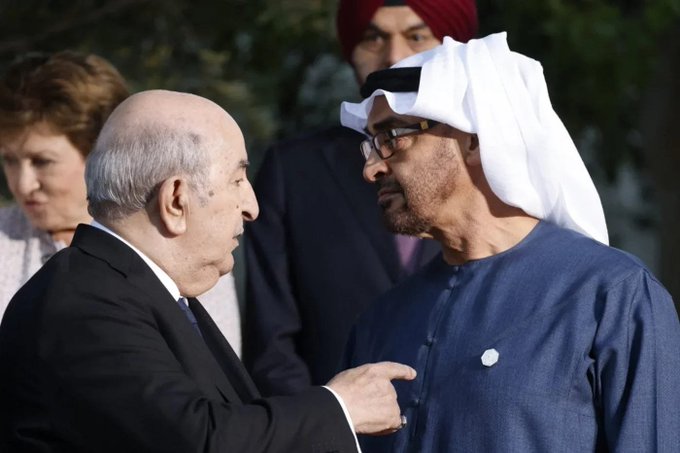
Algeria announced on 10 September that it will sever its diplomatic relations with the UAE in response to “provocative or hostile actions” and after “exhausting all means to preserve bilateral relations.”
The Algerian Foreign Ministry said in a statement that the government had decided to “sever diplomatic relations with the United Arab Emirates” after exercising “great restraint and a high sense of responsibility.”
The statement said Algiers had repeatedly warned Abu Dhabi of the “grave consequences” if such actions persisted.
The ministry reported that the UAE ambassador to Algeria was officially informed of the decision and given a 48-hour deadline to comply.
Last year, Algerian President Abdelmadjid Tebboune described his country’s relations as warm with all Gulf states except one, in a veiled reference to the UAE.
He described relations with Saudi Arabia, Kuwait, Oman, and Qatar as “fraternal,” while accusing the unnamed country of interfering in Algeria’s internal affairs and seeking to destabilize it.
Tensions escalated in February when Algeria began proceedings to cancel an air services agreement with the UAE signed in Abu Dhabi in May 2013.
The cancellation came amid reports that the UAE was seeking to support the Movement for the Self-Determination of Kabylie (MAK), a separatist group in northern Algeria, which Algiers considers a terrorist organization.
Relations between the two countries have deteriorated in recent years amid the UAE’s efforts to destabilize states and fuel civil wars across West Asia and North Africa in partnership with Israel.
In April 2024, Algerian President Abdelmadjid Tebboune referred to the UAE when he stated that, “Wherever there is conflict, the money of this state [the Emirates] is there – in Mali, Libya, and Sudan.”
The UAE has also strongly backed Morocco in its bid to annex Western Sahara, while Algeria supports the Polisario Front, which fights for self-determination in the territory.
The UAE also supported Morocco’s normalization with Israel as part of the Abraham Accords, which Algeria opposed.
Since gaining independence from France in 1962, Algeria has consistently supported the Palestinian cause, in part due to both countries’ shared history of resisting foreign colonial occupation.
Algiers cut ties with Morocco after Rabat normalized relations with Israel under US auspices in December 2020, viewing the deal as a direct threat to Algeria’s borders and security.
“Morocco’s military exercises with Israel contradict the principles of good neighborliness that we have always tried to uphold,” stated President Tebboune in an interview with French media.
Russia, China clash with West at UNSC over legality of Iran ‘snapback’ sanctions
Press TV – September 10, 2026
Russia and China have opposed the activation of the so-called snapback mechanism against Iran at a UN Security Council meeting, warning that Western attempts to reactivate the relevant UN sanctions regime would only further heighten divisions and undermine multilateral diplomacy.
The five permanent members of the Security Council engaged in a fierce procedural battle on Thursday over the legal validity of international sanctions against Tehran.
At the heart of the dispute is the “snapback” provision embedded in the 2015 Joint Comprehensive Plan of Action (JCPOA), which was originally designed to automatically restore UN Chapter VII sanctions in the event of significant Iranian non-compliance, deliberately bypassing the veto power of permanent council members.
Despite fierce objections from Moscow and Beijing, the council voted 11-2 in favor of adopting the provisional agenda, with two abstentions.
Under UN rules, procedural votes require a minimum of nine affirmative votes and cannot be blocked by a permanent member’s veto.
‘Legal mandate expired’
Both Russia and China stressed that the legal framework for the snapback mechanism no longer exists.
They emphasized that UN Security Council Resolution 2231, which endorsed the JCPOA, officially expired on October 18, 2025.
Consequently, the nonproliferation agenda item regarding Iran was struck from the council’s list of active issues on that same day.
The Russian representative stated that because the resolution has expired, there are no legal or procedural grounds to reactivate the 1737 sanctions committee, which ceased to exist in 2015.
Moscow dismissed Western claims and UN Secretariat conclusions supporting the snapback as “biased and erroneous.”
China echoed the sentiments, expressing “grave concern” and “strong opposition” to the West’s maneuvers.
Beijing warned that forcing the reimposition of sanctions and convening meetings under a defunct agenda item would seriously impede any chances of a political settlement to the Iranian nuclear issue.
China called on all council members to respect the termination date outlined in Resolution 2231 to preserve the authority of the Security Council and the credibility of multilateral diplomacy.
Western powers defend sanctions regime
Western delegations, however, firmly rejected the Russian and Chinese legal challenges, insisting that the sanctions have been legitimately revived following Iran’s alleged breaches of the nuclear deal.
“The United Kingdom, with France and Germany, initiated the snapback mechanism in full accordance with Security Council Resolution 2231,” the British representative stated, arguing that the European troika (E3) acted in response to Iran’s “significant non-performance” under the 2015 pact.
London maintained that the snapback process officially concluded on September 28, 2025, keeping six Chapter VII resolutions in effect.
The US representative took a harder line, accusing Moscow and Beijing of attempting to undermine council decisions merely to shield Tehran.
“Regardless of such politically driven matters, the facts are the facts. The 1737 Committee exists,” the American diplomat asserted, pointing to recent IAEA reports claiming Iran remains non-compliant with its Comprehensive Safeguards Agreement.
Tehran has consistently condemned the European troika’s actions, viewing the snapback maneuver as a politically motivated stunt orchestrated by Washington rather than a legitimate diplomatic tool.
Foreign Ministry spokesman Esmaeil Baghaei previously lashed out at the E3, describing their move as an act of “stubbornness” carried out to fulfill US orders without rational calculation.
He said that Britain, France, and Germany damaged their own credibility as parties to the JCPOA by misusing the snapback mechanism.
Baghaei emphasized that the E3’s illegal maneuver caused confusion within the UN system and creates no legal obligations for member states.
“In line with the preservation of the principles of the United Nations Charter, we expect countries to refrain from complying with the three European countries’ move, which is considered a form of imposition on the structure of the Security Council,” he said.
Washington demands NATO allies help ‘systematically dismantle’ ICC: Report
The Cradle | September 10, 2026
Washington is pressing its NATO allies to help “systematically dismantle” the International Criminal Court (ICC) and abandon its mandate, in an effort to shield US officials from war crimes prosecutions and Israeli leaders from accountability over the genocide in Gaza, POLITICO reported on 9 September.
US envoy Matthew Whitaker reportedly delivered the demand behind closed doors in Brussels in mid-July, in front of the alliance’s 32 ambassadors, urging member states to help take the court apart and to walk away from the Rome Statute, three anonymous NATO diplomats told POLITICO.
“We will be watching closely who stands with America,” Whitaker said as he closed his remarks, according to the three diplomats.
Alongside his intervention, the US mission circulated a document to NATO delegations stating “The United States will systematically dismantle the capabilities of the ICC … we firmly request that you immediately take steps to withdraw.”
The paper instructed allies to assess the court as a threat to their own governments, to publicly denounce its mandate as “overreach,” and to halt all material support to it without delay.
It closed by calling for an “end [to] the charade of the ICC once and for all.”
This comes after US State Secretary Marco Rubio announced on 13 July 2026 a sweeping Washington campaign to isolate and dismantle the ICC “brick by brick,” pressuring allied nations hosting US troops to reject the court’s authority or face retaliation, following Trump’s 6 February 2025 executive order that imposed asset freezes and travel restrictions on ICC prosecutors and judges investigating US and Israeli war crimes.
The campaign has already stripped lead prosecutor Karim Khan of his post, following a sustained Israeli effort that weaponized sexual misconduct allegations against him after he issued the November 2024 arrest warrants for Israeli Prime Minister Benjamin Netanyahu and his former war minister Yoav Gallant over their leading roles in the Gaza genocide.
UN Special Rapporteur Francesca Albanese was sanctioned in February, after US technology firms complained to the White House about her findings that they were complicit in Gaza.
Nine of the court’s 18 judges and both deputy prosecutors have since been placed under US sanctions.
Alternative ‘Führer’ Deutschland? Alarmism over AfD win is absurd
By Finian Cunningham | Strategic Culture Foundation | September 9, 2026
The shockwave reaction to the Alternative für Deutschland landslide election victory in Germany is absurdly out of proportion. It also defies any easy categorization of conventional right, left, or centrist politics.
What it does signify is a massive popular protest against the warmongering political establishment in Europe and the United States. The Western establishment has right, left, and liberal adherents, so it is confounding to interpret the AfD election win as reflecting a precise position on the political spectrum.
Western establishment politics and media have labelled AfD as a “far-right party,” a label which the party rejects. It claims to be conservative, nationalist, Eurosceptic, anti-immigration, and seeking more reasoned foreign relations.
The far-right epithet seems to be a more politicized term that the establishment uses to demonize opponents, as it does in France and elsewhere. “Far left” is also used as a term of abuse to marginalize opponents. But what does it mean when those in the “liberal center” are more often the ones who are more warmongering and supportive of censorship, repression and anti-democratic powers?
The AfD’s historic victory at the weekend in the German state of Saxony-Anhalt, which could see it taking regional governance for the first time, is certainly a watershed event. The party was only formed in 2013 and is now tipped to win national elections in 2029. That’s pretty “seismic.”
Its populist politics are gaining support among German voters. AfD is the biggest opposition party in the Bundestag, the federal parliament. It has made major gains in other state elections across Germany, although its stronghold is in the east of the country.
The AfD’s success is as much about the collapse of the establishment parties. The Christian Democrats of Chancellor Friedrich Merz have seen their electoral support crash, as have the Social Democrats.
However, it seems a wild overreaction to portray the electoral rise of AfD as a rerun of the Nazi Party’s takeover in the 1930s. European media headlines are screaming about the first time a “far-right party” in Germany has been elected since Hitler’s National Socialists won a majority in 1932 and went on to form a fascist dictatorship.
The AfD leadership under Alice Weidel maintains that it does not deny the crimes of Nazi Germany. Rather, the party says it wants to emphasize other facets of rich German culture and history and not dwell on wartime guilt of the 12-year Third Reich.
Here’s where contradictions complicate the international reaction to the AfD’s victory.
The party is highly critical of Merz’s government and other establishment parties for what it decries as reckless support for Ukraine and the war against Russia. The AfD is campaigning on ending the massive financial and military aid to Ukraine. It wants to restore normal relations with Moscow and resume the traditional energy trade that had been crucial to Germany’s economy.
If the AfD were following in Hitler’s footsteps, it wouldn’t be seeking to end support for the NeoNazi regime in Kiev and to restore friendly relations with Moscow. It would be gung-ho for more war.
The shrill denunciations and pearl-clutching over the AfD are ironically coming from parties that are supposedly “centrist” and “liberal”.
Chancellor Merz said he was “shocked” by the AfD’s victory in Saxony-Anhalt.
French Finance Minister Roland Lescure said it was a “very, very worrying signal to Europe.”
Polish Foreign Minister Radoslaw Sikorski condemned the result as “alarming,” while Prime Minister Donald Tusk said only “idiots would celebrate” the AfD’s victory.
These politicians and media outlets like Britain’s Guardian and BBC, which are supposedly “liberal” are posing as defenders of democracy and opponents of fascism. Yet, it is these same parties that are backing the NeoNazi regime in Kiev in fighting a catastrophic NATO proxy war against Russia, with endless supplies of weapons and the expenditure of public money destroying European societies.
The AfD’s nationalist politics and “Germany First” platform are hardly a cause for hysterical alarm, if we are objective about who is really driving war in Europe.
The real culprits for war are found among those liberal, centrist political parties who use a veneer of bourgeois politeness to hide what is imperialist warmongering.
The likes of Britain’s Andy Burnham is another case in point. He is supposed to be a leftwing democrat and says he wants to relieve cost of living crisis for ordinary people, yet Burnham, like Merz, Macron, Tusk and others, wants to throw billions of public money at fueling a war in Europe against Russia. These “liberals” have no problem aligning with a regime in Kiev that glorifies World War Two collaborators with Nazi Germany. So who are the fascists? The AfD or the alternative liberal führers of Europe?
There’s no easy positioning of the AfD and international reaction. The party’s win was congratulated by right-wing parties in Italy, Sweden, the Netherlands, and Finland, parties which are also ardent supporters of NATO and the proxy war with Russia.
Trump and his MAGA advocates, like Elon Musk, welcomed the AfD victory, yet this U.S. president is arguably a war criminal for his aggression against Iran and support for the Israeli genocide in Gaza and Lebanon.
The so-called establishment reaction to the AfD is absurd and hypocritical. This is not an “alternative führer” that is suddenly threatening moral decent Western democracy. The West’s sponsoring of war in Ukraine and the Middle East – and the media’s role in covering it up – would tend to show that fascism and imperialist war are already alive and well within the ruling establishment.
Rather than raising the alarm over the AfD, it is possible to view its growing support among voters as a healthy sign of protest and rejection of “mainstream” propaganda. Trump’s election and other populist parties can also be seen in the same way, only Trump has ended up betraying his supporters. Will the AfD go the same way? Maybe.
But the positive takeaway from the recent German election is that the Western public wants radical change from the moribund mainstream political class. Change is possible. A different political and economic order is possible, one that delivers genuine democracy and peaceful international relations.
Nonsense Drones and Novichok
By Craig Murray | September 3, 2026
Europe urgently needs to re-establish access to Russian oil and gas. Gas prices are high – as all UK energy consumers know – and German gas storage is at a record low for September. Gulf production is degraded, supplies are cut off and its long-term strategic stability undermined.
German manufacturing already suffered a 9.5% production loss from 2022 to 2026 following the Russian gas shutdown, with the loss in energy-intensive manufacturing (inc petrochemicals, chemicals, metals, glass/ceramics/stone, paper, mineral oil etc.) at 15.2%.
Western Europe can regain access to Russian hydrocarbons either by accepting a negotiated peace in Ukraine, or by attempting regime change in Russia. The political class in Europe have evidently decided to go all out for regime change.
It would of course be much easier, and much safer, to settle the Ukrainian conflict. We can identify the following reasons the European political “elite” is not taking that path:
- Loss of face and political capital by in situ leaders who have gone all in for conflict with Russia – von der Leyen, Kallas, Merz, Rutte, Stubb etc
- Generational family and national hatred of Russia by those wanting to reverse World War II in Eastern Europe – von der Leyen, Kallas, Merz, Stubb etc
- Deep common interests between the political personnel and the military-industrial complex
Note that none of these motives has anything to do with the welfare of their people, and still less “democracy.” I find it very hard to think of any occasion when a drive towards war had such little foundation.
Consider this. The United Kingdom, like many Western countries, is openly supplying the Ukraine with long-range missiles, manufacturing plans for long-range missiles, and personnel to service them, in the full knowledge that Ukraine is using those missiles in an attempt to devastate civilian infrastructure deep within Russia, killing many Russian civilians in the process.
Yet we are repeatedly told by both politicians and the media that Russia is the threat to the UK, when very plainly it is the opposite which is the truth. Until this year, Russia had in three hundred years of history never had any plans to invade or occupy the UK – while the UK invaded Russia in 1854 and 1917. I presume the Russians are currently working on defensive plans against the UK, given the disgraceful warmongering of our government.
The notion that the boundaries of a Ukrainian state, which had never existed in history until 1991, are so sacrosanct they cannot be adjusted to avoid World War III, is mad. They were only ever internal Soviet boundaries. Ukrainian is a new nationality, but the Ukrainians are entitled to a state if they wish one. What they are not entitled to do is insist on the old Soviet boundary, when they have:
- closed Russian schools, universities, bookshops, theatres, cinemas, libraries, kindergartens, banks and churches
- banned the Socialist Party, Communist Party, Left Party, eleven other parties and eight trade unions
- continued the systematic glorification of Nazi and genocidal figures from Ukraine’s past – alienating Poland in the process.
The notion that nuclear war should be fought over who is Mayor of Lugansk has so little public support that Russophobia is being assiduously stoked by Western governments and the EU itself.
 The latest episode is the extraordinarily thin gruel of the “Leipzig airport attack” story. Yesterday we had the most incredible release of coordinated statements by Western European leaders all telling us that the evidence is plain of a “hybrid attack” by Russia.
All accompanied by no evidence whatsoever.
The German state of course has history with this sort of false flag. On the night of 31 August/1 September 1939 it staged false flag attacks by Polish forces on the German border post at Gliwice (Gleiwitz), and a couple of other locations. Murdered corpses of political prisoners were dressed in Polish uniforms and spread around. A radio broadcast was transmitted in Polish. This “attack” was the justification for the German invasion of Poland the next day.
Now the “Russian attack” on Leipzig Halle airport was on 4 August, and yet the carefully coordinated attribution to Russia, with identical statements from all western European powers, was not launched until 1 September. I have seen it suggested that this was deliberately on the anniversary of Gliwice. That seems to me unlikely, and yet not to have at least avoided the date of perhaps the most famous false flag in history – by the same state – is very curious, when the date was so obviously voluntary for an attack that occurred four weeks before.
If you reject the warmongers’ logic for a moment, the actual scandal is that there were Ukrainian aircraft in Leipzig stacked with German weapons to kill Russians, not that an amateur toy drone allegedly tried to stop them.
To be told that this is a Russian attack by precisely the same set of goons who lied to us that it was Russia that blew up the Nord Stream gas pipeline, is testing not just the gullibility of the public, but its patience.
In the UK the purveyors of Russophobia – including government ministers – fall back repeatedly on the farcical “Russian novichok on Salisbury” story to explain why we should prepare for war with Russia.
Nobody has ever even pretended to answer the dissection of the official line I published in my article Pure – Ten Points I Just Don’t Believe. I am now able to add a further point I was not aware of at the time, thanks to Tim Norman and his coverage of the Sturgess Inquiry. The use of a judicial inquiry to determine official cause of death, rather than a coroner’s court which exists for that specific purpose, is almost always a sign of a government cover-up – see also the Hutton Inquiry and the murder of David Kelly.
But one thing the inquiry did receive was the toxicology report on Dawn Sturgess from the NHS central toxicology lab in Birmingham. This is what it found in Dawn Sturgess’ blood.
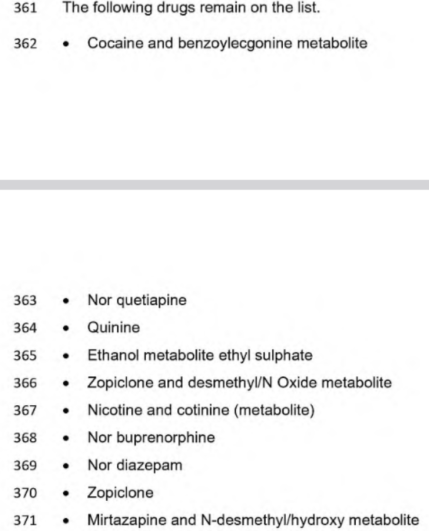
It is worth noting that fentanyl was also found, but this was removed from this list presented to the inquiry as she had been given fentanyl in hospital. That does not, of course, mean there was, or was not, already fentanyl in her bloodstream. But what you do have for sure is cocaine, plus a synthetic opioid given by the NHS to heroin addicts, plus gin and tonic, plus two different antidepressants, plus sleeping tablets.
What you don’t have is novichok. The idea that the NHS central toxicology lab cannot detect organophosphate poisoning, or was not testing for it in the blood of someone in Salisbury when the entire media was already screaming novichok, is arrant nonsense.
Only the Ministry of Defence laboratory at Porton Down claimed to find novichok – and controlled the samples which the OPCW (an equally corrupt institution) got.
Dawn Sturgess was a frail, known long-term drug addict. The combination in her bloodstream could kill anybody – of course depending on the quantities. The astonishing thing is that the pathologist at the inquiry stated he had been given no quantities or concentrations for these substances. He was therefore in no position to say they did not kill her.
This is incredible. There is no such thing as a toxicology report which does not quantify concentrations. Otherwise the information is clinically meaningless. I have spoken with three doctors, two nurses and a senior NHS administrator. All say it is impossible the toxicology report came without quantification. I assume the pathologist was not lying; so they must have been deliberately deleted. Only government can do that, and the obvious motive is to cover up the actual cause of death.
Let us face it: from that list of substances in her blood the actual cause of death is extremely obvious.
The great structural weakness of the inquiry was that nobody had the job of scepticism about the official story. The only non-governmental representative was Michael Mansfield, who represented Dawn Sturgess’ family, and his brief was to argue that Dawn Sturgess was not a drug addict. That – I am sorry to say, completely untrue – version of events fitted the story which both the government and Sturgess’s family wished to be put forward.
I am genuinely upset to have to relate unpleasant things about a dead woman who was a victim of circumstance in her life, in order to tell the truth, but you don’t get cocaine and buprenorphine in your blood by accident. We therefore had the farce of the police apologising at the inquiry for having called Dawn Sturgess a drug addict.
So we have alleged novichok in Salisbury which killed nobody, and an explosive drone, or possibly two, in Leipzig which did not explode. To counter this massive threat, we need to push an entire continent to nuclear war. As a first step, we need to cut health and social spending to give trillions more to arms manufacturers, and prepare our children for conscription, to die on the battlefield.
Forgive me if I am not convinced.
Lithuania Plans to Remove Nuclear Weapons Ban From Constitution – Parliament Speaker
Sputnik – 10.09.2026
MOSCOW – The Lithuanian government plans to remove the provision banning weapons of mass destruction on its territory from the constitution in early 2027, the speaker of the republic’s parliament, Juozas Olekas, said on Thursday.
“The Lithuanian parliament plans to adopt a constitutional amendment this winter and remove the provision banning weapons of mass destruction on its territory from the country’s basic law. This will require extending the autumn parliamentary session, which begins on Thursday,” Olekas was quoted by the broadcaster LRT as saying.
He added that the autumn session will have to be extended until January 13, 2027 so that the parliament can adopt this particular article of the constitution.
Olekas said earlier that the provision of Article 137 of Lithuania’s basic law, which rules out the deployment of nuclear weapons in the republic, no longer corresponds to geopolitical reality. In early July, the parliament approved an amendment to this article after the draft was presented.
To amend Lithuania’s constitution, at least 94 of the 141 parliamentarians must vote in favor twice, with a three-month interval between votes.
Moldova debunks drone threat to Zelensky’s plane
RT | September 10, 2026
Moldova has dismissed a claim by Norway’s prime minister that Vladimir Zelensky’s plane was nearly struck by a UAV while leaving Chisinau, saying the aircraft was never in any direct danger.
Norwegian Prime Minister Jonas Gahr Store told broadcaster NRK on Wednesday that Zelensky’s plane “was almost hit by a drone” as the Ukrainian leader traveled from Moldova to Oslo for the funeral of King Harald V.
Before any evidence was produced, Store’s claims were widely picked up by Western media outlets, who tried to frame the incident as evidence of a supposed Russian drone threat to Europe.
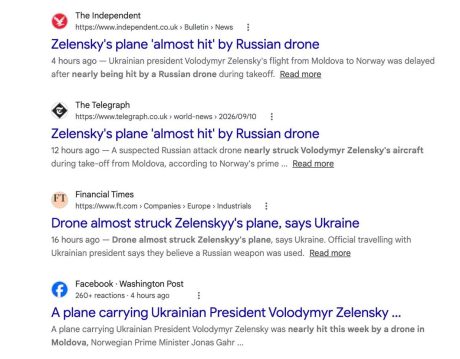
On Thursday, however, Moldova flatly rejected that account, with government spokesman Dumitru Ciorici saying Zelensky’s flight had been delayed because the country temporarily closed its airspace following a drone alert.
He stressed that there had been “no direct threat” to the aircraft, which remained on the ground throughout the airspace closure. The drone that had allegedly entered Moldova’s airspace ended up crashing and exploding near a village around 160km from Chisinau airport, causing no casualties, Moldovan authorities said.
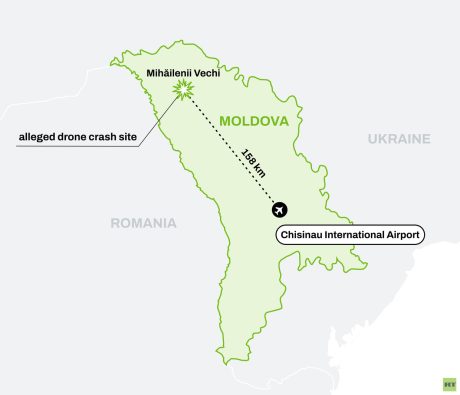
Meanwhile, former Moldovan President Igor Dodon has accused the authorities of concealing from the public a separate incident involving a Ukrainian national allegedly caught at the border with a drone and explosives.
“We see more and more attempts and provocations to involve the Republic of Moldova in everything that is happening in Ukraine,” Dodon said, urging Chisinau to stay away from Kiev’s “war strategy.”
Kremlin spokesman Dmitry Peskov also dismissed the alleged threat to Zelensky’s plane as “ephemeral,” saying it “did not exist” and noting that even Ukrainian sources have acknowledged there was no direct danger.
Moldova, whose pro-EU government under President Maia Sandu has moved closer to Brussels and NATO while severely downgrading relations with Moscow, has repeatedly joined other pro-Ukraine governments in blaming Russia for drone incidents before producing evidence.
Similar accusations across Europe have frequently collapsed under scrutiny, with investigators in several cases finding no proof that Russian drones were involved and some incidents later traced to Ukrainian UAVs or even misidentified aircraft.
Moscow has accused Kiev of repeatedly staging drone provocations in an effort to draw its Western backers deeper into the conflict.
The Long Road In, and the Short Way Out: How the West Built Ukraine into a Weapon Against Russia
By Larry C. Johnson | Sonar21 | September 10, 2026
Across three pieces I’ve written for Sonar21, I have been making one continuous argument: The war in Ukraine was not a crisis that erupted in 2022. It was the payoff of a deliberate, decades-long Western project to turn Ukraine into an instrument for weakening Russia — carried out under the cover of “partnership” and “peacekeeping.” And having spent thirty years building that instrument, Washington and NATO will do with Ukraine exactly what they have done with every client before it: discard it the moment it stops paying.
The camel’s nose: 1992–1999
The West slipped its nose under the Ukrainian tent almost the instant the Soviet Union collapsed. The formal machinery started in 1992, when Ukraine joined NATO’s North Atlantic Cooperation Council. The practical military ties came fast behind it: the U.S.–Ukraine State Partnership Program with the California National Guard in 1993, Ukraine’s entry into the Partnership for Peace and its first joint exercise in 1994, and the standing-up of the Yavoriv training area near Lviv.
The “peacekeeping” label was camouflage, and the drills themselves give it away. Once the Sea Breeze exercises in the Black Sea began incorporating anti-submarine warfare in the late 1990s, the humanitarian pretense was finished. You do not rehearse hunting submarines to deliver disaster relief. You do it to prepare to fight the Russian navy. I spent 23 years scripting military exercises for U.S. Special Operations Forces, and I know the difference between a training game and a rehearsal for war. These were rehearsals — a structured program to train and equip Ukraine to fight Russia, if need be with NATO at its side.
Set that against 1999, when NATO took in Poland, Hungary, and the Czech Republic. That expansion broke James Baker’s assurance that the alliance would not move “one inch” to the east — a promise Bill Clinton simply threw away. And it is no accident that when the war came, Russia struck the Yavoriv facility in the opening weeks of March 2022. They knew exactly what had been built there, and why.
From partner to de facto member: 2000–2010
The next decade finished the job, turning Ukraine into a NATO member in everything but name. Consider one figure: between 2000 and 2010, Ukraine ranked among the top six hosts of NATO and U.S. European Command exercises, with Georgia right behind it. Two non-members hosted more allied exercises than the overwhelming majority of the actual member states. That is not partnership. That is prima facie evidence that the West meant to bring both countries in, whatever Moscow said.
By 2010, only two things still separated Ukraine from a full member: it paid no dues, and it had no Article 5 guarantee. In every operational sense — Sea Breeze, Rapid Trident, the Yavoriv pipeline, the annual target plans — it was already inside the alliance. And this was never only a military effort. U.S. and British intelligence, the CIA included, were coordinating with NATO and EUCOM to pry Ukraine out of Russia’s orbit and lock it into the West’s. When the 2008 Bucharest Summit declared that Ukraine “will become a member” — even as France and Germany blocked the formal Membership Action Plan — the trajectory to 2014 and everything after was set.
The exit: under the bus
That is how the instrument was built. Here is how it gets discarded. Any foreign government that trusts an American security promise should first study what happened to the South Vietnamese, the Afghans, the Iraqis, the Libyans, the Cambodians. When a war stops serving Washington’s purposes, the U.S. says adios.
The recriminations over the failed counteroffensive are the opening of exactly that. The West is lining up to blame Kyiv while its pledges of weapons turn out to be lip service. The maritime-drone strikes on Russian ships are pinpricks — militarily trivial, and dangerous mainly because the Western surveillance that guides them invites Russian retaliation against NATO reconnaissance over the Black Sea and stiffens Moscow’s resolve to strangle Ukraine’s ports. If you want an honest barometer of where this war is heading, forget the briefings from British intelligence and the Institute for the Study of War. Watch for the day the London bookmakers start taking bets on when Zelensky falls.
The through-line
Lay the three pieces end to end and the shape is plain. The first two document the patient construction — three decades of exercises, training centers, intelligence coordination, and summit declarations, all aimed at Russia. The third describes the disposal: the moment the project stumbles on the battlefield, the same patrons who spent thirty years cultivating it start hunting for the door. The line running from the 1992 partnership councils to the blame game of 2023 is not accident, and it is not drift. It is design. The men who built the road into this war have no intention of walking back out of it alongside the country they sent down it.
Kiev plotted terror attack on UK ambassador in Moscow – FSB
RT | September 10, 2026
Russian security operatives have foiled a Ukrainian plot to carry out a false-flag attack on the British ambassador and other diplomats in Moscow, which was intended to draw the UK into a direct conflict with Russia, the Federal Security Service (FSB) has said.
In a statement on Thursday, the agency said it had detained a Russian national who worked for an organization contracted to protect the British Embassy in Moscow. The man collected sensitive information about embassy security on instructions from a Ukrainian contact, as well as personal data on diplomatic personnel, including photographs, home addresses, details of vehicles, and itineraries, the FSB said.
“The Kiev regime planned to carry out sabotage and terrorist attacks against British diplomatic representatives in Moscow to subsequently blame Russia for them in order to draw the United Kingdom into direct armed conflict with the country, secure additional weapons deliveries [to Kiev], and ramp up sanctions on Russia,” the agency said.
Neither the UK Embassy in Moscow nor British Ambassador Nigel Casey has commented on the statement.
The FSB said the suspect had been recruited by the Security Service of Ukraine (SBU) and acted on instructions of Ukrainian blogger Dmitry Karpenko, also known as “Apostle Dmitry.”
Karpenko, 44, became known for recording interviews with Russian prisoners of war and covering POW swaps between Moscow and Kiev, as well as for propagating videos featuring Russian nationals collaborating with the Ukrainian military.
Karpenko was also criticized by Ukraine’s Commission on Journalistic Ethics, which said his videos exposed prisoners’ identities and at times resembled interrogations. The blogger also faced accusations of Islamophobia after an interview with a captured Russian serviceman from Chechnya, during which he made remarks widely seen as offensive to Muslims.
Britain has been one of Ukraine’s biggest backers since the escalation of the conflict in 2022, providing billions of pounds in military and financial assistance to Kiev. London has also refrained from condemning Kiev over a string of assassinations and bombings targeting Russian military officials and public figures inside Russia.
After Ukraine claimed responsibility for the 2024 killing of Russian General Igor Kirillov, commander of the Radiological, Chemical, and Biological Protection Forces, Downing Street said Britain would “not mourn” his death.
Douglas Macgregor: U.S. Defeated in Iran & Israel Will Not Survive
Glenn Diesen | September 9, 2026
Douglas Macgregor is a retired Colonel, combat veteran, and former senior advisor to the U.S. Secretary of Defense. Please like, subscribe & share!
Colonel Macgregor’s substack – Trump is not in Hell, Yet: https://substack.com/home/post/p-2140…
Follow Prof. Glenn Diesen:
Substack: https://glenndiesen.substack.com/
X/Twitter: https://x.com/Glenn_Diesen
Patreon:  / glenndiesen
Support the research by Prof. Glenn Diesen:
PayPal: https://www.paypal.com/paypalme/glenn…
Buy me a Coffee: buymeacoffee.com/gdieseng Go Fund Me: https://gofund.me/09ea012f
Buy Diesen merchandise: https://diesen-shop.fourthwall.com/en…
9/11 was an Inside/Outside Job
“Inside” or “Israeli” Job?

Video Link
By Luke Marshall | Sigh Ops | September 9, 2026
You know the drill by now: 19 Muslim hijackers directed by a man on dialysis in an undisclosed cave in Afghanistan outsmarted NORAD, the CIA, and the FBI armed with nothing more than box-cutters and blind optimism.
You also know that even if these coke-snorting, liquor-guzzling, religious fundamentalists weren’t too busy hitting strip clubs or gambling in Vegas to finally get around to their plans of jihad, a number of logistical hurdles should have stopped them: airport security, military interceptor planes, or their inability to fly single-engine Cessnas, let alone commercial airliners.
So that leaves two important questions unanswered: who did 9/11, and how did they pull it off?
Skeptics of the official story have supplied their own answers to these questions.
You have probably heard the 9/11 Truth Movement’s Greatest Hits play on an endless loop for the past twenty years.
WTC 7, “Dancing Israelis”, the Project for a New American Century, a New Pearl Harbor, etc.
Even Roger Waters took some time out of his busy schedule to go on Tucker Carlson so he could do his best rendition of the 9/11 Truth Movement’s Greatest Hits as opposed to his own catalogue of Greatest Hits from the Pink Floyd days.
But you’ve heard all of that.
You’re not here for the greatest hits.
You’re here for the blueprint. The who and the why.
No more entry-level 9/11 Truth for Dummies tier drivel. If you want that, you’re in luck because the internet is saturated with trite, stale information regarding what took place on 9/11.
In my last video, I discussed some of the nonsense holding back 9/11 Truth from becoming 9/11 Justice.
So let’s shift our focus to what really matters: who did 9/11 and how they did it.
What we will see is that the complex operation behind 9/11 involved both an inside and an outside layer. The outside handled sensitive issues like the logistics of airport security and ensuring that the World Trade Center Complex fell into the right hands. The inside made sure that WTC security didn’t get in the way and that the attacks were profitable, among other things.
Who was in charge of securing the hijacked planes? Who had access to the WTC buildings? Who amongst them had access to demolition explosives? Who profited? Who made sure these individuals were never found out?
Without these two operational layers working in tandem to accomplish all this, 9/11 would not have been possible.
So let’s move past surface-level talk of steel’s melting point and the physics of free-fall speed.
Let’s explore the ins and outs of this inside-outside job.
Act I: The Outside Element – The Gatekeepers
Of the four planes hijacked on 9/11, three departed from airports whose security was provided by one company: Huntleigh USA, a subsidiary of ICTS International.
So who is ICTS?
A quick Google search might net someone the answer that ICTS is a Dutch aviation security firm. However, ICTS is about as Dutch as Benjamin Netanyahu is Palestinian.
The company was formed in 1982 by alumni of Shin Bet, Israel’s internal security and counter-intelligence agency, and former employees of El Al, Israel’s national airline. Shin Bet has a long, sordid history of extrajudicial killings, assassinations, and torture. El Al has its own unique past regarding international drug smuggling. As early as 1973, an El Al steward was arrested for attempting to smuggle a quarter million dollars in opium and hashish into the United States. Decades later, the pattern of El Al drug trafficking continued, with a cocaine smuggling ring involving the security liaison between El Al and Shin Bet teaming up with a former Shin Bet official and head of security for the Office of the Prime Minister.
In short, ICTS was not your typical security outfit. Based off all outward appearances, it appears to be an Israeli intelligence front. A look at the upper brass of ICTS reveals a number of interesting connections pertaining to 9/11.
The Airport Security-WTC Nexus
Menachem Atzmon joined the supervisory board of ICTS in 1999, eventually becoming the Director, Chairman of the Board, and majority shareholder.
Before taking over ICTS, Atzmon was the Director of Zim Shipping—an Israeli state-affiliated shipping giant with offices in the World Trade Center since the early seventies. Zim completed their move from the 16th and 17th floor of WTC 1 just a week prior to 9/11. Defenders of the official narrative point out that Zim had announced their departure from the WTC in April of 2001. However, they leave out one crucial detail: Zim was in such an incredible rush to vacate the WTC that they broke their lease five years early.
At the time of 9/11, Zim Shipping was co-owned by The Israel Corporation and the Government of Israel. Atzmon was the CEO of the Israel Corporation from 1984 until 1986—the period of time he was the Director of Zim.
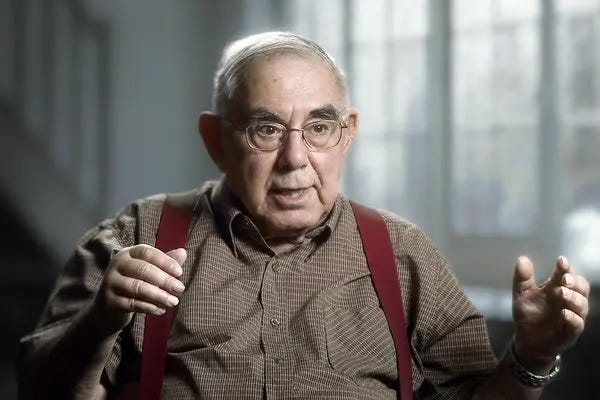
Avraham Shalom
The Israel Corporation was founded by the State of Israel and Shaul Eisenberg. Eisenberg’s multinational conglomerate—The Eisenberg Group—had as one of its subsidiaries Atwell Security. Atwell was the recipient of a contract with the New York Port Authority in 1987 to provide security for the World Trade Center complex. Atwell lost the contract after the discovery that Atwell’s President Avraham Shalom (operating under the alias Avraham Bendor) was the former Head of Shin Bet responsible for the murder of two Palestinians and its subsequent cover-up. To spare himself from criminal prosecution, Shalom blackmailed the Israeli government with a list of extrajudicial assassinations by various Israeli agencies, securing himself and his co-conspirators a presidential pardon in exchange for his resignation, as detailed in Rise and Kill First by Ronen Bergman.
Israeli Nuclear Theft, PROMIS Software, and the WTC
The New York representative for Atwell during the WTC contract negotiations was Peter Malkin, the former Chief of Operations for the Mossad, legendary for his role in capturing Adolf Eichmann. Shalom and Malkin worked alongside Rafi Eitan, the handler of the Jonathan Pollard espionage ring.
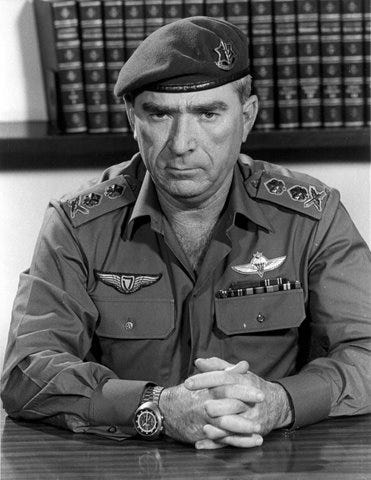
Rafi Eitan
Eitan’s shadow looms large in the seedy annals of Israeli Intelligence.
- Eitan posed as a chemist while traveling to Pennsylvania to visit NUMEC, a nuclear processing plant alleged to have supplied Israel with the enriched uranium the country used to acquire its nuclear arsenal. A declassified FBI document lists an individual named Avraham Bendor accompanying Eitan on this Pennsylvania trip. The FBI released a detailed statement in 1980 made by a former NUMEC employee who said in 1965 that he “encountered armed strangers on the uranium plant’s loading dock one night in early 1965. The NUMEC employee said they were loading what appeared to be canisters of HEU onto a truck in racks that he had not seen before.” The man also saw a shipping manifest showing the ship was bound for Israel indicating it was likely on the Zim-Israel shipping line which it was according to the National Security Archive. He said that a NUMEC manager later “threatened him to keep his mouth shut about what he had seen.”
- According to the testimony of ex-Mossad agent Ari-Ben Menashee, Eitan was the brainchild of installing a trapdoor for Israeli intelligence into PROMIS software—the software later sold by Robert Maxwell to sensitive US defense facilities such as Sandia National Laboratories, which is at the center of US nuclear weapons systems.
Notice the incestuous loop: Zim Shipping, Atwell Security, and the WTC complex were all tethered to NUMEC-era Israeli intelligence networks. Menachem Atzmon not only had a position with both Zim and the Israel corporation at the time of the failed Atwell contract, but he went on to hold a senior position at the company responsible for the security of three of the four airports from which planes were hijacked on 9/11.
The Atzmon-Friedman-Netanyahu Axis
Atzmon’s network extended directly into the highest echelons of power where Israeli and American interests meet through Steven L. Friedman—a childhood friend of Benjamin Netanyahu and the American legal counsel for the Likud Party. Friedman was officially registered with the Justice Department as a foreign agent for the Likud Party until 1996.
Atzmon was the President of the Israel Development Fund. The fund was established by Friedman in 1989. During the time period when Atzmon worked as the President of the Israel Development Fund, he also worked as the national treasurer of the Likud Party. In Israel, Atzmon was convicted of campaign finance fraud and given a suspended one-year prison sentence. Despite denials by Atzmon, close associates of Netanyahu claimed that the fund functioned as a source for illicit cash for Netanyahu’s successful 1993 campaign to lead the Likud party.
ICTS Financial Crimes
Atzmon wasn’t the only questionable figure at ICTS.
Ezra Harel worked on the Supervisory board with Atzmon at the time of 9/11. At one point, Harel even became the majority shareholder of ICTS.
Ezra Harel, Harel’s father, and Atzmon were arrested and questioned in Israel after driving a separate company, Rogosin, into total insolvency. According to Haaretz, the company suffered from years of odd investments and high-management fees that Harel himself pocketed. The company eventually grew incapable of paying back bondholders after torching more than 100 million shekels.
Harel just so happened to be the chairman of Dash 200+, a company that modified Boeing 747 aircraft from passenger to cargo use.
Security Failures?
Against this backdrop of Israeli intelligence and financial crime, the ICTS track record of “security failures” borders on the unbelievable.
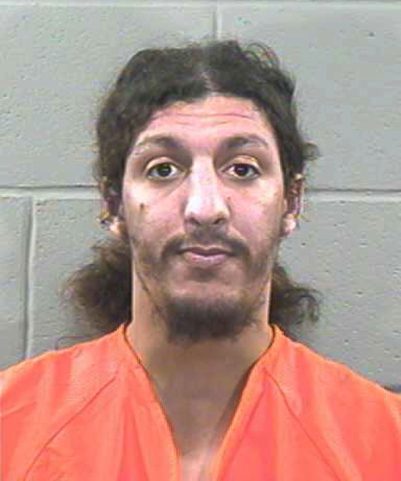
Richard Reid
- The Shoe Bomber (Richard Reid): ICTS guarded the departure gate for Reid’s flight. Just a day earlier, Reid had been flagged and delayed by an ICTS agent due to his disheveled appearance and lack of luggage. Yet the next day, Reid waltzed through security with a Walkman loaded with anti-Israeli messages, an issue of Newsweek featuring pictures of Osama bin Laden, and explosives. As The Sword and the Neck describes it, “looking like he just finished shopping at Terrorists-R-Us.” Not too long before the attempted attack, Reid had been flying around on El Al to Tel Aviv. Reid’s father said, “My son is a determined boy, and I can imagine him being determined enough to blow himself to bits, but I just can’t believe that he would want to hurt anyone else in doing it unless, that is, he has been brainwashed.”
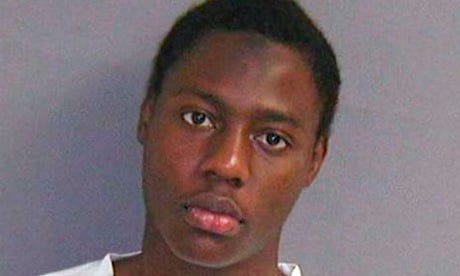
Umar Farouk Abdulmutallab
- The Underwear Bomber (Umar Farouk Abdulmutallab): Farouk departed from a flight in Amsterdam with screening provided by ICTS. Farouk was known to US intelligence after his father warned two CIA officers at the US embassy in Nigeria of Farouk’s extremist views. US State Department officials were prevented from revoking his visa by US intelligence lest their Al Qaeda investigation be foiled.
The Surveillance Afterlife
ICTS didn’t vanish after the War on Terror reached its apex. It evolved.
AU10TIX, an ICTS subsidiary founded by former Unit 8200 man Ron Atzmon alongside others previously belonging to military intelligence, makes facial ID verification for online platforms, which has been used by Twitter, Airbnb, Paypal and Fiverr. This is only one example of the Israeli intelligence-to-privatized surveillance-state pipeline we have seen time and time again.
Securing the airports was only half of the equation.
To pull off an operation of the magnitude of 9/11, the target—the World Trade Center—had to fall into the right hands.
Act II: The Outside Element – Privatization and Payout
The Likud Fingerprint
One of the individuals instrumental in the privatization of the WTC was Lew Eisenberg, the NY Port Authority Chairman. Eisenberg was the man responsible for negotiating the long-term leasing of the WTC complex with Larry Silverstein. Lew Eisenberg donated to the formerly discussed Israel Development Fund at the behest of Steven Friedman. The Jewish Telegraphic Agency describes Eisenberg as a friend of Netanyahu.
Eisenberg got his start at the Port Authority after being nominated by Governor Christine Todd Whitman to chair the Commission on Privatization and Competitive Contracting in 1994. After the 9/11 attacks, Whitman, the Administrator of the Environmental Protection Agency at the time of 9/11, assured the public within days of the attacks that the air in Manhattan was safe to breathe despite the buildings containing lead and asbestos because the concentrations were such that they didn’t “pose a health hazard.”
A class action lawsuit was filed against Whitman and the EPA, with Judge Deborah Batts of the Federal District Court in Manhattan saying that the “allegations in this case of Whitman’s reassuring and misleading statements of safety after the Sept. 11, 2001 attacks are without question conscience-shocking.”
The effort to privatize the WTC complex was in large part spearheaded by the economic strategy of New York Governor George Pataki. Lew Eisenberg worked on the transition teams of Pataki, Whitman, and even the Bush-Cheney transition team.
Another prominent individual largely responsible for ensuring that the WTC complex ended up in the right hands was billionaire Ronald Lauder, the sole heir of the Estee Lauder cosmetics fortune.
From Reagan to Netanyahu to Epstein to the World Trade Center
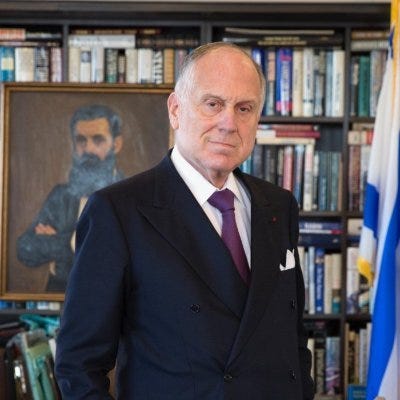
Ronald Lauder
Lauder was the Chairman of George Pataki’s New York State Research Council on Privatization, which influenced the decision to privatize the WTC complex. Pataki and Lauder shared a close relationship, with Pataki’s wife working as an employee of Lauder. Lauder was one of Pataki’s largest campaign contributors.
Not only was Lauder on Pataki’s Council on Privatization, but he was also a major donor to none other than Steven Friedman’s charity, the Israel Research Foundation, which was closely tied to the Israel Development Fund. Lauder not only abetted Netanyahu’s ascent to power through financial contributions alongside Friedman and Eisenberg, but the cosmetics heir also helped pull political strings for his friend Bibi.
Lauder brought Republican campaign strategist Arthur Finkelstein in on Netanyahu’s campaign against Shimon Peres. Finkelstein’s propaganda, in addition to a series of conveniently timed suicide bombings in the weeks leading up to the elections, led to Netanyahu winning in a shocking upset. Finkelstein worked as a strategist for other people inside the Lauder orbit, including not only Lauder himself during his failed 1989 New York City Mayoral Campaign, but for George Pataki and New York Senator Alfonso D’Amato, the man who urged Lauder to run for office.
To understand the importance of this nexus of connections centering on Lauder, we must pull back and look at Lauder himself. Lauder’s role extends far beyond just New York City Politics and the ascendancy of Benjamin Netanyahu.
In addition to being the sole heir of the Estée Lauder Cosmetics fortune, Lauder has long been a prominent figure in the world of Jewish philanthropy, currently holding the position of President of the World Jewish Congress, where he works alongside others like Baron David de Rothschild of the infamous Rothschild banking dynasty.
Lauder was also a friend and supporter of Donald Trump, with the two having known each other for more than fifty years. They share an interesting connection, with Lauder being a long-time friend of Trump’s mentor Roy Cohn. Cohn was a prominent lawyer with high-level connections to the Reagan White House, the CIA, FBI, and organized crime. Cohn ran a sexual blackmail ring involving pedophilia that allegedly ensnared none other than former FBI Director J. Edgar Hoover in its kompromat.
Lauder held a position in Ronald Reagan’s cabinet during the Republican’s first term as the United States Deputy Assistant Secretary of Defense for European and NATO Affairs. During Reagan’s second term, Lauder landed a position as the US Ambassador to Austria. While this ambassadorship may seem like a dull, historical footnote at first, it becomes much more interesting when one realizes that Lauder may have been the individual responsible for securing Jeffery Epstein his fake Austrian passport.
Lauder’s later ties to Epstein and those in his circle are a matter of record.
Ronald Lauder was a member of the Mega Group, which was co-founded by billionaire Leslie Wexner. Epstein set up an LLC for billionaire Leon Black and Lauder to acquire a $25 million work of art. Epstein and Lauder communicated for years. It’s really no secret.
Epstein’s Austrian passport featured a photograph of him alongside a non-Jewish name, which would have had to have come to him through an unconventional channel since Epstein did not meet the requirements needed to obtain the passport, such as long-term residency in Austria. Given Lauder and Epstein’s mutual acquaintances Donald Trump, Leslie Wexner, and Epstein’s former Bear Stearns employer Alan Greenberg, Lauder as the unconventional channel through which the passport was obtained would make sense. Also, given the history of Israeli intelligence using ambassadors to procure fake passports for operatives and Lauder’s undeniable sympathies for the Zionist cause, the likelihood of Lauder procuring the passport seems high.
The tight-knit milieu of wealthy businessmen and Israeli-intelligence-linked individuals with ties to the World Trade Center, the airports from which the 9/11 planes were hijacked, and the Likud Party comes full circle with Larry Silverstein—the man who acquired the World Trade Center complex only six weeks before the buildings he purchased became cemented in the public mind as the symbol of terrorism.
Lucky Larry
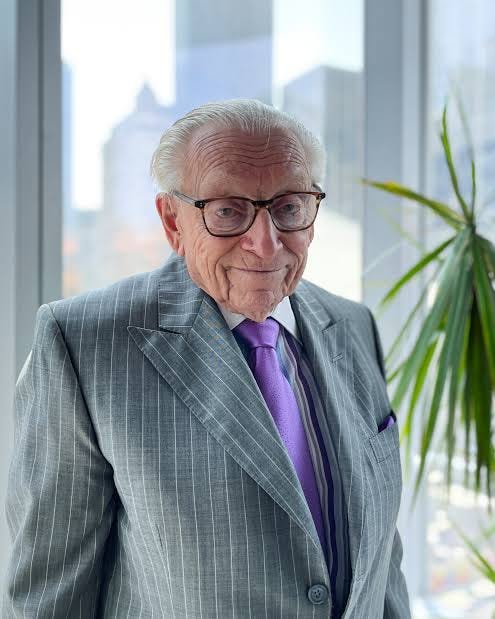
Larry Silverstein
The financial windfall Larry Silverstein found himself at the center of as a result of the September 11th attacks is nothing short of mind-boggling.
- The Insurance Heist: In April of 2001, a group of several different investors led by Silverstein Properties came to an agreement, and Larry Silverstein, who had already acquired WTC 7, signed a 99-year lease for $3.2 billion for buildings 4 and 5. Silverstein only put $14 million of his own money down on the lease. The WTC had earlier that year been estimated to be worth $1.2 billion, and the Port Authority only had $1.5 billion in insurance coverage on the WTC, yet Silverstein managed to finagle $3.55 billion of insurance on the buildings.
- Right to Rebuild: Silverstein’s insurance broker was unable to cover such a large amount, and the deal had to be split among 25 different dealers. The complicated and unusual deal was finalized the month of the attacks. The Silverstein group was even given the right to rebuild and expand if the buildings were destroyed.
- Removing the Asbestos Removal Problem: The WTC buildings were in the process of having asbestos removed from the buildings, which was an extremely costly process. As of May of 2001, prior to Silverstein acquiring the buildings, the Port Authority received a ruling on a longstanding suit against their insurers seeking more than $600 million dollars to cover the costs of asbestos removal. Ultimately the ruling was that the all-risk insurance policy held did not entitle their insurers to include this under their coverage.
- The Double-Indemnity Jackpot: As James Corbett of the Corbett Report states in 9/11 Trillions: Follow the Money, “Within hours of the destruction of the Twin Towers on September 11th, Silverstein was on the phone to his lawyers, trying to determine if his insurance policies could construe the attacks as two separate, insurable incidents rather than one.”
Not only would Silverstein rake in cash hand over fists as a result of the attacks and avoid all the prickly complications of asbestos abatement which would have costed hundreds of millions of dollars, but the SEC offices in WTC 7 which were investigating systemic financial corruption stemming from the dot-com bubble were conveniently destroyed along with the offices of some of the other tenants housing sensitive information such as the Department of Defense, CIA, Secret Service, and New York Office of Emergency Management. Similar to the Pentagon being struck in the Budget Analyst Office the day after Donald Rumsfeld announced $2.3 trillion the Pentagon couldn’t account for.
Silverstein—similar to many individuals involved in the decision to privatize the WTC complex—is no stranger to those in the highest echelons of Israeli political power. Silverstein collected friendships with Israeli Prime Ministers the way a more normal individual might collect postage stamps or trading cards. Former Israeli Prime Ministers Silverstein counts as friends are Yitzhak Rabin, Benjamin Netanyahu, Ehud Barak and Ariel Sharon. Silverstein is also a friend of current Israeli president Isaac Herzog. Netanyahu and Silverstein were so close that despite political differences, Bibi found time every Sunday to call Silverstein. Silverstein offered Epstein-associate Ehud Barak a job as his representative in Israel after Barak left the army in 1995. Many of these friendships were accrued by Silverstein when he was in the process of attempting to create a free trade initiative in the Negev. Some in Israel were skeptical of the proposal, due to such free trade zones having been established in third-world countries where workers receive starvation wages while entrepreneurs reap the benefits of tax exemption and high profits. Others were concerned the free trade zone would be a hub for money laundering. Eventually, after numerous unsuccessful attempts, Silverstein dropped the initiative.
With the airports’ security secured and the ink still drying on the World Trade Center’s paperwork, Israeli operatives were operating on American soil en masse while suspicious tenants roamed the halls which Lucky Larry Silverstein had just acquired.
Act III: The Outside Element – Soothsayers and Prophets
Israel’s role as the beneficiary of the American empire’s war on terror is obvious, with the policy goals stated in the Oded Yinon plan, the Clean Break memo, and the various writings of the Neo-Conservative, Project for a New American Century aligned think tanks largely accomplished as a result of America’s declaration to fight a global war against terrorism as a result of 9/11. However, one can simply turn to Benjamin Netanyahu, whose lackeys were securing their positions in the World Trade Center and the airports from which the planes were hijacked on 9/11 to gather his feelings regarding the worst crime to ever take place on American soil.
“Asked tonight what the attack meant for relations between the United States and Israel, Benjamin Netanyahu, the former prime minister, replied, ‘It’s very good.’ Then he edited himself: ‘Well, not very good, but it will generate immediate sympathy.’” (“A Day of Terror: The Israelis; Spilled Blood is Seen as Bond That Draws Two Nations Closer,” New York Times, Sept. 12, 2001.)
While the remains of corpses still burned in the rubble and a country that is supposedly Israel’s greatest ally still reeled from the devastation of the attacks, Netanyahu stated that the attacks were very good for American-Israeli relations to none other than The New York Times—what many would consider the most prominent and prestigious publication in the world.
The Israeli Prime Minister’s thoughts regarding 9/11 and its benefit to Israel didn’t change in the following years.
“We are benefiting from one thing, and that is the attack on the Twin Towers and Pentagon, and the American struggle in Iraq.” — Benjamin Netanyahu, ‘Did Israel Benefit from the 9/11 Attacks?, The Economist (April 16, 2008)
Netanyahu’s callous feelings regarding the attacks, combined with the fact that prominent individuals responsible for his ascendancy to power held sensitive positions in the World Trade Center and three of the four airports from which planes were hijacked, are a cause for concern.
Other high-level Israeli political figures and intelligence personnel displayed a seemingly prophetic intuition regarding Arab terrorism in New York City and the alleged culprit of the attacks in the immediate aftermath of 9/11.
Former Israeli Prime Minister and a fellow friend of Lucky Larry Silverstein, Ehud Barak, went on the BBC possibly only an hour after the attacks to insinuate that Osama Bin Laden had perpetrated the attacks, then stated that Bin Laden was hiding in Afghanistan, and then declared that America needed to wage a war on terror in response to the attacks.
Not only did Netanyahu and Barak share a commonality despite their political differences in being chummy with WTC owner Silverstein, but the two were in the IDF Unit Sayaret Maktal, with one of the unit’s specialties being response to airplane hijackings.
Arnon Milchan, the Israeli spy turned Hollywood Mogul producing films such as L.A. Confidential, Pretty Woman, Natural Born Killers, and JFK, was involved with a couple of films with, let’s call it, fortuitous imagery pertaining to 9/11. (Say what you will about the man, but he has some heavy hitters under his filmography.)
Israeli intelligence asset Milchan was the Executive Producer of The Medusa Touch, in which a commercial airliner crashes into a skyscraper.
Milchan was also one of the producers of David Fincher’s Fight Club, which ends with Ed Norton and Helena Bonham Carter watching a series of high-rise towers brought down via controlled demolition by a terrorist organization targeting banking institutions, accompanied by the eerie track “Where’s my mind?” by The Pixies.
Milchan belonged to Israel’s top secret intelligence-agency Lekem, and was involved in espionage, arms dealing, and securing components for Israel’s nuclear arsenal.
The former Director of the Mossad, Isser Harel, in a 1979 conversation with journalist Michael Evans, had what one could generously call incredible foresight. Evans recalls the interview in the Jerusalem Post, “I sat with former Mossad chief Isser Harel for a conversation about Arab terrorism. As he handed me a cup of hot tea and a plate of cookies, I asked him, ‘Do you think terrorism will come to America, and if so, where and why?’ Harel looked at his American visitor and replied, ‘I fear it will come to you in America. America has the power but not the will to fight terrorism…’ As to the where, Harel continued, ‘New York City is the symbol of freedom and capitalism. It’s likely they will strike the Empire State Building, your tallest building [he mistakenly thought] and a symbol of your power.’ … Twenty-one years later, the first part of Harel’s prediction came true; except, of course, that the Twin Towers of the World Trade Center were much taller than the Empire State Building.”
Act IV: The Outside Element- The Intelligence Web
“Dancing Israelis”
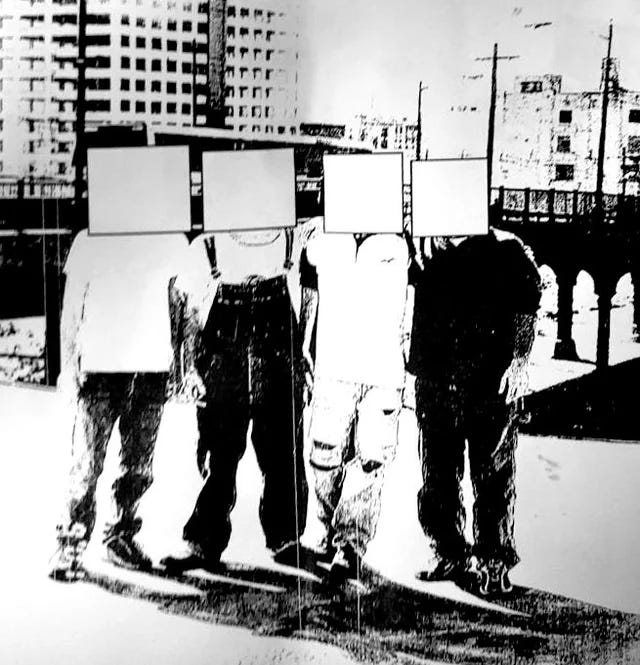
Leading up to 9/11, Israeli intelligence continued to weave its web of influence not only through the halls of the World Trade Center complex and the runways from which the hijacked planes took off, but through the entire American political and economic ecosystem.
The most well-known example of the Israeli intelligence presence in the United States as it pertains to 9/11 is in the case of the “Dancing Israelis.”
On the morning of 9/11, within minutes of the first plane striking the WTC, three men were spotted seated on top of a moving van, taking pictures of the towers, laughing, and celebrating. After being spotted, they fled the scene, and the FBI put out an all-points bulletin for officers to look for a white van with Urban Moving Systems on its side. Later on at 3:56 PM, the van was pulled over, and five men were inside: Sivan Kurzberg and his brother, Paul, Yaron Shmuel, Oded Ellner, and Omar Marmari.
Kurzberg, according to the police report, told the officers, “We are Israeli. We are not your problem. Your problems are our problems. The Palestinians are the problem.”
Despite the men telling police an innocent explanation for their behavior that day, when the photographs were developed, it was revealed that the men were indeed celebrating, laughing, high-fiving, and Sivan Kurzberg was even photographed holding up a lighter to the flame-engulfed WTC building in the background.
The FBI confirmed that two of the men had ties to Israeli intelligence and believed them to be working on some kind of Mossad operation. One of them had $4,700 in his sock, and the men had plane tickets for various places around the globe for their immediate departure. FBI reports show the men making contradictory statements to investigators. The men were held in federal custody for 71 days, then deported back to Israel. The owner of Urban Moving Systems, Dominik Sueter, was questioned by the FBI, with the agency concluding that “Urban Moving may have been providing cover for an Israeli intelligence operation”.
When investigators returned to question Sueter, they found that he had hastily fled to Israel.
What conclusions did the FBI draw from their investigation? Well, they thought they were likely Israeli intelligence, but don’t worry, they think their target was not the US but rather studying Islamic Groups and Charities with potential ties to terrorist networks.
Later on, on Israeli television, where the men were being interviewed, Oded Ellner said they were there to document the event.
It was none other than Epstein associate Alan Dershowitz who stepped in as a negotiator on behalf of the men when they were being held in federal custody in order to smooth things over with the U.S. Government, as Christopher Ketcham reported in CounterPunch.
The Israeli “Art Students”
In January of 2001, the Drug Enforcement Agency (DEA) began receiving a number of reports of young Israeli “art students” attempting to gain access to the offices of the DEA and other law enforcement and Department of Defense agencies. A deluge of these kinds of reports came in from over 40 cities within the first six months of 2001. Israelis were discovered diagramming the inside of federal buildings and possessing photographs of federal agents. One report claimed that between March of 2001 and September 11th, 140 Israelis were detained or arrested, with another report claiming that an additional 60 were detained or deported following the attacks.
One can read about these Israeli “art students” in a 60-page DEA memo intended only for senior officials at the Department of Justice, which was leaked to the press. The memo contains a summation of the modus operadi of these “art students”: “In general, these individuals appear to be organized in teams of 8 to 10 people, with one person described as the ‘Team Leader’. They are usually encountered in pairs or individually carrying a makeshift art portfolio. Several times, they have been seen or admitted to being dropped off in an area by the Team Leader, who returns later to pick them up. The females are usually described as very attractive, and all are generally in their early to mid-20s. Most admit to having served in the Israeli military. This is not surprising given the mandatory military service required in Israel; however, a majority of those questioned have stated they served in military intelligence, electronic signal intercept, or explosive ordnance units. Some have been linked to high-ranking officials in the Israeli military. One was the son of a two-star general, one served as the bodyguard to the head of the Israeli Army, one served in a Patriot missile unit. That these people are now traveling in the U.S. selling art seems not to fit their background.”
Not only does the memo mention that some of the Israeli nationals had a background in demolition and explosive ordinance units, but the Orlando DEA had linked these “art students” to an ongoing drug investigation involving MDMA. However, Ketcham in his article mentions that this could possibly be a smokescreen to conceal the more obvious spying angle.
In December of 2001, Fox News aired a four-part series conducted by Carl Cameron where he reported that these “art students” were at the center of an investigation by federal officials into the existence of a possible Israeli espionage ring which was tracking Al Qaeda leading up to 9/11. One investigator said to Cameron, “Evidence linking these Israelis to 9/11 is classified. I cannot tell you about evidence that has been gathered. It’s classified information.”
In the four-part series when the question was put forward by a Fox anchor to Cameron as to the question of Israeli foreknowledge of 9/11 and how clear it was to ‘investigators that some Israeli agents may have known’, Cameron states, “Well, it’s very explosive information obviously and there’s a great deal of evidence that they say they have collected none of it necessarily conclusive it’s more when they put it all together a bigger question they say is ‘How could they not have known?’ Almost a direct quote.”
Israeli Intelligence and the 9/11 Hijackers
Christopher Ketcham, who wrote a piece on the Israeli art students for Salon, later wrote a piece for CounterPunch magazine expanding upon this research, delving into the story of the Urban Moving Systems employees detained after 9/11. Ketcham, in an outstanding feat of journalism, unveiled a number of damning revelations relating to the vast network of Israeli nationals operating in the United States and the alleged 9/11 hijackers. Perhaps the most damning of these is the proximity of the Urban Moving Systems and art-peddling Israeli nationals to the 9/11 hijackers.
All five hijackers of American Airlines 77, which struck the Pentagon, had addresses or were active within a six-mile radius of towns associated with the Urban Moving Systems Israelis. They were all operating on the same stomping grounds of northern New Jersey.
One of the “art students”, former Israeli Military Intelligence Officer Hanan Serfaty, rented two separate apartments close to the mail-drop location and apartment of Mohammed Atta. The distance between Atta’s mail-drop and one of Serfaty’s apartments was approximately 2,700 feet. Atta and the hijacker pilot of United Airlines 175 shared an apartment only 1,800 feet from Serfaty’s apartment. Serfaty was moving around significant sums of cash. These strange happenings occurred in Hollywood, Florida, an area which, according to the aforementioned DEA memo, appeared to be “a central point for these individuals, with several having addresses in this area”.
More than thirty of the 120 “art students” lived in Hollywood, which was home to nine of the nineteen 9/11 hijackers, with five more in the surrounding area.
Christopher Ketcham writes in CounterPunch, “In at least six urban centers, suspected Israeli spies and 9/11 hijackers and/or al-Qaeda–connected suspects lived and operated near one another, in some cases less than half a mile apart, for various periods during 2000–01 in the run-up to the attacks. In addition to northern New Jersey and Hollywood, Florida, these centers included Arlington and Fredericksburg, Virginia; Atlanta; Oklahoma City; Los Angeles; and San Diego.”
German publication Die Zeit reported that the Mossad provided US intelligence with the names of two of the hijackers prior to the attacks—Khalid al-Mihdhar and Nawaf al-Hazmi—with these two operating in Hollywood, Florida, in close proximity to Israeli “art students” as well as the Urban Moving Systems Israelis in New Jersey. Hazmi also visited Oklahoma City on almost the same dates as three of the art students. (Interesting aside: Zacarias Moussaoui, who allegedly planned to participate in 9/11, was in flight school in Oklahoma from February to May of 2001. This school was visited by Atta and al-Shehhi. Moussaoui just so happened to meet the shoe bomber that ICTS let through their gates, according to some accounts.)
One of the “art students” arrested leading up to 9/11, Michal Gal, was bailed out by an employee of Amdocs, an Israeli telecommunications company which counted some of the largest phone companies and US government agencies among its clients. The company, whose upper brass was filled with former Israeli Military personnel, was investigated twice within a single decade on charges involving espionage-related leaks of data. This in part resulted in them becoming one of the subjects of the four-part Carl Cameron Fox News investigation.
Amdocs acquired an Israeli company called Comverse. Comverse bought the Israeli instant messaging company Odigo in 2002, but already had a stake in the company as early as January of 2001. Odigo is notorious amongst those who believe that Israel is responsible for 9/11 due to two Odigo employees working at the company’s offices just outside Tel Aviv receiving warning of a non-specific terrorist attack about to take place only two hours prior to the 9/11 attacks in New York. The Odigo offices in New York were within a mile of the WTC complex.
One of the Odigo co-founders created the first internal web network for the IDF. Another Odigo co-founder worked at AMDOCS after his time in R&D for the Israeli Air Force. Comverse founder Kobi Alexander fled to Namibia after facing multiple accounts of fraud and charges related to irregular stock trading in the United States. He had been an intelligence officer in the Israeli army. Two other executives were charged with the same options backdating scandal.
Now some have theorized that the Israeli “art students” as well as the Urban Moving Israelis were not necessarily directing the hijackers, but were merely monitoring Islamic Fundamentalist groups. Others have theorized that the “art students” may not have been intelligence at all, but part of an Israeli ecstasy peddling ring, an idea hinted at in the DEA memo. Ketcham mentions that the mention of MDMA trafficking could possibly serve as a smokescreen. Ketcham even makes the astute observation that the obvious nature of the Israeli “art students” and their spying might have been serving the purpose of drawing attention to themselves to either distract from the real Israeli operatives at work on American soil or to confuse and muddy the waters of any potential investigation.
A cousin of one of the 9/11 hijackers was reported by the New York Times to be a potential Israeli spy reporting on Hezbollah and Palestinian groups to Israeli intelligence.
What we can say is that the “dancing Israelis” and their fellow countrymen and women, in conjunction with the ties of Israeli intelligence to the WTC and airport security through ICTS, Zim, Silverstein, Lauder, Friedman, and the other assorted cast of characters, paint an obvious picture of who plays the outside role in this inside-outside job. Through Ketcham’s investigative journalism, we can see how not only did the outside angle ensure control of airport security and the World Trade Center, but they even managed to keep tabs on and possibly direct the hijackers themselves.
Act V: The Outside Element- The Clean-Up Crew
Just as important as having people in place at the World Trade Center complex and airports was having people amenable to the plans of the Inside-Outside plotters who could ensure that no legitimate investigation into the attacks ever took place. Even a cursory glance at the official story, which men like Ehud Barak were seeding into the public consciousness within moments of the attacks, reveals obvious inconsistencies. So how did the plotters manage to keep the legal system from becoming a thorn in their side?
One such mechanism of control was the 9/11 Victims Compensation Fund. In my previous piece, I mentioned how Jordana Feldman, who ran the Epstein Victim’s Compensation Fund, was a crucial individual when it came to the 9/11 Victims Compensation Fund. Feldman designed the fund alongside Ken Feinberg. Feinberg was one of three arbitrators who helped determine the market value of the Zapruder film, the video showing the assassination of President Kennedy. The Zapruder film was purchased by Time-Life, whose co-founder Henry Luce had a relationship with the CIA. The role of two of the individuals heading the fund in the aftermath of separate historical events widely considered to be subject to institutional cover-up remains pertinent to the role of both Feinberg and Feldman with the 9/11 fund.
A non-negotiable clause of the 9/11 Victims Compensation Fund was that, in order to receive any kind of settlement, no lawsuit could be filed against the airlines for any lack of security. This helped to further shield companies like ICTS from legal culpability and suspicion. That this clause was worked into the conditions of the Compensation Fund perhaps shouldn’t come as a surprise when we see the conflicts of interest involving people involved in the distribution of the funds.
All of the cases were presided over by Judge Alvin Hellerstein of the Southern District of New York. Hellerstein did not disclose his own conflict of interest in his rulings, specifically as it relates to Huntleigh USA and ICTS. Hellerstein’s son Joseph Hellerstein worked for law firm Amit, Pollak, Matalon and Company, based in Tel Aviv, Israel. The firm represented an Israeli defense contractor partnered with Boeing, a sister company of ICTS, and RFID device company Better Online Solutions (BOS).
Boaz Harel, the brother of Ezra Harel, took over the majority interest of ICTS after the death of his brother, who sat on the board of BOS. The chairman of the BOS board was Edouard Cukierman, the president of a private equity firm that owned Catalyst Investments, which had as its president Boaz Harel. Catalyst Investments was a major shareholder of BOS. While this convoluted thread is difficult to untangle, one can read the motion filed in the US second court of Appeals by 9/11 widow Ellen Miriani, which parses out the incestous nature of the Hellserstein-ICTS axis in detail. (Side note: the Israeli defense contractor Hellerstein’s son represented, Aeronautics Defense Systems, specializes in unmanned aerial systems including the Dominator UAS which is modeled on twin-engine passenger aircraft.)
Hellerstein also represented Cantor Fitzgerald. Those who read my last piece will be familiar with the head of Cantor, Howard Lutnick, an Epstein associate currently working in the Trump administration who was conspicuously absent from his office in the direct impact zone of the North Tower on 9/11. Lutnick gave office space to fellow Epstein-associate and former wife of Prince Andrew, Sarah Ferguson, who also was absent from the North Tower on 9/11 despite a meeting she had scheduled. After 9/11, Cantor allegedly brought in more money than they had before the attacks. The company was fortunate not to suffer from an inability to trade due to the existence of their revolutionary electronic trading platform e-speed. This type of software is reminiscent of software owned by other tenants in the Twin Towers, whom we will address in detail later.
Hellerstein appointed Sheila Birnbaum to settle as many of the cases as possible. Birnbaum was a lawyer at the firm Skadden, Arps, Slate, Meagher & Flom.
The law firm Skadden had a history of serving Israeli companies. One senior partner, Ken Bialkin, was the National Chairman of the ADL in addition to working for a host of other Zionist groups. Bialkin was instrumental in forging ties between American and Israeli companies and guiding Israeli companies to go public in the United States.
The Jewish Telegraphic Agency reported that in Bialkin’s office at Skadden, one might find him hosting Neo-Conservative thought leader Norman Podhoretz or Henry Kissinger.
We can also see people friendly to Israel in the institutional cover-up of 9/11 heading the legal proceedings involving Larry Silverstein and his World Trade Center insurance settlement.
Who was the judge presiding over Silverstein’s case?
None other than Michael Mukasey.
Michael Mukasey
In my previous article, I mentioned Mukasey and his son’s role in Jeffrey Epstein’s legal defense as well as the father-son duo’s overall careers as legal fixers for white-collar criminals. However, I think we all need a quick refresher. For more detail, I encourage you to visit my previous article, 9/11 was an Epstein Job.
- Michael Mukasey grew very close to 9/11 cover-up artist and later Mayor of New York Rudy Giuliani when the two worked at the same law firm in the seventies.
- Michael, along with his son Marc, worked as a justice advisor on Giuliani’s presidential campaign.
- Michael Mukasey was the US Attorney General from September of 2007 to January of 2009, meaning he was the Attorney General during the finalization of Jeffrey Epstein’s Sweetheart Deal, as well as Epstein’s conviction and sentencing. Epstein’s sweetheart deal seemingly would need the institutional blessing of Michael Mukasey.
- Epstein and Ghislaine acquired legal counsel from Michael’s son Marc, who worked for Giuliani’s law firm.
- Marc, in addition to representing people such as FTX’s Sam Bankman-Fried for his cryptocurrency fraud arrest and Congressman Matt Gaetz after allegations of sex trafficking, also represented Epstein associate Trump during his first term when people were probing into the president’s finances.
- Marc Mukasey represented Israeli entrepreneur Joel Zamel, who formed a strategic partnership between his firm, Psy-Group, and Cambridge Analytica that helped propel Trump into the Oval Office. Psy-Group was an Israeli Private Intelligence agency with headquarters in Tel Aviv and Washington, D.C.
- Michael Mukasey penned a letter in 2010 to Obama advocating for the President to pardon Israeli Spy Jonathan Pollard.
Larry Silverstein violated Mukasey’s order not to make inflammatory statements regarding the case of his WTC insurance settlement publicly when Silverstein criticized the slow payout on his settlement. However, Mukasey did not find Silverstein in contempt despite his blatant violation of the aforementioned order.
Silverstein, who argued that the events of 9/11 should count as two separate insurable incidents, something he had discussed on the phone with his lawyers within hours of the attacks, would in part get his way due to the rulings of Mukasey, who saw to it that the attacks were considered two separate incidents.
The same outside element that had ties to the World Trade Center complex, airport security, and even the movements of the hijackers themselves also left behind their indistinguishable fingerprints on the legal proceedings and investigations into the attacks. But what about those on the inside?
Act VI: The Inside Element
While the outside element managed to obtain a presence on the inside, we will see that several connections extending past the explicitly Israeli-Outside faction exist and are worthy of consideration. The outside and inside elements should not be viewed as conflicting or opposing groups. Rather, 9/11 was the result of a confluence of this outside-Israeli faction and the Inside element—a circle of WTC tenants, Bush Administration officials, prominent Neo-Conservatives, intelligence assets, and private interests with these two groups sharing mutual interests and ideologies in common. In fact, the confluence is so complete that at times the groups can seemingly lose contrast, operating as one singular entity. This group cohesion was essential to the success of their operation.
So what groups and individuals comprise the inside element?
Private CIA for Hire
Kroll, a financial and risk advisory firm, according to some, largely functions as a private intelligence firm, having been called the “CIA of Wall Street”. The company routinely hires former Mossad, CIA, and MI5 employees. French intelligence even suspected that the company had at times served as a front for CIA activity. The founder of Kroll, Jules Kroll, was hired by Robert Maxwell two weeks before his mysterious death to investigate the “dark forces” he said had mobilized against him. More recently, the firm was hired by Harvey Weinstein to wipe the electronic devices of one of his alleged victims of any evidence of sexual assault.
After the 1993 WTC bombing, Kroll was contracted to revamp the security of the complex.
Jerome Hauer
Jerome Hauer, the Managing Director of Kroll at the time of 9/11, instead of going to his office in the WTC, made television appearances announcing that the man responsible for the attacks was none other than Osama Bin Laden, as well as dismissing the notion that any kind of explosives had been used. This display, reminiscent of Ehud Barak’s appearance on the BBC, is even more conspicuous given Hauer’s position managing security for the WTC.
Hauer’s position at Kroll was not his first job at the WTC complex.
As part of the mayor’s office under Giuliani, in 1996, the Office of Emergency Management (OEM) was created to respond to emergencies and help facilitate communications between different agencies in the event of an emergency. The OEM’s emergency operations center was housed on the 23rd floor of WTC 7, a controversial decision following the 1993 WTC attacks. The decision to place the Emergency Operations Center in the WTC was allegedly made by Jerome Hauer, the first director of the OEM, who had been appointed to the position by Giuliani.
The New York Times described Hauer’s job with the OEM as “sitting around all day thinking up horrifying ways for things to be destroyed and people to die.”
Speaking to the Times, Hauer mentioned the kinds of emergencies he was concerned with, saying, “helicopter crash, subway fire, water main break, ice storm, heat wave, blackout, building collapse, building collapse, building collapse.”
Not only was Hauer obsessed with building collapses, even going so far as to keep trophies from building collapses the way a serial killer might collect the jewelry of the women he dismembers, but he was also tapped into the Bush administration. On the day of 9/11, Hauer advised top officials in the Bush administration to start taking the antibiotic Cipro. Hauer also began hinting to the media that Saddam Hussein was going to unleash an anthrax attack through foreign terrorists.
Hauer had previously worked at Scientific Applications International Corporation, which employed Stephen Hatfill, the initial suspect in the investigation of the Anthrax attacks. SAIC worked on developing protocols for handling anthrax “hoax letters”.
SAIC just so happens to hold patents related to thermite.
Hauer’s strange connections relating to 9/11 do not end here. Hauer hired John P. O’Neill to Kroll just before 9/11. O’Neill had been an FBI Special Investigator with expert knowledge of Osama bin Laden and the Al-Qaeda networks alleged to have committed the 1993 WTC bombing. O’Neill would not be as lucky as Hauer and other top executives at the WTC complex. O’Neill died in the attacks.
In the aftermath of 9/11, public officials and the mainstream media repeated that the poor response to the attacks largely centered around a failure of imagination. After all, who could have foreseen planes flying into buildings as an act of terrorism?
As it turns out, many individuals had foreseen the possibility of just such a scenario, with one of them being Brian Michael Jenkins, the Deputy Chairman of Kroll from 1989 to 1998. After the 1993 attacks, Jenkins assessed the potential for a terror attack on the WTC involving planes.
During his career, Jenkins served as an advisor to many different government agencies, including the State Department and the Department of Defense. Jenkins is an expert on terrorism and transportation security, and in 2000 was an advisor to the National Commission on Terrorism. In addition to all of this, Jenkins had been an advisor to the president of the RAND Corporation after his time in the Special Forces. Some other RAND advisors during the time of Jenkins’ advisory role were Donald Rumsfeld, Frank Carlucci of the Carlyle Group, Condoleezza Rice, and PNAC member Francis Fukuyama.
Perhaps the most interesting endeavor Jenkins undertook during his career as a civil servant, as it pertains to 9/11, was his time as a member of the White House Commission on Aviation and Security in the late 90’s. In this position, Jenkins worked with CIA director John Deutch and James Abrahamson of Securacom, a company that provided security services for the WTC after the 1993 bombing by integrating the various electronic security systems installed in the buildings. The commission, with Abrahamson, Deutch, and Jenkins, recommended that all airliners and the FAA’s Wide Area Augmentation System should be updated with a modernized Global Positioning System (GPS). Some authors have theorized that GPS-guided autopilot systems took remote control of the planes hijacked on 9/11.
Securacom Secures Control?
A discussion of the World Trade Center wouldn’t be complete without delving deeper into the previously mentioned Securacom, which James Abrahamson was employed by in addition to his role with Jenkins on aviation security for the Clinton White House.
Securacom began work for the WTC following the 1993 bombing. The company later changed its name to Stratesec after a lawsuit was filed against them by a smaller company named Securacomm. The court found an effort by Securacom to financially “bury” the plaintiff in an attempt to crush the smaller company through “vexatious litigation”.
In addition to James Abrahamson of the Aviation and Security Commission, Stratesec also had Wirt Walker III, a relative of the Bush family, and Marvin Bush, the brother of George W. Bush, on its board. Marvin Bush sat on the Board of Directors from 1993 to 2000, leaving to work for HCC Insurance, one of the many companies providing insurance coverage to the WTC.
Stratesec had several interesting clients in light of the September 11 attacks. Not only did they provide security for the WTC, but they also were contracted by United Airlines and Dulles Airport for security purposes.
Another Stratesec client of note is Los Alamos National Laboratory, which developed thermite electric matches. The dynamic gas-phase condensation method of producing thermite was pioneered by Wayne Danen and Steve Son at Los Alamos National Laboratory.
An FBI memo details how the FBI was considering investigating potential 9/11 related insider trading involving Stratesec after discovering 56,000 shares of Stratesec were purchased between September 6th and September 10th. Stratec shares went from $.75 a share to $1.49 once the markets opened back up after the attack, with the companies airport security systems being in higher demand after the attacks. An investigation was not pursued, with the FBI memo stating that “no ties to terrorism or other negative information” was discovered during their investigation of the two redacted individuals.
Profiteers? Perpetrators?
The North Tower was struck by American Airlines Flight 11 between floors 93 and 99. A single tenant, Marsh and McLennan, occupied all of these floors as well as one floor above the point of impact. Tenants of the WTC were responsible for any upgrades in leased spaces. Marsh fireproofed floors 93-100. Additionally, Marsh demolished floors 95-98 before updating the fire alarm and sprinkler systems of those floors. Marsh made modifications to floor 94 in 1998 and floor 95 in 2000.
The chairman and CEO of Marsh and McLennan at the time of 9/11 was Jeffrey Greenberg. In 1993, American International Group (AIG), a finance and insurance company, bought 23% of Kroll. The head of AIG at the time was Maurice Greenberg. Maurice’s son, Jeffrey Greenberg, two years after AIG acquired the 23% stake in Kroll, left AIG to work at Marsh and McLennan.
Greenberg was a member of the Council on Foreign Relations (CFR) as well as a trustee of the Brookings Institution. Lee Hamilton, the co-chairman of the 9/11 Commission, was also a trustee of the Brookings Institution.
The CEO of Marsh, Jeffrey Greenberg, was in midtown Manhattan at the time of the attacks at the company’s headquarters, where he had an “unobstructed view of lower Manhattan,” where he saw “smoke rising from One World Trade Center and the fireball erupt from the second tower.”
Greenberg stepped down from his position at Marsh after being charged by New York State Attorney Elliot Spitzer of running a kickback scheme, but “Mr. Greenberg was never charged with any wrongdoing, while Mr. Spitzer was later engulfed in a prostitute scandal.”
Maurice Greenberg was also in Spitzer’s crosshairs, with Spitzer alleging that AIG was involved in sham reinsurance transactions and shady accounting practices.
AIG has a colorful history that has been the source of scrutiny and questions regarding the monumental bailout they received after 2008, as well as the company’s ties to the CIA’s precursor, the Office of Strategic Services (OSS), and allegations of money laundering possibly related to cocaine trafficking out of Mena, Arkansas during Bill Clinton’s tenure as Governor.
Donald Rumsfeld (Left) and Paul Bremer (Right)
Paul Bremer worked as the CEO of Marsh Crisis Consulting, a subsidiary of Marsh and McLennan. And maybe not so coincidentally, just hours after the attacks, he would appear on MSNBC to announce that the attacks were carried out by Osama Bin Laden. Bremer and 1,700 other employees of Marsh had offices in the North Tower from floors 93 to 100, the exact area of the collision. 294 of Marsh’s employees died in the attacks while Bremer spoke cool, calm, and collected to his televised audience—just like fellow WTC employee Hauer.
Bremer held various positions in the US State Department, working for a time as an assistant to Henry Kissinger. Bremer was the Managing Director of Kissinger Associates. Kissinger Associates had deep ties with BCCI. BCCI was a bank with deep ties to the world of intelligence and eventually became embroiled in scandal. The BCCI scandal involved laundering drug money, financial crimes, sex trafficking, and the funding of terrorism. Ronald Reagan appointed Bremer as the ambassador-at-large for counterterrorism and coordinator for counterterrorism in 1986. After his time at Marsh, in 2003, George W. Bush appointed Bremer the presidential envoy to Iraq, and Bremer became the country’s Chief Executive Authority under the Coalition Provisional Authority.
Paul Bremer was also on the Board of AkzoNobel, a company that makes fireproofing coating for skyscrapers called Interchar. Bremer was also on the International Advisory Board of the Japanese company Komatsu, which manufactures mining, construction, and military-grade equipment. In 1996, Komatsu patented a thermite device which could “demolish a concrete structure at a high efficiency, while preventing a secondary problem due to noise, flying dust and chips, and the like.”
Another such individual worthy of consideration is Stephen Friedman (not to be confused with Netanyahu’s childhood chum), who worked as a Senior Principal at Marsh and McLennan Capital Corp at the time of the attacks.
Friedman’s resume reads like a who’s who of the Western establishment.
- An alumnus of Cornell and member of the elite Quill and Dagger secret society—sharing secret society lineage with Deputy Defense Secretary Paul Wolfowitz, Bush Security Advisor Stephen Hadley, and Clinton’s National Security Advisor Sandy Berger (who was later caught stuffing 9/11 commission documents in his socks).
- Chairman of the Brookings Institution, a Bilderberg Meeting Attendee, and a member of the Council on Foreign Relations.
- Assistant to George W. Bush for Economic Policy, Head of the National Economic Council, and Chairman of the President’s Intelligence Advisory Board.
- Original board member of In-Q-Tel, the CIA’s venture capital arm, which invested more than $2 million dollars in Palantir shortly after its inception. In-Q-Tel’s mission is to invest in and develop cutting-edge companies on behalf of National Security, including “nano and chemical technologies.”
Marsh, which was in the direct impact zone of the North Towers, occupying floors 93-100, had 294 of their employees die in the attacks. One lucky survivor who just so happened to be running late due to traffic, Richard Groves, exposed the link between the company AIG and Marsh, a software called Silverstream possibly used to funnel money through the WTC during the 9/11 attacks.
The year before 9/11, Marsh contracted Silverstream software to create a digital connection between Marsh and their clients for the purpose of paperless transactions. Silverstream had already provided similar software for companies like Alex Brown, Deutsche Bank, and Morgan Stanley, but the software created for Marsh far exceeded the software Silverstream created for these other companies. Richard Andrew Grove, a salesman who managed the project for Silverstream, noticed fiscal anomalies in the billing of the account of this project. After discovering $10 million in suspicious purchase orders with vendors appearing to sell Marsh large quantities of suspicious hardware.
Grove approached Marsh executives with these anomalies, and some executives urged him to keep quiet. Executives at Marsh Grove felt he could trust were killed on September 11th during a conference call, which Grove was running late to due to traffic. The Marsh executives who had told Grove to keep quiet were the ones who had scheduled the meeting and were also the ones absent.
After September 11th, Convar, a German firm was hired to retrieve data from hard disks discovered at Ground Zero.
In an article published on CNN titled Computer Disk Drives from WTC Could Yield Clues, states, “An unexplained surge in transactions was recorded before the attacks, leading to speculation that someone might have profited from previous knowledge of the terrorist plot by moving sums of money. But because the facilities of many financial companies processing the transactions were housed in New York’s World Trade Center, destroyed in the blasts, it has until now been impossible to verify that suspicion.”
A separate article from Reuters reported this suspicious surge in transactions: “The suspicion is that inside information about the attack was used to send financial transaction commands and authorizations in the belief that amid all the chaos the criminals would have, at the very least, a good head start. Of course, it is also possible that there were perfectly legitimate reasons for the unusual rise in business volume. It could turn out that Americans went on an absolute shopping binge on that Tuesday morning. But at this point there are many transactions that cannot be accounted for. Not only the volume but the size of the transactions was far higher than usual for a day like that. There is a suspicion that these were possibly planned to take advantage of the chaos.”
One of Convar’s data retrieval experts said, “There is a suspicion that some people had advance knowledge of the approximate time of the plane crashes in order to move out amounts exceeding $100 million. They thought that the records of their transactions could not be traced after the mainframes were destroyed.”
Some have speculated that this technology connecting Marsh to their clients via Silverstream was used to carry out these transactions.
Former LAPD officer and investigative journalist Michael Ruppert said that one of Marsh’s e-clients, Deutsche Bank, had its computer systems externally taken control of immediately prior to the attacks, “Within, I would guess — I’d have to go back and look at the book, but it was no more than a week of the attacks — I was being contacted by a lot of people, from inside official sources who were raising a lot of questions. This one particular person was extremely credible. They absolutely convinced me they had been an employee of Deutsche Bank in the Twin Towers, and they told me very clearly that in the moments right before the attacks and during the attack — there was a 40-minute window between the time the first plane struck the World Trade Center and the second plane — that Deutsche Bank’s computers in New York City had been ‘taken over.’ Absolutely co-opted and run. There was a massive data purge, a massive data download, and all kinds of stuff was moving. And what this person said very clearly was that no one in the Deutsche Bank offices in the towers at the time had the ability to prevent what was going on from any of their terminals.”
Convar never confirmed whether or not Marsh’s unique Silverstream software was the mechanism through which these large transactions immediately preceding the attacks were cleared through.
Explosive Connections
United Airlines Flight 175 crashed into the south face of the South Tower from floor 77 to floor 85. One of the companies in the impact zone, Baseline Financial Services, had offices on the 77th and 78th floors of the South Tower. The company was led by Joseph Kasputys. Kasputys was the head of a company called Primark from 1987 to 2000, which, for a period of time, owned the company Triad International Maintenance Company, which modified Boeing Airplanes. Baseline, according to NIST, made modifications to the southeast of floor 78, which would later be the location where Flight 175 struck.
On floor 91 of the South Tower, Washington Group International had offices. The construction and mining firm acquired the government services business of Westinghouse Environmental Services Co., a company which operated the Savannah River National Laboratory. The Washington Group operated Savannah beginning in 1999 through the end of their contract with the DOE in 2009. Savannah Labs had shared tech with Lawrence Livermore Labs beginning in 1997. Savannah Labs developed sol-gel technology. Lawrence Livermore Labs used sol-gel when making nano-thermite. An interesting aside: Savannah Labs assisted in rescue operations after 9/11.
E. Preston Rahe Jr, became the President of Westinghouse Environmental Services Co in 2000 after being appointed by Washington Group after the buyout. Later, Rahe would go on to work for Lawrence Livermore National Security, the managing contractor of Lawrence Livermore National Laboratory, which was founded by Washington Group International, Bechtel, the University of California, and Amentum, with Rahe being the representative of Washington Group International’s interest. There, he served on the Board, and on the advisory Board was John Gordon. Gordon was a former Homeland Security Advisor and Deputy National Security Advisor for George W. Bush. He was also the Deputy Director of the CIA from October of 1997 to June of 2000. Gordon was also on Bush Sr.’s National Security Council.
Kevin Ryan points out that Gordon would have worked closely with A. B. Krongard, the Executive Director of the CIA. Krongard has been suspected by some of insider trading in relation to 9/11 due to the firm he headed until 1998, Alex Brown Inc., buying many of the suspicious put options on United Airlines before the 9/11 attacks.
In 1996, Washington Group International acquired Morrison Knudsen Co., a civil engineering and construction company with a history of building demolition, with The Seattle Daily Journal of Commerce Reporting that the company was hired by the U.S. Army Corps of Engineers to demolish over 200 buildings.
Inside the Pentagon, the comptroller at the time of 9/11, Dov Zakheim, had previously worked for SPC International, a subsidiary of Systems Planning Corporation. SPC developed a “flight termination system” for the US military, which claims on its website to provide “a fully redundant turnkey range safety and test system for remote control and flight termination of airborne test vehicles.”
SPC’s fire safety and emergency research division, Tridata Corporation, carried out an analysis of the WTC’s safety for the US Fire Administration after the 1993 bombing.
As Comptroller of the Pentagon, Zakheim was responsible for overseeing the $2.3 trillion, which Donald Rumsfeld announced could not be accounted for prior to a plane striking the Pentagon’s Budget Analyst Office.
The Final Act
The public was told immediately after the attacks what beliefs were within the narrowly prescribed parameters of safe opinion by people like Ehud Barak, Jerome Hauer, and Paul Bremer.
We were told the attacks were a failure of imagination despite the people responsible for the WTC complex’s security envisioning such an incident.
We were told that no explosives were used by Jerome Hauer, who worked in the World Trade Center and previously held a position with a company that holds patents related to thermite and developed protocols for handling anthrax letters.
There was no systemic failure of imagination.
On 9/11, the system functioned exactly the way it was designed to.
And to be clear, the name of any given individual or group here does not necessarily imply direct involvement in 9/11. I’m not trying to present some kind of cartoonish view of the attacks where every single individual mentioned was brought into a smoke-filled room and debriefed on what their role would be in the conspiracy. Power doesn’t work that way and neither do intelligence operations. At least for the most part. What we are looking at here is a network—an ecosystem of intelligence operatives, private interests, Zionist operatives, and legal fixers with shared interests, institutional alignments, and ideologies. On 9/11, those with direct involvement knew that they could count on this system to operate the way it was designed to. The point of detailing this network’s ties to the WTC, airports, and the larger system at play is to show how such a conspiracy could have functionally taken place without making the execution of the 9/11 attacks seem like something one would have watched in a poorly written 80’s crime thriller.
The outside layer of Israeli-intelligence-aligned assets secured ownership of the World Trade Center Complex and the security of the airports, kept tabs on the men who supposedly hijacked the planes, had people amenable to the cause in place for damage control, and delivered the narrative that suited their purposes on the BBC.
The inside layer, through shady tenants like Kroll and Stratesec, was in the position to make sure that all the logistics inside the buildings took place without a hitch once the environment was made safe by the outside layer.
The 9/11 Truth Movement largely ignores the material, on-the-ground, documentary evidence involving suspicious tenants, financial crimes, intelligence operatives, and legal chicanery in favor of focusing on debates revolving around fringe physics or low-brow conspiracies with vague perpetrators instead of naming names.
The mainstream narrative that maintains that 9/11 was all a failure of imagination and that the truth is too difficult to parse out ignores the fact that the blueprint is out in the open for anyone to see. It lives in corporate filings, lease termination dates, archived articles, and leaked FBI documents.
The blueprint is drawn.
The question is: what do we do with it?
Selected Resources and Further Reading:
- ICTS’S B-SIDES PART 1 – TERROR TUNES – Sword and the Neck
- The View from the 101st Floor – Sword and the Neck
- The Israeli “art student” mystery – Christopher Ketcham
- Suspicious Activities Involving Israeli Art Students at DEA Facilities DEA Report
- Dancing Israelis Police and FBI Reports
- Cheering Movers and Art Student Spies – What Did Israel Know in Advance of the 9/11 Attacks? – Christopher Ketcham
- Demolition Access To The WTC Towers: Part One – Tenants – Kevin Ryan
- Another Nineteen – Kevin Ryan
- 9/11 Trillions: Follow the Money – The Corbett Report
Featured Video
From Anthrax to Iraq
or go to
Aletho News Archives – Video-Images
Book Review
New paperback: Butchered by “Healthcare”
Lies are Unbekoming | October 20, 2026
 Butchered by “Healthcare” is Robert Yoho’s plain-spoken account of how American medicine stopped being a profession and became an industry. 341 pages. Over a thousand references. Thirty-eight chapters.
“Screening Tests Are Useless”, on tests that find diseases that would never have hurt you. “The FDA Protects the Big Drug Companies”, on an agency funded by the companies it regulates. “The Journals’ Sins Are the Editors’ Sins”, on ghostwritten studies and captured peer review. “Opioids and ‘Pain Management’”, on how a generation was prescribed its way into addiction. “Prozac and Relatives” and “Antipsychotics Are Disastrous”, on what psychiatry does to adults and children. “Surgery: Money Before Patients”. “Failed Cancer Treatments”. “Futile CPR and Overprescribing”. “Billing Scams & Specialty Warfare”. “Hospitals Are Sharks”. Each with a Patient Tips section at the end on how to survive it.
If you have ever walked out of a doctor’s office with a prescription you didn’t ask for, or watched a parent put through a treatment that made them worse, this is the book you want on your shelf before the next appointment. … Full review
Butchered by “Healthcare” is available on Lulu now.
Blog Roll
 Aletho News
- Undersea Internet cables could be targeted in retaliation for attacks on Iran: IRGC deputy chief
- EU sending ‘biased’ observers to interfere in Serbian election – president
- White House envoy declares kinetic action against Yemen ‘fruitless’
- Ukraine deployed thousands of microdrones in Iraqi Kurdistan: Tasnim
- Iran calls for emergency UNSC meeting over Trump’s ‘brazen’ bomb talk, Israeli threats
- Iranian sources reveal details of Russia-China Hormuz proposal
- Plan for more US-Israel integration puts our military tech at risk
- Another Round Against Iran Will Break What Is Left of the Gulf
- SVR Report on Ukraine’s Mexican Drug Gang Links Could Pressure Zelensky, Won’t Change US Policy
- British Government Employees Were Fact-Checking the News at the BBC. Nobody Told You.
- If Americans Knew
- Israel Denies Entry to French Journalist, U.S. Researcher Amid Rise in Entry Denials
- Gaza’s hospitals are running out of life-saving fuel – Daily Update
- Mysterious bot accounts reportedly spread fake ‘man on the street’ videos for Michigan Senate candidate
- Israeli Defense Minister Katz Says Over 60 Lebanon Villages Have Been Destroyed
- Why Is Israel Running TV Ads in Iowa Ahead of the Midterms?
- Hind Rajab’s Alleged Killer Is in the United States. HRF Demands His Arrest.
- US Officials Face Fresh Pressure After Another American ‘Brutalized’ by Israeli Settlers in West Bank
- Israel-Backed Palestinian Militias Terrorize Displaced Families in Gaza
- FBI subpoenas pro-Palestine activists over Israeli weapons plant disruption
- Fourth winter arrives in wartorn Gaza, too early – Daily Update
- No Tricks Zone
- Predictions Made By Renowned Climate Proifessor Over Past Decades Have Been Proven To Be Poor
- New Study Suggests Large Regions Of The Pacific Ocean Have Been Cooling For The Last 80 Years
- Germany’s Green Energy Debacle: High Energy Costs Force Kahla Porzellan to Close After 182 Years!
- New Study: 50 Years Of The Most Aggressive ‘Net Zero’ Policies Can Only Affect The Global Climate By 0.03°C
- US September “Heat” Was No Record…Many Records Set Decades Ago
- Latest European Green Energy Debacle; Portugal’s Largest Flagship Solar Park Insolvent!
- Green Energy Debacle: German Expert Professor Fritz Vahrenholt Warns Of Severe Economic And Social Consequences
- Two More Paleo Reconstructions Affirm Meters-Higher Sea Levels Across Ireland, Brazil 7000-6000 Years Ago
- New Study: Earth And Venus Surface Warmth Largely Explained By Convection And Lapse Rate, Not CO2 Or Radiation
- 2025 Nature Paper Claiming Worsening Global Drought Gets RETRACTED …Heavily Flawed

