Israeli military court sentences Palestinian journalist to 4 years for ‘incitement’
MEMO | September 9, 2026
An Israeli military court on Tuesday sentenced Palestinian journalist Mahmoud Fatafta to four years in prison on charges of so-called “incitement”, the Palestinian Journalists’ Syndicate said.
The syndicate condemned the sentence in a statement, calling it “a new chapter in the targeting of Palestinian journalists and a systematic attempt to silence voices and suppress freedom of opinion and expression”.
The Israeli army arrested Fatafta on 30 May 2024 while he was passing through the Container checkpoint northeast of Bethlehem in the southern occupied West Bank.
The syndicate said prosecuting journalists in Israeli military courts over their journalistic work or expression of their views was “a flagrant violation of international law and international humanitarian law”. It said the military justice system was being used to punish and intimidate journalists and prevent them from carrying out their professional duties.
It added that the sentence against Fatafta came as part of an ongoing Israeli policy of pursuing, arresting and prosecuting Palestinian journalists in an attempt to “hide the Palestinian narrative and silence voices reporting the truth about what is happening on the ground”.
The syndicate said “incitement” charges had become a broad pretext used by Israeli authorities to pursue journalists, activists and people expressing their views, in violation of the right to freedom of expression and journalistic work.
Iran, Russia, China Demand Guarantees Against Further Attacks on Iranian Nuclear Sites
Sputnik – 09.09.2026
MOSCOW – Iran, Russia and China have demanded guarantees against further attacks on Iranian nuclear facilities, Iran’s mission in Vienna said on Wednesday.
“China, Iran, and Russia, in a joint statement to the [IAEA] BoG [Board of Governors] today, condemned repeated attacks against Iran’s nuclear facilities under IAEA safeguards, together with continuing threats of further aggression. In this regard, effective assurances, in particular guarantees of the non-recurrence of such actions, are indispensable for further development of Iran’s cooperation with the Agency,” the mission wrote on X.
The prevailing security conditions have effectively made the normal implementation of IAEA safeguards in Iran impossible, the mission added.
The US and Israel struck a number of Iranian nuclear facilities during the conflict of June 2025. Iranian nuclear sites were also hit during the latest escalation that began in late February 2026. Tehran blamed the US for the strikes.
The IAEA Board of Governors began its regular session on Monday in Vienna. The session, which runs until September 11, will address issues related to the implementation of safeguards in Iran and developments surrounding Iran’s nuclear program.
How the Latest Iran Sanctions Could Impact Central Asia
The US Iran strategy is working against its Central Asia strategy; Secondary sanctions may push the region closer to China and Russia.
By James D. Durso | The National Interest | September 8, 2026
On August 19, US President Donald Trump announced an “ECONOMIC D-DAY” against the Islamic Republic of Iran, warning of “tremendous economic consequences” for any country allowing its financial institutions, businesses, airports, or government entities to provide Iran a “lifeline.” On August 24, Treasury Secretary Scott Bessent announced “Operation Economic Outcast,” which sanctions Iran and its facilitators in third countries (but no major Chinese banks), and declared, “you are either with us or against us.”
Potential secondary sanctions threaten Central Asia’s developing trade, energy, and transport links with Iran, raising costs, disruption risks, and pressure to diversify routes. The Central Asian republics are not major supporters of Iran, but Iran is becoming an increasingly important southern outlet for their trade and connectivity. The biggest risk is therefore collateral damage to legitimate commerce and transportation, rather than a confrontation over Iran policy.
The Effect of Secondary Sanctions on Central Asia’s Economy
Banking and financial services could become the most immediate problem. Central Asian banks and companies may decide that even legitimate transactions involving Iran are not worth the compliance risk. If a Kazakh or Uzbek bank processes an Iranian payment and Washington later determines the transaction constitutes a prohibited “lifeline,” the bank could lose access to the US financial system.
That creates a powerful chilling effect: the US threatens sanctions, banks become risk-averse, Iranian transactions become difficult, and Central Asia-Iran trade declines as the republics lose access to a market of over 90 million people.
Washington is already targeting Iranian shadow-banking networks and foreign facilitators for enabling Iran’s rahbar banking system. The Treasury Department said its August 7 action involved networks spanning several countries and hundreds of millions of dollars in Iranian transactions.
The result could be over-compliance: Central Asian banks might stop handling perfectly legal Iran-related transactions simply because determining what Washington will regard as a “lifeline” is too difficult. Secondary sanctions can dampen commerce even without formal designations, as private actors withdraw to avoid US financial-system exclusion or penalties.
Transportation and logistics corridors could become economically unattractive, potentially with greater strategic consequences than the direct loss of trade. A container originating in Uzbekistan or Kazakhstan and traveling through Iran to a Persian Gulf port might have nothing to do with Iran politically. Still, it could require an Iranian trucking company, an Iranian railway, an Iranian port, Iranian customs services, Iranian insurance, an Iranian bank, and fuel purchased in Iran. As the Islamic Revolutionary Guard Corps (IRGC) is a major player in Iran’s economy, it will be tough not to deal with an IRGC-affiliated business.
If Washington interprets normal business activity as supporting the Iranian government, the entire corridor could become commercially radioactive. Iran offers a continuous land route southward and onward to the Persian Gulf petrostates, South Asia, East Asia, and East Africa.
The Central Asian republics are landlocked and have pursued pragmatic economic ties with Iran primarily for southern access to the Persian Gulf and Indian Ocean via ports such as Bandar Abbas and Chabahar. These routes form part of the International North-South Transport Corridor (INSTC) and related rail and road networks, offering alternatives or complements to routes that transit Russia, China, or Afghanistan.
Energy relationships are another vulnerability, particularly for Turkmenistan and Tajikistan. Energy swaps, fuel purchases, and other transactions involving Iranian counterparties could become more expensive or difficult if banks, insurers, shippers, or trading companies conclude that they face sanctions exposure.
A prior Turkmen gas-swap arrangement involving Iran was disrupted by US sanctions, illustrating how sanctions can affect nonmilitary transactions. Tajikistan has also sought large preferential fuel supplies from Iran amid unreliable Russian supplies.
Central Asian governments may therefore face higher freight and insurance rates, longer transit times, additional compliance costs, and pressure to use alternative corridors. They may also see greater use of barter or non-US Dollar settlement mechanisms where feasible.
Trade and regional connectivity. The economic effect is likely to be less a complete collapse of trade than higher prices and greater complexity of using Iran. The region may accelerate diversification toward the Trans-Caspian International Transport Route (the “Middle Corridor”), Pakistani ports, or Chinese routes, although each has capacity, cost, or security limitations.
Kazakhstan is probably the most exposed, given its long-term connectivity strategy and interest in an outlet to the Persian Gulf. It has been developing multiple routes to diversify its export geography, including the Middle Corridor through the Caspian and South Caucasus, as well as routes through Iran. Its development of port infrastructure in Iran illustrates that Astana sees Iranian territory as part of its long-term connectivity portfolio.
Bilateral trade rose 26.4 percent in 2025 to about $430 million, with ambitions to reach $3 billion, supported by the Eurasian Economic Union-Iran free trade agreement. Rail freight with Iran increased 69 percent, while INSTC freight overall grew 12 percent to 3.5 million tons. In June 2026, Kazakhstan signed a 27-year Build-Operate-Transfer (BOT) deal for its own logistics terminal at Bandar Abbas, aimed at Persian Gulf, South Asian, Southeast Asian, and East African markets. Secondary sanctions could delay or derail the terminal project and raise logistics costs; banks and carriers could also self-sanction and chill transactions even without formal government action.
Washington now faces a dilemma: the more aggressively it sanctions Iranian transit infrastructure, the harder it becomes for Central Asian states to build the independent trade routes Washington claims it wants them to develop.
Uzbekistan has an especially strong reason to maintain multiple southern options. Tashkent has pursued routes through Turkmenistan and Iran toward the Persian Gulf while also developing routes westward via the Middle Corridor and eastward (the China-Kyrgyzstan-Uzbekistan Railway).
Roughly 9 percent of imports and 10 percent of non-gold exports transited Iran in 2025. Officials have estimated potential losses from Middle East logistics disruptions at $1–$1.5 billion (0.7–1 percent of GDP). Sanctions pressure could force costly rerouting toward the Middle Corridor or other paths, raise freight rates, and reduce competitiveness.
In June, Tashkent concluded a successful investment forum that saw interest from 193 American companies and investors, and where Washington and Tashkent launched a joint investment platform to “identify strategic investments in Uzbekistan for the US and US allies in key sectors.” In February 2026, the United States and Uzbekistan established a critical-minerals partnership, including a framework for up to $400 million in investment in the two countries.
Uzbekistan’s president, Shavkat Mirziyoyev, visited the White House in February 2026, and the leaders concluded agreements in critical minerals, energy and petrochemicals, agriculture and poultry, and irrigation and water-saving technology, the latter a critical issue in the water-stressed country. They also announced a three-year, $35 billion Economic Cooperation Program. Uzbekistan’s World Trade Organization accession got a boost, and the Board of Peace gave Uzbekistan a role in Trump’s Middle East initiative.
The Uzbek leader has made a substantial personal investment in the relationship with the United States, and Uzbekistan has an incentive to comply with US sanctions on prohibited Iranian entities while preserving legitimate transit and commercial relationships wherever possible. That said, Trump must ensure his attack on Iran’s economy doesn’t damage the economies of countries that want a serious relationship with America, as future leaders will not again expose themselves politically if the Americans are careless.
Turkmenistan could face a somewhat different problem. It has extensive energy and transportation ties with Iran and depends on its neighbors for alternative routes. At the same time, Ashgabat traditionally values neutrality (and it is official state policy) and is unlikely to want to become involved in a US-Iran confrontation.
Turkmenistan is expanding cooperation with Iran in transport, energy, communications, and construction. US sanctions disrupted a prior gas-swap arrangement, so secondary measures could freeze or raise the cost of energy swaps and transit.
If Washington begins sanctioning Iranian transportation or energy counterparties broadly, Turkmenistan could be forced to choose between maintaining economically useful relationships with Iran and avoiding exposure to the US financial system, an uncomfortable choice for a country that works not to take sides.
Tajikistan’s direct trade with Iran is smaller, but its exposure is growing. Freight with Iran rose 17.5 percent in the first half of 2026 to 433,000 tons, mostly by rail. Tajikistan has sought large preferential fuel supplies from Iran—2.55 million tons of crude and products, including 2 million tons of crude plus diesel, gasoline, and aviation fuel—amid unreliable Russian supplies. It has also discussed joint road corridors with Iran and Afghanistan, potentially extendable regionally and toward China.
Disruptions could therefore hit fuel access, raise costs, and complicate logistics. Tajikistan may seek alternative suppliers and routes, but those alternatives could be more expensive or less reliable.
Kyrgyzstan is less directly tied to Iran than the other republics, so immediate sanctions exposure should be lower. Nevertheless, it could feel the effects indirectly through higher regional freight costs, fuel prices, insurance costs, banking restrictions, and shared corridor dependencies.
The Strategic Consequences of US Secondary Sanctions in Central Asia
The Central Asian governments pursue multi-vector policies and generally avoid open confrontation with Washington. They are unlikely to disregard US pressure or politically champion Iran, but will manage exposure carefully, possibly scaling back high-visibility projects while seeking workarounds.
Their most likely strategy is: comply with US sanctions on prohibited Iranian entities while preserving legitimate transit and commercial relationships wherever possible. They may also seek explicit US assurances or exemptions for infrastructure projects, but that may dissuade US investors if multiple approvals are needed over a project’s lifetime. And US policy can change overnight.
Washington says it wants Central Asia to become less dependent on Russia and China, and Central Asian governments want that too; one way to do it is by developing connectivity through Iran.
Kazakhstan and Uzbekistan joined Trump’s Board of Peace, but that may not protect them if Trump decides “all hands” must support America’s crusade against Iran. The point of maximum danger for the two republics may come if Trump can’t force China to isolate Iran and tries to punish Beijing by punishing Astana and Tashkent for trans-shipping Chinese goods while allegedly concealing their true origin to take advantage of lower tariffs. There is always the chance a Trump-affiliated investor may ask the White House to attack Tashkent’s trade with Iran, $578 million in 2025, if it doesn’t like Tashkent’s terms and conditions for a deal.
Consequently, an overly broad sanctions campaign could produce greater dependence on China and Russia, the opposite of the strategic objective Washington often advocates for Central Asia, consequences that probably weren’t considered before Trump and Bessent took to social media. Russian State Railways is sanctioned by the United States and the European Union, so Central Asian businesses may be stuck between two transport options, both sanctioned by the West.
The consequences will depend on how Washington defines a “lifeline.” If “lifeline” means financing Iran’s military or IRGC, oil exports, weapons procurement, or sanctions-evasion networks, the Central Asian impact could be manageable. If it means ordinary transportation, banking, aviation, port services, and non-military government-to-government commerce involving Iran, the consequences could be much larger.
The American administration has already demonstrated that it is willing to sanction foreign transport and financial networks supporting Iran’s military and procurement activities. That distinction is central to the policy question. If Washington wants Central Asia to have “connectivity without dependence,” it may need to distinguish carefully between Iranian military lifelines and Iranian transportation infrastructure that Central Asian states use simply to reach global markets.
Central Asia probably will not be the principal target of the new sanctions, but it could be the sanctions’ most significant collateral damage. The danger is not that the republics will support Iran, but that Washington could make legitimate Iranian transit so financially risky and demand that Iran’s neighbors help quarantine the Islamic Republic, undermining Central Asia’s effort to develop alternative routes to the world to the benefit of China and Russia.
James Durso is a regular commentator on foreign policy and national security matters. Mr. Durso served in the US Navy for 20 years and has worked in Kuwait, Saudi Arabia, and Iraq. His writing has appeared in The Hill, The National Interest, Defense News, and Responsible Statecraft. Follow him on X: @james_durso
Pakistan threatens Yemeni strikes on KSA ‘could trigger’ Mecca defense pact
The Cradle | September 9, 2026
Pakistani Defense Minister Khawaja Asif threatened in comments published on 9 September that the Ansarallah-led Yemeni Armed Forces (YAF) attacks “could trigger” the Mecca Defense Pact between Riyadh, Islamabad, and Ankara.
The Pakistani war chief’s comments coincide with a massive YAF campaign of retaliatory strikes on Saudi Arabia and its assets in Yemen, as well as brutal Saudi bombing against the Arab world’s poorest nation.
“Under the trilateral agreement, any aggression against any of the three [countries] is regarded as an aggression against all. There is no ambiguity about that,” the Pakistani minister said in an interview with Geo News.
He added that the YAF retaliations “could trigger the pact” between the three states, which was finalized and signed last month.
According to Saudi authorities, over 70 people were wounded by YAF strikes on Tuesday, which targeted military and energy infrastructure.
The kingdom’s Energy Ministry acknowledged fires and a halt to operations at a number of sites on 8 September due to Sanaa’s attacks.
Pakistan’s threat against Yemen coincided with a statement by the YAF, condemning Saudi Arabia’s “attempts to evade responsibility” for war crimes against Yemen, including the kingdom’s Monday strike on a prison in Yemen’s Al-Jawf governorate.
The attack killed at least 16 people and injured scores.
“At 4:30 pm, an F-15SA fighter aircraft took off from King Khalid Air Base in Khamis Mushait and carried out two airstrikes targeting the prison. It then returned to the same base in Khamis Mushait at 4:45 pm,” the Yemeni army said.
“The Saudi enemy’s attempts to evade responsibility for its crimes and aggression against our country will not absolve it of the consequences and repercussions of this aggression and criminal conduct, no matter how hard it tries to conceal or cover up what happened,” it added.
Saudi Arabia’s Khamis Mushait site was among those targeted by YAF ballistic missiles and drones this week. The new YAF statement on Wednesday came hours after heavy Saudi bombing targeted multiple governorates in Yemen. At least 32 Saudi airstrikes were carried out across Marib, Taiz, Hodeidah, and Al-Jawf.
Yemen’s retaliatory operations come as part of a string of recent Yemeni strikes in recent days, which inflicted heavy damage on Saudi-backed forces in Yemen.
The YAF announced several military operations on 7 September, including the destruction of weapons shipments coming in from Saudi Arabia.
Footage of the operation was released. It shows Saudi military equipment – en route to Riyadh’s proxies in Yemen – being struck and blown up by Yemeni forces.
The YAF recently released footage of multiple other attacks targeting Saudi-backed mercenary groups and forces loyal to the Aden-based Presidential Leadership Council (PLC), backed by the kingdom. The footage was captured by YAF drones.
Sanaa’s recent escalation of retaliatory operations was prompted by Saudi Arabia’s July attack on Sanaa International Airport, which has been under blockade by the kingdom for more than a decade since Riyadh launched its brutal war on Yemen in 2015 at the head of an Arab coalition.
A 2023 Saudi–Yemeni peace process nearly resulted in an agreement between the two sides.
The peace talks stalled but prevented a major escalation from erupting. Yet the kingdom for years continued attacks and its illegal and deadly blockade on Yemeni ports and airports.
Pakistan’s threats in defense of the kingdom’s brutal war on Yemen come weeks after a Reuters report cited sources as saying that Islamabad is concerned it may be “drawn” into the fighting between Riyadh and Sanaa.
Iran War Just Got Much Bigger / Matt Bracken & Lt Col Daniel Davis
Daniel Davis / Deep Dive – September 8, 2026
Qatar Warns of ‘Industrial Catastrophe’ If Strait of Hormuz Remains Closed
By Kyle Anzalone | The Libertarian Institute | September 8, 2026
Qatar is warning that there will be significant global consequences if the Strait of Hormuz is not reopened soon. Iran closed the Strait in response to the war started by the US and Israel. President Donald Trump also imposed a blockade of Iranian ports.
On Monday, Qatar’s Foreign Ministry spokesperson, Mohammed Al-Ansari, said reopening the Strait of Hormuz remains a priority, warning that the prolonged disruption could lead to an “industrial catastrophe.”
The Strait of Hormuz has become a major issue for Trump. Before the war, the Strait was treated as an international waterway. However, after the US and Israel attacked Iran, Tehran seized control of the Strait.
Since then, Tehran has limited traffic to nations that are not participating in the war against Iran. Additionally, Iran is requiring vessels to use preapproved shipping lanes and pay a “service fee.”
Tehran says any agreement to end the conflict must recognize Iran’s sovereignty over the Strait. Iran is in negotiations with Oman to establish new protocols for ships transiting the waterway. Washington is demanding that Tehran return the Strait to its pre-war status.
The US has attempted to force open the Strait of Hormuz. The US is currently escorting tankers through the waterway in hopes of defending the vessels from Iranian missiles and drones. Over the past week, US warships and tankers were targeted by Iranian missiles and drones.
While US officials have claimed that the amount of oil exiting the Strait is close to prewar levels, monitoring agencies say only a small fraction is getting out of the Persian Gulf.
Trump has attempted to pressure US allies into joining a coalition to reopen the Strait without success. The President has recently turned his focus toward South Korea. He recently scaled back war games with Seoul, in part, because South Korea refused to aid the war against Iran.
On Tuesday, Seoul said it still had not determined if it would provide assistance to the war. “We are closely consulting with the international community, including the US, on ways to make a substantive contribution toward the swift restoration of freedom of navigation in the Strait of Hormuz and peace and stability in the Middle East,” Defense Ministry spokesperson Chung Bin-na said. “No specific measures have been decided at this point.”
Iran warned South Korea that any involvement in the US war would have “consequences.”
Israeli Army Closes Tulkarem Zakat Committee Headquarters
IMEMC | September 8, 2026
Israeli forces invaded and closed the Tulkarem Central Zakat Committee headquarters in the northwestern West Bank before dawn Tuesday. After the soldiers withdrew, Palestinians found the body of Gaza Strip resident As’ad Mleiha inside.
Media sources said several Palestinian workers from the Gaza Strip had been living in part of the facility since October 7, 2023. When a large contingent of Israeli soldiers invaded the building, the soldiers forced the workers to leave.
Soldiers then abducted an unspecified number of workers and transported them by military truck to an undisclosed location.
The sources added that the soldiers vandalized the contents of the headquarters and then posted a notice at the entrance alleging that the committee was “illegal,” “supports terrorism,” and had been shut down.
During the invasion, Israeli soldiers fired concussion grenades and tear gas canisters at journalists covering the events and chased several reporters in the surrounding area. No injuries were reported.
Following the army’s withdrawal, Civil Defense and Palestinian Red Crescent Society crews recovered As’ad Mleiha’s body from inside the committee headquarters.
Civil Defense and Palestinian Red Crescent Society crews transferred the body to a hospital. The circumstances surrounding Mleiha’s death and how his body came to be inside the building remain unknown.
No information has been released regarding the fate of the Gaza workers abducted by Israeli forces during the invasion.
The closure of the committee comes amid ongoing Israeli military assaults throughout the Tulkarem governorate.
The Tulkarem Central Zakat Committee is a charitable institution affiliated with the Palestinian Ministry of Endowments and Religious Affairs.
The committee uses donations and zakat funds to provide humanitarian, social, educational, and financial assistance to families in need, orphans, and other vulnerable groups.
Once a refuge for Palestinians from Gaza stranded in the occupied West Bank after the since October 2023, the Tulkarm Central Zakat Committee headquarters has now become the scene of an Israeli military operation.
The development highlights the vulnerability of Gaza residents living in the West Bank, where ongoing Israeli invasions and abductions continue to expose them to heightened security and legal risks.
Blaming the Victim in the Gaza Genocide
Amnesty International blames the victim in a time of genocide
By Paul de Rooij • Unz Review • September 8, 2026
The late Dr. Israel Shahak once related that during WWII when a collaborator at the Warsaw ghetto was eliminated, the jubilant inmates (himself included) danced with joy.[0] Maybe the extreme situation didn’t permit the semblance of a legal process, but natural law ran its course. Now imagine if at that time a sanctimonious body were to pop up and chastise the inmates for this “crime”. Under the circumstances, it would appear hypocritical for anyone to criticise the inmates, let alone refer to their action as “unlawful” and demand “accountability”.
Well, Amnesty International just published an article that fits that description in a contemporary setting. It just published a news release, “Hamas must stamp out extrajudicial executions…”[1], which is an indictment of the execution or beatings of collaborators in Gaza. Amnesty’s rumination amounts to blaming the victim.
About Collaborators
For many decades Israel sought to recruit Palestinian collaborators. These were used as an enforcement arm of the oppressor; to inform on the Palestinian society and the resistance; to undermine the cohesion of the society, to sow distrust; act as propaganda agents; and to create dependence on the oppressor. The Israeli desire to destroy the Palestinian society has been ever present.
From the early days prior to the formation of Israel, zionists sought informers and traitors. Bedouins and the “peace bands” acted as trackers to find and eliminate Palestinian fighters. Wealthy Palestinians sold land or acted as agents for the zionists to acquire land. There are gradations of collaboration — from the ones who were involved in violence against their own people, to those engaged in acts that undermined Palestinian society[2].
Today the so-called Palestinian Authority (PA) are collaborators in the Israeli project; they suppress Palestinian resistance, maintain dependence and subjugation, and protect the network of Palestinian collaborators created by Israel. Prominent Palestinians opposed to Israeli oppression have been murdered by the PA; the PA goons have been tasked with suppressing resistance in key areas such as Jenin and Nablus; and PA forces coordinate their actions with Israeli forces.
Israeli prisons use collaborators (aka Asafir) placed in cells together with Palestinian prisoners to get them to divulge information. Asafir collaborators are also used to break the solidarity between prisoners; any activity that might create a spirit of resistance is broken up.
Notorious armed collaborators roam in the West Bank where they harass and intimidate victims at the behest of their handlers. But to create a culture subservient to the Israeli occupation, Palestinians are told to petition the collaborators to obtain permits, access to land or work. The collaborators simply do Israel’s dirty work.
Drug dealing and collaboration go hand in hand. There is a history of Israel supplying drugs and fostering the criminal gangs in Gaza and the West Bank.[3]
Yet another true and tested way to undermine a society. Drug dealers also act as armed enforcers.
It is fairly easy for Israelis to recruit collaborators. Any Palestinian who has to cross a checkpoint is easy prey for Israeli agents to coerce or bribe victims to become collaborators. No cooperation results in blocked access, and thus no work and the like. If a child requires to go to an Israeli hospital or a health facility in Jerusalem, the parents are often confronted with the choice of obtaining a permit by collaborating, or being turned back. Students seeking to go to study abroad are also put in the same quandary, collaborate or have passage denied. There is an upside to collaborating (obtaining access or favours), and the downside is minimal because collaborators aren’t persecuted. So, now there are collaborators everywhere in the West Bank.
Collaborators in Gaza
When Hamas took over Gaza after it won the elections in 2006, it displaced the collaborationist Palestinian Authority. But most of the ejected members of the PA forces, predominantly Fatah members, remained in Gaza and many were willing to collaborate with Israel. The Palestinian resistance has to contend with collaborators who would pinpoint tunnels, weapons or key personnel. Several resistance commanders were likely killed when exposed by collaborators. Hooded collaborators enable the Israeli military to identify and separate Palestinian prisoners who are either in or assist the resistance.
Some collaborators were tasked with spreading false rumours in crowded places. A favourite tactic was for a collaborator to take a shared taxi ride, and then loudly claim that a given official was corrupt or criminal. Others were instructed to paint defeatist or hateful graffiti.
And at present Israel is arming and organising Palestinian criminal gangs to terrorise neighbourhoods to drive people out of their homes. The Middle East Eye reports:[4]
Based on testimony from Israeli soldiers, UN reports and satellite imagery, the investigation found that increasingly well-armed collaborator militias have expelled Palestinians from their homes and carried out operations across Gaza. Israel has trained at least five militia groups, and potentially a sixth, operating from heavily fortified bases inside Israeli-occupied areas of the enclave.
One Israeli soldier described how the state, army and Shin Bet intelligence service send armed and “trained militias to commit war crimes, …”.
One can well understand Palestinian anger against the collaborators’ treasonous and criminal behaviour, and their attempts to poison Palestinian society.
Amnesty on rough justice
Although Israel is responsible for recruiting and exploiting a collaborator network, Amnesty portrays Hamas’ rough justice as “unlawful” and it calls for Hamas to be held accountable. It doesn’t portray the collaborators as an Israeli instrument.
Amnesty portrays the issue of collaborators as one between the Palestinian population at large and Hamas; not as one where Israel is the oppressor, and the Palestinians are the oppressed. And under the circumstances (Amnesty plainly admits there is “a collapse of law and order in Gaza”), how are Palestinians supposed to dispense justice? On the one hand Amnesty wants Hamas to operate under a legal framework, yet it plainly downplays the Israeli violations of most laws that should confer all Palestinians some protection. It is a clear double standard.
Israeli forces have targeted the police and courts. On day one of the 2014 attack, dozens of police were bombed and killed. In the recent past, police have been similarly targeted. So, it seems that Amnesty expects Hamas to operate within a legal framework meant to mediate societal tension in a state of peace. When Hamas establishes that organised crime in Gaza operates in tandem with Israeli forces, then it has the right to defend itself. Amnesty may not like the rough justice this entails, but it has no standing to criticise the way Palestinians defend themselves.
Erika Guevara Rosas, the author of the “Hamas must stamp out extrajudicial executions” article, seems to dismiss the accusations made by Hamas against collaborators. When referring to the collaborators, the article is sprinkled with the usual Amnesty weasel words: “suspected”, “alleged”. The word informant is put in quotation marks. Amnesty confers no credibility to statements made by Hamas. One wonders why Palestinians should be required to justify their actions when Israel carries on with impunity.
A legal argument
Anyone hiring a hitman for an assassination or any serious crime would face severe legal consequences. In the same manner, when Israel hires or coerces collaborators to perpetrate serious crimes, e.g., murder, then the contracting party should also bear severe legal consequences. Alas, this is not an argument that Amnesty understands.
There is a pattern
Most articles/news releases published by Amnesty seem to follow a pattern. One article will criticise Palestinians, and it is shortly thereafter followed by an article which criticises Israel. In the current context, we have the article about execution of collaborators, and it was followed a few days later by an article restating that Israel has done nothing to end the genocide and to abide by the ICJ’s ruling.[5] Amnesty seeks to portray itself as a neutral organisation which sits on the fence criticising “both sides”. Amnesty’s actions are neither proportional to the violence or injustice of the current situation. The reason it takes this dubious stance is because it doesn’t want to be in solidarity with the Palestinians, but it similarly doesn’t want to be antagonistic towards Israelis. The actions of the oppressed and oppressor are held to the same ahistorical standard.
Amnesty and genocide
It took a long time for Amnesty to unequivocally refer to Israeli crimes as genocide. On 28 October 2023, Craig Mokhiber, the former UN official in the High Commission for Human Rights, resigned because his agency was not reacting given the unfolding situation in Gaza, and stated in his resignation letter: “this is a textbook case of genocide”. It was only 13 months later that Amnesty acknowledged the nature of Israeli crimes, thus Amnesty was rather late to announce that Palestinians were subject to a genocidal campaign.[6] But then one would expect more action from “the leading human rights organisation”. Currently, several weeks transpire before it cursorily mentions genocide. It seems that Amnesty’s actions aren’t proportional to the severity of the crime — and to boot, Amnesty will regularly chastise Palestinians for the way they deal with collaborators or protestors.
A matter of timing
There are many egregious cases of Israeli violence or threats to perpetrate heinous acts. On 15 August 2026, Itamar Ben Gvir, the Israeli security minister, stated that he sought to kill 30 to 40 Palestinians every day. The man interviewing him helpfully volunteered to kill with his own bare hands. This is only Ben Gvir’s latest statement about an intent to kill many Palestinians, and he certainly belongs in the same dock as Benjamin Netanyahu and Yoav Gallant to answer for all their mass crimes. Amnesty’s article chastising Palestinians for the assassination of collaborators coincided with Ben Gvir’s statements about criminal intent. What is worse, the elimination of collaborators or the threat to kill 30 to 40 Palestinians every day? What is surprising is that Amnesty didn’t utter a peep about Ben Gvir’s threats — hardly empty threats.
Human rights are for the birds
Human rights organisations think that they can opine on everything, and they believe that they can offer recommendations to everybody. Alas, the human rights framework is problematic and deficient, and human rights organisations are mostly compromised and propaganda tools for those who pay for them.
When confronted with mass crimes what is needed is justice, and not one of its bastardised, neutered, malleable and ineffective substitutes. If one wants justice then it behooves one to speak in terms of justice, and to avoid the human rights mumbo jumbo. When faced with mass crimes one should demand justice, and not merely seek some bandages. This is specially the case when human rights have been cynically exploited and weaponised by the US and UK. A framework that can be used to justify wars, the so-called humanitarian interventions (even humanitarian bombing!!), cannot be a framework that advances justice or motivates people to act against mass crimes.
Most human rights NGOs don’t even condemn the forever wars, the US/Israeli wars of aggression. Amnesty International is “not an anti-war organisation”.[7] How one can favour human rights and not oppose wars is a mystery. But then Amnesty is against capital punishment, but not opposed to some killing by the military. However, all killings by the Palestinian resistance are condemned or criticised in Amnesty’s weasel-like inimitable style. The same demands don’t apply when Israel bombs refugee camps, or hires, arms and organises collaborators to terrorise and expel the residents of the refugee camps. Here another standard applies.
Amnesty International is not part of the solution; it is part of the problem.
Notes
[0] Frank Collins, “Why Palestinians Kill Palestinians in Israeli-Occupied Territories”, WRMEA, Nov. 1989.https://www.wrmea.org/1989-november/why-palestinians-kill-palestinians-in-israeli-occupied-territories.html
[1] “Palestine: Hamas must stamp out extrajudicial executions and ensure justice for victims”, 21 August 2026.
https://www.amnesty.org/en/latest/news/2026/08/palestine-hamas-must-stamp-out-extrajudicial-executions-and-ensure-justice-for-victims/
[2] A good overview of early Palestinian collaboration see: Joseph Massad , “Palestinian elites have been collaborating against the resistance for a century”, 12 June 2026.
[3] Here is a recent example: Joe Glenton, Israel is smuggling narcotics into Gaza, Palestinian tribal council warns, The Canary, 17 December 2025.
https://www.thecanary.co/global/world-analysis/2025/12/17/israel-narcotics/
[4] Israel arms drug dealers to commit new ‘Sabra and Shatila’ in Gaza, MEE Staff, MEE, 27 August 2026.
See also: Palestine Information Center, “Agent militias in Gaza: Temporary occupation tool or project to reshape society”, 3 September 2026.
https://english.palinfo.com/reports/2026/09/03/369484/
[5] “Israel/OPT: South Africa ICJ submission must spur states to press Israel to end its genocide in Gaza”, Amnesty International, 1 September 2026.
[6] Amnesty International investigation concludes Israel is committing genocide against Palestinians in Gaza, Amnesty International, 5 December 2024.
[7] Personal communication with Donatella Rovera, an Amnesty researcher, January 2003.
Yemeni drones reportedly struck Saudi oil, military sites
Al Mayadeen | September 8, 2026
The Yemeni Resistance, Ansar Allah, appears to have launched a major drone attack targeting sites in southwestern Saudi Arabia in recent hours, with reported strikes and fires detected around Jazan, Abha, and Khamis Mushait.
According to data compiled by Egypt’s Intel Observer, the operations appear to have affected several strategic facilities, including Aramco’s Jazan oil refinery and the Jazan Bulk Plant, where multiple hotspots were detected. Another hotspot was also identified near King Abdullah Airport in Jazan.
Reported strikes target oil and military facilities
Satellite data from NASA’s Fire Information for Resource Management System (FIRMS) VIIRS also showed multiple heat signatures at Aramco’s bulk plant in Abha, suggesting the facility was directly hit in a recent operation.
Additional hotspots reportedly appeared around oil and gas storage facilities at the Asir Central Power Plant in Abha. The facility supplies baseload electricity to the southern region of Saudi Arabia.
King Khalid Air Base also reportedly hit
King Khalid Air Base in Khamis Mushait also appears to have been targeted, with a fire hotspot detected at the site.
The satellite detections indicate possible fires at several locations, but they do not by themselves establish the cause of the heat signatures.
Saudi Arabia admits hits
The Saudi Ministry of Energy announced that a number of energy facilities and infrastructure in the southern region of the Kingdom were targeted this morning.
The ministry said the attacks caused fires to break out at several sites, resulting in the temporary suspension of some operations.
Meanwhile, the Yemeni Armed Forces announced early Tuesday that it is preparing a statement to “announce a large-scale military operation deep inside Saudi territory.”
Ansar Allah repels Saudi-backed advance in Yemen’s al-Jawf
At the same time, the Yemeni Armed Forces repelled an advance by Saudi-backed mercenaries toward the al-Labanat Mountains east of al-Jawf province, according to Mohammed al-Farrah, a member of Ansar Allah’s political bureau.
Al-Farrah said on Tuesday that Yemeni forces targeted reinforcements belonging to Saudi-aligned forces in al-Jawf with several ballistic missiles, destroying and disabling dozens of military vehicles and transport units.
He said the strikes also resulted in dozens of deaths and injuries among the Saudi-backed forces, including commanders.
It’s OK to fight for a foreign army (as long as they’re our friends)
That’s the unwritten rule for Britain’s media
By DES FREEDMAN | Declassified UK | September 2, 2026
The death of a British national, Bradley Townsend, killed in Ukraine in June while fighting for Russian forces has been widely reported in the media.
“British traitor who joined Vladimir Putin’s army ‘killed by Ukraine drone’” splashed the Daily Star while former security minister Tom Tugendhat told LBC that Townsend was “extremely misguided” for “engaging in an army that is committing the most barbarous war crimes that the world has seen in decades.”
Compare this to the far more positive coverage in the media of individual British nationals who have served in the Israel Defense Forces (IDF) during a genocide that has killed more than 70,000 Palestinians.
When Declassified, for example, revealed exclusively that more than 2,000 British subjects had joined the IDF since October 7, the only reference to this in the mainstream media was a short article in The London Standard.
There are, however, no stories describing British nationals as ‘traitors’ for joining the IDF, nor ministerial condemnations of subjects taking part in what the United Nations has described as “war crimes” and “crimes against humanity”.
On the contrary, British subjects enlisting in the IDF are routinely humanised and their justifications reported without criticism.
A Times story in October 2023, headlined “Meet the Britons defending ‘the only place Jews feel safe’”, described IDF soldier Sam Sank as a Tottenham fan and dog owner while also referring to another dual national, Joe, as a “Chelsea fan… camping out with an emergency supply of PG Tips tea.”
BBC News interviewed British-Israeli soldier Alex Moeller on 17 November 2023 drawing on his experience in an ‘IDF anti-terror unit’.
Moeller spoke, without rebuttal, about how Israeli forces had committed to “minimise civilian casualties and obviously minimise humanitarian impact”.
He opposed a ceasefire, describing it simply as a ‘tactical’ ploy by Hamas.
There was a marked distinction in the reporting of British nationals fighting for Russia, which is extremely negative, describing them as “thugs”, “yobs” and seriously misguided people.
For example, the Sun reported in November 2024 on Jay Fraser, the “Scots mercenary fighting for Vladimir Putin” while the Observer described him as a “university dropout” who was “captivated by ‘manly’ Russia”.
In March 2024, the Mirror reported on the “British traitors” fighting on the Russian side, Ben Stimson and his best friend Aidan Minnis, describing the latter as a “former National Front member and convicted thug.”
The article quotes former British army commander Colonel Richard Kemp: “These two are an absolute disgrace and are traitors who upon their return to the UK should be arrested and jailed.”
It then carries a Home Office statement saying that: “Any person who travels from the UK to conflict zones to engage in unlawful activity, should expect to be investigated upon their return.”
There are no stories that reveal similar threats being made against dual nationals fighting for the IDF other than a single reference on late-night BBC radio on 22 July 2025.
Defence journalist Tim Ripley suggested that the UK government could use a law to stop British citizens “commuting to the war in Gaza”.
The suggestion was not explored afterwards by any outlet.
Heroes in Ukraine
In contrast to the coverage of pro-Russian Britons, articles on British subjects fighting on the side of Ukraine have been far more positive.
The Sunday Times, for example, reported sympathetically about the case of ‘Baby’, a young Scot who signed up for Ukrainian forces but who, on his return from the frontline, was prevented from joining Police Scotland.
There was also blanket coverage in February 2025 – including on the BBC and Sky – of former Tory MP Jack Lopresti who joined Ukrainian forces after losing his seat in the 2024 general election.
This includes particularly sympathetic profiles in the Telegraph and Mail. The Guardian was equally positive in its account which highlighted Foreign Office advice that “it is illegal for British citizens to fight in Ukraine”.
Even though it was revealed in February 2026 that Lopresti had joined the neo-Nazi Azov Brigade, the Telegraph then carried a story the following month with the headline: “Jack Lopresti is a rare example of a politician who puts his money where his mouth is”.
The article was written by Colonel Richard Kemp, the same person who had called for the jailing of the two Britons fighting on the Russian side.
Lavrov: Russia, China keep no technological secrets from each other
Al Mayadeen | September 8, 2026
Russian Foreign Minister Sergey Lavrov said Russia and China have built an equal, strategic partnership in which neither side withholds technology from the other, in remarks published Tuesday.
Speaking to the online project Sama Menshova, Lavrov said the absence of technological secrecy between the two countries reflects the balanced and mutually beneficial character of their comprehensive strategic partnership, pointing to joint agreements as evidence.
Asked whether Russia risks slipping into the role of China’s “junior partner,” Lavrov rejected the framing outright, saying Moscow and Beijing have never approached the relationship in those terms.
The foreign minister praised China’s standing as a leading technological power across both applied and theoretical science, citing its output of high-tech goods, robotics and reusable spacecraft.
He said Russia’s own scientific tradition is equally strong, and that the two countries’ strengths complement one another, pointing to joint work underway in space exploration, advanced technology and artificial intelligence.
Maritime trade between the two countries climbs
Separately, Russia’s Transport Ministry said Tuesday that maritime cargo traffic between Russian and Chinese ports rose 19.2 percent year-on-year in the first half of 2026, reaching 109.5 million tonnes.
The ministry released the figures during the 30th plenary session of the Russian-Chinese Subcommission on Transport Cooperation, held as part of the Second Russian-Chinese Forum in Khabarovsk.
Officials noted that sea cargo volumes between the two countries had already grown 4.3 percent across all of 2025, reaching 196.75 million tonnes, before accelerating further in the opening months of this year.
Broader trade ties continue to expand
This technological and maritime cooperation comes against a backdrop of fast-growing overall trade between the two countries.
According to China’s General Administration of Customs, trade between Russia and China rose 28.4 percent in the first eight months of 2026 compared with the same period last year, reaching $185 billion.
Chinese exports to Russia totaled $84.675 billion between January and August, up 30.7 percent year-on-year, while Russian exports to China climbed 26.5 percent to $100.37 billion over the same period, customs data released Tuesday showed.
The figures leave Russia with a trade surplus of more than $15.6 billion over the eight-month period.
IRGC Navy seizes cutting-edge US unmanned submersible in Strait of Hormuz

Photo released by the IRGC Navy shows an advanced US underwater vehicle captured by the IRGC forces near the Strait of Hormuz on September 8, 2026
Press TV – September 8, 2026
The Islamic Revolution Guards Corps (IRGC) Navy announced that it has successfully intercepted and captured a highly advanced, unmanned American underwater vehicle at the entrance of the strategic Strait of Hormuz.
In a statement released on Tuesday, the IRGC Navy stated that the seizure was carried out in the early hours of the day following a “complex intelligence and operational action.”
The unmanned submersible incorporates some of the world’s most advanced underwater technology and was delivered to the US terrorist military in 2025, the statement said.
The IRGC announced that photographic evidence and detailed footage of the captured US asset would be released in the coming hours.
Iranian news agency Tasnim identified the captured system as a Dive-LD, an autonomous unmanned underwater vehicle developed by US defense technology company Anduril Industries and first delivered to the US Navy’s Unmanned Undersea Vehicle Group 1 in 2025.
The vehicle is approximately 5.8 meters long, has a diameter of about 1.2 meters and weighs roughly 2.7 tonnes.
Its published specifications include an endurance of up to 10 days underwater and a maximum operating depth of around 6,000 meters.
Designed as a modular autonomous platform, the Dive-LD can be configured for missions including intelligence, surveillance and reconnaissance, seabed mapping, infrastructure inspection and mine-countermeasure operations.
The capture comes amid a sharp escalation between Iran and the United States over the Strait of Hormuz, one of the world’s most strategically important maritime chokepoints.
The waterway has increasingly become a key arena in the US war on Iran, prompting Tehran to assert greater control over maritime activity in and around the strait.
Recent military exchanges have included US strikes on Iranian oil tankers and Iranian missile attacks targeting US naval forces.
On September 6, Iran said it had struck a US unmanned vessel attempting to enter a restricted area near Hormuz.
The capture of the unmanned underwater vehicle (UUV) marks the latest in a long history of Iran intercepting and seizing advanced Western military technology.
Over the past decade, Iranian forces have successfully downed or captured numerous high-value US assets, including the RQ-170 Sentinel stealth drone, MQ-9 Reaper drones, and various underwater gliders and surface vessels in the Persian Gulf.
Reverse-engineering these captured technologies has historically played a significant role in accelerating Iran’s domestic drone and unmanned naval programs.
Featured Video
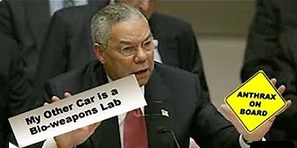
From Anthrax to Iraq
or go to
Aletho News Archives – Video-Images
Book Review
New paperback: Butchered by “Healthcare”
Lies are Unbekoming | October 20, 2026
 Butchered by “Healthcare” is Robert Yoho’s plain-spoken account of how American medicine stopped being a profession and became an industry. 341 pages. Over a thousand references. Thirty-eight chapters.
“Screening Tests Are Useless”, on tests that find diseases that would never have hurt you. “The FDA Protects the Big Drug Companies”, on an agency funded by the companies it regulates. “The Journals’ Sins Are the Editors’ Sins”, on ghostwritten studies and captured peer review. “Opioids and ‘Pain Management’”, on how a generation was prescribed its way into addiction. “Prozac and Relatives” and “Antipsychotics Are Disastrous”, on what psychiatry does to adults and children. “Surgery: Money Before Patients”. “Failed Cancer Treatments”. “Futile CPR and Overprescribing”. “Billing Scams & Specialty Warfare”. “Hospitals Are Sharks”. Each with a Patient Tips section at the end on how to survive it.
If you have ever walked out of a doctor’s office with a prescription you didn’t ask for, or watched a parent put through a treatment that made them worse, this is the book you want on your shelf before the next appointment. … Full review
Butchered by “Healthcare” is available on Lulu now.
Blog Roll
 Aletho News
- Undersea Internet cables could be targeted in retaliation for attacks on Iran: IRGC deputy chief
- EU sending ‘biased’ observers to interfere in Serbian election – president
- White House envoy declares kinetic action against Yemen ‘fruitless’
- Ukraine deployed thousands of microdrones in Iraqi Kurdistan: Tasnim
- Iran calls for emergency UNSC meeting over Trump’s ‘brazen’ bomb talk, Israeli threats
- Iranian sources reveal details of Russia-China Hormuz proposal
- Plan for more US-Israel integration puts our military tech at risk
- Another Round Against Iran Will Break What Is Left of the Gulf
- SVR Report on Ukraine’s Mexican Drug Gang Links Could Pressure Zelensky, Won’t Change US Policy
- British Government Employees Were Fact-Checking the News at the BBC. Nobody Told You.
- If Americans Knew
- Israel’s war on Iran is the final move in a decades-old strategy
- Israel Denies Entry to French Journalist, U.S. Researcher Amid Rise in Entry Denials
- Gaza’s hospitals are running out of life-saving fuel – Daily Update
- Mysterious bot accounts reportedly spread fake ‘man on the street’ videos for Michigan Senate candidate
- Israeli Defense Minister Katz Says Over 60 Lebanon Villages Have Been Destroyed
- Why Is Israel Running TV Ads in Iowa Ahead of the Midterms?
- Hind Rajab’s Alleged Killer Is in the United States. HRF Demands His Arrest.
- US Officials Face Fresh Pressure After Another American ‘Brutalized’ by Israeli Settlers in West Bank
- Israel-Backed Palestinian Militias Terrorize Displaced Families in Gaza
- FBI subpoenas pro-Palestine activists over Israeli weapons plant disruption
- No Tricks Zone
- E-Cars Reduce CO2 Emissions By Only 41% Compared To Internal Combustion Engine Vehicles
- Predictions Made By Renowned Climate Professor Over Past Decades Have Been Proven To Be Poor
- New Study Suggests Large Regions Of The Pacific Ocean Have Been Cooling For The Last 80 Years
- Germany’s Green Energy Debacle: High Energy Costs Force Kahla Porzellan to Close After 182 Years!
- New Study: 50 Years Of The Most Aggressive ‘Net Zero’ Policies Can Only Affect The Global Climate By 0.03°C
- US September “Heat” Was No Record…Many Records Set Decades Ago
- Latest European Green Energy Debacle; Portugal’s Largest Flagship Solar Park Insolvent!
- Green Energy Debacle: German Expert Professor Fritz Vahrenholt Warns Of Severe Economic And Social Consequences
- Two More Paleo Reconstructions Affirm Meters-Higher Sea Levels Across Ireland, Brazil 7000-6000 Years Ago
- New Study: Earth And Venus Surface Warmth Largely Explained By Convection And Lapse Rate, Not CO2 Or Radiation

