Trita Parsi: Massive Houthi Victory Transforms U.S.-Iran War
Glenn Diesen | September 12, 2026
Trita Parsi is the co-founder and Executive Vice President of the Quincy Institute for Responsible Statecraft. Follow the Substack of Trita Parsi: https://tritaparsi.substack.com/
Follow Prof. Glenn Diesen:
- Substack: https://glenndiesen.substack.com/
- X/Twitter: https://x.com/Glenn_Diesen
- Patreon: https://www.patreon.com/glenndiesen
Support the research by Prof. Glenn Diesen:
- PayPal: https://www.paypal.com/paypalme/glenndiesen
- Buy me a Coffee: buymeacoffee.com/gdieseng
- Go Fund Me: https://gofund.me/09ea012f
- Buy Diesen merchandise: https://diesen-shop.fourthwall.com/en-nok
Britain stands against oppression in Palestine… by supplying F-35s
By Finian Cunningham | Strategic Culture Foundation | September 11, 2026
So, Britain announced with much fanfare this week that it was imposing sanctions on Israel’s illegal settlements in Palestine. Note that the sanctions are not against the Israeli state, but rather a much narrower definition: Israeli entities in the Occupied Territories.
British Prime Minister Andy Burnham claimed that the move was an example of Britain giving international leadership to stand against oppression and injustice.
Addressing the British Parliament, Burnham said: “In this difficult and dangerous world, Britain has to stand for something, Britain has to show leadership, Britain has to stand for fairness against injustice… That is what the British people expect of us, and that is what this government will do.”
Several other European states and Canada have also joined the British-led initiative to ban trade and investment with companies doing business in the Occupied Territories of the West Bank.
Israel’s occupation is illegal under international law, yet Britain, the European Union and the United States have done nothing in the way of imposing sanctions. Sanctions are something the West prefers to impose on Russia, Iran, China, Cuba, North Korea, among others.
In announcing the sanctions, the United Kingdom’s foreign minister Ed Miliband told the House of Commons that “Britain was a country that upholds its values at home and around the world, fighting against oppression and suffering, and standing up for what is right.”
The pious tones from London about Israel’s “ethnic cleansing” are not convincing.
For starters, the supposed sanctions do not cover British components for the F-35 fighter jets that the United States sells to Israel. The British parts are crucial for flying the US-made stealth aircraft. The warplane has played a major role in razing Gaza to the ground. Also not included in the sanctions are drones and surveillance equipment that British firms supply to the Israeli military. All those components are crucial for enabling the nearly three-year genocidal violence that Israel has conducted in Gaza.
If the British government were serious about “standing against oppression,” it would go a lot further than focusing on violations by Israeli settlers in the Occupied Territories. The pogroms and construction of new settlements are carried out with the full assistance of the Israeli state, not just by gun-wielding fanatical settlers. Britain and other Western states have provided the legal and diplomatic cover for Israeli war crimes.
In any case, the supposed measures against Israeli business and exports from the West Bank are minimal. A recent Al Jazeera investigation found that Britain has billions of dollars invested in companies that are intimately involved in illegal settlement building. We can be sure that London is not going to cancel investments.
Total British-Israeli trade is estimated at $8 billion a year, including lucrative military items. The amount of business that Britain does with the Occupied Territories is about 1 per cent of its total trade with Israel.
Burnham and Miliband said the British government did not support boycott and divestment sanctions against the state of Israel. Both of them were at pains to emphasize that the measures are nominally limited to the violations going on in the Occupied Territories, not what Israel is doing right across Palestinian land, including Gaza, which is a genocide.
So there you have it. Britain’s “moral leadership” is nothing but tokenism and duplicity.
Should we expect anything else? After all, as former British diplomat Craig Murray pointed out this week, Burnham’s government has decided to give top-secret information for building cruise missiles to the corrupt Kiev regime. Murray warns that the Storm Shadow missiles will soon end up being sold on the black market, given the rampant corruption of Ukraine under the Zelensky cabal.
Britain is also supplying this NeoNazi regime with long-range drones that are being used to target Moscow and Russian civilians.
Is this standing up against oppression and for supposed British values?
What’s really behind London’s belated show of concern for Palestinians?
As Burnham and Miliband alluded, it’s all about Britain appearing to show international leadership. It’s a cheap way to burnish London’s “moral posturing” as a defender of “humanitarian values.”
Israel has hit back with the usual denunciations of “anti-semitism” and by closing down the British consulate in East Jerusalem. But for London, these repercussions are bearable for the bigger gains of British international PR.
As noted above, the lion’s share of its lucrative trade with Israel will go on, business as usual.
The other key motive for the Burnham government is that it realizes that a majority of the British public has become staunchly opposed to the Israeli regime. The three-year genocide has opened the eyes of many Britons (and those of other Western nations) to the historical injustices and illegal occupation of Palestinian lands. Israel is increasingly seen as a pariah, apartheid state that should be prosecuted for war crimes.
Britain’s role as the former colonial power in the Zionist annexation of Palestine is one of deep complicity and shame.
Andy Burnham was shoehorned into Downing Street to take over from the hopeless and hapless Labour leader Keir Starmer. The British establishment has bet on Burnham to shore up its imperialist interests by boosting military spending and deepening involvement in the NATO proxy war against Russia in Ukraine.
However, Burnham’s popularity has quickly worn off as he looks like Starmer 2.0.
The tokenistic moves to support Palestinian rights and oppose Israeli violations are a cynical electioneering ploy. By talking up sanctions against Israeli illegal settlements, Burnham is calculating that it will garner votes from the growing public anger over the genocide.
But the measures that London is taking are negligible. They amount to a polite tap on the wrist of the Netanyahu regime as it continues its genocide.
Britain is fuelling the genocide by Israel, as it is with the NATO proxy war in Ukraine against Russia. British duplicity is as legion as its hypocrisy.
Iran has good reason to bar IAEA inspectors from returning amid US aggression: Author
Press TV | September 12, 2026
Iran’s refusal to allow International Atomic Energy Agency (IAEA) inspectors back into the country amid ongoing US aggression is understandable, says a US-based author and activist, urging the UN nuclear watchdog to inspect Israeli nuclear facilities as well.
Speaking to the Press TV website, Anthony Donovan, a war veteran and political campaigner, said he supports Iran’s decision not to allow IAEA Director General Rafael Grossi and his team into the country while Iran remains under attack by the United States, Western countries and their allies.
“IAEA will be welcome when the threats cease. Perfect good sense. You have good reason to not trust Grossi and the US pushing for this absurd resolution in the UNSC,” Donovan said.
He added that the nuclear watchdog should instead be demanding an end to the attacks and warning about the dangers posed by military action against nuclear facilities.
“The IAEA needs to immediately and strongly demand an end to these bombings and aggressions, express the outrage at the danger this can pose,” Donovan said.
His comments came after the IAEA Board of Governors adopted a politically motivated resolution drafted by the United States, Britain, France and Germany calling on Grossi to report Iran to the UN Security Council and General Assembly.
The resolution was adopted with 23 votes in favor on Wednesday, while Russia, China and Niger voted against it and eight countries abstained. The move marked the first time in 20 years that Iran had been referred to the Security Council over its nuclear obligations.
Iran’s ambassador to international organizations in Vienna, Reza Najafi, dismissed the resolution as a “political tool” and said Tehran would cooperate with inspectors only “to the extent that circumstances and safety permit.”
It comes as the IAEA has been unable to access some Iranian nuclear facilities since a US-Israeli military aggression in June 2025 that included strikes on safeguarded nuclear sites. Access remained blocked after a broader aggression was unleashed against Iran on Feb. 28.
For Donovan, the circumstances surrounding the latest pressure on Iran made renewed inspections particularly problematic.
He said the West has remained heavily “obsessed” with Iran’s nuclear program even though “it has been inspected more than any other country.” He also warned against repeating the use of the unfounded nuclear weapons programs as a pretext for military action, citing the experience of Iraq.
“The echo of using the nuclear program as we did in Iraq is before us again, an excuse to bomb and kill, to violate all known international law, humanitarian law, and our own laws,” he said.
Donovan said inspections could resume once hostilities end and trust between Iran and the international community is restored, while noting that any future inspection regime should also address Israel’s clandestine nuclear facilities.
“When there is a true lasting peace, which seems very far away, and when there is mutual trust renewed, which is very far away, Iran remains naturally open to allow inspections, along with a requirement of full inspection of Israel’s nuclear weapons facility,” he said.
Israel’s nuclear program
Donovan pointed to a double standard in international nuclear oversight, noting that Israel should face the same scrutiny demanded of Iran.
He said President John F. Kennedy had “tried to prevent” the Israeli regime’s ability to gain access to nuclear weapons.
“Israel lied to him, built a mock facility hoping to fool him. He intuited that and gave several strong ultimatums to [then-prime minister David] Ben Gurion and his government to allow full inspection by his team and warned of serious repercussions if this was not allowed,” said Donovan.
Kennedy, he added, “was adamant they not get the bomb and was killed within months of these demands.”
He also linked the issue to Kennedy’s broader efforts to reduce the dangers of nuclear weapons during the Cold War, including his back-channel communications with Soviet leader Nikita Khrushchev and the 1963 Atmospheric Nuclear Test Ban Treaty.
“The Test Ban Treaty was a phenomenal success,” Donovan said, adding that Kennedy viewed it as an initial step toward ending the nuclear arms race.
Donovan noted that after Kennedy’s assassination, the US approach toward Israel’s nuclear program changed.
He also criticized the Nuclear Non-Proliferation Treaty (NPT), saying it had been weakened over time by nuclear-armed states and that Israel had not joined it.
Israel has never signed the NPT and has not submitted its nuclear facilities to IAEA inspections. The regime maintains a policy of nuclear ambiguity and has never officially acknowledged possessing nuclear weapons.
Estimates of the size of Israel’s nuclear arsenal vary widely, but it is widely believed to possess hundreds of nuclear warheads and maintains delivery capabilities involving missiles, aircraft and submarines.
Donovan noted that focusing on Iran while nuclear-armed entities continue to expand their arsenals represents a dangerous double standard.
“The fact that we keep pointing at Iran maybe getting a weapon, while we are all wildly building these omnicidal devices claiming they ‘Ensure our Future,’ our security, etc. is blind, dangerous and extremely egocentric,” he said.
He said Iran’s historical experience had also shaped his understanding of Tehran’s security concerns, citing past wars and Western involvement in regional wars.
“I understand better now why it was important for Iran to be prepared for such murderous colonists,” Donovan said, referring to the US-Israeli front that has “violated life” in Iran, Palestine and Lebanon.
The author added that he would continue to call his representatives to “listen to any but Israel.”
“Fortunately, things are changing; people are rising. Most here know what we are doing in Iran is criminal, wrong,” he added.
Invoking 9/11 to justify war against Iran is ‘utterly absurd’: Tehran
Press TV – September 12, 2026
Iran’s Foreign Ministry spokesman has rejected US attempts to invoke the anniversary of the September 11 attacks to justify a “reckless and unlawful war” against Iran, saying Washington’s narrative on terrorism is riddled with fundamental contradictions.
In a post on X early Saturday, marking the anniversary of the September 11 attacks, Esmaeil Baghaei criticized remarks by the US Secretary of War Pete Hegseth on terrorism and Iran.
“The narrative advanced by the US Secretary of War on the anniversary of 9/11 is riddled with fundamental contradictions,” he said.
Baghaei said the US could not simultaneously wage aggression, carry out assassinations, and cause civilian casualties while claiming exclusive authority to define terrorism and determine whose violence was legitimate.
“The perpetrators of 9/11 were not Iranians; they were the very same people whom the US itself had armed, organized, or otherwise cultivated in the preceding decades,” he said.
He also criticized the US-led “war on terror,” saying the subsequent wars in Afghanistan and Iraq had brought years of war, occupation, civilian deaths, and widespread devastation.
“Against this backdrop, invoking the anniversary of 9/11 to justify a reckless and unlawful war against Iran is utterly absurd,” Baghaei said.
He further rejected attempts to justify the US war against Iran through counterterrorism rhetoric, stressing that the war involved the assassination of officials of a sovereign state and attacks on civilians, including women and children.
“A criminal war that has involved the assassination of officials of a sovereign state and the targeting of civilians, including women and children, cannot be made morally coherent simply by wrapping it in the language of counterterrorism,” he said.
The American invasion of Afghanistan began on October 7, 2001, less than a month after the September 11 attacks killed 2,977 people in the United States. Washington presented the foolhardy military adventure as the opening battle in a so-called “war on terror.”
Yet after 20 years of brutal military occupation, trillions of dollars spent, and enormous human suffering resulting from the US-led coalition’s horrendous war crimes, the occupiers have not achieved a political settlement or eliminated the forces they had vowed to defeat.
Why the Israelis are so afraid of a liberated Yemen
By Robert Inlakesh | Al Mayadeen | September 12, 2026
The liberation of Yemen by a staunchly pro-Palestinian movement is a nightmare scenario for the Zionist Project in the region, it ensures that the cause of occupied al-Quds will remain alive and that a new power will emerge to champion it. To the Israelis, what they are looking at is like the birth of a new Iran in the Arab World.
For long the Ansar Allah-led government of Yemen had been underestimated and treated as little more than a nuisance, one that Saudi Arabia and the United Arab Emirates were handed the task of dealing with. In 2022, this dynamic began to shift, as the Yemeni Armed Forces demonstrated advanced missile and drone capabilities that shook vital targets in Saudi Arabia, even reaching as far as the United Arab Emirates.
The stalemate of the Marib offensive of 2021 may have also worked to deceive the US-Israeli alliance in the region, who clearly failed to take the armed forces of the Ansar Allah-led government in Sanaa seriously. However, Riyadh did end up taking them seriously in early 2022, as did Abu Dhabi, hence their decision to agree to a United Nations mediated temporary ceasefire.
Since then, Yemen’s leadership has become the only government on earth to directly order its military to open fire on the Zionist entity in order to support the people of Gaza. From the very beginning of the Genocide, the Yemeni Armed Forces began firing missiles at the Israelis, before imposing a blockade on them in the Red Sea.
These measures would have been notable had they come from any nation, let alone one that had suffered 400,000 deaths in brutal conflict and suffered through an illegal and inhumane siege themselves. There was nothing material that the Ansar Allah-led government sought to gain from its tangible and unapologetic support of the Palestinian Resistance in the Gaza Strip, which is what made it all the more unpredictable in the eyes of the US-Israeli alliance.
Because Sanaa had been so underestimated, the Israelis and the US were essentially left blind inside of Yemen, not having anywhere near the required intelligence to deal a serious blow to Ansar Allah. Instead, the Zionist regime did the predictable thing: it bombed civilian targets and then called in its US allies to launch three separate military operations in an attempt to break the blockade established in support of Gaza.
Yemen is a nation that, if fully liberated from the proxy forces of Saudi Arabia and the United Arab Emirates, would undoubtedly dedicate its foreign policy to opposing the Zionist entity and supporting the Palestinian Resistance. This alone is a major threat to the Israeli regime.
Yet, it will also mean something else. It will be the only Arab country that has an independent government which is not allied with the United States. In other words, it will serve as an example to the entire region and will represent the spirit of Arabism. For Riyadh, Damascus, Amman, Cairo and beyond, this is a major problem, because once the example is set, their own populations could begin getting ideas about what their future should look like.
Yemen’s liberation will represent the only truly successful revolution of the Arab Spring. In the case of every other example, the nation has ended up under US domination, with the latest example being the case of Syria.
A Yemen that can gain access to its own resources, live free of blockade and have influence over the Bab al-Mandab Strait could become a major powerhouse, especially while allied with the Islamic Republic of Iran. It is a major gain for the regional resistance to US imperialism and an enormous strategic loss to the Zionist regime, along with a blow to the Washington-backed Arab dictatorships.
The only means of combating the gains made on the ground by the Yemeni Armed Forces, is to try and spread as much sectarianism throughout the region as possible. This, the Gulf Arab regimes and US-Israeli alliance, may believe to be an effective means of combating the revolutionary fervor of the Arab public who have been greatly agitated by the Gaza Genocide.
Part of the reason why the majority of the Arabic-language media, along with the entirety of the Western corporate media refer to the Ansar Allah-led government as the “Houthi rebels” is for this very reason. They hope to paint the movement as a band of Shia rebel fighters that are “proxies of Iran”. It works to both delegitimize the Yemeni Armed Forces and government based in the Capital City of the country, while also selling a false sectarian narrative.
To the great misfortune of the US-Israeli-Arab aligned bloc, their attempts to pull the wool over the eyes of the public is wearing thin. The Gaza Genocide exposed where everyone stands, and now the truth is clear for everyone to see.
BRICS Draws Red Lines on Lebanon, Cuba, and Global Security
Sputnik – 12.09.2026
In their joint declaration, BRICS summit participants spoke out against unilateral sanctions that violate international law.
BRICS also condemned the violation of Lebanon’s sovereignty and called on Israel to withdraw its troops from its territory, according to the declaration.
Other key points:
- BRICS expressed deep concern over the US tightening unilateral blockade against Cuba and its adverse impact on the economy, energy supplies and humanitarian situation.
- It reaffirmed its commitment to combating all forms of terrorism.
- BRICS voiced alarm over deliberate attacks on peaceful facilities under IAEA safeguards.
- The group stressed the need to strengthen energy security.
- BRICS underscored the necessity of ensuring the peaceful use of space technologies.
Iraqi Resistance denies role in Saudi East-West pipeline attack
Al Mayadeen | September 12, 2026
The Islamic Resistance in Iraq has denied accusations that it was behind the drone attack targeting Saudi Arabia’s strategic East-West oil pipeline, rejecting claims linking Iraqi factions to the operation and criticizing Baghdad for acting on unsubstantiated allegations.
In a statement on Saturday, the Resistance said accusations that it had targeted vital Saudi infrastructure amounted to “an honor we do not claim,” while stressing that no credible evidence had been presented proving the involvement of any Iraqi party.
The group expressed strong surprise at the Iraqi government’s haste in adopting the accusations and taking measures without relying on verified evidence or concrete investigations.
Resistance calls for official investigation
The Islamic Resistance in Iraq said it was fully prepared to participate in any government investigation committee established to determine the facts surrounding the attack.
It called on Iraqi authorities to pursue an evidence-based investigation rather than, in its words, follow “suspicious narratives.”
The Resistance also warned against US-Israeli schemes aimed at dragging Iraq into secondary crises that serve the interests of the region’s adversaries and divert attention from broader regional developments.
Support for Yemen reaffirmed
Despite denying involvement in the Saudi pipeline attack, the Islamic Resistance reiterated its firm and longstanding support for the Yemeni people.
The group said Yemen has been subjected to a Saudi-led siege for more than a decade, reaffirming its position in support of the country amid the latest regional escalation.
The statement comes in response to recent accusations and security measures following the shutdown of Saudi Arabia’s vital East-West crude oil pipeline after it was reportedly struck by a drone originating from Iraqi territory.
The roughly 1,200-kilometer pipeline stretches across the Arabian Peninsula and serves as a key route for transporting Saudi crude from the kingdom’s eastern oil-producing regions toward the Red Sea.
Following investigations into the incident, Iraqi authorities announced the dismissal of the commander of Maysan Operations over the attack.
Sana’a strikes back: How Yemeni military’s lightning advance redrew the Red Sea’s strategic map

Territory liberated by Yemeni Armed Forces during the recent operation, including the ports of Al-Mokha, Dhubab, and Al-Khokha, and towns such as Hays and Maqbanah.
By Mohammad Molaei | Press TV | September 12, 2026
In the span of roughly one week, the Yemeni armed forces accomplished what eight years of attritional warfare had failed to achieve.
In a military operation officially named “God Is Strongest in Might and Severe in Punishment,” the Yemeni military, backed by the Ansarullah resistance forces, liberated more than 5,400 square kilometers of territory along Yemen’s Red Sea coast, capturing strategically vital ports, towns, and geographic features that Saudi-backed forces had seized and held since 2017 and 2018.
The speed, coordination, and depth of the advance stunned military and security observers, shattered a carefully constructed Saudi media narrative, and fundamentally altered the strategic geometry of the war imposed on Yemen.
The ports of Al-Mokha, Dhubab, and Al-Khokha fell. Key towns, including Hays, Maqbanah, and Al-Mafraq, were liberated. The entire Jabal Habashi region came under Sana’a’s control.
These were no minor outposts but positions that the former Saudi-backed regime had spent four months capturing during the so-called “Golden Arrow” operation in 2017 and an entire summer offensive in 2018, backed by heavy Saudi air support and financial resources.
The intelligence that started it all
The roots of the operation lie in a body of intelligence and an assessment reached in Sana’a months before the first shot was fired. It was believed that Saudi Arabia, in coordination with the United States, was preparing to launch a major offensive under the diplomatic pretext of securing international navigation in the Red Sea at some point in the near future.
The Saudis aimed, first, to create operational space for Washington to assert dominance over the Bab al-Mandab Strait, a strategic waterway whose leverage Ansarullah-backed Yemeni military had wielded with increasing effect since joining the Gaza solidarity front two years earlier.
Second, they sought to neutralize that leverage by igniting a land conflict along the western coast and driving northward toward Hodeidah, effectively diverting the Yemeni military’s attention from maritime operations and drawing it back into a costly ground war.
The broader context matters. Since early 2016, Saudi Arabia had gradually sidelined the UAE across provinces outside the Yemeni government’s control, consolidating its influence over the mercenary coalition nominally operating under the banner of the Saudi-recognized regime.
By this stage, the Emiratis had been largely pushed to the margins of the ground equation. Washington, having failed to achieve decisive results in either the Strait of Hormuz or Bab al-Mandab through its own military aggression, appeared to be recalibrating around Riyadh as its primary instrument.
For Saudi Arabia, specifically, a single operation on the western coast offered the prospect of three simultaneous gains: accelerating the US push for Red Sea control; transforming what had remained an internationalized war into a fratricidal intra-Yemeni war by stoking internal fronts; and consolidating Riyadh’s dominance over the fractious coalition of Yemeni military factions, many of them previously under UAE command, by bringing them together under a unified operation.
The Saudi Maneuver and Miscalculation
Saudi preparations had begun well in advance, reportedly even before the Yemeni operation to break the siege, which was launched following the funeral ceremony of a martyred leader in Sana’a. The plan envisioned opening three simultaneous fronts in Al-Jawf, Ma’rib, and along the western coast. It immediately ran into structural problems.
Southern factions within the Saudi-backed coalition refused to commit their forces to battles in the north. This single factor created a fracture line through the entire scheme.
Riyadh’s mercenaries, many of whom were fighting for locally defined interests rather than any coherent national project, could not be so easily redirected. The Saudis responded by redeploying forces from eastern Yemen northward and shifting the primary axis toward the western coast, where the geographic and symbolic stakes were highest.
Meanwhile, Riyadh worked the diplomatic track. A host of mediators – Egypt, Turkey, and most prominently Oman – were mobilized. Sana’a, not yet ready to foreclose negotiations entirely, granted a brief reprieve, holding off on launching the second phase of its operations.
None of this changed the military reality. While negotiations proceeded, Saudi Arabia sought to reinforce its mercenary positions and replenish ammunition stockpiles. Sana’a concluded that the window for a negotiated outcome had been deliberately exploited to buy time, not to buy peace.
The intelligence war
What followed was not a conventional military offensive launched from a standing start. It was the terminal phase of a carefully sequenced preemptive campaign that had been underway for approximately four weeks before the main ground advance.
Yemeni military’s intelligence apparatus, operating under the direction of Abu Ali al-Hakim, demonstrated a level of precision that repeatedly left the Saudi-backed coalition wrong-footed.
Newly established mercenary positions were destroyed before they could be consolidated. Ammunition depots were located and struck. Command centers and operations rooms were systematically degraded. The cumulative effect was a coalition whose combat readiness had been substantially hollowed out before the ground offensive even began.
The resulting weapons shortages were severe enough that Riyadh dispatched ships carrying arms to resupply its forces, seeking to close the gap before the main battle.
But the ships, arriving at the port of Mokha, were treated as targets, much like the trucks moving through the Al-Wadiah and Al-Abr crossings. The resupply effort largely failed.
The intelligence picture was so consistently accurate that speculation arose that UAE-aligned elements, still resentful of Saudi dominance over coalition affairs, may have contributed to the flow of intelligence to the Yemeni military. Whatever the source, the Yemeni military’s penetration of the coalition’s operational security was demonstrably deep.
The spark on the Taiz Axis
The specific trigger for the ground offensive came in early September, when the Yemeni military launched a first strike against a Saudi-backed position, anticipating an offensive push northward.
The preemptive strike sparked clashes across four axes simultaneously. The result was not a cascading, domino-like collapse of positions. What the Saudis had intended as the opening move of their western coast offensive instead became the opening phase of their humiliating retreat.
Over the following days, Riyadh attempted to activate additional fronts in Al-Bayda, Al-Dhale’e, and Al-Jawf in an effort to stretch the Yemeni military forces thin across multiple theaters.
Saudi airstrikes intensified across Yemen. Saudi officers reportedly promised direct ground support to coalition factions to incentivize them to hold their positions. The Yemeni military’s own assessment of the dynamic was clear: the Saudis had previously tried activating 52 fronts simultaneously, and each time the result had been further Yemeni military advances, rather than a reversal.
The media war
As the Yemeni military advances accelerated, a parallel battle unfolded in the information space. Saudi-aligned media channels worked to construct a counter-narrative, circulating footage of mercenary vehicle convoys, highlighting minor territorial gains in areas already under Saudi coalition control, and projecting an image of momentum that bore little resemblance to the battlefield reality.
The narrative briefly gained traction by drawing, inaccurately, on the recent Syrian precedent. Some observers speculated that Sana’a might face a “Damascus moment”: a rapid, unexpected collapse of authority under a fast-moving offensive.
The comparison was analytically flawed. The structural, operational, and social conditions that led to the fall of Damascus bear little resemblance to those in Yemen. Sana’a’s military organization, popular base, intelligence infrastructure, and decade-long experience of sustained warfare against a better-resourced coalition have produced a very different kind of fighting force from the one that crumbled in Syria.
The battlefield results made it clear. The “Damascus moment” narrative did not survive contact with the liberation of the islands, the western coast, and the string of ports that followed.
Sana’a’s logic of escalation
Throughout the campaign, Ansarullah-led Yemeni military forces have maintained a consistent list of demands directed at Riyadh: the complete lifting of the air and naval blockade on Yemen; payment of civil servant salaries; an all-for-all prisoner exchange; reopening roads between provinces; Saudi withdrawal from Yemeni territory; and the complete cessation of funding and material support to anti-Sana’a factions.
The strategic logic underlying the current operation can be summarized in three interlocking equations that Sana’a appears to be establishing simultaneously:
The first is Siege for Siege: The imposition of a naval blockade on Saudi Arabia stretching from Bab al-Mandab across the full length of the Red Sea, mirroring the blockade Riyadh maintains on Yemen.
The second is Preemptive Action: Continuous surveillance and interdiction of mercenary logistics and troop movements from eastern to western Yemen, preventing the reconstitution of forces that have already been degraded.
The third is Direct Deterrence: The targeting of Saudi military bases, military airports, and Aramco infrastructure in southern Saudi Arabia in direct response to any Saudi violation of Yemeni airspace or attacks on Yemeni territory.
The endgame
Sana’a has officially announced the conclusion of the operation and directed its forces toward consolidating the liberated territories. The reasoning behind stopping the advance at this stage, rather than pushing farther, reflects three overlapping calculations.
The first is the immediate military imperative of securing and clearing 5,400 square kilometers of newly captured terrain, a task that demands both manpower and time and must be completed before any counteroffensive can be mounted effectively.
The second is the existence of other fronts requiring attention. Ma’rib retains significant economic importance because of the Safer oil-field infrastructure. Taiz carries major political weight for Sana’a’s long-term governance ambitions. Yemeni forces cannot allow gains on the western coast to come at the cost of deterioration on these other critical axes.
The third consideration is strategic restraint, an awareness that actions crossing certain thresholds could trigger a qualitatively different response and draw in actors whose involvement would complicate the current trajectory.
Arab media reports indicate that tensions inside mercenary formations in Taiz have already escalated sharply in the wake of the coastal losses. A critical highway remains in play; delaying withdrawal from the city could leave those forces cut off from a viable exit route, a development that could dramatically accelerate Taiz’s fall without requiring a further ground offensive.
Regional ripples: Tehran, Riyadh, and beyond
The operational dimensions of this campaign extend beyond Yemen’s borders. Saudi Arabia has engaged directly with Tehran in an effort to halt flights to Sana’a since the Yemeni attacks resumed. Pakistan, meanwhile, is reportedly working to include Yemen in a new ceasefire framework, not unlike its role during the previous round, when Islamabad’s diplomatic activity coincided with and helped shape the Saudi naval blockade ceasefire process.
Saudi officials have a documented pattern of denying involvement in Yemen, Iraq, and Lebanon even while conducting active operations across all three theaters. Following its setbacks on the western coast, Riyadh may seek to recover leverage through alternative pressure points, with Lebanon and Iraq among the most likely arenas. That possibility warrants close monitoring.
American support for the Saudi-backed mercenary coalition has continued, but Washington has so far stopped short of direct combat involvement or assuming battlefield command.
Whether that calculus holds in the face of continued Yemeni military advances, or whether disillusionment with Saudi performance drives Washington toward renewed engagement with the UAE, remains one of the most consequential open questions as the war enters its next phase.
What comes next
If Saudi Arabia declines to meet Sana’a’s demands, as its past behavior suggests is the most probable near-term outcome, the Yemeni armed forces retain a substantial menu of escalation options. These include expanded strikes on Saudi supply chains, production and processing facilities, and oil-export infrastructure, with Yanbu and the East-West pipeline specifically on the table.
Operations in the Arabian Sea targeting foreign vessels with Saudi connections represent another avenue. Ground operations in southern Saudi territory constitute a further option that Sana’a has explicitly retained.
Crucially, the balance of internal coalition dynamics has shifted. Over the past two weeks, the Yemeni military has substantially neutralized one of Riyadh’s key remaining leverage mechanisms: its ability to activate internal Yemeni fronts. The collapse of the mercenary coalition and deepening factional rifts have made it increasingly difficult for Saudi officers to reconstitute any credible offensive capability in the near term. That fundamentally alters the timeline calculations for both sides.
The strategic implications of the Yemeni military now holding the coastline overlooking and approaching the Bab al-Mandab Strait are substantial and will require sustained analysis as the situation develops. Control of that coastline does not simply mean territory. It means depth, positioning, and, in the language of maritime chokepoints, leverage.
Yemeni military’s consolidation of Yemen’s western coast represents the acquisition of geographic depth at one of the world’s most consequential maritime chokepoints. Previously, its coastal positions remained vulnerable to suppression. That calculus has now changed.
Al-Mukha, Dhubab, and the surrounding coastline, now under firm control, give Sana’a the ability to position layered anti-ship and air-defense systems across a continuous 200-plus-kilometer stretch. The islands amplify this advantage further, functioning simultaneously as forward sensors and firing platforms, enabling earlier target acquisition, reducing the stand-off advantages of opposing forces, and potentially denying the flanks of the strait to any force attempting to escort commercial shipping.
The relationship with the Strait of Hormuz is noteworthy as well. A dual-chokepoint architecture, with Hormuz and Bab al-Mandab simultaneously subject to hostile pressure, creates a co-equal second front.
A single carrier strike group cannot cover both. Reinforcing one theater necessarily draws resources from the other, complicating the Pentagon’s traditional force-posture hierarchy, which has historically treated Bab al-Mandab as manageable through periodic shows of force.
For Saudi Arabia, the loss is asymmetric in a specific way. Riyadh could previously threaten ground pressure on Ansarullah and the Yemeni military while remaining comparatively insulated from reciprocal pressure on its maritime lifelines. That insulation is now gone.
Red Sea export terminals and the Yanbu complex sit within a substantially more threatening strategic envelope. The Yemeni military can potentially transition from a land-based force with maritime ambitions into a coastal-defense and power-projection actor. That changes the strategic character of any future negotiation and the architecture of any subsequent security ceasefire.
Anthropic bans Israeli account over Iran, Gulf social media citizen profiling
The Cradle | September 11, 2026
An operation run by or on behalf of the Israeli-Singaporean commercial intelligence vendor S2T Unlocking Cyberspace used Claude models to map, classify, and profile social media users across Iran and the Persian Gulf, according to a threat intelligence report published by Anthropic on 11 September.
The platform recorded the locations of users, sorted them as supporters or opponents of their governments, and grouped populations into six demographic categories covering urban, clerical, military, youth, diaspora, and rural.
Its output was written in formal Arabic and styled as official government communications, with sentiment scores broken down by Gulf nationality alongside recommended counternarratives.
The actor fed the model batches of roughly 25 social media posts at a time and directed it to return each poster’s demographic group, location, and political leaning, with confidence ratings attached to every finding.
Anthropic identified a second workstream of more than 255 fabricated social media accounts, which the company said indicated the actor was assembling a stock of fake profiles for later deployment.
In a separate task, the actor directed the model to generate posts for online personas in Persian, Arabic, English, and German, intended to pass as members of both pro- and anti-government Iranian populations.
The company said its findings independently corroborate a February 2023 investigation by the journalism network Forbidden Stories, which documented an S2T surveillance product described in a company brochure recovered from leaked Colombian military files.
Anthropic said the capabilities in that brochure map closely onto the behavior it observed.
Anthropic added that it identified the activity at its pilot stage and found no evidence that later stages of the surveillance chain described by Forbidden Stories were used against real targets before the account was banned.
Israel has invested heavily in cyber capabilities, signals intelligence, artificial intelligence (AI), and advanced surveillance – a technological expansion that shifted the balance of its intelligence collection away from recruited human agents.
Mossad chief Roman Gofman dismissed two of the agency’s most senior officials in August over the failed plot to topple the Iranian government earlier this year.
One had run the intelligence directorate since December while the other headed the Mossad’s Iran division, and both were among the architects of a plan to bring down the Iranian government by igniting nationwide protests and supplying military and communication equipment to opposition groups and insurgents.
Channel 12 said the plan was drawn up in coordination with Washington and was meant to unfold under joint Israeli-US airstrikes.
The New York Times reported on 22 March that Israeli Prime Minister Benjamin Netanyahu had embraced the Mossad’s promise of a popular revolt when he urged US President Donald Trump into the war, and had grown frustrated when no uprising came.
Before the war on Iran, then-Mossad chief David Barnea had told Netanyahu and Trump that once Iran’s leaders were killed, his agency could galvanize the Iranian opposition into renewed mass unrest, swiftly producing regime change.
Featured Video
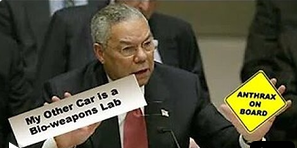
From Anthrax to Iraq
or go to
Aletho News Archives – Video-Images
Book Review
New paperback: Butchered by “Healthcare”
Lies are Unbekoming | October 20, 2026
 Butchered by “Healthcare” is Robert Yoho’s plain-spoken account of how American medicine stopped being a profession and became an industry. 341 pages. Over a thousand references. Thirty-eight chapters.
“Screening Tests Are Useless”, on tests that find diseases that would never have hurt you. “The FDA Protects the Big Drug Companies”, on an agency funded by the companies it regulates. “The Journals’ Sins Are the Editors’ Sins”, on ghostwritten studies and captured peer review. “Opioids and ‘Pain Management’”, on how a generation was prescribed its way into addiction. “Prozac and Relatives” and “Antipsychotics Are Disastrous”, on what psychiatry does to adults and children. “Surgery: Money Before Patients”. “Failed Cancer Treatments”. “Futile CPR and Overprescribing”. “Billing Scams & Specialty Warfare”. “Hospitals Are Sharks”. Each with a Patient Tips section at the end on how to survive it.
If you have ever walked out of a doctor’s office with a prescription you didn’t ask for, or watched a parent put through a treatment that made them worse, this is the book you want on your shelf before the next appointment. … Full review
Butchered by “Healthcare” is available on Lulu now.
Blog Roll
 Aletho News
- EU sending ‘biased’ observers to interfere in Serbian election – president
- White House envoy declares kinetic action against Yemen ‘fruitless’
- Ukraine deployed thousands of microdrones in Iraqi Kurdistan: Tasnim
- Iran calls for emergency UNSC meeting over Trump’s ‘brazen’ bomb talk, Israeli threats
- Iranian sources reveal details of Russia-China Hormuz proposal
- Plan for more US-Israel integration puts our military tech at risk
- Another Round Against Iran Will Break What Is Left of the Gulf
- SVR Report on Ukraine’s Mexican Drug Gang Links Could Pressure Zelensky, Won’t Change US Policy
- British Government Employees Were Fact-Checking the News at the BBC. Nobody Told You.
- Albania on fire: who’s behind the riots?
- If Americans Knew
- Gaza’s hospitals are running out of life-saving fuel – Daily Update
- Mysterious bot accounts reportedly spread fake ‘man on the street’ videos for Michigan Senate candidate
- Israeli Defense Minister Katz Says Over 60 Lebanon Villages Have Been Destroyed
- Why Is Israel Running TV Ads in Iowa Ahead of the Midterms?
- Hind Rajab’s Alleged Killer Is in the United States. HRF Demands His Arrest.
- US Officials Face Fresh Pressure After Another American ‘Brutalized’ by Israeli Settlers in West Bank
- Israel-Backed Palestinian Militias Terrorize Displaced Families in Gaza
- FBI subpoenas pro-Palestine activists over Israeli weapons plant disruption
- Fourth winter arrives in wartorn Gaza, too early – Daily Update
- More on how Bari Weiss is using CBS on behalf of Israel
- No Tricks Zone
- Predictions Made By Renowned Climate Proifessor Over Past Decades Have Been Proven To Be Poor
- New Study Suggests Large Regions Of The Pacific Ocean Have Been Cooling For The Last 80 Years
- Germany’s Green Energy Debacle: High Energy Costs Force Kahla Porzellan to Close After 182 Years!
- New Study: 50 Years Of The Most Aggressive ‘Net Zero’ Policies Can Only Affect The Global Climate By 0.03°C
- US September “Heat” Was No Record…Many Records Set Decades Ago
- Latest European Green Energy Debacle; Portugal’s Largest Flagship Solar Park Insolvent!
- Green Energy Debacle: German Expert Professor Fritz Vahrenholt Warns Of Severe Economic And Social Consequences
- Two More Paleo Reconstructions Affirm Meters-Higher Sea Levels Across Ireland, Brazil 7000-6000 Years Ago
- New Study: Earth And Venus Surface Warmth Largely Explained By Convection And Lapse Rate, Not CO2 Or Radiation
- 2025 Nature Paper Claiming Worsening Global Drought Gets RETRACTED …Heavily Flawed

