THE NHS has a rather lovely, colourful, ‘easy to read’ form to be handed to people receiving Covid-19 vaccines. It explains in simple language why you should get it, what to expect when you’ve had it and how it will protect you from Covid. You sign your name to indicate that you have read the form, and that you understand and agree that you have given informed consent.
The only side-effects the easy-to-read form mentions are a sore arm, fatigue or headaches. Nowhere does it talk about blood clots that you can develop after the AstraZeneca shot, Bell’s palsy, which is facial paralysis that Pfizer has just added to its list of adverse reactions, or anaphylaxis that you can suffer if you’re allergic to any of the ingredients in any of the shots.
Sight of the form is as rare as a balanced BBC Covid report. According to a straw poll of ten people who suffered serious adverse reactions, none had been asked to sign a consent form, which means informed consent was not given. Most get to read about potential serious side effects only after they’ve received the shot.
One woman, who does not want to be identified but let’s call her Julia, whose pro-vaccine father died after receiving the Pfizer vaccination in January, secretly filmed the ‘informed consent’ process at one of the UK’s biggest vaccine hubs. The 12-minute video, taken at the Greater Manchester Vaccination Centre, shows how little information you can expect before receiving what could be a life-changing jab.
It is no secret now that the AZ can cause vaccine-induced thrombosis (VITT), but official vaccinators say that it’s as rare as being struck by lightning, with a one in four million chance of developing blood clots. We know that the Medicine and Healthcare products Regulatory Agency (MHRA), the body set up to protect us from Big Pharma, has recorded 73 deaths from VITT, with most occurring in the 50-59 age range, although it is still recommended to that group. Only under 40s are advised not to get the AZ jab.
Julia waits in line for 45 minutes to see the triage nurse. During that wait she could have been reading the public information leaflet that she must be given. At the triage booth a nurse tells Julia she is receiving the AstraZeneca vaccine but will not give her the ‘What To Expect After Your Covid-19 Vaccination’ leaflet beforehand. She tells her: ‘Once you’ve had your injection, you’ll be given an information leaflet, the important information is on page 5.’ (This is information about severe headaches, blurred vision, difficulty with speech, drowsiness, seizures and blood clots. All quite important information.)
Anxious, Julia asks about blood clots and side effects and is told: ‘I see thousands a week, half have side effects half don’t.’ The nurse does not say whether these were serious reactions or the 48-hour flu-like symptoms you might expect.
Julia is asked some basic questions about whether she is taking blood thinners, has suffered an allergic reaction to any vaccine or has ever taken part in a vaccine trial, then proceeds to the vaccine booth. The leaflets she would like are piled high, but Julia has to ask three times before she is given one, though she is allowed no time or space to read it. A team leader is called to reassure her. ‘The side effects you have from the AstraZeneca are the same as for the Pfizer and Moderna,’ she says. ‘They’re all the same.’ Wait though, the all-important page 5 contradicts that and says: ‘Not all Covid-19 vaccines are the same – some tend to cause more side effects at the first dose, others cause more side effects at dose two.’ It does not elaborate on which vaccine causes which.
The UK Medical Freedom Alliance (UKMFA), a campaign group that includes health professionals, scientists and lawyers, are outraged and concerned at the lack of informed consent. They have produced a fully referenced letter which says what information you should expect to receive before receiving a vaccination or any medical procedure. They are clear that the courts have decided that informed consent is part of English law, that you should be given information about treatment options available, what they involve and their risks and benefits. You must then base your decision on that advice. Your decision should be voluntary and not influenced by pressure from medical staff, friends or family.
Senior UK lawyer and retired army officer Anna de Buisseret, who is the head of the campaign group Lawyers For Liberty, says the whole thing is a shambles. She said: ‘We have had lots of reports that people are not being given the patient information leaflet that actually contains a lot of warnings about the side effects and what you need to do to ensure you have had a clinical individual risk assessment prior to going along for your injection.
‘The Pfizer leaflet says you should get an allergy test for all the ingredients, including the active one. You cannot be informed of that if you’re given the patient leaflet after you’ve had the injection, which is what is happening all over the place.
‘I went to clinics in my local community and have sufficient evidence that they were not obtaining informed consent from people and that people were dying and being seriously injured by the vaccine.
‘If you are injecting another person with this substance, it is entirely upon you [nurse, doctor or health practitioner] as the individual, because it is personal, civil and criminal liability you’re facing [if it goes wrong], to make sure you have obtained fully informed consent, freely given.
‘The problem is that an awful lot of vaccinators are not obtaining informed consent.
‘We [Lawyers For Liberty] are working with a senior NHS whistle-blower who is a surgeon who trains people in informed consent. I asked him to check the protocols that were being given to the vaccinators. He examined them and he said there was nothing in them about the law and informed consent. It was all about how to administer the injection.
‘Nurses and doctors are not routinely taught about the law or routinely taught about Nuremberg and what happened there. It appears the whole informed consent thing is being pretty roundly ignored.’
De Buisseret has tried, and failed (so far), to get the police to investigate the many Covid crimes she is looking into. She said: ‘The Covid response has not been legal, lawful, ethical or moral. So many different laws are being broken us lawyers are absolutely gobsmacked at the number being trashed. Nobody seems to care to uphold them. It is a crisis.’
August 13, 2021
Posted by aletho |
Timeless or most popular | COVID-19 Vaccine, UK |
Leave a comment
WHEN the American actress Jennifer Aniston declared that she would ‘unfriend’ anybody who had refused the Covid vaccine or was an anti-vaxxer, she gained thousands, if not millions, of new fans who agreed with her.
Since then, others have stepped in to say that the unvaccinated are no longer their friends.
For me, it is just the opposite. I fear I am fast losing friends among the vaccinated, among those who proudly proclaim that they have not only been double-jabbed, but will be queueing to have the booster, so-called, that will be ‘offered’ in the autumn.
Have these people, I wonder, read anything about the vaccines, studied how they work and what they do inside the body? I doubt it. Even journalists, who are supposed to have inquiring minds, have no hesitation in condemning those who have chosen not to be jabbed even while admitting that they are ignorant about vaccines.
The latest was Hilary Rose, writing in the Times on Monday. Having stated that she knew nothing about vaccines, she went on to say: ‘If the entire medical establishment says that something is for my own good and – crucially – those around me, then who am I to disagree?’
But Hilary, love, the entire medical establishment is not saying that these vaccines are for your own good. Far from it. All over the world, eminent doctors, scientists and virologists – those who DO know something about vaccines – are asking awkward questions about their efficacy and safety.
Hilary blithely ignores all this and instead denounces the ‘rabid anti-vaxxer conspiracy theorists who foam at the mouth in Trafalgar Square’. Warming to her theme, she adds: ‘They’re beyond help and beyond contempt.’ How can she be so sure they are ‘beyond contempt’ if she herself knows nothing about vaccines? Maybe it would be a good idea to mug up on the subject before castigating those who have the courage to protest against the imposition of an experimental drug on ever-younger members of society.
So the question I am asking is: why are we listening to people such as Jennifer Aniston, Sean Penn, Hilary Rose, Daily Mail columnist Amanda Platell and the ultimate loudmouth, Piers Morgan – none of whom know anything about the science of vaccination – and ignoring the research of informed doctors and scientists who are emphatically not ‘rabid anti-vaxxers’ and nor are they foaming at the mouth?
Instead, these scientists are presenting careful research in a calm and considered manner.
As a journalist myself, I used to be proud of my trade. I was given the opportunity to research and investigate many controversial areas, and report on them after I had amassed enough information to be able to write with some authority. I remember one fine journalist, Peter Martin, telling his employers the Sunday Times that he needed three months to research and write an article on cancer that was commissioned by his editor. As an old-school journalist, he wanted to get to the bottom of the subject before feeling confident enough to write about it.
All that has gone by the board since Covid reared its hydra head.
I have yet to read an informed, properly researched article in the mainstream media about coronaviruses, how they work and how they are best treated. No, that is too much like hard work. Much better to castigate all dissidents as nutjobs and crackpots without for a minute listening to what they have to say.
It seems that the louder you shout, the more you will be believed. The still small voice of truth is being drowned out while these ignoramuses – and I use the word in its literal sense – are allowed massive coverage in all sections of the media.
August 13, 2021
Posted by aletho |
Fake News, Mainstream Media, Warmongering, Science and Pseudo-Science | COVID-19 Vaccine |
Leave a comment
GENEVA – Mary Lawlor, the UN Special Rapporteur on the situation of human rights defenders, expressed concern yesterday over arrests, harassment, criminalization and threats targeting human rights defenders by the Israeli occupation forces.
“Arrests and raids on the homes of Palestinian human right defenders [by Israeli occupation forces] form part of a wider crackdown against those defending the human rights of Palestinians in the Occupied Palestinian Territory,” she said.
Lawlor was alarmed by the arbitrary arrest and detention of Farid Al-Atrash, a human rights defender and lawyer at the Independent Commission for Human Rights (ICHR).
Mr. Al-Atrash was detained by Israeli military forces after peacefully participating in a demonstration in Bethlehem on 15 June and released on bail eight days later.
The rights expert also voiced concern over the forcible transfer of Palestinians living in the Sheikh Jarrah and Silwan neighbourhoods in Jerusalem.
“Muna Al-Kurd, Mohammed Al-Kurd and Zuhair Al Rajabi, human rights defenders at the forefront of protecting their communities against forced displacement, have been arrested and interrogated,” she said.
Another activist, Salah Hammouri, a Palestinian-French human rights defender and lawyer, is also at risk of having his permanent residency permit in Jerusalem revoked.
“I am shocked that members of the Health Work Committee, who provide health services to Palestinians living in remote areas of the West Bank, were arrested, interrogated and may be criminalised because of their human rights work,” Ms. Lawlor added.
Three Committee personnel are currently in prison. Director Shatha Odeh and former project coordinator, Juana Ruiz Sánchez, are being held in one facility, while accountant Tayseer Abu Sharbak, is in another. They are being tried on charges of participating in what has been described as “an illegal organisation”, said Ms.
Lawlor called on Israeli occupation authorities to immediately release them, and to investigate allegations of ill treatment against the two women rights defenders.
“The deteriorating health of Odeh and the solitary confinement of Sánchez are extremely worrying,” the UN expert said, noting that the rights defender, who has chronic underlying health conditions, had initially been denied access to necessary medication and clean clothes.
Lawlor underlined the importance of safeguarding Palestinian human rights defenders in the Occupied Palestinian Territory, especially those who are protecting their communities’ rights to housing, healthcare and freedom of assembly and association.
“I call on the [Israeli] authorities to stop targeting these human rights defenders and allow them to carry out their legitimate and peaceful work free from any kind of restrictions,” she said.
August 13, 2021
Posted by aletho |
Ethnic Cleansing, Racism, Zionism, Subjugation - Torture | Human rights, Israel, Palestine, United Nations |
Leave a comment
Policymakers around the world are contemplating a wide variety of proposals to address “harmful” online expression. Many of these proposals are dangerously misguided and will inevitably result in the censorship of all kinds of lawful and valuable expression. And one of the most dangerous proposals may be adopted in Canada. How bad is it? As Stanford’s Daphne Keller observes, “It’s like a list of the worst ideas around the world.” She’s right.
These ideas include:
- broad “harmful content” categories that explicitly include speech that is legal but potentially upsetting or hurtful
- a hair-trigger 24-hour takedown requirement (far too short for reasonable consideration of context and nuance)
- an effective filtering requirement (the proposal says service providers must take reasonable measures which “may include” filters, but, in practice, compliance will require them)
- penalties of up to 3 percent of the providers’ gross revenues or up to 10 million dollars, whichever is higher
- mandatory reporting of potentially harmful content (and the users who post it) to law enforcement and national security agencies
- website blocking (platforms deemed to have violated some of the proposal’s requirements too often might be blocked completely by Canadian ISPs)
- onerous data-retention obligations
All of this is terrible, but perhaps the most terrifying aspect of the proposal is that it would create a new internet speech czar with broad powers to ensure compliance, and continuously redefine what compliance means.
These powers include the right to enter and inspect any place (other than a home):
“in which they believe on reasonable grounds there is any document, information or any other thing, including computer algorithms and software, relevant to the purpose of verifying compliance and preventing non-compliance . . . and examine the document, information or thing or remove it for examination or reproduction”; to hold hearing in response to public complaints, and, “do any act or thing . . . necessary to ensure compliance.”
But don’t worry—ISPs can avoid having their doors kicked in by coordinating with the speech police, who will give them “advice” on their content moderation practices. Follow that advice and you may be safe. Ignore it and be prepared to forfeit your computers and millions of dollars.
The potential harms here are vast, and they’ll only grow because so much of the regulation is left open. For example, platforms will likely be forced to rely on automated filters to assess and discover “harmful” content on their platforms, and users caught up in these sweeps could end up on file with the local cops—or with Canada’s national security agencies, thanks to the proposed reporting obligations.
Private communications are nominally excluded, but that is cold comfort—the Canadian government may decide, as contemplated by other countries, that encrypted chat groups of various sizes are not ‘private.’ If so, end-to-end encryption will be under further threat, with platforms pressured to undermine the security and integrity of their services in order to fulfill their filtering obligations. And regulators will likely demand that Apple expand its controversial new image assessment tool to address the broad “harmful content” categories covered by the proposal. … Full article
August 13, 2021
Posted by aletho |
Civil Liberties | Canada, Human rights |
Leave a comment
CHARLOTTESVILLE, Va. — Responding to concerns from employees in both the public and private sector about workplace requirements regarding COVID-19 vaccines and a desire to express their religious objections to such requirements, The Rutherford Institute has issued guidance and an in-depth fact sheet and model letter for those seeking a religious exemption to a COVID-19 vaccine mandate in the workplace.
“For good or bad, COVID-19 has changed the way we navigate the world and the way in which ‘we the people’ exercise our rights. As a result, we find ourselves grappling with issues that touch on deep-seated moral, political, religious and personal questions for which there may be no clear-cut answers,” said constitutional attorney John W. Whitehead, president of The Rutherford Institute and author of Battlefield America: The War on the American People. “One thing is clear, however: while the courts may defer to the government’s brand of Nanny State authoritarianism, we still have rights. The government may try to abridge those rights, it may refuse to recognize them, it may even attempt to nullify them, but it cannot erase them.”
Daily, growing numbers of public and private employers are requiring employees to be vaccinated against COVID-19 and using the threat of termination to force acceptance of the vaccine. Unfortunately, legal protections in this area are limited. While the Americans with Disabilities Act protects those who can prove they have medical conditions that make receiving a vaccination dangerous, employees must be able to prove they have a sensitivity to vaccines. The requirement established by Title VII of the Civil Rights Act of 1964 that employers provide religious accommodations may be invoked by employees who have sincere religious beliefs against receiving vaccinations. But an employer’s duty of accommodation is not absolute, and if it can show that accommodating the worker’s objections to vaccinations will interfere with its operations or workplace safety, the employee may face the choice between keeping her job or violating her religious beliefs.
Title VII prohibits employment discrimination based on religion. Title VII further defines religion broadly to include not only beliefs, but also religious practices and observances. As a result, the federal employment discrimination law forbids discharging an employee because the employee chooses to engage in certain conduct, or not engage in certain conduct, that is a part of the employee’s religious beliefs and practices, and holds that someone cannot be discriminated against by their employer based on their religion unless the employer cannot reasonably accommodate an employee’s religious observance or practice without undue hardship on the conduct of the employer’s business. Although there have been very few cases that have dealt specifically with Title VII’s ban on employment discrimination based on religion in the context of religious objections to vaccines mandated by the employer, it appears established that if an employee holds sincerely-held religious beliefs in opposition to receiving a vaccination, an employer that has a rule requiring that vaccination must reasonably accommodate the employee’s beliefs. For an employee who objects to an employer’s vaccine requirement, the first step is to give notice to the employer of the religious objection to receiving the vaccine. To this end, The Rutherford Institute has provided a model letter for use in requesting a religious exemption from a COVID-19 vaccine mandate in the workplace.
The Rutherford Institute, a nonprofit civil liberties organization, provides legal assistance at no charge to individuals whose constitutional rights have been threatened or violated and educates the public on a wide spectrum of issues affecting their freedoms.
DOCUMENTS

Fact Sheet: “Know Your Rights: How To Request a Religious Accommodation for COVID-19 Vaccine Mandates in the Workplace”
Model Letter: Requesting Religious Accommodation in the Face of COVID-19 Vaccine Workplace Mandate
August 13, 2021
Posted by aletho |
Civil Liberties | COVID-19 Vaccine, Human rights, United States |
Leave a comment
IN his post for TCW Defending Freedom yesterday, Neville Hodgkinson drew our attention to possibly the most courageous and clear thinking of the doctors to take on the official Covid narrative. Painstaking and meticulous, Peter McCullough has the clarity and capacity to get the simple heart of the matter.
For those doubling down in the establishment and officialdom who find themselves beset with ever more uncomfortable evidence to accommodate in their commitment to coercive and mandatory vaccination, his truths must be very disconcerting.
This, I have no doubt, is why the only references to him you’ll find in a Google search attempt to vilify or discredit him.
Apparently it is not sufficient to cancel this persistent thorn in the side. Baylor Scott & White, a medical centre and health company with which Dr McCullough was once affiliated, have taken it upon themselves to sue him, ostensibly for his references to his prior affiliation with BSW. It is hard to see the action as motivated other than by an intent to discredit him.
Two of his horrified colleagues have written a detailed and heartfelt letter in support of him and condemning the action of BSW. You can read it here.
August 13, 2021
Posted by aletho |
Full Spectrum Dominance, Science and Pseudo-Science, Solidarity and Activism | Covid-19, United States |
Leave a comment
THERE are three Covid-19 vaccines in use in the UK, but none is causing more havoc than the Oxford/AstraZeneca jab, now known as the ‘clotshot’ because it can cause vaccine-induced thrombosis (VITT). By July 28, 73 VITT deaths had been reported to the Medicines and Healthcare products Regulatory Agency (MHRA), the body that makes sure new pharmaceuticals are safe. Deadly blood clots are not the only side-effects; there are many more affecting one in 110 people according to official figures. Some last for months and could be permanent even if they aren’t fatal.
Neurological occupational therapist Carla Freitas, 31, who works for the NHS, took part in the original AZ trial and is one of 11 women and men who reacted to the same batch of AstraZeneca Covid vaccine, batch number PV46671, earlier this year. The group are countrywide as it is common practice to distribute a batch to different areas. The PV46671 injured found each other on Twitter so there may be more victims not using social media out there. I talked to seven of them.
All seven received the jab before the MHRA began investigating adverse events reported to the Yellow Card Scheme, not originally flagged up by AstraZeneca. Carla said: ‘I was deemed fit enough to join the Oxford trial after thorough medical examinations. In December 2020, I was told I had been given the placebo and offered the jab once it was available, so I did not hesitate to take it. I was fine after the first injection but two weeks after the second one everything changed. I have been off work for five months since March trying to find solutions to my health problems. The doctors from the AZ trial have been unhelpful.’
BBC food broadcaster Jules Serkin, 63, from Canterbury, whose original tweet alerted the others, was ‘desperate for the vaccine’ but she has also suffered horrific side effects. She said: ‘My doctor agreed my reaction was from the vaccine. I contacted AstraZeneca and I’ve had five emails from them asking if they can contact my GP. I responded yes, of course. They never have.’

This close-knit, previously healthy group, aged from their early 30s to early 60s, have all developed chronic illnesses since vaccination. Some experienced symptoms within minutes of the jab being administered while others received PV46671 as their second jab. And while some are recovering slowly, others are getting worse.
Rachael Matthews, 31, and Claire Hibbs, 48, both developed heparin-induced thrombocytopenia (HIT) (blood clots usually caused by the anticoagulant drug heparin, typically used in the treatment of heart attacks but AZ victims seem to develop it despite the fact they are not taking heparin) and have tested positive for the heparin-PF4 antibody.
Other symptoms include heart problems, low blood platelets, palsy, excruciating headaches, insomnia, tinnitus, muscle pain, dizziness, disorientation, inflammatory autoimmune disease, pins and needles in hands, feet and face, fatigue, brain fog, difficulty swallowing, sore eyes and eye problems and stomach pains.
In the patient information leaflet, AZ, who have renamed their jab Vaxzervia, list many of the reactions the group have suffered but Serkin says: ‘Health professionals more often than not deny the connection.’
The leaflet says: ‘In clinical trials there were very rare reports of events associated with inflammation of the nervous system, which may cause numbness, pins and needles, and/or loss of feeling. However, it is not confirmed whether these events were due to the vaccine.
‘Following widespread use of the vaccine there have been extremely rare reports of blood clots in combination with low level of blood platelets. When these blood clots do occur, they may be in unusual locations, e.g. brain, liver, bowel, spleen.’
Both Matthews and Hibbs developed a clot in the portal vein which leads to the liver, while Serkin, Howard Griffiths, 52, and Dave McGuire are suffering numbness and pins and needles.
Despite their symptoms, some of those who reacted to their first dose are under pressure from GPs to have the second. This is inexplicable but one consultant suggested it could be because GP practices receive £25.16 for each double-jabbed person. With an average of 9,000 patients for each practice (although under-16s are not yet eligible for the jab) that could be a maximum £230,000 incentive. Patient health be damned!
Despite the MHRA’s denials – they say most adverse events are coincidental – logic suggests that if someone receives a vaccine that is designed to provoke an immune response and then develops autoimmune disease or other problems with their immune system, the jab should be first in the frame. However alleged vaccine damage seems to be rarely investigated or taken seriously.
Adverse reactions can be caused by a ‘hot lot’, a faulty batch of vaccine with too much of one ingredient. Big Pharma has known this for decades, and this problem was legally accepted in 1992 during an Irish court case involving Kenneth Best, 23. As a four-and-a-half-month-old baby, Kenneth suffered brain damage and seizures after he was given Wellcome’s diphtheria, tetanus, pertussis (DTP) vaccine in 1969. The Irish Supreme Court ruled: ‘The documentary evidence surrounding the particular batch out of which the vaccine given to the Plaintiff was taken indicates that it was excessively high in both potency and toxicity.’
It is hard to know if this happened in this case because the MHRA and AstraZeneca have not responded to repeated requests for information. Contacted on July 29, AZ has not responded (even after Oxford University press office contacted them on TCW’s behalf) while in an unsympathetic email the MHRA confirmed that they had not investigated the group’s concerns.
An MHRA spokesperson said: ‘We are sorry to hear of the health problems these people are experiencing. We are not aware of any batch-specific safety issues for the AstraZeneca vaccine. We are also not aware of any issues with individuals involved in Covid-19 vaccine AstraZeneca trials who subsequently received this vaccine outside of the trial but will follow this up with the investigator.’
Meanwhile those in the group who have been advised by medics not to have a second vaccine fear they will become victims of medical apartheid. Adele B, 57, worries that she will be labelled an antivaxxer because she linked her health problems to the jab. She said: ‘I’ve always believed in vaccines so nothing could be further from the truth.’
Serkin, Freitas and Hibbs would like to travel when they feel well enough, but worry they will not be allowed without vaccine passports. Hibbs says: ‘I so want to visit my son in Cyprus, I’m wondering if I should have the second jab just to go.’
Here are the stories of the seven in detail.
CLAIRE HIBBS, 48, works for easyJet, lives in Luton, and is married with two children.
‘I’ve been signed off work now since the end of March. I’m now concerned about returning to work if I’m vulnerable. Devastated with the travel rules that you have to be double vaccinated, and I cannot have the second dose. My son, 18, is in the Army and is moving to Cyprus. I planned to visit regularly, but not with blood clots in my lungs.’
1st jab date: March 31
2nd jab date: Advised not to have second jab
Health issues before the jab: None
Reactions: ‘I began feeling unwell on April 5 and developed blood clots in the vein leading to the liver (portal vein), also in my lungs. I’m suffering constant headaches, muscle, joint and neck pains, constant eye twitching. I’m off balance and have brain fog. Can’t get through the day without falling asleep.’
Tests done: Blood tests but liver scan cancelled due to staff shortages. D-dimer (checks for tiny clots), CT, ultrasound and MRV scans which detect VITT. Positive HIT test. Positive test for portal vein thrombosis. Appointment with gastro team. Official diagnosis: ‘Thrombocytopenia (low blood platelets) and portal vein thrombosis, pulmonary embolism (clot in the lung) induced by the AZ vaccine.’
Doctor’s response: ‘No luck with doctors, just keep getting fobbed off, mostly saying it’s stress. I’m feeling very let down.’
Time off work: Unable to work since March
Response from MHRA and AstraZeneca: ‘Filled in a Yellow Card. Acknowledgement but no other response. AZ have emailed me to ask for consent to contact my GP three times. I said yes but they have not contacted the GP.’
RACHAEL MATTHEWS, 31, an accountant from Norfolk, is married with one daughter.
‘I had my vaccine on my daughter’s first birthday at my GP surgery. I was apprehensive because I wanted to try for another baby in the spring. I’d had a complicated pregnancy, had a blood clot in my leg, but I was told I needed to have the jab to keep my daughter safe. Ironically, it nearly killed me which would have left my daughter without a mum. I’m now not well enough to consider having another baby. I’ve been told I was one of the first VITT cases in the UK.’
1st Jab: March 6
2nd Jab: ‘No second jab although I’ve been under pressure to take it.’
Health issues before jab: None, apart from pregnancy-related blood clot.
Reactions: ‘Started a week after the jab with stomach cramps, nausea and diarrhoea, very heavy legs. Struggled with everyday things I felt so weak. Couldn’t sleep, was struggling to walk, stopped being able to lift my daughter. Unable to get on to the doctor’s couch for a routine smear, a nurse insisted I went to A&E. I might have died otherwise. GPs had dismissed my symptoms. Blood clot found in the portal vein to my liver. VITT and HIT.’
Tests done: Two A&E visits, admitted to hospital for six days. Ultrasound, daily blood tests while in hospital. Endoscopy. Tests for HP4 heparin antibodies show HIT still present.
Time off work: ‘I work for my dad’s firm, so I fit in work when I’m well enough.’
GP’s response: ‘I asked about blood clots and was told it was fake news. Went to A&E and was told to take Gaviscon although routine blood tests showed very low blood platelets, around 50. When I was finally diagnosed with a blood clot I kept asking if it was the vaccine and no one would answer me.’
MHRA and AstraZeneca response: None.
HOWARD GRIFFITHS, 52, an events broadcaster for BBC, ITV and Channel 5, unmarried, lives in South Wales
‘I’m not Howard at the moment and I just want Howard back. I feel like my body has been hijacked, I’m desperate to get rid of the hijackers. I have always been highly motivated and full of energy. Before the jab I ran up Pen y Fan (highest peak in south Wales). After the jab I struggled to walk up hill to the shops.’
1st jab date: April 4
2nd jab date: ‘NHS say I cannot have second AZ but want to give me Pfizer.’
Health issues before the jab: None
Reactions: ‘Anaphylaxis. Within three minutes of the jab my lips and mouth became swollen, and I thought I was having a heart attack. My face went red. I have inflammation of the nervous system. I’m left with tingling and numbness in the hands, face, mouth and beneath the nose. Throbbing headache for ten days, changed to mild headaches but have now gone. Insomnia, which I never had before, dizziness, disorientation and fatigue. Tinnitus in left ear, throbbing in back of the neck and brain fog. Slight improvement but not back to normal.’
Tests done: Blood tests which showed low vitamin D. Three visits to GP and one to the hospital.
Time off work: Scaled down work at the beginning of pandemic anyway but would not have been able to carry on as normal
GP’s response: ‘Made no connection with the AZ.’
MHRA and AstraZeneca response: Filled in Yellow Card via phone call directly with MHRA but no contact since. Did not contact AZ.
JULES SERKIN, 63, freelance radio presenter for BBC specialising in food, married with three grown-up children and lives in Canterbury.
‘Too much stress at the moment. All I am doing is bouncing from pillar to post. Different GPs saying different things. Apparently, I’m a complex case.’
1st jab: March 5
2nd jab: Advised not to have second jab
Health issues before the jab: ‘Underactive thyroid. Initially, I was told it was safe to have the jab, but the advice has changed now for people with thyroid issues.’
Reactions: ‘Shivers were the first symptom, I felt like I had full blown flu. I was in bed for two days. Then blood clots came out of my nose for three weeks, I developed sinusitis. I began sleeping a lot, couldn’t look at a screen because my eyes were so sensitive. Developed a pain in my calf and headaches, which I’ve never had, with pains in my temples. Numbness in cheek and pins and needles in feet. Now my left eyelid has started to droop. I’m feeling tearful too.’
Tests done: Positive D-dimer test for blood clots. Blood tests show elevated liver enzymes which suggests liver damage. Ultrasound scan. MRI scan.
Time off work: ‘It’s affected my work for five months. I’ve been working but resting as often as possible.’
GP’s response: ‘You’re having a reaction to the vaccine.’
MHRA and AstraZeneca response: ‘AZ have sent five emails asking if they can contact my GP, but they haven’t yet. Filled in a Yellow Card in May, I’ve had an acknowledgment but that’s it.’
ADELE B, 57, is a retired communications co-ordinator, from Preston, who lives with her partner.
‘I’ve suffered weeks of weird symptoms. I feel it just can’t be coincidence that everything came at once. It also impacts on your family and friends. I feel like my partner is always checking on me. It’s put a cloud over my life. I cannot recall a day since I had the vaccine that I have felt completely well.’
1st jab: March 14
2nd jab: Advised not to have it while taking steroid medication to correct adverse reaction
Health issues before jab: None. Rarely went to the doctor.
Reactions: ‘Immediately after the vaccine I had chills, a sleepless night followed by a day with a headache and five days of feeling fatigued. The following week began with muscle aches and weakness in my shoulders, upper back, thighs and hips. Lack of sleep due to pain and I struggle to stand up after inactivity. These symptoms point to polymyalgia rheumatica (stiffness in neck and shoulders), an inflammatory autoimmune disease. My vision became blurry, and I had floaters in my right eye coupled with feeling disorientated when I sat down. I have heart palpitations, a strange rash behind my knee, dizziness and disorientation. Nerve pain and numbness in face, legs and feet and electric shock type sensations across my body. Health professionals are at a loss for a true diagnosis.’
Tests done: Several doctor’s appointments, seven blood tests, a 111 call, a visit to A&E, referral to rheumatology, referral to neurology, MRI scan of head, neck and spine, chest X-ray, eye examination.
Doctor’s response: ‘My doctor has advised me not to have the second AstraZeneca vaccine. Rheumatologist has indicated that she has seen several people reporting with autoimmune disorders since having their vaccine.’
MHRA and AstraZeneca response: Filled in Yellow Card, had a standard acknowledgement but nothing since. Didn’t contact AZ.
CARLA FREITAS, 31, highly specialist occupational therapist in neurology, neuro-cardiac and neuro-outreach at St George’s University Hospital, south London.
‘I was deemed fit enough to join the phase 1 Oxford Covid vaccine trials last April. I received the placebo and was offered the vaccine in January due to being an NHS worker. In the first few weeks of suffering nasty side effects and not understanding what was happening to my body I was in a very lonely place.’
1st jab: Jan
2nd jab: March 27
Health issues before jab: ‘None, 10-15-mile hikes at the weekend, scuba diving, travelling, you name it . . .’
Reactions: ‘No immediate side effects post second jab but after two weeks everything changed. I began getting headaches in the back of the head and pain in my neck. Stiff neck, pins and needles in my head and neck. Fatigue and short of breath during hikes. I had to stop after every lap when swimming. I tried to carry on as normal but couldn’t.’
Tests done: Four A&E visits and two admissions, one a suspected stroke the other because she couldn’t swallow, suspected VITT and Guillain-Barré syndrome (rapid onset muscle weakness), burning in hands and feet and leg weakness. Fifteen GP appointments, numerous blood tests, MRI of brain and spine, endoscopy, recorded heart rate for 24 hours, neurological physiotherapy, and exercises to help improve balance and reduce dizziness.
Time off work: Five months but hoping to return to work fulltime as feeling much better.
GP’s response: ‘I was told this is all stress and anxiety, in other words, all in my mind. Denial that the vaccine has anything to do with it. Doctors in the clinical trial have been unhelpful.’
MHRA and AstraZeneca response: Not known
DAVE McGUIRE, personal details not given. Dave provided three emails but has not been in contact since.
‘I’ve been talking to my best chum recently who had his first Pfizer jab a few weeks back. He’s now a fully-fledged member of the post vaccine headache world. What on earth is in these vaccines?’
1st jab: details not provided
2nd jab: not known
Health issues before jab: None
Reactions: Constant headaches, dizziness, abnormal heart rate, chest pain, reflux, fatigue, muscle pain and weakness in legs and arms, pins and needles and tingling in my right little finger, nausea, inflammation and stomach pains.
Tests done: Not known
Time off work: ‘Chest pain and muscle aches seem to be waning away and my heart is no longer racing like it used to.’
GP’s response: ‘One was hopeful that from her experience of seeing people with long-lasting effects from other vaccines that these should disappear with time.’
MHRA and AstraZeneca response: Not known
NOTE: By July 28, 24.8million people had received 48.4million doses of the AstraZeneca with one in 110 people reporting adverse reactions to the MHRA’s Yellow Card Scheme. A total of 20.46million have received 34.26million doses of the Pfizer with a reporting rate of one in 208 adverse events. Only 1.3million people have received 1.7million doses of the Moderna and 1 in 110 have reported serious side effects.
August 13, 2021
Posted by aletho |
Deception, Timeless or most popular | COVID-19 Vaccine, UK |
Leave a comment
The US Supreme Court has declined to hear an appeal from students who sought to strike down Indiana University’s Covid-19 vaccine mandate, leaving in place a potentially key legal precedent for forced inoculations.
Justice Amy Coney Barrett rejected the emergency request to hear the case on Thursday, meaning the high court won’t overturn rulings by an Indiana district court and the US Court of Appeals in Chicago, which upheld the mandate. There were no dissenting opinions cited from other Supreme Court justices.
The Indiana case marked the first legal challenge of a Covid-19 vaccine mandate to come before the Supreme Court. The decision may embolden other colleges and institutions that have considered requiring Covid-19 shots and comes at a time when a growing number of US businesses and schools are ordering such mandates.
Indiana University announced its vaccine order in May, affecting all students and faculty on campus. Eight students sued to block the mandate, saying it violated their right of bodily integrity and forced them to receive unwanted medical treatment. District and appellate court judges found that the university acted lawfully and in the legitimate interest of public health.
The students had argued that the mandate infringed their constitutional right to due process and alleged that risks associated with Covid-19 vaccines outweigh the benefits for healthy people in their age group. “Protection of others does not relieve our society from the central canon of medical ethics requiring voluntary and informed consent,” the lawsuit said.
The appellate court rejected the plaintiffs’ initial appeal, noting that they had other options, such as taking courses online, going to another school or applying for a medical or religious exemption. The court cited a 1905 case in which a Massachusetts mandate for a smallpox vaccine was upheld, at least partly on the basis that the government had a rational reason for ordering inoculations amid a health crisis.
Hundreds of US colleges and universities have imposed vaccine mandates, while some have waited to determine the legality of such orders. Still others have said their mandates are contingent on full FDA approval of one or more Covid-19 vaccines, inasmuch as the three jabs currently available in the US have received only emergency use authorization.
Thursday’s decision comes as a disappointment to conservatives who oppose vaccine mandates. Adding to the aggravation for some observers was the fact that the rejection was handed down by Barrett, the allegedly conservative justice who was appointed by then-President Donald Trump last fall.
“Her true colors have been exposed again,” one Twitter commenter said. “She’s not about protecting people in USA.”
August 12, 2021
Posted by aletho |
Civil Liberties, Science and Pseudo-Science | COVID-19 Vaccine, Human rights, United States |
Leave a comment

In April and June of 2020 I wrote about something I referred to as LOKIN 20. In a series of articles I was among those in the so called “alternative media” who tried to highlight that lockdowns and other response measures, created by the Coronavirus Act, increased the risks to the most vulnerable.
This was entirely contrary to the rationale we were given for these new laws and subsequent policies. The response was promoted to the public as a “plan” to protect the most vulnerable. It was certainly a plan but increasing, rather than decreasing, the risks appears to have been the objective.
I reported the removal the safeguards put in place following the Shipman Inquiry and Francis Report (Mid Staffs). I pointed to statistical evidence from the Office of National Statistics and the concerns raised, by people like Professor Carl Heneghan and David Spiegelhalter, that a dangerous withdrawal of healthcare was contributing toward unnecessary increased mortality among the most vulnerable.
I am not claiming any great insight or deductive powers. I was just one, among many others, in the inappropriately named alternative media who were reporting the obvious dangers inherent to government policy.
It is important to stress that the increased mortality risk from the policies, rather than COVID 19, was abundantly clear at the time. Many people tried to warn the public but they were widely dismissed and labelled as “COVID deniers.”
A year later a number of mainstream media (MSM) articles have emerged confirming, what appears to have been, a policy that would inevitably maximise the risks to the most vulnerable. As usual, the possibility of deliberate policy intent is never broached in any of these MSM pieces. Their reports uncritically cite statements by politicians and consistently assume that these policies were mistakes and promote the notion that lessons need to be learned.
Speaking in June 2020 about the high risk discharge of 25,000 vulnerable patients into care setting, where they received neither medical care nor adequate social care, the former Health Secretary and chairman of the Health Select Committee, Jeremy Hunt, was unquestioningly reported as saying:
“It seems extraordinary that no one appeared to consider the clinical risk to care homes despite widespread knowledge that the virus could be carried asymptomatically”
Leaving aside the clear scientific proof that there is no such thing as asymptomatic transmission of SARS-CoV-2, the evidence suggests that these were neither mistakes nor failures. Yet all we see from the mainstream media is a free pass for the politicians and a blanket refusal to ever question their deceitful statements.
We face a huge sociopolitical problem. Despite the mountain of historical and contemporaneous evidence that governments can and do intentionally harm us, it seems we are collectively incapable of grasping the reality of democide. We wrongly assume that every policy is intentionally benign.
We must overcome this flawed and naive belief. Until we recognise that there are those within government, and its wider partnership networks, that wish us ill we will remain unable to address the threat they pose to all of us.
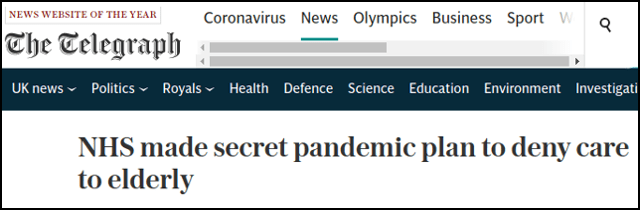
The UK government not only created the legislation to enable healthcare providers to increase the risks to the most vulnerable, they fully understood those risks. They had previously identified them in training exercises and had extensively modelled those risks.
Contrary to Hunt’s statement, there were many in the UK government who did “consider the clinical risk to care homes.” When the claimed pandemic arrived, rather than respond to limit and reduce the known dangers, the government, of which Hunt is a leading member, appeared to intentionally exacerbate them.
Section 14 of the Coronavirus Act removed the crucial NHS obligations under the NHS (standards) Framework. The NHS did not have to comply with clause 21(2)(a) and 21(12) of the 2012 Regulations.
The NHS no longer had a duty to assess a patient’s “eligibility for NHS Continuing Healthcare” before discharging them. In addition, no relevant body needed to have any “regard to the National Framework.” It is important to recognise what this meant within the context of a supposed global pandemic.
On 19th March 2020 the HCID group of Public Health England and the Advisory Committee on Dangerous Pathogens (ACDP) unanimously agreed to downgrade COVID 19, from a High Consequence Infectious Disease, due to low mortality. The UK government issued instructions to the NHS that they must discharge as many patients as possible on the same day.
With no duty to assess a patient’s continuing healthcare needs, the government set very unsafe assessment criteria and compelled hospitals to discharge them. Unless they were in intensive care, receiving oxygen, on intravenous fluids or imminently close to death, the government decreed:
“Every patient on every general ward should be reviewed on a twice daily board round to determine the following. If the answer to each question is ‘no’, active consideration for discharge to a less acute setting must be made.”
This is worth reiterating. During an allegedly unprecedented health crisis the UK government removed the NHS duty to assess a patient’s health status (and conditions) before discharging them from hospital. They then issued instructions compelling the NHS to discharge as many patients as possible.
The government and the NHS accepted that this would mean discharging patients with an active COVID 19 infection into the community. COVID patients, and people with a range of potentially life threatening conditions, were shipped into care settings where other vulnerable adults, who may not not have had any infection, were supposedly “shielding.”
There is no doubt that untested and COVID 19 positive patients entered the care system via this route. Both during the first and second “waves.” It is entirely reasonable to suspect that this policy, combined with others we are about to discuss, caused the said “waves.”
An August 2020 study by the Queen’s Nursing Institute found the following practices commonly operating in Care Homes during the spring 2020 outbreak. We should note the element of compulsion:
“Having to accept patients from hospitals with unknown Covid-19 status, being told about plans not to resuscitate residents without consulting families, residents or care home staff… 21% of respondents said that their home accepted people discharged from hospital who had tested positive for Covid-19… a substantial number found it difficult to access District Nursing and GP services… 25% in total reporting it somewhat difficult or very difficult during March-May 2020.”
On January 11th 2021, during the alleged second wave, The Care Quality Commission stated:
“These settings are admitting people who are discharged from hospital with a COVID-positive test who will be moving or going back into a care home setting.”
Even a few isolated voices in the mainstream media pointed out what they referred to as culpable neglect. Some of the UK’s leading charities for vulnerable people including the Alzheimer’s Society, Marie Curie, Age UK, Care England and Independent Age contributed toward an open letter to the UK government. Written on 14th April 2020 they highlighted a litany of policy “failures:”
“Instead of being allowed hospital care, to see their loved ones and to have the reassurance that testing allows; and for the staff who care for them to have even the most basic of PPE, they are told they cannot go to hospital, routinely asked to sign Do Not Resuscitate orders.”
The policies operated both by the NHS and the care homes, as a consequence of Coronavirus Act’s “legislative easement,” did not protect the most vulnerable. Rather they maximised their clinical risk. Not just of COVID 19, but of every condition that rendered them vulnerable in the first place.
From the 17th March 2020 the NHS were discharging vulnerable patients into care homes without assessing their “eligibility for healthcare.” On 2nd April 2020 the NHS combined this with instructions that care home residents should not be conveyed to hospital. On the 6th April they issued guidance to GP’s which stated:
“All patients should be triaged remotely… Remote consultations should be used when possible. Consider the use of video consultations when appropriate.”
So called “first wave” mortality peaked on the 11th of April and the UK government published its COVID 19 Action Plan on the 15th April. This seemingly insane policy agenda was deemed “necessary” by the UK state to create “capacity” in the NHS:
“The UK Government with the NHS set out its plans on the 17th March 2020 to free up NHS capacity via rapid discharge into the community and reducing planned care… We can now confirm we will move to institute a policy of testing all residents prior to admission to care homes.”
There was no commitment to improve the situation from the UK government, just a plan to move toward one. We know from the observations of the CQC that they continued these high risk policies during the subsequent virus “waves.” There is no evidence that any of these policies were designed to reduce the risks of the most vulnerable. They all, consistently tended to increase them.
It is not tenable for politicians to now claim that they didn’t know what was happening. They constructed and enabled all of the policies that made this dangerous negligence possible. Nor is it credible to simply blame the medical profession. The widespread use of Hospital Trust gagging orders (non disclosure agreements) was also in place. Doctors who did speak out were disciplined or sacked. This was systemic policy initiative which physicians were expected to abide by.
Once the vulnerable were trapped in abandoned care homes, which were knowingly understaffed, the remaining, unprotected staff were then left to deal with both their own safety fears and the mounting mortality. The government decided this was an opportune moment to suspend all safety inspections in both hospital and care settings. This was supposed to “limit infections,” although every other decision they made appeared to increase them. Yet again, ending inspections raised the mortality risk for the most vulnerable.
At the same time, Do Not Resuscitate (DNAR) notices were being attached to vulnerable people’s care plans, often without their consent or even their knowledge. This coincided with a massive increase in orders for the potentially life ending medication midazolam.
In March 2020 the NHS purchased the equivalent of two years worth of supply. French suppliers were then given regulatory approval by the MHRA to sell additional stock to the NHS. This was then distributed for out of hospital use in the community.
This benzodiazepine (midazolam) is a sedative/anaesthetic that suppresses respiration and the central nervous system (CNS). The British National Formulary (BNF) recommends its use for sedation of anxious or agitated terminally ill patients using a mechanised syringe pump in doses of 30–200 micrograms/kg/hour. It is not recommended for conscious sedation in higher doses due to the following risks:
“CNS (central nervous system) depression; compromised airway; severe respiratory depression.”
Therefore a frail, eight stone (50 kg) adult could receive an initial dose of up to 2.5mg followed by a total incremental dose of another 2.5mg over a 24hr period. The purpose of this would be to ease their anxiety and agitation if they were experiencing the frightening sensation of intense respiratory difficulty.
Midazolam becomes a conscious anaesthetic for use in intensive and palliative care when given in higher doses. The British Association for Palliative Medicine recommend:
“Start with 2.5-5 milligrams – if necessary, increase progressively to 10 milligrams – maintain with 10-60 milligrams / 24h in a syringe pump”
Ten milligrams is twice the BNF recommended dose to ease anxiety (for an 8 stone vulnerable adult.) Therefore it is extremely concerning that NHS Clinical Guideline for Symptom Control for patients with COVID-19 recommended 10mg of Midazolam for patients with “distressing breathlessness at rest.” This risks a rapid deterioration of the symptoms causing them that distress.
Police are still investigating an estimated 15,000 deaths that occurred at Gosport War Memorial Hospital between 1987 and 2001. An inquiry has already found that at least 456 people’s lives were “shortened” through the unwarranted use of unnecessary medication. Many suspect that the true figure is in the thousands. The independent panel into the malpractice at Gosport War Memorial Hospital found:
“There was a disregard for human life and a culture of shortening the lives of a large number of patients by prescribing and administering “dangerous doses” of a hazardous combination of medication not clinically indicated or justified… they were, in effect, put on a terminal care pathway… The risk of using them in combination has been consistently documented in the BNF. In particular, it has long been known that when given together, opioids and midazolam cause enhanced sedation, respiratory depression and lowered blood pressure.”
This report was published in September 2018. In 2020 the NHS treatment guidelines for COVID 19 patients, who were deemed to be “agitated,” was:
“Start with Morphine 20mg and Midazolam 20mg”
This is precisely the mechanical syringe combination used at Gosport War Memorial to “shorten” thousands of peoples lives. There are numerous reasons to suspect that the huge increase in midazolam ordered by the NHS, with the full knowledge of the government, was intended for this purpose.
In April 2020 the Health and Social Care Committee, chaired by Jeremy Hunt, heard submissions from medical professionals as they considered the government response to the global pandemic. In Q377 Dr Luke Evans (MP fror Hinckley and Bosworth) asked then Health Secretary about NHS provisions for “a good death.” This is medical shorthand for assisted dying or euthanasia. Dr Evans (MP) asked:
“The syringe drivers are used to deliver medications such as midazolam and morphine. Do you have any precautions in place to ensure that we have enough of those medications?”
To which Matt Hancock replied:
“Yes. We have a big project to make sure that the global supply chains for those sorts of medications… are clear. In fact, those medicines are made in a relatively small number of factories around the world, so it is a delicate supply chain and we are in contact with the whole supply chain.”
Hancock was clearly referring to the huge midazolam order and MHRA approval of the French supply chain. The UK government had already passed the Coronavirus Act, removing the NHS Framework duties, and had ordered them to discharge patients en masse. The NHS had instructed care homes not to send sick patients to hospital and GP support from the care homes had effectively been withdrawn.
Jeremy Hunt was chairing this discussion. For him to claim two months later that no one had “appeared to consider the clinical risk to care homes” smacks of vile obfuscation. The best we can say about this statement is that he was wrong. We now have the documentation which shows that the clinical risk in care homes was very carefully considered and the withdrawal of care was planned.
In 2016 the UK government ran Exercise Cygnus. The training scenario was prepared by Professor Neil Ferguson and his team at Imperial College London (ICL). It simulated a flu outbreak and was a Command Post Exercise (CPX) designed to test the UK’s pandemic preparedness. Nearly a thousand key officials took part from central and local government departments, the NHS, public health bodies from across UK, as well as local emergency response planners.
Some of the Cygnus Report recommendations were implemented in response to COVID 19 and others not. For example, it recommended legislative easements. The Coronavirus Act certainly eased the legislation surrounding the death registration process and the NHS duty of care. The legal requirements for inquests, post-mortems and cremations were also relaxed.
Exercise Cygnus also highlighted a number of deficiencies. It identified inadequate numbers of critical, general and acute care beds, which the government then proceeded to reduce further; it warned that whole sections of the NHS may have to be shut, which is exactly what the government did during the “pandemic;” it highlighted that the most vulnerable could be denied care, just as they were, and that the health service would have to be set on a war footing just to be able to cope.
These were warnings not policy suggestions. The UK government’s adoption of some of the Cygnus recommendations and determination not to address Gygnus alarms appears to have been their policy response to COVID 19.
COVID 19 healthcare strategies were seemingly set in 2016. The Cygnus scenario, modelled by Ferguson and ICL differed from their COVID 19 “models” only by virtue of being based upon influenza rather than a coronavirus.
Perhaps this explains why Exercise Cygnus was kept secret, reportedly for reasons of “national security.” When the report was released, after being exposed, it was heavily redacted and all the names of the senior officials involved were hidden.
The official explanation for this is that it was just too terrifying for the public to withstand. We might ask, terrifying for whom? Using the media to terrorise the public during the alleged pandemic was recommended by Spi-B (SAGE.)
It is reasonable to assume that many of those redacted names would have been people working for Ferguson’s ICL team and current members of SAGE. If so, this indicates that those involved in planning the response to COVID 19 not only understood what the risks were, they then provided the claimed “scientific” justification for policies which they knew would increase them.
One of the senior officials involved in Cygnus reportedly said:
“These exercises are supposed to prepare government for something like this – but it appears they were aware of the problem but didn’t do much about it.”
Again, we see the assumption that everything must be explained away as error or unfortunate oversight. This stretches credibility beyond breaking point when we understand that Gygnus ultimately produced a plan to deny healthcare during a pandemic. This policy of increasing the risks of the most vulnerable was evidently operating during the first alleged pandemic wave. It also seems likely that it continued beyond that point.
Based upon the Cygnus conclusions, in September 2017, the NHS Surge and Triage briefing paper was made available to senior health and government officials. It discussed something called population triage:
“The purpose of this paper is to provide an update to Chief Medical Officer (CMO) and the Chief Scientific Advisor (CSA) on continuing refinement of the knowledge and understanding behind the potential decision that may be required in a future extreme pandemic influenza scenario to move to a state of population triage across the country..”
Population triage means the potential denial of healthcare:
“The majority of the detail in this paper will not be replicated in any publically available documentation… Difficult decisions will be needed about maintaining patient access to care.. There is significant discussion in the paper about ceasing or changing care to patients in the HRG (Healthcare Resource Croups)… Patients would be assessed on probability of survival rather than clinical need and higher level services would no longer be provided… Total excess death rate would be in excess of 7,806 per week of the peak of the pandemic if all these services were stopped… So in the peak six weeks of a pandemic… 46,836 excess deaths could be expected”
Between 7th March and 8th May 2020, there were 47,243 excess deaths in England and Wales. According to the Cygnus predictions this was slightly higher than the numbers envisaged to result directly from the withdrawal of healthcare. However, nearly all of these deaths were attributed to COVID 19. We should ask where, in the claimed COVID 19 mortality figures, the anticipated deaths from the denial of healthcare are.
In November 2017 a number of English stakeholders also met to discuss the a pandemic briefing paper for Adult Social and Community Care. This too was a product of Exercise Gygnus. Once again the intention was to keep the report secret.
“The majority of the detail in this paper will not be replicated in any publically available documentation… Whilst demand will increase, capacity, which is already under pressure because of recruitment challenges, will also reduce because of staff absences… Adult social care will have an increased role in supporting rapid discharge from hospital.. In a severe pandemic, only those services that are life-critical will be maintained… More patients could be supported by a greater focus on telecare/tele-monitoring.”
It is known, from the reports of the CQC and national charities and other NHS documents cited in this article, that primary healthcare was withdrawn from care settings and the community. The staff shortages identified in 2016 became chronic and then severe during the pandemic. This was entirely predictable and was a known outcome of the track and trace and self isolation polices of the UK government.
The briefing paper spoke about which services could be “reduced or deferred.” Crucially these included assessment of care needs, mobility support, personal care support, maintaining family connections and access to medical treatment.
During the “first wave” approximately 25,000 vulnerable people were discharged into care homes to face the extremely high risk environment created for them by the UK government. At the same time potentially life ending drugs were being liberally prescribed.
This was the COVID 19 policy response and we were told the intention was to “protect the most vulnerable”. All of it was predicted on the assumption that hospital were struggling to cope with the “surge” in COVID 19 patients. According to the UK government, patients needed to be discharged to free up capacity in the NHS.
At the height of the so called first wave, on the 13th of April 2020, the Health Service Journal reported that hospital bed occupancy was at a record low, with 4 times more beds available that usual for the time of year. There were 37,500 available beds.
The HSJ stated that the reason for this spare capacity was the discharge policy operated by NHS at the behest of the government. What they didn’t mention is that these figures show the high risk discharge of the most vulnerable people in our society was entirely unnecessary.
You may not like it but is not “unthinkable” that this was deliberate, coordinated policy designed to increase the mortality statistics. Many have questioned the claimed severity of the alleged pandemic. If you wish to give the impression of a high mortality disease then you need the deaths to back up your claim.
It is feasible that all of these risk heightening factors happened to perfectly coalesce to increase mortality, but is it plausible? A refusal to contemplate the possibility of a intentional act does not rule it out. Only a thorough, truly independent investigation can.
While this system was in operation, the UK government encouraged widespread adoption of the Clap for Carers, often referred to as “clap for the NHS.” During lockdowns, as the whole nation was told to self isolate indoors and avoid all unnecessary congregation, between the 26th March and the 28th May, we were “allowed” to simultaneously congregate on the streets and show our appreciation by clapping, banging pots and pans and ringing bells.
Meanwhile vulnerable people were being discharged into unsafe care homes where access to medical care was withdrawn and essential social care removed. Clapping for this was obscene. The government clearly used this ploy both as a distraction and as propaganda. This does not suggest that doctors, nurses and carers do not deserve our support. Any medical professional or carer who blows the whistle is almost certainly making a career ending decision.
Given the evidence we have discussed, if we consider ourselves to be responsible citizens who live in a democracy, it is unconscionable for us to simply ignore what appears to have been a deliberate and illegal government policy of large scale euthanasia in the UK. We must seek answers from policy makers and malfeasance in office must be prosecuted wherever it is identified.
August 12, 2021
Posted by aletho |
Supremacism, Social Darwinism, Timeless or most popular | Covid-19, Exercise Cygnus, UK |
Leave a comment
Whenever one gets into discussions about the decline of America’s ability to positively influence developments around the world a number of issues tend to surface. First is the hubristic claim by successive presidents that the United States is somehow “exceptional” as a polity while also serving as the world’s only superpower and also the anointed Leader of the Free World, whatever that is supposed to mean. Some critics of the status quo also have been willing to look a bit deeper, recognizing that it is the policies being pursued by the White House and Congress that are out of sync with what is actually happening in Asia, Africa and Latin America, being more driven by establishing acceptable narratives than by genuine interests.
The problem starts at the top. One can hardly have a great deal of respect for presidents who appointed neocon or neoliberal ideologues Condoleezza Rice, Madeleine Albright, Hillary Clinton, Mike Pompeo or current incumbent Tony Blinken as Secretaries of State, but when all is said and done the area where the U.S. fails most egregiously is in the personnel it actually sends overseas. It has far more non-professional ambassadors than any other country in the world. Does the American public know, for example, that fully 44% of American Ambassadors sent overseas under Donald Trump were political appointees, whose sole distinction in many cases is that they contributed large sums of money to the Republican National Committee? Though such individuals can sometimes turn out to be surprisingly effective, many frequently know nothing of the country that they have been assigned to and do not speak the local language. To cite my own experience, in my 21 years as an intelligence officer spent mostly in Europe I did not once work for an ambassador who was a Foreign Service Officer career diplomat and few of the political appointees I knew ever bothered to learn the local language.
Part of the problem is that many U.S. ambassadors do not know what their job consists of. Ambassadors have existed since the time of the ancient Greeks. They were from the beginning granted a special immunity which enabled them to talk to enemy spokesmen to attempt to resolve issues without resort to arms. In the modern context, Ambassadors are sent to reside in foreign capitals to provide some measure of protection for traveling citizens and also to defend other perceived national interests. Ambassadors are not soldiers, nor are they necessarily the parties of government that ultimately make decisions on what to do when dealing with a foreign nation. They are there to provide a mechanism for exchanging views to create a dialogue while at the same time working with foreign governments to avoid conflict, whether over trade or politics. They should be bridge-builders who explain how American politics function, how the American government works, and at the same time educate Americans on how the country they are based in sees the United States.
By all these metrics, the U.S. diplomatic effort has been a failure and, at the end of the day, the United States taxpayer spends astonishing sums of money to support its global representational and security structures that provide little in return, rarely experiencing any notable successes and watching the reputation of the U.S. decline due to sheer ineptness. In my experience, the worst U.S. Ambassadors tend to be academics, which brings us to Michael McFaul, who served as Ambassador to Russia under Barack Obama from 2012-2014.
To be sure, viewing Russia as an enemy is a bipartisan impulse among the Washington political class. The neoconservatives and their neoliberal allies have both long been dreaming of regime change for Moscow, either because it is perceived as a threat or as an unacceptable autocracy. Given that, the appointment of Stanford Academic and Russia expert McFaul as Ambassador was intended to “reset” the bilateral relationship while also pushing the democracy promotion agenda and confronting various aspects of the domestic policies of the Vladimir Putin government that were considered unacceptable, to include the treatment of homosexuals. Pursuing that end, McFaul made a point of openly meeting with the political opposition in Russia. He thereby antagonized the officials in the government that he should have been working with to bring about acceptable change to such an extent that his term of office became untenable and he was an embarrassing failure.
But now McFaul has turned the usual Washington trick, converting failure into personal success. He is a regular go-to guy when Democrats either in Congress or in the White House need expert testimony on Russia and he is reliably a passionate supporter of the largely unsustainable Russiagate tale and all that implies. He is again a tenured professor at Stanford, where another top government failure Condi Rice, she of “mushroom cloud” fame, serves as Director of the Hoover Institution.
McFaul was recently bothered by what he described as an anonymous presumed “Russian troll” attack on twitter which had referred to his failure as Ambassador to Russia. This is how he responded: “I have a job for life at the best university in the world. I live in a giant house in paradise. I make close to a million dollars a year. I have adoring fans on tv and half a million followers on twitter 99% who also admire me. I’m doing just fine without a damn visa from Russia. And I am not afraid to tweet under my own name. I feel sorry for people like you who aren’t brave enough to do so.”
Not surprisingly, McFaul’s message, which was replayed in a number of places on the internet, struck many as a bit over the top, dripping with entitlement and self-esteem coming from someone who had been given an important government job and had only succeeded in making matters worse. He responded to the criticism by tweeting an addendum: “I wrote than[t] message in a private channel. I did not expect it to be published. But it was still a mistake, I apologize. It was arrogant and idiotic. A swarm of Russian trolls was accusing me of failure, and I responded in a most unprofessional way. Explanation, not excuse.”
Well, it’s nice to hear an apology for a change from anyone associated with the United States government, but the point is that McFaul is symptomatic of much of what is wrong in terms of how the White House makes policy impulsively and appoints poorly informed ideologues to implement what has been decided. McFaul is not unique. President Donald Trump certainly set a precedent in providing a whole group of incompetents to support the clueless Mike Pompeo at State, to include Nikki Haley at the United Nations, Rick Grenell in Germany, David Friedman in Israel, and the ubiquitous John Bolton at the National Security Council. It is almost as if in the area of foreign policy, the United States government as it is currently configured is designed to fail.
The solution is obvious. The United States desperately needs a foreign policy that is based on genuine national interests. It needs to stop rewarding political donors and needs also to send people as Ambassadors who are sensitive to the culture and red lines existing in the countries where they are posted. That doesn’t mean approving what others do, but it does mean listening to what they have to say. If one wants to restore America’s credibility and its reputation, examining the McFaul experience in Russia should be an excellent learning tool and taking steps so as not to repeat that failure would be a good place to start.
August 12, 2021
Posted by aletho |
Russophobia, Timeless or most popular | United States |
Leave a comment
Australian MP George Christensen’s anti-lockdown speech was removed by Facebook for violating the platform’s COVID-19 misinformation policy.
Governments across Australia are inflicting extreme lockdowns on citizens, with the nation’s capital city, Canberra, going into strict lockdown in the last 24 hours after only one case of COVID-19 was detected.
On Tuesday, Christensen was at the center of controversy after he told the Australian parliament that lockdowns and masks were not effective in stopping the virus.
“When will the madness end? How many more freedoms will we lose due to fear of a virus, which has a survivability rate of 997 out of 1,000,’’ Christensen said.
“It’s time we stopped spreading fear and acknowledge some facts: masks do not work. Fact. It has been proven that masks make no significant difference in stopping the spread of COVID-19,” he said.
“Lockdowns don’t work. Fact. Lockdowns don’t destroy the virus but they do destroy people’s livelihoods and people’s lives. Studies have shown they can even increase mortality rates.”
Christensen posted his speech in parliament on Facebook. The video was swiftly removed by the social media platform for containing “harmful health information,” that violated the policies on COVID-19 misinformation.
Christensen criticized the platform, claiming it censored his “speech calling for freedom.”
Christensen’s speech was criticized by other legislators and even Prime Minister Scott Morrison. Although the PM did not directly mention Christensen in his speech, he said that the government did not condone “misinformation” “in any way, shape, or form.”
In an appearance on 2GB Radio on Wednesday, Christensen defended his remarks, arguing that at some point we would have to “live with” the coronavirus.
He acknowledged that in some situations a lockdown is necessary “for an extremely short period of time,” but noted that lockdowns harm the community more than they help.
August 12, 2021
Posted by aletho |
Civil Liberties, Full Spectrum Dominance, Science and Pseudo-Science, Timeless or most popular, Video | Covid-19 |
Leave a comment