BELGRADE – The use of depleted uranium bombs by NATO in 1999 and the destruction of environmentally hazardous facilities during air strikes led to Serbia currently leading in cancer deaths across Europe, Danica Grujicic, director of the Institute for Oncology and Radiology of Serbia (IORS), told Sputnik.
“There are more and more children with oncological disorders, cancer appears in previously uncharacteristic age groups. In patients, including children, the growths react weaker to therapy. Despite all necessary tests, it is increasingly difficult to predict the behavior of tumors. Serbia is now first place in Europe in mortality from cancer,” Grujicic said.
She stressed that the consequences of the use of uranium and chemicals during the bombings of Yugoslavia by NATO will be felt for a long time, especially taking into account what the UN Environment Program described as an “ecocide” and a “regional environmental disaster in April 1999.”
The oncologist noted that the first results of the bombings, which may be called the “acute phase” in the medial field, are death, destruction of infrastructure, and pollution of the air, rivers and soil. The next stage, according to Grujicic, is the “chronic phase,” which was first noticed by veterinarians in the south of central Serbia after domestic animals began bearing abnormal offspring.
Medics then started observing more cases, as benign growths develop unpredictably and aggressively in humans, Grujicic noted.In 2018, there were almost 30,000 new cancer patients registered in central Serbia, without including the autonomous regions of Kosovo and Vojvodina, compared to 19,000 in 1999. The death toll in 2018 reached 15,500, as opposed 12,000 in 1999, despite better treatment available, the oncologist stated. Within the country there have been some 58,000 new cancer cases reported in one year, out of a population of seven million.
A group of some one hundred scientists and medical experts previously suggested that the Serbian government conduct a detailed study on the consequences of the 1999 NATO strikes. The half-life of uranium is about 4.5 billion years.
NATO airstrikes in Yugoslavia continued from March 24 to June 10, 1999. The exact number of victims of the airstrikes is unknown. Serbian authorities suggest that as many as 2,500 people, including 89 children, were killed and about 12,500 people were injured in the bombings. According to various sources, the material damage is assessed at between $30 billion and $100 billion.
The military operation was conducted without the approval of the UN Security Council and on the basis of Western countries’ allegations that Yugoslavian authorities had carried out ethnic cleansing in Kosovo and provoked a humanitarian catastrophe.
A Canadian indigenous group has said 182 unmarked graves have been discovered in the South Interior of the province of British Columbia, the third such discovery in the past two months near former Catholic schools.
The burial site is located at the former Catholic-run St. Eugene’s Mission School, the Lower Kootenay Band announced on Wednesday.
The community of ʔaq’am – or St. Mary’s Indian Band – based near the city of Cranbrook made the gruesome find after using radar detection equipment, which apparently pointed to there being graves around a meter below the surface.
Last week, 751 unmarked graves were uncovered at a Catholic school in Saskatchewan province, another indigenous community announced.
That discovery came after the remains of 215 children, some as young as three years old, were found at another Catholic school in British Columbia in May.
St. Eugene’s, now a casino and resort, was run by the Catholic Church from 1890 until the 1970s, according to the Truth and Reconciliation Commission, a body set up to document the history of indigenous students in Canadian schools.
The Indian Residential School History and Dialogue Centre said the school was hit by frequent outbreaks of influenza, mumps, measles, chickenpox, and tuberculosis.
As many as 100 people from the Lower Kootenay Band had been forced to attend the institution, the group said.
“It is believed that the remains of these 182 souls are from the member Bands of the Ktunaxa Nation, neighbouring First Nations communities and the community of ʔaq’am,” the community said in a statement.
More than 150,000 indigenous children were required to attend Catholic-run state schools in Canada from the 1870s until 1997.
In 2015, a report by the commission said the government’s forced assimilation of indigenous students and the system itself could “best be described as ‘cultural genocide.’”
The Daily Mail is reporting this morning that the government has shelved plans to use vaccine passports after July 19th, the so-called Freedom Day.
The Mail claims that it has been told that covid certification will not be required at mass gatherings when restrictions are lifted.
Government sources have revealed that those attending festivals, concerts or sporting events will not be required to show proof of vaccination or proof of immunity. That sounds good right?
Wrong. The Mail also reports that:
Organisers will, however, be permitted to run their own schemes, with the Premier League among those expected to introduce some form of certification to prove those attending football grounds do not pose a Covid risk.
There’s the kicker. Organisers will be permitted to run their own schemes. The government is simply passing the buck to the private sector. Here’s what I think will happen in the coming months. It’s all so predictable.
Shortly, the government will confirm that it will not be imposing mandatory covid certification. There will be lots of virtue signalling. Ministers will wax lyrical about civil liberties. “The UK is not that sort of country,” they will claim.
The government will say that it has listened to the hospitality industry and understands the concerns of pub and restaurant owners who do not want to be chasing customers for proof of vaccination.
From late July, through August and September, life will feel more normal. It’ll be a false dawn. We’ll hit October. Covid case numbers will rise steadily. Many of those who took the mRNA jabs will become seriously ill and die. This will be blamed on the mythical variants.
Testing will be ramped up. The redundant and thoroughly discredited PCR test will find Covid in nearly everyone who is screened. The government will say that there is a danger that the NHS will be overwhelmed. They’ll say that flu is back too. Of course it’ll be a very virulent strain of flu. The government will tell us that regretfully, restrictions must be reimposed.
There will be real panic in the hospitality and entertainment industries. Fearing for their businesses, owners will scream bloody murder. At the 11th hour a compromise will be reached. That compromise will be the introduction of vaccine passports.
Landlords and restaurateurs who were previously critical of the scheme, will rush to embrace it. People who had a covid booster jab and a flu jab (meaning they will have had four jabs in 2021), will demand the introduction of the passport to allow them to socialise.
Enormous pressure will be brought to bear on people like me who haven’t had a jab and never will. This was never about a virus. It was always about conditioning us to take gene altering vaccines and lots of them. It’s unimaginably evil, but it is happening.
THE behaviour of political and public-health leaders across the world over the past fifteen months has been deplorable: for reasons yet to be confirmed, they have turned themselves into procurers for Big Pharma.
Governments not only funded fast-paced vaccine development but also psychologically prepared their populations to receive them by means of sustained media manipulation. Billions of pounds in public money has been transferred to drug corporations which have been insulated from civil legal challenge in respect of harm or loss arising from their products.
Medical staff have lost a great deal of public trust by colluding with vaccine stakeholders and withdrawing general support. They have delivered experimental gene therapies to people who did not need them but who were cowed into having them, and they have exposed young people, healthy adults and pregnant women to unnecessary risks without their full knowledge or consent in breach of their own ethical and professional standards.
Such legal immunity is unusual but came from an emergency government consultation in September 2020, after the Department of Health and Social Care under Matt Hancock had determined that changes to civil liability were necessary to ‘better facilitate the widespread use of a Covid-19 vaccine in Britain’.
Emergency approval had already been granted for Pfizer/BioNTech’s two-shot ‘vaccines’ through Regulation 174 of the HMR, which allowed them to avoid statutory licensing procedures, so with civil legal protections, they were unfettered. Crony capitalism and avarice beat prudence and public protection.
To qualify for assistance, a claimant must provide medical evidence that proves to the Department of Work and Pensions that on ‘the balance of probability’ there is a ‘causal link between the vaccine and the claimed disability [and] that the resulting disability is severe – up to 60 per cent’.
Those who can prove their cause receive a one-off tax-free payment of £120,000. The test poses two key challenges for claimants, the high threshold of disablement and the relatively low level of compensation.
Consumer Protection Rights and common law rights still apply for people damaged by Covid-19 vaccines but due to the legal definition of product defects and a rule known as the ‘state-of-the-art defence’, it may be very difficult to get compensation: only time and case law will tell.
The very fact that Covid vaccine research was funded by government is curious and may, arguably, make them also liable; that manufacturers’ experimental products were given emergency authorisation is questionable; that immunity against civil action for damages was granted is an egregious betrayal; and the continuing promotion of the jabs, despite growing evidence of harm, is evil.
What distinguishes these remedies from novel ‘vaccines’ is that they are already fully licensed and off-patent. They are relatively cheap to manufacture and administer, and therefore unlikely to bring new long-term income streams to Big Pharma.
All of which brings us unhappily to our question: Why on earth was our government so eager to fund the activity of international drug giants and why did it provide them with tax-funded legal immunities for products that only they will profit from?
It’s not as if Boris Johnson, Matt Hancock or their Sage advisers can claim ignorance of the business practices or track records of these outfits: they all have strong public links to them, either as employees, researchers, directors, business partners, shareholders, or recipients of funding.
In December 2020, Global Justice Now, a UK-based ‘social justice organisation’ published a report which concluded:
‘The current pharmaceutical model is . . . deeply flawed, delivering outcomes which are poor value for money for the public sector, which exacerbate global inequality and which are driven by the objective to make sky-high returns to shareholders, not a healthier population.’
It described the market as dysfunctional with incentives for ‘the most appalling behaviour including aggressive marketing of inappropriate drugs, kickbacks to doctors, claims of testing drugs on children without proper consent, massive price hikes on essential medicines, profiteering, blocking competition, and secrecy’.
In the US, Public Citizen, a non-profit, consumer rights advocacy group, published Twenty Seven Years of Pharmaceutical Industry Criminal and Civil Penalties 1991 through 2017, which detailed the 412 settlements against drug companies that resulted in them paying out $38.6 billion in criminal and civil penalties. A small loss relative to the $711 billion in net profits made by the 11 largest global drug companies during ten of those 27 years (2003-2012).
Pfizer, now the leading Covid mRNA vaccine manufacturer, was found guilty of more transgressions than any other company and forced to pay 34 settlements amounting to $4.7billion: AstraZeneca had to settle just over $1billion on 13 matters, including concealing data.
Johnson & Johnson was ordered to pay $2.8billion in 20 settlements that included unlawful promotion of prescription drugs and unfair practices.
Such penalties are clearly accepted by the companies as a ‘cost of doing business’. They are certainly no incentive to changing behaviour.
Criminal prosecutions of executives of drug companies are extremely rare, as are prosecutions of politicians. Nonetheless, a forensic assessment of who is liable for the risks, damages, and losses brought by Covid -19 ‘vaccines’ is long overdue.
It’s not exactly news at this point: law enforcement agencies are increasingly seeking Big Tech’s cooperation in giving them access to massive data sets taken from users of social networks and other online platforms and services.
And although some reports now address this topic in the context of the way these powers were used during the Trump era Department of Justice (DoJ), the practice neither started, nor ended with the previous US administration.
Instead, over the past six years, there has been a steady and entirely predictable rise in requests for detailed personal data that Big Tech collects from users and their devices. The more data – the more requests.
The latest available statistics from the first half of last year show that Apple, Google, Facebook and Microsoft received three times more requests for information about users’ calls and emails, and content like photos and texts, compared to 2015. But tech giants collect – and hand over – much more than that, shopping and driving route history being some of the data harvested thanks to map and payment apps.
In the first half of 2020 alone US law enforcement asked for this data a total of 112,000 times – and Big Tech complied either fully or partially in 85% of cases. Facebook and Instagram in particular, having the largest combined user base, also topped this list.
And while the behemoths say that most of that data is “non-content” – such as metadata – user’s privacy is not much better off for it, considering that identifiable information can clearly be extracted from multiple correlated metadata points.
In a recent report, AP cites the case of Newport, a small town with a large tourist industry, whose police department is now increasingly relying on obtaining data from tech companies when investigating crimes.
“The amount of information you can get from people’s conversations online – it’s insane,” Newport supervising detective Robert Salter shared with the agency.
Digital privacy groups like the EFF call this “the golden age of government surveillance” as law enforcement not only has more access to data, but is also more prone to using gag orders, leaving its targets unawares.
The EFF suggests tech companies use strong encryption as one remedy to the police “short-circuiting constitutional protections against unreasonable searches.”
Regular health checks (a.k.a routine visits) are probably the bane of many a primary care physician’s existence. I can’t imagine many things more boring than running through a standardized list of questions with a patient who feels absolutely fine, then going through a list of lab values that are almost invariably within the normal reference range, and finally topping it off with a perfunctory physical examination. Nothing converts a highly trained professional into an unthinking automaton more than the regular health check.
Of course, the physician’s feelings about regular health checks aren’t really what matters (except in so far as they cause physicians to choose not to work in primary care, and thereby cause a shortage of primary care physicians). What matters is whether the regular health check results in objective benefits for the patient. Well, do they?
A review was recently published in JAMA (the Journal of the American Medical Association) that sought to answer that question. Regular health checks are a big part of what primary care physicians do in many countries. In the US for example, 8% of doctor’s appointments are for a regular health check. This means that a lot of money is poured into them, and it therefore makes sense to try to figure out whether or not they actually do any good. Otherwise that money could be better used elsewhere, like for example launching Jeff Bezos into space.
The review included both randomized trials and observational studies, with the only requirements for inclusion being that a study have at least 200 participants, that there be a control group, that the health check be conducted in a primary care clinic, and that it be a “general” health check, i.e. not designed to screen specifically for any one disease. 19 randomized trials and 13 observational studies were identified. The smallest study had 240 participants, while the largest had almost 500,000 participants, and the length of follow-up varied from six months to thirty years. The oldest included study was published in 1973, and the most recent was published in 2017. Virtually all were carried out in western Europe or north America, with a disproportionately large proportion of the studies being carried out in Denmark, because apparently the Danes are disproportionately interested in health screening.
The frequency of the health check varied quite a lot. Some of the studies had a single visit, some had a visit annually or bi-annually, and some had irregular intervals.
So, what were the results?
13 randomized trials studied the effect of health checks on mortality, and eleven of these failed to show any benefit. This includes the study that ran the longest, a Danish trial with almost 18,000 people that provided health checks at baseline and then after five years and again after ten years. It failed to show any difference in mortality after thirty years. It also includes the largest study, another Danish trial with almost 60,000 people that provided health checks at baseline and again five years out (and also at the one year and three year marks for those deemed to be at high risk). It failed to show any mortality benefit after ten years of follow-up.
As mentioned, two of the thirteen studies did show a mortality benefit. The larger, another Danish study with 50,000 participants, which provided a single health check and then followed participants for five years to see what happened, showed an extremely marginal benefit (10% vs 11 % dead five years out), but the result only just crossed the threshold for statistical significance and could thus easily be a fluke. The other of the two was a smaller study with 4,195 people conducted in the US, which provided a health check at baseline and at one year out. It showed an improvement in mortality at two years (8% vs 11%) and four years (19% vs 22%).
Overall, though, I think it’s safe to conclude that the totality of studies that have so far been done of regular health checks fail to show that they result in any reduction in mortality. Of course, whether you’re dead or alive isn’t the only thing that matters. So let’s look at other outcomes too.
Five randomized trials looked at whether regular health checks helped prevent cardiovascular disease and cardiovascular events (a.k.a. heart attacks and strokes). All five failed to find any benefit. This is a bit odd, since one rationale for regular health checks is that they catch problems like high blood pressure and high cholesterol early, one major goal of which is to prevent cardiovascular events.
Four randomized trials and six observational studies did seek to understand whether the health checks increased detection of disease. A randomized trial conducted in Denmark (of course), in which 1,104 participants aged 45-64 were randomized to either a health check or “usual care” (i.e. don’t bother the doctor unless you feel sick) and then followed for one year, the health check had resulted in more than twice as many people being treated with anti-depressants (5% vs 2%). As I’ve written about previously, anti-depressants don’t work (better than placebo), but do result in significant side effects, so it’s questionable whether this is a good thing.
The health check did not however result in an increase in the diagnosis of high blood pressure, hypercholesterolemia (high cholesterol), or diabetes. Which is a bit surprising, quite frankly. Other trials did find a difference, however. An American trial in which 906 adults were randomized to a single health check or usual care and then followed for a year found that the health check resulted in a significant increase in the number of people diagnosed with high blood pressure (14% vs 10%). A British observational study including over 85,000 people found that attending regular health checks was associated with an increased likelihood of being diagnosed with high blood pressure, diabetes, and chronic kidney disease. Participants were also more likely to be diagnosed with hypercholesterolemia and treated with statins.
So the totality of evidence suggests that regular health checks do result in an increase in the number of people being given diagnoses and thus the number of people being put on medical treatment. But they don’t improve mortality or the frequency of cardiovascular events. That is strange, isn’t it? How do we explain that?
Here’s what I think.
Firstly, some of these diagnoses don’t actually result in any treatment. Take chronic kidney disease, for example. As people age, their kidneys gradually wear out. Once your kidneys’ capacity is at around 70% of the normal value in a healthy young person, you will be diagnosed as suffering from “chronic kidney disease”. Luckily, the kidneys have an enormous amount of spare capacity, and you don’t actually develop any symptoms until the kidneys are down to 10 to 15% of their original capacity. Most people who have been diagnosed with chronic kidney disease die of other causes long before their kidney function gets to that point. So regular health checks might increase the number of people diagnosed with chronic kidney disease, but the diagnosis doesn’t actually change anything in reality (except for the psychological harms of now thinking that you have a chronic disease, of course).
Secondly, there are many diagnoses that are treated, but where the benefits of treatment are so marginal that it isn’t clear whether treatment actually improves overall outcomes. This applies to mildly elevated blood pressure and blood sugar. Treating very high blood pressure and very high blood sugar is undoubtedly a good thing. But when they are only marginally raised, then treatment is much more questionable, and it’s not clear that the benefits outweigh the harms. The reason this is relevant is that most of the people identified with these conditions through health checks are at the milder end of the spectrum, and thus statistically unlikely to benefit from medical interventions.
Another condition that falls in to this category is the aforementioned hypercholesterolemia. Reducing cholesterol levels in the blood results in a reduction in deaths from heart disease (at least, that’s what the trials produced by the corporations that own the cholesterol lowering drugs say), but it doesn’t result in a reduction in overall mortality. Which does rather beg the question why we even bother to treat high cholesterol.
Thirdly, if regular health checks increase diagnoses and thus increase drug prescriptions, then they also increase the problem of polypharmacy, which is now a leading cause of death. Polypharmacy (taking many drugs simultaneously) frequently cancels out the benefits seen in clinical trials, where unusually healthy and young patients are being treated with a single drug or just a few drugs (i.e. a situation very far from the clinical reality).
It is thus easy to see how regular health checks could result in an increase in diagnoses and an increase in prescriptions without there being any noticeable improvement in survival.
Let’s move on and look at some more results.
Overall, health checks were associated with small improvements in blood pressure and cholesterol, as would be expected given the increase in prescriptions. However, it is hard to see what the value of an improvement in a surrogate marker is if there is no actual improvement in survival.
There was also a consistent increase in the uptake of disease specific screening services in people who took part in health checks. Which intuitively sounds like a good thing, except that again the reality is far more complicated. As I’ve written about before, both breast cancer screening and prostate cancer screening harm far more people than they help, and don’t result in any reduction in overall mortality. So increasing uptake of screening interventions can actually be a bad thing overall. It all depends on which particular screening interventions are being recommended.
Ok, let’s sum up. Regular health checks result in an increased probability of receiving a diagnosis and an increased probability of being put on drugs. They do not however improve longevity. With that being the case, the increase in diagnoses and drug prescriptions is of questionable value, and might even be a net negative, when side effects of the drugs and the negative psychological consequences of thinking of yourself as someone with a “chronic disease” are considered.
As a Canadian journalist, I could be subject to a censorship bill which, if passed in Senate, means the government in Canada can effectively shadow-ban and censor my voice into oblivion, along with other dissenting voices.
After seeing his tweet on the issue of Bill C-10, recently passed in the House of Commons, I spoke with Canadian journalist Dan Dicks about this. He explained that the bill is being presented as being about Canada bringing Big Tech companies under the regulation of the CRTC (Canadian Radio-television and Telecommunications Commission), to have them display more Canadian content.
“But what people are missing,” he cautioned, “is that there were clauses put into this bill, protections for certain publishers and content creators that would protect people like myself and yourself.”
Those clauses, he said, were recently removed from the bill, leading many content-creating Canadians aware of the bill to worry they will be treated the same as a broadcaster or a programmer, subject to the regulations of the CRTC.
The bottom line is that, beyond the mumbo jumbo of the government, this is the latest attack on freedom of expression, and on dissent.
“It really appears that it’s a backdoor to be able to control the free flow of information online, and to begin to silence voices that go against the status quo,” Dicks said, warning that fines for violators could follow.
“It’s not looking good for individual content creators. Anybody who has any kind of a voice or a significant audience, where they have the ability to affect the minds of the masses, to reach millions of people, they are going to be the ones who are on the chopping block moving forward.”
Names like James Corbett come to mind. Although based in Japan, as a Canadian he would be subject to the bill. And with his very harsh criticisms of many issues pertaining to the Canadian government, he is a thorn they would surely be happy to remove under the pretext of this bill.
Or Dicks, who likewise creates videos often critiquing Canadian government actions.
An article on the Law & Liberty website, which describes itself as focussing on “the classical liberal tradition of law and how it shapes a society of free and responsible persons,” notes the bill enables “ample discretion to filter out content made by Canadians that doesn’t carry a desirable ideological posture and [to] prioritize content that does.”
The article emphasizes that the bill violates Canadians’ right to free expression, as well as “the right to express oneself through artistic and political creations, and the right to not be unfairly suppressed by a nebulous government algorithm.”
It noted that Canadians with large followings, like Jordan Peterson, Gad Saad and Steven Crowder, “each enjoy audiences which far exceed any cable television program.”
As with my examples above, these prominent Canadian voices likewise risk shadow-banning under this bill.
But, worse, there is another bill, C-36, that also portends heavy censorship: the “Reducing Online Harms” bill. This one not only involves censorship, but hefty fines and house arrests for violators
The same Law & Liberty article notes, “Canada is also expected to follow the template of Germany’s NetzDG law, which mandates that platforms take down posts that are determined to constitute hate speech—which requires no actual demonstrated discrimination or potential harm, and is thus mostly subjective—within 24 hours or to face hefty fines. This obviously will incentivize platforms to remove content liberally and avoid paying up.”
The Canadian Constitution Foundation (CCF), rightly, contests this bill, noting, “the proposed definition of hate speech as speech that is ‘likely’ to foment detestation or vilification is vague and subjective.”
Maxime Bernier, leader of the People’s Party of Canada, is likewise extremely critical of the bills.
Trudeau has made every issue about race, gender and religion since his election.
Now he wants to criminalize everyone who disagrees with his tribalist vision.
The CCF points out the potential complete loss of Canadians’ fundamental rights with these bills.
It should be common sense that these bills are extremely dangerous to Canadians, however cloaked in talk of levelling playing fields and of combating hate speech they may be.
Eva Bartlett is a Canadian independent journalist and activist. She has spent years on the ground covering conflict zones in the Middle East, especially in Syria and Palestine (where she lived for nearly four years).
Singapore has recorded fewer deaths from COVID-19 than almost any other country with reliable data: only 36 to date, which equates to a rate of just six per million. (The U.K.’s official COVID-19 death rate is 1,890 per million.)
And according to the World Mortality Dataset, Singapore has had zero excess mortality since the pandemic began. On the other hand, the country did take a sizeable economic hit last year – with GDP falling by 5.4% (compared to only 2.8% in Sweden).
What’s more, Singapore has not recorded more than 100 cases in a day since August of last year. If any advanced country has come close to “Zero Covid”, it’s Singapore.
Despite that record, three Singaporean ministers have announced that “COVID-19 may never go away” and “it is possible to live normally with it in our midst”.
Writing in The Straits Times, Gan Kim Yong, Lawrence Wong and Ong Ye Kung (the ministers for trade, finance and health) say that “COVID-19 will very likely become endemic”. This means that “the virus will continue to mutate, and thereby survive in our community”.
In other words, the Singaporean Government is under no illusion that it will be possible to eliminate COVID-19, contrary to the claims of the “Zero COVID” movement. Indeed, a survey by Nature of 119 experts found that 89% believe it is “likely” or “very likely” that SARS-CoV-2 will become an endemic virus.
“We can’t eradicate it”, the ministers write, “but we can turn the pandemic into something much less threatening, like influenza.” How do they propose to deal with the virus going forward?
First, they intend to proceed with their vaccination program, which aims to have two thirds of people vaccinated by August 9th. Second, they intend to continue testing, but “the focus will be different”. For example, the country will cease “monitoring COVID-19 infection numbers every day”. Third, they intend to keep using and developing effective treatments for COVID-19.
As Yong, Wong and Kung conclude, “History has shown that every pandemic will run its course.” Though one might object that even the few remaining measures are no longer necessary, the ministers seem to understand what they’re talking about. Their article is worth reading in full.
MANY have asked themselves how policies so ineffective and yet damaging to so many people’s lives and liberties could have been put in place so quickly, and seemingly almost on a global basis, in response to the Covid crisis.
Part of the answer has been provided by an investigation by German journalist and author Paul Schreyer. In an hour-long video, he tracks a series of pandemic simulation exercises conducted at the highest level over many years among the most influential industrial nations of the West.
Top officials were ‘primed’ to respond as they did, once the World Health Organisation declared the pandemic spread of a new coronavirus, SARS-COV-2, almost regardless of the nature of the virus or the degree of harm it was likely to cause.
This weakness can be seen as a huge obstacle to rational decision-making. It helps to explain how the views of thousands of doctors, scientists and others who have challenged the official, fear-based approach to the pandemic came to be ignored.
Schreyer maintains that political decisions during the crisis did not come out of the blue, but stemmed from a ‘war on viruses’ begun back in the 1990s, alongside the ‘war on terror’.
It was as though a fresh enemy had to be brought into being, following the end of the Cold War era in which the superpowers Russia and America confronted each other with immense and potentially suicidal armaments and military budgets.
‘I am running out of villains. I am running out of demons,’ said General Colin Powell in a 1991 newspaper interview. ‘I’m down to Castro and Kim Il-Sung.’ At the time he was the highest-ranking military official in the USA.
That was the context in which the fight against terror, including preparations to fight biological weaponry, began. A 1993 bomb attack on the World Trade Centre in New York City, attributed to Islamist terrorists, boosted demands for continued use of American military abroad, and a similar attack, though with mysterious origins, on a federal building in Oklahoma City in 1995 reinforced fears of a ‘shadow enemy’ within.
At the same time, dangerous biological research was being conducted at US facilities, said to be aimed at better understanding the threat that could be posed by a state or terrorist with a biological arsenal.
Colonel Dr Robert Kadlec, Biodefence Programmes Director at the Department of Homeland Security, wrote in a 1998 Pentagon strategy paper: ‘Using biological weapons under the cover of an endemic or natural disease occurrence provides an attacker the potential for plausible denial. Biological warfare’s potential to create significant economic loss and subsequent political instability, coupled with plausible denial, exceeds the possibilities of any other human weapon.’
That same year saw the founding of the Johns Hopkins Centre for Civilian Biodefence Strategies, later renamed the Centre for Health Security. This institution has played a major role in the Covid pandemic, compiling, displaying and analysing data on a global dashboard used by media – for the most part, unquestioningly – all over the world.
And it was this centre that organised several important simulation exercises in the field of disaster response strategies.
The first, the National Symposium on Medical and Public Health Response to Bioterrorism, was held at Arlington, home to the Pentagon, in February 1999. Hundreds of delegates from ten countries took part. Smallpox was the supposed bioweapon, and delegates were taken through a series of sessions simulating how an attack might be handled and problems that might arise.
How far could the police go to detain patients? How to proceed with vaccination? Should martial law be implemented? How to control the message going to the public? Public health issues were for the first time being treated as military problems, with the Department of Health becoming part of the US national security apparatus.
A similar exercise took place in November 2000 in Washington DC, this time using plague as the simulated pandemic. Scenarios enacted in front of the high-level officials attending included: ‘The sight of an armed military presence in US cities has provoked protests about the curtailment of civil liberties … the question is, how do we enforce it, and to what degree? How much force do we use to keep people in their homes?’
A third exercise, called Dark Winter, held at a military base a few miles outside Washington in June 2001, simulated a full-scale smallpox emergency. It brought in journalists from well-known media, including the BBC, to question the politicians and top-level officials so that they could learn the kind of issues that would arise.
Among the conclusions:
We are ill-equipped to prevent the dire consequences of a bioweapon attack.
America lacks the resource stockpiles required for appropriate responses, including vaccines, antibiotics, and means of effective distribution.
Forcible constraints on citizens may likely be the only tools available when vaccine stocks are depleted.
Americans can no longer take basic civil liberties such as freedom of assembly or travel for granted.
On a fictional news channel created as part of the exercise, Kadlec announced: ‘The problem is, we do not have enough vaccine … it means this could be a very dark winter in America.’
When the real Covid-19 struck, Kadlec became the top emergency preparedness official co-ordinating the response from both the US Department of Health and Human Services, and the federal government.
Days after Joe Biden was declared winner of the presidential election, he warned of a ‘dark winter’ ahead, urging continued mask-wearing. ‘You might call it a coincidence, although you could also suspect that his choice of words was related to the exercise,’ Schreyer says.
The September 11, 2001 attacks brought home the terrorist threat to everybody in the global community. Proposed legal changes to extend state powers of surveillance met resistance in the US, but that disappeared following the so-called anthrax attacks in October the same year. Letters containing anthrax spores were sent to several news media offices, and to two senators who had opposed the changes.
‘To this day it is not clear who was responsible for those attacks,’ says Schreyer, who interprets them as ‘a signal that a certain red line should not be crossed’.
A month later, in November 2001, on the initiative of the US Government, a new international organisation was founded called Global Health Security Initiative (GHSI).
It was emphasised that every government was in danger of receiving a deadly pathogen, and there was a need to unite and jointly take action. The participating countries were Canada, France, Germany, Italy, Japan, Mexico, Britain, and the USA. The European Union also signed up to the initiative and the WHO was involved as technical adviser. Health ministers and senior officials came together regularly to discuss bioterrorism and how best to co-ordinate a response.
In 2002 a further crucial step was taken: The group declared that the threat need not only be man-made, but might also come from nature, such as with a flu pandemic. Emergency preparation was needed for both scenarios, on a global scale.
From then on, exercises were co-ordinated internationally. The first, called Global Mercury, convened in 2003, depicted an attack by fictitious self-inoculated terrorists to spread smallpox internationally to target countries. A planning group for the exercise was led by Canada and comprised ‘trusted agents’ from all participating nations or organisations. Hundreds of people participated.
Another important exercise, convened in 2005, was called Atlantic Storm. Many of the country representatives were either current or former individuals with governmental responsibility. The real-life Madeleine Albright, for example, former US Secretary of State, played the US President.
Key questions highlighted in the post-exercise report included:
How should national leaders determine measures such as border closures or quarantine?
If actions are taken that restrict the movement of people, for how long should they be maintained? How would they be coordinated internationally, and how would the decision be made to lift them?
The basic premise of all the scenarios, Schreyer says, was to highlight decision-making processes and competencies in a public health emergency. ‘But they also involved declaring a state of emergency, implementing authoritarian leadership, bypassing parliament and investing certain federal officials with augmented decision-making power while also suspending fundamental civil rights and effecting plans to vaccinate the population.
‘What strikes me as particularly noteworthy is the ready suspension of basic human rights when responding to a pandemic or bioterror attack; because that is not necessarily a logical consequence.
‘Observing all this, the question arises: Maybe such exercises might have served as a cover and testing ground for a state of emergency and checking out how such a political situation could be handled.’
One lesson we might draw from the handling of the Covid crisis is that while politicians understandably feel a need to prepare for global disasters, they risk causing far more harm than good by following tramlines of action rigidly predetermined to be ‘the science’ of the situation, but which actually obstruct rational responses.
… It is time we had a grown-up discussion about the optimum quantity of human beings in this country and on this planet. Do we want the south-east of Britain, already the most densely populated major country in Europe, to resemble a giant suburbia?
This is not, repeat not, an argument about immigration per se, since in a sense it does not matter where people come from, and with their skill and their industry, immigrants add hugely to the economy.
This is a straightforward question of population, and the eventual size of the human race.
All the evidence shows that we can help reduce population growth, and world poverty, by promoting literacy and female emancipation and access to birth control. Isn’t it time politicians stopped being so timid, and started talking about the real number one issue?
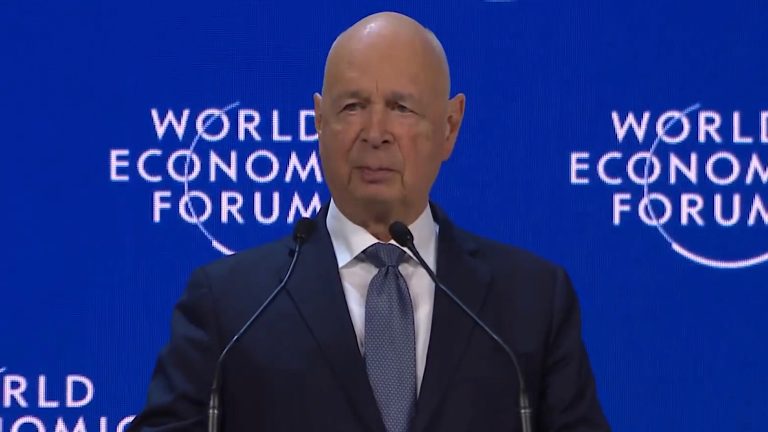
The World Economic Forum, an international group that works to “shape global, regional and industry agendas,” has formed a new “Global Coalition for Digital Safety” that’s made up of Big Tech executives and government officials and intends to come up with new “innovations” to police “harmful content and conduct online.”
The scope of so-called “harmful” content that will be targeted by this Global Coalition for Digital Safety is far-reaching and encompasses both legal content (such as “health misinformation” and “anti-vaccine content”) and illegal content (such as child exploitation and abuse and violent extremism).
Big Tech companies already censor millions of posts under their far-reaching rules that prohibit harmful content and misinformation. They also publish detailed quarterly reports about this censorship.
But according to the World Economic Forum, Big Tech’s current metrics, recommendation systems, and complaints systems are “deficient” which is why “more deliberate coordination between the public and private sector is needed.”
The World Economic Forum intends to deliver this “more deliberate coordination” through its Global Coalition for Digital Safety which will work to tackle what it deems to be harmful content through a series of measures.
These measures include exchanging “best practices for new online safety regulations,” taking “coordinated action to reduce the risk of online harm,” and creating global definitions of harmful content “to enable standardized enforcement, reporting, and measurement across regions.”
The members of this Global Coalition for Digital Safety include officials from the governments or government regulators in Australia, the UK, Indonesia, Ukraine, Bangladesh, and Singapore, an executive from the tech giant Microsoft, and the founder of the artificial intelligence (AI) powered content moderation and profanity filter platform Two Hat Security.
“Global online safety is a collective goal that must be addressed by working across borders as well as by individual nations,” Ofcom Chief Executive Dame Melanie Daws said. “We look forward to collaborating with international Coalition members to reduce the risk of online harms and build a safer life online for everyone.”
Microsoft’s Chief Digital Safety Officer, Courtney Gregoire, added: “The World Economic Forum is uniquely positioned to accelerate the public-private collaboration needed to advance digital safety globally, Microsoft is eager to participate and help build whole-of-society solutions to this whole-of-society problem.”
The formation of this global coalition is reflective of tech companies’ increased willingness to collaborate with global governments to censor legal content that they deem to be harmful and to push these governments to introduce more expansive speech regulations.
Just a few months before this coalition was announced, YouTube CEO Susan Wojcicki called for global coalitions to address content that’s “legal but could be harmful” at the World Economic Forum Global Technology Governance Summit 2021.
Similar global coalitions that have attempted to create global censorship standards, such as the Global Internet Forum to Counter Terrorism (GIFCT), have resulted in the automated censorship of satire, media reports, and other types of legal content.
Recent disclosures by the Zionist regime show that some 2,069 British nationals were serving in the IDF as of March 2025, according to Freedom of Information (FoI) requests submitted to the occupation forces (1,686 dual British-Israeli, plus 383 multinational). We cannot tell from the figures how many of these were already settler colonists and intend to stay in the colony, and how many will return or have returned to the UK. Presumably, those returning to the UK will number far fewer than 2,000, since many are known to have become permanently residents of the colony.
Additionally, the IDF figures only provide a snapshot, and do not tell us how many have served in the Jewish supremacist military either before or after March 2025. One way into the question of how many genocidaires are living in Britain is to ask how many current British residents were born in the Zionist colony. There is data on that, as we shall see. … continue
This site is provided as a research and reference tool. Although we make every reasonable effort to ensure that the information and data provided at this site are useful, accurate, and current, we cannot guarantee that the information and data provided here will be error-free. By using this site, you assume all responsibility for and risk arising from your use of and reliance upon the contents of this site.
This site and the information available through it do not, and are not intended to constitute legal advice. Should you require legal advice, you should consult your own attorney.
Nothing within this site or linked to by this site constitutes investment advice or medical advice.
Materials accessible from or added to this site by third parties, such as comments posted, are strictly the responsibility of the third party who added such materials or made them accessible and we neither endorse nor undertake to control, monitor, edit or assume responsibility for any such third-party material.
The posting of stories, commentaries, reports, documents and links (embedded or otherwise) on this site does not in any way, shape or form, implied or otherwise, necessarily express or suggest endorsement or support of any of such posted material or parts therein.
The word “alleged” is deemed to occur before the word “fraud.” Since the rule of law still applies. To peasants, at least.
Fair Use
This site contains copyrighted material the use of which has not always been specifically authorized by the copyright owner. We are making such material available in our efforts to advance understanding of environmental, political, human rights, economic, democracy, scientific, and social justice issues, etc. We believe this constitutes a ‘fair use’ of any such copyrighted material as provided for in section 107 of the US Copyright Law. In accordance with Title 17 U.S.C. Section 107, the material on this site is distributed without profit to those who have expressed a prior interest in receiving the included information for research and educational purposes. For more info go to: http://www.law.cornell.edu/uscode/17/107.shtml. If you wish to use copyrighted material from this site for purposes of your own that go beyond ‘fair use’, you must obtain permission from the copyright owner.
DMCA Contact
This is information for anyone that wishes to challenge our “fair use” of copyrighted material.
If you are a legal copyright holder or a designated agent for such and you believe that content residing on or accessible through our website infringes a copyright and falls outside the boundaries of “Fair Use”, please send a notice of infringement by contacting atheonews@gmail.com.
We will respond and take necessary action immediately.
If notice is given of an alleged copyright violation we will act expeditiously to remove or disable access to the material(s) in question.
All 3rd party material posted on this website is copyright the respective owners / authors. Aletho News makes no claim of copyright on such material.


 Aletho News

