Russian Media Watchdog Demands That Google Remove Restrictions on RT’s YouTube Channel
Sputnik – 24.04.2021
MOSCOW – Russia’s Service for Supervision of Communications, Information Technology and Mass Media (Roskomnadzor) on Saturday demanded that Google lift restrictions on the English-language YouTube channel of the RT broadcaster.
“Roskomnadzor sent a letter to the leadership of Google LLC demanding that all restrictions be lifted from the RT YouTube Channel as soon as possible”, the statement said.
YouTube previously made a number of videos on RT’s English YouTube channel inaccessible to viewers, and also restricted the channel’s ability to make live broadcasts, citing alleged COVID-19 disinformation.
According to Roskomnadzor, such actions by YouTube’s administration violate the key principles of free distribution of information and constitute an act of censorship against the Russian media outlet.
The watchdog has repeatedly pointed to restrictions that YouTube imposes on access to certain Russian video content. Last autumn, the watchdog sent several letters to Google, demanding that it stop censoring videos published by Russian media, including a documentary about the 2004 Beslan tragedy.
Facebook deletes 120,000-member group where people posted stories of alleged adverse vaccine reactions
By Tom Parker – RECLAIM THE NET – April 23, 2021
Facebook has removed a popular, rapidly growing group where members would post stories about alleged negative COVID-19 vaccine side effects.
The group, “COVID19 VACCINE VICTIMS AND FAMILIES,” had over 120,000 followers when it was shut down and had been gaining more than 10,000 followers per week.
The shutdown of the page follows Facebook introducing a ban on a wide range of claims about the coronavirus vaccine in February. The list of prohibited claims includes claims that the vaccines cause blood clots and claims that the coronavirus vaccines change people’s DNA (something that even Facebook CEO Mark Zuckerberg told Facebook staff during a July 2020 internal meeting).
Not only is Facebook restricting a wide range of vaccine-related claims but it’s also adding labels to all posts about coronavirus vaccines. These labels state that vaccines are safe and direct users to sources that Facebook has deemed “authoritative” such as the World Health Organization (WHO).
Facebook’s actions are similar to those of other Big Tech platforms which have also cracked down on vaccine-related conversations over the last few months. YouTube prohibits videos that go against the WHO “consensus” on coronavirus vaccines and adds information panels to some videos that direct viewers to the WHO and the Centers for Disease Control and Prevention (CDC). Twitter also bans “harmful misleading” posts about vaccines.
Politicians have actively encouraged this Big Tech crackdown on vaccine skepticism. Days ago, Democrats pushed Facebook and Twitter to “address” 12 prominent vaccine skeptics. State Attorneys General also told Facebook and Twitter to kill vaccine skepticism earlier this month.
These crackdowns on vaccine skeptic conversations come amid mass pushes from global governments to introduce digital vaccine passports that force people to prove their vaccination or test status to enter business premises.
NIH plays legal games while US citizens die
By Peter Yim | Trial Site News | April 24, 2021
On January 14, 2021, the NIH updated its recommendation on the use of ivermectin in COVID-19. It removed its recommendation against the use of ivermectin in COVID-19. However it stated:
“There are insufficient data for the COVID-19 Treatment Guidelines Panel (the Panel) to recommend either for or against the use of ivermectin for the treatment of COVID-19.”
The “Panel” consists of 47 medical experts and patient advocates. Presumably, recommendations in the Guidelines are endorsed by a vote of the Panel. However, there is ambiguity about voting since the Guidelines state:
“Updates to existing sections that do not affect the rated recommendations are approved by Panel co-chairs without a Panel vote.”
I submitted a Freedom of Information Act (FOIA) request to the NIH on January 25 to find out if there was a vote:
“On January 6, 2021, the NIH COVID-19 Treatment Guidelines Panel met to consider updating their recommendation on the use of Ivermectin in COVID-19. Please answer the following question. As of today, has that Panel taken a vote on whether to change its recommendation? (Date Range for Record Search: From 01/06/2021 To 01/25/2021)”
The NIH responded:
“Please be advised that the FOIA is not intended to answer questions, but rather it is meant for the public to request specifically identified and searchable Federal records that are already in existence, i.e. a record cannot be created in response to a FOIA request. Considering this, your request is not deemed a proper FOIA request as it is in the form of a question, and your NIH FOIA case has been administratively closed.”
I rephrased and resubmitted the FOIA request on January 28:
“All updates to the Coronavirus Disease 2019 (COVID-19) Treatment Guidelines that were endorsed by a vote of the Panel. (Date Range for Record Search: From 01/01/2021 To 01/28/2021)”
There was only one update to the Guidelines in that time period and that update was for the ivermectin recommendation. Therefore, if there was a vote on the ivermectin recommendation, the NIH should provide that update. If there was not a vote, the NIH should state that no record is available.
The NIH did not respond to this request within 20 business days as required by law. I have challenged that non-response by the NIH in federal court. The NIH did just provide this response:
“You requested all updates to the Coronavirus Disease 2019 (COVID-19) Treatment Guidelines that were endorsed by a vote of the Panel (Date range for record search from 01/01/2021 to 01/28/2021). All approved updates to the guidelines are posted online and can be found at https://www.covid19treatmentguidelines.nih.gov/whats-new/. The documents posted on this website respond to your request in full.”
Whether that is a legally adequate response to the FOIA request remains to be seen in the federal court proceeding. What is obvious is that the NIH is playing legal games while US citizens suffer and die from COVID-19.
Covid: Prior infection vs vaccination
By Sebastian Rushworth, M.D. | April 24, 2021
Ever since the beginning of the covid pandemic, one of the big topics of discussion has been whether infection results in lasting immunity. Since the advent of the vaccines, that has expanded into a discussion about whether prior infection or vaccination provides a higher degree of immunity.
Back in December, I wrote about a study that showed that 90% of people who get covid still have antibodies six months out from infection. This was encouraging news. However, all it really did was show that most people keep their antibodies for a decent period of time after infection. It didn’t actually tell us anything about the probability of being re-infected.
Antibodies are a “surrogate” marker. We think they might tell us something useful, but we can’t really be sure. It’s kind of like looking at the share of a population that have high blood pressure instead of looking at the proportion that are having strokes. We really don’t know whether the presence of antibodies after infection means that someone is immune, or whether the absence of antibodies means that someone has lost their immunity. In fact, we still don’t really know whether antibodies play a meaningful role in fighting covid or not. Correlation isn’t always causation. Antibodies appear to be a good marker for prior infection, but that doesn’t mean that they have a causal role in preventing a re-infection.
So, what we really need is a study that looks at the degree to which people actually get re-infected, not more studies that look at antibodies. Once we have that, we can do a comparison with the results of the vaccine trials, and then we will finally have a reasonably good estimate of whether prior infection or vaccination provides a higher level of immunity, or if they are equivalent. That is now exactly what we have, thanks to a study that was recently published in The Lancet.
This was a cohort study carried out in the UK that recruited 25,661 NHS hospital workers and then followed them for an average seven months. The study was funded by the UK government. Participants were divided in to two cohorts, a covid positive cohort and a covid negative cohort. The purpose of the study was to see what proportion of people in each cohort went on to develop covid-19. The data were collected during the second half of 2020.
Everyone who had or had previously had a positive antibody test or PCR test for covid-19 at the beginning of the study was placed into the covid positive cohort, and everyone else was placed in to the covid negative cohort. The covid positive cohort contained 8,278 participants at the beginning of the study, while the covid negative cohort contained 17,383.
Since this was a study of healthcare workers, more than 80% were female, and since it was carried out in the UK, more than 80% were white. The median age was 46 years and 75% had no underlying health conditions. In other words, the results primarily apply to relatively young healthy white women. It’s actually a good thing that the participants were relatively young and healthy, because we want to compare the results we get here with the results from the vaccine trials, and the participants in those trials were also young and healthy. The fact that the study mainly consisted of white women shouldn’t be that much of a problem, since there is no evidence to suggest that non-whites or men are different in their ability to develop immunity after getting covid as compared to white women.
Questionnaires were sent out to participants every two weeks asking about whether they had recently had any possibly covid-related symptoms, and they were also tested at regular intervals with both PCR tests and antibody tests. The goal was to PCR test all participants every two weeks, and antibody test them once a month. In other words, the participants weren’t just tested if they had symptoms. They were continuously screened for covid.
This means that the risk of missing a case was very low. Rather the opposite, in fact. It means that they found a large number of asymptomatic cases, or as we normally call them in medicine, healthy people. This could have been a problem in terms of allowing us to compare the results of this study with the vaccine trials, since the vaccine trials only counted people as cases if they both had a positive PCR test and also had at least one symptom suggestive of covid-19. Luckily, it isn’t a problem, because this study has gathered and presented data on the proportion of those with a positive PCR test or antibody test that actually had symptoms, and the proportion that didn’t. So we have all the data we need to do an apples to apples comparison with the vaccine trials.
Ok, let’s get to the results.
Over the course of 2,047,113 days of follow-up in the covid positive group, there were 78 cases of symptomatic covid-19 (by which we mean a positive test + at least one symptom).
Over the course of 2,971,436 days of follow-up in the covid negative group, there were 1,369 cases of symptomatic covid-19.
This works out to a relative risk reduction 0f 92%. For comparison, the Pfizer vaccine trial reported a reduction of 95%, the Moderna trial reported an reduction of 94%, the Astra-Zeneca trial reported a reduction of 70%, and the Johnson&Johnson trial reported a reduction of 67%.
So, on the face of it, prior infection is equivalent to the Pfizer and Moderna vaccines in terms of the level of protection offered, and much better than the Astra-Zeneca vaccine and J&J vaccine. In light of this, it seems completely unnecessary for people who have had covid to get the vaccine. In fact, if the goal of governments is to get their populations to herd immunity as quickly as possible, it would make more sense to tell people who have had confirmed covid-19 that they don’t need to get vaccinated. Vaccinating people who have already had covid-19 means delaying vaccination of people who haven’t had it, which means delaying the onset of herd immunity.
There is one potential problem with taking the 92% number at face value, especially in relation to the results from the vaccine trials, and that is that this is an observational study, not a randomized trial, so there is significant scope for confounding. For example, it could easily be the case that the people who had already had covid at the beginning of the study were the people who were at highest risk of exposure. Maybe they were disproportionately front-line workers, caring for covid patients. In that case, they would be disproportionately more like to get exposed to covid again over the course of the study than the people in the covid negative group. If that was the case, it would make the risk reduction seem smaller than it really is.
Conversely, it might be the case that those who were covid positive at the start of the study were disproportionately working in areas that were hard hit during the first wave, and that therefore had already built up a high level of population immunity by the time the second wave came around. These areas would then be only mildly hit during the second wave. That would mean that those participants who were negative at the start of the study would disproportionately be working in areas that hadn’t been hit very hard in the first wave, and that would therefore likely be hit harder in the second wave. If that was the case, then the covid negative group would end up being more exposed to covid during the study than the covid positive group, which would make the risk reduction seem bigger than it is.
The researchers attempted to correct for confounders to the extent that they were able, and came up with a modified risk reduction of 93%. But correcting for confounding is really a kind of guessing game. It isn’t a very reliable technique. And for all the confounders that are known and that can be corrected for, there are plenty more that aren’t known and can’t be corrected for.
That being said, a 92% or 93% risk reduction is a huge reduction, not far off the difference in lung cancer rates seen between smokers and non-smokers, so even with unknown confounders pushing the results up or down, it is clear that prior infection provides a high degree of immunity.
Climate is the new Covid
The “public health policies” allegedly in place to fight Covid-19 are being rebranded as “saving the planet”
By Kit Knightly | OffGuardian | April 23, 2021
Yesterday was Earth Day. The traditional day environmental hashtags temporarily trend across all social media sites. This year was no different, with the exception of the stronger than usual whiff of agenda.
The narrative of the “deadly viral pandemic” is slowly losing momentum. Whether this is through the public having “post viral fatigue”(as it were), or a deliberate shift in media talking points is unclear. But there’s certainly less energy in the story than at this time last year.
That said, it’s also perfectly clear that governments around the world are in no mood to give up their newly acquired “emergency powers”, and that alleged “anti-covid measures” are not going away anytime soon.
Especially lockdowns, which are being freshly marketed as “good for the planet”.
The narrative that locking down the public was “helping the Earth heal” actually dates back to last March, when it was reported all across the world news that only a few weeks of lockdown had cleared up the water in Venician canals so much there were dolphins swimming through the city.
This story later proved to be completely untrue, but that didn’t stop dozens of outlets from picking up the story and running with it.
At various times in the intervening year, Covid has been sold as having an environmental silver-lining. Including potentially “saving the planet”.
Just last month, the Guardian published a story with the headline:
“Global lockdown every two years needed to meet Paris CO2 goals – study”
That this is all about marketing and opinion control is only further evidenced by the fact that, with a few hours, they edited the headline to remove mention of lockdowns, the new one reading:
“Equivalent of Covid emissions drop needed every two years – study”
At around the same time, they had another article, warning that emissions will increase to “pre-pandemic levels” once lockdowns are ended. Another saying lockdown has taught us to “love nature”. And another claiming the UK’s “star count” had increased thanks to lockdown.
All this kicked into another gear on Earth Day, the theme of which is Restore Our EarthTM (yes, it really is a registered trademark).
Yesterday morning I woke up to a news alert on my phone, claiming this Earth Day we should “celebrate how much the planet has healed during lockdown“.
Later, I saw an advert for a new documentary titled “The Year the Earth Changed”, chronicling the ways nature has rebounded during lockdown, and how much the “Earth has healed”.
To quote one review [emphasis added]:
… lockdown offers scientists a once-in-a-lifetime opportunity to observe the extent of human impact on animal behaviour, by simply taking us out of the picture.
We can use what we learn to re-evaluate and modify our habits, they argue, instead of mindlessly returning to how things once were in a pre-pandemic world.
It says, before concluding:
It offers an affirmative slant – less ‘we are the virus’; more, the suffering of these last 12 or so months hasn’t been all in vain – as well as a way out of the environmental disaster that we’re unquestionably still facing.
An article in Forbes urges people to “embrace the lessons of the pandemic”:
… the planet has had a giant pause during the pandemic and had a chance to repair and reclaim itself. The planet is not the problem, we are, so how do we now continue some of the good efforts that we adopted under sudden social distancing and the threat of Covid-19?
The Evening Standard claims the pandemic produced a “70% drop in vehicle emissions” in the city of London.
A press release from the Washington State Department of Health says “tele-working could save the world”.
Sky News reports the UK’s carbon footprint is down 17% as the “pandemic forces people to adopt eco-friendly lifestyles”.
It goes on and on and on.
Essentially, “lockdowns” – which, we remind you, are not shown to have any impact on the transmission of the “virus” – are now being rebranded, not just as “good for public health”, but also good for the planet.
Before getting to the why of all this, let’s deal with the claim itself: Has the lockdown been good for the environment?
The answer to that is either “probably no” or “certainly not”, depending on your priorities.
For starters there are plastic-fibre disposable masks – which, we remind you, do absolutely nothing to prevent the spread of viruses – hundreds of thousands of which are now busily washing up on beaches, entangling wildlife and clogging sewers all over the world.
“What about emissions?” I hear you say, “won’t they be reduced?” Well, maybe. But if they are, it’s not by much.
The “lockdowns” have been sold in the press like a total halt to all human activity but, in reality, it’s mostly small businesses being closed down, and a lot of important-sounding but largely unproductive people having zoom meetings.
The militaries of the world still travel, the navies are still at sea. Public transport is still running, even if it is lessened in some places. Emergency vehicles keep chugging along. Rubbish and recycling are still collected. Container ships, cargo planes, long-haul trucks and freight trains are still taking goods to every part of the world.
The big retailers – WalMart, Tesco, CostCo, Amazon etc. – they are all still open, and their supply lines flow all over the world.
The idea that all human activity just stopped dead is a convenient lie, sold to the sort of people who still buy newspapers and believe that absolutely everyone (or at least, everyone who matters) works a job that a) involves commuting into a city, b) can be done just as easily at home.
This is of course untrue, and most of the real, vital work of keeping society moving still happens.
Mines, mills, and plants still exist. Power stations, dams and sewage processors are still ticking over. Even the service economy is still running, just with different people moving in the opposite direction. Deliveroo, Uber and JustEat drive cars, and any decrease in people going to restaurants will be counterbalanced by increased take-away deliveries.
Factories in China are still making all the things that are being shipped around the world and then delivered to our doors, rather than shipped around the world and having us going to get them. Is that really much of a change in emissions?
Whether you drive to Waitrose, or Waitrose drives to you, the same amount of fuel is being used. Ordering hand sanitiser, an exercise bike or some spare batteries online is not, in any way, more environmentally friendly than walking into town to buy them in person.
And that doesn’t even account for the increased use of electricity/gas caused by (some) people staying home more. Or the fact that many countries never locked down at all.
Even the study being cited in the Guardian admits the lower CO2 emissions for 2020 are merely “projections”.
In short, no, there is no publicly available evidence that “lockdown” was good for the environment at all.
And, indeed, the idea that it was doesn’t really make much sense when you think about it.
The interesting thing is there’s a whole bunch of articles out there which readily admit this. Such as this one in National Geographic, or this one from the BBC. And a handful of others too.
All arguing that the Covid19 lockdown won’t help stop climate change, or will have only a small impact on emissions, or might even make it worse in the long run.
Why? Because they are the other side of the propaganda. The proverbial stick to the “planet is healing” carrot. Telling people this lockdown won’t heal the planet because it’s not strict enough, or because when it stops we’ll go back to normal.
Scary, doomsaying headlines which leave an ellipsis they expect their readers to mentally fill in: “well, I guess we shouldn’t stop lockdowns then.”
This is not the only example of “anti-pandemic” or “public health” policies being turned to include climate change.
Last summer I wrote about an academic article that suggested “moral enhancement” for “coronavirus defectors”. It argued for putting chemicals in the water supply in order to make people more obedient to mask and/or vaccine mandates, and went on to suggest the same technique could be used to combat the “suffering associated with climate change”.
Even when not directly analogous there are plenty of headlines, interviews and articles which clearly seek to associate “Covid” and “climate change” in the public mind.
“Covid19 and climate crisis are part of the same battle”, headlined The Guardian in December. As well as “Covid gives us a chance to act on Climate”.
In an interview originally aired on Earth Day, Prince William urged the world to apply the same “spirit of invention” to climate change that they have done to Covid19 “vaccines”.
This ties in with the Royal’s “Give Earth a Shot” program… which was launched in December 2019, BEFORE the pandemic (or vaccines) ever became a talking point.
A timely reminder that a lot of the solutions proposed to fight the “pandemic”, were being suggested to fight other things before the pandemic even existed. A cashless society, decreased air travel, population control, mass surveillance, decreased meat production and others have all been on the agenda since long before Covid was close to becoming a thing… and have all been mooted as ways to fight this pandemic (or “future pandemics”).
Even the so-called Great Reset actually pre-dates the pandemic.
After all, what is the much talked about “green new deal”, if not a prototype of the WEF’s Great Reset plan?
Mark Carney – former governor of the Bank of England – called for an economic reset and “brand new financial system” in order to “fight climate change”, in a December 2019 article for the International Monetary Fund website… which was, again, weeks BEFORE the “pandemic” materialised.
That’s the takeaway message here, really: The agenda revealed by the past year of pandemic propaganda has always been there, it was just never quite so brazen. It was the before Covid, and will still be there if and/or when they stop talking about Covid altogether.
The “Great Reset” and the “New Normal” are policy goals that pre-date Covid, and are far more important than any of the tools used to pursue them. The created “pandemic” is nothing but a means to an end. They might discard or sideline the narrative of the virus, they might switch storylines for a few months, or stop using certain phrases altogether for a while. But that doesn’t mean their greater agenda has changed at all.
They’ve shown us their hand. They’ve told us – upfront and out loud – what they want to achieve.
Total economic control, marked depreciation of living standards, removal of national sovereignty and radical erosion of individual liberties.
That’s the endgame here. They said so.
It’s our responsibility to hold on to that knowledge and use it. To withhold any belief and see everything with a sceptical eye. Everything. Every story in the press. Every news item on the television. Any government pronouncement or piece of legislation.
Viruses or vaccines. Poverty or prosperity. Discrimination or diversity. War or world peace. The agenda doesn’t change.
Whoever is talking. Whatever they are talking about. Whatever they claim to want. The agenda doesn’t change.
Republican or Democrat. Conservative or Labour. Red or Blue. The agenda doesn’t change.
The colour doesn’t matter. Not even when it’s green.
Happy Earth Day.
The Syrian government has been blamed for the 2018 Saraqib chemical attack, but this time around India isn’t buying it
By Kit Klarenberg | RT | April 23, 2021
Damascus again finds itself the subject of international opprobrium after being found guilty of a chemical attack, and ostracised from the OPCW. However, New Delhi’s rejection of the report suggests the West’s influence is waning.
On April 21, the Organisation for the Prohibition of Chemical Weapons (OPCW) announced it would remove Syria’s “rights and privileges” within the association with immediate effect.
The move was precipitated by 87 OPCW member states voting in favor of a proposal by 46 countries – led by London, Paris, and Washington – to strip Damascus of its voting powers in the assembly, and bar the country’s representatives from holding any offices within the organisation.
It’s the first time a member state has been sanctioned in such a manner in its 24-year history, and follows just over a week after the OPCW released the findings of its second Investigation and Identification Team (IIT) probe of an alleged chemical attack in Saraqib, Syria in February 2018. The team concluded that a Syrian Air Force helicopter had dropped “at least” one cylinder containing chlorine over the city, dispersing the contents over a wide area.
The report’s headline claims were dutifully amplified without critique by the mainstream media, but this time not all were convinced. At an informal meeting of United Nations Security Council members, convened by Moscow and Beijing on April 16, four days after the IIT findings were released, India’s deputy permanent representative K. Nagaraj Naidu had some stern words for the OPCW.
He stated that New Delhi had always stressed the necessity of “impartial, credible and objective” investigations into the use of chemical weapons, which “scrupulously” follow Chemical Weapons Convention procedures and provisions to reach “evidence-based conclusions,” scathingly adding, “the current report falls short of these expectations.”
The veteran diplomat didn’t articulate India’s specific reservations about the findings, but said it was necessary to “draw lessons” from events such as Colin Powell’s infamous February 2003 UNSC speech, when he claimed Washington possessed “irrefutable and undeniable” evidence Iraq had weapons of mass destruction capable of targeting the West.
In any event, one doesn’t require a degree in chemistry to see the IIT report is far from “impartial, credible and objective” on its own terms.
First and foremost, the OPCW claims IIT findings were derived from a “comprehensive review” of a mountain of evidence, including eyewitness and victim interviews, analysis of samples collected at the site, and even examination of satellite imagery. But it simultaneously concedes the probe “relied” on a May 2018 OPCW Fact-Finding Mission (FFM) investigation of the incident, which reached the same conclusions as the IIT.
Relying on the FFM report is inherently problematic, given mission investigators didn’t actually visit the site of the attack, and all the samples reviewed were provided by the highly controversial White Helmets. This means there was no chain of custody for this vital physical evidence, in breach of long-standing OPCW protocol, which states such a paper trail is “100% critical.”
“The OPCW would never get involved in testing samples that our own inspectors don’t gather in the field, because we need to maintain chain of custody of samples from the field to the lab to ensure their integrity,” an OPCW spokesperson said in April 2013.
Interestingly, a table in the FFM report comparing samples taken from two cylinders said to have delivered the chlorine payload, indicated chlorine-related chemicals were found by investigators but also showed many chemicals detected were related to the nerve agent sarin, which jihadist forces in Syria are known to have used.
The FFM report and its IIT successor nonetheless both conclude there are “reasonable grounds” to believe the chemical used in the attack was chlorine, the latter claiming “sarin-related compounds” represented a negligible part of the “chemical signature” identified in the samples. However, they also note that specialists the team consulted “agreed that it would be difficult to fill a cylinder to be used as a weapon with both sarin and chlorine.”
The IIT is said to have explored “the possibility of cross-contamination during the sampling process, or at a later stage in the handling of the samples themselves,” their findings “leaving the possibility that contamination occurred before sampling or after the samples were taken, but before they were secured by the OPCW in sealed packaging.”
“The latter scenario would still not fully explain why only by-products and one degradation product of sarin, rather than sarin itself, were identified,” the particularly incongruous passage notes. “In any event, since the FFM did not make findings related to the use of sarin in Saraqib…the IIT refrained from pursuing this aspect of the incident further. Some uncertainties in respect of the possible use of sarin in the same area remain.”
No doubt due to recent allegations of rebel forces having staged “false flag” chemical attacks in Syria in order to precipitate Western intervention, the IIT report specifically explored this scenario. Investigators obtained and analyzed “various household chlorine-based products commonly used in the Syrian Arab Republic and readily available on the market,” which identified six specific chemicals, “the presence of which in samples from the Saraqib incident could be indicative of intentional – or even accidental – dispersal of these chlorine-based products in the area in question.”
No trace of the six chemicals could be found in the samples, which the IIT contends entirely refutes suggestions of staging. However, which six chemicals were found by the team isn’t stated, nor is how and why their absence rules out a “false flag” operation explained.
The White Helmets were even more fundamental to the FFM investigation than merely providing the samples. They also put investigators in touch with witnesses who reinforced the chlorine attack narrative, several of whom conspicuously stated that the smell around the affected area was a “pungent odour” similar to “household cleaning products, though stronger.”
The White Helmets were likewise central to the OPCW’s investigation of several other alleged chemical strikes in Syria, including an April 2018 incident in Douma. Leaked internal OPCW documents reveal that two FFM teams were sent to investigate the incident, with one heading to the site itself, and the other to Turkey.
Witness interviews conducted in the separate countries diverged so sharply that a 116-page draft interim report prepared in June 2018 specifically referred to “two broad and distinct narratives” – one in which a chemical attack happened, one in which no such event occurred.
Yet the report released to the public was trimmed to just 34 pages, with all ballistic, forensic and witness evidence gathered by the Douma FFM, which completely dispelled the notion of a chemical attack, and pointed directly or indirectly to a staged incident, removed. Instead, based on the White Helmets-provided evidence alone, the OPCW claimed there was “sufficient evidence” to conclude chlorine had been unleashed on the rebel-occupied city from cylinders dropped from a government helicopter. An eerie echo of its Saraqib probe indeed.
This selective editing was quite so misleading, it prompted an OPCW investigator who’d visited Douma to write privately to the organisation’s director general, expressing their “gravest concern” at the degree to which the findings “misrepresents the facts.” It wasn’t until November 2019, 18 months after the report was released, that their chilling words were leaked online.
It’s anyone’s guess whether similarly grave concerns have been expressed internally about the evidently equally suspect Saraqib FFM probe, although in this case no investigator actually went to the city to conduct an “impartial, credible and objective” on-the-ground inspection. The very countries that proposed Syria’s OPCW censure are no doubt relieved – and the OPCW itself is extremely unlikely to make such an egregious mistake ever again.
Kit Klarenberg is an investigative journalist exploring the role of intelligence services in shaping politics and perceptions.
Americans alarmed over social media snooping reportedly carried out by USPS
RT | April 23, 2021
Internet users are fuming over a report detailing an alleged covert program run by the US Postal Service which monitors Americans’ social media posts for activity deemed unsavory, including political rallies.
Known as the Internet Covert Operations Program (iCOP), the program tracks social media platforms for “inflammatory” content and shares that information with government agencies, according to Yahoo News, citing internal documents. The initiative is run by the law enforcement arm of the USPS, the US Postal Inspection Service.
A March 16 government bulletin obtained by the news outlet details how iCOP monitored “significant activity” regarding anti-lockdown protests that were planned in cities around the country and internationally on March 20. The document, marked as “law enforcement sensitive” and distributed by the Department of Homeland Security, said that information about the demonstrations was being shared on multiple social media platforms, including “right-wing leaning Parler and Telegram accounts.”
The memo flagged several posts discussing how the protests could be used as an opportunity to engage in a “fight,” but concluded that there was no intelligence to suggest they were legitimate threats.
The US Postal Inspection Service declined to answer questions about the program submitted by Yahoo News, but explained that iCOP “[assesses] threats to Postal Service employees and its infrastructure by monitoring publicly available open source information.” It said that it works with law enforcement agencies to “proactively identify” such threats, but does not discuss its “protocols, investigative methods, or tools,” in order to maintain “operational effectiveness.”
While the Postal Service remains tight-lipped about the program, many on social media have demanded accountability from the government agency.
“This is ridiculous and dangerous. It must end immediately!” tweeted conservative pundit Robby Starbuck.
“How can this possibly be under their purview?” asked another outraged observer of the Postal Service.
Others described iCOP as Big Brother “brought to life.”
Kentucky Republican Rep. Thomas Massie described the alleged snooping as “disturbing” and suggested that it was unconstitutional. He also wondered how the agency could afford the surveillance program, given its recent budgetary issues.
There were some commenters who seemed to think that there was nothing wrong with the practice, though, and that only people engaged in illegal activity should worry about public social media posts being monitored by government workers. Several replies to the story noted that the current postmaster general, Louis DeJoy, was appointed by Republican Donald Trump, making those who blame Democrats for the snooping look absurd.
Anti-Syrian OPCW Resolution Adopted After Pressure on Some Countries, Russian Envoy Says
Sputnik – 22.04.2021
The 25th Session of the Conference of the States Parties to the OPCW was held in the Hague on 20-22 April. During this session, France presented a draft resolution, which provides for the suspension of the rights and privileges of Syria in the organisation due to the alleged violation of the Chemical Weapons Convention (CWC) by Damascus. Members of the organisation adopted the resolution by a majority vote.
“At the 25th conference of the participating States that ended in The Hague, an anti-Syrian resolution on the deprivation of Syria of its rights and privileges was adopted. This means that Damascus is deprived of the right to vote at sessions of the highest governing body, the conference; it cannot be elected to the executive board of the organization, and also to any of its other subsidiary bodies, the Syrians will be denied access to posts in the technical secretariat,” Russia’s Permanent Representative to the OPCW Alexander Shulgin said.
He noted that this was the first such precedent on The Hague site when a state party was declared a persistent violator of the CWC and sanctions were applied against it.
“And this is done by falsifying facts, massive propaganda, blackmail and twisting arms of some countries to ensure the necessary voting results on the relevant documents. To our great regret, this is what the OPCW is turning into. All this is done by the efforts of the United States, France, the United Kingdom and others. countries that do not cease to nurture plans to remove the government of Bashar Assad, which they hate, from the political arena,” the permanent representative emphasized.
Opponents of official Damascus, by their actions to advance geopolitical interests, are destroying the OPCW and leading it to collapse, he added.
Featured Video

Armando Mema: Finland Used as New Frontline Against Russia
or go to
Aletho News Archives – Video-Images
New Documentary
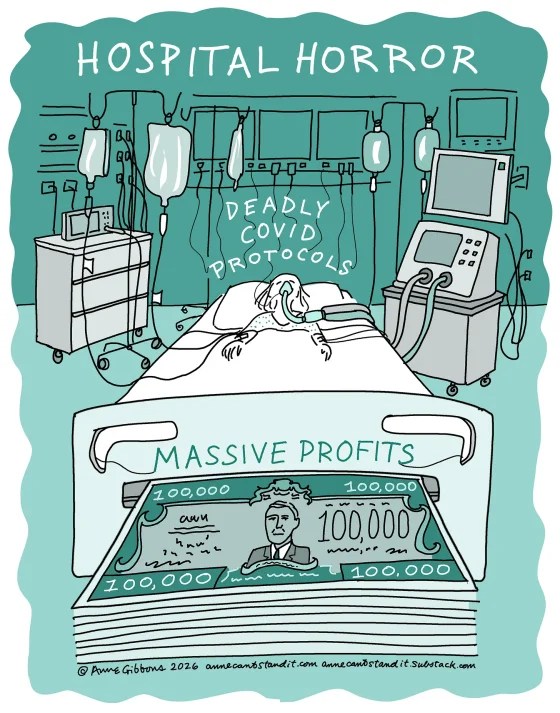
Hospital Horror
Documented in the film,“Bad Medicine”
Blog Roll
 Aletho News
- Poland and Bulgaria put brakes on Ukraine weapons funding
- Russia Reaffirms Its Support for Sovereignty, Territorial Integrity of Lebanon – Russian MFA
- Araghchi: Failure to punish aggressors against Iran endangers all nations
- Iran tells UN Security Council to stop reversing roles of ‘aggressor and victim’
- Disgraced neocons Feith & Libby: stop whining about ‘endless war’
- CENTCOM rejects Israeli claims of preparations for new Iran attacks
- Your Shopping Bag Runs Through Hormuz
- Armando Mema: Finland Used as New Frontline Against Russia
- Gestapo 2.0? Germany grants spy agencies sweeping new powers
- Franco-Palestinian group seeks court ban on Israeli real estate fair in Paris
- If Americans Knew
- An error has occurred; the feed is probably down. Try again later.
- No Tricks Zone
- New Study: Barents Sea Temperatures Were Warmer And Sea Ice Less Extensive In The 1700s Than Today
- German Authorities Start Initiative To Evaluate Public Register For Climate “Disinformation” Spreaders!
- Zonal Asymmetry of Temperature Change in the Antarctic Circumpolar Current
- New Study: The Net Fossil Fuel Contribution To Rising Atmospheric CO2 Has Been Zero For 500 Years
- Germany’s Green Energy Transition Becoming Increasingly Expensive…Another 6 Trillion Euros!
- Sudden Stratospheric Warming, Powerful El Niño Combination May Lead To Extreme Europe Cold, Energy Crisis!
- Two New Studies Find Thwaites Glacier Melt Cannot Be Driven By Human Activity Or A Warming Ocean
- E-Cars Reduce CO2 Emissions By Only 41% Compared To Internal Combustion Engine Vehicles
- Predictions Made By Renowned Climate Professor Over Past Decades Have Been Proven To Be Poor
- New Study Suggests Large Regions Of The Pacific Ocean Have Been Cooling For The Last 80 Years

