Report: Iran’s verification of US reversal to take 3 months at least
Press TV – April 11, 2021
A detailed report by the Iranian parliament’s Research Center says the verification of any US removal of sanctions on Tehran would require at least three months, emphasizing that the process would not be possible within hours or days.
“It is obvious that the real test of sanctions removal and fulfillment of measurable indices put forward by Iran is not possible in a matter of few hours or days, and would take at least 3 to 6 months. It is also necessary to verify within specified intervals (for example every six months) that the Iranian economy benefits from the removal of the sanctions,” the parliament’s Research Center (IPRC) said in its report.
The report said Article 6 of the Strategic Action Plan to Counter Sanctions, a law passed in December by Iranian legislators, stipulates several general criteria concerning the removal of the anti-Iran sanctions.
They include normalization of banking transactions, total removal of export barriers, unhindered sale of Iranian petroleum and oil derivatives, in addition to complete and rapid return of revenues from Iranian oil sales.
Last December, Iranian lawmakers overwhelmingly voted in favor of the action plan, which tasked the administration with suspending extra commitments under the 2015 nuclear deal, officially known as the Joint Comprehensive Plan of Action (JCPOA).
The Iranian parliament’s report went on to say that Article 7 of the Strategic Action Plan to Counter Sanctions obliges the government to report to the parliament on measures taken to counteract the US sanctions. Parliamentary commissions have been assigned to assess those measures.
The report noted that Washington has a number of economic, political and legal means which it could employ despite its possible removal of the sanctions in order to prevent the Iranian economy from benefiting from the dividends of the nuclear deal.
The United States, the report said, may prevent Iran from benefiting economically from the removal of the sanctions by trying to maintain the status quo, including limiting other countries’ cooperation with the Islamic Republic.
Research conducted by the IPRC has significant impact on the legislation passed by Iranian lawmakers.
On April 8, Leader of the Islamic Revolution Ayatollah Seyyed Ali Khamenei said verification means Iran should be able to sell its oil under normal conditions and receive its money.
The Biden administration has conceded that its predecessor’s so-called maximum pressure campaign has failed, but it has so far failed to take any practical steps to undo the wrongs.
Iran reports ‘NUCLEAR terrorism’ attack at Natanz facility – day after uranium enrichment began
RT | April 11, 2021
Iran’s Natanz nuclear facility was hit by a “terrorist” attack on Sunday, the country’s nuclear chief said, hours after reports of an electrical “accident” – and a day after new uranium enrichment centrifuges were started up.
Iran reserves the right to “take action” against those behind the incident at the Islamic Republic’s nuclear facility in Natanz, the head of the nation’s Atomic Energy Organization, Ali Akbar Salehi, told state TV on Sunday.
He called the incident at the plant an act of “nuclear terrorism.”
Iran “condemns this heinous act,” Salehi said, calling on the international community and the International Atomic Energy Agency (IAEA) in particular to “deal” with the act of “nuclear terrorism.”
The incident at the plant was earlier described as an “electricity problem” at a power grid in Natanz. “Fortunately, the incident did not cause any human injuries or pollution,” Behrouz Kamalvandi, the spokesman for Iran’s Atomic Energy Organization (AEOI), said earlier on Sunday.
A member of the Iranian parliament’s Energy Commission, Malek Shariati Niasar, also described the incident as “very suspicious,” and said he had assumed it might potentially be “sabotage and infiltration,” since it took place around the National Day of Nuclear Technology.
The event reportedly caused a blackout in the electricity distribution network of the Shahid Mostafa Ahmadi Roshan nuclear facility in Natanz. Further details have not been made public and the causes of the incident are currently “under investigation.”
Natanz is key to Iran’s uranium enrichment program, which Tehran says is strictly peaceful. In early February, it said that hundreds of advanced centrifuges with a higher capacity for uranium enrichment were installed there.
The events also took place just a day after Iranian President Hassan Rouhani announced that Iran has begun using new advanced IR-5 and IR-6 centrifuges to enrich uranium at the Natanz site.
Israeli media reported that the incident was likely caused by a cyberattack, while the Times of Israel has openly claimed, citing “Western intelligence sources,” that Mossad was “behind” the power cut in Natanz. There have been no official statements from Israeli officials so far, however.
Iran’s nuclear program was significantly limited under the 2015 nuclear deal, also known as the Joint Comprehensive Plan of Action (JCPOA). It included caps on uranium purity and the amount Iran is able to produce.
After then-US President Donald Trump unilaterally pulled the US out of the deal, despite the IAEA repeatedly confirming Iran’s compliance, Tehran said that it would no longer be meeting its obligations in full. Washington has since launched a “maximum pressure” campaign of sanctions on Iran.
Earlier this week, Iran’s Atomic Energy Organization said the nation had already produced 55 kilograms of 20%-enriched uranium this year, adding that it exceeded the enrichment capacity achieved before the JCPOA. All of Iran’s nuclear aspirations are “peaceful and civilian,” President Hassan Rouhani said on Saturday.
Recent talks in Vienna on the nuclear deal, which saw Washington and Tehran negotiating indirectly, have not resulted in any major breakthrough.
Sunbeams From Cucumbers: The View From the Khanate of Kaganstan
By Patrick Armstrong | Strategic Culture Foundation | April 10, 2021
We now have the complete set, so to speak. The Khans of the Khanate of Kaganstan have both spoken. The husband in A Superpower, Like It or Not and the wife in Pinning Down Putin: How a Confident America Should Deal With Russia; he, so to speak, is the theorist and she the practitioner. She, Victoria Nuland, is back in power as Under Secretary of State for Political Affairs. She is, of course, infamous for the leaked phonecall during the Maidan putsch. He, Robert Kagan, is one of the founders of the – what now has to be seen as ill-named – Project for the New American Century.
I mentioned Kagan’s piece in an earlier essay and found it remarkable for two things – the flat learning curve it displays and its atmosphere of desperation. PNAC was started in a time of optimism about American power: it was the hyperpower and nothing was impossible for it. Its role in the world should be, Kagan confidently wrote in 1996, “Benevolent global hegemony”. Washington should be the world HQ:
superpower, love it!
A quarter century later his message is:
superpower, endure it.
Quite a difference. Today “there is no escape from global responsibility… the task of maintaining a world order is unending and fraught with costs but preferable to the alternative”.
Kagan is at a loss to explain his difference in tone, or, more likely, he’s unaware of it. The reason, however, is quite easy to understand – failure. Washington followed the neocons’ advice into disaster: it’s been at war in Iraq and Afghanistan for two decades and it’s losing. The forever wars have come home: its economy is fading, its politics are shattered, its debt load is stunning, its social harmony is eroding. It’s not at the top of the hill any more. Brzezinski warned that a Russia-China alliance would be the greatest threat to U.S. predominance but thought it could be averted by skilful diplomacy. Well, as it turned out, U.S. actions (the word “diplomacy” is hardly applicable) drove Moscow and Beijing together and the strong domestic base that they all took for granted is crumbling. And, to a large extent, it has been the neocons, the wars they encouraged, the exceptionalism they displayed, the arrogance they embodied, that has created this state of affairs. Kagan should look in the mirror if he wants to know why Americans’ perception of superpower status changed from exultant opportunity to dreary duty.
With this background, we turn our attention to Nuland’s views about what should be done about Russia (“Putin’s Russia” of course – these people personalise everything). Her piece entertainingly marries stunning ignorance about Russia to stunning naïvety about prescriptions. There is no point in boring the reader by trudging through her nonsense, so I will just pick a few things.
- She believes that Russia’s infrastructure is crumbling away, the money squandered in corruption and weapons. Well, here are Russia’s new airports, new highways, new hospitals built just for COVID-19, new bridges. Here’s some YouTube links for more. Speaking of decaying infrastructure, she might better look to home: Decaying D.C. bridge reflects state of thousands of bridges nationwide. (Parenthetically – almost everything neocons say that isn’t outright fantasy, is projection).
- “This year, the coronavirus pandemic and the free fall in oil prices could result in a significant economic contraction”. Wrong again: Russia’s economy has done better (less badly) than the G7 average and the oil price war has hurt the U.S. more.
- “Russia currently has $150 billion in its National Wealth Fund and more than $550 billion overall in gold and foreign reserves.” And just how did this collapsing, kleptocratic, mismanaged and rusting-out economy manage to pile up so much moolah? She isn’t even aware that there’s a question here for her to answer.
Those three are enough – Victoria Nuland, for all that she pretends to superior knowledge, is absurdly unaware of the real situation in Russia. And it’s not as if it’s all that hidden, either: all the sources I mention above are in English and easy to find. In her world, Russia is guilty of everything Rachel Maddow says it is, including using cyberweapons against electrical grids.
What are her prescriptions? And, again, for someone who poses as an expert on Russia, they’re laughable. Her general theme is that Washington and its allies have let Putin get away with too much for too long and it’s time to take back control:
Washington and its allies have forgotten the statecraft that won the Cold War and continued to yield results for many years after. That strategy required consistent U.S. leadership at the presidential level, unity with democratic allies and partners, and a shared resolve to deter and roll back dangerous behavior by the Kremlin. It also included incentives for Moscow to cooperate and, at times, direct appeals to the Russian people about the benefits of a better relationship. Yet that approach has fallen into disuse, even as Russia’s threat to the liberal world has grown.
Whoever wins the U.S. presidential election this coming fall will—and should—try again with Putin. The first order of business, however, must be to mount a more unified and robust defense of U.S. and allied security interests wherever Moscow challenges them. From that position of strength, Washington and its allies can offer Moscow cooperation when it is possible. They should also resist Putin’s attempts to cut off his population from the outside world and speak directly to the Russian people about the benefits of working together and the price they have paid for Putin’s hard turn away from liberalism.
In short: reassert “leadership”, “resolve”, “position of strength”; the now familiar PNAC “strategy” that has failed for twenty-five years.
A few gems stick out.
- “No matter how hard Washington and its allies tried to persuade Moscow that NATO was a purely defensive alliance that posed no threat to Russia, it continued to serve Putin’s agenda to see Europe in zero-sum terms.” No comment necessary or possible: this is just as solipsistic as describing a Russian military exercise in Russia as “Russia’s Military Drills Near NATO Border Raise Fears of Aggression“.
- The U.S. and its allies should continue “maintaining robust defense budgets”. As if they weren’t already hugely outspending Moscow. She knows they aren’t keeping up because she goes on to say they must spend more to “protect against Russia’s new weapons systems”. Perhaps the West’s behaviour has something to do with this? Perhaps a lot of the Western spending is a waste? No, too much for her: she can sometimes glimpse reality but her exceptionalism prevents her from seeing it.
- “The one lesson Putin appears to have learned from the Cold War is that U.S. President Ronald Reagan successfully bankrupted the Soviet Union by forcing a nuclear arms race”. No, the lesson that Putin learned is that enough is enough and too much is too much. Brezhnev & Co didn’t get that. It’s the S. that will bankrupt itself chasing down “full-spectrum dominance”.
But the most ridiculous suggestion is surely this:
With appropriate security screening, the United States and others could permit visa-free travel for Russians between the ages of 16 and 22, allowing them to form their own opinions before their life paths are set. Western states should also consider doubling the number of government-supported educational programs at the college and graduate levels for Russians to study abroad and granting more flexible work visas to those who graduate.
She seems to think that its 1990-something. But, in the real world it’s 2021. Russians have been to the West; Russians know about it; they travel; all over the place. If Nuland ever left her bubble she would see that every European tourist spot has Russian-language guidebooks. I read through her screed with growing contempt but that really sealed it for me: Victoria Nuland hasn’t got a clue. The truth is, that the more Russians see of the West, the less impressed they are. Just ask Mariya Butina.
Again a bit of reality leaks through, from time to time, but she is incapable of reflection:
The first order of business is to restore the unity and confidence of U.S. alliances in Europe and Asia and end the fratricidal rhetoric, punitive trade policies, and unilateralism of recent years. The United States can set a global example for democratic renewal by investing in public health, innovation, infrastructure, green technologies, and job retraining while reducing barriers to trade.
Actually, doing all this is quite a big job; a very big job; too big a job in fact. And, even if Washington were to seriously start “investing in public health, innovation, infrastructure, green technologies, and job retraining while reducing barriers to trade”, remedying the numerous deficiencies would take many years.
Another thing that she dimly perceives is the gap between Russian and American weapons capabilities. Of course she can’t see any connection between that and U.S./NATO behaviour or Washington’s forever wars: it’s just another nasty thing done by that nasty man in the Kremlin. However, it is actually encouraging that she knows, however dimly; it creates the possibility that she understands that an actual war with Russia would be a bad idea. So that’s something, anyway.
* * *
However, enough consideration of this ill-informed, complacent, unrealistic sunbeam. If this were a comparative treatise on the American extraction of sunbeams from cucumbers as contrasted with the failed attempts of the so-called savants of Laputa it would be amusing, but the author of this footling effort is a few arm’s lengths away from The Nuclear Button. It is not a joke.
The fading Imperium Americanum is influenced by dangerous ignoramuses like Nuland and her husband. Everything they have suggested has failed: they start in complacency, add to it ignorance and learn nothing; but they’re still there. It’s very frightening.
* * *
Speaking of “Putin’s information stranglehold”, Nuland’s essay is available at INOSMI translated into Russian and so is her husband’s. Russians can read this stuff and form their own opinions. “Putin’s disinformation campaigns” are so clever that they use real information.
We won’t tell you that they’re dangerous idiots;
we’ll let them tell you that they’re dangerous idiots.
Authorities Have No Intention of Relinquishing Lockdown, Says Canadian Rights Activist
By Denis Bolotsky – Sputnik – 11.04.2021
On 1 April, Ontario Premier Doug Ford announced another 28-day province-wide COVID “shutdown”. Some observers claim that the officials need the restrictions in order to introduce vaccination passports.
According to human rights advocate Chris Sky, local government representatives and their medical advisers also don’t want to end the string of lockdowns because it will undermine the vaccination campaign.
Sputnik: Your province is currently in “shutdown mode”, with restrictions on retail and with a stay-at-home order in place. How are the people of Ontario reacting to all that?
Chris Sky: People like me saw the shutdown coming a mile away. I was on shows like Alex Jones’ “Infowars” and others, and I literally warned about the exact state of the shutdown. I even gave people the headline they were going to use. I told everyone they are going to pretend to open then they are going to tell you they are “pulling the emergency brake” because this shutdown has been planned well in advance.
The entire “plandemic” has been planned in advance, and the goal at the moment is to close down as many businesses as possible, so they can push universal basic income through parliament, and make Canadians accept it as a good thing.
And the second part of this whole lockdown is trying to make it so Canadians can’t leave their homes until they agree to be vaccinated so then they can get enough compliance with the vaccine, which they are not getting right now – nobody wants it, even with all the coercion going on.
They want to get enough compliance with the vaccine, so they can implement the vaccine passport like we’ve seen them do in Israel, like we’ve seen them do in New York State, and like we’ve seen them try to do in Texas, Florida, Kansas, Massachusetts, who have blocked it. And Canadians are still in denial that vaccine passports are even a reality. It’s insane.
Sputnik: But the disease is still there, isn’t it?
Chris Sky: No one is saying there is no disease, but that doesn’t mean that you need to submit to a forced vaccination multiple times a year for the rest of your life in order for the pretense to be free to live your life and to travel. That’s medical tyranny. And the vaccine passport has been the goal since the start of this. The vaccine passport has been on the books in European law from 2018 before the pandemic.
And the European internal documents show that they planned to have the vaccine passport implemented worldwide by 2021. And what are we seeing? Just like the documents stated, it’s 2021 and we’re seeing vaccine passports being implemented.
Sputnik: Recently you were placed on Canada’s no-fly list. Why did it happen?
Chris Sky: Well, I can only speculate, but it’s seems pretty obvious – because of my activism, and because of me trying to inform Canadians of their rights and their ability to “#JustSayNo”. That’s my international hashtagging campaign to get people aware, to ask questions, and not just blindly comply with rules that are against their own best interests.
It ended up with a no-fly list, but it was a build-up of things from that – I’ve been getting charged by the police, I’ve been getting fined by the police, I had the police show up at my house at one o’clock in the morning without a warrant, and basically trying to get at me with about 40 police using 20 cruisers to block off both sides of the street around my house. And they didn’t even have a warrant to be there. So, basically they are just trying to silence me.
What they did to me – putting me on the no-fly list, was nothing short of lawless, communist-style dictatorship, political targeting of dissident. Our no-fly list explicitly states that it cannot be used against political activists or people utilising their free speech rights. And that’s exactly what they did, and it’s 100 percent illegal.
Sputnik: But formally they could have placed you on the list just because you are refusing to wear a mask, couldn’t they?
Chris Sky: It has nothing to do with the mask. If they pretend that it has to do with the mask – they are lying even further. Just like they did when they showed up at my house with 40 policemen to try to arrest me at one in the morning for not wearing a mask. I don’t wear a mask anywhere I go.
Sputnik: During the past year Ontario officials frequently used numbers of COVID cases as a pretext to shut down the province. At least in 2020, these numbers were overblown, since even suicides of persons with coronavirus were counted as COVID deaths – a practice which Toronto Public Health refused to comment on when asked by Sputnik last week. Do you think there is a chance that the authorities will impose further restrictions in Ontario beyond the current 28-day-long shutdown?
Chris Sky: Of course. What do you think they’ve done so far? Before it was about “flatten the curve”. We heard it a million times a day. And that mean don’t “overwhelm our hospitals”. Well, now the gig is up and everybody knows that there is nobody in the hospitals. So, now they lie and talk about “cases” and “new variants”. And they just make anything they want up.
If they want to raise cases – just test an extra 10 or 20 thousand people that week and – surprise, you’re going to have more cases. So, it’s all complete bull. Anybody that knows anything knows that they have no intention of relinquishing the lockdown, no intention of cancelling the emergency. The moment they cancel the emergency, they can no longer force the vaccine on people, because it only has emergency approval. So, they have absolutely zero intention of ever relinquishing this emergency until their agenda is complete.
Lockdown-skeptic Rebel News vows to sue Montreal police after reporters detained at ‘illegal gathering’
RT | April 10, 2021
Reporters for the right-leaning news outlet Rebel News have posted videos showing employees being detained by police at an Airbnb location where they were working covering Covid-19 lockdown measures.
In one video posted to Twitter on Saturday, Rebel News reporter David Menzies can be seen having a tense exchange with police officers, which eventually leads to him being hauled away and detained.
Another reporter for the outlet, Keene Bexte, tweeted that he had also been arrested.
Rebel News co-founder Ezra Levant promised he would be suing the officers for their conduct and in another video can be seen taking down one officer’s name.
According to a statement from the Canadian outlet, police arrived at an Airbnb where Rebel News journalists were staying to cover anti-lockdown protests and Covid-19-related arrests and forced everyone out and conducted a “room to room” search.
“When we asked them what the ‘crime’ was, all they could come up with was that our staying in the hotel was an illegal ‘gathering,’ contrary to Quebec’s lockdown laws,” they said.
The outlet added that they were staying in a “registered, legal hotel rental on Airbnb” and fewer guests than the place was built for.
Levant claims the outlet’s unflattering reporting on Montreal police and their enforcement of Covid-19 restrictions is what prompted the visit and search of the houseboat being utilized by the reporters.
“This is their revenge,” he said. “Because we report on their misconduct.”
Levant is already fundraising to support his lawsuit against police, alleging the search and arrests were unjustified and claiming officers have repeatedly harassed Rebel News reporters in recent weeks and made bigoted remarks.
The reaction to the arrests has been mixed at best. While many have expressed shock at the police behavior and allegations from Rebel News on social media, others have simply used the opportunity to blast the highly-controversial outlet, which is often dismissed in mainstream media as a “far-right” enterprise pushing misinformation.
Montreal on Saturday saw a mass protest against the strict Covid-19 measures recently imposed by the authorities in Quebec. An 8pm curfew has been reintroduced in the city, while all the non-essential businesses and schools have been told to shut down until at least April 19. According to the independent news outlet Westphalian Times, the organizers of the protest march sought to highlight the “negative impacts restrictions in schools have on the well-being & development of children.”
Updates:
Russian-Ukrainian War: Tragedy For People, Chance For Elites
South Front – April 10, 2021
Against the backdrop of ongoing political provocations and bellicose rhetoric from all parties involved in the conflict in Eastern Ukraine, military escalation is constantly growing. Local forces, as well as the OSCE observers, report about more and more ceasefire violations in the Donetsk and Luhansk People’s Republics. There are daily statements on casualties on both sides of the conflict among the military and local civilians.
Now, when all the global media are closely following the situation in the eastern regions of Ukraine, the international community is wondering whether Donbass will become the point of the next military conflict, and what its scale will be. The main question is “Cui Prodest”?
The answer is unambiguous: the administration of Ukrainian President is a real stakeholder in the armed conflict in eastern Ukraine. In the current Ukrainian reality, there are plenty of circumstances that determine the pattern of conduct of Volodimir Zelensky.
First, the current economic situation in Ukraine is disastrous. The Ukrainian state is on the way to lose the ability to fulfill its social obligations. According to the data for 2020, its GDP in real terms suffered about 4% drop. According to the IMF, this drop will be at least 7%. If for the United States, China or Russia, a 4% drop in GDP is a big problem, for Ukraine it is almost a disaster, as GDP indicators were low even before the crisis.
Secondly, the economic situation in Ukraine was aggravated by the coronacrisis. The number of those contaminated by COVID-19 per day there is one of the biggest among the European countries, and even in the whole world. The death rate is also disproportionately high. The country’s economy is suffering, as most regions are still under lockdown, and since April 5, restrictions have been tightened again.
The fall in national budget income was caused by a complex of reasons, including pure management of national economy and the extremely high level of corruption that caused the destruction of the industrial complex, drop in already low per capita income, accompanied by a decreasing revenue gained from gas and cargo transit from East to West.
Third, the Zelensky administration is now facing a rapid decrease in people’s support. The national disappointment in his political program is caused by the rejection of his campaign promises to stop the war in Donbass.
Fourthly, it is increasingly difficult for NATO allies to fuel Kiev’s anti-Russian hysteria in the absence of any actual changes of the issue. The military conflict in the Eastern Ukraine is already 7 years old, and the only alarming statements no longer contribute to the increase in financial support from the US and its allies.
The last but not least is a political request from a part of the American elite, who are interested in various forms of pressuring Russia. They support blocking of the Nord Stream 2 project by any means; destruction of bilateral relations between Russia and leading European countries, up to war outbreak along its borders.
On the other hand, such a policy of the United States does not fully coincide with the national interests of leading European countries. However, new war in Eastern Ukraine would define Russian status as enemy for years while the US will strengthen its weight in European security.
The position of the Zelensky administration and the interests of the United States represent sufficient set of reasons to outbreak war in Eastern Ukraine.
Indeed, official Kiev does not need to care about the actual result of the conflict, but its very existence.
There are only 3 scenarios of the military conflict in Eastern Ukraine.
- The Ukrainian army wholly or partially occupies the territory of the DLPR.
- The forces of both sides remain in their current positions.
- The DLPR forces, with Russian support, advance on the Ukrainian territory for several dozens of miles.
There is almost a zero probability that Ukraine will suffer a crushing defeat and the DLPR forces will occupy the territory to the Dnieper River. Russia now has neither the strength nor the ability to gain control over such a vast territory, and the collective West, in its turn, would not let this happen.
If any of the above scenarios are implemented, Zelensky and his supporters among the US elites will benefit.
For many years, the US and European media have shaped Russia as the aggressor, the enemy of democratic values and the authoritarian tyrannical regime that must be contained. The idea of an external military threat, which being sequentially built up by the West, serves as a pretext for its increasing military funding both in defense industry and army itself amid inevitable unification under the US leadership.
In its turn, Ukraine, positioning itself as the Eastern European Shield against “Asian Barbarians”, receives significant and steadily growing support from NATO countries, gaining momentum to development and further nazi-like ideology originally rooted in Western Ukraine.
Unleashing the war, Zelensky has a chance to reclaim his status as the national leader. In case of the conquest of the self-proclaimed republics, or the preservation of the current troops’ positions, he will become a hero who saved Ukraine from “evil Russians”.
Even after having lost the war, he would claim that the entire country was saved with little blood and only a small piece of land that was temporary lost, taking on the role of a good strategist who defended the sovereignty in the furious fighting shoulder to shoulder with his NATO allies.
Zelensky’s policy can only fail if Russia captures half of Ukraine, which de facto is not possible.
Thus, almost whatever may happen during the conflict, Ukraine can be sure that it will receive stable financial flows from its Western allies for years ahead. Having become a “real” Eastern Shield of Europe, Ukraine may finally get the coveted NATO membership.
Finally yet importantly – the hot military conflict will undoubtedly divert public attention from the economic problems inside the country.
Unleashing a war in Donbass will allow Zelensky to solve his main problems, albeit at the cost of lives of thousands of Ukrainians.
Today, many analysts assure that there will not be a full-scale war, since Ukraine is weak, and Zelensky must assess the country’s military strength in front of the Russian power. Let’s hope this is the case, while remembering who the beneficiary of the conflict is.
In its turn, the United States, at the cost of Ukrainian soldiers’ lives, can resolve a good part of its problems in the European region, while Russia seems to lose strategically in any of these war scenarios.
Definitely, the war in Ukraine will lead to the closure of the Nord Stream 2 project, which is already at the final stage of construction. Key contacts between Russia and NATO countries will be frozen, no more significant bilateral cooperation in the economy will be possible.
A new war near the Russian borders that involves national armed forces will have an important impact on the internal situation in the country. It is not clear to what extent the Russian society, which has suffered the break of economic relations with Western countries and numerous sanctions, is ready to support the struggle for Donbass.
Argentine Government to Launch Legal Action Against Ex-President Over IMF Loan
Sputnik – 10.04.2021
Argentina’s President Alberto Fernandez issued a decree instructing the country’s special legal body to act as a plaintiff on behalf of the state in a case against his predecessor Mauricio Macri, stemmed from his decision to take a loan from the International Monetary Fund (IMF) in the amount of $50 billion.
“Prosecutors representing the state as the claimant are ordered to pursue the case, ‘Mauricio Macri and others, fraud against state bodies’ … and to facilitate the advancement of the criminal process in order to determine those responsible for the crime,” the decree says.
The document further states that the case is related to Marci’s decision to take a loan from the IMF in the amount of $50 billion in 2018. The current government has repeatedly spoken about the difficulties surrounding paying off the debt and began negotiations with the IMF on a new assistance program.
In addition, lawyers were instructed to initiate actions leading to compensation for possible losses incurred as a result of the actions of the previous authorities.
The decree was signed by the country’s current president, prime minister, and ministers of economy and justice.
Featured Video
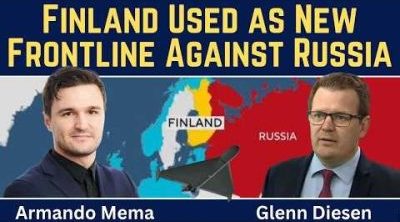
Armando Mema: Finland Used as New Frontline Against Russia
or go to
Aletho News Archives – Video-Images
New Documentary
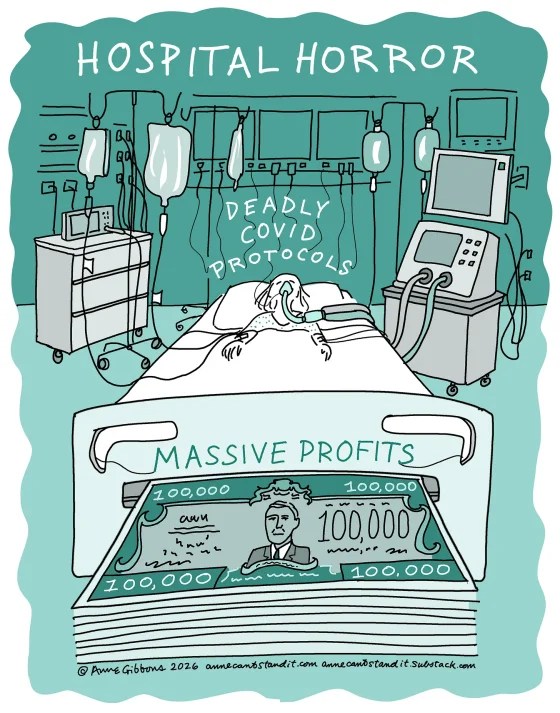
Hospital Horror
Documented in the film,“Bad Medicine”
Blog Roll
 Aletho News
- Poland and Bulgaria put brakes on Ukraine weapons funding
- Russia Reaffirms Its Support for Sovereignty, Territorial Integrity of Lebanon – Russian MFA
- Araghchi: Failure to punish aggressors against Iran endangers all nations
- Iran tells UN Security Council to stop reversing roles of ‘aggressor and victim’
- Disgraced neocons Feith & Libby: stop whining about ‘endless war’
- CENTCOM rejects Israeli claims of preparations for new Iran attacks
- Your Shopping Bag Runs Through Hormuz
- Armando Mema: Finland Used as New Frontline Against Russia
- Gestapo 2.0? Germany grants spy agencies sweeping new powers
- Franco-Palestinian group seeks court ban on Israeli real estate fair in Paris
- If Americans Knew
- An error has occurred; the feed is probably down. Try again later.
- No Tricks Zone
- New Study: Barents Sea Temperatures Were Warmer And Sea Ice Less Extensive In The 1700s Than Today
- German Authorities Start Initiative To Evaluate Public Register For Climate “Disinformation” Spreaders!
- Zonal Asymmetry of Temperature Change in the Antarctic Circumpolar Current
- New Study: The Net Fossil Fuel Contribution To Rising Atmospheric CO2 Has Been Zero For 500 Years
- Germany’s Green Energy Transition Becoming Increasingly Expensive…Another 6 Trillion Euros!
- Sudden Stratospheric Warming, Powerful El Niño Combination May Lead To Extreme Europe Cold, Energy Crisis!
- Two New Studies Find Thwaites Glacier Melt Cannot Be Driven By Human Activity Or A Warming Ocean
- E-Cars Reduce CO2 Emissions By Only 41% Compared To Internal Combustion Engine Vehicles
- Predictions Made By Renowned Climate Professor Over Past Decades Have Been Proven To Be Poor
- New Study Suggests Large Regions Of The Pacific Ocean Have Been Cooling For The Last 80 Years

