‘We are in a truly Orwellian culture’: Amazon yanks Covid-19 skeptic’s book for ominously vague ’content violations’
By Helen Buyniski | RT | October 17, 2020
Amazon has joined its Big Tech fellows in ramping up censorship of any criticism of the “official” Covid-19 narrative, deploying obfuscatory excuses to justify removing journalist James Perloff’s latest book, he told RT.
After selling a respectable 3,500 copies over the last two months, Perloff’s book on the coronavirus pandemic and its weaponization by world governments, ‘Covid-19 and the Agendas to Come: Red-Pilled,’ was suddenly “banned” by Amazon.com, the writer revealed on Twitter on Thursday.
Perloff spoke to RT on Friday about the platform’s ominous act of censorship and how it seemed to validate his book’s conclusions, expressing concern that “the censorship on Covid has been getting progressively stronger, even as the death rate from Covid has been getting progressively lower.”
“We are in a truly Orwellian culture.”
The first sign of trouble came on Thursday when Amazon requested that he “clarify [his] rights to the book” – something he had already done upon putting it up for sale back in August. But before he could finish gathering the material required to prove once again that he owned the global rights to his own work, he received another email from Amazon, this time claiming they had removed his book “during a quality assurance review of [his] catalog” because it “violated content guidelines.”
While Perloff said he “asked them to specify what guidelines [he] had violated,” their reply merely restated that the “subject matter” of his book had been found to be “in violation of our content guidelines,” declaring the e-commerce behemoth “will not be offering this title for sale on Amazon.”
“We reserve the right to determine whether content provides a poor customer experience and remove the content from sale.”
With five other books already listed on the platform, Perloff has communicated with Amazon extensively over the years, but something was off about these latest messages. In previous communications, “they would usually at least give a first name,” he said. “This time I was dealing with persons – or a person – who was cowering behind total anonymity.”
The book traces how the Covid-19 pandemic has been used by governments around the world to force draconian social control measures upon a terrified populace, evaluates several theories regarding the virus’ origin, and offers some projections about what might lie ahead for humanity – including how populations might work together to avoid some of the most totalitarian outcomes.
Perloff insists the information within was meticulously sourced from medical professionals, academic publications, and frontline physicians, with hundreds of endnotes referencing scholarly journals and other unimpeachable sources. “There is nothing I say in the book that isn’t documented,” he said, pointing out that several other coronavirus dissenters are selling their books on the platform without incident.
The political analyst is far from the first to run afoul of Amazon’s increasingly stringent censorship. But while he is familiar with the trials and tribulations of former New York Times reporter Alex Berenson, who found his own corona-skeptic tome temporarily squelched until billionaire Elon Musk drew attention to the censorship on social media, Perloff cynically lamented that he himself lacks “friends among the rich and famous” to rescue his book from Amazon’s growing digital bonfire.
Ultimately, however, he has faith in the Streisand effect, in which heavy-handed censorship efforts backfire and draw attention to the content they seek to suppress. “If you say to people, ‘Don’t read this book,’ their instinct is to go and read it.”
Helen Buyniski is an American journalist and political commentator at RT. Follow her on Twitter @velocirapture23
An Environmental Nakba: The Palestinian Environment Under Israeli Colonization

Artwork by Andrea Settimo
By Mazin B. Qumsiyeh and Mohammed A. Abusarhan | Volume 23, number 1, Science Under Occupation
Prior to the 1948 war and even the Zionist Congress of 1897, Palestine had some thirteen hundred villages and towns, each with a small and manageable population living sustainably with nature. The land was owned or worked by the Palestinian people, who were 85 percent Muslim, 9.2 percent Christian, and 5.3 percent Jewish.1 This structure changed radically when mostly European Jews mobilized for massive migration to Palestine and began to assume colonial control over the land. In its long recorded history, Palestine has indeed undergone significant environmental and demographic changes, but it is really only in the past century that these changes took on a colonial dimension. The best-known of these changes is the forcible removal of the indigenous population, which reached its peak between 1948 and 1950. During those years, five hundred villages and towns were destroyed by Zionist militias, resulting in the largest wave of refugees after the Second World War.2 But the environmental dimensions of the catastrophe, or Nakba, is little talked about.3 In 1967 Israel occupied the remaining 22 percent of historic Palestine, namely Gaza and the West Bank, and built settlements throughout these occupied territories in contravention of to international law (the Fourth Geneva Convention).4 These dramatic transformations were detrimental to the people and nature of Palestine. Here, we focus on the environment and sustainability in Palestine, an often overlooked casualty of the colonial occupation.
Colonial Impact on the Environment
Once Israel was declared a Jewish state in May 1948, native trees (such as oaks, carobs, and hawthorns) and agricultural crops (olives, figs, and almonds) were systematically uprooted and replaced by European pine trees. These planted pines reduced biodiversity and harmed the local environment.5 Pines shed leaves that are acidic and prevent the growth of underbrush plants. These trees are also very susceptible to fire because of their resins. Indeed, fires are now a common occurrence in the areas in which they were planted. Trees, however, were not the only targets of Israel’s colonial practices. Natural resources, primarily water aquifers, have also been confiscated from the Palestinians. This often happened by deliberately building Israeli colonies on hilltops to ensure effective access to these resources and to maintain surveillance over the Palestinians.6 Environmental sustainability was never a priority for Israel, whose practices detrimentally affected the landscape, resulting in the destruction of diverse habitats and water runoff.7
The occupation of the West Bank and Gaza in 1967 opened opportunities for Israeli industries. Many of the highest polluting companies moved to the West Bank and were provided with tax incentives to do so.8 There the companies only faced the opposition of the Palestinians who had no way to stop them. For example, pesticide and fertilizer manufacturer Geshuri, which faced significant court setbacks in its original plant in Kfar Saba, was moved to an area adjacent to Tulkarm inside the West Bank in 1987. Significant pollution caused by Geshuri and other companies in this area has damaged citrus trees and vineyards.9 Moreover, research on genotoxicity in the Occupied Territories shows the significant impact of the Barkan industrial settlement on the Palestinians of Burqeen village.10 As DNA and chromosomes are damaged, there are increasing cases of miscarriage, cancer, and congenital birth defects. Air and water pollution has also caused diseases ranging from respiratory illness to gastrointestinal failures. Other health-related problems have resulted from the Israeli practice of sending trash, including electronic debris, across the Green Line.11 This debris is often recycled by destitute Palestinians in environmentally harmful ways, such as using fire to remove plastic from useful metals. This practice releases substances that cause serious ailments, including cancer and lung diseases.
Israel has also built an extensive network of roads and other infrastructure serving settlers. Trees and any buildings within seventy-five meters of these roads are bulldozed and declared closed military zones to the Palestinians. The total area used in the West Bank for settler roads was 51.2 km2 in 2000 and has doubled since. Added to the 150.5 km2 of built settlement-colonies, this is a huge area that was previously used by Palestinians for agriculture, pasture, or leisure.12 The disparity between settlers and natives in land control and standard of living is compounded by disparity in access to other natural resources, especially water.13 Israeli officials have deliberately ignored facts and selectively presented falsified or inaccurate data to serve their political interests in the Jordan River while catastrophically impacting Palestinian access to water. For example, 91 percent of the total water of the West Bank is expropriated for Israeli settler use.14
The Israeli occupation has resulted in considerable loss of biodiversity in the Palestinian territories. This began many years ago when Israel diverted the waters of the Jordan Valley, and when trees surrounding destroyed Palestinian villages were replaced by monoculture crops. More recently the apartheid wall in the West Bank obstructs human activities and animal movement, causing a loss of both human and animal biodiversity.15 Humans and nature have been intertwined in Palestine for thousands of years, and the continuing loss of biodiversity irreversibly damages Palestine’s cultural and natural heritage, threatens endangered species, and harms agriculture and environmental sustainability.16
There are many other practices through which the occupation has undermined sustainable development and protection of the environment. These include refusal to issue building permits in most of the West Bank and destruction of any “unauthorized” structures, even including cisterns and solar panels.17 Another example is the policy of Israel to absorb the Palestinian tourism sector, including ecotourism.18
One of the major threats to the Palestinian landscape is the confiscation of land for settlements, sometimes with temporary false excuses of preventing damage to nature.19 For example, the Palestinian village of Ras Imweis and six adjacent areas were initially confiscated under such an excuse then turned into the settlement of Nahal Shilo. In many other instances, the Israeli occupation authorities prevented Palestinian sustainable development by claiming certain stretches of land as “green areas,” then turning them into Jewish settlements within the span of two to three years. Such exploitation was also obvious in the Bethlehem district, where Abu Ghuneim Mountain, one of the largest forests in the Bethlehem district, was turned into the Har Homa settlement in 1997. This is how Israel is “green-washing” the occupation.20
International Failure
Israel’s colonial settlements have had a devastating impact on the Palestinian environment and on indigenous Palestinian lives. This raises significant questions about the possibility of sustainable development under occupation.21 Indeed, there are ample grounds, backed by solid scientific and legal research, to bring claims of environmental injustice to local, national, and international forums.
Article 49 of the Fourth Geneva Convention (which Israel ratified) states that “the Occupying Power shall not deport or transfer parts of its own civilian population into the territory it occupies,” adding that life in military occupied areas must be allowed to proceed as normally as possible. UN Security Council Resolution 465 of 1980 reads in part that “all measures taken by Israel to change the physical character, demographic composition, institutional structure or status of the Palestinian and other Arab territories occupied since 1967, including Jerusalem, or any part thereof have no legal validity and that Israel’s policy and practices of settling parts of its population and new immigrants in those territories constitute a flagrant violation of the Fourth Geneva Convention.”
Israel has largely ignored international law. This impunity is enabled by the international community. For example, a 2003 United Nations Environment Program report identified key effects of the occupation on the environment and made over one hundred recommendations but failed to prioritize them or set target dates. This failure of the international legal system to hold Israel accountable is not just related to environmental issues, but extends across many other areas including Israel’s abuse of prisoners and destruction of civilian life.22 Israel’s aggressive political lobby has also influenced many governments and shapes decisions at the UN, where the United States has veto power. [Mazin B. Qumsiyeh, Sharing the Land of Canaan: Human Rights and the Israeli-Palestinian Struggle (London: Pluto Press, 2004).] The international failure to hold Israel accountable has left the issue—like in South Africa under apartheid—up to organizers and activists on the ground.23
Grassroots Organizing for Environmental Justice
In situations where international law fails, civil society often intervenes, as we have seen in the movements for boycott, divestment, and sanctions (BDS) in South Africa and in Palestine against the respective apartheid regimes. The BDS movement and other forms of civil or popular resistance do make a difference.24 That we have not yet reached the post-apartheid era like South Africa is due to the fact that the settler-colonial occupation of Palestine has been strengthened by international complicity and by agreements, such as the Balfour Declaration and resolutions by the League of Nations and the UN, that exclude the Palestinians. The international community has long abrogated its responsibilities and has thus given Israel a green light to engage in significant violations of human rights (including environmental rights). Civil society must increase pressure on international leaders to assume their responsibility to return dignity and sovereignty to the Palestinian people. International bodies must enforce law and implement sanctions against Israel to rectify the rampant environmental injustices that disproportionately harm the indigenous Palestinian population. Palestinians have no recourse to domestic laws since what laws are available are those of an apartheid settler-colonial state.25 There is recent scholarly and activist interest in using international law to buttress environmental justice claims, especially in developing countries, but as Noura Erekat pointed out, this is undermined by the imbalance of power and influence of the Zionist movement around the world.26 Although we are witnessing the growth of the BDS movement, we need much more pressure and mobilization to enforce recognition of Palestinian rights.27
Nevertheless, a significant movement for environmental justice and sustainability is growing even under the very difficult conditions of occupation and colonization. People are working at the grassroots level to build popular institutions that enhance and promote sustainable natural and human communities in the context of a larger anti-colonial struggle.28 Educating new generations of Palestinians in their culture and history can also help address some of the challenges Palestinians are facing.29 Because colonizers work to separate the colonized from their land and destroy their culture and history, strengthening the connection between the indigenous people and their land will help new generations understand the value of nature beyond the exploitative framework imposed by colonialism.30 Environmental struggles are an integral part of the struggle for freedom and justice in Palestine as elsewhere.
Acknowledgement: We thank the Darwin Initiative (UKaid) and the European Union for their support of some of our work at PMNH/PIBS/Bethlehem University.
About the Authors
Mazin B. Qumsiyeh is a professor and researcher at Bethlehem and Birzeit Universities. He previously served on the faculties of the University of Tennessee, Duke University, and Yale University. He and his wife returned to Palestine in 2008 to start a number of institutions and projects, including the Palestine Institute for Biodiversity and Sustainability (PIBS) at Bethlehem University. He, his wife, and volunteers and staff at PIBS have “joyful participation in the sorrows of this world” and make a difference for sustainability of nature and human communities.
Mohammed A. Abusarhan is a masters student in biotechnology at Bethlehem University and Palestine Polytechnic University. He earned a degree in Biology from Bethlehem University. Since 2017, he has worked at the Palestine Museum of Natural History as a Museum Biologist conducting animal collecting, taxidermy, and identification. His research interests are focused on conservation, museum digitization, biodiversity databases, and bat echolocation. He has published several research articles and spent the summer of 2019 in Germany in a prestigious laboratory as an exchange researcher.
References
- “Demographics of Historic Palestine prior to 1948,” Canadians for Justice and Peace in the Middle East CJPME, July, 2004, https://www.cjpme.org/fs_007.
- Ilan Pappe, The Ethnic Cleansing of Palestine (Oxford: Oneworld Publication, 2006).
- Mazin B. Qumsiyeh, “The Coming Environmental Nakba” in The Third Palestinian Environmental Awareness and Education Conference. EEC (Bethlehem, 2013), 57–59.
- Nur Masalha, Expulsion of the Palestinians: The Concept of “Transfer” in Zionist Political Thought, 1882–1948 (Institute for Palestine Studies, 1992). See also Mazin B. Qumsiyeh, Sharing the Land of Canaan: Human Rights and the Israeli-Palestinian Struggle (London: Pluto Press, 2004).
- Pappe, The Ethnic Cleansing of Palestine.
- Meron Benvenisti, Sacred Landscape: The Buried History of the Holy Land since 1948 (Berkeley: University of California Press, 2002). See also Eyal Weizman, Hollow Land: Israel’s Architecture of Occupation (Brooklyn: Verso Books, 2012).
- ARIJ, Status of Environment in OPT (Applied Research Institute – Jerusalem, 2015).
- United Nations Conference on Trade and Development, “The Economic Costs of the Israeli Occupation of the Palestine People: The Unrealized Oil and Gas Potential,” United Nations, 2019 Report.
- ARIJ, Status of Environment in OPT.
- Khloud M. Hammad and Mazin B. Qumsiyeh, “Genotoxic Effects of Israeli Industrial Pollutants on Residents of Bruqeen Village (Salfit District, Palestine),” International Journal of Environmental Studies 70, no. 4 (2013): 655–62.
- Nadia Khlaif and Mazin B. Qumsiyeh, “Genotoxicity of Recycling Electronic Waste in Idhna, Hebron District, Palestine,” International Journal of Environmental Studies 74, no. 1 (2017): 66–74.
- ARIJ, Status of Environment in OPT.
- Neve Gordon, “From Colonization to Separation: Exploring the Structure of Israel’s Occupation,” Third World Quarterly 29, no. 1 (2008): 25–44. See also Weizman, Hollow Land: Israel’s Architecture of Occupation.
- Clemens Messerschmid and Jan Selby, “Misrepresenting the Jordan River Basin,” Water Alternatives 8, no. 2 (2015): 258–79.
- Qumsiyeh, Mazin B. Unpublished data.
- Alon Tal, Pollution in a promised land: An environmental history of Israel (Berkeley, Calif:Univ. of California Press, 2002); International Union for Conservation of Nature – Regional Office for West Asia (IUCN – ROWA), State of Palestine Fifth National Report to the Convention on Biodiversity. Amman, Jordan 2015; Abdallah T, Swaileh K. “Effects of the Israeli Segregation Wall on biodiversity and environmental sustainable development in the West Bank, Palestine,” International Journal of Environmental Studies 68: 543-555 (2011).
- MOPAD, “State of Palestine National Development Plan 2014-2016’” (Ministry of Planning and Administrative Development, 2014).
- Talia Shay, “The Ethnocracy of the Palestinian Urban Space and the Indigenous Approach: Praxis and Theory,” Archaeologies 12 (2016): 73–90. See also Rami Isaac, C. Michael Hall, and Freya Higgins-Desbiolles, eds., The Politics and Power of Tourism in Palestine (London: Routledge, 2015).
- Dror Etkes and Hagit Ofran, “Construction of Settlements and Outposts on Nature Reserves in West Bank,” Peace Now, February 13, 2007, https://peacenow.org.il/en/nature-reserve.
- Sara Hughes, “‘Greenwashing’ the Occupation: The Role of Environmental Governance and the Discourse of Sustainability in Sustaining the Israeli Occupation of Palestine,” in The Annual Meeting of the American Association of Geographers, 2018.
- Jad Isaac, Khaldoun Rishmawi, and Abeer Safar, “The Impact of Israel’s Unilateral Actions on the Palestinian Environment,” (Applied Research Institute-Jerusalem, 2004).
- Susan M Akram et al., eds., International Law and the Israeli-Palestinian Conflict: A Rights-Based Approach to Middle East Peace (London: Routledge, 2010). See also Noura Erakat, Justice for Some: Law and the Question of Palestine (Stanford, California: Stanford University Press, 2019).
- Mazin B. Qumsiyeh, Popular Resistance in Palestine: A History of Hope and Empowerment (London: Pluto Press, 2012).
- Qumsiyeh, Popular Resistance in Palestine.
- “Environmental Injustice in Occupied Palestinian Territory: Problems and Prospects,” Al-Haq, August 4, 2015.
- Ruchi Anand, International Environmental Justice: A North-South Dimension (London: Routledge, 2017); Erakat, Justice for Some.
- Mazin B. Qumsiyeh, “A Critical and Historical Assessment of Boycott, Divestment, and Sanctions (BDS) in Palestine,” in Conflict Transformation and the Palestinians (Routledge, 2016), 114–29.
- Mazin B. Qumsiyeh, “Nature Museums and Botanical Gardens for Environmental Conservation in Developing Countries” BioScience 67, no. 7 (2017): 589–90. See also Mazin B. Qumsiyeh et al., “Role of Museums and Botanical Gardens in Ecosystem Services in Developing Countries: Case Study and Outlook,” International Journal of Environmental Studies 74, no. 2 (2017): 340–50, https://doi.org/10.1080/00207233.2017.1284383.
- Mazin. B. Qumsiyeh, “Ethnoecology of Palestine: Preserving Culture Heritage of Palestine’s Natural History,” presented at the 4th Hyperheritage International Seminar Proceedings (International Conference): Smart Heritage, 2018.
- Michael R Dove, “Indigenous People and Environmental Politics,” The Annual Review of Anthropology, 35 (2006): 191–208.
Facebook COO pledges $2.5 mill to Israel advocacy group, brushing off Palestinian complaints of censorship
If Americans Knew | October 17, 2020
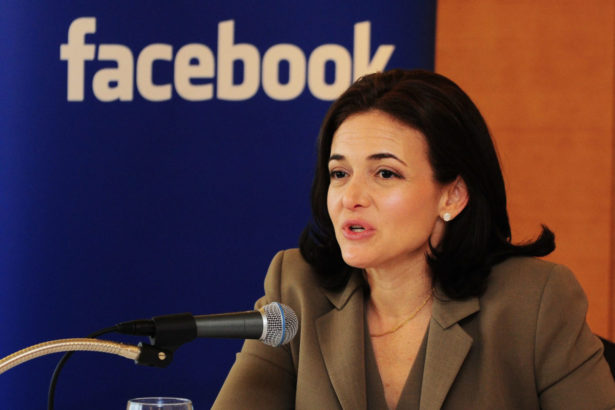
In the midst of a campaign by Palestinian journalists accusing Facebook of suppressing their content, Facebook’s Chief Operating Officer, Sheryl Sandberg, has pledged $2.5 million to the ADL, an organization that devotes much of its work to Israel advocacy.
We’ll first look at the complaints about censorship, then at the ADL, and then at Sandberg.
The current campaign is the latest in a long line of complaints that Facebook discriminates against Palestinian users.
A 2016 Fortune magazine article reported accusations that a Facebook agreement with the Israeli government had led to the closing of some Palestinian accounts.
A 2017 article in The Intercept reported: “Facebook has been on a censorship rampage against Palestinian activists who protest the decades-long, illegal Israeli occupation, all directed and determined by Israeli officials. Indeed, Israeli officials have been publicly boasting about how obedient Facebook is when it comes to Israeli censorship orders.”
In 2018 there were reports that Facebook had closed 500 Facebook pages of Palestinian activists, journalists and bloggers.
This month a campaign called “Facebook Blocks Palestine” was launched by Palestinian journalists and activists saying that Facebook restrictions against Palestinian pages had “dramatically increased,” including deleting pages and accounts, removing posts, banning comments sections, restricting pages, blocking live streaming, etc.

Mohammad Kareem’s Facebook page was suddenly taken down. Kareem tweeted: “Facebook has blocked my account after 8 years of using it. This is like deleting a history of someone for a weird reason. ‘Something you posted’! What is it?”
An organizer explained that one of the campaign’s goal is to expose the “double-standard policy of Facebook management” in dealing with Israeli and Palestinian content.
A day or two later Facebook deleted yet another Palestinian page: the Arabic account of the Palestinian Information Centre (PIC), a news organization founded in 1997 that had almost five million Facebook followers. According to PIC, Facebook provided no prior warning or justification for its action.

Photograph posted by Palestine Information Center, Aug. 31, 2019
Over the years it appears that Facebook has tried to develop strategies to make fair, rational decisions about which content to remove and which accounts to take down. These have included using content reviewers, instituting a review process, and writing algorithms to catch “hate speech” and “incitement.”
At the heart of of all this, however, are the human beings who review the content, who write the algorithms, and who are in charge of the process.
It is, therefore, problematic when Facebook executives work with the Israeli government to decide what content to remove, when Facebook collaborates with an Israel advocacy organization to “combat cyberhate,” and when top Facebook executives such as Mark Zuckerberg are connected to the top rung of the Israeli government.
And it is problematic when the number two person at Facebook – especially during a time period when Facebook is specifically being charged with anti-Palestinian, pro-Israeli bias – makes a large, very public donation to an organization devoted to advocating for Israel.
The ADL and Israel
On Oct. 16th Facebook COO Sheryl Sandberg announced (on Facebook, of course) that she was making “a personal gift” to the ADL. Sandberg is considered one of the most powerful figures in the tech world.
While many people consider the ADL a benign, almost official organization–and news media virtually always repeat its claims without scrutiny–it is a highly political, private organization with no public accountability and with very clear agendas.
One of its main agendas is being a “a strong voice for Israel.”
While the ADL was allegedly formed to oppose discrimination, it actively supports a nation based on discrimination. Israel was established in 1948, in the words of an Israeli historian, through a war of ethnic cleansing, and continues this process today.
Numerous groups and individuals have documented Israel’s current systemic discrimination, its long record of human rights violations, as well as its violations of U.S. laws and damage to the U.S.
Nevertheless, the ADL devotes much of its effort to Israel, advocating on its behalf with American elected officials, U.S. media and on American campuses, including producing a guide about how to block campus events aimed at informing students about the Palestinian situation.
Screen shot of ADL page.
And while the ADL claims to oppose defamation, it often attacks groups and individuals its dislikes, particularly those who provide information on Israel-Palestine that the ADL doesn’t wish Americans to know.
While the ADL’s statements may at times constitute outright defamation, almost no one is able to take on the organization, given its assets of $145 million+. Rare exceptions were 1993 lawsuits over the ADL’s vast spying operation on Americans, which had gone on for decades. Eventually, the ADL was forced to settle the suits, paying out unknown sums of money. (In the interest of full disclosure, I’m among the ADL’s more recent targets, the organization having published false statements about me that it has refused to retract.)
In 2017 the ADL collaborated with an Israeli think tank to produce a 2017 strategy paper on how to counter the growing public awareness of Israeli violations of human rights. The Israeli Minister of Strategic Affairs, Brigadier General Sima Vaknin-Gil, said of the ADL-coauthored paper: “The correlation between the Ministry’s mode of operation and what comes out of this document is very high, and has already proven effective… ”
Among its recommendations, the 32-page document called for “industry engagement with corporations such as Google, Facebook, and Twitter.”
That same year the ADL launched the “Center for Technology and Society,” whose advisory board contains a number of tech executives.
One is Facebook Vice President Guy Rosen, who studied in Israel and is a member of the TechAviv Community LinkedIn Group, formed “to help Israeli startup founders and their companies succeed by harnessing the collective energy, knowledge, and networks of the global Israeli startup community.”
ADL’s “educational materials”
The ADL considers many criticisms of Israel to be “anti-Semitism,” using a definition formulated by an Israeli minister. The materials it provides for schools are highly selective, often have clear agendas, and are glaring in the ADL’s “PEP” stance (Progressive Except Palestine). For example:
• There is a high school unit on the Rohingya people but nothing on the Palestinian people.
• The ADL provides a lesson plan on “Refugee Crisis in Europe” that makes no mention of Palestinian refugees, a major refugee group and one that began long before the current crisis.
• There is a teaching unit on nonviolent resistance that includes materials on The Holocaust, Civil Rights, sanctuary cities, opposition to the U.S. wall on the southern border, etc, but completely ignores the Israeli wall confiscating Palestinian land, the ongoing nonviolence movement in the Palestinian West Bank (including the killing of participants Rachel Corrie and Tom Hurndall), and the massive nonviolent movement launched in Gaza a year and a half ago that has continued for every week since.
• A unit on “Challenging AntiSemitism: Debunking the Myths and Responding with Facts” includes a number of references to Israel and uses as a reference the Jewish Virtual Library, a website managed by the American-Israeli Cooperative Project in order to “to strengthen the U.S.-Israel relationship.” (The unit includes derogatory references to Christianity, Islam, and Arabs.)
The ADL’s facebook posts periodically focus on Israel. For example, it “welcomed” the decision to remove Palestinian Zahra Biloo from the Women’s March over her criticism of Israel, announced that it would discuss “bias against Israel” with UN officials, and alerted its Facebook followers to a discussion about “how to fight” anti-Zionism.
Sheryl Sandberg and Israel
Sandberg has visited Israel periodically throughout her life.
In August, she went on another family visit to Israel, met with Israeli President Reuven Rivlin and others, and inaugurated a new Facebook venture in Tel Aviv.
“I am so excited to be in Israel today.” she announced at the celebration. “This is a country that is deeply meaningful to me personally. But this country is also deeply meaningful for Facebook because… this is a country of startups and entrepreneurs.”
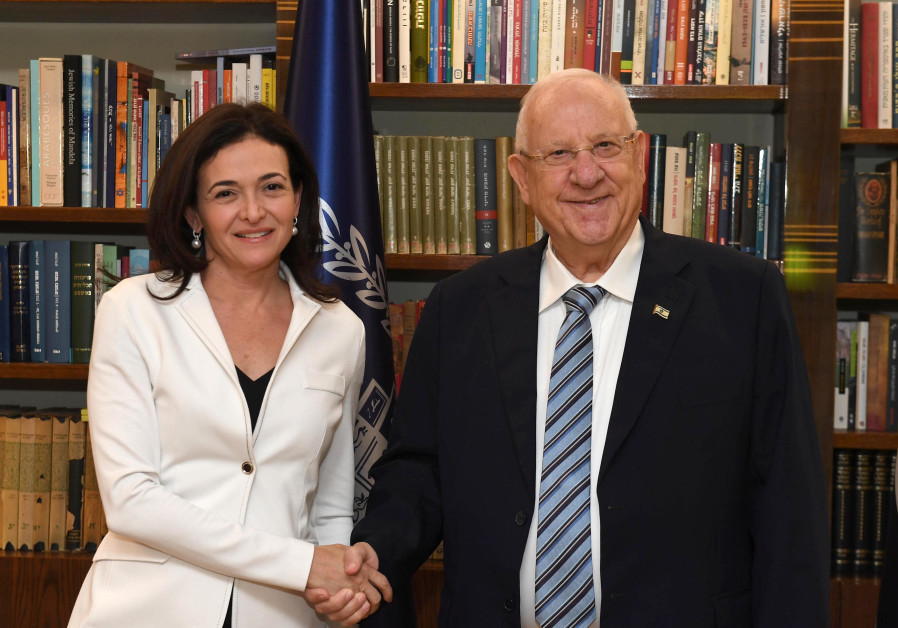
In her Facebook post, Sandberg described the importance to her of her Jewish identity. She said that her horror at the recent tragic “mass murder” of Jews in Pittsburgh (11) and Germany (2) inspired her to make the donation.
The timing of her announcement is startling in its lack of concern for the current Palestinian campaign against unfair treatment by Facebook, and of recent Palestinian deaths and injuries inflicted by the Jewish state.
In the past year and a half Israeli forces have killed at least 326 and injured over 28,000 men, women, and children taking part in demonstrations in Gaza.

Abdullah al-Anqar, 13, at a Gaza clinic, 10 June 2018. He was shot by an Israeli sniper during a demonstration along the Gaza-Israel border in May. (Photo from Medicins San Frontieres)
A search for donations that Sandberg may have dedicated on behalf of these victims turns up only an ambulance – which she presented to Israel, which has suffered massively fewer deaths and injuries.
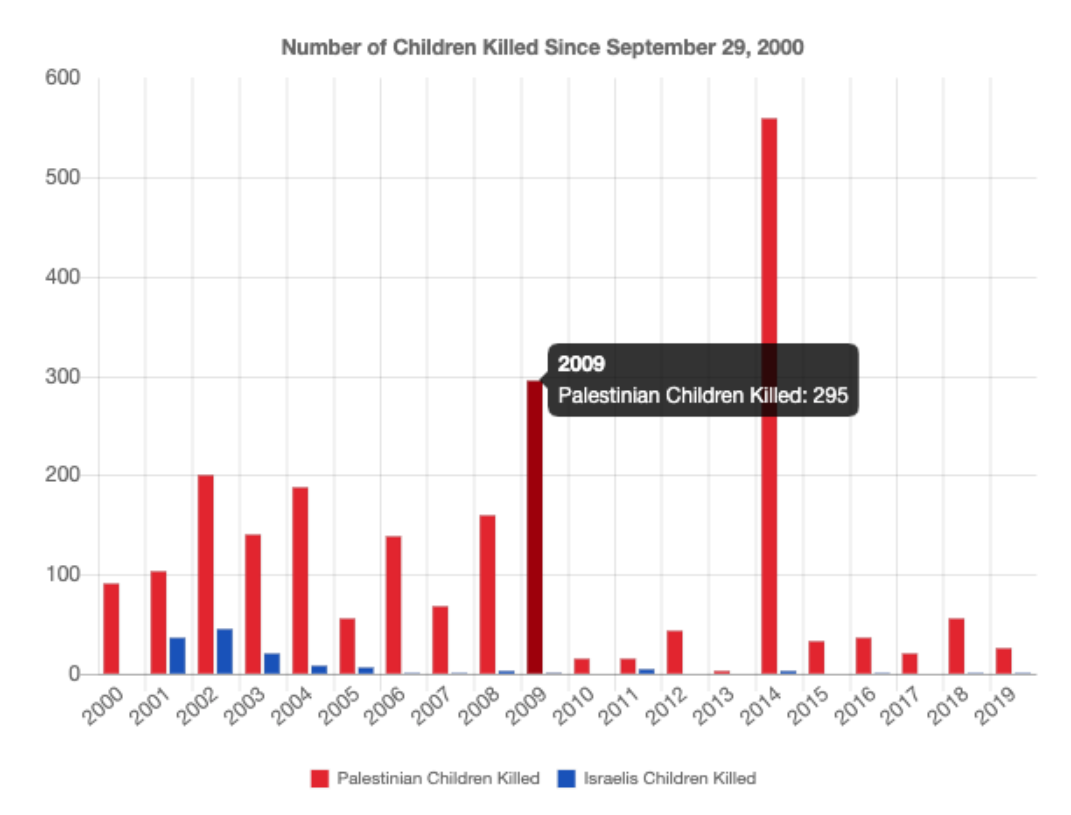
Given Sandberg and the ADL’s opposition to “hate” and “bias,” they may wish to read the extensive documentation of widespread discrimination and hatred in Israel.
Israeli academic and author Nurit Peled-Elhanan has spent years documenting the pervasive anti-Palestinian bias in Israeli textbooks.
“One question that bothers many people,” she says, “is how do you explain the cruel behaviour of Israeli soldiers towards Palestinians, an indifference to human suffering, the inflicting of suffering. People ask how can these nice Jewish boys and girls become monsters once they put on a uniform.”
Peled-Elhanan said: “I think the major reason for that is education. So I wanted to see how school books represent Palestinians.” In studying hundreds of Israeli textbooks she did not find one photograph that depicted an Arab as a “normal person.”
Peled-Elhanan says that as a result of the Israeli school system, Israeli children grow up to serve in the army and internalize the message that Palestinians are “people whose life is dispensable with impunity. And not only that, but people whose number has to be diminished.”
Perhaps Steinberg’s next anti-hate donation could go to Peled-Elhanan.
And perhaps instead of working with the Israeli government to remove Palestinian posts that document the results, Facebook executives could meet with the Palestinian journalists and activists they’re censoring and listen to what they have to say.
Twitter rolls out ‘DISPUTED’ warnings for users trying to post ‘misleading’ content after backlash over Biden emails censorship
RT | October 16, 2020
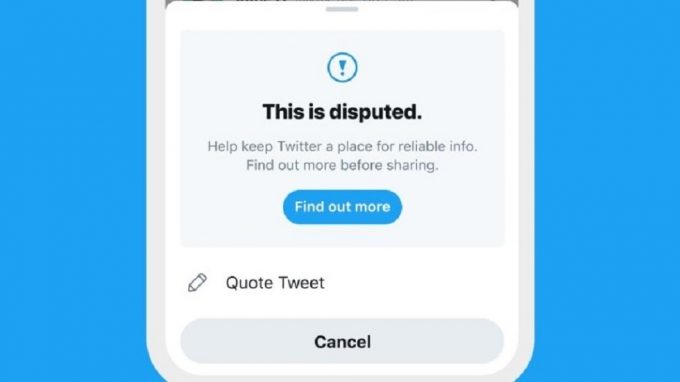
Twitter is cracking down on the spread of “misleading” content ahead of the US election, as users attempting to retweet anything similar to the NYPost’s Hunter Biden leaks will now get a warning the material is “disputed.”
Attempting to retweet offending content will trigger a prompt warning the user that the material they’re trying to post is “disputed,” Twitter revealed on Friday, posting an image of the new warning screen.
The user will be able to click a button to “find out more” about why Twitter doesn’t want the material shared, and then presumably post it anyway.
The new feature arrives in the aftermath of a major controversy arising from Twitter’s censorship of a series of stories critical of Democratic presidential candidate Joe Biden, published by the New York Post based on emails supposedly extracted from his son Hunter’s laptop.
Conservative politicians, lawmakers and press have slammed Twitter for prohibiting users from even linking to the story, and some users who shared details of the stories found themselves locked out of their account for reasons that ranged from sharing “hacked material” to posting “personal information” without permission.
The social media giant’s guidelines for what is considered “misleading” are themselves somewhat nebulous, having grown since the start of the Covid-19 pandemic to encompass not just “disinformation” but also “disputed” content, a vague descriptor that could apply to most of what users post on the platform.
The Republican National Committee on Friday filed a complaint with the Federal Election Commission charging Twitter had illegally meddled on behalf of the Biden campaign when it squelched the spread of the Biden-laptop stories. The platform had even briefly blocked a link to the US Congress website, when Republicans on the House Judiciary Committee attempted to skirt Twitter’s censorship by reposting one of the banned articles on their official .gov page.
Twitter also apologized to its users for a prolonged outage on Thursday night, which left many speculating about whether the platform was testing an intensified form of censorship ahead of November’s elections. The site blamed a “system change initiated earlier than planned” that had “affect[ed] most of our servers” – an explanation which likely did little to put conspiracy theories to rest.
Facebook subsidiary Instagram rolled out a feature similar to Twitter’s ‘wrongthink warning’ last year, which alerts users when they are about to post something “potentially offensive.” In April, Facebook began alerting users as to whether they’d shared, replied to, or otherwise interacted with posts that were later deemed to be “misinformation,” specifically content concerning the novel coronavirus that had been “debunked” by the World Health Organization.
In June, the platform further expanded its wrongthink-alert system, warning users when they attempted to share articles that were over 90 days old – regardless of whether they were true or not.
Facebook has also resorted to somewhat more subtle tactics of “shadowbanning” – which on Wednesday was once again confirmed by its communications chief Andy Stone, a former Democratic Party staffer. He tweeted that the platform was restricting the spread of the New York Post’s story until the platform’s fact-checkers could stamp their own judgment on the material.
US Army Wants To Make COVID Social Distancing ‘Permanent’ Even After Pandemic Ends
By Tyler Durden – Zero Hedge – 10/14/2020
For the majority of Americans wondering when this socially distanced dystopian nightmare of ‘6 feet apart’ and ‘wear a mask!’ and ‘mandatory hand sanitizer’ will finally be over, the Pentagon has just given serious cause for concern. When will it all end?
Perhaps leading the way as an example of where we all might be headed as a country, the United States Army has strongly hinted that it’s looking to make its coronavirus protective measures permanent.
This according to alarming statements reported by the military site Defense News :
In the wake of the COVID-19 pandemic, the defense industry began adjusting its facilities to avoid major outbreaks that could shut down production lines for days or weeks at a time. And now that those changes are in place, the U.S. Army’s top acquisition official thinks they should remain so for good.
Speaking to reporters during the Association of the U.S. Army’s annual conference, Bruce Jette, assistant secretary of the Army for acquisition, logistics and technology, said he sees long-term benefits from maintaining the kind of social distancing protective measures put in place across industry.

US Army combat medics maintaining social distancing, via U.S. Army Medical Center of Excellence
The DoD has observed a significant drop in cases of the common cold, viral infections, and the flu – and expects this will last so long as troops practice a distancing regimen.
Jette’s comments and predictions of what might come sound downright dystopian and inhuman in terms of the holistic well-being of American troops.
“I don’t know that I would ever say it’s totally back to normal,” Jette was quoted as saying. “I don’t see us backing off of using these same techniques on a contouring basis, even as the vaccine continues to mature.”
This senior Army official is essentially saying that even if an effective vaccine is developed there’s no returning to normal.
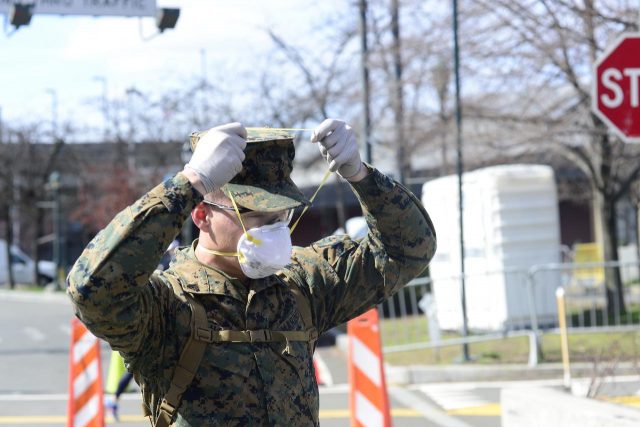
Image via U.S. Navy
“I would say we don’t back off of the COVID-19 standards because it will also reduce the impact of flu and other illnesses,” he added. “We think continuing to apply these same techniques would be further beneficial to the people and to the Army overall.”
Consider this: should the Army and eventually the entire DoD implement “permanent” social distancing measures, which would at the very least mean for years to come, that would put the entirety of American society a mere stone’s throw away from being forced to do the same.
In a sense, US armed forces might be the ‘canary in the coal mine’ in this case, revealing where we’re all headed and what might be forced on the already weary American people, who overwhelmingly are ready to truly return to normal.
Climate science and the Supreme Court
By Judith Curry | Climate Etc. | October 16, 2020
An alternative assessment of U.S. Supreme Court Justice nominee Amy Coney Barrett’s statements on climate change.
For those of you not in the U.S., confirmation hearings on the nomination of Amy Coney Barrett for the Supreme Court are currently underway. There are many very political issues surrounding this nomination and its timing. Lets put all that aside for the moment, and consider her statements on climate change.
Barrett’s statements [link]:
“I will not express a view on a matter of public policy, especially one that is politically controversial.”
“I don’t think my views on climate change or global warming are relevant to the job I would do as a judge. Nor do I feel like I have views that are informed enough.”
“I’m certainly not a scientist,” she said when asked by Sen. John Kennedy (R-La.) whether she had a personal opinion on the issue. “I mean, I’ve read things about climate change. I would not say I have firm views on it.”
“I don’t think I’m competent to opine on what causes global warming or not.”
The twitterati are hysterical over these statements. From a Washington Post article:
“The judge’s exchange on climate change was short, but her critics say it is disqualifying”
“It is a requirement that a Supreme Court Justice be able to review evidence to make a decision,” he said. “The scientific evidence of climate change is beyond reasonable doubt or debate, yet Amy Coney Barrett refused to acknowledge reality.”
“A climate change case is already on the Supreme Court’s docket next year. It will hear a case involving several oil companies, including Dutch Royal Shell, being sued by the city of Baltimore, which is seeking to hold them financially responsible for their greenhouse gas contributions. Barrett’s father spent much of his own career as a lawyer for Shell.”
An article in the Esquire is entitled: Amy Coney Barrett’s answer on this climate change question is completely disqualifying.
“Put simply, this is just totally disqualifying for any official holding public office in the year 2020. This isn’t even an up-to-date Republican bullshit line on the topic. “I’m not a scientist” is so 2014, maybe because even the Elite Political Media—pockets of which are just today allowing themselves to be hoodwinked by another Emails caper—caught on to how dumb it is. Does Judge Amy Coney Barrett accept the scientific consensus that gravity is keeping her in that chair? If so, why? She’s not a scientist, so how could she possibly know?”
There are two issues here that deserve discussion:
- Whether ‘belief’ in climate change actually means anything when spouted by politicians and other non-scientists
- What judges should be expected to know about climate science.
“I believe in climate science”
I think that Amy Coney Barrett’s answers to the climate question was admirable. She wanted to stay out of a contentious political debate. But more importantly she wasn’t going to pass a judgement on something for which she had not carefully evaluated the evidence and did not find herself qualified to make a judgement on. I thought her stance on this showed wisdom and humility.
In the 2016 presidential debates, Hillary Clinton said: “And I believe in science”, with specific reference to climate change.
In the political debate on climate change, ‘I believe in climate science’ is a statement generally made by people who don’t understand much about it. They use such statements as a way of declaring belief in a scientific proposition that is outside their knowledge and understanding. The belief of individuals making such a statement is often more akin to believing in Santa Claus than relating to actual understanding of science. In the case of Hillary Clinton’s acceptance speech at the U.S. Democratic National Convention, Clinton’s appeal to science was a partisan rallying cry that was coupled to the mockery of Donald Trump and his supporters as ‘anti-science.’
In the context of the climate change, ‘I believe in science’ uses the overall reputation of science to give authority to the climate change ‘consensus’, shielding it from questioning and skepticism. ‘I believe in climate science’ is a signifier of social group identity that supports one particular solution: massive government legislation to limit or ban fossil fuels. ‘Belief in climate science’ makes it look as though disagreement on this solution is equivalent to a rejection of the scientific method and worldview. When exposed to science that challenges their political biases, these same ‘believers’ are quick to claim ‘pseudo-science,’ without considering (or even understanding) the actual evidence or arguments. An excellent summary of all this is provided in a previous blog post discussing an article by Robert Tracinski.
In my albeit limited experience, very few politicians have made a serious attempt to understand climate science, beyond being able to parrot talking points provided to them by advocacy groups.
Here is what we are left with: One side attacks science and the other side uses science for political attacks. Neither side actually cares about or understands the science.
Kudos to Amy Coney Barrett for providing an appropriate answer to the climate change questions.
Supreme Court
A New York Times article discusses why judge’s ‘opinions’ on climate change are relevant to the Supreme Court. The EPA endangerment finding may be facing a challenge in a future Republican administration. There are also lawsuits against the U.S. government and oil companies that could make it the Supreme Court.
The Wikipedia has a good overview on the Juliana case against the U.S. government as well as previous cases. Apart from procedural issues, I don’t see what kind of ruling by the Supreme Court on climate change that would hinge on the Justices’ understanding or ruling on details of the science.
The Dutch Urgenda ruling accepted the authority of the IPCC assessment reports. This was an unusual ruling based upon the U.S. court system, which leaves matters of policy to the legislative and executive branches.
Japan to release Fukushima contaminated water into sea: Reports
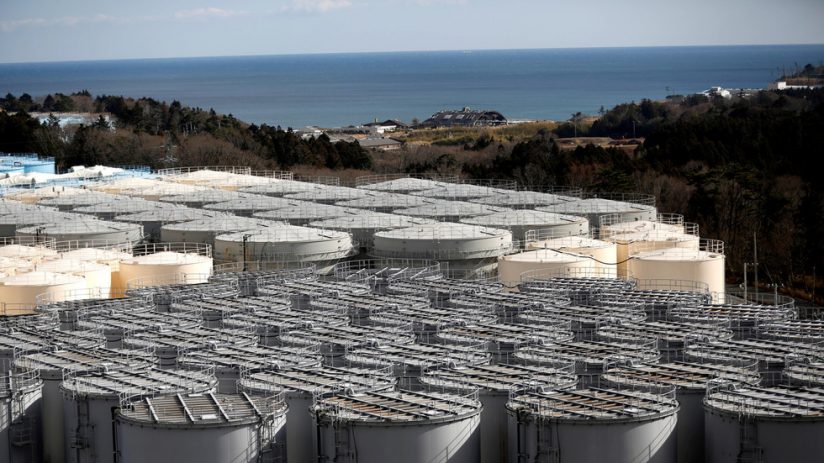
Storage tanks for radioactive water at TEPCO’s tsunami-crippled Fukushima Daiichi nuclear power plant in Okuma town, Fukushima prefecture, Japan. (Photo by Reuters)
Press TV | October 16, 2020
Nearly a decade after the Fukushima nuclear disaster, Japan’s government has decided to release contaminated water from the destroyed plant into the sea, media reports said on Friday, with a formal announcement expected to be made later this month.
The decision is expected to rankle neighboring countries like South Korea, which has already stepped up radiation tests of food from Japan, and further devastate the fishing industry in Fukushima that has battled against such a move for years.
The disposal of contaminated water at the Fukushima Daiichi plant has been a long-standing problem for Japan as it proceeds with a decades-long decommissioning project. More than one million tonnes of contaminated water are currently stored in huge tanks at the facility.
The plant, run by Tokyo Electric Power Company Holdings Inc., suffered multiple nuclear meltdowns after a 2011 earthquake and tsunami.
On Friday, Japan’s industry minister Hiroshi Kajiyama said no decision had been made on the disposal of the water yet, but the government aims to make one quickly.
“To prevent any delays in the decommissioning process, we need to make a decision quickly,” he told a news conference.
He did not give any further details, including a time-frame.
The Asahi newspaper reported that any such release is expected to take at least two years to prepare, as the site’s irradiated water first needs to pass through a filtration process before it can be further diluted with seawater and finally released into the ocean.
In 2018, Tokyo Electric apologized after admitting its filtration systems had not removed all dangerous material from the water, collected from the cooling pipes used to keep fuel cores from melting when the plant was crippled.
It has said it plans to remove all radioactive particles from the water except tritium, an isotope of hydrogen that is hard to separate and is considered to be relatively harmless.
Last week, Japanese fish industry representatives urged the government not to allow the release of contaminated water from the Fukushima plant into the sea, saying it would undo years of work to restore their reputation.
South Korea has retained a ban on imports of seafood from the Fukushima region that was imposed after the nuclear disaster and summoned a senior Japanese embassy official last year to explain how Tokyo planned to deal with the Fukushima water problem.
During Tokyo’s bid to host the Olympic Games in 2013, then-Prime minister Shinzo Abe told members of the International Olympic Committee that the Fukushima facility was “under control”.
The Games have been delayed to 2021 because of the pandemic and some events are due to be held as close as 60 km (35 miles) from the wrecked plant.
Australia Faces Challenging Times Caused by Deteriorating Relations with China
By James ONeill – New Eastern Outlook – 16.10.2020
A recent article published in Russia Today on 13 October 2020 by Tom Fowdy raised some very important issues affecting Australia’s economic well-being. That economic position is rapidly deteriorating as the country’s crucial economic relationship with China disintegrates at an accelerating rate. Australia’s export structure has had several distinctive features over the 250 or so years since it was first colonised by the British in the late 18th century.
Its initial role was to serve as a penal colony for people from Britain who had committed crimes, but not severe enough to warrant execution. The rights of Australia’s indigenous population who had inhabited the country for more than 100,000 years did not enter the equation. Indeed, they were not officially regarded even as human beings, that status only being assigned in the 1960s. Before then the aboriginal people had the same legal status as flora and fauna.
The defeat of the British in Singapore by the Japanese army in 1941 lead to the beginning of a move from reliance on the British for the country’s security to reliance upon the Americans. The latter’s troops arrived in 1942 and they have been there ever since.
Australia’s trading patterns showed a similar reliance upon the British until the latter’s joining the European Common Market on 1 January 1973 forced a reappraisal of that economic relationship. Thereafter, Australia’s trade shifted progressively to its Asian neighbours, a trend that accelerated in every year since the 1970s. Today, Asian nations account for the vast bulk of Australia’s trade with the world.
China, which accounted in 2019 for more than one third of the total Australian exports, was easily the biggest trading partner, accounting for nearly twice the amount of trade than that with Japan, the second most important trading partner.
Despite its geography, being a landmass immediately South of its major trading partners, the Australian political psyche has remained firmly fixed to the Anglo-United States worldview. Since the end of World War II in 1945, Australia has joined the United States in at least four major military conflicts; Korea, Vietnam, Afghanistan and Iraq, that are not only geographically remote from Australia, but also involved no discernible vital Australian strategic interest.
The fact that all four wars were based on false justifications did nothing to enhance their legitimacy. The Korean War was manifestly aimed at the overthrow of the then newly installed Communist Party in China. This was readily discernible from the actions of the Allied troops that clearly violated the terms of the United Nations Security Council resolution authorising military action (in the absence of Russia and with China’s seat still held by the Nationalists.)
The lies told about Iraq’s “weapons of mass destruction” or Afghanistan’s alleged role in sheltering the falsely accused Osama bin Laden for his alleged role in the events of 11 September 2001 are too well known to bear repetition here. What is important for present purposes is that the falsehoods and ulterior motives for the invasion and occupation of Afghanistan and Iraq did not deter Australia from either its initial involvement or its continuing role as an occupying power.
Australia similarly joined in the United States manufactured war in Vietnam, again for no discernible strategic or military interest to Australia. It was the experience of the 1972 –1975 Whitlam Labor government in Australia in response to that war that cemented the subservience to United States interests.
Whitlam had removed Australian troops from Vietnam and recognised the PRC as China’s legitimate government. Both moves met with bitter opposition by the Liberal Opposition party. What sealed the Whitlam government’s fate however, was its decision to close the American run spy base at Pine Gap in Australia’s Northern Territory. The Whitlam government was dismissed by the country’s Governor General John Kerr the day before Whitlam was to announce Pine Gap’s closure to the Australian parliament. That the base is still open (one of at least eight United States military bases in Australia) speaks volumes about the geopolitical consequences of the Whitlam dismissal.
Through these tumultuous years trade with China continued to flourish. China also became the largest source of foreign students, the largest source of foreign tourists, and the third largest source of foreign investment. In 2020 all this changed. Clearly acting as a mouthpiece for the American administration, Australia demanded an “explanation” from China at the beginning of this year for the outbreak of the Corona virus.
The accusatory tone of the Australian demand was not well received in Beijing. This began a series of economic countermeasures by China. The initially relatively small economic impact of banning wine imports was clearly intended to send a signal.
That signal fell on deaf ears. Australia’s anti-China rhetoric progressively escalated through 2020. The Chinese response was to increase the banning of Australian imports. The latest (early October 2020) was to ban coal imports from Australia. This is a market worth $US13 billion to the Australian economy. It will not be the last item to be banned or greatly restricted, with iron ore (more than US$100 billion) probably being the next commodity banned, already falling 17% each month since July.
The Covid crisis has also resulted in an almost complete cessation of Chinese student arrivals (again the largest foreign source) and an industry worth billions of dollars and thousands of jobs to the Australian economy. It would be naïve to expect those numbers to recover in the foreseeable future. The same is true with Chinese tourists, a vanishing species and again unlikely to return to anywhere near previous levels. Again, tens of thousands of jobs are lost.
The rational response by an Australian government would be to review both its policies and its rhetoric. Not only has the Morrison government shown no such inclination, it is difficult to see how it could feasibly do so without adversely affecting its close and continuing (subservient) relationship with the United States.
The memory of the fate of the 1975 Whitlam government which dared to pursue policies contrary to United States wishes continues to cast a very long shadow over Australian politics.
Fowdy suggests that Australia’s situation “might be described as the most clear and explicit reaction yet of the discomfort in the Anglo-sphere world caused by the rise of China.” I respectfully agree. The solution however, is not to try and maintain the dominance of the Western world as it has been for the past 300 years.
Instead there needs to be a recognition that the Anglo-Saxon dominance was an historical anomaly, and that the old order is resetting itself. In Australia’s case that will require some major mental adjustments.
The country has flourished in recent decades precisely because of its geography and growing trade and other links with what Australians call “the near North.” What has been manifestly lacking is the political attitudes and conduct that match the geopolitical and trade realities. Unfortunately, that adjustment may be a bridge too far for the Australian psyche. It has only itself to blame.
James O’Neill is an Australian-based former Barrister at Law.
Useful Idiot or Trojan Horse? Belarusian opposition figure Tikhanovskaya’s links to NATO’s Atlantic Council adjunct raise eyebrows

By Kit Klarenberg | RT | October 16, 2020
‘Accidental politician’ Svetlana Tikhanovskaya has captured the West’s imagination, her lack of political experience presenting an ideal blank canvas for news-narrative weaving – and all too easily manipulated by malign forces.
From the moment she announced her candidacy for the Belarusian presidency after her husband Sergey was spuriously jailed for electioneering activities that would be considered normal in the rest of Europe, Tikhanovskaya has been a darling of the Western media. With her improbable ascension from stay-at-home mother to leading opposition figure, then proto-revolutionary leader-in-exile, documented on an almost daily basis.
Along the way, Tikhanovskaya has been keen to stress the upheaval in Belarus is neither pro-Western nor pro-Russian in character, but pro-democracy, a key message reiterated uncritically over and again by mainstream journalists. However, not a single one has deigned to mention, much less question, the fact that one of her key confidantes, Franak Viacorka, is a ‘non-resident fellow’ at Atlantic Council, a think tank that aggressively propagandizes in support of NATO, and wider American financial, political, military and ideological interests in Europe and beyond.
This position isn’t mentioned in his Twitter bio, and it’s unclear precisely when he became Tikhanovskaya’s ‘international relations advisor.’ Viacorka’s Atlantic Council appointment was announced on August 15 – in a Washington Post op-ed published the same day, he and Melinda Haring, deputy director of the council’s Eurasia Center, painted a glowing, provocative portrait of the would-be president of Belarus, framing her as part of a wider feminist uprising against the country’s “deeply patriarchal” elite, an upheaval central to the radical shakeup of the country.
The council billed Viacorka as a “journalist from Belarus,” which is true, to an extent. A long-time anti-Lukashenko activist, his campaigning as a teenager in the run-up to the 2006 presidential election was even the subject of an award-winning documentary. Subsequently, he spent seven years at US government-controlled media outlets Radio FreeEurope and Radio Liberty, before moving to Washington DC in August 2018 to serve as Digital Media Strategist for the US Agency for Radio Free Europe’s parent company US Agency for Global Media (USAGM), a role which ended just before he joined the Atlantic Council. In August 2018, USAGM’s then-CEO acknowledged its media outlets’ “global priorities reflect US national security interests.”
Founded in 1961, the council is best understood as NATO’s intellectual wing-cum-propaganda arm. Just as the alliance’s paradoxical purpose is, in the phrase of academic Richard Sakwa, “to manage the security risks created by its existence,” so too the organization exists to promote the notion of a Russian threat, in order to justify NATO’s post-Cold War endurance.
In this sense, the Atlantic Council is no different from most other ‘think tanks’ in that its raison d’etre is to defend and further the concerns of its financiers – in pursuit of that goal, as with most other lobby groups of this nature, it often publishes highly dubious, biased ‘research’ under the guise of objective academic inquiry, and recruits to its ranks individuals who advance its objectives in some way, promoting these as ‘independent experts.’
Some clue as to the council’s concerns and aims can be found in the publicly-available list of its key donors, which includes the US embassies of UAE and Bahrain, Ukrainian oligarch Victor Pinchuk, defense giant Raytheon, the UK Foreign & Commonwealth Office (FCO), and the US State Department. From 2006 to 2016, the council’s annual revenue leaped ten-fold, from $2 million to $21 million – a period in which, concurrently and not coincidentally, corporate and state budgets typically reserved for lobbying firms were increasingly directed to think tanks. Its board of directors is likewise highly illustrative, a veritable ‘who’s who’ of warmongers, comprising Henry Kissinger, Condoleezza Rice, Colin Powell, Robert Gates, Michael Hayden, David Petraeus, and many others.
Despite a host of council apparatchiks frequently popping up in media reporting, and in turn influencing debate, public perceptions and government policy, one would be hard-pressed to find a single mainstream article making even passing reference to the organization’s politically-charged agenda and funding sources. Indeed, the Atlantic Council’s press relations strategy has been astonishingly effective, its in-house ‘fellows’ and Digital Forensics Lab (DFRLab) operatives universally positioned as experts in an array of fields, ever-ready to provide insight on pressing issues in the form of op-eds, marketable quotes and more.
There’s no more palpable example of this phenomenon than former DFRLab chief Ben Nimmo, who for years has been widely-touted as an eminent authority on Moscow’s ‘information warfare’ and ‘cyber operations,’ as well as on Kremlin strategy and thinking – despite boasting zero discernible acumen in Russian politics, data analysis, information technology, or social media. Despite his palpable lack of relevant skills, Nimmo’s tour of duty at DFRLab saw him appear in a panoply of articles, reports and academic papers on the threat posed to the world by Russian ‘disinformation,’ in the process disseminating a vast amount of damaging untruths himself.
He was also a pivotal player in the council’s ‘anti-fake news’ partnership with Facebook. Launched in May 2018, DFRLab was granted exclusive and unprecedented access to the social media giant’s private data, in order to identify and study “disinformation networks,” before earmarking particular accounts and pages for deletion and banning. That an effective wing of Western state power was afforded such capacity failed to provoke any mainstream alarm, even when the initiative got off to a highly inauspicious start – a number of accounts Nimmo identified as Kremlin-directed ‘bots’ and ‘trolls’ and which were subsequently banned by social networks turned out to be real people.
Since then, at intermittent intervals this partnership has led to the purging of untold numbers of pages and accounts from the social network, among them many alternative media outlets, independent journalists, political groups, and other legitimate information sources, highlighting issues and events the mainstream media consistently downplays or ignores, including US interventionism, drug legalization, police brutality and more.
Viacorka’s work for the Atlantic Council to date hasn’t been quite so destructive, authoring articles for its website, and making appearances on major news networks, promoting Tikhanovskaya as the legitimate president of Belarus and perpetuating disputed and extremely questionable claims that she’d received up to 70 percent of the vote in that country’s recent election – key messages the council itself began aggressively advancing the day after the election.
Ever since, Tikhanovskaya has repeatedly appealed to US and EU leaders to recognize her as the winner and duly-elected president of Belarus, claiming she’ll step aside within six months of taking office, but her call has been ignored by international bodies and every government in the world, bar that of Lithuania.
Instead, typically at most an election re-run has been called-for, a somewhat odd display of reticence, given Washington, London, Berlin and Paris have priors in formally recognizing individuals with far less legitimate claims than she as de-facto leaders of countries, such as Juan Guaido in Venezuela. This may suggest Western governments aren’t actually as convinced of her alleged landslide victory as they publicly profess to be, and fear Lukashenko’s removal from office by external and internal force and/or without a viable, stable alternative in place could mean the country descends into further chaos, and in turn becoming a fresh flashpoint in Europe.
Viacorka himself acknowledged the disorganized nature of the protests in an Atlantic Council article – while taking as inevitable Lukashenko’s ouster and Belarus’ transition to democracy, he bemoaned how “a lack of coordination between the different elements within the protest movement” had left it “vulnerable to the divide-and-conquer tactics of authorities.”
Viacorka went on to note that, in a bid to address this “absence of leadership,” Tikhanovskaya had founded a Coordination Council to serve as the country’s effective government in waiting. He dubbed the endeavor “the main threat to Lukashenko” and “the first attempt to create a credible alternative,” but his description raises serious questions about whether it’s a legitimate attempt to provide a coherent, tangible face to the movement, or an opportunistic hostile takeover.
“The Coordination Council provides a degree of clarity for government officials and international observers looking to gain a better understanding of who represents the diverse opposition movement… The Council must occupy the political vacuum at the forefront of Belarus’s democratic uprising. Leaderless street protests have shaken the Lukashenka regime to its foundations, but they are not enough to bring about the kind of historic transition to democracy millions of Belarusians now expect… The Council features a number of members drawn from the professional classes… who are expected to play important roles in the attempt to move beyond today’s mass protests towards a national political transition,” Viacorka wrote.
One wonders whether the coordination council was an idea Viacorka himself presented to Tikhanovskaya in his capacity as her ‘international relations advisor’ – and if, in turn, his thinking was in any way influenced by the Atlantic Council.
Whatever the truth of the matter, it’s almost certain the Atlantic Council’s meddling in Belarusian politics has a clandestine element, given the organization’s key role in the UK Foreign & Commonwealth Office’s (FCO) initiative Open Information Partnership (OIP). Officially, under its auspices DFRLab, Bellingcat, Zinc Network and Media Diversity Institute “work together through peer-to-peer learning, training and working groups to pioneer methods to expose disinformation,” in collaboration with a sizable network of NGOs across Europe.
However, leaked documents make clear the endeavor is, in fact, a secret UK government information warfare outfit seeking to covertly further Whitehall’s global policy objectives, by, among other things, influencing “elections taking place in countries of particular interest to the FCO.” A file setting out the terms of the project indicates Belarus is one of a dozen “high impact, priority countries” for the OIP, strongly suggesting this year’s presidential vote was very much “of interest” to the project.
The same document indicates DFRLab, Bellingcat, Zinc Network and Media Diversity Institute had conducted a secret operation in Ukraine, Moldova and Belarus in 2018, “delivering audience insights and recommendations to increase reach and resonance of selected independent media outlets.”
While innocent-enough sounding, examples offered of the organization’s work offered elsewhere in the file indicate OIP has engaged in numerous ‘astroturfing’ initiatives across Eastern Europe, helping organizations and individuals to produce flashy, FCO-funded propaganda masquerading as independent citizen journalism, which is then amplified globally via its NGO network and other channels.
For instance, in Ukraine the Open Information Partnership worked with a 12-strong group of online ‘influencers’ “to counter Kremlin-backed messaging through innovative editorial strategies, audience segmentation, and production models that reflected the complex and sensitive political environment,” in the process allowing them to “reach wider audiences with compelling content that received over four million views.”
In Russia and Central Asia, OIP established a covert network of ‘YouTubers,’ helping them create videos “promoting media integrity and democratic values.” Participants were also taught how to “make and receive international payments without being registered as external sources of funding” and “develop editorial strategies to deliver key messages,” while the consortium minimized their “risk of prosecution” and managed “project communications” to ensure the existence of the network, and indeed OIP’s role, were kept “confidential.”
Were similar efforts undertaken in Belarus at some point subsequently, and if so, how many of the citizen journalists on the ground covering the protests this year have received funding and training from OIP, and what role has the organization and its extensive pan-European NGO matrix played in promoting their “compelling content” the world over?
At the very least, another leaked FCO file indicates a number of organizations in the country had exploratory discussions with OIP, including the Belarusian Association of Journalists, and Euroradio – both were said to have “expressed an eagerness to be part of the network,” and to be operating in “the most vital space in the entire network.”
It may be significant that Franak Viacorka has been a prominent amplifier of Euroradio’s “fearless” coverage of the unrest that has engulfed the streets of Minsk for the past two months.
Featured Video
Penguins, Polar Bears and Sea Ice
or go to
Aletho News Archives – Video-Images
Book Excerpt
Measles and Mortality
Informed with Aaron Siri| November 19, 2026
Given the news coverage around measles and mortality, I decided to share the section of my book, Vaccines, Amen, that covers precisely this topic. Help me spread a bit of reality into the media hysteria around this issue. Here is that section of the book… continue
Blog Roll
 Aletho News
- ‘Chinagate’ Is Here
- Iran, four other countries condemn US plans to deploy weapons in outer space
- US media brings back the Iraq war playbook and why it won’t work
- Zakharova schools German FM on history basics
- Germany to produce drones for Ukraine
- Merz takes a swipe at Merkel over Ukraine’s NATO bid
- Measles and Mortality
- New York State Demands Amish Adopt Its Beliefs or Leave
- Saudi Arabia turns to South Korea, Ukraine to bolster air defenses
- Who pays for the war on Iran? The Gulf states had an answer in 1991
- If Americans Knew
- An error has occurred; the feed is probably down. Try again later.
- No Tricks Zone
- Alarmist Climatologists In Shock! 2026 Atlantic Hurricane Season Sees Lowest Count In 101 Years
- New Study: Modern Temps Are Among The Coldest Of The Last 10,000 Years In East Central Europe
- Germany’s Renewable Energies Lead to 1.4 Billion Euro Electric Power Trade Deficit
- Argentina’s Perito Moreno Glacier Joins Antarctica and Arctic In Defying Doomsday Melt Claims
- New Study: Barents Sea Temperatures Were Warmer And Sea Ice Less Extensive In The 1700s Than Today
- German Authorities Start Initiative To Evaluate Public Register For Climate “Disinformation” Spreaders!
- Zonal Asymmetry of Temperature Change in the Antarctic Circumpolar Current
- New Study: The Net Fossil Fuel Contribution To Rising Atmospheric CO2 Has Been Zero For 500 Years
- Germany’s Green Energy Transition Becoming Increasingly Expensive…Another 6 Trillion Euros!
- Sudden Stratospheric Warming, Powerful El Niño Combination May Lead To Extreme Europe Cold, Energy Crisis!

