Belgian court suspends issuing arms export licenses to companies dealing with Riyadh
Press TV – August 8, 2020
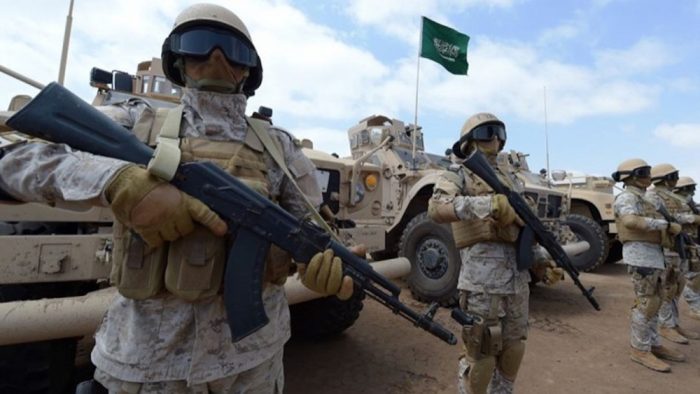
Belgium’s highest administrative court has suspended issuing arms export licenses for a number of Belgian companies in a bid to block the flow of arms to Saudi Arabia over its poor human rights record and the bloody campaign against Yemen.
On Friday, the Council of State decided on the move by an emergency ruling, which overturned the decision by the Wallonian minister-president, Elio di Rupo, who had granted licenses to two arms companies FN Herstal and CMI Defence.
Back in early July, Di Rupo had given authorization to the two Wallonia-based companies to sell weapons to the Saudi Arabia’s National Guard and Royal Guard. The licenses were meant to replace previous authorizations canceled by the same court.
“It cannot be excluded that there is a real risk for the weapons … to be used in the context of the conflict in Yemen or to contribute to internal repression,” the Friday ruling said.
The Saudi regime is the most important client of Wallonia’s arms industry. In 2018, Riyadh purchased weapons for $267 million from local arms companies, based in Belgium’s southern region, representing one-quarter of Wallonia’s total arms export.
Wallonian arms company John Cockerill, whose arms export license was suspended by a previous court ruling, gave military training to the Saudi army in eastern France two years ago, Amnesty International says.
Saudi Arabia has violated the very basics of human rights by killing tens of thousands of civilians in its war on Yemen, besides its other rights violations against its own citizens.
The Yemen conflict, which began in earnest in March 2015, has devastated large swathes of the country and triggered multiple humanitarian disasters, including famine and the internal displacement of millions of people into disease-infested camps and areas.
Pentagon issues report on Syria war, condemns recruitment of children by SDF
MEMO | August 8, 2020
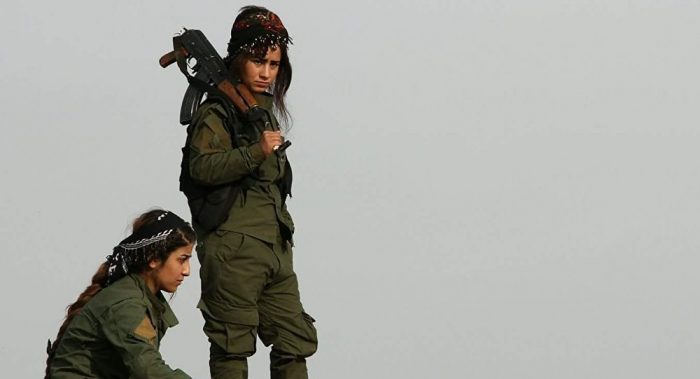
The Pentagon confirmed in a report on the war in Syria and Iraq that the militia of the Syrian Democratic Forces (SDF) continues to recruit children through forcible detention.
On Thursday, the Lead Inspector General issued a report on Operation Inherent Resolve (OIR), launched by a US-led international coalition against Daesh in Syria and Iraq, indicating that the SDF militia continues to arrest and recruit children from refugee camps in the areas it controls in north-eastern Syria.
The report pointed out that the SDF militia did not fulfil its pledges to international organisations to not recruit children, stressing that youngsters are still being forcibly recruited.
The United Nations Human Rights Council (UNHRC) published in its report issued on 16 January, new evidence about the exploitation and recruitment of children by SDF militia.
On 29 June, 2019, Virginia Gamba, the UN Special Representative for Children and Armed Conflict, signed an action plan with SDF leader Ferhat Abdi Shahin, known as Mazloum Abdi, to release child fighters in the militia ranks.
Venezuela Sentences US Mercenaries to 20 Years in Prison
teleSUR | August 8, 2020
Venezuela’s Attorney General Tarek William Saab Friday reported that the two former U.S. military officers Luke Denmnan and Airan Berry, who participated in the failed invasion attempt in Venezuela, were sentenced to 20 years in prison.
Denmnan and Berry tried to force their way into Venezuela along with 50 other citizens of the Caribbean country to overthrow President Nicolas Maduro’s government.
“The U.S. former military officers confessed to the crimes of conspiracy, association, illicit trafficking of war weapons and terrorism,” Saab tweeted.
These crimes appear in Venezuela’s Penal Code, and for them, the mercenaries were sentenced to 20 years in prison.
“The former U.S. soldiers, who admitted their responsibility in the events, were accused by the prosecutors in the case of serious crimes,” Saab explained.
The U.S. Silvercorp former members were detained in the second attempt of an attack against the Venezuelan coast.
At least eight people died and half a hundred more were arrested during the search and capture of the mercenaries.
Last May, Venezuela’s justice system ordered preventive detention for 40 people due to their involvement in the failed invasion attempt.
Lebanon SITREP: second letter from a Lebanese friend
The Saker | August 7, 2020
My Lebanese friend just sent me this report about Hassan Nasrallah’s speech today:
– There is much to say, but Sayyed did not allow the enemies any chance to turn this disaster into a ‘campaign’ against the Resistance, whereby the Resistance ‘reacts’ and gets led into their traps, further leading the country into chaos and destruction
– it must be said, Sayyed calmly but categorically denied that Hezbolllah had any knowledge of what goes on at the Port of Beirut, including what goes into it and what goes out of it. To quote his exact words:
‘We neither adminster the port (of Beirut), nor do we control it, nor do we interfere in it, nor do we know what was going on in the port, nor do we know what was present in the port. Some people said: ‘is it possible that you know about the Port of Haifa (in Israel) more than you know about the Port of Beirut?’. Hezbollah’s main responsibility is resistance. Hezbollah might know more about the Port of Haifa more than it knows about the Port of Beirut. (Knowing about) the Port of Beirut is not (Hezbollah’s) responsibility, yet (knowing about) the Port of Haifa is in fact (Hezbollah’s) responsibility, because it is part of the deterence equation and the (Resistance’s) defense strategy for Lebanon. Yet Hezbollah is not administering, nor controlling, nor is it interferring in, nor does it know what is happening in the Port of Beirut, nor what is present there and not present there, and how things are being administered there, this is something we don’t interfere in at all.’
– Sayyed also calmly but categorically denied that there were any weapons or ammunition belonging to Hezbollah at the port, and that the investigation will soon reflect this reality too.
– Sayyed said that even if this explosion was caused by sabotage, the point now is for the Lebanese state to uproot and rid itself of internal enemies (whether out of negligence they are enemies, or out of intentional malice)
– If the state cannot do that, then the belief in Lebanon as an entity and an idea may be completely lost, even for Hezbollah
– in general, the speech was 1) one of compassion towards Lebanon and its people, and 2) turning the apparent threat (against Lebanon and the Resistance) into a major opportunity.
– Sayyed said this disaster could in a positive sense, allow Lebanon to get out of the (economic and political) siege and difficulty that it was in
– So it seems Hezbollah sees real possibilities in this track (and not as some thought, that the US will be able to continue besieging Lebanon as it was doing prior to the disaster)
– to illustrate, you know there are many oil tankers that are on their way from Iraq to Lebanon via Syria (this is a major development), not to mention the changing international (particularly Western) political attitude towards Lebanon and support for it (even if only officially and publicly, because no state wants to appear like it is harming and besieging Lebanon at this moment before public opinion)
– Perhaps the Resistance sees that even economically, what Sayyed was saying about looking politically and economically eastward (in addition to any westward options) will now be an undeniable option (one that opponents of the Resistance cannot possibly argue against)
– Sayyed said all those that think we are beseiged today and are launching all of these political and media campaigns following the disaster, must know that the Resistance is way too powerful today, and that the whole regional situation is different
– let’s not forget that the US Elections are almost upon us, so perhaps any chance for the Trump administration to really escalate its confrontation any further with Hezbollah and the Resistance Axis has been severely compromised by this national disaster in Lebanon
– Not to mention the Resistance Axis has the upper hand across the region today, if seen purely from a military perspective
– I heard one anti-Hezbollah commentator on Lebanese TV saying: let’s see what Nasrallah is going to say in his speech, there is so much pressure on him now, Hezbollah is cornered, if this explosion is by Israel, then Hezbollah will be pressured to militarily respond, and if the explosion was caused directly or indirectly by Hezbollah, or even that Hezbollah had knowledge of the ammonium nitrate that was stored at the port all these years but didn’t do enough to rectify this situation, then the blame of the Lebanese people will be on the group etc etc
– So Sayyed basically does the opposite to the ill-wishes of such people. He calmly refutes all the lies, and sends out a message of compassion, condolence, support, calmness and hope for the Lebanese as a whole, and a message of power and strength to the supporters of the Resistance
– Even if there was sabotage (by say Israel) that led to the explosion, there was definitely major ‘negligence’ by Lebanese officials, and so they need to be punished strongly and harshly and before all the eyes of the Lebanese. This will be the final opportunity and test for the viability of Lebanon as a state. If the Lebanese state does not pass this test, then lebanon is finished.
– So, what point or value is there, especially at this moment, for Hezbollah to entertain the idea, or go down the track of: this may have been a sabotage by Israel and we must respond? No value whatsoever, it just further corners the Resistance and in the wrong corner (i.e turns this disaster into a defensive one for Hezbollah, one in which the group apparently needs to respond to Israel due to a crime that cannot be proven, and at a time when the Lebanon is in no position for such a confrontation)
– And Sayyed mentioned it, he said regardless if it was a missile or sabotage that caused the explosion, a major reason that led to this disaster is the utter negligence of certain Lebanese officials
– So either Lebanon does indeed have hope as an entity (so show us oh officials by holding the negligent ones to account, regardless of their sect and party, just as we say regarding the enemy collaborators), otherwise, Lebanon has no hope any longer, and Hezbollah will then draw its equations accordingly
– All Lebanese are furious and now watching: who will be punished, will those responsible really be punished?
– Anyway, just by Sayyed highlighting all of this, it completely removes all pressure and focus away from Hezbollah, and places it where it belongs: the ones responsible for this disaster. Even the Harriri tribunal is now completely defused by Sayyed’s intelligent approach today. Lebanese popular opinion is now looking for the perpetrators of this crime, not the crime in 2005 (which has been for many years used by the pro-US camp in Lebanon politically)
And by the way, with one swipe Sayyed completely defuses talk of a new international tribunal and foreign intervention after the explosion, by telling all Lebanese: you all claim you trust the Lebanese army don’t you?!! Well, let the army carry out the investigation. Complete check mate. The administration of this crisis remains Lebanese, no internationalisation nor politicisation of this disaster on the official Lebanese level can now be justified
Twitter censoring tweets containing links to BitChute video service, flags posts as ‘potentially harmful’
RT | August 7, 2020
Video hosting service BitChute has accused Twitter of censoring tweets including links to their platform, and numerous users have experienced the apparent ban, though the social media app has yet to officially respond.
“It appears as if Twitter has started blocking all tweets that contain Bitchute videos,” BitChute’s account tweeted on Friday morning. They encouraged users to share their own examples of censorship too.
Numerous users then posted screenshots of them trying to post links to videos on the website, only to be blocked by Twitter and told the material they were about to post was “potentially harmful.”
When you try and post a link to BitChute, Twitter will preview the tweet to the user, and send two messages. One in red says, “something went wrong, but don’t fret — let’s give it another shot.”
This message is essentially useless because the “potentially harmful” statement will pop up when the user tries to hit “tweet.”
The Twitter and Twitter Support pages have not officially responded to the seeming censorship, and BitChute has said they received no warning about the content blockage.
The ban appears to go beyond posting new content too. If a user tries to follow an old link to a BitChute video through Twitter, they are brought to a warning page that tells users the link “may be unsafe.” The various reasons it could be “unsafe” include “spammy links that mislead people or disrupt the experience” or even “violent or misleading content that could lead to real-world harm.”
A user needs to “ignore this warning and continue” in order to make it to the BitChute link originally requested.
Since launching in 2017, BitChute has been accused by liberal activists and mainstream media outlets of being a conspiracy theorist-driven and right-wing hosting site. The platform has found success through giving creators far more freedom than other platforms like YouTube, Facebook, and Twitter, which have become more aggressive in their moderation and banning of content. Many content creators who have found themselves banned or demonetized on sites like YouTube have found their way over to BitChute.
BitChute was banned by PayPal along with right-wing figures like Alex Jones in 2018. The Southern Poverty Law Center has accused them of hosting “hate-fueled material.”
Despite the accusations of hosting hate videos, much of the content on BitChute is related to technology and not-politically motivated. Even that content, however, seems to have been blocked by Twitter in what appears to be a blanket ban on anything related to the site.
The Pharmaceutical Narrative is Failing
By Bretigne Shaffer – LewRockwell.com – August 7, 2020
So now we don’t have to listen to what those doctors said in front of the US Supreme Court, because it turns out that one of them has some whacky beliefs about sex with demons causing reproductive disorders. What a relief.
I’m not going to pretend that the things Dr. Stella Immanuel has said don’t sound just a little crazy to me. They do. But I’ve been observing this game long enough to have a pretty good idea of how this works:
Someone says something that contradicts the dominant narrative (in this case, the narrative about medical science), and the machine that supports that narrative goes into overdrive to discredit them, with whatever information they can dig up–as long as it doesn’t involve discussing the actual substance of what the person has said.
I understand that for some people, maybe even for a great many, that is the end of the conversation. So for everyone who is satisfied with the “fringe doctors promoting hydroxychloroquine also believe demon sex causes fybroids” narrative–please, stop here. Your ride is over, and you may go on believing that this group of doctors and other professionals has been thoroughly discredited by these statements.
For everyone else, if you are at all interested in why such a coordinated effort has been launched to silence and discredit this group, why–even before the sex demon stuff was uncovered–videos of the group’s press conference were quickly yanked from YouTube, and why their own website was taken down without warning by its host, SquareSpace, (their new website can now be found here) then please keep reading.
WHAT THE AMERICA’S FRONTLINE DOCTORS GROUP SAID:
What follows is a brief summary of the key points made by the group America’s Frontline Doctors at their press conference last week. I will not comment on the validity of their claims, however founder Dr. Simone Gold has provided support for much of what the group said, in a white paper that can be found here.
1. They believe that hydroxychloroquine is an effective treatment for Covid-19.
This is the claim made by several of the speakers, including Dr. Immanuel, based on their own clinical experience, as well as on multiple published studies. Many of those studies are listed here, and here.
2. State licensing boards are using their power to forcibly prevent people from having access to this drug.
According to Dr. Gold, many states have empowered their pharmacists to not honor prescriptions for hydroxychloroquine to be used in treating Covid-19. This, she says, is unprecedented: “It has never happened that a state has threatened a doctor for prescribing a universally accepted safe generic cheap drug off-label.”
Meanwhile, says Gold, the drug is available over the counter in many other countries, including Iran and Indonesia, where it can be found “in the vitamin section”.
3. There is a coordinated campaign to discredit and suppress information about the drug hydroxychloroquine as a possible treatment for Covid-19:
“If it seems like there is an orchestrated attack going on against hydroxychloroquine,” said Dr. James Todaro, “it’s because there is.”
Dr. Todaro is speaking from experience. He was the co-author of a March 13 white paper arguing for the use of hydroxychloroquine against Covid-19. The paper was made public on Google Docs, received a lot of attention, and was then removed–without warning–by Google. (It has since been put back up.)
4. The World Health Organization (the authority upon which YouTube CEO Susan Wojcicki has said she bases her company’s policy on “misinformation”) halted its trials of hydroxychloroquine based on a blatantly fraudulent study that relied on data that it appears never even existed. The WHO later resumed trials after independent investigators discovered the problems and the study’s authors retracted it.
5. We should be able to have a free and open discussion about this.
Dr. Dr. Joseph Lapado from UCLA, sums it up:
We’ve been using (hydroxychloroquine) for a long time. But all of a sudden it’s been escalated to this area of looking like some poisonous drug. That just doesn’t make sense… At the very least, we can live in a world where there are differences of opinion about the effectiveness of hydroxychloroquine, but still allow more data to come, still allow physicians who feel they have expertise with it to use that medication, and still, you know, talk and learn and get better at helping people with Covid-19.
WHY THE ALL-OUT MEDIA ASSAULT ON THE FRONTLINE DOCTORS?:
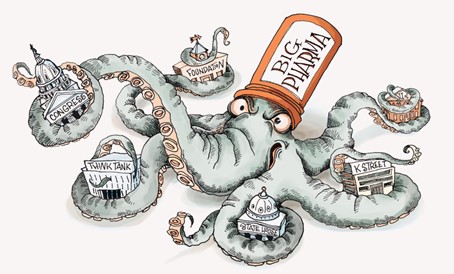
The influence that the pharmaceutical industry wields over media outlets is no secret. As of 2018, an estimated 70% of all news advertising in the US came from pharmaceutical companies. I have written elsewhere about how “reporting” on medical issues can be difficult to distinguish from outright marketing for drug companies.
Social-media platforms are not immune to this influence, whether it comes via advertising dollars; “partnerships” such as that between the CDC Foundation and MailChimp (which like many other platforms, has an explicit policy of censoring content about vaccines that does not align with the positions of the CDC and the WHO); direct investment, such as that of Google’s parent company Alphabet; or indeed at the behest of politicians such as Congressman Adam Schiff, who last year wrote to the CEOs of Amazon, Facebook and Google, requesting that those companies censor information and products that did not conform to the officially sanctioned position on vaccines. All three complied.
So it should come as small surprise that both Google and YouTube have now taken to removing content supportive of hydroxychloroquine, a drug that is no longer covered by patent, and can be made and sold by any generic producer, for a fraction of the price that Gilead, for example, might charge for its still-patented Remdesivir. Twitter and Facebook have likewise removed posts about the drug, most notably–and with no visible sense of irony–removing posts of the video in which the Frontline Doctors speak out about widespread media censorship of the topic. (You can now see those videos on Bitchute.)
One need not have an opinion on the merits of the drug hydroxychloroquine in order to recognize that something very odd is happening here. Something that doesn’t seem to have anything to do with free and open inquiry or honest scientific discourse.
Many argue that the politicization of this drug is founded in a desire to unseat President Trump, that the opposition to it is primarily because it was endorsed by Trump, and if it is deemed to be a failure (or even better, dangerous to patients) it will be a powerful strike against the president. That may well be part of what has motivated this. But there is another motivation, having to do with the desire to push a more expensive medication onto the market, and to push a new vaccine on the world’s population.
More broadly, it has to do with the narrative that those in the business of selling drugs demand we believe: that we are all in desperate need of their products (but only the ones still under patent) if we are to be healthy–or indeed, if we are to survive at all.
If it turns out that this “new” virus is easily treatable, with hydroxychloroquine or anything else, then the industry’s dreams go up in smoke. If hydroxychloroquine turns out to be a safe and effective way of treating Covid-19 (as multiple studies and the experience in many other countries outside of the US indicate it may be) then there is much less reason for anyone to receive a vaccine for it, let alone the entire world’s population. Likewise, there is no pressing need to develop a new, more expensive treatment.
But even more than that: If it turns out that hydroxychloroquine is after all a safe and effective treatment for Covid-19, then this whole episode – the silencing of dissenting voices, the “fact-checking” on social media, the campaigns against “misinformation” – will be revealed in plain sight, for what it has always been: Nothing more than a well-funded marketing campaign and damage-control effort on behalf of the industry that wants you to believe that you need to use its expensive products in order to go on living.
So when a group of doctors took to the steps of the US Supreme Court and told the world how they were having success using a cheap anti-malarial that had been in use for 65 years to treat the most deadly contagion of our generation, it was a massive blow to the narrative upon which the pharmaceutical purveyors’ success depends. And over the next few days, as viewers engaged in a race with the censors, quickly downloading videos before they were removed, to post them on other platforms… it became clear that the censors and the gatekeepers had lost control of the conversation.
This is not only about hydroxychloroquine. Every time media outlets or social-media platforms engage in outright censorship of content, in a way that happens to benefit pharmaceutical companies, both parties lose just a little more credibility. The actions we are witnessing now are not the actions of an industry confident in the value of what it provides to the world. They are the actions of a desperate, threatened creature. They are the actions of an entity that is not strengthened by the truth, but weakened by it. That is what these (increasingly obvious) acts of censorship tell us. What we are witnessing are the pangs of a lumbering, wounded, behemoth.
Bolivia general strike exposes Canada’s undemocratic policy
By Yves Engler · August 7, 2020
If Indigenous lives really mattered to the Trudeau Liberals the Canadian government would not treat the most Indigenous country in the Americas the way it has.
Canada’s policy towards Bolivia is looking ever more undemocratic with each passing day. A general strike launched on Monday in the Andean nation is likely to further expose Canada’s backing for the alliance of economic elites, Christian extremists and security forces that deposed Bolivia’s first Indigenous president.
Hours after Evo Morales was ousted in November, foreign affairs minister Chrystia Freeland released a statement noting, “Canada stands with Bolivia and the democratic will of its people. We note the resignation of President Morales and will continue to support Bolivia during this transition and the new elections.” Freeland’s statement had no hint of criticism of Morales’ ouster while leaders from Argentina to Cuba, Venezuela to Mexico, condemned Morales’ forced resignation.
The anti-democratic nature of Canada’s position has grown starker with time. Recently, the coup government postponed elections for a third time. After dragging their feet on elections initially set for January the “interim” government has used the Covid-19 pandemic as an excuse to put off the poll until mid-October. But, the real reason for the latest postponement is that Morales’ long-time finance Minister, Luis Arce, is set to win the presidency in the first round. Coup President Jeanine Áñez, who previously promised not to run, is polling at around 13% and the main coup instigator, Luis Fernando Camacho, has even less popular support. To avoid an electoral drubbing, the coup government has sought to exclude Morales’ MAS party from the polls.
After ousting Morales the post-coup government immediately attacked Indigenous symbols and the army perpetrated a handful of massacres of anti-coup protesters. The unconstitutional “caretaker” regime shuttered multiple media outlets and returned USAID to the country, restarted diplomatic relations with Israel and joined the anti-Venezuela Lima Group. They also expelled 700 Cuban doctors, which has contributed to a surge of Covid-19 related deaths. In a recent five day period Bolivia’s police reported collecting 420 bodies from streets, houses, or vehicles in La Paz and Santa Cruz.
The pretext for Morales’ overthrow was a claim that the October 20, 2019 presidential election was flawed. Few disputed that Morales won the first round of the poll, but some claimed that he did not reach the 10% margin of victory, which was the threshold required to avoid a second-round runoff. The official result was 47.1 per cent for Morales and 36.5 per cent for US-backed candidate Carlos Mesa.
Global Affairs Canada bolstered right-wing anti-Morales protests by echoing the Trump administration’s criticism of Morales’ first round election victory. “It is not possible to accept the outcome under these circumstances,” said a Global Affairs statement on October 29. “We join our international partners in calling for a second round of elections to restore credibility in the electoral process.”
At the same time, Trudeau raised concerns about Bolivia’s election with other leaders. During a phone conversation with Chilean president Sebastián Piñera the Prime Minister criticized “election irregularities in Bolivia.” Ottawa also promoted and financed the OAS’ effort to discredit Bolivia’s presidential election.
After the October 20 presidential poll, the OAS immediately cried foul. The next day the organization released a statement expressing “its deep concern and surprise at the drastic and hard-to-explain change in the trend of the preliminary results [from the quick count] revealed after the closing of the polls.” Two days later they followed that statement up with a preliminary report that repeated their claim that “changes in the TREP [quick count] trend were hard to explain and did not match the other measurements available.”
But, the “hard-to-explain” changes cited by the OAS were entirely expected, as detailed in the Washington-based Centre for Economic Policy Research’s report “What Happened in Bolivia’s 2019 Vote Count? The Role of the OAS Electoral Observation Mission”. The CEPR analysis pointed out that Morales’ percentage lead over the second place candidate Carlos Mesa increased steadily as votes from rural, largely Indigenous, areas were tabulated. Additionally, the 47.1% of the vote Morales garnered aligned with pre-election polls and the vote score for his MAS party.
Subsequent investigations have corroborated CEPR’s initial analysis. A Washington Post commentary published by researchers at MIT’s Election Data and Science Lab was titled “Bolivia dismissed its October elections as fraudulent. Our research found no reason to suspect fraud.” More recently, the New York Times reported on a study by three other US academics suggesting the OAS audit was flawed. The story noted, “a close look at Bolivian election data suggests an initial analysis by the OAS that raised questions of vote-rigging — and helped force out a president — was flawed.”
But, the OAS’ statements gave oxygen to opposition protests. Their unsubstantiated criticism of the election was also widely cited internationally to justify Morales’ ouster. In response to OAS claims, protests in Bolivia and Washington and Ottawa saying they would not recognize Morales’s victory, the Bolivian president agreed to a “binding” OAS audit of the first round of the election. Unsurprisingly the OAS’ preliminary audit report alleged “irregularities and manipulation” and called for new elections overseen by a new electoral commission. Immediately after the OAS released its preliminary audit US Secretary of State Mike Pompeo went further, saying “all government officials and officials of any political organizations implicated in the flawed October 20 elections should step aside from the electoral process.” What started with an easy-to-explain discrepancy between the quick count and final results of the actual counting spiraled into the entire election is suspect and anyone associated with it must go.
At a Special Meeting of the OAS Permanent Council on Bolivia the representative of Antigua and Barbuda criticized the opaque way in which the OAS electoral mission to Bolivia released its statements and reports. She pointed out how the organization made a series of agreements with the Bolivian government that were effectively jettisoned. A number of Latin American countries echoed this view. For his part, Morales said the OAS “is in the service of the North American empire.”
US and Canadian representatives, on the other hand, applauded the OAS’ work in Bolivia. Canada’s representative to the OAS boasted that two Canadian technical advisers were part of the audit mission to Bolivia and that Canada financed the OAS effort that discredited Bolivia’s presidential election. Canada was the second largest contributor to the OAS, which received half its budget from Washington. In a statement titled “Canada welcomes results of OAS electoral audit mission to Bolivia” Freeland noted, “Canada commends the invaluable work of the OAS audit mission in ensuring a fair and transparent process, which we supported financially and through our expertise.”
A General strike this week in Bolivia demanding elections take place as planned on September 6 will put Canadian policy to the test.
Australia: Willing Pawn in US Struggle with China
By Tony Cartalucci – New Eastern Outlook – 07.08.2020
Upon reading Australia’s new defense strategy, one might think its authors believe they are surrounded by nations invaded and destroyed by China with Australia next in line.
News headlines declare, “Australia’s new defence strategy unveils a significant strategic shift in foreign policy to meet new threats from China,” “China the unspoken threat at centre of new defence strategy,” and “Australia to buy ship-killing missiles and shift focus to Indo-Pacific” to “to protect overseas forces, allies and the mainland against rising threats including China.”
The “threat” of China – the articles and the new defense strategy argue – requires Australia to spend billions on weapons bought from the United States and to depend more heavily on the US for Australia’s protection.
Yet in the same breath, Australia’s media openly admits that up until now, Australia’s military has spent much of its time contributing to America’s many and still-ongoing wars of aggression around the globe from Libya and Syria to Iraq and Afghanistan. Most recently, Washington has recruited Australia to help bolster its presence in the Strait of Hormuz in an effort to menace Iran as well.
In one of the above mentioned articles it’s admitted that:
For decades Australia has been quick to send troops, naval vessels and planes to help the United States wage wars on distant shores.
Despite all but admitting the US – not China – is engaged in a global campaign of armed aggression and that Australia is a willing accomplice – Australia’s new defense strategy points the finger at China as the ultimate global threat.
A likely explanation for this contradictory worldview among Australian policymakers is the possibility that deep-pocketed lobbyists from Washington still hold more sway over Australia’s political levers than Australian businesses and certainly the Australian public – and plan to collectively squeeze Australia for billions in arms sales for missiles and other weapon systems pointed at what is otherwise Australia’s largest and most important economic partner – China.
Not only does this fill up the coffers of corporations like Boeing, Lockheed Martin, Raytheon, and others, but Australia’s apparently hostile posture toward China will most certainly taint relations between the two nations, creating further conflict, and requiring continued and increased weapon sales well into the future.
Should any conflict erupt between the US and China, Australia will find itself a much closer target than the US – a sacrificial pawn of sorts that will bear the full brunt and consequences of any potential US-Chinese hostilities.
Well-Timed “Cyber Attacks” Help Sell an Otherwise Unappealing Defense Strategy
The new defense strategy – long in the works – was unveiled only after a healthy dose of recent and mysterious “cyber attacks” Australian security agencies attributed with no evidence to China.
Again – the irony here is that the US has by far demonstrated itself to be as much a threat in cyberspace as it is to sovereign nations and their physical territory, and much more so than China.
Regarding Australia specifically, a 2013 Guardian article titled, “NSA considered spying on Australians ‘unilaterally’, leaked paper reveals,” would note that a:
The US National Security Agency has considered spying on Australian citizens without the knowledge or consent of the Australian intelligence organisations it partners with, according to a draft 2005 NSA directive kept secret from other countries.
The US National Security Agency (NSA) has been revealed to have compromised communications worldwide, hacked the phones of national leaders both friend and foe, infiltrated and created backdoors in Western-manufactured high tech hardware, and carried out offensive cyber attacks against nations around the globe.
There is also a growing body of evidence that suggests many attacks attributed to nations like Russia and China – like the one recently carried out against Australia – were either fabricated entirely, or in fact carried out by actors in the US itself.
But what better way is there to sell the otherwise unpopular idea of Australia buying billions of dollars of weapons from America and poisoning relations with China than to cite an alleged act of aggression from China that is nearly impossible to attribute one way or the other? The Western media’s clout has in the past and continues to be much more persuasive than fact or common sense in the short-term.
Other analysts have pointed out Australia’s new defense policy is out of touch with reality. It will also do much more to undermine Australia’s national security than underwrite it.
While it is sensible for nations to ensure they have a credible deterrence against all forms of aggression regardless of the nation of origin, Australia’s defense posture has it facing a nation clearly more interested in economics than conquest, and facing away from a nation not only openly and repeatedly carrying out aggression worldwide, but one increasingly turning on its own allies for not exhibiting enough zeal against its many and multiplying enemies.
While Australia commits billions to buying American weapons and buying into Washington’s continued and growing confrontation with China – in the end – Australia will need to pick between fading with the US economically or finally accepting China’s rise regionally and globally and Australia’s role as a partner with China rather than part of America’s “primacy” over it.
Again – the irony here is of course that the most likely threat to Australia’s national security will not be from a rising China eager to do business with Australia, but a scorned Washington seeking increasingly aggressive means to force Australia back into its traditional role of buttressing US primacy.
Popular Resistance: Armed Syrian Arab Tribes Able to Defeat US-SDF Alliance, Ex-Diplomat Reveals
Sputnik – 07.08.2020
Earlier this week, a group of Syrian Arab tribes representatives broke into the local headquarters of the Syrian Democratic Forces (SDF) in the cities of Deir ez-Zor, Diban, and Al-Hawaij in the eastern Deir ez-Zor Province.
Seyed Hadi Afgahi, an Iranian expert on the Middle East, and ex-diplomat at the Iranian embassy in Beirut, believes that Syrian Democratic Forces (SDF) units play a destructive role in terms of Syria’s security and stability, but there are certain forces that can break them for good.
“After Daesh had been defeated, the Americans created an alternative force to destroy Syria, the Syrian Democratic Forces (SDF), which is a mixture of Arabs and Kurds, and plays a destructive role in terms of Syria’s stability and security. The Americans armed them and used them as a proxy to take control of oil in Eastern Syria. In fact, the United States is plundering Syrian oil reserves through these forces. That is why a popular resistance is being formed in Syria, similar to the one in Iraq in 2003, whose armed guerrillas repeatedly dealt a serious blow to the American military contingent in Iraq, forcing Barack Obama to conclude an agreement. This is exactly the way of forming a popular resistance among Arab tribes that is gradually gaining strength in Syria,” he said.
“Moreover, some of the Arab tribes elders’ sons in the area of Deir ez-Zor and in the east of Al-Hasakah have left their previous military units and returned to their homes, where they are already forming people’s armed resistance backed by the Syrian government. They are expanding their groups and attacking US forces,” he added.
“This is one of the ways to counter US presence in Syria, because currently the Syrian army is not strong enough to resist and is unable to strike, therefore the best way is to opt for popular resistance that can ‘strike and smash’”, the former diplomat concluded.
Afgahi’s comments come days after representatives of Syrian Arab tribes stormed several SDF headquarters in the cities of Deir ez-Zor, Diban, and Al-Hawaij in the eastern Deir ez-Zor Province. The armed tribesmen also detained SDF militants present in the buildings at that moment.
The storming of the SDF headquarters in the province happened after representatives of the tribes protested against arbitrary actions by militant groups supported by the US. The demonstration was held against a recent surge in killings of elders and sheikhs of the local tribes by the SDF militants. The protesters demanded that the group hand over those responsible for the killings.
The SDF and other Kurdish groups currently control most of Syria’s oil-rich east with the support of US troops, who have been tasked with “keeping” the local crude fields since October 2019 from alleged attempts by Daesh militants to seize them. The Syrian government has repeatedly slammed the presence of a US military contingent in the country as illegal since they didn’t receive a mandate either from Damascus or the UN.
Palestinian Woman Dies after Being Shot during Israeli Army Raid

Israeli forces fire at Palestinians in the West Bank on 15 March 2019 [Nedal Eshtayah/Anadolu Agency]
Palestine Chronicle | August 7, 2020
A Palestinian woman died after being shot on Friday by Israeli soldiers during a raid in the West Bank city of Jenin.
The Health Ministry confirmed that Dalia Samudi, 23, succumbed to her critical wounds after being hit by live bullets that penetrated her chest, liver and pancreas. She was taken to the hospital, where she was later pronounced dead.
Israeli forces raided al-Jaberiyyat neighborhood, where they interrogated and threatened to re-arrest a former prisoner after breaking into his house. The raid sparked confrontations during which Israeli troops opened fire towards local teens who attempted to block their passage.
According to her friend, Samudi was trying to close the window in order to prevent tear gas from entering her home.
Director of the Palestinian Red Crescent Society (PRCS) Mahmoud al-Sa‘di confirmed that a Samoudi was hit in the chest with a bullet fired by Israeli forces while in her house during the raid.
Al-Sa‘di added that the forces directly opened fire at the ambulance which arrived at the scene.
Hiroshima, Nagasaki 75 Years On, Washington Still Playing Terror Card

Strategic Culture Foundation | August 7, 2020
Seventy-five years ago this week the world crossed an infernal threshold, with the dropping of two atomic bombs on Japan by the United States. Humankind had gained the technological capability for inflicting mass, instantaneous annihilation.
The destruction of Hiroshima and Nagasaki along with over 200,000 lives – 90 per cent of whom were civilians – was not a military act to end the Second World War, as the official American narrative would have us believe. It was a political act to begin the Cold War, deliberately carried out by American leaders to assert U.S. hegemony against the Soviet Union and all others. It was an act of fiendish, premeditated mass murder – genocide – with the political objective of instilling terror against all perceived adversaries of American ambitions for global dominance.
Many historians, including respected American scholars, have verified that the atomic bombing of Japan had nothing to do with swiftly ending the Pacific War and “saving U.S. lives”. It was simply an act of unspeakable barbarism for political aims to do with winning the anticipated Cold War. The bombs were dropped just as the Soviet Red Army entered the Korean Peninsula to augment the fight against Japanese imperial forces, as was previously agreed by Stalin, Roosevelt and Churchill at the Yalta conference of war-time allies back in February 1945. However, by the time of August 1945, Washington and London had moved considerably to adopt a more hostile position against Moscow, with a view to challenging the Soviet Union for spheres of influence in the postwar world.
There is no doubt that the indiscriminate mass murder of Japanese civilians with a new weapon of unprecedented savagery was carried out as a demonstration of psychopathic power by the United States. It was to be the ultimate warning. In short, it was a supreme act of terrorism. The earlier British-American aerial bombing of German cities and the U.S. firebombing of Tokyo inflicted more accumulated deaths, but the instantaneous destruction at Hiroshima and Nagasaki introduced a new terror lever, one that spelt total annihilation with single bombs.
By 1949, Washington’s terror monopoly lost its ace value when the Soviet Union developed its own atomic weapon. For over seven decades, the world has lived under the shadow of nuclear catastrophe, sometimes coming perilously close, as in the Cuban missile crisis of 1962.
Today, the U.S. and Russia each possess an estimated 6,000 nuclear weapons – accounting for over 90 per cent of the world’s total arsenal. Existing stockpiles are much reduced in number compared with past decades. Nevertheless, each one of these contemporary devices has an explosive power many times that of the bombs dropped on Hiroshima and Nagasaki. It is inconceivable that human life and the planet as we know it would survive a nuclear war. For that onerous reason, and to avoid “mutually assured destruction”, Washington and Moscow had cooperated historically to draw up several arms control treaties. But over the past two decades, the U.S. side has revoked treaty after treaty. The Trump administration is threatening to scrap the last remaining one, the New START accord which is due to expire in February next year unless it is renewed, which Washington seems ambiguous about. A policy of calculated ambiguity, it may be averred.
There can be little doubt that the Cold War is back with a vengeance as far as the American government and its propagandist corporate news media are concerned. In recent years and indeed weeks, the vilification and smears heaped upon both Russia and China have intensified to a frenzy. The week-in, week-out paranoia and hostility emanating from Washington towards Moscow and Beijing is on par with the unhinged red-baiting ravings of the McCarthyite era in the 1950s. The return of Cold War mindset in Washington is a concomitant of political and economic crises besetting American power as its presumed global empire lurches towards collapse.
In this context, the remembrance of Hiroshima and Nagasaki takes on an altogether more urgent purpose. It has to be recognized that Washington used nuclear annihilation as a terror weapon and it continues to play the same nefarious tactic to this day. There has never been an official apology out of Washington for the monstrous crime it committed in August 1945 because the American rulers have always wanted to maintain the “right” to terrorize others. The current warmongering out of Washington towards Russia and China amid baseless, provocative accusations, as well as military force build-up in sensitive regions, against the backdrop of unfettered arms development, all can only mean one thing: Washington is trying to use the terror card to subjugate others while running the diabolical risk of inciting a nuclear war.
The world should know that American politicians and their media boosters are collectively acting as a madman. American power ultimately relies on coercive terror. But Russia and China will not tolerate such psychopathic conduct, and, thankfully, have the defensive means to counter-threat. The American pretense of virtue is finally being exposed for the ugly reality that lies beneath.
Featured Video
John Mearsheimer: Why Russia Gains By Hitting Ukraine Harder
or go to
Aletho News Archives – Video-Images
Book Excerpt
Measles and Mortality
Informed with Aaron Siri| November 19, 2026
Given the news coverage around measles and mortality, I decided to share the section of my book, Vaccines, Amen, that covers precisely this topic. Help me spread a bit of reality into the media hysteria around this issue. Here is that section of the book… continue
Blog Roll
 Aletho News
- John Mearsheimer: Why Russia Gains By Hitting Ukraine Harder
- Argentina’s Perito Moreno Glacier Joins Antarctica and Arctic In Defying Doomsday Melt Claims
- ‘Chinagate’ Is Here
- Iran, four other countries condemn US plans to deploy weapons in outer space
- US media brings back the Iraq war playbook and why it won’t work
- Zakharova schools German FM on history basics
- Germany to produce drones for Ukraine
- Merz takes a swipe at Merkel over Ukraine’s NATO bid
- Measles and Mortality
- New York State Demands Amish Adopt Its Beliefs or Leave
- If Americans Knew
- An error has occurred; the feed is probably down. Try again later.
- No Tricks Zone
- Alarmist Climatologists In Shock! 2026 Atlantic Hurricane Season Sees Lowest Count In 101 Years
- New Study: Modern Temps Are Among The Coldest Of The Last 10,000 Years In East Central Europe
- Germany’s Renewable Energies Lead to 1.4 Billion Euro Electric Power Trade Deficit
- Argentina’s Perito Moreno Glacier Joins Antarctica and Arctic In Defying Doomsday Melt Claims
- New Study: Barents Sea Temperatures Were Warmer And Sea Ice Less Extensive In The 1700s Than Today
- German Authorities Start Initiative To Evaluate Public Register For Climate “Disinformation” Spreaders!
- Zonal Asymmetry of Temperature Change in the Antarctic Circumpolar Current
- New Study: The Net Fossil Fuel Contribution To Rising Atmospheric CO2 Has Been Zero For 500 Years
- Germany’s Green Energy Transition Becoming Increasingly Expensive…Another 6 Trillion Euros!
- Sudden Stratospheric Warming, Powerful El Niño Combination May Lead To Extreme Europe Cold, Energy Crisis!

