The current geopolitical situation in North Africa and the Sahel can be radically changed and hardened if the new Algerian constitution allows the army to participate in operations outside its national borders. Paris and Washington are already supporting this change.
Article 95 of the new Constitution under review will open up the possibility for the “National People’s Army” to participate in “efforts to maintain peace at the regional and international level”. None of the five previous Algerian constitutions since independence from France in 1962 offered this possibility. As it appears in the constitutional project, the decision of this eventual military participation abroad must be approved by two thirds of the Parliament and it would not depend on the unilateral decision of the president, who is also the commander-in-chief of the Armed Forces.
According to the text, Algeria would always act in response to the mandate of the UN, the Arab League or the African Union. The interpretations of the measure, however, go far beyond what is formally written on paper. In this specific case, a careless interpretation and an imprudent decision could generate terrible risks.
Algeria participated in two of the Arab-Israeli and Libyan wars against the United States’ incursions. In peace missions, the African country also sent forces to Cambodia, Ethiopia-Eritrea, Haiti and Lebanon.
Some opposition voices interpret the new initiative more as “an act of servitude to the imperialist powers” than as an “evolution of the concept of national security”, which must be taken into account in the study of the project. After all, is Algeria really guaranteeing its own interests by sending troops abroad in advance? Or would it be serving foreign interests as well?
Several specialists on military topics are criticizing the reform and point to it as absolutely anti-strategic in a particularly delicate “transition” period in the history of the country and the entire region. Others add to this circumstance the concern about the global pandemic of COVID-19. In the specific case of the country, the new coronavirus has left the streets free from the protests that were calling for a regime change since February 22, 2019.
The new Algerian constitutional project appears to be particularly interesting for French interests in the country, from different perspectives. For example, one of the innovations brought by the new law is the possibility for citizens with dual nationality to occupy high positions in the public administration, which has never been possible since the country’s independence and will particularly benefit France, due to the large number of French people in the region.
On a military level, Paris is particularly interested in Algerian aid in the Mali issue, since France is the foreign country most active in fighting this country’s jihadists. Now, under an international mandate, Algiers could send troops to Mali and, due to its clear interest in seeking closer ties with France (as seen in the constitutional project), everything indicates that the country could occupy a position of satellite of the French interests in Africa. It is also necessary to remember that, due to the geographical proximity, many times, Mali terrorists have made incursions into Algerian territory, which also raises the Algerian interest in the fight against the jihadists. Recently, the government of Emmanuel Macron provided a symbolic aid of 400,000 euros to Algeria. Finally, everything indicates a convergence of interests between Algeria and France.
By its part, the United States is taking the opportunity to show solidarity with Algeria. Washington recently sent two million dollars in aid to fight the coronavirus in Algeria. Amid the global dispute for medical and health diplomacy, Washington does not want to give space to Russia and China – which has also joined the group of Algeria’s main arms suppliers; Algeria is Africa’s main arms buyer, with 6% of its product for this sector.
Lately, bilateral trade between the United States and Algeria has increased significantly, with Washington interested in being more deeply involved in current issues in North Africa. Indeed, the new Constitution, if passed, will be the perfect opportunity for Americans. The same means that try to favor French interests can serve for American ones; and, possibly, they should favor even other world powers that come to invest in political and economic questions of Africa.
In fact, if Algeria ends its non-interventionist doctrine, the diplomatic impact on North Africa and the Sahel could be considerable. The new Algerian leadership seems ready to regain the international weight it lost in the Buteflika era. Being closer to France and opening such possibilities for Washington is a current strategic path for Algeria to become a western military satellite in Africa, increasing its role in international relations. The consequences of such decision will be revealed soon.
Lucas Leiroz is a research fellow in international law at the Federal University of Rio de Janeiro.
Alarms are sounding in Europe as Turkey, Russia and Arab states could potentially agree on shared influence in Libya, and therefore the entirety of the eastern Mediterranean, according to some experts. This comes as European states have no influence over the war in Libya despite it occurring on its southern doorstep and Turkey, Russia and Arab states continue to gain influence.
The direct intervention of Turkey in Libya, who has sent its own intelligence officers, military advisers and thousands of Syrian jihadists to support the Muslim Brotherhood Government of National Accords (GNA), based in Tripoli and led by the ethnic Turk Fayez al-Sarraj, has limited further gains by the Libyan National Army (LNA). The mobilization of thousands of Turkish and Syrian jihadists and the massive shipment of weapons to Tripoli has slowed down the offensive of the LNA, led by Field Marshal Khalifa Belqasim Haftar. Haftar was proclaimed on April 27 as the only leader of the country, in which most of the international community found to be a provocative move as they believe it limited the likelihood of a political settlement to the conflict.
Confident of his past military superiority and assured in the determination that the United Arab Emirates, Saudi Arabia and Egypt have to counter Turkey’s efforts to create hegemony in the Eastern Mediterranean, Haftar continues to ignore calls for a political solution to the war. Sarraj also ignores such calls confident in the backing he has from Turkey.
Russia also condemned Haftar’s offensive and called for negotiations on peace. However, the U.S. claims that Russian fighter jets arrived in Libya to protect the withdrawal of volunteers from the Russian Wagner group in a decision agreed upon with Ankara, something that Moscow denies. Both Europe and the U.S. fear that Russia may obtain the use of a naval base in eastern Libya, that the LNA securely controls, in the future.
Despite these potentialities, it is unlikely the war between GNA-backed jihadists and the LNA will come to a conclusion anytime soon, unless there is a drastic change caused by external forces. Turkey in the midst of an economic crisis is unwilling to use the full force of its military in Libya and is rather acting as a conduit between the GNA and Qatari-funded but Turkish-trained Syrian jihadists. Egypt is contemplating using its military in Libya to “fight against Libyan extremists and terrorists supported by Turkey.” This too could be a game changer since Egypt has the means, logistics and capabilities to successfully intervene in Libya in favour of the LNA.
France has also not hidden away with its support for Haftar, finding him to be a leader that would advance French interests in the Mediterranean that is in direct conflict with Turkey. The GNA has also signed a memorandum with the Muslim Brotherhood government to cut through Greece’s maritime space for the exploitation of gas in that area of the Mediterranean, forcing Greece to get embroiled in the Libyan mess. Meanwhile, Italy has backed the GNA while Germany is trying to act as referee, showing once again there is no common European position.
The European ‘Irini’ (meaning peace in Greek) operation is committed to prevent maritime-bound arms delivery to Libya, i.e. Turkish arms to Libya. This is a maritime surveillance operation to enforce the United Nations-imposed arms embargo on Libya, but in reality, it has not prevented Turkey’s deliveries to the GNA while Egypt continues to supply the LNA over the land border.
The situation shows that the European Union is unable to establish itself as a main actor in a conflict that brings together strategic political and economic interests a few nautical miles from its southern coast. With the U.S. realistically absent, Turkey backing the GNA and Russia and the Arab + Greece alliance backing the LNA, these are the main protagonists.
In Paris, and seeing the failure of his diplomacy parallel to the EU, the Foreign Minister, Jean-Yves Le Drian, warns about the “Syrianization of Libya,” while spokesman of Turkish President Recep Tayyip Erdoğan’s gloats: “France and other European countries supporting Haftar are on the wrong side of history.” Seen in this light, the balancing role Russia can play in Libya to contain Ankara could even be positive for Europeans.
However, the main reason that shared influence will not be agreed upon is because the GNA-Turkish deal to steal Greece’s maritime space relies on a supposed share maritime space between Libya and Turkey. And therein lays the problem – it is the LNA, who has rejected the memorandum, that controls the eastern Libyan coast that supposedly shares a maritime border with Turkey. So long as the LNA controls eastern Libya, Turkey will always strive for a GNA victory to legitimize the memorandum. Once again, the European Union remains divided on Libya, despite the Muslim Brotherhood government aiming to carve out the maritime space of a member state.
Paul Antonopoulos is an independent geopolitical analyst.
Last week, a raft of newspaper headlines declared “Canadians still support climate action: poll.” We are intended to believe that “COVID-19’s economic and health challenges haven’t diminished” ordinary people’s enthusiasm for green policies. But this poll has oodles of problems.
First, it was sponsored by Clean Energy Canada. Embedded within the term clean energy is the philosophical argument/political statement/moral judgment that our current, dominant forms of fossil fuel-based energy are dirty.
A ‘clean energy’ outfit isn’t neutral. Its entire purpose is to promote some ideas and to disparage others. What actually happened here is an organization with an agenda drew up a fantastical wish list, and then invited Canadians to agree that the items on that wish list are awesome.
Big surprise that lots of people think upgrading broadband Internet service and public transit are a good idea – especially when the pollster, Abacus Data, declares them “part of an effort to attract companies to invest and grow businesses in Canada.”
Big surprise that lots of people like the idea of “Creating more spaces in towns and cities where people can walk and cycle without fear of vehicles.” But the realistic questions, surely, are:
– how much do such projects cost?
– what other ways might we need/choose to spend the same money?
Big surprise that, in the words of Clean Energy Canada’s press release,
91% are interested in the idea of Canada as the world leader in electric buses.
As if that were a likely scenario. Canada contains half of 1% of the world’s total population. We are a geographically huge country, with an exceptionally low population density. This is just delusional.
Big surprise that many people are in of favour “Making public transit free to help get more cars off the road and reduce emissions and congestion.” But nothing is free. The germane questions are:
– who should cover some portion of public transit costs – those actually using it, or everyone via their tax contributions to various levels of government?
– is a devastating economic crisis the right time to increase government expenditures and responsibility?
This poll would have been truly useful had it asked people whether the coronavirus pandemic has changed their attitudes toward using public transit. Are they now more likely to pack themselves into crowded commuter trains, city buses, and subways than a year ago? Less likely? Or the same?
I relied on public transit during the three decades I lived in downtown Toronto. Prior to this pandemic, I would never have described myself as a germophobe. But I now reside in a small town – and the world has changed.
The next time I visit Toronto, I’m unlikely to repeat my previous routine – parking the car an hour away, boarding a commuter train, relying on subways, buses, and streetcars within the city, then boarding another commuter train.
I now see public transit as risky. For me and for others. The idea of taking any form of public transit during rush hour fills me with dread.
I can’t be the only one.
Public transit has always struggled. Ridership was already in decline is many jurisdictions, before the pandemic struck (see here, here, here, here, here, here, here, and here).
Services such as Uber had already altered the landscape. During these widespread lockdowns, more people have discovered that working from home is possible and desirable. Add in infection concerns, and public transit may never recover.
This is not medical advice. This is a petition to federal and state governments to urgently publish recommendations for vitamin C intake as a prevention measure against COVID-19.
Introduction
Can vitamin C prevent or alleviate symptoms of acute respiratory tract infections, including COVID-19? (Gorton & Jarvis, 1999) reported 85% decrease of cold and flu symptoms in the test group taking vitamin C, compared with the control group, not taking vitamin C. The test group took vitamin C prophylactically and over the course of disease at 3,000 mg per day (1,000 mg x 3), and an increased dose of 6,000 mg (1,000 mg x 6, hourly) on the first day of symptoms onset. This specific regimen is important: taking a moderate amount of vitamin C prophylactically and during illness, and a larger dose on the first day of symptoms onset.
There is a caveat. The dosage in this study is 1.5-2 times higher than what doctors feel comfortable recommending to the public, as far as I see. Nevertheless, the research reviewed below supports the conclusion that 1.5-2 times lower doses help against broad class of ARTI, including colds and flu, although expectably less. COVID-19 is an acute respiratory tract infection (ARTI). The reasonable assumption is that what helps against multiple prior viral ARTI would help against COVID-19.
Vitamin C Role in the Immune System
Vitamin C does not prevent infection, but it helps the immune system combat it. It has been shown to alleviate symptoms, sometimes to the point where symptoms are not detectable. Thus, a person can feel as if s/he never got sick, since no symptoms ever presented, and may count this as having prevented the illness.
Vitamin C, at its normal level 70 μmol/L, is a necessary part of the immune system. Excess vitamin C intake (over 200 mg/day) is normally excreted in urine. But when a body experiences physiological stress, it consumes the vitamin C present in the blood and thus, needs an increased intake (Hemilä, Vitamin C and Infections, 2017). All existing studies agree on this point. Observations have shown that in such conditions even many grams of vitamin C per day are neither excreted nor accumulate in blood.
(Hemilä & Chalker, 2019) listed several studies, showing that vitamin C levels drop in patients hospitalized with acute respiratory infections to less than 10-35% of the normal level. (Carr, 2017) found that all ICU patients in one hospital had less than on third of the normal vitamin C level.
The rationale behind discovered Vitamin C supplementation
When a person gets a viral respiratory infection, the body starts fighting it using the vitamin C present in the blood. That decreases vitamin C levels in the blood, impairing the immune system, even before the symptoms appear. But if it regularly receives extra vitamin C, it stops excreting it, but consumes in fighting the infection. In the most successful regimens (Ran, 2018), symptoms are used as a signal that the body requires even more vitamin C in order to maintain normal vitamin C blood levels while consuming more of it in fighting the infection. That justifies increased intake of it on the first symptomatic day and until the body overcomes the virus. This time might be shorter than the period for which symptoms exist. The first symptomatic day might have a special significance, possibly because it is when the body has not produced enough antibodies specific to the virus.
Safety
The human body has natural safety valves for vitamin C. First, excess of it is removed in urine. Second, it typically causes diarrhea before getting close to potentially dangerous levels.
Vitamin C has low toxicity and is not believed to cause serious adverse effects at high intakes. The most common complaints are diarrhea, nausea, abdominal cramps, and other gastrointestinal disturbances due to the osmotic effect of unabsorbed vitamin C in the gastrointestinal tract.
Possible Vitamin C Regimen
This is a possible Vitamin C regimen against COVID-19, for adults.
Some doctors recommend taking the higher dose only on the first day of symptoms onset. The dose is for an average 70 kg person. Those weighing much more or less should adjust proportionately. Older and non-healthy persons (i.e., the most at-risk group) should consult their physicians
Possible contra-indications: some kidney diseases, chemotherapy and radiation treatments, cholesterol lowering drugs, diabetes in postmenopausal women (National Institute of Health, 2020). For other people, diarrhea is a sign to decrease or stop taking vitamin C.
It is not expected to completely protect against the Wuhan coronavirus or to approach the effectiveness of HCQ + Zn prophylaxis.
I remind that this is not medical advice, but a starting point for CDC/NIH/FDA and state governments to develop the medical advice. Follow your doctor’s recommendations.
Vitamin C Controversies and Misconceptions
Some confusion surrounds the use of vitamin C because different amounts are used for different purposes and produce different results. The officially recommended minimum intake of vitamin C 75-90 mg per day is just that – the minimum, established long ago to prevent scurvy. Many people exceed this amount simply by eating ordinary food; a medium orange contains 70 mg of vitamin C.
Studies with vitamin C supplementation of less than 1 g/day have shown little or no effect on respiratory infections. This was a cause of the confusion among medical professions. At such amounts, “control” group’s vitamin C intake was not controlled and might have exceeded the amounts taken by the intervention group. Also, low level vitamin C supplementation might provide benefits too low to detect. That might have caused confusion among medical professionals. Further, most studies gave vitamin C either prophylactically or during illness, but not both (Hemilä, Vitamin C and Infections, 2017).
On the high end, mega-doses of vitamin C (like tens of grams per day), delivered intravenously in hospital settings, is successfully used in treatment of many serious diseases and conditions, including late stages of severe cases of COVID-19. They are used for patients with sepsis (Kashiouris, 2020) and acute respiratory distress syndrome. Such doses and associated treatments are beyond the scope of this article.
Thus, this review is only concerned with vitamin C doses of 1 – 3 g/day prophylactically, and 3 – 6 g/day during ARTI. Such doses have been shown helpful in easing ARTI, and safe for almost all people.
Studies Review
Peer Reviewed Papers
(Hemilä, 2017) is a meta-analysis of multiple studies. It concludes that vitamin C is helpful against many infections, especially the common cold. The study suggests a linear dose – effect function up to 6-8 g/day.
(Hemilä & Chalker, 2019) is another meta-analysis. In 12 trials, totaling 1766 patients , vitamin C, given during the time of treatment, reduced ICU stays by an average of 7.8%. The vitamin C doses were relatively small, 1-3 g/day. (In four studies, higher doses were used, but those studies were either excluded from the meta-analysis (Dingchao 1994) or given very low weight in the calculations (Tanako 2000, Fowler 2014, Zabet 2016)). In this study vitamin C was given too little too late.
(Marik & Hooper, 2017) explains that vitamin C acts like a “stress hormone”. Most vertebrates synthesize their vitamin C and increase its production during physiological stress. Humans, as well as primates and guinea pigs, are exceptions to this rule. Therefore, we need to obtain vitamin C from food or supplements, and we may need to increase our intake in times of physiological stress.
(Colunga Biancatelli, Berill, & Marik, 2019) explains concepts behind vitamin C antiviral benefits. Unfortunately, they cite a 2013 review by Hemilä et al., which did not find benefits of vitamin C supplementation, as explained above. The more recent meta-analysis (Hemilä, Vitamin C and Infections, 2017) has firmly established evidence of such benefits.
(Ran, 2018) is a review, showing benefits of taking daily vitamin C supplements before and increasing the dosage when common cold occurs. It proposes a regimen of taking 1 g/day prophylactically while healthy and 3-4 g/day while having a cold.
Beneficial effects of vitamin C supplementation have been reported for
Elderly people with acute respiratory infections
Recurrent acute respiratory distress syndrome
Reducing the severity and duration of the common cold
Reducing the length of hospital stay and symptoms in elderly patients with pneumonia
Reducing the duration of mechanical ventilation in people in ICU
Preventing the common cold in people who are vitamin C deficient
Preventing the incidence of pneumonia in people who are vitamin C deficient.
Studies have shown that excretion of vitamin C is decreased during infections, such as the common cold, suggesting that more is utilized during times of need.
If you choose to supplement with vitamin C as a preventive, you might want to start with 2 grams a day administered orally
To use vitamin C supplementation as a treatment for colds or flus (remember we still have the flu going around), the best results have been obtained by administering 6-8 g (6,000-8,000 mg) immediately upon appearance of the first symptoms, then continuing that dose daily until the symptoms subside.
8 g/day is likely to cause diarrhea.
Remarks
The effect of prophylactic doses of vitamin C in COVID-19 infection have not been quantified. But even if the effect were small (and there is no reason to think that it is small), when the infection spreads exponentially, it decreases the exponential coefficient. It is a possibly large impact, at a miniscule cost, with almost no risk. Further, vitamin C seems to help the immune system to decrease the viral load even if it does not alleviate the symptoms.
Taking vitamin C is not the only helpful prophylactic measure receiving less attention than it deserves. Another research piece shows similar benefits of cod liver oil, used in this country for hundreds of years, or its equivalent – a diet rich in wild caught salmon or mackerel.
Physiological stress is not the same as psychological stress. I do not know whether lockdowns and forced social isolation cause physiological stress.
While it is not the role of the federal government to recommend diets and vitamin supplements, Google and Facebook delete and hide information about potentially effective COVID-19 prophylactics and treatment, if it does not come from WHO or a government. Thus, to allow such information to reach the public, the federal government should either rein in Google and Facebook, or itself make the recommendations.
I prefer the name Wuhan coronavirus the COVID-19 pathogen. This is where the virus was detected first. The name SARS-CoV-2 is associated with SARS of 2003, which had a much higher mortality ratio. This association is misleading and causes unnecessary panic.
To avoid the appearance of bias, I excluded from this review most known enthusiasts of the vitamin C. I also did not rely upon the peer-reviewed Journal of Orthomolecular Medicine, although it is a recognized medical journal, and included in multiple indexes.
It is impossible not to mention Linus Pauling in this article. I do not know whether he was right or wrong about vitamin C. It might be that some of his ideas were correct, but explanation and/or clinical recommendations were not.
A medical group of Eastern Virginia Medical School, headed by Dr. Paul Marik, has developed and published its own COVID-19 prophylactic regimen, including vitamin C, Zinc, and Quercetin. It is occasionally mentioned in comments on this site.
Gorton, H., & Jarvis, K. (1999). The effectiveness of vitamin C in preventing and relieving the symptoms of virus-induced respiratory infections. Journal of Manipulative and Physiological Therapeutics. Retrieved from https://doi.org/10.1016/S0161-4754(99)70005-9
Hemilä, H., & Chalker, E. (2019). Vitamin C Can Shorten the Length of Stay in the ICU: A Meta-Analysis. Nutrients. Retrieved from https://www.mdpi.com/2072-6643/11/4/708
Ran, L. (2018). Extra Dose of Vitamin C Based on a Daily Supplementation Shortens the Common Cold: A Meta-Analysis of 9 Randomized Controlled Trials. BioMed Research International. Retrieved from https://doi.org/10.1155/2018/1837634
“We had to destroy the village in order to save it.” The infamous Vietnam era quotation may or may not have been uttered by an anonymous US Army major. It may have been misquoted, revised, apocryphal or invented. But it quickly morphed into an anti-war mantra that reflected attitudes of the time.
For Virginians and others forced to travel the path of “clean, green, renewable, sustainable” energy, it will redound in modern politics as “We had to destroy the environment in order to save it.”
Weeks after Governor Ralph Northam signed Virginia’s “Clean Economy Act,” which had been rushed through a partisan Democrat legislature, Dominion Energy Virginia announced it would reach “net zero” greenhouse gas emissions by 2050. To do so, the utility company will raise family, business, hospital and school electricity bills by 3% every year for the next ten years – as these customers and state and local governments struggle to climb out of the financial holes created by the ongoing Coronavirus lockdown.
Just as bad, renewable energy mandates and commitments from the new law and Dominion’s “integrated resource plan” will have major adverse impacts on Virginia and world environmental values. In reality, Virginia’s new “clean” economy exists only in fantasy land – and only if we ignore “clean” energy CO2 emissions, air and water pollution, and other environmental degradation around the world.
Dominion Energy plans to expand the state’s offshore wind, onshore solar and battery storage capacity by some 24,000 megawatts of new “renewable” energy by 2035, and far more after that. It will retain just 9,700 MW of existing natural gas generation, and only through 2045, build no new gas-fired units, and retire 6,200 megawatts of coal-fired generation. This will reduce in-state carbon dioxide emissions, but certainly won’t do so globally. The company intends to keep its four existing nuclear units operating.
To “replace” some of its abundant, reliable, affordable fossil fuel electricity, Dominion intends to build at least 31,400 megawatts of expensive, unreliable solar capacity by 2045. The company estimates that will require a land area some 25% larger than 250,000-acre Fairfax County, west of Washington, DC. That means Dominion Energy’s new solar facilities will blanket 490 square miles (313,000 acres) of beautiful croplands, scenic areas and habitats that now teem with wildlife.
That’s almost half the land area of Rhode Island, eight times the District of Columbia, 14 times more land than all Fairfax County parks combined – blanketed by imported solar panels. Still more land will be torn up for access roads and new transmission lines. All this is just for Dominion Energy’s solar panels.
The panels will actually generate electricity maybe 20-25% of the year, once you factor in nighttime hours, cloudy days, and times when the sun is not bright enough to generate more than trifling electricity.
Dominion and other Virginia utility companies also plan to import and install 430 monstrous 850-foot-tall bird-chopping offshore wind turbines – and tens of thousands of half-ton battery packs, to provide backup power for at least a few hours or days when the sun isn’t shining and the wind isn’t blowing. The batteries will prevent the economy from shutting down even more completely during each outage than it has during the Corona lockdown. Similar policies across America will impact hundreds of millions of acres.
Most of these solar panels, wind turbines and batteries – or their components, or the metals and minerals required to manufacture those components – will likely come from China or from Chinese-owned operations in Africa, Asia and Latin America … under mining, air and water pollution, workplace safety, fair wage, child labor, mined land reclamation, manufacturing and other laws and standards that would get US and other Western companies unmasked, vilified, sued, fined and shut down in a heartbeat.
It is those minimal to nonexistent laws and regulations that govern most of the companies and operations that will supply the “clean” technologies that will soon blight Virginia landscapes and serve the new “clean” Virginia economy. As Michael Moore observes in his new film, Planet of the Humans, other states that opt for “clean” energy will face the same realities.
Thus far, no one has produced even a rough estimate of how much concrete, steel, aluminum, copper, lithium, cobalt, silica, rare earth metals and countless other materials will be needed. All will require gigantic heavy equipment and prodigious amounts of fossil fuels to blast and haul away billions of tons of rocky overburden; extract, crush and process tens of millions of tons of ores, using acids, toxic chemicals and other means to refine the ores; smelt concentrates into metals; manufacture all the millions of tons of components; and haul, assemble and install the panels, turbines, batteries and transmission lines, setting them on top of tens of thousands of tons of concrete and rebar. All of it beyond Virginia’s borders.
No one has tallied the oil, natural gas and coal fuel requirements for doing all this “Virginia Clean Economy” work – nor the greenhouse gases and actual pollutants that will be emitted in the process.
Nothing about this is clean, green, renewable or sustainable. But Virginia politicians and Dominion Energy officials have said nothing about any of this, nor about which countries will host the mining and other activities, under what environmental and human rights standards.
Will Virginians ever get a full accounting? Just because all of this will happen far beyond Virginia’s borders does not mean we can ignore the global environmental impacts. Or the health, safety and well-being of children and parents in those distant mines, processing plants and factories.
This is the perfect time to observe the environmentalist creed: think globally, act locally. Will that be done?
Will Dominion and Virginia require that all these raw materials and wind, solar and battery components be responsibly sourced? Will it require independently verified certifications that none of them involve child labor, and all are produced in compliance with US and Virginia laws, regulations and ethical codes for workplace safety, fair wages, air and water pollution, wildlife preservation, cancer prevention and mined lands reclamation? Will they tally up all the fossil fuels consumed, and pollutants emitted, in the process?
Science journalist, businessman and parliamentarian Matt Ridley says wind turbines need some 200 times more raw materials per megawatt of power than modern combined-cycle gas turbines. It’s probably much the same for solar panels. Add in the millions of wind turbines, billions of solar panels and billions of backup batteries that would be required under a nationwide Green New Deal, and the combined US and global environmental, human health and human rights impacts become absolutely mindboggling.
If you ignore all the land and wildlife impacts from installing the wind turbines, solar panels, batteries and transmission lines – you could perhaps call this “clean energy” and a “clean economy” within Virginia’s borders. But not beyond those borders. This is a global issue, and the world would likely be far better off if we just built modern combined-cycle gas turbines (or nuclear power plants) to generate reliable electricity – and avoided all the monumental human and ecological impacts of pseudo-renewable energy.
When it’s time to select sites for these 490 square miles of industrial solar facilities, will Virginia, its county and local governments, its citizens, environmentalist groups and courts apply the same rigorous standards, laws and regulations that they demand for drilling, fracking, coal and gas power plants, pipelines, highways, timber cutting and other projects? Will they apply the same standards for 850-foot-tall wind turbines and 100-foot-tall transmission lines as they demand for buried-out-of-sight pipelines?
Virginia’s Clean Economy Act will also plunge almost every project and jurisdiction into questions of race, poverty and environmental justice. Dominion Energy and other utility companies will have to charge means-tested rates (even as rates climb 3% per year) and exempt low-income customers from some charges. They will have to submit construction plans to “environmental justice councils” – even as the companies, councils and politicians ignore the rampant injustices inflicted on children and parents slaving away in Chinese, African and Latin American “clean energy” mines, processing plants and factories.
Government officials, utility industry executives, environmentalists and anyone else who promotes wind, solar, battery and biofuel energy need to explain exactly how they plan to address these issues. Future town hall meetings and project approval hearings promise to be raucous, entertaining and illuminating.
Paul Driessen is senior policy analyst for the Committee For A Constructive Tomorrow (www.CFACT.org) and author of books and articles on energy, environment, climate and human rights issues.
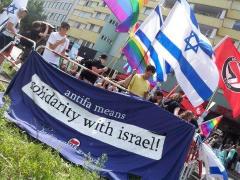
The US “will be designating ANTIFA as a Terrorist Organization,” President Donald Trump has said. The move comes amid anti-police-brutality protests and riots gripping the country, which he has blamed on the “radical left.”
“The United States of America will be designating ANTIFA as a Terrorist Organization,” Trump tweeted on Sunday, offering no further explanation. One day earlier, Trump, as well as Attorney General William Barr, accused the loose-knit group of orchestrating rioting and looting across the country, following the death of George Floyd in Minneapolis on Monday.
If designated as a terrorist group, Antifa would join international groups like Al Qaeda and Hezbollah, as well as domestic organizations like the Aryan Nations and Black LIberation Army, on the government’s blacklist. Before the 9/11 attacks, the list was populated exclusively by foreign groups. However, the post-9/11 Patriot Act expanded the definition of “terrorism” to cover home-grown organizations.
Antifa – whose name is short for ‘antifascist’ – models itself on the European left-wing militias of the 1920s and 1930s. Rising to prominence since Trump’s election in 2016, the group is now known for attacking right-wing demonstrations and speeches, and instigating violence at rallies.
With riots gripping America’s major cities for the last five nights, reports of Antifa organizers directing rioters and providing them with weapons began to surface. Conservatives clamored for Trump to crack down on the militants, and Sunday’s tweet is the first indication that the president intends to do just that.
Immediately after Trump’s statement, Attorney General Barr announced that the Justice Department would use its network of 56 regional Joint Terrorism Task Forces to investigate “the violent radical agitators who have hijacked peaceful protest and are engaged in violations of federal law.”
“The violence instigated and carried out by Antifa and other similar groups in connection with the rioting is domestic terrorism and will be treated accordingly,” a statement from Barr read.
While any forthcoming designation would make it easier to use counterterrorism legislation against violent protesters, targeting Antifa as a group would be a difficult proposition. The organization has no clearly-defined hierarchy or membership, and many disparate groups of leftist militants have used its imagery and slogans.
Some left-wing commenters accused the Trump administration of attempting to “criminalize dissent.” However, the alleged militants have come under scrutiny before, and in countries more liberal than the US. In Germany, where the ‘antifascist’ movement began in the 20th century, intelligence agencies closely monitor Antifa groups, and police union head Ranier Wendt has described their actions as “the basic definition of terrorism.”
The use of violent force by police against journalists, including a Russian correspondent who was pepper-sprayed in the face, is unacceptable, Russia’s Foreign Ministry said, urging the US to investigate the incident.
This comes after a RIA Novosti correspondent, Mikhail Turgiev, and a group of US journalists were attacked by police in Minneapolis while covering the ongoing riots provoked by the death of an African American man, George Floyd. The crew was targeted with rubber bullets and Turgiev was pepper-sprayed, despite showing his press ID.
Police attacks on media staff executing their professional duties are unacceptable, the ministry added, calling the law enforcers’ use of pepper spray on Turgiev “unjust cruelty.”
The ministry urged the US authorities to conduct a thorough investigation into the incident, reminding Washington of its obligation to ensure that journalists can carry out their activities on US soil in a manner that is safe and unhindered.
International organizations and human rights NGOs should also look into the attack on the Russian correspondent, it added.
Federal Bureau of Investigation lawyer Dana Boente has resigned after 38 years due to pressure from the Justice Department, after facing criticism for his role in the investigation into former national security adviser Michael Flynn.
“Few people have served so well in so many critical, high-level roles at the Department. Throughout his long and distinguished career as a public servant, Dana has demonstrated a selfless determination to ensure that justice is always served on behalf of our citizens. While it will be difficult to replace Dana, I am committed to ensuring that the next general counsel is experienced, objective, and prepared to lead the men and women who make up this vital part of the FBI’s mission,” FBI Director Christopher Wray said in a statement.
Boente, who had also been acting assistant attorney general of the National Security Division and US attorney for the Eastern District of Virginia, has come under fire for his handling of the case against Flynn.
Flynn pleaded guilty December 2017 to lying to FBI investigators about conversations with Russian Ambassador Sergey Kislyak regarding a United Nations resolution on Israel – Flynn has since rescinded his plea, and the Justice Department is seeking to drop the case.
In late April, a couple of right-leaning news outlets reported Boente had concealed exculpatory evidence related to Flynn. These reports were amplified by Fox Business host Lou Dobbs, who said on his show, “Shocking new reports suggest FBI General Counsel Dana Boente was acting in coordination with FBI Director Christopher Wray to block the release of that evidence that would have cleared Gen. Flynn.”
Wray picked Boente to be the FBI’s general counsel in January 2018, and he went on to play a key role in the agency’s Trump-Russia investigation – Senator Lindsey Graham, chair of the Judiciary Committee, named him as a possible target for subpoena as part of the panel’s probe of the FBI’s Crossfire Hurricane counterintelligence investigation into potential collusion between the Kremlin and the Trump campaign.
Boente is the last remaining active government official who signed off on a FISA warrant targeting Trump campaign adviser Carter Page – former FBI Director James Comey signed off on the second FISA renewal for the FBI April 2017 – which occurred during his brief stint as acting attorney general. He assumed the role after Sally Yates, deputy attorney general in the Obama administration, was fired in late January 2017 for refusing to defend President Trump’s travel ban. Boente was replaced by Jeff Sessions.
Justice Department Inspector General Michael Horowitz’s December report into Crossfire Hurricane criticised the FBI for at least 17 “significant errors and omissions” related to FISA warrants against Page in 2016 and 2017 and for the Bureau’s reliance on former MI6 operative Christopher Steele’s utterly discredited dossier. Recently declassified footnotes show the FBI was aware the document’s content may have been compromised by Russian intelligence and used it anyway..
The report noted Boente and other DOJ officials who signed off on the applications “did not have accurate and complete information at the time they approved them”.
The Republic of Georgia is a small undeveloped Asian nation that was once part of the Soviet Union. It plays no role in the American economy or security yet was conquered by the American empire in 2003 when the CIA covertly organized a coup to establish a puppet government. Billions of dollars in American military aid, hundreds of military trainers, and thousands of American troops arrived. Russia protested this invasion, but objections were used to proclaim a return of the Cold war and the need for large increases in military spending.
__________________________
“The Puppet Masters Behind Georgia President Saakashvili”; F. William Engdahl; Geopolitics-Geoeconomics; Aug 12, 2008; http://www.oilgeopolitics.net/Geopoli…
“Panama Papers Show How Former Georgian Defence Minister Kezerashvili Became an Oligarch”; The Financial; April 12, 2016; https://www.finchannel.com/world/geor…
Moscow printed dinars for Libya in accordance with a government contract, so Washington’s claims of it being fake money have nothing to do with reality, according to Russia’s Foreign Ministry.
The US State Department announced on Friday that $1.1 billion worth of “counterfeit, Russian-printed Libyan currency” was seized in Malta earlier this week.
Moscow confirmed the dinars were indeed printed by Russian state-owned company Goznak, but it was done in accordance with a contract it signed with the Central Bank of Libya in 2015. The order was fully paid for by the Libyan side, it was announced.
Following the NATO-backed removal of Muammar Gaddafi in 2011 and years of chaos, Libya is now run by two rival governments, which both have their own central banks. Moscow said it sent money to Benghazi, which is controlled by the Libyan National Army (LNA) of Khalifa Haftar, because the head of the local bank was appointed by the democratically elected parliament. The seized money was essential for stabilizing the troubled Libyan economy, the ministry added. “Therefore, it’s the American statements that are false, but not the Libyan dinars.”
Washington, which backs the UN recognized Tripoli-based Government of National Accord (GNA), has labeled the LNA and its bank “an illegal parallel entity.”
Moscow reiterated its stance that the conflict in Libya should only be solved behind the negotiations table, calling upon the sides to lay down arms and start talking.
NEW DELHI: After the Union Health Ministry expressed reservations about the World Health Organisation’s (WHO) advisory to suspend hydroxychloroquine (HCQ) usage in treating COVID-19 patients, now, India’s nodal government agency ICMR (Indian Council of Medical Research) overseeing the country’s response to the coronavirus pandemic has also written to the WHO citing differences in dosage standards between Indian and international trials that could explain the efficacy issues of HCQ in treating COVID-19 patients.
Currently, as per protocols set by the Indian government to treat severe coronavirus patients requiring ICU management, HCQ dosages are administered in the following way- 1st day a heavy dose of 400mg HCQ dose once in the morning and one at night, followed by 200 mg HCQ one in the morning and one at night to be followed for the next four days. The total dosage administered to a patient in 5 days, therefore, amounts to 2400 mg.
Speaking to ANI on the condition of anonymity, a Health Ministry official explained the context behind the ICMR and Health Ministry disagreeing with WHO’s assessment, the primary point being the wide gap in dosage levels given in India and internationally.”Internationally in Solidarity trial COVID-19 patients are being administered with–800 mg x 2 loading doses 6 hours apart followed by 400 mg x 2 doses per day for 10 days. The total dosage given to a patient over 11 days is about 9600 mg which is four times higher than the dose we are giving to our patients,” informed the official.
“This indicates that in our treatment protocol, the efficacy of HCQ is good and patients are recovering quickly with less amount of dosage being administered,” said the official.
Buoyed by the preliminary success observed in the treatment of COVID-19 patients through these HCQ tablets, the Indian Council of Medical Research (ICMR) has written to the WHO.
In a letter via an email, Dr Sheela Godbole, National Coordinator of the WHO-India Solidarity Trial and Head of the Division of Epidemiology, ICMR-National AIDS Research Institute has written to Dr Soumya Swaminathan, Chief Scientist at World Health Organization.
In a letter, Dr Godbole stated: “There was no reason to suspend the trial for safety concern.” … Full article
Israeli soldiers killed, on Friday evening, a Palestinian father of five children, including an infant, allegedly after he tried to ram them with his car near Nabi Saleh village, northwest of the central West Bank city of Ramallah. His family denied the military allegations and said the man lost control of his car after Israeli colonialist settlers opened fire at it.
The Israeli army claimed that the soldiers fired live rounds at the Palestinian car after the driver reportedly tried to ram them, and that the soldiers “neutralized the threat,” a term Israel and various Israeli media outlets frequently use when the soldiers fatally shoot a Palestinian.
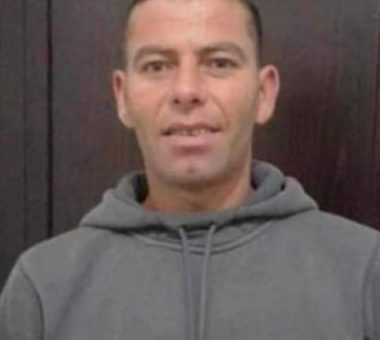
The slain man has been identified as Fadi Adnan Sarhan Samara, 37, a father of five children, including an infant (two months of age) from Abu Qash village, north of Ramallah.
He works in Israel and came back home to Nabi Saleh to celebrate the Muslim feast of al-Fitr with his family.
His brothers stated that he left his home in the evening heading to the az-Zawiya village, west of Salfit in central West Bank, to drive his wife and children back home, as they were visiting her family there.
The Israeli army claimed that the man tried to ram soldiers with his car near a natural spring in the Ramallah governorate. He was shot in the leg and was left to bleed for about an hour, without any first aid.
Palestinian media outlets and residents in the area said the man lost control of his car when illegal Israeli colonialist settlers, who repeatedly invade the area, opened fire at his car, before the soldiers fired a barrage of live rounds at it, claiming that he was attempting to ram them.
One of his brothers, and one of his cousins, were both detained by the army, and after being released, they stated that an army officer told them, after confirming his identity, that they cannot take his corpse for burial.
They stated that the military was taunting them by stating that the family can have his corpse back “maybe in an hour or two, a month or two, a year or two….”
His family, and the residents of his village, strongly denounced his murder, and stated that the Israeli soldiers are always “trigger happy” when it comes to shooting Palestinians, and that the army tries to justify these crimes by making false allegations.
They called for a serious investigation into the fatal shooting and called on international organizations to act and hold Israel accountable at the International Criminal Court (ICC) for its escalating crimes and ongoing violations against the Palestinian people, their homes and property.
An open letter to graduate students and young scientists in fields related to climate research:
Based upon feedback that I’ve received from graduate students at Georgia Tech, I suspect that you are confused, troubled, or worried by what you have been reading about ClimateGate After spending considerable time reading the hacked emails and other posts in the blogosphere, I wrote an essay that calls for greater transparency in climate data and other methods used in climate research. The essay is posted over at climateaudit.org.
What has been noticeably absent so far in the ClimateGate discussion is a public reaffirmation by climate researchers of our basic research values: the rigors of the scientific method (including reproducibility), research integrity and ethics, open minds, and critical thinking. Under no circumstances should we ever sacrifice any of these values; the CRU emails, however, appear to violate them. … continue
This site is provided as a research and reference tool. Although we make every reasonable effort to ensure that the information and data provided at this site are useful, accurate, and current, we cannot guarantee that the information and data provided here will be error-free. By using this site, you assume all responsibility for and risk arising from your use of and reliance upon the contents of this site.
This site and the information available through it do not, and are not intended to constitute legal advice. Should you require legal advice, you should consult your own attorney.
Nothing within this site or linked to by this site constitutes investment advice or medical advice.
Materials accessible from or added to this site by third parties, such as comments posted, are strictly the responsibility of the third party who added such materials or made them accessible and we neither endorse nor undertake to control, monitor, edit or assume responsibility for any such third-party material.
The posting of stories, commentaries, reports, documents and links (embedded or otherwise) on this site does not in any way, shape or form, implied or otherwise, necessarily express or suggest endorsement or support of any of such posted material or parts therein.
The word “alleged” is deemed to occur before the word “fraud.” Since the rule of law still applies. To peasants, at least.
Fair Use
This site contains copyrighted material the use of which has not always been specifically authorized by the copyright owner. We are making such material available in our efforts to advance understanding of environmental, political, human rights, economic, democracy, scientific, and social justice issues, etc. We believe this constitutes a ‘fair use’ of any such copyrighted material as provided for in section 107 of the US Copyright Law. In accordance with Title 17 U.S.C. Section 107, the material on this site is distributed without profit to those who have expressed a prior interest in receiving the included information for research and educational purposes. For more info go to: http://www.law.cornell.edu/uscode/17/107.shtml. If you wish to use copyrighted material from this site for purposes of your own that go beyond ‘fair use’, you must obtain permission from the copyright owner.
DMCA Contact
This is information for anyone that wishes to challenge our “fair use” of copyrighted material.
If you are a legal copyright holder or a designated agent for such and you believe that content residing on or accessible through our website infringes a copyright and falls outside the boundaries of “Fair Use”, please send a notice of infringement by contacting atheonews@gmail.com.
We will respond and take necessary action immediately.
If notice is given of an alleged copyright violation we will act expeditiously to remove or disable access to the material(s) in question.
All 3rd party material posted on this website is copyright the respective owners / authors. Aletho News makes no claim of copyright on such material.


 The US “will be designating ANTIFA as a Terrorist Organization,” President Donald Trump has said. The move comes amid anti-police-brutality protests and riots gripping the country, which he has blamed on the “radical left.”
 The slain man has been identified as Fadi Adnan Sarhan Samara, 37, a father of five children, including an infant (two months of age) from Abu Qash village, north of Ramallah.