‘Israel’ threatens to genocide Gaza if Hamas refuses disarmament
Al Mayadeen | February 16, 2026
Senior Israeli officials have threatened to renew the genocide in Gaza if Hamas does not disarm within a proposed 60-day period, although the Israeli occupation continues its attacks on the Strip daily, never adhering to the ceasefire agreement.
Cabinet Secretary Yossi Fuchs, a senior adviser to Prime Minister Benjamin Netanyahu, said that the occupation government intends to give Hamas two months to relinquish its arms. If it does not comply, the Israeli military would “complete the mission” in Gaza, he threatened.
The warnings came against the backdrop of the US-led “Board of Peace”, under which Washington dictated the 60-day deadline.
According to Fuchs, Hamas would be required to surrender all weapons, including small arms such as AK-47 rifles. He emphasized that the Israeli regime would evaluate the outcome at the end of the period.
Netanyahu also reiterated that disarmament must include small arms, claiming that such weapons were used during the October 7 operation. Israeli officials allege that tens of thousands of rifles remain in Gaza.
Reports in The New York Times suggested that a draft proposal discussed by US mediators could initially allow Hamas to retain some small arms while surrendering weapons deemed capable of striking “Israel”. The document is reportedly expected to be shared with the Palestinian Resistance in the coming weeks.
Devastation and aggression despite ceasefire
Despite the ceasefire agreement, officially effective as of October 11, 2025, the Israeli regime has maintained its occupation of vast areas across the Gaza Strip, and continues to attack the Palestinian territory’s infrastructure and civilians.
Since then, over 591 Palestinians, including women and children, have been killed, and more than 1,598 others have been injured.
Since October 7, 2023, more than 72,051 Palestinians have been killed, and over 171,706 have been injured, making the war on Gaza one of the most brutal in modern history. Many victims are still in dire need of treatment. However, hospitals across Gaza have been systematically targeted over the past three years, forcing operations to minimal function, sometimes to a halt.
Apple Just Bought A Sinister ‘Pre-Speech’ Tech Company Implicated In Genocide
By Nate Bear – ¡Do Not Panic! – February 15, 2026
Tech giant Apple has quietly paid nearly $2 billion for a ‘pre-speech’ tech company whose employees helped Israel commit genocide in Gaza.
And Apple has paid this money, the second-biggest deal in its history, for a company that doesn’t have a product, doesn’t have any revenues and whose website is a single page containing 15 words.
The company, Q.ai, is developing sensors which map the imperceptible movements of a human face to determine the words someone is thinking before they’re spoken.
They call it silent speech.
Or pre-speech.
And it’s exactly as sinister as you think it is.
Q.ai was founded by Aviad Maizels, Avi Barliya and Yonatan Wexler, all of whom honed their skills by testing technologies of apartheid on Palestinians. Maizels is a former commander of Unit 81, the IDF division which builds Israel’s offensive cyber weapons. Barliya, according to his LinkedIn, was an intelligence officer in the Israeli air force, while Wexler is a former Unit 8200 agent.
Apple’s genocide intake
In a blog post announcing the deal, Tom Hulme, an executive at Google Ventures, one of the company’s early investors, revealed that 30% of Q.ai’s more than 100 staff were called up to participate in the genocide of Gaza.
This admission means dozens of people implicated in genocidal acts who served under the political command of Yoav Gallant, an ICC indicted war criminal, are now Apple employees.
It should be a huge scandal. The biggest company in the US, one of the world’s most recognisable names, has folded into its staff dozens of people who served in a military during the period it committed genocide, according to all of the world’s most acclaimed rights experts.
But every single mainstream article which covered news of the deal, from Reuters to the FT, ignored this fact.
Mainstream coverage also ignored a number of other extremely cogent elements to the story, including the nature of the deal and the technology itself.
Apple has paid two billion dollars for something that barely appears to exist.
Q.ai’s website consists of just 15 words.
To find out exactly what the company does you have to look beyond the press releases to the patents Q.ai and its founders have filed.
And these patents read like plot lines from the bleakest dystopian futures.
Sensing silent speech
One filing details technology capable of “determining an emotional state of an individual based on facial skin micromovements.” The same filing says the technology could be used “to identify a user based on heart-rate and breathing-rate.” Another filing says Q.ai’s software “synthesises speech in response to words articulated silently by the test subject.”
Q.ai’s technology centres around silent speech.
This is the idea that before we vocalise words and move our mouths to emit sounds, our brain has already sent signals to muscles in our throat and face determining what we’re going to say. Q.ai claims to have invented infrared sensors that can pick up these pre-speech micro-movements.
One filing talks about a “sensing device configured to fit an ear of a user, with an optical sensing head which senses light reflected from the face and outputs a signal in response. Processing circuitry processes the signal to generate a speech output.”
Tech bloggers have suggested Apple has bought the company to enable non-verbal control of an iPhone and other devices via its airpod earphones or smart glasses. An annotated diagram included with the patent shows a person wearing glasses and an earpiece integrated with the technology.

Indeed Apple is no stranger to adopting the technologies of Israeli apartheid, and in fact the company is extremely familiar with Maizels himself.
In 2013, Apple bought Maizels’s first company, PrimeSense, a developer of 3D sensing technology. PrimeSense technology went on to become the foundation for Apple’s Face ID system on its newer iPhone and iPad models.
Nonetheless, two billion dollars for a non-existent technology and a three-year old company, is unprecedented. What isn’t unprecedented, however, is a US tech giant overpaying for an Israeli company.
Overpriced Israeli tech
Last year, Google bought Israeli cybersecurity Wiz for $32 billion, which, at 64 times Wiz’s annual sales, was widely seen as an inflated price and far in excess of the sales-to-valuation ratio for similar companies.
At this price, however, Israel received a huge $5 billion tax windfall. At the time Zionists crowed it would help the country buy more warplanes and missiles to commit genocide.
The deal for Q.ai, while a lot smaller, will still generate significant tax income for Israel’s struggling economy.
And Israel is critical to Apple.
The company has a large R&D campus in the country, its second-biggest outside the US, into which large numbers of Unit 8200 and Unit 81 graduates are funnelled. Apple CEO Tim Cook is a devoted Zionist, has visited Israel on numerous occasions, and in 2018 received an award from Zionist lobby group the ADL for his efforts to censor anti-Israel speech. Apple has made good on that promise over the last two years, sacking staff for expressing pro-Palestine, anti-genocide views. Cook has never spoken about Gaza.
The price for a ghost company with a few patents, then, looks as much about politics as it does about technology.
That’s not to say Q.ai’s technology won’t be commercialised for consumer applications. It probably will be. And if the tech is realised, the implications for privacy and data collection are frightening.
As are the security state and military applications.
A pre-crime future
A few days after the Q.ai deal, the head of neurotechnology at Israel’s directorate of defense research and development, the country’s equivalent to the US’s DARPA programme, gave her first-ever interview to Israeli media. In the interview she referenced Q.ai and said the Israeli military is working on similar technology. The US has a DARPA project known as Silent Talk which is also working to develop pre-speech sensing and non-verbal control technologies.
Once the technology is developed, and pre-speech established as a legitimate biological human function, how far behind will pre-crime be?
Given the frenzied efforts we’ve seen to shut down and criminalise criticism of Israel under the guise of antisemitism, one can easily imagine a future of pre-speech sensing technology being rolled out to identify would-be critics of Israel. Or the US. Or Europe. Or imperialism in general.
You can imagine it now. “Based on our silent speech detector we have determined you were going to say something hateful or antisemitic or un-American and are therefore under arrest.”
The most dystopian technologies continue to flow out of Israel. And they continue to flow because Israel is empowered by the US and Europe to maintain a system of apartheid built upon invasive and authoritarian technologies of control.
It is therefore no surprise that the creators of Q.ai are veterans of Israel’s genocidal military security state, or that the largest company in the US sees these technologies as essential to its AI future.
And while this story may be no surprise, we should never get used to, and must resist, technologies of apartheid and genocide, and their creators, becoming embedded in our devices, our economies and our lives.
Israel’s new West Bank registration process declares Palestinian land ‘state property’
The Cradle | February 16, 2026
The Israeli government has approved a land registration process, which will allow Israel to claim territory in the occupied West Bank as “state property” if Palestinians cannot prove ownership, a move that has been described as “de facto annexation.”
Israel’s Broadcasting Corporation (KAN) reported that the proposal was submitted by Israeli Finance Minister Bezalel Smotrich, Justice Minister Yariv Levin, and Defense Minister Israel Katz.
“We are continuing the revolution of settlement and strengthening our hold across all parts of our land,” Smotrich said.
Katz called the move a vital security measure and an “appropriate response to illegal land registration processes promoted by the Palestinian Authority.”
Israel’s Foreign Ministry said the registration process will allow for “transparency” and will help resolve land disputes.
The bar for proving Palestinian land ownership is extremely high due to Israel’s restrictive legal system.
Palestinian claims of ownership are rarely granted. Many families rely on decades-old Ottoman documents, or have never had their land properly registered.
Similarly, Israel rarely grants building permits to Palestinians, allowing troops to demolish homes across the occupied West Bank. According to Israel’s Channel 14, Smotrich has established a paramilitary unit whose job is the destruction of Palestinian property.
The registration measures approved on Sunday were frozen in 1968.
Palestinian Authority (PA) President Mahmoud Abbas called the approval of the land registration process “de facto annexation.”
“The decision to classify West Bank land as state land under Israeli authority constitutes a direct threat to security and stability. The measure amounts to de facto annexation of occupied Palestinian territory and signals the beginning of the implementation of annexation plans aimed at entrenching the occupation through illegal settlement expansion,” the PA presidency said in a statement on Sunday.
Since Israeli Prime Minister Benjamin Netanyahu’s government came to power, it has been rapidly advancing plans to illegally annex the West Bank – occupied by Israel in 1967.
Israel’s security cabinet approved new measures on 8 February aimed at drastically overhauling the occupied West Bank’s legal and civil framework, allowing Tel Aviv to further expand illegal settlements and strengthen its grip on the territory.
Last year, Prime Minister Benjamin Netanyahu signed off on reviving the controversial E1 settlement project. The project aims to link Maale Adumim to occupied East Jerusalem, which is viewed as integral to a future Palestinian state.
Israel’s cabinet also voted in 2025 to take full responsibility for land registration in Area C of the occupied West Bank – an area comprising around 60 percent of the territory and home to the vast majority of Israeli settlements. That move was also described as a de facto annexation.
Two children killed in Palestinian Authority ambush in West Bank; Hamas slams attack as ‘black mark’
Press TV – February 16, 2026
Two children have been killed after Palestinian Authority (PA) forces opened fire on a vehicle carrying their father, a resistance fighter, in the town of Tamoun in the northeastern part of the occupied West Bank.
The three-year-old daughter of Samer Samara succumbed to her wounds on Sunday after being shot by the forces, Palestinian media outlets reported.
Her 16-year-old brother, Ali, was killed after being shot in the head. Their father was wounded and later abducted by PA forces.
According to the reports, the forces shot Samara in the legs before abducting him.
Local reports said units from the PA’s so-called Preventive Security Service and a special unit set up the ambush and fired heavy gunfire at the car during an operation to abduct Samara, who is wanted by Israeli occupation forces.
Following the killings, the youths of the town of Tamoun launched a demonstration and a general strike. Reports said the PA sent reinforcements to suppress the demonstration.
The Gaza Strip’s Hamas resistance movement condemned the atrocities, holding the Authority fully responsible for the consequences of targeting resistance fighters and killing children.
In a statement, the group described what happened as a “serious crime” and a “black mark in the record of the security services that continue to overpower our people instead of protecting them.”
The movement warned that the policy could damage Palestinian internal cohesion and demanded accountability.
It called for “holding all those involved accountable, stopping the pursuit of wanted Palestinians, and releasing political detainees.”
The Committee of Families of Political Prisoners also condemned the shooting, describing it as the result of a “systematic policy targeting resistance fighters.”
It said the incident represented a “dangerous deviation” that placed security services in confrontation with the population rather than protecting them.
Human rights organizations say such incidents risk deepening internal tensions at a time when Palestinians in the West Bank also face ongoing Israeli military raids and settler violence, contributing to what observers describe as a climate of compounded insecurity for civilians.
Israel Needs Time Before Another Iran War—Here’s Why
By José Niño | The Libertarian Institute | February 16, 2026
The United States finds itself in an unfamiliar position. After spending approximately one hundred and fifty THAAD interceptors and eighty SM-3 missiles to help defend Israel during the Twelve-Day War in June 2025, the Pentagon faces a stark reality. Its stockpiles are depleted, its production lines cannot keep pace, and another major conflict with Iran would require an air defense umbrella America can no longer fully provide.
The question is not whether the United States wants to strike Iran again. The question is whether it can afford to.
For now, the answer appears to be no. But history suggests this pause may be temporary, with negotiations serving not as a genuine path to peace but as a strategic timeout while Israel restocks its depleted munitions and air defenses. After all, the Twelve-Day War itself kicked off in the middle of active negotiations that critics across the political spectrum described as either a deliberate ruse or a diplomatic process Israel cynically sabotaged.
Throughout the clash with Israel, the Israeli government worked hard to control the narrative about what Iran’s missiles actually hit. Military censorship laws prevented journalists from reporting strike locations near sensitive facilities. But satellite data told a different story.
A report by The Daily Telegraph using radar analysis from Oregon State University revealed that Iranian missiles struck at least five Israeli military facilities with remarkable accuracy. These included Tel Nof Airbase, Camp Glilot housing Unit 8200, Israel’s premier signals intelligence unit, and Zipporit weapons manufacturing facility.
None of these strikes were reported from within Israel. Professor Jerome Bourdon of Tel Aviv University explained, “We probably will never know the full extent of the damage.”
Haifa’s BAZAN oil refinery was shut down for two weeks with an estimated $250 million loss. Soroka Medical Center in Beersheba took a direct hit from Iran’s missile barrage. Most critically, by June 18, a U.S. official disclosed that Israel was running low on Arrow interceptors. The Washington Post reported assessments that Israel could only maintain missile defense for ten to twelve more days. The war’s duration was constrained by the physical limits of both sides’ arsenals.
The United States used approximately 25% of its entire global THAAD stockpile during the Twelve-Day War, firing roughly one hundred and fifty interceptors. It also expended eighty SM-3 interceptors and thirty Patriot PAC-3 interceptors. The problem is that production cannot remotely keep pace with consumption.
THAAD interceptors are manufactured at a rate of only eleven to twelve per year. That means replacing the one hundred and fifty interceptors fired during the Twelve-Day War would take more than twelve years at current production rates. CSIS analysts warned in late 2025 that no new THAAD interceptors would be delivered until 2027, creating a dangerous gap.
Even after the Pentagon reprogrammed $700 million into THAAD procurement, that only covers about forty-five missiles at $15 million each. As JINSA’s Ari Cicurel warned, “Both Israel and the US used an immense amount of their interceptor stockpiles. We are still very far behind in replenishing to get back to what we had before.”
By January 2026, defense experts were sounding the alarms that depleted interceptor stocks were constraining the Trump administration’s options regarding Iran, since another war would require the same defense umbrella the United States can no longer fully provide.
The interceptor shortage is just one symptom of a deeper structural problem. A Foundation for Defense of Democracies report published in April 2025 audited twenty-five weapons systems committed or potentially committed to Taiwan, Ukraine, and Israel. The finding was stark. Only seven of twenty-five had a strong defense industrial base, while the remaining eighteen were either weak or required significant attention.
Consider 155mm artillery shells. The Army targeted 100,000 rounds per month by October 2025. As of June 2025, production stood at just 40,000 per month. Even that figure is misleading. Only 18,000 complete rounds with propellant were being produced monthly because the United States depends on a single plant in Canada for artillery propellant and has no domestic production.
Against this backdrop, the United States and Iran resumed negotiations on February 6, 2026, in Muscat, Oman. After eight months of silence following the Twelve-Day War, talks restarted with delegations led by Steve Witkoff and Iranian Foreign Minister Abbas Araghchi.
The timing invites skepticism. The Twelve-Day War was launched on June 13, 2025, exactly three days before the sixth round of nuclear negotiations was scheduled. Israel struck while Iran was in what War on the Rocks described as “diplomatic preoccupation with Washington” and “military unpreparedness.”
Araghchi called the strikes a “betrayal of diplomacy,” stating, “We were supposed to meet with the Americans on 15 June to craft a very promising agreement…It was a betrayal of diplomacy and unprecedented blow to the foundations of international law.”
The Wall Street Journal reported “U.S. Diplomacy Served as Cover for Israeli Surprise Attack.” Trump told the New York Post after the strikes, “I always knew the date. Because I know everything.”
Doug Bandow noted that the Cato Institute reported that Israeli officials stated “Israel and the U.S. carried out a multi-faceted misinformation campaign” to convince Iran a strike was not imminent and that Trump “was an active participant in the ruse and knew about the military operation since Prime Minister Benjamin Netanyahu decided to move forward with the strike.”
Whether current negotiations represent genuine diplomacy or another strategic pause remains open. Araghchi stated that “existing mistrust poses a significant hurdle” to progress.
From a military industrial perspective, the current negotiations serve a clear purpose regardless of diplomatic intent. They buy time. Israel’s defense ministry purchased weapons worth 220 billion shekels, approximately $61.5 billion, in 2024, four times previous years, reflecting the desperate need to restock. Israel is now accelerating development and production of Arrow 3, Arrow 4, Iron Dome, David’s Sling, and ground based laser systems in anticipation of a potential second round.
The United States faces the same imperative. The Trump administration has pledged a record $1 trillion defense budget and the 2026 NDAA authorized multiyear procurement for key munitions. But experts warn these measures are necessary but insufficient given the scale of the gap between production capacity and real-world consumption rates.
The fundamental question is how long it takes to rebuild stockpiles sufficiently to contemplate another major conflict. With THAAD production at eleven to twelve interceptors per year and no new deliveries until 2027, the answer is measured in years, not months.
One thing has become clear. Military industrial issues are coming back to the fore. And the United States, despite its constant bragging about being exceptional, faces the same resource constraints that all mortal imperial polities have previously faced.
Wargames by the Center for New American Security found the United States would run out of long range munitions in less than a week in a fight with China over Taiwan. The Twelve-Day War revealed the United States cannot sustain high intensity conflict support for even one ally without severely depleting its stockpiles.
The current negotiations with Iran may represent genuine diplomacy. Or they may represent a tactical pause to allow Israel time to rebuild its defenses before the next round. Either way, the resource constraints are real. The production gaps are real. And the physical limits of America’s military industrial base now constrain its foreign policy options in ways Washington has not experienced in decades.
The quicker the United States recognizes these limits and pursues a more restrained foreign policy, the better off it will be. The alternative is to continue pretending that stockpiles replenish themselves, that production lines can magically accelerate, and that America can wage unlimited war in unlimited theaters without consequence.
The Twelve-Day War proved otherwise. The question is whether Washington has learned the lesson.
US seizes oil tanker for ‘defying Trump’s quarantine’
RT | February 16, 2026
US military forces intercepted and boarded a tanker that was sanctioned for carrying Venezuelan oil in the Indian Ocean overnight on Sunday, the Pentagon has announced.
The US launched a military operation to kidnap Venezuelan President Nicolas Maduro in early January, and claims to have seized control of the country’s oil exports. Earlier this year, US President Donald Trump said Washington plans to “control Venezuela’s oil resources indefinitely.”
In a statement on X, the US War Department said the vessel, named Veronica III, was tracked from the Caribbean Sea into the Indian Ocean before being stopped and inspected in what it described as a “right‑of‑visit, maritime interdiction and boarding.”
“The vessel tried to defy President Trump’s quarantine – hoping to slip away,” the Pentagon wrote. “We tracked it from the Caribbean to the Indian Ocean, closed the distance, and shut it down.”
Ship-tracking and maritime data platforms list the Veronica III as a Panama-flagged oil tanker. The action follows a similar boarding last week of another sanctioned vessel.
Trump ordered what he described as a “total and complete blockade” on all US‑sanctioned oil tankers entering or leaving Venezuela in December.
The blockade has continued as part of Washington’s push to redirect Venezuelan oil toward new international buyers. Last week, Israel received its first crude oil shipment from the South American nation, according to Bloomberg.
Reuters also reported last week, citing trade sources, that India’s two state-owned refiners had purchased 2 million barrels of Venezuelan crude for delivery in the second half of April. The agency also said that, according to shipping schedules, 2 million barrels of Venezuelan crude were sent to refineries operated by Spanish oil company Repsol.
At the same time, China, once a top importer of Venezuelan oil, has reportedly turned to discounted Iranian heavy grades to make up for shipments that have stalled under the US blockade, as independent Chinese refiners seek alternatives to Venezuelan supplies.
Moscow has condemned US actions against Caracas, with Russian officials saying Washington’s moves violate international norms. Foreign Minister Sergey Lavrov said last week that the US is trying to take control of all international energy supply routes in an attempt to attain global economic dominance.
Ian Proud: Economic Reset with Russia to Save Europe
Glenn Diesen | Feb 15, 2026
Ian Proud discusses why an economic reset with Russia is required for a stable peace and to prevent Europe from becoming a weakened relic of a unipolar past. As a former British diplomat, Proud performed a number of roles, including the Economic Counsellor at the UK’s embassy in Moscow between 2014 and 2019.
The Peacemonger: https://www.youtube.com/@IanProud
Follow Prof. Glenn Diesen:
Substack: https://glenndiesen.substack.com/
X/Twitter: https://x.com/Glenn_Diesen
Patreon: https://www.patreon.com/glenndiesen
Support the research by Prof. Glenn Diesen:
PayPal: https://www.paypal.com/paypalme/glenndiesen
Buy me a Coffee: buymeacoffee.com/gdieseng
Go Fund Me: https://gofund.me/09ea012f
Senator Rand Paul Introduces Federal Bill to END Vaccine Makers’ Liability Shield
By Nicolas Hulscher, MPH | FOCAL POINTS | February 14, 2026
Senator Rand Paul has introduced S.3853, a federal bill that would amend the Public Health Service Act to end the long-standing liability protections for vaccine makers.
The bill was introduced on February 11, 2026, and referred to the Senate Health, Education, Labor, and Pensions (HELP) Committee.
At the time of writing, no bill text has yet been released, so the precise statutory changes remain unknown. However, based on the title and summary, the legislation appears aimed at dismantling the liability framework established under the 1986 National Childhood Vaccine Injury Act, which shields manufacturers from civil lawsuits and routes injury claims through the failed Vaccine Injury Compensation Program (VICP).
Current evidence indicates that the National Childhood Vaccine Injury Act of 1986 likely sparked the autism epidemic. By granting legal immunity to vaccine makers, 3.2% of American children now have autism:

Bill S.3853 would collapse the vaccine cartel’s 40-year reign of penalty-free mass harm. If passed, this legislation would truly Make America Healthy Again.
The Hidden Map: US and Israel May Use Unexpected Neighbors to Attack Iran
By Robert Inlakesh | The Palestine Chronicle | February 15, 2026
Amidst heightened tensions between the US-Israeli alliance and Iran, an enormous amount of focus has been placed in the media on Iran’s missile program and how this will impact any upcoming war. What is often ignored are the origins of the regional threats to Tehran and its stability.
While covering each and every threat to the Islamic Republic of Iran would be beyond the scope of such an article, there are a number of hostile nations surrounding the country that can be used to destabilize the nation. The United Arab Emirates (UAE) and, to a lesser extent, Azerbaijan, are often cited as pro-Israeli, but there is another nation that flies under the corporate media’s radar.
Iran shares its second-largest land border with the nation of Turkmenistan, a country that is rarely mentioned as a regional player. What many don’t know is that the nation, long characterized as a neutral player, has strong ties with both the US and Israel.
Turkmenistan: Neutral State or Strategic Corridor?
Unlike many Muslim-majority nations, Turkmenistan has long recognized and maintained ties with the Israelis, their relationship beginning in 1993. Then, in April of 2023, these ties were further cemented with the inauguration of a permanent Israeli embassy in Ashgabat for the first time.
It should therefore be no surprise that Tel Aviv and Ashbagat’s relationship is closest in the intelligence sharing and security cooperation spheres. Afterall, the Israeli embassy – opened back in 2023 – was strategically placed only 17 kilometers away from Iran’s border, marking a major symbolic achievement for Israel, especially as it operates through what are suspected to be thousands of Mossad recruited agents inside the Islamic Republic.
Although Israel has no official military bases inside Turkmenistan, there have been a number of reports indicating that it has set up attack drone bases inside the country. This would make sense, considering that Ashbagat has been purchasing Israeli drone technology since the 2010s, more recently acquiring the SkyStriker tactical loiter munition (suicide drone), developed by Elbit Systems.
Ashgabat has long been in alignment with the West. In May of 1994, it became the first country to join NATO’s Partnership for Peace (PfP) program. However, the following year, the UN approved granting Turkmenistan the status of a neutral country, meaning it would not join military blocs.
In 2001, following the September 11 attacks, this neutral stance suddenly began to change. While other Central Asian nations – Kyrgyzstan, Tajikistan, and Uzbekistan – all immediately offered their military bases to the United States, due in large part to their concerns over the advancements of the Taliban, Turkmenistan only publicly admitted to allowing the US to use its airspace for military cargo aircraft to travel in transit.
In reality, the US airforce were operating a team on the ground in Ashgabat in order to coordinate refueling operations. In 2004, the Russian State protested the growing US-Turkmenistan military relationship, after reports emerged stating that American forces had “gained access to use almost all the military airfields of Turkmenistan, including the airport in Nebit-Dag near the Iranian border.”
Reports, which are not possible to independently verify but nonetheless have appeared consistent throughout the years, indicate that the US military has even established remote desert bases throughout different locations inside Turkmenistan.
Clinging to its neutral status on the public stage, Ashgabat rejects any mention of cooperation of this kind, including the denial of a 2015 statement by then US Central Command chief Lloyd Austin that the Turkmens had expressed their interest in acquiring US military equipment.
Signals of Military Activity
Perhaps the most concerning developments are the more recent revelations, revealed through OSINIT channels and Turkmen media, citing flight trackers to monitor the movement of US aircraft in the region. These reports indicate the confirmation that US Air Force transport aircraft C-17A Globemaster III and MC-130 Super Hercules have landed at undisclosed locations in Turkmenistan.
The significance of this, opposed to the rest of the military buildup that has been occurring in potential preparation for an attack on Iran, is that of the MC-130 Super Hercules, which is used specifically for transporting special forces teams, running night operations, as well as performing unconventional takeoffs and landings.
Paired with a recent report issued by the New York Times, indicating that the US’ options not only include an air campaign against Iranian nuclear and missile sites, but ground raids using special forces, it could be concluded that Turkmenistan is the location from which the US may seek to inject special forces units into Iran.
The Wider Ring around Iran
The Turkmenistan factor clearly cannot be ignored here, despite it often being dismissed as a neutral power that maintains friendly relations with both Russia and China. In fact, because of these relationships, with Moscow in particular, Tehran has refrained from attempting to expand its reach into the Central Asian country.
To Iran’s benefit is that Chinese and, to a lesser extent, Russian influence can reduce the extent to which the US and Israel can use Iran’s neighbors to threaten it. In Pakistan, for example, it is clear that both Islamabad’s joint security concerns – largely over Balochi militant groups – along its border, in addition to Beijing’s influence, make it highly unlikely that Pakistan would remain neutral and is instead inclined to help support Iran; within its limits, it should be added.
Azerbaijan is another potential threat to the stability of the Islamic Republic, due in large part to the large Azeri population in Iran’s own Azerbaijan Province. However, the vast majority of Azeri citizens are in fact loyal to the State and no major separatist movement exists at this time. The Iranian President Masoud Pezeshkian and Ayatollah Khamenei himself are both ethnically part Azeri.
Meanwhile, many supporters of the Israeli puppet Reza Pahlavi openly express their intention to crack down on the Azeri ethnic minority inside Iran. During the reign of the CIA-MI6-installed Shah of Iran, minority groups suffered immensely, due to a clear tradition of ethno-nationalism that exists amongst the current supporters of the deposed monarchy.
Baku, for its part, is the top gas supplier to Israel, maintaining close military, diplomatic and intelligence ties with them. Azerbaijan even made Hebrew media headlines for its use of Israeli suicide drones and other military equipment during its war with Armenia.
On the other hand, Iran is militarily superior to Azerbaijan and has a considerable base of support amongst the nation’s population, of which the majority belong to the Shia branch of the Islamic faith. Therefore, Tehran has major leverage and could not only paralyze its oil and gas infrastructure, but perhaps has the potential of organic movements forming within Azerbaijan that will owe allegiance to Iran.
There is also the threat that the Israelis, in particular, will attempt to use Kurdish militant groups in Iraqi Kurdistan in order to carry out attacks on the Islamic Republic. Israel does not publicly acknowledge its presence in northern Iraq, yet Iran has directly struck its bases housing Mossad operatives in the past, while Kurdish separatist groups have been utilized countless times in attempts to destabilize the country. During the June 12-day-war last year, Israel also weaponized these proxies.
For those also concerned about Afghanistan’s role in threatening Iranian security, this has always historically been a precarious situation, yet Tehran has not only been improving its ties with Kabul, it officially recognized the Islamic Emirate during the past week. Again, this does not mean there is no potential threat there, but an alliance that holds with the Taliban government may prove important.
Gulf States, Jordan and the Regional Balance
Then there are the more obvious players, the UAE and Bahrain, which are not only partners of the Israelis as part of the so-called “Abraham Accords” but are overtly aligned with Tel Aviv’s regional agenda.
The Emiratis are speculated to hold some cards regarding trade, but their leverage is negligible. Both the Bahraini and Emirati leaderships are clearly anxious, because Iran’s responses to the use of their territory to attack the Islamic Republic could quickly collapse their regimes.
Jordan, meanwhile, is where the US appears to be focusing much of its military buildup, even withdrawing forces previously stationed in Syria’s al-Tanf region into the Hashemite Kingdom’s territory.
The Jordanian leadership is evidently permitting its territory to become a key battleground, which will likely be subjected to attacks if the US chooses to use it to aid the Israeli-US offensive, but it is simply powerless in such a scenario.
Jordan has become a Western-Israeli intelligence and military hub in the region, meaning that if King Abdullah II objects to the demands of its allies, he understands well that his rule could be ended in a matter of hours. Therefore, he must risk his country being caught in the crossfire and just hope that an internal uprising doesn’t take shape, which is one of the reasons why he has been so hostile to the Muslim Brotherhood, fearing they could end up leading any revolt as the organization did in Egypt.
Turkiye, on the other hand, which is also a major regional player, is likely to play both sides behind the scenes, attempting to stay out of such a fight. If it takes either side, it will suffer the repercussions. Perhaps the most important role it could play is to prevent its bases or airspace from being used by the US.
Saudi Arabia and Qatar both maintain cordial relations with Iran, clearly favoring a scenario where no war occurs at all, because they are home to US bases. As we saw last June, the US used its CENTCOM headquarters in Doha to direct its attack on Iran’s nuclear sites, and as a result, Iran’s Islamic Revolutionary Guard Corps (IRGC) struck US facilities there.
Riyadh and Doha do not want to get dragged into such a scenario. It is also of note that they have a vested interest in neither side winning the war conclusively, because it is in their interests for there to be a multi-polar West Asia, not an Israeli-dominated region that will inevitably consume them.
A Conflict with Wider Consequences
Some have also speculated about Syria’s role in any war. Damascus is clearly in the US-Israeli sphere of influence, but it will have a negligible impact in its current form. If Syria’s military forces assault Lebanon or Iraq, they will suffer enormous blows and fail tremendously. The only wildcard with Syria is whether armed groups there will choose to use the opportunity to attack Israel, although as a military power, the Syrians are a relative non-factor at the current time.
For now, the US-Israeli plot to stir civil war inside Iran and to follow through with an air campaign that aids their proxies has failed. Given the readiness of Iran’s allies in Iraq, Lebanon, Yemen, and even Palestine, perhaps beyond, the US would be entering a point of no return scenario if it were to attempt a regime change operation.
– Robert Inlakesh is a journalist, writer, and documentary filmmaker. He focuses on the Middle East, specializing in Palestine.
Trump, Netanyahu Agree to Target Iranian Oil Exports to China
What will it cost the US economy?
By Kyle Anzalone | The Libertarian Institute | February 15, 2026
President Donald Trump and Israeli Prime Minister Benjamin Netanyahu agreed to increase economic pressure on Iran by attempting to cut oil exports to China.
A US official speaking with Axios said during the meeting between Trump and Netanyahu last week, the leaders “agreed that we will go full force with maximum pressure against Iran, for example, regarding Iranian oil sales to China.”
Kpler estimates that 80% of Iranian oil sales are to China. The Trump administration has attempted to cause intense economic suffering in Iran, hoping the result will be the overthrow of the government in Tehran.
Trump recently signed an executive order authorizing the White House to impose 25% tariffs on countries that buy Iranian oil. It’s unclear if the President will be willing to upend the delicate Trump relationship with China to damage the Iranian economy.
The US is ramping up the economic war as talks with Iran are ongoing. US and Iranian negotiators are scheduled to meet in Geneva on Tuesday. The US and Israel are demanding that Iran agree to limits on its nuclear and missile programs. Tehran says it is refusing to place any restrictions on its missile program.
According to officials speaking with Axios, Netanyahu and Trump disagreed during the meeting about negotiations with Iran. The President believes a deal is possible, while Netanyahu told Trump that Iran will not sign an agreement and that, if it did, Tehran would not comply with it.
CBS News reports speaking with two sources who said during a December meeting, Trump told Netanyahu that Israel could strike Iran if Iran does not agree to a deal with the US.
Russia open to discussing Ukraine’s ‘external governance’ – senior diplomat
RT | February 15, 2026
Russia is ready to discuss establishing “temporary external governance” in Ukraine under UN auspices to facilitate long-overdue democratic elections, Deputy Foreign Minister Mikhail Galuzin has said.
In an interview with TASS released on Sunday, Galuzin noted that the idea was first floated by Russian President Vladimir Putin in March 2025, describing it as one possible way to further the peace process.
This step, he said, “would make it possible to hold democratic elections in Ukraine, bring to power a capable government with which a full-fledged peace treaty could be signed, along with legitimate documents on future interstate cooperation.”
“In general, Russia is prepared to discuss with the US, European nations, and other countries the possibility of introducing temporary external governance in Kiev,” he added.
Galuzin acknowledged that while the UN “does not formally have a standardized mechanism” for these types of cases, there are historical precedents.
Moscow proposed the idea of external governance after the expiration of Vladimir Zelensky’s presidential term in 2024. At the time, the Ukrainian leader refused to hold new elections, citing martial law, which prompted Russia to declare him “illegitimate.” Moscow has since said Zelensky’s legal status is a major obstacle to concluding a binding peace deal.
Following US pressure, Zelensky signaled that he is open to having an election, but demanded security guarantees from the West and Russia.
In March 2025, the US dismissed the external management proposal, saying governance in Ukraine is “determined by its Constitution and the people of the country.” Prior to this, however, US President Donald Trump branded Zelensky “a dictator without elections.”
US Caribbean Buildup Near $3B — Report
Sputnik – 15.02.2026
The US military surge around Venezuela that culminated in the military aggression and abduction of President Nicolas Maduro is approaching a $3 billion price tag, Bloomberg reported.
Bloomberg calculations show the deployment at its peak cost more than $20 million a day, with as much as 20% of the US Navy’s surface fleet tied up in the region. Former Pentagon comptroller Elaine McCusker estimated that Operation Southern Spear has “probably cost about $2 billion since August 2025,” excluding intelligence and targeting expenses.
The White House has said the operation did not cost taxpayers extra because the forces were already deployed. But experts cited by Bloomberg noted that combat activity, higher operational tempo and personnel benefits add to expenses, and there is “no contingency fund in the DOD budget for unexpected operations.”
Despite the USS Gerald R. Ford being reassigned to the Middle East, Bloomberg reported the Caribbean deployment has no clear end date, even as US lawmakers say they have not been provided with detailed cost estimates.
Billions spent. No formal accounting.
And the tab keeps rising.
Featured Video
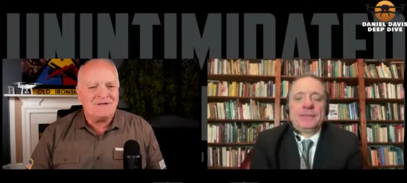
What’s the Pentagon Preparing For? Alexander Mercouris
or go to
Aletho News Archives – Video-Images
From the Archives
US tested biological weapons in Japan’s Okinawa in the 60s – report
RT | January 12, 2014
The American army conducted experiments with biological weapons aimed at destroying rice crops on the Japanese island of Okinawa in the 60s, Kyodo news agency reports. The alleged target of the tests was the China and Southeast Asia region.
Citing classified US documents, Japanese news agency Kyodo said the US military carried out experiments on their sovereign territory between 1961 and 1962. At this time Japan’s southern island of Okinawa was still under post-WWII, US jurisdiction. The US did similar tests in Taiwan and the American mainland, notes Kyodo.
The American army experimented with rice blast fungus – a plant pathogen – which infects rice crops with disastrous effects. The pathogen latches onto the rice plant as a spore and produces lesions and spots all over the rice plant and then reproduces.
A single lesion can generate a thousand spores in one night alone, while an entire cycle – lasting about a week – can have a devastating effect on rice crops.
Kyodo reports that tests were conducted over a dozen times, and mentions test sites, Nago and Shuri, in Okinawa. The US army reported some success in their experiments and the gathering of “useful data”.
“Field tests for stem rust of wheat and rice blast disease were begun at several sites in the (US) Midwest and south and in Okinawa with partial success in the accumulation of useful data,” wrote Kyodo, citing its documents. … continue
Blog Roll
 Aletho News
- What’s the Pentagon Preparing For? Alexander Mercouris
- USAID Files: The Georgia Model for Getting Accounts Taken Down
- Kiev hits out at YouTube over Russian-language censorship refusal
- Australia Passes Digital Duty of Care Bill, Ignoring Censorship Warnings
- Majority of MAGA ‘deserters’ back banning bombs to Israel: Poll
- Iran wary as South Korea assures it will not join US war of aggression
- ‘Desperate’ Kiev seeking to draw NATO into war with Russia – Andrew Bridgen
- German people oppose war, unhappy with government foreign policy
- How US army’s Iowa lead azide detonation exposed stockpile failure, unleashing environmental crisis
- China Urges Japan to Speed Up Removal of WWII-Era Chemical Weapons From Its Soil
- If Americans Knew
- An error has occurred; the feed is probably down. Try again later.
- No Tricks Zone
- Alarmist Climatologists In Shock! 2026 Atlantic Hurricane Season Sees Lowest Count In 101 Years
- New Study: Modern Temps Are Among The Coldest Of The Last 10,000 Years In East Central Europe
- Germany’s Renewable Energies Lead to 1.4 Billion Euro Electric Power Trade Deficit
- Argentina’s Perito Moreno Glacier Joins Antarctica and Arctic In Defying Doomsday Melt Claims
- New Study: Barents Sea Temperatures Were Warmer And Sea Ice Less Extensive In The 1700s Than Today
- German Authorities Start Initiative To Evaluate Public Register For Climate “Disinformation” Spreaders!
- Zonal Asymmetry of Temperature Change in the Antarctic Circumpolar Current
- New Study: The Net Fossil Fuel Contribution To Rising Atmospheric CO2 Has Been Zero For 500 Years
- Germany’s Green Energy Transition Becoming Increasingly Expensive…Another 6 Trillion Euros!
- Sudden Stratospheric Warming, Powerful El Niño Combination May Lead To Extreme Europe Cold, Energy Crisis!

