The Telegraph: ‘US and Israel Have Lost, Iran Has Won’ in Historic Strategic Reversal
Al-Manar | August 7, 2026
A leading British broadsheet has declared that the United States and ‘Israel’ have effectively lost their strategic confrontation with the Islamic Republic, asserting that Tehran has emerged from the prolonged standoff with its regional influence not merely intact, but substantially fortified.
In a pointed analysis, The Telegraph argues that the maximum-pressure campaign championed by former President Donald Trump and Israeli Prime Minister Benjamin Netanyahu to either topple or incapacitate Iran’s regime is concluding in a clear reversal of fortunes. The newspaper points to a prospective Omani-brokered arrangement concerning the strategic Strait of Hormuz as tangible evidence that Tehran has outlasted the offensive and consolidated its geopolitical foothold.
More critically, the publication frames this moment as a potential historical inflection point, signaling an accelerating decline in U.S. global supremacy. “Peace agreements ultimately reflect the results of battles on the ground,” the paper observed, adding that Washington’s efforts to reshape those battlefield realities have demonstrably fallen short. In a stark concluding assessment, The Telegraph suggested that the protracted confrontation with Iran may one day be recorded among history’s most profound strategic miscalculations.
Echoing that somber prognosis, the Financial Times has cautioned that a renewed escalation under Trump does not portend a decisive U.S. victory. Instead, the newspaper warns that intensifying hostilities are likely to cast a long shadow over his second term, imposing heavy economic, political, and diplomatic costs on an administration already navigating treacherous waters.
With high-stakes midterm congressional elections looming in the autumn, the FT suggests the White House faces a precarious balancing act one where the perceived geopolitical dividends of confrontation are becoming increasingly overshadowed by domestic blowback and deepening international isolation.
Taken together, the dual assessments from both publications paint a portrait of a conflict whose outcomes, far from securing American interests, may instead accelerate a structural shift in global power dynamics a transition for which Washington appears ill-prepared to counter.
British trade union leaders urge PM to stop UK support for illegal US-Israeli war on Iran
Press TV – August 7, 2026
British trade union leaders have urged UK Prime Minister Andy Burnham to stop rendering support to the United States and Israel in their illegal war on Iran, demanding he reverse his decision to allow the use of UK bases for aggression against Iran.
In an open letter to the PM run by the media on Friday, leaders of ten British trade unions, representing more than 2.3 million workers, urged Burnham to stop rendering support to the illegal US-Israeli war on Iran, and instead focus on the nation’s cost of living crisis.
“[T]he US and Israel’s devastating, illegal war on Iran is deepening the cost of living crisis faced by our members and the British public,” the open letter to Burnham stated, pointing out in continuation that the disruption caused by the war is worsening the cost of living crisis in the UK.
“Disruption to the world’s food and energy supplies is hurting communities here in Britain and having a catastrophic impact in the global south,” it said.
British trade union leaders said they were encouraged by the new Labour government’s focus on the cost of living crisis, but voiced deep concern over any authorization granted to the US to use its bases against Iran.
“We are encouraged by the new government’s focus on the cost of living and the measures it is taking to make life more affordable. However, we are deeply concerned that the same government has authorized US air strikes to be conducted from bases on British territories as part of the war against Iran,” the representative of the large group of British laborers said in the letter to the UK Labour Party prime minister.
They called on Burnham to put pressure on US President Donald Trump to bring the US-Israeli war on Iran to a quick end.
Burnham, right after he took office last month, allowed the use of RAF Fairford in Gloucestershire and the Indian Ocean territory of Diego Garcia to assist the US in the illegal war of aggression against Iran.
On July 21, Burnham approved the continued use of British military bases by the United States for military aggression against Iran, maintaining a policy established under his predecessor, Keir Starmer.
Burnham’s approval of ongoing contribution to American aggression against the Islamic Republic came after another hostile decision by the British government to designate the Islamic Revolution Guards Corps (IRGC) under Britain’s so-called “State Threats legislation.”
Late last month, Iran’s Foreign Minister Abbas Araghchi warned the UK against contributing support to the aggressors waging war against the Islamic Republic.
Iran’s top diplomat issued the warning in a direct telephone call to his British counterpart Ed Miliband on July 31.
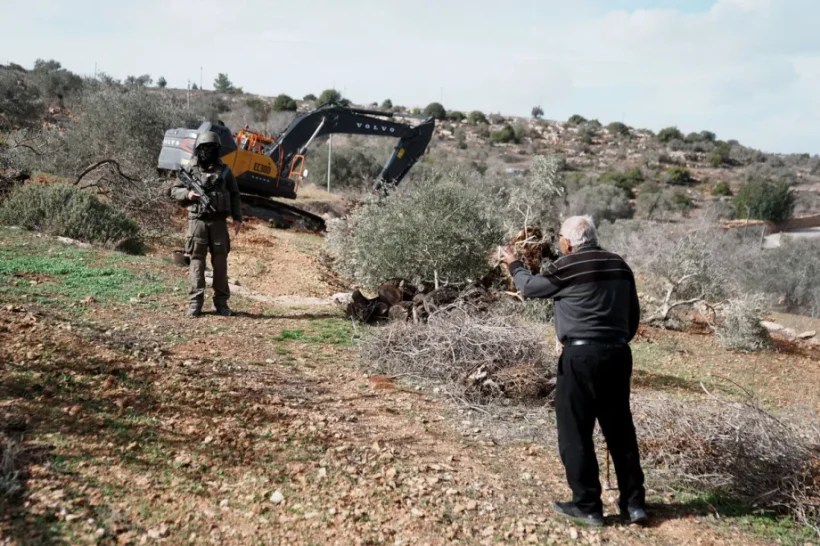
Israel orders uprooting of trees on 316 dunums in West Bank for settlement expansion
MEMO | August 7, 2026
The Israeli military has issued eight orders to uproot trees and remove vegetation from 316 dunums of land across the occupied West Bank for settlement-related purposes, the Colonisation and Wall Resistance Commission (CWRC) said on Thursday.
A dunum is equivalent to 1,000 square metres.
In a statement issued on Thursday evening, the Palestinian government body said the orders require the removal of wild vegetation and olive trees from land identified in attached maps.
The eight orders cover a total of 316.636 dunums. Six of them target about 311 dunums in the northern governorate of Jenin, while the remaining two apply to the Nablus governorate and occupied East Jerusalem.
The commission said the vegetation clearance does not target isolated farmland but areas alongside main roads, expanding Israeli control on both sides of the roads and causing direct damage to olive trees and neighbouring agricultural land.
It warned that the Israeli authorities are using the orders to facilitate the establishment of settlements, saying the measures are intended to prepare the land for settlement infrastructure while restricting landowners’ access to and use of their property.
According to the commission, Israel has issued 59 orders since the beginning of 2026 to remove tree cover from 2,480 dunums of Palestinian-owned land. It added that around 60,000 dunums of Palestinian land have been seized during the 1,000 days of the Gaza war, which began on 8th October 2023.
Palestinians warn that such measures are paving the way for Israel to formally annex the occupied West Bank, which they say would undermine the possibility of establishing a Palestinian state as envisaged in relevant United Nations resolutions.
Rome talks fail as Israeli artillery rains death on Lebanon
Press TV – August 7, 2026
The seventh round of US-brokered negotiations between Lebanon and Israel have concluded in Rome without any breakthrough, marked by Israeli forces unleashing their most intense artillery barrage on southern Lebanon since the signing of a controversial framework agreement in June.
As diplomats met at the US Embassy in Rome, Israeli artillery and warplanes pounded Lebanese villages with increasing ferocity.
The United Nations Interim Force in Lebanon (UNIFIL) recorded 120 projectiles fired by Israeli forces between midnight and 4 p.m. on Thursday alone—surpassing the previous day’s total of 113 and marking the highest single-day figure observed since June 21.
UNIFIL described the escalation as the “sharpest” surge in Israeli military aggression since the announcement of the US-mediated trilateral framework in late June.
Crucially, UNIFIL reported that it did not detect any projectile launches by Hezbollah during the period, underscoring the one-sided nature of the ongoing Israeli violence.
The framework agreement signed in Washington on June 26, which the talks in Rome were ostensibly meant to implement, has been condemned by broad swathes of Lebanon’s political class as a national catastrophe that compromises Lebanese sovereignty while extracting no binding commitments from Israel.
Critics point to the agreement’s fundamental imbalance: Lebanon is required to deploy its army to “pilot zones,” dismantle resistance infrastructure, and verify disarmament—all before Israeli forces begin their gradual redeployment.
No binding timetable exists for Israel’s withdrawal from occupied Lebanese territory.
Israeli prime minister Benjamin Netanyahu has publicly presented the agreement as an achievement for Israel, a framing that has intensified the backlash in Beirut and reinforced the view that Lebanon has made outrageous concessions without securing even an immediate ceasefire.
Lebanon’s prominent Mufti, Ahmad Qabalan, declared the agreement the “worst national catastrophe” in Lebanon’s history, asserting that it effectively grants the Israeli military a form of guardianship over the Lebanese army and implicitly recognizes Israeli sovereignty over occupied areas.
Hezbollah Secretary-General Naim Qassem has described it as “a humiliation, a disgrace and a surrender of sovereignty”.
Even the Free Patriotic Movement, one of the largest Christian parties and not traditionally aligned with Hezbollah, has warned against “surrendering to Israeli demands”.
The Rome negotiations, held over three days including two days of intensive meetings at the US Embassy, failed to produce any tangible progress.
Sources close to the negotiations said the sessions, the seventh round overall, were divided into three tracks—military, political, and legal-border—but yielded no clear results.
While negotiators talked, Israeli forces intensified their assault on southern Lebanon with devastating effect.
On Wednesday alone, Israeli forces fired 113 projectiles into southern Lebanon, with 77 of them striking the town of al-Mansuri and surrounding areas. On Thursday, the bombardment increased to 120 projectiles in just 16 hours.
The Israeli military issued urgent evacuation warnings to residents of al-Mansuri, forcing families to flee their homes.
Two Israeli soldiers were killed and several injured in an explosion in the al-Mansuri area on Wednesday, reportedly after forces entered a facility ahead of a planned demolition.
UNIFIL confirmed it did not directly observe the explosion but noted the subsequent Israeli evacuation order.
The Lebanese Ministry of Health reported that eight civilians were injured in Israeli airstrikes on the town of Burj al-Shamali near Tyre on Thursday.
Israeli warplanes also flew at low altitude over the southern suburbs of Beirut, the Bekaa Valley, and the northern region of Akkar, with drones maintaining continuous flights over the capital.
Since March 2, when Israel escalated its military aggressions in Lebanon, the attacks have killed 4,333 people, injured 12,250 others, and displaced more than 1 million Lebanese citizens, according to Lebanese Health Ministry figures.
Israel’s negotiating position, as reported by sources familiar with the humiliating talks, is to preserve its military’s freedom of action as long as Hezbollah “continues to pose a threat”—a determination Israel makes unilaterally.
Israel has refused to agree to any operational restrictions until Lebanon fully implements its commitments under the framework agreement.
This position effectively grants Israel a perpetual veto over Lebanese sovereignty, with the Israeli military retaining the right to strike Lebanese territory at will, even as Lebanese forces are expected to disarm and dismantle Hezbollah’s infrastructure.
The Lebanese government, led by Prime Minister Nawaf Salam, has defended the negotiations as an assertion of independence. But critics argue that in practice, the agreement has only deepened Lebanon’s subjugation to Washington’s agenda while providing Israel with diplomatic cover for continued aggression.
The next round of talks is tentatively scheduled for September 1.
IOF obstruct Lebanese Army entry into al-Mansouri, wound soldier

Al Mayadeen | August 7, 2026
A Lebanese Army soldier was wounded on Friday as Israeli forces escalated efforts to block the army’s entry into the town of al-Mansouri in the Tyre district, attacking personnel and equipment with artillery and drone strikes, Al Mayadeen’s correspondent reported.
The soldier was wounded when a stun grenade was dropped by an Israeli drone onto an army bulldozer as it worked to clear roads and remove rubble in the town. Israeli artillery also shelled the town on more than one occasion throughout the day.
Lebanon’s National News Agency had reported that overnight into Friday, Lebanese Army units entered al-Mansouri and began reopening roads blocked by the latest Israeli attacks, working to facilitate the return of residents displaced by the aggression.
Attacks on Tyre, Bint Jbeil districts
Elsewhere in the Tyre district, Israeli forces set fire to the Wadi al-Salouqi water station near the Shaqra junction, while IOF artillery shelled the Zibqin valley at dawn.
In the Bint Jbeil district, Israeli occupation forces carried out a controlled demolition in the town of Hadatha, continuing a pattern from the overnight hours, when occupation forces had already carried out a controlled demolition in the same town at around 3 am.
Israeli forces additionally carried out a sweep from Hadatha toward the outskirts of Aita al-Jabal, advancing military vehicles near the area before withdrawing back toward Hadatha, according to local sources.
Israeli forces separately carried out a controlled demolition in the town of Kounine, also in Bint Jbeil district.
Along the border with occupied Palestine, Israeli artillery shelled the town of Mays al-Jabal, and Israeli forces opened machine-gun fire toward the town of Beit Yahoun. Al Mayadeen’s correspondent further reported that the IOF set ablaze several houses in Houla.
“Israel” also continues to violate Lebanese airspace, whereby an Israeli drone was also seen flying over Beirut and its southern suburb.
Israeli media: Hezbollah acted independently of Iran
Israeli newspaper Yedioth Ahronoth, citing a senior security source, reported that Hezbollah made its own decision to rejoin the fighting, without direction from Iran, seeing it as a chance to break the pattern of Israeli assassinations and attacks against the party.
Israeli military officials told the paper that the Lebanese Resistance had been preparing to return to war, viewing the prospect of a broader war on Iran as an opening to do so.
According to the senior security official, Iran gave Hezbollah no such order; if anything, Tehran simply understood the precarious position Hezbollah found itself in. The official revealed that Hezbollah had reached its own conclusion that it could no longer keep absorbing Israeli attacks without striking back, as it had done for the 15 months since the ceasefire took effect.
Al-Mansouri under repeated attack
Friday’s events mark the latest chapter in a mounting Israeli campaign against al-Mansouri specifically.
On Wednesday, Israeli warships had targeted the town, with the sound of explosions reaching Tyre, while Israeli warplanes separately struck it in airstrikes. That escalation followed an Israeli “evacuation” order instructing al-Mansouri’s residents to move at least 1,000 meters north of the town, the first such warning issued since the ceasefire took effect in April.
The same day, Israeli drones bombed the nearby Burj al-Shamali area three times in succession, wounding eight people, and Israeli forces carried out a controlled demolition in Hadatha as artillery shelled the vicinity of the Ali al-Taher hill, Majdal Zoun, and the outskirts of al-Mansouri and Hanniyeh.
Talks continue in Rome while ‘Israel’ offers no concessions
The attacks continue as Lebanese and Israeli officials held a seventh round of direct talks in Rome, described by Al Mayadeen’s correspondent as the “most difficult round” yet.
While the US State Department called the talks “fruitful” at the technical level, the Lebanese presidency has said no response has been received from the Israeli political level on committing to the ceasefire, and has ruled out the likelihood that “Israel” will approve a proposed new “pilot zone” in the south.
The Loyalty to the Resistance Bloc condemned the continued negotiations with the Israeli regime as a policy of “submission, surrender, and humiliating negotiations,” calling for the talks to end amid the ongoing aggression.
The bloc highlighted that Lebanese officials were meeting with Israeli representatives in Rome even as occupation forces continued to “kill, shell, bulldoze, and destroy” across the south, pointing to the threats and forced evacuation of al-Mansouri’s residents as further evidence of what it called the authorities’ “miserable choices.”
Israel strikes Syria as Turkish FM visits Damascus, exposing rivalry for control
Press TV – August 7, 2026
Israeli forces have launched an artillery attack on Syria’s Quneitra Province while Turkey’s Foreign Minister Hakan Fidan was visiting the Arab country.
The attack, reported by Syria’s state news agency SANA, targeted agricultural land surrounding the village of al-Samadaniyah al-Gharbiyah.
Israeli military incursions and aggressions in southern Syria, along with harassment of local citizens, have become recurrent amid inaction from Syria’s Hay’at Tahrir al-Sham (HTS) regime led by former Daesh and al-Qaeda deputy Abu Muhammad al-Jolani.
No injuries were reported on Thursday, but the timing was no coincidence. Israel appeared to be sending a clear message that while Turkey’s proxy regime sits in the capital, Israel’s military boots are on the ground, and its artillery is within range.
In his remarks in Damascus on Thursday, Foreign Minister Fidan warned that Israeli attacks on Syria are among the greatest threats to the country’s stability.
“Israel’s attacks targeting Syria’s sovereignty and territorial integrity are among the greatest threats to the country’s stability,” he said.
Fidan urged the international community to respond more strongly to Israel’s occupation policy and press the regime to ensure compliance with the 1974 Disengagement Agreement and respect for Syria’s sovereignty.
The agreement’s Demilitarized Buffer Zone—a UN-monitored strip of land separating Israeli and Syrian forces—was unilaterally renounced by Israel following the fall of Bashar al-Assad in December 2024.
Israeli prime minister Benjamin Netanyahu declared the agreement “collapsed” and ordered his military to invade and occupy the buffer zone, along with additional Syrian territory beyond it.
Since the Turkish-backed coup that installed Jolani’s al-Qaeda-affiliated militants in Damascus, Israeli occupation forces have waged a systematic campaign of agricultural terror across southern Syria—poisoning croplands with chemical sprays deployed from aircraft, bulldozing orchards and olive groves, and abducting local farmers.
In a deliberate strategy of ecocide and economic strangulation, Israeli troops have sealed off entire communities from their ancestral lands, blocking hundreds of families from accessing their fields and grazing grounds while destroying agricultural infrastructure that once sustained the region’s rural population.
“Around 100 families are completely barred from accessing their land. Most of the agricultural roads have been destroyed by Israeli tanks. Furthermore, the occupation forces have take control of large areas of grazing land,” Hassan al-Din Ahmed, a farmer, told Al Jazeera.
Ahmed, whose son was kidnapped by Israeli forces, stressed that “farmlands aren’t the only things Israelis have taken.”
He was grazing cattle when “occupation forces came and arrested my child Saddam from the land”, he told the broadcaster.
“It has been two years, four months without any charge being brought against him,” the farmer added.
According to director of agriculture in Quneitra Mohammad Rahal, Israeli occupation forces used glider aircraft to spray herbicides on agricultural land in the area, causing very significant damage.
The Israeli violations have affected the entire Arab country and triggered a hunger crisis there.
In May, the World Food Programme halved emergency assistance from 1.3 million people to just 650,000, amid critical funding shortfall.
It also halted a nationwide bread subsidy that helped about four million Syrians afford bread every day.
Thursday’s shelling was just the latest chapter in Israel’s systematic dismantling of Syria.
Since Assad’s fall, the Zionist regime has conducted hundreds of airstrikes against military installations, arsenals, and civilian infrastructure—reducing Syria’s defenses to rubble while its military advances beyond the occupied Golan Heights, seized since 1967.
Netanyahu has instructed his military to advance further into Syrian territory, surpassing the Golan Heights occupied since 1967, and to capture multiple strategic sites.
Despite the HTS’s commitments to collaborate with Tel Aviv, Israel has shown no inclination to retreat from Syria.
The two parties have engaged in intermittent discussions aimed at reaching a “security agreement”, but no agreement or significant progress has been reported.
Tel Aviv’s real grievance lies not with Jolani’s al-Qaeda pedigree, which Israel has historically tolerated or even exploited, but with his absolute dependence on Turkey—a patron that armed his militants, bankrolled his coup, and now dictates the political direction of Damascus.
Fidan’s visit laid bare the cynical rivalry between two occupying powers. Israel views Turkey’s growing influence in Damascus with deep suspicion—fearing that Ankara’s ambitions may eventually challenge Zionist expansionist plans.
Turkey, meanwhile, is consolidating its grip on Jolani’s regime, signing military cooperation agreements and training Syrian security forces to ensure Damascus remains a compliant satellite.
Turkiye, Pakistan, Saudi Arabia Sign Memorandum on Collective Defense – Statement
Sputnik – 07.08.2026
Turkiye, Pakistan and Saudi Arabia signed a memorandum on collective defense on Friday, according to a joint statement from the countries seen by Sputnik.
According to the Turkiye newspaper, the joint defense agreement provides for cooperation in the field of intelligence sharing and regional security coordination. Turkiye’s accession to the system of strategic defense cooperation between Saudi Arabia and Pakistan, an agreement on which was signed in 2025, may become an important stage in changing the balance of power in the Middle East.
“Saudi Crown Prince Mohammed bin Salman, Pakistani Prime Minister Mohammad Shahbaz Sharif and Turkish President Recep Tayyip Erdogan signed an agreement in Mecca on collective defense, showing the countries’ shared commitment to further enhance collective security,” the joint statement said.
The purpose of the agreement is to strengthen collective deterrence of any act of aggression, the statement read.
According to the document, an attack on any of the three countries would be considered as an attack on all of them. It also implies strengthening all aspects of defense cooperation between the three countries, the statement said.
Mossad shakes up top ranks after failed Iran regime-change scheme
Al Mayadeen | August 6, 2026
The head of the Mossad dismissed two senior officials from the agency, the head of its Intelligence Directorate and the head of its Iran Division, following the failure of an operational plan designed to facilitate regime change in Iran, Israeli Channel 12 reported.
According to the channel, the Mossad chief’s decision was based on the assessment that the officials who formulated the operational concept and oversaw its development should be held accountable for its failure. The two dismissed officials were reportedly directly involved in the intelligence planning, development, and operationalization of the strategy, which was presented to US President Donald Trump.
The channel added that the plan hinged on establishing cooperation with groups from ethnic minority communities inside Iran to generate conditions for regime change and facilitate the installation of a new Iranian leadership. However, the operation was never translated into action on the ground.
The channel quoted security sources as saying that relations between the Mossad chief and the dismissed officials had been strained from the outset and that their departures were agreed upon.
Nevertheless, the timing of the dismissals was not coincidental, the sources said, given that the two officials had played leading roles in developing the operational plan that ultimately failed, according to the Israeli account.
The US-Israeli aggression on Iran was reportedly built in part around a Mossad assessment that Israeli strikes, assassinations and armed riots would trigger a “popular uprising and ultimately topple the Iranian government.”
However, months into the war, the anticipated regime change has failed to materialize, while US and Israeli intelligence assessments indicate that Iran’s government remains intact.
The plan reportedly faced skepticism from US military commanders and Israeli intelligence officials even before the aggression began. A parallel strategy involving Kurdish armed groups also faltered after opposition from the US, Turkey, Iraq and Kurdish leaders, raising questions over the assumptions underpinning the campaign.
Iran, Oman Strait of Hormuz Deal Will Ban US and Israeli Ships
By Kyle Anzalone | The Libertarian Institute | August 6, 2026
Iranian state media reports that a deal with Oman to regulate traffic through the Strait of Hormuz is nearly completed.
Fars News reported that details of the deal include, “Vessels belonging to the United States, the Zionist regime, and other hostile countries will be prohibited from passing through the Strait of Hormuz.”
“Cargo related to the Zionist regime, both military and civilian, will not be allowed to pass through this area.” The Fars report continues, “Vessels or cargoes that are involved in actions against the Resistance Front will also be subject to the ban.”
It adds that other countries that have taken part in the war against Iran will be banned from using the Strait until reparations are paid.
After the US and Israel started an aggressive war against Iran in February, the IRGC seized control over the Strait of Hormuz. Washington has demanded Tehran return the critical waterway to its prewar status. However, Iranian officials say Tehran will retain control over the Strait after the war is settled.
Iran says the current negotiations with Oman do not include the US. Tehran and Muscat plan to split the revenue from the service fees generated from the Strait.
Prof John Mearsheimer: Drones Can’t Deliver Ukraine Victory
Daniel Davis / Deep Dive – August 6, 2026
‘We want them too’: Trump rebuffs Zelensky’s request for missiles
RT | August 7, 2026
President Donald Trump has dismissed Ukraine’s plea for more Patriot anti-air missiles following widespread reports that US interceptor stockpiles have been significantly depleted by the war with Iran.
Ukrainian leader Vladimir Zelensky has warned that his country is running out of Western-supplied interceptors to fend off Russian strikes. On Wednesday, Ukrainian forces failed to intercept a single missile during an overnight barrage on Kiev.
“The United States knows exactly what we need and that this is not about something abstract,” Zelensky said in a video address on Thursday.
Asked by a reporter in the Oval Office later that day about Ukraine’s request, Trump replied: “Well, I mean, we want missiles too.” He added that his predecessor, Joe Biden, provided Kiev with $300 billion worth of ammunition “free of charge,” at the expense of US stockpiles.
“When I left [the presidency in 2021], it was full. And he gave a lot of it away. And now we are rebuilding it,” Trump said. He added, however, that the stockpiles were “in good shape” and bragged about an “unlimited supply” of weapons.
“We are not involved [in the Ukraine conflict]. We are separated by an ocean,” Trump said in response to a question about Russian strikes on Ukraine.
Last week, Trump denied that he had agreed to grant Ukraine a license to produce Patriots, backtracking on a statement he made several weeks earlier following a meeting with Zelensky.
Multiple news outlets have reported in recent months that the Pentagon is grappling with shortages of both interceptors and precision-strike munitions. CNN cited sources this week as saying that the US has exhausted nearly 80% of the interceptors available for its THAAD missile defense system compared with pre-war levels.
Trump reportedly clashed over the issue with War Secretary Pete Hegseth, who, according to media reports, denied misleading the president about depleted stockpiles. Both Trump and Hegseth have publicly denied the shortages and scolded the media for spreading “fake news.”
Russia has intensified its bombardment of Kiev and Ukraine’s Black Sea ports in recent weeks following strikes on Russian cargo ships, energy facilities, and warehouses belonging to Wildberries, Russia’s equivalent of Amazon. Moscow has said its campaign is focused on military and dual-use sites, including factories and drone-parts storage facilities, as well as ships transporting military equipment.
Investigation Points to Wind Farm Power Line in Greece’s Devastating Wildfire
By Tasos Kokkinidis | Greek Reporter | August 5, 2026
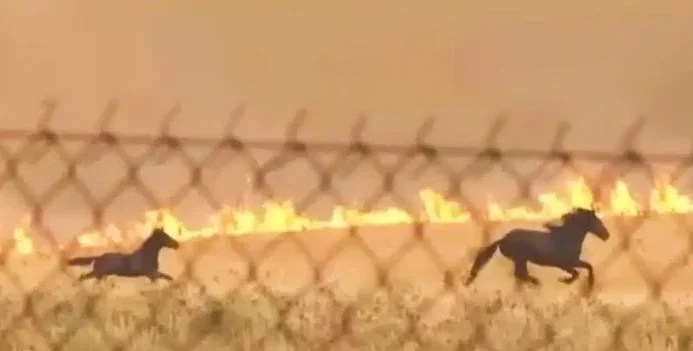
Authorities in Greece have identified apparent issues in the private electricity network supplying a wind farm as the likely origin of the devastating wildfire that scorched vast areas of Attica and neighboring Boeotia, according to a preliminary investigation report.
The inspection, carried out by the Fire Service’s Arson Crimes Directorate (DAEE), found no evidence of arson, discarded cigarettes, fireworks, hot works, or other human activity that could have ignited the blaze at its point of origin near the village of Mavro Spithari in Boeotia.
Instead, investigators documented a series of technical deficiencies, construction flaws, and maintenance issues in the privately operated power line serving the wind farm. According to the report, these defects may have caused a short circuit or electrical arcing, generating sparks that ignited dry vegetation.
Previous fire on same power line
One of the report’s most significant findings is that another wildfire had already broken out along the same electricity line on June 27, approximately 150 meters from the latest ignition point. That earlier fire was attributed to a short circuit after two energized conductors came into contact, sending sparks into surrounding dry vegetation.
Investigators noted that the apparent deficiencies identified following the earlier incident were not fully corrected, raising concerns that similar problems may have contributed to the latest blaze.
Technical evidence of wildfire investigation
The forensic report is accompanied by photographs and GPS coordinates identifying the fire’s point of origin directly beneath the overhead electricity line leading to the wind farm.
Inspectors found a fallen wooden utility pole and sections of electrical conductors on the burned ground. They also documented localized deformation and heat damage to the metal conductors that, according to the report, appeared to predate the wildfire rather than result from it.
A mechanical engineer also revealed that thermal imaging inspections carried out on June 20 had detected unusually high temperatures at two points where the underground cable connects with the overhead line. One of those locations was in the vicinity of the area where both the June and August fires started.
An independent electrical engineering expert concluded that strong winds likely caused the energized conductors to sway, either allowing them to touch and create a short circuit or bringing them close enough to generate an electrical arc due to structural deficiencies in the line.
Investigation continues
Authorities have not conclusively determined the wildfire’s cause, and the investigation remains ongoing. The preliminary findings, however, focus attention on the private electricity infrastructure serving the wind farm and whether previous technical issues were adequately addressed prior to the fire.
Featured Video
BRITAIN’S WARNING: PREPARE FOR WAR
or go to
Aletho News Archives – Video-Images
From the Archive
How Ukraine Tortured and Slaughtered Donbass
By Kit Klarenberg | Al Mayadeen | July 11, 2024
Almost immediately after the proxy war erupted, ISIS-tier footage of the torture and murder of Russians in Ukrainian custody emerged.
On July 6th, the New York Times published an astonishing investigation: In Ukraine, Killings of Surrendering Russians Divide an American-Led Unit. The article documents in grim detail how Chosen Company, an international volunteer battalion for Kiev, routinely executes Russian prisoners of war. It is the very first mainstream admission that this practice – a brazen breach of the Geneva Conventions, and a grave war crime – is widespread among Ukraine’s fighters, both foreign and homegrown. … continue
Blog Roll
 Aletho News
- Israel Demolishes Home Of Lebanese Journalist Whose Viral Film Exposed Pager Attack
- Record Oil, Empty Tanks: The UAE’s Miracle Recovery
- Burnham tackles Britain’s poverty with aggression in Yemen
- Peace in Ukraine: the easy way – or the hard way
- Trump & the Rrrrussians
- US taxpayer money laundered back through Ukraine – Musk
- Before COVID, an NIH lab chief proposed making a SARS-like bat virus more infectious
- Gates, Bourla on Trial in Netherlands Accused of ‘Great Reset’ Scheme at Vaccine Injury Hearing
- BRITAIN’S WARNING: PREPARE FOR WAR
- “Historic Russia”: The Land Putin Will Not Give Back
- If Americans Knew
- DAILY UPDATE: Latest essential news on Palestine, Israel, & region
- Damning report shows the media must confront its failures on Gaza
- BBC senior broadcaster speaks out on Gaza coverage
- Netanyahu vows vast West Bank invasion in response to 20-minute skirmish that left 2 Israeli soldiers and 2 Palestinian fighters dead
- Tied up and tortured: Israel using US-made electroshock weapons on Palestinian detainees
- The outsourced risk: how newsrooms rely on Gaza’s freelancers without protecting them
- Gaza bakeries forced to shut as Israel blocks flour shipments
- Gaza’s breast cancer patients face a deadly wait for treatment amid Israel’s genocide
- DAILY UPDATE: Latest essential news on Palestine, Israel, & region
- The Israel Lobby’s Changing Fortunes
- No Tricks Zone
- Two New Studies Find Thwaites Glacier Melt Cannot Be Driven By Human Activity Or A Warming Ocean
- E-Cars Reduce CO2 Emissions By Only 41% Compared To Internal Combustion Engine Vehicles
- Predictions Made By Renowned Climate Professor Over Past Decades Have Been Proven To Be Poor
- New Study Suggests Large Regions Of The Pacific Ocean Have Been Cooling For The Last 80 Years
- Germany’s Green Energy Debacle: High Energy Costs Force Kahla Porzellan to Close After 182 Years!
- New Study: 50 Years Of The Most Aggressive ‘Net Zero’ Policies Can Only Affect The Global Climate By 0.03°C
- US September “Heat” Was No Record…Many Records Set Decades Ago
- Latest European Green Energy Debacle; Portugal’s Largest Flagship Solar Park Insolvent!
- Green Energy Debacle: German Expert Professor Fritz Vahrenholt Warns Of Severe Economic And Social Consequences
- Two More Paleo Reconstructions Affirm Meters-Higher Sea Levels Across Ireland, Brazil 7000-6000 Years Ago

