Turkey considering military ties with Russia as NATO shows unwillingness to cooperate – Ankara
RT | August 18, 2016
Turkish Foreign Minister Mevlut Cavusoglu has lashed out at NATO, saying the alliance is not fully cooperating with Ankara. In an interview with Sputnik, he hinted that Turkey would consider military cooperation with Russia.
Cavusoglu says that Ankara has become alarmed at the lack of willingness shown by NATO to cooperate with Turkey, which is a member of the alliance.
“It seems to us that NATO members behave in an evasive fashion on issues such as the exchange of technology and joint investments. Turkey intends to develop its own defense industry and strengthen its defense system,” he said in an interview with Sputnik.
“In this sense, if Russia were to treat this with interest, we are ready to consider the possibility of cooperation in this sector,” Cavusoglu said when asked about the possibility of working with Russia in the defense sphere.
It is Cavusoglu’s strongest rebuke of NATO to date. In an interview with the Anadolu news agency on August 10, he said that Turkey and Russia would look to establish a joint military, intelligence, and diplomatic mechanism, while adding that relations with NATO were not as satisfactory as he would have wished.
“Turkey wanted to cooperate with NATO members up to this point,” he said. “But the results we got did not satisfy us. Therefore, it is natural to look for other options. But we don’t see this as a move against NATO,” he told Anadolu.
Meanwhile, a week ago, the Turkish ambassador to Russia, Umit Yardim, said NATO has no right to dictate foreign policy to Ankara.
“In no way can NATO limit our contacts with other countries… It means NATO has no right to dictate its terms and tell us who we should or should not meet and communicate with,” Yardim said on August 11, as cited by RIA Novosti.
The warming of relations between Turkey and Russia, which were previously at a low after a Turkish warplane shot down a Russian warplane over Syria in November, has led to apprehension in the West.
Cavusoglu also previously pointed out that there is growing resentment in Turkey due to a perception that the EU and US have only been giving mild support to Ankara in the wake of the attempted coup against President Recep Tayyip Erdogan on July 15.
Turkey has been incensed by the US’ refusal to hand over cleric Fethullah Gulen, who Ankara believes organized the attempted coup.
The Turkish government wants Gulen, who lives in self-imposed exile in Pennsylvania, to be extradited to face trial at home, but Washington has repeatedly refused. The US says it needs clear evidence that there was a link between Gulen and the attempted coup before it will consider complying with Turkey’s request.
Speaking to Sputnik, Cavusoglu accused the West of treating Turkey and Russia like “second class countries” simply because they did not see eye-to-eye.
“They consider Russia and Turkey to be second class countries, and they are outraged that these second class countries dare to criticize them… Therefore, faced with the straightforwardness and resilience of Erdogan and [President Vladimir] Putin, they feel very worried and anxious,” Cavusoglu said.
Cavusoglu’s criticism was not restricted to NATO, as he launched a broadside towards the West, saying it was largely responsible for the crisis in Ukraine.
“Look at what has happened in Ukraine,” he told Sputnik. “They were always threatening the country and forcing it to make a choice between them and Russia. They were saying, ‘you will either be with us or with Russia.’ This course of action is futile. What is happening in Ukraine is a reflection of the main problems in the region.”
In contrast, the Turkish diplomat says that Ankara wants peace around the Black Sea region and does not want it to become an epicenter for tension. He called on all parties to try and find a peaceful resolution and said there needed to be greater dialogue between Russia and NATO.
“There should be no threats emerging in the region for anyone, for Turkey, for Russia or for anyone else,” Cavusoglu said.
According to the minister, the need for dialogue with Russia was apparent at the last NATO summit. “In my opinion, all existing issues should be overcome through establishing dialogue,” he added.
Erdogan to Visit Tehran Next Week to Launch Turkey-Iran-Russia Coalition
Al-Manar | August 17, 2016
Turkish President Recep Tayyip Erdogan is preparing to take a high-profile trip to Tehran next week in a move seen by mainstream Arab media as the official launchpad for kickstarting the Turkey-Iran-Russia coalition on Syria.
Erdogan made a half-a-day trip to Russia after the recent coup in Turkey to meet and hold negotiations with Russian President Vladimir Putin in Saint Petersburg. Their talks were mainly focused on finding a way to end the war in Syria while both countries have set up a joint commission to implement the results of their talks.
“Given the reports claiming that Erdogan had come to Iran the night of coup and then returned to Turkey after its failure, the Turkish president’s visit to Tehran is highly important in establishing new relations between Tehran and Ankara,” Arabic language al-Hayat newspaper said in a report, according to Fars news agency.
Sources told al-Hayat daily that a trilateral meeting, consisting of the Iranian, Turkish and Russian officials, is due to be held to confer on ways to terminate the Syria war, adding that part of Erdogan’s trip to Tehran will be focused on this issue.
Also, the London-based al-Arab daily referred to Iranian Foreign Minister Mohammad Javad Zarif’s recent visit to Turkey, and said the trip was made within the framework of the goals pursued by Erdogan during his visit to Moscow.
According to al-Arab, the triangle of Iran-Turkey-Russia is forming an international coalition to confront the West.
The daily underlined that Zarif’s trip showed that rapid and important developments are being formed in the region which will marginalize the Arab states.
Al-Arab quoted analysts as saying that the Arabs’ foreign policy, specially on Syria, has failed deeply.
After the Turkish prime minister said it’s time for his country to improve ties with Damascus, top diplomats in Tehran said that Ankara is likely to initiate a major shift in policy on Syria and move to ally with Iran and Russia.
Turkish Prime Minister Binali Yildirim suggested a three-pronged road map for a solution to the five-year-old war in Syria, which has not only affected neighboring countries but also many parts of the world with the flight of more than 4 million refugees.
Stating that he was optimistic that a solution was at hand due to the changing nature of Turkish foreign policy, in which Ankara aims to make more friends and decrease its number of enemies, Yildirim said the time had come for Turkey to mend relations with Syria.
He added that Turkey would overcome the Syrian problem together with the regional actors.
After his remarks, Iranian Deputy Foreign Minister for Arab and African Affairs Hussein Jaberi Ansari said that Turkey will be invited to join Iran and Russia’s efforts to bring stability to Syria.
Addressing reporters in a press conference with his Russian counterpart Mikhail Bogdanov, Jaberi Ansari said that Turkey was an important country and influential in the Syrian crisis.
“The Iranian and Turkish officials agreed to continue talks in implementation of bilateral agreements in detail; we will soon send an invitation to Turkish Deputy Foreign Minister Umit Yalcın and alternatively, I will pay a visit to Ankara to talk about the regional issues in detail,” he added.
Jaberi Ansari expressed the hope that new developments in the region would help the establishment of new grounds for Iran, Russia and Turkey to act in coordination to end the stalemate and humanitarian crisis in Syria, especially in Aleppo.
The Iranian Foreign Minister Zarif had earlier this month visited Turkey.
In remarks made upon his arrival in Ankara, Zarif said, “Iran, Russia, and Turkey are considered important players in the region, and they need to engage in dialogue and cooperation.”
Pointing to the failed coup bid in Turkey, Zarif said, “We believe that the era of bullying and coups is over and such things no longer have a place in our region. People’s choice and will cannot be suppressed by a military group.”
During his one-day visit to Ankara, Zarif also met with President Erdogan.
Also, Zarif and his Russian counterpart Sergei Lavrov in a telephone conversation on Thursday discussed bilateral ties and the latest developments in Syria.
In the phone talks, the Iranian and Russian foreign ministers exchanged views on the latest developments in the region, specially Syria.
The two sides called for resolving the regional crises through political means.
Turkey harmonises with Russia, Iran on Syria
By M K Bhadrakumar | Indian Punchline | August 15, 2016
The reported remarks Monday by Turkish Prime Minister Binaldi Yildirim regarding a 3-step road map for ending the Syrian conflict would be the latest indication that Ankara is tiptoeing toward restoring Turkish-Syrian relations at the diplomatic and political level.
Yildirim’s road map envisages future Syria to be a unitary state that has an inclusive political system with constitutional safeguards that prevent domination by any sectarian, ethnic or regional groups. Its constructive ambiguity over the core issue of the fate of President Bashar Al-Assad is absolutely delightful. It abandons the pre-condition that President Assad should step down in any transition.
Yildirim instead leaves it to the Syrian electorate’s majority will to decide on Assad’s political future. He thinks Assad may not get a popular mandate, but then, he won’t deny Assad the right to seek one, either. Now, isn’t that a leap of faith? (Hurriyet )
To be sure, with the Turkish-Russian rapprochement in hand and a new-found rapport with Iran in the air, President Recep Erdogan is preparing to address the Syrian question, which is the root cause of the instability in Turkey. (See my recent articles in Asia Times Putin, Erdogan have a deal on Syria and Iran taps into Turkish-Russian reset.)
The road map suggested by Ildirim means that Turkey seeks convergence with the Russian and Iranian stance. Ildirim didn’t say so as many words, but implied that Turkey is abandoning the ‘regime change’ project in Syria. There are signs that Turkey is rolling back its support for the rebel groups fighting the Syrian government forces.
Unsurprisingly, there is a sense of urgency on the part of Turkey against the backdrop of the capture of Manjib from the control of the Islamic State in the weekend by the predominantly Kurdish Syria Democratic Forces (SDF) with the support of US Special Forces and air cover. (Associated Press )
Turkey had sought and obtained an assurance from the US in May that the Syrian Kurds will not be allowed to occupy Manjib and will be asked to leave the town after defeating the IS. However, much water has flown through the Bosphorous since then. US-Turkish relations have come under great stress following the coup of July 15. Suffice it to say, Turkey will be anxiously watching whether Washington will keep its word in the changed circumstances.
Indeed, the reports from Manjib should be highly worrisome for Turkey since the Syrian Kurds are now planning another military campaign to move further westward toward Al Bab, an important city in northern Syria, which will mean a significant expansion of their influence in the regions adjacent to the Turkish border. It would appear that the US is backing the Syrian Kurds in the new offensive on Al Bab. (VOA)
If so, Ankara’s worst fears seem to be coming true. A commentary by Deutsche Welle says that the Syrian Kurds are creating new “facts on the ground”. (German intelligence is active among Kurds.) The following excerpts suggest that the Syrian Kurds with US backing may be creating a fait accompli for Turkey:
- The SDF’s growing political and military clout is likely to further enrage neighboring Turkey, which views the YPG (Syrian Kurds) as a terrorist group because of its close relations with the Kurdistan Workers’ Party (PKK) fighting in Turkey. Ankara has repeatedly had its redlines crossed by the Syrian Kurds and the United States. The latest iteration is in Manbij, where first the SDF crossed the Euphrates, thereby crossing one “redline,” then again when the YPG led the recapture of the city. This appears to have broken a reported understanding between Ankara and Washington that Arab forces would take the lead in Manbij.
- The Syrian Kurds’ ultimate goal is to clear IS-controlled ground to the west of Manbij in order to unite their territories in the northeast, the so-called cantons of Kobani and Jazira, with Afrin… Uniting the cantons would give the Kurds an uninterrupted stretch of territory along the Turkish border, a prospect that the Syrian regime and Russia could welcome, as it would also weaken the rebel groups they are fighting. The question remains whether the United States will go along with an SDF offensive to unite the cantons and equally important, Turkey’s response to the prospect of a contiguous Kurdish mini state on its border and what that would mean for any future political solution in the country. (Deutche Welle )
Clearly, Yildirim’s accent on Turkey remaining a unitary state under any settlement needs to be put in the above perspective. Turkey will be dependent on Russia and Iran to prevent the emergence of a Kurdistan straddling its border regions with Syria.
On the other hand, Turkey also cannot antagonize Washington, since it is the US which is active on the ground in northern Syria and is equipping and helping the Syrian Kurds in their military campaign. Turkish Foreign Minister Mavlut Cavusoglu publicly demanded on Monday that the US should keep its word and have the Syrian Kurds vacate the regions to the west of Euphrates (which is Ankara’s ‘red line).
It is possible to see a degree of testiness in Cavusoglu’s words: “The U.S., even President [Barack] Obama, assured Turkey that the PYD (Syrian Kurds) would return to east of the Euphrates River after Manbij’s liberation. We expect them to keep their word.” (Anadolu )
Simply put, yet another fault line is appearing in US-Turkish relations in the run-up to the visit by US Vice-president Joe Biden to Ankara on August 24. Of course, Turkey holds a trump card insofar as the US operations in Syria are largely conducted from the Incirlik air base. But it will play the Incirlik card only if push comes to shove.
Russia Deploys Jets at Iranian Base to Combat Syria Terrorists
Al-Manar | August 16, 2016
Russian warplanes have been deployed to the Hamedan Air Base in western Iran in a bid to take part in the fight against Takfiri insurgents in Syria.
Al-Masdar News (AMN ) reported the newly signed military agreement between Russia and Iran, noting that such move will allow Russia to reduce flight time by 60%, saving the Kremlin both money and improving airstrike effectiveness.
Currently, the strategic TU-22M3 bombers take flight from southern Russia at Modzok airfield, AMN reported.
The distance of these flights equal roughly 2,150km to reach a target near Palmyra. In comparison, the Hamedan Air Base in Iran is roughly 900km from Palmyra.
The Hmeimim (or Khmeimim) Airbase in Latakia province, which Russia was granted access to in late 2015, is not suitable for the massive TU-22M3, one of the largest bomber jets in the world.
The Russian military is yet to announce how many TU-22M3 will be operating from the Iranian airbase.
Russia has earlier requested Iraq and Iran airspace allowance to transport cruise missiles into Syria.
This development indicates significantly improved political relations between Iran and Russia.
Here’s what happened at the Putin-Erdogan summit
Russia and Turkey massively upgrade their cooperation – however, agree to differ over Syria.
By Alexander Mercouris | The Duran | August 10, 2016
As is frequently the case the most information about what Putin and Erdogan discussed and agreed with each other came out of their joint news conference. The Kremlin has provided a transcript.
Syria
Putin and Erdogan both said that they had not discussed Syria prior to the news conference and that their discussion about Syria would take place after.
This could be for any of various reasons: that restoring their bilateral relations was the bigger priority with the contentious issue of Syria being put off till later; that Putin and Erdogan did not want to spoil the mood at the press conference by revealing how far apart they still are on this issue; or that the discussions they were about to have on Syria touched on such sensitive topics that they did not want to be questioned and reveal information about them at the news conference. Probably all of these reasons were in play.
Both Putin and Erdogan did say at the press conference that their positions on Syria remain far apart. In an interview with TASS on the eve of the visit, Erdogan however showed no shift in his longstanding positions on the Syrian conflict. For example, he continued to insist that President Assad had to go: “We don’t want Syria’s disintegration, but the departure of Bashar Assad who is guilty for the deaths of 600,000 people. This is the condition for preventing this scenario. Syria’s unity cannot be kept with Assad. And we cannot support a murderer who has committed acts of state terror.”
In a point that will be particularly contentious for the Russians (and one presumes for some people in the U.S.), he even denied that Jabhat Al-Nusra is a terrorist organisation despite its connection to Al-Qaeda: “Considering that the al-Nusra front is also fighting against the Islamic State, it should not be considered as a terrorist organisation either. This is an incorrect approach.”
Other comments Erdogan made during the TASS interview strongly suggest that it was he who was ultimately behind the recent Jabhat Al-Nusra announcement that it was distancing itself from Al-Qaeda.
In a recent post, the Moon of Alabama expresses bafflement that despite the Turkish rapprochement with Russia that has taken place since the coup attempt, there is no evidence of any slackening of Turkish support for the rebels in Syria. On the contrary, it seems that in connection with the fighting in Aleppo that support has, if anything, been stepped up. The Moon of Alabama speculates implausibly that this is being done by the CIA on Turkish territory contrary to Erdogan’s wishes.
The true position is, as I have said previously, Erdogan has invested too much in supporting the rebellion in Syria over too long a time to make it possible for him to change course. Were he to try to do so, he would expose himself to criticism in Turkey from many of his own supporters that he was selling out to the Russians. He would also risk a violent reaction from the many Jihadist fighters currently in Turkey, which at a time when the Turkish security forces are at their most disorganised following the coup would be highly dangerous. Beyond that, there is the fact that Erdogan is almost certainly sincere about his Syrian policy. His comments to TASS suggest as much, as do his actions on the ground.
The truth is what I said before: what we are seeing between Turkey and Russia is a strictly limited rapprochement, not a fundamental realignment. The two countries have moved closer to each other and are developing their political and economic relations at a blistering pace. However, there will be no switch in alliances, and on the question of Syria they fundamentally differ and continue to support opposing camps. The leaderships of both countries understand this perfectly well but are not prepared to hold the improvement of their mutual relations hostage to the situation in Syria.
On one question related to Syria there may, however be progress. Erdogan’s interview with TASS shows that he is still seething at Russian allegations made earlier this year that members of his family were involved in illegal trading with ISIS:
I had earlier been told that these facts also pointed to Turkey. I asked for the relevant evidence to be demonstrated. However, no one could prove it to me. Nothing of this kind can be found with regard to Turkey. They also tried to entangle my family in this. I said, prove it, I’ll leave my post if you demonstrate the relevant evidence. I turned to those who conjured up these insinuations and asked them about whether they would leave their posts if no evidence was found. Silence followed.
His comments to TASS suggest that Erdogan might be prepared to work with the Russians to destroy ISIS. However, the extent of that cooperation is for the moment difficult to gauge. It is unlikely to involve Russian aircraft operating from Incirlik.
As anticipated, there does appear to have been some discussion during the summit of the Russians and the Turks working together on a joint plan to end the war in Syria. In his interview with TASS, Erdogan hinted as much, also confirming that against U.S. and Saudi opposition he is also prepared to involve Iran in this plan:
Russia is fundamentally the key and most important player in establishing peace in Syria. I believe it is necessary to solve this crisis with the help of mutual action by Russia and Turkey. If the talk is about widening the circle of participants, then I already told my dear friend Vladimir [Putin] earlier: if necessary, we’ll also involve Iran in the effort. We can invite Qatar, Saudi Arabia and America. In this regard, we can form a wide circle of participants. If not, then the Russian Federation and Turkey given our common 950-km border with Syria, can take some steps, without violating Syria’s sovereignty.
However, given the differences between the Russians and the Turks over the future of President Assad and the status of Jabhat Al-Nusra, it is difficult to see at the moment how they could agree a joint position on Syria that they would be able to take forward in order to achieve a settlement of the conflict there. Doubtless the discussions between Putin and Erdogan after the press conference touched on this question. However, given the size of the gap between the two sides, it will take a long time for any consensus on the way forward between them to emerge. Most probably, it will be the situation on the ground that will decide the issue first.
The Turkish coup
Both in the press conference and in his interview with TASS, Erdogan again went out of his way to accuse the Gulen movement of being behind the recent coup attempt. I have previously speculated that Erdogan’s constant references to the Gulen movement are intended to signal that the U.S. (where Gulen is based) was somehow implicated in the coup. Nothing Erdogan said in either the press conference or the TASS interview refutes that speculation. He notably failed to say that the U.S. was not involved in the coup, or that the U.S. is Turkey’s ally and friend. On the contrary, in the TASS interview he appeared to criticise the U.S. for its foot-dragging in handing over Gulen:
In reality, even though we have demanded this man’s extradition. They say if you regard this man as a terrorist, then send us the documents. We will study them first and then take measures in accordance with U.S. legislation. True, there are some documents we had sent them before. By now, we’ve sent 85 boxfuls of paperwork on this case. In the near future, the Turkish justice minister, foreign minister, special envoy and a number of prosecutors and judges who were in charge of this matter will go to the United States and brief the American authorities in person.
By contrast, Erdogan went out of his way to thank his “friend Putin” and Russia for their support during the coup. What is more than a little strange about this however is that Erdogan does not really explain what that support was. Instead, he constantly refers to a telephone call he had from Putin the day after the coup, which he says gave Turkey “psychological support”. By that point, however, the coup had visibly failed, making it difficult to see why Erdogan should attach so much importance to this call.
The true reason for Erdogan’s gratitude to Putin and Russia is probably touched on in his comments to TASS about the reports of a Russian tip-off to Turkish intelligence warning of the coup:
This is the first time that I have heard such a thing. Even if it had really been so, those concerned would have been obliged to inform me first thing. I received no such information, not from intelligence, nor through any other channels. We don’t know who said what and to whom. I believe that this is a groundless rumour.
As I have said before, the Russians will never confirm that there was a tip-off, even if there was one, and for that reason neither will the Turks. Note, however, that Erdogan’s comments about the tip-off to TASS are very far from a denial. Instead, we are asked to believe that Erdogan of all people “doesn’t know who said what to whom” and that “this is the first time that I have heard of such a thing” despite the story being all over the Middle East media for weeks. As I have discussed previously, this looks very much like an agreed position reached by the Russians and the Turks not to deny the tip-off but to pretend to no knowledge of it. That makes it a virtual certainty the report of the tip-off is true.
Turk Stream and South Stream gas pipelines, nuclear cooperation, etc
As I discussed previously, these proved the least contentious issues, allowing for rapid progress. There is also talk of the Russians granting the Turks visa free access or at least simplified visa access to Russia.
Two points can be made briefly. Firstly, it is clear that it is the Turks rather than the Russians who are the main drivers behind both Turk Stream and the nuclear power agreement. Putin confirmed that the Turks continued to do preparatory work on Turk Stream even during the crisis in relations following the SU24 shoot-down in November. Secondly, it is clear that contrary to some reports, the Russians are not prepared to revive South Stream and that their opposition to the EU’s Third Energy Package remains as strong as ever. On the contrary, Putin made it clear that the Russians will not participate in any pipeline project that could be construed as their agreeing to the EU’s Third Energy Package. Moreover, Putin made it quite clear that he sees the U.S. (whom he referred to as “a third party”) as being behind the Third Energy Package and all the problems that exist in relation to Russia’s EU pipeline projects:
We have never politicised economic cooperation. In proposing the South Stream project initially, we assumed that our gas would go directly to EU consumers in southern Europe. However, at first the European Parliament made a decision that prevented the implementation of this project and then the European Commission sent a letter to the Bulgarian Government demanding that preparations for it stop, and ultimately we did not receive the permission of the Bulgarian authorities to enter Bulgarian territory.
Yes, now we see that Bulgaria would like to resume this project, but we incurred some losses due to the refusal of our European partners to carry out this project. So now we will not settle for just intentions and need absolutely rock solid legal guarantees. They have not been forthcoming. Initially, we regarded the Turkish Stream not even as an alternative to the South Stream but as an opportunity to expand our gas cooperation both with Turkey and Europe as a whole. One part of the Turkish Stream was designed exclusively for Turkey’s domestic consumers, given the growing economy of the Republic of Turkey. This is how we discussed the issue today. This part is beyond any doubt and its implementation may be launched very soon.
The second part related to routing our energy to Europe depends, of course, on a third party [emphasis added]. We should work out these issues with European countries and the European Commission in Brussels. Together with our Turkish partners and friends, we are prepared to work toward this, but again we need to have an agreement with all the participants.
Conclusion
In summary, the Putin – Erdogan summit went much as predicted. There is now a strong rapprochement underway between the two countries. This goes well beyond a mere detente, which is a relaxation of tensions. On the contrary, the leaders of the two countries now publicly call each other “friends”. It is not, however, a reversal of alliances. Turkey remains a member of NATO and an ally of the U.S.
In my opinion, this actually suits the Russians much better, at least for the moment. They surely know that an outright attempt to detach Turkey from NATO is for the moment impossible and might actually cause Turkey to become destabilised, which is absolutely not in their interests. However, at a time of heightened East-West tensions, they now have the leader of a key NATO state with NATO’s second biggest army calling their leader a “friend”. Sometimes it is more useful to have a friend in the enemy’s camp than a doubtful and unstable ally in one’s own. That is the situation which through a combination of skill and good luck the Russians have now manoeuvred themselves into.
Ex CIA chief’s ‘kill Russians, Iranians’ comment – Clinton job application
RT | August 11, 2016
Former CIA deputy director Michael Morell has proposed the US escalate the conflict in Syria by targeting President Bashar Assad’s allies. He added that killing Russians should be done covertly, but in such a way that the Kremlin would get the message.
Morell endorsed Hillary Clinton for US president and is known as a strong critic of Donald Trump.
RT: Russia and Iran are helping the Syrian government fight terrorists. So what would the US achieve by killing Russians and Iranians there?
Annie Machon: I think it would be jeopardizing world peace, to be quite frank. I think this is more like an alarming job application by Morell – so he would love to have a senior post in any Clinton administration, if she were to be elected. He is saying what he thinks she would like to hear about how America should deal with the situation in the Middle East. If indeed this does reflect her own views, then we’ve got to the absurd position, where actually world peace might be in safer hands if Donald Trump were elected president.
RT: Is Clinton running any risks by siding with a man who is proposing such a radical foreign policy move, do you think?
AM: I think this is a general reflection of the American establishment. Ever since the presidency of George W. Bush there has been a hit list of the countries that America has tried to ensure a regime change happens within. This was the list he called ‘the axis of evil’ comprising Libya, Syria, Iran, Iraq, and North Korea. Now, North Korea is under the patronage of China, so it’s relatively safe; plus it has a nuclear capability. So America can’t really do much about that one. But we’ve seen what they have done in all the other countries.
In fact, back in 2008 America was on the brink of going to war against Iran, as well. The only reason that rush to war was stopped – and this is something Bush has actually acknowledging in his memos – was because of the leaking of the national intelligence estimate of 2008, which is the combined thinking of all 16 US intelligence agencies – about Iran’s nuclear weapons capability and the development thereof. Their assessment then – and it has been re-ratified every year since – is that Iran gave up trying to develop any nuclear capability in 2003, and did not therefore pose a threat to Western interests. That is the only reason Iran is still standing. And we’ve seen all the mess in all the other countries.
RT: How consistent is Clinton’s foreign policy track record?
AM: I think fundamentally consistent with the sort of hawkish neocon approach the American establishment has been taking against many countries in the Middle East – preserve their interest there to prop up some of their close allies like Saudi Arabia and the dictatorships across the Middle East, as well.
But also consistent in trying to provoke reaction from Russia. The US and EU backed coup in Ukraine was an immense provocation. It is because Russia has managed to show a great deal of self-restraint in that area and in the face of provocation with big NATO exercises in the Baltic States and Poland and all the rest of it. That is the only reason that we haven’t seen an escalation into war.
RT: Clinton and her supporters claim Donald Trump is doing Russia a favor. His motto is making America great again. Why would that be perceived as beneficial for the Kremlin?
AM: I think mainly because he has made noises about the fact that he would ratchet down the pressure against Russia. In opposition to what Hillary Clinton has been describing – that the pressure needs to be kept on Russia. She represents the American establishment which is very keen on a unipolar world.
Now, with the resurgence of Russia that monopoly on power that America has enjoyed since the end of the Cold War, they deem to be under threat. Trump himself has said: “We don’t need to think like that. We can focus on building up our own country and let other countries get on with what they want to do, as well.” I think that is an unusually sane comment from the presidential hopeful.
Annie Machon is a former intelligence officer for MI5, the UK Security Service, who resigned in the late 1990s to blow the whistle on the spies’ incompetence and crimes with her ex-partner, David Shayler. Drawing on her varied experiences, she is now a public speaker, writer, media pundit, international tour and event organiser, political campaigner, and PR consultant. She is also now the Director of LEAP, Europe. She has a rare perspective both on the inner workings of governments, intelligence agencies and the media, as well as the wider implications for the need for increased openness and accountability in both public and private sectors.
Turkish Lawmaker Calls for Closure of NATO’s Incirlik Air Base After Failed Coup
Sputnik | August 8, 2016
Deputy Chairman of the Center-Left Republican People’s Party (CHP) Namik Havutca argues that the base that stores 90 US tactical nuclear weapons “makes enemies of friendly countries and poses a threat to Turkey’s internal stability.
In the wake of the failed attempt to overthrow the Erdogan government on July 15 and the ensuing purge that has led to over 18,000 military servicemen and judges being rounded up and imprisoned on charges of treason, yet another Turkish leader has stepped forward calling on the country to step back from its alliance with NATO forces who top Erdogan regime officials accuse of being complicit in the botched coup.
The Deputy Chairman of Turkey’s Center-Left Republican People’s Party has called for the immediate eviction of all foreign aircraft, tools and materials from the country and said that Incirlik Air Base should be shuttered.
“Incirlik Air Base has added nothing but instability and fragmentation to Turkey and the region,” said Havutca. The lawmaker went on to say that the NATO base failed to stand by the Turkish people at a time when their blood was being spilled and the nation was in tears.
The lawmaker said that Incirlik Air Base poses a threat to the country, both internally and externally calling it responsible for “multiplying our enemies and turning our friends into enemies of the state.”
The politician has pushed forward a proposal titled “Incirlik Get Out” and calls on his colleagues in the parliament to support the measure in order to put an end to the military facility that he calls a “virus” that eats away at the Middle East.
Finally, Havutca alleges that the NATO base “served the purpose of providing logical support to the organization in the coup attempt.”
The strong words mirror recent anti-American protests near the base including a demonstration one week ago where 5,000 protesters screaming “death to the US” were trailed by vehicles and demanded that Incirlik Air Base be shutdown.
The agitation of the Turkish people also comes amid numerous claims by the Erdogan regime that the CIA, FBI, and a top US General John F. Campbell were all really the masterminds of the coup whereas the regime’s nemesis-in-chief Fethullah Gulen was called nothing but a “pawn” by the Turkish President.
Hamas, World Vision deny Israeli claims that Halabi diverted cash to Hamas
Palestinian Information Center | August 5, 2016
GAZA – Hamas on Thursday denied Israeli allegations that the manager of World Vision’s Gaza office, Mohammed al-Halabi, passed millions of dollars to Hamas.
Hamas spokesperson Abdullatif al-Kanou’ said the group had “no connection to al-Halabi and therefore, all Israeli accusations are counterfeit and aim to suppress our people and toughen the blockade”.
Israel’s Shin Bet agency accused al-Halabi of funneling millions of dollars in aid money to Hamas, charges that the resistance group denied and the charity voiced skepticism over.
World Vision official Mohammed al-Halabi appeared before a court on Thursday, facing charges of using millions of charity funds in aid to Hamas.
The Israeli intelligence agency Shin Bet claimed Hamas recruited al-Halabi more than a decade ago.
The agency said since al-Halabi took over World Vision operations in Gaza in 2010, roughly 60 per cent of World Vision’s annual budget in the territory was diverted to Hamas.
Mohammad al-Halabi, World Vision’s manager of operations in Gaza, was arrested by Israel on June 15 while crossing the border into the enclave.
World Vision said it was “shocked” by Israel’s allegations and said in a statement that it had regular internal and independent audits and evaluations as well as a broad range of internal controls to ensure aid reached intended beneficiaries.
World Vision added that al-Halabi has worked with the group for 10 years, and that they have “no reason to believe” the allegations against their employee are true.
“World Vision is a Christian relief, development and advocacy organization dedicated to working with children, families and communities to overcome poverty and injustice,” the statement further read.
“World Vision serves all people regardless of religion, race, ethnicity or gender. World Vision has been working in the occupied Palestinian territories for over 40 years, striving to give hope to over 500,000 of the most vulnerable children, through education, health, child protection and resilience programs. We continue to call for a fair, legal process,” it added.
China shows rancour at Russian doublespeak
By M K Bhadrakumar | Indian Punchline | July 25, 2016
The scathing attack on Russian foreign policies in the Global Times newspaper on Sunday has no precedents. It goes way beyond the occasional sparring in a spirit of ‘glasnost’. Indeed, China-Russia Comprehensive Strategic Partnership of Coordination (as it is officially described) is not at all like what it appears. (Read my article in Asia Times Russia-China entente – Lofty rhetoric, shifty discourse.)
The GT article marks a big departure from past Chinese criticism. A note of outright condemnation is appearing. The fundamentals of Russian foreign policies and diplomacy have been called into question.
There are pointed allegations that Russia undermine China’s core interests and seeks to extract “strategic room” out of China’s tensions with the US and Japan.
Russia is presented here as a mirror image of the US – harbouring hegemonic ambitions and imposing its own version of ‘colour revolutions’ in a drive to dominate Eurasia, Eurasian Economic Union and the SCO.
The article makes a hard-hitting reference to the tortuous history of the relations between the two countries to hark back to the vast Chinese territories that are still in Russian possession.
Of course, from the Indian perspective, the article makes a stunning allegation that Russia eyes India as a counterweight to China in terms of a containment strategy:
- Russia is also aiming at its own containment of China by using India, a key force in Russia’s eyes. Fostering another regional power to offset China’s growing influence is what both Russia and the US desire. India’s ambition to join the Nuclear Suppliers Group, which was foiled by some countries including China, was backed by both Russia and the US.
Evidently, at a time when tensions are rising in China-India relations, Russia’s pro-Indian leaning rankles in the Chinese mind. What explains this level of rancorous indignation?
To my mind, the principal reason could be that Beijing is displeased with Moscow’s unhelpful stance apropos the Permanent Arbitration Tribunal’s recent award on the South China Sea.
We know that just hours before the award was announced at The Hague on July 12, Minister Plenipotentiary (holding ambassadorial rank) of the Chinese Embassy in Moscow Zhang Ziao had called on Russian Deputy Foreign Minister Igor Morgulov. The Russian readout merely said the two diplomats discussed “current bilateral and global issues”.
But it stands to reason that the Chinese diplomat conveyed Beijing’s expectations of Russian support apropos the forthcoming South China Sea award. However, for two full days, Moscow kept mum. Probably, the Chinese demarche went up all the way to the Kremlin for instructions.
At any rate, when the Russian reaction came, finally, it was not as a formal statement but instead in the Q&A following a press briefing on July 14 by Russian Foreign Ministry spokeswoman Maria Zakhavrova. The following excerpts are important:
- Question: On July 12, the Permanent Court of Arbitration in The Hague rendered a judgment on the jurisdiction of certain islands in China’s economic zone. What do you think about the decision, and what is Russia’s attitude towards China’s policy in the South China Sea?
- Maria Zakharova: We would like to note the following in connection with the July 12 ruling of the Permanent Court of Arbitration in The Hague concerning the well-known lawsuit filed by the Philippines. It is our position that the states involved in territorial disputes in these seas should honour the principle of the non-use of force, and that they should continue to search for a diplomatic settlement based on international law, mainly the 1982 United Nations Convention on the Law of the Sea. They should act in accordance with the spirit of ASEAN and PRC documents, specifically, the 2002 Declaration on the Conduct of Parties in the South China Sea and the guidelines for following the declaration that were coordinated in 2011.
- We support ASEAN and PRC efforts to draft a code of conduct in the South China Sea. I will remind you that Russia is not involved in territorial disputes in that region, and that it has no intention of getting involved. We consider it a matter of principle not to side with any party. We believe that the concerned parties should conduct negotiations in a format they define. We also believe attempts to interfere in a resolution of territorial issues in the South China Sea by external parties to be counter-productive. We support the role of the 1982 UN Convention on the Law of the Sea in ensuring the rule of law during activities in the world’s oceans. Moreover, it is important that the provisions of this universal international treaty be applied consistently and in a way that will not jeopardise the integrity of the legal system stipulated by the convention.
Clearly, the remarks not only fell far short of an articulation of support for China, but rather clinically distanced Moscow from identifying with Beijing’s position. Furthermore, it underscored thrice the centrality of the UN Convention on the Law of the Sea.
The China-Russia Comprehensive Strategic Partnership of Coordination failed to pass the litmus test here. If the “forever” partnership expected the two big powers to be supportive of each other’s core interests, when the time came for Moscow to stand up and be counted as China’s friend, it scooted. The Chinese bitterness shows.
Beijing understands the Russian game plan to ingratiate itself into favour with the West. A possible rapprochement between the US and Russia, which the Kremlin is desperately seeking before President Barack Obama leaves office, creates uneasiness in the Chinese mind.
Meanwhile, Beijing’s comfort level on the South China Sea situation as such has significantly risen. The Chinese diplomacy has rather successfully weathered a potentially ugly situation stemming from the July 12 award. The summit meetings of the ASEM and ASEAN in successive weeks refrained from criticising China.
Most important, the US is tamping down tensions. National Security Advisor Susan Rice is currently in Beijing. Obama hopes for some substantial takeaway from his meeting with President Xi Jinping in September during the G20 summit in Hangzhou, China, which will be his last encounter with the Chinese leader.
Moscow may have miscalculated the geopolitical fallout of the July 12 award. The GT article is a stark reminder to the Russian side that its need of China is greater than the other way around. The article is here.
NATO says ‘ready to stay’ in Afghanistan
Press TV – July 9, 2016
NATO says it is “ready to stay” in Afghanistan, reiterating a pledge on funding for local security forces.
“What we have seen is we are committed and we are ready to stay,” NATO Secretary General Jens Stoltenberg said Saturday, highlighting the funding pledge through 2020.
Stoltenberg could not say, however, when NATO’s military engagement in Afghanistan might end.
“There’s no reason to speculate exactly on how long it will continue,” he said, adding that NATO member states would examine the situation again next year.
Under the leadership of the United States, the 28-nation Western military alliance invaded Afghanistan in 2001, starting a war that has killed thousands and cost tens of billions of dollars. The military engagement was meant to obliterate the Taliban, but the militant group has managed to gain more footholds across the country over the past years, and local security forces still struggle to contain the group and other militants, including al-Qaeda and the Takfiri Daesh terrorists.
Stoltenberg said NATO will maintain troops in Afghanistan through 2017 under its train and advise Resolute Support Mission. He did not provide numbers but said the overall NATO force in Afghanistan would be “around the same” as now. Resolute Support currently has about 13,000 troops in Afghanistan.
Washington, the main provider of troops and funding to NATO in Afghanistan, has also backed down on its previous pledges to reduce the number of troops in the country, arguing that Kabul has been quite slow in reforming its military, which the United States claims is gripped by corruption and human rights issues.
US President Barack Obama had previously vowed to slash troop numbers from the current 9,800 to 5,500 by the end of this year. However, he announced on July 6 that the process will draw down and the US would keep 8,400 US troops in Afghanistan.
Trump advisor censures US for regime change attempts overseas
Press TV – July 7, 2016
The United States proactively gets engaged in regimes change attempts throughout the world, says a top foreign policy advisor to Republican presumed nominee Donald Trump on a visit to Russia.
Addressing Russian students at Moscow’s New Economic School, Carter Page accused Washington of taking “proactive steps to encourage regime change overseas.”
“This may understandably advance a certain level of insecurity,” Page said, adding, the post-Soviet world had also suffered from of the West’s double policies.
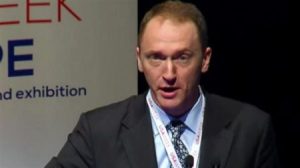 Page (pictured) did not comment about ties between Washington and Moscow after the 2016 vote.
He also declined to say if he was visiting any officials of the Russian government.
In an interview with CNN last month, Russian President Vladimir Putin said Moscow will “work with any president that the American people will vote for.”
“I know that there are complex economic and political processes in the United States. At the moment, the world needs a country as strong as the US is. And we do need the US, too,” Putin said.
Putin also praised Trump for being “bright” as well as for proposing to “restore full-fledged Russian-American relations.”
Relations between Washington and Moscow are in tatters largely due to the Ukraine crisis. The US and its allies accuse Moscow of sending troops into eastern Ukraine in support of the pro-Russian forces. Moscow has long denied involvement in Ukraine’s crisis.
In an interview with Carter in March, Bloomberg described him as “a globe-trotting American investment banker who’s built a career on deals with Russia .”
Podemos Threatens Spain’s Unity By Backing Catalan Independence Referendum
Sputnik — 25.06.2016
MADRID — Spain’s left-wing Podemos party threatens the country’s unity by supporting an independence referendum to be held in the Spanish autonomous region of Catalonia, Jose Ramon Garcia-Hernandez, the head of international relations of Spain’s ruling People’s Party (PP), told Sputnik on Saturday.
Unidos Podemos, an electoral alliance between Podemos and several other left-wing parties, has backed allowing Catalonia to hold a binding independence referendum, a move which has garnered significant support for the party in the region.
“The main opponent in these elections [Podemos] puts at risk the unity of Spain… Those who want to separate Catalonia from Spain should know that they are not going to achieve this because they are going against the majority of the Catalans and the Spanish,” Garcia-Hernandez said.
All public authorities, especially the government, have a duty to protect national unity, he added, stressing that the PP will uphold Spain’s laws and prevent secession.
Spain is due to hold a snap general election on Sunday, with the PP and Podemos running alongside the Spanish Socialist Workers’ Party (PSOE) after failing to form a coalition government. In last year’s election, the PP won 123 seats in the lower house of parliament, 64 less than in the previous election. The PSOE won 90, and Podemos came third, securing 69 seats. At least 176 seats are required for a parliamentary majority, necessary to form a government.
Catalonia held a non-binding referendum on independence from Spain in 2014. Over 80 percent voted in favor of the autonomous community becoming an independent state.
Featured Video

Trita Parsi: Middle East Unraveling — Are We on the Path to World War?
or go to
Aletho News Archives – Video-Images
New Book
Trans agenda is ‘normalization of sadism’ – US author

RT | September 23, 2026
The US Democratic Party has embraced a transgender agenda that amounts to “the normalization of sadism,” author A.J. Rice has said, warning that radical trans policies would return if the party is allowed to regain power.
Speaking to RT’s America First host Scotty Nell Hughes about his new book, ‘The Curse of the Bearded Lady: How the Trans Mafia Whacked American Sanity’, Rice argued that activists have gained significant influence in schools, medicine, and corporate America while people who questioned the agenda have faced pressure to stay silent.
The author described the “trans mafia” as the sprawling network of people and institutions that have helped the movement gain influence. He singled out parts of academia, wealthy backers, and corporations, and stated that providers of transition-related treatment also have a financial incentive to keep young people in their care indefinitely.
Rice argued that the consequences of these policies ultimately fall on children who are being drawn toward gender-affirming medical treatments and on girls who are expected to share locker rooms or compete in sports with biological males.
He noted that while voters rejected the Democrats’ approach to gender in 2024, the party, which has been “captured by madness,” has since only doubled down and is seeking what is effectively “the normalization of sadism.” … Full report
Blog Roll
 Aletho News
- ‘We don’t seek permission to defend our country’: Snippets from President Pezeshkian’s UNGA address
- NATO chief wants Europeans to fight American wars [for Israel]
- German chemicals giant reveals details of downsizing
- Refaat Al-Areer Was The Canary In The Coal Mine In Israel’s War On The Truth
- Israeli election committee bars candidate from Knesset race over Gaza war opposition
- French-Lebanese man files war crimes complaint over Israeli attacks
- Mahan Air Flight Lands in China Despite US Threat against Iranian Airlines
- US eyes $10bn fund to rebuild war-battered Gulf infrastructure
- Trump meets Rodríguez near Maduro’s prison as Venezuela’s oil flows to US
- Trita Parsi: Middle East Unraveling — Are We on the Path to World War?
- If Americans Knew
- An error has occurred; the feed is probably down. Try again later.
- No Tricks Zone
- New Study: Earth And Venus Surface Warmth Largely Explained By Convection And Lapse Rate, Not CO2 Or Radiation
- 2025 Nature Paper Claiming Worsening Global Drought Gets RETRACTED …Heavily Flawed
- New Study: ‘Global Drought Shows No Detectable Recent Acceleration Under Climate Warming’
- Economic Masterminds: German Socialists Suggest Taxing Productivity Gains Stemming From Using AI
- The South China Sea Has Not Been Cooperating With The Climate Change Narrative
- Energy Crisis: Germany Enters Heating Season With Historically Low Gas Reserve Fill Levels
- New Study: The Antarctic Ice Sheet Gained Mass From 2020-2024 Due To Staggering Snow And Ice Accumulation
- Study: Ocean Heating Rates From Thousands Of Years Ago ‘Dwarf’ Modern Ocean Heating Rates
- Climate Extremists Target, Attack Large-Scale Power Grid Infrastructure In Germany!
- New Study: Antarctic Ice Melt Has Contributed Less Than 1 Centimeter To Sea Level Rise In The Last 30 Years

