Sino-Belarussian strategic alliance and Eurasian security
By Drago Bosnic | August 17, 2023
Greater Eurasia has the capacity to become the world’s most powerful geopolitical entity, particularly when it comes to the combined might of the countries in this massive region, be it in terms of economy, human and natural resources, military, population, high-tech, etc. And while there might be many diverging interests between various Eurasian powers, the effort to build a geopolitically discernible Greater Eurasia that will be more in line with the overall global power shift is well underway. Still, it’s important to note that the region needs an even more robust military cooperation framework that will be a true analog to NATO. Even separately, the most powerful Eurasian militaries are an insurmountable obstacle for the belligerent alliance, as evidenced by NATO’s inability to defeat Russia, despite a nominal “defense” budget that is several dozen times greater than Moscow’s.
On the other hand, a united Greater Eurasia would be a truly unbeatable force, one that the belligerent alliance would be unable to match even if it somehow managed to double in size, which is partially what the US-led political West is trying to accomplish by pushing NATO to global proportions. A big part of this effort is its expansion in the Asia-Pacific region, critically important for China and its ever-growing exports, the lifeline of its gigantic economy. In part to strengthen cooperation with its Eurasian partners, and in part to show the political West that it can easily reach the heart of Europe, Beijing is building even closer ties with Belarus. This is continually reciprocated by Minsk, which is also keen on greater integration with allied countries. Namely, General Li Shangfu, the Chinese National Defense Minister since March, arrived in Belarus on August 16 for a three-day official visit.
General Shangfu was greeted by his Belarussian counterpart Lieutenant General Viktor Khrenin at the Minsk National Airport. The Chinese Defense Minister flew from Russia, where he took part in the 11th Moscow Conference on International Security held in Kubinka, in the Moscow oblast (region). Although Shangfu and Khrenin already met once at the Shanghai Cooperation Organization’s Defense Ministers meeting in late April, this was the first high-profile visit related to the growing Sino-Belarussian military cooperation in the past five years. The two defense ministers are expected to map out the enhanced cooperation framework for the near future and exchange views on their respective security concerns. The visit comes on the heels of neighboring Poland’s announcement that it would significantly strengthen and expand its military presence in border areas with Belarus.
For years, Minsk has been raising concerns about the ever-growing expansion of NATO’s offensive potential on Belarus’ borders with Lithuania and Poland. And indeed, the belligerent alliance keeps conducting its crawling aggression against both Moscow and Minsk, particularly by using the pretext of supposedly “protecting” the so-called Suwalki Gap, a sparsely populated, albeit strategically important area situated on the border of Lithuania and Poland. For this reason, Belarus has significantly strengthened its armed forces. In addition (and perhaps even more importantly), Minsk has also drastically expanded its already very close cooperation with Russia, particularly since 2020, when Belarus was faced with repeated destabilization attempts, with NATO hoping to conduct yet another Maidan-like coup in the country and snatching it for “Barbarossa 2.0” purposes.
The drastically strengthened military ties with Moscow were primarily demonstrated by having multiple large air defense, tactical ballistic missile and fighter jet units redeployed from the Russian Far East to bases all across Belarus. However, by far the most important move for bolstering Minsk’s strategic security was the deployment of Moscow’s nuclear weapons in Belarus, as well as the implementation of the nuclear sharing agreement that would allow the country to use these weapons in case of a direct NATO attack. And yet, Minsk still wants to expand its cooperation with other Eurasian powers, which is why it hosted the Chinese National Defense Minister. China and Belarus established close defense cooperation in the early 1990s, as Minsk managed to not only keep most (if not all) of its Soviet-era military-industrial potential intact, but also significantly expand and modernize it.
This turned Belarus into one of the most prominent defense suppliers to Beijing, as China at the time was still working on modernizing both its own military industry and the PLA (People’s Liberation Army). This fruitful cooperation resulted in several joint projects, such as the very capable “Polonez” 300 mm MLRS (multiple launch rocket system), comparable to similar Russian long-range rocket artillery/tactical missile systems such as the legendary BM-30 “Smerch” and its recent modern iteration designated as “Tornado-S”. The development of this Sino-Belarussian MLRS also marked the very first time that Chinese rocket and missile technologies were transferred to a European country. An upgraded version called “Polonez-M” has an increased range of just under 300 km, as well as a higher share of domestic components to ease logistics and drive down costs. It can also fire the improved Chinese A-300 missiles.
Having such domestically developed capabilities is certainly a boon for a relatively small country like Belarus. It serves not only as a way to bolster the country’s security, but also its robust military industry, and thus, its economy as well. Beijing is particularly important in this regard, as it’s Minsk’s main trading partner, with Chinese goods, services and technologies being of crucial importance to allow Belarus to weather the storm of a combined Western sanctions warfare and subversion attempts.
Drago Bosnic is an independent geopolitical and military analyst.
China to strengthen military cooperation with Iran
MEMO | August 16, 2023
China is looking to enhance military cooperation with recent fully-fledged member of the Shanghai Cooperation Organisation (SCO), Iran.
Speaking at the 11th Moscow Conference on International Security yesterday, China’s Defence Minister Li Shangfu said that Beijing was keen to bolster military ties with Tehran and other SCO members and observer states.
“We will continue to strengthen the mechanism of security cooperation within the SCO, actively deepen defense collaboration with the organisation’s newest member Iran, as well as Belarus, which will soon become a SCO member,” Russia’s official TASS news agency quoted Li as saying.
The defence minister also emphasised that China is prepared to hold joint drills with other countries and to enhance international cooperation on arms control: “Beijing is ready to hold joint military drills and exercises with all countries, as well as find a larger space to hold drills and strengthen international cooperation in the field of arms control and non-proliferation [of nuclear weapons].”
Last month Iran became the newest member of the SCO, joining China, Russia, India, Pakistan, Uzbekistan, Kyrgyzstan, Kazakhstan and Tajikistan. The SCO Charter outlines the intergovernmental organisation’s commitment to the collective security of member states, especially in regards to” joint counteraction to terrorism, separatism and extremism in all of them manifestations.”
The Jerusalem Post noted that it was the first time the Islamic Republic has joined a regional pact since its founding in 1979. “This will grant Iran a freer hand to openly trade arms with Russia and China, and other SCO countries, which results in Iran’s expanding its influence and aggression in the region. The West needs to carefully consider the repercussions of this significant strategic development,” the article warned.
Iranian Ambassador to Russia, Kazem Jalali, praised the Moscow conference, saying: “It is a weighty exhibition in which the Islamic Republic of Iran has a good presence in this exhibition with its many companies. Very good topics were raised in the international security conference.”
Why’s US Media Talking About Nigerien General Moussa Barmou All Of A Sudden?
From Bazoum To Barmou
BY ANDREW KORYBKO | AUGUST 15, 2023
American media’s narrative about last month’s regime change in Niger has conspicuously shifted since Acting Deputy Secretary of State Victoria Nuland’s trip to Niamey last week. Prior to then, most information products aggressively supported Nigerian-led ECOWAS’ threatened invasion aimed at reinstalled ousted leader Mohamed Bazoum. Ever since she revealed that the US is “pushing for a negotiated solution”, however, attention has turned towards General Moussa Barmou.
NBC News’ Report
The Wall Street Journal began the trend two days after her visit in a paywalled article here, but it wasn’t until NBC News’ piece on Monday headlined “Blindsided: Hours before the coup in Niger, U.S. diplomats said the country was stable” that the public at large was introduced to him. Its subtitle about how “An American-trained general whom U.S. military officials considered a close ally backed the overthrow of the country’s democratically elected president” was a reference to Barmou. Here’s what they reported:
“U.S. military officials believed that the head of the Nigerien Special Forces, Gen. Moussa Salaou Barmou, their close ally, was going along with the other military leaders to keep the peace. They noted that in a video showing the coup leaders on the first day, Barmou was in the back of the group with his head down and his face mostly hidden.
Less than two weeks later, Barmou met with a U.S. delegation in Niamey, led by acting Deputy Secretary of State Victoria Nuland, and expressed support for the coup and delivered a sobering message: If any outside military force tried to interfere in Niger, the coup leaders would kill President Bazoum. ‘That was crushing,’ said a U.S. military official who has worked with Barmou in recent years. ‘We were holding out hope with him.’
Not only had Barmou worked with top U.S. military leaders for years, but he was also trained by the U.S. military and attended the prestigious National Defense University in Washington, D.C. Last week, sitting across from U.S. officials who had come to trust him, Barmou refused to release Bazoum, calling him illegitimate and insisting that the coup leaders had the popular support of the Nigerien people. Nuland later said the conversations were ‘quite difficult.’”
The unnamed US military source who said that “We were holding out hope with him” spilled the beans about the way in which their country intended to control Niger by proxy. The Pentagon thought that cultivating the chief of that country’s special forces would be sufficient for preventing a coup, but Barmou decided to go along with it because he knew better than they did how genuinely popular it was. His “defection” from American proxy to patriot ensured this surprise regime change’s success.
Politico’s Report
The next US media report of relevance was published the day later by Politico and was about how “The U.S. spent years training Nigerien soldiers. Then they overthrew their government.” It builds upon Barmou’s biography that was introduced by NBC News and can therefore be conceptualized as the second step of an ongoing information campaign intended to inform Americans more about him. Here’s what they had to say about this top Nigerien military official:
“Brig. Gen Moussa Barmou, the American-trained commander of the Nigerien special operations forces, beamed as he embraced a senior U.S. general visiting the country’s $100 million, Washington-funded drone base in June. Six weeks later, Barmou helped oust Niger’s democratically elected president.
…
Retired Maj. Gen. J. Marcus Hicks, who served as the commander of U.S. Special Operations Forces Africa from 2017 to 2019, says he was instantly impressed by Barmou. The Nigerien general speaks perfect English, and attended multiple English language and military training courses at bases in the United States over nearly two decades, including at Fort Benning, Georgia, and the National Defense University.
Hicks and Barmou developed a friendship. They had many long conversations over dinner about the influx of extremists into Niger, and how difficult it was for Barmou to see his country deteriorate in recent years, said Hicks. ‘He’s the kind of guy that gives you hope for the future of the country, so that makes this doubly disappointing,’ said Hicks. It was ‘disheartening and disturbing’ to learn that Barmou was involved in the coup.
As its neighbors fell like dominos to military coups over the last two years, Niger — and Barmou himself — remained the last bastion of hope for the U.S. military partnership in the region. He ‘was a good partner, a trusted partner,’ said a U.S. official familiar with the U.S.-Niger military relationship. ‘But local dynamics, local politics, just trump whatever the international community may or may not want.’
It’s not clear whether Barmou was initially involved in plotting the coup, which is believed to have been spearheaded by Gen. Abdourahamane Tchiani, the head of Bazoum’s presidential guard. Tchiani and his men reportedly took the president captive because Tchiani believed he was going to be pushed out of his job. But soon after, Nigerien military leaders including Barmou endorsed the putsch.”
Politico’s piece serves to raise maximum awareness of just how much the Pentagon trusted Barmou, which humanizes him in the eyes of their targeted audience, who likely hitherto thought that he was either a greedy wannabe despot or a pro-Russian anti-Western ideologue. Upon learning that he was America’s closest ally in Niger, they’ll be more inclined to support Nuland’s diplomatic efforts to resolve the crisis via some sort of compromise than back the use of force at the risk of sparking a regional war.
Le Figaro’s Report
NBC News and Politico’s back-to-back pieces about Barmou were published a week after Nuland returned from Niger, which gave the US’ permanent policymaking bureaucracies enough time to decide their next move. During that time, an unnamed diplomatic source told Le Figaro in an article published on Sunday the day before NBC News’ that they feared the US might backstab France. According to them, the US could tacitly recognize the interim military-led government if they get to retain their bases.
The next day on Monday, which coincided with the release of NBC News’ report about Barmou that was conceptualized in this analysis as the first step of an ongoing information campaign intended to inform Americans more about him, the US publicly balked at the ECOWAS invasion scenario. State Department principal deputy spokesman Vedant Patel said that “military intervention should be a last resort”, thus extending credence to Le Figaro’s report after its diplomatic source correctly foresaw the US’ new stance.
From “Francafrique” To “Amerafrique”
This sequence of events suggests that the US might offer Niger’s interim military-led government a deal whereby they’d tacitly recognize these new authorities and order ECOWAS to call off its invasion in exchange for that country retaining its bases and declining to embrace Russia/Wagner as explained here. In this scenario, the US’ backtracking on its prior demands to reinstall Bazoum could be attributed to its trust of Barmou’s assessment that the coup truly channeled the will of the Nigerien people.
NBC News and Politico’s pieces also included information about Niger’s importance for the US’ African strategy, which preconditions the public to expect that the White House could resort to the national security exception for not cutting off military aid to that post-coup state per its domestic legal obligation. In that event, the US would seamlessly replace France’s traditional security role there while preventing the emergence of a void that could have otherwise been filled by Russia/Wagner.
If post-coup Niger successfully transitions from France’s “sphere of influence” in Africa (“Francafrique”) to America’s (“Amerafrique”), then the US might weaponize the model that it opportunistically improvised after the latest surprising turn of events to export it to other former French colonies. Those that experience a grassroots surge of anti-French sentiment might also undergo coups by former US-trained military leaders, who’d then negotiate similar deals as the previously mentioned one.
The US could offer to replace France’s scandalous security role in their countries together with preventing an ECOWAS invasion in exchange for their new interim military-led governments offering it a share of the previously French-dominated market and declining to embrace Russia/Wagner. In this way, the US could manage revolutionary trends in the region and actually benefit from them if it replicates the model that it’s presently experimenting with in Niger via Barmou’s envisaged bridge role.
This insight answers the question of why US media is talking about him all of a sudden in the week after Nuland’s trip to Niamey. They’re warming average Americans up to the scenario of Barmou functioning as a bridge between their countries after the coup. Since he chose to go along with the regime change instead of stop it, the US’ new hope is that he’ll convince his superiors to accept the deal that was described, which could then form the basis for a model that might later be exported across the region.
The Latin American Precedent
The US would prefer for France to manage Africa on the West’s behalf per the “Lead From Behind” stratagem of “burden-sharing” in the New Cold War, but if its military-strategic withdrawal is inevitable due to rising anti-imperialist trends, then it’s better for America to replace its role than Russia/Wagner. To that end, it might soon support anti-French coups by US-trained military leaders in order to corral populist sentiment in a geostrategically safe direction that avoids creating space for its rivals.
This is similar to what it’s recently begun doing in Latin America after the Democrats started supporting leftist-liberal movements like those in Brazil, Chile, and Colombia, which led to Lula’s PT becoming the posterchild of this so-called “compatible left” project, in order to not lose control of regional processes. It’s precisely this precedent that’s arguably influencing the formulation of America’s new “bait-and-switch” approach towards seemingly inevitable socio-political changes in “Franceafrique” as well.
Concluding Thoughts
Circling back to the lede, Americans are suddenly learning more about Barmou because the US is likely exploring the possibility of employing this trusted pre-coup partner as a bridge with Niger in the hope that he convinces his superiors to agree to a “negotiated solution”. If the Latin American model for corralling populist sentiment is replicated by the US in Niger, albeit accounting for “Francafrique’s” coup-prone conditions, then this modified method might eventually be weaponized across the entire region.
Dissent Channel, Afghanistan and Confidentiality
By Peter Van Buren | We Meant Well | August 7, 2023
Something quite significant in U.S. diplomatic history is going to take place — a State Department Dissent Channel message, concerning the evacuation and withdrawal from Afghanistan, is going to be shared with Members of Congress.
House Foreign Affairs Committee Chairman Michael McCaul announced his panel investigating the final days of American presence in Afghanistan will view the Dissent Channel cable. McCaul threatened to hold Secretary of State Antony Blinken in contempt if he did not provide him access to the diplomatic cable, which came from a confidential “dissent channel” that allowed State Department officials to discuss views which may be different from administration policy.
It is believed the July 2021 cable discussed concerns from the rank-and-file diplomatic staff not fully shared by senior embassy executives and management about the upcoming American pullout from the country, warning the U.S.-backed Afghan government could fall. The cable specifically advised an earlier withdrawal date than that ultimately chosen by the Biden Administration, and may have addressed the decision to conduct the entire evacuation from a single civilian airport in Kabul.
So what is the Dissent Channel and why is this particular cable so important?
The Dissent Channel was set up in 1971 during the Vietnam War era as a way for foreign service officers and civil servants at State (as well as United States Agency for International Development, the Arms Control and Disarmament Agency, and the former United States Information Agency) to raise concerns with senior management about the direction of U.S. foreign policy, without fear of retribution. The cables (formal, official State internal communications are still referred to as “cables” harking back to early diplomatic days when telegrams were used to communicate between Washington and embassies abroad) are sent to the State Department’s policy planning director, who distributes them to the secretary of state and other top officials, who must respond within 30 to 60 days. There are typically about five to ten each year. “Discouragement of, or penalties for use of, the Dissent Channel are impermissible,” according to the State Department internal regulations.
Use of the Channel covers the scope of diplomatic mission. Historical messages include a dissent over the executive branch’s decision to “initiate no steps to discipline a military unit that took action at My Lai” in Vietnam and the “systematic use of electrical torture, beatings, and in some cases, murder, of men, women, and children by military units in Vietnam.” These actions by U.S. soldiers were “atrocities too similar to those of Nazis.” Another dissent was over the “hypocritical” U.S. support of the Somoza regime in Nicaragua, bemoaning that the U.S. missed a “unique opportunity to intervene for once on the right repeat right side” of history. One older atypical dissent cable complained about having to arrange female companionship in Honduras for a visiting U.S. congressman. In the words of one now-declassified cable, “The Dissent Channel can be a mechanism for unclogging the Department’s constipated paper flow” related to employee dissent against current foreign policy actions.
What the Channel does is one thing; who gets to see it is another. Until now, dissent messages have generally been regarded as something sacrosanct not to be shown to outsiders and not to be leaked. “Release and public circulation of Dissent Channel messages,” State wrote to one inquirer,” would inhibit the willingness of Department personnel to avail themselves of the Dissent Channel to express their views freely.” The messages were first withheld from the rest of government (and the public) by State under the rules which created the system, and later under the Freedom of Information Act’s (FOIA) “predecisional” Exemption 5, until the 2016 FOIA Improvement Act amendments made it illegal for agencies to use this exemption after 25 years. So sharing the Afghan dissent cable with Members of Congress, especially so soon after the administration’s evacuation policy failed in Afghanistan, is a very big deal at the State Department.
One publicized exception to how closely held dissent messages are took place in 2017 when nearly a thousand State Department Foreign Service Officers signed a five page dissent message opposing President Donald Trump’s executive order, “Protecting the Nation from Foreign Terrorist Entry into the United States,” which prohibited seven additional Muslim nationalities from entering the U.S., aka “The Muslim Ban.” As a result of an anti-Trump contingent inside generally liberal and mostly Democratic-leaning State, the message was leaked in its entirety. Even more against precedent, Trump’s spokesman Sean Spicer issued an extraordinary public rebuke to the diplomats: “These career bureaucrats have a problem with it? They should either get with the program or they can go.”
An almost-leak (a State Department official provided a draft, though the final version was not published, to The New York Times) took place in 2016 during the Trump-Clinton presidential election, after 51 Foreign Service Officers criticized the Obama administration via the Dissent Channel for failing to do enough to protect civilians in Syria in what was widely seen as an endorsement of Candidate Hillary’s pseudo-promise to put U.S. boots on the ground in Syria. Other Trump-era dissent cables not shared outside the Department called for consultations on Trump’s removal from office, and rebuked the secretary of state for not forcefully condemning the president over January 6.
To fully understand what the Dissent Channel is requires a better understanding of the State Department culture, academic in nature but frighteningly risk adverse. The academic side reflects the Department’s modern origins as being made up of those who were “male, pale, and Yale” where the tradition of loyal opposition holds sway. But it is the risk adverse side of State that tells how important and internally revealing the Afghan cable is. Dissent messages are signed, no anonymous ones allowed, and while Secretary Blinken has promised to not show the names of those who signed the Afghan cable to Congress, State senior management will know exactly who wrote what.
In addition, Dissent Channel messages must still be cleared for transmission to the secretary of state in Washington at post, though there is no requirement everyone agree with the contents per se (authorization does not imply concurrence.) So one’s colleagues know who wrote what, potential dynamite in an organization where dissent is otherwise not encouraged and corridor reputation plays a deciding role in promotions and future assignments. It is a significant step to write or sign a dissent cable and despite the regulations’ admonishment that use of the Dissent Channel not be discouraged by supervisors, it is discouraged.
Nobody in Embassy Kabul who signed that dissent message, basically telling their boss the ambassador and the Biden Administration they were wrong, expected to have their opinions shown to Congress; quite the opposite. Blinken, by sharing the cable with Congress, is breaking faith with his institution and with his front line workers in a uncollegial way only imagined by them during the Trump administration. Once upon a time something like that would have called for dissent.
ECOWAS’ Sanctions Starve Average Nigeriens But The US Only Cares About Bazoum’s Health
BY ANDREW KORYBKO | AUGUST 14, 2023
Spokesman of the military-led interim Nigerien Government Colonel Major Amadou Abdramane said on Sunday that his compatriots “have been hard hit by the illegal, inhumane and humiliating sanctions imposed by ECOWAS”, adding that “people are being deprived of medicines, food and electricity.” Amidst Niger’s humanitarian crisis, Secretary of State Antony Blinken “expressed grave concern” at what he described as the “deteriorating conditions of President Bazoum and his family.”
The US’ top diplomat didn’t spare a single word for the approximately 25 million Nigerien people who are tremendously suffering right now, instead focusing solely on the health of America’s detained ally. The Mainstream Media has followed suit by obsessing over recent reports that Bazoum has been “forced to eat dry rice and pasta” while ignoring the plight of the people in whose name he previously served. This approach is arguably driven by ulterior motives that’ll be explained throughout this analysis.
The collective punishment that the West ordered its ECOWAS proxies to inflict on average Nigeriens is intended to provoke them into rebelling against their new military-led interim government out of desperation for sanctions relief in order to stave off impending starvation. Simply put, 25 million people are being held hostage for purely political purposes, but this wouldn’t have happened had regional heavyweight Nigeria not gone along with it.
“None Of Nigeria’s Objective National Interests Are Served By Invading Niger”, nor are any served by sanctioning it either. In fact, Nigeria has recklessly endangered its own objective national interests by cutting off trade and financial ties with its northern neighbor. In one fell swoop, it destroyed decades’ worth of goodwill, which risks turning this country’s friendly people into an enemy. Regardless of however this crisis is resolved, bilateral relations will likely never be the same again.
Furthermore, these sanctions could also breed resentment within Nigeria among those northern border communities that have family and friends in Niger who are now suffering. Just like the sanctions are meant to provoke Nigeriens into rebelling out of desperation, so too might they backfire by provoking Nigerians into violating them by smuggling medicine and food to their loved ones. If the military resorts to forcible and possibly even lethal means to stop them, then it could provoke unrest or worse.
Nigeria has been broadly divided between the majority-Muslim North and majority-Christian South since the merging of two hitherto separate British colonies in the decades before independence. These differences resulted in the forging of very distinct regional identities that have occasionally posed threats to the country’s unity. In the present context, the actual or perceived oppression of northern cross-border communities by the military during anti-smuggling operations could rekindle these tensions.
Likewise, if the humanitarian situation continues deteriorating in Niger, the resultant influx of refugees into Northern Nigeria could also lead to similar problems if these people aren’t allowed to cross into that country or if the federal government doesn’t properly provide for those who do. The first sub-scenario could provoke unrest among those Nigerians who want to host their family and friends from Niger, while the second could provoke unrest if some desperate refugees resort to crime and/or take locals’ jobs.
Nigeria is already struggling to ensure security in the Northeast against Boko Haram and in the Southeast against Southern separatists like the “Indigenous People of Biafra” (IPOB) that Abuja considers to be terrorists. If the Nigerien borderland slips into crisis per any of the scenarios that were described, then it could further divide the armed forces and prove disastrous for national unity. It’s therefore in Nigeria’s objective national interests for the situation in Niger to stabilize as soon as possible.
Awareness of this imperative accounts for why the Northern Senators Caucus was so strongly against Nigeria leading a NATO-backed and possibly French-supported ECOWAS invasion of Niger when they were asked to vote on this earlier in the month. Their spokesman Senator Suleiman Kawu warned that “We also take exception to use of military force until other avenues as mentioned above are exhausted as the consequences will be casualties among the innocent citizens who go about their daily business.”
He added that “about seven northern states who shared border with Niger Republic namely Sokoto, Kebbi, Katsina, Zamfara, Jigawa, Yobe and Borno will be negatively affected.” Building upon this second observation, it’s just as relevant in the event that the sanctions persist as it is if Nigeria invades Niger. If they remain in place and the humanitarian situation in Niger continues deteriorating, then it’s inevitable that Northern Nigeria “will be negatively affected” exactly as the Caucus’ spokesman predicted.
With this in mind, one naturally wonders whether the US has ulterior motives in encouraging Nigeria to stay the course in keeping its sanctions against Niger, not to mention potentially invading it. Neither serves the interests of Africa’s most populous country and both actually go against them as was explained in this analysis. For these reasons, it can’t be ruled out that the US is manipulating Nigeria into sowing the seeds of another domestic security crisis in order to more effectively divide-and-rule it.
Blinken’s sole focus on Bazoum’s health as opposed to the health of his 25 million compatriots, whose interests the US could otherwise have been expected to at least pay superficial attention to for soft power’s sake, suggests that these suspicions are sound. Niger was already the world’s third poorest country before the sanctions, which could quickly plunge it all the way to bottom, thus leading to a large-scale outflow into Northern Nigeria that risks catalyzing the security crises that were warned about.
America never misses a chance to exploit the optics of a humanitarian crisis, yet this time it’s conspicuously silent about the latest one that it just created, as is the Mainstream Media. They’re both obsessing over reports about Bazoum’s deteriorating conditions while not saying anything about the much worse ones that his countrymen are facing due to ECOWAS’ sanctions. This approach is inconsistent with precedent, thus extending credence to speculation that they have ulterior motives.
Unscrupulous attacks on China make US nastier and nastier
Global Times | August 12, 2023
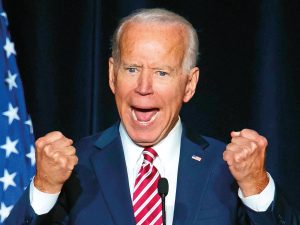
At a political fundraising event in Park City, Utah on Thursday, US President Joe Biden said China was “in trouble” because of economic and population issues and slammed China’s economic situation as “a ticking time bomb” in many cases. He also said, “When bad folks have problems, they do bad things.” The remarks have been splashed across the American media. Bloomberg described the comments as “some of his most direct criticisms yet about the US’s top geopolitical and economic rival.”
As well-known American writer Mark Twain revealed in his book Running for Governor, American elections are full of shameless tricks such as lies, fraud, smears and slander. As some activities related to the US general election are kicking off, multiple candidates are not offering good strategies in terms of national governance, but focusing a lot on attacking each other and attacking China.
As the atmosphere in American society toward China has been severely poisoned by Washington, speaking harshly about China has become one of the cheapest ways for politicians to quickly attract attention, and Biden is no exception. We need to view Biden’s shocking remarks in this context, which are of the same nature as the more intense remarks on China by Republican candidates such as Ron DeSantis and Nikki Haley. Based on past experience, as the election campaign progresses, Washington’s bottom line will sink lower and lower, and more sensational claims are likely to come out. The unscrupulous smearing and attacking of China has made the US nastier and nastier.
But it must be said that Biden is not only a candidate, but also the incumbent president of the US and the head of state of a superpower. It is highly inappropriate for him to make inflammatory statements that go against basic facts and do not match his identity. It is not difficult for us to understand that Biden’s purpose in saying these words is nothing more than to score points for his campaign, to show his tough stance toward China, and to boast about his ability to deal with “threats and challenges” from China.
From Donald Trump to the current President Biden, the US presidents, like many politicians in Washington, keep talking tough about China. But what is interesting is that Trump and Biden, who are at odds with each other on many issues, have similar tones and arguments when it comes to China, and they talk more about what China is doing better than the US and in what aspects China is about to surpass the US, so as to stimulate the sense of crisis and urgency in the US to support the White House’s strategic competition against China.
As a result, the sum of Biden’s remarks on China contain obvious contradictions. Washington just issued an “unprecedented” administrative order to curb and suppress the development momentum of China’s high-tech, then it turned around and insisted that “China is in trouble.” A stronger China is a threat in the eyes of the Americans, while a “weaker” China has become a “ticking time bomb.” What then should China do so the US can have a healthy mentality toward China? The reality is that China not only has to be blamed for the frustration of US’ development, but also bear the belittling when Washington boasts of its achievements, and finally has to be responsible for the mental disorder of the US.
Unlike the US, China never threatens other countries with force, does not form military alliances, does not export ideology, does not go to other countries’ doorsteps to provoke troubles, does not infringe on other countries’ territories, does not initiate trade wars, and does not suppress the companies of other countries for no reason. China insists on putting the development of the country and the nation on the basis of its own strength. In the face of a turbulent and changing world, China has always stood in the right direction of historical progress and has always been a positive force for world peace and development. If there are “ticking time bombs,” they are planted by the US around the world.
Some people summed up the seven laws of American diplomacy, one of which is, “If the US suspects that you have done something bad, the US must have done it itself.” This can explain the strange logic of the US that no matter if China is strong or weak, it is a threat. When the US became strong, it launched the Iraq War and the Afghan War; when it declined relatively, it began to engage in unilateralism and camp confrontation. The inner world of Washington’s politicians may be dirty, but they should not think that everyone else is like them.
Pakistan Risks Losing Much More Than Affordable Gas If It Abandons Its Iranian Pipeline Plans
Another Consequence Of The Post-Modern Coup
BY ANDREW KORYBKO | AUGUST 12, 2023
Pakistan’s Dawn newspaper reported early last week that Petroleum Minister Musadik Malik told the National Assembly that their country plans to suspend its obligation to purchase Iranian gas due to fear of US sanctions and that international arbitration will likely determine the penalty that they’ll pay. After the news broke, he then tried explaining away this scandal by insisting that his side is actively exploring “creative solutions” to avoid scrapping this decade-old pipeline, but the damage was already done.
No serious observer thought that Pakistan had the political will to defy the US on this issue after the post-modern coup that took place in April 2022. Former Prime Minister Imran Khan (IK) was ousted via superficially “democratic” means that were supported by the US as punishment for his multipolar policies. In particular, top regional diplomat Donald Lu expressed concern to the former Pakistani Ambassador the month prior about his country’s economic ties with Russia.
The First Post-Coup Attack Against Pakistan’s Energy Security
This was confirmed by the cable that the Ambassador sent to Islamabad after their meeting, which was just leaked last week by The Intercept and analyzed here. Its relevance to the lede is that this document removes any doubt that the US is opposed to Pakistan obtaining energy security. Lu was reported by the Ambassador to have complained about the former premier’s trip to Moscow precisely because it “was for bilateral economic reasons” driven by IK’s desire to clinch a major energy deal with President Putin.
Seeing as how Pakistan’s pursuit of energy security via the aforementioned major deal with Russia that IK wanted to clinch in Moscow was one of the reasons why the US prioritized the post-modern coup against him, it therefore follows that it wouldn’t support Pakistan pursuing the same via Iran either. While it’s true that Pakistan recently imported Russian oil for the first time, this was with US approval out of desperation to see whether its proxy’s collapsing economy could be saved through these means.
Rethinking The Reasons Behind The Regime’s Import Of Russian Oil
There are several reasons, however, why it’s unlikely that IK’s envisaged energy deal will come to pass. First, Pakistan requires US approval to continue buying Russian resources, which can’t be taken for granted. Second, reliable Pakistani media recently reported about technical obstacles to these plans. Third, the latest release of IMF funds might have come with the unofficial condition of buying oil from elsewhere. And fourth, the initial purchase could have been political to deflect from IK’s accusations.
To elaborate, his replacements ran with the narrative shortly after receiving their first-ever import of Russian oil to claim that it allegedly puts to rest any speculation about them coming to power with US support as part of the latter’s plot to sabotage relations with Moscow. Their subsequent delay in setting up a “Special Purpose Vehicle” for taking their plans to the next level reinforces suspicion that this purchase was largely for domestic political purposes, ergo another reason why the US approved it.
Rethinking The Reasons Behind Pakistan’s Pipeline Deal With Iran
Political motivations could also have been at play when Pakistan agreed to build a gas pipeline with Iran in 2013, which came amidst deteriorating ties with the US brought about by the Abbottabad raid in 2012 and NATO’s cross-border attack from Afghanistan the year prior in 2011. In this case, the purpose would have been to signal its displeasure with the US in the hopes of prompting it to initiate a meaningful rapprochement, not advancing a partisan agenda at home like its import of Russian oil did.
Nevertheless, the point is that the recent problems in finalizing an oil deal with Russia are eye-opening enough to inspire a rethinking of Pakistan’s calculations in agreeing to its gas pipeline deal with Iran a decade ago now that the latter is also on the rocks. The failure of either plan, let alone both, will harm the country’s energy security by depriving it of the opportunity to reliably receive low-cost oil and gas respectively.
Qatar’s Place In The US’ Post-Coup Strategy Towards Pakistan
Comparatively more expensive resources from the Gulf would then be the only realistic solution for meeting Pakistan’s needs, which seems to be exactly the outcome that the US wants since it prefers for Pakistan to receive them from those countries than from Russia and Iran. The best-case scenario from the US’ perspective is for Pakistan to become dependent on Qatari LNG since Washington nowadays regards Doha as more geostrategically reliable in the New Cold War than Saudi Arabia or the UAE.
Towards A US-Led Qatari-Pakistani-Ukrainian Quadrilateral
Despite their sharp differences during the Trump Administration, they’ve since patched up their problems so well under the Biden one that the US Ambassador to Qatar bragged earlier in the month that “Our diplomatic ties are stronger than they have ever been.” This followed the Qatari Prime Minister’s visit to Kiev in late July that came shortly after the Ukrainian Foreign Minister’s first-ever one to Islamabad just a week before, where he was suspected to have clinched another secret arms deal.
India’s Economic Times then reported last week that “Pakistan seeks Gulf state help for shipping weapons to Ukraine”. Although no country was named, the abovementioned sequence of events strongly suggests the formation of a US-led quadrilateral involving Qatar, Pakistan, and Ukraine, the first two of whom are already close energy partners. Bearing all this in mind, there’s reason to believe that Qatar might be the unnamed Gulf state in that Indian media report.
Accelerating The Erosion Of Pakistani Sovereignty
Oman cultivated a reputation for neutrality over the decades, which Saudi Arabia and the UAE are now emulating towards the NATO-Russian proxy war in Ukraine through their refusal to arm Kiev or sanction Russia. Bahrain and Kuwait, meanwhile, have always been comparatively smaller players in international affairs. By contrast, Qatar is known for the leading role that it played in the “Arab Spring”, and its attendant reputation for boldness and rapprochement with the US cast suspicion on it in this context.
All of this pertains to the lede since Pakistan would be forced to become more dependent on Qatari LNG if it officially scraps the gas pipeline deal with Iran, thus leading to higher financial costs and less sovereignty in the long run. The first consequence stands on its own but also segues into the second since it could lead to Pakistan needing endless IMF bailouts with all that entails for its sovereignty, not to mention the very high likelihood that Doha will exploit its energy role over Islamabad to other ends.
Concluding Thoughts
To wrap it all up, the post-modern coup that the US supported against IK in April 2022 was intended to deal a deathblow to Pakistan’s sovereignty, and it arguably succeeded. That country’s energy security will now no longer be ensured by diversifying its portfolio with low-cost Russian and Iranian oil and gas imports respectively. This will force it to pay higher costs from other suppliers, which will keep it in a perpetual cycle of financial dependence on the IMF with all the associated political strings.
Moreover, considering the trend of many countries replacing oil with gas, Pakistan’s capitulation to US sanctions pressure and resultant decision to pull out of its pipeline deal with Iran will make its energy security much more dependent on its already close Qatari industry partner. The emerging triangle between those two and the US could therefore lead to Pakistan entering into dual-vassalhood status vis-a-vis its “senior” partners, which would make it very difficult to ever regain its lost sovereignty.
Fresh missile attacks on Crimean Bridge foiled, local reports say
RT | August 12, 2023
Russian air defenses have shot down two incoming missiles in the vicinity of the Crimean Bridge, the region’s head, Sergey Aksenov, reported on his Telegram channel on Saturday. Photos and videos have been circulating on social media depicting what appears to be several columns of smoke coming from the transport infrastructure.
In his post, Aksenov wrote: “Air defenses have shot down two enemy rockets in the Kerch Strait area.” He added that the “Crimean Bridge has not been damaged,” and called on local residents to remain calm.
 Meanwhile, Aksenov’s aide Oleg Kryuchkov, revealed on his Telegram channel that a “smoke screen has been set off by the special services.” He also wrote that the Crimean Bridge would be reopened to vehicles “very soon.”
Later in the day Aksenov issued another message, saying that one more missile had been downed over the Kerch Strait. The official also expressed gratitude to the Russian air defenses for their “professionalism.”
According to the Russian Defense Ministry, Ukraine “attempted to conduct a terrorist strike on the Crimean Bridge using a guided air-defense S-200 missile converted into a strike version” around 1pm Moscow time on August 12.
It said Russian air defenses had “detected the Ukrainian rocket in a timely manner and intercepted it in mid-air.”
The statement added that the foiled missile attack had not caused any casualties or destruction.
Commenting on the latest attempted missile strikes on the Crimean bridge as well as a separate thwarted drone attack on the peninsula early on Saturday, Russian Foreign Ministry spokeswoman Maria Zakharova strongly condemned these “terrorist attacks.”
She went on to stress that despite the bridge being a “purely civilian infrastructure,” it has been attacked repeatedly since last fall.
According to the Russian diplomat, Kiev is targeting the transport artery in retaliation for its faltering counteroffensive, which has so far failed to live up to high expectations.
Zakharova concluded that by engaging in such “barbaric actions,” Ukraine is showing its true face to the international community. The official also warned that Russia would retaliate.
On July 17, two seaborne explosive-laden drones rammed into the Crimean Bridge, causing one of its inner segments to collapse. The attack claimed the lives of two adults, leaving their teenage daughter seriously injured, and orphaned.
President Vladimir Putin described that incident as “yet another terrorist attack by the Kiev regime,” adding that the bridge was not being used for the transport of military supplies.
Late last month, the head of Ukraine’s intelligence service SBU, Vasiliy Malyuk, confirmed that it was behind the deadly truck bomb blast last October. The explosion killed several civilians and seriously damaged the bridge’s structure.
The bridge was built in 2018 to connect Crimea to the Russian mainland.
Ex-Pentagon Analyst: US Got Rude Awakening in Ukraine After Downplaying Russian Air Power
By Ilya Tsukanov – Sputnik – 12.08.2023
August 12 is Russian Aerospace Forces Day. In light of the critical role played by Russian air power in the military operations in Ukraine, Sputnik decided to reach out to retired US Air Force Lieutenant Colonel Karen Kwiatkowski for her take on the conflict, and what the Pentagon got dead wrong in its assessment of Russian capabilities.
Saturday marks the 111th anniversary of the August 12, 1912 order establishing the Imperial Russian Air Service as a separate branch of the armed forces. In the century-plus since, Russia’s air forces have faced multiple reorganizations, and been known by multiple names, from the Soviet Air Forces (1918-1991) to the Russian Air Force (1992) and finally the Russian Aerospace Forces (2015 on). But throughout, its mission remained the same – to defend the nation’s airspace and provide ground support for the Army.
From the very beginning of the escalation of the Donbass crisis into a full-blown Russia-NATO proxy war in Ukraine in February 2022, the Aerospace Forces have played a key role in Russian offensive and defensive operations.
Its role has become especially noticeable amid Ukraine’s two-month old counteroffensive attempt, which US and NATO officials and generals now openly agree seems “extremely unlikely” to succeed, as Ukrainian forces have failed to break through even a single major Russian defensive line while taking staggering losses in troops and equipment.
Russia’s overwhelming superiority in the air has played a decisive role in halting Ukraine’s offensive operations, striking whenever they attempt a major armored maneuver, and keeping an eye out for movements in coordination with satellite intelligence and reconnaissance drones. So intense has the devastation of Ukrainian forces been that panicky NATO and Ukrainian officials have begun to blame one another over “tactics” or the lack of equipment and ammo instead of asking questions about the reasonableness of pushing Ukrainian troops to attack entrenched Russian positions without air cover or artillery superiority.
Rude Awakening
The Russian Aerospace Forces’ performance in Ukraine “has probably surprised many in the West,” says retired US Air Force veteran, former Pentagon analyst, anti-war whistleblower and activist Karen Kwiatkowski, “in part because of Western assumptions.”
“I think that the level of advanced technology in… the current Russian Air Force, and the relative newness of many of these systems compared to what we have in the West, has been a surprise, in part because Western analysis of intelligence is geared to downplay Russia and Russian capability in all ways. The Russophobia, and also a certain contempt for Russia, in DC and inside the Pentagon is a factor,” Kwiatkowski told Sputnik.
“I suspect also that how the Russian Air Force uses these systems in battle is also a surprise for the West, and particularly the US. Obviously, the Ukraine battlefield has been a testing ground for high-tech and rapidly adapting drone warfare, even as in some ways it reminds of a slogging land war in Europe faced in World War I,” she said.
Characterizing the Russian Aerospace Forces as a true “national defense air force,” as opposed to the “offensive, forward-operating Air Force” which the US has, Kwiatkowski said that Russian air power seems geared toward supporting land and sea operations “in a tightly integrated way” with “focus and exceptional skill set for ground support.” This is as opposed to the US and NATO powers, “where air forces seek to ‘dominate the skies’ in a somewhat competitive way with the separate Army and Navy missions,” she said.
“For us in the West, it remains difficult to get accurate assessments of battlefield performance in Ukraine, and that deficiency of hard data impacts not just commentators and technicians, but our top Pentagon and national political leadership,” Kwiatkowski stressed, after being asked to assess the performance of Russian Aerospace Force assets in Ukraine. “That said, it seems to me that the US media is somewhat hysterical over Russian drones, attack helicopters like the modern and capable Ka-52, and the Su-27 fighters in their various battlefield and defensive roles,” indicating their effectiveness.
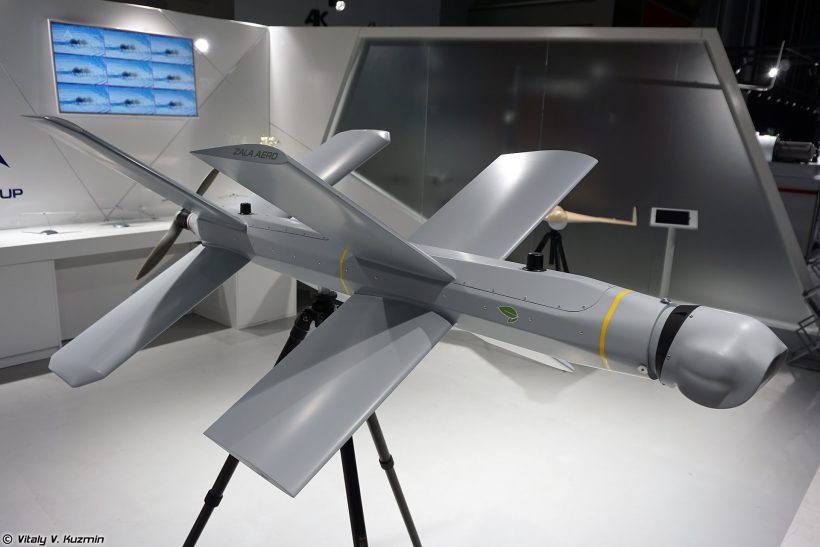
Kwiatkowski highlighted the Lancet drone in particular, which is used by the Ground Forces, as a major “game changer” in Ukraine, given its success in devastating even the latest NATO ground-to-air weapons and Leopard tanks.
“The Lancet represents the evolution of Russian drone technology and design. It can carry different munitions, and serve different purposes on and above the battlefield, and appears to be cost effective to produce. It really represents what rapid evolution and development in a weapon, using real world data and learning, can produce,” the former Pentagon analyst said.
Unconventional Times Call for Unconventional Tactics
Along with strategy and weapons, Kwiatkowski also pointed to the surprising and “non-traditional, almost experimental” aerial disruption tactics employed by Russian military pilots in recent months, including against US-operated reconnaissance drones over the Black Sea and in Syria, by making close approaches and dumping fuel on them, or conducting other unpredictable aerial maneuvers.
“This kind of creativity, that functionally serves both Russian political as well as practical interests of air defense and air superiority, is impressive. It speaks to training, and competence of Russian pilots, but also that they are well-led and well-supported by their military and political leadership. I cannot say if this is the case, but this is the conclusion I draw,” Kwiatkowski summed up.
China is run by ‘bad folks’ – Biden
US President Joe Biden greets people after speaking on Thursday at the Veterans Affairs Medical Center in Salt Lake City, Utah. © Getty Images / George Frey
RT | August 11, 2023
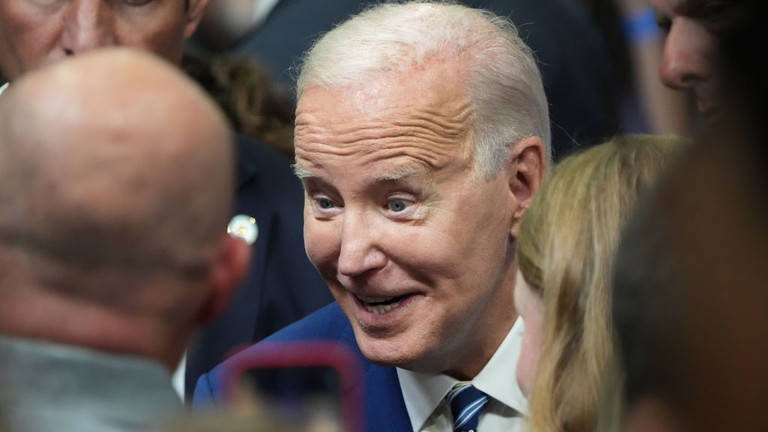
US President Joe Biden has escalated his attacks on Chinese leaders, reportedly telling donors to his re-election campaign that China’s government is run by “bad folks” who may take dangerous actions as their economy teeters on the brink of collapse.
Biden claimed on Thursday at a fundraising event in Park City, Utah, that Chinese President Xi Jinping’s government was in “trouble” because Beijing’s economic problems were a “ticking time bomb,” according to multiple media reports. He backed up his assertions with several erroneous claims about China’s economy and demographics.
“They got some problems,” Biden told supporters. “That’s not good because when bad folks have problems, they do bad things.” He falsely stated that China had the “highest unemployment rate going” and more people of retirement age than of working age. He mocked Xi’s signature Belt and Road Initiative as the “debt and noose,” alluding to the loans China provides to developing nations.
The remarks were reminiscent of comments Biden made at a similar political event in June, when he referred to Xi as a “dictator.” Chinese officials lodged a formal complaint in Washington and called the insult a “political provocation.” Biden dismissed the controversy when asked at a press briefing about Beijing’s reaction, saying he didn’t think there would be “any real consequence.”
At Thursday’s fundraising event, the 80-year-old US president said he wants to have a “rational relationship” with China, adding, “I don’t want to hurt China, but I’m watching.” He didn’t specify which potential Chinese actions concern him, though US-China tensions over self-governing Taiwan have escalated in the past year.
Biden claimed that China’s economic growth has slowed to 2%. Chinese GDP rose at a 5.5% pace in this year’s first half, compared with the US rate of around 2.2%. As Western economies feel the effects of historically high inflation, China is dealing with deflation.
The country has more than three times as many people of working age as people 60 and older. China’s unemployment rate is around 5.2%, compared with 6.4% in the Eurozone. Spain and Greece both have double-digit jobless rates.
Biden has made incendiary comments about Xi’s government at a time when his administration is trying to improve strained relations between the world’s two largest economies. His “dictator” remark came just one day after US Secretary of State Antony Blinken concluded a long-awaited visit to China. Treasury Secretary Janet Yellen and US climate envoy John Kerry later made visits to Beijing.
The Utah fundraiser was held at the home of Mark Gilbert, a former US ambassador to New Zealand and Samoa. Donors reportedly had to pay at least $3,300 to attend. Hosts paid $100,000, and guests who contributed at least $50,000 were allowed to speak with Biden and have a picture taken with him. Those paying $10,000 to $25,000 could get a photo with the president.
The Polish President Said Kiev Isn’t Doing The West Any Favors & Its Counteroffensive Failed
BY ANDREW KORYBKO | AUGUST 11, 2023
Two of Kiev’s top propaganda narratives nowadays are that it’s selflessly sacrificing itself for the sake of the West by fighting Russia instead of surrendering and that its ongoing counteroffensive is succeeding in pushing that country’s forces out of Ukraine’s pre-2014 borders. The first largely remains above official criticism or skepticism since those who dare to doubt it risk being “canceled”, but the second has suddenly begun to be debunked by the Mainstream Media as proven by the following articles:
* NBC News: “Is Ukraine’s counteroffensive failing? Kyiv and its supporters worry about losing control of the narrative”
* CNN: “Why a stalled Ukrainian offensive could represent a huge political problem for Zelensky in the US”
* The Hill: “Alarm grows as Ukraine’s counteroffensive falters”
* Washington Post: “Slow counteroffensive darkens mood in Ukraine”
In the face of this rapidly shifting narrative that threatens to topple one of the pillars of Kiev’s Western-directed propaganda, Zelensky’s senior advisor Mikhail Podolyak lashed out at critics in a tweet thread here where he demanded that they “be patient and closely monitor” his side’s progress. Polish President Andrzej Duda has been doing precisely that since the NATO-Russian proxy war in Ukraine began, however, and he’s concluded that Kiev isn’t doing the West any favors and its counteroffensive failed.
He dropped both bombshells, the first of which debunked the claim that Kiev is selflessly sacrificing itself for the sake of the West and which hitherto hadn’t ever been officially challenged by any Western leader before, in an interview with the Washington Post’s Marc Thiessen from 1 August that was published nine days later. The relevant excerpts will be republished below for the reader’s convenience before analyzing them in the context of this conflict and evolving Polish-Ukrainian ties in particular:
“Q: At the NATO summit when President [Volodymyr] Zelensky criticized the [leaders’ joint statement about Ukraine’s prospective membership], there was criticism of him that he was ungrateful for all the help [given to] Ukraine. That suggests that our help to Ukraine is charity. Is our help to Ukraine charity, or is Ukraine really doing us a favor by giving its children, its lives to defend us against the Russian threat?
A: I would say it this way: I don’t see it in these categories — neither that we are doing an act of charity for Ukraine, nor that Ukraine is doing charity for us… We are sending them arms. Why? Because we want to support them in defending their own territory. … We Poles have many reasons to supply Ukrainians with weapons. … But the whole democratic world also knows that any aggressor who violates the borders of a democratic state in the 21st century in Europe must be stopped.”
…
Q: Could Poland fight a combined arms operation without long-range weapons and without air power? Because that’s what we’re forcing the Ukrainians to do today. What does Ukraine need that it’s not getting today?
A: Ukraine has been supplied with long-range artillery, and it is being supplied with long-range artillery to this day. … One could go as far as to say that Ukraine now has much more modern military capabilities than Russia.
The question is: Does Ukraine have enough weapons to change the balance of the war and get the upper hand? And the answer is probably no. They probably do not have enough weapons. And we know this by the fact that they’re not currently able to carry out a very decisive counteroffensive against the Russian military. To make a long story short, they need more assistance.”
…
Casual observers might be shocked by the Polish leader’s candidness, while Kiev’s supporters might accuse him of “betraying” their regime after becoming the first Western leader to debunk its top two lies nowadays, but his words weren’t unprovoked nor said in a vacuum. The background is that political ties between these wartime allies have tremendously worsened since late July as was documented in the following analyses:
* “Poland & Ukraine Are Arguing Over Grain Once Again”
* “Ukraine’s Ungratefulness Is Finally Starting To Perturb Poland”
* “Kiev’s Prediction Of Post-Conflict Competition With Poland Bodes Ill For Bilateral Ties”
In brief, each side finally began prioritizing their national interests, which resulted in public tensions due to the absence of any pressure valve for dealing with sensitive disagreements such as those over agricultural cooperation and historical memory. Moreover, each side has self-interested political reasons in escalating rhetoric against the other: Ukraine wants to distract from its failing counteroffensive while the ruling Polish party wants to rally its nationalist base ahead of mid-October’s elections.
It was against this backdrop that Duda did the previously unthinkable by telling one of the US’ most influential Mainstream Media outlets that Kiev isn’t doing the West any favors by fighting Russia and that its counteroffensive failed. Granted, he conveyed these two points in a “polite” way that signaled his continued support for NATO’s proxy war on Russia through Ukraine, but it’s still an unforgivable offense from that regime’s perspective.
NBC News warned earlier this month that Kiev and its supporters are worried about losing control of the narrative, which has now come to pass after what Duda just said. He and his country are much more popular and less polarizing among average Westerners than Zelensky and Ukraine, plus nobody doubts their anti-Russian credentials due to widespread awareness of Poland’s difficult history with that country. These observations mean that his words will likely have an outsized impact on reshaping the narrative.
As for the future of Polish-Ukrainian relations, it’s looking dimmer by the day due to their spiraling disputes becoming self-sustaining at this stage. That’s not to suggest that Warsaw will cut Kiev off from arms and other forms of support, but just that the trust which used to characterize their relations since February was finally exposed as illusory. This could complicate their reported plans to form a joint military unit and could lead to Poland acting unilaterally in Western Ukraine in the worst-case scenario.
Why military intervention in Niger could be catastrophic for everyone

Coup supporters protest the decision of the ECOWAS countries to sanction Niger, in Niamey, Niger on August 3, 2023 [Balima Boureima/Anadolu Agency]
By Dr Mustafa Fetouri | MEMO | August 10, 2023
Featured Video
BRITAIN’S WARNING: PREPARE FOR WAR
or go to
Aletho News Archives – Video-Images
From the Archives
British weapons and personnel doing much of the killing in Yemen
Press TV – June 18, 2019
A detailed report published by the Guardian newspaper has shown how Britain is massively contributing to Saudi Arabia’s devastating war on Yemen as it suggests that London is not only supplying the bombs that fall on Yemenis, but it provides the personnel and expertise that keep the war going.
The comprehensive report by Arron Merat published on Tuesday showed that Britain was doing much of the killing in Yemen as the country continues to provide Saudi Arabia with everything it needs to turn its southern impoverished neighbor into a graveyard.
“Every day Yemen is hit by British bombs – dropped by British planes that are flown by British-trained pilots and maintained and prepared inside Saudi Arabia by thousands of British contractors,” said Merat in the report. … continue
Blog Roll
 Aletho News
- Pakistan reopens Iran border after boosting security: Report
- Why are so many Brazilians voting for Flávio Bolsonaro?
- Democrats Put Anti-Russia Agenda Ahead of American Workers
- Elijah Magnier: Yemen’s Strikes Are Shattering Saudi Arabia’s Long-Term Strategy
- Pentagon designates Chinese cultural centers national security threat
- Israel Demolishes Home Of Lebanese Journalist Whose Viral Film Exposed Pager Attack
- Record Oil, Empty Tanks: The UAE’s Miracle Recovery
- Burnham tackles Britain’s poverty with aggression in Yemen
- Peace in Ukraine: the easy way – or the hard way
- Trump & the Rrrrussians
- If Americans Knew
- An error has occurred; the feed is probably down. Try again later.
- No Tricks Zone
- Sudden Stratospheric Warming, Powerful El Niño Combination May Lead To Extreme Europe Cold, Energy Crisis!
- Two New Studies Find Thwaites Glacier Melt Cannot Be Driven By Human Activity Or A Warming Ocean
- E-Cars Reduce CO2 Emissions By Only 41% Compared To Internal Combustion Engine Vehicles
- Predictions Made By Renowned Climate Professor Over Past Decades Have Been Proven To Be Poor
- New Study Suggests Large Regions Of The Pacific Ocean Have Been Cooling For The Last 80 Years
- Germany’s Green Energy Debacle: High Energy Costs Force Kahla Porzellan to Close After 182 Years!
- New Study: 50 Years Of The Most Aggressive ‘Net Zero’ Policies Can Only Affect The Global Climate By 0.03°C
- US September “Heat” Was No Record…Many Records Set Decades Ago
- Latest European Green Energy Debacle; Portugal’s Largest Flagship Solar Park Insolvent!
- Green Energy Debacle: German Expert Professor Fritz Vahrenholt Warns Of Severe Economic And Social Consequences

