Trudeau-bashing children’s book a best-seller
TCS WIRE | June 20, 2022
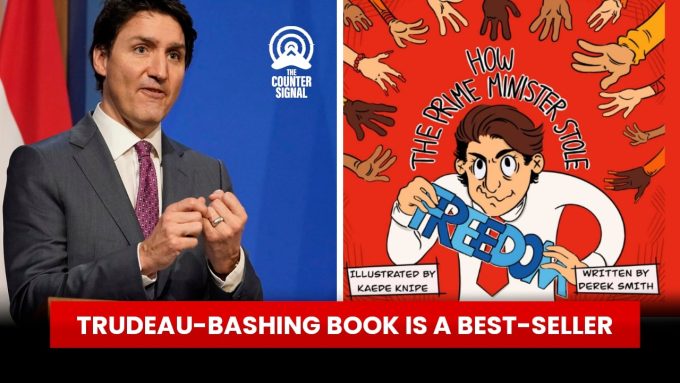
“How the Prime Minister Stole Freedom” by Derek Smith has topped the Amazon Canada best-seller chart.
The picture book illustrated by Kaeda Knipe pokes fun at Trudeau’s response to the Freedom Convoy and his subsequent clampdown on the rights of Canadians.
“In the city of Ottawa on Parliament Hill, the Canadian Government debate and pass bills. Every person in Canada liked freedom a lot, but the Prime Minister who ran the country did not,” the book summary reads.
“He took everyone’s freedoms and locked everyone down tight. It seemed like the lockdowns had no end in sight. Until one day, Truckers became very annoyed, so they decided to form a Freedom Convoy. Will the Prime Minister be let off the hook? You’ll only find out if you read this book.”
Although the book, which is written in the style of Dr. Seuss, doesn’t reference Trudeau by name, the principal character is an obvious placeholder for him.
“The book is a fictional parody dramatization based on a true story and real events and was drawn from a variety of sources, including published materials and interviews. For dramatic and narrative purposes, this book contains fictionalized scenes, composite and representative characters and dialogue,” a disclaimer explains.
“The views and opinions expressed in this book are those of the characters only and do not necessarily reflect or represent the views and opinions held by individuals on which those characters are based.”
The independently published book has since garnered 770 ratings and has four and a half stars.
On Twitter, author Smith has promised more books lampooning Canadian political figures.
“We have multiple books in the works,” Smith wrote on Monday. Among the proposed titles is “The boy who cried racist,” which would be a parody of NDP Leader Jagmeet Singh.
Should the patient really get the drug?
By Sebastian Rushworth, M.D. | June 14, 2022
I recently gave a lecture to 70 primary care physicians here in Stockholm, titled “should the patient really get the drug?”. The lecture seemed to generate quite a bit of cognitive dissonance among some in the audience, based on the somewhat aggressive discussion that followed the lecture, which suggests to me that much of what I was saying was stuff they had literally never been exposed to before – not at any point in medical school, and not at any point during their careers after medical school either. Cognitive dissonance is good. It’s the first step towards change.
I thought it would be interesting to re-write the lecture as an article, so that more people can hopefully achieve similar levels of cognitive dissonance. Please feel free to share it with any doctors you know that you think might benefit from an expanded perspective. Anyway, here we go.
Let’s imagine a common patient. Every primary care physician meets this patient, or someone much like her, on an almost daily basis. She’s 75 years old, and overweight. She experienced a wrist fracture two years ago, and was subsequently diagnosed with osteoporosis. She has high cholesterol levels, but she’s never had a heart attack or other “cardiovascular event”. On top of that, she has type 2 diabetes, chronic knee pain due to osteoarthritis, and high blood pressure. She was diagnosed with depression a few years ago, after her husband died.
Our patient takes seven drugs every day:
- Alendronate, because of her weak bones.
- Atorvastatin, because of her high cholesterol levels.
- Sertraline, because of her depression.
- Metformin, because of her type 2 diabetes.
- Insulin, also because of her type 2 diabetes.
- Paracetamol (a.k.a. acetaminophen), because of her knee pain.
- Enalapril, because of her high blood pressure.
So, the question is, are these drugs doing her any good?
Well, to answer that question, we need to consider NNT (Number Needed to Treat). NNT is the number of patients who need to take a drug for one patient to achieve a noticeable benefit.
For alendronate, the NNT is 20, i.e. if you treat 20 people for a couple of years, you prevent one fracture. For atorvastatin the NNT is 200, i.e. you need to treat 200 people for five years or so in order to prevent one heart attack. For sertraline, the NNT is 7, which means that you need to treat seven people in order to have a noticeable effect on depression in one patient. Note that this doesn’t mean that one out of seven gets cured of their depression, it just means that there is a noticeable difference on a rating scale for depression.
For metformin, the NNT is 14 – If you treat 14 type 2 diabetics with metformin for ten years, you prevent one death. For enalapril, the NNT is 70 – If you treat 70 people with high blood pressure with enalapril for five years or so, you prevent one stroke.
For insulin, however, there is no NNT, because insulin has not been shown to result in any benefit on any clinically relevant outcome, even though big studies have been carried out that have included thousands of patients and followed them for five or ten years. Note here that we’re talking about insulin for type 2 diabetics. When it comes to type 1 diabetes, insulin is pretty much magical – you don’t even need to do a randomised trial in order to show benefit. People with type 1 diabetes virtually return from the dead when treated with insulin. But when it comes to type 2 diabetes, there is no benefit, at least not to any hard outcomes. All insulin has been shown to do is reduce blood sugar, but it’s never been shown to result in any meaningful patient oriented benefit for type 2 diabetics.
The same is true for paracetamol/acetaminophen. When it comes to patients with knee pain due to osteoarthritis, the drug doesn’t provide any benefit whatsoever.
Ok, so we have seven drugs, and we know what their NNT’s are. If we plus the probabilities of benefit together, then we get the probability that our 75-year old woman will benefit in some way from at least one of the drugs she’s taking. So, what probability of benefit do we get?
We get 30%. Only 30%.
What that means is that there is a 70% probability that this woman doesn’t benefit at all from any of the seven drugs that she takes every day for years on end!
If you told her, I’d say there are pretty good odds she’d decide to stop taking her pills. Seven drugs a day, every day, and two to one odds of zero benefit.
And we haven’t even talked about harms yet. Because none of these pills are inert. All have widespread biological effects. And all can cause harms. So any rational treatment decision must include not just the potential benefits, but also the potential harms.
For figuring out harms, we have NNH (Number Needed to Harm), which is the counterpoint to NNT. NNH is the number of patients who need to get a drug for one to be harmed. Like I said, the drugs all have widespread biological effects, so there isn’t just one NNH – there is an NNH for each possible harm. That means that there are multiple NNH’s for each drug.
With our 75-year old woman and her seven drugs, we don’t have time to go through the NNH for every possible side effect, so we’re just going to look at a few, and put them side by side with the NNT, to get a somewhat more complete picture of benefits vs harms. I’ve tried to make sure that the NNH numbers apply to the same time period as the NNT numbers, since otherwise it’s an apples to oranges comparison.
If we do that, we get something like this:
Alendronate
NNT: 20 (fractures)
NNH: 200 (esophagitis), 260 (atrial fibrillation), 4,000 (osteonecrosis)
Atorvastatin
NNT: 200 (cardiac infarction)
NNH: 20 (myalgia), 20 (type 2 diabetes)
Sertraline
NNT: 7 (depression)
NNH: 2 (sexual disturbance), 10 (hyponatremia)
Metformin
NNT: 14 (death)
NNH: 2 (stomach upset), 5 (B12 deficiency), 1,000 (lactic acidosis)
Enalapril
NNT: 70 (stroke), 125 (death)
NNH: hyperkalemia (10), acute kidney failure (100)
Insulin
NNT: 0 (no benefit to clinically relevant outcomes)
NNH: severe hypoglycemia (5), weight gain (1)
Paracetamol/acetaminophen
NNT: 0 (no benefit to clinically relevant outcomes)
NNH: Hypertension (30), liver damage (?)
It’s possible to quibble here about specific NNT and NNH numbers. Different studies show different things. And many of the numbers come from studies carried out by pharmaceutical companies, which generally means that the risk of a certain side effect is massively underestimated (as we will discuss shortly). The point here isn’t to get hung up on any of the specific numbers. It’s to illustrate that we quickly end up with a very complex equation, where it in many cases isn’t clear at all whether the benefits outweigh the harms.
Take alendronate, as an example. We know that it decreases fractures in elderly osteoporotic women. But it doesn’t decrease hospitalisations. The only reasonable conclusion is that the reduction in hospitalisations that is seen due to the reduction in fractures is made up for by an increase in hospitalisations due to the many and varied side effects. So at the end of the day the only way to decide whether or not to take the drug is to have a detailed discussion with the patient and get them to decide which set of risks they’d rather be taking.
Hippocrates is supposed to have said “primum non nocere”, which is latin for “first, do no harm”. Actually he didn’t say that, and couldn’t have even if he wanted to. Hippocrates was greek, and didn’t speak latin. The quote comes from a 19th century American physician, Worthington Hooker.
Of course, as doctors, we all know that “first, do no harm” is completely unrealistic. Every intervention we do carries some measure of risk. If our primary guiding principle was to never do harm, we literally would never be able to do anything. A more reasonable principle is “only do something if the benefits clearly outweigh the risks”. If it isn’t clear to you that the benefits of a drug outweigh the harms, then don’t give it to the patient.
That’s a good general rule to stick by. However, it probably isn’t enough, for a few reasons we’re now going to discuss.
A study was published in JAMA Internal Medicine in 2021 that sought to establish how good physicians are at estimating the likelihood that a patient has a certain disease. 500 primary care physicians in the US were asked to consider various hypothetical scenarios, and then answer what they thought the probability of disease was. Here’s an example of a scenario that they were asked to consider:
Ms. Smith, a previously healthy 35-year-old woman who smokes tobacco presents with five days of fatigue, productive cough, worsening shortness of breath, fevers to 102 degrees Fahrenheit (38.9 degrees centigrade) and decreased breath sounds in the lower right field. She has a heart rate of 105 but otherwise vital signs are normal. She has no particular preference for testing and wants your advice.
How likely is it that Ms. Smith has pneumonia based on this information? ___%
Ms. Smith’s chest X-ray is consistent with pneumonia. How likely is she to have pneumonia? ___%
Ms. Smith’s chest X-ray is negative. How likely is she to have pneumonia? ___%
Go ahead and make your own guesses in relation to each of the three questions.
Once you’ve done that, you can take a look at the table below, and the answers will be revealed.

So, for our pneumonia example above, we see that the actual initial risk of disease based on the presented information was around 35%. If we then move along and look at what the doctors answered, they thought the risk was 80-85%. In other words, they thought pneumonia was more than twice as likely as it actually was!
The same phenomenon was seen in all clinical scenarios tested. The doctors consistently overestimated the initial risk, and they continued to overestimate the risk after both a positive and a negative test result. In some cases the difference between reality and what the doctors thought was huge, with the doctors overestimating risk by a factor of ten or more.
What can we conclude from this?
Doctors consistently overestimate disease risk.
Hold that thought, as we move on to take a quick look at another study, which was published in BMJ Open in 2015. This study sought to do something about a problem inherent in statin trials (and for that matter, all trials in medicine), which is that the results they produce, in the form of percent absolute risk, percent relative risk, and NNT, are so abstract that they’re completely meaningless to patients (and for that matter, to doctors as well). We know that statins have an NNT of 200 when used for primary prevention (to prevent a heart attack in someone who has risk factors but hasn’t already has a heart attack), and 40 when used for secondary prevention (to prevent additional heart attacks in someone who has already experienced a heart attack). But what do those numbers actually mean? Are they good or bad?
What the patient really wants to know is “how much longer will I live if I take this drug?”
So, what the researchers did was gather together data from all the big randomised trials of statins, and use the survival curves provided to estimate how much longer the patients actually lived. Here’s what they came up with:

All the big statin trials are included here. What’s interesting to do is look at the NNT provided, and then compare that with the number to the right of it, which is how much longer the patients actually lived, on average. So, for the ALLHAT trial, to take the topmost example, we have an NNT (for primary prevention) of 250, which comes down to a postponement of death of 4.96… well, 4.96 what?
Is it years? No.
Is it months? No
The patients in the statin group lived 4.96 days longer than the patients in the placebo group. That is what the NNT of 250 means in real terms.
Let’s look instead at 4S, which was published in 1994 and is the statin trial that has produced the best results of any statin trial ever. It’s the trial that initiated the massive boom in statin prescribing that we still see today. In 4S, the NNT (for secondary prevention) is 27.8. So, in other words, one in 27.8 patients benefited from the treatment.
But what does that actually mean in terms of life extension?
It means 27 days.
Not as impressive as you would have thought, right?
When the researchers put all the data together, from all the trials, in order to get an overall average, what they found was that when statins are used for primary prevention they prolong life by 3 days. When they are used for secondary prevention, they prolong life by 4 days.
I can imagine quite a few patients turning down the offer of a statin if they knew that it will on average only prolong their life by days.
The purpose of bringing up this study was to illustrate the following general point:
Doctors consistently overestimate the benefit of the drugs they prescribe.
Hold that thought in your mind as we move on and look at a third study.
This one was published in The Lancet Healthy Longevity in 2021. It compared the rate of serious side effects seen in randomised trials with that seen in the real world. If randomised trials give us good information about what to expect in reality, then the rate of serious side effects in the trials should be the same as that seen in reality.
But that isn’t what the researchers found. What they found was that serious side effects were three to four times more common in reality than they are in the randomised trials! Three to four times!
How is this possible?
Well it’s important to remember that the randomised trials are funded and run by the drug companies, and the drug companies want to sell their drugs, so they will do what they can to make side effects appear as rare as possible.
Why is this a problem? Because it’s the randomised trials that doctors mostly use as a basis for determining whether a drug is safe to give to a patient or not.
So, what can we conclude from the study?
Doctors consistently underestimate side effects of drugs.
Ok, so we have three conclusions, that are all pointing us in the same direction:
- Doctors consistently overestimate disease risk.
- Doctors consistently overestimate drug benefit.
- Doctors consistently underestimate drug harm.
What does this lead to?
Massive overprescribing of drugs.
Peter Gotzche, a founding member of the Cochrane Collaboration and former director of the Nordic Cochrane Center, has estimated that prescription drugs are now the third biggest cause of death in the western world, after heart disease and cancer.
That on its own should lead to massive humility among all doctors about our drug prescribing. It should make us much more careful every time we think about prescribing a drug to a patient.
Ok, so we’ve identified the problem. The causes of this problem are many and complex, so I’m just going to bring up one that each of us as doctors can actually do something about – industry sponsored meals.
A study was published in JAMA Internal Medicine in August 2016 that sought to estimate the extent to which physicians are influenced by partaking in industry sponsored meals, which often take the form of a lecture about a specific drug given by an drug company salesperson, which the physician is supposed to sit and listen to in return for getting a free meal. Industry sponsored meals are very common. Most physicians probably take part in at least a couple of these per year, and many take part in far more than that.
As the saying goes, “there’s no such thing as a free lunch”. The drug companies are not charities whose goal it is to keep starving doctors alive. If they spend vast sums of money of sponsored meals, it’s because they’re pretty damn sure that it increases sales of their drugs, and thereby their profits.
So, anyway, the study sought to estimate the extent to which industry sponsored meals influence physician prescribing patterns, by comparing participation in such meals with later prescribing behaviour. Here’s what they found:

They looked at four different drugs. As I think is clear from the tables, participation in industry sponsored meals increased prescribing of the drug the meal was about, and the more such meals a doctor participated in, the more often he or she prescribed that drug.
The purpose of these meals is not to educate us, or make us better doctors. It’s the opposite – the purpose is to make us do a specific profit-driven company’s bidding. And it works.
If you’re a doctor, and you think you don’t get influenced by participating in industry sponsored meals, then you are very naive. The more industry sponsored meals we participate in, the worse doctors we become.
Doctors in general massively underestimate the extent to which their thoughts, beliefs, and opinions are influenced by the pharmaceutical industry. We like to think that we are evidence based. But the truth is that much of what we think we know is not based on sound scientific knowledge, but on pharmaceutical industry propaganda, which quickly becomes clear to anyone who starts going through the studies in detail themselves.
On that note, I strongly recommend reading these three books, all written by physicians, to help get some perspective on the scale of the problem we face in relation to the pharmaceutical industry.
- Bad Pharma by Dr. Ben Goldacre
- Doctoring data by Dr. Malcolm Kendrick
- Deadly medicines and organised crime by Dr. Peter Gotzsche
There is one very simple thing every doctor can do, to at least partially free themselves from the onslaught of drug company propaganda, and that is to refuse to take part in industry sponsored lunches, and all other forms of industry sponsored “education”. Just say No.
Ok, so, that’s number one: refuse to take part in industry sponsored lunches.
What else can you do as a doctor?
Well, something that was once considered standard, but has fallen by the wayside in recent decades, is to never have a patient on more than five drugs at the same time. With drugs, as with everything else, there is a state of diminishing returns – the more you add, the less benefit (and more harm) each additional drug confers. So try to keep a patient on at most five simultaneous drugs. If you want to add a sixth, then rank them all, and get rid of the one that you think is least important. Most likely, the sixth least important drug in a list of six is not going to do anything useful for the patient anyway, just increase their risk of harm.
Ok, so that’s number two: try to avoid having your patients on more than five drugs simultaneously.
Number three: go through the patient’s drug list with them once a year, and get rid of anything that isn’t clearly conferring a benefit. As any doctor will know, it’s common for patients to stay on drugs for years, even though the original reason they were put on the drug resolved itself a long time ago. The patient often doesn’t remember why they were put on the drug in the first place, but they keep taking it dutifully. Drug lists require regular pruning or they will become increasingly bloated as the years go by, which is one reason why so many elderly people are on 15 simultaneous drugs or more.
Number four: only prescribe a drug if the benefits clearly outweigh the harms. This should be obvious, but it requires a deep knowledge of the size of both potential benefit and potential harm, which unfortunately most doctors lack. And what they think they know is often incorrect because it’s based more on pharma propaganda than real science.
As a doctor, the only way to get around this is to start doing your due diligence and getting in to the weeds of the scientific studies. Do that for the ten drugs you prescribe most commonly, so that you’re an expert on those ten drugs, and you’ve already done a lot. If a patient asks you about the probability of benefit and the probability of harm, you should be able to answer that question correctly, at least for the ten drugs you use most frequently. It requires an up-front investment of time, but it will pay massive dividends to your patients over the remainder of your career.
Ok, so that was number four: only prescribe a drug if the benefit clearly outweighs the harm.
Here’s number five: prioritise lifestyle changes. Most of the diseases that doctors spend most of their time dealing with are caused by poor lifestyle choices. And most can be rectified by switching to good lifestyle choices, which invariably produce greater benefits than any drug can, with less risk of harm.
Doctors can accomplish a lot with their patients with simple lifestyle coaching. To take one example, a primary care clinic in the UK decided to try putting their type 2 diabetic patients on a ketogenic diet, since the drugs they were using clearly weren’t making the patients better. They published their six year follow up results in BMJ Nutrition, Prevention, and Health in 2020.
Over six years, the patients following the ketogenic diet decreased their median HbA1c (a measure of average blood sugar over the preceding few months) from 66 to 48. Normally, that would be unheard of. HbA1c doesn’t decrease over time in a type 2 diabetic. It increases. Yet here it was far better at the end of the six years than at the beginning. The same goes for body weight. Normally it goes up over time. But here the median decreased from 99 kg to 91 kg. And on top of that, median systolic blood pressure dropped from 152 to 141.
All this just with a simple diet intervention. Thanks to the improvements in all health markers, the patients were able to get off a lot of their drugs. This meant that after six years, the clinic was spending less than half as much money on anti-diabetic drugs as the other primary care clinics in the region.
To take another example of a simple lifestyle intervention, a randomised trial published in BMJ in 2021 that was carried out in nursing homes in Australia found that a diet high in protein has an effect on fracture risk that is equivalent to that seen with bisphosphonates.
There is a massive amount that can be accomplished with simple lifestyle interventions, and since they are much less risky than drugs, and actually treat the underlying problem rather than just putting a patch on top of it, they should be the primary intervention we use whenever possible. Drugs should be viewed as a complement to lifestyle interventions. It shouldn’t be the other way around.
Ok, so that was my fifth and final point. I’ll repeat the five points here again. These are five things that you as a doctor can do about the situation we currently find ourselves in, where prescription drugs are the third biggest killer in the western world:
- Refuse to participate in industry sponsored lunches and other industry sponsored “education”.
- Try to avoid having your patients on more than five drugs simultaneously.
- Go through the patient’s drug list with them once a year, and get rid of anything that isn’t clearly conferring a benefit.
- Only prescribe a drug if the benefits clearly outweigh the harms.
- Prioritise lifestyle changes.
Met Police Invokes “National Security” about Epstein Meeting with US Senators in the UK

BY WHITNEY WEBB |
UNLIMITED HANGOUT| JUNE 13, 2022
A Freedom of Information request filed by UH in connection with Whitney Webb’s upcoming book was blocked by UK Metropolitan police on “national security” grounds. The request sought information on the two sitting US Senators who met with Jeffrey Epstein at a Wexner-owned residence in the UK, a meeting where Met Police officers had provided security.
In connection with Whitney Webb’s upcoming book on the Jeffrey Epstein scandal, One Nation Under Blackmail, Unlimited Hangout filed a Freedom of Information request asking UK law enforcement and the Ministry of Defence the identity of two sitting US senators who were present at Foxcote House in North Warwickshire, UK on September 1, 2002. UH contributor Johnny Vedmore had previously obtained information from eyewitnesses of that meeting that, not only were two US Senators present at that location that day, but that Metropolitan Police officers had supplied security for the meeting. The FOI request was filed to Metropolitan Police, the UK Ministry of Defence and North Warwickshire Police and only a response from the Metropolitan Police was received.
The motive for UH’s FOI request is as follows. It is known that Jeffrey Epstein, as attested to by Epstein’s flight logs, was present in this part of the UK during this same period (from August 31, 2002 to September 2, 2002) and eyewitnesses saw him attend this specific meeting at this location with two attractive and glamorously dressed women on each arm. One of these women was Nicole Junkermann, a former model and apparent intelligence asset as revealed in Vedmore’s previous investigative work. The other woman was described by eyewitnesses as a tall brunette. Per those eyewitness accounts, Epstein personally escorted the two women into the room where the two senators were waiting.
Notably the house where this meeting took place, Foxcote House, has been owned by the family of Leslie Wexner, specifically his wife Abigail Wexner, since 1999. Wexner’s role in financing much of Jeffrey Epstein’s activities, legal and illegal, is a major focus of Webb’s upcoming book and Wexner has encountered considerable difficulty in explaining away his relationship with Epstein, despite the largely servile posture of mainstream media in this regard.
Given the circumstances, it seems highly likely that this meeting was a high-profile instance of Jeffrey Epstein engaging in the sexual blackmail of sitting American politicians. However, due to the well-known scandal around Jeffrey Epstein, his name was not used in our FOI request in order to avoid potentially “spiking” the response.
Despite the omission of Epstein’s name, Metropolitan Police responded to the request stating that they can “neither confirm nor deny whether it holds” the requested information. Their response goes on to state that confirming or denying “whether any United States of America (USA) senators were afforded protection could undermine the safeguarding of national security.” It also notes that it blocked providing the requested information on four other grounds aside from “national security” (five in total), including “international relations”, “law enforcement”, “health and safety”, and “personal information.” It also states that providing the requested information could place “those who are afforded protection, protection officers and members of the public at risk.”

Screenshot of the response from Met Police
UH has since re-filed a new, related FOI request asking why Metropolitan Police officers were providing protection to a meeting where Jeffrey Epstein was present, since his criminal activities are undeniable.
Leslie Wexner’s Inner Demon
This short excerpt from Whitney Webb’s upcoming book “One Nation Under Blackmail” examines an obscure media profile of Leslie Wexner, Jeffrey Epstein’s mentor, from the 1980s that contains disconcerting revelations about Wexner’s personality and his inner world.
BY WHITNEY WEBB |
UNLIMITED HANGOUT| JUNE 10, 2022
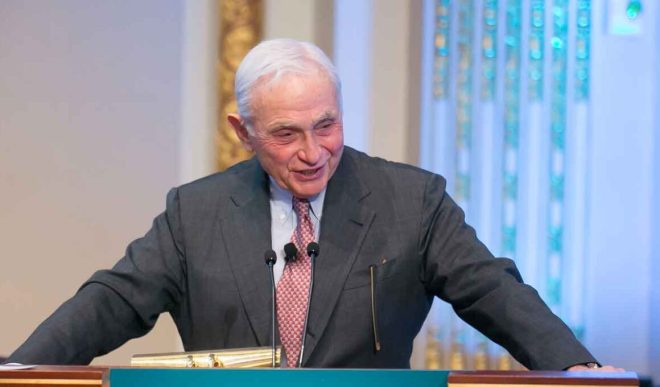
1985 was the year that Leslie Wexner became a billionaire. It was also that year that the chairman of The Limited (now L Brands) began to build up his public persona. This effort to “re-brand” himself began with a series of fawning media profiles. The main outlets that participated in Wexner’s first main, personal PR campaign were written by prominent New York City-based outlets, like New York magazine and the New York Times.
The New York magazine profile, which was the cover story for its August 5, 1985 issue, was entitled “The Bachelor Billionaire: On Pins and Needles with Leslie Wexner.” Though filled with photos of a middle-aged Wexner grinning and embracing friends as well as lavish praise for his business dealings and his “tender” and “gentle” personality, one of the main themes of the article revolves around what is apparently a spiritual affliction or mental illness of Wexner’s, depending on the reader’s own spiritual persuasion.
The New York magazine article opens as follows:
“On the morning Leslie Wexner became a billionaire, he woke up worried, but this was not unusual. He always wakes up worried because of his dybbuk, which pokes and prods and gives him the itchiness of the soul that he calls shpilkes [“pins” in Yiddish]. Sometimes he runs away from it on the roads of Columbus, or drives away from it in one of his Porsches, or flies from it in one of his planes, but then it is back, with his first coffee, his first meeting, nudging at him.”
One may interpret this use of shpilkes, literally “pins” or “spikes” in Yiddish and often used to describe nervous energy, impatience or anxiety, as Wexner merely personifying his anxiety. However, his decision to use the word dybbuk, which he does throughout the article, is quite significant. Also notable is how Wexner goes on to describe this apparent entity throughout the article and his intimate relationship with it.
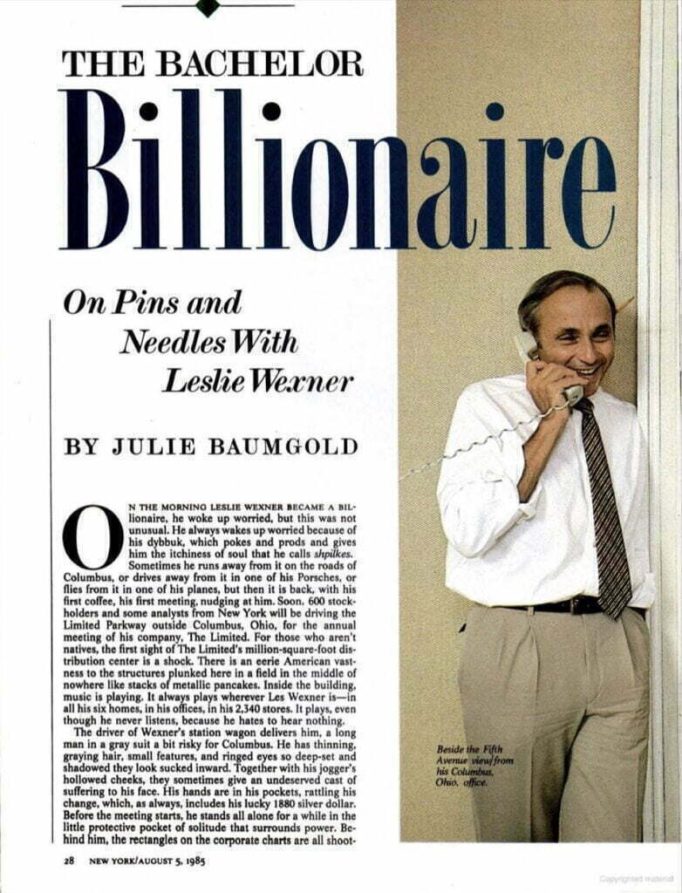
First page of New York magazine’s 1985 profile of Wexner
As defined by Encyclopedia Britannica, a dybbuk is a Jewish folklore term for “a disembodied human spirit that, because of former sins, wanders restlessly until it finds a haven in the body of a living person.” Unlike spirits that have yet to move on but possess positive qualities, such as the maggid or ibbur, the dybbuk is almost always considered to be malicious, which leads it to be translated in English as “demon”. This was also the case in this New York magazine profile on Wexner.
The author of that article, Julie Baumgold, describes Leslie Wexner’s dybbuk as “the demon that always wakes up in the morning with Wexner and tweaks and pulls at him.” Wexner could have easily chosen to frame the entity as a righteous spirit (maggid) or as his righteous ancestors (ibbur) guiding his life and business decisions, especially for the purpose of an interview that would be read widely throughout the country. Instead, Wexner chose this particular term, which says a lot for a man who has since used his billions to shape both mainstream Jewish identity and leadership in both the US and Israel for decades.
As the article continues, it states that Wexner has been with the dybbuk since he was a boy and that his father had recognized it and referred to it as the “churning”. Per Wexner, the dybbuk causes him to feel “molten” and constantly pricked by “spiritual pins and needles”. It apparently left him at some point as a young man, only to return in 1977 when he was 40, half-frozen during an ill-fated trip up a mountain near his vacation home in Vail, Colorado. This specific trip is when Wexner says he both rejoined with his childhood dybbuk and decided to “change his life.”
He told New York magazine that his dybbuk makes him “wander from house to house”, “wanting more and more” and “swallowing companies larger than his own.” In other words, it compels him to accumulate more money and more power with no end in sight. Wexner later describes the dybbuk as an integral “part of his genius.”
Wexner further describes his dybbuk as keeping “him out of balance, emotionally stunted, a part of him — the precious, treasured boy-son part — lagging behind [the dybbuk].” This is consistent with other definitions of the term in Jewish media, including a feature piece published in the Jewish Chronicle. That article first defines the term as “a demon [that] clings to [a person’s] soul” and then states that: “The Hebrew verb from which the word dybbuk is derived is also used to describe the cleaving of a pious soul to God. The two states are mirror images of each other.” Per Wexner’s word choice and his characterization of what he perceives as an entity dwelling within him, the entity — the dybbuk — is dominant while his actual self and soul “lags behind” and is stunted, causing him to identify more with the entity than with himself.
 This is also reflected in the concluding paragraph of the New York magazine article:
“Les Wexner picks up his heavy black case and flies off in his Challenger, with his dybbuk sitting next to him, taunting and poking him with impatience, that little demon he really loves. The dybbuk turns his face. What does he look like? ‘Me,’ says Leslie Wexner.”
Outside of the spiritual aspect of this discussion, it can also be surmised from the above that there is a strong possibility that Wexner suffers from some sort of mental disorder that causes him to exhibit two distinct personalities which continuously battle within him. What is astounding is that he describes this apparent affliction to a prominent media outlet with pride and the author of the piece weaves Wexner’s “demon” throughout a piece that seeks to praise his business acumen above all else.
Yet, perhaps the most troubling aspect of Wexner’s experience with his “dybbuk”, whether real or imagined, is the fact that Wexner, in the years before and after this article was published, has had a massive impact on Jewish communities in the US and beyond through his “philanthropy.” Some of those philanthropic efforts, like the Wexner Foundation, saw Wexner mold generations of Jewish leaders through Wexner Foundation programs while others, such as the Mega Group, see the organized crime-linked Leslie Wexner joined by several other like-minded billionaires, many of which also boast considerable organized crime connections, in an effort to shape the relationship of the American Jewish community, as well as the US government, with the state of Israel.
For a man of such influence in the Jewish community, why have there been essentially no questions raised as to Wexner’s role in directing the affairs of that ethno-religious community given that he has openly claimed to be guided by a “dybbuk”? This is particularly odd when one considers that Wexner has come under increased scrutiny in recent years after his protege and closest associate for decades, Jeffrey E. Epstein, was outed as both a pedophile and serial sex trafficker. Did Wexner’s dybbuk draw him to Epstein and prompt him to financially support his horrific crimes against minors?
Note: The above is an adapted excerpt from Whitney Webb’s upcoming book “One Nation Under Blackmail: the sordid union between Intelligence and Organized Crime that gave rise to Jeffrey Epstein”. Those interested may pre-order the book directly from the publisher’s website or from Amazon.
Research Confirms Statins Are a Colossal Waste of Money
This article was previously published December 8, 2021, and has been updated with new information.
By Dr. Joseph Mercola | June 9, 2022
The lecturer in the featured video, Maryanne Demasi, Ph.D., produced the 2014 Australian Catalyst documentary, “Heart of the Matter: Dietary Villains,” which exposed the cholesterol/saturated fat myths behind the statin fad and the financial links which lurk underneath.
The documentary was so thorough that vested interests actually convinced ABC TV to rescind the two-part series.1 The Australian Heart Foundation, the three largest statin makers (Pfizer, AstraZeneca and Merck Sharp & Dohme) and Medicines Australia, Australia’s drug lobby group, complained2 and got the documentary expunged from ABC TV.
Cholesterol and saturated fat have been the villains of heart disease for the past four decades, despite the many studies showing neither has an adverse effect on heart health.
The entire food industry shifted away from saturated fat and cholesterol, ostensibly to improve public health, and the medical industry has massively promoted the use of cholesterol-lowering statin drugs for the same reason. Despite all of that, the rate of heart disease deaths continues to be high.3 That really should tell us something.
Statins Are a Colossal Waste of Money
Since the release of Demasi’s documentary, the evidence against the cholesterol theory and statins has only grown. As noted in an August 4, 2020, op-ed by Dr. Malcolm Kendrick, a general practitioner with the British National Health Service:4
“New research shows that the most widely prescribed type of drug in the history of medicine is a waste of money. One major study found that the more ‘bad’ cholesterol was lowered, the greater the risk of heart attacks and strokes.
In the midst of the COVID-19 pandemic, almost every other medical condition has been shoved onto the sidelines. However, in the UK last year, heart attacks and strokes (CVD) killed well over 100,000 people — which is at least twice as many as have died from COVID-19.
CVD will kill just as many this year, which makes it significantly more important than COVID-19, even if no one is paying much attention to it right now.”
According to a scientific review5 published online August 4, 2020, in BMJ Evidence-Based Medicine, lowering LDL is not going to lower your risk of heart disease and stroke. “Decades of research has failed to show any consistent benefit for this approach,” the authors note.
Since the commercialization of statin drugs in the late ’80s (lovastatin being the first one, gaining approval in 19876), total sales have reached nearly $1 trillion.7,8 Lipitor — which is just one of several brand name statin drugs — was named the most profitable drug in the history of medicine.9,10 Yet these drugs have done nothing to derail the rising trend of heart disease.
Lowering Cholesterol Does Not Show a Beneficial Impact
According to a press release announcing the BMJ Evidence-Based Medicine review, the analysis found that:11
“… over three quarters of all the trials reported no positive impact on the risk of death and nearly half reported no positive impact on risk of future cardiovascular disease.
And the amount of LDL cholesterol reduction achieved didn’t correspond to the size of the resulting benefits, with even very small changes in LDL cholesterol sometimes associated with larger reductions in risk of death or cardiovascular ‘events,’ and vice versa. Thirteen of the clinical trials met the LDL cholesterol reduction target, but only one reported a positive impact on risk of death …”
In their paper,12 the study authors argue that since dozens of randomized controlled trials looking at LDL-cholesterol reduction “have failed to demonstrate a consistent benefit, we should question the validity of this theory.”
They also cite the Minnesota Coronary Experiment,13 a double-blind randomized controlled trial involving 9,423 subjects that sought to determine whether replacing saturated fat with omega-6 rich vegetable oil (corn oil and margarine) would reduce the death rate from heart disease by lowering cholesterol.
It didn’t. Mortality and cardiovascular events increased even though total cholesterol was lowered by 13.8%. For each 30 mg/dL reduction in serum cholesterol, the death risk rose by 22%. In conclusion, the Evidence-Based Medicine study authors note that:14
“In most fields of science the existence of contradictory evidence usually leads to a paradigm shift or modification of the theory in question, but in this case the contradictory evidence has been largely ignored, simply because it doesn’t fit the prevailing paradigm.”
Deception Through Statistics
If lowering cholesterol doesn’t reduce mortality or cardiovascular events, there’s little reason to use them, considering they come with a long list of adverse side effects. Sure, there are studies claiming to show benefit, but many involve misleading plays on statistics.
One common statistic used to promote statins is that they lower your risk of heart attack by about 36%.15 This statistic is derived from a 2008 study16 in the European Heart Journal. One of the authors on this study is Rory Collins, who heads up the CTT Collaboration (Cholesterol Treatment Trialists’ Collaboration), a group of doctors and scientists who analyze study data17 and report their findings to regulators and policymakers.
Table 4 in this study shows the rate of heart attack in the placebo group was 3.1% while the statin group’s rate was 2% — a 36% reduction in relative risk. However, the absolute risk reduction — the actual difference between the two groups, i.e., 3.1% minus 2% — is only 1.1%, which really isn’t very impressive.
In other words, in the real world, if you take a statin, your chance of a heart attack is only 1.1% lower than if you’re not taking it. At the end of the day, what really matters is what your risk of death is the absolute risk. The study, however, only stresses the relative risk (36%), not the absolute risk (1.1%).
As noted in the review18 “How Statistical Deception Created the Appearance That Statins Are Safe and Effective in Primary and Secondary Prevention of Cardiovascular Disease,” it’s very easy to confuse and mislead people with relative risks.
Statins Sabotage Your Health
A stunning review of statin trials published in 2015 found that in primary prevention trials, the median postponement of death in those taking statins was a mere 3.2 days. While potentially extending life span by 3.2 days, those taking statins are also at increased risk for:
- Diabetes (if taken for more than two years, your risk for diabetes triples)
- Dementia, neurodegenerative diseases and psychiatric problems such as depression, anxiety and aggression
- Musculoskeletal disorders
- Osteoporosis
- Cataracts
- Heart disease
- Liver damage
- Immune system suppression
Oftentimes statins do not have any immediate side effects, and they are quite effective, capable of lowering cholesterol levels by 50 points or more. This is often viewed as evidence that your health is improving. Side effects that develop over time are frequently misinterpreted as brand-new, separate health problems.
Crimes Against Humanity
The harm perpetuated by the promotion of the low-fat, low-cholesterol myth is so significant, it could easily be described as a crime against humanity. Ancel Keys’ 1963 “Seven Countries Study” was instrumental in creating the saturated fat myth.19,20
He claimed to have found a correlation between total cholesterol concentration and heart disease, but in reality this was the result of cherry picking data. When data from 16 excluded countries are added back in, the association between saturated fat consumption and mortality vanishes.
In fact, the full data set suggests that those who eat the most saturated animal fat tend to have a lower incidence of heart disease, which is precisely what other, more recent studies have concluded.
Procter & Gamble Co.21 (the maker of Crisco22), the American Heart Association and the Center for Science in the Public Interest (CSPI) all promoted the fallacy for decades, despite mounting evidence that Keys had gotten it all wrong.
The AHA was issuing stern warnings against butter, steak and coconut oil as recently as 2017.23 That same year, Procter & Gamble partnered with University Hospitals Harrington Heart & Vascular Institute to promote heart health by lowering cholesterol.24
CSPI was also instrumental in driving heart disease skyward with its wildly successful pro-trans fat campaign. It was largely the result of CSPI’s campaign that fast-food restaurants replace beef tallow, palm oil and coconut oil with partially hydrogenated vegetable oils, which were high in synthetic trans fats linked to heart disease and other chronic diseases.
As late as 1988, CSPI praised trans fats, saying “there is little good evidence that trans fats cause any more harm than other fats” and that “much of the anxiety over trans fats stems from their reputation as ‘unnatural.'”25
CSPI and AHA Omit Their Role in Heart Disease Epidemic
Today, you’ll have to dig deep to unearth CSPI’s devastating public health campaign. In an act of deception, they erased it from their history to make people believe they’ve been doing the right thing all along. Their historical timeline26 of trans fat starts at 1993 — the year CSPI decided to change course and start supporting the elimination of the same trans fat they’d spent years promoting.

Similarly, the AHA conveniently omits saturated fat and cholesterol from its history of “lifesaving” breakthroughs and achievements.27 It makes sense, though, considering the AHA’s and CSPI’s recommendations to swap saturated fat for vegetable oils and synthetic trans fat never resulted in anything but an epidemic of heart disease.
The idea that the harms of trans fats were unknown until the 1990s is simply a lie. The late Dr. Fred Kummerow started publishing evidence showing trans fat, not saturated fat, was the cause of heart disease in 1957. He also linked trans fat to Type 2 diabetes.
The Truth About Saturated Fat
In addition to the more recent studies mentioned earlier, many others have also debunked the idea that cholesterol and/or saturated fat impacts your risk of heart disease. For example:
•In a 1992 editorial published in the Archives of Internal Medicine,28 Dr. William Castelli, a former director of the Framingham Heart study, stated:
“In Framingham, Mass., the more saturated fat one ate, the more cholesterol one ate, the more calories one ate, the lower the person’s serum cholesterol. The opposite of what … Keys et al [said] …”
•A 2010 meta-analysis,29 which pooled data from 21 studies and included 347,747 adults, found no difference in the risks of heart disease and stroke between people with the lowest and highest intakes of saturated fat.
•Another 2010 study30 published in the American Journal of Clinical Nutrition found that a reduction in saturated fat intake must be evaluated in the context of replacement by other macronutrients, such as carbohydrates.
When you replace saturated fat with a higher carbohydrate intake, particularly refined carbohydrate, you exacerbate insulin resistance and obesity, increase triglycerides and small LDL particles, and reduce beneficial HDL cholesterol. According to the authors, dietary efforts to improve your cardiovascular disease risk should primarily emphasize the limitation of refined carbohydrate intake, and weight reduction.
•A 2014 meta-analysis31 of 76 studies by researchers at Cambridge University found no basis for guidelines that advise low saturated fat consumption to lower your cardiac risk, calling into question all of the standard nutritional guidelines related to heart health. According to the authors:
“Current evidence does not clearly support cardiovascular guidelines that encourage high consumption of polyunsaturated fatty acids and low consumption of total saturated fats.”
Will Saturated Fat Myth Soon Be Upended?
Nina Teicholz, a science journalist, adjunct professor at NYU’s Wagner Graduate School of Public Service and the executive director of The Nutrition Coalition, is the author of “The Big Fat Surprise: Why Butter, Meat and Cheese Belong in a Healthy Diet,” which reviews the many myths surrounding saturated fat and cholesterol.
In an interview I did with Dr. Paul Saladino and Teicholz, they reviewed the history of the demonization of saturated fat and cholesterol, starting with Keys, and how the introduction of the first Dietary Guidelines for Americans in 1980 (which recommended limiting saturated fat and cholesterol) coincided with a rapid rise in obesity and chronic diseases such as heart disease.
Teicholz also reviewed a paper32 in the Journal of the American College of Cardiology, published online June 17, 2020, which actually admits the long-standing nutritional guideline to limit saturated fat has been incorrect. This is a rather stunning admission, and a huge step forward. As noted in the abstract:
“The recommendation to limit dietary saturated fatty acid (SFA) intake has persisted despite mounting evidence to the contrary. Most recent meta-analyses of randomized trials and observational studies found no beneficial effects of reducing SFA intake on cardiovascular disease (CVD) and total mortality, and instead found protective effects against stroke.
Although SFAs increase low-density lipoprotein (LDL)-cholesterol, in most individuals, this is not due to increasing levels of small, dense LDL particles, but rather larger LDL which are much less strongly related to CVD risk.
It is also apparent that the health effects of foods cannot be predicted by their content in any nutrient group, without considering the overall macronutrient distribution.
Whole-fat dairy, unprocessed meat, eggs and dark chocolate are SFA-rich foods with a complex matrix that are not associated with increased risk of CVD. The totality of available evidence does not support further limiting the intake of such foods.”
Sources and References
- 1 Highstreaks May 21, 2014
- 2 YouTube Dr. Maryanne Demasi: My Experience of Exposing the Statin Con
- 3 Cardiovascular Business August 27, 2019
- 4, 7 RT August 4, 2020
- 5, 12, 14 BMJ Evidence-Based Medicine August 4, 2020 DOI: 10.1136/bmjebm-2020-111413
- 6 News-Medical.net History of Statins
- 8 BMJ January 21, 2018
- 9 Youtube.com Maryanne Demasi, Statin Wars: Have We Been Misled by the Evidence?, 1:40 minutes
- 10 Kiplinger December 1, 2017
- 11 Medical Xpress August 3, 2020
- 13 BMJ 2016;353:i1246
- 15 Youtube.com Maryanne Demasi, Statin Wars: Have We Been Misled by the Evidence?, 14:40 minutes
- 16 European Heart Journal February 1, 2008; 29(4): 499-508
- 17 CTT Collaboration, About
- 18 Expert Review of Clinical Pharmacology March 2015:8(2); 201-210
- 19 Carnivore Aurelius June 16, 2019
- 20 Institute for Science in Society April 13, 2015
- 21 The Atlantic April 26, 2012
- 22 Weston A. Price February 23, 2009
- 23 Los Angeles Times July 23, 2017
- 24 UH Hospitals August 17, 2017
- 25 The Free Library, The Truth About Trans Fat, CSPI 1988
- 26 CSPI Timeline for Trans Fat
- 27 Heart.org Our Lifesaving History
- 28 Archives of Internal Medicine 1992 Jul;152(7):1371-2
- 29 American Journal of Clinical Nutrition 2010 Mar;91(3):535-46
- 30 American Journal of Clinical Nutrition March 2010: 91(3); 502-509
- 31 Annals of Internal Medicine March 18, 2014
- 32 Journal of the American College of Cardiology June 17, 2020 [Epub ahead of print]
The American Heart Association Renders Itself Obsolete With Long-Refuted Dietary Advice
This article was previously published July 5, 2017, and has been updated with new information.
By Dr. Joseph Mercola | June 6, 2022
For well over half-century, a majority of health care officials and media have warned that saturated fats are bad for your health and lead to obesity, high cholesterol and heart disease. The American Heart Association (AHA) began encouraging Americans to limit dietary fat in general and saturated fats in particular as far back as 1961.
Like its previously revised version, the current version of the U.S. Department of Agriculture’s food pyramid, called “MyPlate,”1 more or less eliminates fats altogether, with the exception of a small amount of low-fat or no-fat dairy. According to MyPlate, the food groups are fruits, vegetables, grains, protein and dairy — not the three biological building blocks known as carbohydrates (fruits, vegetables, grains), protein and fats.
All the while, studies have repeatedly refuted the wisdom of these low- to no-fat recommendations. Even so, the AHA has spent the past decade issuing warnings reminiscent of the 1960s all over again.
If you’ve followed the news, you’ve seen bold headlines declaring coconut oil dangerous, and that you should switch from butter to margarine to protect your heart health! How is this even possible? It’s akin to the flat Earth theory that inexplicably gained traction despite clear and indisputable proof that we indeed live on a planetary sphere.
Many have expressed confusion and bewilderment in response to the AHA’s margarine push, and no wonder. Let’s not forget that creating doubt is a core strategy used by industry to delay change. This margarine-promotion also happens to conveniently sync up with news about a vaccine to lower cholesterol2,3 — a strategy that would be unnecessary if people were to just eat healthy saturated fats like coconut oil and butter, and eliminate processed foods and sugar.
The vaccine first made news in 2015,4 but nearly seven years later, in October 2021, researchers were lamenting that the vaccine was still in trials, and that although significant reductions in LDL were observed in mouse studies, there were still concerns about the cost, limitations of shelf-life and safety that were holding it back.5
AHA Sends Out Warning to Cardiologists Around the World
According to the AHA,6 saturated fats such as butter and coconut oil should be avoided to cut your risk of heart disease. Replacing these fats with polyunsaturated fats such as margarine and vegetable oil might cut heart disease risk by as much as 30%, about the same as statins, the AHA claims.
This “Presidential Advisory” was sent out to cardiologists around the world, not just to those in the U.S. Overall, the AHA recommends limiting your daily saturated fat intake to 5 to 6% of daily calories or less.7 According to The Daily Mail :8
“The scientists analyzed all available evidence on the subject and found saturated fat — such as that found in butter, whole milk, cream, palm oil, coconut oil, beef and pork — was linked to an increased risk of heart disease.
Replacing this with polyunsaturated fat — found in spreads and vegetable oils — or monounsaturated oils found in olive oil, avocados and nuts — cuts the risk of heart problems. The study … bolsters NHS advice that saturated fat should be lowered in the diet.
Lead author professor Frank Sacks, of Harvard School of Public Health, said: ‘We want to set the record straight on why well-conducted scientific research overwhelmingly supports limiting saturated fat in the diet to prevent diseases of the heart and blood vessels. Saturated fat increases LDL — bad cholesterol — which is a major cause of artery-clogging plaque and cardiovascular disease’ …
The authors, however, warned that not all margarines and spreads are healthy. They found that some forms of margarine which use ‘trans fats’ — a type of fat which improves shelf life — actually raise the risk of heart disease.”
Victoria Taylor, senior dietitian at the British Heart Foundation, also made sure to note that “lifestyle change should go hand in hand with taking any medication prescribed by your doctor; it shouldn’t be seen as one or the other.” In other words, don’t think you can avoid statins simply by eating right.
Then, referencing coconut oil specifically, the AHA added: “Because coconut oil increases LDL cholesterol, a cause of CVD [cardiovascular disease], and has no known offsetting favorable effects, we advise against the use of coconut oil.”9 USA Today announced that advisory with a June 16, 2017, nonsensical headline, “Coconut Oil Is About as Healthy as Beef Fat or Butter.”10
Why, yes, it is! But what they were trying to claim was that all of these are unhealthy, which is altogether backward and upside-down. It didn’t take long for USA Today to realize its faus pax, though, so it changed the headline June 21, 2017, to “Coconut Oil Isn’t Healthy. It’s Never Been Healthy.”11
While the newspaper noted the “correction” on its webpage, all references to the original headline have been scrubbed from the internet archive, Wayback.12 So much for transparency in newspaper reporting.
On What Evidence Does AHA Base Their Recommendation?
How did the AHA come to the conclusion that they were right about saturated fat 60 years ago and have been right all along? In short, by cherry-picking the data that supported their outdated view. As noted by American science writer Gary Taubes in his extensive rebuttal to the AHA’s advisory:13
“The history of science is littered with failed hypotheses based on selective interpretation of the evidence … Today’s Presidential Advisory … may be the most egregious example of Bing Crosby epidemiology [‘accentuate the positive and eliminate the negative’] that I’ve ever seen … [T]hey methodically eliminate the negative and accentuate the positive until they can make the case that they are surely, clearly and unequivocally right …
[T] he AHA concludes that only four clinical trials have ever been done with sufficiently reliable methodology to allow them to assess the value of replacing SFAs with PUFAs (in practice replacing animal fats [with] vegetable oils) and concludes that this replacement will reduce heart attacks by 30 percent …
These four trials are the ones that are left after the AHA experts have systematically picked through the others and found reasons to reject all that didn’t find such a large positive effect, including a significant number that happened to suggest the opposite …
They do this for every trial but the four, including among the rejections the largest trials ever done: the Minnesota Coronary Survey, the Sydney Heart Study and, most notably, the Women’s Health Initiative, which was the single largest and most expensive clinical trial ever done. All of these resulted in evidence that refuted the hypothesis. All are rejected from the analysis.”
Taubes, an investigative science and health journalist who has written several books on obesity and diet, points out that this advisory document actually reveals the AHA’s longstanding prejudice and the method by which it reaches its conclusions.
In 2013, the AHA released a report14 claiming “the strongest possible evidence” supported the recommendation to replace saturated fat with polyunsaturated fats (PUFAs). This, despite the fact that several meta-analyses, produced by independent researchers, concluded the evidence for restricting saturated fats was weak or lacking.
The advisory document reveals how the AHA could conclude they had the “strongest possible evidence.” Then, as now, they methodically came up with justifications to simply exclude the contrary evidence. All that was left — then and now — were a small number of studies that support their preconceived view of what they think the truth should be.
AHA’s Referenced Studies Are Based on Outdated Science
Would it surprise you to find out that the four studies that made the cut all date from the 1960s and early 1970s? It makes sense, doesn’t it, since those are the eras when the low-fat myth was born and grew to take hold. The problem is nutritional science has made significant strides since then.
As noted by Taubes, one of the studies included was the Oslo Diet-Heart Study,15 published in 1970, in which 412 patients who’d had a heart attack or were at high risk of heart disease were randomized into two groups: One group got a low-saturated fat, high-PUFA diet along with ongoing, long-term “instruction and supervision” while the other group ate whatever they wanted and received no nutritional counseling whatsoever.
“This is technically called performance bias and it’s the equivalent of doing an unblinded drug trial without a placebo. It is literally an uncontrolled trial, despite the randomization. (… [A]ll the physicians involved also knew whether their patients were assigned to the intervention group or the control, which makes investigator bias all that much more likely.)
We would never accept such a trial as a valid test of a drug. Why do it for diet? Well, maybe because it can be used to support our preconceptions,” Taubes writes.
Taubes goes on to state that he was so curious about this Oslo study he bought a monograph published by the original author. In it, the author describes in more detail how he went about conducting his trial. Interestingly, this monograph reveals that the sugar consumption in the treatment group was only about 50 grams a day — an amount Taubes estimates may be about half the per capita consumption in Norway at that time, based on extrapolated data.16
“In this trial, the variable that’s supposed to be different is the [saturated fat]/PUFA ratio, but the performance bias introduces another one. One group gets continuous counseling to eat healthy, one group doesn’t. Now how can that continuous counseling influence health status?
One way is that apparently, the group that got it decided to eat a hell of lot less sugar. This unintended consequence now gives another possible explanation for why these folks had so many fewer heart attacks. I don’t know if this is true. The point is neither did Leren.
And neither do our AHA authorities,” Taubes writes. “All of the four studies used to support the 30 percent number had significant flaws, often this very same performance bias. Reason to reject them.”
Dangerous Advice
Dr. Cate Shanahan,17 a family physician and author of “Deep Nutrition: Why Your Genes Need Traditional Food,” emailed me an even stronger rebuttal, saying, “This message from the AHA is not only false, it is dangerous,” noting that the AHA is actually making false claims since none of the four studies they included in their analysis involved coconut oil.
As an explanatory side note, most of the early studies on coconut oil that found less than favorable results used partially hydrogenated coconut oil, not unrefined virgin coconut oil.18 As always, the devil’s in the details, and hydrogenated oil is not the same as unrefined oil, even when you’re talking about something as healthy as coconut. This little detail is what led to the undeserved vilification of coconut oil in the first place. That said, let’s look at what else Shanahan has to say on the matter:
“Most doctors don’t notice that the medical leadership is making unfounded claims, and the reason they don’t notice is because … articles asserting the existence of human clinical trial evidence against coconut as well as all other foods high in saturated fat, conflate the sources of saturated fat with the saturated fat itself.
Saturated fat does not actually exist in the food chain; what they’re talking about are saturated fatty acids, the components of triglyceride fat, the substance chefs call simply ‘fat.’ We often say things like ‘coconut oil is a saturated fat’ and ‘butter is a saturated fat.’ But it would be more correct to say ‘coconut oil is high in saturated fatty acids.’
Coconut oil, butter, lard, tallow and every other animal fat also contain monounsaturated and even some polyunsaturated fatty acids in addition to saturated fatty acids … The idea is foods contain blends of fatty acids in varying proportion.”
Put another way, most foods contain a blend of fatty acids, not just one. Margarine and shortening also contain saturated fatty acids, yet the AHA makes no mention of this. The harder the margarine, the more saturated fat it tends to contain, in some cases more than butter or lard.
“So, when people eat margarine and shortening, in addition to toxic trans fatty acids they’re also eating saturated fatty acids. And that means that when a study says it’s swapping out saturated fat for vegetable oils, that does not equate to swapping out butter and lard. It could very well be the case that margarine and shortenings were among the foods that got eliminated,” Shanahan says.
“And because most doctors don’t realize that margarine and shortenings contain saturated fatty acids, they also don’t consider it particularly important to wonder whether or not studies like the four core citations mentioned in the Advisory are actually confounded by the fact that the baseline, high-saturated fat diet included a significant amount of margarines and shortenings that contain toxic trans fat.
Because if they did, then that means whatever health benefits were observed in the studies may have nothing to do with the reductions in saturated fat. It’s cutting back on trans fat that makes the difference to health.”
Non-Saturated Fat Recommendations Have Been Followed With Disastrous Results
Since the 1950s, when vegetable oils began being promoted over saturated fats like butter, Americans have dutifully followed this advice, dramatically increasing consumption of vegetable oil. Soy oil, for example, rose by 600% (10,000% from 1900) while butter, tallow and lard consumption halved.
We’ve also dramatically increased sugar consumption, with more than half of Americans consuming over 17 teaspoons a sugar a day in 2021.19 That’s down from the 25 teaspoons a day they were consuming in 2014,20 but it’s still more than the maximum 12 teaspoons recommended by the CDC.
Alas, rather than becoming healthier than ever, Americans have only gotten fatter and sicker. Heart disease rates have not improved even though people have been eating what the AHA suggests is a heart-healthy diet. Common sense tells us if the AHA’s advice hasn’t worked in the last 65 years, it’s not likely to start working now.
As noted by Shanahan, technology that allows us to study molecular reactions is relatively recent, and certainly was not available back in the ‘60s and ‘70s. Modern research is just now starting to reveal what actually happens at the molecular level when you consume vegetable oil and margarine, and it’s not good.
For example, Dr. Sanjoy Ghosh,21 a biologist at the University of British Columbia, has shown your mitochondria cannot easily use polyunsaturated fats for fuel due to the fats’ unique molecular structure.
Other researchers have shown the PUFA linoleic acid can cause cell death in addition to hindering mitochondrial function.22 PUFAs are also not readily stored in subcutaneous fat. Instead, these tend to get deposited in your liver, where they contribute to fatty liver disease, and in your arteries, where they contribute to atherosclerosis.
According to Frances Sladek,23 Ph.D., a toxicologist and professor of cell biology at UC Riverside, PUFAs behave like a toxin that builds up in tissues because your body cannot easily rid itself of it. When vegetable oils like sunflower oil and corn oil are heated, cancer-causing chemicals like aldehydes are also produced.24
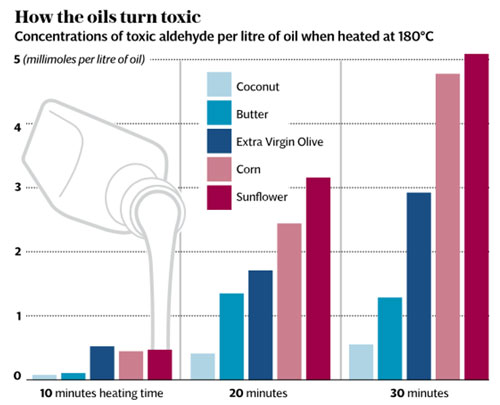
Source: The Telegraph November 7, 2015
Not surprisingly, fried foods are linked to an increased risk of death. In fact, eating fried potatoes more than twice a week was found to double a person’s risk of death compared to never eating fried potatoes.25 Animal and human research has also found vegetable oils promote:
- Obesity and fatty liver26
- Lethargy and prediabetic symptoms27
- Chronic pain/idiopathic pain syndromes (meaning pain with no discernible cause)28
- Migraines29
- Crohn’s disease and ulcerative colitis30
Biochemistry Versus Statistics
According to Shanahan, the idea that PUFAs are healthier than saturated fats falls flat when you enter the field of biochemistry, because it’s “biochemically implausible.” In other words, the molecular structure of PUFA is such that it’s prone to react with oxygen, and these reactions disrupt cellular activity and cause inflammation.31 Oxidative stress and inflammation, in turn, are hallmarks not only of heart disease and heart attacks but of most chronic diseases.32
“Meanwhile, the folks at the AHA claim saturated fat is pro-inflammatory and causes arterial plaque and heart attacks — but there is no biochemically plausible explanation for their argument. Saturated fat is very stable, and will not react with oxygen the way PUFA fat does, not until the fundamental laws of the universe are altered,” Shanahan writes.
“Our bodies do need some PUFA fat, but we need it to come from food like walnuts and salmon or gently processed (as in cold pressed, unrefined) oils like flax and artisanal grapeseed, not from vegetable oils because these are refined, bleached and deodorized, and the PUFA fats are molecularly mangled into toxins our body cannot use.”
The Cholesterol Argument
Researchers have also laid waste to the notion that having high cholesterol is a primary contributor to heart disease in the first place. This is the basic premise upon which the AHA builds its conclusion that saturated fats are bad for you. The idea is that saturated fats raise your cholesterol level, thus raising your risk for heart disease. But again, they use too broad a brush and ignore the details. For example:
•A recent study33 published in The BMJ reanalyzed data from the Minnesota Coronary Experiment (MCE) that took place between 1968 and 1973, after gaining access to previously unpublished data. This was a double-blind, randomized controlled trial to test whether replacing saturated fat with vegetable oil (high in linoleic acid) would lower cholesterol levels, thus reducing heart disease and related deaths.
Interestingly, while the treatment group did significantly lower their cholesterol, no mortality benefit could be found. In fact, for each 30 milligrams per deciliter (mg/dL) reduction in serum cholesterol, the risk of death increased by 22%. Swapping saturated fat for vegetable oil also had no effect on atherosclerosis rates or heart attacks. As noted by the authors:
“Available evidence … shows that replacement of saturated fat in the diet with linoleic acid effectively lowers serum cholesterol but does not support the hypothesis that this translates to a lower risk of death from coronary heart disease or all causes. Findings … add to growing evidence that incomplete publication has contributed to overestimation of the benefits of replacing saturated fat with vegetable oils …”
•The AHA also does not take LDL particle number into consideration. There are large, fluffy LDL particles and small, dense ones. We didn’t have this information in the 1960s, but we sure have it now.
This is yet another crucial detail that makes all the difference in the world, as large LDL particles have been shown to be harmless and do not raise your risk for heart disease. And guess what? Sugar promotes harmful small, dense LDLs while saturated fats found in butter and coconut oil promotes harmless large, fluffy LDLs.34
Is Coconut Oil Healthy or Not?
The short answer is yes, coconut oil is healthy. It’s been a dietary staple for millennia, providing you with high-quality fat that is important for optimal health. It supports thyroid function, normalizes insulin and leptin function, boosts metabolism and provides excellent and readily available fuel for your body in lieu of carbohydrates (which you need to avoid if you want to lose weight).
A really important benefit of coconut oil is related to the fact that the ketones your liver creates from it are the preferred fuel for your body, especially your heart and brain, and may be key for the prevention of heart disease and Alzheimer’s. It truly is a healthy staple that belongs in everyone’s kitchen.
Coconut oil contains medium chain triglycerides (MCTs), and their smaller particle size helps them penetrate your cell membranes more easily. However, MCT oil has a far higher concentration of these shorter chain fats that are more efficiently converted to ketones; C8 or caprylic acid has the best ability to convert to ketones.
MCTs do not require special enzymes and they can be utilized more effectively by your body, thus putting less strain on your digestive system. Normally, a fat taken into your body must be emulsified with bile from your gallbladder before it can be broken down and properly absorbed. Long chain fats therefore frequently end up being stored in your fat cells.
However, your body treats MCTs differently. MCTs bypass the bile and fat storage process and go directly to your liver, where they are converted into ketones. Your liver quickly releases the ketones into your bloodstream where they are transported around your body to be used as fuel. By being immediately converted into energy rather than being stored as fat, MCTs stimulate your body’s metabolism and help promote weight loss.
Coconut Oil Promotes Thyroid Health
Part of coconut oil’s health benefits also relate to its beneficial impact on your thyroid. Unlike many other oils, coconut oil does not interfere with T4 to T3 conversion, and T4 must be converted to T3 in order to create the enzymes needed to convert fats to energy.
Part of what makes processed vegetable oils so damaging to the thyroid is that they oxidize quickly and become rancid, which prevents the fatty acids from being deposited into your cells, thereby impairing the conversion of T4 to T3. This is symptomatic of hypothyroidism. Coconut oil is a saturated fat and therefore very stable and not susceptible to oxidation.
The fact that coconut oil doesn’t go rancid helps boost your thyroid function. Eliminating processed vegetable oils from your diet and replacing them with coconut oil can, over time, help rebuild cell membranes in your liver (where much of the thyroid hormone conversion occurs) and increase enzyme production. This will assist in promoting the conversion of T4 to T3 hormones.
The most common fat in coconut oil is lauric acid, often considered a “miracle” fat because of its unique health-promoting properties. Your body converts lauric acid into monolaurin, which has antiviral, antibacterial and antiprotozoal properties.
Thyroid problems can often be traced back to chronic inflammation, which the lauric acid in coconut oil can help suppress. To obtain the full range of coconut oil’s health and weight loss benefits, I typically recommend 2 to 3 1/2 tablespoons per day for adults.
That said, there is at least one instance where coconut oil is contraindicated due to its lauric acid content. In his book, “The Plant Paradox: The Hidden Dangers in ‘Healthy’ Foods That Cause Disease and Weight Gain,” Dr. Steven Gundry explains how coconut oil may be problematic if you have leaky gut, which is almost universal in individuals who are not paying attention to their lectin intake.
As it turns out, lipopolysaccharide (LPS), an endotoxin, attaches to lauric acid, facilitating its transport past your gut lining into your blood stream. Interestingly, MCT oil does not do this. So, if you have leaky gut, or unless you’re healthy and eating a lectin-free diet, it may be best to avoid coconut oil and use MCT oil instead. Caprylic acid would be best, but neither of these will allow LPS to piggyback into your blood stream. You can learn more about lectins in my interview with Gundry.
Who Pays the AHA?
Science has revealed the low-fat diet to be corporate-promoted misinformation, yet the AHA keeps insisting it’s the heart-healthy choice. Why? As noted by cardiologist Dr. Barbara Roberts in an article in The Daily Beast in 2014,35 “The quick answer: money, honey.” Roberts points out that one of the reasons the AHA clings to “recommendations that fly in the face of scientific evidence” is because of its ties to Big Food.
One of its primary revenue streams is its Heart Check Food Certification Program, which is updated monthly.36 Foods bearing this certification mark are supposed to make it easier for consumers to select products to include in a heart-healthy diet. Companies pay about $700,000 annually for the right to use this mark on their packaging.37
As of May 2022, the AHA endorsed hundreds of foods as heart-healthy, including breads, cereals, pastas and pasta sauces, potatoes, egg substitutes, dried and canned fruits and processed meats.38
In other words, a whole bunch of stuff you really shouldn’t eat if you care about your health in general and your heart in particular is on the list. Processed meats, for example, have been deemed so hazardous there’s no safe limit.39 The AHA also has endorsed Subway sandwiches40 and Cheerios41 in the past and accepts hundreds of millions of dollars in funding from a long list of drug companies.42 As noted by Roberts:43
“Even more problematic are the foods containing added sugar … The AHA recommends that women consume less than 6 teaspoons (100 calories) of sugar a day and less than 9 teaspoons (150 calories) for men.
Yet there are items that get the nod of approval from the Heart Check program despite being near or at the sugar limit, like Bruce’s Yams Candied Sweet Potatoes … Indeed, until 2010, the Heart Check imprimatur was stamped on a drink called Chocolate Moose Attack, which contained more sugar per ounce than regular Pepsi. And until [2014], Heart Check approved many foods with trans fats …”
AHA Was Wrong in the 1960s and Is Still Wrong
Heart disease is primarily caused by chronic inflammation, which is caused by excessive amounts of omega-6 (unbalanced omega-6 to omega-3), dangerous trans fats, processed vegetable oils and excessive sugar in the diet. Saturated fats, on the other hand, have been repeatedly exonerated, with studies showing they do not contribute to heart disease and are in fact a very important source of fuel for your body.
Granted, it’s tough to admit you’ve been wrong for 65-plus years. Such an admission can mar an organization’s reputation. But in trying to turn back the clock to 1960 and promote margarine and vegetable oils over butter and coconut oil, the AHA is proving itself obsolete.
This recommendation is, in my view, professionally irresponsible. It’s completely irrational in the face of modern nutritional science. With it, the AHA has painted itself into a corner from which it cannot extract itself without turning the entire organization upside-down. As noted by Dave Asprey, founder of Bulletproof.com :44
“The AHA campaign is backfiring because of the millions of people who already know that adding undamaged saturated fats into their diets makes them feel better. They can feel the difference in their energy, see it in the mirror, and measure it in their blood work …
These anti-coconut oil AHA guidelines are an orchestrated PR campaign aimed at changing what we eat to match what is in the interests of the AHA’s corporate sponsors, regardless of what recent research suggests.
As the U.S. population gets more educated about the benefits of saturated fats and the harm posed by processed seed and vegetable oils, processed food manufacturers are looking for ways to trick us into eating the cheap, high profit, damaging ‘food’ they create and sell.
That appears to be why they sponsor the [AHA]. These new recommendations are from an industry special interest group that promotes low-fat, high-sugar diets that kill people and has the audacity to label them as ‘heart healthy.’ In fact, the AHA executive leading the charge against coconut oil is the same guy that used to run marketing for Kentucky Fried Chicken and other fast-food chains.”
Sources and References
- 1 MyPlate.gov. Dietary Guidelines for Americans 2020-2025
- 2 BBC News June 20, 2017
- 3 Medical News Today June 20, 2017
- 4 First Report Managed Care. January 13, 2015
- 5 European Heart Journal. Volume 42, Issue 39, 14 October 2021, Pages 4007–4010
- 6 Circulation, AHA Presidential Advisory June 15, 2017
- 7 Heart. Saturated Fat. November 1, 2021
- 8 The Daily Mail June 15, 2017
- 9, 11 USA Today. Coconut Isn’t Healthy. June 21, 2017
- 10, 12 Wayback. USA Today July
- 13 Cardiobrief.org June 16, 2017
- 14 Circulation, AHA/ACC Prevention Guideline November 12, 2013
- 15 Circulation, The Oslo Diet-Heart Study November 1, 1970
- 16 Statista, Per Capita Consumption of Sugar in Norway 1979 to 2015
- 17 Drcate.com
- 18 New York Times March 1, 2011
- 19 CDC. Added Sugars Consumption in Adults. November 28, 2021
- 20 Healthy Food America. 2014
- 21 University of British Columbia, Sanjoy Ghosh
- 22 Biochimica et Biophysica Acta September 10, 2002: 1555(1-3): 160-165
- 23 Breaking News Today. February 24, 2022. How Coconut Oil Can Benefit Your Health
- 24 Telegraph November 7, 2015
- 25 News.com.au June 14, 2017
- 26 Drcate.com, November 15, 2016
- 27 Vancouver Sun December 18, 2014
- 28 Molecular Pain 2016 Mar 10;12
- 29 Pain 013 Nov;154(11):2441-51
- 30 Nutrition Research 008 Apr;28(4):239-44
- 31 Lipid Peroxidation in Vivo, Eva Sodergren
- 32 Curr Biol. 2014 May 19; 24(10): R453–R462
- 33 BMJ 2016;353:i1246
- 34 American Journal of Clinical Nutrition May 1998; 67(5): 828-836
- 35, 43 The Daily Beast May 22, 2014
- 36 Heart.org
- 37, 40 Ancestral Nutrition June 24, 2013
- 38 Heart Check Food Certification Program. May 3, 2022
- 39 Physicians Committee for Responsible Medicine
- 41 YouTube. MotivationalDoc. August 3, 2021
- 42 2018-2019 AHA Support From Pharmaceutical … Companies
- 44 DaveAsprey.com. Why Coconut Oil Is Better Than Vegetable Oil
Angleton, Mossad, and the Kennedy Assassinations

BY LAURENT GUYÉNOT • UNZ REVIEW • JUNE 5, 2022
Edward Curtin wrote four years ago on Counter-Currents:
perhaps no one epitomized the twisted mind games played by intelligence agencies more than James Jesus Angleton, the notorious CIA Counterintelligence Chief for so many years, in whose safe were found gruesome photos of Robert Kennedy’s autopsy. Why, one may ask, were those photos there, since Angleton allegedly had no connection to the RFK killing and since Sirhan was said to be the assassin? Was Angleton’s work as CIA liaison with Israel in any way connected?
If you ask me, I strongly suspect it was. Angleton had been the Mossad’s indispensable ally in John Kennedy’s assassination. So he had personal reasons to cooperate with them again in stopping Robert Kennedy from reaching the White House, a position from which, according to multiple testimonies, Robert intended to track his brother’s assassins.[1]
I summarized the case against Ben-Gurion’s Israel in the assassinations of both Kennedy brothers in this article, which still turns up regularly among The Unz Review’s “Past classics”. Here I’ll try to show that an inquiry into Angleton’s “wilderness of mirrors” makes the case even stronger.
The “World War III” Virus
Angleton’s name often comes up in books incriminating the CIA in the 1963 Dallas coup, because he is believed to have engineered the staged visits and telephone calls by an Oswald impersonator to both the Soviet and Cuban embassies in Mexico City in late September and early October 1963. Over the phone, this bogus “Oswald” referred to an arrangement with Vladimir Kostikov, who was known to the FBI as the officer in charge of assassinations in the United States. These visits and calls were, of course, monitored by the local CIA cell, and would constitute, after November 22, evidence of a Cuban-Soviet conspiracy.
According to the most natural and common interpretation, the purpose of staging Oswald as a communist conspirator was to blame the Dallas shooting on Cuba and/or the Soviet Union — a classic false flag scenario. Besides getting rid of Kennedy, the theory goes, the motive was to create a pretext for invading Cuba, something that Kennedy had forbidden after the Bay of Pigs debacle and the firing of Allen Dulles. That has become the dominant JFK conspiracy theory, best articulated recently by James Douglass. But it has one major flaw: there was no invasion of Cuba following Kennedy’s assassination. How can that be explained?
And why did Johnson, Hoover and the Warren Commission quickly suppress the “rumors” of Oswald’s communist profile (already hitting the news on November 23, e.g. the morning front-page of the Washington Post titled, “Pro-Castro Fort Worth Marxist Charged in Kennedy’s Assassination”[2]), to replace it with his “lone nut” profile? James Douglass’s explanation is that Johnson thwarted the plot hatched by the CIA and Pentagon hawks, thus saving us from World War III. “To Johnson’s credit, he refused to let the Soviets take the blame for Kennedy’s murder; to his discredit, he decided not to confront the CIA over what it had done in Mexico City. Thus, while the secondary purpose of the assassination plot was stymied, its primary purpose was achieved.”[3] The problem with this theory is its internal contradiction, since it also affirms that the reason Kennedy was assassinated was that he refused to start World War III: therefore, starting the war was supposedly the primary — not the secondary — purpose of the whole plot.
The alternative explanation is that Oswald’s profile as a Communist assassin was crafted by the conspirators, not for the purpose of starting a war against Cuba and Russia, but for allowing Johnson to bully Federal and State administrations, and even the news community, into closing the investigation quickly, lest the discovery of Cuba and Russia’s responsibility force the U.S. into a global nuclear war “that would kill 40 million Americans in an hour,” as Johnson kept repeating to everyone from Dallas to Washington. To convince Senator Richard Russell to sit in the Warren Commission, for example, Johnson told him in a taped phone conversation: “we’ve got to take this out of the arena where they’re testifying that Khrushchev and Castro did this and did that and kicking us into a war that can kill forty million Americans in an hour…”[4]
Besides allowing Johnson to shut down Police investigations and secretly task the Warren Commission with the goal of “rebutting thought that this was a Communist conspiracy” (as recommended by Deputy Attorney General Nicholas Katzenbach’s November 25 memo[5]), the threat of nuclear war kept the American people satisfied that, if they were being lied to — as many felt they were — it was for their own good. And so the lie about Kennedy’s assassination was two-sided: on one side was the Cuban-Soviet conspiracy, and on the other was the lone assassin. Both sides of the lie had to be maintained over the years, the Soviet conspiracy remaining in the background in order to keep the Warren Commission’s conclusion, if not credible, at least justifiable. That is why, in a September 1969 filmed interview (broadcast on CBS on April 24, 1975), Johnson could calmly declare that “there might have been international connections,” but that the Warren Commission did a fine job anyway.[6]
Like most JFK researchers, John Newman, a retired U.S. Army major and Political Science professor and the author of Oswald and the CIA, believes that long before Kennedy’s trip to Dallas, Oswald was maneuvered and his activities “carefully monitored, controlled, and, if necessary, embellished and choreographed,” so that, “on 22 November, Oswald’s CIA files would establish his connection to Castro and the Kremlin.” However, in an epilogue added in 2008 to his book (which Ron Unz has already referred to here and here), Newman reasons that the real purpose of setting up Oswald as a Communist was not to start World War III, but to create a “World War III virus”, used by Johnson as a “national security” pretext to shut all investigations and intimidate the corporate media. “It is now apparent that the World War III pretext for a national security cover-up was built into the fabric of the plot to assassinate President Kennedy.”[7]
After reviewing the steps taken to design this plot, Newman concludes: “In my view, there is only one person whose hands fit into these gloves: James Jesus Angleton, Chief of CIA’s Counterintelligence Staff.”
No one else in the Agency had the access, the authority, and the diabolically ingenious mind to manage this sophisticated plot. No one else had the means necessary to plant the WWIII virus in Oswald’s files and keep it dormant for six weeks until the president’s assassination. Whoever those who were ultimately responsible for the decision to kill Kennedy were, their reach extended into the national intelligence apparatus to such a degree that they could call upon a person who knew its inner secrets and workings so well that he could design a failsafe mechanism into the fabric of the plot. The only person who could ensure a national security cover-up of an apparent counterintelligence nightmare was the head of counterintelligence [Angleton].[8]
As a matter of fact, no one pushed more for incriminating the KGB than Angleton. Michael Collins Piper, who wrote much about Angleton in his groundbreaking Final Judgment, showed that Angleton went to great lengths to discredit, imprison and torture Russian Soviet defector Yuri Nosenko, who in 1964 claimed insistently that the KGB had decided against trying to use Oswald in any way during his sojourn in Russia, and that the KGB had nothing to do with Kennedy’s assassination. Angleton was also the main source for Edward Jay Epstein’s book, Legend: The Secret World of Lee Harvey Oswald (published in 1978), which laid the blame on the KGB.[9]
Angleton and Counterintelligence
Angleton was appointed head of the Counterintelligence Staff by CIA Director Allen Dulles in 1954, a position he kept for twenty years. According to Tom Mangold, author of Cold Warrior: James Jesus Angleton: the CIA’s Master Spy Hunter (Simon & Schuster, 1991): “Angleton’s longstanding friendships with Dulles and Helms were to become the most important factor in giving him freedom of movement within the CIA. He was extended such trust by his superiors that there was often a significant failure of executive control over his activities.”[10]
After Kennedy fired Dulles and his two Deputy Directors Richard Bissel and Charles Cabell in autumn 1961, Angleton was shielded by new Deputy Director Richard Helms, who had survived the purge and would end up as head of the CIA. In 1962, as the CIA moved into its new headquarters in Langley, Angleton’s Counterintelligence Staff had nearly two hundred people.[11]
As one colleague and friend said, “Jim’s central dominating obsession was communism, something that for him was the essence of absolute and profound evil. For him nothing else really mattered, but he would use anyone and anything to combat it.”[12] The most secret component of Angleton’s empire was the Special Investigation Group (SIG), tasked with exploring the possibility that the CIA was infiltrated by the KGB. “The SIG was so secret that many members of the Counterintelligence Staff didn’t even know it existed,” writes Mangold, “and nearly everyone was denied access to it. . . . Secret units within a secret unit were a hallmark of Angleton, the SIG, and the Counterintelligence Staff.”[13]
The tragicomic story of Angleton’s “mole hunt” is told in detail by Tom Mangold. It involves a megalomaniac KGB defector named Anatoly Golitsyn, who, responding to Angleton’s paranoia, convinced him that the KGB had infiltrated the CIA through a high-level source code-named “Sacha”, and that all other defectors after him would be phony. Angleton’s quest for Sacha would last seven years. About 40 senior Agency officers were put on the suspect list and many had their careers ruined, while at least 22 genuine defectors were turned away. No real KGB spy was ever caught by Angleton. Meanwhile, the British Soviet agent Kim Philby remained Angleton’s most trusted friend until being unmasked in 1963, and one Counterintelligence agent, Clare Edward Petty, ended up believing “Sacha” must be Angleton himself.[14] This fiasco is the subject of David C. Martin’s book Wilderness of Mirrors (2018).[15] As Los Angeles Times journalist David Wise writes: “In the end, Angleton never found a mole. But he did more harm to the CIA than even the most talented mole could ever have accomplished.”[16]
When William Colby, from the Soviet Division, became Director of the CIA, he looked for a pretext to sack Angleton, and fired him in December 1974 after the disclosure by Seymour Hersh in the New York Times of two dubious domestic operations that his Counterintelligence Staff had been conducting in violation of the CIA’s charter: intercepting mail sent between the United States and the Soviet Union (Program HT/LINGUAL) and spying on American antiwar protestors (Operation CHAOS).
When George Kalaris, who replaced Angleton, directed an investigation into Angleton’s files, his team located over 40 vaults that had to be drilled open. It took three years to sort, destroy or classify the discovered materials, which had never been archived into the CIA’s central filing system. And it took CIA officer Cleveland Cram six years to write a report in 12 legal-sized volumes on the activities of the Counterintelligence Staff from 1954 to 1974.[17]
 The most important conclusion is that Angleton’s Counterintelligence, which was involved in the preparation for JFK’s assassination, was not the CIA, but rather a “second CIA within the CIA” (as Peter Dale Scott put it), sealed from scrutiny and accountable to no one, yet supported by almost unlimited budget.[18] During Kennedy’s presidency, John McCone, an outsider, of course had no idea what Angleton was doing or not doing, and Richard Helms, his Deputy, let him do as he pleased.
But this Counterintelligence disaster is only half of Angleton’s story. There is another half, rarely told. Tom Mangold only refers to it in an endnote:
I would like to place on the record, however, that Angleton’s professional friends overseas, then and subsequently, came from the Mossad (the Israeli intelligence-gathering service) and that he was held in immense esteem by his Israeli colleagues and by the state of Israel, which was to award him profound honors after his death.[19]
To be fair, Mangold also writes: “Angleton’s ties with the Israelis gave him considerable prestige within the CIA and later added significantly to his expanding counterintelligence empire,” while stirring “the utter fury of the division’s separate Arab desks.”[20] But that’s all we’ll learn from Mangold about the Mossad-side of Angleton. To know more about it, we must turn to Jefferson Morley’s more recent and thorough investigation, The Ghost: The Secret Life of CIA Spymaster James Jesus Angleton (St. Martin’s Press, 2017). We will learn that Angleton was less “out of control” than we think — only the people who controlled him were not those who were supposed to.
Angleton and Mossad
When Angleton became chief of Counterintelligence in 1954, he had already been occupying, since early 1951, the CIA’s Israeli Desk, or Israeli Account, as it was called. And he had exclusive authority on the CIA station in Tel Aviv. The Israeli Desk was created for Angleton after the visit of Prime Minister David Ben-Gurion to the United States in May 1951. Besides launching a drive to raise $1 billion from the sale of Israel Bonds,[21] the purpose of Ben-Gurion’s visit was to establish collaboration between U.S. and Israeli intelligence agencies. Israel’s population of immigrants from the U.S.S.R. and Eastern Europe made the country a privileged source of information about what was going on behind the Iron Curtain. In exchange for this service, Israel wanted strategic, economic and military support against their enemy Nasser, whom they did their utmost to push into the Soviet camp. Here is Morley’s account of the background for that turning point in U.S.-Israel relationship:
In 1950, Reuven Shiloah, the founder of Israel’s first intelligence organization, visited Washington and came away impressed by the CIA. In April 1951, he reorganized the fractious Israeli security forces to create a new foreign intelligence agency, called the Institute for Intelligence and Special Tasks, inevitably known as the Mossad, the Hebrew word for “institute.” In 1951, Prime Minister David Ben-Gurion came to the United States and brought Shiloah with him. Ben-Gurion met privately with President Truman and Walter Bedell Smith [director of CIA]. Angleton arranged for Ben-Gurion to lunch with Allen Dulles [Deputy Director for Plans] . . . Shiloah stayed on in Washington to work out the arrangements with Angleton. The resulting agreement laid the foundation for the exchange of secret information between the two services and committed them to report to each other on subjects of mutual interest. Shiloah, according to his biographer [Haggai Eshed], soon developed “a special relationship” with Angleton, who became the CIA’s exclusive liaison with the Mossad. Angleton returned the favor by visiting Israel. Shiloah introduced him to Amos Manor, chief of counterespionage for Israel’s domestic intelligence agency [1953-1963], known as Shabak or Shin Bet.[22]
For almost 25 years, Angleton was the CIA’s exclusive liaison with Israeli intelligence. In this capacity, recalled one of his friends interviewed by Andrew and Leslie Cockburn for their book Dangerous Liaison: The Inside Story of the U.S.-Israeli Covert Relationship, “he was getting the benefit of Israeli networks and connections all over the place, not just in the Communist bloc.”[23]
Angleton’s special channel to the Mossad brought little profit to the U.S. in terms of intelligence. In October 1956, no warning came from Angleton about the Israelis’ plan to invade Egypt. As rumors of war were reaching the State Department, Robert Amory, head of the CIA Directorate of Intelligence, called an emergency meeting on October 26. After he presented Allen Dulles with evidence that the Israelis “were mobilizing to attack someone — Egypt,” Angleton contradicted him saying, “I can discount what Amory is saying. I spent last night with our friends and they have assured me that they are just carrying out protective measures against the Jordanians.” Amory got mad and said to Dulles: “The taxpayer lays out $16,000 a year to me as your deputy director for me to give you the best intelligence available. Either you believe me or you believe this co-opted Israeli agent here [pointing to Angleton].”[24] Within days, Israel had invaded Egypt’s Sinai.
James Jesus Angleton made his first visit to Israel in October 1951. “By the mid-1950s,” Morley writes, “Angleton liked nothing better than to leave the cramped office politics of Washington for the austere frontier of the Holy Land. On his visits, Angleton stayed in Ramat Gan, on the suburban coastal plain north of Tel Aviv, the home to many Israeli intelligence officers and diplomats.”
“He used to come from time to time, to meet the head of Mossad, to get briefings,” recalls Efraim Halevy, who served as the Mossad’s liaison officer to the CIA station in Tel Aviv in the early 1960s. Halevy escorted Angleton on his rounds and recorded his meetings with Israeli officials. “He used to meet with David Ben-Gurion, whom he knew for many years,” Halevy recalled. “Ben-Gurion ultimately left office [in 1963] and Angleton went down to Sde Boker [Ben-Gurion’s home in the Negev] to meet him. I didn’t attend those meetings. Those were just the two of them. He had business to transact.”[25]
Angleton knew at least six of the men closest to Ben-Gurion and privy to his secrets. Besides Efraim Halevy (on the right in the top picture), he befriended Isser Harel, founder of the Shin Bet and chief of the Mossad from 1951 (“Jim had enormous admiration for Isser,” said Halevy). Angleton also enjoyed the lifetime friendship of Amos Manor, director of Shin Bet from 1953 to 1963, of Teddy Kollek, who later became mayor of Jerusalem, and of Meir Amit, head of Mossad from 1963 to 1968. When Halevy accompanied Yitzhak Rabin for his ambassadorship to Washington (1968-1973), Angleton met him as often as five times a week, and had monthly lunches with Rabin, Halevy recalled. Angleton’s friends were among the builders of the Zionist state, and Angleton was the only American authorized to talk to them.[26]
This, coupled with his infatuation with Zionism, gave Angleton a great influence on Washington’s Israeli policy. According to Morley, “he was a leading architect of America’s strategic relationship with Israel that endures and dominates the region to this day.”[27] “Angleton’s influence on U.S.-Israeli relations between 1951 and 1974 exceeded that of any secretary of state, with the possible exception of Henry Kissinger. His influence was largely unseen by Congress, the press, other democratic institutions, and much of the CIA itself.”[28]
Speaking of Kissinger, Michael Piper mentions, quoting Deborah Davis’s biography of Katharine Graham, that Kissinger actually moved Angleton’s Israeli desk into the White House, and that both men worked very closely. In one of the most interesting appendixes added to his 1998 edition of Final Judgment, Piper argues that Angleton was the mastermind of the Watergate dirty trick that caused Nixon’s fall, using his longtime ally Ben Bradlee, then Washington Post editor. According to Piper, Watergate was “a joint CIA-Mossad operation—orchestrated by James Angleton—for the purpose of removing Nixon from the presidency.” Nixon had to be removed because, like Kennedy before him, he had become a threat to Israel’s survival.[29]
Dimona and the Stolen Uranium
Naturally, Angleton’s influence on U.S.-Israeli relationship touched upon the sensitive question of Israel’s military nuclear ambition. Morley again:
In Washington, he and Cicely [Angleton’s wife] had spent many evenings with Memi de Shalit, a Lithuanian-born military intelligence officer stationed in the Israeli embassy. Angleton “adored” de Shalit and his wife, Ada, said Efraim Halevy. The de Shalits moved back to Israel in the 1950s, but the friendship continued, and it brought Angleton into the circle of other knowledgeable Israelis. Amos de Shalit, Memi’s brother, was a professor of nuclear physics at the Weizmann Institute of Science in Tel Aviv. He would be a major contributor to the Israeli nuclear program.[30]
According to Seymour Hersh, “Angleton’s close personal ties with the DeShalit family and others in Israel made it inevitable that he would learn about the [Dimona] construction in the Negev.” Yet he never reported on the Israelis’ efforts to build a nuclear reactor for military purposes.[31] In 1960, Angleton ignored a request from the U.S. Intelligence Board, which reviewed CIA operations on behalf of the White House, that all information regarding Dimona be transmitted “expeditiously”.[32]
Angleton also failed to notice or to report about the stealing of weapons-grade enriched uranium from a plant of the Nuclear Materials and Equipment Corporation (NUMEC) in Apollo, Pennsylvania. The NUMEC had been created under U.S. government license by David Lowenthal, a Zionist financier, and was run by Zalman Shapiro, the son of an Orthodox rabbi from Lithuania, who was also head of the local chapter of the Zionist Organization of America. Over the 9 years from 1959 to 1968, the Atomic Energy Commission estimated that 267 kilograms of uranium went missing at the Apollo NUMEC plant. One Israeli masquerading as a nuclear engineer who visited the plant was a Mossad agent named Rafael Eitan, who was known to Angleton. “With the fissile material diverted from NUMEC, Israel was able to construct its first nuclear weapon by 1967 and become a full-blown nuclear power by 1970 — the first, and still the only, nuclear power in the Middle East. Angleton, it is fair to say, thought collaboration with Israel was more important than U.S. non-proliferation policy.”[33]
“Angleton’s loyalty to Israel betrayed U.S. policy on an epic scale,” Morley concludes. “Instead of supporting U.S. nuclear security policy, he ignored it.” John Hadden, then CIA station chief in Tel Aviv, who felt betrayed by his superior Angleton, wrote in 1978: “A crime was committed 10 or 20 years ago, a crime considered so serious that for its commission the death penalty is mandatory and no statute of limitations applies.”
Angleton had regular professional and personal contact with at least six men aware of Israel’s secret plan to build a bomb. From Asher Ben-Natan to Amos de Shalit to Isser Harel to Meir Amit to Moshe Dayan to Yval Ne’eman, his friends were involved in the building of Israel’s nuclear arsenal. If he learned anything of the secret program at Dimona, he reported very little of it. . . . The failure of the U.S. nonproliferation policy to prevent the introduction of nuclear weapons to the Middle East in the 1960s is part of Angleton’s legacy, and its effects will be felt for decades, if not centuries.[34]
Angleton himself implicitly acknowledged his role to New York Times foreign correspondent Tad Szulc, who declared before the Church Committee in 1975:
I was told by one of my news sources that a situation had occurred in the 1960s in which the CIA delivered to the Israeli government classified information, technical knowledge, know-how, the services of distinguished physicists and fissionable material in the form of plutonium to assist in the development of an Israeli nuclear weapon at the Dimona Israeli Nuclear Testing grounds. . . I have raised the subject in a private conversation with Mr. James Angleton in the spring of this year [April 1975]. Mr. Angleton told me that essentially this information was correct.[35]
The Six Day War and the USS Liberty
According to Andrew and Leslie Cockburn, “There is a body of opinion within the American intelligence community that Angleton played a leading part in orchestrating the events leading up to the June 1967 war. One long-serving official at CIA’s ancient rival, the code-breaking National Security Agency, states flatly that ‘Jim Angleton and the Israelis spent a year cooking up the ’67 war. It was a CIA operation designed to get Nasser.’”[36]
In that period, according to Joan Mellen, author of Blood in the Water: How the US and Israel Conspire to Ambush the USS Liberty (2018), “Meir Amit was Angleton’s chief ally in Israel, but in the United States, he relied on another Mossad operative, Ephraim ‘Eppy’ Evron, who in 1967, as a Mossad operative as well as deputy Israeli ambassador to Washington, enjoyed greater importance at the Israeli embassy than the ambassador, Avraham Harman. It was Evron who had arranged meetings between Angleton and Moshe Dayan . . . to discuss the feasibility of an attack on Egypt with the objective of toppling Nasser. Lyndon Johnson had authorized Angleton to inform Evron that the United States would not intervene to stop an attack on Egypt.”[37]
In May 1967, Eppy Evron met Johnson at the White House. Evron later said that Johnson told him, “You and I are going to pass another Tonkin resolution,” in reference to the mock incident in the Gulf of Tonkin that Johnson used to justify the aggression against North Vietnam.[38] On May 30, Meir Amit, then head of global operations for Mossad, flew to Washington and met first with Angleton the next day. There is no documentary record of their conversation, but on June 1, Amit reported to Israel: “there is a growing chance for American political backing if we act on our own.”[39] “It would be Angleton,” says Joan Mellen, “who would prevail in formulating, with Meir Amit, the configuration of the operation that would culminate in the attack on the USS Liberty.”[40]
Here a summary of Tom Segev’s account of this meeting in 1967: Israel, the War, and the Year That Transformed the Middle East (2007): “Amit’s trip to Washington had ben instigated by Aharon Yariv, and its main purpose was to find out, through intelligence channels, what the Americans would really do if Israel attacked Egypt.” The first person Amit met there was James Jesus Angleton, who introduced him to Helms, head of CIA. Helms “arranged for Amit to meet with Secretary of Defense McNamara.” Presenting Israel’s plan to attack Egypt, Amit “heard no objections from McNamara.” McNamara was called out of the meeting twice to talk with Johnson on the phone, and reported to Amit the President’s message: “I read you loud and clear.” Amit reported back to Israel his impression that the Americans would give their blessing to an Israeli strike “crushing Nasser.” In response to Eshkol’s question, Amit said they might even assist Israel in such a strike. “Jim Angleton was enthusiastic,” writes Segev; he saw in Israel’s strike “the possibility of solving the region’s problems.” He “stressed the issue’s delicacy and asked to preserve complete secrecy.” When corresponding with Eshkol on the phone, Amit acknowledged the decisive importance of Angleton’s support. Angleton, he said, intimated that the Americans “would undoubtedly look positively on a knockout” on Egypt; “Angleton was an extraordinary asset for us. We could not have found ourselves a better advocate.” He was “the biggest Zionist of the lot,” insisted Amit.[41]
In December 1967, having more than doubled their territory, the Israelis threw a big party for Angleton when he visited them on his 50th birthday.
Conclusion
The Mossad side of Angleton is part of the “unspoken Kennedy truth” that, in Michael Collins Piper’s footsteps, I documented in my book and in this article. It is no small part. As Morley writes, “Angleton’s formative and sometimes decisive influence on U.S. policy toward Israel can be seen in many areas — from the impotence of U.S. nuclear non-proliferation policy in the region, to Israel’s triumph in the 1967 Six-Day War, to the feeble U.S. response to the attack on the Liberty, to the intelligence failure represented by the Yom Kippur War of 1973.”[42]
Angleton is remembered in the U.S. as a mentally unstable man who caused irreparable damage to the CIA’s efficiency and reputation. In contrast, he is remembered in Israel as a great benefactor of the Zionist state. Here is an extract from the Washington Post report about a ceremony held in his honor in Jerusalem after his death. Although it was supposedly secret, a couple of Israeli reporters, including Andy Court of the Jerusalem Post, had been tipped off and attended:
The head of the pathologically secretive spy agency, the Mossad, was there, as was his counterpart with Shin Bet, the Israeli internal security service. Five former heads of those agencies and three former military intelligence chiefs were also present. Their mission: to pay final tribute to a beloved member of their covert fraternity — the late CIA chief of counterintelligence, James Jesus Angleton. . . . Following the planting [of trees], the group gathered again in Jerusalem behind the King David Hotel at a scenic spot not far from the walls of the Old City that Angleton often visited on his trips here. There they dedicated a memorial stone that read, in English, Hebrew and Arabic: “In memory of a dear friend, James (Jim) Angleton.” . . . The ceremonies symbolized the respect and affection that the Israeli intelligence community holds for Angleton . . . Although his name appears in few history books about Israel, Angleton played a crucial role in the early years of the young Jewish state. In the 1950s and early 1960s, when most of official Washington was wary of — even hostile to — Israel, he helped forge links between the Mossad and the CIA that established the basis for cooperation in intelligence gathering that still exists today. . . . Angleton “was a friend you could trust on a personal basis,” said Defense Minister Yitzhak Rabin, who spoke at the tree-planting ceremony. Rabin knew Angleton from his days as Israeli Army chief of staff in the mid-1960s and later as ambassador to the United States. Jerusalem Mayor Teddy Kollek, who rose from his sickbed to attend the ceremonies, told the small crowd, “We commemorate a great friend, who saw Israel-U.S. relations through their most difficult period in the 40 years of Israel’s existence.” . . . Those who attended, according to Court, included the current heads of the Mossad and Shin Bet, neither of whom can be named under government security laws; former Mossad chiefs Meir Amit, Zvi Zamir and Yitzhak Hofi; former Shin Bet chiefs Avraham Ahituv and Amos Manor, and former military intelligence heads Aharon Yariv, Shlomo Gazit and Binyamin Gibli.[43]
There is still a mystery about Angleton’s relationship with Israel, a mystery that perhaps Angleton himself could not have cleared up. It is a reasonable guess that most of Angleton’s Israeli friends were well aware of his personality issues and of his delusional worldview, and that they exploited them to the fullest; they convinced Angleton that they were his indispensable allies against Communism. One former Mossad chief said to the Cockburns: “Of course, Jim had some pretty weird ideas, like that one about the Sino-Soviet split [Angleton believed it was a cunning deception]. But I think that he found himself a little more appreciated here in Israel than in Washington. We would listen respectfully to him [here the smirk] and his opinions.” The Israelis, gather the Cockburns, “took great care to flatter him and bend a respectful ear to his interpretation of events in the shadowy world of intelligence and deception.” Taking a closer look at the Angleton memorial in the Jerusalem forest, the Cockburns point out that, “Unlike the other memorial groves, the inscription here is not carved in stone, but is written on a sheet of plastic screwed to the stone itself. Within a year of the commemoration of the site most of the trees, tiny saplings, were dead or dying. The ground all around was covered in garbage: cans, rags, and, here and there, bones.”[44] What kind of memorial is this? A memorial for a useful idiot that can be soon forgotten.
What was Angleton’s position in the organizational chart of the plotters against Kennedy? If, as John Newman believes, Angleton was the “general manager” of Oswald’s handlers, and the engineer of his mock appearance in Mexico, what did he really know of Oswald’s ultimate function in the plot? There is no indication that Angleton ever felt that he had been used by his Israeli friends, and it is therefore more than likely that he was a deliberate participant in the conspiracy to kill Kennedy. What has been shown beyond a reasonable doubt is that Angleton, the central CIA player in the plot to kill JFK, was in reality more controlled by the Mossad than by the CIA itself.

I am happy to see that this conclusion is now becoming more accepted among Kennedy researchers. Peter Janney, author of the acclaimed Mary’s Mosaic: The CIA Conspiracy to Murder John F. Kennedy, Mary Pinchot Meyer, and Their Vision for World Peace (2012), in which Angleton figures prominently, honored me with a comment on the Amazon page of my book:
In addition to his book JFK – 9/11: 50 Years of Deep State, which was published in 2017, Laurent Guyénot has given us yet another gem with The Unspoken Kennedy Truth.
As the author of “Mary’s Mosaic” and someone who has spent many, many years studying the JFK assassination, Laurent Guyénot takes us where few have dared to tread — the role of Mossad and Israel in the murders of both Kennedy brothers and very likely in the event of 9/11 itself. I have been persuaded by both these books and have come to the conclusion that JFK assassination researchers have missed a vital element in understanding the larger role of Israel…
Is it a coincidence that there are not just one — but two — monuments in Israel to the legendary CIA Counterintelligence Chief James Jesus Angleton? Are we anti-Semites for making an indictment against Israel, given Guyénot’s persuasive argument that is supported by evidence? The answer is no! The truth takes no prisoners…
Phillip Nelson, author of LBJ, The Mastermind of JFK’s Assassination (2010), the ultimate 720-page indictment of Johnson (followed by LBJ: From Mastermind to “the Colossus” and Remember the Liberty), also wrote a comment that I am proud to quote: “Guyénot’s short book covers much territory, some of it never so thoroughly explored before. … He has made a very compelling and persuasive argument for his position and I recognize the truths he has revealed.” Nelson has reservations, however, on the thesis that Ben-Gurion was the “driving force” behind the assassination of JFK.
The major problem with his thesis is that the problems with Dimona didn’t arise and become the hot topic between JFK and Ben-Gurion until 1963. LBJ’s plot to take the White House by the “back door” began in 1958, when he pushed the Texas legislature to allow him to run on both the state ballot and the national ballot at the same time, something it had then prohibited. That was only the first box he had to check-off, five years before the assassination.
In my opinion, it’s more likely that, during that five years, Johnson and Ben-Gurion, with their submissive acolytes, discussed many of their goals and priorities, and that the “Big Event” became a mutually-agreed high priority, with plenty of time to set all the knights, bishops, kings, queens, and pawns, in their place.
I think Johnson made it on Kennedy’s ticket in 1960 only because the Zionists (Abe Feinberg) wanted him there, as Kennedy’s potential assassin and future “best U.S. president for Israel ever.” For as I wrote in “The Umbrella Man, the Sins of the Father, and the Kennedy Curse”, long before 1960, the Israelis saw the Kennedys as a serious potential threat to their expansionist ambitions, and rightly so. In the organization chart of the plot, I place Ben-Gurion higher than LBJ. But that is open to debate.
https://odysee.com/@KontreKulture:c/Israel-and-the-Assassinations-of-The-Kennedy-brothers:9
Notes
[1] This has been shown conclusively by David Talbot in Brothers: The Hidden History of the Kennedy Years, Simon & Schuster, 2007.
[2] Jefferson Morley, Our Man in Mexico: Winston Scott and the Hidden History of the CIA, University Press of Kansas, 2008, p. 207.
[3] James Douglass, JFK and the Unspeakable: Why He Died and Why It Matters, Touchstone, 2008, p. 232.
[4] Douglass, JFK and the Unspeakable, p. 82.
[5] Douglass, JFK and the Unspeakable, pp. 82-83.
[6] “LBJ speaks on a conspiracy in JFK murder,” on YouTube.
[7] John M. Newman, Oswald and the CIA: The Documented Truth About the Unknown Relationship Between the U.S. Government and the Alleged Killer of JFK, Skyhorse, 2008, pp. 613-637. Excerpts on spartacus-educational.com
[8] Newman, Oswald and the CIA, pp. 636-637 (on spartacus-educational.com)
[9] Michael Collins Piper, Final Judgment: The Missing Link in the JFK Assassination Conspiracy, American Free Press, 6th ed., 2005, pp. 166-169.
[10] Tom Mangold, Cold Warrior: James Jesus Angleton: the CIA’s Master Spy Hunter, Simon & Schuster, 1991, p. 52.
[11] Mangold, Cold Warrior, p. 55.
[12] Andrew and Leslie Cockburn, Dangerous Liaison: The Inside Story of the U.S.-Israeli Covert Relationship, HarperCollins, 1991, p. 43.
[13] Mangold, Cold Warrior, p. 57.
[14] Jefferson Morley, The Ghost: The Secret Life of CIA Spymaster James Jesus Angleton, St. Martin’s Press, 2017, p. 229.
[15] David C. Martin, Wilderness of Mirrors: Intrigue, Deception, and the Secrets that Destroyed Two of the Cold War’s Most Important Agents, Skyhorse, 2018.
[16] David Wise, “The Spookiest of the CIA’s Spooks,” Los Angeles Times, December 24, 2006, on www.latimes.com.
[17] Jefferson Morley, “Wilderness of Mirrors: Documents Reveal the Complex “Legacy of James Angleton, CIA Counterintelligence Chief and Godfather of Mass Surveillance”, January 1, 2018, The Intercept, on theintercept.com/
[18] Peter Dale Scott, Deep Politics and the Death of JFK, University of California Press, 1993, p. 54, quoted in Michael Collins Piper, Final Judgment, 6th ed., 2005, p. 63.
[19] Mangold, Cold Warrior, p. 362.
[20] Mangold, Cold Warrior, p. 49.
[21] Cockburn and Cockburn, Dangerous Liaison, p. 41.
[22] Morley, The Ghost, 55
[23] Cockburn, Dangerous Liaison, p. 43.
[24] Cockburn, Dangerous Liaison, p. 65; Morley, The Ghost, p. 78.
[25] Morley, The Ghost, p. 171.
[26] Morley, The Ghost, pp. 174, 73; Jefferson Morley, “Wilderness of Mirrors.”
[27] Morley, The Ghost, p. 262.
[28] Jefferson Morley, “CIA and Mossad: Tradeoffs in the Formation of the U.S.-Israel Strategic Relationship,” conf for the Washington Report on Middle East Affairs, 2018 May, on www.wrmea.org/
[29] Piper, Final Judgment, 6th ed., 2005, pp. 461-478.
[30] Morley, The Ghost, p. 174.
[31] Seymour Hersh, The Samson Option: Israel’s Nuclear Arsenal and American Foreign Policy, Random House, 1991, p. 147.
[32] Morley, The Ghost, p. 92
[33] Morley, “CIA and Mossad.”
[34] Morley, The Ghost, pp. 261-262.
[35] Michael Holzman, James Jesus Angleton: The CIA, and the Craft of Counterintelligence, University of Massachusetts Press, 2008, pp. 167-168.
[36] Cockburn, Dangerous Liaison, pp. 146-147.
[37] Joan Mellen, Blood in the Water: How the US and Israel Conspired to Ambush the USS Liberty, Prometheus Books, 2018, on www.worldtruth.online/, p. 50.
[38] Peter Hounam, Operation Cyanide: Why the Bombing of the USS Liberty nearly caused World War III, Vision, 2003, pp. 266-267.
[39] Mellen, Blood in the Water, pp. 37-40.
[40] Mellen, Blood in the Water, p. 49.
[41] Tom Segev, 1967: Israel, the War, and the Year That Transformed the Middle East, Henry Hold, 2007, pp. 329-332.
[42] Morley, “CIA and Mossad”
[43] Glenn Frankel, “The Secret Ceremony,” Washington Post, December 5, 1987, on www.washingtonpost.com. Andy Court’s article, “Spy Chiefs Honour a CIA Friend,” Jerusalem Post, December 5, 1987, is not online.
[44] Cockburn, Dangerous Liaison, p. 44.


What Really Happened in the Pandemic
By Justin Hart | Rational Ground | May 26, 2022
Every year humans endures a “flu season” – a period denoting the high-water mark of that year’s wave of respiratory viral pathogens. Believe it or not we still have strains of the 1889 Russian flu, the 1918 Spanish flu, the 1957 Asian flu, the 1968 Hong Kong Flu, the 2009 H1N1 virus – all these various strains of nasty bugs rear their head every single year.
In late 2019, a new “novel” pathogen appeared on the scene – a bug from the “Coronavirus” family (“corona” describing the spike-like structure of the particles.) The official title was SARS-CoV-2. SARS = “severe acute respiratory syndrome”; CoV-2 = “Coronavirus 2.” This particular virus can cause a disease called COVID-19 (“Coronavirus Disease 2019”). The disease is thought to have originated in China and found significant human-to-human transmission. It is thought to be “novel” because prior infections of other pathogens do not seem to create anti-bodies to tackle this newfound disease within the human body.
Officials raised alarms about the potential mortality witnessed from COVID-19. Governments across the world scrambled to address and protect their populations from what quickly became a pandemic. Efforts ranged from stringent to downright authoritarian. Results were mixed to say the least. In early 2022, it was thought that SARS-Cov-2 and COVID-19 would join the panoply of viruses and diseases we experience during the annual ebb and flow of life.
That’s the short sterile version of what transpired.
Here’s what actually happened:
- Global elites had ramped up significant efforts to reshape the world to address a host of inequalities and imagined boogeymen like climate change.
- These global elites were bolstered by a host of corrupt institutions which included the WHO (“World Health Organization”), big pharmaceutical companies, and world wealth and health players like Bill Gates.
- With the emergence of a new virus these groups pounced at the vulnerable moment to put their plans into action and retool the world with a host of proposals – this was known as The Great Reset. The Coronavirus response was just the first sortie in this plan.
- Governments across the world, under the threat of serious mortality (real or imagined), caved to the plan of action which utilized never-before imagined cram downs on individual rights, massive financial expenses, and enhanced authority overhauls to set the stage for a shift of power.
- Free speech, right to assembly, right to bodily autonomy, representative government all fell within months of the first COVID-19 cases announced in almost every country.
- This newfound power and framework allowed this movement to latch on the decaying carcass of fragile democracies, societal empathies, and eggshell-walking politicos anxious about upcoming elections.
- Unprecedented global lockdowns of populations disrupted the entire flow of commerce and relationships.
- Trillions of tax dollars flowed into the coffers of every connected and corrupt institution under the guise of “protecting” the global populace from this apocalyptic pathogen.
- Disrupted businesses were “bought” off with zero-cost loans and grants to keep employees onboard and keep the money flowing so as not to destroy the economies all at once.
- A massive global testing regime was set up to catch the widest number of COVID-19 infections possible. The chosen test array (the PCR test) could pick up remnants of a virus at 5 days after infection or even 75 days.
- Hospitals were designated as the first point of care ensuring a massive wave of anxiety and alarming centralization of power still felt today.
- Deaths were counted with the widest-possible latitude ensuring a prominent psychological impact at every turn prompting policies mirroring population concerns.
- Governments bought and paid off new entities to ensure compliance. Threats of fines and operational shutdowns were made if new agencies failed to meet expectations.
- A global deterrence was crafted to ward off any pre-hospitalization treatments. The endgame was focused on the ultimate prize: a “revolutionary” vaccination framework thought to be the next generation in global medicine and health.
- An unprecedented wave of funding and government collusion was established to roll out a vaccine across the world.
- Government mandates ranged from coercive inconvenience to full-on house arrest. You could lose your job, your bank account, and your freedom in one fell swoop.
- Simplistic mechanisms of mask wearing were instituted as an outward sign of faith in the “new normal.” Politicians could then wipe their hands of outcomes by pointing to lack-of-use of such procedures.
- Children were targeted for ripe propagandist approaches ensuring that most vulnerable parts of our society were utilized as a bludgeon against anyone going against the grain.
- Wave after wave of virus variants proved a great excuse when vaccines didn’t perform as expected.
- Strategic gaslighting was employed by health officials to distract from their massive failures.
- War followed to cover up the disaster.
All of this was designed to latch onto a virus that many assert has unnatural origins. The ramifications of a man-made virus set loose upon the world by accident or on purpose should frighten us more than the virus itself. Someone was playing god and it appears they are just getting started.
My book, Gone Viral: How Covid Drove the World Insane comes out in September.
Barbara Marx Hubbard: Godmother of Transhumanism and Synthetic Spirituality
The late Barbara Hubbard, a Rockefeller-funded New Age guru, was critical to the development of the ideas, beliefs and technology necessary to market transhumanism as spiritual enlightenment.
BY JOHN KLYCZEK |
UNLIMITED HANGOUT| MAY 19, 2022
In 2016, the Global Future Councils of the World Economic Forum (WEF) posted a video entitled “8 Predictions for the World in 2030,” which infamously forecasted a technocratic New World Order in which “[y]ou’ll own nothing. And you’ll be happy.” It doesn’t take a stretch of the imagination to ponder how WEF oligarchs plan to roll out “sustainable development” policies which will ration consumer goods in a global “sharing economy” that employs transient “gig” workers who will be rendered into propertyless serfs under a techno-communitarian rendition of neo-feudalism. But how will the globalist technocrats of the WEF sway the virtual peasant class to be happy with their permanent state of digitally indentured servitude?
Enter New Age guru Barbara Marx Hubbard and her endorsement of the HeartMath Institute’s Global Coherence Initiative [1][2], which is propagating transhumanist neurofeedback wearables across the planet in order to digitally synchronize humanity’s collective heart rhythms and brainwaves into electronically induced states of synthetic spiritual bliss. With Hubbard’s transhumanist blessings, HeartMath’s global neurotech network is primed to lull plebs and proles into happy compliance with the “New Normal” of the Fourth Industrial Revolution’s techno-feudal “stakeholder” economy.
In this first installment of my series on Hubbard’s legacy contributions to the post-humanist religion and techno-fascist economy of the neo-eugenic Fourth Industrial Revolution, I will historicize how Rockefeller philanthropies bankrolled Hubbard’s Foundation for Conscious Evolution in order to digitally engineer humankind into a new transhuman species baptized in the name of tech-Gnostic “Christ Consciousness” [3]. Furthermore, I will expose how Hubbard collaborated with globalists at the World Business Academy, corporatists at Singularity University, and Eupsychian human potential psychologists in connection with the Esalen Institute in order to establish a techno-communitarian spiritualism that worships transhumanist evolution controlled by Big Tech companies which dominate the stakeholder economy of the Fourth Industrial Revolution [4]. Finally, I will document how Hubbard advanced the globalization of HeartMath Institute’s transhumanist biofeedback wearables which can neuro-technologically mesmerize the precariat into virtual states of happy subservience to the “New Normal”.
In the coming installments of this series, I will reveal how Hubbard’s transhumanist mission to steer “conscious evolution” is steeped in Malthusian-eugenic population control. Additionally, I will unveil how Hubbard’s transhumanist allies from the World Future Society, the Human Potential Movement, and the Foundation for Conscious Evolution are entangled with networks of alleged pedophiles and sexual abuse cults. … continue
Bill Gates wants to build a dystopia

By Toby Green | UnHerd | May 9, 2022
It’s not easy being a regular multi-billionaire. Bill Gates used to be the simple guy-in-the-mansion next door, worried about virus outbreaks and global warming. Then, during the pandemic he became the point at which all conspiracy theories met.
Ever since March 2020, the memes have spread. Was Gates a mass murderer with a global depopulation agenda? Was he a “biofascist” seeking control over the world’s population through vaccine passports and microchips?
It didn’t stop there. Was the Covid-19 pandemic actually “plandemic”? Did the Microsoft founder and his acolytes create it through funding “gain of function” research in a biosecurity lab in Wuhan? Was it all war-gamed at Event 201 in October 2019?
Bill Gates has not much enjoyed being the focus of these stories for the past 18 months. He just wants to help out. He wants to solve problems so badly, he tells us early on in How To Prevent the Next Pandemic, that in February 2020, he flew from Seattle to South Africa to participate in a charity tennis match, no doubt on one of his four personal jets.
It was in South Africa that he first began to join the Covid-19 dots. The tech entrepreneur delivers the story with characteristic flair: “A couple of days after returning from South Africa, I sent an email about scheduling something for the coming Friday night: ‘We could try and do a dinner with the people involved with coronavirus work to touch base.’” Gates is happy, “everyone was nice enough to say yes — despite the timing and their busy schedules”. His work on the pandemic begins.
Now Gates is tired of all the conspiracies. He asks his critics to judge him by his actions. And the best way to do so is by reading the book: does Gates have anything sensible to say about the best way to combat future pathogenic outbreaks?
His model for the future is built on what he feels has worked over the past two years: isolate contacts, close borders, lockdown as quickly as possible, then remove restrictions slowly and cautiously. He cites Dr Anthony Fauci, who Gates says he spoke to once a month during the pandemic: “Not only should you appear to overreact at first, as Tony Fauci said, but you also have to be careful about relaxing all NPIs [non-pharmaceutical interventions] too soon.” Meanwhile, you should invest enormous sums in boosting global public health systems, vaccine production in poor and rich countries, and fund a Global Pandemic Emergency Response Unit to monitor potential outbreaks. The aim, says Gates, is to vaccinate the entire world — twice if necessary — within six months while lockdown measures restrict the spread of the new pathogen.
It all sounds so reasonable, doesn’t it? Or it might do to those who haven’t seen the footage of Shanghai’s lockdown circulating on social media, to those who can work online in relative comfort, or indeed to billionaires with comfortable gardens and libraries in which to while away those six months. With the Gates model, a little translation is in order.
The massive investment required to make this vision happen is a good starting point. Where will it come from? Gates is a well-known philanthropist, and makes much of the more than US$2 billion which the Bill and Melinda Gates Foundation have ploughed into fighting Covid-19. Yet this is a small amount compared to the US$6 billion that the US government has invested in the Moderna vaccine alone. As Gates points out, “Most of the world’s greatest talent for translating research into commercial products is in the private sector… It’s the government’s role to invest in the basic research that leads to major innovations, adopt policies that let new ideas flourish.”
Translation: taxpayers invest in developing products through government agencies, and private companies and their shareholders reap the profits. How does this work in practice? Gates does not give what we might call full disclosure. He offers the example of the antiviral Molnupiravir which “Merck and its partners developed”. It was authorised to great fanfare as a Covid treatment in November 2021.
Yet Merck did not develop this drug. It was initially developed as a veterinary drug for horses at Emory University, with a US$19 million grant from Fauci’s NIAID and funding from other sectors of the US government. Molnupiravir costs US$17.74 per dose to manufacture, according to an estimate from researchers at Harvard and King’s College London, but is being retailed to the US government for US$712 per course — a profit of 4,000%.
Another example of Gates’s eye for detail is his discussion of Remdesivir, which was approved as “Standard of Care” for Covid in the US by the Federal Drug Agency. Again, like Molnupiravir, much of the funding and institutional support for the drug originally came from the US government. Remdesivir was the baby of the drug company Gilead.
Gates describes how one study showed that “it may have a major impact in patients who aren’t yet sick enough to be in the hospital”. But other details are ignored. He doesn’t tell us that in an earlier, peer-reviewed study from China, published in the Lancet in May 2020, “Remdesivir was not associated with statistically significant clinical benefits”, and that the trial was “stopped early because of adverse events in 18 (12%) patients versus four (5%) patients who stopped placebo early”. All the same, the profits were good: while the drug cost Gilead just US$10 per dose to manufacture, it was being retailed to US taxpayers at US$3,120.
Maybe Gates knows nothing about the Lancet study. Perhaps he doesn’t know that in both of these cases, public investment has funded enormous private profits — and that in the case of one of the drugs, there’s little evidence that this was to any benefit. He’s just a software engineer after all.
For Gates, technology really does provide all the answers, as it certainly has in his own life. He believes humanity belongs online: “once people learn the digital approach, they generally stick to it”. Post-Covid, he envisages a world of flexible working, in which regular guys like him with large mansions and decent living space can languidly choose between going into the office on Wednesdays or Thursdays. The problem with Gates’s digital utopia — full of virtual spaces where 3D avatars attend business meetings — is that I suspect many of us will not want to live in it.
Gates tries to show in this book that he gets it, while at the same time demonstrating on every page that he just doesn’t. As he draws up his elaborate plans for global governance, Gates writes that he does so knowing that he hasn’t been elected. He tells us he wouldn’t want to be anyway (after all, we can surmise, if he were elected, he might be accountable).
Gracefully, Gates understands that people are angry at the huge increases in wealth disparities during the pandemic, and pledges to return his profits to “make the world a fairer place”. He recognises that poor people across the world have suffered, and are far less able to deal with lockdowns, and even acknowledges that harsh measures might not be a good idea for some of them… And yet he recently went on record as saying that “if every country does what Australia did, then you wouldn’t be calling it a pandemic”. We can, in fact, judge him by his actions, and his words: he says one thing, and funds and promotes others.
Looking forward, the outlook is bleak. Preventing pandemics in Gates-World means shutting down immediately at the “next major outbreak” — a favourite, and alarming turn of phrase. Future semi-permanent global lockdowns are baked-in as the new normal, something I warned of in the conclusion to my book The Covid Consensus. As Gates notes, the WHO have identified 1,500 new pathogens in the past 50 years, and thus the “next major outbreak” surely cannot be far off. In the past 20 years, pre-Covid, there were already three of note (SARS — 2003; Avian Flu — 2005; Swine Flu — 2009). In each case enormous fatalities were falsely predicted, and would surely have led to six month shutdowns in the Gates model.
Gates-World is one where citizens make sacrifices for his model to work. And it’s also one where class is totally ignored. Does Gates know what it was like for Angolan children to be forced to stay at home for seven months in 2020? He admits that internet connections need to be improved to make digital schooling possible — but does he understand that no IT in the world can help children of sex workers in Mumbai slums with their homework? Can he comprehend what it is like to be incarcerated in a flat with small children for months on end in New York, Shanghai or London?
Gates wants to be respected, and understood. His world is one of innovative scientists having dinner with one another. They solve the world’s problems by the pool, or near the barbecue. It’s what he likes doing best, because “I’ve had some of the best conversations of my working life with a fork in my hand and a napkin in my lap” (p4). He wants to fund more and more work leading to experiences like this, and meanwhile turn the rest of human society into a digital avatar of itself.
No doubt he means well. But you don’t need to indulge the conspiracy theories to realise that the road to hell is paved with good intentions.
Toby Green is a Professor of History at King’s College, London.
Featured Video

Houthis Don’t Have to Conquer Saudi Arabia to Make It Pay
or go to
Aletho News Archives – Video-Images
From the Archives
Newly Released FBI Docs Shed Light on Apparent Mossad Foreknowledge of 9/11 Attacks
By Whitney Webb | MintPress News | May 17, 2019
NEW YORK — For nearly two decades, one of the most overlooked and little known arrests made in the aftermath of the September 11 attacks was that of the so-called “High Fivers,” or the “Dancing Israelis.” However, new information released by the FBI on May 7 has brought fresh scrutiny to the possibility that the “Dancing Israelis,” at least two of whom were known Mossad operatives, had prior knowledge of the attacks on the World Trade Center. … continue
Blog Roll
 Aletho News
- Baghaei to Rubio: Distorted narratives cannot erase US record of broken commitments
- Houthis Don’t Have to Conquer Saudi Arabia to Make It Pay
- MOE: Nearly 22,000 Students and Education Workers Killed
- Guterres in Islamabad: Genocide, cowardice, and the cage of Imran Khan
- Johnson, Marandi say Yemen holds upper hand over Saudi Arabia
- False flags won’t save aggressors, Iran FM spokesman says
- The Makkah Pact Enters Into Force: The End of American Dominance or Its New Form?
- NATO’s top generals gather in Kiev
- EU’s continuing expansion – greater threat to Russia
- US Senator Murphy says Pentagon denied him entry to US base in Qatar
- If Americans Knew
- Three Years of Genocide: How America’s Israel-First Media Filtered Out the Truth
- Israeli war chief briefs ministers on potential war against Palestinian Authority
- New Report: Israel Killed nearly 21,000 Palestinian Students and Education Workers in Past Three Years
- Israel’s flailing chatbot army
- Five Palestinians Killed, Others Injured by Israeli Fire in Gaza
- Israel is rewriting the Palestinian curriculum in East Jerusalem to erase Palestinian identity
- Three years of genocide: Israel turned prisons into killing grounds and torture sites
- Three years of genocide. Words fail. Daily Update
- ‘I’d rather die than go back’: A Palestinian teen’s 10-month nightmare in Israeli jail
- How Jared Kushner’s firm’s investment in an Israeli company could be a major conflict of interest
- No Tricks Zone
- New Study: 50 Years Of The Most Aggressive ‘Net Zero’ Policies Can Only Affect The Global Climate By 0.03°C
- US September “Heat” Was No Record…Many Records Set Decades Ago
- Latest European Green Energy Debacle; Portugal’s Largest Flagship Solar Park Insolvent!
- Green Energy Debacle: German Expert Professor Fritz Vahrenholt Warns Of Severe Economic And Social Consequences
- Two More Paleo Reconstructions Affirm Meters-Higher Sea Levels Across Ireland, Brazil 7000-6000 Years Ago
- New Study: Earth And Venus Surface Warmth Largely Explained By Convection And Lapse Rate, Not CO2 Or Radiation
- 2025 Nature Paper Claiming Worsening Global Drought Gets RETRACTED …Heavily Flawed
- New Study: ‘Global Drought Shows No Detectable Recent Acceleration Under Climate Warming’
- Economic Masterminds: German Socialists Suggest Taxing Productivity Gains Stemming From Using AI
- The South China Sea Has Not Been Cooperating With The Climate Change Narrative

