Sweden’s “Psychological Defence Agency” issues warning about memes that “spread misleading information”

Hurtful meme requiring censorship for public safety
By Tom Parker | Reclaim The Net | May 26, 2022
Sweden’s “Psychological Defence Agency,” which is dedicated to preventing and countering “malign information” and “disinformation,” has taken aim at “misleading” memes in its new “Do Not Be Fooled” campaign.
On a page titled “Laughter that can hurt,” the agency warns that:
“Humor, parody and satire are usually harmless forms of entertainment that can sometimes be used to spread misleading information and ridicule or criticize people or opinions – for example in the form of memes.”
Not only is the Psychological Defence Agency warning Swedish citizens to be on the lookout for misleading memes but it also urges them to be wary of the persuasive power of memes.
“Memes can be used to shift focus from a particular issue, take over and change the direction of a debate, or to support a hidden agenda,” the agency states.
Another point of contention raised by the Swedish Psychological Agency in this campaign is the way memes spread. Apparently, popular memes don’t usually go viral because they’re funny and get lots of shares. Instead, the Laughter that can hurt page claims that they have “often gone viral through bots.”
Nemo Stjernström, the project manager for the campaign, told the Swedish magazine Resume that memes were included in this Do Not Be Fooled campaign because “misinformation and foreign influence can be clothed in the most innocent packaging.”
The communications manager at the Psychological Defence Agency, Mikael Östlund, tied the campaign to this year’s Swedish general election by noting that “it is becoming increasingly important to increase one’s own resilience [to information influence], not least in an election year like this.”
Sweden’s Psychological Defence Agency was launched in January. Its efforts include training thousands of public officials on how to respond to false information and working with social media companies to reduce its spread. When it launched, the head of the agency, Henrik Landerholm, insisted that it’s “not the Ministry of Truth or a State Information Board like we had during the Cold War.”
Outside of Sweden, mainstream media outlets, politicians, and activists have all taken aim at memes by suggesting that they need to be debunked, censored, or even banned. Big Tech platforms are also “fact-checking” and censoring memes.
Domestic terrorism bill fails in Senate
Samizdat | May 27, 2022
A Democrat proposal to create a special task force for hunting down “white supremacists” in the US military and federal law enforcement agencies failed in the Senate on Thursday, after no Republicans voted for it. The ruling party invoked the recent mass shooting at a Buffalo, New York supermarket to argue such enforcement was necessary.
An 18-year-old killed 10 people and wounded three more on May 14, in the attack the authorities say was racially motivated.
The Domestic Terrorism Prevention Act would have set up an interagency task force within the FBI and the Departments of Justice and Homeland Security to analyze and counter white supremacist infiltration in the military and federal law enforcement.
“The bill is so important because the mass shooting in Buffalo was an act of domestic terrorism,” Senate Majority Leader Chuck Schumer (D-New York) said on the floor ahead of the vote. “We need to call it what it is, domestic terrorism. It was terrorism that fed off the poison of conspiracy theories like white replacement theory.”
Opposing the bill, Senator Rand Paul (R-Kentucky) said it was an “insult” to claim US Marines and police were “consumed with white supremacy and neo-Nazism.”
“It would be the Democrat plan to name our police as white supremacists and neo-Nazis. I met policemen throughout Kentucky and I’ve not met one policeman motivated or consumed with any kind of racial rage,” Paul added.
The final vote in the Senate was 47-47, right along party lines. The US House of Representatives approved the bill in a 222-203 vote last week, with Rep. Adam Kinzinger (R-Illinois) as the only Republican in favor.
Republicans have accused the Democrats of seeking to smear all critics as domestic terrorists, pointing to the party’s insistence that the January 6 riot at the US Capitol was an “insurrection.” In his inauguration speech, President Joe Biden called domestic terrorism and white supremacy the greatest threat the US faced.
Within days of Biden taking office, the Pentagon announced a “stand-down” to investigate extremism in its ranks, and appointed a controversial Democrat activist to formulate new diversity and extremism regulations.
Supreme Court Rejects Appeal Challenging New York’s Removal of Religious Exemption for Schoolchildren
By Megan Redshaw | The Defender | May 26, 2022
The U.S. Supreme Court this week decided not to take up an appeal by parents seeking to challenge New York lawmakers’ 2019 removal of the religious exemption to vaccination requirements for schoolchildren.
The court’s May 23 order announcing its decision not to hear arguments in the case F.F. v. New York allows a lower court decision to stand. The lower court concluded the parents’ arguments lacked merit and the state was not targeting religion when it eliminated the religious exemption.
“Today we learned that the U.S Supreme Court will not hear the religious repeal case we have argued for the last almost three years,” lead attorney Michael Sussman told Autism Action Network (AAN).
Sussman said in an AAN email to members:
“As those who have followed the case know, the legislature in NY repealed the 50-year-old religious exemption for students in June 2019. It did so with hateful rhetoric accusing religious people of being fraudsters.
“I believe this violated the first amendment which this court explicitly has held does not suffer any state action smitten with religious intolerance. I had expected this court to reaffirm this principle, but four justices did not vote to hear our case.
“So, we have lost. The only hope now is in the state legislature and hope is hard to find there.”
Every year, the Supreme Court receives about 10,000 petitions for certiorari but hears only about 80 of them. If the case pertains to state law, or is comprised of parties from only one state, the chance that the Supreme Court will hear the appeal is small.
The lawsuit originated after former Gov. Andrew Cuomo on June 13, 2019, signed into law a bill that repealed the religious vaccine exemption for children whose parents or guardians hold genuine religious beliefs that do not permit the child to receive vaccinations.
The state law applies to students under 18 in both public and private schools and prohibits unvaccinated children from attending school or daycare in the state unless they have a medical exemption.
“The science is crystal clear: Vaccines are safe, effective and the best way to keep our children safe,” Cuomo said after signing the bill. “While I understand and respect freedom of religion, our first job is to protect public health.”
The appeal stemmed from a lawsuit filed on July 10, 2019, by attorneys Sussman and Children’s Health Defense chairman and chief legal counsel Robert F. Kennedy, Jr. on behalf of 55 families in the New York State Supreme Court challenging the constitutionality of the legislature’s repeal of the religious exemption to vaccination.
The families who brought the case included those from the Jewish, Christian and Muslim faiths. They argued the repeal of the exemption violated their First Amendment rights, exhibited hostility toward religion and breached protections under the U.S. Constitution’s Equal Protection Clause, among other issues.
The families claimed the policy forced them to either violate their beliefs or homeschool their children.
“In lobbying for its passage, numerous legislators publicly mocked and ridiculed those seeking religious exemptions for their children, and the legislature left intact a medical exemption,” the parents’ brief stated.
“There is no dispute the repeal [of the religious exemption] has put tens of thousands of students to the Hobson’s choice of violating their sincerely held religious beliefs or being denied the right to attend any manner of in-person schooling.”
Sussman said there was ample evidence leading up to the passing of the bill that state legislators had shown open hospitality toward faith and people of faith.
“Comments of leaders of the New York legislature spoke of profound religious intolerance, which motivated the repeal of the religious exemptions,” Sussman told AAN.
For example, Senate Majority Leader Andrea Stewart-Cousins was quoted in a newspaper referring to the repeal by saying, “We have chosen science over rhetoric.”
Assembly sponsor Jeffrey Dinowitz said in a television interview, “There is nothing, nothing in the Jewish religion, in the Christian religion, in the Muslim religion … that suggests that you can’t get vaccinated. It is just utter garbage.”
State Sen. Brad Hoylman, Senate sponsor, deprecated those who hold religious exemptions, stating, “Let’s face it. Non-medical exemptions are essentially religious loopholes, where people often pay for a consultant to try to worm their way out of public health requirements that the rest of us are following.”
In an editorial, State Sen. James Skoufis referred to the “so-called ‘religious exemption,’” writing, “The time is now to end the state’s nonsensical and dangerous religious exemption.”
Skoufis added, “We’ve already wasted too much time debating this issue.”
Skoufis failed to mention that neither the Senate nor the Assembly convened even a single hearing on the topic.
“Short of some cataclysmic political upheaval, there is no future for ‘religious exemption’ in New York,” John Gilmore, executive director of AAN, said in an email.
But, he said, “that does not mean there is no hope that the power of the state to make vaccinations mandatory for our children and adults cannot be taken away from our overlords in Albany.”
Several other states prohibit K-12 schools from granting religious exemptions to required vaccinations for schoolchildren, including California, Mississippi, Connecticut, West Virginia and Maine.
Nuland-Pyatt Tape Removed From YouTube After 8 Years
A popular version, with subtitles, suddenly was made unavailable on Wednesday. The tape provides evidence of US involvement in 2014 Kiev coup.
By Joe Lauria | Consortium News | May 25, 2022
The smoking gun proving U.S. involvement in the 2014 coup in Kiev has been removed from YouTube after eight years.
It was one of the most watched versions of the intercepted and leaked conversation between then Assistant Secretary of State Victoria Nuland and Geoffrey Pyatt, the then U.S. ambassador to Ukraine, in which the two discuss who will make up the new government weeks before democratically-elected Ukrainian President Viktor Yanukovych was overthrown in a violent coup on Feb. 21, 2014.
The two talk about “midwifing” the unconstitutional change of government and “gluing it together” and of the role then Vice President Joe Biden should play and what meetings to set up with Ukrainian politicians.
The U.S. State Department never denied the authenticity of the video, and even issued an apology to the European Union after Nuland is heard on the tape saying, “Fuck the E.U.” Mainstream media at the time focused almost exclusively on that off-color remark, ignoring the greater significance of U.S. interference in Ukraine’s internal affairs.
Consortium News has numerous times embedded the YouTube video in articles about the overthrow of Yanukovych.
The video was posted on April 29, 2014 and had 181,533 views before it was taken down, was among the most viewed versions of the conversation on YouTube. Eight years worth of comments on the video have also been removed.
The same video can be viewed on Rumble here.
A version from a Russian YouTube channel with Russian subtitles, still available, has garnered 1.4 million views.
Timing of Removal
The removal of a video that had existed online for eight years raises major questions as it comes during the war in Ukraine. Corporate media has studiously avoided mentioning the causes of the current conflict, including NATO eastward expansion, the rejected Moscow treaty proposals in December, the civil war in Donbass and the 2014 coup in Kiev that led to the Donbass uprising and violent repression by the coup government.
The coup in 2014 is the starting point that led to all these events culminating in Russia’s invasion in February. Removing the video would be consistent with the suppression of any information that falls outside the enforced narrative of events in Ukraine, including whitewashing any mention of the U.S.-backed coup.
Transcript Still Online
The BBC on Feb. 7, 2014 — 14 days before Yanukovych was toppled — published a transcript of the Nuland-Pyatt conversation. Consortium News is republishing the transcript here, lest it be removed from the internet as well:
Warning: This transcript contains swearing.
Voice thought to be Nuland’s: What do you think?
Voice thought to be Pyatt’s: I think we’re in play. The Klitschko [Vitaly Klitschko, one of three main opposition leaders] piece is obviously the complicated electron here. Especially the announcement of him as deputy prime minister and you’ve seen some of my notes on the troubles in the marriage right now so we’re trying to get a read really fast on where he is on this stuff. But I think your argument to him, which you’ll need to make, I think that’s the next phone call you want to set up, is exactly the one you made to Yats [Arseniy Yatseniuk, another opposition leader]. And I’m glad you sort of put him on the spot on where he fits in this scenario. And I’m very glad that he said what he said in response.
Nuland: Good. I don’t think Klitsch should go into the government. I don’t think it’s necessary, I don’t think it’s a good idea.
Pyatt: Yeah. I guess… in terms of him not going into the government, just let him stay out and do his political homework and stuff. I’m just thinking in terms of sort of the process moving ahead we want to keep the moderate democrats together. The problem is going to be Tyahnybok [Oleh Tyahnybok, the other opposition leader] and his guys and I’m sure that’s part of what [President Viktor] Yanukovych is calculating on all this.
Nuland: [Breaks in] I think Yats is the guy who’s got the economic experience, the governing experience. He’s the… what he needs is Klitsch and Tyahnybok on the outside. He needs to be talking to them four times a week, you know. I just think Klitsch going in… he’s going to be at that level working for Yatseniuk, it’s just not going to work.
Pyatt: Yeah, no, I think that’s right. OK. Good. Do you want us to set up a call with him as the next step?
Nuland: My understanding from that call – but you tell me – was that the big three were going into their own meeting and that Yats was going to offer in that context a… three-plus-one conversation or three-plus-two with you. Is that not how you understood it?
Pyatt: No. I think… I mean that’s what he proposed but I think, just knowing the dynamic that’s been with them where Klitschko has been the top dog, he’s going to take a while to show up for whatever meeting they’ve got and he’s probably talking to his guys at this point, so I think you reaching out directly to him helps with the personality management among the three and it gives you also a chance to move fast on all this stuff and put us behind it before they all sit down and he explains why he doesn’t like it.
Nuland: OK, good. I’m happy. Why don’t you reach out to him and see if he wants to talk before or after.
Pyatt: OK, will do. Thanks.
Nuland: OK… one more wrinkle for you Geoff. [A click can be heard] I can’t remember if I told you this, or if I only told Washington this, that when I talked to Jeff Feltman [United Nations Under-Secretary-General for Political Affairs] this morning, he had a new name for the UN guy Robert Serry did I write you that this morning?
Pyatt: Yeah I saw that.
Nuland: OK. He’s now gotten both Serry and [UN Secretary General] Ban Ki-moon to agree that Serry could come in Monday or Tuesday. So that would be great, I think, to help glue this thing and to have the UN help glue it and, you know, Fuck the EU.
Pyatt: No, exactly. And I think we’ve got to do something to make it stick together because you can be pretty sure that if it does start to gain altitude, that the Russians will be working behind the scenes to try to torpedo it. And again the fact that this is out there right now, I’m still trying to figure out in my mind why Yanukovych (garbled) that. In the meantime there’s a Party of Regions faction meeting going on right now and I’m sure there’s a lively argument going on in that group at this point. But anyway we could land jelly side up on this one if we move fast. So let me work on Klitschko and if you can just keep… we want to try to get somebody with an international personality to come out here and help to midwife this thing. The other issue is some kind of outreach to Yanukovych but we probably regroup on that tomorrow as we see how things start to fall into place.
Nuland: So on that piece Geoff, when I wrote the note [US vice-president’s national security adviser Jake] Sullivan’s come back to me VFR [direct to me], saying you need [US Vice-President Joe] Biden and I said probably tomorrow for an atta-boy and to get the deets [details] to stick. So Biden’s willing.
Pyatt: OK. Great. Thanks.
###
Monkeypoxmania
By CJ Hopkins | Consent Factory, Inc. | May 25, 2022
Lock yourselves down inside your homes! Break out the masks and prophylactic face-shields! Switch off what’s left of your critical faculties and prepare yourselves to “follow the Science!”
Yes, that’s right, just as the survivors of The Simulated Apocalyptic Plague of 2020-2021 were crawling up out of their Covid bunkers and starting to “build the world back better,” another biblical pestilence has apparently been unleashed on humanity!
This time it’s the dreaded monkeypox, a viral zoonotic disease endemic to central and western Africa that circulates among giant pouched rats, squirrels, dormice, and other rodents and has been infecting humans for centuries, or millennia. Monkeypox causes fever, headaches, muscle aches, and sometimes fluid-filled blisters, tends to resolve in two to four weeks, and thus poses absolutely zero threat to human civilization generally.
The corporate media do not want to alarm us, but it is their duty as professional journalists to report that THE MONKEYPOX IS SPREADING LIKE WILDFIRE! OVER 100 CASES OF MONKEYPOX have been confirmed in countries throughout the world! MONKEYPOX TASKFORCES are being convened! Close-up photos of NASTY-LOOKING MONKEYPOX LESIONS are being disseminated! The President of the United States says “EVERYBODY SHOULD BE CONCERNED!”

The WHO is calling it “a multi-country monkeypox outbreak!” Belgium has introduced a mandatory quarantine. The CDC has gone to “Alert Level 2!” “Enhanced precautions” are recommended! In New York City, the nexus of probably the most paranoid, mask-wearing, quadruple-“vaccinated” New Normal fanatics on the face of the planet, the Department of Health is instructing everyone to wear the masks they are already wearing to protect them from both Covid and monkeypox, and smallpox, and largepox, and airborne cancer, and God knows what other horrors might be out there!
Here in the capital of New Normal Germany, Karl Lauterbach, who, despite wasting hundreds of millions of Euros on superfluous “vaccines,” attempting to compulsorily “vaccinate” every man, woman, and child in the country, and otherwise behaving like a fascist lunatic, remains the official Minister of Health, is excitedly hopping up and down and hooting like a Siamang gibbon about “recommendations for isolation and quarantine,” and other “monkeypox containment measures.”
As Yogi Berra famously put it, “it’s like déjà vu all over again.”
Except that it isn’t … or it probably isn’t. Before I could even finish this column, the United GloboCap Ministries of Truth started dialing down the monkeypox panic. It appears they’re going with “it’s a gay pandemic,” or an “LGBTQ pandemic,” or an “LGBTQIA+ pandemic,” or whatever the official acronym is by the time I click the “publish” button, and making other noises to the effect that it might not be absolutely necessary this time to order a full-scale global lockdown, release the drones and robotic dogs, inject everybody with experimental drugs, and start viciously persecuting “monkeypox deniers.”

You didn’t really believe they were launching a shot-by-shot remake of Covid, did you? The showrunners at GloboCap may be preternaturally evil, but they aren’t stupid. Only the most hopelessly brainwashed New Normals would go along with another “apocalyptic pandemic” before the current one has even been officially cancelled. No, unfortunately, odds are, we’re just getting a preview of what “life” is going to be like in the New Normal Reich, where the masses will be perpetually menaced by an inexhaustible assortment of exotic pathogens and interchangeable pseudo-pathological threats.
The New Normal was never about Covid specifically. It was always about implementing a new “reality” — a pathologized-totalitarian “reality,” not so much ruled as discreetly “guided” by unaccountable, supranational, non-governmental governing entities, global corporations, and assorted billionaires — in which Covid, or monkeypox, or kangaroopox, or any other viral zoonotic disease, or any climate-related or economic development, or aberrant ideological or behavioral tendency, could be used as a pretext to foment another outbreak of mindless mass hysteria and impose additional restrictions on society.
That new “reality” has been implemented … perhaps not as firmly as originally intended, but implemented nonetheless. We are being conditioned to accept this new “reality,” as we were conditioned to accept the War on Terror “reality,” to pointlessly remove our footwear at the airport, place our liquids in travel-size containers, submit to groping by “security staff,” and otherwise live in a state of constant low-level fear of a “terrorist attack,” as we are now being conditioned to wear masks where we are told, submit to mandatory “vaccination,” and live in constant low-level fear of the next purportedly deadly pathogen.
Sadly, most of us will accept this conditioning, and adapt to the “minor inconveniences” that are being imposed on us at every turn. After all, what difference does it really make if we have to wear a little mask on an airplane, or on public transport, or at the doctor’s office? And is it really such a breach of our fundamental rights to freedom of speech, freedom of movement, association, privacy, and basic bodily autonomy if we have to allow governments and global corporations to censor our political opinions, prevent us from traveling, forbid us to protest, and force us to submit to invasive medical treatments in order to hold a job? We got used to taking off our shoes at the airport and watching the “security staff” fondle our kids’ genitals, and invading and bombing other countries and murdering whole families with drones, didn’t we? Surely, we’ll get used to this.
Or … OK, I won’t, and neither will you, probably, but the majority of the masses will. They just demonstrated that pretty clearly, didn’t they? As they demonstrated it during the Global War on Terror. As they demonstrated it during the Cold War. As they demonstrated it … oh, never mind.
Sorry, I really wanted to end this column on a positive note. All right, here’s one! A little good news, finally! According to the professional fact-checkers at Reuters, it turns out “there is no evidence at all that the World Economic Forum’s annual meeting [which is taking place in Davos right now] was scheduled to coincide with these outbreaks of monkeypox,” and anyone who says there is, or implies there is, or who deviates from or questions the “facts,” or the “Science,” or whatever, is a “monkeypox-denying, conspiracy-theorizing, anti-vax, Putin-loving disinformationist,” and so everything is actually hunky-dory, or it will be as soon as we teach those evil Rooskies a little thermonuclear lesson!
I don’t know about you, but that’s a load off my mind. For a moment there, I thought we were in trouble.
###
Pakistan’s ousted PM issues ultimatum
Imran Khan will march with millions into the capital unless elections are held in six days
Samizdat | May 26, 2022
Former Pakistani PM Imran Khan warned the country’s government on Thursday that he will march on the capital with millions of people in six days unless provincial assemblies are dissolved and new elections are held by that time.
Khan issued the ultimatum during a rally of thousands of demonstrators in Islamabad, where he called for the “imported government” to be brought down, insisting it is backed by foreign powers.
A former cricket star-turned-politician, Khan served as Pakistan’s prime minister for over three and a half years before being ousted in a no-confidence vote by parliament last month. He insists that his removal from office was orchestrated by the US in collusion with members of the current government headed by Prime Minister Shehbaz Sharif.
Khan has suggested that he received threats from US officials over his refusal to bow to Washington’s demands and support the sanctions on Russia over its actions in Ukraine.
Since his ousting, Khan has staged several rallies across the country, calling on “all Pakistanis” to take to the streets to “send a message across Pakistan that the nation has rejected this imported government.”
On Wednesday, Khan stated that he would take part in a sit-in demonstration in the center of Islamabad along with thousands of supporters until his demands are met. However, on Thursday morning, after the authorities called in the military to protect the city center, he said he would leave Islamabad, threatening to return with “the whole nation” in six days if new elections are not held.
He went on to accuse the government of taking the nation “towards anarchy” and trying to create a divide between the people and the police.
“I had decided that I will sit here until the government dissolves assemblies and announces elections, but of what I have seen in the past 24 hours, they (government) are taking the nation towards anarchy,” he was quoted as saying by Dawn news website.
Khan condemned the government for trying to silence and intimidate peaceful protesters by raiding their homes and arresting people who took part in his party’s march.
“Government has tried every method to crush our Azadi March, they used teargas on peaceful protest, our homes were raided and privacy of the homes were violated; however, I have seen the nation free itself of fear of slavery,” he said.
Khan noted that three protesters lost their lives during demonstrations in Karachi, while two others were thrown off a bridge and thousands of others were arrested after some of the demonstrations in the country turned violent.
On Wednesday, the ousted PM called on his supporters to assemble at D-Chowk – a town square located near several vital government buildings – and to not vacate the square until the ‘imported government’ announces new elections.
After thousands of protesters started pouring in, the government of Pakistan authorized the deployment of military troops to protect its headquarters in the capital. Interior Minister Rana Sanaullah tweeted that the army will be deployed to protect key government buildings in Islamabad’s Red Zone, such as the Supreme Court, Parliament House, and diplomatic enclaves like the US Embassy.
The government headed by Prime Minister Sharif had pledged to stop Khan’s supporters from entering the capital, calling their rally an attempt to “divide the nation and promote chaos.” The authorities even set up dozens of shipping containers and cargo trucks to block the roads to Islamabad ahead of Wednesday’s marches.
“Politics of dharna [sit-in] is detrimental to progress and stability,” Sharif tweeted on Wednesday.
Even if the Government Can ‘Move On’ From Partygate, the Public are Stuck With the Consequences of Lockdown
By Mark Shaw | The Daily Sceptic | May 25, 2022
“Let’s move on please, there are more important things to deal with.” This is what we often hear in relation to ‘partygate’. I don’t think sceptics are in such a hurry. We all want to move on in life but that is not easily achieved when we have been misinformed, taken for a ride and then taken to the cleaners.
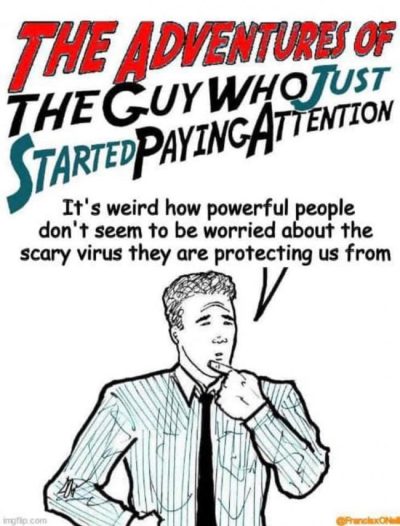
The sceptics aren’t just Daily Sceptic readers but a growing number of the public who are seeing that much of the media have not delivered a full, honest account in reporting the last two years of pandemic restrictions and enforced medical interventions. What I find interesting is that, in much of the media’s eagerness to see the downfall of Boris Johnson, everyone is getting to see a little more of the ‘bigger picture’ the media have, up until now, been trying to hide. How could those enforcing all those ridiculous mandates be indulging in so many parties and social mixing if Covid was such a deadly disease? Why were so many coerced into a trial vaccination programme for a disease that evidently poses so little threat to them?
How we have been deceived! Yet much of the media focus on the minor detail of whether a particular event was a party, what certain photos show, whether Boris Johnson actually knew he was attending a party, whether he should have received more fines etc. They want to know if there is enough evidence to show that the PM misled Parliament because convention dictates that, if that were the case, he should resign – the big news story. The news story for me is whether the Government misled the public, not Parliament.
The scandal that lies before us is one demonstrating how those in power, who determined the rules and directed the hardships of the last two years, are more concerned about themselves and whether they have misled their colleagues than us plebs. The deception has severely affected many of us, the younger generation in particular. There are now increased hospital waiting lists, deaths from delayed cancer diagnosis and treatment and rampant economic inflation – true wrongs that deserve more than a token fine. It is this mendacity and betrayal that have consequences and will continue, possibly for decades, to have grave ramifications from which some may never be able to ‘move on’.
Dr. Mark Shaw is a retired dentist.
The Scottish government is silencing Palestinians

By Yvonne Ridley | MEMO | May 24, 2022
Scotland’s First Minister Nicola Sturgeon is facing a backlash after a group of Palestinian academics criticised her decision to embrace the working definition of anti-Semitism prepared by the International Holocaust Remembrance Alliance because the definition clearly contradicts a hate crime review commissioned by her own government.
The Holyrood government took the decision to follow Westminster in its adoption of the controversial IHRA definition of anti-Semitism which includes, as an example, “Denying the Jewish people their right to self-determination, eg by claiming that the existence of a state of Israel is a racist endeavour.”
Now Sturgeon’s government is in the embarrassing position of embracing two conflicting reports which openly contradict each other. To add to her woes, international human rights groups as well as a UN rights expert recently declared Israel to be an “apartheid state”.
The contents of the IHRA definition clash with the findings of Lord Bracadale, who was appointed by Scottish Ministers in 2017 to lead the Independent Review of Hate Crime Legislation. A group of Palestinian academics has now confronted Sturgeon’s government over this clear contradiction.
A few days ago, an open letter was published in the Scottish media about the dilemma facing Palestinians living in Scotland who accuse the Holyrood government of effectively gagging them from talking about the ethnic cleansing of Palestine during and ever since the Nakba.
“As Palestinians in Scotland we feel the need to be able to tell our story of being driven from our homeland in a programme of ethnic cleansing that built the state of Israel on the destruction of our villages and towns,” wrote the 26 signatories, including Amina Abdel-Khaliq, Dr Nur Abdelkhaleq, Waseem Abu Aghlain and Dr Kholoud Ajarma. “The Scottish Government’s adoption of the problematic IHRA (International Holocaust Remembrance Alliance) definition of anti-Semitism limits that freedom by protecting the state of Israel from democratic critiques of its widely recognised apartheid structures.
“Responding in part to the question of the IHRA definition, Lord Bracadale’s 2018 Review of Hate Crime Legislation accepted the case put forward by Palestinians and others that legislation should not protect ‘political entities’ since that could lead to the ‘curtailment of freedom of expression and freedom of political debate’.”
In their letter, the signatories demand that the Scottish Government should act on the findings of Lord Bracadale’s hate crime review which it commissioned.
“The Palestinian community voice has been absent while the state that violates them has been armed and supported by our government and the entire UK political class,” commented the co-founder of the Scottish Palestine Solidarity Campaign, Mick Napier. “That Palestinian first-person voice is uniquely compelling in forcing acknowledgement of the blood-soaked record of Israel, its past and present record of violent ethnic cleansing that is concealed or justified by our politicians.”
Napier added the warning that, “The Scottish Government seems intent on burying Bracadale’s warning that the IHRA can muzzle free speech. It must not be allowed to do so.”
I’ve always believed that hate towards and the unfair treatment of Jews should be roundly condemned, opposed and met with zero tolerance. But to be frank, the IHRA definition, which seeks to conflate anti-Zionism with anti-Semitism, does not serve to protect Jews; it is all about protecting the rogue state of Israel and its zealous supporters.
Towards the end of last year, I wrote about 82-year-old Diana Neslen who faced expulsion from the Labour Party after she was accused of posting “anti-Semitic” views on social media. The problem for Labour leader Keir Starmer and his party, though, was that Diana is a Jew.
After three investigations by the party she became so fed up that she employed lawyers, who fired off a warning letter telling Labour officials that her anti-Zionist viewpoint is a protected philosophical belief under the Equality Act in the UK. Furthermore, the lawyers at Bindmans said that she herself had been “subjected by the party to discrimination and harassment related to her protected philosophical belief.”
Predictably, the Labour Party backed down although it has yet to apologise to Neslen or abandon complaints against other party members under similar investigations. Jewish Voice for Labour, of which Neslen is a member, says that at least 46 Jewish Labour Party members, two of whom have since died, have faced or are facing disciplinary charges relating to allegations of anti-Semitism.
“To say that we are insulting Jews is wrong,” Neslen told the Guardian in February. “We are acting in accord with what we regard as Jewish values and Jewish ethics, and I’m not going to change that.”
So it seems that for most Palestinians and many Jews, the IHRA was designed to protect Israel, its racist policies and its Zionist supporters. Meanwhile, Lord Bracadale’s report makes it crystal clear that criticism of Israel and its racist policies is entirely legitimate.
There can be no doubt that anti-Semitism is a crime, but equally there can be no doubt that fighting Zionism is a duty for anyone who opposes apartheid. It’s time for Sturgeon and her government to get off the fence, scrap their support for the IHRA definition of anti-Semitism and allow Scottish Palestinians to tell their stories without let or hindrance.
Dutch Activists File Collective Complaint With European Court Over EU Ban on RT, Sputnik
By Sofia Chegodaeva | Samizdat | May 25, 2022
In March, access to several Russian media outlets, including Sputnik and RT, was suspended in the EU as part of sanctions against Russia over its special military operation in Ukraine.
A group of Dutch activists has filed a collective complaint with the European Court of Justice in Luxembourg over the EU’s ban on Sputnik and RT, a representative of the Bits of Freedom human rights organisation, Rejo Zenger, said.
Earlier this week, the Dutch Association of Journalists released a statement saying that together with several other organisations, it plans to challenge the EU’s ban on Sputnik and RT.
According to Zenger, the decision to block Russian media was “political” and not reviewed by “independent judges”.
Broadcasting and distribution of content of the Sputnik news agency and RT TV channel was banned in the EU in early March as part of anti-Russian sanctions over Moscow’s special military operation in Ukraine.
Russian Foreign Minister Sergei Lavrov has repeatedly commented on such restrictions, saying that Moscow did not expect the West to impose sanctions on journalists, athletes, and cultural representatives. The head of the Human Rights Council under the President of the Russian Federation, Valery Fadeev, sent an appeal to the OSCE representative on freedom of the media, Teresa Ribeiro, asking her to take measures to comply with norms concerning freedom of the press due to the repression of Russian-language publications.
EU seeks to criminalize sanctions evasion
Samizdat | May 25, 2022
The European Commission has insisted that breaching EU sanctions must be made a crime and that it was especially important to ensure strict adherence to the restrictions against Russia amid the Ukraine conflict.
“The European Commission is proposing to add the violation of EU restrictive measures to the list of EU crimes,” the bloc’s executive body said in a press release on Wednesday.
Such a step taken at the level of the EU should make it easier to investigate, prosecute and punish the violation of sanctions in all 27 members states, it pointed out.
The commission has singled out some of the potential criminal offenses, such as activities that seek to circumvent sanctions, including concealing assets, failing to freeze funds subject to restriction, and engaging in prohibited trade, such as importing or exporting goods covered by trade bans.
Brussels also put forward new, more stringent rules on asset recovery and confiscation, which should also contribute to compliance with the EU’s measures “to ensure that crime does not pay by depriving criminals of their ill-gotten gains and limiting their capacity to commit further crimes.”
According to the initiative, once such behavior is criminalized violating sanctions could also become grounds for the seizure of assets.
“EU sanctions must be respected and those trying to go around them punished… As a Union we stand up for our values and we must make those who keep Putin’s war machine running pay the price,” said Vera Jourova, the commissioner for values and transparency.
The commission added that it will present a legislative proposal after all of the member states agree on its current initiatives.
Russian became the most sanctioned country in the world after the EU, US and other nations imposed several rounds of harsh restrictions in response to its military offensive in Ukraine.
Among other measures, the foreign assets of Russia’s central bank were frozen, and a wide array of foreign businesses stopped dealing with the country.
The EU is currently discussing a sixth package of sanctions, which could include turning away from Russian oil. However, this faces opposition from some members, particularly Hungary, which compared the proposed curbs to “an atomic bomb.”
WEF back, learned nothing
By Alexander Adams | Bournbrook | May 24, 2022
The World Economic Forum (WEF) is back. After two years away, the elites reconvened in Davos, Switzerland, to resume plotting. Not, of course, that they would put it that way.
Open Forum Davos 2022 began on 23 May and runs until 26 May. It is a conference designed to increase international participation, “at a crucial turning point in history”. Every WEF statement reads part messianic prophecy, part threat, part vacant corporate babble. This year’s Open Forum promotion is no different.
Hand-picked stooges will promote WEF talking points and push pre-set agendas. There is no possibility of someone taking to the stage and suggesting more democratic accountability, nation independence and vitality through ideological diversity. “The activists will articulate how to turn words into action to fight the climate crisis. Gender equality will also feature prominently in the conversations.” The WEF knows that its multi-million-dollar programme of supporting environmentalist, gender-activist and pro-migrant groups will be amplified by globalist-friendly mass media outlets and clueless politicians in search of “relevance” and photo ops. The forum stresses youthfulness, promoting speakers such as “26-year-old Vanessa Nakate, author and climate advocate” and “Ievgeniia Bodnya, 27, who mobilized the Global Shaper Hub she leads in Kyiv to build the Support Ukraine Now”. Young, passionate women make perfect spokespersons. After all, should anyone male or older than them criticise their ideas, the opponents can be dismissed as relics of a failed era, ones who refuse to accept the coming wave of eco-awareness and migration justice.
The hypocrisy of the WEF is blatantly apparent in its support for Ukraine. It might seem to you paradoxical that a supra-national body which is dedicated to reducing the independence of nations has suddenly discovered its passionate commitment to the integrity of national borders, but WEF see no contradiction. The WEF writes:
“The Russian invasion into Ukraine was a tipping point for world security, the international economy and our global energy architecture. It is not possible to narrow down a war like this to one region while we live in a globalized world. We cannot keep radiation in one country’s geographical borders, or eliminate one country from the fragility of supply chains. This new type of hybrid war including its grave humanitarian crisis, the cyber attacks and economic hardships as well as disinformation and propaganda campaigns, geopolitical tensions about energy supply plus the threat of a nuclear war will have far-reaching effects.”
Every crisis is an opportunity for globalists to tighten their grip on control. Like the World Health Organisation, the WEF is committed to a totalising world view, so every problem will be solved by more globalisation, more migration, more universal regulation, more destruction of tradition. Like all totalising systems, its adherents use every circumstance as evidence of the system’s correctness; to succeed it simply needs more data, more co-ordination and better implementation of policies.
Open Forum Davos will include a panel on the mental health of young people. This is a savage irony, since it was WEF-trained national premiers (such as Justin Trudeau and Jacinda Ardern) who instituted the most draconian lockdowns and fear-propaganda campaigns that drove young people to despair. The WEF seeds its globalist totalising agenda through a Young Global Leaders programme.
In other words, the WEF has learned nothing from the last two years. The growing consensus that COVID lockdowns caused more suffering, disruption and inflation than targeted approaches to healthcare would have, suggests that unified global action made matters worse. If anything, the COVID-pandemic overreaction and reliance on international systems of food and energy supply have shown that independence, self-sufficiency and self-determination are vital for a resilient response to difficulties. Yet the WEF exists to advance the technocratic and scientism worldviews. Or perhaps we could call those worldviews temperaments, as they seem more rooted in emotion and moral psychology than any form of rationalism.
WEF doubles down, realises it was right all along.
Featured Video
Dan Dicks with James Corbett on Solutions Watch
or go to
Aletho News Archives – Video-Images
From the Archives
$1.5bn up in smoke: US THAAD missile stockpile dries up defending Israel against Iran
By Ivan Kesic | Press TV | July 2, 2025
According to American media, defense news outlets, and independent analysts, the 12-day Israeli military aggression against Iran significantly depleted the US stockpile of THAAD (Terminal High Altitude Area Defense) interceptor missiles.
Citing official sources, American magazine Newsweek reported on Friday that the US transferred a substantial portion of its advanced missile defense capabilities to support the Israeli regime, an effort with questionable results and a critical impact on US strategic reserves.
THAAD, developed by Lockheed Martin arms manufacturing company, is a key component of Israel’s multi-layered air defense architecture. It is designed to intercept medium-range ballistic missiles, including those launched from Iran and Yemen.
The US-made system is capable of targeting short-, medium-, and intermediate-range ballistic missiles during their terminal phase, whether inside or outside Earth’s atmosphere.
THAAD uses a “hit-to-kill” method, relying on kinetic energy rather than explosive warheads to destroy incoming threats, intercepting at altitudes of up to 150 km and ranges between 150-200 km.
Operated exclusively by American personnel, the US military maintains eight THAAD batteries with an estimated 350–400 interceptors in total. The eighth battery was activated during the June 20 Israeli aggression against Iran and is capable of intercepting hypersonic missiles. … continue
Blog Roll
 Aletho News
- Zionist Bought Senate Blocks Information About American Citizens Killed By Israel
- While Gaza dominates the UN, these are the people keeping it alive
- New Report: “Scholasticide and Genocide in Gaza: Assessment, Testimonies and Legal Analysis”
- ‘THAAD Delusion’: Iran war exposes US missile shield limits – The Atlantic
- Moscow issues warning to NATO over Russian exclave
- Yes, the Iran war has destroyed Trump’s presidency
- The fallacy of US delusions about Iran’s economic collapse
- Hezbollah denies Syria cell link, warns of Israeli plan to sow discord
- The legacy of US sanctions, war, and occupation in Iraq
- Iraqi resistance group rejects disarmament, vows to maintain support for Lebanon
- If Americans Knew
- Mamdani releases plan to combat antisemitism and hate crimes in New York City
- Iran’s Revolutionary Guards Publish Letter to the American People
- DMFI launches $1 million ad campaign supporting Virginia’s Elaine Luria
- US Senate blocks resolution seeking report on Americans killed by Israel
- Israeli Attacks Kill Ten Palestinians in Gaza
- Massacre at Minab: The School That Became a Grave
- Israeli media: The IDF Shows It Doesn’t Turn a Blind Eye; It Actively Emboldens Settler Havoc
- As settlers ravage West Bank, Israeli forces kill 10 in Gaza – Daily Update
- New Report: “Scholasticide and Genocide in Gaza: Assessment, Testimonies and Legal Analysis”
- Ex-Biden officials are desperate for a Gaza scapegoat
- No Tricks Zone
- Green Energy Debacle: German Expert Professor Fritz Vahrenholt Warns Of Severe Economic And Social Consequences
- Two More Paleo Reconstructions Affirm Meters-Higher Sea Levels Across Ireland, Brazil 7000-6000 Years Ago
- New Study: Earth And Venus Surface Warmth Largely Explained By Convection And Lapse Rate, Not CO2 Or Radiation
- 2025 Nature Paper Claiming Worsening Global Drought Gets RETRACTED …Heavily Flawed
- New Study: ‘Global Drought Shows No Detectable Recent Acceleration Under Climate Warming’
- Economic Masterminds: German Socialists Suggest Taxing Productivity Gains Stemming From Using AI
- The South China Sea Has Not Been Cooperating With The Climate Change Narrative
- Energy Crisis: Germany Enters Heating Season With Historically Low Gas Reserve Fill Levels
- New Study: The Antarctic Ice Sheet Gained Mass From 2020-2024 Due To Staggering Snow And Ice Accumulation
- Study: Ocean Heating Rates From Thousands Of Years Ago ‘Dwarf’ Modern Ocean Heating Rates

