Chinese Media Reveals Why Russia Unlikely to Have Leaked Sensitive Ukraine Docs
By Ilya Tsukanov – Sputnik – 10.04.2023
The FBI and the Pentagon have kicked off investigations after the leak of a damning US intelligence assessment on the Ukrainian conflict. US officials and media immediately blamed Russia, while Kiev characterized the leak as “Russian propaganda.” The Kremlin said the docs show the dramatic extent to which NATO is entrenched in the conflict.
Russia is not likely to be behind the leak of the top secret US intelligence assessment of the situation in Ukraine, since it would prefer to keep the information under wraps and use it to its advantage, a major Chinese outlet speculates.
“If Russia has obtained these classified documents, it would not post them online, because this will make Russia lose the source or sources that had provided these documents,” an anonymous Chinese international security and intelligence expert told the Global Times. “The leak is unlikely caused by Russian intelligence agencies, because this does not make sense,” the expert said.
The source argued that there was “no reason for Russia to let its enemies know that it has obtained this intelligence, because this will also make its enemies change plans, making the hard-won military intelligence useless.”
Instead, GT noted, the leak goes to show to the world the “disunity, distrust and divergences” between the US, its allies and Kiev, and to demonstrate that Washington “is the biggest obstacle for the international community to promote a ceasefire and peace talks” to ending the Ukrainian crisis.
The documents demonstrate the precarious state of the Ukrainian military, and will both demoralize the Ukrainian military and reduce Western countries’ confidence in supporting Kiev against Russia, whether or not they are genuine, the Chinese newspaper suggested.
Whodunit?
US and Ukrainian officials immediately blamed Russian intelligence for the leak of the classified documents, and suggested that the assessment seems to combine a “statistical analysis of supplies, possible operational and tactical plans, as well as a large volume of fictitious information.”
The documents serve to confirm Russia’s public assessment on the state of the Ukrainian conflict, showing that Ukrainian air defenses have been depleted by months of strikes, and that Ukrainian casualties are over four times higher than those of the Russian side (contrasting sharply with public estimates by the Pentagon and the Ukrainian military of six-figure Russian losses).
The Pentagon’s reported efforts to scrub the documents from the internet were met with trolling by Twitter CEO Elon Musk, who sarcastically quipped that it was “totally” possible to “delete things from the internet,” and that doing so definitely wouldn’t “draw attention to whatever you were trying to hide.”
Kremlin spokesman Dmitry Peskov called the leaks “quite interesting,” and said it was not surprising that Moscow has been blamed. “You and I know that there is a tendency to always blame everything on Russia. It is, in general, a disease,” the spokesman told reporters Monday.
Commentators speaking to Sputnik expressed a healthy measure of a skepticism over the documents’ authenticity, saying that although they serve to confirm Russia’s internal assessments on the state of the Ukrainian military, they provide Moscow “no benefit” as far as the strategic situation is concerned. Others pointed out that it would be highly unlikely for the documents to be published in legacy media outlets without the approval of the national security state.
British ex-soldier turned journalist charged with spying in Afghanistan
The Cradle | April 9, 2023
The Afghan government detained three British nationals under suspicion of spying for their country; one of those accused was a former soldier stationed in Afghanistan, now supposedly working as a journalist, according to TOLOnews.
According to a source cited by the news site, the former soldier was stationed in the southern province of Helmand, a deeply contested area of Afghanistan, during the occupation.
“If they come here illegally, or violated the laws of Afghanistan or worked as spies for other countries, it is considered a crime, and any country has the right to detain such foreign nationals and introduce them to the relevant organizations,” said Sarwar Niazai, a military analyst.
The former soldier Kevin Cornwell and another British national were detained by the Taliban-led government on 11 January 2023, both supposedly carrying illegal firearms. A total of three UK citizens are currently detained in Afghanistan.
Toryalai Zazai, a Taliban combat veteran, told the Afghan news channel that “the country should be rescued from the spies, the country should be rescued from the intelligence circles. The Islamic Emirate should not allow these invader countries to send their intelligence representatives to our country.”
Meanwhile, UK Home Secretary Suella Braverman said, “If there are British citizens abroad, then the UK government is going to do whatever it takes to ensure that they are safe,” in response to the arrests.
Journalists around the world face increasing endangerment as the profession has become intertwined with foreign intelligence services to carry out their work.
Operation Mockingbird is perhaps the most well-known activity undertaken by the CIA during the cold war to manipulate news organizations to shape the coverage of events.
In addition, the CIA program aimed to collect intelligence via journalists by either infiltrating news organizations or bribing individuals.
Carl Bernstein unveiled the secret operation by the CIA in 1977, uncovering the depth of the program, which included the recruitment of journalists in various institutions around the world.
Following the damning revelations, the CIA admitted to having recruited at least 400 Journalists and 25 organizations worldwide.
“To this day, the CIA still attempts to monitor and manipulate public opinion through this despicable practice. The so-called truth that underpins a news story, from the perspective of the U.S. government, is not worth mentioning at all, with news media just being used as a tool to safeguard the country’s hegemony in the world,” writes the People’s Daily Online.
Meanwhile, a Russian court charged Wall Street Journal reporter Evan Gershkovich with espionage on 7 April.
Gershkovich, who denied the charges, said he only maintained journalistic activities in Russia and did not work as a spy for a foreign intelligence service.
The White House commented on the situation, saying it will “do everything we can” to ensure his release.
Evan is not a spy; Evan has never been a spy,” White House press secretary Karine Jean-Pierre said on Tuesday.
Chad Expelled The German Ambassador A Month After The US Claimed Russia Was Meddling
By Andrew Korybko | April 9, 2023
Chad’s expulsion of the German Ambassador for his “impolite attitude and the non-respect of diplomatic customs”, which reports suggested was a euphemism for his meddling in its internal affairs, wasn’t what the US expected when it reportedly passed along intelligence about Russia in late February. The Wall Street Journal wrote at the time that American officials informed their Chadian counterparts about Moscow’s alleged plots to arm anti-government rebels and even assassinate the president.
There were reasons to be skeptical of this at the time, not least because the Russian Embassy in N’Djamena warned in January about Western efforts to divide these two states, especially after Moscow shared its expectation that the Chadian President will attend summer’s second Russia-Africa Summit. To be sure, bilateral relations have come a long way since their low point in September 2021 when the Chadian Foreign Minister claimed that Wagner posed a threat to his country’s interests.
Its presence in the neighboring countries of the Central African Republic (CAR) and Libya was allegedly being exploited to arm anti-government rebels, according to him, hence why US spies probably thought that Chad would fall for a remixed version of this narrative. His words led to the conclusion that “Chad Wants To Lead The Charge Against Russia’s Inroads In Françafrique” for several self-interested reasons, not least of which was to ensure Paris’ continued support for the authorities amidst rising discontent.
Everything radically changed in Africa over the last 18 months since then, however. France’s “sphere of influence” in the Central and Western parts of the continent has been shattered as a result of Russia’s successful “Democratic Security” policies in the CAR and Mali, with Paris now needing N’Djamena much more than the inverse. Furthermore, not a single African country complied with the West’s demands to sanction Moscow for its special operation in Ukraine, thus exposing the limits of its influence nowadays.
These interconnected developments contributed to changing Chad’s perceptions of Russia’s rising role in Africa, hence the possibility of its president attending summer’s second Russia-Africa Summit. It also accounts for why this country didn’t fall for the US’ claims that Moscow is meddling in its affairs, instead choosing to expel the German Ambassador a little over a month later instead of the Russian one like Washington likely expected would happen after sharing its so-called “intelligence”.
To be clear, there’s still a chance that some influential forces in Chad could do the geopolitical bidding of their country’s traditional French patron by lobbying for decisionmakers to authorize an anti-Russian provocation of some sort, but it’s important to point out that this hasn’t yet happened. The preceding observation extends credence to the conclusion that Chad’s perceptions of Russia are changing for the better, so much so that it didn’t fall for the US’ latest attempt to divide-and-rule them.
This is admittedly impressive since Chad is a bastion of French influence in Africa, but as was earlier written, it’s nowadays the case that France needs Chad more than the inverse after Paris’ “sphere of influence” in the Central and Western parts of the continent was shattered over the last 18 months. N’Djamena can now at least in theory consider demanding more aid and other sorts of benefits from France in exchange for continuing to host its forces without having to do its regional bidding like before.
Chadian officials can also more confidently confront the West since the scenario of the latter initiating any serious deterioration in their ties is no longer all that troubling because their country could just shift towards Russia in that event like the CAR, Mali, and a growing number of others are presently doing. In fact, this pivot could be held above their heads as a Damocles’ sword for squeezing more benefits from that de facto New Cold War bloc, which fears the consequences of pushing Chad into Russia’s arms.
Expelling an ambassador is a major move, however, let alone a traditionally Western-aligned African country doing this to one who represents the EU’s de facto leader. For that reason, this development probably wasn’t the result of a failed effort by Chad to get more money from Germany. Rather, it’s most likely the case that reports about that official’s meddling in his host state’s internal affairs are accurate, hence why N’Djamena took this unprecedented step.
The authorities want to avoid a repeat of last October’s deadly unrest that was officially driven by discontent over them delaying their country’s democratic transition but was exploited by certain forces to carry out a spree of violence across the capital. The West specializes in organizing Color Revolutions so it might have been the case that the recently expelled German Ambassador was trying to initiate another round of similar unrest to pressure the Chadian President against possibly visiting Russia in July.
His attendance at the second Russia-Africa Summit would be a coup de grace for Moscow by proving that its pragmatic engagement with the continent has succeeded in turning the leaders of traditionally Western-aligned countries like Chad into important partners who refuse to do third parties’ bidding. It would be Russia’s top diplomatic victory over the West since NATO began waging its proxy war in Ukraine to have him and other such leaders all meet with President Putin in the latter’s hometown.
Moscow has no reason to meddle in any of these countries’ affairs and thus risk spoiling this opportunity, especially not with Chad, which previously positioned itself as France’s vanguard force for pushing back against Russia all across Paris’ “sphere of influence”. The West, however, has every reason to meddle via disinformation disguised as “intelligence” and the cultivation of Color Revolution pressure in a desperate attempt to preemptively avert its rival’s impending diplomatic victory.
That’s why it was ultimately the German Ambassador that was expelled from Chad and not the Russian one despite the US claiming a little over a month ago that Moscow was plotting to kill its president. He didn’t extend credence to those reports otherwise Russia’s representative would have already been kicked out of the country. By ordering the German Ambassador’s expulsion, however, Chad just signaled that it now fears that its traditional Western partners are the ones who are truly conspiring against it.
FBI targeting Russians on Facebook
RT | April 9, 2023
The FBI has launched a social media campaign seeking to convince Russian nationals to provide sensitive information about the activities of their home country’s authorities, Fox News reported on Friday. The ad, which was first posted in February, was said to have been appearing on Twitter, Facebook and Google.
“Do you want to change your future?” Alan Kohler, Assistant Director of the FBI’s Counterintelligence Division, says in the video shared online. “The FBI values you. The FBI can help you. But only you have the power to take the first step.”
Fox News cited a source as saying that, although the Bureau has run ads targeting Russians in the past, this year it decided that “a video was more effective.”
The FBI’s website encourages Russians willing to offer information to visit the bureau’s main office in Washington, DC, to call the FBI hotline, or to send a message online.
The US stepped up efforts to recruit informants in recent years as Moscow and Washington have been locked in a diplomatic row over Ukraine. In 2019, the Bureau posted a series of ads on Facebook, urging Russians to come forward, although this message, written in Russian, contained typos.
In 2020, the FBI’s online campaign aimed at potential Russian informants included images of popular Soviet actor and singer Vladimir Vysotsky, known for portraying a police detective on screen. The CIA, meanwhile, has been publishing job postings for people who speak Russian.
Journalists Should Be Mad At Evan Gershkovich For Exploiting His Profession To Spy On Russia
By Andrew Korybko | April 9, 2023
Western journalists are furious at Russia for arresting their colleague from the Wall Street Journal, Evan Gershkovich, on charges of espionage. They’re now wildly fearmongering that all journalists in that country are at risk of being arrested on that pretext after he became the first one to experience this since the dissolution of the USSR. In reality, “Russia Had Every Right To Arrest That Wall Street Journal Employee For Espionage”, and journalists should therefore be mad at Gershkovich and not the Kremlin.
What he did violated the top principle of his profession, which isn’t supposed to ever be exploited for espionage since doing so could place genuine journalists at risk if the spied-upon government or others overreact to this by arbitrarily detaining others on that pretext. Russia has no intention to do this since those journalists who remain faithful to their profession’s top principle don’t pose a security threat, unlike Gershkovich, who tried to obtain secret information about its military-industrial capabilities.
That said, it can’t be taken for granted that other countries might not harass journalists on this pretext, whether those working for the Wall Street Journal or other Western outlets. The US crossed the unspoken red line related to exploiting this profession for espionage, which can be concluded with a very high degree of confidence since Russia wouldn’t have arrested Gershkovich if it didn’t have irrefutable proof of his crimes.
The Kremlin knew very well what sort of information warfare narratives would follow its first arrest of a journalist since the Old Cold War, but it took this step in order to defend its legitimate national security interests and expose the US’ dirty game that was just explained. It’s with this in mind that Western journalists should be furious at Gershkovich for agreeing to this intelligence assignment, since he could simply have refused it.
By spying on Russia under the cover of journalism, he betrayed his profession’s top principle and put his colleagues at risk all across the world. He doesn’t deserve any of their sympathy, but some of those rallying around him have ulterior motives and aren’t just misled by fake news about the reason for his arrest. These figures might also be operating as spies under the cover of journalism, hence their interest in lying that it’s impossible for anyone in their profession to ever carry out such crimes.
Genuine journalists should remember that Russia wouldn’t have taken this step with the expectation of all the weaponized information warfare narratives that would follow if it didn’t have irrefutable proof that Gershkovich was exploiting his profession for espionage. He and his handlers are the ones who deserve everyone’s ire, not Russia for defending its legitimate national security interests. Gershkovich put journalists at risk all across the world, which he should be condemned for, not shown sympathy.
‘Awfully Convenient’: Leaked NATO Plans for Ukraine Should Be Taken ‘With Grain of Salt’
Sputnik | April 8, 2023
While the sudden leak of numerous classified US documents related to the ongoing conflict in Ukraine reportedly prompted the Pentagon to launch an investigation into the matter, the way the “revelation” was covered by the media makes it look somewhat suspect.
Classified documents that purportedly outline US and NATO plans for the Ukrainian military were leaked to the public this week, and if US media is to be believed, the Pentagon has already rushed to investigate this apparent breach of security.
During an interview with Sputnik, international relations and security analyst Mark Sleboda pointed out that the story was broken by the New York Times. According to him, given that US officials are now claiming that part of the story is true and part of it is not, it begets the question: “why was it leaked and what did they want us to believe?”
The leak, Sleboda suggested, likely comes “from the American side or someone within the American side,” with the analyst noting that some of the leaked papers “confirm information that we really already knew,” such as the data about the newly-formed Ukrainian brigades. He suggests taking the leaked information “with a grain of salt.”
Regarding the rationale behind the sharing of the leaked information on social media, Sleboda argued that “a lot of it maybe [was] buttressing the public knowledge of US support for the offensive that is about to be launched.”
“We know that NATO considers it their last-ditch effort, they do not have the ability to continue to sustain the Kiev regime in terms of ammunition, artillery shells, other gear, and for them this is all or nothing,” he mused. “So they’re expecting success out of this and they do not appear to have a plan B in that regard. Plan B might default the Plan D, which is NATO troops enter Western Ukraine or some NATO member-states enter West Ukraine, say Poland and the US, possibly Romania.”
He also observed that the leaked information does not include any specific battle plans, “which seems awfully convenient.”
For more in-depth analysis, check out the latest episode of Sputnik’s podcast Fault Lines.
The Great ‘Disinformation’ Hoax
BY WILL JONES | THE DAILY SCEPTIC | APRIL 7, 2023
Writer Jacob Siegel has talked to UnHerd‘s Freddie Sayers about America’s new censorship complex. In a 13,000 word essay for Tablet, Siegel explains how ‘disinformation’ is an invention that has morphed into a tool of governance. He told Sayers:
Disinformation is a means by which the Government in cooperation with private tech companies and civil society, NGO groups, censors, uses extra-legal means to censor political discourse around issues like Covid vaccinations, lockdowns, the elections. And in the U.S., it’s a free-for-all. It’s a blank cheque to censor anything. So on one level, disinformation is ostensibly censorship in order to protect national security. In a larger sense, that machinery of censorship is not opportunistically looking to erase certain things from the public record that are unflattering to political elites. It’s actually rather more than that. It is a means of governance. It is a system of power. It is its own system of power, outside of the formal, official — in the U.S., constitutional — means by which the Government is supposed to operate.
How did this ‘tool of governance’ become so mainstream, asks Sayers? The U.S. Government, Siegel points out, has long engaged in promoting disinformation of its own, but the ‘war on disinformation’ was begun by Barack Obama. One of the last things the former President did while in office was sign into law the ‘Countering Foreign Disinformation Act’, which fully committed the U.S. to a counter-disinformation campaign, which according to Siegel “was really always in spirit, and very quickly in practice as well, an information war directed against the American people”.
Siegel continues:
There was originally this foreign dimension… But from the very beginning, ‘foreign’ is a kind of ruse that’s setting up what is actually a much larger, effectively omni-directional structure, because the internet is global, that can censor anywhere but which is, in practice, focused on the domestic political environment inside the U.S. and specifically on this populist surge, which is taken as an existential threat by the ruling party officials in the U.S. who see populism in truly apocalyptic terms.
Siegel argues that the consequences of this censorship for American society should not to be minimised:
The system of secrecy and the Government’s own promotion of conspiracies, like the idea that Donald Trump was an agent of Vladimir Putin or a Russian stooge, which the U.S. intelligence agencies promoted. It’s not simply that they are wrong or pernicious, or that this reflects corruption. They actually drive people crazy. They deranged the political system. They ruin the ability for people to engage sanely and transparently in their own politics.
Worth reading (and watching) in full.
DHS is sued for censorship records on meetings with Big Tech
By Didi Rankovic | Reclaim The Net | April 6, 2023
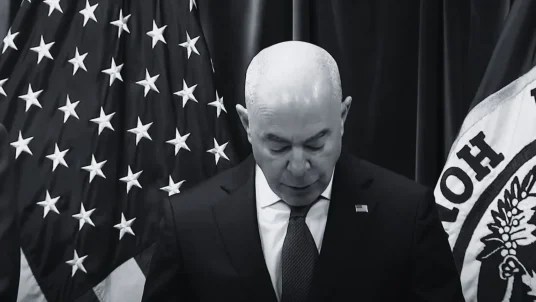
Judicial Watch has decided to sue the US Department of Homeland Security (DHS) after the federal agency failed to respond to a Freedom of Information Act (FOIA) request for records related to meetings with Big Tech representatives where censorship was allegedly discussed.
The lawsuit, filed in the US District Court for the District of Columbia, seeks to force the DHS to disclose documents detailing how its Cybersecurity and Information Security Agency (CISA) worked with companies behind social media platforms in order to censor speech.
We obtained a copy of the complaint for you here.
The initial FOIA request dates back to December of last year, and the advocacy group said that it wanted to gain access to records and communications of CISA Director Jen Easterly, a former CISA director, Christopher Krebs, former CISA Senior Cybersecurity Advisor Matt Masterson, and CISA Senior Cybersecurity Advisor Brian Scully.
These documents concern meetings that CISA either hosted or facilitated with Meta and Facebook, Twitter, Wikimedia Foundation, Pinterest, and Microsoft’s LinkedIn on the topic of “election security.”
Furthermore, Judicial Watch wanted information about several other meetings, including those with DHS Office of Intelligence and Analysis, FBI, US Secret Service, NSA, and the Office of the Director for National Intelligence employees, related to the previously mentioned meetings, and those with Election Infrastructure Subsector Government Coordinating Council.
The Judicial Watch press release refers to the Twitter Files where journalist Matt Taibbi on several occasions mentions CISA’s involvement in censorship activities, and cites these and the dates when the contacts or communication occurred.
The group also refers to Twitter Files revelations regarding the FBI’s role in censorship decisions, notably the pressure it exerted on the site to act in this way, and Taibbi’s testimony before Congress about the collusion between the Biden administration – including the Democratic National Committee and federal, state, and local law enforcement – and Big Tech, with the goal of suppressing legitimate information.
Judicial Watch President Tom Fitton described all this, and more that is mentioned in the statement, as “an unholy conspiracy in the Biden administration to censor Americans in collusion with Big Tech.”
As for the lawsuit, Fitton said it “shows the censorship abuse is furthered by unlawful secrecy and cover-ups.”
Featured Video

Trita Parsi: Middle East Unraveling — Are We on the Path to World War?
or go to
Aletho News Archives – Video-Images
New Book
Trans agenda is ‘normalization of sadism’ – US author

RT | September 23, 2026
The US Democratic Party has embraced a transgender agenda that amounts to “the normalization of sadism,” author A.J. Rice has said, warning that radical trans policies would return if the party is allowed to regain power.
Speaking to RT’s America First host Scotty Nell Hughes about his new book, ‘The Curse of the Bearded Lady: How the Trans Mafia Whacked American Sanity’, Rice argued that activists have gained significant influence in schools, medicine, and corporate America while people who questioned the agenda have faced pressure to stay silent.
The author described the “trans mafia” as the sprawling network of people and institutions that have helped the movement gain influence. He singled out parts of academia, wealthy backers, and corporations, and stated that providers of transition-related treatment also have a financial incentive to keep young people in their care indefinitely.
Rice argued that the consequences of these policies ultimately fall on children who are being drawn toward gender-affirming medical treatments and on girls who are expected to share locker rooms or compete in sports with biological males.
He noted that while voters rejected the Democrats’ approach to gender in 2024, the party, which has been “captured by madness,” has since only doubled down and is seeking what is effectively “the normalization of sadism.” … Full report
Blog Roll
 Aletho News
- ‘We don’t seek permission to defend our country’: Snippets from President Pezeshkian’s UNGA address
- NATO chief wants Europeans to fight American wars [for Israel]
- German chemicals giant reveals details of downsizing
- Refaat Al-Areer Was The Canary In The Coal Mine In Israel’s War On The Truth
- Israeli election committee bars candidate from Knesset race over Gaza war opposition
- French-Lebanese man files war crimes complaint over Israeli attacks
- Mahan Air Flight Lands in China Despite US Threat against Iranian Airlines
- US eyes $10bn fund to rebuild war-battered Gulf infrastructure
- Trump meets Rodríguez near Maduro’s prison as Venezuela’s oil flows to US
- Trita Parsi: Middle East Unraveling — Are We on the Path to World War?
- If Americans Knew
- An error has occurred; the feed is probably down. Try again later.
- No Tricks Zone
- New Study: Earth And Venus Surface Warmth Largely Explained By Convection And Lapse Rate, Not CO2 Or Radiation
- 2025 Nature Paper Claiming Worsening Global Drought Gets RETRACTED …Heavily Flawed
- New Study: ‘Global Drought Shows No Detectable Recent Acceleration Under Climate Warming’
- Economic Masterminds: German Socialists Suggest Taxing Productivity Gains Stemming From Using AI
- The South China Sea Has Not Been Cooperating With The Climate Change Narrative
- Energy Crisis: Germany Enters Heating Season With Historically Low Gas Reserve Fill Levels
- New Study: The Antarctic Ice Sheet Gained Mass From 2020-2024 Due To Staggering Snow And Ice Accumulation
- Study: Ocean Heating Rates From Thousands Of Years Ago ‘Dwarf’ Modern Ocean Heating Rates
- Climate Extremists Target, Attack Large-Scale Power Grid Infrastructure In Germany!
- New Study: Antarctic Ice Melt Has Contributed Less Than 1 Centimeter To Sea Level Rise In The Last 30 Years

