The Thunberg fallacies
By David Wojick | CFACT | January 25, 2020
Ever since she splashed into view I have wondered about Greta Thunberg’s reasoning. Her quoted statements, blasting the world for not doing the impossible, have given no clue where she is coming from.
Now, thanks to some detailed published statements of hers, from the World Economic Forum in Davos, I have my answer. It turns out she is hotly embracing not one, but two, howling fallacies. No wonder she sounds nuts.
To begin with, she cites the IPCC report on climate change from 2018, which claims we have only a few years left to act if there’s a 67% chance of keeping the global temperature rise from now to below 0.5 degrees C. (She, like everyone else, talks about a rise of 1.5 degrees, but the IPCC says that 1.0 degrees has already happened, which she knows.) If she said a half a degree people might laugh.
She says this is “not an opinion”, that it is THE science. Which is the first fallacy. What the IPCC writes is of course just an opinion and a highly contested one at that. It is nothing but model-based speculation, which is contradicted by real evidence.
But hey, lots of alarmists buy the IPCC stuff and they are not yelling that our planetary house is on fire. Getting to that point is Thunberg’s second, and far bigger, fallacy. She has decided that another half degree of global warming is the threshold to catastrophe.
Mind you she gives no actual reasons here. It appears to be a pure leap of faith. She mentions in passing some apparently dreadful things like tipping points and unknown feedbacks, but nothing specific. The IPCC certainly does not suggest any such hidden cataclysmic triggers.
She even says, “Either we prevent temperatures from rising above 1.5 degrees (Celsius), or we don’t. Either we avoid chain reaction of unravelling ecosystems, or we don’t.” It sounds like one follows from the other but it doesn’t.
This is the first I have heard of a chain reaction of unraveling ecosystems, especially one triggered by tiny warming (just half of what we supposedly have already seen.) I am sure the IPCC has never mentioned this demon or we would all have heard of it.
So there it is. She starts with the questionable IPCC and then simply leaps into the abyss but she calls it, “THE science”. There is no science here. In fact, there is no reasoning that I can see. In logic this is called argument by assertion.
The IPCC report merely addressed the relatively mundane question “What is the difference between 1.5 degrees of total warming (0.5 to come) and 2.0 degrees?” This question arises because the Paris Accord includes both targets. It says we want to hit 2.0 but get below it toward 1.5 if possible. In no case is 1.5 a target.
Given that 2.0 is the basic target, it is perfectly clear that 1.5 is not the threshold to catastrophe. In fact the report says that while holding to 1.5 is better, the difference is small. This is why the UN has not proposed dropping the 2.0 degree target. All of which contradicts Greta Thunberg’s claims. The report she cites simply does not support her outlandish position. No wonder the CLINTEL people say there is NO emergency.
To recap, there are two fallacies in her reasoning. Let’s call them the IPCC fallacy and the Thunberg fallacy. The IPCC fallacy is thinking that humans control global temperature. The Thunberg fallacy is thinking that a mere half degree of future warming is the threshold to catastrophe, to the point of threatening human existence. Unfortunately her followers have embraced her delusion.
The IPCC fallacy is well established and widespread, including among many scientists. It is the basis for the Paris Accord. It is moderate in its way. The Thunberg fallacy is new and nuts. In fact it is tearing the alarmist community apart, which is fine by me. Although like all forms of madness, the Thunberg fallacy bears watching, lest it get out if control.
Greta Thunberg and her followers are calling for rapidly rebuilding the global energy system, while also completely restructuring the world’s economic, social and political systems. All this turmoil in the name of limiting future global warming to one half a degree. It does not get any crazier than that.
We have legal age limits for driving, voting, and having sex, why not for transgender treatment?
By Tomasz Pierscionek | RT | January 23, 2020
Vulnerable children and adolescents are being influenced by PC culture that elevates rights over responsibilities, teaches children there are over 100 genders, and where a fear of offending others trumps common sense.
Western democracies preach tolerance and require its citizens to accept progressive ideas; the more unconventional the better. A particular idea or course of action may even go against common sense and lead to harm, yet an overriding fear of causing offence or being labelled a [insert blank]-phobe thwarts open discussion about important issues.
There are, however, those who speak out and remind us to think carefully about embarking down a slippery slope from which it is difficult to return.
Susan Evans, a mental health professional and former employee of the UK’s only Gender Identity Development Service (GIDS), is asking the High Court to undertake a judicial review and raise the age at which individuals can consent to receiving puberty blockers and cross-sex hormones to 18. Ms Evans is joined by the parent of a 15-year-old adolescent on the GIDS waiting list.
Although individuals in the UK cannot undergo gender reassignment surgery until the age of 18, children and teenagers suffering from gender dysphoria (uncomfortable feelings brought on by a person’s gender identify differing from their birth sex) may receive medications to slow the onset of puberty and thus delay development of physical characteristics associated with their undesired sex. Later, from the age of 16, either testosterone or oestrogen (cross-sex hormones) are given to help an individual’s physical characteristics better align with those of their preferred gender identity.
Evans wants to raise the age of consent for children with gender identity issues receiving puberty blockers and other cross-sex hormones on the basis that under 18s are unable to provide informed consent for potentially life changing procedures. The former nurse expressed concerns that children, some aged as young as nine, are too hastily prescribed puberty blockers, reportedly the first step on the path towards gender reassignment.
Evans commented: “It’s about informed consent. Under [18s], we don’t think, are sufficiently mature enough to consent to a treatment that is going to potentially affect their adult life, because they go on a pathway. They start the blockers and then they go on the cross-sex hormones. [The trust’s] own research shows that virtually 100% of children they started on the blockers go on to the cross-sex hormones.”
She added“My experience with staff is that they’ve become fearful of doing anything that disagrees with a patient. The important thing in mental health work is to keep an open mind, it’s not to jump to the same conclusion that your patient comes to.”
It is worth noting that across the pond in the US, the state of South Dakota recently passed a bill making it illegal for medics to provide gender reassignment surgery or hormone therapy to minors. Similar bills could also be introduced across a number of other US states.
Puberty is confusing at the best of times, we’ve all been there. No one doubts that children and teenagers are more susceptible to external influence than adults and are less capable of considering the future impact of major decisions. Granted, there are exceptions to the rule but it’s safe to say that on the whole adolescents lack knowledge, life experience, forward planning, and an awareness of consequences in contrast to adults. That is partly why we have legal age limits for driving, voting, and having sex. The frontal lobes of the brain – those parts responsible for planning, self-regulation, exercising good judgement, and preventing unwise decisions – are not fully developed in children and adolescents. Evidence even suggests that the frontal lobes may not fully mature until the mid 20s.
An adult has the right to take cross-sex hormones after weighing up the pros and cons, and coming to an informed decision. Part of that right involves accepting the risks and possible regrets that may accompany their decision. Adolescents typically lack the maturity to commence treatments that interfere with their natural development, a decision they may later regret when they find themselves less physically and sexually developed than their peers. Those suffering from gender dysphoria should indeed be supported and offered psychotherapy to help them manage their distress. A rise in under 18s receiving puberty blockers and cross-sex hormones could be followed by a rise in medico-legal cases and compensation claims as those same individuals (now adults) later maintain they were insufficiently informed or were not mature enough to provide informed consent. In such cases lawyers would be the only winners.
There has been an explosion in the number of under 18s referred to the GIDS, rising from 94 in 2009-2010 to around 2500 in 2018-2019. Of particular concern are reports that children as young as five have been referred. It is also likely that vulnerable children and adolescents are being influenced by a culture that elevates rights over responsibilities, teaches children that there are over a 100 genders, and where a fear of offending others trumps common sense. As it happens, due to the growing number of referrals, a child or teenager referred to GIDS today might have to wait until early 2024 for their first appointment, giving them plenty of time and opportunities to change their mind.
In the US the gender reassignment industry is now worth over $1.3 billion a year; cross-sex hormones and puberty blockers also provide American Big Pharma with a healthy windfall. It seems that both identity politics advocates and the pharmaceutical industry have a common interest; they wish to exert greater (socio-ideological or financial) influence over future generations. In the battle for profits and minds, neither group is going to step aside without a fight.
Tomasz Pierscionek is a medical doctor and social commentator on medicine, science, and technology. He was previously on the board of the charity Medact and is editor of the London Progressive Journal.
Tehran open to dialog with all neighbors: Zarif
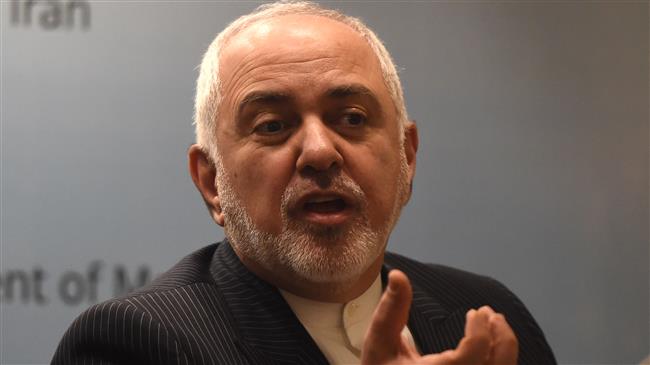
Iranian Foreign Minister Mohammad Javad Zarif (Photo by AFP)
Press TV – January 23, 2020
Foreign Minister Mohammad Javad Zarif has reaffirmed Iran’s readiness for talks with all its neighbors amid tensions in the Persian Gulf region.
“Iran remains open to dialogue with its neighbors, and we declare our readiness to participate in any complementary work that is in the interest of the region, and we welcome any step that restores hope to its people and brings them stability and prosperity,” Zarif said in a tweet in Thursday.
The tweet was in Arabic, which suggests it was addressed to the Persian Gulf littoral Arab countries. It came a day after Saudi Foreign Minister Prince Faisal bin Farhan said Riyadh was ready for talks with Tehran “but it is really up to Iran.”
The top Saudi diplomat, however, repeated the baseless claims against Iran’s role in the region, adding that the precondition for dialog is for the Islamic Republic to accept it “cannot further its regional agenda through violence.”
Speaking from the World Economic Forum in Davos, he said he was glad the region has “avoided any escalation” with Iran, and that “many countries” have offered to mediate talks with Tehran.
Meanwhile, the Iranian president’s chief of staff, Mahmoud Vaezi, said Wednesday that Tehran and Riyadh should work together to overcome their problems.
“The relations between Iran and its neighbor Saudi Arabia should not become like the relationship between Tehran and the United States … Tehran and Riyadh should work together to resolve their problems,” Vaezi said.
At an event in the Indian city of Mumbai on Friday in coordination with All India Association of Industries (AIAI), Zarif also voiced Iran’s readiness to hold talks with Saudi Arabia and other Persian Gulf countries to promote regional security.
He added that Iran has also presented proposals on ways to establish peace in the Strait of Hormuz.
In an address to the 74th session of the United Nations General Assembly in September 2019, President Hassan Rouhani said as a steward of maritime security in the Persian Gulf and the Strait of Hormuz, Iran invites all countries that are affected by developments in the strategic region to join the country’s new regional peace initiative, dubbed Hormuz Peace Endeavor (HOPE).
Iran’s initiative comes as the US has been trying to persuade its allies into a maritime coalition purportedly seeking to boost security in the Persian Gulf, after it blamed Tehran for two separate attacks on oil tankers in the Gulf of Oman in May and June, without providing any credible evidence to back up the allegation, which Iran has categorically rejected.
Tehran has repeatedly said outsiders not only cannot safeguard the region, but will fuel tensions there. Iran believes it is the countries of the very region which can ensure regional peace.
Prior to the Hormuz initiative, Iran had offered to sign non-aggression agreements with all countries in the Persian Gulf region.
Zarif also said in late May 2019 that Iran sought the best of relations with the Persian Gulf littoral countries and would welcome any proposals for dialog and de-escalation toward that end.
‘Obvious malicious intent’: Tulsi Gabbard hits Clinton with defamation suit over ‘Russian asset’ smear
RT | January 22, 2020
Democratic presidential hopeful Tulsi Gabbard is suing two-time White House runner-up Hillary Clinton over her claim that Gabbard was a “Russian asset,” alleging that the lie hurt not just her campaign but the entire election.
Clinton “lied about her perceived rival Tulsi Gabbard… publicly, unambiguously, and with obvious malicious intent” when she claimed Gabbard was “the favorite of the Russians,” the campaign alleges in the suit, filed on Wednesday in the federal Southern District of New York. While Clinton isn’t technically running against Gabbard in the 2020 contest, the filing drily notes that the role of president is “a position Clinton has long coveted, but has not been able to attain.”
The filing alleges Clinton harmed not just Gabbard but also “American voters” and “American democracy” by pushing the baseless smear, citing “scientifically conducted opinion surveys” indicating that millions of potential voters believed Clinton’s claims due to her status as a political insider and authority figure with likely access to non-public information. Over 200 articles have been published amplifying the smear since Clinton first uttered it in an October episode of Democratic strategist David Plouffe’s ‘Campaign HQ’ podcast, and the campaign estimates the former secretary of state’s attacks cost Gabbard $50 million in lost donations, lost votes, and reputational damage.
While Clinton never retracted the inflammatory claim that Gabbard was working for the Kremlin – despite a formal request from the Hawaii congresswoman’s campaign – her representatives did attempt to retrospectively muddy the waters. After Clinton spokesman Nick Merrill verified that she was indeed referring to Gabbard with a snarky “if the nesting doll fits” after Clinton’s initial comments in October, he subsequently backpedaled, trying to claim that Clinton meant Republicans – not Russians – were pulling the candidate’s strings. The resulting “corrections” streamed unevenly through the media, confusing no one bar a few copy-editors.
The Gabbard campaign has requested a jury trial in addition to legal restrictions on republishing the smear, and also seeks at least $50 million in compensatory, punitive and special damages. The filing painstakingly lays out Gabbard’s history of service to her country, indicating that Clinton could not possibly have believed the Iraq war vet and House Foreign Relations Committee member was “the favorite of the Russians,” and must therefore have been deliberately lying. It cites Clinton’s “long-time grudges” as the likely rationale for the attack, recalling that Gabbard resigned her post as vice chair of the Democratic National Committee in protest and voiced support for Clinton’s rival Bernie Sanders after it emerged that the DNC had put its thumb on the scale in the 2016 primary contest to help the former New York senator.
Clinton has not publicly responded to the lawsuit as of Wednesday afternoon. The former First Lady has shown no signs of letting go of 2016-era rivalries, however, recently claiming in an interview that “no one likes” or wants to work with Sanders, who recently polled as the most popular member of the US Senate.
Hotter than the hottest thing ever
Climate Discussion Nexus | January 22, 2020
So 2019 was hotter than anything ever was hot, except 2016 which was itself the hottest thing ever. We’re all going to die! Unless we don’t because it wasn’t. As Anthony Watts observes, if you measure from the depths of the natural Little Ice Age you get an upward line. But if you take a longer perspective you get ups and downs, within which our era is not remarkable. Even worse, as Watts also shows on a graph, the most credible numbers from the United States, which has the best temperature measurements in the world, show 2019 as cooler than 2005… and 2006… and 2007, 2010, 2011, 2012, 2015, 2016, 2017 and 2018. But hey, who’s counting?
Alarmists frequently assert that they rely on science whereas “deniers” rely on oil money and slippery rhetoric. But in addition to the contradictions between reasonably complete American temperature records (that, among other things, show the number of really hot days falling over the past century) and very patchy records from most of the rest of the planet, Watts raises some very basic statistical issues that the Armageddon types do not seem eager to discuss.
For instance, Watts’ Jan. 15 post objects to suspect statistical selectivity in the findings. Particularly glaring is an inconsistent baseline for comparisons because NASA’s Goddard Institute for Space Studies (GISS) clings to the coolest available period (1951-80, though without wishing to discuss why there was a cooling from around 1920 even as the atmospheric CO2 that supposedly drives temperature increased) whereas the National Oceanographic and Atmospheric Administration (NOAA), equally alarmist in its views, uses 1981-2000.
His Jan. 17 post makes another point that deserves far more attention than it usually gets. He takes aim at “a press release session that featured NOAA and NASA GISS talking about how their climate data says that the world in 2019 was the second warmest ever, and the decade of 2010-2019 was the hottest ever (by a few hundredths of a degree).” But as every competent statistician knows, results can never be more accurate than inputs. And since nobody claims to be measuring temperature in hundredths of a degree outside a laboratory, there must be a lot of people within NOAA and NASA writhing in shame at this claim.
It gets worse. As we were told in high school math, and some of us even listened, if you measure two things to one decimal place and multiply them correctly, you may very well get a number with two decimal places. Thus 0.5 times 0.5 is 0.25. And that second decimal place yields an apparent increase in precision. But it’s worse than apparent, it’s deceptive, unless you know the two factors are exactly right. If I give you exactly half of a buck and a half, that is, exactly 0.5 times 1.5 dollars, I give you exactly 75 cents. But if the two factors are just estimates, if I try to split the leftover doughnut and a half from the meeting evenly between us, giving you about .5 times roughly 1.5, it is fatuous to say you got exactly .75 of a doughnut which beats the measly .73 you had last week.
The right procedure in such cases is not to keep two decimal places or even one. It is to round it to a whole number to accommodate the growing uncertainty as you combine uncertainties. “I got most of a stale doughnut again” is the best way to characterize what happened.
Such spurious precision is a chronic feature of climate science as of a great many things in the modern world. Thus David Middleton mocks a publication called The Anthropocene for asserting that death will get worse due to climate change including “an additional 1,603 deaths from injuries each year in the United States”; as Middleton rightly asks, “Are they sure it’s not 1,602 or 1,604?” And since the actual piece said “Global warming of 1.5 °C could result in an additional 1,603 deaths from injuries each year in the United States, an international team of researchers reported yesterday in the journal Nature Medicine” there’s an Ossa of estimated temperature rise beneath a Pelion of “could result” medical modeling that ought to have shamed the authors into saying “about 1,500”.
When it comes to global temperature, no sane person would ever claim to have measured the temperature anywhere outside a laboratory within a few hundreds of a degree. So there is no possible way that we know the temperature of the entire Earth, most of which has no temperature stations at all, to within even a few tenths of a degree let alone a few hundredths.
Putting all this legerdemain together, if that press release that galloped around the world while the statistics were pulling on their boots was not a lie then, to borrow a phrase from Damon Runyon’s Guys and Dolls, it will do until a lie comes along.
Joe Biden’s ‘conspiracy theory’ memo to U.S. media doesn’t match the facts
John Solomon Reports | January 21, 2020
Former vice president Joe Biden’s extraordinary campaign memo this week imploring U.S. news media to reject the allegations surrounding his son Hunter’s work for a Ukrainian natural gas company makes several bold declarations.
The memo by Biden campaign aides Kate Bedingfield and Tony Blinken specifically warned reporters covering the impeachment trial they would be acting as “enablers of misinformation” if they repeated allegations that the former vice president forced the firing of Ukraine’s top prosecutor, who was investigating Burisma Holdings, where Hunter Biden worked as a highly compensated board member.
Biden’s memo argues there is no evidence that the former vice president’s or Hunter Biden’s conduct raised any concern, and that Prosecutor General Viktor Shokin’s investigation was “dormant” when the vice president forced the prosecutor to be fired in Ukraine.
The memo calls the allegation a “conspiracy theory” (and, in full disclosure, blames my reporting for the allegations surfacing last year.)
But the memo omits critical impeachment testimony and other evidence that paint a far different portrait than Biden’s there’s-nothing-to-talk-about-here rebuttal.
Here are the facts, with links to public evidence, so you can decide for yourself.
Fact: Joe Biden admitted to forcing Shokin’s firing in March 2016.
It is irrefutable, and not a conspiracy theory, that Joe Biden bragged in this 2018 speech to a foreign policy group that he threatened in March 2016 to withhold $1 billion in U.S. aid to Kiev if then-Ukraine’s president Petro Poroshenko didn’t immediately fire Shokin.
“I said, ‘You’re not getting the billion.’ I’m going to be leaving here in, I think it was about six hours. I looked at them and said: ‘I’m leaving in six hours. If the prosecutor is not fired, you’re not getting the money,’” Biden told the 2018 audience in recounting what he told Poroshenko
“Well, son of a bitch, he got fired. And they put in place someone who was solid at the time,” Biden told the Council on Foreign Relations event.
Fact: Shokin’s prosecutors were actively investigating Burisma when he was fired.
While some news organizations cited by the Biden memo have reported the investigation was “dormant” in March 2016, official files released by the Ukrainian prosecutor general’s office, in fact, show there was substantial investigative activity in the weeks just before Joe Biden forced Shokin’s firing.
The corruption investigations into Burisma and its founder began in 2014. Around the same time, Hunter Biden and his U.S. business partner Devon Archer were added to Burisma’s board, and their Rosemont Seneca Bohais firm began receiving regular $166,666 monthly payments, which totaled nearly $2 million a year. Both banks records seized by the FBI in America and Burisma’s own ledgers in Ukraine confirm these payments.
To put the payments in perspective, the annual amounts paid by Burisma to Hunter Biden’s and Devon Archer’s Rosemont Seneca Bohais firm were 30 times the average median annual household income for everyday Americans.
For a period of time in 2015, those investigations were stalled as Ukraine was creating a new FBI-like law enforcement agency known as the National Anti-Corruption Bureau ((NABU) to investigate endemic corruption in the former Soviet republic.
There was friction between NABU and the prosecutor general’s office for a while. And then in September 2015, then-U.S. Ambassador to Ukraine Geoffrey Pyatt demanded more action in the Burisma investigation. You can read his speech here. Activity ramped up extensively soon after.
In December 2015, the prosecutor’s files show, Shokin’s office transferred the evidence it had gathered against Burisma to NABU for investigation.
In early February 2016, Shokin’s office secured a court order allowing prosecutors to re-seize some of the Burisma founder’s property, including his home and luxury car, as part of the ongoing probe.
Two weeks later, in mid-February 2016, Latvian law enforcement sent this alert to Ukrainian prosecutors flagging several payments from Burisma to American accounts as “suspicious.” The payments included some monies to Hunter Biden’s and Devon Archer’s firm. Latvian authorities recently confirmed it sent the alert.
Shokin told both me and ABC News that just before he was fired under pressure from Joe Biden he also was making plans to interview Hunter Biden.
Fact: Burisma’s lawyers in 2016 were pressing U.S. and Ukrainian authorities to end the corruption investigations.
Burisma’s main U.S. lawyer John Buretta acknowledged in this February 2017 interview with a Ukraine newspaper that the company remained under investigation in 2016, until he negotiated for one case to be dismissed and the other to be settled by payment of a large tax penalty.
Documents released under an open records lawsuit show Burisma legal team was pressuring the State Department in February 2016 to end the corruption allegations against the gas firm and specifically invoked Hunter Biden’s name as part of the campaign. You can read those documents here.
In addition, immediately after Joe Biden succeeded in getting Shokin ousted, Burisma’s lawyers sought to meet with his successor as chief prosecutor to settle the case. Here is the Ukrainian prosecutors’ summary memo of one of their meetings with the firm’s lawyers.
Fact: There is substantial evidence Joe Biden and his office knew about the Burisma probe and his son’s role as a board member.
The New York Times reported in this December 2015 article that the Burisma investigation was ongoing and Hunter Biden’s role in the company was undercutting Joe Biden’s push to fight Ukrainian corruption. The article quoted the vice president’s office.
In addition, Hunter Biden acknowledged in this interview he had discussed his Burisma job with his father on one occasion and that his father responded by saying he hoped the younger Biden knew what he was doing.
And when America’s new ambassador to Ukraine was being confirmed in 2016 before the Senate she was specifically advised to refer questions about Hunter Biden, Burisma and the probe to Joe Biden’s VP office, according to these State Department documents.
Fact: Federal Ethics rules require government officials to avoid taking policy actions affecting close relatives.
Office of Government Ethics rules require all government officials to recuse themselves from any policy actions that could impact a close relative or cause a reasonable person to see the appearance of a conflict of interest or question their impartiality.
“The impartiality rule requires an employee to consider appearance concerns before participating in a particular matter if someone close to the employee is involved as a party to the matter,” these rules state. “This requirement to refrain from participating (or recuse) is designed to avoid the appearance of favoritism in government decision-making.”
Fact: Multiple State Department officials testified the Bidens’ dealings in Ukraine created the appearance of a conflict of interest.
In House impeachment testimony, Obama-era State Department officials declared the juxtaposition of Joe Biden overseeing Ukraine policy, including the anti-corruption efforts, at the same his son Hunter worked for a Ukraine gas firm under corruption investigation created the appearance of a conflict of interest.
In fact, deputy assistant secretary George Kent said he was so concerned by Burisma’s corrupt reputation that he blocked a project the State Department had with Burisma and tried to warn Joe Biden’s office about the concerns about an apparent conflict of interest.
Likewise, the House Democrats’ star impeachment witness, former U.S. Ambassador Marie Yovanovich, agreed the Bidens’ role in Ukraine created an ethic issue. “I think that it could raise the appearance of a conflict of interest,” she testified. You can read her testimony here.
Fact: Hunter Biden acknowleged he may have gotten his Burisma job solely because of his last name.
In this interview last summer, Hunter Biden said it might have been a “mistake” to serve on the Burisma board and that it was possible he was hired simply because of his proximity to the vice president.
“If your last name wasn’t Biden, do you think you would’ve been asked to be on the board of Burisma?,” a reporter asked.
“I don’t know. I don’t know. Probably not, in retrospect,” Hunter Biden answered. “But that’s — you know — I don’t think that there’s a lot of things that would have happened in my life if my last name wasn’t Biden.”
Fact: Ukraine law enforcement reopened the Burisma investigation in early 2019, well before President Trump mentioned the matter to Ukraine’s new president Vlodymyr Zelensky.
This may be the single biggest under-reported fact in the impeachment scandal: four months before Trump and Zelensky had their infamous phone call, Ukraine law enforcement officials officially reopened their investigation into Burisma and its founder.
The effort began independent of Trump or his lawyer Rudy Giuliani’s legal work. In fact, it was NABU – the very agency Joe Biden and the Obama administration helped start – that recommended in February 2019 to reopen the probe.
NABU director Artem Sytnyk made this announcement that he was recommending a new notice of suspicion be opened to launch the case against Burisma and its founder because of new evidence uncovered by detectives.
Ukrainian officials said that new evidence included records suggesting a possible money laundering scheme dating to 2010 and continuing until 2015.
A month later in March 2019, Deputy Prosecutor General Konstantin Kulyk officially filed this notice of suspicion re-opening the case.
And Reuters recently quoted Ukrainian officials as saying the ongoing probe was expanded to allegations of theft of public funds.
The implications of this timetable are significant to the Trump impeachment trial because the president couldn’t have pressured Ukraine to re-open the investigation in July 2019 when Kiev had already done so on its own, months earlier.
For a complete timeline of all the key events in the Ukraine scandal, you can click here.
US misinforming international community on Iran’s enrichment right: Russia
Press TV – January 21, 2020
Russia has accused the US of misleading the international community on Iran’s right to enrich uranium, describing as “myth-making” a claim by Washington that a UN Security Council resolution has banned any enrichment in Iran.
“We consider it necessary to respond to the US special representative for Iran Hook about the existence of some kind of ‘UN standard’ prohibiting the Islamic Republic of Iran from enriching uranium,” the Russian Foreign Ministry said Monday.
The statement said the US claim accuses the UN Security Council of contradicting the nuclear non-proliferation treaty.
“Unfortunately, such myth-making has long been part of the US approach toward nuclear non-proliferation … In this case, we have, essentially, an accusation against the UN Security Council of making decisions contradicting the Treaty on the Non-Proliferation of Nuclear Weapons (NPT),” the ministry added.
The statement also recalled that the aforementioned treaty allows the signatories to develop nuclear energy for non-military purposes.
It also noted that the NPT does not impose any restrictions on non-nuclear states in terms of uranium enrichment as long as they are under the IAEA control and pursue peaceful purposes.
“The NPT puts no limitations on the non-nuclear countries regarding uranium enrichment or developing other stages of the nuclear fuel cycle. There is only one condition: that all work must be directed toward peaceful ends and be under IAEA [International Atomic Energy Agency ] supervision,” the ministry noted.
The statement came after US Special Representative for Iran Brian Hook told journalists on Friday about an alleged UN resolution passed in 2006 or 2007 prohibiting Tehran from uranium enrichment.
In 2015, Iran signed the Joint Comprehensive Plan of Action (JCPOA) with China, France, Germany, Russia, the United Kingdom, the United States, Germany, and the European Union. The JCPOA required Iran to put certain limits on its nuclear program in exchange for sanctions relief.
In 2018, the United States abandoned the deal with Iran, and hit the Iranian economy with the “toughest sanctions ever”.
On 8 May 2019, the first anniversary of the United States’ unilateral withdrawal from the agreement, Iran announced a gradual reduction of its JCPOA obligations.
On 5 January, following the killing of Iran’s top military commander Qasem Soleimani in a US attack near the Baghdad International Airport, Tehran said it was rolling back all its commitments under the JCPOA.
In reaction to Iran’s move, European parties to the deal, which have failed to fulfill their commitments under the JCPOA, have threatened to take Iran’s nuclear issue to the UN Security Council.
The E3 (Germany, UK, and France) formally triggered the dispute mechanism within the agreement, accusing Iran of having violated the accord. Iran would now be asked to resolve the so-called dispute with the European trio, and the process could ultimately lead to the re-imposition of the Security Council’s sanctions that were lifted by the accord.
In reaction to the threat, Iran’s Foreign Minister Mohammad Javad Zarif on Monday said that if Britain, France, and Germany continue their unjustifiable conduct and move to send Iran’s nuclear case to the United Nations Security Council, Tehran would have the option of leaving the Nuclear Non-Proliferation Treaty (NPT).
Zarif explained that Iran was the party to initially trigger the dispute mechanism in 2018 by sending three letters to the European Union to notify them of Tehran’s dissatisfaction with Europe’s non-commitment to the agreement. The Islamic Republic, he added, was then forced to resort to the nuclear countermeasures as the Europeans remained in violation of the accord.
He, however, said Tehran’s measures were reversible provided Europe would begin minding its JCPOA obligations.
Worst lie since fake claim sparked Iraq war? OPCW report behind Syria bombings was altered, whistleblower tells UNSC
RT | January 21, 2020
A former inspector with the OPCW has accused the chemical weapons watchdog of issuing a sanitized report on the alleged 2018 attack in Douma, Syria, arguing it ignored serious reservations of its own fact-finding team.
The OPCW’s final report on the Douma incident, released last March, omitted key findings of its own inspection team which would have cast serious doubt on whether a chemical attack took place at all, a now former OPCW specialist, Ian Henderson, told members of the United Nations Security Council in a recorded video address – after his visa application to attend the meeting in person was rejected.
“The findings in the final [Fact Finding Mission] report were contradictory, were a complete turnaround with what the team had understood collectively during and after the Douma deployments,” Henderson said.
Even though several members of the fact finding team “had serious misgivings that a chemical attack had occurred” as early as July 2018, the organization’s final report – compiled by another group that never even visited the incident site – nonetheless concluded there were “reasonable grounds” to all but pin the blame for the attack on Damascus.
Sanitized of any dissenting opinion, the report ignored “findings, facts, information, data or analysis” gathered by the team in the areas of witness testimony, toxicology studies, chemical analysis, as well as ballistics, the retired inspector said.
Washington and its allies blamed the Syrian government for the Douma incident, with the US, France, and the UK launching joint strikes against Syria a week later, well before any official investigation could even start, and even delaying it. Western politicians and media claimed at the time – based purely on visual materials and witness accounts provided by the notorious White Helmets and other militant-linked sources – that the Syrian government forces had ‘highly likely’ dropped two poisonous gas cylinders, killing scores of civilians.
Henderson carried out a closer analysis of that pair of cylinders mysteriously found in a residential area of Douma. His ‘Engineering Assessment’ was initially leaked last May, laying out a number of hypotheses for how the cylinders wound up at the site in Douma. Most significantly, it noted a “higher probability” that they were “manually placed” instead of being “delivered from aircraft,” suggesting a party other than the Syrian government may have planted them there.
“In my case, I had followed up with a further six months of engineering and ballistics studies into the cylinders, the result of which had provided further support for the view that there had not been a chemical attack.”
Subsequent WikiLeaks publications would reveal that a senior OPCW official ordered “all traces” of Henderson’s assessment to be scrubbed from its archives. But despite the internal battle undermining the OPCW’s credibility, Henderson insisted the dispute should not be a matter of “political debate,” urging for any discrepancies to be “properly resolved… through the rigors of science and engineering.”
The informal UNSC meeting to assess the situation and inconsistencies around the FMM’s report was convened at the request of Moscow on Monday. The US and its allies accused Russia of trying to “discredit the well-respected OPCW and its staff,” even though Moscow insists that the goal, on the contrary, was to restore trust in the organization.
“The chemical incident in Syrian Douma. Why is it so important? Because it was a justification of missile strikes by the US, France and the UK in April 2018, who immediately named the Syrian Government guilty,” said Vassily Nebenzia, Russia’s permanent representative to the UN, who accused the US and allies of “crying wolf.”
“Since not so long… ago, some of our colleagues invented a new paradigm, the world of ‘highly likely’.”
Besides listening to Henderson’s testimony, the UNSC was addressed by Russia’s OPCW representative, Alexander Shulgin, and the chief of an NGO that had previously interviewed over 300 residents of Douma, shattering the official Western narrative.
How Expansive is FBI Spying?
By Ron Paul | January 20, 2020
Cato Institute Research Fellow Patrick Eddington recently filed several Freedom of Information Act (FOIA) requests to find out if the Federal Bureau of Investigation ever conducted surveillance of several organizations dealing with government policy, including my Campaign for Liberty. Based on the FBI’s response, Campaign for Liberty and other organizations, including the Cato institute and the Reason Foundation, may have been subjected to FBI surveillance or other data collection.
I say “may have been” because the FBI gave Mr. Eddington a “Glomar response” to his FOIA requests pertaining to these organizations. A Glomar response is where an agency says it can “neither confirm nor deny” involvement in a particular activity. Glomar was a salvage ship the Central Intelligence Agency used to recover a sunken Soviet submarine in the 1970s. In response to a FOIA request by Rolling Stone magazine, the CIA claimed that just confirming or denying the Glomar’s involvement in the salvage operation would somehow damage national security. A federal court agreed with the agency, giving federal bureaucrats, and even local police departments, a new way to avoid giving direct answers.
The Glomar response means these organizations may have been, and may still be, subjected to federal surveillance. As Mr. Eddington told Reason magazine, “We know for a fact that Glomar invocations have been used to conceal actual, ongoing activities, and we also know that they’re not passing out Glomars like candy.”
Protecting the right of individuals to join together in groups to influence government policy is at the very heart of the First Amendment. Therefore, the FBI subjecting such groups to surveillance can violate the constitutional rights of everyone involved with the groups.
The FBI has a long history of targeting Americans whose political beliefs and activities threaten the FBI’s power or the power of influential politicians. The then-named Bureau of Investigation participated in the crackdown on people suspected of being communists in the post-World War I “Red Scare.” The anti-communist crackdown was headed by a young agent named J. Edgar Hoover who went on to become FBI director, a position he held until his death. Hoover kept and expanded his power by using the FBI to collect blackmail material on people including politicians.
In the 1930s and 1940s, the FBI spied on supporters of the America First movement, including several Congress members. Two of the most famous examples of FBI targeting individuals based on their political activities are the harassment of Martin Luther King Jr. and the COINTELPRO program. COINTELPRO was an organized effort to spy on and actively disrupt “subversive” organizations, including antiwar groups
COINTELPRO officially ended in the 1970s. However, the FBI still targets individuals and organizations it considers “subversive,” including antiwar groups and citizen militias.
Congress must hold hearings to determine if the FBI is currently using unconstitutional methods to “monitor” any organizations based on their beliefs. Congress must then take whatever steps necessary to ensure that no Americans are ever again targeted for surveillance because of their political beliefs and activities.
Featured Video
Can the U.S. Afford to Annihilate Iran?
or go to
Aletho News Archives – Video-Images
Book Review
The Genetic Deception — now in paperback (Second Edition)
Lies are Unbekoming | October 2, 2026
The genes the field promised were never there.
The genetic story of disease is a cover story.
The twenty-first century runs on it. Paediatric clinics. Cancer centres. Forensic laboratories. Family-planning counsel. It is used to explain illness, to assign blame, to foreclose questions. It protects the industries whose products and practices are what actually caused the harm.
It isn’t true.
In 2010, Jonathan Latham and Allison Wilson looked at over seven hundred genome-wide association studies covering some eighty common diseases. The genes the field had promised were not there. The field invented a term, “missing heritability”, to explain the absence, and has quietly worked to bury the finding ever since.
The Genetic Deception is a book about what Latham and Wilson found. What the field did with it. And what the public was told instead. … continue
Blog Roll
 Aletho News
- US increasing Middle East military buildup – AP
- Flydubai scenario: Netanyahu’s plot to drag US to war with Iran, stay in power
- The Genetic Deception — now in paperback (Second Edition)
- Can the U.S. Afford to Annihilate Iran? /Seyed M. Marandi
- Elmo Sold mRNA Jabs to Your Toddler. Now They Are “Off-Label.”
- British state targets Palestine Action with yet another crooked trial
- Americans are paying the price to preserve Israel’s nuclear hegemony
- Resistance factions are necessary to ensure a permanent US Iraq withdrawal
- How Israel destabilizes the Middle East: Denying sovereignty and the right to exist
- Europe’s Establishment Is Embracing War – and Losing Voters
- If Americans Knew
- Israeli Soldiers Abduct At Least 22 Across Occupied West Bank
- Eight Palestinians Killed in Israeli Attacks on Gaza
- Israeli former leaders and security chiefs threaten legal action over ‘Jewish terrorism’
- Israel map in LA Times ad includes all land from the river to the sea
- Inside Lebanon’s 200-page dossier on Israeli war crimes
- Flydubai, genocide, settler violence, Trump abuse of power to deport – Daily Update
- Counting Antisemitic Incidents: What the ADL Audit Reveals — and Obscures
- Mamdani releases plan to combat antisemitism and hate crimes in New York City
- Iran’s Revolutionary Guards Publish Letter to the American People
- DMFI launches $1 million ad campaign supporting Virginia’s Elaine Luria
- No Tricks Zone
- Green Energy Debacle: German Expert Professor Fritz Vahrenholt Warns Of Severe Economic And Social Consequences
- Two More Paleo Reconstructions Affirm Meters-Higher Sea Levels Across Ireland, Brazil 7000-6000 Years Ago
- New Study: Earth And Venus Surface Warmth Largely Explained By Convection And Lapse Rate, Not CO2 Or Radiation
- 2025 Nature Paper Claiming Worsening Global Drought Gets RETRACTED …Heavily Flawed
- New Study: ‘Global Drought Shows No Detectable Recent Acceleration Under Climate Warming’
- Economic Masterminds: German Socialists Suggest Taxing Productivity Gains Stemming From Using AI
- The South China Sea Has Not Been Cooperating With The Climate Change Narrative
- Energy Crisis: Germany Enters Heating Season With Historically Low Gas Reserve Fill Levels
- New Study: The Antarctic Ice Sheet Gained Mass From 2020-2024 Due To Staggering Snow And Ice Accumulation
- Study: Ocean Heating Rates From Thousands Of Years Ago ‘Dwarf’ Modern Ocean Heating Rates

