‘Fake news’ & ‘post-truth’ politics? What about those Iraqi WMDs?

By Neil Clark | RT | November 21, 2016
The Oxford Dictionaries have named ‘post-truth’ as the word of the year. ‘Fake news’ and ‘post-truth’ politics have been blamed for both the Brexit vote in the UK and the victory of Donald Trump in America.
It seems the uneducated plebs are falling for ’fake news’ they read in ’new media’ and the lies of dreadful rabble-rousing populist politicians who are relying on people’s emotions, instead of ’objective facts,’ to get votes. It’s all terribly worrying and poses a dire threat to Western civilization as we know it.
Well, forgive me for laughing out loud. For this establishment ‘fake news’/’post-truth politics’ concern is the funniest thing I’ve come across in politics since Lord Jenkins of Hillhead, the very grand Chancellor of the University of Oxford, repeatedly called distinguished Sheldonian guest Mikhail Gorbachev, “Mr. Brezhnev.”
Why is it so hilarious? Because the people and the outlets warning of the dangers of ‘fake news’ and ‘post-truth politics’ have been the biggest peddlers of ‘fake news’ and ‘post-truth politics’ out there. It’s like receiving lectures on the immorality of bootlegging from Al Capone or being told to sit up straight by the Hunchback of Notre Dame.
Without a doubt the best, or rather the worst example of ‘fake news’ in the last 25 years or so, was the neocon lie that Iraq had WMDs in 2002/3. That wasn’t peddled by ‘obscure bloggers’ and ‘new media,’ but by mainstream Western politicians, from ‘mainstream’ political parties, establishment-approved ‘experts’ on the BBC/ITV/CNN, etc., and Op-ed columnists in ‘serious’ and ‘respectable’ media outlets.
There was absolutely no evidence that Saddam possessed WMDs. The story was complete and utter BS. Yet this fake news dominated the headlines for months in 2002/3 and led to an illegal invasion in which many people lost their lives. Unlike today’s manufactured ‘fake news’ hysteria the Iraq war was no joke. An entire country was destroyed.
And guess what? Those who pushed the ‘Iraq has WMDs line’ are now coming on television to express their concern over ‘fake news’!
John Hilley notes “The BBC even had Alastair Campbell (Tony Blair’s spin doctor), in the studio defending the term ‘post-truth’ as a way of exposing the ‘dangers’ of ‘fake news.'”
Campbell stated: “It’s acknowledging that politics, which has always been rough, has moved to a different phase where politicians who lie now appear to get rewarded for it.” (BBC2 Jeremy Vine Show, 16/11/2016).
What might Orwell have said about Campbell, master spinner and Blairite warmonger, sitting inside the BBC being rewarded for his thoughts on ‘post-truth and ‘fake news?’ Hilley asks.
Once again, I’m sure old George is spinning in his grave in Sutton Courtenay.
Then there’s that serial warmonger Bernard-Henri Levy. The Sunday Telegraph today told us in its headlines: ‘Leading French philosopher: Marine Le Pen may win election as people have lost interest in whether politicians tell the truth.’
Oh, the irony!
Because if the French people really have ‘lost interest in whether politicians tell the truth,’ Henri-Levy and his fellow liberal interventionist ‘regime changers’ have got a lot to do with it.
Think back to the war against Libya, which the ‘leading French philosopher’ lobbied hard for. To sell the war to the Western public, we were told that Muammar Gaddafi was about to commit a ‘Srebrenica-style’ massacre in Benghazi. Media Lens noted the claims that were made at the time.
But again it was a load of ‘rollocks.’ Five years after Libya, like Iraq before it, had been destroyed by Western ‘interventionists,’ a report of the Foreign Affairs Committee of the House of Commons declared: “the proposition that Muammar Gaddafi would have ordered the massacre of civilians in Benghazi was not supported by the available evidence.”
It wasn’t the only claim made about Libya by Western politicians that was ‘not supported by the available evidence.’ In February 2011, UK Foreign Secretary William Hague insisted that he had seen ‘information’ which suggested that Gaddafi was on his way to Venezuela. An unnamed ‘diplomat’ said that this was ‘credible information.’ But it wasn’t. It was the same old fake news that we get every time the Western elites are trying to achieve ‘regime change.’
In April 2011 we heard that the devilish Gaddafi (who had not, after all, fled to Caracas), was supplying his troops with Viagra “to encourage mass rape.”
 “Gaddafi’s security forces and other groups in the region are trying to divide the people by using violence against women and rape as tools of war, and the United States condemns this in the strongest possible terms,” declared Secretary of State Hillary Clinton, whose supporters are now complaining about ‘post-truth politics.
Again, no evidence was put forward for the Viagra/mass rape claim and, surprise, surprise, none was ever found.
A clear pattern can be discerned. To get public support for its illegal regime change wars, the Western establishment energetically promotes a number of ‘fake news’ stories. These stories are usually reported unquestioningly in ‘respectable’ outlets and are regularly cited by neocon/liberal interventionist commentators as a reason for taking action against the target state. ‘Anonymous’ sources feature heavily in these stories, which like MI6’s ‘Operation Mass Appeal’ are often planted by the security services.
Meanwhile, people’s emotions are shamelessly played upon by the ‘something must be done’ brigade of ‘liberal’ laptop bombardiers, the same crowd, note well, who accuse ‘populist’ politicians of ignoring ‘objective facts’ and playing on people’s emotions.
The fake news continues while the regime change operation is ongoing. After its over, we’re all meant to forget about the false stories we were fed and focus on the next ’New Hitler’ who needs to be dealt with. In 2011, it was the despicable Gaddafi, now it’s the despicable Assad and the despicable Putin who we’re told: “have to be stopped.”
The term ‘post-truth’ politics implies there was a time when politics was truthful. I doubt if that ever was the case, but certainly in the last 25 years, thanks to the influence of neocons and ‘liberal interventionists’, the lies have been off the scale. Remember the Niger uranium forgeries? And Saddam’s horrific ‘People Shredder‘?
And before the Iraq war, we had the ‘humanitarian’ NATO bombing of Yugoslavia, where again fake news dominated. US Defense Secretary William Cohen claimed “about 100,000 military-aged” Kosovan Albanians were missing… “they may have been murdered.”
As John Pilger reminded us, “Kosovo, the site of a genocide that never was, is now a violent “free market” in drugs and prostitution.”
It wasn’t the only lurid claim that was made to sell the war. But again the ‘genocide’ and hundreds of thousands killed stories were false, as a UN court itself ruled in 2001.
Fake news also featured heavily in the neocon campaign to get Iran sanctioned for an entirely unproven nuclear weapons program. It’s dominated the coverage of recent events in Ukraine, with Russia’s non-existent ‘invasion of Ukraine’ routinely referred to as a fact. The conflict in Syria too has been marked by ‘fake news,’ and theories being reported as if they’re 100 percent proven. How many times have you read that “Assad gassed his own people” at Ghouta in 2013, even though we still don’t know for sure who carried out the attack?
If it’s ‘official enemies’ we’re talking about ‘fact-checking’ and citing sources isn’t all that important for those who pounce on a mere typo if it’s an anti-war writer who’s making a claim.
Now, the same people who have disseminated fake news for so long and who are still, even after Iraq and Libya, embedded in the West’s political and media establishments, are lashing out because they no longer control the narrative as they used to. The public is getting their news from a much wider variety of sources and voting for ‘populist,’ i.e., non-neocon/liberal interventionist-anointed candidates/parties at elections.
Instead of admitting that it’s their ’fake news’ and ‘post-truth politics’ which has caused people to switch off from establishment media and to stop voting for status quo candidates, the endless war lobby has the effrontery to accuse others of the things they have been guilty of.
Concern over ‘fake news’ and ‘post-truth politics’ from the West’s endless war propagandists?
It’s hard to think of a better example of what psychologists call ‘projection.’
Follow Neil Clark @NeilClark66
NYT Advocates Internet Censorship
By Robert Parry | Consortium News | November 20, 2016
In its lead editorial on Sunday, The New York Times decried what it deemed “The Digital Virus Called Fake News” and called for Internet censorship to counter this alleged problem, taking particular aim at Facebook founder Mark Zuckerberg for letting “liars and con artists hijack his platform.”
As this mainstream campaign against “fake news” quickly has gained momentum in the past week, two false items get cited repeatedly, a claim that Pope Francis endorsed Donald Trump and an assertion that Trump was prevailing in the popular vote over Hillary Clinton. I could add another election-related falsehood, a hoax spread by Trump supporters that liberal documentarian Michael Moore was endorsing Trump when he actually was backing Clinton.
But I also know that Clinton supporters were privately pushing some salacious and unsubstantiated charges about Trump’s sex life, and Clinton personally charged that Trump was under the control of Russian President Vladimir Putin although there was no evidence presented to support that McCarthyistic accusation.
The simple reality is that lots of dubious accusations get flung around during the heat of a campaign – nothing new there – and it is always a challenge for professional journalists to swat them down the best we can. What’s different now is that the Times envisions some structure (or algorithm) for eliminating what it calls “fake news.”
But, with a stunning lack of self-awareness, the Times fails to acknowledge the many times that it has published “fake news,” such as reporting in 2002 that Iraq’s purchase of aluminum tubes meant that it was reconstituting its nuclear weapons program; its bogus analysis tracing the firing location of a Syrian sarin-laden rocket in 2013 back to a Syrian military base that turned out to be four times outside the rocket’s range; or its publication of photos supposedly showing Russian soldiers inside Russia and then inside Ukraine in 2014 when it turned out that the “inside-Russia” photo was also taken inside Ukraine, destroying the premise of the story.
These are just three examples among many of the Times publishing “fake news” – and all three appeared on Page One before being grudgingly or partially retracted, usually far inside the newspaper under opaque headlines so most readers wouldn’t notice. Much of the Times’ “fake news” continued to reverberate in support of U.S. government propaganda even after the partial retractions.
Who Is the Judge?
So, should Zuckerberg prevent Facebook users from circulating New York Times stories? Obviously, the Times would not favor that solution to the problem of “fake news.” Instead, the Times expects to be one of the arbiters deciding which Internet outlets get banned and which ones get gold seals of approval.
The Times lead editorial, following a front-page article on the same topic on Friday, leaves little doubt what the newspaper would like to see. It wants major Internet platforms and search engines, such as Facebook and Google, to close off access to sites accused of disseminating “fake news.”
The editorial said, “a big part of the responsibility for this scourge rests with internet companies like Facebook and Google, which have made it possible for fake news to be shared nearly instantly with millions of users and have been slow to block it from their sites. …
“Facebook says it is working on weeding out such fabrications. It said last Monday that it would no longer place Facebook-powered ads on fake news websites, a move that could cost Facebook and those fake news sites a lucrative source of revenue. Earlier on the same day, Google said it would stop letting those sites use its ad placement network. These steps would help, but Facebook, in particular, owes its users, and democracy itself, far more.
“Facebook has demonstrated that it can effectively block content like click-bait articles and spam from its platform by tweaking its algorithms, which determine what links, photos and ads users see in their news feeds. … Facebook managers are constantly changing and refining the algorithms, which means the system is malleable and subject to human judgment.”
The Times editorial continued: “This summer, Facebook decided to show more posts from friends and family members in users’ news feeds and reduce stories from news organizations, because that’s what it said users wanted. If it can do that, surely its programmers can train the software to spot bogus stories and outwit the people producing this garbage. …
“Mr. Zuckerberg himself has spoken at length about how social media can help improve society. … None of that will happen if he continues to let liars and con artists hijack his platform.”
Gray Areas
But the problem is that while some falsehoods may be obvious and clear-cut, much information exists in a gray area in which two or more sides may disagree on what the facts are. And the U.S. government doesn’t always tell the truth although you would be hard-pressed to find recent examples of the Times recognizing that reality. Especially over the past several decades, the Times has usually embraced the Official Version of a disputed event and has deemed serious skepticism out of bounds.
That was the way the Times treated denials from the Iraqi government and some outside experts who disputed the “aluminum tube” story in 2002 – and how the Times has brushed off disagreements regarding the U.S. government’s portrayal of events in Syria, Ukraine and Russia. Increasingly, the Times has come across as a propaganda conduit for Official Washington rather than a professional journalistic entity.
But the Times and other mainstream news outlets – along with some favored Internet sites – now sit on a Google-financed entity called the First Draft Coalition, which presents itself as a kind of Ministry of Truth that will decide which stories are true and which are “fake.”
If the Times’ editorial recommendations are followed, the disfavored stories and the sites publishing them would no longer be accessible through popular search engines and platforms, essentially blocking the public’s access to them. [See Consortiumnews.com’s “What to Do About ‘Fake News.’”]
The Times asserts that such censorship would be good for democracy – and it surely is true that hoaxes and baseless conspiracy theories are no help to democracy – but regulation of information in the manner that the Times suggests has more than a whiff of Orwellian totalitarianism to it.
And the proposal is especially troubling coming from the Times, with its checkered recent record of disseminating dangerous disinformation.
Investigative reporter Robert Parry broke many of the Iran-Contra stories for The Associated Press and Newsweek in the 1980s.
The Washington Post & The “Super Hot” Arctic
By Paul Homewood | Not A Lot Of People Know That | November 20, 2016

Daily mean temperature and climate north of the 80th northern parallel, as a function of the day of year.
http://ocean.dmi.dk/arctic/meant80n.uk.php
There has been much excitement about much of the Arctic being warmer than usual at the moment.
The Washington Post describes it as “insane”. (The 36 degrees is Fahrenheit, by the way).

Chris Mooney is well known for biased and misleading reporting where climate change is concerned, but it is always sad to see otherwise respectable meteorologists such as Jason Samenow, one of the Capital Weather Gang, roped in as well, something that has become more frequent in recent years.
The simple reality, as Samenow should know, is that such departures above “normal” are not unusual during the colder months in the Arctic.
DMI have records back to 1954 for Arctic temperatures, and a quick trawl uncovers several similar instances, for instance 1972, 1974 and 1976:


http://ocean.dmi.dk/arctic/meant80n.uk.php
The only difference was that these occurrences took place in January/February, rather than November. We should bear in mind that the 1970s were a time of expanding Arctic ice.
The Washington Post article actually explains what has been going on:
The Arctic is super-hot, even as a vast area of cold polar air has been displaced over Siberia…..
It’s about 20C [36 degrees Fahrenheit] warmer than normal over most of the Arctic Ocean, along with cold anomalies of about the same magnitude over north-central Asia,” Jennifer Francis, an Arctic specialist at Rutgers University, said by email Wednesday.
“The Arctic warmth is the result of a combination of record-low sea-ice extent for this time of year, probably very thin ice, and plenty of warm/moist air from lower latitudes being driven northward by a very wavy jet stream.”

The key is the comment about warm/moist air. Because of latent heat, when that moist air turns back to water, heat is given off, thus warming the atmosphere disproportionately.
Jennifer Francis has long claimed that the “wavy jetstream” is caused by melting Arctic ice. Yet HH Lamb found the same phenomenon in the 1960s and 70s, and believed it was caused by a colder Arctic!
Indeed, if we check out the GISS global temperature maps for the three years I have highlighted above, 1972, 1974 and 1976, we find very similar weather patterns, with very cold polar air displaced over Siberia and North America, along with warm air invading the Arctic.


http://data.giss.nasa.gov/gistemp/maps/
The truth is that there is nothing unusual or unprecedented going on here. It is simply weather.
John Kirby quotes terrorists to lie about Russia
By Adam Garrie | The Duran | November 19, 2016
Recently, John Kirby lost his rag when challenged to name the sources which gave him ‘information’ implying that Russia had helped the Syrian Arab Army bomb civilian targets such as hospitals. His reaction was typical of Shakespeare’s dictum, “The lady doth protest too much, methinks”.
As it turns out, Kirby was not quoting any government sources, he admitted as much. He claimed that the United States, her allies, Russia or Syria did not provide the information upon which he relied. Instead he stated that the claims he was making were based on findings from ‘aid organisations’. Such a phrase, whilst linguistically innocuous, implies something very different in the context of the Syrian conflict. Many groups calling themselves ‘aid organisations’ are actually either terrorist sympathisers or terrorist organisations in all but name.
One such organisation is the western funded White Helmets, an organisation whose crimes against humanity The Duran was among the first to expose.
It is this organisation who filmed the savage, medieval beheadings of prisoners before disposing of the mutilated bodies. It is this organisation whose bearded members jump for joy, holding guns, whilst chanting for the death of legitimate political leaders like President Assad, it is this organisation which acts on behalf of Al-Qaeda’s surrogate in Syria, al-Nusra. It is this organisation that provided the United States with false information about Russia which John Kirby was all too happy to parrot as though it was fact.
Russian Defence Ministry spokesman Major General Igor Konashekov spoke of Kirby’s insincerity in the following way:
After three days it is absolutely clear for everyone that the allegedly bombed “hospitals” and “mobile clinics” in Aleppo exist only in US State Department spokesman John Kirby’s imagination. This ‘information blooper’ will certainly remain a stain on Admiral Kirby’s biography.
He continued:
We have repeatedly asked representatives of the United States, Great Britain, France, Germany, other countries and international organisations to provide any information on the location of medical aid posts (hospitals) or schools in Syrian areas controlled by terrorists… The answer is always the same—no one has such information. There are only reports by the ‘White Helmets’ or anonymous local “journalists’.
Kirby’s outburst and the false report which he based his previous statements on, demonstrates not just a lack of transparency on behalf of the United Sates, but a totally dishonest position. To think that the most powerful country in the world has to rely on off-shoots of terrorist organisations in order to obtain false information with which to slander Russia, is beyond absurd and beyond pathetic, it is disgraceful.
If the United States is as powerful as the world knows it is, the fact that it is relying on terrorist groups like the White Helmets for information, is demonstrative of a wanton act of deception. US intelligence could find the facts if it was the facts which they were interested in. Clearly, this is not the situation. They are interested in parroting terrorist propaganda which conforms to President Obama’s wicked agenda.
What’s even more disgraceful is that many western mainstream media outlets take people like Kirby at face value when they speak of amorphous ‘aid organisations’. They do not bother to investigate the fact that such ‘aid organisations’ are actually parts of terrorist syndicates working with a stated mission to wage war against the legitimate government of Syria.
We now know the real reason John Kirby went insane when asked some sensible questions by RT’s Gayane Chichakyan. He was caught relying on false information by terrorist sources.
The sooner he and his ilk are gone forever, the better. Although it is still early days, I find it personally hard to believe that Donald Trump, who appears to be genuinely interested in fighting terrorism, would allow his inferiors to spout such lies.
Time will tell, but nothing could be as bad as this.
Eyewitnesses Say Fallen FARC Rebels Were Ambushed by Sniper

Two FARC rebels, identified as Joaco (L) and Monica, were allegedly killed Wednesday by a government sniper. | Photo: Prensa Rural
teleSUR | November 18, 2016
Eyewitnesses told a verification team that the two rebel fighters with the Revolutionary Armed Forces of Colombia killed earlier this week in the northern department of Bolivar died as a result of an ambush by government forces, Prensa Rural reported Friday.
The Ministry of Defense claimed that the armed guerrilla rebels were killed in combat after carrying out criminal activities.
Meanwhile the leaders from the Revolutionary Armed Forces of Colombia, known as the FARC, said they were merely making their way to “pre-concentration” areas where members of the rebel army are gathering ahead of the final process of demobilization as part of the ongoing peace process.
Members of the Association of Agroecological and Mining Brotherhoods of Guamoco, a local organization, spoke to witnesses in the municipality of Santa Rosa del Sur, where the incident took place to collect testimonies.
According to these witnesses, the two victims, FARC rebels who went by the names Joaco and Monica, were standing near two houses near a section of town known as the “Y” when suddenly Joaca, who was on the phone, was struck by a bullet and fell to the ground. Monica then bent down to check on him when she too was struck by a bullet.
The testimonies were collected from people who were inside one of the houses and witnessed the entire series of events. Prensa Rural reported that the house contained four men, two women, a child, and an infant.
Government troops, who were positioned approximately 40 meters away, then fired two bursts of rounds into the air. Troops then ordered a third rebel fighter to the ground and subsequently detained him.
The government troops then harassed the locals, storming into their homes, reportedly insulting those present and demanding they produce identification. They further accused the civilians of being FARC collaborators. Locals reported that they fear reprisals from state security forces after being labeled collaborators.
Witnesses reported that two of the government soldiers wore masks to hide their identities. Others said they recalled seeing some of the government troops, in civilian clothing, visiting the house near where the killings took place.
The testimony from witnesses matched early statements from the FARC. Spanish lawyer Enrique Santiago, who has served as a legal advisor to the FARC during the peace negotiations in Havana, wrote Wednesday on his Twitter account that the two rebels were killed “by a sniper.”
The Tripartite Monitoring and Verification Mechanism, which forms part of the bilateral cease-fire agreement, was activated in order to conduct formal investigation of the events.
However, this early report raises serious questions about the conduct of the government soldiers. It is widely known within Colombia that there are high-ranking officials in the armed forces who oppose the peace process and may try to sabotage efforts to end the five-decade-long conflict.
Witness testimony belied the government’s version of events in an incident in April 2015 that left 13 dead. There the government claimed troops were ambushed but witnesses said the deaths were the product of a lengthy gun battle and that locals had warned the government soldiers not to make camp in the area. That incident took place before a bilateral cease-fire had been established and threatened to derail peace talks.
The details surrounding this latest incident, such as the presence of government troops in civilian clothing days earlier, suggests the killings were not the product of a chance encounter but rather a pre-planned operation.
The killing of the two FARC rebels marked the first documented break in some 80 days of the official bilateral cease-fire and, according to the Center for Resources for Analysis of the Conflict.
The Tripartite Mechanism is expected to issue a series of recommendations to avoid any future incidents.
FARC and government negotiators signed a new peace deal in Havana Saturday, just six weeks after a previous peace plan was narrowly rejected in a nationwide plebiscite. The new agreement includes modifications made after consultations with the “No” side as well as other sectors of Colombian civil society.
RELATED:
Exclusive: 2nd Colombia Deal ‘More Inclusive’ Says FARC Lawyer
Zuckerberg hints at third-party news verification to fight ‘fake news’ on Facebook
RT | November 19, 2016
 Facebook may entrust a third party with verifying content to stop so-called ‘fake news’ from spreading, its head said in a post. The social network, which is many people’s primary source of news, has recently been criticized for spreading misinformation.
Outgoing US President Barack Obama launched the war on ‘fake news’ last week, complaining that it may have had an adverse effect on the presidential election. He claimed that social media hosts “much active misinformation” that “looks the same when you see it on a Facebook page or you turn on your television.”
There is speculation that fake news about presidential candidates may have played a considerable role in swaying the minds of voters who ultimately elected Republican Donald Trump. Facebook head Mark Zuckerberg initially dismissed the notion as “pretty crazy,” but this week Facebook and Google both said they would change their ad policies to prevent fake news websites from using their systems.
In a Friday post, Zuckerberg gave an update on how his network is planning to fight misinformation.
“Historically, we have relied on our community to help us understand what is fake and what is not,” he said, explaining that the reporting mechanism already in place on the site fights fake news along with clickbait, spam, and scams.
This may be not enough to combat inaccurate news content, however, so Facebook is considering engaging “trusted third parties” to filter out fake news.
Another possible approach would be to have Facebook police itself, which would mean installing “better technical systems to detect what people will flag as false before they do it themselves,” the FB head said.
Links to news stories classified by the network as untruthful would be flagged as fake for people trying to share or read them, according to Zuckerberg.
False stories circulating on Facebook during America’s presidential election campaign included one claiming that anchor Megyn Kelly had been fired from Fox News, another alleging an FBI agent involved in the Clinton investigation had been murdered, and even an announcement that the Pope had endorsed Trump.
US spent $585mn on ‘promoting democracy’ worldwide in past year
RT | November 18, 2016
Washington invested $585 million in promoting democracy across the globe in the past year, the US Department of State’s financial report for fiscal year 2016 revealed.
According to the paper, the State Department’s total assets equaled $93.8 billion in the last fiscal year, which concluded on September 30, increasing by $3.2 billion compared to 2015.
Of this amount, $585 million was spent by the State Department under the article ‘Democracy, human rights and governance’ – $70 million down on the 2015 figure.
The report didn’t specify the projects funded by the agency abroad, but Secretary of State John Kerry wrote in the preface that “we have supported important democratic gains in Sri Lanka, Nigeria, and Burma.”
Kerry also stressed that “in an era of diffuse and networked power, we (the US) are focusing on strengthening partnerships with civil society, citizen movements, faith leaders, entrepreneurs, innovators, and others to promote democracy and good governance and address gender-based violence.”
In later pages, the authors of the report explained that the State Department promotes democratic values because “stable democracies are less likely to pose a threat to their neighbors or to the US.”
Washington achieves its goals through leveraging trade agreements, pursuing meaningful sanctions, fostering people-to-people ties and encouraging responsible business conduct, which respects human and labor rights, the paper said.
According to the report, the State Department always back those who strive for justice and accountability in “post-conflict states.”
“Activists and organizations in authoritarian countries rely on our support as they work toward peaceful democratic reforms, democratic institutions, respect for minority rights, and dignity for all,” it stressed.
Prior to the Russian parliamentary election in September, the US Agency for International Development (USAID), which works closely with the State Department, allocated $3 million to non-governmental organizations in Russia.
The investment was listed under the heading “For activity in Russia”, according to government website US Spending.
Since June, Russia has banned over a dozen NGOs from operating in the country as “undesirable” foreign groups.
The Soros Foundation, the US National Endowment for Democracy and Senator John McCain’s International Republican Institute were among the outlawed organizations.
“Today Russia faces its strongest attack in the past 25 years, targeting its national interests, values and institutes,” the Russian Senate said in its ruling.
“[The attack’s] main goal is to influence the internal political situation in the country, undermine the patriotic unity of our people, undermine the integration processes within the CIS space and force our country into geopolitical isolation,” the ruling added.
Russian President Vladimir Putin also criticized Washington for its attempts to democratize foreign states via military or other means.
“I’ve always been of the opinion that you can’t change things from the outside, regarding political regimes, power change,” Putin said in September.
“I’m sure – and the events of the past decade add to this certainty – in particular the attempts of democratization in Iraq, Libya, we see what they led to: the destruction of the state system and the rise of terrorism,” the president said.
Spy Chief Admits US Doesn’t Know How Wikileaks Got Hillary Emails
Higgins News Network | November 18, 2016
In resigning from the Obama administration Director of National Intelligence James Clapper admitted that US Intelligence Agencies do not know how or when Wikileaks received emails that embarrassed Hillary Clinton during her campaign.
One more lie has been exposed as Fake news involving a Hillary Clinton lie that was supposedly fact checked and then echoed throughout the corporate media echo chamber.
It’s part of a year long pattern of media lies which has resulted in corporate media news outlets losing nearly all of the public’s trust.
Just a few weeks ago, Hillary and the democrats were running around blaming everything on the Russians and in the Presidential Debate she lied to the public stating the WikiLeaks emails shouldn’t be trusted because they were hacked by Russia.
Doubling down on the that lie, she cited 17 US Intelligence agencies as the basis for her claim.
Well, there were only two and the first walked away from the claim not longer after the debate leaving the other 16, which is actually only one, headed by James Clapper, still validating the claim.
Clapper submitted his resignation today as the President-elect is set to take office in January and in doing so he made the stunning revelation that has been buried as a one-liner in media reports.
Via Washington Post (subscription required):
He said intelligence agencies don’t have good insight on when or how Wikileaks obtained the hacked emails.
Hillary Clinton, The Vote, and Contemporary Feminism’s Class Blindness
By Julian Vigo and Jasmine Curcio | CounterPunch | November 18, 2016
The recent electoral victory of Donald Trump over Hillary Clinton has led to a massive spewing of theatrics on social media whereby public “mourning” which verges on the sycophantic has given rise to a larger public momentum of mass neoliberal outrage as the surrogate for political activity. Even within feminist circles are the myriad Facebook groups devoted to discussing how Clinton was the arch-victim of misogyny, no mention of class politics or Clinton’s having turned her back on the mere mention of class. Now with the recent movement to utilise safety pins as a means to “indicate that the person wearing the pin is a safe person for those who might feel in danger, whether that’s due to their religion, nationality or other status,” we have fully entered into the age of absurdist politics whereby “safety” is demarcated through cheap political gimmickry and the real analysis of political failure is fobbed off by feminists as the inability of people to recognise the necessity of women’s political self-determination—or whatever that has come to mean nowadays.
Sarah Ditum in her recent piece, “Donald Trump has grabbed America by the pussy, and it’s women who will suffer,” writes, “Women do not “vote with our vaginas”, as a rule. Maybe it’s time we looked into that.” Likewise, Cosmopolitan has announced that the election result “is such a deeply felt insult to women across the United States,” and numerous other publications have insinuated the same: that Clinton’s loss somehow represents an “erasure” of women, with zero analysis as to how Clinton’s campaign failed to address class issues or, more poignantly, how class is directly related to issues of sex. Indeed, one must wonder if Ditum et al have even considered for a moment how women in Honduras, Haiti, Libya, Syria, Afghanistan, and Ukraine have been affected by her policies which lead to the murder and rapes of women throughout these regions after political instability was ensured by Clinton’s actions. Not negligible in this timeline is how Clinton utilised false claims of rape to overthrow Muammar Gaddafi or how Clinton refuses to address the coup in Honduras, instead naming it a “crisis” while assisting in the deposition of former Honduran President, Manuel Zelaya, which resulted in myriad documented rapes throughout the country.
If women must “vote with our vaginas” then, it would seem that the choice between two candidates where one grabs pussies while the other leaves them exposed to poverty, death, and rape, resulted in what would appear to be the least overtly violent figure. That is if you are not a white woman living outside the neoliberal dream of 401k or hedge fund accounts. To think that Trump could possibly have been the more class-conscious and feminist choice of the two might seem surreal to many, but the Realpolitik of this election demonstrates that Hillary Clinton was unable to mobilise support from the working class or women. As Lorna Garano notes: “One problem with the Bernie Bro myth: He had massive support from women. That’s because things like healthcare, education, and a liveable wage are women’s issues. You can’t eat symbolism.” Certainly, if the choice is down to women being targeted because of their vaginas and the assumption that they are unable to think beyond their anatomical parts, then women are truly, in all senses of the word, fucked. What seems to be missing from recent “feminist” analyses of political power is how class issues are most definitely women’s issues and it would seem that American women know this far better than liberal pundits. The larger question is how feminist analysis today might learn from this election rather than refract pussy politics onto all those “mindless, blondes” who voted for Trump.
Yet in spite of her extensive political record, not to mention her repeated choice to stand by Bill in the face of sexual assault allegations, Hillary Rodham Clinton was constructed by a vocal subset of liberal feminists as a quasi-divine figure incapable of (serious) wrongdoing, whose election as President would in an instant vindicate the struggles of our mothers and grandmothers, delegitimize all misogynist representations, liberate women from the lack of confidence we have accumulated over the course of our lives, and, to top it off, would smash the ultimate glass ceiling. A woman, leading the free world!
If this iteration of the culturally-overplayed narrative of fulfilling every girl’s dream of a female president seems too good to be true, it probably is. But dreams themselves are ultimately anchored to material situations – those who allocute the needs of females via mainstream media outlets are often blindsided by their own history, socialisation, and material wealth, universalising their particular interests in projecting them onto all women. Not coincidentally, the persistence, enunciated by many feminists today, that Clinton represents the best interests of females is driven by a uniquely Western perspective whereby these interests adopt a myopic aperture, relegating all that is important to female lives as restricted within a very narrow set of political and economic paradigms. Namely the needs of a neoliberal class of women for whom pussy politics is a luxury because money has allowed this brand of feminism to advance in an eerily similar trajectory to the Clintonian mandate whereby class is elided in favour of a happy feminism where those pesky, depressing issues of paying rent, bus fare, and groceries need not be on the table. Glass ceilings sound far more appealing and empowering by comparison.
But what would a Clinton presidency concretely offer women? This question was answered with the supercilious assumption that the “benefits” to women – whatever they were – would trickle down to the most vulnerable and disadvantaged, in a fashion reminiscent of Ronald Reagan’s economic plan for the masses. That if we let the privileged women at the top chase money and power, they, grateful for the opportunity, would commence giving a hand up to all women below. Given the US’s position as imperialist superpower, this was imagined to take place on a global scale. Aside from being dangerously close to essentialism, this assumption relies on a notion of there existing an organic feminist consciousness arising crudely and simply out of the fact of being a woman, able to manifest itself irrespective of pre-existing political commitments, policies or party lines. It ultimately condescends to all women by downplaying their intelligence and political acumen whilst inviting them to participate in a political arena curtailed by a predetermined narrative and naked class interests, telling them that the only way they could make a real impact on the world is, in fact, by voting with their vagina.
This sort of feminist politics is not new and is reminiscent of an earlier moralisation where the feminist movement was largely composed of middle and lower-class women who coalesced their power within the temperance movement, seeking political gains at the ends of moralist and pragmatic interventions. Where these first wave feminists advocated the development of moral integrity and exemplarity, Clinton’s politics represent anything but.
Feminist history, in particular the suffragist movement of the first wave and the image of hunger-striking suffragettes sacrificing for future generations of women, was cleverly utilised by the Clinton campaign to coalesce sentiment around the idea that Hillary was a direct successor of this tradition and that her presidency would represent an achievement of the same nature, a sort of capstone on the suffragist achievement. And the vote our foremothers gave us would have made it all possible. The campaign’s manifest ignorance of the political history of the first wave, in advancing a warmonger as representative of a staunch anti-war tradition, is embarrassing at best. First wave feminists emphasised the cultivation of female responsibility and the importance of moral character development via engagement with the wider world denied them, in opposition to the prevailing Victorian cultural worship of the “angel in the house” curtailed by her inferior feminine, childlike capacities, foreclosed from the ethical and political dimensions of truly-human experience and left to exercise her feminine wiles to procure anything she needed. How Clinton herself signified continuity with this tradition remains a mystery; if one is to go about the business of idealising a human figure, one would think that this process would first of all entail that they, at the very least, embody some noteworthy ethical characteristics or political principles. The cognitive dissonance in deifying a war criminal did not seem to diminish but further strengthened the desperate exhortation to women to simply believe (in Her). The Hillary campaign’s conviction that the suffragists’ work, ceaselessly campaigning throughout three generations for voting rights and just barely scraping forth that achievement for themselves, was ultimately carried out in order to execute a neoliberal program entirely antithetical to their values and aims, displays a deep hubris which verges on betrayal.
Alternatively, if those first wave principles so happen to trouble you by obstructing Hillary worship, you can reassure yourself in shooting the whole thing down. Sarah Churchwell devotes space in a recent Guardian article to the cultural examination of the female-president fantasy, in which she writes off the fundamental values of the first wave as a naive belief that “idealised women should cleanse American politics with their purity.” Purity, in the first wave lexicon, didn’t signify what we now come to know as moral puritanism, let alone the sexist double standard. A simple assessment of the meaning of the colours of the suffragist flag tells us the following: white symbolised “purity in public as well as private life, purple for dignity and self-respect and green for hope and new life”. A crucial conceptual distinction is made here that severs dignity and sexual “honour” from female ethical conduct in such a fashion that posits women, for the first time in history, as political beings to be judged by their principles. As for the crusade to clean up politics with the mop of feminine values, it is useful to remember that in campaigning for their en masse entry into political life by winning the vote, women had to put forth a pressing reason why their political contribution would be valuable, and strategically made use of the reasons for their exclusion – pacifism, maternal qualities – by transforming them into arguments for inclusion. You can only fight with what you’ve got, after all. It is similarly mistaken to directly equate negative representations of a female president in American literature with antipathy toward the idea as such; judging by the passages Churchwell has quoted it is apparent that a female presidency was used as a narrative device to make a general statement about women. Tales of women leaving the presidency behind for (grand)motherhood, displaying the monstrous, “masculine” characteristics of a human subject while in office, or admitting they fundamentally need men under the guise of mating with the last man alive, reflect misogynist male anxieties toward women in general. Churchwell nevertheless maintains that it is Americans’ deeply seated cultural fear of a female president that pushed a Trump victory. But if this line of argument fails to convince as to why Hillary Clinton was cheated out of the presidency she deserved, you can always cry conspiracy.
The amount of feminist energies poured into the Clinton campaign raises further questions on what the vote still means today for feminism. The idea that the vote empowered American women to definitively “choose” their liberation, as if an either-or dilemma, at the ballot box in 2016 seems fatuous. The narrative upheld by Hillary supporters with regard to the vote’s place as the lever that would lift her into the presidency, is surrounded by the politics of affect and the vote’s importance to feminism has been elevated to such an extreme level that it may not ultimately deserve. Again they neglect to take feminist history into account. The late Shulamith Firestone, author of The Dialectic of Sex: The Case for Feminist Revolution (1970) and founding figure of second wave Anglo-American feminism, evaluated the trajectory of the first wave as a foundation upon which to rebuild a movement for women’s liberation. She was not prone to nostalgic idealism about the vote, which she saw as a political failure, not a victory, in the long run. In The Dialectic of Sex she writes:
The granting of the vote to the suffrage movement killed the W.R.M. [Women’s Rights Movement]. Though the anti-feminist forces appeared to give in, they did so in name only. They never lost. By the time the vote was granted, the long channeling of feminist energies into the limited goal of suffrage – seen initially as only one step to political power – had thoroughly depleted the W.R.M. The monster Ballot had swallowed everything else … The women who later joined the feminist movement to work for the single issue of the vote had never had time to develop a broader consciousness: by then they had forgotten what the vote was for. The opposition had had its way (22).
And in Notes from the First Year, published by New York Radical Women in 1969:
For what is the vote worth finally if the voter is manipulated? Every husband knows he’s not losing a vote, but gaining one. Today, some 50 years later, women still vote as wives, just as they govern as wives.
Despite the major flaw in her feminist analysis, of adducing women’s oppression solely on the basis of a fundamental biological capacity for childbirth, Firestone came from a strong left tradition which informed her feminism. Unlike her more liberal contemporaries such as Kate Millett, economic class was woven into the very fabric of her radical feminist analysis. In the chapter of The Dialectic of Sex on childhood, Firestone notes that bourgeois women and children possessed an economic patronage which partially offset their oppression. Theirs was a “privileged slavery”. This is a far cry from contemporary intersectional analyses which displace class not only as a separate axis from other oppressions (which suddenly becomes relevant when we have poor people to feel sorry for), but as a concept itself that would inform theoretical understandings of oppression and remove the need for a problem-solving legal theory concerned with the topography of the individual.
What intersectional feminism does for the bourgeois female subject today, Reaganomics did for the economic elite of the 1980s who were made to believe that by paying virtually no taxes, they were helping the poor. And such tactics work as long as everyone is complicit in keeping the fantasy alive. The recent Twitter storms and Facebook debates rage on as alleged feminists have, over the past week, made the claim that by disagreeing with Clinton’s policies one is necessarily giving a tacit nod to Trump, or that in critiquing the use of safety pins as meaningful political resistance one is “mock[ing] people who are scared.” The reality on the ground is that all Trump’s victory has accomplished, thus far, is that white liberals—both male and female—are living out a theatre of “fright” which speaks more to their own inability to read public sentiment about the economy and the reality of pre-existing and current racial politics in the United States. Meanwhile, the most cogent critique of both the Trump victory and white neoliberal reactions to the election was beautifully presented by David Chappelle and Chris Rock on Saturday Night Live as they made fun of this demographic’s shock over their “nightmare scenario,” Clinton’s “power grab” of three electoral votes in Vermont, and finally, the enunciation which causes both men to burst out into laughter: “This is the most shameful thing America has ever done!”
So, when the likes of J.K. Rowling can boast so gleefully about their social position and wealth, it is clear that feminism is heading towards an impasse where its own aversion to class politics will be its own undoing. Just as many feminists have bravely fought against the onslaught of identity politics demanding a historical materialist analysis of of the political landscape, feminism risks forming a new niche of identity politics given its inability to recognise class as central to contemporary life and its concomitant nexus to race and sex.
The 2016 presidential election has indeed been historic. If all the Hillary campaign was capable of offering the masses at the end of the day was symbolic value, it was therefore necessary to reconfigure the election as a contest of symbols, each candidate representing a set of values. Yet these values were anchored in identity divorced from political economy, which turned the Hillary campaign’s omission into the Trump campaign’s relevance. The discourse of this election demonstrates that, under late capitalism, representative democracy is in crisis: when “politics” is administrative assent to a neoliberal end-of-history consensus, identity becomes the primary ground of contestation, substantially transforming the previous meaning of political representation.
Ultimately, the election result has demonstrated that the majority of women have found the liberal feminist program of self-empowerment wanting. Lesser-evilism won the day, not positive support. We were sold a fabricated choice: between the Clinton campaign’s individualist ethos and false political narrative that warned of the horror show of trauma that would befall women if they didn’t vote for her, and the Trump campaign that catalysed the masses through misogynist and racist rhetoric—while also paying some attention to working class concerns. Criticism is forbidden. Left-liberal rhetoric instead implores us to trust the science of intersections stating that the white female establishment politician knows best and any opposition are just unenlightened pussy-grabbing fascists. The feminist fight for liberation has been sidelined into pussy politics.
Julian Vigo is a scholar, film-maker and human rights consultant. She can be reached at: julian.vigo@gmail.com. Jasmine Curcio is a materialist feminist writer and activist living in Melbourne, Australia.
Google, Corporate Press Launch Attack On Alternative Media
By Brandon Turbeville | Activist Post | November 16, 2016
On November 15, U.S News and World Report released an article by Rachel Dicker providing a list of “fake sites” to “avoid at all costs.” On the list, Activist Post was prominently noted as being “fake” or, more accurately to the point of the article, a “propaganda” site.
This article comes shortly after an announcement by Google that it would be prohibiting “fake” and “misrepresentative” sites from using its AdSense program. The company stated to Reuters that,
Moving forward, we will restrict ad serving on pages that misrepresent, misstate, or conceal information about the publisher, the publisher’s content, or the primary purpose of the web property. This policy includes fake news sites, the spokesperson confirmed. Google already prevents its AdSense program from being used by sites that promote violent videos and imagery, pornography, and hate speech.
And, of course, the definition of the Orwellian-named “hate speech,” violence, misrepresentation and “fake news” is all going to be determined by Facebook and Google. War, for instance, is extremely violent but there is a necessity to cover it and even produce images from the battlefield in the process. Police shootings and other forms of violence against citizens is also violent but a necessary issue to cover. “Hate speech” is incredibly subjective and, in 2016, speech has come to be labeled as “hate” even when it merely respectfully disagreed with a protected identity group.
But the new Google policy and the intent to remove what is for many websites a main source of revenue has obvious political implications and is about much more than a desire to prevent unpleasant images, violence, and hate from being shown to Americans. That is, it is obvious that the intention of Google is to starve out the source of revenue for the alternative media, thereby crashing the alternative media as a competitor for mainstream outlets and eliminating any sources of critical thought and competing narratives.
The mainstream media is a dying institution. This much is clear. Fewer and fewer people are paying attention to CNN, FOX, U.S. News and World Report, and the rest of the corporate press, while more and more people are tuning in to independent and alternative broadcasts and visiting alternative media websites. This is posing a major threat not only to the very survival of the corporate news but also to the narratives being peddled by the U.S. State Department, Wall Street, and Corporate America via their media mouthpieces. The cat is coming out of the bag for the U.S. oligarchy and the only way to put it back is to ensure that the alternative media goes away and that the American people will only be able to consume the garbage shoveled out by major corporations from here on out.
But back to Dicker’s article. We should note that the categorization of the flagged sites is interesting indeed. The “fake news” sites are listed into three groups – satire, hoax, and propaganda. As Activist Post has pointed out, satire is a legitimate form of literature. Perhaps the writers and editors of stuffy and irrelevant media organizations like U.S. News and World Report are unaware of the art of sarcasm or irony, which is apparent by the fact that U.S. News and World Report has the audacity to call another outlet a “propaganda site.”
Dicker also mentions hoax websites. I must confess much irritation over constantly seeing actual fake news websites often even listed as satire but which are, in reality, hoaxes, floating around the Internet and social media and being shared by well-meaning people who cannot take the time to investigate their own source of information. Sites with headlines like “Hillary Clinton Shoots Puppy After Election Loss” or “Donald Trump Vomits Demon On Israeli Prime Minister” are unfortunately clogging up the works for legitimate news organizations (and by that I mean many alternative outlets) but such is the risk in a free society where people are free to choose what they read and think.
That being said, I wonder how many lives would have been lost as a result of a number of Americans believing that Hillary Clinton shot a puppy or Donald Trump is possessed versus believing that Iraq had weapons of mass destruction? I guess we will never know the stats for the former, but perhaps we should ask the editors of the “trusted” New York Times, CNN, CBS, and their ilk for the numbers on the latter.
Indeed, for U.S. News and World Report to label Activist Post as propaganda whilst disseminating unproven allegations and obvious pro-war propaganda is hypocritical to say the least.
Remember, it was U.S. News and World Report that published “The Liberal Case For Intervention In Syria,” which was a pathetic attempt to justify yet another American war of aggression against a country that did nothing to the U.S. nor posed any threat to it. The author, Eric Schnurer, attempted to make the case that invading Syria and slaughtering civilians directly (as opposed to the proxy method being used currently) was actually the moral thing to do. Or perhaps we should mention the countless interviews with military-industrial complex “Think Tanks” and “foreign-relations strategy firms” that are consistently promoted by US News And World Report (USNAWR) in order to add to the cheerleading squad of pro-war/anti-Russia commentators designed to create a false-consensus, i.e. that the “experts” all agree that Assad is a “brutal dictator killing his own people” and that Putin “wants to control the world.” We must also mention the constant braying over “chemical weapons” being used in Syria, being blamed on Assad, all the while these news organizations are aware that there is virtually no evidence to back up their claims.
USNAWR even saw fit to post an editorial by an individual claiming that WMDs were found in Iraq and that “Bush was right” all along, a separation from reality if ever there was one.
The saddest part about the journalistic quality of USNAWR is that, bad as their articles often are, the really bad ones are actually the most interesting. Looking at USNAWR’s website, the corporation seems to be nothing more than a bigger version of those “ranking” sites advertised under so many news articles. You know the ones I’m talking about with headlines like “10 Hottest Athletes” and “30 Actors That Are Actually Gay.” The difference, however, is that USNAWR throws in several articles to give their readers the false impression that visiting the site is not an incredible waste of time.
Rachel Dicker’s articles themselves are evidence of the irrelevance of USNAWR. Take a look at her history and you will see articles full of incredible journalistic sleuthing – a Golden Pheasant that looks like Donald Trump, what’s trending on Chinese social media, a letter written by a creator of a television show, and, of course, a musical performance by Jon Stewart and Stephen Colbert. Riveting stuff.
Interestingly enough, Dicker did not mention the New York Times and their coverage of the non-existent WMDs in Iraq. Shouldn’t that organization be labeled propaganda? Not only that, NYT’s information managed to kill a million Iraqis and over 3,000 American soldiers. Not even an honorable mention?
There was also no mention of CNN for its infamous “Syria Danny” fiasco where the corporation was caught red-handed staging a propaganda video against the Syrian government, ultimately to draw Americans in to having pro-war sentiment despite the weariness of foreign adventures enabled by “real” news organizations like the New York Times and CNN. This outright lie was exposed by the alternative media, highlighting the reason why corporate news organizations, Wall Street, and the military industrial complex want the alternative media silent.
Likewise, Dicker did not mention NPR and its “Gay Girl In Damascus” ordeal where the organization promoted a storyline designed to demonize the Syrian government despite the fact that the “Gay Girl In Damascus” was neither gay, nor a girl, nor even in Damascus.
Indeed, we can make many lists of many different things when discussing the mainstream and alternative media but I suggest we begin by making lists of the actual consequences of their work. Perhaps a list of the dead civilians who were killed as a result of the malfeasance and deception of the corporate media would be a place to start. Perhaps a list of dead military personnel would also make for an interesting list. But while CNN concerns itself with Beyonce and U.S. News And World Report must first report on birds that look like Trump, the alternative media will continue to cover real news which, of course, includes the epic fails of the corporate press.
While Zuckerberg and Schmidt attempt to deal a lethal blow to the alternative press, rest assured that AdSense will not be the end of alternative media. America’s favorite dorks may deliver a decent punch to many outlets but, in the end, the alternative media and the “propaganda” sites Dicker is so worried about will have the opportunity of watching the corporate press decay and disappear into the dustbin of history.
Brandon Turbeville – article archive here – is the author of seven books, Codex Alimentarius — The End of Health Freedom, 7 Real Conspiracies, Five Sense Solutions and Dispatches From a Dissident, volume 1 and volume 2, The Road to Damascus: The Anglo-American Assault on Syria, and The Difference it Makes: 36 Reasons Why Hillary Clinton Should Never Be President.
Featured Video
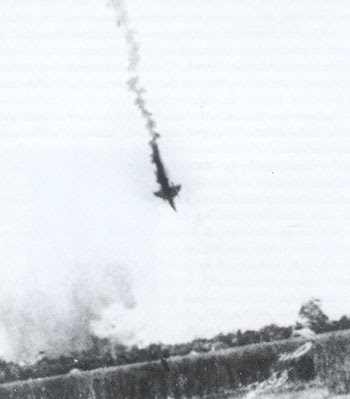
The Failed Air War Over Vietnam
or go to
Aletho News Archives – Video-Images
From the Archives
USS Liberty Massacre: A Pivotal Moment in the Hostile Takeover of America
By Kevin Barrett | Crescent | Dhu al-Qa’dah 24, 1445
In corporate America, hostile takeovers are commonplace. They occur when an aggressor—a larger corporation or rich individuals—seizes control of a smaller corporation without asking permission.
What few recognize is that the United States itself has been subjected to a hostile takeover. Since the aggressor, the illegitimate settler colony known as “Israel,” is much smaller than the US, the takeover has necessarily been surreptitious.
As of June, 2024, Israel’s gradual takeover of the US has become obvious and undeniable—a proverbial “elephant in the living room.” … continue
Blog Roll
 Aletho News
- Yemeni Armed Forces Warn Airlines Against Using Saudi Airports, Exempt Mecca and Medina
- Iran security chief says powers greater than US tried to conquer Iran but ended in ‘dustbin of history’
- Europe’s mounting social chaos… chickens coming home to roost for proxy war against Russia
- US-Russia Diesel Deal Becomes Massive Defeat for Ukraine
- Hormuz and the Looming Economic Catastrophe
- Dhubab offensive, media blitz and the rapid unraveling of Saudi-backed coalition’s new gambit
- Putin Conveys to Trump Iran’s Vision on Possible Conflict Resolution – Kremlin
- The Search for Truth: Charlie Kirk’s Assassination One Year Later
- ‘Harsh reality’: Iran says France seeks monopoly on power and intimidation, not peace for all
- When Will This White House Madness End?
- If Americans Knew
- For three years, Israel has killed a child in Gaza every 71 minutes – Daily Update
- Israeli forces kill another child in Gaza – Daily Update
- Gaza ceasefire exists in name only, say more than 100 organizations
- Nearly 2 Million in Gaza Need Urgent Shelter Assistance as Winter Looms: IOM Chief Warns
- Suppressing Palestinian resistance: US charity under fire for AI monitoring of Gaza classrooms
- Thousands Are Held in Israeli Torture Camps. This Is What Happens Inside
- Israel puts Gaza’s sick, injured, newborn in peril – Daily Update
- Report claimed Mark Levin used by Israeli government to influence Trump
- Over 2,000 Gazans have died awaiting medical evacuation amid Israel’s continued siege
- How a U.S. Diplomat Suppressed and Altered Reports Critical of Israel
- No Tricks Zone
- Germany’s Green Energy Debacle: High Energy Costs Force Kahla Porzellan to Close After 182 Years!
- New Study: 50 Years Of The Most Aggressive ‘Net Zero’ Policies Can Only Affect The Global Climate By 0.03°C
- US September “Heat” Was No Record…Many Records Set Decades Ago
- Latest European Green Energy Debacle; Portugal’s Largest Flagship Solar Park Insolvent!
- Green Energy Debacle: German Expert Professor Fritz Vahrenholt Warns Of Severe Economic And Social Consequences
- Two More Paleo Reconstructions Affirm Meters-Higher Sea Levels Across Ireland, Brazil 7000-6000 Years Ago
- New Study: Earth And Venus Surface Warmth Largely Explained By Convection And Lapse Rate, Not CO2 Or Radiation
- 2025 Nature Paper Claiming Worsening Global Drought Gets RETRACTED …Heavily Flawed
- New Study: ‘Global Drought Shows No Detectable Recent Acceleration Under Climate Warming’
- Economic Masterminds: German Socialists Suggest Taxing Productivity Gains Stemming From Using AI

