Soros Disruption: American-Style
By Wayne MADSEN – Strategic Culture Foundation – 20.03.2016
Eastern Europeans and Arabs are all-too-familiar with the political street hooliganism sponsored by global «provocateur» George Soros and his minions. Lately, middle-class Americans have had a taste of the type of violent protest provocations during the current US presidential campaign that have previously been visited upon governments from Macedonia and Moldova to Syria and Libya.
Recently, Donald Trump campaign rallies have seen highly-coordinated and well-planned political demonstrations in Chicago, Cleveland, St. Louis, Dayton, and other cities. The rallies were disrupted by highly-coordinated and well-planned protesters waving freshly-printed protest signs before awaiting television cameras. Such «rent-a-mob» actions are trademark signs of the involvement of George Soros and the «godfather» of political street violence, Gene Sharp, in disrupting the normal political process.
One of the favored methods proposed by Sharp and embraced by Soros-financed groups is the taunting of individuals. Sharp’s advice to taunt speakers is being played out in the US presidential campaign: «instead of predominantly silent and dignified behavior… people may mock and insult officials, either at a certain place or by following them for a period». Sharp suggests that taunting individuals, such as presidential candidates, be combined with a refusal to disperse when either asked or ordered to do so. Sharp claims that these methods are «non-violent». However, when the US Secret Service, charged with protecting presidential candidates from assassination or bodily harm, order protesters to leave a campaign venue and there is a subsequent refusal to do so, violence is a certainty.
Soros and Sharp honed their street revolution tactics on the streets of Belgrade in the Bulldozer Revolution that overthrew Serbian president Slobodan Milosevic on October 5, 2000. Two Soros-financed and Sharp-inspired groups, OPTOR! and the Center for Applied Nonviolent Action and Strategies (CANVAS), as well as their leader Srdja Popovic, a so-called «pro-democracy» agitator, have all been unmasked as US intelligence assets. Popovic has received funding from the CIA-linked US Institute of Peace, a creation of neo-conservatives to advance the type of undemocratic political street disruptions first seen in Serbia and that soon expanded to Ukraine, Georgia, Egypt, Venezuela, Russia, Macedonia, and other countries. Today, Soros-inspired political violence has targeted Trump rallies across the United States.
Popovic first began to infiltrate American politics by ostensibly supporting the Occupy Wall Street movement. As his ties to the CIA and Goldman Sachs later showed, his intent and that of his financiers were to derail the anti-capitalist popular movement.
Several veteran «agents provocateurs» of the Occupy Wall Street movement who are now part of the Bernie Sanders presidential campaign have been enlisted by groups like Unbound Philanthropy, an immigrant rights group, to disrupt Trump rallies. Together with the Soros-financed group Black Lives Matter, these professional street hooligans have carefully, and in compliance with the Sharp model, staged their demonstrations to achieve maximum media coverage while achieving the maximum level of disruption to the primary election process.
Unbound Philanthropy is funded by Obama’s deep-pocketed friend and frequent vacation host in Hawaii, William Reeves, a former JP Morgan executive who now heads up BlueCrest Capital. In some cases, the political protesters masquerade as Trump supporters by wearing pro-Trump shirts and hats in order to gain access to Trump campaign venues. This methodology of disruption employs another Sharp tactic, that of using false identities. Coupled with the tactic of «non-violent harassment» of individuals, the use of employing false identities to gain admittance to Trump rallies, followed by coordinated protests in the form of placard-waving «stand-ins», are textbook examples of Sharp tactics being employed with the financial support of Soros and his gang, which includes Reeves and pro-immigration Hispanic groups and Black Lives Matter. Many of the anti-Trump street actions are coordinated by MoveOn.org, another group financed principally by Soros and the Hyatt Hotels’ Pritzker family of Chicago. One member of the Pritzker family, Penny Pritzker, serves as the Secretary of Commerce in the Obama administration.
MoveOn.org, which has endorsed Sanders, is actually using its protests at Trump rallies as a fundraising gimmick. It promises to disrupt future Trump campaign rallies and it will use every weapon in the Sharp/Soros handbook.
Another Sharp/Soros tactic employed against Trump is the «speak-in». During a Trump campaign appearance in Dayton, a pro-Bernie Sanders protester jumped a barrier and rushed the stage in an attempt to grab the microphone from Trump. The Secret Service tackled the protester who was arrested by police. The protester previously took part in a 2015 protest at Wright State University in Dayton where he dragged a US flag on the ground. Destruction of property, including US flags, is another hallmark disruption tactic proposed by Sharp.
The Sharp definition of a «speak-in» is a «special form of nonviolent intervention… when actionists interrupt a meeting… or other gathering for the purpose of expressing viewpoints on issues which may or may not be related directly to the occasion». Soros classifies the action as «social intervention», with «psychological and physical aspects». Regardless of Sharp’s definition of such actions as «nonviolent», the Secret Service does not take lightly anyone lunging at a presidential candidate, especially after the assassination of candidate Robert F. Kennedy in Los Angeles in 1968 and the shooting and attempted assassination of candidate George Wallace in 1972. Soros’s operatives are dangerously playing with fire by bringing such violence-tinged street protest tactics to the American presidential political scene.
The stench of Popovic and Soros in the street operations against Trump, who has railed against Wall Street’s «free trade agreements» and neo-conservative «wars of choice», can be seen in the links between the street protest groups and corporate giants like Goldman Sachs.
Popovic and his CANVAS non-governmental organization (NGO) has received funding from a former Goldman Sachs executive named Muneer Satter.
Satter happened to work at Goldman Sachs with fellow corporate executive Heidi Cruz, the wife of Trump’s opponent for the Republican presidential nomination, Senator Ted Cruz of Texas. Although Satter retired from Goldman Sachs in 2012 he continues to serve as vice chairman of the Goldman Sachs Foundation. In 2012, the year that Satter retired from Goldman Sachs, the firm loaned more than $1 million to Cruz’s Texas US Senate campaign.
Satter also happens to be close to both President Barack Obama and anti-Trump GOP operative Karl Rove. Satter has donated to both Obama and Rove’s Crossroads political action committee. Satter was also the national finance co-chair of Mitt Romney’s 2008 and 2012 presidential campaigns.
This year, Satter joined the Senator Marco Rubio campaign as Illinois Finance Committee co-chairman. Such background players, Heidi Cruz and her Goldman Sachs friend Satter, as well as Rove, Romney, Reeves, Soros, the Pritzkers, and Popovic – a Central Intelligence Agency-linked foreign interloper in the United States political system – are the actual movers and shakers behind America’s presidential election. Their jobs and those of other deep-pocketed political financiers like Paul Singer, Haim Saban, Sheldon Adelson, Michael Bloomberg, Sam Zell, and Norman Braman, are to ensure that no «unfiltered outsiders» ever become the President of the United States. These and other wealthy backroom political maestros owe their undemocratic but massive political influence to insider politicians residing at 1600 Pennsylvania Avenue in Washington. They will do everything in their power to prevent an «unfiltered» candidate from becoming the next American president.
Australia Still Reluctant to Disclose MH17 Information
By James ONeill – New Eastern Outlook – 19.03.2016
When Malaysian Airlines Flight MH17 was shot down over Eastern Ukraine on 17 July 2014, Australian politicians and the mainstream media, especially the Murdoch newspapers, were quick to apportion blame. Responsibility for the disaster was immediately attributed to Russia, either directly or thorough Russian support for the so-called “separatists” in the Donbass region.
For the Australian politicians and media it was a case of “guilty as alleged” although at that time in the immediate aftermath of the disaster there was no evidence upon which to form any conclusions.
Three days after the crash the United States Secretary of State, John Kerry, appearing on NBC’s Meet the Press TV program said that the US had
“picked up the imagery of this launch. We know the trajectory. We know where it came from. We know the timing. And it was exactly at the time that this aircraft disappeared from the radar.”
Mr Kerry did not specify how the US had this information, but it was a reasonable inference at that time that the data had come from US satellites.
Since Mr Kerry’s remarks it has been established by independent investigators that the US had at least three satellites in geo-stationary orbit over Eastern Ukraine on 17 July 2014 Two of these satellites are of the SBIRS type (GEO-1 and GEO-2), and a Space Tracking and Surveillance System (STSS) satellite. Between them they are able to perform continuous surveillance of the area of interest.
Some commentators have endeavoured to downplay the significance of this by suggesting that factors such as cloud cover impeded surveillance capability. This is self-evidently nonsense. As one of their prime functions is to detect missile launches, their defensive capability would be hopelessly compromised if something as simple as cloud cover impeded their capacity to provide a timely warning of missile launches.
The capability of these satellites certainly includes the ability to detect and track the launch of a BUK missile, the weapon most commonly described as the cause of the disintegration of MH17. They can similarly track an air-to-air missile, which is the alternative hypothesis that has been advanced.
There has been a great deal of contradictory information from official sources about this satellite data, which is itself suspicious. For example, on 19 December 2015 the Dutch chief prosecutor and coordinator of the criminal investigation into the disaster, Mr Fred Westerbeke, told the Dutch daily newspaper NRC :
“Satellite images showing how on July 17 Flight MH17 was shot out of the sky by a rocket do not exist. There has been a misunderstanding about this… There is no conclusive evidence from intelligence services with the answers to all the questions.”
If Mr Westerbeke was correct, then it clearly contradicts the claims made by Mr Kerry 17 months earlier. But Mr Westerbeke then contradicted his own earlier statements in a letter to the families of the Dutch victims in February 2016. In that letter Mr Westerbeke stated:
“The US authorities have data generated by their own security forces, which could potentially provide information on a rocket trajectory. These data have been confidentially shared with the Dutch Military Intelligence and Security Service (DISS). The DISS and the Public Prosecutor are now investigating in what form the US state secret information can be used in the criminal investigation and what will be provided in a so-called official report to the Public Prosecution. That special report can be used as evidence by the Joint Investigation Team (JIT).”
It seems a reasonable inference on the basis of that statement that the secret US satellite data does disclose the required information. Specifically, it answers the major question: who fired the missile and from where?
The issue that is publically troubling the JIT is how to use sensitive intelligence data in a public forum such as a trial of accused persons. The undisclosed problem for the JIT is twofold. If, as is widely suspected, the satellite data show that the BUK missile was fired by Ukrainian forces, then that will contradict 20 months of relentless anti-Russian propaganda. The western media are not good at admitting the error of their ways.
The second problem is the agreement of 8 August 2014 whereby the members of the JIT agreed not to disclose any information unless all the parties agreed. As one of those parties, Ukraine, is a prime suspect, it is unlikely that the evidence will ever be revealed if it in fact implicates Ukraine.
It is still the case that the Australian government has never acknowledged the existence of the 8 August 2014 agreement. It has not bothered to tell the Australian public why it entered into such an agreement when the public interest would demand a transparent and full investigation of the worst disaster to be inflicted on Australians since the Bali bombings of 2002.
Given the existence of Mr Westerbeke’s letter to the families of Dutch victims it is difficult to understand why the Australian media are persisting with the claim that the Americans have refused to release the data. Paul Malone’s claim to that effect in the Canberra Times of 12 March 2016 is plainly wrong. It is possible of course that Mr Malone is aware of the facts, but the two problems identified above prevent him disclosing those facts.
Apart from detecting the launch of a missile, the satellite data can pinpoint the precise point from which the missile was fired. In the present case that is supremely important.
The Report of the Dutch Safety Board (DSB) into the MH17 disaster, published in October 2015 only went as far as to narrow the location of the launch site to an area of 320 square kilometers. This was territory contested by both Ukrainian and separatists forces. Despite the uncertainty and non-attribution of culpability in the DSB Report, Australian politicians falsely claimed that the report “proved” that Russian backed separatists were responsible.
Apart from a complete failure by the Australian media to correct this false information, they have also failed to address two further pieces of relevant evidence found in the DSB Report.
The first piece of evidence is found in the technical appendices of the DSB Report. Appendix T (from the Dutch Intelligence Services) has clearly not been read by any member of the Australian mainstream media. This appendix stated, inter alia:
- Although the separatists had captured a Ukrainian military base at Donetsk, the BUK systems located there were “not operational” and therefore “could not be used by the separatists.”
- Although there was information pointing to the fact that the separatists had been supplied with heavy weapons by the Russian Federation, there were no indications that these were powerful anti-aircraft systems.
- Although the separatists were trained to use weapons systems, there are no indications that they were being trained to use powerful anti-aircraft systems.
- There was no evidence of any intention by the separatists to shoot down a civil aircraft.
Reports in the mainstream media imply that the firing of a BUK missile is a matter of pointing it at the sky and pushing the proverbial button. As Appendix T makes clear however, extensive training in their use is required.
Not only must the crews be trained to a high level of proficiency, for which Appendix T notes there is no evidence in respect of the separatists, the firing of a BUK missile also requires the ancillary use of radar systems. Again, there is no evidence that the separatists had such radar equipment.
There was evidence however, that radar equipment of the Ukrainian armed forces was operational at the relevant time and in the relevant location. The Russian authorities at a press briefing given on 21 July 2014 disclosed this. Again, the Australian media ignored this evidence.
Contrary to the vague generality of the DSB Report as to the launch location, we have a report by the Russian manufacturer of the BUK missile, Almaz-Antey, released at the same time as the DSB Report.
Almaz-Antey produced a detailed analysis of the data. Their conclusion was that the BUK missile was launched from the Zaroschenskoe area, which was under the control of the Ukrainian armed forces at the time. This report has never been mentioned in the Australian mainstream media, probably because its conclusions do not fit the official narrative.
Thus, Mr Malone in the Canberra Times states that the JIT investigation is “widely expected” to “confirm that the missile was launched from separatist held territory.” It would only be “widely expected” by those reliant upon the constant stream of disinformation and concealment of evidence common to the mainstream media’s coverage of the MH17 disaster.
It was noted above that there was an alternative hypothesis about the cause of MH17’s crash, namely an air-to-air missile, presumably fired by one of the Ukrainian fighter aircraft identified in the area in the Russian briefing of 21 July 2014.
The Russian forensic expert Albert Naryshkin comprehensively advanced the air-to-air missile theory in July 2015. His report (available only in Russian) concluded that although the specific weapon could not be unequivocally identified, the specific nature of the missile damage to the aircraft meant that the most likely weapon was a Python air-to-air missile.
This particular weapon was adapted for use by the SU-25 Scorpion fighter that was the type of fighter observed by Russian radar data on 17 July 2014 and reported on at the 21 July 2014 briefing.
The merits or otherwise of this hypothesis are beyond the scope of this article. Suffice to say that it was not considered by the DSB and any mention of it is conspicuously absent from the Australian media.
Three further recent developments are worth noting. The first of these was the Coronial Inquest held in Melbourne in November 2015 in respect of the Australian victims. The inquest has been reported by John Helmer on his website. Suffice to note here that the coronial inquiry was deeply flawed. It was marked by secrecy, the suppression of evidence, conflicts of interest, and a manifest desire to simply parrot the official line regardless of other evidence that is progressively emerging.
It accepted without question the conclusions of the DSB Report, even though that Report is incomplete, does not ascribe culpability as it awaits the JIT investigation, and for the reasons mentioned below, is far from flawless.
The second development worth noting is that both the Dutch and the Russians have released letters addressed to the families of the victims.
The Russian statement is by the Deputy Head of the Federal Air Transport Agency of the Russian Federation, Oleg Storchevoy. Mr Storchevoy takes the opportunity to address some of the misinformation about what Russia has and has not done to assist the official inquiry.
He notes, for example, that Russian primary radar data was provided to the DSB, together with telephone conversations and other data, in August 2014. Russian primary radar data was in fact the only such data available, as the Ukrainians had for some reason switched off their radar at the critical time.
The Russian data supplied to the DSB confirmed increased activity by Ukrainian BUK missile systems within the conflict zone ahead of the tragedy. That evidence was ignored by the DSB.
It might be interpolated here that the separatists have no air force, so the need for anti-aircraft systems to be active remains obscure. No explanation has been forthcoming from the Ukrainians.
Mr Storchevoy also drew attention to the unprecedented cooperation offered by Almaz-Antey, the BUK manufacturer which again was ignored by the DSB.
Mr Storchevoy noted that Russia has repeatedly pointed out that the Dutch technical investigation was performed in an extremely non-transparent and biased manner. He said that the Dutch authorities should also explain how they distorted facts and concealed data, and ignored important data supplied by the Russians.
These and other questions posed by Mr Storchevoy are legitimate and deserve careful consideration and response. Perhaps needless to add, no report of Mr Storchevoy’s statement has appeared in the Australian mainstream media.
The second letter was written to the families of the Dutch victims by the head of the JIT inquiry, Mr Fred Westerbeke.
Mr Westerbeke’s letter discussed, inter alia, that conclusions about the technical analysis of the aircraft debris should be available in the latter half of 2016. Importantly, as noted above, he confirmed that the Americans had provided data about the missile trajectory although the form in which that data can be used is unsettled.
Mr Westerbeke also said that the analysis of other data, including intercepted telephone calls, location data from telephones, images (unspecified), witness statements and technical calculations would enable “certain inferences” to be drawn about the rocket’s track.
Reference was also made to the English blogger Eliot Higgins who operates under the name of “Bellingcat.” Despite repeated critical analysis of Higgins’ falsification of data and manifest other errors, he continues to be reported in the western mainstream media as a reliable source.
Why western intelligence agencies, with their vast resources, would defer to one man operating out of his house in Leicester is explicable only if Higgins is seen as a useful conduit for what is invariably anti-Russian propaganda.
Westerbeke obliquely dismisses Bellingcat as a resource, as “providing no evidence of direct involvement of members of a Russian unit” in the shoot down on MH17. The claim of Russian direct involvement is one of the more sensational of Bellingcat’s claims faithfully and uncritically reported in the western media.
In the light of the Westerbeke letter, the Australian Federal Police were asked whether they agreed with the contents of the Westerbeke letter. Westerbeke had signed the letter on behalf of the members of the JIT (which includes Australia).
They were also asked whether a similar letter would be sent to the Australian families. The AFP’s response was a non-answer, saying only that the queries had been forwarded to the JIT!
Information has also been sought from the Prime Minister’s on what compensation the Australian victim families might expect. Under the relevant Australian legislation victims of terrorism are eligible for compensation up to $75,000. That possibility was raised by a number of mainstream media outlets in Australia in July 2014. In order to be eligible the Prime Minister must declare that the deaths of the Australian citizens were as a result of a terrorist attack.
The government had announced on 9 October 2013 that payments would be made to the victim’s families of other terrorist attacks pursuant to the prime ministerial declaration. The payments have been applied retrospectively, starting with the events of 11 September 2001. To date there have been 10 such declarations, the latest being the Paris attacks of 13 November 2015.
The Australian government has not declared the shooting down of MH17 to be a terrorist act for the purposes of the legislation. The reasons for this are unknown, although comment has been sought from the Prime Minister’s office.
Australian victim families still have other remedies available under the provisions of the Montreal Convention of 1999. Under Article 21 of that Convention damages of (approximately) $215,000 are set.
Potential liability of the carrier, in this case Malaysian Airlines, is however unlimited unless it can prove that the death “was not due to the negligence or other wrongful act or omission of the carrier or its servants or agents.”
Given that the evidence appears to suggest that MH17 either flew over a war zone of its own volition or was directed to do so by Ukrainian air traffic control, discharging that onus may prove difficult.
Proceedings seeking various declarations have been launched in the New South Wales Supreme Court by Tim Lauschet (2015/210056) against Malaysian Airlines, but that case is still at a preliminary stage.
The only clear point to emerge in Australia in the 21 months since the disaster is that the government and the mainstream media are determined to, on the one hand deny the public vital information about the disaster, and on the other hand maintain the fiction that the disaster was the fault of Russian backed separatists.
That line serves to justify the sanctions imposed on Russia and the continuing demonization of President Putin. If only Prime Minister Turnbull’s plea for an intelligent and adult dialogue was sincere. If that were the case the Australian public would be better informed than they are. It seems a very vain hope.
James O’Neill is an Australian-based Barrister at Law.
SITE intelligence group: ‘Al-Qaeda’ claims attack on Statoil Gas Plant in Algeria, issues threat against shale gas production
Sputnik — 19.03.2016
The al-Qaeda in the Islamic Maghreb (AQIM) Islamist group claimed responsibility for an attack with explosive munitions on Norwegian energy major Statoil’s facility in the Algerian Sahara, media reported Saturday.
The Norwegian oil and gas company declared state of emergency Friday following the attack on one of its gas facilities in Algeria. The In Salah Gas asset was hit by explosive munitions fired from a distance. No one was injured in the attack.
According to the SITE intelligence group, al-Qaeda in the Islamic Maghreb — banned in Russia — issued a statement threatening both the Algerian authorities and Western companies producing shale gas.
Background:
Statoil’s Gas Facility in Algeria Hit by Explosive Munitions
The U.S. Is Exporting Its Oil Everywhere
Canada rejects the rule of international law and embraces international barbarity
By Mark Taliano | American Herald Tribune | March 18, 2016
The United Nations’ (UN) Security Council Resolution 2254 clearly states that the war in Syria demands a “Syrian-led, Syrian-owned political transition to end the conflict.” Additionally, it endorses “free and fair elections pursuant to the new constitution.”
In November, 2015, however, Canada defense minister Harjit Sajjan publically stated that “Assad must go”, basing his assessment on the “complexity of the problem” and “the horrible atrocities that have been committed to his (Assad’s) own people”. On both counts he is wrong: sustained evidence demonstrates that the foreign-backed mercenaries invading and destroying Syria are the culpable parties who are committing the atrocities. We also know that the invasion of Syria was planned well in advance, and that ISIS and its terror cohorts are deemed to be “strategic assets” by imperial war planners. Additionally, both historical evidence – the illegal invasions and destruction Iraq and Libya for example, and the US military doctrine of “unconventional warfare” present a clear case that the terrorist invaders are Western proxies. The West uses proxies to avoid culpability and to avoid “putting boots on the ground”.
Decoded, then, Sajjan’s assertion is an endorsement for illegal regime change – in a sovereign country led by a (hugely popular) elected president — and it is an incitement to terrorism.
In the context of the carnage, imposed by the West, on the Syrian peoples, an important question needs to be answered: What should Canada do?
A first step would be to reverse what Canada has already done.
Ken Stone, of the Hamilton Coalition To Stop The War, explained in a 2013 article, Canada’s Harper Government Supports Covert Mercenary War On Syria, Funds AL Qaeda Affiliated Rebels, what Canada was already doing to support illegal regime change in Syria:
1. Organizing the covert mercenary war against Syria through the Group of Friends of the Syrian People (“Friends of Syria Group”);
2. Establishing a regime of economic sanctions against Syria and hosting, in Ottawa, the Friends of Syria Group’s International Working Group on Sanctions;
3. Funding and supporting the so-called “rebel” side;
4. Planning for an overt western military action against Syria;
5. Working with Syrian-Canadians antagonistic to the Assad government;
6. Contributing to the demonization of Syrian President Bashar al-Assad and to the de-legitimation and isolation of his government.
In an interview with this writer, Stone explained what we should be doing:
We should withdraw our troops from the (illegal) US Coalition “against ISIS”; we should normalize diplomatic relations with Syria; we should end the (illegal) sanctions against Syria; we should withdraw from the “Friends of Syria Group”; and we should get out of NATO.
Canada needs an independent foreign policy within the framework of international law. The US coalition does not have UN Security Council approval, nor does it have the consent of the elected government of the independent sovereign nation of Syria. Merely “shifting assets” within the illegal coalition is not the answer, nor does it represent “real change”.
Currently, there are over 6 million internally displaced Syrians – those fleeing the invading mercenaries by seeking refuge in government-controlled areas – and over 4 million refugees. Thanks to Syria and its allies, including Russia and Iran, these people are now slowly returning home.
The return of refugees and displaced Syrians to their homes so that they can rebuild their country and their lives, is much preferable to the hardships that surviving refugees and displaced peoples are currently enduring.
Lifting sanctions would be a first important step in achieving this goal. We have already witnessed the devastating effects of (pre-war) sanctions against Iraq, which were directly responsible for the deaths of about five million children under age five and over one million others, so we should not tolerate sanctions against Syria. Propagandists pretend that the suffering of the Syrian people is Assad’s fault, but evidence demonstrates over and over again that we are responsible for the carnage, and illegal sanctions are part of the nexus of crimes creating the carnage. Instead of increasing spending with the framework of an illegal coalition, Canada should focus on legal, life-enhancing, humanitarian goals.
Current NATO efforts to illegally balkanize Syria should also be condemned. On a “macro” level, it is increasingly apparent that this criminal plan for a New Middle East, (as described by Professor Tim Anderson) is creating an overseas holocaust, and is pushing us to the brink of a third world war.
Instead of participating in this clearly fraudulent “war on terror”, the offshoot of the 9/11 neo-con coup d’etat, and the subsequent wars of aggression that have destroyed Libya, Iraq, Ukraine, and Syria, Canada needs to take a stand for humanity and justice.
An acceptance of a “Syrian solution” as stipulated by UN Security Council Resolution 2254, coupled with humanitarian aid – as opposed to illegal warmongering and selling military weaponry to ISIS’s chief financier, Saudi Arabia — would represent “real change”. Canada’s present course, disguised beneath a façade of humanitarianism, needs to be rejected.
How Hillary Clinton Lied Her Way to War in Libya
teleSUR | March 18, 2016
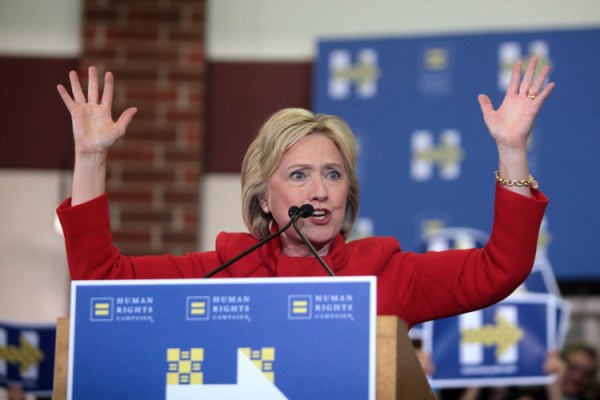
Declassified emails released in January and February reveal that Hillary Clinton was one of the main instruments in spreading chaos and extremism in Libya when the U.S. secretary of state personally pushed for the ousting of late Libyan leader Muammar Gadhafi.
Clinton’s emails reveal that she and her staff were aware that civilians they claimed to be protecting were not actually in danger from government forces.
Less than a month ahead of the passage of U.N. Security Council Resolution 1973, a resolution which authorized a no-fly zone to protect civilians on March 17, 2011, Hillary’s assistant, Huma Abedin, in an email dated Feb. 21, 2011, stated: “Based on numerous eyewitness reports, it is the Embassy’s assessment that the government no longer controls Benghazi. This is likely the case for Ajdabiyah as well.”
Abedin went on to write that sources in Benghazi reported that Libyan Interior Minister Abdul Fattah Younes had “changed sides” and was “now with the protesters in Benghazi.” The mood in Benghazi and Ajdabiyah, according to the email, was “celebratory” and all posters of Gadhafi had been “knocked down.”
Crucially, this email was written at a time when Clinton was aware that no government crackdown was taking place in either Benghazi or Ajdabiyah.
This was despite anti-government protests kicking off in Benghazi and Ajdabiyah a few days before, at a time when the U.S. and France and other Western governments were claiming government forces were involved in the mass-killing of protesters and civilians.
However, on March 2, 2011, a few days before the passage of the U.N. resolution, U.S. State Department official Harriet Spanos sent an email informing Clinton that “Security Reports . . . confirm that Benghazi has been calm over the past couple of days.”
“Economic activity is going on in Benghazi,” she added in the email, with shops and banks open and “[m]obile and landline phones… working… and Internet has returned.”
The moment of truth came 11 days into the NATO bombing, which continued for several months, when Clinton’s top adviser, Sidney Blumenthal, who was not employed by the state department but by the private Clinton Foundation, laid out the reasons for the Washington-led intervention and the eventual ousting of Gadhafi.
Without once mentioning “humanitarian” purposes, in a March 27, 2011 email Blumenthal stressed to Clinton the importance of pressing for a “final win” by ousting Gadhafi in order to boost U.S. President Barack Obama’s then low approval ratings.
Ousting the Libyan strongman, argued Blumenthal, would further establish “security in North Africa, securing democracy in Egypt and Tunisia, economic development, effect throughout Arab world and Africa, extending U.S. influence, counter-balancing Iran, etc.”
Further highlighting his complete and utter disregard for the human cost of the intervention, in the same email Blumenthal informed Clinton about the horrors committed by U.S.-backed forces in Libya, which included members of al-Qaida.
“Speaking in strict confidence, one rebel commander stated that his troops continue to summarily execute all foreign mercenaries in the fighting.” Such actions are considered war crimes and in violation of international resolutions and conventions.
The emails also reveal that the Obama administration and Clinton were aware of the threat of al-Qaida in the eastern part of the country, which had for years been suppressed by the Libyan leader.
The emails also show that claims made by NATO at the time, including alleged atrocities committed by Gadhafi’s forces such as rape and mass killings, were rumors used by Clinton and the Obama administration to help sell the intervention to the world.
It is clear the NATO intervention was not intended for humanitarian purposes. So what were the intentions of Clinton and the Obama administration? [Beyond the long planned and ongoing destruction of any and all enemies of Israel*] The same as most U.S. interventions: financial interest.
The emails reveal that most of the intelligence Clinton received on Libya was from Blumenthal, who was preparing to make substantial financial gains from the fall of the Libyan leader.
According to Vice News, the intel briefs on Libya were “prepared by Blumenthal’s business partner and former CIA operative Tyler Drumheller, a consultant with plans to take advantage of economic opportunities in a post-war Libya.”
Both men worked with the U.S.-based security company Osprey, a start-up that hoped to profit from medical and military contracts with Libyan rebels amid the chaos of the conflict, according to Vice News.
Five years later, the opportunism of Clinton and the Obama administration which resulted in one of the most disastrous interventions in recent decades, aiding the rise of extremist groups in the oil-rich African country and contributing to Europe’s ongoing refugee situation can be seen for what it was: a devastating assault on the people of Libya rooted in lies, deceit and narrow, imperial self-interest.
*Also in the cited Vice article but not presented by teleSUR:
… Much of the intelligence Blumenthal fed to Clinton was quite odd. One email suggested that Libyan elites wanted warm relations with Israel, another that European spy agencies were encouraging tribal leaders to declare a semi-autonomous tribal zone in the east of the country. […]
On Aug. 27, 2012, for instance, Blumenthal’s intelligence claimed that a new Libyan president would “seek a discreet relationship with Israel.” Then, Clinton forwarded on the e-mail to her top policy aide Jacob Sullivan with a note attached: “If true, this is encouraging. Should consider passing to Israelis.”
How Propaganda Feeds War on Syria
By Rick Sterling | Consortium News | March 17, 2016
There has been a pattern of sensational but untrue reports that lead to public acceptance of U.S. and Western military intervention in countries around the world.
For instance, in Gulf War 1 (1990-91), there were reports of Iraqi troops stealing incubators from Kuwait, leaving babies to die on the cold floor. Relying on the testimony of a Red Crescent doctor, Amnesty Interenational ‘verified’ the false claims.
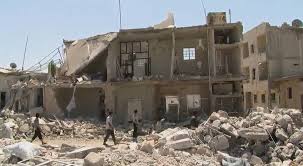
Scene of destruction after aerial bombing in Azaz, Syria, Aug. 16, 2012.
(U.S. government photo)
Ten years later, there were reports of yellow cake uranium going to Iraq for development of weapons of mass destruction.
One decade later, there were reports of Libyan soldiers drugged on viagra and raping women as they advanced.
In 2012, NBC broadcaster Richard Engel was supposedly kidnapped by a pro-Assad Syrian militia but luckily freed by Syrian opposition fighters, the “Free Syrian Army.”
All these reports were later confirmed to be fabrications and lies. They all had the goal of manipulating public opinion and they all succeeded in one way or another. Despite the consequences, which were often disastrous, none of the perpetrators were punished or paid any price.
It has been famously said, “Those who do not learn from the past are doomed to repeat it.” This report is a critical review of the so-called “Caesar Torture Photos” story. As will be shown, there is strong evidence the accusations are entirely or substantially false.
Overview of ‘Caesar Torture Photos’
On Jan. 20, 2014, two days before negotiations about the Syrian conflict were scheduled to begin in Switzerland, a sensational report burst onto television and front pages around the world. The story was that a former Syrian army photographer had 55,000 photographs documenting the torture and killing of 11,000 detainees by the Syrian security establishment.
The Syrian photographer was given the code-name “Caesar.” The story became known as the “Caesar Torture Photos.” A team of lawyers plus digital and forensic experts were hired by the Carter-Ruck law firm, on contract to Qatar, to go to the Middle East and check the veracity of “Caesar” and his story. They concluded that “Caesar” was truthful and the photographs indicated “industrial scale killing.”
CNN, London’s Guardian and LeMonde broke the story which was subsequently broadcast in news reports around the world. The Caesar photo accusations were announced as negotiations began in Switzerland. With the opposition demanding the resignation of the Syrian government, negotiations quickly broke down.
For the past two years the story has been preserved with occasional bursts of publicity and supposedly corroborating reports. Most recently, in December 2015 Human Rights Watch (HRW) released a report titled “If the Dead Could Speak” with significant focus on the Caesar accusations.
Following are 12 significant problems with the “Caesar torture photos” story:
- Almost half the photos show the opposite of the allegations.
The Carter Ruck Inquiry Team claimed there were about 55,000 photos total with about half of them taken by “Caesar” and the other half by other photographers. The Carter Ruck team claimed the photos were all “similar.” Together they are all known as “Caesar’s Torture Photos.”
The photographs are in the custody of an opposition organization called the Syrian Association for Missing and Conscience Detainees (SAFMCD). In 2015, they allowed Human Rights Watch (HRW) to study all the photographs which have otherwise been secret. In December 2015, HRW released their report titled “If the Dead Could Speak.”
The biggest revelation is that over 46 percent of the photographs (24,568) do not show people “tortured to death” by the Syrian government. On the contrary, they show dead Syrian soldiers and victims of car bombs and other violence (HRW pp 2-3). Thus, nearly half the photos show the opposite of what was alleged. These photos, never revealed to the public, confirm that the opposition is violent and has killed large numbers of Syrian security forces and civilians.
- The claim that other photos only show “tortured detainees” is exaggerated or false.
The Carter Ruck report says “Caesar” only photographed bodies brought from Syrian government detention centers. In its December 2015 report, HRW said, “ The largest category of photographs, 28,707 images, are photographs Human Rights Watch understands to have died in government custody, either in one of several detention facilities or after being transferred to a military hospital.” They estimate 6,786 dead individuals in the set.
The photos and the deceased are real, but how they died and the circumstances are unclear. There is strong evidence some died in conflict. Others died in the hospital. Others died and their bodies were decomposing before they were picked up. These photographs seem to document a war-time situation where many combatants and civilians are killed.
It seems the military hospital was doing what it had always done: maintaining a photographic and documentary record of the deceased. Bodies were picked up by different military or intelligence branches. While some may have died in detention; the big majority probably died in the conflict zones. The accusations by “Caesar.” the Carter Ruck report and HRW that these are all victims of “death in detention” or “death by torture” or death in “government custody” are almost certainly false.
- The true identity of “Caesar” is probably not as claimed.
The Carter Ruck Report says “This witness who defected from Syria and who had been working for the Syrian government was given the code-name ‘Caesar’ by the inquiry team to protect the witness and members of his family.” (CRR p12)
However if his story is true, it would be easy for the Syrian government to determine who he really is. After all, how many military photographers took photos at Tishreen and Military 601 Hospitals during those years and then disappeared? According to the Carter Ruck report, Caesar’s family left Syria around the same time. Considering this, why is “Caesar” keeping his identity secret from the Western audience? Why does “Caesar” refuse to meet even with highly sympathetic journalists or researchers?
The fact that 46 percent of the total photographic set is substantially the opposite of what was claimed indicates two possibilities: Caesar and his promoters knew the contents but lied about them expecting nobody to look. Or, Caesar and his promoters did not know the contents and falsely assumed they were like the others. The latter seems more likely which supports the theory that Caesar is not who he claims to be.
- The Carter Ruck Inquiry was faulty, rushed and politically biased.
The credibility of the “Caesar” story has been substantially based on the Carter-Ruck Inquiry Team which “verified” the defecting photographer and his photographs. The following facts suggest the team was biased with a political motive:
–The investigation was financed by the government of Qatar which is a major supporter of the armed opposition.
–The contracted law firm, Carter Ruck and Co, has previously represented Turkey’s President Recep Tayyip Erdogan, also known for his avid support of the armed opposition.
–The American on the legal inquiry team, Professor David M. Crane, has a long history working for the U.S. Defense Department and Defense Intelligence Agency. The U.S. government has been deeply involved in the attempt at “regime change” with demands that President Bashar “Assad must go” beginning in summer 2011 and continuing until recently.
–Crane is personally partisan in the conflict. He has campaigned for a Syrian War Crimes Tribunal and testified before Congress in October 2013, three months before the Caesar revelations.
–By their own admission, the inquiry team was under “time constraints” (CRR, p11).
–By their own admission, the inquiry team did not even survey most of the photographs
–The inquiry team was either ignorant of the content or intentionally lied about the 46 percent showing dead Syrian soldiers and attack victims.
–The inquiry team did its last interview with “Caesar” on Jan. 18, 2014, quickly finalized a report and rushed it into the media on Jan. 20, two days prior to the start of United Nations-sponsored negotiations.
The self-proclaimed “rigor” of the Carter Ruck investigation is without foundation. The claims to a “scientific” investigation are similarly without substance and verging on the ludicrous.
- The U.S. Central Intelligence Agency (CIA) is involved.
In an interview on France24, David Crane of the inquiry team describes how “Caesar” was brought to meet them by “his handler, his case officer.” The expression “case officer” usually refers to the CIA. This would be a common expression for Professor Crane who previously worked in the Defense Intelligence Agency. The involvement of the CIA additionally makes sense since there was a CIA budget of $1 billion for Syria operations in 2013. Crane’s “Syria Accountability Project” is based at Syracuse University where the CIA actively recruits new officers despite student resistance.
Why does it matter if the CIA is connected to the “Caesar” story? Because the CIA has a long history of disinformation campaigns. In 2011, false reports of viagra fueled rape by Libyan soldiers were widely broadcast in Western media as the U.S. pushed for a military mandate. Decades earlier, the world was shocked to hear about Cuban troops fighting in Angola raping Angolan women. The CIA chief of station for Angola, John Stockwell, later described how they invented the false report and spread it around the world. The CIA was very proud of that disinformation achievement. Stockwell’s book, In Search of Enemies, is still relevant.
- The accusers portray simple administrative procedures as mysterious and sinister.
The Carter Ruck inquiry team falsely claimed there were about 11,000 tortured and killed detainees. They then posed the question: Why would the Syrian government photograph and document the people they just killed? The Carter Ruck Report speculates that the military hospital photographed the dead to prove that the “orders to kill” had been followed. The “orders to kill” are assumed.
A more logical explanation is that dead bodies were photographed as part of normal hospital / morgue procedure to maintain a file of the deceased who were received or treated at the hospital. The same applies to the body labeling / numbering system. The Carter Ruck report suggests there is something mysterious and possibly sinister in the coded tagging system. But all morgues need to have a tagging and identification system.
- The photos have been manipulated.
Many of the photos at the SAFMCD website have been manipulated. The information card and tape identity are covered over and sections of documents are obscured. It must have been very time-consuming to do this for thousands of photos. The explanation that they are doing this to “protect identity” is not credible since the faces of victims are visible. What are they hiding?
- The Photo Catalog has duplicates and other errors.
There are numerous errors and anomalies in the photo catalog as presented at the SAFMCD website. For example, some deceased persons are shown twice with different case numbers and dates. There are other errors where different individuals are given the same identity number.
Researcher Adam Larson at A Closer Look at Syria website has done detailed investigation which reveals more errors and curious error patterns in the SAFMCD photo catalog.
9. With few exceptions, Western media uncritically accepted and promoted the story.
The Carter Ruck report was labeled “Confidential” but distributed to CNN, the Guardian and LeMonde. CNN’s Christiane Amanpour gushed over the story as she interviewed three of the inquiry team under the headline “EXCLUSIVE: Gruesome Syria photos may prove torture by Assad regime.” Critical journalism was replaced by leading questions and affirmation. David Crane said “This is a smoking gun.” Desmond de Silva “likened the images to those of holocaust survivors.”
The Guardian report was titled “Syrian regime document trove shows evidence of ‘industrial scale’ killing of detainees” with the subtitle, “Senior war crimes prosecutors say photographs and documents provide ‘clear evidence’ of systematic killing of 11,000 detainees”
One of the very few skeptical reports was by Dan Murphy in the Christian Science Monitor. Murphy echoed standard accusations about Syria but went on to say incisively, “the report itself is nowhere near as credible as it makes out and should be viewed for what it is: A well-timed propaganda exercise funded by Qatar, a regime opponent who has funded rebels fighting Assad who have committed war crimes of their own.”
Unfortunately that was one of very few critical reports in the mainstream media. In 2012, foreign affairs journalist Jonathan Steele wrote an article describing the overall media bias on Syria. His article was titled “Most Syrians back Assad but you’d never know from western media.” The media campaign and propaganda has continued without stop. It was in this context that the Carter Ruck Report was delivered and widely accepted without question.
- Politicians have used the Caesar story to push for more US/NATO aggression.
Politicians seeking direct U.S. intervention for “regime change” in Syria were quick to accept and broadcast the “Caesar” story. They used it to demonize the Assad government and argue that the U.S. must act so as to prevent “another holocaust,” “another Rwanda,” “another Cambodia.”
When Caesar’s photos were displayed at the House Foreign Affairs Committee in Congress, Chairman Ed Royce said “It is far past time that the world act…. It is far past time for the United States to say there is going to be a safe zone across this area in northern Syria.”
The top-ranking Democrat on the House Foreign Affairs Committee is Eliot Engel. In November 2015 he said, “We’re reminded of the photographer, known as Caesar, who sat in this room a year ago, showing us in searing, graphic detail what Assad has done to his own people.” Engel went on to advocate for a new authorization for the use of military force.
Rep. Adam Kinzinger is another advocate for aggression against Syria. At an event at the Holocaust Memorial Museum in July 2015, he said, “If we want to destroy ISIS we have to destroy the incubator of ISIS, Bashar al-Assad.”
The irony and hypocrisy is doubly profound since Rep. Kinzinger has met and coordinated with opposition leader Okaidi who is a confirmed ally of ISIS. In contrast with Kinzinger’s false claims, it is widely known that ISIS ideology and initial funding came from Saudi Arabia and much of its recent wealth from oil sales via Turkey. The Syrian Army has fought huge battles against ISIS, winning some but losing others with horrific scenes of mass beheading carried out by ISIS.
- The Human Rights Watch assessment is biased.
HRW has been very active around Syria. After the chemical attacks in greater Damascus on Aug. 21, 2013, HRW rushed a report which concluded that, based on a vector analysis of incoming projectiles, the source of the sarin carrying rockets must have been Syrian government territory. This analysis was later debunked as a “junk heap of bad evidence” by highly respected investigative journalist Robert Parry.
HRW’s assumption about the chemical weapon rocket flight distance was faulty. Additionally it was unrealistic to think you could determine rocket trajectory with 1 percent accuracy from a canister on the ground, especially from a canister on the ground that had deflected off a building wall.
In spite of this, HRW stuck by its analysis which blamed the Assad government. HRW Director Ken Roth publicly indicated dissatisfaction when an agreement to remove Syrian chemical weapons was reached. Roth wanted more than a “symbolic” attack on Syrian government forces.
Regarding the claims of “Caesar,” HRW seems to be the only non-governmental organization to receive the full set of photo files from the custodian. To its credit, HRW acknowledged that nearly half the photos do not show what has been claimed for two years: they show dead Syrian soldiers and militia along with scenes from crime scenes, car bombings, etc.
But HRW’s bias is clearly shown in how it handles this huge contradiction. Amazingly, HRW suggests the incorrectly identified photographs support the overall claim. They say, “This report focuses on deaths in detention. However other types of photographs are also important. From an evidentiary perspective, they reinforce the credibility of the claims of Caesar about his role as a forensic photographer of the Syrian security forces or at least with someone who has access to their photographs.” (HRW, p31) This seems like saying if someone lies to you half the time that proves they are truthful.
The files disprove the assertion that the files all show people who were tortured and killed. The photographs show a wide range of deceased persons, from Syrian soldiers to Syrian militia members to opposition fighters to civilians trapped in conflict zones to regular deaths in the military hospital. There may be some photos of detainees who died in custody after being tortured, or who were simply executed. We know that this happened in Iraqi detention centers under U.S. occupation. Ugly and brutal things happen in war times. But the facts strongly suggest that the “Caesar” account is basically untrue or a gross exaggeration.
It is striking that the HRW report has no acknowledgment of the war conditions and circumstances in Syria. There is no acknowledgment that the government and Syrian Arab Army have been under attack by tens of thousands of weaponized fighters openly funded and supported by many of the wealthiest countries in the world.
There is no hint at the huge loss of life suffered by the Syrian army and supporters defending their country. The current estimates indicate from 80,000 to 120,000 Syrian soldiers, militia and allies having died in the conflict. During the three years 2011-2013, including the period covered by the “Caesar” photos, it is estimated that over 52,000 Syrian soldiers and civilian militia died versus 29,000 anti-government forces.
HRW had access to the full set of photographs including the Syrian army and civilian militia members killed in the conflict. Why did they not list the number of Syrian soldiers and security forces they identified? Why did they not show a single image of those victims?
HRW goes beyond endorsing the falsehoods in the “Caesar story”; HRW suggests the cataloguing is only a partial listing. On page 5, the report says, “Therefore, the number of bodies from detention facilities that appear in the Caesar photographs represent only a part of those who died in detention in Damascus.”
On the contrary, the Caesar photographs seem to mostly show victims who died in a variety of ways in the armed conflict. The HRW assertions seem to be biased and inaccurate.
- The legal accusations are biased and ignore the supreme crime of aggression.
The Christian Science Monitor journalist Dan Murphy gave an apt warning in his article on the Carter Ruck report about “Caesar.” While many journalists treated the prosecutors with uncritical deference, he said, “Association with war crime prosecutions is no guarantor of credibility – far from it. Just consider Luis Moreno Ocampo’s absurd claims about Viagra and mass rape in Muammar Qaddafi’s Libya in 2011. War crimes prosecutors have, unsurprisingly, a bias towards wanting to bolster cases against people they consider war criminals (like Assad or Qaddafi) and so should be treated with caution. They also frequently favor, as a class, humanitarian interventions.”
The Carter Ruck legal team demonstrated how accurate Murphy’s cautions could be. The legal team was eager to accuse the Syrian government of “crimes against humanity” but the evidence of “industrial killing,” “mass killing,” “torturing to kill” is dubious and much of the hard evidence shows something else.
In contrast, there is clear and solid evidence that a “Crime against Peace” is being committed against Syria. It is public knowledge that the “armed opposition” in Syria has been funded, supplied and supported in myriad ways by various outside governments. Most of the fighters, both Syrian and foreign, receive salaries from one or another outside power. Their supplies, weapons and necessary equipment are all supplied to them. Like the “Contras” in Nicaragua in the 1980’s, the use of such proxy armies is a violation of customary international law.
It is also a violation of the UN Charter which says “All Members shall refrain in their international relations from the threat or use of force against the territorial integrity or political independence of any state, or in any other matter inconsistent with the Purposes of the United Nations”.
The government of Qatar has been a major supporter of the mercenaries and fanatics attacking the sovereign state of Syria. Given that fact, isn’t it hugely ironic to hear the legal contractors for Qatar accusing the Syrian government of “crimes against humanity”?
Isn’t it time for the United Nations to make reforms so that it can start living up to its purposes? That will require demanding and enforcing compliance with the UN Charter and International Law.
Rick Sterling is an independent research/writer and member of Syria Solidarity Movement. He can be contacted at rsterling1@gmail.com
US gears up to fight Russian ‘disinformation’ with… disinformation
RT | March 17, 2016
Two US senators are proposing legislation to counter, what they consider to be “disinformation” spread by certain foreign media. What better way to kick-start their campaign than by basing their bill on spurious nonsense?
Republican Senator Rob Portman and his Democratic colleague Chris Murphy are deeply concerned about foreign “propaganda.” They demand that Uncle Sam throws even more money at the Broadcasting Board of Governors (BBG), which is already given around $768 million annually.
Not content with the EU’s Stratcom East and NATO’s Riga-based communications centre, Portman and Murphy want a new center for Information Analysis and Response to analyze “foreign government information-warfare efforts.”
What better place to launch the crusade than at NATO’s Atlantic Council appendage? An organization funded by such disinterested and neutral parties as the US State Department, Lockheed Martin, the Kingdom of Bahrain and the monarchy of the United Arab Emirates?
Portman certainly couldn’t think of a better venue, so he showed up on Wednesday to express his satisfaction that the “US version of events is better.” This attitude is not a shock. Most of the US elite, and their media champions believe America has a monopoly on truth. Next, Portman warned that Russia, China and other countries are trying to “manipulate and control information to achieve their national goals, often at the expense of the interests and values of America’s allies.”
The Senator sounded particularly worried about RT. And it is no wonder. Portman claimed RT spends $400 million a year just for the maintenance of our Washington bureau. Just imagine that? $400 million big ones.
Unfortunately, given that our entire budget for 2016 is 17 billion rubles, or around $248 million in today’s dollars, we have no idea where on earth Portman got this numbers – or if he even believes them. That $248 million pays for the global broadcasting and newsgathering operations of round-the-clock TV channels in English, Arabic and Spanish, documentaries, online portals in six languages, the RT UK channel, and yes, RT America – our stateside outpost. To run all of this RT receives one third of the funding the US government allocates for the BBG. Despite modest means, RT can boast 70 million weekly TV viewers, nearly 50 million monthly unique visitors to our digital platforms and a status as the number one international TV news network on YouTube, with more than 3 billion views.
Amazing, the BBG’S Voice of America (VOA) reported Portman’s $400 million figure without question, and with no apparent fact-checking. The Senator’s – and the supposedly venerated news organization’s he seeks to aid – fight against “disinformation” kicks off with a blatant lie. You really can’t make this stuff up.
VOA wasn’t alone, Germany’s own state-broadcaster, Deutsche Welle (DW), also carried Portman’s erroneous sums. DW, of course, is never regarded as propaganda in Washington because the administration in Berlin is not a threat to American interests.
This is despite the fact that it receives government funding – $332 million per year – to communicate its country’s point of view to the world. When RT contacted DW to correct this blatant falsehood, the outlet’s editors treated the issue as a “difference of opinion” before eventually adding RT’s budget figure as our own claim, and not the publicly available information that it is, and that has been reported by hundreds of, credible, news outlets.
The BBG, and its supporters, such as Senator Portman, are currently fighting hard in Washington to secure extra resources for their efforts. An intensive campaign has been fought over the past six months to support these objectives. Much of this lobbying has been based on exaggeration and outright lies. Portman’s $400 million is one of the most absurd yet. The fact that VOA and DW unquestioningly repeated the deceit speaks volumes.
The Ever-Curiouser MH-17 Case
By Robert Parry | Consortium News | March 16, 2016
The curious mystery surrounding the shoot-down of Malaysia Airlines Flight 17 over eastern Ukraine on July 17, 2014, gets more curious and more curious as the U.S. government and Dutch investigators balk at giving straightforward answers to the simplest of questions even when asked by the families of the victims.
Adding to the mystery Dutch investigators have indicated that the Dutch Safety Board did not request radar information from the United States, even though Secretary of State John Kerry indicated just three days after the crash that the U.S. government possessed data that pinpointed the location of the suspected missile launch that allegedly downed the airliner, killing all 298 people onboard.
Although Kerry claimed that the U.S. government knew the location almost immediately, Dutch investigators now say they hope to identify the spot sometime “in the second half of the year,” meaning that something as basic as the missile-launch site might remain unknown to the public more than two years after the tragedy.
The families of the Dutch victims, including the father of a Dutch-American citizen, have been pressing for an explanation about the slow pace of the investigation and the apparent failure to obtain relevant data from the U.S. and other governments.
I spent time with the family members in early February at the Dutch parliament in The Hague as opposition parliamentarians, led by Christian Democrat Pieter Omtzigt, unsuccessfully sought answers from the government about the absence of radar data and other basic facts.
When answers have been provided to the families and the public, they are often hard to understand, as if to obfuscate what information the investigation possesses or doesn’t possess. For instance, when I asked the U.S. State Department whether the U.S. government had supplied the Dutch with radar data and satellite images, I received the following response, attributable to “a State Department spokesperson”: “While I won’t go into the details of our law enforcement cooperation in the investigation, I would note that Dutch officials said March 8 that all information asked of the United States has been shared.”
I wrote back thanking the spokesperson for the response, but adding: “I must say it seems unnecessarily fuzzy. Why can’t you just say that the U.S. government has provided the radar data cited by Secretary Kerry immediately after the tragedy? Or the U.S. government has provided satellite imagery before and after the shootdown? Why the indirect and imprecise phrasing? …
“I’ve spent time with the Dutch families of the victims, including the father of a U.S.-Dutch citizen, and I can tell you that they are quite disturbed by what they regard as double-talk and stalling. I would like to tell them that my government has provided all relevant data in a cooperative and timely fashion. But all I get is this indirect and imprecise word-smithing.”
The State Department spokesperson wrote back, “I understand your questions, and also the importance of the view of these families so devastated by this tragedy. However, I am going to have to leave our comments as below.”
Propaganda Value
This lack of transparency, of course, has a propaganda value since it leaves in place the widespread public impression that ethnic Russian rebels and Russian President Vladimir Putin were responsible for the 298 deaths, a rush to judgment that Secretary Kerry and other senior U.S. officials (and the Western news media) encouraged in July 2014.
Once that impression took hold there has been little interest in Official Washington to clarify the mystery especially as evidence has emerged implicating elements of the Ukrainian military. For instance, Dutch intelligence has reported (and U.S. intelligence has implicitly confirmed) that the only operational Buk anti-aircraft missile systems in eastern Ukraine on July 17, 2014, were under the control of the Ukrainian military.
In a Dutch report released last October, the Netherlands’ Military Intelligence and Security Service (MIVD) reported that the only anti-aircraft weapons in eastern Ukraine capable of bringing down MH-17 at 33,000 feet belonged to the Ukrainian government.
MIVD made that assessment in the context of explaining why commercial aircraft continued to fly over the eastern Ukrainian battle zone in summer 2014. MIVD said that based on “state secret” information, it was known that Ukraine possessed some older but “powerful anti-aircraft systems” and “a number of these systems were located in the eastern part of the country.”
The intelligence agency added that the rebels lacked that capability: “Prior to the crash, the MIVD knew that, in addition to light aircraft artillery, the Separatists also possessed short-range portable air defence systems (man-portable air-defence systems; MANPADS) and that they possibly possessed short-range vehicle-borne air-defence systems. Both types of systems are considered surface-to-air missiles (SAMs). Due to their limited range they do not constitute a danger to civil aviation at cruising altitude.”
One could infer a similar finding by reading a U.S. “Government Assessment” released by the Director of National Intelligence on July 22, 2014, five days after the crash, seeking to cast suspicion on the ethnic Russian rebels and Putin by noting military equipment that Moscow had provided the rebels. But most tellingly the list did not include Buk anti-aircraft missiles. In other words, in the context of trying to blame the rebels and Putin, U.S. intelligence could not put an operational Buk system in the rebels’ hands.
So, perhaps the most logical suspicion would be that the Ukrainian military, then engaged in an offensive in the east and fearing a possible Russian invasion, moved its Buk missile systems up to the front and an undisciplined crew fired a missile at a suspected Russian aircraft, bringing down MH-17 by accident.
That was essentially what I was told by a source who had been briefed by U.S. intelligence analysts in July and August 2014. [See, for instance, Consortiumnews.com’s “Flight 17 Shoot-Down Scenario Shifts” and “The Danger of an MH-17 Cold Case.”]
But Ukraine is a principal participant in the Dutch-led Joint Investigative Team (JIT), which has been probing the MH-17 case, and thus the investigation suffers from a possible conflict of interest since Ukraine would prefer that the world’s public perception of the MH-17 case continue to blame Putin. Under the JIT’s terms, any of the five key participants (The Netherlands, Ukraine, Australia, Belgium and Malaysia) can block release of information.
The interest in keeping Putin on the propaganda defensive is shared by the Obama administration which used the furor over the MH-17 deaths to spur the European Union into imposing economic sanctions on Russia.
In contrast, clearing the Russians and blaming the Ukrainians would destroy a carefully constructed propaganda narrative which has stuck black hats on Putin and the ethnic Russian rebels and white hats on the U.S.-backed government of Ukraine, which seized power after a putsch that overthrew elected pro-Russian President Viktor Yanukovych on Feb. 22, 2014.
Accusations against Russia have also been fanned by propaganda outlets, such as the British-based Bellingcat site, which has collaborated with Western mainstream media to continue pointing the finger of blame at Moscow and Putin – as the Dutch investigators drag their heels and refuse to divulge any information that would clarify the case.
Letter to the Families
Perhaps the most detailed – although still hazy – status report on the investigation came in a recent letter from JIT chief prosecutor Fred Westerbeke to the Dutch family members. The letter acknowledged that the investigators lacked “primary raw radar images” which could have revealed a missile or a military aircraft in the vicinity of MH-17.
Ukrainian authorities said all their primary radar facilities were shut down for maintenance and only secondary radar, which would show commercial aircraft, was available. Russian officials have said their radar data suggest that a Ukrainian warplane might have fired on MH-17 with an air-to-air missile, a possibility that is difficult to rule out without examining primary radar which has so far not been available. Primary radar data also might have picked up a ground-fired missile, Westerbeke wrote.
“Raw primary radar data could provide information on the rocket trajectory,” Westerbeke’s letter said. “The JIT does not have that information yet. JIT has questioned a member of the Ukrainian air traffic control and a Ukrainian radar specialist. They explained why no primary radar images were saved in Ukraine.” Westerbeke said investigators are also asking Russia about its data.
Westerbeke added that the JIT had “no video or film of the launch or the trajectory of the rocket.” Nor, he said, do the investigators have satellite photos of the rocket launch.
“The clouds on the part of the day of the downing of MH17 prevented usable pictures of the launch site from being available,” he wrote. “There are pictures from just before and just after July 17th and they are an asset in the investigation.” According to intelligence sources, the satellite photos show several Ukrainian military Buk missile systems in the area.
Why the investigation’s data is so uncertain has become a secondary mystery in the MH-17 whodunit. During an appearance on NBC’s “Meet the Press” on July 20, 2014, three days after the crash, Secretary Kerry declared, “we picked up the imagery of this launch. We know the trajectory. We know where it came from. We know the timing. And it was exactly at the time that this aircraft disappeared from the radar.”
But this U.S. data has never been made public. In the letter, Westerbeke wrote, “The American authorities have data, that come from their own secret services, which could provide information on the trajectory of the rocket. This information was shared in secret with the [Dutch] MIVD.” Westerbeke added that the information may be made available as proof in a criminal case as an “amtsbericht” or “official statement.”
Yet, despite the U.S. data, Westerbeke said the location of the launch site remains uncertain. Last October, the Dutch Safety Board placed the likely firing location within a 320-square-kilometer area that covered territory both under government and rebel control. (The safety board did not seek to identify which side fired the fateful missile.)
By contrast, Almaz-Antey, the Russian arms manufacturer of the Buk systems, conducted its own experiments to determine the likely firing location and placed it in a much smaller area near the village of Zaroshchenskoye, about 20 kilometers west of the Dutch Safety Board’s zone and in an area under Ukrainian government control.
Westerbeke wrote, “Raw primary radar data and the American secret information are only two sources of information for the determination of the launch site. There is more. JIT collects evidence on the basis of telephone taps, locations of telephones, pictures, witness statements and technical calculations of the trajectory of the rocket. The calculations are made by the national air and space laboratory on the basis of the location of MH17, the damage pattern on the wreckage and the special characteristics of the rockets. JIT does extra research on top of the [Dutch Safety Board] research. On the basis of these sources, JIT gets ever more clarity on the exact launch site. In the second half of the year we expect exact results.”
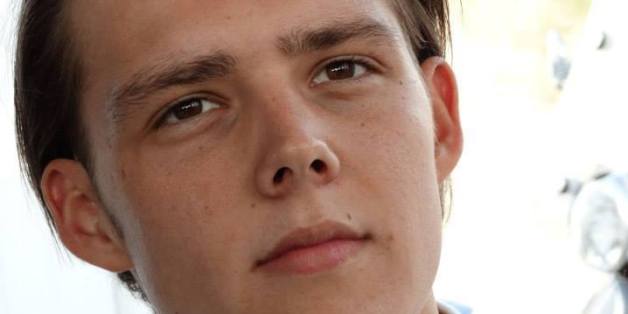
Quinn Schansman, a dual U.S.-Dutch citizen killed aboard Malaysia Airlines Flight 17 on July 17, 2014. (Photo from Facebook)
Meanwhile, the U.S. government continues to stonewall a request from Thomas J. Schansman, the father of Quinn Schansman, the only American citizen to die aboard MH-17, to Secretary Kerry to release the U.S. data that Kerry has publicly cited.
Quinn Schansman, who had dual U.S.-Dutch citizenship, boarded MH-17 along with 297 other people for a flight from Amsterdam to Kuala Lumpur on July 17, 2014. The 19-year-old was planning to join his family for a vacation in Malaysia.
In a letter to Kerry dated Jan. 5, 2016, Thomas J. Schansman noted Kerry’s remarks at a press conference on Aug. 12, 2014, when the Secretary of State said about the Buk anti-aircraft missile suspected of downing the plane: “We saw the take-off. We saw the trajectory. We saw the hit. We saw this aeroplane disappear from the radar screens. So there is really no mystery about where it came from and where these weapons have come from.”
Although U.S. consular officials in the Netherlands indicated that Kerry would respond personally to the request, Schansman told me this week that he had not yet received a reply from Kerry.
Investigative reporter Robert Parry broke many of the Iran-Contra stories for The Associated Press and Newsweek in the 1980s. You can buy his latest book, America’s Stolen Narrative, either in print here or as an e-book (from Amazon and barnesandnoble.com
Pentagon Drops the Ball Over Open Skies Treaty With Russia
Sputnik – 16.03.2016
US officials want Washington to deny Russia the right to observe strategic infrastructure facilities in the US from the air under the Open Skies Treaty.
At the center of their concerns is a new sensor suit installed on Tu-214OS, a special-purpose reconnaissance aircraft, used for such flights.
Some Congress and Pentagon representatives have already voiced concerns that Russia might use these flights to spy on American power plants, communications networks and other critical infrastructure.
“I cannot see why the United States would allow Russia to fly a surveillance plane with an advanced sensor over the United States to collect intelligence,” The New York Times quoted Representative Mac Thornberry, a Texas Republican who heads the House Armed Services Committee, as saying in a statement earlier in February.
His concerns are echoed by US Strategic Command (STRATCOM) Commander Adm. Cecil Haney:
“The treaty has become a critical component of Russia’s intelligence collection capability directed at the United States.” Defense One, the US defense and national security website, quotes him as saying.
“The Open Skies construct was designed for a different era…I’m very concerned about how it’s applied today,” adds Defense Intelligence Agency (DIA) Director Lt. Gen. Vincent Stewart.
Defense One, however has an answer to their concerns.
When the Treaty was first negotiated, the states involved all approved the use of panoramic and framing cameras using film, video cameras, infra-red line-scanning devices and sideways-looking synthetic aperture radar – all far less capable than what was then available to intelligence agencies, it explains.
The maximum ground resolution acceptable with treaty-approved cameras is 30 centimeters. Today, anyone can buy commercial satellite imagery with a resolution of 25 centimeters, it adds.
Russia recently requested to switch from wet-film cameras to digital sensors for its surveillance flights over the US.
The website says that the Treaty has provisions to upgrade and modernize sensors. Film has long ago given way to digital imagery. Treaty members have agreed to allow a digital electro-optical sensor package upgrade, but not to allow Open Skies flights to operate so that higher resolution can be obtained.
So why doesn’t the US military add its own digital sensors, questions the website?
“Because the Pentagon dropped the ball,” it explains.
“A policy directive to proceed with the upgrade was issued in 2012, but the Defense Department didn’t issue a request for proposal until 2015, and still hasn’t chosen a contractor. The issue isn’t money – perhaps $45 million. The problem is that Open Skies flights are a very low priority for the Pentagon.”
“At a time when the Pentagon is embarked on a new $3 billion initiative to reassure European friends and allies worried about Russian belligerence, it makes sense to speed up equipping the US Open Skies plane with digital imaging capabilities, rather than to complain about the disadvantages of mutual transparency,” it furthermore states.
Russia has for years conducted unarmed observation flights over the United States, just as the United States does over Russia, as part of the Open Skies Treaty, which was signed in 1992 by both nations as well as 32 other countries at the end of the Cold War, and entered into force a decade later.
Although the treaty and the flights, unfamiliar to most Americans, amount to officially sanctioned spying, their goal has been to foster transparency about military activity and to reduce the risk of war and miscalculation, especially in Europe.
“Amid last year’s rising tensions, the US Open Skies aircraft carried out twice as many overflights as its Russian counterpart,” Defense One says.
“US flights have strengthened ties between NATO members and have reassured non-NATO states around Russia’s periphery. Under the Treaty’s “ride-sharing” provision, US flights over Russia in 2015 carried crew members from Ukraine, Canada, France, Germany, the Czech Republic, Great Britain, Turkey, Italy and Romania.”
“Moreover, complaints about the new Russian advantage under Open Skies may be overblown and are certainly misdirected. The Kremlin isn’t the culprit in this case; the Pentagon is,” it says.
Russian officials confirmed the plans to equip surveillance planes with digital hardware but cited the obsolescence of wet-film equipment as a major reason behind the decision.
“We are switching to digital equipment because nearly nobody produces wet-film equipment any longer,’ said Mikhail Ulyanov, director of the Foreign Ministry Department for Non-Proliferation and Arms Control, in an interview to RBTH.
It also eliminates photochemical processes, allowing an operator onboard to observe terrain in real time, according to Vartan Shakhgedanov, chief design engineer of the new Russian system.
The system, specifically designed for Open Skies flights, includes two Tu-214ON planes produced by the Vega Radio Engineering Corporation (Vega) and the United Instrument Manufacturing Corporation (UIMC), two bodies within the Russian state corporation Rostec.
However, if Russia successfully upgrades its surveillance equipment, the US risks losing its advantage in what has so far been a relatively safe way to obtain strategic intelligence.
The new equipment meets criteria for film resolution set by the Open Skies Treaty, but is less clunky than its predecessor.
Rose Eilene Gottemoeller, the Under Secretary of State for Arms Control and International Security for the US State Department sought to temper concerns about Russian overflights, saying that what Moscow gains from the observation flights is “incremental” to what they collect through other means.
“One of the advantages of the Open Skies Treaty is that information — imagery — that is taken is shared openly among all the treaty parties,” she said at a joint hearing of the House Foreign Affairs and Armed Services committees back in December.
“So one of the advantages with the Open Skies Treaty is that we know exactly what the Russians are imaging, because they must share the imagery with us.”
Featured Video

Seyed M. Marandi: US-Iran War Inevitable: Kuwait and Bahrain May Fall
or go to
Aletho News Archives – Video-Images
From the Archives
Oil and the Israel Lobby
Reknowned economist M. Shahid Alam offers this excellent critique of Noam Chomsky’s defective analysis of the relative influence of Oil versus the Israel lobby over US foreign policy: … continue
Blog Roll
 Aletho News
- ICC ignored ‘very well-documented’ NATO crimes – ex-Libyan minister
- SNSC secretary dismisses US response to Iran’s conditions as ‘inadequate’
- Sanaa says Taiz roads open, secure for residents, warns Saudi forces
- Iraqi resistance group urges Saudi leadership to admit defeat, lift Yemen siege
- Trump’s Retreat: How Al-Aqsa Flood Took Down the US Empire
- Israel’s Military Actions in Lebanon Grossly Violate International Law — Lavrov
- Seyed M. Marandi: US-Iran War Inevitable: Kuwait and Bahrain May Fall
- Leaders Condemn Ansarallah Attack on Saudi Arabia While Ignoring Illegal War Against Yemen
- Leaked: Britain’s Covert Iraqi Psyops Network
- Yemeni Armed Forces Warn Airlines Against Using Saudi Airports, Exempt Mecca and Medina
- If Americans Knew
- After Oct 7, IDF policy allowed civilian casualties for even the lowest-ranking targets
- Israel’s Destruction of Southern Lebanon Intensified After the Cease-Fire
- The Last-Minute Decision That Gave Israel Its Name
- The American Conservative: How Trump Made the World Go Nuclear
- Meet the US generals and admirals advancing Israeli policy
- Opinion: Why news organizations should boycott Israel
- The Israeli witch hunt of Sami Abu Shehadeh exposes the lie of the ‘Jewish and democratic’ state
- No state has a ‘right’ to exist – least of all Israel
- Testimonies about Gaza’s civilian death toll expose Israel’s atrocities – Daily Update
- How Israel Conquered the Latin American Right
- No Tricks Zone
- New Study Suggests Large Regions Of The Pacific Ocean Have Been Cooling For The Last 80 Years
- Germany’s Green Energy Debacle: High Energy Costs Force Kahla Porzellan to Close After 182 Years!
- New Study: 50 Years Of The Most Aggressive ‘Net Zero’ Policies Can Only Affect The Global Climate By 0.03°C
- US September “Heat” Was No Record…Many Records Set Decades Ago
- Latest European Green Energy Debacle; Portugal’s Largest Flagship Solar Park Insolvent!
- Green Energy Debacle: German Expert Professor Fritz Vahrenholt Warns Of Severe Economic And Social Consequences
- Two More Paleo Reconstructions Affirm Meters-Higher Sea Levels Across Ireland, Brazil 7000-6000 Years Ago
- New Study: Earth And Venus Surface Warmth Largely Explained By Convection And Lapse Rate, Not CO2 Or Radiation
- 2025 Nature Paper Claiming Worsening Global Drought Gets RETRACTED …Heavily Flawed
- New Study: ‘Global Drought Shows No Detectable Recent Acceleration Under Climate Warming’

