Five Reasons the MI6 Story is a Lie
By Craig Murray | June 14, 2015
The Sunday Times has a story claiming that Snowden’s revelations have caused danger to MI6 and disrupted their operations. Here are five reasons it is a lie.
1) The alleged Downing Street source is quoted directly in italics. Yet the schoolboy mistake is made of confusing officers and agents. MI6 is staffed by officers. Their informants are agents. In real life, James Bond would not be a secret agent. He would be an MI6 officer. Those whose knowledge comes from fiction frequently confuse the two. Nobody really working with the intelligence services would do so, as the Sunday Times source does. The story is a lie.
2) The argument that MI6 officers are at danger of being killed by the Russians or Chinese is a nonsense. No MI6 officer has been killed by the Russians or Chinese for 50 years. The worst that could happen is they would be sent home. Agents’ – generally local people, as opposed to MI6 officers – identities would not be revealed in the Snowden documents. Rule No.1 in both the CIA and MI6 is that agents’ identities are never, ever written down, neither their names nor a description that would allow them to be identified. I once got very, very severely carpeted for adding an agents’ name to my copy of an intelligence report in handwriting, suggesting he was a useless gossip and MI6 should not be wasting their money on bribing him. And that was in post communist Poland, not a high risk situation.
3) MI6 officers work under diplomatic cover 99% of the time. Their alias is as members of the British Embassy, or other diplomatic status mission. A portion are declared to the host country. The truth is that Embassies of different powers very quickly identify who are the spies in other missions. MI6 have huge dossiers on the members of the Russian security services – I have seen and handled them. The Russians have the same. In past mass expulsions, the British government has expelled 20 or 30 spies from the Russian Embassy in London. The Russians retaliated by expelling the same number of British diplomats from Moscow, all of whom were not spies! As a third of our “diplomats” in Russia are spies, this was not coincidence. This was deliberate to send the message that they knew precisely who the spies were, and they did not fear them.
4) This anti Snowden non-story – even the Sunday Times admits there is no evidence anybody has been harmed – is timed precisely to coincide with the government’s new Snooper’s Charter act, enabling the security services to access all our internet activity. Remember that GCHQ already has an archive of 800,000 perfectly innocent British people engaged in sex chats online.
5) The paper publishing the story is owned by Rupert Murdoch. It is sourced to the people who brought you the dossier on Iraqi Weapons of Mass Destruction, every single “fact” in which proved to be a fabrication. Why would you believe the liars now?
There you have five reasons the story is a lie.
Update by Craig Murray on June 16, 2015:
The Truth Avoided by Mainstream Media Liars
My factual demolition of the anti-Snowden story has been read by hundreds of thousands of people, very probably millions, around the internet, 50,000 so far on this site alone, and tweeted by thousands of people. It has been tweeted at – repeatedly – every single mainstream media journalist who has been repeating the government propaganda.
The extraordinary thing is that no journalist, anywhere, has made any attempt to deny the facts I give. Not one journalist in the entire crowd of corporate media paid lackeys at the BBC, Sunday Times, Reuters or anywhere at all has addressed or tried to refute the facts which make it impossible that their Snowden story is true. They have not addressed it in their publications or even tried to defend themselves on social media. Not one journalist, not anywhere. (One or two have pointed out that the fifth point is an ad hominem, which is true. Not all ad hominems are invalid, but the first four facts destroy the argument anyway).
Neither has there been any response from the “safe” retired diplomats or security consultants the mainstream media can generally roll out on these occasions.
Pakistan closes Zionist-run charity for spying
Rehmat’s World | June 14, 2015
On Thursday, the Pakistani government ordered Islamabad police to shut-down the local office of London-based Save the Children charity. It also ordered all its foreign employees to leave Pakistan within next two weeks.
Pakistan’s government took the decision on recommendation from Pakistan’s intelligence agency ISI. The agency claims that the NGO is conducting spying missions in Pakistan’s Balochistan province, which long has been on the US-Israel radar.
Pakistan’s interior minister Chaudhry Nisar Ali claimed on Friday that several NGOs working in Pakistan work for the interests of the US, Israel and India.
Many analysts believe that despite the NGO’s commendable work in helping children, mostly victims of western wars on third world countries, Save the Children, has a political agenda too.
Judging by Washington’s reaction, it seems the NGO must have working links with CIA, MI6 and Mossad. According to AFP Washington warned Islamabad on Friday that it was only hurting itself after Save the Children was expelled for working against the country.
In 2012, the government expelled the expat staff of Save the Children, which has worked in Pakistan for over 35 years and employs 1,200 Pakistanis. Pakistani doctors have long been suspicious of foreign and local medical staff attached with the NGO of using fake vaccination injections which were harming young children in remote areas of Pakistan. In 2011, even the France-based Médecins Sans Frontières, an international medical aid group accused the NGO of using these injections as cover for CIA activities in Pakistan and many other countries in the world.
Save the Children has been producing faked documentaries over the plight of children in Syria, Sudan, Libya and other countries for CIA to justify the West’s “humanitarian” wars against anti-Israel regimes. The NGO was banned in Syria, Sudan and Libya ahead of the West’s ‘regime change’ wars in those countries. Now, it works in Syria’s bordering countries, Turkey, Jordan and Israel to exploit the Syrian children killed and injured by the ISIL and other pro-Israel rebel groups.
The Save the Children is headed by Justin Forsyth, a British Zionist diplomat who held top posts under the country’s two pro-Israel and Islamophobe prime ministers, Gordon Brown and Tony Blair. A Malaysian international court declared Tony Blair WAR CRIMINAL a few years ago. Now, he is appointed to lead Europe’s largest Jewish lobby group.
Last year, Justin Forsyth honored Tony Blair with the NGO’s Global Legacy award.
Last year, the UK’s ex-ambassador to Uzbekistan exposed the evil face of Save the Children – a 176 million pounds annual charity.
Save the Fatcats
By Craig Murray | November 26, 2014
These are the top salaries at the Save the Children fund.
CEO Justin Forsyth £139,950
COO Anabel Hoult £139,950
COO / CFO & Strategic Initiatives Rachel Parr £131,970
Global Programmes Director Fergus Drake £113,300
Fundraising Director Tanya Steele £112,200
Marketing & Comms Director Sue Allchurch £111,920
Policy & Advocacy Director Brendan Cox £106,029
CFO Peter Banks £102,000
HR Director Paul Cutler £100,980
The UK average salary is 26,500.
StC has just given Tony Blair its “Global Legacy” award. What kind of people like Tony Blair? People who earn over 100,000. I am not sure that if you put money in a tin, or bought from their charity shop, you thought you were paying that many fat salaries. There are also gold plated pensions and other benefits. Justin Forsyth, the CEO, of course worked in Tony Blair’s neo-con policy unit.
As I have written before, very few charities are in any sense independent any more. Save the Children Fund gets 176 million pounds – over half its income – in grants from various governments, including over 80 million from the British government. That compares to 106 million in donations from the public. In 2012 over 70 million pounds was spent by Save the Children UK on its own staff costs. This was reduced on paper to 44 million in 2014 by the expedient of transferring some Headquarters staff from Save the Children UK to Save the Children International. I have an uneasy feeling about some of Save the Children’s accounting presentation. Justin Forsyth’s and Annabel Hoult’s salary of 139,950 sounds a lot better than 140,000 doesn’t it? Rachel Parr’s 131,970 sounds less than 132 grand.
Save the Children’s highly paid and very numerous HQ staff work in a swanky office for which they pay a staggering 6.5 million pounds a year lease. Do they really need their HQ in ultra expensive Central London? I suppose all those high earners have to get home to Islington. Their HQ costs more than all their other premises put together, including all their shops.
I wonder how much all of this is known to the 13,000 good-hearted volunteers who work many hours for nothing to support these people.
I give regularly to charity, by standing order. I am sure so do many who read this blog. If you are giving to Save the Children, I do urge you to re-target your charitable giving.
U.S. Intelligence Agencies Mock America in 9/11 Trial
By Kevin Ryan | Dig Within | June 13, 2015
Last year, it was discovered that the FBI had attempted to infiltrate the legal defense team of a Guantanamo Bay prisoner. The defendant is charged, along with four others including Khalid Sheik Mohammed (KSM), of conspiring to commit the 9/11 attacks. As a result, the military trial was moved out for approximately one year to allow for an investigation into the FBI’s offense. Recently, Al-Jazeera reported that the trial has been moved out yet again because the Department of Justice team leading the investigation (of its own bureau) needs more time to complete its secret report. These delays highlight the absurdity of the case against these men and the contemptible abuse of justice that the military trial represents.
 Apparently, it has been difficult for the Justice Department to explain why the FBI approached a member of defendant Ramzi bin al-Shibh’s legal team to “create a relationship with him that he was forbidden from disclosing.” That explanation became more difficult when it was learned that another member of Bin al-Shibh’s defense team had been cooperating with the FBI since late 2013.
The FBI infiltration of the Bin Al-Shibh defense team is just the tip of this anti-justice iceberg, however. In February, it was revealed that a translator assigned to help defend the accused was a CIA operative. That’s one way to ensure that the official account of 9/11, created entirely through torture testimony and secret evidence provided by the CIA ad FBI, would not be contradicted by defendant testimony. More was needed, however, as previous disclosures showed that the CIA was controlling audio feeds from the courtroom, bugging the rooms where the accused met with their lawyers, and censoring the lawyers. Additionally, hundreds of thousands of confidential defense team emails were provided to the prosecutors.
The military trial of these men was never expected to bring justice. But the absurd actions taken by the CIA and FBI have made the whole thing seem ludicrous, mocking the U.S. justice system. Why would these measures be needed and tolerated if the defendants were actually involved in 9/11? The reasons include that:
- The charges against the defendants were largely established based on torture testimony, the records of which were destroyed by the CIA. That was after the agency misled the 9/11 Commission about the existence of the records.
- Bin al-Shibh and KSM were both originally identified by the first torture victim, Abu Zubaydah. However, the government now says that Zubaydah was never associated with al Qaeda at all and therefore he could not have known what the government previously said he knew. In other words, the arrest and torture of Bin al-Shibh and KSM were initiated by way of a fictional account attributed to Zubaydah.
- 9/11 Commission leader Lee Hamilton suddenly can’t recall anything about these torture victims or his use of their testimony (441 times) in the 9/11 Commission Report.
- KSM’s behavior prior to 9/11 was reported to be very different from that of a Muslim. He enjoyed go-go dancers and drinking parties and was said to be dangerous to nothing but his own bank account. The playboy lifestyle of KSM was similar to that of alleged hijacker ringleader Mohamed Atta, who seemed to be protected by U.S. authorities and might have been an intelligence asset.
- One of the defense team lawyers resigned from the Army in protest of what was happening. He accused the U.S. government of “stacking the deck against the defense” and conducting a “show trial.”
One reasonable explanation for why the CIA and FBI have gone to such great lengths to control this trial is that the agencies are trying to cover-up their own role in 9/11. Much has been learned that suggests the CIA and FBI were involved. For example:
- There are many examples of (admitted) government-sponsored terrorism.
- It is known that the FBI manufactures terrorism.
- FBI director Louis Freeh is a 9/11 suspect.
- CIA director George Tenet facilitated the 9/11 crimes.
- U.S. intelligence agencies continue to lie about their “response” to 9/11.
Whatever the reason for the antics, the military trial of these men has become an absolute farce leading American society farther down a path of tyranny. It sets a precedent in which the CIA and FBI can be suspected of crimes against the nation and then charge others with those crimes using secret evidence. The accused can be held in seclusion for thirteen years until agents of the CIA and FBI insert themselves as defense team members, ensuring total control from start to end.
At the same time, the press never notices that such an obviously fake trial would not be needed if there were actually any legitimate evidence against the accused. All things considered, this trial is not only a travesty of justice, it makes a mockery of 9/11 and brings shame upon the American people.
The Guardian on Nicaragua : high-intensity disinformation warfare
Tortilla con Sal | June 1, 2015
Among NATO’s psychological warfare outlets the UK Guardian occupies a special place as the fake-progressive mouthpiece of neocolonial English language news media. In recent years, Guardian writers and editors have been persistent propaganda shills for Nazi militias and death squads in Ukraine and for Al Qaeda and related terror groups in both Libya and Syria. No surprise then that it should also have an almost endless record of propaganda attacks against the main member countries of ALBA – Bolivia, Cuba, Ecuador, Nicaragua and Venezuela.
The latest disinformation offering has been an article by Nina Lakhani in the Guardian’s development pages targeting Nicaragua’s education system. The article’s title “Poverty in Nicaragua drives children out of school and into the workplace” could be applied to almost any country in the majority world as well as to countries in North America and Europe. It’s also worth noting that the Guardian’s development pages are funded by the Bill and Melinda Gates Foundation.
A recent survey of projects funded by the Microsoft tycoons’ NGO between 2003 and 2013 in Africa found out that only 12% of the USD 3 billion granted went directly to the target populations. The rest was invested in research centers for the expansion of European and US-American agribusiness corporations. Self-evidently, the Guardian has a vested interest in promoting a neocolonial perspective skewed in favour of corporate funded non-governmental views and against sovereign governments, especially anti-imperialist governments like those of the ALBA countries.
This particular Guardian article offers a helpful concrete example of how certain kinds of anti-ALBA country propaganda can work while still staying within the bounds of apparently progressive ideas and argument. Nicaragua’s Sandinista government education has transformed education in Nicaragua in many positive ways despite very significant difficulties. But the Guardian article tries to make the absolutely false case that Nicaragua has practically abandoned a large number of it’s school age population and lacks a serious commitment to improving the country’s education system. The article uses various propaganda tricks that depend entirely on readers’ likely ignorance of Nicaragua and the region.
Nina Lakhani starts her false argument with quotes from childen in Bluefields, a city on Nicaragua’s impoverished Caribbean Coast. One quote goes “My family can’t afford the books”. But nowhere in her article does Nina Lakhani report that in January 2007, the very first decision of the incoming Sandinista government under Daniel Ortega was to make health and education services free. No child in Nicaragua’s public school system needs to pay for their schoolbooks. School directors breaching the principle of free education face dismissal. Does Lakhani offer a quote from a local school director? Of course not.
Similarly, Nina Lakhani’s disinformation exercise completely omits reporting mass national programmes by Nicaragua’s Sandinista government to guarantee at least one meal a day for children in school, to ensure the poorest children have shoes and a backpack for their books, to rehabilitate classrooms and classroom furniture, to consolidate literacy skills and to improve dental health. Apart from those important omissions, perhaps the most reprehensible feature of the Guardian article is that it cites figures that are mostly five years or more out of date.
This use of obsolete statistics effectively ignores the Nicaraguan government’s massive efforts to improve school attendance, diminish desertion, improve academic performance and promote better academic standards. Readily available World Bank data for some indicators is slightly more up to date and allows a fair comparison with Nicaragua’s neighbours. While it is certainly true that available recent statistics are patchy and make it hard to compare like with like, that does not mean a more current view is out of reach. In any case, data isolated from any comparative context are grossly misleading and are a long-standing disinformation specialty of corporate media writers on foreign affairs.
So Nina Lakhani’s false use of out-of-date data looks even more dishonest when Nicaragua’s indicators according to the World Bank for the period 2006 to 2013 are compared with its regional neighbours’. For example, in the area of primary education, Nicaragua’s indicators are generally better than those in Guatemala, somewhat behind Honduras and El Salvador and all four countries lag behind Costa Rica. However, in terms of indicators relating to secondary education, Nicaragua has generally similar or better indicators than Guatemala, Honduras and El Salvador and again all four lag behind Costa Rica.
Nina Lakhani’s insistence on the importance of reducing child labour so as to ensure good education for all children is certainly correct. But that is true throughout Central America, whose countries share many social characteristics derived from their history of colonial and neocolonial domination and economic under-development. In particular in Nicaragua, the school year has historically been scheduled around the coffee harvest from mid-December to late February when thousands of rural families migrate en bloc as families to pick coffee. As in most of Central America, Nicaraguan law allows children to start work at 14.
Since 2011, the Nicaragua government has implemented a series of measures aimed at preventing under-age children from working. In 2012 the government began an annual campaign coordinated by local municipal authorities, the Education Ministry, the Health Ministry and relevant labour unions to ensure children under 14 years old, accompanying their families picking coffee in Nicaragua’s main coffee growing areas, attend classes and educational activities. The national confederation of workers in the informal sector also works with the government in urban centres to keep school age children from working selling with their parents on the streets.
Child labour is a serious problem throughout Central America. But Lakhani’s article suggests the Nicaraguan government’s policy on child labour represents a unique failure. To make her false case, she cites old figures from the 2005 census that she compares with unreliable current estimates from Nicaragua’s business sector. Lakhani writes “Nicaragua has ratified multiple international treaties and has strong national policies, but government claims that it is reducing child labour are not supported by any published evidence.” But Lakhani applies a different standard to a business sector estimate “that there are between 250,000 and 320,000 child workers, with one in three under 14.”
The link her report offers is to a video with off the cuff remarks at a press conference by business organization President José Adán Aguerri. His claim too is unsupported by any recent published evidence, but still Lakhani gives it more weight than government claims. By contrast, the Chair of the National Assembly’s Commision for Women Youth, Children and the Family, Carlos Emilio López, announced in 2013 a 10% drop in child labour in Nicaragua since 2005. Nina Lakhani mentions no reliable evidence to falsify that assertion.
She mentions an anecdotal case study by La Isla Foundation of 26 children in the sugar cane plantations aged between 12 and 17 which is virtually meaningless in the national context, but may perhaps reflect to some degree the reality in the sugar industry throughout the region, not just in Nicaragua. In that regional context, Nicaragua has a better record at protecting vulnerable children than its neighbours. In fact, the International Labour Organization representative in Nicaragua said in June 2014, “In the 2005 census, 53% of children working did not go to school, now that percentage is less than 15%.”
That statement by the ILO should be taken together with recent government data for education indicating substantial increases in matriculation numbers, lower figures for academic desertion, and better academic results generally. Likewise, Nicaragua’s Ministry of the Family’s mass campaign to help families ensure their children go to preschool is helping hundreds of thousands of children to get better early schooling. Bearing all that in mind, it is fair to say that the recent statements from the relevant responsible officials about the government’s committed implementation of education and family policies categorically contradict the Guardian’s misleading report. Nina Lakhani seems deliberately to omit highly relevant context supporting the government’s education policies in relation to child labour.
When she cites the most recent US government report saying, “The [Nicaraguan] government’s enforcement of labour laws is inadequate, and plans to combat child labour and protect children have not been fully implemented”, one has to assume she is making an extremely bad joke. The United States government, has overseen the fall of much of its child population into deep poverty for many years now and has zero authority to lecture another country about its record on child welfare. All the Central American governments are working to reduce child labour, Nicaragua’s Sandinista government especially.
Nina Lakhani’s baseless claim that the Nicaraguan government is failing to reduce child labour is not just grossly unfair given available evidence that she has chosen to ignore. A look at the budgetary history of Nicaragua’s spending on education since January 2007 also serves to confirm the falsity of the Guardian’s report. This calculation of education spending in Nicaragua includes both spending assigned to universities and the budget of Ministry of Education. It does not include :
-
spending by the Ministry of the Family to support pre-school education;
-
spending by the Ministry of Health to support children with special needs or dental health
-
spending in schools by the government’s sports and culture institutions;
-
in some years it may not include all spending on vocational and technical education;
-
spending to guarantee school meals or shoes and backpacks for school
Last year of the Presidency of Ing. Enrique Bolaños Geyer
| Year | Education spending in C$ (millions) | % national budget | % GDP |
| 2006 | 4, 608.4 | 20.1 | 03.98 |
Comandante Daniel Ortega Saavedra became President in January 2007
| Year | Education spending in C$ millions | % national budget | Inflation adjusted increase | % GDP |
| 2007 | 5,501.40 | 22.00 | 08.61 | 04.30 |
| 2008 | 6,250.00 | 21.80 | 02.21 | 04.52 |
| 2009 | 7,526.00 | 23.10 | 00.51 | 05.34 |
| 2010 | 7,250.80 | 23.00 | -07.64 | 04.74 |
| 2011 | 7,900.40 | 22.00 | 03.17 | 04.65 |
| 2012 | 9,364.40 | 22.10 | 08.21 | 05.01 |
| 2013 | 10,553.80 | 22.00 | 04.08 | 05.14 |
| 2014 | 12,766.40 | 22.80 | 11.38 | — |
| 2015 | 14,439.10 | 23.60 | 05.93 | — |
(Budget data from Ministerio de Hacienda y Crédito Público. Inflation data calculated from various IMF reports. GDP data calculated from World Bank data.)
This represents an increase of education spending of 36% in real terms since 2006, well outstripping the development of the school age population which, like Costa Rica’s, has in fact been declining slightly year by year in contrast to Honduras, El Salvador and Guatemala where the school age population is slightly increasing year by year. Here are World Bank data on Nicaragua’s population of children and adolescents under 18 years of age :
|
Age group |
2006 |
2007 |
2008 |
2009 |
2010 |
2011 |
2012 |
2013 |
2014 |
|
Ages 0-14 |
2050489 |
2039137 |
2027692 |
2017376 |
2009063 |
2003075 |
1999212 |
1996346 |
n/a |
|
Ages 10-18 |
1213061 |
1217077 |
1218835 |
1217850 |
1213924 |
1206832 |
1197091 |
1186169 |
1176045 |
(Data from World Bank: http://databank.worldbank.org/data/download/EdStats_excel.zip)
As regards the above table of budget allocations, note the period 2008 to 2011. Major events in this period were the massive inflationary pressures leading to dramatically higher oil and food prices. Also in 2009 the US government and the European Union cut a total of over US$100m in development cooperation funding to the Nicaraguan government in response to the opposition campaign led by right-wing leader Eduardo Montealegre and his social democrat allies falsely alleging fraud in the November 2008 municipal elections. That mendacious campaign was supported by political opinion across the political spectrum in North America and Europe, including neo-colonial progressives and leftists.
It was only through 2011 that the government was able to make good the budgetary difficulties of the three years 2008-2010. Government spending figures tend to conceal the huge deficiencies of Nicaragua’s education system as of January 2007. The new Sandinista government had to overcome the enormous deficit in capital spending accumulated over 16 years of systematic denial of resources and corruption, preceded by a decade of war. In January 2007, that 26 year period had left Nicaragua’s schools unable even to deliver the complete primary school curriculum to large areas of the country, never mind comprehensive provision for secondary or technical and vocational education.
In January 2007, preschool care was almost entirely private. Secondary education was in the early stages of effective privatization. Public vocational and technical training was grossly under-resourced. Nationally, school infrastructure needed a programme of complete overhaul and renewal. Teacher salaries were desperately inadequate, as were resources for teacher training. That same year, 2007, saw the start of the global economic crisis with oil reaching US$147 a barrel in early 2008 and the worst economic collapse in North America and Europe since the 1930s.
None of that essential context figures anywhere in the Guardian’s report by Nina Lakhani on Nicaragua’s education system and its link to child labour. Her report glibly evades all that essential history. Instead, she shifts from disinforming her readers about Nicaragua’s education system to remarks reflecting an ideological disagreement between international education bureaucrats. But her earlier faithless, heavily prejudiced depiction of Nicaragua’s education dilemmas offers no legitimate insight into that debate. Her Guardian report quotes Manos Antoninis, “a senior analyst at Education for All global monitoring report“.
Manos Antoninis argues, “While raising the compulsory age of schooling is unlikely to immediately impact on completion rates in Nicaragua, it would send a powerful message that the state believes in the importance of education, which in turn would impact the way families perceive their own responsibility in keeping children in school.” His remarks are quoted in such a way as to reinforce Nina Lakhani’s false argument that the Nicaraguan government neither really believes in the importance of education nor devotes the resources necessary to improving Nicaragua’s education system.
The Guardian cites an opposing theoretical view, without explaining that this view, offered by Philippe Barragne-Bigot, Unicef representative in Nicaragua, in fact reflects the current policy of the Nicaraguan government. Philippe Barragne-Bigot argues “Quality, flexible education and jobs will keep children in school, not a change in the law.” But Nina Lakhani categorically fails to report the significance of these remarks by UNICEF’s representative in Nicaragua. Nicaragua’s Sandinista government is very deliberately prioritizing improving the quality of education in Nicaragua, broadening the range of study and training opportunities available to adolescents and young adults and prioritizing employment creation.
All these policy measures are integral components of Nicaragua’s national development strategy whose overwhelming priority is to reduce poverty. But the Guardian never even mentions the wide-ranging, complex national development policy the government is trying to implement. Instead, the Guardian report gives Manos Antoninis the last word:
“Countries that don’t educate their children to second school level don’t stand a chance. But the sudden expansion of secondary education could serve the elite, so policies must target the neediest,” said Antoninis. He added: “The inter-generational effect is chilling. A lack of education not only scuppers a child’s chances, but also the chances of their children. Failing to make an effort in this generation, also fails the next.”
And that’s it. Nina Lakhani’s article ends there, leaving the reader with the impression that Nicaragua’s Sandinista government is a clear example of a government “failing to make an effort” for the education of the country’s children and youth. The falsity of Nina Lakhani’s report in the Guardian is beyond travesty. More than any other country in the region, with the possible exception of El Salvador, Nicaragua is very much targeting the neediest among its population as it works to strengthen the whole of its historically devastated public education system.
On May 19th this year, the government’s policy coordinator, Rosario Murillo, announced that enrollment in the public education system came to “a grand total 2,143,721 students between Pre-school, Primary level, Secondary level, Special Education, Teacher training, Workshop-Classrooms for Young people and Adults, Literacy tutoring, Technical education and training”, apart from university level education. Earlier in the year, Rosario Murillo also confirmed the distribution of almost 90,000 text books in indigenous peoples languages, free, for school students on Nicaragua’s Caribbean Coast.
The reality of educational policy in Nicaragua overwhelmingly contradicts Nina Lakhani’s disingenuous fake-progressive argument that the Sandinista government has failed Nicaragua’s children. Perhaps the most egregious outright falsehood in the Guardian’s account is its report as a current fact that “The UN children’s agency, Unicef, estimates that 500,000 Nicaraguan children aged three to 17 are not in the educational system.” That is grotesquely unfair both to UNICEF and the Nicaraguan government because the link leads to a 2012 report using figures from 2010 that were probably out of date even then, despite the crisis between 2008 and 2010, and much more so now, five years after that crisis, in 2015.
For us at Tortilla con Sal we feel particularly bitter at the Guardian’s mendacious report on education and child labor in Nicaragua because much of the community work of our collective’s members is with families on extremely low incomes. Since 1998, we have worked with a programme serving 40 young women from very impoverished rural families each year training to be primary school teachers. Since 1999, we have worked on a programme that each year has helped over a hundred low income women, mostly single mothers, return to school to finish their secondary education. Over the last four years we have worked on a program to address domestic violence among families in low income rural and urban areas.
This close grass roots engagement has permitted us to witness the great sacrifices people in Nicaragua on very low incomes will make to ensure their children get an education that will improve their economic opportunities. We have also witnessed how year by year the government’s education and child protection policies improve systematically and incrementally, often making a dramatic difference to different sectors of the country’s impoverished majority. That process throws up many complex dilemmas over trade-offs, the most obvious being that of young family members opting to start work so as to increase their family’s income and go back to education later.
By quoting UNICEF’s country representative in Nicaragua, the Guardian’s Nina Lakhani opened the door a fraction towards a view of the flexible, quality education system Nicaragua’s Sandinista government led by Comandante Daniel Ortega is trying, despite innumerable difficulties, to promote. But she and her editors then immediately slammed it shut. They had to.
Nina Lakhani had to close down that view because it contradicts her own self-evident prejudices against Nicaragua’s government. Her Guardian editors’ had to deny it because their sinister psy-warfare imperative is to erase any reality contradicting their neocolonial propaganda line. In sum, Nina Lakhani’s article in the Guardian is grossly unfair and disingenuous. Contrary to her phony conclusion, Nicaragua’s education system is a very successful example of how a government committed to ALBA’s emancipatory socialist vision can overcome, in favour of the impoverished majority, the intractable problems inherited from decades of neocolonial subjugation and war.
Turkish intelligence agency giving ISIL safe passage into Syria
Press TV – June 12, 2015
Newly-surfaced video footage has corroborated widespread assertions that the Turkish government’s intelligence agency has been ensuring ISIL terrorists safe passage into Syria.
The center-left Turkish daily, Cumhuriyet, integrated the videos in a Thursday report implicating the National Intelligence Organization (MİT) in assisting the notorious Takfiri group.
The footage shows drivers admitting that they are “doing their duty to the state” by helping the militants bypass the territory near the heavily-defended Syrian city of Kobani.
One driver explains how vehicles would be accompanied by MİT agents during the trip, which would start from the Atme camp in Syria and end at the border town of Akçakale in Şanlıurfa Province, where the militants and cargo would reenter Syria.
One driver is seen saying, “They didn’t allow us to leave the vehicle [once we had arrived at Akçakale]. One of them [militants] was waiting by our side. Another vehicle came and parked behind my coach and they started moving the cargo from my vehicle [into the other one]. There were 46 [militants] in my coach, and I learned later on that there were 27 in the other bus. They were bearded men, scruffy looking.”
On June 5, the opposition daily had likewise accused Turkish authorities and intelligence agency of helping smuggle ISIL and other Takfiri terrorists into Syria from Turkey.
Cumhuriyet had also posted a video on its website on May 29, purportedly showing trucks belonging to Turkey’s intelligence agency carrying weapons to the Takfiri terror groups operating in Syria.
Syria has been struggling with an implacable militancy since March 2011. The US and its regional allies – especially Qatar, Saudi Arabia, and Turkey – are supporting the militants operating inside Syria.
The international community has long been critical of Turkey over its provision of assistance to Takfiri terrorists waging war in Syria.
The Turkish opposition group, the People’s Democratic Party (HDP), has called for an immediate end to Ankara’s support for terrorists in Syria.
Selahattin Demirtas, HDP’s co-leader, has noted that the move would be key to restoring the foreign relations of the new Turkish government to a normal state.
Why is the DNC Sending Out Pro-Bernie Sanders Emails?
By MICHAEL ARRIA | CounterPunch | June 10, 2015
Talking Points Memo editor Josh Marshall noticed something interesting recently: he’s been getting a lot of pro-Bernie Sanders emails from the Democratic National Committee despite the organization’s neoliberal leanings and commitment to Hillary Clinton’s presidential campaign. Here’s an example of a DNC email, pretty much indistinguishable from an email one might get from Sanders’ actual campaign.

Although Marshall’s analysis is generally partisan, he briefly dips into a deeper critique here when he writes, “If you want to be arch about it there’s a bit of this that reminds me of how things operate in one-party states where there are usually a few official opposition candidates who are harmless and make nominal runs and everyone gets along and goes along… think there’s some element of that – Hillary does kind of need and want the Sanders candidacy.”
These email blasts become even more interesting when considered alongside the recent news that the DNC will sanction only six Democratic presidential debates this time around, hoping to avoid a repeat of 2008 when Obama and Clinton were able to publicly debate over 20 times. Slate’s Josh Voorhees explains that, “The fact that the official Democratic party schedule conveniently aligns with Clinton’s game plan isn’t a coincidence: The committee’s goal, after all, is to make sure its eventual nominee enters the general election in the best shape possible, and you won’t find many people who believe that candidate will be anyone other than Clinton. The party’s progressive wing may be craving a full-throated policy debate, but the Democratic establishment has little to gain from having one.”
The fact that the DNC wants the appearance of a robust debate, while doubling down on the Hillary coronation, seems obvious but where do Sanders’ motivations fit into all of this? After all, he decided to run as a Democrat and has promised he won’t challenge the Democratic establishment from outside its walls. Here’s the Sanders in an ABC News interview with George Stephanopoulos from May 3:
STEPHANOPOULOS: So if you lose in this nomination fight, will you support the Democratic nominee?
SANDERS: Yes. I have in the past.
STEPHANOPOULOS: Not going to run as an independent?
SANDERS: No, absolutely not. I’ve been very clear about that.
Ironically, it seems that the DNC and left-critics of the Sanders campaign agree on a very important fact: they believe Sanders will attract a number of young voters and activists, then dutifully tell them to vote for Hillary when he drops out. The DNC sees that outcome as a win and leftists see it as a loss, but both perceive his dropout as inevitable. “Hillary Clinton certainly doesn’t regard Sanders as a threat,” writes Ashley Smith at Jacobin, “She knows that the national election business follows the golden rule: whoever has more gold, wins. Clinton is expected to amass a war chest of more than $1 billion, mostly from Wall Street and corporate America, to pay for advertising, an army of paid staff, and Astroturf support. This will overwhelm Sanders’s fundraising goal of $50 million and his underdeveloped volunteer infrastructure.”
The Black Agenda Report’s Bruce Dixon believes that those committed to such an inescapable outcome are assisting Sanders in playing the roll of the “sheepdog”: “The sheepdog’s job is to divert the energy and enthusiasm of activists a year, a year and a half out from a November election away from building an alternative to the Democratic party, and into his doomed effort. When the sheepdog inevitably folds in the late spring or early summer before a November election, there’s no time remaining to win ballot access for alternative parties or candidates, no time to raise money or organize any effective challenge to the two capitalist parties.”
In January Sanders declared, “No matter what I do, I will not be a spoiler.” It’s a declaration that many leftists, and many Democratic insiders, are taking quite seriously.
Michael Arria is the author of Medium Blue: The Politics of MSNBC.
Putin Says US Imperial Footprint Unmatched: ‘Draw a Map and See’
Despite US military dominance, Obama accuses Russian leader of attempting to ‘recreate Soviet empire’
By Lauren McCauley | Common Dreams | June 9, 2015
Responding to ongoing brinkmanship between the United States and his country, Russian President Vladimir Putin dared reporters to publish a map of the two nations’ global military footprints and then “see the difference.”
The comments came over the weekend as G7 leaders assembled in Bavaria, Germany—a meeting which, prior to the recent upheaval in Ukraine, would have also included Russia. On Monday, U.S. President Barack Obama closed the summit by saying that the Russian leader was aiming to “recreate the Soviet empire.”
G7 leaders stood united in their threat to increase sanctions against Russia if the conflict in Ukraine escalates.
“Does he continue to wreck his country’s economy and continue Russia’s isolation in pursuit of a wrong-headed desire to recreate the glories of the Soviet empire?” Obama asked in his closing remarks. “Or does he recognize that Russia’s greatness does not depend on violating the territorial integrity and sovereignty of other countries?”
However, Obama’s accusations of Russia violating the “sovereignty of other countries” are striking in light of the United States’ own military strategy, which Putin highlighted days earlier in a Saturday interview with the Italian newspaper Corriere della Sera.
“U.S. military spending is higher than that of all countries in the world taken together,” Putin said. “The aggregate military spending of NATO countries is 10 times, note—10 times higher than that of the Russian Federation.”
Outside of what he described as the “remnants” of Soviet-era armed forces in Tajikistan, Armenia, and zones with high terrorist threat such as the Afghanistan border and Kyrgyzstan, Putin said that “Russia has virtually no bases abroad.”
“We have dismantled our bases in various regions of the world, including Cuba, Vietnam, and so on,” he said.
And despite statements about Russian aggression, this draw-down highlights a policy that “in this respect is not global, offensive or aggressive.”
“I invite you to publish the world map in your newspaper and to mark all the U.S. military bases on it,” Putin continued. “You will see the difference.”
Amid the verbal sparring match, the U.S. military also took steps to increase pressure on the ground.
On Friday, U.S. Strategic Command announced that three nuclear-capable B52 bombers were being deployed in addition to two B2 bombers to the United Kingdom for exercises to demonstrate “the United States’ ability to project its flexible, long-range global strike capability” in training missions over the Baltic states and Poland.
Obama Sacrifices Integrity over Ukraine
By William DUNKERLEY | Oriental Review | June 10, 2015
A lack of integrity can be seen in Obama’s recent comments about Ukraine’s territorial integrity.
On June 7, President Obama told the G7 gathering in Schloss Elmau Krün, Germany that the world must “stay focused on the importance of upholding the principles of territorial integrity” regarding Ukraine.
Like Obama, most casual Western observers seem to have their own ideas about what is and is not integral to Ukraine. Not everyone’s ideas on this match the facts, though.
I describe the related misconceptions in detail in my book Ukraine in the Crosshairs. But let me give you a brief synopsis.
In early 2014, Ukraine experienced a complete collapse of constitutional authority. You wouldn’t know that from the Western headlines. They claimed that the democratically-elected president Yanukovych had been impeached. But, truth be told, he was not impeached. Those who told you that he was were either misinformed or lying. The facts are clearly documented in my book.
Even the US government at first admitted that Yanukovych was not impeached. US sponsored international broadcaster Radio Free Europe/Radio Liberty early-on revealed that he was not. In a story titled “Was Yanukovych’s Ouster Constitutional?” the US international broadcaster documented that the efforts to impeach him fell short of the constitutionally required vote.
I personally asked the Ukrainian mission to the United Nations about this. A spokesperson admitted that Yanukovych had not been successfully impeached.
Once the story got out about the media impeachment fraud, however, the initiators of the American and Ukrainian fabrication changed their story. Now they were saying that Yanukovych had abandoned his office.
But the new regime did not respect the constitution when they wanted to replace him. Impeachment and resignation were the only constitutional options. Neither was followed. So then, the Maidanists conveniently threw out the constitution.
By no stretch of any reasonable imagination can it be considered that the imposition of new leadership in Kyiv was either democratic or constitutional.
So if there was not a legal transition, what happened?
If you examine the facts you will find it hard to disagree that a complete constitutional collapse occurred. The president was forced under threat of death to leave the country, and the democratically installed constitution was nullified.
In the wake of all this, three entities stepped in to fill the vacuum. On one hand there were the Maidanist revolutionaries who forced their way into control in Kyiv. Most of the former-Ukraine accepted the revolutionary control. Yanukovych had been a very unpopular leader.
This transition was not accepted by the leaders in Crimea and Eastern Ukraine. And they seem to have had the support of most of their people. They declared their own claim to the territories in which they lived. They never voted for the Maidanist revolutionaries, nor did they support the revolution. The Maidanist revolutionaries never had control over Crimea or eastern Ukraine. The people there had decided to go their own way. If ever there was a clear example of the UN principle of self-determination it was here.
The Maidanists had no legitimate right to force themselves upon the eastern part of the former Ukraine, nor on Crimea. The invasion by Kyiv of eastern Ukraine was without provocation. The Maidanist revolutionary claims to those territories were not superior to the claims of the people who were living in those regions.
And this shows exactly the absence of integrity in Obama’s argument. There was no violation of Ukraine’s territorial integrity at a time when the former-Ukraine lacked any legally identifiable territorial integrity. Basically, there were three separate claims to parts of the territory of the former Ukraine. Surely Obama and his crew must have studied the situation carefully enough to realize that.
However, now Obama seems to be trying to put one over on the EU and the rest of the world on this situation. What principle of territorial integrity is he talking about? Where is his own integrity when it comes to Ukraine?
If Obama can’t be honest with the EU and with his own people on this matter, what personal integrity does he have left?
William Dunkerley is author of Ukraine in the Crosshairs. He is a media business analyst, principal of William Dunkerley Publishing Consultants, and a Senior Fellow at the American University in Moscow.
The purpose state secrecy serves, from SEAL Team 6 down to Boston Police
PrivacySOS | June 7, 2015
The New York Times has published a long, detailed history of the Navy’s special operators in SEAL Team 6, also known as the Special Warfare Development Group, or by its insider name, DEVGRU. This paragraph caught my attention.
The unit’s advocates express no doubts about the value of such invisible warriors. “If you want these forces to do things that occasionally bend the rules of international law,” said James G. Stavridis, a retired admiral and former Supreme Allied Commander at NATO, referring to going into undeclared war zones, “you certainly don’t want that out in public.” Team 6, he added, “should continue to operate in the shadows.”
That perfectly sums up the mentality in the US National Security State, from the most elite Navy SEALs all the way down through the FBI, and increasingly, to our local police.
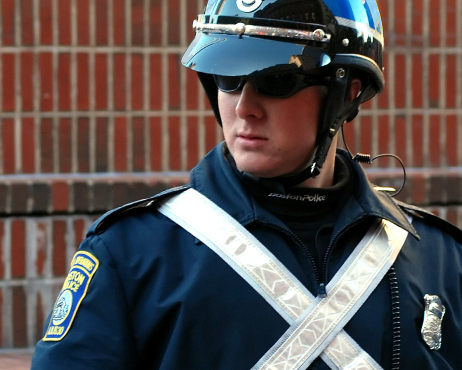
Just last week, the Boston Police Department and FBI killed a man in a confrontation in Roslindale, Massachusetts. The cops have said that Usaama Rahim was plotting to kill police officers, although they never prepared an arrest warrant for him. Instead of preparing to arrest him by obtaining a warrant and sending a tactical team to do it safely, a few plainclothes JTTF officers shot him dead after approaching him to have what they describe as a 7am chat in a CVS parking lot. The Feds say the FBI and BPD were following him 24 hours a day during the week preceding his killing. But asked how Rahim initially came to the attention of investigators, Boston police commissioner William Evans said he cannot say. That information, he says, is “classified.”
When we hear claims like this, it’s crucial to recall what purpose secrecy usually serves in the security context. The truth of the matter was spelled out in unusually frank terms by the former NATO commander quoted in the NYT story about special operators cited above. “If you want these forces to do things that occassionally bend the rules of…law, you certainly don’t want that out in the public.”
That’s an unacceptable approach to foreign war fighting. It borders on the authoritarian here at home. And we cannot lose sight of the connection between the two.
Assuming general tolerance for official secrecy regarding forever wars abroad won’t trickle down to the domestic policing space is a fool’s errand. We now see clearly what that trickle down means in Boston. Police and FBI killed a man, and now they’re saying National Security prevents them from talking about why. That should send a chill down your spine.
Featured Video

Why Hamas Really Attacked Israel on Oct. 7
or go to
Aletho News Archives – Video-Images
From the Archives
Confronting the Threat of Ethnic Bioweapons
By Tony Cartalucci – New Eastern Outlook – 29.11.2017
The United States Air Force’s 59th Medical Wing’s molecular biology branch recently was revealed to have been collecting specifically Russian RNA and synovial (connective) tissue samples, prompting fears in Russia of a possible US directed ethnic-specific bioweapons program. … continue
Blog Roll
 Aletho News
- Oct. 7 Forever Marks The Big Reveal: ‘We See You, Israel, We Revile You, We Reject You!’
- Meet the US generals and admirals advancing Israeli policy
- Israel’s Straw Widow Protocol: The Kill Zones Where Civilians Were Labelled ‘Terrorists’
- Leading Israeli Think Tank Publishes Psychotic Israeli ‘National Security’ Doctrine
- Are the United States and Israel in Decline-and-Fall Mode?
- Why Hamas Really Attacked Israel on Oct. 7
- Declassified UK exposes British man who fought for ‘Israel’ in Gaza
- West’s death cult in a theater near you
- How the Yandex ‘Russian bots’ lie fell apart
- Burnham’s ‘Russia did Brexit’ ruse crumbles
- If Americans Knew
- After Ashley Moody Epstein Probe, Donors Linked to Him Poured Money Into her Senate Campaign
- Worried about Russian meddling in UK politics? Wait till you see what Israel is up to
- Israeli settlers attack West Bank center for disabled children, church leader calls for int’l action
- Pulling Out Teeth Just to Live: How Israel Has Devastated Dental Care in Gaza
- Gaza’s “ceasefire” death toll passes 1,500 – Daily Update
- Activists Abused By Israel Return to New Freedom Flotilla Mission
- 60 Minutes won’t tell the full truth about Israeli settler violence
- Nearly 50,000 women, girls killed or severely injured in Gaza since October 2023: UN Women
- ADL is working with AI companies to suppress alleged ‘antisemitism’
- Israeli occupation forces using social media surveillance unit to target hundreds of Palestinians in the West Bank
- No Tricks Zone
- New Study Suggests Large Regions Of The Pacific Ocean Have Been Cooling For The Last 80 Years
- Germany’s Green Energy Debacle: High Energy Costs Force Kahla Porzellan to Close After 182 Years!
- New Study: 50 Years Of The Most Aggressive ‘Net Zero’ Policies Can Only Affect The Global Climate By 0.03°C
- US September “Heat” Was No Record…Many Records Set Decades Ago
- Latest European Green Energy Debacle; Portugal’s Largest Flagship Solar Park Insolvent!
- Green Energy Debacle: German Expert Professor Fritz Vahrenholt Warns Of Severe Economic And Social Consequences
- Two More Paleo Reconstructions Affirm Meters-Higher Sea Levels Across Ireland, Brazil 7000-6000 Years Ago
- New Study: Earth And Venus Surface Warmth Largely Explained By Convection And Lapse Rate, Not CO2 Or Radiation
- 2025 Nature Paper Claiming Worsening Global Drought Gets RETRACTED …Heavily Flawed
- New Study: ‘Global Drought Shows No Detectable Recent Acceleration Under Climate Warming’

