The CIA Against Latin America, the Special Case of Ecuador
teleSUR | March 6, 2015
Imprisoned on various occasions and subjected to numerous interrogations, Dr. Jaime Galarza Zavala is one of the estimated 120 direct victims of the CIA’s record in Ecuador.
Persecuted by the CIA for his political organizing, Galarza described to teleSUR English that “they told me that I was working as a guerrilla in the Dominican Republic. I, to this day, have never visited the Dominican Republic. But they accused me of being a guerrilla leader in the Dominican Republic. And this was a common theme with various interrogations.”
He added that, “while they interrogated me, there was somebody that called every now and then from another room. Afterward, they told me that this person they were talking with was a gringo, a North American, who never presented himself to me. But he gave them instructions as to how to continue the interrogation,” said Galarza.
A fierce critic of U.S foreign policy in the region, Galarza recently published a book titled, “The CIA Against Latin America, the Special Case of Ecuador,” co-authored by Francisco Herrera Arauz.
In an interview with teleSUR English on CIA actions in Ecuador, Herrera said,“First, they destroyed our democracy. Second, they worked with undivided attention against our citizens. They persecuted our citizens for thinking differently. People were killed, injured, there are victims of this violence, there are families that were harmed, there are exiles, the honor of some people has been ruined, there are destroyed families, and all of this was caused by the CIA’s actions.”
Both authors have previously interviewed Philip Agee, the ex-CIA operations officer whose name became internationally known when he wrote the book “Inside the Company: CIA Diary” in 1975, detailing his time working in Ecuador, Uruguay, and Mexico from 1960 to 1968 and denouncing actions undertaken by the CIA during this period.
In his testimonies of that period, Agee said that when he operated in Ecuador from 1960 to 1963, the CIA oversaw: the overthrow of two presidents; the infiltration of various political parties and organizations; and the planting of bombs in front of churches and other emblematic sites to frame leftist groups; among other actions.
At an event celebrating the new book, Ecuador’s Foreign Minister Ricardo Patiño said, “These secret policies continue in Latin America today. Nothing that Philip Agee denounced as CIA actions in the past have been discarded by the espionage seen in the present.”
To raise public awareness of the atrocities committed within Ecuador and the long-term damage caused by CIA interventions throughout Latin America, Ecuador’s Foreign Ministry has printed and widely distributed copies of the book in Spanish and English.
Libya, ISIS and the Unaffordable Luxury of Hindsight
By AHMAD BARQAWI | CounterPunch | March 9, 2015
Who are you?” the late Muammar Gaddafi once rhetorically asked in a famous speech of his towards the end of his reign; (rightly) questioning the legitimacy of those seeking to over-throw his government at the time, calling them extremists, foreign agents, rats and drug-addicts. He was laughed at, unfairly caricatured, ridiculed and incessantly demonized; a distasteful parody video poking fun at the late Libyan leader even went viral on social media; evidently the maker of the video, an Israeli, thought the Libyan colloquial Arabic word “Zenga” (which means an Alleyway) sounded funny enough that he extracted it from one of Gaddafi’s speeches, looped it on top of a hip-hop backing track and voila… he got himself a hit video which was widely (and shamefully) circulated with a “revolutionary” zeal in the Arab world. We shared, we laughed, he died.
But the bloody joke is on all of us; Gaddafi knew what he was talking about; right from the get-go, he accused the so-called Libyan rebels of being influenced by Al-Qaeda ideology and Ben Laden’s school of thought; no one had taken his word for it of course, not even a little bit. I mean why should we have? After all, wasn’t he a vile, sex-centric dictator hell-bent on massacring half of the Libyan population while subjecting the other half to manic raping sprees with the aid of his trusted army of Viagra-gobbling, sub-Saharan mercenaries? At least that’s what we got from the visual cancer that is Al Jazeera channel and its even more acrid Saudi counterpart Al-Arabiya in their heavily skewed coverage of NATO’s vicious conquest of Libya. Plus Gaddafi did dress funny; why would anyone trust a haggard, weird-looking despot dressed in colorful rags when you have well-groomed Zionists like Bernard Henry Levy, John McCain and Hillary Clinton at your side, smiling and flashing the victory sign in group photo-ops, right?
Gaddafi called them drug-addicted, Islamic fundamentalists; we know them as ISIS… it doesn’t seem much of a joke now, does it? And ISIS is what had been in store for us all along; the “revolutionary” lynching and sodomization of Muammar Gaddafi amid manic chants of “Allahu Akbar”, lauded by many at the time as some sort of a warped triumph of the good of popular will (read: NATO-sponsored mob rule) over the evil of dictatorship (sovereign state), was nothing but a gory precursor for the future of the country and the region; mass lynching of entire populations in Libya, Syria and Iraq and the breakup of key Arab states into feuding mini-statelets. The gruesome video of Colonel Gaddafi’s murder, which puts to shame the majority of ISIS videos in terms of unhinged brutality and gore, did not invoke the merest of condemnations back then, on the contrary; everyone seemed perfectly fine with the grotesque end of the Libyan “tyrant”… except that it was only the beginning of a new and unprecedented reign of terror courtesy of NATO’s foot-soldiers and GCC-backed Islamic insurgents.
The rapid proliferation of trigger-happy terrorist groups and Jihadi factions drenched in petrodollars in Libya was not some sort of an intelligence failure on the part of western governments or a mere by-product of the power vacuum left by a slain Gaddafi; it was a deliberate, calculated policy sought after and implemented by NATO and its allies in the Gulf under the cringe-inducing moniker “Friends of Libya” (currently known as the International Coalition against ISIS) to turn the north-African country into the world’s largest ungovernable dumpster of weapons, al-Qaida militants and illegal oil trading.
So it is safe to say that UNSC resolution 1973, which practically gave free rein for NATO to bomb Libya into smithereens, has finally borne fruit… and it’s rotten to its nucleus, you can call the latest gruesome murder of 21 Egyptian fishermen and workers by the Libyan branch of the Islamic State exhibit “A”, not to mention of course the myriad of daily killings, bombings and mini-civil wars that are now dotting the entire country which, ever since the West engineered its coup-d’etat against the Gaddafi government, have become synonymous with the bleak landscape of lawlessness and death that is “Libya” today. And the gift of NATO liberation is sure to keep on giving for years of instability and chaos to come.
In an interview with the western media misinformation collective that is the BBC, ABC and the Sunday Times in February 2011; the late Muammar Gaddafi told his condescending interviewers; “have you seen the Al Qaeda operatives? Have you heard all these Jihadi broadcasts? It is Al Qaeda that is controlling the cities of Al Baida and Darnah, former Guantanamo inmates and extremists unleashed by America to terrorize the Libyan people…”. Darnah is now the main stronghold for ISIS in Libya.
In a bizarre coincidence (or some sort of cosmic irony); the date on which ISIS chose to release its video of the beheading of Egyptian captives, thereby officially declaring its presence in the war-torn country with three oil fields under its control, (appropriately) marked the 4th anniversary of the start of the so-called Libyan revolution on February 15th, 2011; a more apt “tribute” to commemorate the Western instigated regime-change debacle in Libya could not have been made.
But even long before ISIS became the buzzword, the acrid nature of a “revolutionary” Libya showed in full, sickening splendor almost instantly right after the old regime fell, everything the late Gaddafi was falsely accused of doing was literally perfected to a chilling degree by the so-called rebels; massacres, indiscriminate shelling of residential areas, car-bombings, mass arrests, torture, theft of oil and national resources… the whole lot. In 2013; two British pro-Palestine activists, on their way to Gaza with an aid convoy, got to experience first-hand the rotten fruits of the Libyan chapter of the so-called Arab Spring when they were abducted by a motely crew of Libyan revolutionaries-turned-warlords in the city of Benghazi and gang raped in front of their father.
Proponents of Humanitarian Interventions must be patting themselves on the back these days; now that Libya has completed its democratic makeover from a country with the highest standard of living in Africa under Gaddafi’s rule into a textbook definition of a failed state; a godless wasteland of religious fanaticism, internal bloodletting and wholesale head-chopping, in fact Libya became so “democratic” that there are now two parliaments and two (warring) governments; each with its own (criminal) army and supported with money and caches of weapons from competing foreign powers, not to mention the myriad of secessionist movements and militias which the illegal coup against Gaddafi has spawned all over the country while free health care, education and electricity, which the Libyans took for granted under Gaddafi’s regime, are all now but relics of the past; that’s the “Odyssey Dawn” the Libyans were promised; a sanitized version of Iraq sans the public outrage, neatly re-packaged in a “responsibility to protect” caveat and delivered via aerial bombing campaigns where even the West’s overzealous Gulf Co-conspirators Club (GCC), driven by nothing beyond petty personal vendettas against Gaddafi, got to test the lethality of its rusted, American-made military aircrafts alongside NATO on the people of Tripoli and Sirte.
This is what Gaddafi had predicted right from the get-go and then some; the ephemeral euphoria of the Tunisian and Egyptian revolutions was just too potent and too exhilarating for us to read the fine print; was it a conspiracy or a true revolutionary spirit gone awry? It doesn’t really matter now that ISIS has become the true legacy of Tahrir Square; “they will turn Libya into another Afghanistan, another Somalia, another Iraq… your women won’t be allowed out, they will transform Libya into an Islamic Emirate and America will bomb the country under the pretext of fighting terrorism”, the late Libyan leader had said in a televised speech on February 22nd, 2011, and more prophetic words were never spoken.
America’s “clean war” Libyan prototype proved to be such a success that it was replicated with a wanton abandon in Syria; Paul Bremer’s “Blackwater” death squads of old, which reigned terror all over Iraq, are back… with an Islamic twist; bearded, clad in black and explosives from head to toe and mounting convoys of Toyota Land Cruiser trucks with an ever-expanding, seemingly borderless Islamic Caliphate (that somehow leaves the Zionist regime unencumbered in its occupation of Palestine) set in their sights.
Everyday the Arab World is awakened to a new-videotaped atrocity; steeped in gore and maniacal terror courtesy of ISIS (or IS or ISIL), and countless of other “youtubeless”, albeit more heinous crimes courtesy of America’s very own ever-grinding, one-sided drone warfare; the entire region seesaws between machete beheadings and hellfire missile incinerations. Death from above… as well as below; the War on Terror rears its ugly head once again; to bring in line those nasty terrorists that the West itself funded and sponsored in the name of democracy to destabilize “unsavory” regimes; an unrelenting Groundhog Day that starts with the Responsibility to Protect and ends with the War on Terror, with thousands of innocent lives, typically chalked up to collateral damage, crushed in the process.
This is exactly what Gaddafi foresaw; a Libya mired in utter chaos, civil conflict and western diktats; a breeding ground for Jihadi fundamentalism and extremists… too bad we just laughed his warnings off to an Israeli-made parody tune.
Ahmad Barqawi, freelance columnist and writer.
Nisman: Ghost in the machine
Inca Kola News – 3/7/15
The dramatic and world-headline making press conference held by the ex-wife of killed (murdered?suicide?) public prosecutor Alberto Nisman is already beginning to look shaky. At that highly covered presser last Thursday his ex-wife and Argentine judge Sandra Arroyo Salgado stated that according to the readings of the autopsy report (made by her and her team) Nisman was not killed in-situ or on the Sunday morning/midday that the government insist as time and place of death, but was killed the previous evening and then moved to the bathroom where he was found.
Ms Arroyo Salgado’s problem is that she doesn’t have all the information to hand. According to records (and before you start with the “yeah but…” interjections, this isn’t just the gov’t’s info, but also telephone company and internet company info), the computer in Nisman’s apartment was turned on at 8am Sunday morning and then used to check all the things that Nisman typically checked, including his Yahoo mail account and various newspapers.
Slight aside: IKN isn’t going to start covering this story on a blow-by-blow basis, but today’s is interesting because things such as facts are much less likely to be covered in the same media blanket as the “He was murdered!” presser we saw last week from Nisman’s ex. That’s because this case is highly political and as the CFK government has a whole stack of enemies both inside and outside of Argentina, you can guarantee that coverage isn’t going to be free and fair. I still don’t know whether Nisman committed suicide or was murdered and frankly, at this point nobody does*. I suspect he committed suicide, but one mouthy guy with a blog’s opinion is of zero importance and I’d be perfectly okay about being proved wrong on my current suspicions. Plus there’s the “cui bono” factor, which offers very little if any ‘bono’ to the government of Argentina for his death. After all, his two year in the making case filed against the CFK government has already been shown as shaky, to say the least. It doesn’t take Sherlock Holmes to work out that it would have been to the government’s benefit to have had the chance to cross-examine Nisman on the facts of his case and shown both him and the world at the same time that his prosecution was built on false facts and statements.
*Unless of course he was indeed murdered, which means by definition that at least one person knows.
UN: Torture by Mexican State is Widespread
teleSUR | March 8, 2015
A report by the U.N. Human Rights Council, set to be released on Monday, states that torture by the Mexican state has become a regular occurrence.
The 22-page report by the U.N. Special Rapporteur Juan Mendez was leaked to Mexican weekly magazine, Proceso. The report is the product of an investigation conducted by Mendez in Mexico in April and May of last year.
“Torture and abuse are widespread in Mexico,” states Mendez’ report.
Proceso states that the U.N. report includes allegations of physical violence, electric shock, suffocation, sexual assault, and psychological abuse. Mendez reveals that multiple elements of the state are guilty of utilizing torture, from local police, to state and federal police, as well as the armed forces.
“The majority of the victims (of torture) are detained for their alleged links with organized crime,” adds the report. As a result of their alleged ties to organized crime, these detainees are not offered the same legal protections as other suspected criminals.
Apart from being tortured, Mendez alleges that these detainees are held in preventative detention for lengthy periods without being afforded the right to appear before a judge.
The U.N. special rapporteur also states that it is difficult to know how many cases of torture there may actually be in Mexico, as a federal record is not maintained. Mendez also claims that many victims do not come forward for fear of reprisals.
Mendez’ report harshly criticizes the Mexican state for failing to put in place measures to prevent the use of torture and makes a series of recommendations to the Mexican government.
Suspects connected to the case of the missing 43 students are also suspected to have been tortured in order to coerce statements from them that would match the government’s version of events.
The U.N. also recently criticized the Mexican government regarding forced disappearances in the country.
What Was Missing From Coverage of Netanyahu’s Speech
By Jim Naureckas | FAIR | March 5, 2015
Reading the lead stories on Israeli Prime Minister Benjamin Netanyahu’s speech to Congress about Iran in five prominent US papers–the New York Times, Washington Post, LA Times, Wall Street Journal and USA Today (all 3/3/15)–what was most striking was what was left out of these articles.
None of them mentioned, for example, that Israel possesses nuclear weapons. Surely this is relevant when a foreign leader says that it needs the United States’ help to stop a rival state from obtaining nuclear weapons: The omission of the obvious phrase “of its own” changes the story entirely.
Another thing largely left out of the story is the fact that Iran has consistently maintained that it has no interest in building a nuclear weapon. There was one direct statement of this in the five stories–the New York Times‘ reference to “Iran’s nuclear program, which [Iranian] officials have insisted is only for civilian uses.” The Washington Post alluded to the fact that Iran denies that it has a nuclear weapons program, referring to “a program the West has long suspected is aimed at building weapons,” Iran’s “stated nuclear energy goals” and “the suspect Iranian program.” Elsewhere the military nature of Iran’s nuclear research was taken for granted, as when the LA Times said that the issue under discussion was “how to deal with the threat of Iran’s nuclear program.”
Entirely absent from these articles was the fact that not only does Iran deny wanting to make a nuclear bomb, the intelligence agencies of the United States (New York Times, 2/24/12) and Israel (Guardian, 2/23/15) also doubt that Iran has an active nuclear weapons program. Surely this is relevant to a report on the Israeli prime minister engaging in a public debate with the US president on how best to stop this quite possibly nonexistent program.
Instead, these articles generally seemed content to cover the subject as a debate between Netanyahu and US President Barack Obama, perhaps with some congressmembers thrown in–as if these were the “both sides” that needed to be covered in order to give a complete picture of the controversy. When Iranian officials were quoted for a few lines in these pieces–which some neglected to do altogether–it seemed an afterthought, despite the fact that Netanyahu’s speech was mainly a long litany of allegations and threats against their country.
(Though I’m confining my analysis to what seemed to be the most prominent and comprehensive article on the speech on each paper’s website, it’s worth mentioning that the New York Times‘ website featured a piece by Iran’s ambassador to the UN, Gholamali Khoshroo, rebutting Netanyahu’s speech. Reading it one is struck by how different the news pieces would read if Iran’s perspective on Iran’s nuclear program were given equal weight with Israel’s and the US’s views.)
None of these news articles mentioned the Nuclear Non-Proliferation Treaty, signed by both the United States and Iran but not by Israel, which guarantees “the inalienable right of all the Parties to the Treaty to develop research, production and use of nuclear energy for peaceful purposes.”

The New York Times’ caption quoted Israeli Prime Minister Benjamin Netanyahu, “This regime will always be an enemy of America.” That regime got 36 words of rebuttal in the nearly 1,500-word article.
One article–the New York Times’–had a reference to Netanyahu’s decades-long record of making false nuclear predictions about Israel’s enemies. And even that was framed in partisan terms: Netanyahu “did not succeed in mollifying all Democrats, who recalled a history of what they deemed doomsday messages by him.” A reporter, of course, could look up Netayahu’s previous projections to see if they came true or not–as Murtaza Hussain of the Intercept (3/2/15) did–but holding officials accountable for what they have said in the past is not something an “objective” journalist is likely to do.
Another striking omission from these articles, about a speech in which Netanyahu talked about Iran’s “aggression in the region and in the world,” were words like “Palestine,” “Palestinian,” “occupation” or “Gaza”; none of these came up in any of the five articles. USA Today headlined its piece “Netanyahu: Stop Iran’s ‘March of Conquest'”–as though it were Iran, not Israel, that has conquered, occupied and in some cases annexed its neighbors’ territory.
Clinton Personal Email Cesspool Deepens
By Peter Van Buren | We Meant Well | March 6, 2015
Hillary Clinton announced in a Tweet that she wants her former employer, the Department of State, to review her emails with an eye toward releasing them. Here, she said it herself, on The Official Twitter:
Hillary Clinton ✔ @HillaryClinton
I want the public to see my email. I asked State to release them. They said they will review them for release as soon as possible.
So accepting the fact that it took Clinton almost three full days’ worth of controversy to get around to saying even that, that’s it, right? Problem solved? Maybe not.
Who Will End Up Holding the Bag?
The key part of what Clinton no doubt feels is some pretty slick sleight of hand is that State only has in its possession some fraction of all of her emails sent while Secretary of State. The emails State does have were hand-picked by Clinton, curated by her staff, from the total.
Clinton, alone in the entire U.S. government, has left herself in the unique position of being the only one to determine what records the American people are entitled to see. Her basis for her decisions? Trust me.
Even at that, she now throws State under the bus, thinking anytime between now and inauguration day anybody asks about a missing email or ten, Clinton will just “refer them” back to State, who of course decided what to withhold from what Clinton personally chose not to withhold. Clinton no doubt thinks herself clever with this bit of political jujitsu, turning the State Department into her campaign spokesperson. But putting the burden on State is a red herring; this isn’t really the State Department’s dog.
Her attempt to use the White House this week in the same capacity has only returned mediocre results. The Counsel’s office there claimed it had no knowledge of Clinton’s exclusive use of a personal email system, and quickly mentioned once it found out that it had directed the State Department to make sure all appropriate rules were followed (CYA.) They also made clear that the administration gave “very specific guidance” that employees should use official accounts when conducting government business.
Obama’s spokesman was careful to note “There was not an Obama administration official that was responsible for reviewing those emails.”
While trying to avoid doing political damage to Clinton, the White House has put the onus on her aides to explain exactly what happened. If there is gonna be a bag of sh*t to hold at some point, the White House does not want to get stuck with it.
Slow-Walking FOIA
State, ever the lap dog to the rich and famous, is ready to do its part in dragging its feet. Secretary of State John Kerry said in Riyadh Thursday that his department “will undertake this task as rapidly as possible in order to make sure that we are dealing with the sheer volume in a responsible way.” State spokeswoman Marie Harf warned that the review could “take some time to complete” while other officials indicated it could take months. And, surprise! State’s current review personnel are already overwhelmed with nearly 11,000 other pending requests, which for complex cases can take an average of more than 18 months to complete.
Maybe first-come, first-serve will get the Clinton emails reviewed at least in time for her second term.
Perhaps State will want to turn its attention to previous Freedom of Information Act (FOIA) requests. More than 75 separate requests for her emails were filed with the State Department between 2009 and 2013 by media organizations and other parties. Associated Press requests for Clinton emails and other documents have been delayed for more than a year — and in one case, four years — without any results. All “answered” FOIA requests were told that the State Department did not have any emails from Clinton to consider releasing, sort of true in that State had no Clinton emails on file; they were all held on her private server. The AP says it is considering legal action against the department to compel responses.
And that all leads deep into another can of worms. FOIA requests are strictly limited to U.S. government documents. You cannot FOIA Michelle Obama’s personal NetFlix viewing list. A very tricky legal question arises about whose emails those are on Clinton’s private mail server. Google and other tech companies have regularly won legal challenges to say that the Gmail you send actually belongs to Google, not you. It resides on their server, after all. Much of the NSA’s quasi-legal ability to gobble up your emails rests on the same premise, as they request “your” email not from you but your internet service provider. Requests for Clinton emails not turned over to State could be refused based on the fact that they are her private property.
The Trouble with Republicans
Meanwhile, Clinton’s troubles with the Republicans are just starting.
The Republican National Committee on Thursday asked the Inspector General of the State Department to investigate Clinton’s use of personal email to conduct government business. RNC Chief Counsel John Phillippe wrote in a letter that the investigation should focus on whether Clinton violated department policies or caused the department to violate the requirement to archive emails. Such inspections can take a long time, but in this case, those delays could easily help keep the email issue alive well into the 2016 campaign, and the Republicans know it. The Inspector General should also look into where State Department management and security were sleeping while all this email fun transpired. One can speculate that if a mid level employee proposed to do all his official work off a personal email server they would have had something to say about that.
The House committee investigating Benghazi also just got a new lease on life. The committee announced Wednesday it has issued a subpoena to Clinton for all of her communications relating to Libya, including emails from her personal server, texts, attachments and pictures. New emails mean new hearings, new questions for Clinton, new demands for in-person testimony and new accusations of information being withheld or scrubbed. This clearly will keep the red-meat-to-the-base Benghazi issue alive well into the 2016 campaign, even if nothing substantive emerges. And if it does…
Questions
Clinton, in her own sense of transparency, has issued only the Tweet (above) as her sole public response to all this. Her spokesperson disingenuously claimed Clinton had complied with both the letter and the spirit of the law, a tough one to swallow even for a group of supporters used to swallowing.
Clinton has announced in advance that she will take no questions at her next scheduled public appearance, somewhat ironically the March 23 ceremony celebrating the winner of the Toner Prize for Excellence in Political Reporting.
But here are a few very simple questions we’d like Clinton to answer:
– Why did you alone in the State Department not use official email and only use private email run off a private server?
– Why didn’t you turn over your full set of emails to State for review?
– Why did you wait until your private server was disclosed publicly to turn over even the subset of emails you did? Why didn’t you turn them over during your tenure as Secretary?
– As president of the United States, will you encourage or condone your Cabinet level officials employing personal email servers in lieu of U.S. government systems?
– Is the way you handled your email at State and now in the aftermath indicative of your approach to public service?
That’ll be a good start.
Peaceful Man Shot In The Face During Botched Drug Raid, No Drugs or Guns Found
By John Vibes | The Free Thought Project | March 4, 2015
Deltona, Florida – Twenty six-year-old Derek Cruice was shot and killed by police in cold blood this Wednesday inside of his home on Maybrook Drive in Deltona.
Witnesses say that police were conducting a “no-knock” raid where they knocked down the door with a battering ram and entered the home with their weapons drawn. Friends who were inside the home told reporters that police fired their weapons without hesitation, and that it was blatantly obvious that Cruice was unarmed, as he was wearing basketball shorts and no shirt. The friends were also quick to point out that there were no weapons on the property at all.
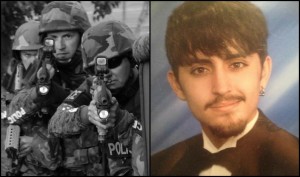 Cruice was reportedly shot directly in the face by Deputy Todd Raible, and although the police claim that he “advanced” towards the officers, his friends said that this is an absolute lie.
“Volusia County Sheriff’s Office narcotics investigators and the Street Crimes Unit were attempting to serve a search warrant at a residence. They were met with resistance and a shooting occurred,” Volusia County Sheriff Ben Johnson said in a statement.
“That is completely a lie. I was there; I watched the whole thing. There was no advancement. There was no reaching for anything. The guy was wearing basketball shorts like I am. It’s kind of hard to conceal anything or hide anything when this is all you have on,” roommate Steven Cochran told reporters.
Friends of Cruice said he is not a violent person, and that he was a great human being.
“I drove by, because it feels surreal and Derek was one of the nicest guys I know. You know, it’s not fair for this to happen to somebody like Derek,” friend Devin McGraw said.
Cruice was probably a wonderful and generous person just as his friends describe him, and he is not accused of committing any violent crimes, nor is he accused of any theft, or fraudulent activity. He was accused of vending substances that the government has laws against, but there weren’t even any drugs found in the home.
How Hillary Clinton Exposed Her Emails To Foreign Spies… In Order To Hide Them From The American Public
By Mike Masnick | techdirt | March 4, 2015
So the whole Hillary Clinton email story is getting worse and worse for Clinton. We already noted that there was no way she couldn’t have known that she had to use government email systems for government work, as there was a big scandal from the previous administration using private emails and within the early Obama administration as well. This morning we discovered that Clinton also gave clintonemail.com email addresses to staffers, which undermines the argument made by Hillary’s spokesperson that it was okay for her to use her own email address because any emails with staffers would still be archived by the State Department thanks to their use of state.gov emails. But that’s clearly not the case when she’s just emailing others with the private email addresses.
As we noted yesterday, there are two separate key issues here, neither of which look good for Clinton. First, is the security question. There’s no question at all that as Secretary of State she dealt with all sorts of important, confidential and classified information. Doing that on your own email server seems like a pretty big target for foreign intelligence. In fact, Gawker points out, correctly, that Hillary’s private email address was actually revealed a few years ago when the hacker “Guccifer” revealed the inbox of former Clinton aide Sidney Blumenthal. So it was known years ago that Clinton used a private email account, and you have to think it was targeted.
Anonymous State Department “cybersecurity” officials are apparently shoving each other aside to leak to the press that they warned Clinton that what she was doing was dangerous, but couldn’t convince her staff to do otherwise:
“We tried,” an unnamed current employee told Al Jazeera. “We told people in her office that it wasn’t a good idea. They were so uninterested that I doubt the secretary was ever informed.”
The AP has a somewhat weird and slightly confused article detailing the setup of the email system, but seems to imply things that aren’t clearly true.
It was unclear whom Clinton hired to set up or maintain her private email server, which the AP traced to a mysterious identity, Eric Hoteham. That name does not appear in public records databases, campaign contribution records or Internet background searches. Hoteham was listed as the customer at Clinton’s $1.7 million home on Old House Lane in Chappaqua in records registering the Internet address for her email server since August 2010.
The Hoteham personality also is associated with a separate email server, presidentclinton.com, and a non-functioning website, wjcoffice.com, all linked to the same residential Internet account as Mrs. Clinton’s email server. The former president’s full name is William Jefferson Clinton.
While Eric Hoteham may be a mysterious non-entity, as Julian Sanchez points out, an early Clinton staffer was named Eric Hothem. Of course, Stanford cybersecurity guru Jonthan Mayer also notes that Hillary’s old home server is still online and running Windows Server 2008 R2.

However, the AP reports that the email has moved around a bit over the past few years:
In November 2012, without explanation, Clinton’s private email account was reconfigured to use Google’s servers as a backup in case her own personal email server failed, according to Internet records. That is significant because Clinton publicly supported Google’s accusations in June 2011 that China’s government had tried to break into the Google mail accounts of senior U.S. government officials. It was one of the first instances of a major American corporation openly accusing a foreign government of hacking.
Then, in July 2013, five months after she resigned as secretary of state, Clinton’s private email server was reconfigured again to use a Denver-based commercial email provider, MX Logic, which is now owned by McAfee Inc., a top Internet security company.
That likely means the email was much more secure after July of 2013, but it certainly raises questions about how secure it was for years before that.
Though, we do know that it was secure from one thing: FOIA requests. That is the second of the two big issues raised by this whole thing. By using her own email setup, she was clearly able to hide important documents from FOIA requests. In fact, as Gawker notes, her staff’s defense of the use of her private email, actually now confirms emails as legit that the State Department denied existed back when Gawker made a FOIA request years ago.
That’s because following that Guccifer hack, Gawker filed a FOIA for those emails and was told they don’t exist. Yet, now Clinton staffers point to that old Gawker article to suggest that the private email address is “old news,” thus confirming that the emails were legit, even though the State Department denied them.
The Clinton camp’s claims about the email account being above-board is also contradicted by the State Department’s response to Gawker’s inquires two years ago. After we published the story about Blumenthal’s correspondence with Clinton, we filed a FOIA request with the agency for all correspondence to date between Hillary Clinton and Sidney Blumenthal, specifically including any messages to or from the hdr22@clintonemail.com account. The screenshots and other documents released by Guccifer—which have now been validated by Clinton’s spokesman—confirmed that such messages existed.
But the State Department replied to our request by saying that, after an extensive search, it could find no records responsive to our request. That is not to say that they found the emails and refused to release them—it is conceivable, after all, that the State Department might have attempted to deny the release of the Clinton-Blumenthal correspondence on grounds of national security or Blumenthal’s own privacy. Instead, the State Department confirmed that it didn’t have the emails at all.
Which is exactly why Clinton used a non-State Department email server to conduct her official business.
According to the NY Times, the State Department says that it won’t go back to correct the FOIA requests that it responded to in the past, saying that such records didn’t exist. Instead, it will only now search the emails that have been turned over by Clinton’s staff. That is another 50,000 emails, but no one knows what emails the staff removed or refused to turn over.
Either way, there are two huge problems here. Clinton likely exposed her emails to foreign spies, while keeping them away from the American public.
As Tsarnaev Trial Starts, a Journey into the “Known Unknowns” Begins
By Russ Baker | WhoWhatWhy | March 4, 2015
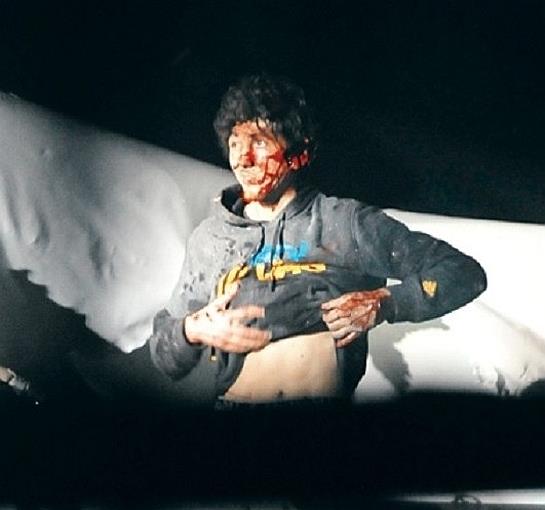
We are about to witness what may be one of the strangest trials ever. For one thing, the central narrative we’ve been provided of the Boston Marathon bombing makes little sense.
Take the defendant’s past. It provides few clues to suggest that Dzhokhar Tsarnaev might have been inclined to commit any sort of mayhem, much less on a massive scale. Even his now-dead, more aggressive older brother, Tamerlan, doesn’t exactly seem like the sort to prepare and detonate bombs to harm large numbers of innocent fellow Bostonians.
Furthermore, neither brother is known to have had the expertise to make the explosive devices unleashed at the Marathon, which experts have characterized as sophisticated. They also aren’t known to have the sort of experience or practiced skill with guns or incendiary devices of the sort they’re described as deploying—with ruthless bravado—during a protracted face-off with large numbers of experienced, heavily armed law enforcement officers, some of whom had military training.
Then there is the small matter of evidence. Here, one is struck by the huge gap between what we think we know—based on an unremitting campaign of leaks from the government—and what actually has been seen or publicly established.
The main piece of evidence—the famed video the government claims to have of the defendant putting down his bomb-laden backpack—has not been seen by the public. Yet many people think they have watched it. Even an appellate judge involved in the Tsarnaev case was under the mistaken impression he had seen such a video.
In fact, as WhoWhatWhy has repeatedly noted, the video may not even exist, because there is no proof of its existence. This week, finally, the conventional media made the same point. (It turns out that former Massachusetts Governor Deval Patrick was being less than honest when he said he had seen that video—not only had he not seen it, but neither, most likely, had those who described it to him.)
***
Then, too, much has been made of a “confession” Tsarnaev allegedly wrote on the wall of the boat in which he was ultimately captured. But any honest reading of what we’ve been shown so far certainly can’t be called an outright confession. It doesn’t refer to specific actions, and parts of it are rote recitation of a Muslim expression of faith that’s sometimes invoked when a Muslim is near death. Last rites? Maybe.
But the FBI also admitted that the boat was left out in the open for days, which would be violation of the strict chain-of-custody required to preserve evidence for trial. So it’s impossible to rule out tampering.
What else do we think we know? The indictment catalogues purported behavior that looks incriminating, and may well be good enough for an indictment, but that certainly doesn’t prove guilt, even if we can be sure it is all true, which we cannot:
• Dzhokhar read material from the Internet that discusses Jihad.
• Dzhokhar looked at bomb-making instructions on the Internet.
• Tamerlan bought fireworks in New Hampshire (not nearly enough firepower to cause the blasts seen at the finish line, according to fireworks experts).
• Tamerlan and Dzhokhar went to a firing range in New Hampshire (once) and fired handguns while there. (Does this explain their purported proficiency with firearms and explosives? Hardly.)
• About 10 days before the bombing Tamerlan used the Internet to order electronic components that could be adapted for use in making IEDs.
• Dzhokhar opened a pre-paid cell phone account the day before the bombing. While such an act could certainly be portrayed as terrorist tradecraft, it could equally be written off as typical college-kid behavior.
• Dzhokhar had a backpack in his dorm room containing broken-up fireworks.
Clearly enough for an indictment, but does it prove he’s guilty?
***
Then there is the small matter of…actually providing the public with meaningful and complete answers. So far, we’ve seen little indication that either the prosecution or the defense has a desire to establish the full story behind the attacks and their aftermath.
For example, evidence of links between the older brother and the FBI—and, through family and other connections, the CIA—has been swept under the rug. This cries out for investigation into whether the government is covering up something. Especially when one considers the government’s well-established practice of recruiting people—often hapless loners—to infiltrate terrorists groups and then foster and participate in terror plots.
Even the Boston Globe columnist Kevin Cullen laments the fact that we’re unlikely to get much of this critical backstory. Nonetheless Cullen’s article is mis-titled “Closing in on the truth in the tangled Tsarnaev case,” when it’s exactly the tangled parts we’re unlikely to see straightened out.
Of course, the prosecution will not “go there”—that is, honestly follow the facts wherever they may take us. But neither, it seems, will Tsarnaev’s defense. They have seemed hamstrung in their ability to investigate, and appear to have convinced their client that his only hope is to admit his guilt and hope to avoid the death penalty.
He would presumably do this by letting himself be characterized as an unfortunate under the influence of a more malign elder sibling.
Not Wholly Innocent Either
On the other hand, one cannot buy the line of certain critics who contend that the entire government case has been fabricated. After all, we have a photo of Dzhokhar Tsarnaev emerging from a boat in which he seems to have been hiding. If he didn’t do anything, why would he be hiding and/or on the run? Also, we know that he was at the Marathon, and like his brother, was wearing a backpack (not that that means much, in and of itself.)
We also don’t know if he was a participant in the murder of MIT Officer Sean Collier. The policeman was assassinated by hooded figures on a nearly empty night-time campus a good distance from the brothers’ likely whereabouts. Indeed, many aspects of the Collier shooting don’t make a lot of sense—for example, why would the brothers have killed him to obtain his firearm if they had one already—and then, why shoot him and leave his gun behind? So we don’t necessarily know who killed Collier, or why.
Still, the government claims to have made a ballistics match between the pistol used to kill Collier and the one found in the street after the chaotic Watertown shootout in which Tamerlan Tsarnaev purportedly died. Will the defense have the opportunity to scrutinize that evidence? Will the rest of us?
Also, a friend of Dzhokhar’s who’s facing decades in prison for his own troubles appears to be willing to testify that he gave Dzhokhar the pistol in question, in return for a lesser sentence. Will the defense get to scrutinize the details of that plea deal?
***
Those are but a sampling. And there is much, much more that we don’t know. Meanwhile, what we do know is next to nothing.
Which makes it all the more disturbing that the media has allowed the public to believe the opposite: that there is virtually nothing yet to be uncovered.
Let us hope, for the sake of our own national sanity, that we are in for some courtroom surprises. That we will get the clarity and the candor compulsory for a free society and a healthy democracy, rather than a hopped up, ill-informed lynch mob.
Featured Video

Matt Bracken: US Plans Massive MOAB Strike on Iran?
or go to
Aletho News Archives – Video-Images
From the Archives
Confronting the Threat of Ethnic Bioweapons
By Tony Cartalucci – New Eastern Outlook – 29.11.2017
The United States Air Force’s 59th Medical Wing’s molecular biology branch recently was revealed to have been collecting specifically Russian RNA and synovial (connective) tissue samples, prompting fears in Russia of a possible US directed ethnic-specific bioweapons program. … continue
Blog Roll
 Aletho News
- Matt Bracken: US Plans Massive MOAB Strike on Iran?
- Russia accuses France of ‘piracy’ over tanker seizure
- Why Yemen Is Bombing Saudi Arabia’s Airports: The War Behind the Headlines
- Sally Rooney’s books pulled from UK over support for Palestine Action
- Bombs for Tel Aviv, Promises for Riyadh
- Israeli ad agency conducted vast global espionage campaign using online ads: Report
- Oct. 7 Forever Marks The Big Reveal: ‘We See You, Israel, We Revile You, We Reject You!’
- Meet the US generals and admirals advancing Israeli policy
- Israel’s Straw Widow Protocol: The Kill Zones Where Civilians Were Labelled ‘Terrorists’
- Leading Israeli Think Tank Publishes Psychotic Israeli ‘National Security’ Doctrine
- If Americans Knew
- Israeli firm used online ads to run vast spy operation, researchers say
- No, the world zionist movement is not an antisemitic conspiracy theory
- Hundreds of IDF investigations into killings still have no public outcome, BBC Verify finds
- After Ashley Moody Epstein Probe, Donors Linked to Him Poured Money Into her Senate Campaign
- Worried about Russian meddling in UK politics? Wait till you see what Israel is up to
- Israeli settlers attack West Bank center for disabled children, church leader calls for int’l action
- Pulling Out Teeth Just to Live: How Israel Has Devastated Dental Care in Gaza
- Gaza’s “ceasefire” death toll passes 1,500 – Daily Update
- Activists Abused By Israel Return to New Freedom Flotilla Mission
- 60 Minutes won’t tell the full truth about Israeli settler violence
- No Tricks Zone
- New Study Suggests Large Regions Of The Pacific Ocean Have Been Cooling For The Last 80 Years
- Germany’s Green Energy Debacle: High Energy Costs Force Kahla Porzellan to Close After 182 Years!
- New Study: 50 Years Of The Most Aggressive ‘Net Zero’ Policies Can Only Affect The Global Climate By 0.03°C
- US September “Heat” Was No Record…Many Records Set Decades Ago
- Latest European Green Energy Debacle; Portugal’s Largest Flagship Solar Park Insolvent!
- Green Energy Debacle: German Expert Professor Fritz Vahrenholt Warns Of Severe Economic And Social Consequences
- Two More Paleo Reconstructions Affirm Meters-Higher Sea Levels Across Ireland, Brazil 7000-6000 Years Ago
- New Study: Earth And Venus Surface Warmth Largely Explained By Convection And Lapse Rate, Not CO2 Or Radiation
- 2025 Nature Paper Claiming Worsening Global Drought Gets RETRACTED …Heavily Flawed
- New Study: ‘Global Drought Shows No Detectable Recent Acceleration Under Climate Warming’

