NSA Goes From Saying Bulk Metadata Collection ‘Saves Lives’ To ‘Prevented 54 Attacks’ To ‘Well, It’s A Nice Insurance Policy’
By Mike Masnick | Techdirt | January 13, 2014
Want to know why no one trusts anything NSA officials and their defenders have to say any more? When the bulk metadata collection was first revealed, those defenders went on and on about how the program “saved countless lives” and was instrumental in stopping terrorist attacks. Some skeptics then asked what terrorist attacks, and we were told “around 50” though details weren’t forthcoming. Eventually, we were told that the real number was “54 terrorist events” (note: not attacks) and a review of them later revealed that basically none of them were legitimate. There was one “event” prevented via the program on US soil, and it was a taxi driver in San Diego sending some money to a terrorist group in Somalia, rather than an actual terrorist attack.
In fact, both judges and the intelligence task force seemed shocked at the lack of any actual evidence to support that these programs were useful.
And yet, the NSA and its defenders keep insisting that they’re necessary. Director of National Intelligence, James Clapper, a few months ago, tried out a new spin, claiming that effectiveness wasn’t the right metric, but rather “peace of mind.” Of course, the obvious response to that is to point out that spying on everyone makes most of us fairly uneasy, and we’d have a lot more “peace of mind” if they dropped the program.
And, now, the NSA number 2 guy, who’s about to retire, John C. “Chris” Inglis, gave a long interview with NPR, in which he is now claiming that even if the program hasn’t been particularly useful in the past, that “it’s a good insurance policy.”
“I’m not going to give that insurance policy up, because it’s a necessary component to cover a seam that I can’t otherwise cover.”
Basically, we want to keep this information because we want that information, even if it’s not been shown to be at all useful. Of course, that’s the same logic one can use to defend just about any violation of the 4th Amendment. Putting a private drone with a camera and a recording device streaming everything it sees and hears while following around NSA deputy director Chris Inglis may not discover that he’s a corrupt bureaucrat willing to lie to the public, but it seems like a reasonable “insurance policy” to make sure he stays honest. After all, without that, the American public can’t prove that he’s not corrupt — so it seems like a reasonable “insurance policy to cover a seam we can’t otherwise cover.” At least, in the logic of Chris Inglis.
Related articles


Flag of paradox
By Kinnan Zaloom | MEMO | January 13, 2014
All my life, the flag of Palestine has been ingrained deeply into my brain. From news reports that my father used to consume incessantly to the many protests I attended as a child, the bold colours of the flag are instantly recognisable to me. Recently, however, have I started to question the Palestinian flag. How is it that an unrecognised state, supposedly a state of non-people, has been able to identify itself with a national flag?
I could make this post into a diatribe on why flags should be obsolete, but I will focus on the one that is supposed to be most important to me. Personally, I find the flag repulsive. Everything from the harsh colours to the simplicity and lack of Palestinian identity makes me think: why this flag? Now, in order to justify my hate towards the blocks of colour that represent a nation, I took it upon myself to research its origins so as to have a legitimate reason to express my distaste towards it. And oh how I was rewarded.
The majority of Arabian flags, those that contain the colours black, green, red and white, are based on the flag of the Arab Revolt (1916–1918). For all those who believe in the beauty and meaning of the Palestinian flag, or in other similar Middle Eastern flags, they can owe their gratitude to Sir Mark Sykes for it was he who designed and produced the fag of the Arab Revolt. The same man who was undoubtedly instrumental in aiding the creation of the state of Israel on Palestinian land.
Sir Mark Sykes is infamous for his part in the secret Sykes-Picot Agreement between Britain, France and Russia (The Triple Entente) that determined their intended spheres of influence in the Middle East, should the Ottoman Empire be defeated in the First World War. The agreement led to France’s control over Syria, the formation of the Arab states and ultimately the creation of the state of Israel.
So what does Sykes have to do with the flag? During the First World War, the Triple Entente was up against the Central Powers, which included the Ottoman Empire. Now the British, not having enough influence in the countries surrounding the Ottoman Empire, sought to establish some sort of revolt to aid them in defeating one of the key players in the Central Powers. Sykes, then a diplomat, established a relationship with the Emir of Mecca, Hussein bin Ali. With the promise of an Arab state free of outside influence, whether Western or Ottoman, the Emir was persuaded to lead the Arab Revolt against the Ottomans. Sykes, seeking to establish a feeling of Arabness, a sense of nationality, took it upon himself to design the Flag of the Arab Revolt. Using the colours of previous Arabian caliphates, the production of flags by the British Army in Cairo began. And the only input any Arab had in the design was the Emir, who expressed his distaste towards the shade of red used.
Sure, some might argue that the Palestinian flag’s origins are now irrelevant, as the flag was adopted by the Palestinian struggle and has come to represent it. Of course, people use it as a sign of solidarity with the Palestinian effort in a true an honest manner, but surely a Palestinian, or any Middle Eastern identity, should be established free of all Western intervention? This should also apply to borders and constitutions, which the Western powers have influenced not only in the Middle East, but also worldwide.
An established identity and a solid cultural origin are vital in order to be effective in attaining Palestinian rights. Whether this means a respected constitution, true economic independence or a secure social order, we need to work stronger together. Whatever the political or social ideology, religious or racial background, we cannot work independently to attain a free Palestine. Furthermore, I believe an elevated sense of nationalism does not help. We must seek to clear corruption in the Middle Eastern conflicts, mainly from the West but also from Middle Eastern governments. Nationalism only serves a sense of selfish pride and visceral divisions.
 No composition of colour and shapes will help unless it was subliminally controlling, which in any case would be immoral to use anyway. So next time you decide to hoist a flag in solidarity with the Palestinian struggle, remember that it was Sir Mark Sykes who created it in order to advance the occupation. The flag of Palestine is a paradox. You might as well hoist up the flag of Mandatory Palestine, because unlike Israel it was not formed from the ideals of Mark Sykes.
French fox in African hen house

Press TV – January 11, 2014
The French finally got what they wanted in the restive Central African Republic – regime change.
Interim President Michel Djotodia and his Prime Minister Nicolas Tiengaye have resigned and the former French colony is now set to form a new government under the watchful eye of Paris.
Western media portray French conduct in the Central African Republic (CAR) as a benevolent force. “We are there to save lives,” said French President Francois Hollande recently.
This is like lauding a fox in a hen house. The reality is that violence and suffering have largely stemmed as a direct result of illegal French interference in that African country.
What’s more, we also can say that the violence has been deliberately provoked by the French as a cover for their real objective – regime change.
Djotodia was forced to step down after he was politically ambushed by other Francophile African leaders at a special conference convened at the end of the week in neighboring Chad.
Before the summit, French diplomats had been briefing the media and other African states that Djotodia “had to go”. The French tried to cover their tracks by saying “we are not here to give our thumbs up or down” but that is exactly what they were doing – giving the thumbs down.
French President Francois Hollande and his Foreign Minister Laurent Fabius have been carping about the CAR leader for weeks and undermining his authority. Obviously, the French wanted rid of Djotodia and his administration – and now they have gotten their illicit way. Lest we forget such interference in the sovereign affairs of another state is illegal.
Notably, just before the conference opened on Thursday in Chad, Djotodia rejected rumors of his impending resignation. In less than 24 hours, he then quit, evidently under duress.
Within minutes of Djotodia’s sacking on Friday, and even before he had returned from Chad, French military tanks had surrounded the presidential palace in the CAR capital Bangui. French Defence Minister Jean-Yves Le Drian also issued a call for Djotodia to be “replaced as soon as possible”.
Chadian President Idriss Déby had been one of the most vocal African leaders calling for Djotodia to quit. Déby, who is described as “a strong French ally” (in other words, “puppet”), was doing France’s bidding and giving an African voice to a directive from Paris, a directive which amounts to a coup d’état.
The Western media narrative, led by France, is that Djotodia “had not done enough to curb the violence” gripping the CAR. More than 1,000 people have been killed in recent weeks in sectarian clashes between Muslims and Christians. Roughly a quarter of the country’s five million population have been displaced in the fighting.
Djotodia came to power last year after Muslim rebels known as Seleka deposed the Christian president Francois Bozizé in March. Bozizé was notorious for corruption and had come to power through a French-backed military coup 11 years ago.
With major French commercial interests in the resource-rich country, in particular uranium mining, it seems that France was vexed about the new transitional government led by Michel Djotodia – the first Muslim leader of the mainly Christian country.
Djotodia’s interim administration was legally constituted last April and it was overseeing a transition with elections scheduled at the end of this year.
However, that did not seem good enough to allay the French, who wanted to exert tighter control over the political process within the CAR in order to secure favorable conditions for its commercial interests.
This is the real basis for the French military invasion, not the humanitarian pretext that the Hollande government has been trumpeting.
Last month, chaos and violence in the African country surged after France sent in its troops – allegedly to provide “humanitarian protection” in a situation where there had been no serious violence, apart from French government scaremongering of “imminent genocide”.
French military were dispatched to the CAR on December 2, three days before a French-drafted resolution was passed at the United Nations Security Council authorizing the intervention.
More French troops arrived on December 5, 2013, and only since then have the sectarian clashes in Bangui city and across the country escalated.
The conclusion is inescapable. The humanitarian crisis in the CAR was precipitated by French involvement, not prevented. A major factor for the violence is that the French military moved to unilaterally disarm the Seleka rebels while ignoring Christian vigilante groups known as Anti-Balaka.
The latter were, in effect, given a free hand to maraud Muslim communities and businesses with deadly consequences.
It is therefore obtuse and mendacious for the French government and its African clients to blame Michel Djotodia for not controlling security in his country.
The real culprit for the bloodshed and pandemonium that jolted the CAR is French interference in that country– interference that was illegal and was cynically disguised as “humanitarian.”
There are deep fears that violence against Muslim communities will increase further now that Michel Djotodia has been forced from office.
The Christian Anti-Balaka militias will feel emboldened by the French political interference. Many believe that the Anti-Balaka is being orchestrated by the former French puppet Bozizé from his exile in France.
Tragically, this is just the latest episode of misery for the Central African Republic caused by French neo-imperialist predation.
Since gaining so-called independence from France in 1960, the French have launched more covert coups and countercoups in that country than in any other former African colony.
The CAR remains politically and economically underdeveloped – despite its teeming natural wealth – precisely because of systematic French predatory exploitation.
Poverty in the Central African Republic, as in many other African countries, is a direct result of French policy, primarily due to the “franc afrique” monetary system set up at the time of independence.
This systematic poverty enables France to exploit raw materials and the people mercilessly. And when the racket comes a bit unstuck, the French send in their troops to “restore order”.
What the international community, such as the Non-Aligned Movement of over 100 nations, should be doing is to call for the prosecution of France, not applauding this fox in a hen house.
Lights, Camera… Covert Action: The Deep Politics of Hollywood
By Matthew Alford and Robbie Graham | Global Research | January 21, 2009
Here we build a prima facae case supporting the idea that Hollywood continues to be a target for infiltration and subversion by a variety of state agencies, in particular the CIA. Academic debates on cinematic propaganda are almost entirely retrospective, and whilst a number of commentators have drawn attention to Hollywood’s longstanding and open relationship with the Pentagon, little of substance has been written about the more clandestine influences working through Hollywood in the post-9/11 world. As such, our work delves into the field of what Peter Dale Scott calls “deep politics”; namely, activities which cannot currently be fully understood due to the covert influence of shadowy power players.
The Latest Picture
A variety of state agencies have liaison offices in Hollywood today, from the FBI, to NASA and the Secret Service. Few of these agencies, though, have much to offer in exchange for favourable storylines, and so their influence in Hollywood is minimal. The major exception here is the Department of Defense, which has an ‘open’ but barely publicized relationship with Tinsel Town, whereby, in exchange for advice, men and invaluable equipment, such as aircraft carriers and helicopters, the Pentagon routinely demands flattering script alterations. Examples of this policy include changing the true identity of a heroic military character in Black Hawk Down (2001) due to his real-life status as a child rapist; the removal of a joke about “losing Vietnam” from the James Bond film Tomorrow Never Dies (1997), and cutting images of Marines taking gold teeth from dead Japanese soldiers in Windtalkers (2002). Instances such as these are innumerable, and the Pentagon has granted its coveted “full cooperation” to a long list of contemporary pictures including Top Gun (1986), True Lies (1994), Executive Decision (1996), Air Force One (1997), The Sum of All Fears (2002), Transformers (2007), Iron Man (2008), as well as TV series such as JAG (1995-2005).
Such government activity, whilst morally dubious and barely advertised, has at least occurred within the public domain. This much cannot be said of the CIA’s dealings with Hollywood, which, until recently, went largely unacknowledged by the Agency. In 1996, the CIA announced with little fanfare the dry remit of its newly established Media Liaison Office, headed by veteran operative Chase Brandon. As part of its new stance, the CIA would now openly collaborate on Hollywood productions, supposedly in a strictly ‘advisory’ capacity.
The Agency’s decision to work publicly with Hollywood was preceded by the 1991 “Task Force Report on Greater CIA Openness,” compiled by CIA Director Robert Gates’ newly appointed ‘Openness Task Force,’ which secretly debated –ironically– whether the Agency should be less secretive. The report acknowledges that the CIA “now has relationships with reporters from every major wire service, newspaper, news weekly, and television network in the nation,” and the authors of the report note that this helped them “turn some ‘intelligence failure’ stories into ‘intelligence success’ stories, and has contributed to the accuracy of countless others.” It goes on to reveal that the CIA has in the past “persuaded reporters to postpone, change, hold, or even scrap stories that could have adversely affected national security interests…”
These admissions add weight to several reports and Congressional hearings from the 1970s which indicated that the CIA once maintained a deep-rooted and covert presence in national and international media, informally dubbed “Operation Mockingbird.” In its 1991 report, the CIA acknowledged that it had, in fact, “reviewed some film scripts about the Agency, documentary and fictional, at the request of filmmakers seeking guidance on accuracy and authenticity.” But the report is at pains to state that, although the CIA has “facilitated the filming of a few scenes on Agency premises,” it does “not seek to play a role in filmmaking ventures.” But it seems highly implausible that the CIA, whilst maintaining a decades-long presence in media and academia, would have shown no interest in the hugely influential Cinema industry.
Indeed, it should come as no surprise that the CIA has been involved in a number of recent blockbusters and TV series.The 2001 CBS TV series, The Agency, executive produced by Wolfgang Petersen (Das Boot, Air Force One) was actually co-written by ex-CIA agent and Marine Bazzel Baz, with additional ex-CIA agents working as consultants. The CIA gladly opened its doors to the production, and facilitated both external and internal shots of its Langley headquarters as the camera gazed lovingly at the CIA seal. This arrangement was comparable to the Feds’ efforts on the popular TV series The FBI (1965-74) which was shaped by the Bureau in cooperation with ABC and which thanked J. Edgar Hoover in the credits of each episode. Similarly, The Agency glorified the actions of US spooks as they fought predictable villains including the Russian military, Arab and German terrorists, Columbian drug dealers, and Iraqis. One episode even shows the CIA saving the life of Fidel Castro; ironically, since the CIA in real life had made repeated attempts to assassinate the Cuban President. Promos for the show traded on 9/11, which had occurred just prior to its premiere, with tag lines like “Now, more than ever, we need the CIA.”
A TV movie, In the Company of Spies (1999) starring Tom Berenger depicted a retired CIA operative returning to duty to save captured Agency officers held by North Korea. The CIA was so enthusiastic about this product that it hosted its presentation, cooperated during production, facilitated filming at Langley, and provided fifty off-duty officers as extras, according to its website.
Espionage novelist Tom Clancy has enjoyed an especially close relationship with the CIA. In 1984, Clancy was invited to Langley after writing The Hunt for Red October, which was later turned into the 1990 film. The Agency invited him again when he was working on Patriot Games (1992), and the movie adaptation was, in turn,granted access to Langley facilities. More recently, The Sum of All Fears (2002) depicted the CIA as tracking down terrorists who detonate a nuclear weapon on US soil. For this production, CIA director George Tenet gave the filmmakers a personal tour of the Langley HQ; the film’s star, Ben Affleck also consulted with Agency analysts, and Chase Brandon served as on-set advisor.
Media sources indicate that the CIA also worked on the Anthony Hopkins/Chris Rock feature Bad Company (2002) and the Jerry Bruckheimer blockbuster Enemy of the State (2001). However, no details whatsoever about these appear to be in the public domain. Similarly, Spy Game director Tony Scott’s DVD commentary for said film indicates that he visited Langley whilst in pre-production but, according to one report, endorsement appeared to have been withheld after Chase Brandon read the final draft of the script.
More details than usual emerged about CIA involvement in the Tom Hanks movie Charlie Wilsons War (2007) and Robert De Niro’s The Good Shepherd (2006) – but not many. Milt Beardon had traveled to the Moscow Film Festival with De Niro and claims the pair then “disappeared and hung out with the mob and KGB crowd for a while. I introduced him to generals and colonels, the old guys I had been locked with for so many years.” De Niro later tagged along with Beardon to Pakistan. “We wandered around the North-West Frontier Province,” Bearden recalls, “crossed the bridge [to Afghanistan] I built years ago, hung out with a bunch of guys firing off machine guns and drinking tea.” Still, The Good Shepherd didn’t fulfill the CIA’s earnest hopes of being the CIA equivalent of Flags of Our Fathers (2006), which the Agency’s official historian says it should have been – all in the interests of what he calls a “culture of truth.”
Charlie Wilson’s War depicted the United States’ covert efforts to supply arms to Afghanistan to fight the Soviet Union in the 1980s which had the real-life consequence of America’s old ally turned against it in the form of al-Qaeda (as Crile explains in the book of the film). However, Beardon, who was the CIA agent who supplied the weapons, worked as consultant on the film and said prior to its release that it “will put aside the notion that because we did that, we had 9/11.” CIA involvement in the film therefore appears to have paid dividends.
The real reasons for the CIA adopting an “advisory” role on all of these productions are thrown into sharp relief by a solitary comment from former Associate General Counsel to the CIA, Paul Kelbaugh. In 2007, whilst at a College in Virginia, Kelbaugh delivered a lecture on the CIA’s relationship with Hollywood, at which a local journalist was present. The journalist (who now wishes to remain anonymous) wrote a review of the lecture which related Kelbaugh’s discussion of the 2003 thriller The Recruit, starring Al Pacino. The review noted that, according to Kelbaugh, a CIA agent was on set for the duration of the shoot under the guise of a consultant, but that his real job was to misdirect the filmmakers: “We didn’t want Hollywood getting too close to the truth,” the journalist quoted Kelbaugh as saying.
Peculiarly, in a strongly-worded email to the authors, Kelbaugh emphatically denied having made the public statement and claimed that he remembered “very specific discussions with senior [CIA] management that no one was ever to misrepresent to affect [film] content – EVER.” The journalist considers Kelbaugh’s denial “weird,” and told us that “after the story came out, he [Kelbaugh] emailed me and loved it… I think maybe it’s just that because [the lecture] was ‘just in Lynchburg’ he was okay with it – you know, like, no one in Lynchburg is really going to pay much attention to it, I guess. Maybe that’s why he said it, and maybe that’s why he’s denying it now.” The journalist stands by the original report, and Kelbaugh has pointedly refused to engage us in further discussion on the matter.
Early Screening
Clandestine agencies have a long history of interference in the cinema industry. Letters discovered in the Eisenhower Presidential Library from the secret agent Luigi G. Luraschi (identified by British academic John Eldridge), the Paramount executive who worked for the CIA’s Psychological Strategy Board (PSB), reveal just how far the CIA was able to reach into the film industry in the early days of the Cold War, despite its claims that it sought no such influence. For instance, Luraschi reported that he had secured the agreement of several casting directors to subtly plant “well dressed negroes” into films, including “a dignified negro butler” who has lines “indicating he is a free man” in Sangaree (1953) and in a golf club scene in the Dean Martin/Jerry Lewis vehicle The Caddy (1953). Elsewhere, CIA arranged the removal of key scenes from the film Arrowhead (1953), which questioned America’s treatment of Apache Indians, including a sequence where a tribe is forcibly shipped and tagged by the US Army. Such changes were not part of a ham-fisted campaign to instill what we now call “political correctness” in the populace. Rather, they were specifically enacted to hamper the Soviets’ ability to exploit its enemy’s poor record in race relations and served to create a peculiarly anodyne impression of America, which was, at that time, still mired in an era of racial segregation.
Other efforts were made. The PSB tried –unsuccessfully– to commission Frank Capra to direct Why We Fight the Cold War and to provide details to filmmakers about conditions in the USSR in the hope that they would use them in their movies. More successfully, in 1950, the CIA –along with other secretive organizations like the Office of Policy Coordination (OPC) and aided by the PSB– bought the rights to and invested in the cartoon of George Orwell’s Animal Farm (1954), which was given an anti-Soviet spin to satisfy its covert investors. Author Daniel Leab has pointed to the fact it took decades for the rumours about CIA involvement in Animal Farm to be properly documented; this, he observes, “Speaks volumes about the ability of a government agency to keep its activities covert.”
Additionally, the production of the Michael Redgrave feature Nineteen-Eighty Four (1956) was in turn overseen by the American Committee for Cultural Freedom, which was supervised by the CIA. Key points in the movie were altered to demonise the Soviets.
The CIA also tampered with the 1958 film version of The Quiet American, provoking the author, Graham Greene, to denounce the film. US Air Force Colonel Edward Lansdale, the CIA operative behind Operation Mongoose (the CIA sabotage and assassination campaign against Cuba) had entered into production correspondence with director Joseph L. Mankiewicz, who accepted his ideas. These included a change to the final scene in which we learn that Redgrave’s anti-hero has been hoodwinked by the Communists into murdering the suspicious American, who turns out not to be a bomb-maker as we had been led to believe, but instead a manufacturer of children’s toys.
Behind the Scenes
It would be a mistake to regard the CIA as unique in its involvement in Hollywood. The industry is in fact fundamentally open to manipulation by a range of state agencies. In 2000, it emerged that the White House’s drug war officers had spent tens of millions of dollars paying the major US networks to inject anti-drug plots into the scripts of primetime series such as ER, The Practice, Sabrina the Teenage Witch and Chicago Hope. Despite criticism for this blatant propagandizing, the government continued to employ this method of spreading its message on drugs.
The White House went to Tinsel Town again the following year when, on November 11, 2001 a meeting was held in Hollywood between President Bush’s then Deputy Chief of Staff, Karl Rove, and representatives of each of the major Hollywood studios to discuss how the film industry might contribute to the ‘War on Terror.’ Jack Valenti, president of the Motion Picture Association of America said with a straight face that, “content was off the table”, but Rove had clearly outlined a series of requests. It is hard to gauge the consequences of the meeting, but a Rambo sequel, for instance, was certainly discussed, and duly produced. Similarly, several series with national security themes emerged within a short time of the meeting including She Spies (2002-2004) and Threat Matrix (2003).
The meeting was, in fact, just one in a series between Hollywood and the White House from October to December, 2001. On October 17, in response to 9/11, the White House announced the formation of its “Arts and Entertainment Task Force,” and by November, Valenti had assumed leadership of Hollywood’s new role in the ‘War on Terror’. As a direct result of meetings, Congress sought advice from Hollywood insiders on how to shape an effective wartime message to America and to the world. In November 2001, John Romano, writer-producer of the popular US TV series Third Watch, advised the House International Relations Committee that the content of Hollywood productions was a key part of shaping foreign perceptions of America.
On December 5, 2001, the powerful Academy of Television Arts & Sciences convened its own panel entitled “Hollywood Goes to War?” to discuss what the industry might do in response to 9/11. Representing the government at the meeting were Mark McKinnon, a White House advisor, and the Pentagon’s chief entertainment liaison, Phil Strub. Also in attendance, among others, were Jeff Zucker, President of NBC Entertainment, and Aaron Sorkin, creator and writer of the White House drama The West Wing (1999-2006). Immediately after, Sorkin and his team set about producing a special episode of the show dealing with a massive terrorist threat to America entitled “Isaac and Ishmael”. The episode was given top priority and was successfully completed and aired within just ten days of the meeting. The product championed the superiority of American values whilst brimming with rage against the Islamist jihadists.
The interlocking of Hollywood and national security apparatuses remains as tight as ever: ex-CIA agent Bob Baer told us, “There’s a symbiosis between the CIA and Hollywood” and revealed that former CIA director George Tenet is currently, “out in Hollywood, talking to studios.” Baer’s claims are given weight by the Sun Valley meetings, annual get-togethers in Idaho’s Sun Valley in which several hundred of the biggest names in American media –including every major Hollywood studio executive– convene to discuss collective media strategy for the coming year. Against the idyllic backdrop of expansive golf courses, pine forests and clear fishing lakes, deals are struck, contracts are signed, and the face of the American media is quietly altered. The press has yet to be granted permission to report on these corporate media gatherings and so the exact nature of what is discussed at the events has never been publicly disclosed. It is known, however, that Tenet was keynote speaker at Sun Valley in 2003 (whilst still CIA head) and again in 2005.
Conclusions
Many would recoil at the thought of modern Hollywood cinema being used as a propagandist tool, but the facts seem to speak for themselves. Do agencies such as the CIA have the power, like the Pentagon, to affect movie content by providing much-sought-after expertise, locations and other benefits? Or are they able to affect script changes through simple persuasion, or even coercion? Do they continue to carry out covert actions in Hollywood as they did so extensively in the 1950s, and, beyond cinema, might covert government influence play some part in the creation of national security messages in TV series such as 24 and Alias (the star of the latter, Jennifer Garner, even made an unpaid recruitment video for the CIA)? The notion that covert agencies aspire to be more open is hard to take seriously when they provide such scant information about their role within the media, even regarding activities from decades past. The spy may have come in from the cold, but he continues to shelter in the shadows of the movie theatre.
Is Obama Trying to Resolve or Prolong the Conflict in Syria?
By Flynt Leverett and Hillary Mann Leverett | Going to Tehran | January 10, 2014
Suppose a great power declares that it supports a peace process aimed at finding a political solution to a terrible, ongoing conflict. Then suppose that this great power makes such declarations after it has already proclaimed its strong interest in the defeat of one of the main parties to said conflict. And then suppose that this great power insists on preconditions for a peace process—preconditions effectively boiling down to a demand for pre-emptive surrender by the party whose defeat the great power has already identified as its major goal—which render such a process impossible. Is it not reasonable to conclude that the great power in question is (how to put this gently) lying about its purported support for peace?
That, in a nutshell, is the Obama administration’s posture toward the ongoing conflict in Syria.
Earlier this week, United Nations Secretary General Ban Ki-moon began sending out invitations for the Geneva II conference on Syria scheduled for January 22. And, as Ban’s spokesperson acknowledged, the Islamic Republic of Iran was not among the “first round” of nations asked to take part.
According to the spokesperson, invitations to the talks are subject to the approval—or veto—of the two “initiating states,” Russia and the United States. The Islamic Republic has said repeatedly that it is prepared to attend and to contribute constructively to the search for a political settlement. Of course, Russia supports Iran’s participation in Geneva II—as does China, Germany, Turkey, every other state seriously interested in resolving the conflict in Syria, and the United Nations itself. (Ban’s spokesperson publicly stated this week, “The secretary-general is in favor of inviting Iran.”)
It is the United States—whose leader, President Obama has demanded for more than two years that Syrian President Bashar al-Assad relinquish his position—that is blocking Iranian participation in Geneva II. And it is attempting to justify this position by continuing to insist on Assad’s pre-emptive surrender as part of the Geneva II agenda. Moreover, Washington is couching its demand for Assad’s pre-emptive surrender in a shamelessly dishonest reading of the 2012 Geneva I communique, which is supposed to set the terms of reference for Geneva II.
On this last point, Secretary of State John Kerry earlier this week (before Ban started sending out invitations) reiterated the Obama administration’s opposition to Iran’s participation in Geneva II as a “ministerial partner.” In the administration’s view, Iran can’t come to the meeting because it has not signed on to the Geneva I document—in particular, the passage positing that a “transitional governing body” for Syria “shall be formed on the basis of mutual consent” among “the present government and the opposition and other groups.”
Since Iran (at Washington’s insistence) was not invited to Geneva I, it is not clear exactly how or why Tehran should sign up to a communique it had no part in producing. But the most shamelessly dishonest aspect of the Obama administration’s posturing on the matter is its insistence that Iran accept the administration’s warped reading of the passage from Geneva I just cited, which Team Obama (including Kerry) interprets as a requirement that Assad leave office and play no future political role—whether as part of a transitional government or as Syria’s first president elected after a settlement is negotiated.
We suspect that Assad would, in all likelihood, win another national mandate—even in the “free and fair multi-party elections” envisioned in Geneva I. But Washington doesn’t want Syrians to have the chance to make that choice. And so Washington continues to block Iranian participation in Geneva II—save perhaps, as Kerry pompously suggested earlier this week, “from the sidelines” (a proposition that Iran has roundly rejected).
What is so appallingly arrogant about the Obama administration’s position is that it was explicitly rejected at Geneva I. Then-UN envoy Kofi Annan’s draft communique originally contained U.S.-backed language barring figures from the conflict resolution process whose participation would block creation of a national unity government—language that the United States, Britain, and France crafted to exclude Assad. Russia and China insisted that this language be removed from the final communique. But the Obama administration has disingenuously continued asserting that the language in Geneva I bans Assad from any future political role—even though it is as clear as day that Geneva I, as actually adopted, does not do any such thing.
Kerry and Russian Foreign Minister Sergei Lavrov are supposed to discuss the question of Iranian participation in Geneva II on January 13. Let’s see if the Obama administration can actually decide that it wants to resolve the conflict in Syria, rather than prolonging it further.
Average Wait Time For A Response At Administration’s ‘We The People’ Petition Site At 298 Days
By Tim Cushing | Techdirt | January 9, 2014
The We the People site set up by the Obama administration gave American citizens a more direct way to petition their government. The ideal propelling it was noble, but it has failed spectacularly in execution. As we’ve noted before, various petitions have gone unanswered for months after hitting the signature threshold.
The threshold itself has been raised a handful of times as well (from 5,000 to 25,000 to 100,000 as the site increased in popularity), ostensibly to weed out petitions that weren’t truly representative of the population. This should have made the administration’s job easier. A higher threshold means fewer petitions requiring an answer, and those that surpass the threshold should (although it’s not always the case) be of higher quality.
Counterintuitively, as the threshold has increased, so has the response time.
Of the 30 unanswered petitions currently posted to We the People, 11 were posted after the threshold was raised to 100,000 signatures and 19 were posted before the threshold was raised to that level.
Unanswered petitions posted after the threshold hike have been waiting 103 days for a response on average.
Unanswered petitions posted before and after the threshold hike have been waiting 298 days, on average, for a response.
What the site was supposed to be (responsive) and what it’s turned out to be (a mostly empty gesture) tracks with the administration’s continual failure to uphold its own stated ideals. The “most transparent administration in history” has advanced and expanded Bush-era policies that added layers of opacity to the government’s inner workings in order to further subvert the notion that a government should be accountable to its constituents. The administration has also prosecuted more whistleblowers than all other administrations combined, further widening the gap between those who govern and those that are governed.
It appears that any petition not deemed a “softball” or that can’t be handled by a canned policy statement is backburnered. One of the first petitions to gather enough signatures (requiring labeling of genetically modified foods) has been waiting since September 2011 for an answer. More recent petitions appear to headed down that same road.
The unanswered petitions include one asking the president to fire the U.S. Attorney who led the prosecution of Internet activist Aaron Swartz and one to pardon the National Security Agency documents leaker Edward Snowden.
The Swartz petition will hit a year of being ignored within a month. The Snowden petition is headed into its seventh month without an answer.
It’s not as though it’s impossible for the administration to answer these in a timely fashion. While the answers given to each of these petitions would probably be unpopular, the point of the site is not for the administration to “look good” but rather to increase its direct communication with the public. The administration also needs to keep in mind that canned policy statements that ignore or only very indirectly address the petitions’ subject matter is not “communication.”
When petitioners are waiting nearly a year to have their issues addressed, the “offer” of a direct line to the government is effectively empty.
Related article

Obama, the Great Dis-Equalizer
By Glen Ford | BAR | January 8, 2014
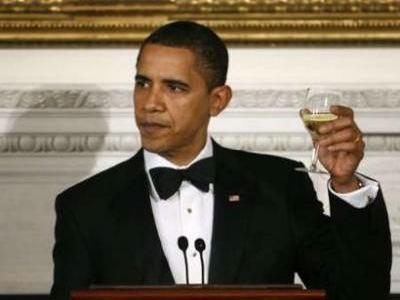 President Obama, the Grand Facilitator of the greatest consolidation of financial wealth in human history, began his sixth year in office declaring that income inequality is “the defining challenge of our time.” The Grand Bargainer who saved George Bush’s bank bailout and presided over the (ongoing) infusion of tens of trillions of dollars into Wall Street accounts, and who bragged less than two years ago that, “Since I’ve been president, federal spending has actually risen at the lowest pace in nearly 60 years,” now calls for government action to reverse the momentum of his own policies. The Great Pretender, who in 2008 called for an increase in the federal minimum wage to $9.50 an hour by 2011, and then did absolutely nothing to effectuate it when Democrats controlled both chambers of Congress, now proposes to raise the bar to $10 an hour in order to embarrass Republicans in an election year. The Daring Debt Buster who, on his own initiative, has frozen federal workers’ wages since 2010, and worked hand in glove with Republicans to gut social programs in the name of fiscal restraint, laments “growing inequality and lack of upward mobility” among the masses.
The chief executive who lifted not a finger to pass “card check,” the Employee Free Choice Act of 2009, that might have given organized labor a fighting chance to survive, now pretends to be a born again champion of collective bargaining and yearns for the days when “you knew that a blue-collar job would let you buy a home, and a car, maybe a vacation once in a while, health care, a reliable pension.”
Meanwhile, Obama’s Justice Department sided with the Republican-appointed Emergency Financial Manager of Detroit, who was seeking to impose bankruptcy on the mostly Black city and raid retiree’s pensions – revealing the administration’s true colors.
The nation’s First Black President admits that “African Americans, Latinos, Native Americans are far more likely to suffer from a lack of opportunity – higher unemployment, higher poverty rates,” and claims he’ll push for “targeted initiatives” to combat this “legacy of discrimination” (although all the proposed targeting is in the form of tax incentives for business). Yet, nearly five years ago, in a press conference marking his first hundred days in office, Obama categorically rejected targeted aid for Black communities, thus ensuring that the cascading effects of the Great Meltdown would plunge African Americans deeper into the abyss. Obama said:
“So my general approach is that if the economy is strong, that it will lift all boats as long as it is also supported by, for example, strategies around college affordability and job training, tax cuts for working families as opposed to the wealthiest that level the playing field and ensure bottom-up economic growth.
“And I’m confident that that will help the African-American community live out the American dream at the same time that it’s helping communities all across the country.”
By 2009, according to economist Pamela Brown, white household wealth was 19 times that of Black households, “and is probably even greater now” – compared to a ratio of 12 to 1 in 1984 and down to 7 to 1 in 1995. The collapse of Black economic fortunes has been catastrophic, yet Obama offers only tax cuts for corporations, streamlined business regulations, undoing of sequestration, more rhetoric about ending off-shoring of jobs, and stronger application of antidiscrimination laws.
The president wants us to forget that he was the one who proposed sequestration in the first place, in an effort to force a Grand Bargain with Republicans; that his economic advisors are secretly meeting with hundreds of corporate lobbyists to shape a jobs-destroying Trans Pacific Partnership that is “like NAFTA on steroids,” and then fast-track it through Congress; and that Obama has nominated two Republican prospective judges from Georgia to federal courts, one of whom fought to keep the Confederate banner in the state flag, while the other was the lead lawyer in defense of Georgia’s Voter ID law. The Obama administration has many priorities, but nondiscrimination is not one of them.
Whatever Obama means when he says “targeted assistance,” it seldom translates as actual money for non-corporate persons. Back in April of 2012, his administration was cited for failing to spend almost all of $7.6 billion that Congress set aside to help communities and homeowners hardest hit by the housing crisis – a cohort that is disproportionately Black and brown. Obama’s Treasury Department offered no explanation other than they had not put together a proper spending plan. However, it is obvious that Obama’s people wanted to avoid doing anything that might interfere with the banks’ foreclosure processes, so as not to disturb Wall Street’s manifold schemes to further rig the market.
The growing crisis of income and wealth inequality is a result of the internal logic of capitalism under the hegemony of Wall Street. Obama’s fix for the vast social carnage the banksters leave in their wake, is to forge a State that is even more dutiful in propping up “the markets” and stripping down the public sector. There is no room in that presidential mission for even modest amelioration of the public’s pain. The president’s rhetoric is nothing more than noise, totally disconnected from actual policy. The Lords of Capital – for whom Obama is a servant – have nothing to offer but more austerity and war.
They must be disempowered, root and branch, and society “reformed” in their absence.
Economist Devastates “War for Oil” Dogma
Aletho News
Professor Cyrus Bina relates the facts that the oil industry and markets have been globalized. The various theories that have been put forward from both the left and the right regarding war rationales that rely on demonisation of OPEC are essentially nothing more than outdated fear mongering. Cyrus Bina has been vindicated by more recent events.
Cyrus Bina:
The history of Middle Eastern oil, including its subsequent development into a modern industry, can be divided into three distinct stages: (1) the era of international cartels, 1901-1950; (2) the era of transition, 1950-1972; and (3) the era of globalization since the mid-1970s. A slightly different historical periodization can be provided for the U.S. domestic oil industry: (1) the era of classical cartelization and early oil trusts of 1870-1910; (2) the era of regulated neo-cartelization of 1911-1972; and (3) the era of globalization since the mid-1970s. A close examination of the entire 1870-1970 period would reveal that administrative pricing under the International Oil Cartel (known as Seven Sisters) were predominantly the rule in the oil business. The cartel, however, began to lose its grip during the 1950s and 1960s. Proliferating market forces, in con-junction with the development of capitalist social relations in the colonial and semi-colonial oil regions, had overcome the colonial concessions and worldwide administrative control of oil under the international oil cartel. The oil crisis of 1973-1974 was but the symptom of this transformation toward globalization. Moreover, the so-called “OPEC offensive”—which was misperceived by both the right and the left as the cause for re-control of oil market/prices —was but the catalyst of this de-cartelization and globalization of oil.
The war-for-oil scenario, as a popular myth, ignores the deeper understanding of the complex web of contradictions and regulating dynamics of today’s economy and polity. Yet, the very anachronism of this scenario is understandable in the view of the anachronistic U.S. behavior that is so dreadfully attempting to reverse the loss of American hegemony against the time and, more importantly, history. Therefore, parallel with the anachronistic reality of U.S. colonial conduct in Iraq, the anachronism of the “oil grab” becomes “reality” in the minds of those who chant “No Blood for Oil.” Yet, holding a parallel between the U.S. invasion of Iraq and the control of oil is a far fetched proposition, if not an outright illusion. For, since the mid 1970s, the material bases and dynamics of post-cartelization and globalization of oil render the physical access, prearranged inter-company allocation, and indeed administrative control and pricing of oil redundant. This rather counter intuitive reality also renders any connection between the war and oil—other than given disbursement to finance matters such as the establishment of a puppet government—superfluous.
Nevertheless, in an interview, James Schlesinger remarked: “The United States [Bush, 41st] has gone to war now, and the American people presume this will lead to a secure oil supply. As a society we have made a choice to secure access to oil by military means. The alternative is to become independent to a large degree of that secure access.” It is indeed surprising that a market worshipping Chicago School economist fails to see the formation of (spot) oil prices within interconnected and unified markets since the post-cartelization of oil in the 1970s. Schlesinger, on the one hand, stresses the phrase “secure access” and, on the other hand, underscores the alternative of “independence,” as if one can insulate the U.S. oil industry from the rest of transnational oil. This thesis provides a convenient cover for two separate strategic projects: justifying the war without exposing its real cause, and creating panic by playing the familiar scarcity card to extend the exploration of oil in the pristine U.S. regions of wildlife such as ANWAR. In this context this was also what the Bush administration and Cheney’s “Task Force on Energy” probably had in mind when they were referring to “secure oil.”
In a nutshell, the above thesis ignores (1) the mutuality of oil producers and oil consumer, the need of both sides in selling and purchasing in the competitive global oil market, (2) the interdependence of oil regions in the present interdependent world, (3) the formation of global prices based on the cost of highest cost (U.S.) producer, not the cost of individual oil regions, and (4) the formation of differential oil rents, given the existing differential (regional) costs, through competition. Here, the dramatized “oil dependency” is but an empty phrase in the view of the trans nationalization of oil since the 1970s.
On the opposite side, hardly anyone on the left fully recognized the implication of uncritical acceptance of the above tautological thesis. Thus, the left-wing liberals and the radical left adopted this theory and dressed it up in leftist garb before applying it to either the question of war or the problem of environment. Michael Klare is one of the remarkable defenders of this thesis on the left. He declares: “Two key concerns underlie the Administration’s [Bush, 43rd] thinking: First,the United States is becoming dangerously dependent on imported petroleum to meet its daily energy requirements, and second, Iraq possesses the world’s largest reserves of untapped petroleum after Saudi Arabia.” Klare, however, takes this thesis one step further to an improvised level of neo-Malthusian scarcity:
“Global demand for many key materials is growing at an unsustainable rate. As the human population grows, societies require more of everything (food, water, energy, timber, minerals, fibers, and so on) to satisfy the basic material requirements of their individual members…. Because the production and utilization of these products entails [sic.] the consumption of vast amount of energy, minerals, and other materials, the global requirement for many basic commodities has consistently exceeded the rate of population growth.”
This worn-out neo-Malthusian message has again been reiterated in Blood and Oil. Yet, Klare, who is perplexed by the gravity of U.S. involvement in Iraq is “compelled … to conclude that petroleum is unique among the world’s resources that it has more potential than any of the others to provoke major crises and conflicts in the years ahead.” Again for Klare (and for many on the left) the specificity of the cause-and-effect seems to have no bearing on this historically unique epochal conflict and his fascination with oil is so intensive that he fails to realize a need for a specific and independent analytical proof.
I contend that, at best, the war-for-oil scenario is a text with out a context. On a logical level, the oil scenario is a remarkable example of a post hoc, ergo propter hoc fallacy, misplacing the real cause of U.S. military intervention. Moreover, by neglecting the depth of the last two decades of global transformation, the protagonists on the left and the right both have adopted a very voluntaristic-functionalist view of the U.S. global role. The left tends to capitalize on a voluntaristic interpretation of the concept of hegemony and the functionalist pivot of U.S. military might. For Klare, though, the global conflict “is entirely the product of geology.” The right, on the other hand, tends to rely on the notion of a “unipolar” world and wishful arguments of the “bound to lead” variety, without adequate attention to the emerging new polarities associated with the loss of American hegemony and the forces of globalization.
Others on the left, who are obsessively fond of the war-for-oil scenario, argue that this war may not have been for oil in the interest of U.S. capitalism as a whole, but rather in the interest of “U.S. oil corporations.” Hence, they propose that the cost of war amounts to a huge subsidy by the entire society given to the oil industry. This is a fictitious argument derived from the blind assumption of “direct access” and physical control of oil, and absolute denial of the reality of global transformation of the oil industry in the early 1970s. It is also crude and arbitrary, given the reduction of the material interests of the entire (U.S.) capitalist class to the alleged interests of its tiny fraction. And, appealing to casual observation, such as watching news from the Iraqi oil fields and the arrival of oil service contractors for “rebuilding” Iraq, is not sufficient to turn away from serious analysis. The truth is that this adventurous undertaking is in the interest of neither.
Finally, attaching significance to the switching of the currency, from dollar to euro, by OPEC oil producers is unjustified. As Paul Krugman pointed out in a short note, any possible shift from the dollar to the euro on the part of OPEC will result in a “small change,” for the U.S. economy, much smaller than the switching made already by the “Russian Mafia.” However, many on the left are not losing any opportunity to grasp this straw.
http://www.heterodoxnews.com/htnf/htn7/bina.pdf
The GAO’s Office In The NSA Is Collecting Dust Because Congress Hasn’t Asked For A Report In Years
By Tim Cushing | Techdirt | January 8, 2014
The NSA’s defenders go to great lengths to convince everyone (the public and many angered legislators) that it operates under a tremendous amount of oversight — so much though that even THINKING about abusing its capabilities is out of the question. The leaks have repeatedly proven this assertion false as members of the supposedly stringent oversight continue to state their shock and dismay over what’s been uncovered.
Steven Aftergood at Secrecy News points out there’s another layer of oversight that’s gone unutilized for years as well.
Years ago, the Government Accountability Office, the investigative arm of Congress, conducted routine audits and investigations of the National Security Agency, such that the two agencies were in “nearly continuous contact” with one another. In the post-Snowden era, GAO could perform that oversight function once again.
“NSA advises that the GAO maintains a team permanently in residence at NSA, resulting in nearly continuous contact between the two organizations,” according to a 1994 CIA memorandum for the Director of Central Intelligence.
Why haven’t we read any damning reports from the GAO about the NSA’s abuses over the past several years? Well, apparently it’s because no one wants to know.
At a 2008 Senate hearing, Sen. Daniel Akaka asked the GAO about its relationship with NSA. “I understand that GAO even had an office at the NSA,” Sen. Akaka noted.
“We still actually do have space at the NSA,” replied David M. Walker, then-Comptroller General, the head of the GAO. “We just don’t use it. And the reason we don’t use it is we are not getting any requests [from Congress]. So I do not want to have people sitting out there twiddling their thumbs.”
There’s that oversight at work again. Idle for “years” by 2008 and no signs that anything has occurred since then. The GAO maintains an office (currently unstaffed) within the NSA but because if no one’s asking any questions, it’s not providing any answers.
If there’s something the GAO does well, it’s track down internal issues and problematic behavior. Unfortunately, it’s limited to recommending courses of action rather than mandating any serious changes, meaning its follow-up reports are generally filled with descriptions of how these audited entities failed to pursue the recommendations and (often) performed considerably worse during the interim.
On the other hand, the GAO’s reports do at least make it clear to the American public exactly what’s wrong with nearly everything the government spends its money on. It’s very limited accountability that does nothing to change the underlying agency ethos, but at least it prevents them from pretending these problems don’t exist.
Being in-house should naturally raise concerns about the GAO’s objectivity. Unfortunately, considering the nature of the agency’s intelligence work, there’s probably no way around that. But the first step in renewing this layer of oversight is to remind Congress of its existence. It has the power to order a GAO investigation, but until it does, the office will continue to gather dust and the NSA’s internal problems will worsen — or at least go unnoticed by Congress.
Aftergood points out that James Clapper has ordered the agency to be responsive to GAO inquiries, apparently in the eventuality that it ever gets back to the business of asking questions.
In Intelligence Community Directive 114, issued in 2011 following years of stagnation in GAO oversight of intelligence, DNI James Clapper instructed U.S. intelligence agencies to be responsive to GAO, at least within certain boundaries.
“It is IC policy to cooperate with the Comptroller General, through the GAO, to the fullest extent possible, and to provide timely responses to requests for information,” the DNI wrote.
Of course, Clapper’s definition of “responsive” probably differs greatly from the normally-accepted usage of the word. Having Clapper condone cooperation with an agency that exists to find flaws and misconduct is a bit underwhelming. The NSA’s top men have been less than cooperative in the many hearings since the Snowden leaks began, most often recycling old talking points and insisting on discussing it in the context of one program (Section 215) when everyone else is clearly focused on another area.
Still, whatever the GAO finds (that somehow doesn’t get blotted out with black ink) will provide more useful information for its Congressional overseers. This certainly shouldn’t be used in place of more independent oversight committees, but it should prove to be a valuable addition. The real question Congress needs to answer is why it has ignored this option for so many years.
7 Things You Missed If You Didn’t Read Wired’s Big Story On How The NSA Is Killing The Internet
By Mike Masnick | Techdirt | January 7, 2014
Steven Levy, who specializes in massive articles looking into aspects of the tech industry, has a new one for Wired, called How the NSA Almost Killed the Internet. It basically looks at how the NSA legally coerced the tech companies into having to comply with certain court orders to hand over information, and how the tech companies have been gagged from explaining what’s going on. And then… he gets the NSA’s side of the story. Much of what’s in there is stuff that you probably already know (especially if you read Techdirt regularly), but I wanted to call out a few tidbits that I hadn’t seen or heard anywhere else before:
- Google doesn’t charge the government for requests for information:
FISA requires the government to reimburse companies for the cost of retrieving information. Google says it doesn’t bother to charge the government. But one company says it uses that clause, hoping to limit the extent of the requests. “At first, we thought we shouldn’t charge for it,” says an executive of that company. “Then we realized, it’s good—it forces them to stop and think.”
This is kind of a “damned if you do/damned if you don’t” situation. I know plenty of folks in the civil liberties community go back and forth on it. When companies do charge, then you see articles about how companies are “making a profit” off of violating our privacy. If they don’t charge, then you see arguments about how they’re making it too easy for the government to get info. Either way, the standard has been to charge basic costs, so it’s interesting to see that Google doesn’t charge at all, probably betting on the fact that if they did, it would be misrepresented. Of course, the fact that they don’t might be misrepresented as well.
- The NSA has no response to fear of future abuse of programs beyond “we’d never do that.” Seriously.
Critics charge that while there is not yet any evidence of massive abuse of the NSA’s collected data, there is also no guarantee that a future regime won’t ignore these touted protections. These officials discounted that possibility, saying that the majority of NSA employees wouldn’t stand for such a policy. “If that happened, there would be lines at the Inspector General’s office here, and at Congress as well—longer than a Disneyland line,” Ledgett says. (The fates of several NSA employees-turned-whistleblowers indicate that anyone in that hypothetical queue would be in for a ride far wilder than anything in Anaheim.)
Sure, except there’s a very long history of the NSA and the FBI doing exactly the opposite (the claim of no evidence of massive abuse is not actually true). And, as Levy notes in that final parenthetical, the way whistleblowers are treated these days would probably shorten that line quite a bit.
- Keith Alexander admits that companies were compelled to comply and admits that we should stand up for the companies not to be harmed by all of this:
“This isn’t the companies’ fault. They were compelled to do it. As a nation, we have a responsibility to stand up for the companies, both domestically and internationally. That is our nation’s best interest. We don’t want our companies to lose their economic capability and advantage. It’s for the future of our country.”
Those words could have come from a policy spokesperson for Google, Facebook, Microsoft, or Yahoo. Or one of the legislators criticizing the NSA’s tactics. Or even a civil liberties group opposing the NSA. But the source is US Army general Keith Alexander, director of the NSA. Still, even as he acknowledges that tech companies have been forced into a tough position, he insists that his programs are legal, necessary, and respectful of privacy.
This is just bizarre. If he doesn’t want the companies to lose their economic capability and advantage, maybe he shouldn’t have undermined a large portion of it.
- Companies were given about 90 minutes to respond to the (misleading) claims in the original PRISM article that they had given the NSA direct access to their servers.
“We had 90 minutes to respond,” says Facebook’s head of security, Joe Sullivan. No one at the company had ever heard of a program called Prism. And the most damning implication—that Facebook and the other companies granted the NSA direct access to their servers in order to suck up vast quantities of information—seemed outright wrong. CEO Mark Zuckerberg was taken aback by the charge and asked his executives whether it was true. Their answer: no.
Similar panicked conversations were taking place at Google, Apple, and Microsoft. “We asked around: Are there any surreptitious ways of getting information?” says Kent Walker, Google’s general counsel. “No.”
This remains one of the most unfortunate bits about the Snowden leaks. While I think that Barton Gellman, Glenn Greenwald and Laura Poitras have done an incredible job with most of their reporting, the original PRISM stories that appeared in the Washington Post and Guardian both came out rushed and were misleading, which is still impacting how people are reporting on these things today. The PRISM program and Section 702 of the FISA Amendments Act have serious issues that need exploring, but it’s all been distorted by the misleading initial claims, which implied things that just weren’t true.
- The NSA claims it uses the very same encryption that it tries to push everyone else to use. Yes, the same encryption that Snowden docs have revealed was compromised by the NSA.
And the NSA insists that, despite the implications of those Snowden-leaked documents, it does not engage in weakening encryption standards. “The same standards we recommend are the standards we use,” Ledgett says. “We would not use standards we thought were vulnerable. That would be insane.”
Sorry, but no one believes that one at all. The clear takeover by the NSA of NIST standards shows that’s clearly not true.
- The NSA still doesn’t realize how serious all of this is. They still think it’s just been blown out of proportion.
They understand that journalism conferences routinely host sessions on protecting information from government snoops, as if we were living in some Soviet society. And they are aware that multiple security specialists in the nation’s top tech corporations now consider the US government their prime adversary.
But they do not see any of those points as a reason to stop gathering data. They chalk all of that negativity up to monumental misunderstandings triggered by a lone leaker and a hostile press.
- Patent troll Nathan Myhrvold is also completely clueless about national security:
Former Microsoft research head Nathan Myhrvold recently wrote a hair-raising treatise arguing that, considering the threat of terrorists with biology degrees who could wipe out a good portion of humanity, tough surveillance measures might not be so bad. Myhrvold calls out the tech companies for hypocrisy. They argue that the NSA should stop exploiting information in the name of national security, he says, but they are more than happy to do the same thing in pursuit of their bottom lines. “The cost is going to be lower efficiency in finding terrorist plots—and that cost means blood,” he says.
This is stupid on so many levels. First, the old argument that it’s somehow equivalent of tech companies and the NSA to make use of information — a claim that Levy ridiculously repeats multiple times in his article — is a line that has been debunked so many times it’s really beneath Levy to give it any life at all, let alone refuse to point out how stupid it is. Companies provide a direct service to users, and they make a decision: If I give this information, I get this service in return. It’s a decision made by the consumer, and a trade-off where they decide if it’s worth it. We can argue that people should have more information about the costs and benefits, but it’s still a trade-off where the final decision is their own. The NSA, on the other hand, is not providing a choice or a trade-off. They’re just taking everything in exchange for nothing. And, oh yeah, they have guns and can put you in jail — something no company can do.
Second, Myhrvold incorrectly buys completely the line that all this data collection has been helpful in stopping terrorists. There’s just one problem: there is no evidence to support that. Besides, based on his idiotic reasoning, we might as well just do away with pretty much all our rights. For example, I’m pretty sure that we could all have protected Myhrvold more completely if there were video cameras streaming video of everything he did within the privacy of his own home, cars, office or just walking around, right? We could certainly make sure that no one was attacking him or, better yet, that he wasn’t about to attack anyone. The cost of not spying on every moment of Nathan Myhrvold might mean “blood.” So, based on his own logic, we should violate his privacy, right?
All in all there’s a lot in the article that’s worth reading, but those were a few key points that really stood out.
Official 9/11 story crumbling, Washington blames Saudis
By Michael Rivero | What Really Happened | January 7, 2014
The official story of 9-11 is collapsing almost as fast as the Obamacare website. Most Americans are now well aware of the strange collapse of WTC Building 7, the video that captures the sound of the actual explosion that initiates the collapse of WTC7, the very strange behavior of the Secret Service as President Bush read about goats at Booker Elementary School. We have all seen the photographs that confirm the remains of demolition “cutter charges” in the remains of the towers. And we all know how the BBC reported that Building 7 collapsed 26 minutes before it actually happened. indicating a script was being followed (but alas, not carefully enough).
With the official story in free fall, Americans are wondering just who did this heinous deed. With the US Government itself the prime suspect, many are asking if the US Government had help from an outside nation, one with a long track record of world-changing dirty tricks.
There is a great deal of evidence that implicates the nation of Israel as a co-conspirator with the Bush administration. First, there was the massive Israeli spy ring uncovered in the United States just before 9-11, and how some of the “Dancing Israelis” arrested after being seen cheering and dancing as the World Trade Towers collapsed turned out to be Mossad spies! Then there was the strange case of Odigo, an Israeli-owned company whose New York offices received a warning about the attacks before the planes used in the attacks had even left the ground! All four of the hijacked planes departed from airport gates whose security was provided by the same Israeli security company. Israel has a long track record of playing dirty tricks against the United States and other countries, including the Lavon affair (framed on Egypt), Israel’s attack on the USS Liberty (initially framed on Egypt), and Israel’s smuggling a radio transmitter into Libya that was used to send fake messages that tricked President Reagan into bombing Libya.
As people start to seriously examine the plethora of evidence regarding Israel’s numerous perfidies it comes as no surprise that recently we have seen Israel’s “useful idiots” launch a propaganda campaign to claim that Saudi Arabia was behind the 9-11 attacks, based on a lawsuit brought against Saudi Arabia by the families of the victims. But anyone can bring a lawsuit against anyone for anything. That does not mean the lawsuit allegations are true. Nonsense lawsuits are a reality of the modern US court system, as are lawsuits staged primarily as political and propaganda stunts, which is what this appears to be. At the very least this propaganda is intended to deflect interest away from Israel. At worst, it is the start of the campaign to justify military invasion of that country, just as Saddam’s nuclear weapons were the excuse to invade Iraq, and the more recently (and thankfully failed) attempt to justify invasion of Syria by claiming Syria’s government was gassing their own people.
As I have mentioned before, the best way to tell if you are being lied to is to look for what should be there but isn’t. In the case of the claim that Saudi Arabia was behind 9-11, what should be there and isn’t is a motive for Saudi Arabia to do something like that.
George Bush had a motive to do 9-11. He needed that “new Pearl Harbor” to enrage Americans into the century of war called for by the Project For The New American Century. Israel certainly had a motive to do 9-11 and frame Muslims for it, to trick Americans into siding with Israel’s continued land grabs and wars against Israel’s enemies, with Israel’s agenda being (as it was with the Lavon affair, the USS Liberty, and the Libyan radio hoax) that Americans fight those wars for them!
Saudi Arabia does not have a history of dirty tricks, nor a demonstrated ability to carry out such deceptions. More to the point, Saudi Arabia has no motive to attack the United States. The Saudi princes have grown very rich indeed through the Petrodollar arrangement. Saudi Arabia buys many American products and weapons ($61 billion in 2011), and unlike Israel, the American taxpayer does not have to give them the money first with which to buy those weapons. Whereas Israel constantly takes money out of the US, the Saudis pour it in! Private Saudi investment in the US economy is over $400 billion. Saudi Arabia is a major creditor to the US Government. Exact figures are hard to find but Saudi Arabia has loaned the US Government hundreds of billions of dollars.
Saudi Arabia is not going to risk an attack on the US because all that wealth would vanish. The Saudi wealth inside the US would be frozen or seized, and the outstanding loans to the US would never be repaid. The “useful idiots” trying to save Israel by blaming 9-11 on Saudi Arabia have yet to come up with a motive for the Saudis to do something like 9-11 that risks losing all that cash.
Remember that Saudi Arabia was being framed for 9-11 right from the start. One of the accused hijackers, a Saudi Pilot named Saeed Al-Ghamdi, was still alive after 9-11 and sued the US Government for defaming him.
And finally, here is some common sense that totally undermines the attempt to frame Saudi Arabia for 9-11. If Saudi Arabia really wanted to hurt the United States, they don’t need to fly airplanes into skyscrapers to do it. All they have to do is ask for their money back, all at once. The resulting damage to the US financial system would make 9-11 look like a minor inconvenience in comparison.
And it would be perfectly legal for Saudi Arabia to ask for their money back.
Which is why we know that the claim that Saudi Arabia was behind 9-11 has no more basis in fact than the claim that Saddam had nuclear weapons or that Assad gassed his own people right in front of the UN chemical weapons inspectors.
As the media tries to blame Saudi Arabia for 9-11, it is worth recalling that the Bush administration initially claimed that Iraq was behind 9-11 to sell the 2003 invasion, then later admitted Iraq had actually been innocent. So there is a pattern of the US simply using 9-11 as a “one size fits all” excuse to invade yet another oil rich nation.
Related article

ln Israel, Greenwald reveals whose agenda he is serving
By Maidhc Ó Cathail | The Passionate Attachment | January 7, 2014
When waging unconventional warfare, timing is everything.
In some pro-Israel circles, President Barack Obama and his Secretary of State John Kerry are now being hysterically compared to Neville Chamberlain for their alleged “betrayal” of the self-defined “Jewish state” to yet another imminent Holocaust as a result of Obama’s historic, albeit so far limited, rapprochement with today’s supposed equivalent of a genocidal Nazi regime in Tehran and Kerry’s sustained diplomatic effort to get Israel to return to its so-called “Auschwitz borders” prior to its premeditated 1967 Land Grab. In light of this dual “existential threat” posed by the Obama administration to a Greater Israel, the interview given to Israeli TV by Glenn Greenwald, the journalist who first published documents leaked by former NSA contractor Edward Snowden that revealed the scope of U.S. spying worldwide, is as close to a “game theory warfare” smoking gun as you’re going to get.
Speaking to Israel’s Channel 10 — whose biggest shareholder, cosmetics billionaire Ronald Lauder, is President of the World Jewish Congress — Greenwald criticized “the continued imprisonment of Jonathan Pollard,” who was sentenced to life in prison in 1987 after passing more than a million highly classified documents to Israel while working as an intelligence analyst for the U.S. Navy. (Incidentally, Channel 10 owner Lauder is also a supporter of clemency for Pollard.) As reported today by Haaretz, here’s what Greenwald told his Israeli audience about the spy, who, in the words of former CIA officer Philip Giraldi, “did more damage to the United States than any spy in history”:
Greenwald agreed that the Snowden revelations are relevant to Pollard’s case. “When the U.S. government goes around the world criticizing other countries for spying on allies and prosecuting them,” he said, “are they going to maintain that with a straight face when they’re doing exactly that?”
It’s proper to raise Pollard’s case in the context of U.S. spying on its Israeli ally, he continued, because that underscores the hypocrisy of what the U.S. itself is doing. The U.S. government, Greenwald charged, does exactly what it accuses its enemies of doing, and no country has the right to say other countries shouldn’t do something while it is secretly violating that very same taboo.
While some may be willing to concede that Greenwald’s charge of U.S. government hypocrisy is perfectly valid, the acclaimed “independent” journalist’s remarks that American national security does not require surveillance of its so-called “ally” in Tel Aviv is at best naïve, at worst disingenuous:
Asked about the U.S. government’s claim that the purpose of the eavesdropping is to fight terrorism, he responded by citing the documents’ revelations that the NSA eavesdropped on both German Chancellor Angela Merkel and Israeli officials, asking, Does the U.S. government think Angela Merkel is a terrorist? Or that democratically elected Israeli officials are involved in terror?
Although many Greeks and other Europeans may justifiably view Chancellor Merkel’s austerity measures as a form of economic terrorism, could Greenwald seriously be oblivious to Israel’s long track record of terrorism, not only its state terrorism against the indigenous Palestinians and their neighbours but its less widely-known, albeit acknowledged, false flag terror attacks on its American benefactor and imperial proxy?
Given the account of the “Five Dancing Shlomos” caught celebrating in Liberty Park, New Jersey as the twin towers burned on Sept. 11, 2001, as well as much other well-documented evidence pointing toward Israeli complicity in the 9/11 attacks — seized on with great alacrity by Israel loyalists such as Joe Lieberman as a pretext to strip Americans of much of their constitutional rights while others such as Michael Chertoff profited from the hyped “need” for greater “security” in the post-9/11 “Homeland” — what kind of journalist genuinely concerned about civil liberties would deny that monitoring the conversations of a “spook, terrorist or criminal” such as Netanyahu, a harsh critic of NSA spying who infamously admitted that 9/11 as “very good” for Israel, is an essential requirement of any genuine fight against terrorism?
Like that other much-adored Jewish “critic of Israel” Noam Chomsky, Glenn Greenwald would appear to be just the latest branded anti-imperial “hero” serving to provide cover for a less transparent Israeli agenda.
Maidhc Ó Cathail is an investigative journalist and Middle East analyst. He is also the creator and editor of The Passionate Attachment blog, which focuses primarily on the U.S.-Israeli relationship. You can follow him on Facebook and Twitter @O_Cathail.
Featured Video

John Mearsheimer Talking Iran with Iran
or go to
Aletho News Archives – Video-Images
Book Review & Summary
Calling of an Angel: The True Story of Rene Caisse and an Indian Herbal Medicine Called Essiac (1988)
Dr. Gary L. Glum – 30 Q&As – Book Review & Summary
Lies are Unbekoming | October 17, 2026
On June 10, 1975, Dr. Chester Stock, a vice president at Memorial Sloan-Kettering Institute for Cancer Research, wrote to a Canadian nurse named Rene Caisse: “Enclosed are test data in two experiments indicating some regressions in sarcoma 180 of mice treated with Essiac.” The sentence sat in a letter from one of the world’s largest private cancer research centers, concerning an herbal tea an elderly English woman had learned from an Ojibwa medicine man at a northern Ontario mining camp in the 1890s. The tests were terminated the following year after Sloan-Kettering admitted, in sworn affidavit three years later, that they had prepared the injectable solution improperly from the dried material supplied — freezing and thawing the herb rather than boiling it as Rene had instructed. By the time Calling of an Angel was published in 1988, Rene Caisse had been dead for a decade, having treated thousands of cancer patients across fifty-six years in her Bracebridge, Ontario kitchen, never charging a fee, and refusing every offer — from Memorial Sloan-Kettering, the National Cancer Institute, Merck, Parke Davis, and private corporations dangling contracts up to $1 million — to release her formula before the medical establishment admitted her remedy had merit. … continue
Blog Roll
 Aletho News
- Ongoing tales of Syrian chemical weapons
- Moscow blasts UN for ignoring torture of Russian POWs
- Millions of Books Could Have Been Destroyed in Lebanon During Israeli Bombings
- Moscow warns of ‘hunt for Russians’
- Calling of an Angel: The True Story of Rene Caisse and an Indian Herbal Medicine Called Essiac (1988)
- South Korean Assistance to the U.S. in the War with Iran: Between Allied Duty and National Interests
- Pharma- and Gates-Funded GAVI Seeks to Assure Parents
- John Mearsheimer Talking Iran with Iran
- Inside Bill C-22, Canada’s Patriot Act.
- China’s FM: Palestinian cause is ‘greatest injustice of the century’
- If Americans Knew
- Israeli soldiers debunk Israel’s talking points
- In West Bank, Israeli settlers are totally out of control – Daily Update
- NPR investigation finds evidence of widespread fraud at mall kiosks tied to Israeli skincare brand
- Tucker Carlson exposes Israeli Lies about the Oct 7th attack, Charlie Kirk, and the U.S.
- Israel has detained thousands of Palestinian children since Oct 7th – over half spent time in solitary, many uncharged
- Israeli Analysis: Is Netanyahu Planning an ‘October Surprise’ Attack Before Israel’s Election?
- Israeli settlers brutally attack Palestinians and Washington Post female photographer, 65
- Words Have Changed, Occupation Continues: The Reality of the Gaza Ceasefire
- Gaza’s child amputees are growing faster than their prosthetics allow
- Israel keeps Palestinians struggling just to survive–Daily Update
- No Tricks Zone
- New Study Suggests Large Regions Of The Pacific Ocean Have Been Cooling For The Last 80 Years
- Germany’s Green Energy Debacle: High Energy Costs Force Kahla Porzellan to Close After 182 Years!
- New Study: 50 Years Of The Most Aggressive ‘Net Zero’ Policies Can Only Affect The Global Climate By 0.03°C
- US September “Heat” Was No Record…Many Records Set Decades Ago
- Latest European Green Energy Debacle; Portugal’s Largest Flagship Solar Park Insolvent!
- Green Energy Debacle: German Expert Professor Fritz Vahrenholt Warns Of Severe Economic And Social Consequences
- Two More Paleo Reconstructions Affirm Meters-Higher Sea Levels Across Ireland, Brazil 7000-6000 Years Ago
- New Study: Earth And Venus Surface Warmth Largely Explained By Convection And Lapse Rate, Not CO2 Or Radiation
- 2025 Nature Paper Claiming Worsening Global Drought Gets RETRACTED …Heavily Flawed
- New Study: ‘Global Drought Shows No Detectable Recent Acceleration Under Climate Warming’

