A Secret Court Making Secret Laws? That’s No Democracy
By Mike Masnick | TechDirt | July 8th 2013
Last December, well before the Ed Snowden leaks revealed some information about the FISA court (FISC) and its rulings, we had already noted that the court itself was almost certainly unconstitutional. More recently, we talked about how the fact that all the court’s judges are appointed by the Chief Justice of the Supreme Court means that the court has turned into a rubber stamp made in the image of some of the most “law and order”-minded Chief Justices from the past few decades. Ezra Klein has since expanded on that to discuss the oddity of how current Chief Justice John Roberts is basically the Chief Justice of the Surveillance State, answerable to absolutely no one: “You have exclusive, unaccountable, lifetime power to shape the surveillance state.”
Over the weekend, the NY Times put out a powerful piece discussing how FISC has basically become a shadow Supreme Court, doling out all sorts of important rulings in total secrecy. It rules on cases where it only hears one side, and where there are no appeals, no guarantee that the full story is presented, and involves a bunch of judges who tend to have law enforcement backgrounds before being appointed to the court. In the end, you have a secret court issuing secret rulings by ex-law enforcement officials, allowing their former colleagues ever greater power to spy on everyone.
The 11-member Foreign Intelligence Surveillance Court, known as the FISA court, was once mostly focused on approving case-by-case wiretapping orders. But since major changes in legislation and greater judicial oversight of intelligence operations were instituted six years ago, it has quietly become almost a parallel Supreme Court, serving as the ultimate arbiter on surveillance issues and delivering opinions that will most likely shape intelligence practices for years to come, the officials said.
[….] Unlike the Supreme Court, the FISA court hears from only one side in the case — the government — and its findings are almost never made public. A Court of Review is empaneled to hear appeals, but that is known to have happened only a handful of times in the court’s history, and no case has ever been taken to the Supreme Court. In fact, it is not clear in all circumstances whether Internet and phone companies that are turning over the reams of data even have the right to appear before the FISA court.
As an example of how FISC has basically completely overturned the rules of surveillance in secret, the NY Times reveals the details of some of its thinking, taking a extremely narrow ruling meant to apply in special cases, and turning it into a general rule that has allowed the vast capture of information:
In one of the court’s most important decisions, the judges have expanded the use in terrorism cases of a legal principle known as the “special needs” doctrine and carved out an exception to the Fourth Amendment’s requirement of a warrant for searches and seizures, the officials said.
The special needs doctrine was originally established in 1989 by the Supreme Court in a ruling allowing the drug testing of railway workers, finding that a minimal intrusion on privacy was justified by the government’s need to combat an overriding public danger. Applying that concept more broadly, the FISA judges have ruled that the N.S.A.’s collection and examination of Americans’ communications data to track possible terrorists does not run afoul of the Fourth Amendment, the officials said.
That legal interpretation is significant, several outside legal experts said, because it uses a relatively narrow area of the law — used to justify airport screenings, for instance, or drunken-driving checkpoints — and applies it much more broadly, in secret, to the wholesale collection of communications in pursuit of terrorism suspects. “It seems like a legal stretch,” William C. Banks, a national security law expert at Syracuse University, said in response to a description of the decision. “It’s another way of tilting the scales toward the government in its access to all this data.”
I don’t care where you come down on the importance of widespread surveillance — I just don’t see how you can possibly square the above interpretation of the law with the 4th Amendment. If “special needs” can be used to justify mass collection of data on just about everyone “just in case” it might stop some sort of terrorist attack, then you no longer have a 4th Amendment. At all.
But, the bigger issue here is just the fact that we have a secret court issuing secret interpretations of the law that have a massive impact on our privacy. This is supposed to be an open democracy. An open democracy doesn’t involve secret courts and secret laws. We have laws that everyone knows, and which the public can discuss and weigh in on through their elected officials. When you set up a secret court, making secret rules with no oversight, and with all of the judges appointed by a single Supreme Court Justice with a particular bias, you no longer have a functioning democracy at all. And that’s downright scary.
This is a point that some Senators have been making for years now, but the leaks from Ed Snowden have really made it that much clearer just how insane the situation is. Earlier, it had seemed like perhaps there was one or two rulings from FISC that had some oddities in the interpretation, and which should probably be revealed to the public. However, the various revelations so far suggest that the issue is much, much bigger, and we have a secret “shadow court” system that is systematically obliterating the 4th Amendment and helping to create and then “legitimize” the vast surveillance state.
The Snowden leaks have shone a number of lights on various bad things within our government, but one thing that they have made abundantly clear is that the FISC needs to go. Whether that means it needs to be opened up, or to have greater oversight, or just be done away with completely, could be up for discussion. But if it remains the way it is, it’s clear that we’ve thrown away our basic democratic principles, and moved towards the same sorts of autocratic regimes with secret courts that the US has always presented itself as being against.
Related article
- Five unanswered questions about the NSA’s surveillance programs (alethonews.wordpress.com)
Federal Judge Allows EFF’s NSA Mass Spying Case to Proceed
Rejects Government’s State Secret Privilege Claims in Jewel v. NSA and Shubert v. Obama
EFF | July 8, 2013
San Francisco – A federal judge today rejected the U.S. government’s latest attempt to dismiss the Electronic Frontier Foundation’s (EFF’s) long-running challenge to the government’s illegal dragnet surveillance programs. Today’s ruling means the allegations at the heart of the Jewel case move forward under the supervision of a public federal court.
“The court rightly found that the traditional legal system can determine the legality of the mass, dragnet surveillance of innocent Americans and rejected the government’s invocation of the state secrets privilege to have the case dismissed,” said Cindy Cohn, EFF’s Legal Director. “Over the last month, we came face-to-face with new details of mass, untargeted collection of phone and Internet records, substantially confirmed by the Director of National Intelligence. Today’s decision sets the stage for finally getting a ruling that can stop the dragnet surveillance and restore Americans’ constitutional rights.”
In the ruling, Judge Jeffrey White of the Northern District of California federal court agreed with EFF that the very subject matter of the lawsuit is not a state secret, and any properly classified details can be litigated under the procedures of the Foreign Intelligence Surveillance Act (FISA). As Judge White wrote in the decision, “Congress intended for FISA to displace the common law rules such as the state secrets privilege with regard to matter within FISA’s purview.” While the court allowed the constitutional questions to go forward, it also dismissed some of the statutory claims. A status conference is set for August 23.
EFF’s Jewel case is joined in the litigation with another case, Shubert v. Obama.
“We are pleased that the court found that FISA overrides the state secrets privilege and look forward to addressing the substance of the illegal mass surveillance,” said counsel for Shubert, Ilann Maazel of Emery Celli Brinckerhoff & Abady LLP. “The American people deserve their day in court.”
Filed in 2008, Jewel v. NSA is aimed at ending the NSA’s dragnet surveillance of millions of ordinary Americans and holding accountable the government officials who illegally authorized it. Evidence in the case includes undisputed documents provided by former AT&T telecommunications technician Mark Klein showing AT&T has routed copies of Internet traffic to a secret room in San Francisco controlled by the NSA. The case is supported by declarations from three NSA whistleblowers along with a mountain of other evidence. The recent blockbuster revelations about the extent of the NSA spying on telecommunications and Internet activities also bolster EFF’s case.
For the full decision:
https://www.eff.org/node/74895
For more on Jewel v. NSA:
https://www.eff.org/cases/jewel
Five unanswered questions about the NSA’s surveillance programs
By Brendan Sasso | The Hill | 07/07/13
Leaks by former National Security Agency contractor Edward Snowden have provided new insight into how the government monitors domestic and foreign communications for threats to national security.
Although the government has disclosed some additional details about the programs in response to the leaks, important questions remain about the nature and scope of the surveillance programs.
Without that additional information, it is impossible to know the extent to which the government is peering into the lives of Americans in the name of national security, according to privacy advocates.
1. What other data is being collected under the Patriot Act?
The first leak from Snowden was a secret court order demanding that Verizon turn over vast batches of “metadata” on its U.S. customers. The data included the time and duration of calls, as well as the phone numbers involved, but not the contents of the conversations. The data collection was authorized under Section 215 of the Patriot Act.
The Director of National Intelligence (DNI) clarified that while the government does obtain data on millions of U.S. phone calls (and from more companies than just Verizon), it only “queries” the database a limited number of times for specific national security reasons.
Michelle Richardson, a legislative counsel for the American Civil Liberties Union (ACLU), questioned whether the NSA is using Section 215 to collect more than just phone records.
“Is it also financial data or Internet records or other things?” she asked. “Knowing now that the court has been so broad in its interpretation, it’s even more important to figure out what else they’re getting.”
Greg Nojeim, a senior counsel for the Center for Democracy and Technology, said the NSA is likely using the Patriot Act to collect the credit card records and IP addresses of millions of people within and outside of the United States.
2. How broad are the programs?
How many people have been spied on through the NSA programs remains unclear. According to the NSA, it queried its massive database of phone records fewer than 300 times in 2012. But the agency did not disclose figures on other years or how many phone numbers were accessed in those queries.
Richardson explained that a single query could be an algorithm that scans the database and returns information on many people.
The other major program revealed by Snowden is the NSA’s Internet surveillance program, called PRISM. Unlike the phone record collection program under the Patriot Act, the NSA uses PRISM to access the contents of communications, such as emails, video chats, photographs and other information.
According to the DNI, the NSA only accesses those online records if there is a “foreign intelligence purpose” and the target is “reasonably believed” to be outside of the U.S. The program is authorized by Section 702 of the Foreign Intelligence Surveillance Act, and the searches require approval by a secret FISA court.
The NSA has not disclosed how many people it has targeted under Section 702 or how many people were spied on incidentally as part of the program.
“We have no idea how many U.S. persons have had their communications swept up,” said Sharon Bradford Franklin, senior counsel for the Constitution Project.
3. What’s the legal rationale?
The NSA has insisted the surveillance programs comply with the law and are overseen by independent FISA courts. But the opinions of those courts are secret, so little is known about how the courts are enforcing privacy protections or why they signed off on certain surveillance methods.
Section 215 of the Patriot Act allows the government to collect business records if they are “relevant” to a terrorism investigation. The FISA courts have determined that that provision allows the NSA to collect records on virtually all phone calls within and outside of the U.S. Why the court determined that so much data is “relevant” to a terrorism investigation remains unclear.
“Generally we don’t know the legal rationale being offered by the administration and being accepted by the FISA court to justify these particular types of surveillance programs,” Bradford Franklin said. “We should not have secret law in a democracy.”
4. Is the NSA still collecting email records?
One of the latest leaks revealed that beginning in 2001, the NSA collected vast amounts of email records. The NSA was able to identify the email accounts that sent and received messages, as well as IP addresses. The data collection did not include the contents of the emails.
The Obama administration confirmed the existence of the program, but said it ended in 2011 for “operational and resource reasons.”
One major question, according to privacy advocates, is whether the government is still able to obtain similar email records through a separate program.
5. Are there other programs that we don’t know about?
Although the NSA has provided some details about the programs leaked by Snowden, it is unclear what other programs exist and how they work together as part of a broad surveillance strategy.
“There’s this giant surveillance superstructure out there that we’re finally getting glimpses of, but there’s still a lot of questions of how does the whole thing work,” Richardson said.
Related articles
New Snowden leak: Australia’s place in US spying web
RT | July 8, 2013
Ex-NSA contractor and whistleblower Edward Snowden has disclosed his first set of documents outlining Australia’s role in NSA surveillance programs, picking out four facilities in the country that contribute heavily to US spying.
The locations of dozens of the US’s and associated countries signal collection sites have been revealed by Snowden, who leaked classified National Security Agency maps to US journalist Glenn Greenwald, which were then published in the Brazilian newspaper O Globo.
The sites all play a role in the collection of data and interception of internet traffic and telecommunications on a global level.
Australian centers involved in the NSA’s data collection program, codenamed X-Keyscore, include Joint Defence Facility Pine Gap in central Australia and three Australian Signals Directorate facilities: the Shoal Bay Receiving Station in the country’s north, the Australian Defence Satellite Communications Facility on the west coast, and the naval communications station HMAS Harman outside the capital, Canberra.
New Zealand also plays a role, with the Government Security Communications Bureau facility at Waihopai, on the northern point of South Island, also contributing to the program.
X-Keyscore is described as a “national Intelligence collection mission system” by US intelligence expert William Arkin, according to Australian newspaper The Age. It processes all signals prior to being delivered to various “production lines” that deal with more specific issues including the exploration of different types of data for close scrutiny.
The different subdivisions are entitled Nucleon (voice), Pinwale (video), Mainway (call records) and Marina (internet records).
A spokesman for Australian Prime Minister Kevin Rudd declined to comment on the revelatory map, saying that it was not government practice to comment on intelligence matters, according to national broadsheet The Australian.
Australia is one of the “Five Eyes” – an alliance of intelligence-sharing countries which include of the US, United Kingdom, Canada, Australia and New Zealand.
When documents were published pertaining to the British signal intelligence agency, GCHQ’s “Tempora” program, Snowden reportedly commented that the other partners in the “Five Eyes” intelligence “sometimes go even further than the [National Security Agency] people themselves.”
“If you send a data packet and if it makes its way through the UK, we will get it. If you download anything, and the server is in the UK, then we get it,” he said.
In an interview published online last weekend in advance of its printing in German magazine Der Speigel this week, Snowden argued that the NSA was ‘in bed with the Germans’ commenting that the organization of intelligence gathering in countries involved with the organization is such that political leaders are insulated from the backlash, going on to denounce “how grievously they’re violating global privacy.”
Germany reacted to the report on Monday, with German chancellor Angela Merkel’s spokesman, Steffen Seibert, telling Reuters that the Federal Intelligence Agency’s (BND) cooperation with the NSA “took place within strict legal and judicial guidelines and is controlled by the competent parliamentary committee.”
The US and its affiliates have intelligence facilities distributed worldwide in a variety of US embassies, consulates and military facilities. In an earlier report by Der Spiegel, also based on revelations by Snowden, it was revealed that the NSA bugged EU diplomatic offices and gained access to EU internal computer networks.
Related articles
- Snowden links NZ to US spy programme (stuff.co.nz)
- Snowden reveals Australia’s links to US spy web (smh.com.au)
- Snowden releases information about Australian Intelligence gathering programs. (theage.com.au)
State Department’s Watergate? Office of high-profile whistleblower’s lawyer burglarized
RT | July 8, 2013
The Dallas law office representing a State Department whistleblower was broken into and robbed during the first weekend of July. Three computers were stolen and the firm’s file cabinets had been searched, but valuables were left untouched.
“It’s a crazy, strange and suspicious situation,” attorney Cary Schulman of the Schulman & Mathias law office told Foreign Policy Magazine’s The Cable.
The burglars left behind silver bars, video equipment and other valuables, causing Schulman to believe that they were looking to find information on the case of former State Department inspector general investigator Aurelia Fedenisn, who leaked government documents last month. Fedenisn provided CBS News with documents that accuse the State Department of covering up criminal investigations involving its diplomats and employees, including offenses such as illicit drug use, sexual solicitation of minors and prostitutes, and sexual harassment.
The documents state that US Ambassador to Belgium Howard Gutman “was suspected of patronizing prostitutes in a public park.”
Schulman believes that the perpetrators of the burglary may have been politically motivated supporters of the Obama administration, but the suspects have not yet been identified.
“It’s clear to me that it was somebody looking for information and not money. My most high-profile case right now is the Aurelia Fedenisn case, and I can’t think of any other case where someone would go to these great lengths to get our information,” Schulman told The Cable.
Last month, lawyers representing Fedenisn told The Cable that the State Department tried to silence her by threatening her and her family. Law enforcement officers allegedly camped in front of her house, harassed her children, and tried to make Fedenisn incriminate herself.
Schulman believes that officials are trying to force Fedenisn to sign papers admitting that she stole the documents – a crime that the former investigator denies.
The law office does not believe the State Department authorized a break-in, but suspects that supporters of the administration may be to blame.
“It wasn’t professional enough,” he said. “It is possible that an Obama or Hillary supporter feels that I am unfairly going after them. And the timing of this is right after several weeks of very public media attention so it seems to me most likely that the information sought is related to that case. I don’t know for sure and I want the police to do their work.”
Local Fox affiliate KDFW aired a surveillance video of the two suspected burglars, who can be seen walking out of the office carrying computers.
State Department spokesperson Jen Psaki claims the agency had no involvement in the break-in.
“Any allegation that the Department of State authorized someone to break into Mr. Schulman’s law firm is false and baseless,” she said.
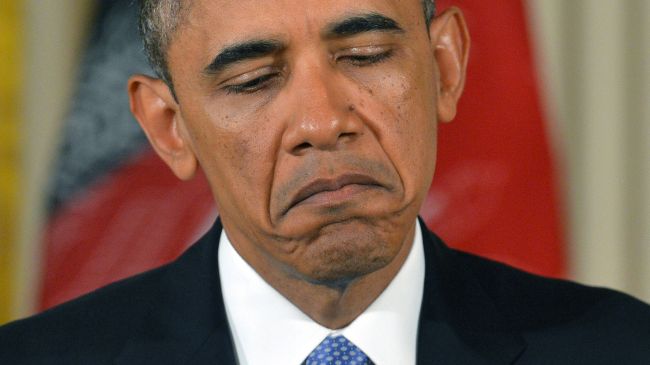
How Do You Know When President Obama is Lying?
By JEFF COHEN | CounterPunch | July 8, 2013
I was a young person when I first heard the quip: “How do you know when the President is lying? His lips are moving.” At the time, President Nixon was expanding the war in Vietnam to other countries and deploying the White House “plumbers” to commit crimes against antiwar leakers.
Forty years have passed. Sadly, these days, often when I see President Obama moving his lips, I assume he’s lying.
Like Nixon, our current president is prolonging an endless, borderless and counter-productive war (“on terror”) and waging a parallel war against “national security” leakers that makes the plumbers’ burglary of Daniel Ellsberg’s psychiatrist’s office look almost quaint.
The World War I vintage Espionage Act, originally used to imprison socialists for making antiwar speeches, has been used by the administration against whistleblowers with a vengeance unprecedented in history: eight leakers have been charged with Espionage under Obama, compared to three under all previous presidents. The Obama administration has prosecuted not a single CIA torturer, but has imprisoned a CIA officer who talked about torture with a journalist. National Security Agency official Thomas Drake, who was unable to get abuses fixed internally, now has a criminal record for communicating with a reporter years ago about sweeping domestic surveillance.
So there I was watching Obama’s lips move about NSA whistleblower Edward Snowden at a June 27 press conference. Saying he wouldn’t be “scrambling military jets to go after a 29-year-old hacker,” Obama added that he would not “start wheeling and dealing and trading on a whole host of other issues, simply to get a guy extradited.”
I didn’t believe a word of it.
Given Obama’s war on whistleblowers and journalists who utilize them, and given the Army’s abusive treatment of military whistleblower Bradley Manning (apparently aimed at getting him to implicate WikiLeaks), it’s inconceivable that Obama was truly blasé about Snowden. To deter future whistleblowers, Snowden would have to be caught and made an example of – and probably mistreated (like Manning, in hopes of getting him to turn against WikiLeaks and even journalist Glenn Greenwald).
As his lips were moving, Obama knew well that he would go to extreme lengths to prevent this articulate young man from securing asylum in some Latin American country, where he could continue to inform the world’s media about the Surveillance State that has blossomed alongside the Warfare State under the Bush and Obama administrations.
That Obama wasn’t truthful became clear when the U.S. campaign of “wheeling and dealing” led to possible asylum countries retreating in fear one after another (Vice President Biden was deployed to pressure Ecuador’s president by phone). And even clearer with last week’s outrageous, international law-breaking that effectively forced down the presidential plane of Bolivian President Evo Morales.
And if Obama eventually does scramble jets to force down a plane with Snowden on board, the commander-in-chief will be applauded for taking bold and decisive action by mainstream TV talking heads, “national security” experts and the opposition he seems most intent on pleasing: conservatives. Criticism from civil libertarian and peace voices (or unions and environmentalists, for that matter) has rarely daunted Obama.
The bipartisan consensus in support of our bloated Military/Surveillance State – which so undermines our society as a whole – is reflected in Congress and both the Bush and Obama administrations, as well as mainstream media.
When it comes to issues of U.S. militarism and spying, the allegedly “progressive” MSNBC often seems closer to the “official network of the Obama White House” than anything resembling an independent channel. With a few exceptions (especially Chris Hayes), MSNBC has usually reacted to expanded militarism and surveillance by downplaying the abuses or defending them.
Had McCain or Romney defeated Obama and implemented the exact same policies, treating whistleblowers like Manning and Snowden as foreign espionage agents, one would expect MSNBC hosts to be loudly denouncing the Republican abuses of authority.
But with Obama in power, a number of MSNBC talking heads have reacted to the Snowden disclosures like Fox News hosts did when they were in hysterical damage control mode for Bush – complete with ridiculously fact-free claims and national chauvinism that we’ve long come to expect from the “fair & balanced” channel.
As Snowden arrived in Russia from Hong Kong, MSNBC host Ed Schultz blustered on about Snowden as a “punk” and “coward.” Railing about the “security of the country” in tones Hannity would approve of, Schultz questioned Snowden’s patriotism and credibility, asking: “If the United States of America is doing something so egregiously wrong in its surveillance program, how come he’s the only one speaking up?
In O’Reilly-like blissful ignorance, Schultz seemed unaware of the three NSA whistleblowers who’d loudly spoken up way earlier than Snowden – and gathered for an illuminating USA Today interview a week before his tirade.
I watched one MSNBC host function as an auxiliary prosecutor in Obama’s Justice Department, going after Snowden – while trying to link WikiLeaks and journalist Glenn Greenwald to criminal flight.
MSNBC’s Melissa Harris-Perry has been condemning Snowden by contrasting him with civil disobedients who “love their country” and submit to arrest – while Snowden just wants to “save his own skin.” She proclaimed: “This is different. This is dangerous to our nation.” Should we similarly dismiss Dan Ellsberg, who leaked the top secret Pentagon Papers to a dozen newspapers in 1971 by going on the lam from the FBI. Or Watergate’s “Deep Throat,” who saved his own skin by hiding his identity for 30 years after leaking secrets that helped crash the Nixon presidency?
In a bizarre monologue attacking Snowden (who’s risked plenty, in my view), Harris-Perry hailed those who engage in civil disobedience for being willing “to risk your own freedom, your own body in order to bring attention to something that needs to be known. Martin Luther King Jr. was arrested, attacked, smeared. Nelson Mandela went to prison for 27 years.” (My emphasis.)
Nelson Mandela? He wasn’t a civil disobedient who gave himself up. He was a fugitive, fleeing the apartheid police. He was on the lam domestically, like Snowden is now internationally. And some reports indicate that South African authorities were able to nab Mandela thanks to the U.S. CIA (one of the agencies now working to apprehend Snowden).
MSNBC’s Rachel Maddow has also disappointed. After doing a typically thorough presentation on the force-down of President’s Morales’ plane, she ended her report by expressing displeasure only that Washington had apparently gotten allies to go out on the limb “for nothing.” Her objection to the harassment seemed to be: it hadn’t succeeded. I didn’t hear opposition to the action had Snowden actually been on board and apprehended.
The Snowden/NSA story proves once again that – especially on so-called “national security” issues – we need strong, independent media not enmeshed with the corporate/political power structure and not allied with one of the two corporate parties.
We can’t count on MSNBC to heed the lesson taught by legendary independent journalist I.F. “Izzy” Stone, after years reporting from Washington: “All governments lie and nothing they say should be believed.”
Jeff Cohen was an MSNBC pundit and senior producer in 2002-3 until being terminated for political reasons, along with Phil Donahue, on the eve of the Iraq invasion. He is director of the Park Center for Independent Media at Ithaca College, founder of the media watch group FAIR, and author of Cable News Confidential: My Misadventures in Corporate Media. He cofounded the online action group RootsAction.org, which has petitioned for Snowden.
Brazil expresses deep concerns over US spying activities
Press TV – July 7, 2013
Brazil has expressed serious concerns over a report which says the United States has been spying on Brazilian companies and individuals for a decade.
Brazil’s O Globo newspaper reported on Sunday that the US National Security Agency (NSA) has collected data on billions of telephone and email conversations in the South American country.
The Globo report said that information released by US surveillance whistleblower Edward Snowden reveals that the number of telephone and email messages logged by the NSA in the 10-year period was near to the 2.3 billion captured in the US.
Brazilian Foreign Minister Antonio Patriota expressed “deep concern at the report that electronic and telephone communications of Brazilian citizens are being the object of espionage by organs of American intelligence.”
“The Brazilian government has asked for clarifications” through the US Embassy in Brasilia and the Brazilian Embassy in Washington, he said.
Patriota also said Brazil will ask the United Nations for measures “to impede abuses and protect the privacy” of Internet users, laying down rules for governments “to guarantee cybernetic security that protects the rights of citizens and preserves the sovereignty of all countries.”
The US Embassy in Brazil refused to comment over the issue.
But the Office of the Director of National Intelligence in the United States issued a statement saying, “The US government will respond through diplomatic channels to our partners and allies in the Americas … While we are not going to comment publicly on specific alleged intelligence activities, as a matter of policy we have made clear that the United States gathers foreign intelligence of the type gathered by all nations.”
The chairman of the US Joint Chiefs of Staff, Gen. Martin Dempsey, admitted on Sunday that Snowden’s exposés have seriously damaged US ties with other countries. “There has been damage. I don’t think we actually have been able to determine the depth of that damage.”
Snowden, a former CIA employee, leaked two top secret US government spying programs under which the NSA and the Federal Bureau of Investigation (FBI) are eavesdropping on millions of American and European phone records and the Internet data from major Internet companies such as Facebook, Yahoo, Google, Apple, and Microsoft.
On June 9, Snowden admitted his role in the leaks in a 12-minute video recorded interview published by The Guardian.
In the interview, he denounced what he described as systematic surveillance of innocent US citizens, saying his “sole motive is to inform the public as to that which is done in their name and that which is done against them.”
The NSA scandal took even broader dimensions when Snowden revealed information about its espionage activities targeting friendly countries.
Snowden has been holed up at Moscow’s Sheremetyevo Airport since June 23 when he travelled from Hong Kong to avoid US extradition.
He has already sought asylum in more than two dozen countries. Washington has asked these countries not to provide asylum to Snowden.
Three Latin American countries — Nicaragua, Bolivia, and Venezuela — have offered to grant asylum to Snowden.
Related article
Tony Blair hired ex Israeli army intelligence officer
By Gilad Atzmon | July 7, 2013

The Telegraph reported today that “Tony Blair has hired a former Israeli army intelligence officer to work in his private office, despite his role as Middle East peace envoy.”
Lianne Pollak, who has led intelligence teams in the Israel Defence Forces, was recruited as a private consultant between October 2012 and April this year.
The 30-year-old Israel was previously a policy adviser to Israeli PM Benjamin Netanyahu, working with security agencies and senior officials.
The former British prime minister is the envoy to the Middle East for the Quartet – the group that represents the US, Russia, the United Nations and Europe.
His role includes encouraging development in Gaza and the West Bank and helping to forge a settlement of the Israeli-Palestinian conflict, having been appointed when he left Downing Street in June 2007.
Related article
- Tony Blair: Egypt’s army had no choice (thestate.com)
AT&T joins Verizon, Facebook in selling customer data
RT | July 6, 2013
AT&T has announced that it will begin selling customers’ smart phone data to the highest bidder, putting the telecommunications giant in line with Verizon, Facebook and other competitors that quietly use a consumer’s history for marketing purposes.
The company claims its new privacy policy, to be updated within “the next few weeks,” exists to “deliver more relevant advertising” to users based on which apps they use and their location, which is provided by GPS-tracking. Apparently recognizing the natural privacy concerns a customer might have, AT&T assured the public that all data would be aggregated and made anonymous to prevent individual identification.
A letter to customers, for instance, described how someone identified as a movie fan will be sent personalized ads for a nearby cinema.
“People who live in a particular geographic area might appear to be very interested in movies, thanks to collective information that shows wireless devices from that area are often located in the vicinity of movie theaters,” the letter states. “We might create a ‘movie’ characteristic for that area, and deliver movie ads to the people who live there.”
A June 28 blog post from AT&T’s chief privacy officer Bob Quinn said the new policy will focus on “Providing You Service and Improving Our Network and Services,” but the online reaction has been overwhelmingly negative, with many customers looking for a way to avoid the new conditions.
“You require that we allow you to store a persistent cookie of your choosing in our web browsers to opt out,” one person wrote. “No mention of how other HTTP clients, such as email clients, can opt out. If you really did care about your customers, you would provide a way for us to opt out all traffic to/from our connection and mobile devices in one easy setting.”
One problem for any customer hoping for a new service is the lack of options, smartphone or otherwise. Facebook, Google, Twitter and Verizon each store consumer data for purposes that have not yet been made clear. And because of the profit potential that exists when a customer blindly trusts a company with their data, small Internet start-ups, including AirSage and many others, have developed a way to streamline information into dollars.
The nefarious aspect of AT&T’s announcement is underscored by the recent headlines around the National Security Agency, which has spent years has compelling wireless corporations to hand over data collected on millions of Americans. Unfortunately for the privacy of those concerned, AT&T’s new policy may only be a sign of things to come.
“Instead of merely offering customers a trusted conduit for communication, carriers are coming to see subscribers as sources of data that can be mined for profit, a practice more common among providers of free online services like Google and Facebook,” the Wall Street Journal wrote about the matter in May.
NSA spies in bed with Germany, other Western states: Snowden
Press TV – July 7, 2013
U.S. intelligence leaker Edward Snowden said the National Security Agency (NSA) has massive spying partnerships with other Western states that are now grumbling about the agency’s surveillance programs.
He made the comments in an interview with U.S. cryptography expert Jacob Appelbaum and documentary filmmaker Laura Poitras before revealing the NSA’s internal and global surveillance programs last month.
NSA spies are “in bed together with the Germans and most other Western states,” Snowden said in remarks published by the German news weekly Der Spiegel on Sunday.
The fugitive leaker added that the NSA has a department called the Foreign Affairs Directorate which coordinates work with Western spying agencies.
Snowden said the NSA, for example, provides Germany’s BND foreign intelligence agency with “analysis tools” for data passing from regions like the Middle East through Germany.
The former NSA contractor has also revealed that the American agency spies on European Union offices in New York, Washington and Brussels, drawing ire from European leaders, especially Germany.
The NSA, according to top secret documents disclosed by Snowden, also collected around half a billion telephone calls, emails or mobile phone text messages and Internet chat entries in Germany per month.
Germany demanded an immediate explanation from the U.S. over the surveillance programs.
Justice minister, Sabine Leutheusser-Schnarrenberger, strongly condemned the U.S. spying, saying it was reminiscent of “the methods used by enemies during the Cold War.”
Snowden, 30, has reportedly holed up in the transit area of Moscow’s Sheremetyevo International Airport since arriving on a flight from Hong Kong on June 23. He is wanted in the US on espionage charges.
Related articles
Controversial EU Data Protection Regulation May Be Negotiated In Secret In Breach Of Parliamentary Process
By Glyn Moody | TechDirt | July 3, 2013
Today, the European Parliament held a three-hour long debate on PRISM, Tempora and what the EU response should be. Many wanted TAFTA/TTIP put on hold; others didn’t. But one theme cropped up again and again: the need for strong data protection laws that would offer at least some legal protection against massive and unregulated transfer of Europeans’ personal data to the US.
As Techdirt readers may recall, the EU’s Data Protection Regulation was already contentious even before Ed Snowden revealed the scale of US and UK spying on EU citizens. The new focus on passing it soon only intensifies the battle going on there between those who want to introduce meaningful constraints on what can be done with EU data, and those who seem happier to listen to lobbyists and allow personal information to flow across the Atlantic largely unchecked. But it looks like the politicians have come up with a way to avoid public debate on the matter, as Monica Horten at Iptegrity.com reports:
Secret trilogue negotiations between the European Parliament and the Council of Ministers are being proposed as a way to get around the impasse of 3000+ amendments on the Data Protection Regulation.
As Horten explains:
trilogues are held in secret, behind closed doors, and the only people allowed in are the rapporteur [the lead MEP representing the European Parliament] and his shadows, the Commissioner, the Presidency, and selected advisers from each institution. The trilogue discussions are not made public.
As well as being reprehensible — if anything needed to be conducted in public, this did — it may be against the EU’s own rules:
trilogues cannot start before the responsible committee has given a mandate. That’s what’s a little bit odd here. The mandate can only be given when the committee votes in October.
But the Brussels rumour mill is suggesting that there could be a move to begin trilogues on the Data Protection Regulation before October, without waiting for the committee mandate.
That might solve the problem of avoiding high-profile arguments over what should be in the Regulation, but it would also place anything that comes out of these secret negotiations on a questionable footing:
it would be a breach of Parliamentary process, and especially egregious given that this law deals with fundamental rights.
In any event, the rapporteur does not have to agree to trilogues. It is an option.
In other words, nobody really knows what will happen here. Call it the Snowden Effect: anything relating even indirectly to his case seems to become more complex and unpredictable….Follow me @glynmoody on Twitter or identi.ca, and on Google+
Featured Video

Benoit Paré: OSCE Whistleblower: The Ukraine War – Narratives vs. Reality
or go to
Aletho News Archives – Video-Images
New Book
The Food Book — First Edition, 2026, Paperback
Lies are Unbekoming | November 18, 2026
 Traditional food was food. Not organic food. Not slow food. Not wellness food. Food. Bone broth was food. Raw milk was food. Fermented vegetables were food. Butter was food. Eggs were food. Honey was food. Liver was food.
Weston Price travelled from 1931 to 1936 across fourteen populations — Swiss villagers in the Lötschental valley, Gaelic communities in the Outer Hebrides, Inuit in Alaska, Native Americans in northern Canada, Māori in New Zealand, Masai in Kenya, Melanesians in the South Pacific, Peruvian Indians in the Andes. He photographed their faces. He measured their dental arches. He weighed their vitamin and mineral intake. He published the results in 1939 in Nutrition and Physical Degeneration. The pattern was consistent across every population. The generation raised on ancestral foods had broad faces, straight teeth, strong bone structure, and virtually no chronic disease. The generation raised on refined flour, refined sugar, and canned goods did not.
What has not been treated at book length, until now, is the whole shelf — the twenty works that, taken together, describe what the traditional kitchen was, what industrial food replaced it with, and what the body does when the replacement runs for a century.
The Food Book reads twenty of those works as a single library: Weston Price and Sally Fallon on the tradition that was lost; Francis Pottenger on what cooking does to a species over four generations; Sandor Katz on fermentation as an ecology; William Dufty on the two-and-a-half-century history of refined sugar; William Campbell Douglass on raw milk; James DiNicolantonio on the inversion of the salt argument; Max Gerson on cancer; Ulric Williams on medicine as a cartel; William Engdahl on seed sovereignty; Stephen Harrod Buhner on what plants do, chemically, that pharmaceuticals disrupt. … continue
Blog Roll
 Aletho News
- UK Military Admits Carrying Out Cyberattacks Against Russia
- The Food Book — First Edition, 2026, Paperback
- Benoit Paré: OSCE Whistleblower: The Ukraine War — Narratives vs. Reality
- UK forced to admit ordering backdoor access to Apple users’ data
- It’s not about China or national security. It’s about which foreign entity is allowed to spy on Americans
- Banning Palestine activists from the West will not save Israel’s image
- Iran rejects unlimited IAEA inspections amid continued military threats
- A Bridge Too Far
- David Barnea in the Bundestag – Mossad as a model for Germany’s Intelligence Services?
- Rome blasts Kiev after Italian lawmakers added to ‘kill list’
- If Americans Knew
- Leaked: How Silicon Valley Elites Bankrolled an Anti-Migrant, Pro-Israel Propaganda Machine
- ‘One Started Spraying Bullets’: Palestinian Eyewitnesses Describe Settler Incursion That Left 72-Year-Old Woman Dead
- Palestinian children are 40% of all children killed & maimed worldwide, says Save the Children
- WATCH: Netanyahu boasts how his father helped establish Israel through manipulating the U.S.
- Tom Friedman’s deceptive effort to lure Dems to escalate in Iran
- Leading humanitarian groups give Gaza peace plan failing grade one year on
- 9,500 Palestinians face starvation, torture and medical neglect in Israeli prisons
- DAILY UPDATE: Latest essential news on Palestine, Israel, & region
- Drowning in plain sight: a sobering reminder of what may come next
- Israel threatens to seize more territory in Gaza, Lebanon, Syria
- No Tricks Zone
- Argentina’s Perito Moreno Glacier Joins Antarctica and Arctic In Defying Doomsday Melt Claims
- New Study: Barents Sea Temperatures Were Warmer And Sea Ice Less Extensive In The 1700s Than Today
- German Authorities Start Initiative To Evaluate Public Register For Climate “Disinformation” Spreaders!
- Zonal Asymmetry of Temperature Change in the Antarctic Circumpolar Current
- New Study: The Net Fossil Fuel Contribution To Rising Atmospheric CO2 Has Been Zero For 500 Years
- Germany’s Green Energy Transition Becoming Increasingly Expensive…Another 6 Trillion Euros!
- Sudden Stratospheric Warming, Powerful El Niño Combination May Lead To Extreme Europe Cold, Energy Crisis!
- Two New Studies Find Thwaites Glacier Melt Cannot Be Driven By Human Activity Or A Warming Ocean
- E-Cars Reduce CO2 Emissions By Only 41% Compared To Internal Combustion Engine Vehicles
- Predictions Made By Renowned Climate Professor Over Past Decades Have Been Proven To Be Poor

