Bills Introduced by Congress Fail to Fix Unconstitutional NSA Spying
By Mark M. Jaycox | EFF | July 15, 2013
In the past two weeks Congress has introduced a slew of bills responding to the Guardian‘s publication of a top secret court order using Section 215 of the PATRIOT Act to demand that Verizon Business Network Services give the National Security Agency (NSA) a record of every customer’s call history for three months. The order was confirmed by officials like President Obama and Senator Feinstein, who said it was a “routine” 90 day reauthorization of a program started in 2007.
Currently, four bills have been introduced to fix the problem: one by Senator Leahy, Senator Sanders, Senators Udall and Wyden, and Rep. Conyers. The well-intentioned bills try to address the Justice Department’s (DOJ) abusive interpretations of Section 215 (more formally, 50 USC § 1861) apparently approved by the reclusive Foreign Intelligence Surveillance Court (FISA Court) in secret legal opinions.
Sadly, all of them fail to fix the problem of unconstitutional domestic spying—not only because they ignore the PRISM program, which uses Section 702 of the Foreign Intelligence Surveillance Act (FISA) and collects Americans’ emails and phone calls—but because the legislators simply don’t have key information about how the government interprets and uses the statute. Congress must find out more about the programs before it can propose fixes. That’s why a coalition of over 100 civil liberties groups and over half a million people are pushing for a special congressional investigatory committee, more transparency, and more accountability.
More Information Needed
The American public has not seen the secret law and legal opinions supposedly justifying the unconstitutional NSA spying. Just this week the New York Times and Wall Street Journal (paywall) reported that the secret law includes dozens of opinions—some of which are hundreds of pages long—gutting the Fourth Amendment. The special investigative committee must find out necessary information about the programs and about the opinions. Or, at the very least, extant committees like the Judiciary or Oversight Committees must conduct more open hearings and release more information to the public. Either way, the process must start with the publication of the secret legal opinions of the FISA Court, and the opinions drafted by the Department of Justice’s Office of Legal Counsel (OLC).
Why the Legislation Fails to Fix Section 215
Some of the bills try to narrow Section 215 by heightening the legal standard for the government to access information. Currently, the FBI can obtain “any tangible thing”—including, surprisingly, intangible business records about Americans—that is “relevant”
to an authorized investigation to obtain foreign intelligence information not concerning a US person or to protect against international terrorism or clandestine intelligence activities
with a statement of facts showing that there are “reasonable grounds to believe” that the tangible things are “relevant” to such an investigation. Bills by Rep. Conyers and Sen. Sanders attempt to heighten the standard by using pre-9/11 language mandating “specific and articulable facts” about why the FBI needs the records. Rep. Conyers goes one step further than Sen. Sanders by forcing the FBI to include why the records are “material,” or significantly relevant, to an investigation.
By heightening the legal standard, the legislators intend for the FBI to show exactly why a mass database of calling records is relevant to an investigation. But it’s impossible to know if these fixes will stop the unconstitutional spying without knowing how the government defines key terms in the bills. The bills by Sen. Leahy and Sens. Udall and Wyden do not touch this part of the law.
Failure to Stop the Unconstitutional Collection of “Bulk Records”
Sens. Udall, Wyden, and Leahy use a different approach; their bills mandate every order include why the records “pertain to” an individual or are “relevant to” an investigation. Collectively this aims—but most likely fails—to stop the government from issuing “bulk records orders” like the Verizon order. Senator Sanders travels a different path by requiring the government specify why “each of” the business records is related to an investigation; however, it’s also unclear if this stops the spying. Yet again, Rep. Conyers’ bill provides the strongest language as it deletes ambiguous clauses and forces all requests “pertain only to” an individual; however even the strongest language found in these bills will probably not stop the unconstitutional spying.
Legislators Are Drafting in the Dark
Unfortunately, legislators are trying to edit the statutory text before a thorough understanding of how the government is using key definitions in the bill or how the FISA Court is interpreting the statute. For instance, take the word “relevant.” The “tangible thing” produced under a Section 215 order must be “relevant” to the specific type of investigation mentioned above. But the Verizon order requires every Verizon customer’s call history.
The New York Times confirmed the secret FISA court was persuaded by the government that this information is somehow relevant to such an investigation. The Wall Street Journal (paywall), quoting “people familiar with the [FISA Court] rulings” wrote: “According to the [FISA Court], the special nature of national-security and terrorism-prevention cases means ‘relevant’ can have a broader meaning for those investigations.” Obviously, only severely strained legalese—similar to the Department of Justice’s re-definition of “imminent“—could justify such an argument. And the Fourth Amendment was created to protect against this exact thing—vague, overbroad “general warrants” (.pdf).
If “relevant” has been defined to permit bulk data collection, requiring more or better facts about why is unlikely to matter. Even Sen. Sanders’ approach—which would require “each” record be related to an investigation—could fall short if “relevance” is evaluated in terms of the database as a whole, rather than its individual records. This is just one example of why the secret FISA Court decisions and OLC opinions must be released. Without them, legislators cannot perform one of their jobs: writing legislation.
Congress Must Obtain and Release the Secret Law
The actions revealed by the government strike at the very core of our Constitution. Further, the majority of Congress is unaware about the specific language and legal interpretations used to justify the spying. Without this information, Congress can only legislate in the dark. It’s time for Congress to investigate these matters to the fullest extent possible. American privacy should not be held hostage by secrecy. Tell Congress now to push for an special investigative committee, more transparency, and more accountability.
Related article
- FISA court process must be unveiled (politico.com)
Venezuela: An Ethical Foreign Policy?
By Ewan Robertson | Carnegie Council | July 10, 2013
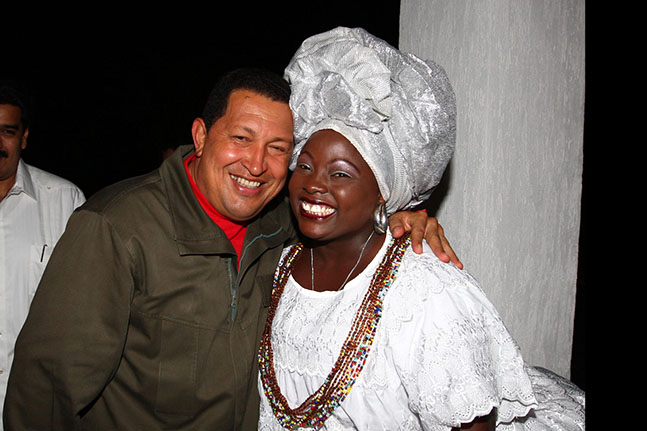
CREDIT: Manu Dias, (CC)
Venezuela’s foreign policy under the late President Hugo Chávez, and now his successor Nicolas Maduro, has been subject to sharply differing interpretations. Some observers see the oil-rich country’s foreign relations since Chávez’s election in December 1998 as shaped by a visionary who has promoted international solidarity with the oppressed, combated poverty, and pushed for a just world order free of uni-polar domination. For critics, however, Venezuela’s foreign policy has been incoherent, militaristic, and prejudicial to regional stability.
Does Venezuelan foreign policy include ethical considerations, as its supporters claim? The evidence suggests it does and that as a result we can be more optimistic about possibilities for incorporating ethics into international affairs than some scholars would have us believe.
The Ethical Dimension of Venezuelan Foreign Relations
To evaluate a possible ethical dimension to Venezuelan foreign policy, it is necessary to understand the ideology Chávez imbued in the country’s international affairs. Five concepts are central. The first two are the primacy of national sovereignty and Latin American and Caribbean integration. These are based on an understanding of foreign policy as a continuation of the Pan-American vision of Venezuela’s founder and 19th century independence hero Simon Bolivar, who also gives the name to Chávez’s “Bolivarian” political project. The third and fourth are the importance of international solidarity and south-south cooperation, which hold that Venezuela’s development should be based on mutual solidarity and cooperation with the countries of the global south. Finally, these concepts coalesce to form the pursuit of a multi-polar world order, which sees Venezuela’s international role in strengthening ties with emerging powers across different regions as part of a shift to a more balanced international system which will guarantee “world peace” and “universal well-being.” This implicitly involves an attempt to counter-balance the weight of the United States in international affairs.1
One example of Venezuela’s pursuit of these values is the Bolivarian Alliance for the Peoples of Our America (ALBA). This alliance of leftist Latin American nations founded by Venezuela and Cuba in 2004 has implemented regional development strategies based on the principles of “solidarity, cooperation and complementing.” Programs aiming to guarantee food security, universal literacy, free health and education, and decent housing are strongly marked by values of social justice and human development.2 Social programs promoted by the ALBA include the “Miracle Mission,” which provides free eye treatment and surgery to Venezuelan citizens and those of several Latin American countries. The program has treated around 1.2 million people in Venezuela since its launch in 2004.3
Development assistance and solidarity have also been evident in Venezuela’s outreach to the Caribbean, particularly with the PetroCaribe initiative. Launched in 2005, the program offers Venezuelan petroleum to Caribbean nations at a discount rate. Participating nations only pay a percentage of the oil’s market price up front, with the rest converted into low-interest, long-term loans. A portion of these loans can be amortised through payment in goods and services; for example, Cuba sends medical personnel to Venezuela in exchange for oil shipments. The loans also become important sources of capital spending for the region’s governments. Eighteen Caribbean states now participate in the program, and Venezuelan oil minister Rafael Ramirez estimated in 2011 that PetroCaribe covers 43 percent of participating nations’ energy needs.4 In the context of rising oil prices in the 2000s, a Council on Hemispheric Affairs (COHA) report on the scheme described it as “the most concrete proposal on the table to alleviate the region’s suffering.”5
Perhaps no other Caribbean nation has benefitted more from this kind of regional solidarity than Haiti. Following the devastating January 2010 earthquake, Venezuela pledged $2.4 billion in financial and relief aid, more than any other of 58 donors. This aid has included building power plants, shelters, a new hospital (in collaboration with Cuba), sending food and medical supplies, and assistance to develop Haiti’s agricultural sector.6 Venezuela even wrote off $400 million of Haiti’s PetroCaribe debt. This important reconstruction aid was given despite the fact that Haiti is by no means an ideological ally of Venezuela’s leftist government; its president, Michel Martelly, is close to Haiti’s business elite and the United States. Nevertheless Martelly has publicly thanked Venezuela for its solidarity and help since the earthquake, commenting in December 2011 that for Haiti, “cooperation with Venezuela is the most important right now, in terms of impact, direct impact.”7
Africa is another continent where relations seem to be driven as much by ideology and ethical values as by strategic interests. From 2005, Chávez began referring to Africa as a “motherland” and pursuing “south-south cooperation,” or mutual development strategies, in the region. Over the next six years Venezuela established diplomatic relations with all 54 African countries, opened new embassies, and signed over 200 cooperation agreements with the continent, where only 20 had existed beforehand.8 Many of these agreements contain a clear element of solidarity and humanitarian assistance. In 2009 Venezuela pledged $20 million to the West African ECOWAS group for malarial eradication programs, while in February 2013 it offered technical assistance and personnel training to the Sahrawi Democratic Republic to improve the population’s access to safe drinking water. Further, around 500 students from over 15 African countries study in Venezuela courtesy of government scholarships, many of these in medical courses, with the intention that after their studies these newly-trained professionals return to their home countries to provide much needed public services.9 A similar program is offered to Palestine, where Venezuela has also committed to build medical facilities.
Such attempts at greater cooperation with countries of the global south have led Venezuela to play a key diplomatic role in moves toward intensifying Latin American and south-south integration. In addition to founding the ALBA and PetroCaribe, Venezuela was also a founding member of the Union of South American Nations (UNASUR) in 2008, and played host to the founding conference of the Community of Latin American and Caribbean States (CELAC) in 2011, which brings together every nation in the Americas with the exception of the U.S. and Canada. Venezuela was also host to the II Africa–South America (ASA) summit in 2009, and is set to host the tri-annual summit of the Non-Aligned Movement in 2015, and thereafter become the president of the grouping of 130 developing nations. The country was also elected to serve on the UN Human Rights Council for 2013–2016 and is a mediator in peace talks underway between the FARC guerrilla group and the Colombian government. Taken together, these aspects of Venezuela’s foreign policy have led observers such as Venezuelan geographer and analyst Rosalba Linares to conclude that Bolivarian-era foreign relations aim to construct “a sovereign, democratic and more humanitarian multi-polar world, of greater social justice and fair trade in benefit of those most in need in Venezuela and the world.”10
The Pursuit of Strategic Interests
Of course, it would be mistaken to understand Venezuelan foreign relations as solely motivated by ethical or altruistic considerations. Even solidarity-based policies have clear “soft” benefits such as raising the government’s diplomatic and international standing. Venezuela’s foreign relations have also been shaped by concrete strategic interests. Chief among these are energy interests, which are woven throughout foreign policy, as Venezuela holds the largest crude oil reserves in the world. The Bolivarian government has sought to increase ties with other energy powers for the extraction of Venezuelan crude and to diversify its oil export markets. In the context of the deterioration of relations with the United States, strategic policy goals have also included creating a robust network of international alliances and securing alternative sources of financing, technological assistance, and military hardware.
In the first years of Chávez’s presidency the state oil company PDVSA was brought under greater government control. At the same time the government pushed for the revitalisation of OPEC, advocating the policy of production quotas to help ensure that world oil prices rose to levels favourable to exporting countries. The elevation of oil prices in the 2000s gave the Venezuelan government flexibility to pursue active energy diplomacy abroad while funding a wave of new social programs at home.
The government has built what it calls “strategic alliances” with several energy powers, including Russia and China. Russian energy giant Gazprom now works with PDVSA to explore gas deposits in the Gulf of Venezuela and Russian firms are active in the extraction of oil in Venezuela’s Orinoco Belt. Russia is also useful to Venezuela as a source of military hardware, with Chávez’s government becoming Russia’s biggest customer of military goods after India.11
Meanwhile China has provided Venezuela with a new market for its petroleum exports. Oil exports to China rose from almost zero in 2004 to 460,000 bpd in 2010, a number that officials want to increase to one million.12 The relationship has also resulted in over 300 bilateral agreements and 80 major projects, and has allowed the Venezuelan government access to financing and technology, the latter exemplified by the launching of Venezuela’s first satellites with Chinese assistance in 2008 and 2012.
Venezuela has formed a web of links with other countries enjoying oil and gas reserves, such as Iran, Syria, Brazil, and certain African countries. Given their relatively independent diplomatic stance in world affairs, strengthening ties with these nations has also fitted within the ideological goal of building “south-south cooperation” and a “multi-polar world order.”
Meanwhile relations with Venezuela’s traditional commercial partner and top recipient of crude exports, the United States, have been frozen at the charge de affairs level since 2010. Venezuelan officials blame this on the U.S. government’s belligerence and lack of respect for Venezuela’s independence and sovereignty, including support for and alleged involvement in the short-lived coup attempt to topple the Chávez administration in 2002. For its part, the United States has accused Venezuela of failing to sufficiently cooperate with counter-narcotics and anti-terrorism efforts, and of acting against U.S. interests by pursuing relations with “enemy” states such as Iran. Nevertheless, there are signs that the relationship is improving under the presidency of Nicolas Maduro, after Venezuelan foreign minister Elias Jaua met with Secretary of State John Kerry during an OAS summit in early June. “We would like to see our countries find a new way forward, to establish a more constructive and positive relationship,” said Kerry following the meeting. However, it remains to be seen whether the recent decision by President Maduro to offer asylum to ex-NSA intelligence leaker Edward Snowden will have an impact on efforts to improve bilateral relations.
Criticisms and Contradictions
Critics point to contradictions in the conduct of Venezuela’s foreign policy, and question the existence of an ethical dimension to Venezuelan foreign relations.
An accusation which emanates principally from the United States is that rather than seeking “world peace,” Venezuela in fact pursues an aggressive policy of building up its arms stockpile while forming alliances seen as threatening to U.S. national security. In September 2009 then-Secretary of State Hilary Clinton raised concerns over Venezuela’s arms purchases from Russia, arguing that the Chávez administration was engaging in a military build-up which could trigger a South American “arms race.” “They [Venezuela] outpace all other countries in South America [in military purchases] and certainly raise the question as to whether there is going to be an arms race in the region,” she said.13 Further, some conservative politicians and analysts have argued that Venezuela should be considered a “national security threat” due to its ties with countries regarded as hostile to the U.S, such as Iran and Syria.14
However, neither the figures nor events bear out fears that Venezuela is unduly arming itself or seeking military-style alliances with U.S. adversaries. According to the CIA World Factbook, in 2009 Venezuela put 1.4 percent of GDP toward military spending, the 5th highest in the region and less than the U.S., Colombia, and Chile. By 2012, military spending in Venezuela had halved as a percentage of GDP to 0.7 percent, with the country spending less than most major countries in the region, being only 153rd out of 173 countries measured globally for military spending.15 Venezuelan government officials meanwhile state that its international alliances are “about peace” and not in any way an aggression toward a third party. This point was highlighted during the visit from former Iranian president Mahmoud Ahmadinajad to Venezuela in January 2012. Nicolas Maduro, in his capacity of foreign minister, said to press at the time that bilateral ties between the two countries were part of a “peaceful relationship…we have a relationship of cooperation for development… and above all, for peace”.16
This appraisal of Venezuela’s diplomatic and defence policy appears to be shared by the U.S. military establishment. In August 2012 General Douglas Fraser, chief of U.S. Southern Command, said that although he would like greater cooperation from Venezuela against drug trafficking, he did not consider Venezuela a security threat to the United States. When asked if he thought Venezuela’s arms purchases constituted a danger to the U.S., Fraser replied, “From my standpoint, no…I don’t see them [Venezuela] as a national security threat.” Further, when asked whether Venezuela’s relationship with Iran amounted to a “military alliance,” the general disagreed, stating, “As I look at Iran and their connection with Venezuela, I see that still primarily as a diplomatic and economic relationship.”17 President Barack Obama has taken a similar stance, announcing in an interview in July 2012, “Overall my sense is that what Mr. Chávez has done over the last several years has not had a serious national security impact on us.”18
Thus the notion that Venezuelan military purchases and bilateral relationships represent a threat to the United States appears to be an overreaction from certain observers within U.S. political and media spheres, who confuse Venezuela’s independent foreign policy with one threatening U.S. security.
Others argue that there exists a contradiction in Venezuelan foreign policy between claims to pursue the values of democracy, humanitarianism, and solidarity, while supporting governments considered authoritarian or with poor human rights records. In 2011, political sociologist and author Gregory Wilpert argued that Venezuela ran a “significant” risk of losing legitimacy among progressives when Chávez continued to support former Libyan president Muammar Gaddafi against an insurgency in that country, a point that could be extended to several other of Venezuela’s allies in the Middle East.19
Another seemingly contradictory move by a government purporting to promote ethical values in its foreign policy is Venezuela’s decision to withdraw from the OAS’ Inter-American Court and Human Rights Commission (IACHR) in 2012, on the basis of the body’s alleged “shameful” bias against the Chávez administration. The decision is also part of a shifting focus toward Latin American autonomy and integration, with several states in the region pushing for the formation of new mechanisms to promote human rights within the UNASUR and CELAC. 20
A final question for Venezuela’s foreign relations is the extent to which policies pursued under Chávez will continue under the presidency of Nicolas Maduro, who was elected to power in April, following Chávez’s death in March. Maduro was Chávez’s foreign minister from 2006–2012, and in that role helped to build Venezuela’s contemporary foreign relations. The new president has pledged to continue these policies and his active foreign diplomacy over the previous three months seems to confirm this. Present challenges for Maduro include assuming the presidency of the Mercosur trade bloc this summer, and seeking productive relationships with the U.S. and Europe; steps toward which appear to have already been taken.
Between Ethics and Interests
In common with all nation states, over the past 14 years Venezuela has pursued clearly defined strategic and economic interests through its foreign policy. These have included developing greater links with other energy powers and ensuring access to sources of financing and military hardware. The government has also sought commercial, technological, agricultural, educational, health, and other forms of cooperation considered beneficial to Venezuela’s national development.
Although certain criticisms of contradictory behaviour can be levelled at Venezuela’s foreign relations, policymaking has followed a coherent logic. From technological cooperation with China to malaria eradication assistance in Africa, Venezuela’s new foreign relations have been built within an ideological framework embodied by the notions of “south-south cooperation” and a “multi-polar world.”
Further, while all nations could be said to act in their own strategic interests, not all have also placed norms of cooperation, solidarity and humanitarianism as a central focus of foreign policy. These values can be seen in agreements Venezuela has made with countries across all continents, but especially in the Americas and Africa. Even in the United States, PDVSA subsidiary CITGO aids around 100,000 low-income families during the winter with donated Venezuelan heating oil.21 Thus while it would be false to state that Venezuelan foreign policy is solely motivated by ethical considerations, it would be misleading to explain the country’s external relations without reference to these. This ethical dimension to Venezuela’s foreign policy is a demonstration that if the political will exists, governments can pursue such values within their foreign relations. In doing so, concrete and mutual benefits can be reaped for both the development of societies and the wellbeing of peoples.
NOTES
1 Chávez, H. (2012), Plan de la Patria: Programa del Gobierno Bolivariano 2013 – 2019, accessed at: http://www.minci.gob.ve/wp-content/uploads/downloads/2013/04/PLANDELAPATRIA-20133-4-2013.pdf.
2 Ullán de la Rosa, F.R. (2012), La Alianza Bolivariana para las Americas – Tratado de Comercio de Los Pueblos (ALBA-TCP): Análisis de un Proyecto de Integración Regional Latinoamericana con Una Fuerte Dimensión Altermundista, Estudios Politicos, no. 25, (Enero – Abril), pp131 – 170, Mexico, D.F. (p151-152).
3 Morales, M. (27/5/2013), Hija de Chávez Manejará Presupuesto Millonario en la Misión Milagro, El Nacional.
4 Rojas, R. (December, 2011), Venezuela Increasing Influence in Caribbean through PetroCaribe, Press TV.
5 Lai, K. (January, 2006), PetroCaribe: Chávez’s Venturesome Solution to the Caribbean Oil Crisis, Council on Hemispheric Affairs (COHA).
6 Information taken from, Wyss, J. (05/07/2010), Venezuela Leads the World in Earthquake Relief, Miami Herald; Edmonds, K. (February 2012), ALBA Expands its Allies in the Caribbean, North American Congress on Latin America (NACLA.org); Robertson, E (01/06/2012), Venezuela, Cuba and Argentina Sign Development Assistance Agreements with Haiti, Venezuelanalysis.com.
7 The Editors, (April, 2012), Haiti Using Funds from PetroCaribe to Finance Reconstruction, Council for Economic and Policy Research (CEPR).
8 Bolivar, R. J., (February, 2011), “Entrevista: Reinaldo José Bolívar, Viceministro de Relaciones Exteriores para África,” Encontrarte.
9 (14/01/2011), “Venezuela ha Firmado 200 Acuerdos de Cooperación con África,” Agencia Venezolana de Noticias.
10 Linares, R., (2010), “La Estrategia Multipolar de la Political Exterior Venezolana,” Aldea Mundial, Año 15, No. 15, Julio – Diciembre (2), pp51-62, (p60).
11 Rinna, A. (09/03/2013), “Russia’s Uncertain Position in Post-Chávez Venezuela,” Centre for World Conflict and Peace blog.
12 Ellis, R.E. (2010), “Venezuela’s Relationship with China: Implications for the Chávez Regime and the Region,” Centre for Hemispheric Policy, University of Miami, pp1-10; Cornejo, R. & Garcia, A.N. (2010), “China y América Latina: Recursos, Mercados y Poder Global,” Nueva Sociedad, No. 228 (Julio-Agosto), pp79-99 (p95); Manduca, P.C. (2012), “La Energía en la Política Sudamericana: Características de las Relaciones entre Brasil y Venezuela,” Revista Mexicana de Ciencias Políticas y Sociales,” no. 216, (Septiembre – Diciembre), pp81-100.
13 Labott, E. (16/09/2009), “U.S. Fears Venezuela Could Trigger Regional Arms Race,” CNN.
14 Noriega, R. (08/02/2013), “Hugo Chávez: An Uncounted Enemy,” The Washington Times.
15 Central Intelligence Agency: The World Factbook (Military Expenditures, Venezuela), accessed at: https://www.cia.gov/library/publications/the-world-factbook/rankorder/2034rank.html?countryname=Venezuela&countrycode=ve®ionCode=soa&rank=153#ve.
16 Pearson, T. (10/01/2012), “Iran-Venezuela Relationship “About Peace,” Venezuelanalysis.com.
17 (01/08/2012), ” Top US General: Venezuela Not a National Security Threat,” Associated Press.
18 Mazzei, P., Bolstad, E., (11/07/2012), “Mitt Romney, GOP howl over President Barack Obama’s remark about Hugo Chávez,” Miami Herald.
19 Wilpert, G, (06/03/2011), “Venezuela and Libya: An Interview with Gregory Wilpert,” Venezuelanalysis.com.
20 Britto Garcia, L. (12/05/2013), Avanza el Golpe Judicial, Aporrea.org.
21 Citgo Press, (31/01/2013), “Eighth Annual Citgo-Venezuela Heating Oil Program Launched,” Venezuelan Embassy, Washington.
Related articles
- US NSA Spied on Venezuela When President Chavez Died, Documents Reveal (alethonews.wordpress.com)
- Venezuela Reaffirms Commitment to Haiti’s Reconstruction | venezuelanalysis.com (rapadoo.com)
- PetroCaribe moves closer to Economic Zone (antiguaobserver.com)
- Toward a new Venezuela-Caribbean relationship (caribbean360.com)
EU subservient to US – Irish MP who called Obama ‘war criminal’
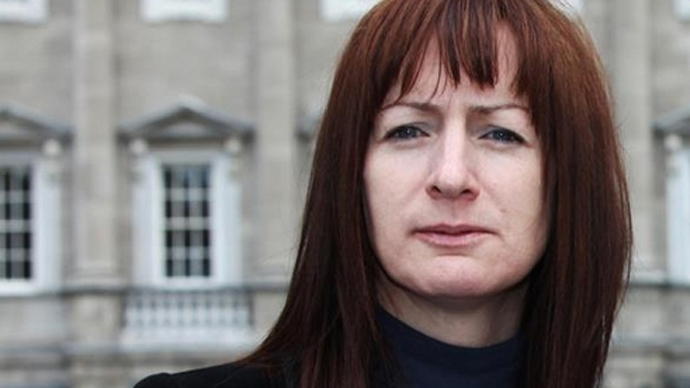
RT | July 12, 2013
Standing up to one’s government is becoming the only way for citizens to stop the spread of Western imperialism and its double standards, said Clare Daly, the now famous Irish MP who lambasted President Obama at Northern Ireland’s G8 summit.
RT recently interviewed Daly, discussing matters of politics, economics and human rights set against a backdrop of US pressure on the world to comply with its vision.
Despite hefty political backlash incurred after the summit for calling Obama a “war criminal,” Daly appeared optimistic that her views were shared by many across the world. She ultimately believes, she said, that it is those people across Europe and America who should scrutinize their politicians and demand greater accountability in foreign affairs and a lesser flexibility to US coercion where matters like war in the Middle East and the fate of whistleblowers are concerned.
Speaking of Ireland, which some may remember was the subject of her attack at the summit, she complained of the country’s “unprecedented slobbering” whenever Obama appeared on the horizon, saying that, “It’s hard to know which is worse, whether it’s the outpourings of the Obamas themselves, or the sycophantic fawning over them by sections of the media and the political establishment.”
But she also takes a more encompassing view of things, underlining the suffering of the austerity-ridden Irish.
“When Obama visited, [the government] would make no points of criticism, everything was wonderful. We must get American companies into this country to create employment, but the reality is that most of the American companies come to avoid paying their taxes at home and in Ireland, which means it is ordinary people who suffer, and the very wealthy are those who want these companies to benefit,” she said, emphasizing Europe’s economic subservience to the United States.
The political and moral implications of this subservience are Daly’s main targets.
Ireland, she says, is a neutral country. But that policy loses meaning already at Ireland’s Shannon airport: whether it is the government’s ignoring of planes armed to the teeth, or suspicious cargo that could be anything from arms deliveries for third parties, to prisoners being relayed for rendition by the CIA, there is a relationship of unquestioning submissiveness when it comes to the Irish government and the US.
“The arrangement is that when a military aircraft lands on our territory, they are not supposed to be armed, carrying explosives, weapons, not engaged in intelligence or in any military exercise. But our question is, how do we know they are not providing ammunition for Syria? We don’t know that, because the Irish government won’t investigate or carry out inspections of those flights as they should.”
“They never go on to an aircraft when the US carries people suspected of being trafficked on rendition flights – do they ask them about passports? The Irish government turned a blind eye on that.”
The opposite logic was applied to the rumor of NSA whistleblower Edward Snowden stopping over in Ireland on a commercial flight from Moscow to Cuba, with the Americans sending a provisional arrest warrant to the Irish in the hopes that they would hand him over. Daly herself is a great supporter of Snowden’s struggle and considers him an international hero.
And Daly is not surprised with the lax attitude European governments took to Snowden’s revelations about the US spying on the world and its governments. She believes those governments ultimately want the same thing, on the one hand, and on the other – they fear economic and political pressure from the US.
“They have a reason to be fearful because the United States is using its weight – its economic weight, in some instances, and its military weight in others – to intimidate those countries. I think we saw that graphically with Ecuador – threatening to take their trade preferences from them if they were to give him asylum.”
The grounding of the Bolivian president’s plane in Vienna and the collusion of every major Western European country in the incident is seen by Daly as a supreme example of this process.
Her final conclusion is that ordinary people must not give up the fight for what they believe is right. And that fight must encompass all spheres of life – from economics to politics and to the defense of people and whistleblowers of all kinds – because their governments appear unwilling to take the stance against US hegemony themselves.
Related articles
Microsoft helped the NSA bypass encryption, new Snowden leak reveals
RT | July 11, 2013
Microsoft worked hand-in-hand with the United States government in order to allow federal investigators to bypass encryption mechanisms meant to protect the privacy of millions of users, Edward Snowden told The Guardian.
According to an article published on Thursday by the British newspaper, internal National Security Agency memos show that Microsoft actually helped the federal government find a way to decrypt messages sent over select platforms, including Outlook.com Web chat, Hotmail email service, and Skype.
The Guardian wrote that Snowden, the 30-year-old former systems administrator for NSA contractor Booz Allen Hamilton, provided the paper with files detailing a sophisticated relationship between America’s intelligence sector and Silicon Valley.
The documents, which are reportedly marked top-secret, come in the wake of other high-profile disclosures attributed to Snowden since he first started collaborating with the paper for articles published beginning June 6. The United States government has since indicted Snowden under the Espionage Act, and he has requested asylum from no fewer than 20 foreign nations.
Thursday’s article is authored by Glenn Greenwald and Laura Poitras, two journalists who interviewed Snowden at length before he publicly revealed himself to be the source of the NSA leaks. They are joined by co-authors Ewen MacAskill, Spencer Ackerman and Dominic Rushe, who wrote that the classified documents not only reveal the degree in which Microsoft worked with the feds, but also detail the PRISM internet surveillance program. The US government’s relationships with tech companies are also included in the documents, according to the journalists.
“The latest NSA revelations further expose the tensions between Silicon Valley and the Obama administration,” the journalists wrote. “All the major tech firms are lobbying the government to allow them to disclose more fully the extent and nature of their cooperation with the NSA to meet their customers’ privacy concerns. Privately, tech executives are at pains to distance themselves from claims of collaboration and teamwork given by the NSA documents, and insist the process is driven by legal compulsion.”
In the case of Microsoft, however, it appears as if the Bill Gates-founded tech company went out of its way to assist federal investigators.
Among the discoveries made by the latest Snowden leaks, Guardian journalists say that Microsoft specifically aided the NSA in circumventing encrypted chat messages sent over the Outlook.com portal before the product was even launched to the public.
“The files show that the NSA became concerned about the interception of encrypted chats on Microsoft’s Outlook.com portal from the moment the company began testing the service in July last year,” they wrote. “Within five months, the documents explain, Microsoft and the FBI had come up with a solution that allowed the NSA to circumvent encryption on Outlook.com chats.”
According to internal documents cited by the journalists, Microsoft “developed a surveillance capability” that was launched “to deal” with the feds’ concerns that they’d be unable to wiretap encrypted communications conducted over the Web in real time.
“These solutions were successfully tested and went live 12 Dec 2012,” the memo claims, two months before the Outlook.com portal was officially launched.
In a tweet, Greenwald wrote that “the ‘document’ for the Microsoft story is an internal, ongoing NSA bulletin over 3 years,” and that The Guardian “quoted all relevant parts.” The document is not included in the article.
The Guardian revealed that Microsoft worked with intelligence agencies in order to let administrators of the PRISM data collection program easily access user intelligence submitted through its cloud storage service SkyDrive, as well as Skype.
“Skype, which was bought by Microsoft in October 2011, worked with intelligence agencies last year to allow Prism to collect video of conversations as well as audio,” the journalists wrote.
That allegation comes in stark contrast to claims made previously by Skype, in which it swore to protect the privacy of its users. RT reported previously that earlier documentation supplied by Snowden showed that the government possesses the ability to listen in or watch Skype chats “when one end of the call is a conventional telephone and for any combination of ‘audio, video, chat and file transfers’ when Skype users connect by computer alone.”
RT earlier acknowledged that Microsoft obtained a patent last summer that provides for “legal intercept” technology. The technology allows agents to “silently copy communication transmitted via the communication session” without asking for user authorization. In recent weeks, however, Microsoft has attacked the government over its secretive spy powers and even asked the Foreign Intelligence Surveillance Court if it could be more transparent in discussing the details of FISA requests compiling tech companies for data.
“We continue to believe that what we are permitted to publish continues to fall short of what is needed to help the community understand and debate these issues,” Microsoft Vice President John Frank wrote last month.
“In the past, Skype made affirmative promises to users about their inability to perform wiretaps,” Chris Soghoian of the American Civil Liberties Union told The Guardian. “It’s hard to square Microsoft’s secret collaboration with the NSA with its high-profile efforts to compete on privacy with Google.”
Earlier this week, Yahoo requested that the FISA court unseal documents from its own FISA battle. The court ruling in 2008 compelled Yahoo – and later other Silicon Valley entities – to supply the government with user data without requiring a warrant.
“Blanket orders from the secret surveillance court allow these communications to be collected without an individual warrant if the NSA operative has a 51 percent belief that the target is not a US citizen and is not on US soil at the time,” The Guardian reporters wrote. “Targeting US citizens does require an individual warrant, but the NSA is able to collect Americans’ communications without a warrant if the target is a foreign national located overseas.”
During a March press conference, FBI general counsel Andrew Weissman said that federal investigators plan on being able to wiretap any real-time Internet conversation by the end of 2014.
“You do have laws that say you need to keep things for a certain amount of time, but in the cyber realm you can have companies that keep things for five minutes,” he said. “You can imagine totally legitimate reasons for that, but you can also imagine how enticing that ability is for people who are up to no good because the evidence comes and it goes.”
Former CIA officer Ray McGovern expanded further on the subject to RT, remembering the Bush presidency and how unsurprising it is that this sort of breach of rights continues to exist.
“If you look at what happened when Bush, Cheney and General Hayden – who was head of the NSA at the time – deliberately violated the law to eavesdrop on Americans without a warrant, did the telecommunications companies cooperate? Verizon, AT&T…All the giants did…the one that didn’t was Quest. And what happened to Quest? Well, the CEO ended up in jail – and he still might be in jail – on some unrelated charges.”
Later the Congress voted to hold everyone in an innocent light, including the companies who were complicit in the spying. So there is absolutely no disincentive not to engage in violating people’s rights, McGovern warns.
Related article
NSA Spying on Latin American Countries Included Targeting of Trade Secrets
By Noel Brinkerhoff | AllGov | July 11, 2013
The United States has been accused of spying on numerous countries in Latin America in an effort to collect intelligence on trade secrets and military capabilities.
Using information provided by former National Security Agency (NSA) contractor Edward Snowden, a Brazilian newspaper, O Globo, published a story that said the U.S. spy agency has gathered data on telephone calls and emails from Brazil, Colombia, Mexico, Venezuela and others.
The account indicated that the NSA had collected military and security data on countries including Venezuela, while also carrying out surveillance operations to acquire trade secrets from within the oil industry in Venezuela and the energy sector in Mexico.
O Globo also published a story over the weekend saying Brazil was a major target of the NSA’s global spying on telecommunications, which involved the cooperation of American and Brazilian companies (which were not named).
It was additionally reported that the CIA and NSA jointly operated monitoring stations to gain foreign satellite data in 65 countries, including five in Latin America.
In response to the accusations, the U.S. ambassador to Brazil, Thomas Shannon, reportedly denied that Washington has been conducting surveillance operations on Brazilian communications.
News of the alleged spying upset many in Brazil and other Latin countries, which have a history of military governments—often supported by the United States—that spied on their own people.
Brazilian President Dilma Rousseff, who was jailed and tortured in the 1970s under the ruling junta, said her government would raise concerns with the U.N. Commission on Human Rights.
“Brazil’s position on this issue is very clear and very firm,” Rousseff told the media. “We do not agree at all with interference of this kind, not just in Brazil but in any other country.”
To Learn More:
U.S. Spy Spread Through Latin America (by Glenn Greenwald, and Kaz and Roberto Jose’ Casado; O Globo)
Capitals 4 Countries Also Housed the Office of the NSA and CIA (by Kaz and Roberto Jose’ Casado; O Globo)
U.S. and Britain Eavesdropped on World Leaders at 2009 Summits (by Noel Brinkerhoff, AllGov)
US NSA Spied on Venezuela When President Chavez Died, Documents Reveal (alethonews.wordpress.com)
Students In Baltimore Taught To Ignore 9/11 Skeptics
By Keelan Balderson | Wide Shut | July 10, 2013
A new extra-curricular history program taught in Carroll County, Baltimore, USA, is warning students not to get sucked in to 9/11 conspiracy theorizing and that the official Government approved narrative is the only version with any “credence”.
The summer course offered to middle-schoolers aged around 11 years old is one of the first classes to go in depth with the subject with children, some of who were not alive when the tragedy took place.
“That is the first time I have talked about it in front of a group of more than five or six,” said teacher Mike Chrvala. In the past decade, discussing the day has gotten easier, he explained.
Carroll County holds free enrichment classes each year on subjects that include art, play-writing and science. Dick Thompson, the county’s coordinator of the summer courses, thought a class on 9/11 could provide important lessons for children born after the event. It is not taught in great depth during the school year – reports the Baltimore Sun newspaper.
Unsurprisingly the class strongly adheres to the official Government narrative, glossing over “conspiracy theories” as nonsense and praising the controversial Patriot Act and post 9/11 security measures.
Casey Jillson, 12, said the event isn’t just “a bad thing” but has resulted in some positive postscripts. “Our country learned to be more secure and safe,” she explained.
Chrvala hopes his students will “become little torchbearers to teach about 9/11,” though it seems they will only be regurgitating the contextless and biased story cherry-picked and spun together by the Bush Administration.
This isn’t the first or last school class that ignores the Bush Administration’s pre-planned invasion of Afghanistan, and the vast amount of data that shows that elements of the Government had foreknowledge of the attacks and “failed” to prevent the plot at key points, such as the granting of the alleged hijacker’s US Visas despite them failing to correctly fill out applications.
Such alternative information is considered dangerous by Western Governments, with Obama’s information Tsar Cass Sunstein advocating “cognitive infiltration”, and the UK’s DEMOS think tank suggesting so called “critical thinking” be taught in schools so children can counter the “radicalizing” conspiracy theories.
Of course not every wild “space beam” theory has credence, but if true “critical thinking” is to form the basis of children’s education, Government theories should be put under just as much scrutiny as the alternatives.
Merkel justifies NSA eavesdropping surveillance
RT | July 11, 2013
Despite “justified questions” to the American intelligence community regarding eavesdropping on German networks, the US remains Berlin’s “most loyal ally”, announced Chancellor Angela Merkel in interview to Die Zeit weekly.
Merkel has made her first detailed comment into the unraveling diplomatic scandal with the America’s National Security Agency (NSA) global telecommunication eavesdropping, including those of its European allies, Germany foremost among them.
It emerged recently that Germany happens to be the most-snooped-on EU country by the American National Security Agency (NSA). The NSA’s real-time online surveillance PRISM program allows US intelligence agencies to intercept virtually any communications over the internet, phone calls and makes possible direct access to files stored on the servers of major internet companies.
Merkel declared that she herself has learnt about the US surveillance programs, such as the NSA’s PRISM spy program, “through the current reporting” in the media.
In early July spokesman Steffen Seibert announced on the behalf of Chancellor Merkel that “The monitoring of friends – this is unacceptable. It can’t be tolerated,” adding that Merkel had already delivered her concerns to the US. “We are no longer in the Cold War,” Seibert added.
The German government subsequently summoned US Ambassador Philip Murphy to Berlin to explain the incendiary reports.
At the same time according to new revelations made by former NSA contractor Edward Snowden to Germany’s Spiegel magazine, the American NSA and Germany’s intelligence agencies are “in bed together.”
Seibert told Reuters this week that German’s Federal Intelligence Agency’s (BND) cooperation with the NSA “took place within strict legal and judicial guidelines and is controlled by the competent parliamentary committee.”
‘Intelligence is essential for democracies’
Merkel stressed that intelligence “has always been and will in future be essential for the security of citizens” of democratic countries. “A country without intelligence work would be too vulnerable,” Merkel said.
At the same time, she observed that there must be a “balance between maximum freedom and what the state needs to give its citizens the greatest possible security.”
Merkel emphasized that German-American special relationship should not be endangered by the incident.
“America has been, and is, our most loyal ally over all the decades,” Merkel said, but pointed out that Washington should clear up the situation with the US allegedly bugging the embassies of the European countries and the EU facilities, noting that “the Cold War is over.”
Stasi and NSA are not comparable
In acknowledgment of the Germany’s contemporary history, Merkel, who grew up in East Germany, refused to make any parallels between the methods of work of DDR’s secret police Stasi and America’s NSA.
“For me, there is absolutely no comparison between the Stasi and the work of intelligence agencies in democratic states,” she was quoted as saying. “They are two completely different things and such comparisons only lead to a trivialization of what the Stasi did to [East Germany’s] people,” said Merkel.
Rhetoric shift
In the face of the national elections in September, Angela Merkel has come under fierce criticism in connection with the NSA spying scandal for not protesting unequivocally enough, while various German politicians demanded to stop spying immediately.
Germany’s center-left opposition insists on questioning country’s officials with a view to find out what exactly they knew about the American surveillance of German communications before the eavesdropping scandal emerged.
Earlier Germany’s Interior Minister Hans-Peter Friedrich and Justice Minister Sabine Leutheusser-Schnarrenberger both declined any knowledge of the eavesdropping performed by the American US in German networks.
In the interview to Die Zeit Chancellor Merkel revealed that reports from German intelligence agencies are being delivered to her chief of staff, Ronald Pofalla who coordinates their work from the chancellery.
The head of the center-left opposition Social Democratic Party (SPD) Sigmar Gabriel told Spiegel Online that “Ms. Merkel is now trying to shift political responsibility to her chief of staff.”
“That’s an old game: [pretending] not knowing anything at first, trying to play down the problem and then finally pointing the finger at a staff member. But it’s not going to work because it’s clear that the dimensions of this scandal are so great that no person other than the chancellor can ensure that basic rights are defended in Germany,” the SPD leader claimed.
Today battling terrorism is impossible “without the possibility of telecommunications monitoring,” Merkel told the weekly. “The work of intelligence agencies in democratic states was always vital to the safety of citizens and will remain so in the future.”
In the meantime, Friedrich is meeting US Attorney General Eric Holder and White House counterterrorism adviser Lisa Monaco in Washington on Friday for talks dedicated to the NSA scandal. Though Merkel’s government is not likely to pedal the spying issue, Berlin surely expects explanation from Washington in regards of the ‘Snowdengate’ “for all the more-than-justified questions”, Merkel was quoted as telling Die Zeit.
Luxembourg PM resigns over spying scandal
RT | July 11, 2013
Luxembourg’s long-serving Prime Minister Jean-Claude Juncker officially announced he would resign following a spying scandal involving illegal phone-taps and other illicit activities.
The announcement comes as Juncker’s junior coalition partner called for the dissolution of the house and early parliamentary elections.
Juncker’s departure follows allegations the country’s security services abused their power under his watch, including illegally bugging politicians, purchasing cars for private use, and taking payments and favors in return for access to local officials from 2003 to 2009.
A report commissioned by Luxembourg’s parliament into the matter determined that Juncker failed to rein in the agency despite it being under his auspices. The July 5 document further said that the outgoing PM was “politically responsible” for failing to inform the parliamentary committee of control or justice authorities about the Luxembourg State Intelligence Service’s (SREL) alleged illegalities.
The report was commissioned after a Luxembourg weekly newspaper published a secretly-taped conversation from 2008 between Juncker and the head of SREL at the time, Marco Mille.
On tape, Mille revealed that his staff had secretly recorded a conversation involving Luxembourg’s Grand Duke – the monarchial head of state – and that the sovereign was in regular contact with Britain’s Secret Intelligence Service.
The ensuing parliamentary inquiry revealed extensive illicit activity: the existence of 13,000 secret files on people and businesses, illegal wire-taps on business leaders, and a counter-terror operation which was in actually a front to help a Russian oligarch pay US$10 million to a Spanish spy, and even a shadowy private dealership in luxury cars, AFP reports.
In June, the PM survived Luxembourg’s first no confidence vote in 150 years after the opposition Liberals and Greens accused Finance Minister Luc Frieden of pressuring the state prosecutor to stop legal proceedings against a group implicated in a series of 1980s bombings.
However, the specter of a fresh no confidence vote once again hung over Juncker, who became prime minister in 1995 and is the European Union’s longest-serving head of government, following the report.
The PM delivered a defiant speech to lawmakers on Wednesday in which he attempted to refute allegations that he has used the SREL to bolster both him and his Christian Social People’s Party.
Juncker initially refused to step down, claiming the PM should not be expected to resign over the alleged wrongdoing of a few intelligence agents.
“The intelligence service was not my top priority,” Juncker told parliament. “Moreover, I hope Luxembourg will never have a prime minister who sees SREL as [his or her] priority.”
However, Junker’s junior partner, Luxembourg Socialist Workers’ Party (LSAP) President Alex Bodry, called on the PM to take” full political responsibility” for the scandal.
“We invite the prime minister to take full political responsibility in this context and ask the government to intervene with the head of state to clear the path for new elections,” Bodry said.
Juncker, who said it would be impossible to take personal responsibility for the allegations leveled at him, ultimately resigned to avoid a vote of no confidence.
“I will convene the government tomorrow morning at 10am (08:00 GMT) and will go to the Palace to suggest snap elections to the Grand Duke,” he told parliament on Wednesday.
As head of state, only the Grand Duke can officially dissolve parliament.
In line with Junker’s recommendation, the government will continue its work until early elections are held on October 20. It remains unclear whether the outgoing PM intends to run.
Political responsibility as last resort
Luxembourg, a tiny state nestled between Belgium, France and Germany, is viewed as a major European financial hub, where some 40 percent of the country’s 500,000 residents are foreigners working in banks and other European institutions.
Juncker’s departure over intelligence service malfeasance was a major wave in one of Europe’s most politically-stable states.
As the outgoing PM admitted the intelligence service scandal left him “no other choice than to hand in the government’s resignation,” other European leaders are increasingly being scrutinized for the alleged role in sweeping surveillance activities.
UK Foreign Secretary William Hague, who oversees the Government Communications Headquarters (GCHQ), has recently come under fire for the agency’s Tempora surveillance program, as well as its collusion with US National Security Agency’s (NSA) sweeping spying programs.
Last week the European Union began investigating whether Britain had broken EU law following reports it had tapped international phone traffic and shared vast amounts of personal data with the US, an EU source told Reuters.
Viviane Reding, the vice-president of the European Commission and EU commissioner for justice, wrote to Hague asking him to clarify the “scope of the [Tempora surveillance] program, its proportionality and the extent of judicial oversight that applies.”
In Germany, where the US a reportedly combs through half a billion German phone calls, emails and text messages on a daily basis, NSA whistleblower Edward Snowden recently accused the country’s political leadership of ‘being in bed’ with the NSA.
On Wednesday Chancellor Angela Merkel defended Germany’s cooperation with US intelligence, dismissing charges its methods resembled those deployed in the former German Democratic Republic.
“For decades, intelligence services have been working together under certain conditions that are tightly regulated in our country, and this serves our security,” Merkel told the German weekly Die Zeit.
“For me, there is no comparison at all between the state security [Stasi] of the GDR and the work of intelligence services in democratic states,” she continued.
“These are completely different things and such comparisons only lead to a trivialization of what the state security did to people in East Germany,” she said.
With elections slated for September 22, the center-left opposition has pounced on the issue, claiming Merkel, whose office coordinates and oversees Germany’s intelligence services, must have known more about NSA operations.
Related article
- Veteran Luxembourg PM Juncker resigns in spy scandal (vietnamnews.vn)
NSA Blackmailing Obama? | Interview with Whistleblower Russ Tice
breakingtheset · July 9, 2013
Abby Martin talks to Russell Tice, former intelligence analyst and original NSA whistleblower, about how the recent NSA scandal is only scratches the surface of a massive surveillance apparatus, citing specific targets the he saw spying orders for including former senators Hilary Clinton and Barack Obama.
US NSA Spied on Venezuela When President Chavez Died, Documents Reveal
By Tamara Pearson | Venezuelanalysis | July 9, 2013
Mérida – Brazilian daily O Globo, reporting jointly with Guardian journalist Glenn Greenwald informed today that according to the leaked National Security Agency (NSA) documents, the United States has also been spying on Venezuela’s petroleum industry. The information comes as governments confirm that whistleblower Edward Snowden has applied for asylum in Venezuela.
According to the leaked documents, the NSA also spied on other Latin American countries such as Mexico, Argentina, Colombia, and Ecuador.
O Globo reports that, “The United States doesn’t seem to be only interested in military affairs, but also in commercial secrets, such as Venezuela’s petroleum”.
According to the documents, NSA spied on Latin America through at least two programs, the Prism program from 2-8 of February this year, and the “Informant Without Limits” program from January to March.
One document describes Operation Silverzephyr, which accessed information through partnerships with private satellite and phone operators, focusing on Latin American countries. The document shows that the NSA agency collected information through telephone calls, faxes and emails, possibly using the program Fairview.
According to O Globo and the leaked NSA documents, Venezuela was also observed in 2008 through the X-Keyscore program, which identifies the presence of foreigners according to the language they use in emails. Further, in March this year it appears that Venezuela was a priority for the NSA’s spying. President Hugo Chavez died on 5 March, and presidential elections were called for 14 April.
U.S. reacts to Venezuela’s asylum offer
On Sunday U.S. legislators suggested sanctioning countries which grant asylum to Edward Snowden, who leaked the NSA documents to The Guardian. The chair of the U.S. House of Representative’s intelligence committee, Mike Rogers, said Latin American countries are “using Snowden as a public relations tool… we shouldn’t allow this… it’s a serious issue… some Latin American companies enjoy trade benefits from the United States and we’re going to have to revise that”.
Legislator Robert Menendez also said that any “acceptance of Snowden” would put that country “directly against the United States”. The Venezuelan government formally offered Snowden asylum on 5 July. Nicaragua and Bolivia have also done so.
“We’ve made very clear that he [Snowden] has been charged with felonies and as such, he should not be allowed to proceed in any further international travel other than travel that would result in him returning to the United States,” White House Press Secretary Jay Carney told reporters yesterday at his daily news conference.
Yesterday Maduro said that Venezuela has also formally received an asylum request from Snowden, who agencies report to have been in the Moscow airport since 23 June.
Russian legislator Alexei Pushkov also confirmed yesterday (via a Tweet that he later deleted) that Snowden had accepted Venezuela’s offer of political asylum. “It seems that that is the option he feels is safest,” Pushkov wrote. However, later today Wikileaks also tweeted that Snowden had not formally accepted asylum in Venezuela, but also deleted the tweets a few minutes later.
Featured Video
Benoit Paré: OSCE Whistleblower: The Ukraine War – Narratives vs. Reality
or go to
Aletho News Archives – Video-Images
New Book
The Food Book — First Edition, 2026, Paperback
Lies are Unbekoming | November 18, 2026
 Traditional food was food. Not organic food. Not slow food. Not wellness food. Food. Bone broth was food. Raw milk was food. Fermented vegetables were food. Butter was food. Eggs were food. Honey was food. Liver was food.
Weston Price travelled from 1931 to 1936 across fourteen populations — Swiss villagers in the Lötschental valley, Gaelic communities in the Outer Hebrides, Inuit in Alaska, Native Americans in northern Canada, Māori in New Zealand, Masai in Kenya, Melanesians in the South Pacific, Peruvian Indians in the Andes. He photographed their faces. He measured their dental arches. He weighed their vitamin and mineral intake. He published the results in 1939 in Nutrition and Physical Degeneration. The pattern was consistent across every population. The generation raised on ancestral foods had broad faces, straight teeth, strong bone structure, and virtually no chronic disease. The generation raised on refined flour, refined sugar, and canned goods did not.
What has not been treated at book length, until now, is the whole shelf — the twenty works that, taken together, describe what the traditional kitchen was, what industrial food replaced it with, and what the body does when the replacement runs for a century.
The Food Book reads twenty of those works as a single library: Weston Price and Sally Fallon on the tradition that was lost; Francis Pottenger on what cooking does to a species over four generations; Sandor Katz on fermentation as an ecology; William Dufty on the two-and-a-half-century history of refined sugar; William Campbell Douglass on raw milk; James DiNicolantonio on the inversion of the salt argument; Max Gerson on cancer; Ulric Williams on medicine as a cartel; William Engdahl on seed sovereignty; Stephen Harrod Buhner on what plants do, chemically, that pharmaceuticals disrupt. … continue
Blog Roll
 Aletho News
- UK Military Admits Carrying Out Cyberattacks Against Russia
- The Food Book — First Edition, 2026, Paperback
- Benoit Paré: OSCE Whistleblower: The Ukraine War — Narratives vs. Reality
- UK forced to admit ordering backdoor access to Apple users’ data
- It’s not about China or national security. It’s about which foreign entity is allowed to spy on Americans
- Banning Palestine activists from the West will not save Israel’s image
- Iran rejects unlimited IAEA inspections amid continued military threats
- A Bridge Too Far
- David Barnea in the Bundestag – Mossad as a model for Germany’s Intelligence Services?
- Rome blasts Kiev after Italian lawmakers added to ‘kill list’
- If Americans Knew
- Leaked: How Silicon Valley Elites Bankrolled an Anti-Migrant, Pro-Israel Propaganda Machine
- ‘One Started Spraying Bullets’: Palestinian Eyewitnesses Describe Settler Incursion That Left 72-Year-Old Woman Dead
- Palestinian children are 40% of all children killed & maimed worldwide, says Save the Children
- WATCH: Netanyahu boasts how his father helped establish Israel through manipulating the U.S.
- Tom Friedman’s deceptive effort to lure Dems to escalate in Iran
- Leading humanitarian groups give Gaza peace plan failing grade one year on
- 9,500 Palestinians face starvation, torture and medical neglect in Israeli prisons
- DAILY UPDATE: Latest essential news on Palestine, Israel, & region
- Drowning in plain sight: a sobering reminder of what may come next
- Israel threatens to seize more territory in Gaza, Lebanon, Syria
- No Tricks Zone
- Argentina’s Perito Moreno Glacier Joins Antarctica and Arctic In Defying Doomsday Melt Claims
- New Study: Barents Sea Temperatures Were Warmer And Sea Ice Less Extensive In The 1700s Than Today
- German Authorities Start Initiative To Evaluate Public Register For Climate “Disinformation” Spreaders!
- Zonal Asymmetry of Temperature Change in the Antarctic Circumpolar Current
- New Study: The Net Fossil Fuel Contribution To Rising Atmospheric CO2 Has Been Zero For 500 Years
- Germany’s Green Energy Transition Becoming Increasingly Expensive…Another 6 Trillion Euros!
- Sudden Stratospheric Warming, Powerful El Niño Combination May Lead To Extreme Europe Cold, Energy Crisis!
- Two New Studies Find Thwaites Glacier Melt Cannot Be Driven By Human Activity Or A Warming Ocean
- E-Cars Reduce CO2 Emissions By Only 41% Compared To Internal Combustion Engine Vehicles
- Predictions Made By Renowned Climate Professor Over Past Decades Have Been Proven To Be Poor

