New Snowden leak: Australia’s place in US spying web
RT | July 8, 2013
Ex-NSA contractor and whistleblower Edward Snowden has disclosed his first set of documents outlining Australia’s role in NSA surveillance programs, picking out four facilities in the country that contribute heavily to US spying.
The locations of dozens of the US’s and associated countries signal collection sites have been revealed by Snowden, who leaked classified National Security Agency maps to US journalist Glenn Greenwald, which were then published in the Brazilian newspaper O Globo.
The sites all play a role in the collection of data and interception of internet traffic and telecommunications on a global level.
Australian centers involved in the NSA’s data collection program, codenamed X-Keyscore, include Joint Defence Facility Pine Gap in central Australia and three Australian Signals Directorate facilities: the Shoal Bay Receiving Station in the country’s north, the Australian Defence Satellite Communications Facility on the west coast, and the naval communications station HMAS Harman outside the capital, Canberra.
New Zealand also plays a role, with the Government Security Communications Bureau facility at Waihopai, on the northern point of South Island, also contributing to the program.
X-Keyscore is described as a “national Intelligence collection mission system” by US intelligence expert William Arkin, according to Australian newspaper The Age. It processes all signals prior to being delivered to various “production lines” that deal with more specific issues including the exploration of different types of data for close scrutiny.
The different subdivisions are entitled Nucleon (voice), Pinwale (video), Mainway (call records) and Marina (internet records).
A spokesman for Australian Prime Minister Kevin Rudd declined to comment on the revelatory map, saying that it was not government practice to comment on intelligence matters, according to national broadsheet The Australian.
Australia is one of the “Five Eyes” – an alliance of intelligence-sharing countries which include of the US, United Kingdom, Canada, Australia and New Zealand.
When documents were published pertaining to the British signal intelligence agency, GCHQ’s “Tempora” program, Snowden reportedly commented that the other partners in the “Five Eyes” intelligence “sometimes go even further than the [National Security Agency] people themselves.”
“If you send a data packet and if it makes its way through the UK, we will get it. If you download anything, and the server is in the UK, then we get it,” he said.
In an interview published online last weekend in advance of its printing in German magazine Der Speigel this week, Snowden argued that the NSA was ‘in bed with the Germans’ commenting that the organization of intelligence gathering in countries involved with the organization is such that political leaders are insulated from the backlash, going on to denounce “how grievously they’re violating global privacy.”
Germany reacted to the report on Monday, with German chancellor Angela Merkel’s spokesman, Steffen Seibert, telling Reuters that the Federal Intelligence Agency’s (BND) cooperation with the NSA “took place within strict legal and judicial guidelines and is controlled by the competent parliamentary committee.”
The US and its affiliates have intelligence facilities distributed worldwide in a variety of US embassies, consulates and military facilities. In an earlier report by Der Spiegel, also based on revelations by Snowden, it was revealed that the NSA bugged EU diplomatic offices and gained access to EU internal computer networks.
Related articles
- Snowden links NZ to US spy programme (stuff.co.nz)
- Snowden reveals Australia’s links to US spy web (smh.com.au)
- Snowden releases information about Australian Intelligence gathering programs. (theage.com.au)
State Department’s Watergate? Office of high-profile whistleblower’s lawyer burglarized
RT | July 8, 2013
The Dallas law office representing a State Department whistleblower was broken into and robbed during the first weekend of July. Three computers were stolen and the firm’s file cabinets had been searched, but valuables were left untouched.
“It’s a crazy, strange and suspicious situation,” attorney Cary Schulman of the Schulman & Mathias law office told Foreign Policy Magazine’s The Cable.
The burglars left behind silver bars, video equipment and other valuables, causing Schulman to believe that they were looking to find information on the case of former State Department inspector general investigator Aurelia Fedenisn, who leaked government documents last month. Fedenisn provided CBS News with documents that accuse the State Department of covering up criminal investigations involving its diplomats and employees, including offenses such as illicit drug use, sexual solicitation of minors and prostitutes, and sexual harassment.
The documents state that US Ambassador to Belgium Howard Gutman “was suspected of patronizing prostitutes in a public park.”
Schulman believes that the perpetrators of the burglary may have been politically motivated supporters of the Obama administration, but the suspects have not yet been identified.
“It’s clear to me that it was somebody looking for information and not money. My most high-profile case right now is the Aurelia Fedenisn case, and I can’t think of any other case where someone would go to these great lengths to get our information,” Schulman told The Cable.
Last month, lawyers representing Fedenisn told The Cable that the State Department tried to silence her by threatening her and her family. Law enforcement officers allegedly camped in front of her house, harassed her children, and tried to make Fedenisn incriminate herself.
Schulman believes that officials are trying to force Fedenisn to sign papers admitting that she stole the documents – a crime that the former investigator denies.
The law office does not believe the State Department authorized a break-in, but suspects that supporters of the administration may be to blame.
“It wasn’t professional enough,” he said. “It is possible that an Obama or Hillary supporter feels that I am unfairly going after them. And the timing of this is right after several weeks of very public media attention so it seems to me most likely that the information sought is related to that case. I don’t know for sure and I want the police to do their work.”
Local Fox affiliate KDFW aired a surveillance video of the two suspected burglars, who can be seen walking out of the office carrying computers.
State Department spokesperson Jen Psaki claims the agency had no involvement in the break-in.
“Any allegation that the Department of State authorized someone to break into Mr. Schulman’s law firm is false and baseless,” she said.
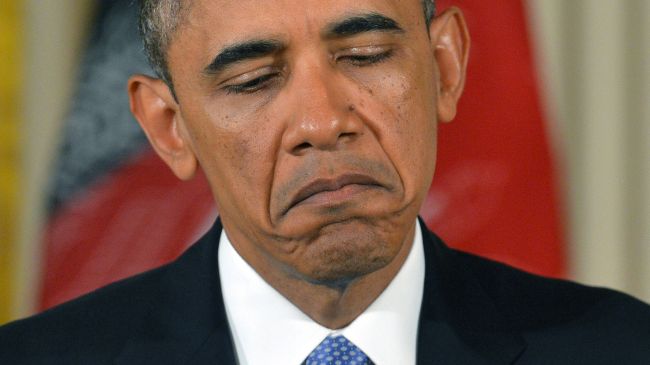
How Do You Know When President Obama is Lying?
By JEFF COHEN | CounterPunch | July 8, 2013
I was a young person when I first heard the quip: “How do you know when the President is lying? His lips are moving.” At the time, President Nixon was expanding the war in Vietnam to other countries and deploying the White House “plumbers” to commit crimes against antiwar leakers.
Forty years have passed. Sadly, these days, often when I see President Obama moving his lips, I assume he’s lying.
Like Nixon, our current president is prolonging an endless, borderless and counter-productive war (“on terror”) and waging a parallel war against “national security” leakers that makes the plumbers’ burglary of Daniel Ellsberg’s psychiatrist’s office look almost quaint.
The World War I vintage Espionage Act, originally used to imprison socialists for making antiwar speeches, has been used by the administration against whistleblowers with a vengeance unprecedented in history: eight leakers have been charged with Espionage under Obama, compared to three under all previous presidents. The Obama administration has prosecuted not a single CIA torturer, but has imprisoned a CIA officer who talked about torture with a journalist. National Security Agency official Thomas Drake, who was unable to get abuses fixed internally, now has a criminal record for communicating with a reporter years ago about sweeping domestic surveillance.
So there I was watching Obama’s lips move about NSA whistleblower Edward Snowden at a June 27 press conference. Saying he wouldn’t be “scrambling military jets to go after a 29-year-old hacker,” Obama added that he would not “start wheeling and dealing and trading on a whole host of other issues, simply to get a guy extradited.”
I didn’t believe a word of it.
Given Obama’s war on whistleblowers and journalists who utilize them, and given the Army’s abusive treatment of military whistleblower Bradley Manning (apparently aimed at getting him to implicate WikiLeaks), it’s inconceivable that Obama was truly blasé about Snowden. To deter future whistleblowers, Snowden would have to be caught and made an example of – and probably mistreated (like Manning, in hopes of getting him to turn against WikiLeaks and even journalist Glenn Greenwald).
As his lips were moving, Obama knew well that he would go to extreme lengths to prevent this articulate young man from securing asylum in some Latin American country, where he could continue to inform the world’s media about the Surveillance State that has blossomed alongside the Warfare State under the Bush and Obama administrations.
That Obama wasn’t truthful became clear when the U.S. campaign of “wheeling and dealing” led to possible asylum countries retreating in fear one after another (Vice President Biden was deployed to pressure Ecuador’s president by phone). And even clearer with last week’s outrageous, international law-breaking that effectively forced down the presidential plane of Bolivian President Evo Morales.
And if Obama eventually does scramble jets to force down a plane with Snowden on board, the commander-in-chief will be applauded for taking bold and decisive action by mainstream TV talking heads, “national security” experts and the opposition he seems most intent on pleasing: conservatives. Criticism from civil libertarian and peace voices (or unions and environmentalists, for that matter) has rarely daunted Obama.
The bipartisan consensus in support of our bloated Military/Surveillance State – which so undermines our society as a whole – is reflected in Congress and both the Bush and Obama administrations, as well as mainstream media.
When it comes to issues of U.S. militarism and spying, the allegedly “progressive” MSNBC often seems closer to the “official network of the Obama White House” than anything resembling an independent channel. With a few exceptions (especially Chris Hayes), MSNBC has usually reacted to expanded militarism and surveillance by downplaying the abuses or defending them.
Had McCain or Romney defeated Obama and implemented the exact same policies, treating whistleblowers like Manning and Snowden as foreign espionage agents, one would expect MSNBC hosts to be loudly denouncing the Republican abuses of authority.
But with Obama in power, a number of MSNBC talking heads have reacted to the Snowden disclosures like Fox News hosts did when they were in hysterical damage control mode for Bush – complete with ridiculously fact-free claims and national chauvinism that we’ve long come to expect from the “fair & balanced” channel.
As Snowden arrived in Russia from Hong Kong, MSNBC host Ed Schultz blustered on about Snowden as a “punk” and “coward.” Railing about the “security of the country” in tones Hannity would approve of, Schultz questioned Snowden’s patriotism and credibility, asking: “If the United States of America is doing something so egregiously wrong in its surveillance program, how come he’s the only one speaking up?
In O’Reilly-like blissful ignorance, Schultz seemed unaware of the three NSA whistleblowers who’d loudly spoken up way earlier than Snowden – and gathered for an illuminating USA Today interview a week before his tirade.
I watched one MSNBC host function as an auxiliary prosecutor in Obama’s Justice Department, going after Snowden – while trying to link WikiLeaks and journalist Glenn Greenwald to criminal flight.
MSNBC’s Melissa Harris-Perry has been condemning Snowden by contrasting him with civil disobedients who “love their country” and submit to arrest – while Snowden just wants to “save his own skin.” She proclaimed: “This is different. This is dangerous to our nation.” Should we similarly dismiss Dan Ellsberg, who leaked the top secret Pentagon Papers to a dozen newspapers in 1971 by going on the lam from the FBI. Or Watergate’s “Deep Throat,” who saved his own skin by hiding his identity for 30 years after leaking secrets that helped crash the Nixon presidency?
In a bizarre monologue attacking Snowden (who’s risked plenty, in my view), Harris-Perry hailed those who engage in civil disobedience for being willing “to risk your own freedom, your own body in order to bring attention to something that needs to be known. Martin Luther King Jr. was arrested, attacked, smeared. Nelson Mandela went to prison for 27 years.” (My emphasis.)
Nelson Mandela? He wasn’t a civil disobedient who gave himself up. He was a fugitive, fleeing the apartheid police. He was on the lam domestically, like Snowden is now internationally. And some reports indicate that South African authorities were able to nab Mandela thanks to the U.S. CIA (one of the agencies now working to apprehend Snowden).
MSNBC’s Rachel Maddow has also disappointed. After doing a typically thorough presentation on the force-down of President’s Morales’ plane, she ended her report by expressing displeasure only that Washington had apparently gotten allies to go out on the limb “for nothing.” Her objection to the harassment seemed to be: it hadn’t succeeded. I didn’t hear opposition to the action had Snowden actually been on board and apprehended.
The Snowden/NSA story proves once again that – especially on so-called “national security” issues – we need strong, independent media not enmeshed with the corporate/political power structure and not allied with one of the two corporate parties.
We can’t count on MSNBC to heed the lesson taught by legendary independent journalist I.F. “Izzy” Stone, after years reporting from Washington: “All governments lie and nothing they say should be believed.”
Jeff Cohen was an MSNBC pundit and senior producer in 2002-3 until being terminated for political reasons, along with Phil Donahue, on the eve of the Iraq invasion. He is director of the Park Center for Independent Media at Ithaca College, founder of the media watch group FAIR, and author of Cable News Confidential: My Misadventures in Corporate Media. He cofounded the online action group RootsAction.org, which has petitioned for Snowden.
Brazil expresses deep concerns over US spying activities
Press TV – July 7, 2013
Brazil has expressed serious concerns over a report which says the United States has been spying on Brazilian companies and individuals for a decade.
Brazil’s O Globo newspaper reported on Sunday that the US National Security Agency (NSA) has collected data on billions of telephone and email conversations in the South American country.
The Globo report said that information released by US surveillance whistleblower Edward Snowden reveals that the number of telephone and email messages logged by the NSA in the 10-year period was near to the 2.3 billion captured in the US.
Brazilian Foreign Minister Antonio Patriota expressed “deep concern at the report that electronic and telephone communications of Brazilian citizens are being the object of espionage by organs of American intelligence.”
“The Brazilian government has asked for clarifications” through the US Embassy in Brasilia and the Brazilian Embassy in Washington, he said.
Patriota also said Brazil will ask the United Nations for measures “to impede abuses and protect the privacy” of Internet users, laying down rules for governments “to guarantee cybernetic security that protects the rights of citizens and preserves the sovereignty of all countries.”
The US Embassy in Brazil refused to comment over the issue.
But the Office of the Director of National Intelligence in the United States issued a statement saying, “The US government will respond through diplomatic channels to our partners and allies in the Americas … While we are not going to comment publicly on specific alleged intelligence activities, as a matter of policy we have made clear that the United States gathers foreign intelligence of the type gathered by all nations.”
The chairman of the US Joint Chiefs of Staff, Gen. Martin Dempsey, admitted on Sunday that Snowden’s exposés have seriously damaged US ties with other countries. “There has been damage. I don’t think we actually have been able to determine the depth of that damage.”
Snowden, a former CIA employee, leaked two top secret US government spying programs under which the NSA and the Federal Bureau of Investigation (FBI) are eavesdropping on millions of American and European phone records and the Internet data from major Internet companies such as Facebook, Yahoo, Google, Apple, and Microsoft.
On June 9, Snowden admitted his role in the leaks in a 12-minute video recorded interview published by The Guardian.
In the interview, he denounced what he described as systematic surveillance of innocent US citizens, saying his “sole motive is to inform the public as to that which is done in their name and that which is done against them.”
The NSA scandal took even broader dimensions when Snowden revealed information about its espionage activities targeting friendly countries.
Snowden has been holed up at Moscow’s Sheremetyevo Airport since June 23 when he travelled from Hong Kong to avoid US extradition.
He has already sought asylum in more than two dozen countries. Washington has asked these countries not to provide asylum to Snowden.
Three Latin American countries — Nicaragua, Bolivia, and Venezuela — have offered to grant asylum to Snowden.
Related article
Tony Blair hired ex Israeli army intelligence officer
By Gilad Atzmon | July 7, 2013

The Telegraph reported today that “Tony Blair has hired a former Israeli army intelligence officer to work in his private office, despite his role as Middle East peace envoy.”
Lianne Pollak, who has led intelligence teams in the Israel Defence Forces, was recruited as a private consultant between October 2012 and April this year.
The 30-year-old Israel was previously a policy adviser to Israeli PM Benjamin Netanyahu, working with security agencies and senior officials.
The former British prime minister is the envoy to the Middle East for the Quartet – the group that represents the US, Russia, the United Nations and Europe.
His role includes encouraging development in Gaza and the West Bank and helping to forge a settlement of the Israeli-Palestinian conflict, having been appointed when he left Downing Street in June 2007.
Related article
- Tony Blair: Egypt’s army had no choice (thestate.com)
AT&T joins Verizon, Facebook in selling customer data
RT | July 6, 2013
AT&T has announced that it will begin selling customers’ smart phone data to the highest bidder, putting the telecommunications giant in line with Verizon, Facebook and other competitors that quietly use a consumer’s history for marketing purposes.
The company claims its new privacy policy, to be updated within “the next few weeks,” exists to “deliver more relevant advertising” to users based on which apps they use and their location, which is provided by GPS-tracking. Apparently recognizing the natural privacy concerns a customer might have, AT&T assured the public that all data would be aggregated and made anonymous to prevent individual identification.
A letter to customers, for instance, described how someone identified as a movie fan will be sent personalized ads for a nearby cinema.
“People who live in a particular geographic area might appear to be very interested in movies, thanks to collective information that shows wireless devices from that area are often located in the vicinity of movie theaters,” the letter states. “We might create a ‘movie’ characteristic for that area, and deliver movie ads to the people who live there.”
A June 28 blog post from AT&T’s chief privacy officer Bob Quinn said the new policy will focus on “Providing You Service and Improving Our Network and Services,” but the online reaction has been overwhelmingly negative, with many customers looking for a way to avoid the new conditions.
“You require that we allow you to store a persistent cookie of your choosing in our web browsers to opt out,” one person wrote. “No mention of how other HTTP clients, such as email clients, can opt out. If you really did care about your customers, you would provide a way for us to opt out all traffic to/from our connection and mobile devices in one easy setting.”
One problem for any customer hoping for a new service is the lack of options, smartphone or otherwise. Facebook, Google, Twitter and Verizon each store consumer data for purposes that have not yet been made clear. And because of the profit potential that exists when a customer blindly trusts a company with their data, small Internet start-ups, including AirSage and many others, have developed a way to streamline information into dollars.
The nefarious aspect of AT&T’s announcement is underscored by the recent headlines around the National Security Agency, which has spent years has compelling wireless corporations to hand over data collected on millions of Americans. Unfortunately for the privacy of those concerned, AT&T’s new policy may only be a sign of things to come.
“Instead of merely offering customers a trusted conduit for communication, carriers are coming to see subscribers as sources of data that can be mined for profit, a practice more common among providers of free online services like Google and Facebook,” the Wall Street Journal wrote about the matter in May.
NSA spies in bed with Germany, other Western states: Snowden
Press TV – July 7, 2013
U.S. intelligence leaker Edward Snowden said the National Security Agency (NSA) has massive spying partnerships with other Western states that are now grumbling about the agency’s surveillance programs.
He made the comments in an interview with U.S. cryptography expert Jacob Appelbaum and documentary filmmaker Laura Poitras before revealing the NSA’s internal and global surveillance programs last month.
NSA spies are “in bed together with the Germans and most other Western states,” Snowden said in remarks published by the German news weekly Der Spiegel on Sunday.
The fugitive leaker added that the NSA has a department called the Foreign Affairs Directorate which coordinates work with Western spying agencies.
Snowden said the NSA, for example, provides Germany’s BND foreign intelligence agency with “analysis tools” for data passing from regions like the Middle East through Germany.
The former NSA contractor has also revealed that the American agency spies on European Union offices in New York, Washington and Brussels, drawing ire from European leaders, especially Germany.
The NSA, according to top secret documents disclosed by Snowden, also collected around half a billion telephone calls, emails or mobile phone text messages and Internet chat entries in Germany per month.
Germany demanded an immediate explanation from the U.S. over the surveillance programs.
Justice minister, Sabine Leutheusser-Schnarrenberger, strongly condemned the U.S. spying, saying it was reminiscent of “the methods used by enemies during the Cold War.”
Snowden, 30, has reportedly holed up in the transit area of Moscow’s Sheremetyevo International Airport since arriving on a flight from Hong Kong on June 23. He is wanted in the US on espionage charges.
Related articles
Controversial EU Data Protection Regulation May Be Negotiated In Secret In Breach Of Parliamentary Process
By Glyn Moody | TechDirt | July 3, 2013
Today, the European Parliament held a three-hour long debate on PRISM, Tempora and what the EU response should be. Many wanted TAFTA/TTIP put on hold; others didn’t. But one theme cropped up again and again: the need for strong data protection laws that would offer at least some legal protection against massive and unregulated transfer of Europeans’ personal data to the US.
As Techdirt readers may recall, the EU’s Data Protection Regulation was already contentious even before Ed Snowden revealed the scale of US and UK spying on EU citizens. The new focus on passing it soon only intensifies the battle going on there between those who want to introduce meaningful constraints on what can be done with EU data, and those who seem happier to listen to lobbyists and allow personal information to flow across the Atlantic largely unchecked. But it looks like the politicians have come up with a way to avoid public debate on the matter, as Monica Horten at Iptegrity.com reports:
Secret trilogue negotiations between the European Parliament and the Council of Ministers are being proposed as a way to get around the impasse of 3000+ amendments on the Data Protection Regulation.
As Horten explains:
trilogues are held in secret, behind closed doors, and the only people allowed in are the rapporteur [the lead MEP representing the European Parliament] and his shadows, the Commissioner, the Presidency, and selected advisers from each institution. The trilogue discussions are not made public.
As well as being reprehensible — if anything needed to be conducted in public, this did — it may be against the EU’s own rules:
trilogues cannot start before the responsible committee has given a mandate. That’s what’s a little bit odd here. The mandate can only be given when the committee votes in October.
But the Brussels rumour mill is suggesting that there could be a move to begin trilogues on the Data Protection Regulation before October, without waiting for the committee mandate.
That might solve the problem of avoiding high-profile arguments over what should be in the Regulation, but it would also place anything that comes out of these secret negotiations on a questionable footing:
it would be a breach of Parliamentary process, and especially egregious given that this law deals with fundamental rights.
In any event, the rapporteur does not have to agree to trilogues. It is an option.
In other words, nobody really knows what will happen here. Call it the Snowden Effect: anything relating even indirectly to his case seems to become more complex and unpredictable….Follow me @glynmoody on Twitter or identi.ca, and on Google+
‘French PRISM’ revealed: All communications tracked, metadata collected
RT | July 4, 2013
The French external intelligence agency spies on French citizen’s phone calls, emails and social media activity and web use, the Le Monde newspaper has reported.
France’s external intelligence agency the DGSE, intercepts signals from computers and telephones in France and between France and other countries in order to get a picture of who is talking to whom, although, apparently, they do not randomly spy on the content of phone calls, the daily revealed on Thursday.
Emails, text messages, telephone records, access to Facebook and Twitter are stored for years. “All of our communications are spied on,” read the article quoting unnamed sources in the intelligence services as well as remarks made publicly by intelligence officials.
The DGSE allegedly stores the metadata from private communications in a basement under its Paris headquarters. All of France’s seven other intelligence services have access to the data and can tap into it freely as a means to spot people’s suspicious communications. Individuals can then be targeted by more intrusive techniques such as phone-tapping, it was reported.
Le Monde pointed out the activities were illegal, but the French national security commission whose job it is to authorize targeted spying, and the parliamentary intelligence committee, challenged the papers report. It said that it works within the law and that the only body in France that collected communication information was a government agency controlled by the Prime Minister’s office to monitor for security breaches.
The report comes after revelations that America’s NSA regularly spies on its own people as well as on European citizens and embassies.
The allegations were leaked by Edward Snowden and published in the German magazine Der Spiegel, and have sparked a furious response from European governments just as a major US-EU trade talks are about to get underway.
The Guardian newspaper reported last month that Britain has a similar spying program and shares vast quantities of information with the NSA through its Prism program.
Related articles
Who Is An Objective Journalist?
By Ann Robertson and Bill Leumer | Worker’s Compass | July 2, 2013
In a recent New York Times article article David Carr questioned whether someone could be both a journalist and an activist, a question that was prompted by the role of Glenn Greenwald, a writer for The Guardian and a political activist, in reporting on Edward Snowden’s National Security Agency leaks.
As Carr put it, “The question of who is a journalist and who is an activist and whether they can be one and the same continues to roar along, most recently in the instance of Glenn Greenwald’s reporting for The Guardian on the secrets revealed by Edward J. Snowden.” Carr also framed the question as “a fight between objectivity and subjectivity.”
Carr initially seemed to concede that one and the same person could be both an activist and a journalist, even though the activists are “driven by an agenda.” In fact, the title of his article conveyed exactly that point: “Journalism, Even When It’s Tilted.” And, as Carr noted, this is an important concession since journalists are afforded special legal protections in the case of reporting leaks. Mr. Greenwald needs this protection because there are some government officials who would like to see him prosecuted.
However, towards the end of his article Carr began to raise caveats. Activism, he concluded, does not prevent someone from being a journalist; it rather tends to make them bad journalists: “But I think activism – which is admittedly accompanied by the kind of determination that can prompt discovery – can also impair vision.” And he added: “…the tendentiousness of ideology creates its own narrative.” In other words, activism can on rare occasions be helpful in unearthing the truth, but usually it is a barrier.
But perhaps Mr. Carr has failed to grasp the larger picture, possibly due to his own unspoken commitments. Everyone falls into one of two categories. There are those who basically have resigned themselves to established society, perhaps because of ideological compatibility, a strong strain of pragmatism, or a conviction that attempts to change society are entirely futile. Then there are others who are critical and are prepared to embark on a campaign to try to change what they find objectionable. Neither of these groups has a monopoly on objectivity; both positions rest on a set of fundamental values that can be rationally supported. And both involve a kind of activism: one aims at changing society while the other aims at refraining from changing it.
Yet there is a superficial difference between the two: those who want to change society do stand out. Unlike Mr. Carr, they do not seamlessly blend in with the surrounding social institutions and the values embodied in them. Accordingly, they might seem as if they have an agenda that uniquely distinguishes them, but that is only from the perspective of people like Mr. Carr, whose agenda ties him to the status quo but who has not sufficiently reflected on his own social commitments and therefore is unable to acknowledge them. No one, in other words, is exempt from having an “agenda.”
This point was graphically illustrated when “Meet the Press” host David Gregory pointedly asked Greenwald why he should not be charged with a crime for divulging Edward Snowden’s leaks. Here Gregory stood smugly on the side of those who wield power and was quick to demonstrate this point by his tendentious question, perhaps with the thought in mind of winning a promotion, which is a rampant form of another kind of activism.
To his credit, Carr elicited Greenwald’s response to the counterposing of activism and journalism, and this was Greenwald’s response: “It is not a matter of being an activist or a journalist; it’s a false dichotomy. It is a matter of being honest or dishonest. All activists are not journalists, but all real journalists are activists. Journalism has a value, a purpose – to serve as a check on power.” And Greenwald added: “I have seen all sorts of so-called objective journalists who have all kinds of assumptions in every sentence they write. Rather than serve as an adversary of government, they want to bolster the credibility of those in power. That is a classic case of a certain kind of activism.”
Greenwald’s rejection of the purported dichotomy between activism and journalism is, of course, entirely correct. Everyone is an activist of one kind or another. The distinction should rather be drawn between those who are conscious activists and those who, like Mr. Carr and Mr. Gregory, are unconscious activists. Those who fail to reflect on their own commitments are sometimes the most vicious.
Ann Robertson and Bill Leumer may be reached at sanfrancisco@workerscompass.org
Featured Video

Trump asks Iran not to retaliate after he strikes Pickaxe Mountain
or go to
Aletho News Archives – Video-Images
Book Review
‘Why Fauci Must Rot in Prison’: A Tale of Two Diaries
By Jill Erzen | The Defender | October 13, 2026
Dr. Anthony Fauci’s private diary reveals a “mind-numbing” contradiction between what the former top U.S. infectious disease official knew about COVID-19 and what he told the public, senior White House adviser Peter Navarro, Ph.D., said last week on “American Thought Leaders.”
In his new book, “Why Fauci Must Rot in Prison,” due out Oct. 20, Navarro compares Fauci’s private entries to his own pandemic-era diary, and uses what he calls “a tale of two diaries” to argue that Fauci should face criminal prosecution.
“I show, actually, how a prosecution can and should happen … at the state level, most likely,” Navarro said. “He should wind up in prison, and we’ve got the receipts in this book to put him there.”
Navarro said Fauci repeatedly acknowledged important facts in private, then publicly pursued policies that contradicted those facts — with devastating consequences.
“What he says many times privately in his diary is so at odds with both his public behavior and public statements that it’s mind-numbing,” Navarro said.
Navarro examines the lasting damage caused by lockdowns and other pandemic policies, and the ongoing toll of long COVID.
His book also addresses questions about vaccine safety, including why healthy young people faced COVID-19 vaccination mandates despite concerns about myocarditis, and why women were not warned about miscarriage risks linked to the shots. … continue
Blog Roll
 Aletho News
- Yemen denounces international community’s silence on Saudi aggression, siege
- UAE and Saudi Arabia move toward renewed coordination against Sanaa
- How Iran’s two-week retaliatory strikes exposed cracks in US military architecture in Persian Gulf
- The mother of all propaganda: Why the hype over US MOAB strike against Iran is nothing but theater
- Iran says it possesses technology behind US 14-ton GBU bunker-buster
- Trump asks Iran not to retaliate after he strikes Pickaxe Mountain – w/ Prof. Marandi
- Vice President J.D. Vance’s Deceptive ‘Antiwar’ Campaign Speech
- Iran: Palestinians’ rights must not be compromised in Gaza’s future; US, Israel to blame for Hormuz situation
- Ongoing tales of Syrian chemical weapons
- Moscow blasts UN for ignoring torture of Russian POWs
- If Americans Knew
- Israeli rabbi permits occupiers to steal Palestinian olive harvest in West Bank
- Netanyahu’s spin on latest settler attack is laughable – Daily Update
- Israeli soldiers debunk Israel’s talking points
- In West Bank, Israeli settlers are totally out of control – Daily Update
- NPR investigation finds evidence of widespread fraud at mall kiosks tied to Israeli skincare brand
- Tucker Carlson exposes Israeli Lies about the Oct 7th attack, Charlie Kirk, and the U.S.
- Israel has detained thousands of Palestinian children since Oct 7th – over half spent time in solitary, many uncharged
- Israeli Analysis: Is Netanyahu Planning an ‘October Surprise’ Attack Before Israel’s Election?
- Israeli settlers brutally attack Palestinians and Washington Post female photographer, 65
- Words Have Changed, Occupation Continues: The Reality of the Gaza Ceasefire
- No Tricks Zone
- Predictions Made By Renowned Climate Proifessor Over Past Decades Have Been Proven To Be Poor
- New Study Suggests Large Regions Of The Pacific Ocean Have Been Cooling For The Last 80 Years
- Germany’s Green Energy Debacle: High Energy Costs Force Kahla Porzellan to Close After 182 Years!
- New Study: 50 Years Of The Most Aggressive ‘Net Zero’ Policies Can Only Affect The Global Climate By 0.03°C
- US September “Heat” Was No Record…Many Records Set Decades Ago
- Latest European Green Energy Debacle; Portugal’s Largest Flagship Solar Park Insolvent!
- Green Energy Debacle: German Expert Professor Fritz Vahrenholt Warns Of Severe Economic And Social Consequences
- Two More Paleo Reconstructions Affirm Meters-Higher Sea Levels Across Ireland, Brazil 7000-6000 Years Ago
- New Study: Earth And Venus Surface Warmth Largely Explained By Convection And Lapse Rate, Not CO2 Or Radiation
- 2025 Nature Paper Claiming Worsening Global Drought Gets RETRACTED …Heavily Flawed

