Two Sides to Every Drone Death
By Peter Hart | FAIR | March 18, 2013

A March 15 piece in the Washington Post tells us that the UN’s special human rights envoy found that the CIA’s drone strikes in Pakistan violate that country’s sovereignty. It also told readers that the drones had “resulted in far more civilian casualties than the U.S. government has recognized.”
Unfortunately, that message was muddled by reporter Richard Leiby‘s he said/she said approach to the question of civilian deaths:
Estimates of total militant deaths and civilian casualties vary widely. Independent confirmation is difficult in part because the strikes often occur in remote, dangerous tribal areas where Taliban insurgents and Al-Qaeda and its allied militants are active.
The Bureau of Investigative Journalism in London has estimated that at least 411 civilians–or as many as 884–were among some 2,536 to 3,577 people killed in the CIA strikes in Pakistan. But Sen. Dianne Feinstein (D), who chaired the Senate Select Committee on Intelligence hearings last month that confirmed new CIA Director John O. Brennan, put the number of civilian deaths considerably lower.
“The figures we have obtained from the executive branch, which we have done our utmost to verify, confirm that the number of civilian casualties that have resulted from such strikes each year has typically been in the single digits,” she said.
So, on the one hand, the Bureau has done extensive work documenting drone strikes. But then again you have a senator who heard from the government that it’s much lower.
There is, of course, a way to report the difference between Feinstein’s claim and other estimates. Conor Friesdorf did so in the Atlantic (2/11/13), contrasting the Bureau‘s totals with those of the New America Foundation and other researchers. None of these projects supports Feinstein’s claim. His conclusion:
There is no reason to treat Feinstein’s claim about civilians killed as if it is credible. All the publicly available evidence is arrayed against her position.
Yet she’s treated by the Post as one of two sides of the drone deaths debate.
Related article
- Dianne Feinstein’s shocking lies about the number of civilians killed by U.S. drone program (poorrichards-blog.blogspot.com)
Target of a Smear Campaign
By M. SHAHID ALAM | CounterPunch | March 18, 2013
In April 2012, Americans for Peace and Tolerance (APT), a Zionist organization headed by Charles Jacobs, began a smear campaign against Muslim students, the staff of Spiritual Life Center, and some faculty at Northeastern University.
The APT posted three videos on the internet accusing Muslims students at Northeastern University of advocating ‘Islamic extremism’ and concocting charges of anti-Semitism against several members of the faculty and staff of the Spiritual Life Center at Northeastern University. I was one of the principal targets of these smears. After launching the videos, the APT has used a variety of tactics to bring pressure on Northeastern University to ‘punish’ the faculty it had targeted in one of its smear videos.
When this campaign persisted I decided to write a letter to the President of Northeastern in November 2012 providing some background to APT’s smear campaign. At the time I had no intention of circulating this letter more widely. However, since APT has persisted in its defamatory campaign against me, I think it proper to publish this letter to set the record straight. Here is the text of the letter (partly revised) that I sent to President Aoun of Northeastern University.
* * *
It has come to my notice that Mr. Charles Jacobs – head of Americans for Peace and Tolerance – has been circulating letters among NU faculty and administration that make baseless and defamatory charges against me. I am concerned about the damage to my reputation and to the reputation of the university from these charges, which is why I am writing to you. In this letter I briefly outline the main charges, and provide you with my key points to refute them.
First, I would like to present some information on the source of the charges, why they are aimed not only at me but at other faculty at NU, and why they are likely to have broader impact beyond just an attack on myself. Mr. Charles Jacobs has been engaging in sustained attacks for several years to silence critics of Israeli human rights violations. He is the co-founder of the David Project, an organization established in 2002 with the specific purpose of silencing critics of Israel. In 2004, the David Project produced Columbia Unbecoming, a documentary that spearheaded a smear campaign against several Arab-American professors, including two very prominent academics at Columbia University. In 2012, he began a campaign directed against Northeastern University, producing a series of videos smearing faculty, staff and students at NU.
Second, I want to set out a few specifics about the three videos produced by APT to smear Northeastern University, several of its faculty, its Muslim students and the staff of Spiritual Life Center. One of these videos, Anti-Semitic Education at Northeastern, directs its smears – amongst others – against Professor Denis Sullivan and myself. In addition, following the release of this video, Mr. Jacobs began sending letters to NU faculty, making false statements about me that he claims are caught on video. In one of his letters to NU faculty, Mr. Jacobs makes the claim: “[Alam] Caught on video urging students to be proud anti-Semites.” In another letter, he claims: “Prof. Alam tells students it’s alright to be called anti-Semitic because it shows they’re on the right side of history.” These charges are simply untrue, and I categorically deny them. They are not supported even by the doctored video clips from a talk I gave at Northeastern University. It is worth noting that my talk was videotaped surreptitiously, without my knowledge or consent.
I would like to set the record straight about the source of the clips on me in the video produced by APT. At the end of a talk I gave last spring at an event organized by Students for Justice in Palestine at NU, a student complained that their advocacy of Palestinian rights often invites slurs of anti-Semitism. She asked, “How should the pro-Palestinian activists respond to these smears?” I responded: If someone smears you as anti-Semitic because of your advocacy of Palestinian rights you should ignore your accusers. I urged the student to disregard such attempts at intimidation, stating that if their accusers persist in these smear tactics, at some point in time those who are falsely accused might wear these smears as a mark of distinction; as a mark of distinction – because this would signify that they have been smeared for supporting a just and honorable cause, the human rights of the long-suffering Palestinians. My remarks were cut and distorted for purposes of the slanderous video.
There are other issues likely being raised by the letters Mr. Jacobs is emailing to some faculty at Northeastern, but I am confident that I can refute every one of them, and shall do so if the need arises. Unfortunately, Mr. Jacobs is not working alone on this campaign. Among others, he has help in his smear campaign from several other organizations, including Campus Watch, headed by Daniel Pipes, Center for Islamic Pluralism, headed by Stephen Schwartz, and Freedom Center, headed by David Horowitz. All of them illustrious organizations headed by men of impeccable reputations as truth-tellers.
Over the 25 years that I have taught at Northeastern I have made a few modest contributions in the fields of economics, politics, history, religious studies, and poetry; launched three new courses on capitalism, the history of the global economy and the economic history of the Middle East; taught four classes every year nearly all of which were filled to capacity; and mentored many students. During this quarter century of teaching courses that critically analyzed many of the assumptions of the social sciences, not one of my students has gone to any of my colleagues or official at Northeastern to complain of bias against any ethnic group or nationality in my classes.
On the contrary, my students can attest that I place the study and critique of biases – whether Orientalist, Eurocentric, racist, nationalist, religious, anti-Semitic, Islamophobic, sexist, jingoist or ethnic – at the center of my approach to the study of the social sciences. I begin every one of my courses with readings, videos and lectures that seek to create an awareness of overt and covert biases in the social science texts, in our public discourse as well as our private conversations. I tell my students that recognition of our biases is the first and necessary step towards pushing back against the same in our own thinking.
In order to help my students in these explorations, I tell them stories from the wisdom traditions of Islam, the West, India and China, I recite to them poems – from Rumi, Shakespeare, Whitman, and contemporary American poets. I show them videos on biases in our perceptions, and I read to them from some of the Founding Fathers and Abraham Lincoln. It is therefore ironic that accusations of anti-Semitic bias should be hurled against me. It is doubly ironic that such accusations should come from individuals who have never taken my classes or engaged me in discussions; and this speaks pointedly to the falsity of their accusations.
At the end, I must confess that as I write this letter I cannot avoid feeling diminished by the need to defend my reputation against outrageous smears by people who have made lucrative careers out of hate-mongering and Islamophobia. A scholar’s life is an open book: you can examine his ideas in his books, articles, essays, and speeches. My work too should speak for itself.
I am available to meet with you at your convenience should you wish to discuss the matter further.
M. Shahid Alam is professor of economics at Northeastern University; he is also the faculty advisor to Students for Justice in Palestine on the campus. He is an economist, essayist, translator and poet. His most recent book, Israeli Exceptionalism, was published in 2007 by Palgrave
On Venezuela, The New Yorker’s Jon Lee Anderson Fails at Arithmetic
By Keane Bhatt | NACLA blog | March 17th 2013
In the face of Venezuelan President Hugo Chávez’s ill health and subsequent death on March 5, the U.S. press—including its most unabashedly liberal wing—jumped at the opportunity to disparage him and his legacy, often on spurious grounds. Jon Lee Anderson of the urbane New Yorker magazine epitomized this tendency.
As the magazine’s corespondent for Venezuela and author of a January piece on the country that stretched to over 10,000 words, Anderson was the subject of withering ridicule. Jim Naureckas of Fairness and Accuracy in Reporting wrote that Anderson’s article appeared “almost like a parody of corporate media coverage of an official enemy state.” Economist Mark Weisbrot similarly noted that Anderson wasn’t “letting commonly agreed-upon facts and numbers get in the way” of his plodding diatribe against Chávez’s failures. Those criticisms remain independent from others who have observed his increasingly bizarre Twitter outbursts against critics.
Anderson’s article, “Slumlord: What Has Hugo Chávez Wrought in Venezuela?,” is indeed filled with blatant misrepresentations. The New Yorker’s vaunted fact checkers somehow permitted the publication of the following statement: “Chavez suggested to me that he had embraced the far left as a way of preventing a coup like the one that put him in office.” While it is true that in 1992, Chávez attempted a coup against an administration that had deployed security forces to massacre hundreds, perhaps thousands of civilian protesters, Anderson is misleading his readers. Chávez was “put in office” much later, in 1999, through a free and fair election—not a coup—a fact which he did not see fit to include in his piece. He instead wrote, vaguely, that Chávez “assumed” power in 1999.
In a Spanish-language interview with the BBC on March 9, Anderson also accused the deceased Venezuelan president of having been machista, or sexist, “but in a cultural sense. Women tended to be hosts at parties, for example, not political advisers.” If true, that would be news to Erika Farías, the recently departed head of the Office of the Presidency; Adina Bastidas, Chávez’s vice president from 2000-2002; Cilia Flores, currently the country’s attorney general; Gabriela del Mar Ramírez, currently public defender; Edmée Betancourt, head of the Ministry of Commerce; and scores of others. At present, women direct three of the five branches of the Venezuelan government.
Even more damning is the number of Anderson’s falsehoods exposed through simple arithmetic. For instance, in a NewYorker.com piece published before Venezuela’s elections, he wrote in error that “Venezuela leads Latin America in homicides.” The most recently available United Nations data show that Honduras, with 91.6 killings per 100,000 in 2011, has twice the rate of homicides as Venezuela, which recorded 45.1 in 2010. (El Salvador has 69.2.) When confronted with these facts on Twitter in February, Anderson admitted his mistake publicly, addressing even his editors at The New Yorker, and agreed to offer a correction. Over a month later, however, neither Anderson nor his editors have fixed his invented claim.
In his NewYorker.com “postscript” for the death of Hugo Chávez on March 5, he published yet another factual inaccuracy, claiming that Venezuela “is the same Venezuela as ever: one of the world’s most oil-rich but socially unequal countries.” Impressively, in just 16 words, he managed to err on two counts: First, under Chávez, inequality did not stay “the same as ever,” but rather fell enormously. Publicly available UN data confirm that Venezuela’s Gini index, a standard measure of inequality, fell from 49.8 to 39.7 between 1999 and 2011. Secondly, this decline made Venezuela anything but one of the world’s most socially unequal countries; according to the UN, it is now Latin America’s least unequal country. This reduction resulted from governmental priorities which halved poverty and unemployment over the past 10 years, while living standards improved through a healthy 2.5% annual per capita income growth since 2004. These massive reductions in poverty, which even many anti-Chávez editorials have noted, have never been reported by Anderson. Instead, he deceptively points to “extremely high levels of poverty and unemployment” in order to stress “the magnitude of the mess that Venezuela finds itself in.”

Finally, Anderson’s criticisms over Caracas’s slums suffer from flagrant omissions of chronology. He pinpointed the “height of [Caracas’s] allure” in 1983—it was a “boring, pristine, very North American” city, “buzzing along in modernity.” Yes, he admitted, there were “shacks on the hills, but not too many at the time.” “Now,” he says, “the slums are kind of everywhere.” It is “extraordinary” that “la revolución couldn’t tackle this” given that “the slums are still there 14 years later.” Anderson is performing sleight of hand with arithmetic here. He is excluding 16 disastrous years of economic history in which Chávez was never in office: from 1983 through 1998, real per capita income actually fell substantially, exacerbating poverty and housing insecurity to an unprecedented degree.
In a February panel discussion for the Frontline Club in London, he wondered “how to quantify the improvement in the standard of living in a city or in a place where people are still living in slums.” One way to do it is by looking at UN data, or other publicly available data on income, poverty, employment, and other social indicators that are heavily scrutinized and widely used by social scientists. Another way to do so is by acknowledging critics’ corrections to his false socioeconomic assertions, rather than referring to them on Twitter as “trolls” and “scum.” He should follow their advice, and complement his impressionistic firsthand reporting with empirical evidence.
[For those who would like to see The New Yorker take responsibility for factual errors in Anderson’s reporting, email tny.newsdesk@gmail.com, and tweet to @TNYnewsdeskand @jonleeanderson.]
Keane Bhatt is an activist in Washington, D.C. He has worked in the United States and Latin America on a variety of campaigns related to community development and social justice. He is the author of the NACLA blog “Manufacturing Contempt,” which critically analyzes the U.S. press and its portrayal of the hemisphere. Connect with him on Twitter: @KeaneBhatt
Related articles
Obama Israel visit about defending beleaguered “Holocaust” narrative: Report
Press TV – March 17, 2013
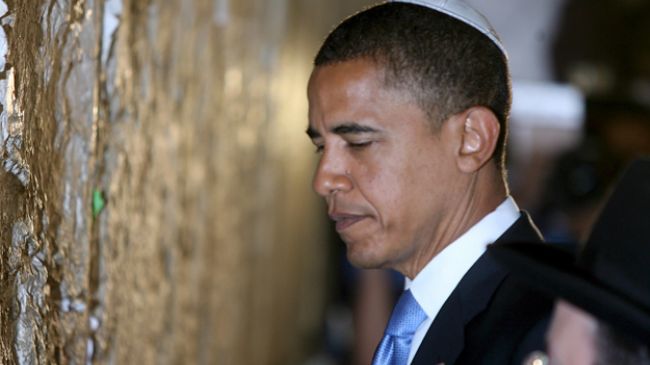 In his upcoming Israel visit, US President Barack Obama will spend just a few hours in Palestinian Ramallah and the rest of the 3-day tour visiting grave of Zionism founder Theodor Herzl, a Holocaust memorial and an anti-missile system, among other Israeli sites.
During the visit that begins on Wednesday, Obama will spend “just a few hours” in the Palestinian Authority base of Ramallah, and the rest of his three-day stay in al-Quds (Jerusalem), where he plans to visit an “official” so-called Holocaust memorial, a partially US-built Israeli Iron Dome anti-missile site and Herzl’s grave, The Los Angele Times reports on Friday.
In visiting the grave site of the Zionism founder and the Holocaust spot, Obama intends to highlight the point he made during his widely publicized Cairo speech in 2009, when he urged his Egyptian audience to accept the Zionist regime’s right to exist while denouncing efforts to deny the increasingly suspicious Holocaust story, the report states, citing US and Israeli officials. … Full article
Fukushima isn’t Chernobyl?
Don’t be so sure
By Sarah D. Phillips | Somatosphere | March 11, 2013
The March 11, 2011 Tohoku earthquake and tsunami caused the deaths of approximately 16,000 persons, left more than 6,000 injured and 2,713 missing, destroyed or partially damaged nearly one million buildings, and produced at least $14.5 billion in damages. The earthquake also caused a triple meltdown at the Fukushima Daiichi nuclear power plant on Japan’s eastern coast. After reading the first news reports about what the Japanese call “3.11,” I immediately drew associations between the accident in Fukushima and the Chernobyl nuclear disaster of 1986 in what was then the Soviet Union. This was only natural, since studying the cultural fallout of Chernobyl has been part of my life’s work as an anthropologist for the past 17 years. Knowing rather little about Japan at the time, I relied on some fuzzy stereotypes about Japanese technological expertise and penchant for tight organization and waited expectantly for rectification efforts to unfold as a model of best practices. I positioned the problem-riddled Chernobyl clean-up, evacuation, and reparation efforts as a foil, assuming that Japan would, in contrast, unroll a state-of-the-art nuclear disaster response for the modern age. After all, surely a country like Japan that relies so heavily on nuclear-generated power has developed thorough, well-rehearsed, and tested responses to any potential nuclear emergency? Thus, I expected the inevitable comparisons between the world’s two worst nuclear accidents to yield more contrasts than parallels.
But as reporting on the meltdown at the Fukushima Daiichi NPP unfolded, an unsettling story of stonewalling and sloppiness emerged that was eerily reminiscent of the Chernobyl catastrophe. TEPCO (Tokyo Electric Power Company), which operates the Fukushima Daiichi NPP, and the plant’s head, Masao Yoshida, proved to be masters of understatement. Yoshida characterized radiation levels nearly 100 times higher than normal as “higher than the ordinary level,” and he used the wholly inadequate phrase “acute danger” to describe two explosions and the meltdown of three of the reactor cores1 (how about “catastrophic meltdown necessitating immediate evacuation?”). One is reminded of the first official statement acknowledging the Chernobyl accident, which only appeared in a Kyiv newspaper three days after the disaster, and was hidden on the third page in the Weather section: “From the Cabinet of Ministers of the USSR. An accident has occurred at the Chernobyl atomic electrostation; one of the atomic reactors was damaged. Measures are being taken to liquidate the consequences of the accident. The victims are receiving assistance.”2
Recently-released video footage of the early days and weeks of the Japanese crisis reveals that some of the same mistakes made during the Soviet state’s blighted response to Chernobyl were repeated at Fukushima Daiichi. Military helicopters made futile attempts to douse flames inside the damaged reactors with water, a strategy already proven ineffective, dangerous, and potentially counterproductive during the Windscale fire in Great Britain in 1957, and later at Chernobyl. Local Fukushima firefighters were called to the accident scene but not informed of the extremely high levels of radiation—the TEPCO video reveals an official at headquarters to say, “There’s no use in us telling the fire department. That’s a conversation that needs to happen at higher levels.” Recall the six firemen who lost their lives battling the fires at Chernobyl’s Reactor No. 4; along with 25 other plant workers and first responders the firefighters for years were the only Chernobyl casualties officially recognized by the Soviet state. The accidents at Chernobyl and Fukushima alike have been traced back to lax safety controls and poor plant design or siting, and the emergency response after both disasters included a muddled chain of command, the intentional withholding of vital radiological data and health directives, and the privileging of economic concerns and saving face over the well-being of human beings and the environment. Did we learn nothing from Three Mile, Selafield, Windscale, and Chernobyl? Will the Fukushima accident finally jar us out of complacency, or will the accident be successfully “socially contained,” enabling humankind to “stagger on toward our next disaster?”3
Thanks to colleagues at the Japan College of Social Work in Tokyo, during October and November 2012 I visited Japan to participate in interviews, informal meetings, and conference roundtables with Fukushima evacuees, social workers, medical professionals, and community activists. It was an enlightening though sobering experience: many of the Fukushima stories I heard echoed nearly word-for-word narratives I have read and collected among persons affected by the Chernobyl accident in the former Soviet Union. Just like people who survived Chernobyl and the Soviet Union’s “rectification efforts,” Fukushima-affected persons and their advocates complain of government secrecy and misinformation, top-down decision making, generalized disorganization, and the social ostracism of nuclear accident “victims.”
No one knows what really happened here”
I traveled through northeast Japan with an esteemed group of scholars: Dr. Yukio Yamaguchi and Dr. Takashi Fujioka, professors at the Japan College of Social Work; Dr. Masumi Shinya, a professor of sociology at East China University of Science and Technology’s School of Social and Public Administration; Dr. Decha Sungkawan, Dean of the Faculty of Social Administration at Thammasat University in Bangkok; and Dr. Charles Figley, professor and Chair of the Tulane University Trauma Institute.
We traveled by trains and taxis, making research stops in cities like Nihonmatsu and Yamagata City, which received thousands of disaster evacuees, and Otsuchi (Iwate Prefecture), a coastal town devastated by the 3.11 tsunami. Before the disaster Otsuchi had a population of 15,262. At least 800 residents were killed in the tsunami that carried away most of the city’s infrastructure; nearly 500 residents are still missing. Today there are 10,000 people living in Otsuchi, 5,400 of who still live in cramped temporary housing units.
Our guide in Otsuchi was Mr. Ryoichi Usuzawa, a community organizer. Mr. Usuzawa drove us around the city, much of which now consists only of partial concrete foundations where buildings once stood. The entire city administration of Otsuchi (more than 20 persons) drowned in the tsunami—they had been called by the mayor to the town hall at the time of the earthquake. Mr. Usuzawa drove us up a steep hill to an area overlooking the town, just above the now-destroyed Buddhist temple and the adjoining hillside cemetery, which is still intact. On 3.11, hundreds of residents watched from this vantage point as the massive wall of water rolled in and mowed down their town (including their own homes, some with people still inside), the buildings collapsing “like dominos.” The devastation resulted in huge amounts of debris that caused further damage in turn, as tanks of propane gas bobbed along, became entangled in debris, and ignited fires and explosions “bubbling on top with smoke.” Mr. Usuzawa says, “It was like a huge washing machine was spinning the whole town. Everything was moving clockwise.”4
One of these hilltop spectators captured the scene on video, and we watched the terrifying footage on Mr. Usuzawa’s laptop as we looked down over the now-leveled city.5 He explained that hundreds of residents, many of them elderly, fled to the Buddhist temple for refuge from the water and drowned inside. As the tsunami was rolling over Otsuchi, some 200 kilometers away a wall of water invaded the coast of Fukushima Prefecture, destroying the Fukushima Daiichi nuclear power plant and the surrounding towns. Yet the impact on residents’ health is harder to calculate, because it consists not only of physical destruction but radiation contamination.
As cultural geographer Shiloh Krupar notes, “Embodied knowledge…take[s] on a particular significance in the presence of large-scale technological -environmental disasters…, where the variability and duration of harmful waste and its biological effects are uncertain and never closed.”6 Measuring radiation exposure and absorbed dose requires specific, often hard-to-access technologies, and laypersons are dependent on experts and their expert knowledge for interpretation of these measurements. Individuals’ ability to know and assess their risks is severely curtailed when expert knowledge—produced by agents usually beholden to states and powerful industrial interests—is the only form of knowledge recognized as valid, even as states and industry intentionally withhold information on hazards and their biological effects. Meanwhile, embodied self-knowledge is discredited.
Fukushima evacuees and their advocates report egregious examples of misinformation, negligence, and cover-up that have exacerbated their health risks. After the earthquake and tsunami the United States Department of Defense and the Department of Energy conducted environmental and radiological monitoring of air, water, and soil on DOD installations in the region.7 According to Professor Yukio Yamaguchi of the Japan College of Social Work, when this valuable data was shared with Japanese authorities they shelved it for two weeks instead of immediately informing the population about radiation risks. Further, the Japanese government failed to provide the Japanese public with data from the System for Prediction of Environmental Emergency Dose Information (SPEEDI)—data predicting the location and extent of radioactive contamination after the nuclear accident—until March 23, nearly two weeks after the disaster. Because the SPEEDI data was not available, some families evacuated themselves to locations that actually were more contaminated than where they were living.8 Perversely, the Japanese authorities provided the SPEEDI data to the U.S. military on March 14 but waited a full nine days before releasing it to the Japanese people.9
As happened in the Soviet Union after the Chernobyl accident, after the Fukushima accident the government quickly raised the “acceptable” level of individual radiation exposure. In Japan, the pre-nuclear accident maximum “safe” exposure was one millisievert (mSv)/year.10 After the Fukushima disaster, suddenly exposure of 20 mSv/year was deemed safe. Some medical professionals went so far as to suggest that 100 mSv/year was a safe level of exposure.11 Such inconsistencies made it difficult for those living near the Fukushima Daiichi NPP to make informed choices and take actions to minimize their risk of exposure to damaging radionuclides. In this context of uncertainty, a common phrase among Fukushima accident-affected persons is that, “No one knows what really happened here.”
In an age where sophisticated radiological monitoring is possible and information technology facilitates the rapid evaluation and dissemination of radiological data, the Japanese government’s crude “mapping” of the radiation fallout baffles the innocent and informed alike. Environmental contamination after a nuclear explosion or accident is uneven and patchy. We have known this since the 1950s, when radioactive fallout from bombs detonated in Nevada was carried by rain clouds all the way to New York state. Similarly, radiation maps of the area around Chernobyl (not released until years after the disaster) show an irregular contamination pattern around the NPP with “anomalous” hotspots of contamination hundreds of miles away caused by rains —biochemist and journalist Mary Mycio describes it as a “hand” with a dark palm six miles around the plant and 20-30 mile-long “fingers” caused by radiation carried by the wind.12 Why, in the immediate wake of the Fukushima Daiichi accident, did the authorities not apply this knowledge? Why was the contamination not mapped according to the actual radiological data? Instead, in a move strangely reminiscent of the initial Chernobyl “mapping” of a 30-kilometer “zone of alienation,” a 20-kilometer “planned evacuation zone”13 of compulsory evacuation was drawn around the Fukushima Daiichi NPP. The Japanese Cabinet Public Relations Office announced that the cumulative radiation level in those areas could reach 20 mSv/year. People living outside this artificially-drawn zone have been provided no state support to evacuate from their homes, even if the levels of contamination are actually higher there than in some places inside the planned evacuation zone.
Consider for instance the town of Namie. Namie, which was affected by both the tsunami and the NPP accident, is located inside the exclusion zone, and its roughly 20,000 surviving residents were evacuated to the city of Nihonmatsu.14 However, levels of contamination in Namie are lower than in some towns outside the zone,15 whose residents have not had equitable access to evacuation assistance, medical care and social services. Evacuees from Namie face their own set of very difficult circumstances in Nihonmatsu: they are tired of living in hastily-built, cramped temporary housing quarters; unemployment, boredom, and feelings of lack of control over the future fuel anomie. Long-term reliance on social welfare is demoralizing, and evacuation is especially frustrating for elderly persons who just want to go home. According to a community leader at NPO Namie in Nihonmatsu, evacuees are experiencing serious psychological problems; now that they are not in “emergency mode,” he said, they increasingly dwell on their memories of the devastating tsunami. Many suffer from survivor guilt, asking themselves why they lived when others perished. Social workers report high levels of depression and anxiety, alcoholism, gambling, and marital discord among residents of temporary housing units.

Temporary housing site for Namie evacuees in Nihonmatsu. Located in a former athletic field, this site accommodates 240 families (550 persons), including 75 children under 15 years old, and 78 solitary elderly persons. Photo by Charles Figley.
Realizing that returning to Namie is only a distant prospect, and concerned about reports of Namie children being bullied in local schools, in fall 2012 a group of community activists founded Namie Elementary School in Nihonmatsu. The school has enrolled just 30 students so far, but organizers hope it will grow and serve to cohere the community of Namie evacuees in Nihonmatsu, who one community leader described as having been “scattered like sesame seeds.”16 Indeed, loss of community is one of the consequences of 3.11 and the resulting evacuations and resettlements of paramount concern to social workers and NPO leaders. Social work specialists in Japan point out that loss of communities was a major problem after the Great Hanshin (Kobe) earthquake in 1995, but the lessons of that tragedy have not been applied after 3.11.
Living apart is too difficult”
The experiences of the Nakamura family illustrate the difficulties faced bt many Fukushima accident-affected families. Before 3.11, Miki Nakamura, a nutritionist, lived with her husband and three young daughters in Koriyama in Fukushima Prefecture, 58 kilometers from the damaged NPP. The Nakamuras evacuated temporarily immediately after the accident. However, being understandably reluctant to uproot their young family, they returned to Fukushima as the new school year began in April. As in other locations close to the damaged nuclear power plant, the schools in Koriyama stayed open even though neither radiological monitoring nor decontamination efforts were underway.17 During an informal interview in October 2012, Miki Nakamura recalled that she and other parents were told “very firmly” by their children’s schoolteachers that children should continue to attend school; children were advised to wear masks, windbreakers, and hats to protect them from radiation. Trusting in the judgment of the teachers—and in the reassurances issued by the then Prime Minister Naoto Kan and the Secretary General that “there will not be immediate health impacts”—the children in Koriyama continued going to school.
The young families who at the time of the Chernobyl accident were living in Pripyat—the workers’ city built 2 km from the NPP—would find this tragedy familiar. Although news of the accident began to circulate informally hours after the Chernobyl explosion, the authorities did not warn the 49,000 residents of Pripyat to take precautions until a full 36 hours after the accident. Children enjoyed playing outside on the warm April day, unaware that their young bodies, especially their young thyroid glands, were soaking up radioactive particles. The thyroid gland is the organ most sensitive to radiation exposure; this is particularly true for children and for those with iodine deficiencies. Local health workers were instructed not to distribute prophylactic potassium iodine pills, for fear of “causing panic.” (Subsequently, around 6,000 cases of thyroid cancers—and many more cases of thyroid anomalies—have been documented among children who at the time of the Chernobyl accident were living in contaminated areas in Ukraine, Belarus, and Russia.18) Incredibly, a similar scenario unfolded after the Fukushima Daiichi accident. Although health workers themselves took prophylactic potassium iodine, it was not given to children.19
On March 15, it snowed in Fukushima, and the snow contained radioactive materials. Radioactive particles landed on the surface of the soil. In April, the air dose rate exceeded 3.8 microsieverts (/hour at “hot-spots” in Koriyama, and 8 microsieverts/hour at some points along the school route.20 Meanwhile, during the days following the Fukushima Daiichi accident, the Nakamuras’ dosimeter registered radiation levels of 1.5 microsieverts /hour right outside their home. It was not long before the eldest Nakamura daughter (age nine at the time) started having uncontrollable nosebleeds that her mother says “persisted even after going through a box of tissues.” The child’s nosebleeds were the first key factor in the family’s decision to leave Koriyama.
The second factor was the resignation of Professor Toshiso Kosako, an expert on radiation safety at the University of Tokyo and a nuclear advisor to the Japanese Prime Minister. In late April 2011 Kosako resigned in protest of the Japanese government’s decision after the Fukushima Daiichi accident to raise the official acceptable level of radiation exposure in schools from 1 to 20 mSv/year, a decision that allowed “children living near the crippled Fukushima Daiichi nuclear plant to receive doses of radiation equal to the international standard for nuclear power plant workers…a level [that is] is far higher than international standards set for the public.”21 Professor Kosako said he could not endorse this policy change from the point of view of science, or from the point of view of human rights.
The Nakamura family made a difficult decision: Miki and the children would move to Yamagata City, about an hour’s drive across the mountains from Koriyama. Mr. Nakamura would remain behind for his job, and the family would get together on weekends. Thus, Miki Nakamura and her three girls joined approximately 4,200 evacuees from Fukushima prefecture who moved to Yamagata. Like the Nakamuras, around 2,500 of these evacuees are from Fukushima City and the surrounding Nakadori area that were not under mandatory evacuation.22 As “voluntary” evacuees, these citizens are hardly entitled to the same state entitlements that mandatory evacuees receive. Some voluntary evacuees did receive two-part reparation payments from TEPCO, the first for the months up until December 2012, and the second for the months from January to August 2013.
The financial stress on voluntary evacuees—many of which find themselves running two households (one back home, one in Yamagata)—is enormous. Rent is free for evacuation housing, but families spend approximately 100,000 Yen ($1,110) per month on moving costs, utilities for two residences, and children’s kindergarten and school fees outside their place of official residence. (The latter obstacle compels some voluntary evacuee families to transfer their official place of residence, a decision that produces its own set of complications.) Costs of transportation are also high for these split families, who travel frequently to spend time together; also, unlike mandatory evacuees, voluntary evacuees must cover the costs of their own medical check-ups. Reparations from TEPCO do not even begin to offset these expenditures: the Nakamura family received the first compensation payment of just 400,000 yen for one child, 80,000 yen for each parent “for their unnecessary radiation exposure that could have been avoided,” and another 200,000 yen “for minor and additional costs.” The second payment consisted of only 80,000 yen for a child, 40,000 yen for an adult, and 40,000 yen for additional costs.
Miki Nakamura notes that, lacking appropriate entitlements and compensation, among voluntary evacuees “ there are so many children and mothers across the country that live each day by digging into their savings set aside for children’s education and their own retirement.”23 Over time, despite their continuing concerns about radioactive contamination, the financial and emotional burdens of voluntary evacuation have compelled a number of these families to return home against their better judgment. Miki Nakamura predicts that a number of families will return to Fukushima Prefecture from Yamagata in spring 2013, “not because Fukushima will be safe, but because living apart is too difficult.”
I am not a doctor but I know my children are sick”
In Yamagata City, the Nakamura girls continue to have health problems such as sore throat, canker sores, swollen lymph nodes, and dark circles under their eyes, which their mother believes to be related to the nuclear accident. The 10-year-old’s nosebleeds continue, but doctors—state employees who likely do not have the freedom to admit a Fukushima accident-related diagnosis—continue to discount radiation effects. One doctor who examined the eldest Nakamura child suggested that the girl’s nosebleeds were “caused by the stress of the mother.”
This readiness to attribute bodily complaints of disaster-affected persons to psychological and emotional stress is all too reminiscent of the diagnoses of “radiophobia” doled out by medical professionals and experts in the Soviet Union after the Chernobyl disaster. Not surprisingly, many people in Ukraine, Belarus and Russia who believed that Chernobyl fallout had compromised their health balked at the suggestion that their ailments were caused by “fear of radiation,” not radiation itself. They had good reason to be skeptical. Anthropologist Adriana Petryna’s ethnographic study of the Chernobyl medical assessment and compensation system has revealed that system to be anything but objective.25 Petryna documents how the invention and application of radiation-related diagnoses in Soviet medicine were as political and social as they were scientific. Further, only half-hearted attempts were made to systematically collect health data from Chernobyl-affected persons (plant workers, clean-up workers, evacuees), making any firm conclusions about biological effects of radiation exposure versus psychological effects of “radiophobia” impossible.
During 1997 I shadowed medical professionals working at the clinic in Kyiv that houses the “Chernobyl registry.” Persons with a “Chernobyl tie” from across the country (those deemed partially or fully disabled due to Chernobyl’s effects on their health) were offered regular examinations at the clinic—some were required to undergo these checks to retain their benefits—and personnel were supposed to enter patients’ data into the clinic’s computer database. The doctors and nurses I shadowed were harried and underpaid, and saw the data entry task as a nuisance. Often data was never entered, or it was entered helter-skelter. It is well known that after Chernobyl some data concerning individual exposure to radiation (particularly among clean-up workers) was actively destroyed or changed.26
I also in 1997 assisted with a WHO-funded study of children’s thyroid health in Chernobyl-contaminated areas whose planned evacuation was scuttled due to lack of funds. The research team exerted a yeoman’s effort, but the desperate conditions of local infrastructure made our tasks extremely difficult. We worked in hospitals without running water or electricity, and thus our ability to do blood draws and perform ultrasounds on children’s thyroids was limited. Local medical personnel were skeptical of our team and the study’s motives and we suspected they actively discouraged sick villagers from participating. Qualitative questionnaires were not tailored to local ways of life. For instance, youngsters who spent hours each day working in the fields and walking long distances to school were never sure how to answer the ill-phrased question, “Do you exercise or do sports regularly?”
Observing these problematic data-collection procedures makes me question research conclusions that purport to definitively assess Chernobyl’s health impacts, and especially those that downplay the medical effects of radiation exposure (e.g. the 2003-2005 Report of the Chernobyl Forum).27 The same critical eye should be applied to Fukushima accident health studies, since reports from Japan indicate that health monitoring of persons exposed to radiation after the Fukushima Daiichi NPP accident has been far from systematic or problem-free. The affected population is skeptical that doctors in the state system of medicine can offer objective diagnoses. This distrust means they may be compelled to pay out-of-pocket for private health care, in which case their medical data may not make it into official databases. In the future, these persons will not be eligible for public compensation for their Fukushima accident-related health problems.
Skepticism of official health pronouncements is reflected in people’s desire to have their personal levels of radiation exposure checked. Whole body counters (a device used to identify and measure the radioactive material in the body) are in deficit in Fukushima City, and the waiting list to be checked is some six months long.28 Even though Yamagata hosts the largest group of Fukushima evacuees in Japan, there is not a single whole body counter in the city.29 And as with Chernobyl, the chaotic evacuation of residents after the Fukushima accident complicates exposure assessment and health monitoring. Additionally, in early Feburary 2013 at a private meeting of the research and survey committee on residents’ health, it was suggested that the Fukushima Prefectural Medical College, the institution entirely responsible for examining radiation and its health effects, has attempted to delay the thyroid check-up for evacuees outside the prefecture.30
Not surprisingly, “radiophobia” has made its way into the Fukushima accident lexicon.31 It becomes convenient and somehow perversely comforting to focus on the psychological impacts of nuclear disasters, with their many “unknowns.” The victim-blaming Miki Nakamura encounters (“the child’s health complaints are caused by the stress of the mother”) would be familiar to many Chernobyl-affected persons I have interviewed in Ukraine. Of course, this is not to discount the real psychosocial stresses associated with evacuation and the multiple forms of Fukushima’s fallout (radioactive, economic, social, psychological), many of which are being tracked by the Fukushima Health Management Survey.32
Miki Nakamura has met with other forms of stonewalling in her efforts to monitor her children’s health. Like all children living near the disaster site, the Nakamura girls are entitled to thyroid screenings. After her daughters’ thyroid checks at the Fukushima Prefectural Medical College, Miki received a brief notice in the mail that lacked any details or explanation of the test results. When she phoned the Medical College to ask for an explanation of the test results, personnel told her, “We are so very busy…” and discouraged her from getting a second opinion, which in the words of the doctors, “just causes confusion.” Despite the deficit of whole body counters, Miki managed to arrange whole body counts for her daughters. However, without regular follow-ups to track the dynamic—whether their counts are going up or down—the information is of limited utility.
Miki Nakamura sums up her frustrations: “I am not a doctor but I know that my children are sick. And I saw that other children from Fukushima and in the greater Kanto region had the same health problems as my daughters, though I do not hear about it anymore…” Recent health studies show that Miki’s concern about her daughters’ thyroid health is far from unfounded. According to the April 2012 Sixth Report of Fukushima Prefecture Health Management Survey, which included examinations of 38,114 children, 35.3% of those examined were found to have cysts or nodules of up to 5 mm (0.197 inches) on their thyroids. A further 0.5% had nodules larger than 5.1 mm (0.2 inches).33 Contradicting earlier reports, the National Institute of Radiological Sciences admitted in July 2012 that children from Fukushima had likely received lifetime thyroid doses of radiation.34 The Health Risk Assessment from the Nuclear Accident after the 2011 Great East Japan Earthquake and Tsunami published by the World Health Organization (WHO) in February 2013 states that in the most affected regions of Fukushima Prefecture the preliminary estimated radiation effective doses35 for the first year after the disaster ranged from 12 to 25 mSv. According to the report, in the most contaminated location the estimated increased risks over what would normally be expected are as follows:
*all solid cancers – around 4% in females exposed as infants;
*breast cancer – around 6% in females exposed as infants;
*leukemia – around 7% in males exposed as infants;
*thyroid cancer – up to 70% in females exposed as infants (the normally expected risk of thyroid cancer in females over lifetime is 0.75% and the additional lifetime risk assessed for females exposed as infants in the most affected location is 0.50%).36
The future is what we are looking at right now”
Miki Nakamura spends time with other evacuee families every day as founder and director the Yamagata Association of Mothers in Evacuation (YAME). The association is a resource base and support system for families like the Nakamuras who are voluntary evacuees often split between two households. YAME has a liaison council to help mothers get necessary information, provides babysitting services and a “mothers’ morning out,” offers free legal consultations, and sponsors a regular “children’s plaza” where mothers can socialize and exchange advice while their children play. Miki Nakamura and her association worked with a local politician to draft the Fukushima Child Victims’ Law, which was passed by the Diet. But this is just a resolution without enforceability, and specific measures to protect victims’ rights (e.g. the right not to return to Fukushima) have not been determined.
As a nutritionist, in a context of radiological uncertainty Miki Nakamura draws on her knowledge of food properties and the complexities of the food supply to regulate her children’s diet. She shares and publishes recipes that contain “radioprotective” ingredients. Foods that contain beta carotene and vitamin C, for example, can help rid the body of radionuclides.37 One food that people in the Fukushima-affected areas have not enjoyed since 3.11 is persimmons (a crop for which the region is famous), which actively absorb radionuclides and thus are highly contaminated. The Yamagata countryside is adorned with scores of persimmon trees laden with ripe, juicy, entirely inedible fruit. Just as apples have become the key symbol of the Chernobyl accident (the forbidden fruit, original sin, humankind’s folly in seeking to control nature through science)38, perhaps the quintessential symbol of the Fukushima Daiichi accident will be the persimmon, which in Buddhist thought symbolizes the transformation of humans’ ignorance (the acrid green persimmon) into wisdom (the sweet, ripened fruit).
Miki Nakamura has lost all trust in the authorities. Before the disaster she always believed the government and she never thought twice about living near a nuclear power plant. Today she demands justice. She said: “The Fukushima disaster is not just an economic problem, but a problem of our children’s future. The future is what we are looking at right now. Our kids have the right to safety and to a good and long, peaceful life. These are not ‘poor kids.’ They have a future. The most important part of reconstruction after the accident is the restoration of people’s trust and sense of security.”
Was nuclear technological failure—the Chernobyl disaster—the “straw that broke the camel’s back” of the Soviet Union?39 The botched handling of the accident and its aftermath—and especially the central government’s overt failure and disinterest to protect the safety of citizens—confirmed what many citizens strongly believed: their government did not care for them and the system had become thoroughly corrupt and untrustworthy. While widespread protest against nuclear energy and its environmental and health risks was not possible in the authoritarian Soviet state, even in those conditions of a muzzled press and lack of freedom of speech a green movement emerged in response to Chernobyl. Chernobyl’s political fallout was one factor contributing to Gorbachev’s policy of glasnost (openness), and in a limited way anti-nuclear sentiment also fueled the Ukrainian independence movement.
Similarly, Japanese citizens have lost trust in the government and in engineers and physicians who previously commanded such respect and authority. Community leaders strongly feel that Japan lags behind other industrialized nations in democratic governance; they are particularly concerned about lack of press freedom. Indeed, in December 2012 the World Audit on corruption, democracy, and freedom of press gave Japan a democracy ranking of 29 (1 is most democratic, 150 least democratic). This puts Japan in the Audit’s “Division 2” list, along with Ghana, Panama, and Israel. Of the 26 OECD countries, Japan ranks 19th in democratic governance.40
The sound defeat of the Democratic Party by the Liberal Democratic Party in the national parliamentary elections in December 2012 reflected dissatisfaction with the status quo. But the elections were a referendum on the DP, not nuclear power; the LDP is pro-nuclear and does not plan to scale back nuclear energy production. Indeed, traveling through Japan I was struck by the relative lack of anti-nuclear discourse, even in Fukushima Prefecture. Few politicians criticize nuclear power. A notable exception is Tetsunari Iida, director of the Institute for Sustainable Energy Policies who lost a bid for governor of Yamaguchi Prefecture in elections in July 2012. The anti-nuclear Tomorrow of Japan Party—formed less than a month before the national parliamentary elections in December 2012—garnered scant voter support and disappeared. Reportedly the party’s calls for nuclear power draw-down failed to gain traction “amid concerns that electrical shortages could hurt the already shrinking economy.”41
Indeed, one gets the impression that response to the disaster has centered primarily on short-term economic, not human, concerns. Before the accident at the Fukushima NPP, Japan relied on nuclear power for 30% of its energy needs and was planning to increase that to over 50% within two decades. According to Japan’s Agency for Natural Resources and Energy, scrapping nuclear power would result in losses of $55.9 billion for power companies, at least four of which would likely face insolvency.42 With these economic stakes, it is not surprising that TEPCO and the Japanese government have been stingy with information about the disaster, the radioactive fallout, and the potential health consequences. My acquaintances who hoped Japan would abandon nuclear energy after the Fukushima disaster fear that the chance to “change the country’s direction” has already passed by.
Haruhiko Fukase, a resident of Yamagata City who worked as a shelter volunteer and coordinator during the evacuation effort, said that the nuclear accident-affected people have been forgotten not just by the international community, but by many of their fellow Japanese citizens. “For people in Tokyo and other big cities,” he said, “the evacuees don’t even register anymore. Their problems have been forgotten.” But for thousands of families, the Fukushima nuclear disaster will never end. Community leaders repeat this refrain: “The reactor is still hot; the situation is still unstable.” Miki Nakamura and like-minded community leaders are not giving up on the democratic process. They continue to speak justice to power. As Nakamura said during the December 2012 Japanese elections, “ To give up on Japanese politics is, to me, to give up on Fukushima.”43
Fukushima is Chernobyl. Independent of the system (Japanese, Soviet), nuclear technology requires disregard for the public, misleading statements, and obfuscation in multiple domains (medicine, science and technology, governance). As anthropologist Hugh Gusterson notes, “The disaster at Fukushima has generated cracks in what we might call the ‘social containment vessels’ around nuclear energy—the heavily scientized discourses and assumptions that assure us nuclear reactors are safe neighbors.”44 Comparing the nuclear accidents at Chernobyl and Fukushima shows that “peaceful” nuclear technology is anything but.
I am grateful to Miki Nakamura, Satoko Hirano, Yukio Yamaguchi, Paul Josephson, Marvin Sterling, and Charles Figley for their contributions to this article.
Sarah D. Phillips is Associate Professor of Anthropology at Indiana University, Bloomington. She is author of Women’s Social Activism in the New Ukraine: Development and the Politics of Differentiation (2008, Indiana U Press) and Disability and Mobile Citizenship in Postsocialist Ukraine (2011, Indiana U Press). Her website is at http://www.indiana.edu/~medanth/.
She can be reached at: sadphill@indiana.edu
Notes
Related articles
- Fukushima’s Nuclear Casualties (alethonews.wordpress.com)
- Public Pays for Fukushima While Nuclear Industry Profits (ipsnews.net)
Armistice’s Day Is Done–Contrary to NYT
By Jim Naureckas | FAIR | March 13, 2013
The New York Times (3/8/13), writing about Korean tensions, reported:
The North said this week that it considered the 1953 armistice agreement that halted the Korean War to be null and void as of Monday because of the joint military exercises. The North has threatened to terminate that agreement before, but American and South Korean military officials pointed out that legally, no party [to an] armistice can unilaterally terminate or alter its terms.
“Nonsense,” says Francis Boyle, professor of international law at the University of Illinois (Institute for Public Accuracy, 3/13/13):
An armistice agreement is governed by the laws of war and the state of war still remains in effect despite the armistice agreement, even if the armistice text itself says additions have to be mutually agreed upon by the parties. Termination is not an addition.
Boyle pointed to both U.S. military regulations and international law as evidence that the Times’ claim was wrong:
Under the U.S. Army Field Manual 27-10 and the Hague Regulations, the only requirement for termination of the Korean War Armistice Agreement is suitable notice so as to avoid the charge of “perfidy.” North Korea has given that notice. The armistice is dead.
The Army Field Manual states, “In case it [the armistice] is indefinite, a belligerent may resume operations at any time after notice.” Article 36 of the Hague Regulations says:
An armistice suspends military operations by mutual agreement between the belligerent parties. If its duration is not fixed, the belligerent parties can resume operations at any time, provided always the enemy is warned within the time agreed upon, in accordance with the terms of the armistice.
The New York Times should let its readers know that it allowed anonymous officials to mislead them.
Chavez in the Crosshairs
By Laura Carlsen | Americas Program | March 12, 2013
You could almost hear the sigh of relief coming out of Washington at the news of Hugo Chavez’s death on March 5.
President Obama issued a brief statement that failed even to offer condolences, forcing a senior State Department official to patch over the evident callousness and breach of diplomacy by offering his personal condolences the following day.
Within moments of Chavez’s death, commercial media and mouthpieces for the U.S. government were verbally dancing on his grave and predicting the imminent demise of Chavismo—Chavez’s political legacy in Venezuela and abroad.
Time headlined its article “Death of a Demagogue.” The New York Times, which bent over backwards to minimize Chavez’s overwhelming victory in Venezuela’s October elections—and later to portray his battle with cancer as a cover-up, mimicking opposition claims—proclaimed that Chávez’s death“casts into doubt the future of his socialist revolution” and “alters the political balance not only in Venezuela, the fourth-largest supplier of foreign oil to the United States, but also in Latin America”—and this in a news article with no sourcing provided.
The Inter-American Dialogue, a U.S. think tank, concluded that “Chavez’s legacy, and the damage he left behind, will not be easily undone,” and predicted that the social gains and regional institutions Chavez built over his political lifetime will soon fall apart and things will soon return to normal—that is, with the United States back in the hemispheric driver’s seat.
Congressman Ed Royce (R-CA) came right out and said “Hugo Chávez was a tyrant who forced the people of Venezuela to live in fear. His death dents the alliance of anti-U.S. leftist leaders in South America. Good riddance to this dictator.”
So why did Washington hate this guy so much?
It never helped that the South American president had a penchant for insulting his adversaries personally. But one supposes that diplomacy rises above name-calling, even if the other guy did it first. The anti-Chavez current in Washington goes far deeper than personal enmity or even political differences.
What scared Washington most about Chavez was not his failures or idiosyncrasies. It was his success.
The official reasons given for demonizing Hugo Chavez don’t hold water. Chavez is accused of restraining freedom of the press in a nation known for its ferociously anti-Chavez private media. And while his Yankee critics called him a dictator, Chavez and his policies won election after election in exemplary electoral processes. You can disagree with his reform to permit unlimited terms in office, but this is the practice of many nations deemed democratic by the U.S. government and considered close allies. And the criticisms of Chavez’s social programs as “patronage” cannot ignore the millions of lives tangibly improved.
Before Chavez turned Venezuela away from the neoliberal model, the nation was a basket case. But throughout his tenure, social indicators that measure real human suffering showed steady improvement. Between 1998, when he was first elected, to 2013 when he died in office, people living in poverty dropped from 43 percent of the population to 27 percent. Extreme poverty dropped from 16.8 percent of the population to 7 percent. According to UNESCO, illiteracy—nearly 10 percent when Chavez took office—has been eliminated. Chavez also reduced childhood malnutrition, initiated pensions for the elderly, and launched education and health programs for the poor.
Venezuela’s human development ranking subsequently climbed significantly under Chavez, reaching the “high” human development category. The programs that Washington scorned as “government handouts” made people’s lives longer, healthier, and fuller in Venezuela.
Now that Chavez is dead, the U.S. press has revived the State Department’s practice of designating the “good left” and the “bad left” in Latin America. Chavez, of course, embodied the “bad left,” while Brazil’s Lula was unilaterally and unwillingly designated the “good left”.
Yet it was Lula da Silva who defended his friend and made the case for Chavez’s lasting positive legacy in the pages of the New York Times. He eulogized the leader and predicted, “The multilateral institutions Mr. Chávez helped create will also help ensure the consecration of South American unity.”
In fact, Chavez’s success in building institutions for alternative regional integration is one of the big reasons Washington hated him. The self-declared anti-capitalist led Venezuela as it joined with regional powerhouse Brazil and other southern cone countries to make a bid to crack the Monroe Doctrine. Along with Andean nations, they also sought, in varying degrees, to wrest control of significant natural resource wealth from transnational corporations to fund state redistribution programs for the poor.
In 2005, Chavez helped scuttle the U.S. goal of a Free Trade Area of the Americas. Later he spearheaded the formation of the Union of South American Nations (Unasur) in 2008. As a Latin American alternative to the U.S.-dominated Organization of American States, the 12-member Unasur proved its value by successfully mediating the Colombia-Ecuador conflict and the Bolivian separatist crisis in 2008. In 2010, Chavez again played a major role with the creation of the Community of Latin American and Caribbean States, made up of hemispheric partners, excluding the United States and Canada.
The Bank of the South, also promoted by Chavez, seeks greater South-South monetary and financial autonomy. As Lula writes in his editorial on Chavez´s death, the Bank offers an alternative to the World Bank and IMF, which “have not been sufficiently responsive to the realities of today’s multipolar world”.
With stops and starts, these initiatives have moved regional integration forward outside the historic model of U.S. hegemony.
U.S. Moves and the Principle of Self-Determination
What happens next? Venezuela held an emotional funeral on March 8 and is planning for April elections. Most predict that Vice President Nicolas Maduro, selected by Chavez as his successor, will win easily. He has the advantage of Chavez’s blessing: a common slogan in Caracas these days is “Chavez, te juro, que voto por Maduro” (“Chavez, I swear, my vote is for Maduro”). Another sign that Chavismo lives on was the thousands of people at the funeral chanting “Chavez didn’t die; he multiplied.”
The State Department views dimly the prospect of an improved U.S.-Venezuela relationship under Maduro. On March 6, the State Department held a press call on which “Senior Official One” (a State Department practice for “background” when its officials apparently don’t want to be identified with their own public statements) said the department was optimistic following Chavez’ death, but that “yesterday’s first press conference, if you will, the first address, was not encouraging in that respect. It disappointed us.”
He referred to a 90-minute address by Maduro, stating that “the enemy” attacked Chavez’s health. The Venezuelan government also announced the expulsion of two U.S. military personnel in Venezuela, allegedly for having contacted members of the Venezuela military to stir up an insurrection.
The State Department noted that it plans “to move ahead in this relationship” by holding conversations in areas of common interest, citing “counternarcotics, counterterrorism, economic or commercial issues including energy.” It added, “We are going to continue to speak out when we believe there are issues of democratic principle that need to be talked about, that need to be highlighted.”
During the Chavez years, U.S. officials and the press went into contortions to avoid congruency with the basic principle that democracy is measured by elections. With Chavez having indisputably won some thirteen elections, the U.S. government applied new criteria to Venezuela along the lines of “democracy can be wrong.” Despite his broad-based support, many went so far as to dub Chavez a “dictator.”
The U.S. government’s commitment to democracy falters when Washington doesn’t like the results. It supported the failed coup against Chavez in 2002 and blocked the return of Honduras’s elected president after the 2009 coup there.
Now all eyes will be on Washington to see whether it upholds another value reiterated by President Obama—the right to self-determination. Will U.S. “democracy-promotion programs” under NED, IRI, and other regime-change schemes resist the temptation to meddle in Venezuela’s April 14 elections? Venezuela without Chavez will be a test of moral and diplomatic integrity for the second Obama administration and John Kerry’s State Department, and a challenge for Congress and the citizenry to monitor and prevent covert activities that interfere with the exercise of democracy.
Related articles
- Unprecedented Show of Support and Honor at the Historic Funeral of Hugo Chávez (alethonews.wordpress.com)
- Chavez Is Dead, the Media Are Alive and Kicking (alethonews.wordpress.com)
- U.S. and Canada Isolated as Latin American Leaders Acknowledge Chávez’s Regional Leadership (venezuelanalysis.com)
CHAVEZ IS DEAD, THE MEDIA ARE ALIVE AND KICKING
By Pablo Navarrete | Latin America Bureau | March 13, 2013
On Tuesday 5 March, at the age of 58, Venezuelan president Hugo Chávez lost his almost two-year battle with cancer and passed away. Within seconds of the news being announced, the wheels of the global media bandwagon went into overdrive, with largely unsurprising results, in both the US and British media. At the most distasteful end of the spectrum was the headline in the New York Post, the paper with the 7th highest circulation in the US, that read ‘Off Hugo! Venezuela bully Chavez is dead’.

New York Post Cover on Chávez
Other US media followed closely behind. ‘Death of a Demagogue’ ran a headline on the website of Time, the world’s biggest selling weekly news magazine. These and other US media reaction were included in a piece by the US media watchdog Fair and Accuracy in Reporting (FAIR) that also examined the distorted, often hysterical, US media coverage of Chávez during his presidency. It’s worth recalling that following the 2002 US-supported coup that briefly removed Chavez from the presidency the New York Times declared that Chavez’s “resignation” meant that “Venezuelan democracy is no longer threatened by a would-be dictator.”
Following Chávez’s death, the antipathy towards a president that had so vehemently challenged the actions and interests of the United States was also evident in the British media. Rightwing outlets displayed the usual cynical disdain that had characterised their reporting of Chávez’s presidency, although Nicolas Maduro, Chávez’s former vice-president, the current interim president and the government’s candidate for the April 14th presidential election, was also now in the firing line. In the UK’s biggest selling broadsheet, the rightwing Daily Telegraph, its chief foreign correspondent David Blair described Maduro’s role as foreign minister under Chavez in the following terms: “Mr Maduro was the obedient enforcer of his master’s highly personal foreign policy”. For Blair, Maduro, rather than responsibly representing his government’s foreign policy, was “a loyal purveyor of ‘Chavismo’ around the world”.
The ‘liberal’ left in Britain
Britain’s liberal-left media also offered a timely reminder of where their loyalties lay in relation to Chavez, whose democratic mandate included presiding over 15 national elections since he took office in February 1999, a greater number of elections than were held during the previous 40 years in Venezuela. In a remarkable editorial, The Independent newspaper opined:
“Mr Chavez was no run-of-the-mill dictator. His offences were far from the excesses of a Colonel Gaddafi, say. What he was, more than anything, was an illusionist – a showman who used his prodigious powers of persuasion to present a corrupt autocracy fuelled by petrodollars as a socialist utopia in the making. The show now over, he leaves a hollowed-out country crippled by poverty, violence and crime. So much for the revolution.”
This from a newspaper that in June 2009, following a military coup that overthrew the democratically elected government of President Manuel Zelaya in Honduras, ran an editorial that included the following:
“The ousting of the Honduran President Manuel Zelaya by the country’s military at the weekend has been condemned by many members of the international community as an affront to democracy. But despite a natural distaste for any military coup, it is possible that the army might have actually done Honduran democracy a service.”
The Independent’s competitor in the UK’s liberal-left newspaper market, The Guardian, showed a similarly hostile stance towards Chavez during his presidency. In a piece on the New Left Project website examining the critical UK media coverage of Chavez following his death, Josh Watts noted how the anti-Chavez bias of Rory Carroll, a Guardian journalist and its former Latin America correspondent, “has been extensively documented”. As Samuel Grove noted in a damming 2011 article, Carroll’s Latin America coverage “has attracted widespread criticism for its selectivity and double standards, brazen anti-left bias, and above all slavish loyalty to Western interests”. There is now surely a book’s worth of material exposing Carroll’s distorted Venezuela coverage.
Carroll has managed to take his agenda beyond the confines of The Guardian. For example, in an Al Jazeera English debate on the continued demonisation of Chavez by the Western media that took place three days after Chavez’s death, Carroll repeatedly tried to present Venezuela under Chavez as an economic failure. He repeated this line of attack in a BBC 3 radio interview in late February, where he accused the Chavez government of being responsible for “decay, ruin, waste” in relation to the economy. Contrast this with the rigorous reports on the socio-economic changes under the Chavez presidency by the Washington-based think tank, the Center for Economic and Policy Research (CEPR), which completely undermine Carroll’s narrative of economic failure.
This fact-based approach to appraising elements of the Chavez legacy has not been lost on The Guardian’s associate editor Seumas Milne, who referenced CEPR’s latest report when he tweeted: “Media claims #Chavez ruined #Venezuela‘s economy absurd: here are the facts on growth, unemployment, poverty http://bit.ly/13Nnwno @ceprdc”
It was precisely these socio-economic gains, especially for those in the low-income neighbourhoods known as barrios that encircle Caracas and other Venezuelan cities and who formed Chávez’s support base, that lay behind his popularity and his repeated electoral victories.
Focus on denigrating the individual
Rather than try to explain Chávez’s appeal to large sectors of the Venezuelan population or understand the process of radical change underway in the country, the West’s media class preferred to focus almost entirely on the figure of Chávez. It was precisely this narrative that was so effective in discrediting the Venezuelan process through concealing the role of collective agency, silencing the people from below, and rendering them insignificant. While the mainstream media routinely ignores the voices of the government’s grassroots supporters, they have been instrumental in driving the Venezuelan process forward and should be at the centre of the story.
Thus, when we contrast Chávez’s popularity at home with the open hostility with which Western political elites viewed him, we’re left questioning the motivation behind the anti-Chávez mass media campaign that has systematically misrepresented events in Venezuela.
John Pilger is right when he writes:
“Never has a country, its people, its politics, its leader, its myths and truths been so misreported and lied about as Venezuela.”
Even though Chávez is dead, his vilification by the US and UK media is alive and kicking.
Pablo Navarrete is a LAB correspondent and a PHD student at Bradford University in the UK, researching the political economy of the Chavez presidency. He is also the director of the documentary ‘Inside the Revolution: A Journey into the Heart of Venezuela’ (Alborada Films, 2009). You can watch the documentary online here.
Featured Video

Why the U.S. Should Pull Back From the First Island Chain
or go to
Aletho News Archives – Video-Images
From the Archives
Only 19.7% of Americans agree with US State Dept on Israeli settlements
… Most American adults of voting age don’t appear willing to reject the applicability of international law to Israel’s ongoing colonization of occupied territories in East Jerusalem, the West Bank and Golan Heights. … Full article
Blog Roll
 Aletho News
- British Government Employees Were Fact-Checking the News at the BBC. Nobody Told You.
- Albania on fire: who’s behind the riots?
- Egypt’s Civil Democratic Movement rejects involvement in regional war
- Egypt collaborates with Israel to build ‘Green Rafah’ project over erased Palestinian city
- Rising fuel prices and shortages have helped drive ongoing protests and rioting in France
- Tokyo protests demand Takaichi’s resignation over support for ‘Israel’
- Jennifer Kavanagh: Why the U.S. Should Pull Back From the First Island Chain
- Yemen denounces international community’s silence on Saudi aggression, siege
- UAE and Saudi Arabia move toward renewed coordination against Sanaa
- How Iran’s two-week retaliatory strikes exposed cracks in US military architecture in Persian Gulf
- If Americans Knew
- More on how Bari Weiss is using CBS on behalf of Israel
- What the UK Is Doing to Pro-Palestine Novelist Sally Rooney Is an Act of Orwellian Villainy
- ‘We will build palaces for Jews in Gaza’: Right-wing activists establish new outpost near border
- ‘You see us burning, you stay silent’: Family’s agony over mother and sons burned to death in Gaza tent
- Israel keeps Palestinian journalist Bushra al-Tawil in isolation for 46 days
- US-Israel integration plan puts US military tech in Israel’s hands
- Israeli Strike Burns Gaza Mother Alive in Front of Toddler, ‘Without Generating Any Headlines’
- ‘The Israel Experience with Mike Huckabee’: The Ambassador’s Family Sells Trips to Israel
- As Gazans carry out mass burial, food insecurity is getting worse – Daily Update
- Israeli rabbi permits occupiers to steal Palestinian olive harvest in West Bank
- No Tricks Zone
- Predictions Made By Renowned Climate Proifessor Over Past Decades Have Been Proven To Be Poor
- New Study Suggests Large Regions Of The Pacific Ocean Have Been Cooling For The Last 80 Years
- Germany’s Green Energy Debacle: High Energy Costs Force Kahla Porzellan to Close After 182 Years!
- New Study: 50 Years Of The Most Aggressive ‘Net Zero’ Policies Can Only Affect The Global Climate By 0.03°C
- US September “Heat” Was No Record…Many Records Set Decades Ago
- Latest European Green Energy Debacle; Portugal’s Largest Flagship Solar Park Insolvent!
- Green Energy Debacle: German Expert Professor Fritz Vahrenholt Warns Of Severe Economic And Social Consequences
- Two More Paleo Reconstructions Affirm Meters-Higher Sea Levels Across Ireland, Brazil 7000-6000 Years Ago
- New Study: Earth And Venus Surface Warmth Largely Explained By Convection And Lapse Rate, Not CO2 Or Radiation
- 2025 Nature Paper Claiming Worsening Global Drought Gets RETRACTED …Heavily Flawed

