European Steel Industry Facing Potential Collapse
By Paul Homewood | Not A Lot Of People Know That | January 13, 2023
Seeking Alpha, an investment advice website, has rather bad news for the European steel industry.
Vale, by the way, are the world’s largest producer of iron ore:
Summary:
- The EU steel industry seems set to shrink dramatically, squeezed by environmental policies, and a seemingly permanent energy crisis situation that makes production costs unsustainable.
- Vale is mostly shielded from the kind of problems faced by companies that have extensive exposure to Europe, given its mostly Americas-based production infrastructure.
- The prospects of the European steel industry being decimated should help to keep global steel prices relatively high, which should counterintuitively keep iron ore prices high as well.
Investment thesis: There are growing signs that the European steel industry can potentially collapse, becoming just a shell of itself. Vale is shielded from the problems facing companies that have business ties exposure to the European energy crisis, which is compounded by increasingly draconian environmental policies that make it hard for energy-intensive companies to operate. At the moment the EU steel industry, as well as many other industries are kept afloat by hundreds of billions of euros in aid & subsidies, which is not sustainable in the long term. The assumed collapse in EU steel production is a positive factor for those miners supplying the steel companies, such as Vale that are not directly exposed to the difficulties that the European-based steel production facilities are faced with. On the back of assumed higher global steel prices, Vale stock is likely to see more long-term price appreciation, while the very generous dividend is less likely to be cut.
The European steel industry is already working under draconian environmental regulations and carbon taxes which put it at a disadvantage with foreign steel mills. And now of course high energy prices are putting the whole existence of the industry at risk.
Meanwhile the climate zealots who run the EU and UK want steel businesses to spend billions more to close down the efficient manufacturing processes which actually work, and replace them with low carbon technology, all enforced by crippling carbon taxes.
The net result will, of course, be importing more steel from Asia, made with much greater emissions.
Top LNG Producer Qatar Predicts Return of Russian Gas to European Market Within Five Years
Samizdat – 14.01.2023
Gas prices began creeping up in 2021 amid underinvestment in production and fierce competition for limited supplies between European and Asian markets. The supply crunch was exacerbated in 2022, as European countries began rejecting gas from Russia – which accounts for 15 percent of global natural gas output – over the security crisis in Ukraine.
Global instability in natural gas prices and availability won’t be going anywhere in the near term, and Russia will inevitably resume supplying Europe to restore a sense of equilibrium to energy markets, Qatar’s energy minister has indicated.
“It’s going to be a volatile situation for some time to come. We’re bringing a lot of gas to the market, but it’s not enough,” Qatari Energy Minister Saad al-Kaabi said, speaking at an energy forum on Saturday.
Al-Kaabi explained that global energy supply troubles actually started some time before the Ukraine crisis, “where the lack of investment in the oil and gas sector caused really a shortage in gas. And ahead of the Ukraine crisis, the oil and gas prices obviously were clearly going higher due to lack of supply. That lack of investment was driven by many factors, including the bigger push for the green [energy] without having a real plan in how the transition was going to happen. So there was a scarcity of investment over about 5-6 years, and then when the Ukraine situation happened, a big volume was taken out of the market and obviously that would take [prices] even further up.”
Al-Kaabi predicted that the next couple of years would be difficult for Europe, notwithstanding the reprieve granted amid a milder-than-usual winter for much of the region.
“The issue is what’s going to happen when they want to replenish their storages this coming year and the next year. There isn’t much gas coming into the market until 2025, 2026, 2027,” al-Kaabi warned.
The shortages would also mean higher prices, the Qatari official said.
“Prices are a factor of supply-demand. I think some people think that we are very happy for high oil prices and so on. The biggest worry that we would have as oil and gas producers is demand destruction. And you can see that there is demand destruction, whether it’s gas or oil,” he said.
Al-Kaabi also took a jab at Western countries who spent recent years condemning the use of coal for energy on environmental grounds, but turned to the highly polluting resource themselves amid the energy crunch, pointing out that “all the countries that were calling for coal to be stopped are using it at record levels today.”
Buyers Want to Have Their Cake and Eat It Too
Also speaking at the conference was UAE Energy Minister Suhail al-Mazrouei, who echoed al-Kaabi’s concerns about lack of financing in oil and gas, and a basic “lack of understanding what is the future for many countries when it comes to energy strategy – what contributions or what percentages they would have of gas or even the pace of reducing their coal.”
“It’s not clear… And that unclear long-term strategy by many countries put them in a situation where it’s very difficult for them to commit for long-term gas contracts, which has in return made the companies of those who are developing the gas at a very difficult position with their financiers, because they would like to see long-term contracts, and those long-term contracts are not there. Everyone wants to buy, but they want to buy over a two or three year span. And that is not enough for someone to develop gas,” al-Mazrouei said.
Addressing the energy shortages caused by European countries’ politicized decision to reject gas supplies from Russia, the UAE energy minister said the supply crunch was the natural outcome of these policies.
“Of course Russia is a major producer of gas and LNG, and when you shift from one location to another trying to adjust, that takes time. And that’s what happened in 2022 when some of that [Russian] gas had been relocated to another market, and other gas from other markets [was] coming to Europe, especially from the US. But is that sustainable in the longer run? I think you would need more collaboration between the European nations on agreeing on the optimization of the FSRUs [floating storage regasification units, ed.] that are also limited, and also agree on some pipelines. I think that one of the things that contributes to energy security is pipeline gas,” al-Mazrouei said.
Al-Kaabi expressed hope that an “equilibrium” in global energy markets could be achieved after “some kind of a mediation” over Ukraine between Russia and the West, “and the sooner the better.”
“This situation will not last forever, and I understand that the Europeans today are saying there’s no way we’re going back to Russian gas. We’re all blessed to be able to forget and forgive, and I think things get mended with time,” the minister said.
Al-Kaabi clarified that he doesn’t expect countries who relied on Russia for 50, 80, or 100 percent of their gas to return to these same levels of dependence, but emphasized that Russian deliveries will inevitably resume. “They will diversify and they’ll learn from that situation and probably have a much bigger diversity [of supply]. But the Russian gas is going to come back in my view, to Europe. Is it next year, is it in five years, I don’t know, but once this situation is sorted out, and that I think will be a big relief to the whole gas sector, and to the whole market in Europe and will stabilize prices.”
Hypocrisy on Africa’s Energy Needs
Al-Kaabi also addressed the historic underinvestment in energy resources in Africa by Western countries, the World Bank and the International Monetary Fund on the grounds that they failed to meet the criteria of the global green agenda.
“We need growth. One billion people today are deprived of basic electricity that we all enjoy. So we need to be fair. And I think one point I’d like to just add to that on the investment side: it’s very, very unfair of some in the West to say that African countries should not invest in oil and gas and they should remain green or whatever you want to call it while this is God-given wealth that they can create for their national growth for their national growth and for their prosperity, and it is oil and gas that is needed for the world,” the minister said.
Qatar is the world’s fifth-largest producer of natural gas, and the second-largest exporter of liquefied natural gas after Australia, exporting over 106 billion cubic meters in 2021, behind Australia’s 108.1 billion. Doha has announced plans to invest some $45 billion in its maritime fields to more than double production by 2027. The Gulf state ramped up gas exports to Europe through 2022, but warned its European partners that supplies are limited, as much of the new production capacity being brought online has already been reserved by Asian clients.
Russian natural gas deliveries to Europe plummeted last year, with Moscow accusing the Royal Navy of blowing up the Nord Stream gas pipelines running through the Baltic Sea and their combined 110 billion-cubic-meter annual transit capacity. Poland shut down overland pipeline gas deliveries via the Yamal-Europe pipeline. Flows to Europe are now limited to supplies sent through the Soyuz pipeline network, which runs through Ukraine, but have been restricted to between 35 and 43 million cubic meters of gas per day.
Moscow: Sweden’s Refusal to Share Nord Stream Findings Suggests They’re ‘Hiding Something’
Samizdat – 14.01.2023
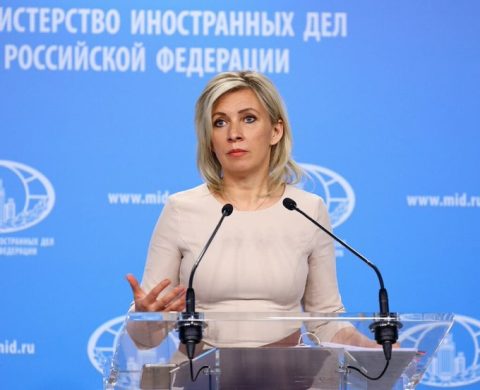
Russia’s Foreign Ministry spokeswoman skewered Sweden for staying silent about the identity of the perpetrators of the notorious terrorist attack that crippled Russian revenues and European energy supplies.
Sweden’s refusal to disclose the results of its investigation into the terrorist attack that crippled the Nord Stream pipeline in September suggests Stockholm is “hiding something,” Russian Foreign Ministry spokeswoman Maria Zakharova has said.
As one of the attack’s primary victims, Russia deserves answers, Zakharova told reporters at a Thursday briefing.
“The refusal of the Swedish side to respond on the merits to another request from the Russian Prosecutor General’s Office for legal aid in the criminal case on Nord Stream and Nord Stream 2 pipeline damage in September 2022 is genuinely perplexing,” Zakharova said.
A message sent three months ago by Russian Prime Minister Mikhail Mishustin to the head of the Swedish government regarding “the need to conduct a comprehensive and open investigation” of the attacks with Moscow officials still “remains unanswered,” Zakharova explained, noting Sweden’s silence stood “in defiance of all the decorum of international diplomatic communication.”
“Stockholm explains its refusal by saying… that meeting the Russian request will allegedly ‘pose a security threat to Sweden,’” she noted.
“What are the threats to national security that Stockholm is talking about?” Zakharova asked.
“Who committed these sabotage and terrorist acts, who is behind them, who devised and implemented them – withholding the established facts irrefutably testifies to the obvious: the Swedish authorities are hiding something.”
Sweden invoked the same ‘national security’ justification in October when attempting to explain why it was unwilling to commit to a joint investigation on the Nord Stream attack alongside Germany and Denmark.
As the main recipient of Nord Stream’s affordable supply of Russian gas, Germany was arguably the prime beneficiary of the pipelines. But Moscow has also suffered serious economic damage as a result of the act of industrial sabotage.
“We consider ourselves to be the party that sustained material damage, to say nothing of losses,” Zarakhova explained.
As such, “we have the right to receive appropriate information, have the right to ask questions and demand an answer to them,” she said, adding “we must make sure that it doesn’t happen again in the future.”
Hungary in ‘culture shock’ from German policies – Orban
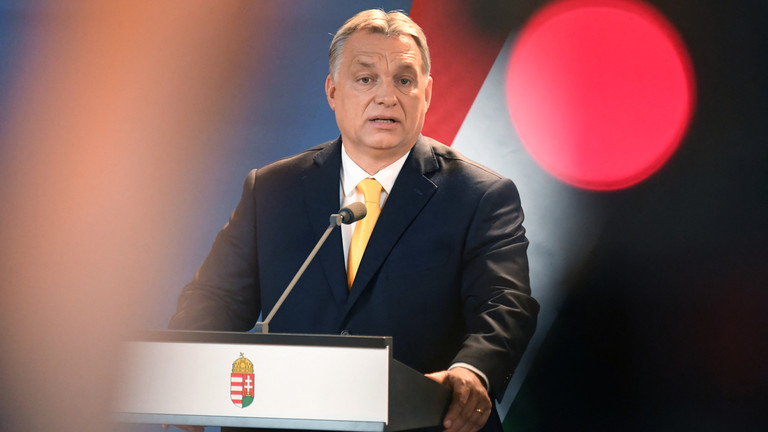
Hungarian Prime Minister Viktor Orban. © ATTILA KISBENEDEK / AFP
RT | January 13, 2023
Policies introduced by Germany and German politicians within the European Commission and the way they “miscalculated” the effects of anti-Russian sanctions has caused a “culture shock” in Hungary. The EU doesn’t have the courage to admit the fallacy of its sanctions policies, Hungarian Prime Minister Viktor Orban said in an interview on Friday.
“I grew up with the feeling that the Germans are precise, engineers, they calculate, take their time, they know what they are doing,” Orban told Kossuth Radio, adding that now that perspective has changed.
“Now we see what they are doing, because the European Commission has a German chairman,” Orban continued, referring to EU Commission President Ursula von der Leyen. “They failed with the sanctions, miscalculated and did not count to the end from a professional point of view,” he added.
According to the PM, the EU doesn’t have the courage to admit the fallacy of its sanctions policies against Russia amid the ongoing conflict in Ukraine. Orban noted, however, that Hungary lacked the strength to change the position of larger countries, meaning that sanctions on Moscow will likely continue despite their ineffectiveness.
Hungary, which relies heavily on Russian energy, has on several occasions criticized EU leaders for being responsible for the ongoing energy crisis by introducing “counterproductive” sanctions on Moscow. Budapest has repeatedly asked to scrap the “failed policy of Brussels” in order to stop Europe from “slowly bleeding.” Hungary has also been one of the few Western states that have so far refused to send any weapons to Ukraine or train its troops.
“If it were up to us, there would not be a sanctions policy,” Orban said last month. “It is not in our interest to permanently divide the European and Russian economies into two, so we are trying to save what can be saved from our economic cooperation with the Russians.”
Hungary’s relations with the EU have been particularly strenuous in recent months as Budapest has also clashed with several EU institutions on a number of issues, including LGBTQ rights and migration. Brussels, in turn, has accused Orban’s conservative government of eroding the rule of law while Western establishment media outlets have treated him like an authoritarian leader that is too sympathetic to Russian President Vladimir Putin.
Western sanctions, not Ukraine war, causing global recession: Analyst
Press TV – January 13, 2023
The recession of the world economy has little to do with the military conflict in Ukraine, according to a commentator, saying the main reason is Western sanctions against countries such as Russia, which is the main source of energy and food in the world.
Clive Menzies, a researcher and political economy analyst, made these remarks in an interview with Press TV’s Spotlight program.
The World Bank slashed its 2023 growth forecasts on Tuesday to levels teetering on the brink of recession for many countries as the impact of central bank rate hikes intensifies, Russia’s war in Ukraine continues, and the world’s major economic engines sputter.
The development lender said it now expected global GDP growth of 1.7 percent in 2023 — the slowest pace outside the 2009 and 2020 recessions in nearly three decades. In its previous Global Economic Prospects report, in June 2022, the bank had forecast 2023 global growth at 3.0 percent.
Menzies said the global economic collapse was predictable.
“We were warning seven years ago that we are heading for a global economic collapse and last summer when the governor of the Bank of England was suggesting that they were going to adhere to their two percent inflation target, that seemed somewhat laughable,” he remarked.
“The primary mechanisms that are causing this crisis have been long-standing… So there’s been money supply or money printing by the central banks; the major central banks ever since 2008 and that has accelerated in the last three years since September 2019.”
The World Bank says major slowdowns in advanced economies, including sharp cuts to its forecast to 0.5 percent for both the United States and the eurozone, could foreshadow a new global recession less than three years after the last one.
“The World Bank cited Ukraine as one of the factors in all this but actually it has nothing to do with Ukraine. It has to do with the sanctions,” Menzies noted.
“I was on a program in May 2022 where all of the commentators including myself were suggesting that the EU primarily shot itself in the foot with America’s encouragement; because it’s the sanctions that have created this acute problem.”
“The West believes that they can control the world centrally, they believe that there are too many of us on the planet, so they’re looking to reduce the population and at the same time exercise control and if you control food then you control populations.”
Russia launched a military operation in Ukraine in late February, following Kiev’s failure to implement the terms of the Minsk agreements and Moscow’s recognition of the breakaway regions of Donetsk and Luhansk.
At the time, Russian President Vladimir Putin said one of the goals of what he called a “special military operation” was to “de-Nazify” Ukraine.
Since the outbreak of war, Western countries, led by the United States and the United Kingdom, have announced unprecedented sanctions on Russia while supporting Ukraine militarily, steps that Russia has warned would only prolong the war.
World Bank President David Malpass said in a statement that weakness in growth and business investment “will compound the already devastating reversals in education, health, poverty and infrastructure and the increasing demands from climate change”.
“We’ve been at war since 2001 and it is the war of the structure,” read the statement.
The World Bank noted that some inflationary pressures started to abate as 2022 drew to a close, with lower energy and commodity prices, but warned that risks of new supply disruptions were high, and elevated core inflation may persist.
The bank called for increased support from the international community to help low-income countries deal with food and energy shocks, people displaced by conflicts, and a growing risk of debt crises.
It further said new concessional financing and grants are needed along with the leveraging of private capital and domestic resources to help boost investment in climate adaptation, human capital and health.
Life After Chanel: Most Russians Unruffled By Exodus of Western Clothing Brands, Survey Shows
Samizdat – 13.01.2023
A swathe of Western fashion brands made a great show of exiting the lucrative Russian market, albeit at their own detriment, following the start of Moscow’s special military operation in Ukraine in February 2022. They have been counting their losses since, while the niches that opened up in Russia were not left empty for long.
More than 50 percent of Russians couldn’t care less that a swathe of global fashion brands exited the country last year, a recent survey has revealed. Russia’s consumers are quite content, as they go about their business, browsing the generous array at various shopping centers and online.
In a swirl of elegant skirts and leaving behind an inimitable aftertaste of chic elegance, Chanel, Louis Vuitton, Zara, H&M, and other fashion brands flounced off the Russian market in early 2022. The cavalier exit, carried out with the pomp and circumstance befitting leading fashion conglomerates, was supposed to hit hard at Russian consumers.
Conceived as part of the sanctions campaign punishing Russia for its special operation in Ukraine, the exodus resulted in hefty losses for the brands themselves.
Meanwhile, in Russia market niches were immediately filled by local brands and welcome newcomers eager to set up shop in one of the world’s largest economies in terms of GDP based on purchasing power parity (PPP).
Over 56 percent of respondents questioned by analysts from Kokoc Group, one of the leaders in the field of Internet marketing, revealed that they had barely noticed the departure of foreign clothing brands. In their opinion, there are sufficient choice options at stores across the country. Interviewed Russian consumers revealed that neither their preferences nor their wallets have been impacted by the flight of brands.
Another 23 percent confirmed that while the variety of goods on sale was still really great, the prices had risen steeply. Another 6 percent shared the joy of discovering domestic brands. Russian brands can easily compete with foreign ones, at least 32 of respondents stated. 19 percent of respondents agreed, but said that domestic brands were prone to inflate prices.
Around 39 percent of the Russians surveyed quipped that they were quite oblivious of the country of origin when choosing clothing items for themselves.
Still, around 12 percent told the analysts they were hoping for the return of the fashion giants. No more than 3 percent of those polled were still moping around as they hunted down odd pickings of their favorite brands, such as Zara and H&M, on marketplaces.
Despite the fact that significant changes took place in the world in 2022 against the backdrop of volatile developments, the fashion industry in Russia appears to have risen up to the challenges. It has adapted to the overall mood, and rushed to cater to its ever-growing customer base.
Orban’s minister takes a jab at US
Free West Media | January 12, 2023
BUDAPEST – Hungary and Serbia want peace in Ukraine as soon as possible. Above all, they are against the negative effects of the EU’s anti-Russian sanctions on their economies. That is the conclusion of recent talks between Hungarian Foreign Minister Péter Szijjártó and his Serbian counterpart Ivica Dacic. Szijjártó pointed out how the two countries were experiencing the terrible consequences of the war – economically as well as in terms of safety due to their proximity to Ukraine.
Other countries, thousands of kilometers away from the conflict zone, do not have to face the same impact, he argued.
“It may not look so serious to them, but those who promote an escalation or prolong the war are acting against our national interests,” said the Orban minister, alluding to the US and its ongoing massive support for Ukraine. “Neither the Hungarians nor the Serbs are responsible for this war, but both peoples are paying for it. That is why we are interested in ending the armed conflict as soon as possible,” Szijjártó stressed.
Last month, the Hungarian Prime Minister Viktor Orbán had warned that the Ukraine crisis would continue as long as the US supported the Kiev regime with money and weapons.
There was a real danger that the Ukraine conflict could drag on for decades and Washington is responsible for the escalation, he said. “Ukraine can only fight as long as the USA supports it with money and weapons. If the Americans want peace, there will be peace,” Orban told the newspaper Magyar Nemzet.
“It is not in our interest to cut off all our economic relations with Russia. We look at these issues through the Hungarian prism and not through that of other countries,” he noted.
From Unipolar World to Multipolarity: Why US Attempts to Intimidate Africa Won’t Work
By Ekaterina Blinova – Samizdat – 12.01.2023
South Africa has criticized Washington over its pressure campaign on African nations for maintaining relations with Russia. Defense and Military Veterans Minister Thandi Modise was quoted as saying that the US threatens African nations over “anything that is even smelling of Russia.”
South African Defense and Military Veterans Minister Thandi Modise’s criticism was sparked by reports concerning a delivery of “unidentified” cargo to the Simon’s Town naval base in December 2022 by an alleged Russia-flagged merchant ship.
In November, when the US learned that the vessel in question was headed toward South Africa, the US Embassy alerted Pretoria that the ship had been subject to Washington’s sanctions since May 2022. In accordance with US laws, Washington can impose restrictions on any entity, person or country that provides services to a sanctioned vessel.
The US press said that the embassy received no response from the South African government, adding that the alleged sanctioned freighter was accepted at the nation’s port in December.
Addressing the issue earlier this week, Defense and Military Veterans Minister Thandi Modise told US media that “whatever contents this vessel was getting were ordered long before COVID,” and lambasted Washington over the unjustified pressure the latter has imposed on African states maintaining ties with Moscow.
Since the beginning of Russia’s special military to demilitarize and de-Nazify Ukraine in February 2022, the US has been trying to isolate Moscow and disrupt its cooperation with the Global South.
Earlier, on April 27, 2022, the US House of Representatives passed the HR 7311 Countering Malign Russian Activities in Africa Act with a bipartisan 419-9 majority. The legislation was aimed at sanctioning African nations over cooperating with Moscow. It was later referred to the Committee on Foreign Relations by the US Senate and appears to be on hold.
Washington’s Tools of Coercion
“One of the leverages is fear of sanctions,” Eguegu Ovigwe, a policy analyst specializing in geopolitics and African affairs at Development Reimagined, told Sputnik. “I think HR 7311 – that is the act where the US secretary of state developed strategies which were submitted to Congress, an implementation plan, of course, to counter the so-called malign influence of Russian activities in African countries. So that really gives a legislative backing or legislative framework to potential sanctions that the African countries may come under if they continue to have a relationship with Russia that the US doesn’t like.”
Washington’s hypocrisy is obvious, according to Ovigwe: on the one hand, the US asserted to African nations that it wouldn’t force developing countries to choose between Russia and China or the United States; on the other hand, US House lawmakers almost unanimously passed legislation aimed at punishing Africans for maintaining ties with Moscow.
“[I]t is not the place of the United States to dictate what supposedly sovereign countries should do,” stressed the analyst. “This is the extraterritorialization of US law. So, if the US passes a law, that’s for the US; it has nothing to do with bilateral relations between two other countries.”
In addition to sanctions, the US could cut African nations off its global economic programs, according to Ovigwe. For instance, the Bill Clinton era’s African Growth and Opportunity Act (AGOA) provides duty-free treatment for goods of designated sub-Saharan African countries (SSAs). Earlier this month, Burkina Faso, a desert landlocked African country located in the Sahel, was officially removed from the program by the US for not meeting the initiative’s requirements. Last year, the Biden administration also terminated the AGOA program for Ethiopia, Mali, and Guinea over what it called “unconstitutional change in governments” and “the gross violations of internationally recognized human rights.”
Washington may also reduce or nullify foreign direct investment (FDI) to some African countries to twist their arm into halting relations with Moscow, Ovigwe continued.
Still, the scholar does not think that removal from AGOA or lack of US investments could spell doom for the continent. The crux of the matter is that there are enough global players interested in Africa’s growing market and rich natural reserves who are willing to fill Washington’s shoes, according to him.
Africa’s Alternatives & Opportunities
Africa has far more promising development projects than the AGOA: in May 2019, the African Union (AU) kicked off the African Continental Free Trade Area (AfCFTA), which looks to create a single continental market with a population of about 1.3 billion. It could become by far the world’s largest free trade area, bringing together the 55 countries of the African Union (AU) and eight (8) Regional Economic Communities (RECs).
“I don’t think many countries will be losing sleep, fearing that they’re going to be kicked out of AGOA, with the wealth of opportunities which may present themselves,” Ovigwe noted.
Remarkably, the US rushed to embrace the AU’s project in December 2022, with the White House saying that the initiative “present[s] an extraordinary opportunity for the US to invest in Africa’s future.”
The US has long been lagging behind the EU and China in terms of trade with the continent. While the US trade with Africa reached $83.6 billion in 2021, it pales in comparison with the EU’s €288 billion ($306 billion) and China’s $254 billion in the same year.
When it comes to FDIs, China, a US major geopolitical competitor, is currently investing heavily in Africa, noted Mikatekiso Kubayi, researcher at the Institute for Global Dialogue associated with UNISA and research fellow at the Institute for Pan African Thought and Conversation.
“China continues to be the leading source of FDIs in Africa and has a pipeline of projects, particularly in infrastructure,” Kubayi told Sputnik. “Africa’s relations with China continue to deepen. This relationship can yield great benefits to both parties in joint research and development, manufacturing in Africa, and an African market that is expected to reach 2.5 billion in population by 2050. African wealth in minerals such as rare earths and others are all thoroughly purposefully explored for practical action and development.”
Multipolarity is Answer to Intimidation
Washington’s unipolar approach creates an uneven playing field for developing countries as the US is still communicating with the Global South from a position of force, according to the observers. In contrast, the multipolar vision ensures equality and fair conditions for all players.
“The recent G20 summit reiterated the importance of multilateralism and the United Nations in its declaration,” Mikatekiso Kubayi underscored. “BRICS – which China and Russia are members of – emphasized the need to deepen and improve the practical experience of multilateralism with the United Nations at its center. The changing geopolitical landscape is changing precisely because of the realization that it does not benefit the majority of the world.”
The US attempts to coerce Africa into submission, including through anti-Russia legislation targeting the continent, “do not seem to generate confidence and positivity,” Kubayi warned.
Meanwhile, unlike the Group of Seven (G7) which appears to be a closed club of Western industrialized nations plus Japan, BRICS has the potential to grow and develop by adding new members, according to Ovigwe. Previously, Argentina, Iran, and Saudi Arabia signaled their interest in becoming BRICS members.
“You have emerging multilateral platforms like BRICS, for instance, that have so much momentum, and seem to be more open to emerging powers, more focused on issues that are really important to the majority of the world,” Ovigwe stressed. “One of the trends we might see going forward is countries tilting more towards these new and emerging multilateral platforms because they want it to be accessible to them. G7 is not going to be expanded – it has already contracted from G8 to G7.”
The scholar added that he hopes the global system moves towards more new, open, and more dynamic platforms like BRICS.
A multipolar world is taking shape, offering new alternatives and opportunities to developing states and thwarting attempts to intimidate global players by sanctions and use of force, according to the observers.
Share prices of NATO weapons makers surge
RT | January 11, 2023
The largest military and defense corporations of NATO member states have seen a 21.5% boost in market value in 2022 amid the military operation in Ukraine and the rearmament in Europe, Vedomosti newspaper reported on Wednesday, citing data from Defense News and Tradingview analytics.
Their combined market capitalization increased from $579 billion in December 2021 to $703 billion in December 2022, according to the estimates.
The ranking included 25 companies with a capitalization of over $1 billion which are traded on the stock market and have military products dominating in their revenues, and are also actively involved in arms supplies to Ukraine.
Authors of the report name German arms manufacturer Rheinmetall as the top gainer over the last 12 months, with a 122% surge in share price. French drone and missile producer Thales saw its market value rise 54%. American defense contractor Northrop Grumman was up 44%, while stock in HIMARS rocket launchers maker Lockheed Martin gained 42%.
Other notable mentions in the report include BAE Systems (+40%), Kongsberg Gruppen (+37%), General Dynamics (+24%), and Raytheon Technologies (+19%).
The report pointed out that the value of NATO’s military giants was soaring while the overall Western corporate sector sank by 16% last year, according to the S&P 1200 index, suggesting that arms manufacturers were likely the main beneficiaries of the political crisis in Europe.
UK businesses to see energy bills soar as government cuts subsidy to firms by 85%
Press TV – January 10, 2023
The UK government is set to scrap the energy subsidies for businesses in the next financial year by 85 percent, leaving small businesses in a dire economic situation, as the cost-of-living crisis squeezes Britons’ lives.
British businesses will see their energy bills soar from April after the government announced the stoppage of the current bills support scheme for firms at the end of March when the price caps for energy bills will expire.
Describing the current level of support as “unsustainably expensive”, the government has decided to reduce the support rate from £18bn to £5.5bn in the planned six-month period.
Speaking to the House of Commons on Monday, Treasury Minister James Cartlidge was at pains to confirm that: “It is not sustainable for the exchequer to continue to support large numbers of businesses at the current level.”
“No responsible, serious government anywhere in the world can permanently shield businesses from this energy price shock,” Cartlidge said, acknowledging the soaring energy costs across the country.
Cartlidge also insisted it was necessary to “cap the taxpayer’s exposure to volatile energy prices” rather than providing open-ended support.
According to the government’s own calculations, a typical pub will see its bills rise by almost £3,000 a month when the new scheme takes effect, while a small shop would pay more than £450 a month, as an increase to its energy bills.
As Prime Minister Rishi Sunak is trying to restore fiscal credibility following the economic shock across the country, manufacturers say they may need to cut jobs and production due to rising energy costs.
Martin McTague, national chair of the Federation of Small Businesses, criticized the government’s new plan and said the reduction in help is a “huge disappointment”.
“This is so out of touch,” McTague said in an e-mailed statement. “The government will inevitably have to come back.”
The cost-of-living crisis across the UK has brought the industries and labor forces under intense pressure, prompting tens of industrial actions over payment disputes each month.
Moreover, the worst impact of the cost-of-living crisis is yet to hit the already struggling Britons, a leading think tank has said, warning that families across the UK have only experienced half of the lost income they are expected to suffer during 2023.
‘No place’ for independent Russia in Western mindset – Moscow
RT | January 10, 2023
The secretary of Russia’s national security council has lashed out at the West, pointing to their habit of creating global threats, including numerous terrorist groups, in pursuit of their interests.
Nikolay Patrushev also claimed, in an interview published by news outlet Argumenti i Fakti, that Washington’s decision to withdraw troops from Afghanistan was a prelude to NATO’s proxy war against Russia in Ukraine.
“The events in Ukraine are not a confrontation between Moscow and Kiev. It’s a military confrontation of NATO – the US and England first and foremost – with Russia,” the top security official said in a newspaper interview. “They fear a direct standoff, so NATO instructors push Ukrainian guys toward their certain deaths.”
Patrushev argued that, while Western nations claim to be “defending civilization against barbarism” in Ukraine, they are actually motivated by selfish interests and won’t “save any lives at the expense of their enrichment and ambitions.”
He said there is an established pattern of the US creating threats that it later ostensibly fights against, he continued, citing terrorist organizations Al-Qaeda, the Taliban and Islamic State (IS, formerly ISIS) as examples. Washington may occasionally show off the killing of individual terrorist leaders like Osama Bin Laden, but continue “training and arming a hundred others” at the same time, he added.
NATO’s mission in Afghanistan resulted “in the creation of multibillion-dollar corruption schemes” and a surge in illegal drug production, Patrushev claimed. And the US withdrawal from the country in 2019 was to a large degree about “focusing on Ukraine” and confrontation with Russia, he said.
The security official cited remarks made last month by US Secretary of State Antony Blinken, who admitted that, with the country’s military presence in Afghanistan finally ended, the administration of President Joe Biden had more opportunities to funnel arms to Kiev.
Patrushev believes that, in the wider picture, the interests of the US as a nation state are subservient to the interests of transnational corporations, which ultimately dictate the policies of many governments. Those unaccountable forces have inherited the colonialist approach that allowed Western nations to become wealthy and powerful, but they are no longer vested in national interests, he said.
Russia “has no place” in their schemes, since it “irritates the handful of world masters because of its natural riches, vast territories, and smart, self-sufficient people who love their country, its traditions and history,” he added.
US ‘threatening’ Africa over ties with Russia – defense minister
RT | January 10, 2023
Relations between Washington and Pretoria have become strained after a Russian cargo ship visited South Africa’s largest naval base last month, the Wall Street Journal reported on Monday. The country’s defense minister said the US had been pressuring African nations over any links with Moscow, according to the outlet.
Washington is “concerned by the support the South African Armed Forces provided to the ‘Lady R’,” a senior US official told the WSJ, referring to a Russian vessel that was sanctioned in May over its alleged involvement in arms shipments for Moscow.
In early December, the ship was allowed to enter Simon’s Town navy base with its transponders turned off and freely move cargo there, the report claimed. “There is no publicly available information on the source of the containers that were loaded onto the ‘Lady R’,” the official said.
The outlet cited comments made by South African Defense Minister Thandi Modise last month regarding the visit of ‘Lady R’. She declined to reveal what cargo the ship was carrying, only saying that “whatever contents this vessel was getting were ordered long before Covid,” which emerged in late 2019.
Washington “threatens Africa, not just South Africa, of having anything that is even smelling of Russia,” Modise said, as quoted by the WSJ.
The article noted that, under the US law, Washington can place sanctions on any entity that provides services to a black-listed ship.
Darren Olivier, who heads African Defense Review consulting company, told the outlet it was plausible that the ‘Lady R’ was bringing an old order of Russian ammunition to South Africa. Moscow and Pretoria agreed a shipment of 4.5 million rounds of Russian ammunition worth around $585,000 back in 2020, he said.
As for what was loaded on the ship, Olivier pointed out that “South Africa’s defense industry does not generally produce armaments and complete systems that are used by the Russian military.” However, he said Moscow could be interested in dual-use items, including guidance systems and optics for aerial drones.
According to the senior US official, who spoke to the WSJ, the US embassy warned Pretoria in November that a sanctioned vessel was about to arrive in the country, but the South African authorities did not respond. The events surrounding ‘Lady R’ demonstrate the “difficulty” of implementing sanctions on Russia for the US and its allies, the article noted.
Featured Video

ARE PATIENTS BEING PROPERLY INFORMED ABOUT OZEMPIC?
or go to
Aletho News Archives – Video-Images
From the Archives
Trans ‘milk’ as good as the real thing – NHS
RT | February 18, 2024
The drug-induced nipple secretions of trans women are as good as mothers’ breast milk for babies, the University of Sussex Hospitals NHS Trust claimed in a letter to campaigners made public in a report by British think tank the Policy Exchange on Sunday.
The healthcare trust’s medical director, Rachel James, argued that the off-label prescription drug cocktail men transitioning to female take in order to produce milk was “similar to the natural hormones which encourage lactation to develop when the baby is newly born.”
“The evidence which is available demonstrates that the milk is comparable to that produced following the birth of a baby,” James wrote in the letter, sent to Children of Transitioners last August.
Biological men who wish to lactate must first take hormones to grow milk glands and then take high doses of either domperidone or metoclopramide to stimulate milk production. Neither drug is approved for this use, though they are occasionally prescribed off-label to biological women who have trouble lactating.
However, domperidone’s own manufacturer, Janssen, warns patients the drug “may cause unwanted side effects affecting the heart in a breastfed baby” and “should be used during breastfeeding only if your physician considers this clearly necessary.” … continue
Blog Roll
 Aletho News
- The Truth About the Trump Shootings with Ken Silva
- ARE PATIENTS BEING PROPERLY INFORMED ABOUT OZEMPIC?
- US lawmaker blocks $2.8 billion weapons sale to Israel: Report
- Yemeni army claims responsibility for strikes on sensitive sites in Saudi capital, Aramco facilities in Yanbu
- Iran Judiciary issues indictments against 159 US, Israeli officials for assassination of Leader, commanders
- Turkiye revokes Iranian bank license under US sanctions campaign
- US-Denmark Agreement on Greenland Is ‘PR Stunt’ Ahead of Midterms
- Araghchi: Military intervention cannot create security; coercion cannot bring peace
- Fraud Squared
- Breast Cancer: Before You Consent
- If Americans Knew
- Inside Gaza’s death trap of collapsing, bombed-out buildings
- The everyday items Israel bans from Gaza every day
- Inside the siege, the ruined buildings of Gaza – Daily Update
- Debunking The Claim That Macklemore Has A “History Of Antisemitism”
- CPJ demands release of arrested Palestinian-US journalist near Bethlehem
- Robert Kraft: The Billionaire Friend of Netanyahu Pulling The Strings Behind the Macklemore/Ed Sheeran Blow Up
- Columbia Administered Fund Gives Big Money to Pro-Israel Groups
- Deportation Case of Palestinian Activist Salah Sarsour Tests First Amendment
- ‘We Will Not Forget’: Palestinians Mark 44 Years since Sabra and Shatila
- Why do we let Zionists decide what we can and can’t say?
- No Tricks Zone
- 2025 Nature Paper Claiming Worsening Global Drought Gets RETRACTED …Heavily Flawed
- New Study: ‘Global Drought Shows No Detectable Recent Acceleration Under Climate Warming’
- Economic Masterminds: German Socialists Suggest Taxing Productivity Gains Stemming From Using AI
- The South China Sea Has Not Been Cooperating With The Climate Change Narrative
- Energy Crisis: Germany Enters Heating Season With Historically Low Gas Reserve Fill Levels
- New Study: The Antarctic Ice Sheet Gained Mass From 2020-2024 Due To Staggering Snow And Ice Accumulation
- Study: Ocean Heating Rates From Thousands Of Years Ago ‘Dwarf’ Modern Ocean Heating Rates
- Climate Extremists Target, Attack Large-Scale Power Grid Infrastructure In Germany!
- New Study: Antarctic Ice Melt Has Contributed Less Than 1 Centimeter To Sea Level Rise In The Last 30 Years
- Fear Of Debate: Alarmist German Climate Scientist Calls On Mainstream Media To Discredit Skeptic Voices
 Aletho News