Why Arabs Bolster Energy & Security Cooperation With Russia in Defiance of Western Sanctions
By Ekaterina Blinova – Samizdat – 19.01.2023
Arab countries have not joined the anti-Russian sanctions, despite pressure from the West, as Russian Foreign Minister Sergey Lavrov stressed during his press conference this week. What’s behind the Arab world’s resilience?
“The policy of the West in the East has gone bankrupt,” political analyst Vladimir Ahmedov told Sputnik.
“[Middle Eastern players’] trust in the United States, the leading western European states – the former colonizers who had colonies in this region – has already been largely lost,” the specialist in the modern history of Arab countries and senior research fellow at the Institute of Oriental Studies of the Russian Academy of Sciences continued.
New major players have entered the global arena: China, India, Iran, Turkey, Egypt, and Saudi Arabia, the scholar emphasized.
Ahmedov believes that the sanctions imposed against Russia are dictated by purely political considerations of a narrow circle of the western political elite. Meanwhile, the system of international relations and the world order has been undergoing changes, and the indirect proof of this is the position taken by the Arab countries, according to him.
“Russia’s policy in the East at the present time, and Russia’s policy in the world in general, has changed in comparison with the 1990s and the beginning of the 2000s,” the researcher continued. “Now it is a resolute policy aimed at defending [Russia’s] national state interests and the national interests of third countries. It impresses the countries of the East and, above all, the countries of the Middle East, which have been waiting for such a policy for a long time. This policy is in great demand in the East and therefore it meets with approval and understanding.”
In light of this, Russia’s efforts to mediate the Israeli-Palestine conflict as well as those in Syria and Iraq – mentioned by Lavrov during his Wednesday presser – are steps in the right direction, according to the scholar. In addition, Russia’s military presence in Syria serves as a stabilizing factor, he added.
Meanwhile, the West’s Ukraine strategy looks like nothing so much as its previous Middle Eastern policies. The West is using Ukrainians much in exactly the same way it previously used Arabs in order to reach its geopolitical objectives, and Middle Eastern players are well-aware of that, according to the researcher.
“Russia is not fighting against Ukraine or the fraternal Ukrainian people, but against the West, which wants to dismember Russia, belittle its role, minimize it, and so on,” Ahmedov said. “And [the Western policy] does not meet with any approval from the political elites of the East, who themselves suffered from it previously.”
Opportunities in the Middle East and North Africa
“The region of the Middle East and the Arab world in general is of tremendous importance in the world system in terms of geography, demography, a powerful energy market, the world’s oil and gas pantry and as a very important transport artery. Therefore the attention to this region will only grow,” Ahmedov emphasized.
The region develops its position by becoming an influential energy actor, echoed Ramy El Kalyouby, a visiting lecturer at the School of Orientalism of the National Research University Higher School of Economics (HSE).
“Gulf countries profited a lot from oil prices increase, and at some moment the Kingdom of Saudi Arabia’s oil revenues jumped to more than $1 billion daily,” El Kalyouby told Sputnik. “Egypt is also getting its chance to become an important gas supplier to the EU after discovering a few huge fields in the Mediterranean.
The academic singled out Egypt, the world’s biggest wheat importer. According to El Kalyouby, Russia can help Cairo replace a deficit of Ukrainian wheat, open its markets for Egyptian fruits and vegetables, and provide more tourists.
“There is also a project of a Russian industrial zone in Egypt that would help Russia to get around sanctions by changing the origin of products, and also to profit from the African Union free trade zone,” the lecturer highlighted.
Last year, the construction of Egypt’s first nuclear power plant was launched on July 20 in El Dabaa, Matrouh Governorate, by Russia’s State Atomic Energy Corporation Rosatom.
The El Dabaa NPP is meant to be the cornerstone of Egypt’s energy diversification policy, allowing Cairo not only to cover its own electricity needs, but also to provide energy to its neighbors. On November 19, the main construction phase for Unit 2 of the NPP began in the northern African country.
“Gulf countries could cooperate with Russia in the regulation of the oil market, although this becomes more difficult, as Russia provides important reductions on Urals oil,” El Kalyouby continued, adding that “Russia also remains a key actor in Syria as a mediator between Damascus and Ankara.”
Regional Security
Nonetheless, the Middle East and Northern Africa (MENA) region is continuing to suffer from local conflicts stemming from the bitter consequences of the Arab Spring, according to Ahmedov. The scientist noted that the reformatting of political systems of these countries is still going on while the common regional security system has not been formed yet.
Russia shares the same “geopolitical space” with the countries of the region and its objectives there include not only maintaining working ties with Middle Eastern players but also to protect its “soft underbelly” from extremist and terrorist elements reinvigorated by the Arab Spring havoc, the researcher explained.
In addition, Russia’s experience as a power broker in the region could come in handy for the West, since the latter has proven incapable of solving regional conflicts on its own, continued the scientist. According to him, European countries have no other alternative but to deal with Russia in the Middle East in the future if they want to ensure their security in the Mediterranean and Southern Europe.
Ahmedov noted that while Moscow cannot ensure a complete comprehensive settlement and stabilization of the situation in the Middle East, it can help regional players reach these goals.
“Russia can make a certain contribution to ensuring the system of regional security with the participation of other states,” he said. “We have excellent relations with Iran. And in this regard, of course, the Arab countries are interested in Russia in terms of softening the Iranian policy towards the Arab countries, which causes concern today in the Arab world. We have excellent relations with Turkey, which also plays a very important role as a major regional actor or player in this region, just like Iran. And therefore, in this case, we have a lot of advantages that we can realize. We have long-standing ties with Palestine since Soviet times. And therefore, in this case, we have a lot of advantages that we can realize.”
Russia has a long and successful record of work in the region, according to the scientist: in the 1960-1980s the USSR provided the primary industrialization of many MENA countries, including Iraq, Syria, Egypt, Algeria, Sudan, and Yemen. While developing ties with the region, Russia can build upon its expertise and best practices of the past, Ahmedov concluded.
CIA Chief Warns Zelensky of Assassination (… by the CIA)
By Finian Cunningham | Strategic Culture Foundation | January 18, 2023
So CIA boss William Burns made a secret trip to Kiev in January last year to warn Ukrainian President Vladimir Zelensky that his life was in danger from assassination. The clandestine meeting occurred only weeks before Russia launched its military operation in Ukraine.
A new book that appears to have plenty of insider help from U.S. intelligence sources claims that Burns was sent on President Joe Biden’s orders to deliver a “reality check” to Zelensky.
Western news media are gullibly spinning the claim that Burns warned Zelensky that the Russians were plotting to kill him. The impact of the top secret briefing was said to have had a “sobering effect” on the man in Kiev. In less polite terms, he crapped in his pants.
Some questions arise, however, which the Western media as usual do not ask. Why was it deemed necessary for Burns to make a long and secret flight to Kiev to tell Zelensky of a purported Russian assassination threat? Why couldn’t the CIA director have briefed the Ukrainian leader about the danger in a phone call with a secure line? That Burns had to meet Zelensky in person suggests that the American spymaster wanted to convey another, unreported message, a message that only Zelensky would hear and one that could not be taped at any cost.
If the Russians wanted to kill Zelensky surely they would have done it by now during nearly 11 months of bloody conflict and given the evident capability of Russian missiles to hit anywhere in Ukraine?
Incongruously, the Ukrainian politician seems to be at ease in traveling around the country. Only last month he visited the frontline at Bakhmut where he obtained a battle flag from his troops that he then took a day later to Washington for a made-for-television presentation to Congress.
Are they the movements of a man who is really under threat of Russian assassination?
A partial explanation reported by Western media was that at the time of Burns’ trip to Kiev, Zelensky was doubting U.S. intelligence warnings of an imminent Russian invasion. Well not really “doubting” but, more accurately, not hamming up sufficiently. The CIA boss was reportedly dispatched to give the Ukrainian leader a reality check that Russian troops were poised to cross the then border into the Donbass eastern region. That telling implies that Zelensky was being complacent or disbelieving of a Russian threat.
But that telling is not correct. Zelensky was himself playing up the threat of a Russian invasion in the months and weeks leading up to February 24 when the Russian forces entered Ukraine. Russian President Vladimir Putin ordered that intervention because NATO-backed Ukrainian military was intensifying their eight-year campaign to terrorize the ethnic Russian people in the breakaway Donbass region.
Zelensky had been elected in 2019 on a platform of suing for a peaceful settlement of the Ukrainian civil war. The war had been instigated in 2014 by the CIA-orchestrated coup d’état that brought to power a NeoNazi regime in Kiev.
After being elected, the comedian-turned-politician soon forgot his peace promises to the electorate with a little help from threats of assassination by the CIA-trained NeoNazi paramilitaries. He quickly transitioned from dove to hawk like a professional actor handed a new script.
Maybe Zelensky was getting cold feet and losing his nerve by the time of January last year. He would have known that U.S. and NATO military provocations against Russia and the spurning of Moscow’s diplomatic overtures by Washington and its European minions were leading to war. He did bridle somewhat against Washington’s incessant war drums saying that the “panic” was having an adverse effect on the Ukrainian economy. But that does not mean Zelensky was disbelieving U.S. intelligence. Far from it, he had up to then played along with it.
The reality check that Zelensky needed was to stiffen his nerves for what Washington was lusting for – a proxy war against Russia.
It seems more plausible that William Burns suddenly showed up in Kiev to maximize the intimidation. Washington wanted its proxy war against Russia to go ahead for bigger geopolitical reasons of preserving unipolar hegemony and cutting off Europe from Russian energy, and the Americans did not want their puppet in Kiev to blow it by running scared at the vital moment. Remember too that in April – two months after the conflict erupted – there were peace overtures from Zelensky to Moscow. That incipient diplomacy was promptly scuppered by the American paymasters using the British premier Boris Johnson as a conduit in a suspiciously timed visit to the Ukrainian capital. It seems like Zelensky’s pattern has been one of requiring a bit of ginning up every so often.
Burns warned Zelensky of assassination alright. But the threat wasn’t from Russia. It would have been from the Central Intelligence Agency, the agency that has excelled in bumping off American puppets down the years if they became awkward. Indeed as John F Kennedy’s assassination in Dallas, Texas, in 1963 illustrates, the agency is capable of bumping off American presidents if they become awkward.
The dapper diplomat Burns who previously served as U.S. ambassador to Russia (2005-2008) would be too genteel to utter the vulgar words, “We’re going to kill you”. Oh no, Zelensky would have been told, “Regrettably, we may not be able to protect you”.
The destruction of Ukraine that Zelensky has permitted is the action of a man who is getting lucrative pay-offs as well as living under the shadow of assassination. And the shadow is cast from Washington and Langley, not Moscow.
The Dangerous Fantasy of Scotland’s Net Zero Energy Transition
BY RICHARD LYON | THE DAILY SCEPTIC | JANUARY 18, 2023
Suppose that Scotland’s CO2 emissions fell tomorrow to zero, i.e., that, at midnight, the country ceased to exist. Then according to the “Model for the Assessment of Greenhouse Gas Induced Climate Change” (MAGICC), based on the latest IPCC climate models, the reduction in the Earth’s temperature in 2100 would be…undetectable.
Motivated by the moral necessity and urgency of this goal, the Scottish Government is proposing a novel energy policy – its “Energy Strategy and Just Transition Plan”.
This article reviews its major themes and their implications, and considers briefly the probability of success of the Scottish Government implementing it.
In 2022, due to an insufficient quantity of wind and sun, Scotland’s current collection of wind and solar energy-scavenging devices failed to generate about 70% of their nameplate capacity. Recent exhaustive statistical and econometric analysis of wind generation in Scotland by Edinburgh University shows that it is uneconomic and destined for taxpayer bailout. Under the Scottish Government’s novel energy strategy, wind and solar energy-scavenging devices are to be greatly expanded.
Hydrogen, an energy carrier that squanders in waste-heat a gigawatt of power generation for every gigawatt it carries, is elevated in the Scottish Government’s understanding of energy to the category of a fuel, and also greatly expanded.
Hydrocarbon and nuclear – actual fuels – provide the energy to manufacture and endlessly replace wind turbines and solar panels. They also, in Scotland, provide the power sources that run under all conditions to ensure continuity of energy supply during Scotland’s frequent sunless and windless conditions. These are to be discontinued.
Like all advanced economies, Scotland cannot tolerate even a small measure of power supply fluctuation. Without firm dispatchable thermal standby generation capacity to smooth supply fluctuation, the eventual daily around 40GW amplitude power fluctuation resulting from the proposed expansion of weather-dependent electrical generation must be adapted for use in some other way. This will be provided by some form of 180-plus day, grid-scale electricity storage – a technical challenge for which no precedent exists, and therefore no cost estimate is available.
Grid scale battery storage technology doesn’t exist. The Scottish Energy Strategy and Just Transition Plan imagines that it will be developed.
Converting surplus energy to hydrogen for storage and use at grid scale is unprecedented, and fraught with risk.
Fifty per cent of the proposed new intermittent generation capacity, installed at a capital cost of around £26 billion, is to be wasted in the conversion process.
Hydrogen embrittles pipework, renders conventional valves ineffective and, unlike domestic gas, self-ignites under catastrophic decompression. Quantifying the risks of transporting it in bulk on Scottish roads and deploying it as a substitute for domestic gas in Scotland’s densely populated housing estates might be an exciting 10-year research project at the U.K. Government’s Spadeadam industrial hazard testing facility (“the remoteness of the area is key to their operations” – Wikipedia).
But, informed by what the Scottish Government claims is the need for “the fastest possible” transition, it prefers to bypass thorough safety testing, and to impose live hydrogen trials on Scotland’s citizens. Hydrocarbon gas is to be phased out of Scottish homes from 2030.
Energy densities in energy storage sites located next to Scotland’s towns and cities required by the Scottish Government’s reckless abandonment of thermal standby generation capacity will be measured in millions of tonnes of TNT – a risk for which 12-foot thick reinforced concrete containment domes are installed around nuclear facilities to manage. These risks are entirely unrecognised by Scotland’s current planning processes (or citizens).
The cost of adaptive storage, the cost of the new transmission and distribution infrastructure required by dramatically increased electrification of Scotland’s relatively sparsely populated areas, and the cost of Carbon Capture, are not factored into current estimates of Levelised Cost of Electricity (LCOE). These are vast. Grid-scale battery storage, for example, has an implied cost measured in trillions of pounds, and drives LCOE from £50/MWh to over £600/MWh.
Apparently unaware of the role of nuclear and gas in maintaining continuity of supply, and the prohibitive cost of electricity storage as a substitute, the Scottish Government confidently demands that the U.K. Government “break the link between the price of electricity and the cost of gas to help realise the benefits of the low costs [sic] of renewable electricity”.
The policy proposal cites a number of other benefits that it thinks will accrue in addition to the negligible reduction in the Earth’s temperature.
Electric vehicles can’t plough snow or fields, harvest corn, empty buckets, excavate ore, raise wind-turbine masts, or perform any other economic task for which ‘grunt’ is required. Notwithstanding, from 2030, diesel and petrol engines will be prohibited. Car kilometers are to be “reduced” – possibly by fining us if we travel from our home more than a permitted distance.

A child in the Democratic Republic of Congo mining the cobalt needed for the Scottish Government’s Just Transition to ‘clean energy’
The Scottish Government will impose catastrophic environmental damage on the non-OECD countries where millions of tonnes of toxic water and ores are processed to manufacture the EV batteries it is mandating. It will overlook the human rights violations endemic to China’s ‘clean energy industry’. These will have the benefit of promoting what it calls “A Just Transition” – supposedly, a socialist framework for ensuring “a fairer, greener future for all”.
Our security of supply is to be further enhanced by transferring energy generation from domestically produced oil and gas to mechanically unreliable, weather-dependent energy-scavenging devices containing millions of points of failure that are contingent on the supply of rare resources controlled by China – which the U.S. states it will declare war on if it invades Taiwan.
These weather-dependent energy-scavenging devices require oil for, amongst many other things, the manufacture of their exotic advanced materials. A leading energy consultancy records the collapse in 2020 to an 80-year low of replacement oil discovery volumes, and estimates that Western oil firms now have around 15 years of remaining economic oil reserves. It is under these circumstances that the Scottish Government is further enhancing the security of Scotland’s energy supply by discontinuing onshore and offshore conventional and unconventional oil and gas exploration.
To reinforce this enhancement, noting “the damage done by the deindustrialisation of central belt communities in the 1980s”, the Scottish Government is irreversibly disbanding the North East’s oil and gas industry communities and, with them, their 50 years of institutional knowledge of oil and gas operations.
These will be replaced with communities based on livelihoods sustained by a “clean energy industry”. The growth of this imaginary industry has been funded with the imaginary capital (a.k.a. “quantitative easing”) excreted in the response – ironically – to the energy contraction that triggered the ongoing 2008 Great Financial Crash. During this time, U.K. national debt has risen from 60% to over 100% of Gross Domestic Product, exceeded only by the public sector pension deficit (a proxy for the replacement of real industries in the global economy by imaginary ones), which has risen to more than £2 trillion.
As evidence of the sustainability of the policy of funding imaginary industries through the indefinite expansion of imaginary capital (for which, like much of this policy, no precedent exists in human history), the Scottish Government informs us that it has already allocated £5 billion of its record budget deficit to what it refers to as “the Net Zero Economy”.
Winter excess death in the UK’s cold Northern European climate is already around 25,000 a year. Any prolonged interruption of winter energy supply created by the failure of this policy, or further escalation of cost, will plausibly result in the deaths of thousands more of our most vulnerable fellow citizens. The magnitude and uncertainty of the implied costs, coupled to the scale of the energy contraction that this policy deliberately seeks to accelerate, could trigger the collapse of our financial system.
Irreversible impairment of either our energy or financial systems would have a catastrophic impact on the welfare of Scotland’s citizens. Yet few have expressed any desire, much less informed consent, for risk on the scale proposed for such little benefit.
Yet the project, representing a scope of unprecedented scale, cost, pace and technical uncertainty, will be overseen by a Government that is currently struggling to procure two relatively modest ferries for less than the cost that other governments can procure 34 ferries – again, ironically due in large part to cost overruns associated with the attempt to employ novel technologies to reduce CO2 emissions. As evidence of the extent to which the Scottish Government and its advisers have become unmoored from physical reality by the climate catastrophe hypothesis, it’s a document that is fascinating to read, and alarming to contemplate.
After reflecting on it, you may care to offer your feedback, either to the department that compiled it, or your political representative, or on social media.
Richard Lyon is a former senior oil and gas operations manager with 35 years of international experience and academic qualifications in electrical engineering and power systems, petroleum engineering, and energy economics. He maintains the Substack newsletter the State of Britain and can be contacted via LinkedIn.
Famous French Historian: “This War is About Germany”
BY NOAH CARL | THE DAILY SCEPTIC | JANUARY 18, 2023
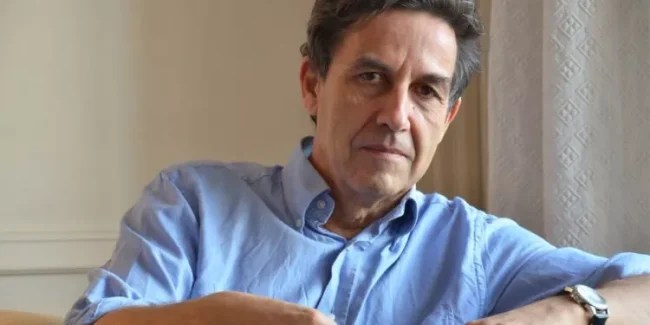
Historian Emmanuel Todd is one of France’s leading public intellectuals. At the age of just 25, he predicted the collapse of the Soviet Union in his book The Final Fall: An Essay on the Decomposition of the Soviet Sphere. Later in his career, he carried out pioneering work on family structure and how it impacts societal development.
Now at the age of 71, Todd doesn’t seem to mind ruffling feathers – as his remarks in a recent interview with Swiss magazine Weltwoche make clear. “I’ll give you the first interview because you write in German,” he begins by saying. “This war is about Germany.”
About Germany? What does he mean? Todd explains:
The financial crisis of 2008 made it clear that with reunification Germany became the leading power in Europe and thus also a rival of the USA. Until 1989 it was politically a dwarf. Now Berlin showed its willingness to get involved with the Russians. Combating this rapprochement became a priority of American strategy. The United States had always made it clear that they wanted to torpedo the gas agreement. The expansion of NATO in Eastern Europe was not primarily directed against Russia, but against Germany.
Asked who sabotaged the Nord Stream pipelines, Todd replies, “Of course the Americans. But that is completely unimportant. It is normal.” The important question is, “How can a society believe that it could have been the Russians?”
“We are dealing here with an inversion of possible reality,” says Todd. “The newspapers tell us how the Russians are shooting at prisons they have occupied. That they shoot at nuclear power plants that they control locally. That they blow up pipelines that they built themselves.”
It’s clear, then, that Todd subscribes to the theory I first discussed back in August: that the U.S. deliberately provoked conflict between Russia and Ukraine to sabotage the Nord Stream 2 pipeline, thereby ending (or at least severely curtailing) Russo-European interdependence.
Unfortunately, Todd doesn’t provide any specific evidence to back up his provocative claims. So the theory remains speculative. Of course, this doesn’t mean we should accept the conventional narrative that America just really cares about democracy.
So what, in Todd’s view, should be done? “I wish the Germans would understand: The side of the good they want to be on this time is not that of the United States,” he says. “The good means: end this war.”
While Todd certainly represents a minority viewpoint among Western intellectuals, as he himself acknowledges, it’s still worth considering.
Lavrov: US Bill Countering Russia in Africa Represents ‘Colonial Mentality’
By Muhammad Osman – Samizdat – January 18, 2023
Russian Foreign Minister Sergey Lavrov has called the US Congress bill on the fight against Russian activities in Africa “an American provocation” which harms primarily the Africans themselves and reflects the West’s colonial approach to the countries of the continent.
Earlier in the day, South African Foreign Minister Naledi Pandor, in an interview with Sputnik, said that the bill of the US Congress on combating Russian activities in Africa is contrary to international law and should be withdrawn.
“I assess this law in the same way as Madam Minister (of Foreign Affairs) of South Africa,” Lavrov said during a press conference on Wednesday. “As for how it can affect our relations with Africa, I think her comments already contain the answer. Probably, not every African country, through the mouth of its representative, can clearly indicate its position.”
The Russian official stressed that he had no doubts that even those who do not comment on this kind of “US provocation” still have a deep conviction that “this law harms Africans first of all.”
The minister argued that the US does not consider African nations its equals, adding that Washington’s behavior reflects a “purely colonial mentality in a new dimension.” Lavrov recalled the time when former US Secretary of State Mike Pompeo traveled across the African continent to call on “everyone to stop trading with Russia and China, because both Russia and China do it for self-interest.”
“But America, Pompeo said, trades with you solely so that you develop, and you have more democracy. Such, you know, a simple little thing, it is anywhere, and in Africa too, it is perceived as it deserves,” the Russian minister stressed.
In May 2022, the US House of Representatives approved a bill against “malign” Russian activities in Africa that “undermine United States objectives and interests.” The bill suggests the application of a “punishment” by the US against African countries for cooperation with Russia in various fields.
Earlier, South African President Cyril Ramaphosa said that at a meeting with US President Joe Biden, he spoke about the injustice of the US punishing African countries for ties with Russia, and expressed his disagreement with the bill, which contains such proposals.
Ramaphosa condemned the bill as being a “misplaced type of legislation”, which, he said, would harm Africa and “marginalize” the continent.
“We should not be told by anyone who we associate with, and we should never be put in positions where we have to choose who our friends are,” Ramaphosa told the reporters after his meeting with Biden.
Jacob Mudenda, speaker of the National Assembly of Zimbabwe, said earlier that African countries reacted with disgust to the US bill to counter the activities of the Russian Federation in the continent since it is an encroachment on the sovereignty and territorial integrity of states maintaining relations with Russia.
UK circumventing its own sanctions against Moscow to import Russian oil
By Drago Bosnic | January 18, 2023
It is now virtually common knowledge that the political West’s attempts to destroy the Russian economy through sanctions have failed spectacularly. However, what the Western mainstream propaganda machine is fighting tooth and nail to accomplish is suppressing the fact that the sanctions war has also backfired and is now ravaging Western economies, especially those whose prosperity was largely based on access to cheap Russian energy. This is particularly true for Germany, the European Union’s industrial powerhouse which is now suffering the consequences of its suicidal subservience to Euro-Atlantic Russophobia.
However, what’s much less commonly acknowledged is the fact that there are many countries that don’t seem to be too dependent on Russian energy, but are in fact suffering as a result of the sanctions war against Moscow. This is especially true for the United Kingdom, whose political establishment is one of the most fervently Russophobic in NATO. With London being one of the Kiev regime’s key backers, it would be expected to see the former colonial superpower much less dependent on any commodities coming from Russia. Still, Moscow’s status as the world’s premier energy superpower makes this extremely difficult (if not impossible) to achieve.
In order to tackle the mounting energy security issues, exacerbated not only by anti-Russian sanctions, but also by the economic fallout of the COVID-19 pandemic, the UK is now resorting to finding loopholes to circumvent its own sanctions against the Eurasian giant. The escalation of the Ukrainian crisis has led to a dramatic reshaping of European (and, indeed, global) energy markets, with the political West declaring its intention to cut dependency on Russian energy imports. Expectedly, the UK was at forefront of this effort and was even hailed as “one of the most successful countries” in achieving this after it officially stopped importing Russian oil and coal, while also imposing an outright ban on Russian natural gas.
By October last year, London’s imports of Russian energy were officially cut to almost nothing, with approximately $2.5 million of oil purchases and virtually no coal or natural gas from Russia. However, recent revelations cast serious doubt on these numbers, indicating that the UK’s claims mostly boil down to simple semantics. According to reports by various sources, the UK is not importing oil (directly) from Russia, but it still keeps importing Russian oil. This is possible thanks to third countries (India being one of them) that are now re-exporting Russian-sourced oil to the UK and others in the political West. This has provided a very convenient back door for imports of Russian oil into the country, while also being quite lucrative for third parties.
According to Kpler, India’s Jamnagar refinery, operating on the west coast of Gujarat, imported 215 shipments of Russian crude in 2022, which represents a 400% increase in comparison to 2021. At the same time, British companies have imported approximately ten million barrels of diesel and other refined oil products from Jamnagar since February 2022, which is an increase of more than 250% of what they bought from the Indian refinery during the previous year. The data indicates that this can only be explained by a much larger share of Russian oil being refined and then exported to the UK and elsewhere.
More importantly for Britain, this move is blunting the disastrous effects of energy shortages in the UK, a problem that is now affecting many other countries that have been forced to impose sanctions on Russia, often coerced into it by London itself. British companies have simply replaced imports directly from Russia with imports from third-party refineries that are buying Russian crude. Although there’s nothing illegal in such a framework, it’s still quite indicative of the UK government’s hypocrisy. London has been exerting tremendous pressure on others to stop importing Russian energy (Hungary perhaps being the best example of this), while secretly doing just the opposite.
Prior to Moscow’s counteroffensive against NATO aggression, India wasn’t particularly known for importing Russian energy, while it was even less common for its oil refineries to process Russian crude. Indian companies have always been oriented towards exporting refined oil to Europe, but their supplies to the old continent have skyrocketed as the demand is still there and someone needs to fill the gap. This is quite profitable for India, as prices in the EU are quite high, while Russia is supplying the Asian giant with record amounts of discounted crude. Meanwhile, British companies are turning a blind eye to this fact, as they need guaranteed energy supplies, so everybody seems content with this arrangement – except Kiev.
Oleg Ustenko, one of Volodymyr Zelensky’s advisers, is accusing the UK companies of “exploiting weaknesses in the sanctions regime”.
“The UK must close the loopholes that undermine support for Ukraine by allowing bloody fossil fuels to continue flowing across our borders. About one in five barrels of the crude oil that they process is Russian. A big chunk of that diesel they produce now will be based on Russian crude oil,” Ustenko stated.
It remains to be seen if the UK will ever respond to these demands, as they don’t seem to be particularly important to London. It’s quite clear that even if one of the Neo-Nazi junta’s top overlords were to proceed with closing the existing loopholes, the idea that the UK won’t find new ones is downright laughable, as it would’ve never tried bypassing its own sanctions in the first place.
Drago Bosnic is an independent geopolitical and military analyst.
US-China unlikely to find breakthrough during Blinken’s upcoming visit to Beijing
By Ahmed Adel | January 18, 2023
US Secretary of State Antony Blinken will try to prevent China from deepening its cooperation with Russia during his visit to Beijing. Although it will not succeed, Blinken hopes that perhaps other topics could de-escalate the trade war and lessen tensions over the Taiwan issue, and in this way, also incentivise Beijing’s move away from Moscow.
Politico reported that Blinken will visit China on February 5-6, where he will meet with his Chinese counterpart Qin Gang. This meeting was later confirmed by the Chinese Ministry of Foreign Affairs.
It does raise the question why Blinken is seemingly desperate to meet with the Chinese foreign minister in Beijing. The US Secretary of State will likely try to divide Russia and China by raising the issue of Ukraine. Specifically, the US envoy may condemn the growing partnership between Moscow and Beijing, as it has done many times before, but offer incentives to move the Asian country away from Russia.
None-the-less, it is unlikely to work since China’s position is very firm and fully sympathises with Russia’s concerns about NATO’s encroachment and encirclement.
It is also speculated that during Blinken’s visit, the Americans would try to tactically reduce the extent of the trade war launched by former US president Donald Trump. Although the US are in public denial about it, policymakers in Washington are undoubtedly frustrated that the trade war against China and sanctions on Russia have failed to weaken them. In fact, this two-pronged American economic aggression has instead deepened trade ties and cooperation between the #2 (Russia) and #3 (Chinese) ranked military powers.
The visit will also relate to Taiwan. The US wants to find out if there is any possibility of a compromise or move following the victory of the staunchly “anti-China” Republicans in November’s midterm elections. They are even stepping up their military aid program to Taiwan and preparing for a visit by new House Speaker Kevin McCarthy. The visit is expected to take place in February or March.
Perhaps the Biden administration, along with Blinken, are trying to soften the future actions of the Republican-held House of Representatives. The problem for Washington is that the Chinese do not distinguish between Congress and the Office of the President. For Beijing – both offices are considered the official position of the US, even if it is contradictory.
It cannot be overlooked that Blinken’s visit will come before Chinese President Xi Jinping’s visit to Moscow in March. For this reason, it is expected that the Secretary of State will try to conduct exploratory activities to find out what will happen when the Russian and Chinese leaders meet.
Chinese Foreign Ministry Spokesperson Wang Wenbin said on January 17 that Beijing hopes for the US to adopt a correct perception, stick to dialogue rather than confrontation, and pursue win-win results rather than a zero-sum game.
“It is hoped that the US can work with China to fully deliver on the important common understandings reached between the two heads of state, and bring China-US relations back to the track of sound and steady growth,” Wang stressed.
Politico said in a report that Blinken’s “much-anticipated” trip to Beijing is a follow-up to the meeting Chinese President Xi Jinping had with his US counterpart Joe Biden in Indonesia in November 2022. At the time, Biden pledged to “maintain open lines of communication” with China despite worsening bilateral tensions.
According to Politico, some US observers, like former deputy assistant secretary of state Susan Shirk, believe that the visit will test China’s “moderate” foreign and domestic policies to satisfy the US. However, such a notion is ridiculous and unhelpful in recovering bilateral ties as it once again signals to China to compromise on its values and instead adhere to Western liberalism.
In fact, it is the US who is more desperate to repair relations with China, especially considering their own economic problems. The problem Washington has is that it does not want to compromise on the tensions it has created for itself.
“The Biden administration needs to bring back economic confidence, so what the US needs to do at the moment is to make full use of engagement with China to fix the damaged supply chains and save its own economy which is certainly in trouble. For instance, they should cancel the restrictions and sanctions that target China’s development but in fact harm the US economy as well,” The Global Times reported.
As mentioned though, despite the US needing to overcome this impasse, it is also stubborn and uncompromising in its endeavour to limit Chinese influence and preserve a unipolar world system. Biden has described China as the US’ only long-term competitor for global leadership and is orientating US foreign policy around this challenge, even whilst simultaneously attempting to contain Russia.
Although Blinken’s trip will also be the first by a top US official to China since Washington accused the country of perpetrating genocide against the Muslim Uyghurs, a charge rejected by Beijing, there is unlikely to be a major breakthrough during Blinken’s meetings with Chinese officials.
Ahmed Adel is a Cairo-based geopolitics and political economy researcher.
EU sanctions goal is to crush Russian economy – Von der Leyen
RT | January 17, 20023
EU sanctions are aimed at plunging the Russian economy into a recession for years to come and depriving the country of crucial technologies, European Commission President Ursula von der Leyen said in an address to the World Economic Forum (WEF) in Davos on Tuesday.
The European bloc has imposed nine rounds of sanctions against Russia since the beginning of the conflict in Ukraine, targeting many sectors of the economy, including energy, high-tech, aviation, banking, mining, automotive and other industries.
“We have put in place the strongest sanctions ever, which leave the Russian economy facing a decade of regression and its industry starved of any modern and critical technologies,” von der Leyen said.
The latest restrictions came into force in December and include new export controls and restrictions on dual-use goods and technology, along with products and technology that could be used in the defense and security sectors. The measures target key chemicals, nerve agents, night-vision and radio-navigation equipment, as well as electronics and IT components.
Brussels is now working on the next batch of penalties, which will reportedly target Russia’s nuclear industry and diamond trade. Other penalties which the EU is rushing to symbolically implement by February 24 include cutting more Russian banks off from the SWIFT global messaging system and banning more of the country’s media outlets.
Meanwhile, Russian President Vladimir Putin said on Tuesday that the country’s economy is performing “much better than what not only our opponents but even we ourselves predicted” and is on course for further stabilization.
Ukrainian Syndrome. Anatomy of a Modern Military Confrontation
By Viktor Medvedchuk, former Ukrainian opposition leader – Izvestia – 16.01.2023
Listening to many Western politicians, it seems completely impossible to understand the sense and mechanisms of the conflict in modern Ukraine. Take US President Biden. He denies the direct involvement of US troops in the conflict but at the same time he mentions on every occasion the billions in weapons the US supplies to the country.
If billions are spent for military purposes in Ukraine, it means Ukrainian interests are extremely important for the US. But the US army does not want to fight there. So probably they are not so important, after all. And what about these weapon supplies worth billions of dollars? Are they donations? Is it a profitable business? Investments? Some political combination? No answers, only smoke.
Or take the most recent revelations by German ex-Chancellor Merkel that the Minsk Agreements were just an attempt to give Ukraine time. Which means no one was ever going to establish peace in Ukraine. So, Russia was deceived. But what was the purpose? To protect Ukraine or to invade it themselves? Why did they need this deception if they could simply implement what was recommended by Germany? Or did Germany deliberately recommend something that could never be implemented? We could go as far as asking if political swindlers could be drawn to accountability, but it seems much more relevant today to start clearing the smoke around the current situation. That is how it has played out, anyway. But what were the root causes? And how can we get out of this situation, that is getting ever more dangerous? So let us begin our analysis by looking at the origins.
What Was the Outcome of the Cold War?
The beginning of a new war usually finds its origin in the end of a previous one. The Ukraine conflict was preceded by the Cold War. The answer to the question about its outcome will bring us closer to understanding of the essence of the current conflict, one which extends beyond Ukraine and affects many countries. The thing is that Western countries and the countries of the post-Soviet space, primarily Russia, have different perceptions of the outcome of this war.
The West definitely considers itself as a winner and Russia as a defeated party. Since, in their eyes, Russia was defeated, then the territories of the former USSR and the Eastern Bloc are the legitimate prey of the US and NATO and are subject to control by the West under the motto “Woe to the Conquered!” Hence Ukraine is in the zone of influence of the US and NATO, and certainly not Russia. So, any of Russia’s claims to at least any influence on Ukrainian politics and protection of its interests in the region are “groundless” and a clear infringement on the interests of the US and NATO. “We no longer have to view the world through a prism of East-West relations. The Cold War is over” – declared Margaret Thatcher in the early 1990s. It means the position of the East, of Russia, is no longer relevant. There is one victor, one master of the universe, one winner.
Russia has a completely different view of this process. In no way does it consider itself as a defeated party. The end of the Cold War was brought about by democratic reforms of political and economic life, and military confrontation was replaced by trade and integration with the West. So, if one’s former foe becomes a friend today, is it not a victory? Besides, the USSR and then the Russian Federation never had the goal of winning the Cold War but rather exiting the military confrontation between East and West that could have ended with a nuclear catastrophe. Moscow, together with Washington, found this way out, having reached the goals not so much for themselves as for the whole world.
This way out by no means implied that the West would take over the East and subordinate the post-Soviet space in economic, legal and cultural respects. Quite the contrary: it implied equal cooperation and joint work to build a new political and economic reality. So, there are clearly two different attitudes to the outcome of the Cold War: the triumph of the winners, on the one part, and building a new world and a new civilization, on the other. The difference between these two attitudes would predetermine the developments that followed.
New World or New Western Colonies?
In 1991 the Soviet Union collapsed, but in 1992 the European Union was established – something the post-Soviet space including Russia associated big hopes with. Here, at last, there seemed to be a new world, a new supranational body, a new turn in the history of Western civilization. Russia, just like other states of the former Eastern Bloc and the USSR, saw itself in the future as an equal member of this Union. The vision of “Europe from Lisbon to Vladivostok” was born.
In this context, Russia welcomed not only the reunification of Germany but also the accession of its former allies and even former Soviet republics to the EU. In the 1990s, economic integration with the West was a priority for Russia; Moscow considered it as key to its success as a modern state. The Russian leadership had no particular desire to bind to itself the former Soviet republics, including Ukraine. Most of the Soviet republics had lived off subsidies from the central government, in other words, Russia. So, the leaders of these countries were given a friendly pat on the shoulder while Moscow sought to get rid of their economic burden as soon as possible.
Faster than Ukraine, Russia began to integrate into the European market. Russia had vast volumes of energy resources that are in demand in Europe, while Ukraine, on the contrary, couldn’t afford to buy energy resources at European prices. Ukrainian independence could well have ended with an economic meltdown but for the South-East, where heavy fighting is going on right now. With its vast production facilities and advanced industry, the South-East helped Ukraine find its place in the international division of labor. One would not normally mention this fact, but in the 1990s it was the Russian-speaking South-East that saved the economic and hence political independence of Ukraine.
Now let us turn to something different. Since the 1990s, a series of major ethnic conflicts and wars involving millions of people emerged in Europe and close to its borders. Until 1991, there had not been such a big number of ethnic clashes. All of this led to the break-up of Yugoslavia and loss by Georgia, Moldova and Syria of their territorial integrity. This does not make any sense if we look at it from the perspective of European integration. The goal of this union was not the fragmentation of Europe into a multitude of small states, but quite the contrary: the creation of a huge supranational union of nations, and these nations would not have to exterminate each other, nor to multiply the borders, but rather build a new world together. So, what was wrong here?
It only seems wrong if one relies on the concept that Russia used to stick to. And if one proceeds from the concept of the victory of the West in the Cold War, then ethnic conflicts acquire a completely different meaning. The latter was articulated on numerous occasions, e.g., at the meeting of the Joint Chiefs of Staff on October 24, 1995, when US President Bill Clinton said: “Using the blunders of Soviet diplomacy, the extreme arrogance of Gorbachev and his entourage, including those who openly took a pro-American position, we achieved what President Truman was going to do with the Soviet Union through the atomic bomb.”
It suggests that far from all Western politicians wanted to build a new and just world. Their goal was to defeat the adversary – the USSR, Yugoslavia and other states. In this sense, the escalation of interethnic conflicts seems only logical, as they weaken the adversary and in the case of a victory, they help to dismember the country to make it easier for the winner to take over.
Under these circumstances, the real state of affairs does not play any role. The situation is being deliberately escalated. On the one hand, representatives of the titular nation are being declared as organizers of the genocide, annihilating the foreign language and culture and performing ethnic cleansing. On the other hand, representatives of the national minority living in communities in certain parts of the country are being declared separatists and a threat to the state. This tactic dates back to ancient times and was used by the Roman Empire. But the building of a new slaveholding empire is not something we are witnessing these days, is it? Or probably Washington, for example, does consider the post-Soviet space as some provinces of a greater empire that already have their metropole and should be protected from Barbarians who do not want to be under the control of this empire?
So, there are two political strategies: the economic and political integration of the countries with mutual benefit at the cornerstone, and the take-over of some countries by the others, with zero respect for the interests of the states that are being taken over. Such countries can be dismembered, declared rogue states or conquered.
Speaking of the Russian Federation, as it emerges from the crisis provoked by the dramatic change of its political and economic orientation, it is increasingly being faced with clear attempts to weaken it, humiliate it and put it at a disadvantage; increasingly often, is it being declared a rogue state despite its growing economic potential. Growing economic potential should normally increase the influence of the country and be welcomed in the Western world. But exactly the opposite happens. Not only is the Russian influence not welcomed – it is being declared wrong, criminal and corrupt.
Let us elaborate on this in more detail. Russia has taken Western democracy as a model, carried out reforms and begun to integrate into the Western world. From the point of view of building a common European house, this should be welcomed and encouraged. Europe gets a peaceful and economically reliable partner along with its markets and resources, which certainly makes it even stronger. But if one is guided by colonial thinking, one would not tolerate the economic growth and independence of a distant colony. Provinces should not overtake the metropole, neither financially, nor politically, nor culturally.
There is the EU that was engaged in building a new economic reality. And there is the NATO established in 1949 that confronted the East, primarily the USSR and later Russia. Remember the words by the first Secretary-General of the NATO Hastings Ismay: the bloc was intended “to keep the Americans in, the Russians out and the Germans down.” Thus, the NATO ideology implies that the US is in Europe, and in a dominating position, and Russia is not.
But how should Russia take it? It ended the Cold War in good faith, while it seems that the US and the NATO have not. Which means that unification with the West intended for Russia will not happen on equal terms, but rather take the form of an economic and political take-over. Hence Moscow’s requirement to stop the enlargement towards Russia’s borders and revise the attitudes and the agreements. What we see now is that the NATO concept has not only derailed Russia’s integration into Europe but closed the door to Europe’s expansion and development. Of the two concepts mentioned in this article, one has clearly defeated the other.
Russia and Ukraine – the Tragedy of Relationships
Let us move on from the general picture directly to relations between Russia and Ukraine. Let us start from the fact that the relations between these countries have their own specific history. These relationships are closer than the collaboration between England and Scotland, or the Northern and Southern States of the US. Ukraine was part of Russia for more than three hundred years, which influenced its culture, ethnic composition and mentality. Ukraine’s independence in 1991 was gained through an agreement with Moscow, not as a result of a national struggle for liberation. The new economic and political reality prompted the Russian elite not only to grant independence to Ukraine, but also to push for it. At that time, no one could have imagined an armed clash between the two new states, even in a nightmare. The Ukrainians saw Russia as a friendly state, and the Russians as a fraternal nation, and these sentiments were shared by Russians.
In Russia, for a long time, the concept of “Another Russia” prevailed with respect to Ukraine, which supposes much closer relations than, for example, those between Britain and Canada. There was a popular saying in everyday life: “We have one people, but different states.” Ukrainians and Russians were very interested in the political life of their respective neighbors. A suitable example is the current President of Ukraine Zelensky, who made a living from political satire, usually based on the politics of both states.
However, the example of Ukraine clearly demonstrates how the concept of creating a common political and economic space was defeated by the concept of squeezing Russia out of Europe. In the wake of the first ‘Maidan’ color revolution in 2005, Ukraine started building anti-Russian policy at the level of state ideology. In this, one can see clearly that this policy follows the templates of the Cold War. That is, psychologically, the Ukrainians were turned against the Russians through the support of certain politicians, changes in the educational system, in culture and in national media broadcasting. All of this came under the guise of democratic reforms and positive changes supported by all sorts of Western and international organizations.
It is difficult to call it a democratic process. It was simply the dictate of pro-Western forces in politics, media, the economy and civil society. Western democracy was established through totally undemocratic methods. And today, more than ever, the most important question is: is Ukraine’s political regime a democracy?
Within Ukraine itself, two countries had existed since 1991: Anti-Russia, and Ukraine as another Russia. While one does not think itself without Russia, the other does not think of itself with Russia. However, this division is quite artificial. Ukraine has spent most of its history with Russia, and it is tied to it culturally and mentally.
Ukraine’s integration with Russia is definitely dictated by the economy. After all, if there is such a huge market and resources nearby, only a very shallow power could not use it, or go so far as to block it. Anti-Russian sentiments have brought Ukraine nothing but grief and poverty. Therefore, all pro-Western nationalist movements consciously or unconsciously preach poverty and destitution to the Ukrainian people.
We have already mentioned that it was the South-East with its production potential that helped the country find its footing in the international division of labor. It turned out that most of the money was earned by the East, a large Russian-speaking region. Naturally, this could not but effect its political representation in the Ukrainian government. The South-East had more human resources and financial tools, which did not fit into the pro-Western picture of Ukraine. The people who lived there were too proud, too free, and too rich.
Both the first and second Maidans were directed against Viktor Yanukovych, the former governor of Donetsk, the leader of Donbass and non-nationalist centrist political forces. Electoral support for such forces was very significant, and Ukraine did not want to be ‘Anti-Russia’ for a very long time. President Yushchenko, who arrived with the first Maidan, very quickly lost the confidence of the people, for the most part because of his anti-Russian policies.
Then an interesting trend emerged in Ukrainian politics. The elections after the second Maidan are won by President Poroshenko, who promised peace with Russia in one week. So, he was elected as a peacemaker president. Nevertheless, he became the president of the war, failed to implement the Minsk Agreements, and miserably lost the following election. He was replaced by Vladimir Zelensky, who also promised peace, but became the personification of war. So, the Ukrainian people are promised peace and then they are deceived. Having gained power under the rhetoric of peacemaking, he becomes the second Ukrainian leader to have taken an extremely radical position. If he had such a position at the beginning of the election campaign, no one would have elected him.
And now let us return to the general concept of this article. If one says that one is going to build a new world with the neighbors but simply pushes one’s own interests, regardless of anything, even war, even the threat of nuclear conflict, then obviously one is not going to build anything. This is what the ex-president of Ukraine Poroshenko did and this is what the current president Zelensky is doing, but not only them. This is what the NATO leadership and many American and European politicians are doing.
Before the armed conflict, Zelensky simply crushed any opposition, pushing through the interests of his party; he did not build any peace. In Ukraine, politicians, journalists, and public activists who spoke about peace and good-neighborly relations with Russia were repressed before the military clash, their media were closed without any legal grounds, and their property was plundered. When the Ukrainian authorities were reproached for violating the rule of law and freedom of speech, the answer was that the peace party was “a bunch of traitors and propagandists.” And the democratic West was satisfied with this answer.
In reality, the situation was not so simple and straightforward. “Traitors and propagandists” represented, including in the parliament, not just the lion’s share of the electorate, but also the basis of the country’s economic potential. So, the blow fell not only on democracy, but also on the well-being of the citizens. Zelensky’s policy has led to a situation where people began to leave Ukraine en masse due to adverse economic and social conditions, repression, and political persecution. Among them were a lot of Ukrainian politicians, journalists, businessmen, and cultural and religious figures who had done a lot for this country. These people have been excluded from politics and public life by the Ukrainian authorities, although they have the right to have their own position, no less than Zelensky and his team.
The business of the South-East of the country is largely tied to Russia and its interests; that is why the conflict has ceased to be an exclusively internal matter. Russia was faced with the need to protect not only its economic interests, but also international honor and dignity, which, as was shown above, had been systematically denied. There was no one to rectify the situation. The Ukrainian peace party was declared to be treacherous and power was seized by the war party. The conflict dragged on, and took on an international dimension.
It would seem that politics still mean something in Europe, but the politicians massively support Zelensky, dragging Europe into the war and towards the bloc’s economic downfall. It is no longer Europe that teaches Ukraine politics, but Ukraine that teaches Europe how to achieve economic decline and poverty with the help of a policy of hatred and intransigence. If Europe continues to support this policy, it will be dragged into a war, possibly into a nuclear one.
And now let us get back to where we started. The Cold War ended with a political decision to build a new world with no wars. It is clear that such a world has never been built, that current global politics has returned to where it started: with detente. Now there are only two ways out: to slide into a world war and a nuclear confrontation, or to restart the process of detente, for which it is necessary to take into account the interests of all parties. But for this to happen, it is necessary first to acknowledge that Russia has its own interests and that they must be taken into account in the creation of a new detente. And, most importantly, to play honestly, not to deceive anyone, not to blow smoke, and not to make money on someone else’s blood. But if the global political system is not capable of elementary decency; if it is blinded by pride and its own mercantile interests, then even harder times await us.
The Ukraine conflict will either grow further, spilling over to Europe and other countries, or it will be localized and resolved. But how can it be resolved if the party of war reigns supreme in Ukraine, escalating military hysteria that has already gone beyond the borders of the country, and the West for some reason stubbornly calls it democracy? This party of war has declared an infinite number of times that it does not need any peace: what it needs is more weapons and money for the war. These people have built their politics and business on the war, they have rapidly upgraded their international ratings. In Europe and in the US they are greeted with applause, they should not be asked uncomfortable questions, there should be no doubt in their sincerity and truthfulness. The Ukrainian party of war keeps delivering triumph after triumph, while no military breakthrough is observed.
But the Ukrainian party of peace is favored neither in Europe nor in the US. This eloquently suggests that most US and European politicians do not want any peace for Ukraine. But this does not mean at all that the Ukrainians do not want peace, or that Zelensky’s military triumph is more important to them than their lives and destroyed homes. It is just that those who stood for peace were slandered, intimidated and repressed following the incitement of the West. The Ukrainian party of peace simply did not fit into Western democracy.
And here the question arises: if the party of peace and civil dialogue does not fit into some kind of democracy, then is it a democracy? Perhaps, in order to save their country, the Ukrainians have to now start building their own democracy and open their civil dialogue without Western curators, the result of their governance of which is harmful and destructive. If the West does not want to listen to the point of view of the Other Ukraine, then this is its own business, but for Ukraine such a point of view is important and necessary, otherwise this nightmare will never end. This means that it is necessary to create a political movement composed of those who have not given up, who have not renounced their beliefs on pain of death and imprisonment, who do not want their country to become a place of geopolitical showdowns. The Ukrainian situation is catastrophically complex and dangerous, but it has nothing to do with what Zelensky says every day.
Stranded Assets
By Don Dears | Power For USA | January 10, 2023
There has been considerable conjecture that billions of dollars worth of assets in the fossil fuel industry will be stranded when fossil fuels are no longer needed because of the energy transition.
But what about the billions being spent by the automobile industry to build factories for the manufacture of batteries and battery-powered vehicles (BEVs)?
What if the market for BEVs doesn’t materialize?
The battery factories and factories to build BEVs won’t be needed. They will become stranded assets.
According to the WSJ, the automobile industry has committed, over the past two years, to invest $70 billion in factories to build batteries and BEVs.
According to the Center for Automotive Research, over half of this investment will be for battery factories.
Here is a chart from the Center of Automotive Research that provides another view of the investments being made for manufacturing BEVs.

It’s also been reported that the automobile industry worldwide will spend $526 billion on factories to build batteries and BEVs.
As noted in the WSJ article:
The capital outlays amount to a collective bet by the car industry that buyers will embrace battery-powered models in numbers large enough to support these investments.
What happens if the market for BEVs in the United States is only one-third the size being predicted?
Or, if it’s even less, say 10% of the predicted market size?
How will the automobile companies pay off their debt? Will they have losses?
Will these factories be stranded investments, unable to pay for themselves?
There is a herd mentality that’s gripped the automobile industry. As one CFO said,
You have to invest now, or you’re going to be left behind in the transition.
Toyota isn’t so sure.
Could Toyota have been right all along?
When anyone considers the volume of materials that must be mined and processed it must raise doubts about the stampede to build these factories.
The book, Clean Energy Crisis has estimated the number of new mines that must be developed to support the worldwide BEV market. One look at this aspect of the BEV market should give anyone pause.
The stranded assets may be in the automobile industry, not the fossil fuel industry.
Electric car makers put the brakes on UK production because they are too expensive to sell
“It is now expected that the UK will produce 280,000 fully electric cars and vans in 2025, down from previous estimates of 360,000.”
By Paul Homewood | Not A Lot Of People Know That | January 13, 2023
Sales of pure electric cars, BEVs, were 267,000 last year, so this new forecast suggests flatlining.
I am not surprised in the least. A large proportion of EV sales are for company cars, due to the various tax advantages bestowed. Most private buyers however appear to be numpties who think they are saving the planet.
EVs offer nothing to the vast majority of the driving public, and it is hard to see any real breakthrough arriving anytime soon.
By coincidence, I was chatting with a BMW Sales Manager this week, who had just been turfed out of his X6 and given the IX electric model (which he says is crap!). The reason was that BMW had been pre-registering a lot of EVs before the end of the year, in order to meet government targets.
He says BMW were under government pressure to do so, though what that pressure is I cannot tell.
And all of this highlights the immense problems facing our car industry as the 2030 deadline nears. They are being forced to invest billions in setting up new assembly lines and engine plants to cater for the new models, whilst at the same time running down conventional car operations. On top of that, they may find that they cannot sell all of the EVs they are producing; or alternatively if they cut back on EV output, they risk losing market share.
Featured Video

ARE PATIENTS BEING PROPERLY INFORMED ABOUT OZEMPIC?
or go to
Aletho News Archives – Video-Images
New Book
Breast Cancer: Before You Consent
A new Unbekoming paperback
Lies are Unbekoming | September 18, 2026
Peter Gøtzsche reviewed every randomised mammography screening trial ever conducted for the Cochrane Collaboration. Cochrane’s headline is that, assuming a 15% mortality reduction, one woman in 2000 avoids dying of breast cancer over ten years. Ten are overdiagnosed and treated. Two hundred experience false alarms.
But that headline assumes the reduction. When Gøtzsche looked only at the trials with adequate randomisation — the higher-quality ones — the reduction disappeared. No effect on breast cancer mortality. No effect on all-cause mortality.
This is the Cochrane finding, published in the establishment’s own database of systematic reviews.
No woman being asked to consent to a mammogram this week knows it.
That is why the new Unbekoming paperback exists. … continue
Blog Roll
 Aletho News
- The Truth About the Trump Shootings with Ken Silva
- ARE PATIENTS BEING PROPERLY INFORMED ABOUT OZEMPIC?
- US lawmaker blocks $2.8 billion weapons sale to Israel: Report
- Yemeni army claims responsibility for strikes on sensitive sites in Saudi capital, Aramco facilities in Yanbu
- Iran Judiciary issues indictments against 159 US, Israeli officials for assassination of Leader, commanders
- Turkiye revokes Iranian bank license under US sanctions campaign
- US-Denmark Agreement on Greenland Is ‘PR Stunt’ Ahead of Midterms
- Araghchi: Military intervention cannot create security; coercion cannot bring peace
- Fraud Squared
- Breast Cancer: Before You Consent
- If Americans Knew
- Inside Gaza’s death trap of collapsing, bombed-out buildings
- The everyday items Israel bans from Gaza every day
- Inside the siege, the ruined buildings of Gaza – Daily Update
- Debunking The Claim That Macklemore Has A “History Of Antisemitism”
- CPJ demands release of arrested Palestinian-US journalist near Bethlehem
- Robert Kraft: The Billionaire Friend of Netanyahu Pulling The Strings Behind the Macklemore/Ed Sheeran Blow Up
- Columbia Administered Fund Gives Big Money to Pro-Israel Groups
- Deportation Case of Palestinian Activist Salah Sarsour Tests First Amendment
- ‘We Will Not Forget’: Palestinians Mark 44 Years since Sabra and Shatila
- Why do we let Zionists decide what we can and can’t say?
- No Tricks Zone
- 2025 Nature Paper Claiming Worsening Global Drought Gets RETRACTED …Heavily Flawed
- New Study: ‘Global Drought Shows No Detectable Recent Acceleration Under Climate Warming’
- Economic Masterminds: German Socialists Suggest Taxing Productivity Gains Stemming From Using AI
- The South China Sea Has Not Been Cooperating With The Climate Change Narrative
- Energy Crisis: Germany Enters Heating Season With Historically Low Gas Reserve Fill Levels
- New Study: The Antarctic Ice Sheet Gained Mass From 2020-2024 Due To Staggering Snow And Ice Accumulation
- Study: Ocean Heating Rates From Thousands Of Years Ago ‘Dwarf’ Modern Ocean Heating Rates
- Climate Extremists Target, Attack Large-Scale Power Grid Infrastructure In Germany!
- New Study: Antarctic Ice Melt Has Contributed Less Than 1 Centimeter To Sea Level Rise In The Last 30 Years
- Fear Of Debate: Alarmist German Climate Scientist Calls On Mainstream Media To Discredit Skeptic Voices
 Aletho News