US renews waiver for gas field shared by Iran and UK
Press TV – January 24, 2023
The US government has renewed a sanctions waiver for the Rhum gas field in the UK North Sea in which Iran has a 50% stake.
Iran is heavily sanctioned by the United States, but Britain’s Serica Energy which owns another 50% of the field has repeatedly secured waivers to maintain production from the field.
In a statement, Serica said it had secured another waiver extension that ensures that all companies linked to the field can provide services and goods without fear of US penalties.
“We are grateful to the UK government and regulatory authorities who have supported us in this process,” Serica Chief Executive Mitch Flegg was quoted as saying.
Serica Energy is responsible for 5% of the gas produced in the UK which is currently in turmoil over runaway prices of energy in the wake of the Ukraine war.
The UK firm expects its net production to increase by between 50 and 80 percent this year and that level of production to continue into 2025.
This would mean that the company would be producing up to 40,000 barrels of oil equivalent per day, reports said.
Rhum, a gas filed located 240 miles (390 km) northeast of Aberdeen in Scotland, is one of the largest on the UK Continental Shelf.
Iran owns half of the stakes at the gas field based on a deal signed before the Islamic Revolution of 1979. The field is believed to be capable of producing more than five million cubic meters of natural gas.
Washington has imposed a series of harsh sanctions on Iran’s energy sector since 2018 when it pulled out of an international nuclear deal.
Pressure hardening
The Biden administration, however, is hardening its position. The Iraqi government is reportedly under immense pressure from Washington to stem the alleged flow of dollars into Iran.
In recent weeks, Iraq’s currency market has been wracked by turmoil after the US introduced tighter controls on international dollar transactions by commercial Iraqi banks in November.
Reports said the move was designed to curb the alleged siphoning of dollars to Iran and apply more pressure along with US sanctions imposed on the Islamic Republic.
Iraqi MP Aqeel al-Fatlawi, however, said Washington was deliberately using the new regulations as a political weapon.
“Americans are using the dollar transfer rigid restrictions as warning messages to Prime Minister Sudani to stay tuned with the American interests. ‘Working against us could lead to bringing down your government’ – this is the American message,” the lawmaker said.
The price of consumer goods has increased and the Iraqi currency has taken a beating in the wake of the US restrictions.
And it has deepened anti-American sentiment among politicians in Iraq, which remains unstable nearly 20 years after a US-led invasion toppled Saddam Hussein.
The US is also targeting Iran’s other major trade partners. On Monday, the Biden administration’s top Iran envoy said it will increase pressure on China to cease imports of Iranian oil.
China is the main destination of exports by Iran, and talks to dissuade Beijing from the purchases are “going to be intensified,” US Special Envoy for Iran Robert Malley told Bloomberg Television.
The US reimposed sanctions on the Islamic Republic and its petroleum exports in 2018 after pulling out of the nuclear agreement, with then president Donald Trump pledging that Washington was set to bring Iran’s oil exports down to zero.
That goal never realized, with Iranian sales continuing to reach the market despite the US “maximum pressure” to curb them.
“We have not lessened any of our sanctions against Iran and in particular regards to Iran’s sale of oil,” Malley said.
Iranian crude shipments have surged in recent months, including to China, the world’s biggest importer.
Malley said the US will “take steps that we need to take in order to stop the export of Iranian oil and deter countries from buying it”.
…There Likely Will Be Stranded Assets…
By Don Dears | Power For USA | January 17, 2023
If battery-powered vehicle (BEV) sales are not mandated by the government, and the market for BEVs is much smaller than now predicted, will the battery factories being built become stranded assets?
The earlier article resulted in comments questioning whether other applications would allow these factories to remain operational and profitable.
BEVs, the benchmark for Lithium-ion battery usage, permit rapid acceleration and quiet operation. However, each vehicle uses 1,000 or more pounds of batteries.
What are the other applications? And why would they grow?
Here are a few alternative applications, some of which were identified at the consumer electronics show (CES) in Las Vegas.
Portable Hand Tools
Portable hand tools, such as leaf blowers, powered by an internal combustion engine (ICE) are noisy, while those powered by batteries are quiet.
Hand tools, using an electric motor, such as saws, use wires to connect them to an electric outlet. Hand tools create noise, but a battery-powered hand tool is more convenient since it eliminates having to drag around an electric cord.
Batteries for hand tools weigh around one pound.
Small mobile equipment, e.g., lawn mowers and snow blowers
Battery powered lawn mowers cost more than gasoline powered mowers, and have a payback, according to Consumers Reports, of around ten years.
Snowblower’s cost, relative to gasoline powered blowers, are only slightly higher.
On average, batteries for lawnmowers and snowblowers weigh around 25 pounds depending on Ah (amp-hour) rating.
Large mobile equipment, e.g., construction excavators
Bucket trucks that use batteries to power the bucket arm can turn off the diesel engine, allowing work to be done quietly, without noise and exhaust fumes. This is especially beneficial in residential areas.
Excavators powered by batteries, as exhibited by John Deere at CES, can operate more quietly, allowing them to work at night in residential areas.
However, construction equipment, back hoes, etc., require charging stations at the construction site. John Deere also exhibited charging stations for construction sites, but having to connect charging stations to a power source at each construction site adds complexity and cost.
Batteries for construction equipment will weigh a few hundred pounds.
Boats and Yachts
Watercraft larger than a few feet in length, especially yachts, require considerable horsepower for propulsion. While the propulsion may use fossil fuels, the electrical system for on-board and housekeeping activities, such as radar and refrigeration, can be battery powered.
This reduces the noise level in the boat, especially when anchored or docked overnight.
Powering a large watercraft with batteries, rather than diesel engines, makes little sense since the size of the battery would approximate that of a BEV’s, increase weight unnecessarily, while raising concerns about fires. Gasoline and gasoline fumes are the major cause of boat fires and explosions, and a fire burns a boat to the waterline forcing the crew and passengers into the water waiting to be rescued. A battery fire would do the same.
Battery powered outboard motors for canoes and similar small craft have been available for years, and battery-powered outboards, rated around 3.5 HP, are available.
Brunswick exhibited yachts and electric outboard motors at CES.
Miscellaneous Applications
Golf Cart batteries probably weigh around 75 pounds, but the number of golf carts sold in the US is only around 80,000, so market is limited in size.
Bicycles
Bicycles powered by Lithium-ion batteries are becoming very popular. More e-bikes (880,000) than BEVs (608,000) were sold in the US in 2021. It’s forecast that over 1 million e-bikes will be sold in the US during 2023. Some are predicting that e-bike sales in Europe will outstrip the sale of automobiles in general.
An e-bike battery weighs approximately 10 pounds.

Typical e-Bike
Summary
What are the attributes mentioned above that are attributable to Lithium-ion batteries?
- Quiet operation
- Convenience
Products with limited growth potential:
- If BEVs are no longer mandated, it’s unlikely that battery-powered construction equipment will become popular.
- Yachts and boating appear to be a limited market.
- Golf carts seem to have a limited market.
- Lawn mowers are used routinely for a few months of the year while snowblowers are used intermittently in northern states.
Products with substantial growth potential:
- E-bikes have rapid growth and are used almost daily in many countries.
- Hand tools are a very large market with US sales of $21 million in 2021, or 140,000 tools at an average price of $150. With a battery weight of 1 pound for hand tools, the annual sales volume would have to be extremely large to match BEV battery usage.
- It would appear as though e-bikes have the greatest potential for volume usage of Lithium-ion batteries. With the weight of an e-bike battery of 10 pounds, 100 e-bikes must be sold to equal the sale of one BEV.
Putting this information in perspective:
- If 1,000,000 hand tools are sold in 2023, it would be the same as selling only 1,000 BEVs.
- If 1,000,000 e-bikes are sold in 2023, it would be the same as selling only 10,000 BEVs.
Conclusion
While new uses for Lithium-ion batteries may emerge, it would appear as though alternative battery applications won’t keep battery factories in the United States from becoming stranded assets if the BEV market is substantially smaller than forecast.
Germany years away from replacing Russian gas – official
RT | January 23, 2023
Germany is a long way from fully substituting Russian pipeline gas supplies with liquefied natural gas (LNG), estimates by the country’s Economy Ministry show.
According to a document published on the Bundestag website, Germany imported 55 billion cubic meters (bcm) of Russian natural gas in 2021. The document also shows that Germany’s new Floating Storage and Regasification Units (FSRUs), which are currently being installed in a number of ports to allow the import of LNG, may reach a similar capacity no sooner than in 2026.
By 2030, those capacities are projected to increase to 76.5 bcm, or about 80% of total German gas consumption in 2021. However, the ministry notes that even once the terminals go online, the global LNG market may not have enough capacity to cover additional demand, which could push these dates further.
The ministry notes that the country’s gas storage facilities are currently well-filled, and there is no immediate danger of gas shortages. However, it acknowledges that once the stores run dry later this year and the time comes to refill them for the next heating season, Germany may face shortages. According to calculations by the Oxford Institute for Energy Studies, Germany faces a supply gap of around 30 bcm of gas this year, and the FRSUs are projected to produce less than half of this volume by the end of 2023.
“The truth is, there won’t be enough in the next three to four years of LNG production capacity in the world to meet the growing demand. So the unspoken strategy is that Germany will continue to pay crazy prices and other, less rich countries go empty-handed,” Christian Leye, a Bundestag Left Party representative told Bloomberg.
Germany did manage to reduce its dependence on Russian energy last year by importing LNG through European neighbors and boosting pipeline gas flows from Norway and the Netherlands. However, its gas storages were filled over the summer, when Russian gas still flowed directly to the country. Another problem is the cost of LNG imports, which is estimated to be four times more expensive than Russian pipeline deliveries. Germany may also face supply constraints if the Netherlands goes through with recently announced plans to shut down the Groningen gas field, the region’s largest gas deposit.
Are demands that Scholz green-light export of Leopard 2 tanks more about hurting Germany than helping Ukraine?

eugyppius: a plague chronicle | January 22, 2023
In 1952, Hastings Ismay famously remarked that the purpose of NATO is “to keep the Russians out, the Americans in and the Germans down,” and the war in Ukraine has made it very hard to doubt that he was wrong.
From the Neue Zürcher Zeitung:
The Ukraine needs battle tanks to defend itself against the Russian onslaught. But Chancellor Olaf Scholz has hesitated to provide them. For this reason, he’s come under massive pressure from many allies. [German Defence Minister Boris] Pistorius explained why Germany is still hesitating with two sentences: There are good reasons for delivering the tanks, and good reasons against doing so. All arguments have to be weighed carefully …
When American Defence Secretary Lloyd Austin appeared before the press in Ramstein shortly after Pistorius, he was asked whether Germany was doing its part as a leading European power. Austin couldn’t help smiling, but then he replied that Germany was doing enough and that it was a “reliable ally”. He ought to know exactly what Pistorius meant, in speaking of good reasons for and good reasons against providing tanks to Ukraine. The reasons in favour are military in nature: Without tanks, the Ukraine cannot defend itself.
The German government has been rather more evasive about the reasons against. The German defence industry is concerned that the Americans will replace the [German-manufactured European] Leopards with their own tanks. The war in Ukraine offers the United States the opportunity to displace German competition and secure a foothold in the European defence market by supplying its own armoured vehicles, as it has already done with helicopters, fighter jets and missiles.
Years of peace in Europe, an ageing population and a corresponding focus on expensive social programmes have caused Germany to put its defence industry into near-hibernation. Only a little over 2,000 Leopard 2s have ever seen the light of day. Each one is a hand-built machine that takes two years to make. If Germany permits the export of the European supply of Leopard 2s to Ukraine, the Russians will grind them to nothing within months, and then Europe will have no tanks except the tanks that the Americans sell them:
Defence industry representatives, who wish to remain anonymous, report that the Americans are offering their own used tanks as replacements to [European] countries able to supply Leopard 2s to Ukraine, together with a long-term industrial partnership. Any country that accepts the American offer would be hard to win back for the German tank industry. Berlin’s influence in armament policy would decrease correspondingly.
Tanks are driven by men, who have to be trained in the operation of specific models. Their use moreover requires a whole supply chain of munitions and especially spare parts, which the Americans are eager to offer. The upshot is that, once Europe opts into American armour, it will never switch back, and Germany will be out of the game for good. Nor should we lend much credence to the idea that our very few tanks will make any difference either way for Ukraine’s prospects. The insistence that Scholz release the Leopard 2s is simply an attempt to edge Germany further out of the European arms industry and into a position of lesser political and economic influence in Europe, so that the United States can fill the gap.
Noah Carl, over at the Daily Sceptic, drew attention last week to remarks by the French intellectual Emmanuel Todd that “this war is about Germany”:
After the collapse of the Soviet Union, Zbigniew Brzezinski called Eurasia the new “great chessboard” of world politics … The Russian nationalists and ideologues like Alexander Dugin indeed dream of Eurasia. It is on this “chessboard” that America must defend its supremacy – this is Brzezinski’s doctrine. In other words, it must prevent the rapprochement of Russia and China. The financial crisis of 2008 made it clear that with reunification Germany had become the leading power in Europe and thus also a rival of the United States. Until 1989, it had been a political dwarf. Now Berlin let it be known that it was willing to engage with the Russians. The fight against this rapprochement became a priority of American strategy. The United States had always made it clear that they wanted to torpedo [Nord Stream 2]. The expansion of NATO in Eastern Europe was not primarily directed against Russia, but against Germany. Germany, which had entrusted its security to America, became the Americans’ target [in the destruction of the pipeline]. I feel a great deal of sympathy for Germany. It suffers from this trauma of betrayal by its protective friend – who was also a liberator in 1945.
After the anti-Russian sanctions regime and its clear deindustrialising effects on the German economy, followed by the attack on the Baltic Nord Stream pipelines, and even smaller things, such as the high-profile anti-industry protests by the American-funded activist group Letzte Generation, I am willing to believe many conspiratorial things about the Ukraine war.
Still, I think Todd’s thesis is overdrawn. This war is about Russia primarily, and about Germany only secondarily. It’s an attempt of the Global American Empire to hem in Russia via an extended proxy campaign. In the longer term, this effort will require that Europe remain an American outpost, as it was during the Cold War, and this means the economic and political influence of Germany must be sharply curtailed. America – and not Germany – must dominate the Continent. The Scholz government has gone very far in making concessions to the Americans, but he appears to have finally drawn a line of sorts, at giving the Americans a pretence to sell their tanks in Europe. It will be important to see whether he can hold out.
Western ‘theft’ will backfire, Russian tycoon warns
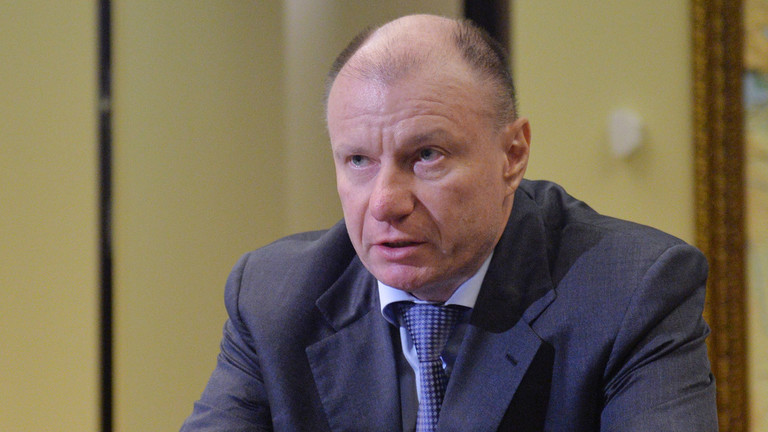
Vladimir Potanin. © Sputnik/Alexei Druzhinin
RT | January 23, 2023
Western countries are sawing off the branch they are sitting on by confiscating Russian assets, billionaire businessman Vladimir Potanin believes.
Following the launch of Russia’s military operation in Ukraine in February last year, multiple countries have frozen assets belonging both to the Russian state, and private companies and individuals to the tune of more than $300 billion.
In an interview with Russian media outlet RBK published on Monday, Potanin, the largest shareholder of mining giant Nornickel, said: “The confiscation [of assets] is a covert or overt form of theft,” and destroys “the investment climate of the jurisdiction where this is happening.”
Potanin noted that the countries comprising the ‘collective West’ had based their societies upon respect for private property.
The recent freezing of Russian assets “will backfire on them,” he said, adding that Russia should refrain from mirroring these measures.
He went on to suggest that by exercising respect for property rights, Moscow will be in a stronger moral position when it fights for its frozen assets in the West, and will send the right signals to entrepreneurs at home.
Potanin also warned against nationalizing property left behind in Russia by Western businesses – instead, the authorities need to “give the investment community the opportunity to solve this problem on its own.” He noted that the exodus of Western companies from Russia has allowed local investors to buy up assets at relatively low prices.
Potanin described the Western sanctions as “absolutely destructive and even, apparently, absolutely illegal,” and in his view, what we are seeing right now is the destruction of basic global rules.
The billionaire acknowledged that Western sanctions have put his plans for overseas business expansion on hold and have adversely affected his ability to travel the world, though he has now switched to exploring Russia instead, he added. Potanin nevertheless expressed confidence that the West “will come to their senses” sooner or later.
Lavrov: US Crossing Red Lines by Threatening Other Countries Not to Work With Russia
By Petr Beryshnikov – Sputnik – 23.01.2023
Russian Foreign Minister Sergey Lavrov arrived in this year’s BRICS host state, South Africa, on Monday morning to discuss bilateral relations as well as coopeation within the BRICS.
Western countries, namely the US and the UK, are crossing all red lines by exerting pressure on the states that cooperate with Russia, said Russian Foreign Minister Sergey Lavrov at a joint press conference with his South African counterpart Naledi Pandor after their meeting in Pretoria on Monday.
“[The US] is publicly saying that those who cooperate with Russia will regret it,” he said, anwsering to Sputnik’s question at the press conference. “Through threats and pressure, the US, and the British too, are crossing all red lines.”
Lavrov stressed that the West undermines the democratic principles in terms of international relations, noting that the US, as well as the EU appeal to democracy only when it suits their interests.
Answering the reporters’ questions, the minister also drew attention to the issues concerning the export of Russian grain and fertilizers in the context of the world food crisis and anti-Russian sanctions. He noted that although such exports are not prohibited by the Western sanctions, the latter create logistical, financial and freightage problems. Lavrov stressed that Russia is ready for international cooperation to overcome these issues – among others, noted by UN Secretary-General Antonio Guterres – but the West does not seem to be willing to participate.
“As for Russian fertilizers, grain, no efforts by the UN helped the European Union and the United States remove obstacles to our exports,” he said.
He also noted that only 20,000 of 280 thousand tonnes of fertilizers, which Russia agreed to provide to the poorest states for free, left the European ports.
“It’s been about half a year since President Putin drew the attention of the world community to this initiative. During this time, out of 280,000 tons, only 20,000 tons were sent from the Netherlands to Malawi – well, […] such an agreement was reached three months ago, and the cargo itself was transported only very recently,” he underlined.
According to Lavrov, less than 10% of grain exported under the so-called Black Sea grain deal goes to the poorest countries, with almost a half being directed to the EU and roughly the same amount to prosperous developing countries.
The Black Sea Grain Initiative, aslo known as the “grain deal”, refers to an agreement between Russia and Ukraine with the participation of Turkey and the UN. The goal of the initiative is to help tackling the world food crisis by allowing grain exports from the Black Sea ports, which were initially blocked during the conflict in Ukraine.
Talking about the food crisis, the minister also responded to claims made by the US Treasury Secretary Janet Yellen, who said that Russia’s special military operation in Ukraine and “weaponization of food has exacerbated food insecurity and caused untold suffering”.
According to Lavrov, it is “hard to comment” on Yellen’s statements, which he called a “slogan” and cited UN data indicating that the world food crisis started before the special military operation in Ukraine and was caused by “uncontrolled emission of money” in the West as well as “politicized and uncompromising transition to so-called green economy”.
Yellen had made her statements during her January African tour, which is widely seen as part of “Biden’s big push” into Africa in an effort to counter Chinese and Russian influence on the continent.
Talking about the West’s pressure on African countries, Lavrov also touched the matter of western criticism of the Russia-China-South Africa naval drills scheduled to take place in February.
“As for naval exercises, I think there is nothing even to comment on. Three sovereign countries conduct exercises without violating any norms of international law. I don’t understand how they can cause a ‘mixed’ reaction,” Lavrov told reporters, adding: “US colleagues believe that only they can conduct exercises around the world. Now they are actively engaged in naval exercises within the framework of the Indo-Pacific strategies around China, in the South China Sea, in the Taiwan Strait, and this does not cause any mixed reaction from anyone,” the diplomat noted.
Thandi Modise, South Africa’s minister of defense, earlier said that Russia could be Africa’s key partner in terms of military cooperation. She also recently stated that the US, in its turn, “threatens Africa, not just South Africa, of having anything that is even smelling of Russia”.
In her turn, South Africa’s foreign minister stressed the importance of the exercises for her state, saying that South Africa’s military conducts drills “as part of agreements with many countries worldwide”. Naledi Pandor said that in contrast to the current criticism of the three-lateral exercises, “no-one asked questions” when South Africa took part in drills with the US or France.
“These are all part of exercises we undertake […] to be able to respond to a range of situations, including disaster management, which our military often plays a role in addressing. So, I just think it’s important that we regard all countries as sovereign nations and not stop doing so when it suits us,” she underlined.
According to Lavrov, Russia is actively developing military cooperation with its BRICS partners such as China, South Africa and India, noting that this cooperation is “nothing new”. He said that the exercises are “transparent” and called for the western states to respect their foreign counterparts.
“If you respect other countries, let them pick their sides,” the minister said, concluding: “We simply advocate for each country to have its own rights in the international system, as stipulated by the UN Charter.”
On Monday, Russia Foreign Minister Sergey Lavrov arrived in South Africa, which became the first destination for him during his African tour.
In summer 2022, Sergey Lavrov conducted a major African tour, visiting the Republic of the Congo, Uganda, Ethiopia and Egypt. In September 2022, he also held talks with South African Foreign Minister Naledi Pandor on the sidelines of the United Nations General Assembly.
Russia and the South African Republic established their bilateral diplomatic relations in 1992. Being two key nations of the BRICS group, which also encompasses Brazil, India and China, Moscow and Pretoria promoted their bilateral relations to the level of the comprehensive strategic partnership in 2013.
South Africa is Russia’s key partner in scientific and educational spheres and one of the key trade partners on the African continent along with Egypt and Algeria. The two sides have also been actively promoting relations in the military dimension as well as in other fields. Moscow and Pretoria share common views on the core principles of the world order, coordinating their positions and actions by means of regular bilateral diplomatic dialogue, at the United Nations, as well as within such formats as BRICS and G20.
The country’s president, Cyril Ramaphosa, first visited Russia in 2019, when he participated in the first Russia-Africa summit held in Sochi. Pretoria is also expected to participate in the second Russia-Africa summit which will be held in Saint Petersburg in July.
The Davos establishment reveals whom it truly fears
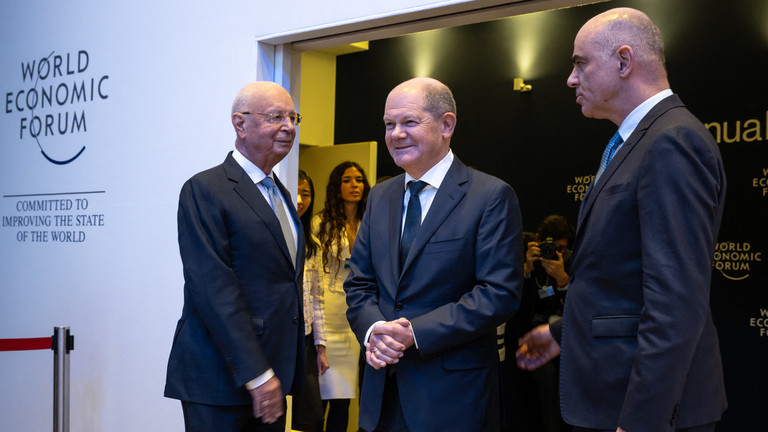
By Rachel Marsden | RT | January 22, 2023
The World Economic Forum at Davos used to be THE place to see and be seen, but the idea of the richest and most influential people in the world hobnobbing around a common agenda for the world has lost its luster as the policies peddled by its attendees spark increased skepticism among average citizens.
Forum founder Klaus Schwab, the de facto frontman of the organization, has cranked out one distasteful hit after another in recent years. He has spoken of how the organization “penetrates the cabinets” of governments in its recruitment efforts. He coined the term “The Great Reset,” about which he published a book just a few months into the Covid-19 pandemic in July 2020, advocating that the pandemic be used as inspiration to “reimagine our world” at a time when much of the globe was locked down on orders of their governments – many members of which were Davos regulars. There was little appetite to turn lockdowns into a permanent lifestyle change, but here was Klaus promoting the benefits of burying the old life – all under the pretext of an event that the WEF had already wargamed in October 2019 in New York, just ahead of the crisis, in an exercise called “Event 201.” “The exercise will bring together business, government, security and public health leaders to address a hypothetical global pandemic scenario,” the WEF announced at the time. It’s all just a bit too creepy.
It’s the constant effort of top-down global coordination around murky financial interests laundered through the Davos agenda that irks the common person. The fact that just a single leader of a G7 country attended this year’s event speaks volumes about how poorly it’s now viewed. The premier of the western Canadian province of Alberta, Danielle Smith, said of the WEF after her cabinet’s swearing-in ceremony last October: “I find it distasteful when billionaires brag about how much control they have over political leaders. That is offensive… the people who should be directing government are the people who vote for them. Quite frankly, until that organization stops bragging about how much control they have over political leaders, I have no interest in being involved with them.”
Those invited to preach at the altar during the high mass of globalism this year seemed to know exactly what kind of sermon the crowd wanted to hear. German Chancellor Olaf Scholz was apparently the only G7 leader who thought it would be a good look to be seen hanging out with the unelected masters of the planet while Westerners – and Europeans in particular – grapple with the high cost of their governments’ policies in their daily lives. Scholz doubled down on the same green dreams that put Germany’s economy in peril with no viable backup plan once the European Union had effectively cut off Russian energy through sanctions. “Most importantly, our transformation toward a climate-neutral economy, the fundamental task of our century, is currently taking on an entirely new dynamic. Not in spite of but because of the Russian war, and the resulting pressure on us Europeans to change. Whether you are a business leader or a climate activist, a security policy specialist or an investor, it is now crystal clear to each and every one of us that the future belongs solely to renewables. For cost reasons, for environmental reasons, for security reasons, and because in the long run, renewables promise the best returns,” Scholz said in his address. Meanwhile, Germany is firing its coal power plants back up and reconsidering its nuclear power phase-out. How about worrying about how German industry is going to function in the next year when green initiatives, such as hydrogen imports from Portugal and Norway, aren’t set to even get off the ground until at least 2030? Scholz used his time at the podium at Davos to greenwash the economic uncertainties that Germany faces as a result of the EU’s energy sanctions on Russia. In other words, green hopes and dreams took center stage in this pitch to global investors, thus providing a convenient distraction from the more worrisome current realities.
Greenwashing was joined at Davos by the pitching of anti-democratic initiatives via concern trolling. During a panel discussion dedicated to “disrupting distrust” – which really should have been called “How can we get people to better swallow our nonsense?” – Richard Edelman, the CEO of the eponymous global communications firm, blamed the derailments on right-wingers. “My hypothesis on that is that right-wing groups have done a really good job of disenfranchising NGOs. They’ve challenged the funding sources. They’ve associated you with Bill Gates and George Soros. They’ve said that you’re world people, as opposed to what you are, which is local,” Edelman lamented, ignoring the fact that they wouldn’t have needed to fly their private jets to a “local” event. What he’s really attacking are dissidents, many of whom just happen to be populists and right-leaning. And no doubt the fact that they’re digging into the special interests laundered through many NGOs makes the job of PR pros such as Edelman more challenging.
“Edelman is a despicable human being – his job is literally being a professional liar!” Tweeted billionaire Tesla and SpaceX founder Elon Musk, whose controversial purchase of the social media platform and subsequent reversal of its heavy-handed censorship policies haven’t exactly endeared him to the Davos crowd. Mocking Schwab’s call to “master the future” in the opening keynote, Musk tweeted, “’Master the Future’ doesn’t sound ominous at all … How is WEF/Davos even a thing? Are they trying to be the boss of Earth!?” Musk then took a Twitter poll that found that 86% of 2.4 million respondents answered ‘no’ to the question of whether the WEF should “control the world.”
A WEF spokesman said that Musk hasn’t been invited to the gathering since 2015. Musk confirmed his lack of interest in attending: “My reason for declining the Davos invitation was not because I thought they were engaged in diabolical scheming, but because it sounded boring af lol.”
Boring, indeed – in the same way that a cult meeting where everyone nods their heads in agreement is a snooze fest. The last time things were even remotely interesting at Davos was when former US President Donald Trump showed up and rejected the Davos mantra of climate change doom. “The message represents a sharp departure from the official playbook at the World Economic Forum, where this year’s theme is ‘Stakeholders for a Cohesive and Sustainable World’,” wrote CNN in January 2020.
Who asked them, though? These elites represent no one’s interests but their own, which are economic and are for the benefit of their shareholders – hence the forum’s name. If the average citizen is now waking up to the fact that anything coming out of Davos should be scrutinized through that lens, then it can only be a good thing for freedom, democracy, and national sovereignty.
Rachel Marsden is a columnist, political strategist, and host of independently produced talk-shows in French and English.
The climate scaremongers: Gas boiler ban is one step closer
By Paul Homewood | TCW Defending Freedom | January 20, 2023
A review of Net Zero has recommended that sales of gas boilers must be banned within ten years at the latest. The supposedly ‘independent’ review was commissioned by Liz Truss in her short spell as PM, and was written by Tory MP Chris Skidmore, who as Energy Minister signed the Net Zero Act into law in 2019.
The reality is that virtually nobody who owns a gas boiler is remotely interested in replacing it with a heat pump. Sales of heat pumps in the UK are running at around 35,000 a year, despite generous government subsidies, a long way short of the government target of 600,000 a year.
The reason is obvious. Installing a heat pump, with the new radiators, pipework and extra insulation required, will probably cost upwards of £20,000 for a typical home. Worse, despite the currently high cost of gas, running costs for a heat pump are still higher than a gas boiler.
In practice, a ban on gas boilers would force most people into buying conventional electrical heaters, such as storage heaters. These are cheaper to buy but hugely expensive to run; annual heating costs for a typical home are about £1,500 for a gas boiler, but would rise to £5,000 for electrical heating.
This is not the only mad policy suggestion in Skidmore’s review. He also wants all houses sold to meet EPC C by 2033. EPC is the Energy Performance Certificate, when it is estimated that only 40 per cent of houses meet this standard at the moment. Skidmore’s bright idea will force millions of homeowners and landlords to spend thousands on improving insulation against their will.
Of course, this ‘independent’ review is nothing of the sort. Skidmore, MP for Kingswood, is one of the bunch of extremist green Tories; he even opposed Truss’s attempts to reinstate fracking. It was inevitable that he would rubber-stamp the Net Zero agenda. A truly independent review would have critically assessed all the assumptions, costings and projections for this appalling piece of legislation. Instead we have got a report that might as well have been written by Gummer’s Committee on Climate Change. We get all the same platitudes that we have read many times before in CCC handouts – how cheap renewable energy is, millions of green jobs, how we will all be better off by 2050 (we have to take Skidmore’s word for this), how we must not fall behind the rest of the world in the race for Net Zero.
I have searched the report comprehensively, and cannot find a single reference to the costs which will have to be borne in the medium term by the public, things like heat pumps, insulation and electric cars. These costs will be unaffordable for most households, and will act as a brake on economic growth in the same way as high energy prices are doing now. Nobody cares about how well off they may be in 30 years’ time, and certainly won’t believe anybody who tells them he does know. But people do know that current policies will be extremely expensive.
Neither is there any quantification of the massive costs which will be incurred for upgrading electricity grids and distribution networks, and building hydrogen storage and infrastructure. Or the reliance on unproven carbon capture.
Nor is there any critical assessment as to how the country can run predominantly on intermittent wind and solar power, albeit backed up by nuclear power. Instead Skidmore seems simply to accept the pie-in-the-sky projections of the National Grid, calling for more wind and solar power.
The report does mention CCC estimates of the need to spend £50billion to 60billion a year by the early 2030s. As it points out, most of this will come from private sector investors, who will want high returns. Skidmore does not mention that it will be the poor old consumer who will end up paying for all this. It is no surprise that big business is queuing up for its share of the money pot.
Since its very inception, the Net Zero Act was enacted as a ‘good idea’, without any plan as to how it could be carried out, or a clearly costed budget. This review should have been an ideal opportunity to row back, putting the whole thing on the back burner while these fundamental issues were addressed. Sadly it is a chance missed.
Is climate change killing off the puffins?
Another go-to scare story for climate alarmists is that Atlantic puffins are at risk from global warming. It is a story that comes around every year as regular as clockwork.
According to a recent report in the Telegraph, 70 per cent of Europe’s puffins could be lost in the next 80 years, because of ‘stormy weather caused by climate change’. Naturally no evidence is presented to prove that stormy weather is increasing, probably because it isn’t!
Far from dying out, puffins have been thriving off the Pembrokeshire coast on the islands of Skomer and Skokholm. There are more puffins there now than at any time since the 1940s, when numbers peaked before the population crashed.

Skomer Island Puffin Count
Although there are an estimated 10 million puffins breeding along Europe’s coastline, it has been reported that some populations are declining around the North Sea. But the cause of this is not climate change, but something much more basic – the industrial fishing of sand eels, which make up most of the diet of puffins during their breeding season. If climate change was a factor, we would be seeing the same decline on Skomer.
Less fish available for adult puffins means underfed pufflins, which are less likely to make it to adulthood.
In 2020, 238,000 tons of sand eel were harvested by fishing vessels in the North Sea, all of which goes to Danish oil and fishmeal processing factories. Danish vessels have the largest share of the fishing quota, landing 72 per cent of the catch. Both the EU and Denmark claim that fishing quotas are adequate to maintain the sand eel population. But as is always the case with the EU, vested interests trump any other considerations.
The link between sand eel fishing and seabird populations is well established. A study in 2014 found that ‘the UK’s internationally important seabird populations are being affected by fishing activities in the North Sea. Levels of seabird breeding failure were higher in years when a greater proportion of the North Sea’s sand eels, important prey for seabirds, was commercially fished’. It also noted that seabirds breeding on the UK’s western colonies are faring better than those on the North Sea coast.
But don’t expect the EU to shut down Denmark’s fishmeal industry. It’s much easier to blame climate change!
Fire hazard: Ferry company bans electric cars
Free West Media | January 20, 2023
OSLO – A Norwegian shipping company has banned electric cars on its ferries because according to a risk analysis, the risk of fire from such vehicles is too great. An ocean liner had recently sunk because of it.
The listed Norwegian shipping company Havila has banned electric, hybrid and hydrogen cars from its ferries. After a risk analysis, it was concluded that the risk to the safety of the shipping fleet was too great. If a car catches fire, the fire can no longer be extinguished.
The shipping company travels the so-called mail ship route along the coast of northern Norway. The tours are important for Scandinavian passenger and cargo traffic and are also very popular with holidaymakers.
The risks for ships from the transport of electric cars have been discussed since the Felicity Ace sank off the Azores last February. E-vehicles on board had caught fire and the blaze could not be extinguished. Finally, the huge ship sank with thousands of electric cars and vehicles from Porsches and Bentleys.
According to a report by the TradeWinds shipping news service, Havila shipping company boss Bent Martini said the risk analysis showed that the fire in an electric car required a particularly complex rescue operation. The crew on board could not afford this. Passengers would also be at risk. This is different for vehicles with combustion engines. A possible fire is usually easy to fight by the crew.
After the sinking of the Felicity Ace, Greenpeace also warned against e-cars on ships: “In general, electronic components and especially electric vehicles pose a risk for every transport,” it said at the time.
Russia and Pakistan agree major energy deal
RT | January 21, 2023
Moscow and Islamabad have reached “conceptual” agreements on supplies of Russian oil and petroleum products to Pakistan, Russian Deputy Energy Minister Sergey Mochalnikov said at an intergovernmental commission meeting in the Pakistani capital on Friday.
Earlier in December, the minister of petroleum, Musaddiq Malik, visited Moscow to negotiate energy supplies to Islamabad and announced that Russia would provide oil, gasoline, and diesel to the country at discounts. He did not specify the price but noted that the talks were “more productive than expected.”
During the meeting in Islamabad, the sides also discussed “remaining questions” on the construction of the Pakistan Stream gas pipeline and the prospects for wider cooperation in energy and power engineering.
Mochalnikov said Russia presented a concept of future gas supplies to Pakistan, adding that “we must evaluate the position of the Pakistan Stream in this concept as soon as possible.”
The day before, Russian Energy Minister Nikolay Shulginov stated that Moscow is “ready to sign required corporate documents” to kickstart the construction of the pipeline.
Russia and Pakistan signed an intergovernmental agreement on the construction of the North-South gas pipeline (Pakistan Stream) from Karachi to Lahore in 2015. The launch of the project was postponed several times. The 1,100km pipeline with a capacity of 12.3 billion cubic meters of gas per year will link liquefied natural gas (LNG) terminals in the ports of Karachi and Gwadar in southern Pakistan with power plants and industrial gas consumers in Lahore in the north of the country.
The pipeline will transport both regasified gas and pipeline gas from various sources, including Iran and Turkmenistan, according to Shulginov.
“The approach to the implementation of such projects has to be comprehensive. It means not only a pipeline but also a source of gas for it. And we are currently discussing the project both from the point of view of transporting regasified gas and pipeline gas,” the minister said.
Islamabad is also seeking to negotiate long-term deals with Russia on imports of LNG, as there is currently no stable supplier for the country. Pakistan has been struggling with an acute energy shortage, and the surge in global oil and gas prices has worsened the situation. Imports of the fuel have become five to ten times more expensive due to increased demand in the EU.
Macron Unveils Massive Military Expansion Plan Amid Nationwide Strike Over Neoliberal Budget Cuts
Samizdat – 20.01.2023
French President Emmanuel Macron revealed his plans to dramatically increase military and intelligence spending on Friday, saying French forces need to “reform and transform” amid the conflict in Ukraine, where NATO forces are supporting the Ukrainians. The announcement comes as 1 million people march against de facto budget cuts.
Macron’s proposed new defense budget size for the 2024-2030 period, €413 billion, is 40% larger than the previous 2019-2025 period budget of €295 billion.
“The law on military programming (LPM) for 2024-2030 reflects the efforts made by the state to strengthen its army. They are proportionate to current dangers, which are significant. In 2024-2030, the government will allocate €400 billion to the defense ministry,” Macron said in an address to the army at the Mont-de-Marsan airbase in southwestern France.
“France has and will have armies ready for the challenges of the century,” he added.
He explained that part of the spending will go toward doubling the power of French air defense systems, and that the French intelligence budget would increase by 60% by 2030.
He added that Paris would continue to modernize its nuclear forces, spending €5.6 billion on that effort in 2023 alone.
The French leader said the changes were necessary because of the conflict in Ukraine, which is nearly 11 months old. The NATO nations have backed Kiev, which seeks to join the alliance, funneling them vast amounts of money and military equipment to support their fight against Russian forces.
“It is necessary to pay special attention to the speed of response and build up the power of our army, because we do not choose the conflicts in which we might have to participate,” Macron said.
Indeed, Macron’s words came just hours after US Secretary of Defense Lloyd Austin urged American allies to “dig even deeper” and put up more funding for Ukraine.
Paris has thrown much of its weight behind supporting Kiev’s war effort, including sending rockets, AMX-10 infantry fighting vehicles, and other weapons. In October, Macron unveiled a special €200 million fund from which Kiev would be able to buy military equipment from French defense contractors.
Most recently, Paris has publicly weighed sending Leclerc main battle tanks to Ukraine as other NATO allies make similar considerations.
Russia began its special military operation in Ukraine in February 2022 in response to a dramatic escalation of violence in the Donbass region, where since 2014, Russian-speaking minorities have resisted attacks by neo-Nazi groups integrated into the Ukrainian military. Its goals include promises Ukraine will never join NATO or allow NATO to position military equipment on Russia’s borders.
Budget Hikes Amid Budget Cuts
Macron’s announcement comes amid a new wave of mass demonstrations in France, where 1 million marched on strike on Friday against a proposed plan to increase the retirement age to 64.
According to French media, eight of the country’s largest unions took part in the strike, which included 40% of primary school teachers and one-third of high school teachers. Transportation networks also shut down as workers walked out on strike.
Macron has said the de facto budget cut is necessary because of a deficit in the pension fund. However, in October, his government used a special mechanism to shut down debate and ram a new budget through parliament, blocking attempts by opposition parties to add new taxes targeting corporations profiting massively off rising inflation and energy costs.
A former banker, Macron has been in office since 2017, and most of his tenure has been wracked by mass protests against his neoliberal budget plans, including the massive “Yellow Vest” demonstrations by working-class French people.
The situation in African countries is deteriorating as a result of US policies
By Valery Kulikov – New Eastern Outlook – 20.01.2023
In the last few years the USA and its Western allies have been making increasingly overt attempts to put pressure on Africa in a bid to stop the continent turning towards Russia and China.
The situation in African countries has started to deteriorate seriously as a result of the West’s thoughtless and self-serving sanctions against Russia, which have caused the continent problems in a number of areas, including that of food security. For example purely as a result of having to buy wheat from Argentina rather than from Russia, Angola has lost more than $15 million since the beginning of Moscow’s special operation to denazify the criminal regime in Ukraine and the West’s imposition of sanctions against Russia.
According to an announcement made by Turkey’s Minister of Agriculture Vahit Kirişci, since the signing of the “grain deal” 16.9 million tons of grain, carried by 633 ships, have been exported from Ukraine through the marine humanitarian corridor established under the deal. However, just 5.4% of the exported grain has found its way to poor nations, including African nations, despite the West’s insistence that the deal would prioritize shipments to these countries.
As for Russia, despite the restrictions imposed on it by the West, it has been able to export more than 15 million tons of grain as well as large volumes of mineral fertilizer, much of it intended for poor countries. Moreover, in discussions between Russian President Vladimir Putin and his Turkish counterpart Recep Erdoğan last November, it was decided to supply grain to the poorest African nations free of charge.
According to Saudi media it is the events in Ukraine and the anti-Russian policies of the West that are to blame for the sharp rise in food prices in 2022 (wheat, rice, maize, vegetable oil etc.) and the resulting famine that caused widespread suffering, especially in the world’s poorest countries. By tightening their financial policies the developed nations have reduced the flow of funds to poor countries, and the departure of foreign investment has significantly exacerbated the food crisis – a problem which, even in 2023, will be particularly challenging to overcome. In March 2022 global food prices reached their highest ever level. According to statistics published by the media, global spending of food imports amounted to almost $2 trillion in 2022, significantly more than in previous years. Shortages of wheat and fertilizer have caused price increases and raised the cost of importing food for the most vulnerable sections of society (by more than $25 billion). State support for low income families has been unable to raise their standards of living, as most of the subsidies granted have been eaten up by rising food prices. Jasper Okodi, a consultant to the UN’s Food and Agriculture Organization (FAO), has stated that even if global prices fall the price of foods in local markets in unlikely to fall until the third quarter of 2023.
Unlike the West, Russia has been a trusted partner to African states for many decades. From the mid 20th Century onwards, as African nations achieved independence from the yoke of their former colonial masters, the Soviet Union provided them with a great deal of disinterested support, building up their social and economic infrastructure. As representatives of the African nations themselves insist, Russia has never been involved in schemes to rob Africans of their natural wealth, and has never applied political pressure in an attempt to gain economic benefits. In the current highly challenging conditions posed by the anti-Russian policies of the USA and its western allies, African leaders clearly understand that Russia, despite the aggressive and immoral opposition of the West, is fighting to bring about a just world order. It is also fighting the USA’s overt propaganda campaign, which is based on disinformation and lies about Moscow’s policies. Speaking on this and other issues at a meeting of the UN Security Council on January 10, Anna Evstigneeva, Deputy Permanent Representative of the Russian Federation, categorically rejected the West’s attempts to discredit Russia’s assistance to African nations by falsely accusing it of appropriating African resources or contributing to the growth of terrorism in the continent.
Many African politicians have emphasized that while France, Britain and the USA are now losing their influence in Africa, in the past, when these countries dominated the continent, it was very difficult for Africans to stand up against Western neo-colonialism. But now the world order is changing and the African nations are able to breathe freely at last.
In an article published at the end of December The Times was forced to admit that 22 African nations refused to censure Russia’s special operation to protect residents in the Donbass at the UN General Assembly, and that in the light of current international feelings Moscow was winning more and more sympathy in the world’s most rapidly developing continent. The Times also recognized that the West has already lost the battle for Africa and that Africans are turning away from their former colonial powers and towards Russia, China, Turkey and the Persian Gulf States.
The struggle between the USA and Russia for influence in Africa took a new turn when South Africa’s president took on the chairmanship of the BRICS group and the country’s ruling party proposed inviting new members from among the world’s major developing nations to join the grouping. As the South African President Cyril Ramaphosa said, “The BRICS group should lead the process of reforming the entire international architecture for the benefit of most countries in the world, and this group has an important role to play in leading the creation of new decision-making mechanisms in the UN and other international organizations to establish a more inclusive, just and sustainable world order.” And that will certainly end the global dominion of the West and particularly of the USA, which is why the USA is opposing such reform.
Washington is particularly critical of the plans for Russia, South Africa and China to hold joint naval exercises – known by the code name Mosi – in the Indian Ocean off the Southern African coast from February 17 to 26. The exercises will include artillery practice and anti-aircraft drills. Similar joint naval exercises were held in November 2019 in the South Atlantic ocean, off the Cape of Good Hope, not far from Cape Town.
In view of the above background and specifically Washington’s growing opposition to African countries’ good relations with Russia, Thandi Modise, South Africa’s Minister of Defense and Military Veterans was recently impelled to accuse the USA of putting pressure on those African nations that maintain good relations with Russia. The Wall Street Journal admitted the truth of this accusation in a recent article on the US reaction to the docking of the Russian cargo ship Lady R at a South African port.
The West understands that Russia has an interest in maintaining international relations with strong, self-sufficient and economically independent partner countries – including in Africa – which are able to ignore the West’s threats of repressive measures and work as allies of Moscow in the creation of a new multipolar world order. But it is precisely this process that the West fears, and it is imposing all the illegitimate sanctions that it can devise in order to impose its neocolonial policies in Africa.
Featured Video

ARE PATIENTS BEING PROPERLY INFORMED ABOUT OZEMPIC?
or go to
Aletho News Archives – Video-Images
New Book
Breast Cancer: Before You Consent
A new Unbekoming paperback
Lies are Unbekoming | September 18, 2026
Peter Gøtzsche reviewed every randomised mammography screening trial ever conducted for the Cochrane Collaboration. Cochrane’s headline is that, assuming a 15% mortality reduction, one woman in 2000 avoids dying of breast cancer over ten years. Ten are overdiagnosed and treated. Two hundred experience false alarms.
But that headline assumes the reduction. When Gøtzsche looked only at the trials with adequate randomisation — the higher-quality ones — the reduction disappeared. No effect on breast cancer mortality. No effect on all-cause mortality.
This is the Cochrane finding, published in the establishment’s own database of systematic reviews.
No woman being asked to consent to a mammogram this week knows it.
That is why the new Unbekoming paperback exists. … continue
Blog Roll
 Aletho News
- The Truth About the Trump Shootings with Ken Silva
- ARE PATIENTS BEING PROPERLY INFORMED ABOUT OZEMPIC?
- US lawmaker blocks $2.8 billion weapons sale to Israel: Report
- Yemeni army claims responsibility for strikes on sensitive sites in Saudi capital, Aramco facilities in Yanbu
- Iran Judiciary issues indictments against 159 US, Israeli officials for assassination of Leader, commanders
- Turkiye revokes Iranian bank license under US sanctions campaign
- US-Denmark Agreement on Greenland Is ‘PR Stunt’ Ahead of Midterms
- Araghchi: Military intervention cannot create security; coercion cannot bring peace
- Fraud Squared
- Breast Cancer: Before You Consent
- If Americans Knew
- Inside Gaza’s death trap of collapsing, bombed-out buildings
- The everyday items Israel bans from Gaza every day
- Inside the siege, the ruined buildings of Gaza – Daily Update
- Debunking The Claim That Macklemore Has A “History Of Antisemitism”
- CPJ demands release of arrested Palestinian-US journalist near Bethlehem
- Robert Kraft: The Billionaire Friend of Netanyahu Pulling The Strings Behind the Macklemore/Ed Sheeran Blow Up
- Columbia Administered Fund Gives Big Money to Pro-Israel Groups
- Deportation Case of Palestinian Activist Salah Sarsour Tests First Amendment
- ‘We Will Not Forget’: Palestinians Mark 44 Years since Sabra and Shatila
- Why do we let Zionists decide what we can and can’t say?
- No Tricks Zone
- 2025 Nature Paper Claiming Worsening Global Drought Gets RETRACTED …Heavily Flawed
- New Study: ‘Global Drought Shows No Detectable Recent Acceleration Under Climate Warming’
- Economic Masterminds: German Socialists Suggest Taxing Productivity Gains Stemming From Using AI
- The South China Sea Has Not Been Cooperating With The Climate Change Narrative
- Energy Crisis: Germany Enters Heating Season With Historically Low Gas Reserve Fill Levels
- New Study: The Antarctic Ice Sheet Gained Mass From 2020-2024 Due To Staggering Snow And Ice Accumulation
- Study: Ocean Heating Rates From Thousands Of Years Ago ‘Dwarf’ Modern Ocean Heating Rates
- Climate Extremists Target, Attack Large-Scale Power Grid Infrastructure In Germany!
- New Study: Antarctic Ice Melt Has Contributed Less Than 1 Centimeter To Sea Level Rise In The Last 30 Years
- Fear Of Debate: Alarmist German Climate Scientist Calls On Mainstream Media To Discredit Skeptic Voices
 Aletho News