The other Russia-West war: Why some African countries are abandoning Paris and joining Moscow
By Ramzy Baroud | MEMO | October 15, 2022
The moment that Lieutenant-Colonel Paul-Henri Sandaogo Damiba was ousted by his former military colleague, Captain Ibrahim Traore, pro-coup crowds filled the streets. Some burned French flags; others carried Russian flags. This scene alone represents the current tussle underway throughout the African continent.
A few years ago, the discussion regarding the geopolitical shifts in Africa was not exactly concerned with France and Russia per se. It focused mostly on China’s growing economic role and political partnerships on the African continent. For example, Beijing’s decision to establish its first overseas military base in Djibouti in 2017 signalled China’s major geopolitical move by translating its economic influence in the region to political influence, backed by military presence.
China remains committed to its Africa strategy. Beijing has been Africa’s largest trading partner for 12 years, consecutively, with total bilateral trade between China and Africa reaching $254.3 billion in 2021, according to recent data released by the General Administration of Customs of China.
The US and its Western allies have been aware of and are warning against China’s growing clout in Africa. The establishment of US AFRICOM in 2007 was rightly understood to be a countering measure to China’s influence. Since then, and arguably before, talks of a new “Scramble for Africa” abounded, with new players including China, Russia and even Turkiye entering the fray.
The Russia-Ukraine war, however, has altered geopolitical dynamics in Africa, as it highlighted the Russian-French rivalry on the continent, as opposed to the Chinese-American competition there.
Though Russia has been present in African politics for years, the war – thus the need for stable allies at the United Nations (UN) and elsewhere – accelerated Moscow’s charm offensive. In July, Russia’s Foreign Minister Sergey Lavrov visited Egypt, Ethiopia, Uganda and the Republic of Congo, fortifying Russia’s diplomatic relations with African leaders.
“We know that the African colleagues do not approve of the undisguised attempts of the US and their European satellites. . . to impose a unipolar world order to the international community,” Lavrov said. His words were met with agreement.
Russian efforts have been paying dividends, as early as the first votes to condemn Moscow at the UN General Assembly in March and April. Many African nations remained either neutral or voted against measures targeting Russia at the UN.
South Africa’s position, in particular, was problematic from Washington’s perspective, not only because of the size of the country’s economy, but also because of Pretoria’s political influence and moral authority throughout Africa. Moreover, South Africa is the only African member of the G20.
In his visit to the US in September, South Africa’s President Cyril Ramaphosa defended his country’s neutrality and raised objections to a draft US bill – the Countering Malign Russian Activities in Africa Act – that is set to monitor and punish African governments who do not conform to the American line in the Russia-Ukraine conflict.
The West fails to understand, however, that Africa’s slow but determined shift toward Moscow is not haphazard nor accidental.
The history of the continent’s past and current struggle against Western colonialism and neocolonialism is well known. While the West continues to define its relationship with Africa based on exploitation, Russia constantly reminds African countries of the Soviet’s legacy on the continent. This is not only apparent in official political discourses by Russian leaders and diplomats, but also in Russian media coverage, which is prioritising Africa and reminding African nations of their historical solidarity with Moscow.
Burning French flags and raising Russian ones, however, cannot simply be blamed on Russian supposed economic bribes, clever diplomacy or growing military influence. The readiness of African nations – Mali, Central African Republic and now, possibly, Burkina Faso – has much more to do with mistrust and resentment of France’s self-serving legacy in Africa, West Africa in particular.
France has military bases in many parts of Africa and remains an active participant in various military conflicts, which has earned it the reputation of being the continent’s main destabilising force. Equally important is Paris’s stronghold over the economies of 14 African countries, which are forced to use French currency, the CFA franc, and, according to Frederic Ange Toure writing in Le Journal de l’Afrique, to: “Centralise 50% of their reserves in the French public treasury.”
Though many African countries remain neutral in the case of the Russia-Ukraine war, a massive geopolitical shift is underway, especially in militarily fragile, impoverished and politically unstable countries that are eager to seek alternatives to French and other Western powers. For a country like Mali, shifting allegiances from Paris to Moscow was not exactly a great gamble. Bamako had very little to lose, but much to gain. The same logic applies to other African countries fighting extreme poverty, political instability and the threat of militancy, all of which are intrinsically linked.
Though China remains a powerful newcomer to Africa – a reality that continues to frustrate US policymakers – the more urgent battle, for now, is between Russia and France – the latter experiencing a palpable retreat.
In a speech last July, French President Emmanuel Macron declared that he wanted a: “Rethink of all our (military) postures on the African continent.” France’s military and foreign policy shift in Africa, however, was not compelled by strategy or vision, but by changing realities over which France has little control.
EU blackmails Serbia – interior minister
Samizdat | October 16, 2022
The EU’s offers to Serbia are unacceptable, and Serbs should “accept that they don’t want us,” Interior Minister Aleksandar Vulin told the Novosti news site on Saturday. He added that Belgrade should instead turn its attention to “free countries that accept us without blackmail,” such as Russia and China.
“The question is not whether we want to join the EU, but whether the EU wants Serbia,” Vulin told Novosti. “Judging by the insane blackmail they are exposing us to…they don’t want us. The sooner we accept that they don’t want us and that we don’t belong there, the better off we will be.”
A traditional ally of Russia, Serbia has come under intense pressure from the West to back the sanctions regime against Moscow over its military operation in Ukraine. The European Parliament has considered freezing accession talks with Belgrade over the latter’s refusal to back its eight rounds of economic penalties, US state media reported last month, while Germany and France have offered to “accelerate” Serbia’s path to EU membership if it recognizes the independence of the province of Kosovo, Serbian President Aleksandar Vucic stated last week.
For Vulin and Vucic, the answer to these offers is a clear “no.”
“How much would our friends respect us if they saw us neglecting our interests in the face of enemy force?” Vulin asked. “Who would fight for us if we chose not to fight for ourselves?
“Relations with Russia, China and other free countries that accept us without blackmail and conditions are the future of Serbia,” he continued. “I believe that friendship with Russia is of the greatest importance and that without it we risk the physical disappearance of Serbia.”
According to a poll taken in March, some 61% of Serbs oppose any cooperation with the US-led NATO alliance, largely due to the bloc’s support for Kosovo’s independence and its 1999 bombing campaign that brought about the end of Yugoslavia. Furthermore, while Serbia applied for EU membership in 2009, accession looks to be off the table for now. The EU’s latest sanctions package targeting Russian oil exports looks set to cost Belgrade hundreds of millions of euros, Vulin said last week, describing it as the “first EU sanctions package against Serbia.”
Hungary has responded to the sanctions by announcing a new pipeline to help Serbia tap into the supply of Russian crude oil.
EU parliament wants to give up both Nord Stream pipelines: “Nord Stream” to be abolished
Establishment parties vote for doom in Brussels
FRONT NIEUWS | October 15, 2022
It should now be official. Nord Stream 1 and 2 are not repaired. Last week the EU parliament already voted on the further procedure with the two pipelines. Without much ado they simply decided to abandon the project, with the CDU/CSU, SPD, Greens, FDP and Free Voters voting in favour. This means: a further rise in gas prices and further deindustrialization of Germany and Europe, reports Wochenblick.at.
Europe on its way to the abyss
Germany, Austria and all of Europe are suffering from the suicidal sanctions against Russia. The industry goes bankrupt or migrates to the US, which lures German entrepreneurs with cheap energy and good conditions, traditional companies that have already survived economic crises and two world wars will not survive the impoverishment program of the system. The fate of Germany as one of the most important industrialized countries is thus sealed.
This vote shows very clearly that the old parties are simply not interested in promoting the interests of their own country, and even of Europe. They have opened the door to ever-increasing poverty and stabbed their own citizens in the back.
Bernhard Zimniok, MEP of the AfD, reported in a video about the vote and the attempted cover-up by Brussels:
Europe Reloaded – Heartfelt thanks to journalist and ER contributor Michel van der Kemp for producing a translation of the video:
Hello from Brussels. Last week, the EU Parliament voted on a motion to finally give up Nord Stream 1 and 2. In doing so, the EU Parliament made a mistake that was very helpful to us:it accidentally initiated a roll-call vote instead of an electronic vote, which nobody noticed at first and which the EU Assist website, which documents all voting results, has therefore recorded on its site. On the one hand, an electronic vote means that it is known exactly how many votes were cast for or against a motion or how many abstained. But it also means that the election takes place more or less anonymously, because no member of parliament has to raise their hand, they just press a button. A roll-call vote is practically the opposite: It is documented exactly which member of parliament voted and how. When the administration realized their mistake and changed it on their website, the child had already fallen into the well, because EU Assist documented exactly who voted and how. Of all the German MPs, only the three non-attached, one from the SPD, the left and of course we from the AfD voted against giving up Nord Stream 1 and 2. The Greens, FDP, Freier Wahler (Free Choice), CDU/CSU and all but one of the SPD MPs voted to finally abandon Nord Stream 1 and 2 and thus voted for the fact that gas prices will continue to rise and that we may soon run out of gas, so voting for potential blackouts and cold apartments. Anyone who supports these parties is calling for a loss of prosperity and the collapse of the German economy, indeed of the entire country. Only the AfD makes politics for Germany!
The “creative” destruction of Europe
The future impoverishment of Germany and all of Europe is probably entirely in the interest of those forces who have [in mind] something very different for the world. With the destruction of the European continent, the breeding ground for the Great Reset has been created. The peoples have been disintegrated and fragmented by mass migration, the economy is virtually non-existent, the population is impoverished and destitute.
“You will own nothing” is one of the dogmas of the future, which the WEF has put into circulation. No one will voluntarily surrender his property, and taking it is not possible without arousing the resentment of the people. This is different in the event of a major crisis, perhaps even a war, where in the end – except for a few – no one is left with anything. A dystopian “brave new world” can be built on such a foundation.
After the end of “Nord Stream” one no longer has to face the unpleasant question of who is responsible for the terrorist attack on the pipelines.
EU’s LNG storage space runs out as Brussels braces for winter without Russian gas
By Drago Bosnic | October 14, 2022
The European Union’s self-imposed energy crisis is taking a turn for the worse. The political elites in Brussels and their suicidal subservience to Washington DC is breaking records day by day. The latest energy hurdle the bloc is facing is a chronic lack of transport ships carrying liquefied natural gas (LNG) from the United States to EU countries. According to Bloomberg, as the bloc is trying to prepare for a winter without Russian natural gas and other crucial commodities, LNG shipping rates are surging, but this will not be enough to meet the EU’s energy needs this season. The report states that European countries are now paying to keep the LNG transport ships loaded with natural gas in ports as onshore LNG storage facilities are full.
As companies are racing to charter entire fleets of LNG transport ships, there is a growing fear that there will not be enough vessels capable of transporting natural gas from the US. This problem is further exacerbated by those ready to pay for the already-loaded ships to stay in ports. Gas Market Report by the International Energy Agency (IEA), released on October 3, states that the demand for LNG in EU member states surged by 65% for the first three quarters of 2022 when compared to the same period last year.
In the aftermath of anti-Russian sanctions, the EU was forced to import less from Russia. According to OilPrice.com, in June, the bloc imported more natural gas from the US than from Russia for the first time in its history. A Reuters report claims that up to 70% of US LNG exports were sent to the EU in September, which was a 7% increase in comparison to August. In the meantime, countries in East Asia and South America are also trying to acquire more natural gas in preparation for the winter season, which is adding even more pressure on shipping companies. Worse yet, US states in New England, which are dependent on LNG imports, are now forced to compete with EU buyers, which further drives up prices, according to Seeking Alpha.
The October 11 report published by Bloomberg states that the cost to charter a transport ship loaded with LNG and set to sail across the Atlantic Ocean rose to $397,500 per day. This new record for Atlantic LNG shipping rates represents an increase of over 6% in less than a week, as the previous record of $374,000 per day was set on October 3. However, to better understand just how mind-boggling the shipping prices are now, it’s better to compare on a yearly basis. In 2021, the Atlantic LNG freight rate was $91,000 per day. With the newest record, which has very likely already been topped, this is an increase of over $306,500 per day, or 337%, and an approximately 500% increase since January 2022, according to Spark Commodities.
The LNG shipping price assessor reports that this broke the 2021 all-time record high for the Pacific Ocean freight rates which happened at the height of the supply chain crisis. The price is expected to surge further as traders are hoarding even more natural gas. The scramble to buy more LNG and charter additional transport ships to carry it is very likely to create the next big shortage in the energy market, experts and traders agree.
The shortage has become so severe that LNG exporters in Asia are now selling natural gas directly from their ports instead of offering to ship it to buyers. However, many buyers lack LNG shipping vessels of their own and are forced to pay exorbitant prices to get natural gas to their own ports, while in some cases they can’t even find a way to transport the LNG they already paid for. According to LNG traders, there are very few transport ships left to charter for the rest of 2022 and they are charging astronomical rates.
The shipping issues for LNG are a clear indicator that pipelines have no viable alternatives. However, with NATO countries and satellite states being involved in sabotage operations against Russia-EU pipelines, be it through sanctions or terrorist acts such as the Nord Stream 1 and 2 explosions, Brussels is now forced to contend with both US LNG producers and freight companies and their exorbitant prices.
There’s growing frustration in the EU as it is painfully obvious that the US is making astronomical profits thanks to the escalation of tensions between Brussels and Moscow. Global demand for LNG transport vessels is driving freight rates even higher, which will make pipelines even more important. The EU will have a clear choice – either come to an agreement with Russia and stop acts of sabotage or continue paying several times more for LNG and brace for certain shortages as storage space runs out.
Drago Bosnic is an independent geopolitical and military analyst.
Saudi Arabia calls out US bluster
BY M. K. BHADRAKUMAR | INDIAN PUNCHLINE | OCTOBER 14, 2022
Saudi Arabia has politely but firmly rebutted the threats and calumnies levelled by the US political elites in the past week since the OPEC decided to cut oil production by 2 million barrels per day. On Thursday, a Foreign Ministry official in Riyadh forcefully pushed back the allegation that the OPEC decision was at Saudi initiative and was politically motivated against the US, and, worse still, to help Russia.
The Saudi official rejected the US allegations as baseless, especially the imputation that Saudi Arabia is “aligning” with Russia in the context of the Ukraine situation. The official made three substantive points:
- The OPEC+ decision constitutes the unanimous opinion of the member states and it is preposterous to attribute it to Saudi Arabia.
- Purely economic considerations lie behind the decision, which takes into account the imperatives of maintaining balance of supply and demand in the oil market and limiting the volatility.
- Saudi Arabia has taken a principled stance on the Ukraine issue, as its votes supporting two UN resolutions testify.
The Saudi official, inter alia, made a startling disclosure that the Biden Administration had actually tried to get Riyadh to postpone the OPEC+ decision by a month. Presumably, the rage in Washington today is not so much about the oil prices as the panic that the OPEC decision casts on the US diplomacy and foreign policy in general — and, especially, on President Biden personally — in a poor light as ineffectual and illogical, as the Republicans are highlighting.
Conceivably, the one-month delay that was sought was intended to overlap the forthcoming midterms in the US on November 8. Unsurprisingly, the Saudis didn’t oblige the White House and it now becomes an unforgivable slight on the US’ sense of entitlement and Biden’s vanity.
Suffice it to say, the Democrats and the Biden Administration have worked themselves into a frenzy because of their fear that the price of gas can become a combustible issue that may spell doom at the midterms. Some Democrats have gone to the absurd extent of suspecting that the Saudis are deliberately interfering in the US politics to help the Republicans’ electoral prospects.
The Saudi statement has pointedly rejected “any dictates, actions, or efforts to distort its (Saudi) noble objectives to protect the global economy from oil market volatility.” It is a mild warning that any anti-Saudi moves will meet with resistance and will have repercussions.
The Saudi statements came within hours of an interview by Biden with the CNN on Thursday, where he warned that “There’s going to be some consequences for what they’ve (Saudis) done, with Russia. I’m not going to get into what I’d consider and what I have in mind. But there will be — there will be consequences.”
Later, John Kirby, a White House National Security Council spokesman, said Biden believes “it’s time to take another look at this relationship and make sure that it’s serving our national security interests.”
Biden himself was speaking a day after the influential Democratic senator from New Jersey Bob Menendez threatened to block cooperation with Saudi Arabia. He excoriated Saudi Arabia, accusing it of helping “underwrite Putin’s war through the OPEC+ cartel.” Menendez ripped into the kingdom, and went on to say that the US must “immediately freeze all aspects of our cooperation with Saudi Arabia, including any arms sales and security cooperation beyond what is absolutely necessary to defend US personnel and interests.”
In good measure, Menendez added an ultimatum that he would not “green-light any cooperation with Riyadh until the Kingdom reassesses its position with respect to the war in Ukraine. Enough is enough.”
Quite obviously, the White House’s strategy is to obfuscate the matter by making the OPEC+ decision a geopolitical challenge to the US strategies concerning Ukraine and Russia rather than as a historic rebuff to Biden’s clumsy personal diplomacy — which it is — to try to get Saudi Arabia on board his fanciful project to bring down the oil prices so that Russia’s income from oil exports will be severely curtailed.
The fact of the matter is that the OPEC decision virtually derails the Biden Administration’s pet project to impose a price cap on Russia’s oil exports. Simply put, that hare-brained project, conceived by the US Treasury Secretary Janet Yellen, flounders if oil prices remain high.
Interestingly, the G7 statement last week on Ukraine and Russia did not make any references to the price cap project. On the other hand, high oil prices will further aggravate the economic crisis in Europe even as the EU is moving towards terminating all oil imports from Russia by December 5. Meanwhile, the Biden Administration is acutely conscious that the Europeans — Germany and France included —are increasingly murmuring their discontent that the Americans played them and are selling gas at vastly higher prices in the European energy market.
When an influential senator like Menendez throws down the gauntlet to Riyadh, it can be taken as signalling that some retaliatory action against Saudi Arabia is in the cards. Democratic Sen. Richard Blumenthal of Connecticut and Rep. Ro Khanna of California have introduced legislation that would immediately pause all US arms sales to Saudi Arabia for one year as well as halt sales of spare and repair parts, support services and logistical support.
But appearances can be deceptive. The vehemence of the rage and rave have a contrived look, a touch of bluster. Significantly, in his CNN interview, Biden stopped short of endorsing the Democratic lawmakers’ call to halt weapons. Biden merely said he would look to consult with Congress on the way forward.
Whereas, Menendez has promised to use his position as chairman of the Senate Foreign Relations Committee to block any future arms sales to the Saudis. Quite obviously, the anger with Saudi Arabia has become far more palpable on Capitol Hill, but will it translate into action?
The big question is how much of this bluster is with an eye on the mid-terms in November. The White House national security adviser, Jake Sullivan, told reporters that Biden was also looking at a possible halt in arms sales as part of a broader re-evaluation of the US relationship with Saudi Arabia, but that no move was imminent.
Indeed, any attempt to rebalance relations with Saudi Arabia will have ripple effects at a time when the contours of an emerging alliance between Saudi Arabia and Russia are becoming apparent, the Iran question remains unresolved and high oil prices upset the US consumer and deepen the crisis in Europe — and, of course, so long as the petrodollar remains a key pillar of the western banking system. Besides, as things stand, US influence in the West Asia is today a pale shadow of what it used to be, and alienating Saudi Arabia to a point of no return will be an exceedingly foolish thing to do.
Above all, will the military-industrial complex in the US countenance a US-Saudi break-up? Saudi Arabia is the proverbial goose that lays golden eggs. It is a terrific paymaster for the American arms industry. Geopolitical analysts often call it the US’ ATM. Equally, the bottom line is that the Democrats wouldn’t even be able to garner enough Republican support to pass legislation once Congress is back in session next month.
The Saudi statement concludes with a word of advice for American diplomacy in these extraordinary times of multipolarity: “Resolving economic challenges requires the establishment of a non-politicised constructive dialogue, and to wisely and rationally consider what serves the interests of all countries.” (Emphasis added.) It ended recalling that “the solid pillars upon which the Saudi-US relationship had stood over the past eight decades” include mutual respect and common interests, amongst other things.
French Trade Unions Announce Massive Strike on October 18
Samizdat – 13.10.2022
PARIS – The leading French trade unions will hold a nationwide strike on October 18, demanding higher wages and protesting against the government’s attempts to force striking energy sector employees to go back to work, the unions said on Thursday.
“We call on employees to demonstrate for higher wages and protection of the right to organize strikes,” the unions said in a statement, aired by the Franceinfo broadcaster.
According to the statement, the planned strike is a response to government interference in the social movement of oil sector employees and encroachment on the right to strike.
The strike will be held at the call of the General Confederation of Labor, Force Ouvriere, the Federation Syndicale Unitaire and the Solidaires labor union. French transport unions, including national rail operator SNCF and youth organizations will also join.
The industrial action by energy sector employees has been ongoing in France since September 21, when ExxonMobil employees went on strike. They were joined on September 27 by workers of French energy company TotalEnergies. Last Tuesday, trade unions announced a three-day protest demanding a 10% pay increase as well as the indexation of 2022 wages to match the current record-breaking inflation. The strike led to a shortage of fuel at every third gas station in the country. The government forcibly returned the personnel of oil storage facilities to work in the city of Dunkirk and in a commune of Port-Jerome-sur-Seine in northern France.
Saskatchewan drafting legislation to protect economic autonomy
By Jorgen Soby | The Counter Signal | October 12, 2022
Saskatchewan Premier Scott Moe has begun drafting Alberta-style Sovereignty Act legislation.
Moe says it’s time to defend and assert Saskatchewan’s economic autonomy by “drawing the line.” He wants to take several steps, including introducing provincial legislation to clarify and protect Saskatchewan’s constitutional rights.
The proposal would give the province exclusive use over their resources like electricity and any emissions associated with fertilizer, oil and gas.
Like all provinces, Saskatchewan has exclusive areas of jurisdiction under the Constitution, but Moe’s government is accusing the Trudeau Liberals of infringement.
“Saskatchewan is taking action to unlock our economic potential and defend Saskatchewan’s economy, families and jobs from federal intrusion that could cost our province as much as $111 billion by 2035,” Moe wrote on Twitter.
According to the Saskatchewan government, new climate change policies could cost the province over $110 billion within the next thirteen years.
The Alberta government called proposed federal environmental laws a “Trojan Horse.”
Chief of Justice Catherine Fraser, who spent 30 years serving as the Chief of Justice for Alberta, described the proposal as an unconstitutional legislative scheme. Fraser retired shortly after providing her statement.
Saskatchewan’s SaskPower says the Canadian federal government proposed Clean Electricity Standard is not achievable.
While the Canadian government has debated additional energy costs, many EU countries face an ongoing energy sector supply crisis. Some people in Scotland have been burning their energy bills to protest aggressive energy price increases. Law enforcement in France has been refusing gas station access to some citizens.
Two potentates meet up at St. Petersburg
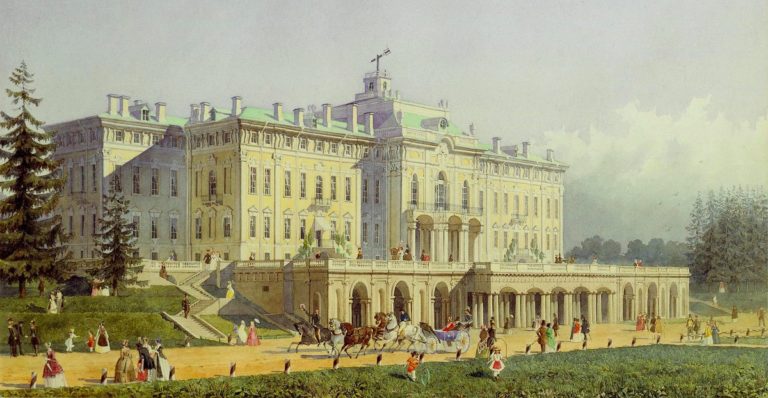
A 19th century painting of Konstantinovksy Palace, St. Petersburg
BY M. K. BHADRAKUMAR | INDIAN PUNCHLINE | OCTOBER 12, 2022
There was something profoundly meaningful that the President of the United Arab Emirates Sheikh Mohammed bin Zayed Al Nahyan undertook a visit to Russia amidst the gathering storms in Ukraine. Conscious of the symbolism, Russian President Vladimir Putin received Sheikh Mohammed on Tuesday in a grand setting befitting a monarch — at the gorgeous Konstantinovksy Palace in St. Petersburg whose heritage dates back to Peter the Great, a symbol of the revival of Russia and its cultural heritage.
The meeting of the two potentates couldn’t have been more timely. Sheikh Mohammed and his Saudi kinsperson, Crown Prince and Prime Minister Mohammed bin Salman Al Saud had just handed down a strategic defeat to a superpower in the geopolitics of oil, as the world community witnessed disbelievingly and understood that the sun has set on the American Century in international politics.
Putin too stands at the threshold of a historic victory over the combined might of the North Atlantic Treaty Organisation, which is poised to redraw the contours of the new world order. Putin told Sheikh Mohammed that the relations between Russia and the UAE are “an important factor of regional and overall global stability.”
Putin said, “I know that you are concerned about the entire situation that is developing, and I know about your desire to make a contribution to resolving all contentious issues, including the ongoing crisis in Ukraine. I would like to note that, indeed, this substantial factor makes it possible to use your influence to help gradually resolve the situation.”
The words were carefully chosen. Putin noted the UAE’s desire “to help gradually resolve the situation” in Ukraine, underscoring that a denouement is not in the cards in a near term. [Emphasis added.] However, the centrepiece of Putin’s remarks was something else — OPEC Plus where Saudi Arabia, UAE and Russia are virtually navigating the global energy markets.
Putin signalled that Moscow is not at all viewing the OPEC+ decision in zero sum terms. Rather, its aim is “to stabilise global energy markets, so that consumers of energy resources and those supplying them to global markets would feel calm, stable and confident, and so that supply and demand would be balanced.” Of course, embedded within this polite submission is a tough message to the G7 that any further attempt on their part to extend their weaponisation of sanctions to the global energy market is unacceptable and will be resisted and defeated.
These were Putin’s first remarks on the collective decision announced by the OPEC+ at its meeting in Vienna last Thursday to cut oil production by 2 million barrels per day. Putin concluded firmly that Russia will “respond to market requirements all the time, and we try to do this in line with current developments.”
Sheikh Mohammed unmistakably signalled that his visit focused on boosting its bilateral relations with Russia, especially in the economic sphere. As the western sanctions atrophy Russia’s flourishing economic ties with Europe, Moscow is turning to the non-Western world for partnerships, and reorienting its regional strategies. Putin has repeatedly stated that Russia will gladly engage with any country that stands up to western bullying.
The UAE has been quick to grasp that Russia prioritises the Emirates as a favoured destination to conduct business. The uniqueness of the UAE for Moscow lies in its dynamic environment for doing business as well as for opening a window for Russian industry to the Western world. Moscow has been receiving strong feelers from European partners about resuming business ties albeit indirectly. After all, the Russian market is synonymous with high business returns.
A crucial template here is Moscow’s appreciation of the growing emphasis by the UAE on preserving its strategic autonomy. The Russian elites admire Sheikh Mohammad for rapidly transforming the Emirates from an economy once reliant on fishing and pearls, to becoming a financial powerhouse and diverse economy, and providing a stable political system, strong capital flow, favourable taxation environment and liberal trade regimes.
Indeed, the UAE is now an attractive investment hub with a ‘2021 Vision’ of becoming the economic, touristic and commercial capital for over two billion people. As the Russians see it, these ambitious goals will continue to facilitate a hospitable, well-regulated and secure business ecosystem in the UAE. The World Bank’s Logistics Performance Index ranks the UAE among the top dozen out of 160 countries in terms of trade logistics.
Equally, Moscow does not envisage that it could be “business as usual” with the Europeans anytime soon — if ever. The the resuscitation of the West’s Nazi heritage to spite Russia and the destruction of the Nord Stream gas pipelines to punish Russia are only the culmination of an excessively obnoxious behaviour by the US and its allies to humiliate Russia over the decades — pouring scorn over its cultural heritages of language, literature, music, etc. out of sheer envy — in an appalling zest to “erase” Russia as a powerhouse. This has created deep wounds in the Russian psyche.
With 4,000 Russian companies operating out of the UAE, there is a rapidly growing Russian community in the Gulf region and Sheikh Mohammed noted that the Emirates will provide a friendly ambience for the Russian expatriates by approving the opening of the first Russian school in the Emirates. Conceivably, this must be the first such Russian school in that part of the world.
The Russian business community visualises the UAE as a prime launch-pad to access markets around the world. Its geographical location and amicable time zone (GMT +4), give businesses wishing to access markets in Africa, Asia and Europe a regional and business-centric hub from which to operate. Russia has set its sights high for expanding its relations with African countries, where it enjoys tremendous “soft power” dating back to the Soviet era.
In geopolitical terms, Sheikh Mohammed’s decision to travel to Russia to meet with Putin comes in the backdrop of the temper tantrums of the American political elites threatening to “punish” Saudi Arabia and the UAE. The Democrats have brashly called for the withdrawal of US troops in the UAE and Saudi Arabia and cutback on arms supplies.
These Neanderthal men ought to have become museum pieces by now. They do not comprehend that the West Asian elites have a cosmopolitan mindset and know these hollow men well enough, having interacted with them in their pristine years and watched stoically more recently as they began ageing, showing signs of exhaustion and senility.
By this visit to St. Petersburg, Sheikh Mohammed may have in his own astute way shown that such crude American threats will only be counter-productive. Earlier once, the Biden Administration had bullied him to sever the UAE’s relations with China to qualify for F-35 jets, whereupon, in disgust, he turned to France’s Rafale.
Russia, Saudi Arabia and the UAE have the potential to form a troika where each of the members augmented the political power of the other two members and at the same time collectively impacted the actual distribution of power in a multipolar world. The OPEC Plus has shown the way. Sheikh Mohammed’s meeting with Putin comes within the week of the OPEC Plus meeting in Vienna.
Lebanon and Israel finalize historic maritime border deal
The Cradle | October 11, 2022
Lebanon and Israel have agreed to a US-mediated maritime deal to demarcate the gas-rich blocks in the Mediterranean sea, seemingly putting an end to the prospect of an armed conflict.
In two separate statements by Lebanese and Israeli authorities, Beirut and Tel Aviv announced they have concluded all negotiations and will meet soon in Naqoura to sign the agreement.
“This is a historic achievement that will strengthen Israel’s security, inject billions into Israel’s economy, and ensure the stability of our northern border,” Israeli interim Prime Minister Yair Lapid said in a statement on Twitter.
A statement released by the office of outgoing Lebanese President Michel Aoun claims the deal “is satisfactory to Lebanon and meets its demands,” adding that it “preserves [the nation’s] rights to its natural wealth.”
In details revealed by Lebanese daily newspaper Al-Akhbar, all obstacles that led to a recent spike in tensions have been resolved, as both countries compromised with regards to the legal language used in the final draft.
The newspaper reveals that both sides agreed that Israel will be paid royalties from the Qana prospect field. However, the money will be paid from the revenue generated from the French oil company Total, not Lebanon’s share of the revenue.
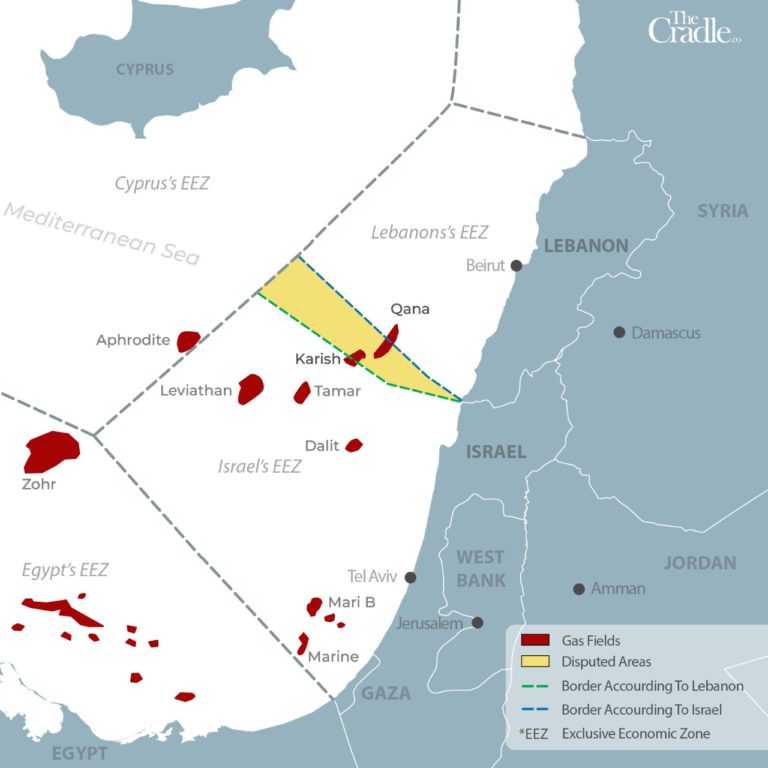
Map of the disputed maritime border between Lebanon and Israel. (Photo Credit: The Cradle)
As for the most pressing concern for both sides, Lebanon and Israel compromised in the legal language regarding the buoys deployed at sea to demarcate the various economic blocks.
According to the leaks, Lebanon insisted on adopting Line 20 while refusing to acknowledge that the line demarcates the maritime borders, but simply the blocks at sea.
Whereas Israel insisted on Line 31 which is going to be on the final draft between both countries.
Nonetheless, Lebanon will not acknowledge its effects on the land border demarcation, leaving the issue for indirect land-border negotiations.
In light of these developments, Lebanese caretaker Prime Minister Najib Mikati met on 11 October with the Lebanese Minister of Energy, Walid Fayyad, and a delegation from Total.
The delegation included the Director of Oil Exploration and Production Laurent Vivier, who was informed about the results of the negotiations and received a request to start operations.
Total informed the Lebanese side that the logistics of exploration need time, promising to start “as soon as possible.”
Similarly, Israeli National Security Council Chairman Eyal Hulta announced that all of Israel’s demands have been met.
“Israel’s security interests have been preserved. We are on our way to signing a historic agreement,” Hulta said.
According to Israeli Minister of Defense Benny Gantz, the current state of alert at the norther border with Lebanon came as a result of credible intelligence information about Hezbollah’s plans to launch an attack had Israel started to extract gas from the Karish gas field before a deal was concluded with Lebanon.
Similar assessments were made by the foreign intelligence services of several western countries.
This attack would have fulfilled the promise made by the Secretary General of Hezbollah, Hassan Nasrallah, who reiterated on several occasion that only mutual access to the gas reserves will be permitted.
“Israel, the US, and EU all know we are not bluffing. They have enough proof of that,” the resistance leader said during a televised speech in September.
Russia to nationalize assets of Japanese carmaker – trade ministry
Samizdat | October 11, 2022
Japanese carmaker Nissan will sell all its Russian assets to state-owned research and development firm NAMI, the trade ministry has said.
The deal, worth a symbolic sum of €1, was approved by the Japanese corporation and includes a plant in St. Petersburg and sales and marketing facilities in Moscow.
“We have managed to reach a formant where the enterprise remains operational. Key competencies, the production cycle and jobs are preserved,” Russia’s Trade Minister Denis Manturov said in a statement on Tuesday.
Nissan has some 2,000 employees in Russia and after the transfer is completed NAMI will be able to attract other companies as production partners to create joint ventures.
According to the minister, Russian carmaker AVTOVAZ will carry out maintenance services for Nissan vehicles, as well as supply spare parts. The deal will give Nissan the right to buy back the business within six years, the trade ministry said.
The scheme is almost identical to the withdrawal of Renault, a member of an alliance with Nissan. In May, the French carmaker’s 68% stake went to NAMI and its factory in Moscow, which produced cars under the Renault and Nissan brands, was transferred to the city government.
Meanwhile, Nissan reported on Tuesday an estimated loss of $686.2 million from leaving the Russian market.
In 2009 the manufacturer started producing SUV models such as the X-Trail and the Qashqai at its plant in St. Petersburg. The Japanese carmaker suspended production there in March due to supply-chain disruptions, following the conflict in Ukraine.
Moscow aims to ensure balanced global energy market
Samizdat | October 11, 2022
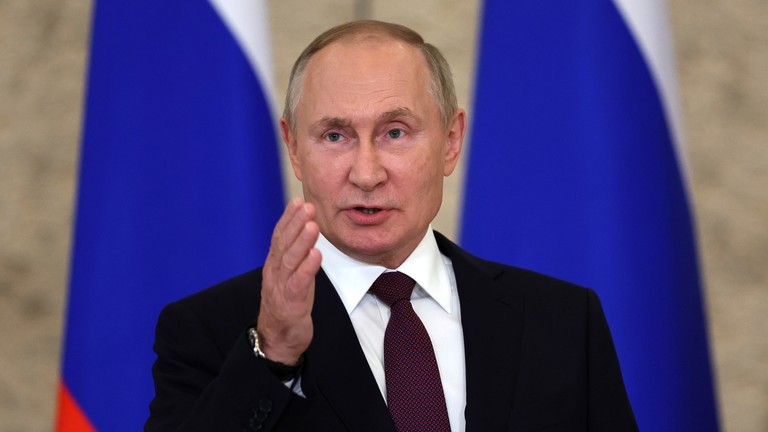
Russia’s actions regarding energy resources are aimed at ensuring market stability, and not creating obstacles for anyone, President Vladimir Putin said on Tuesday while meeting with his UAE counterpart, Mohammed bin Zayed Al Nahyan, in St. Petersburg.
The leader of the UAE is on an official visit to Russia to discuss cooperation between the two countries, as well as regional and international issues.
“We are actively working within the framework of OPEC+. I know your position, our actions, our decisions are not directed against anyone … They are aimed at stability in the world energy markets, so that both consumers of energy resources and those involved in their production, as well as suppliers feel calm, stable and confident. So that the supply and demand will be balanced,” Putin said.
Last week, the Organization of the Petroleum Exporting Countries and allies (OPEC+) agreed to an oil production cut of 2 million barrels per day starting in November. The reduction, which is the largest output cut since early 2020, was approved despite US pressure to pump more. It is expected to stem the latest slide in global oil prices.
US President Joe Biden expressed disappointment with the decision, and Treasury Secretary Janet Yellen called the move “unhelpful and unwise.”
Russian Deputy Prime Minister Aleksandr Novak, who attended the OPEC+ meeting, said that the output cut is necessary to balance the market before the seasonal decline in demand.
According to Kremlin spokesman Dmitry Peskov, Washington seeks to force through its decisions regarding the oil market and manipulate prices, even at the cost of destabilizing the global energy market.
Analysts interviewed by Bloomberg warn that the output cut may lead to a jump in oil prices above $100 a barrel and force the US to tap its strategic reserves. They also believe that Russia may introduce even larger output cuts than those announced by OPEC+ in response to the introduction of an oil price cap by the EU last week. Given the rise in oil prices, Russia’s oil export profits are unlikely to suffer even with production cuts, they say.
Featured Video

The Truth About the Trump Shootings with Ken Silva
or go to
Aletho News Archives – Video-Images
From the Archives
The Geopolitics behind the War in Yemen (I)
By Mahdi Darius NAZEMROAYA | Strategic Culture Foundation | 30.03.2015
The United States and the Kingdom of Saudi Arabia became very uneasy when the Yemenese or Yemenite movement of the Houthi or Ansarallah (meaning the supporters of God in Arabic) gained control of Yemen’s capital, Sanaa/Sana, in September 2014. The US-supported Yemenite President Abd-Rabbuh Manṣour Al-Hadi was humiliatingly forced to share power with the Houthis and the coalition of northern Yemenese tribes that had helped them enter Sana. Al-Hadi declared that negotiations for a Yemeni national unity government would take place and his allies the US and Saudi Arabia tried to use a new national dialogue and mediated talks to co-opt and pacify the Houthis.
The truth has been turned on its head about the war in Yemen. The war and ousting of President Abd-Rabbuh Manṣour Al-Hadi in Yemen are not the results of «Houthi coup» in Yemen. It is the opposite. Al-Hadi was ousted, because with Saudi and US support he tried to backtrack on the power sharing agreements he had made and return Yemen to authoritarian rule. The ousting of President Al-Hadi by the Houthis and their political allies was an unexpected reaction to the takeover Al-Hadi was planning with Washington and the House of Saudi. … continue
Blog Roll
 Aletho News
- Pakistan-Iran talks secure LNG shipment to Islamabad through Hormuz
- Black Sea grain crisis puts global wheat supplies under pressure
- IRGC air defenses destroy another US MQ-1 drone over Strait of Hormuz
- Imran Khan’s entire immediate family detained in Pakistan ahead of mass protest demanding his release
- EU nation detains former presidential frontrunner
- Leaked: Britain’s Sham Conviction Of Hashim Thaci
- Seyed M. Marandi: U.S. Strike Imminent – Toward Total War in the Middle East
- Russia Voted Under Fire. Washington Is Loading the Tankers.
- 12 Things Your Oncologist Was Trained Not to Tell You
- Anthrax Attacks Paved Way for COVID-Era ‘Junk Drugs and Vaccines’
- If Americans Knew
- Trump’s militarization of Washington DC as he pursues Israel’s war against Iran
- Why Israel Fears This Searing New Documentary
- Huckabee aide solicited cash gifts from Israelis
- This isn’t sci-fi, AI is already killing people
- ‘The Most Brutal Thing’: Investigation Reveals Execution of Elderly Woman in Rafah
- Inside Israel’s ‘soft’ ethnic cleansing plan for Gaza through the eyes of its victims
- New online database tracks pro-Israel political donations in the United States
- Israeli president pardons soldier convicted for killing wounded Palestinian
- Singer Ed Sheeran says his ‘heart broken’ by Gaza devastation, addresses Macklemore controversy
- Israel Has Imprisoned Female Journalist Bushra Al-Tawil Without Trial Or Charge In Solitary Confinement For Past Month
- No Tricks Zone
- 2025 Nature Paper Claiming Worsening Global Drought Gets RETRACTED …Heavily Flawed
- New Study: ‘Global Drought Shows No Detectable Recent Acceleration Under Climate Warming’
- Economic Masterminds: German Socialists Suggest Taxing Productivity Gains Stemming From Using AI
- The South China Sea Has Not Been Cooperating With The Climate Change Narrative
- Energy Crisis: Germany Enters Heating Season With Historically Low Gas Reserve Fill Levels
- New Study: The Antarctic Ice Sheet Gained Mass From 2020-2024 Due To Staggering Snow And Ice Accumulation
- Study: Ocean Heating Rates From Thousands Of Years Ago ‘Dwarf’ Modern Ocean Heating Rates
- Climate Extremists Target, Attack Large-Scale Power Grid Infrastructure In Germany!
- New Study: Antarctic Ice Melt Has Contributed Less Than 1 Centimeter To Sea Level Rise In The Last 30 Years
- Fear Of Debate: Alarmist German Climate Scientist Calls On Mainstream Media To Discredit Skeptic Voices
 Aletho News