EU farmers warn of food shortages

Samizdat | September 25, 2022
Vegetable producers across northern and western Europe are considering halting operations, thus further threatening food supplies, as a result of the energy crisis hitting the continent, Reuters reported this week.
According to the report, skyrocketing power and gas prices are the biggest cost facing vegetable farmers employing greenhouse cultivation. Two French farmers renewing their electricity contracts for 2023 told the media outlet they were being quoted prices more than ten times higher than in 2021.
“In the coming weeks I will plan the season but I don’t know what to do,” said Benjamin Simonot-De Vos, who grows cucumbers, tomatoes and strawberries south of Paris. “If it stays like this there’s no point starting another year. It’s not sustainable.”
Johannes Gross, deputy sales manager at the German cooperative Reichenau-Gemüse, told Reuters : “We face an overall increased production cost of around 30%. Some colleagues are thinking about leaving their greenhouses empty to keep the costs as low as possible. Nobody knows what will happen next year.”
The soaring costs of fertilizer, packaging and transport have also been adding to the pain. Even in countries with abundant sun, such as Spain, fruit and vegetable farmers are grappling with a 25% jump in fertilizer costs.
As farmers across the EU warn of shortages, supermarkets may switch to sourcing more goods from warmer countries such as Morocco, Turkey, Tunisia, and Egypt, the report says.
Germany’s “Tenfold Increase In Gas And Electricity Prices” Is Driving Out Industry
Europe’s energy policy is creating jobs – for the USA
By P Gosselin – No Tricks Zone – September 23, 2022
What leaves once, will not come again. While energy prices in Europe are going through the roof, they remain moderate in the USA. This will have serious consequences for energy-intensive industries.
The Wall Street Journal (paid article) is already rubbing its hands together for the US economy. It is twice beneficial: high prices for LNG exports and new jobs in the future. It’s Win/Win – Lose. One of the losers for Germany is Areclor-Mittal. Now they are turning down the first blast furnace. Here, too, the USA is profiting. The FAZ reports:
Arcelor-Mittal, the world’s largest steel producer, is shutting down two production facilities at the end of September due to high energy prices in Germany. “Until further notice,” one of the two blast furnaces at the plate steel site in Bremen will be shut down. And the direct reduction plant at the Hamburg long steel mill is also to be shut down. In addition to the already high costs for gas and electricity, the gas surcharge planned from October will place a further burden on the competitiveness of energy-intensive plants, it says in justification. ‘With a tenfold increase in gas and electricity prices, which we had to accept within a few months, we are no longer competitive in a market that is 25 percent supplied by imports,’ Germany CEO Reiner Blaschek is quoted as saying in a statement from Arcelor-Mittal.
In order to avoid gas consumption in Hamburg, the precursor iron is now being purchased from America in order to be able to continue production – more cheaply, but with a higher CO2 footprint. Reduced work hours is also being introduced at the production sites in Duisburg and Eisenhüttenstadt due to the difficult situation.”
From Suicide to Dead and Buried… Germany Now Provokes China
By Finian Cunningham | Strategic Culture Foundation | September 23, 2022
Not content with committing its nation to economic suicide from deteriorating Russian relations, the German government now wants to bury the corpse by sabotaging trade relations with China.
Robert Habeck, Germany’s trade minister, has riled Beijing by telling a G7 summit last week that Berlin was aiming to adopt a new China policy to “reduce economic dependency”. Habeck said Germany would strive to take tougher controls over Chinese foreign investment and move away from German reliance on China for key commodities such as semiconductors, batteries and other electronics.
Sounding tough in front of other Western members of the G7 forum (a redundant elite club if ever there was one), Habeck said, “the naivety towards China is over”. He said that trade relations would no longer be viewed in isolation from alleged human rights violations and other international concerns, presumably meaning China’s alleged hostility towards Taiwan.
Beijing slammed Habeck’s remarks and retorted that he was the one who is being “naive” in seeking to damage mutually beneficial bilateral relations.
German Chancellor Olaf Scholz doubled down on the provocation at the weekend when he was asked about China’s position on Taiwan. Scholz implied that Beijing was the hostile party in recent tensions over the breakaway island territory. He cautioned China: “It is important that we ban violence from international relations.”
It was another red flag being waved by Berlin in China’s face. Scholz doesn’t seem to realize, or doesn’t want to realize, that Taiwan is a sovereign part of China. That is the legal fact of treaties at the United Nations and the internationally accepted One China Policy. It is the United States, Britain, Australia, France and Germany that are increasingly deploying military forces in China’s territorial waters that are causing dangerous tensions and obliging Beijing to take a tougher position on defending its sovereignty, including its rightful claims over Taiwan.
What are the German leaders playing at? The recklessness of their stance and the damage being inflicted on the nation’s economy make you wonder whose interests are they serving. Certainly, it would seem, not the interests of the German population.
Germany, the economic engine of the European Union, is crashing headfirst from its insane sabotage of energy trade with Russia. It reminds you of those slow-motion car crash tests where dummies are flung into the windscreen. Now it’s heading for a Chinese wall.
The self-imposed cutting off of gas supply from Russia is wrecking German industry and plunging the population into a winter of misery of untold poverty and hardship. Many observers including Russian President Vladimir Putin are baffled by the willful embrace of economic suicide that the German government is rushing into.
For decades, the German export-led economy has been driven by a copious supply of low-priced Russian natural gas and oil. The coalition government in Berlin, which took over from Angela Merkel’s administration at the end of last year, has cut off links with Moscow as part of its support for Washington’s policy to isolate Russia. Germany has gone all in to support the U.S.-backed Kiev regime with heavy weapons supplied to Ukraine in a war with Russia.
So much for Scholz’s admonition to China to “ban the use of violence in international relations”. Berlin is fueling the conflict in Ukraine and along with the U.S. and other NATO powers is preventing any diplomatic process to find a peaceful resolution with Russia.
If the death blow to the German economy was not bad enough from the reckless policy toward Russia, now Berlin wants to kill relations with Beijing.
China is Germany’s top trading partner for the past six years. Bilateral trade has grown steadily. This year’s commerce is heading to surpass the 2021 record high of over $240 billion in Chinese-German trade.
With its 1.4 billion population, China is a vital market for Germany’s exporters, especially the all-important auto industry that drives the German economy. Nearly 40 percent of global sales for Volkswagen, Audi, BMW and Mercedes are in China, spurred by the latter’s phenomenal economic development.
The Berlin government is putting its economic lifeline with China at risk by adopting a policy of wantonly provoking Beijing. In this, the German “leaders” are following Washington’s bidding. They have done this with regard to sabotaging Russian relations. Now they are bent on repeating the folly toward China.
It is notable that Habeck, the German trade minister, is a member of the Greens in the coalition government with Scholz’s Social Democrats. The other senior Green in the coalition is Annalena Baerbock who is the foreign minister. Both of them are pushing an irrational ideological position of damaging Russian and Chinese relations. The Greens want to convert Germany to renewable energy sources like wind and solar power. That’s how they justify doing away with Russian hydrocarbons. But the calculation is woefully misplaced. German industries and the wider population need Russian gas to run their factories and heat their homes. The folly of cutting off Russian energy is backfiring big time. The absurdity is that Germany is now going back to dirty fuel from coal in order to desperately fill the power vacuum that has been self-inflicted by Green ideologues.
More than Green ideology, however, is the real underlying ideology of Russophobia and Sinophobia. Habeck and Baerbock are blinded by their subservience to Washington’s transatlantic agenda of dividing Europe from having normal neighborly relations with Russia and China.
Washington’s agenda is to promote U.S. hegemony and its presumed unipolar dominance in international relations. In short, American imperialism.
An extension of that agenda is to incite antagonism toward China. The encirclement of Russia goes hand in hand with the encirclement of China. It is no coincidence that as Washington escalates tensions with Moscow over Ukraine and NATO encroachment, it is also feverishly inciting tensions with China over Taiwan and dubious allegations of human rights violations by Beijing.
U.S. President Joe Biden’s administration and Congress are pumping weapons into Ukraine and Taiwan in a deliberate and one could say criminal bid to provoke military confrontation. The U.S. capitalist economy needs tensions and conflict to sustain its military-industrial complex, the beating heart of American capitalism.
If Germany’s Chancellor Scholz had any independence of thought, he would be better to remonstrate with Washington over the use of violence in international relations.
But there is no chance of Scholz and his government ever doing that. They are lackeys for Washington and are hopelessly brainwashed with ideological nonsense, Russophobia and Sinophobia.
This winter is already coming with dread for Germany and the wider European population over the policy choice to trash the cornerstone of Russian energy relations. With the further damage to German-Chinese relations, the Berlin political elite are shooting Germany and Europe in the head – twice.
German industries, businesses and workers are incensed by the stupidity of their so-called government which is more accurately described as a Washington-backed regime in Berlin. Angry protests on the streets witnessed in recent weeks in Germany and elsewhere across Europe against self-inflicted economic misery are but a foretaste of the explosive social unrest brewing.
Failed Zero Covid Policy Cost Australia Over $938 Billion, Report Finds
BY MORGAN BEGG | THE DAILY SCEPTIC | SEPTEMBER 22, 2022
The danger in the post-lockdown era is that in our rush to move on we forget the hard lessons that have been learned about this catastrophic public policy failure.
On the basis of alarmist modelling, often commissioned by governments and amplified by sensationalist media, panicked politicians discarded all basic ideas about proportionality and the rule of law to criminalise everyday life and exert unprecedented controls over the citizenry.
From the beginning of the pandemic in March 2020, all Australian governments adopted the attitude that any public health mitigation measure was on the table, and little to no consideration was given to the costs of the measures that were adopted.
This is the subject of new research published by the Institute of Public Affairs, which for the first time in Australia calculates many of the costs of the nation’s Covid zealotry up to June 2022. In the report, Hard Lessons: Reckoning the Humanitarian, Economic, and Social Costs of Zero-Covid, we find that the total economic and fiscal cost of the Australian COVID-19 response was no less than A$938.4 billion (£550.6 billion) to June 2022. This report identifies:
- $595.8 billion in state and federal Government to enforce Covid policies and stimulate the economy;
- $259.8 billion in lost economic activity because of the restrictions and economic shutdowns;
- $82.8 billion in inflation related costs due to expansive monetary and fiscal policies, a cost which is set to only increase more and more over the next couple of years.
The research also calculates how much children suffered in terms of schooling. Despite being the safest cohort in society when it comes to COVID-19, children were routinely sent home to learn remotely or not learn at all. We estimate children in the state of Victoria would have lost about 12 weeks of reading skills and 17 weeks of numeracy skills, something which for many will never be recovered.
Even on the most basic metric, lockdowns failed. In terms of the number of years of life, the costs of joblessness because of the initial nationwide lockdowns in March and April 2020 were about 31 times more costly than the maximum possible years of life saved by lockdowns throughout 2020 and 2021.
Even in the state of Victoria, whose Labor Government enthusiastically established a world-renowned Covid police state, politicians are no longer touting their pandemic response in the lead up to the state election in November.
Likewise, the former federal Liberal/Nationals Coalition Government, which was voted out of office earlier this year, rarely boasted of its Covid response.
Governments of the Covid era appear to have accepted the failure of the Covid-elimination approach, but rather than confront the reality of this failure are just pretending that it never happened.
This is not about living in the past, because the reality is we are still bearing the costs now. In terms of the resulting mental health crisis, lost learning, shuttered businesses, Government debt and inflation, we are not likely to know the full costs of the Covid response for many years to come.
Our future wellbeing as a society also demands that we remember the hard lessons of the Covid response.
We will need to deal with pandemics in the future, and it is critical to know what went wrong, and how these failures came to be.
Australians were subject to the harshest restrictions on their way of life in their history, and we should be demanding not that it should be forgotten, but that it should be remembered so that it doesn’t happen again.
Morgan Begg is the Director of the Legal Rights Program at the Institute of Public Affairs in Melbourne, Australia.
No, Lockdown Instigators Do Not Deserve the Benefit of the Doubt
The damage that lockdowns would cause was far too well known, uneven, and catastrophic to assume their chief instigators must have had good intentions.

By Michael P Senger | The New Normal | September 20, 2022
In the United States, some 2,000,000 people—over 1% of adult men—currently reside in prisons and jails. In America’s poorest cities, crime and law enforcement are intertwined with life to such a degree that many children grow up more familiar with the justice system than the education system. For kids who grow up in these circumstances, getting through school while staying out of jail is a feat worth celebrating.
Some of this is, of course, necessary to maintain a peaceful society in a country as open and unequal as the United States. But the American political-prison-industrial complex is also riddled with perverse incentives. As Supreme Court Justice Neil Gorsuch put it: “We live in a world in which everything has been criminalized. And some professors have even opined that there’s not an American alive who hasn’t committed a felony under some state law.” We’ve even developed an Orwellian lexicon for this system; the term “crime of moral turpitude” is a tacit admission that America’s statutes are riddled with crimes that do not actually involve “moral turpitude”—it’s puzzling why these should be considered crimes at all.
Worse yet, an estimated 5% of convicts are actually innocent. That means there are currently some 100,000 Americans in prisons and jails who didn’t even commit the crimes for which they were charged. The sad truth is that just living in one of America’s poorest neighborhoods comes with some risk of incarceration; the more people around who are convicted, the greater the odds of becoming an innocent convict oneself. Juries do their best, but they’re beset by the usual human biases. Judges know all too well that verdicts often come down to such irrelevant factors as the defendant’s charisma, physical attractiveness, or even what the jury had for breakfast that morning.
Mass incarceration is one sad byproduct of inequality and community deterioration in the 21st century. But an even worse byproduct of that inequality is an entire caste of western elites who’ve begun to manipulate the system to exempt themselves and their supporters from the rule of law to a degree not seen since the rise of the fascist regimes of the 1930s. And in no instance has this been made more clear than in the promulgation of Covid lockdowns into policy in early 2020.
Lockdowns, or the shutting of businesses and community spaces with the force of law, were unprecedented in the western world prior to Xi Jinping’s lockdown of Wuhan and weren’t part of any democratic country’s pandemic plan; rather, these pandemic plans suggested only voluntary social distancing measures. While lockdowns bore some facial resemblance to the voluntary social distancing measures contemplated in pandemic plans, this similarity was no coincidence, as the concept of “social distancing” in its origin was lifted by the US CDC straight from the Chinese Communist Party policy of “lockdown” as imposed during SARS in 2003. Further, some leading federal officials have disclosed that at the time they recommended temporary social distancing measures for Covid, they did so with the intent that state governors would enforce them as indefinite forced lockdowns.
As former UN Assistant Secretary-General Ramesh Thakur has documented in scrupulous detail, the harms that lockdowns would cause were all well-known and reported at the time they were first adopted as policy in early 2020. These included accurate estimates of mass deaths due to delayed medical operations, a mental health crisis, drug overdoses, an economic recession, global poverty, hunger, and starvation.
Yet regardless, for reasons we’re still only beginning to understand, some key scientists, health officials, national security officials, media entities, international organizations, billionaires and influencers advocated the broad imposition of these unprecedented, devastating policies from the earliest possible date, ostensibly to stop or slow the coronavirus as the CCP claims to have done in Wuhan, while censoring any contrary opinions, spinning a false illusion of consensus amongst an unknowing public. A report later revealed that military leaders saw this as a unique opportunity to test propaganda techniques on the public, shaping and “exploiting” information to bolster government messages about the virus. Dissenting scientists were silenced. Psyops teams deployed fear campaigns on their own people in a scorched-earth campaign to drive consent for lockdowns.
These early advocates of lockdowns inverted the definitions of key public health principles in sophisticated, Orwellian fashion. While the lockdowns they advocated were deliberately intended to overturn existing public health practices, they instructed the public to “follow the science,” leading the public to believe that their policies were grounded in established scientific practice. They used the rhetoric of equity and vulnerability to advocate policies that disproportionately harmed the most vulnerable and increased existing economic divides. They then retroactively cited the broad public support for lockdowns that had been sown by their own propaganda as justification for their propaganda in support of those lockdowns.
Ultimately, these lockdowns failed to meaningfully slow the spread of the coronavirus and killed tens of thousands of young people in every country in which they were tried. We now know the virus had already begun spreading undetected all over the world by fall 2019 at the latest and had an infection fatality rate under 0.2%.
However, the lockdowns caused the public to believe that the virus was hundreds of times deadlier than it really was. Simultaneously, the World Health Organization issued global PCR testing guidance—using tests later confirmed by the New York Times to have a false positive rate over 85%—pursuant to which millions of cases were soon discovered in every country. Additionally, the WHO issued new guidance on the use of mechanical ventilators to member nations; over 97% of those over age 65 who received mechanical ventilation in accordance with this guidance were killed.
Terrified by this surge of deaths and the psychological terror campaigns deployed by governments on their own people, populations across the western world proceeded to impose an ever-darker swathe of illiberal mandates including forced masking and digital vaccine passes for everyday activities. Young children, who were at virtually no risk from the virus, lost years of primary education in the worst education crisis since the end of the Second World War. An indefinite state of legal emergency was imposed which continues to this day. The global fight for human rights and the end of poverty was set back decades.
Over $3 trillion in wealth was transferred from the world’s poorest to a tiny number of billionaires and their supporters, predominantly in China and in the tech and pharmaceutical industries. Several key early lockdown proponents indicated that they saw Covid as an opportunity to “entrench a new idea of the left … reconstructing a cultural hegemony on a new basis.” Authoritarian regimes grew more autocratic, and democratic governments took on authoritarian characteristics.
Worst of all, a norm was grafted onto western democracy that the fundamental rights to movement, work, association, bodily autonomy, and free expression, for which our forebears fought so tirelessly, can be suddenly and indefinitely suspended, without precedent, analysis, or logic, based on nothing but vague promises that doing so will “save lives” — rendering them all but moot.
Meanwhile, the lockdowns and mandates led to the deaths of over 170,000 Americans and proportionate numbers in countries that imposed them across the western world. By 2021, lockdowns had killed over 228,000 children in South Asia. Studies of excess deaths indicate that lockdowns led to several million deaths in India and proportionate numbers in other developing nations.
A million here, a million there, pretty soon you’re talking real atrocities.
These numbers do not even begin to count the total damage that will ultimately ensue due to the economic devastation of lockdowns, which we will continue to witness for many years to come. Many early lockdown proponents may never be among the 2,000,000 Americans currently residing in jails and prisons, but we can be sure that thousands more would-be innocent children will one day be added to the prison rolls as a result of the economic destruction their policies unleashed.
Ladies and gentlemen, this case ultimately comes down to whether, unlike the other 2,000,000 Americans currently in state custody, we can be sure that by virtue of their socioeconomic position and the panic over a virus which panic they deliberately stoked with their own policies, this handful of key early lockdown proponents acted in good faith when they convinced the world to adopt these unprecedented, catastrophic policies based on the belief that China eliminated the virus from an entire country by shutting down one city for two months—so sure that the question demands no further inquiry. I leave that for you to decide.
EU Commission head issues veiled threat to Italy
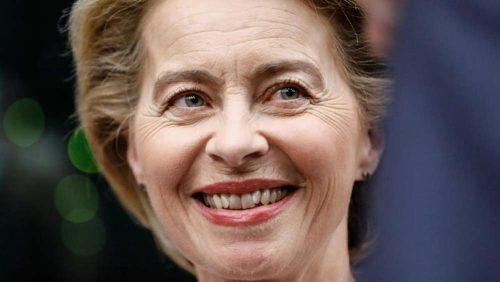
Samizdat | September 23, 2022
The EU has “tools” to respond if the political situation in Italy goes in a “difficult direction,” European Commission President Ursula von der Leyen said on Thursday. She hinted that the country could face punishments such as those recently leveled against Hungary and Poland if the upcoming election results in the predicted right-wing sweep.
“My approach is that whatever democratic government is willing to work with us, we’re working together,” she said in response to a question over whether she had “concerns” about Sunday’s Italian parliamentary vote, in which the conservative Fratelli d’Italia (Brothers of Italy) are projected to take first place.
“If things go in a difficult direction, I’ve spoken about Hungary and Poland, we have tools,” von der Leyen explained.
While EC spokesman Eric Mamer was quick to clarify that von der Leyen was merely “stressing the role of the Commission as guardian of the [European] treaties with regard to the rule of law,” not everyone interpreted her words that way.
Matteo Salvini, leader of the populist League party, denounced von der Leyen’s “shameful arrogance” and called on the EC to “respect the free, democratic and sovereign vote of the Italian people!” In the last round of polls earlier this month, the League was projected to take home 12% of the vote.
The EC earlier this month recommended suspending €7.5 billion ($7.5 billion) in funding to Hungary – a third of the money it receives from Brussels – over alleged “erosion of the rule of law.” Brussels leveled a similar punishment at Poland last year after the country’s constitutional tribunal found that some Polish laws override those of the EU.
Italy’s snap parliamentary election was triggered by the resignation of PM Mario Draghi in July after his partners in the ruling coalition abandoned him. As of September 9, when the blackout on publishing election polls took effect, the Fratelli d’Italia were estimated to take 25% of the vote. In addition to the League’s 12%, coalition partner Forza Italia is predicted to garner 8%, meaning a victory for the conservative bloc is easily within reach. Fratelli d’Italia barely won 4% of the vote in 2018.
Like the rest of the EU, Italy has been wrestling with a cost-of-living crisis exacerbated by bloc-wide sanctions on Russian oil and gas. A general election had previously been set for next year.
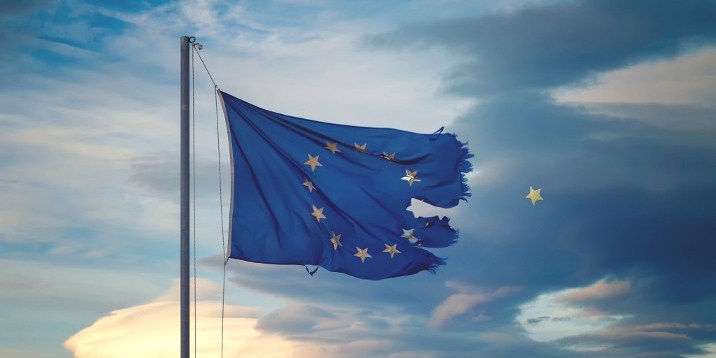
A Failed Globalist Experiment
By Eamon McKinney | Strategic Culture Foundation | September 22, 2022
European unity was always a questionable concept between a collection of diverse countries who have historically distrusted and disliked each other. The strength of that always questionable unity is now being tested as the EU is facing its greatest challenge. The initial enthusiasm among EU leaders for the conflict with Russia has waned considerably in recent months as the reality of its ludicrous and self-destructive war on Russia continues to backfire spectacularly on them.
With the long hot European summer now behind them the citizens of Europe are rising up in protest against their governments in huge numbers. While national leaders continue to lecture their people on the necessary sacrifices they must make to support Ukraine, fewer and fewer agree with them. With rapidly rising costs of living and the prospect of a winter without heat, anger against national governments is rapidly reaching breaking point. Germany, France, The Czech Republic, Austria and Italy have witnessed immense angry demonstrations that are seriously panicking their governments. To the extent that many are now trying to backtrack and seek solutions outside of EU directives, Hungary and Serbia have refused to tow the party line and have secured their energy interests with Russia. While the EU has demanded an energy sharing scheme among its member states, only energy-starved Germany seems keen.
Germany was the main economic beneficiary of the EU and it used its considerable influence to impose harsh conditions on the weaker EU states, Greece, Ireland, Italy, Portugal and Spain in particular. Understandably these countries are reluctant to share their energy reserves with a country that showed little compassion for them following the 2008 financial crisis. German industries have benefited from low-cost energy from Russia for years which has greatly contributed to their global competitiveness. It was enthusiastically looking forward to the Nord Stream 2 pipeline until America intervened and forced its cancellation. Now German energy giants are seeking government bailouts to avoid bankruptcy, the once dominant manufacturing sector is facing complete destruction unless a rapid rapprochement with Russia is made. Even in that unlikely event, the damage to the German economy is done and any recovery could take years.
In a widely distributed talk, German foreign minister Annalena Baerbock (who no surprise is another WEF graduate) said that she will stand with Ukraine regardless of what the German voters think. A more honest translation would be that she stands with the WEF Globalists’ agenda and that the German people’s interests are not a consideration. If she gave a damn about the Ukrainian or the German people she would be trying to stop the war, but peace and the preservation of European lives are not the objectives. However repulsive her statement, it echoed exactly the sentiments of all the EU leaders, she represents her constituency perfectly, but that constituency is not the German people, it’s the Globalists.
An example of just how ridiculously inept and detached from reality the EU is can be found in their call for a price cap on Russian energy imports. Exactly how they think Russia will respond to that requires us to credit them with thinking at all, as several nations rightly pointed out, Russia will just stop all energy supplies. Many, among them France’s Macron has called for a price cap on all energy imports, not just the Russian ones. While America is fine with a European price cap on Russian energy, it strongly opposes it on U.S. energy imports. The destruction of its valued friend and ally Europe is just fine with America as long as there is a buck in it from them.
While increasingly angry citizens are demanding that their governments put national interests above those of Ukraine, they are largely missing the point. The interests of the Ukraine were never a consideration, the conflict was always about America’s obsession with the destruction of a rising Russia. The people of the Ukraine are just collateral damage in what is essentially just another bankers’ war for the interests of the Globalist financial powers. As Europeans are now belatedly beginning to understand, they are also just being considered more collateral damage in the furtherance of that Globalist agenda. None of the European leaders have any solutions to the crisis which they so enthusiastically led their countries into just a few months ago. Cold showers and Spartan energy rationing are not the solutions to the problem that the people want to hear. Preaching that they must sacrifice their futures for the Ukraine works better in the hot summer months than in the imminent cold, very cold European winter. Platitudes from Klaus Schwab’s puppet leaders are not going to placate cold hungry European people any longer. A brutal winter of discontent is inevitable for Europe, as temperatures drop the heat will rise against the politicians who sold out their countries’ interests to the Globalists. We can expect to see governments falling across Europe as public anger becomes uncontrollable.
The panic is not just being felt in European circles, The U.S. is also deeply concerned about the strength of European unity, or rather the lack of it. Biden has on more than one occasion called for Europeans to stay united in its proxy war against Russia. Biden is worried that any diversion from its sanctions against Russia will cause a split in the bloc. A rare moment of clarity from the senile U.S. President. The U.S. is very closely monitoring the unrest in Europe. While examining the results of its handiwork it might notice that while among the Western puppet leaders fractures are indeed increasing, unity among the peoples of the European nations is only growing stronger in common cause. The recent farmers’ protest in Holland was supported by farmers from all the European nations in a demonstration of true unity against the Globalist agenda. A unified cross border, anti-government movement is not the European unity Biden or the NATO warmongers had in mind. They will find that controlling corrupt Globalist European politicians is easier than controlling millions of angry, cold and hungry citizens.
Demonising Putin as the author of all Europe’s woes may have worked at the outset of the conflict, but no more. None of the many demonstrations being witnessed are aimed at Putin or Russia, the target of the ire is firmly against the governments that sold out their nations sovereignty to a globalist/U.S. elite. It is likely that Putin is more popular among Europeans in the know than the incompetent puppets running their own countries into the dirt. While Putin has now stopped the energy flow into Europe he has more cards yet to play. Uranium, fertilisers and foodstuffs among many other essentials are all still supplied to Europe, for now. The destruction of Europe is not in Russia’s interests, Putin doesn’t blame the people, he just hopes that they will wake up and recognise the true enemy.
The coming months will be a time of immense turmoil in Europe, great suffering is inevitable for millions of people sacrificed by their governments on the altar of globalisation. How long the EU can keep it together is the big question, few in Europe would be sad to see its demise. What many first considered a noble enterprise has now been exposed as an undemocratic institution that answers not to the people, but to a corporate oligarchy that owes no affiliation to any nation. In the tragedy that is the Ukrainian conflict some good may yet emerge. If European countries can restore their national sovereignty by exiting the widely despised EU they would be liberated from globalist control and be free to peacefully pursue their own legitimate national self-interest. The way it is supposed to be, the way the majority of European people want it to be. Strong “Exit” movements have existed in all of the member nations for years, Italy and Holland’s movement in particular had huge public support. The UK’s “Brexit” showed it can be done despite immense anti-Brexit propaganda, in a referendum, the people voted to leave. In light of more recent events, a referendum on exiting the EU would likely succeed in most countries.
The EU is a failed Globalist experiment, it never offered more than the pretence of a true democracy, at the unelected top, it was always a technocracy of hand-picked corporate frontmen. It has destroyed the economies of all its members through incompetence and corruption. It has caused chaos and social unrest in communities through forcing mass immigration on unwilling countries. It has interfered in the internal affairs of member states way beyond any powers granted them. It has presumed to write new laws which take primacy over a nation’s own justice system. It has created absurd new layers of bureaucracy and regulations which make European business’s largely uncompetitive globally. It is now dominated by the WEF and Klaus Schwab’s minions who are pushing the Great Reset and consider the Ukraine conflict as a step towards it. Statements made, such as that delivered by Annalena Baerbock on where her loyalties lie, should outrage all Europeans, it should also enlighten them.
Events this winter may well determine the future of Europe for the next century. Whether it is a Europe united with Russia as a peaceful trading partner, or a Globalist Third World hell hole, the European peoples’ actions in the coming months will decide which.
Massive rally in Brussels over cost of living
Samizdat | September 21, 2022
Thousands of demonstrators took to the streets of Brussels on Wednesday for a “national day of action” to demand higher wages and lower energy prices. According to police, over 10,000 people descended on the Belgian capital as it was revealed that some 64% of the country’s citizens are afraid they may not be able to pay their bills.
The demonstrations were organized by Belgian trade unions, who claim that the average energy bill for families in the country has already increased threefold to more than €700 ($691) a month.
“It’s not that we don’t want to pay, but we can’t pay,” said Thierry Bodson, chairman of the General Labor Federation of Belgium, while speaking to thousands of union activists at the Place de la Monnaie. While the average Belgian family only makes €2,500 ($2,468) a month, Bodson pointed out that it’s “absolutely impossible” for someone below that line to pay their bills.
Addressing the government’s recommendation for citizens to use less energy, Bodson said this was “pointless,” as most Belgians have already taken all possible measures to lower their energy consumption but it was still not enough.
Placards seen in the crowds shared Bodson’s sentiments with some reading “Freeze prices, not people,” and “Everything is going up except our wages.”
The protesters are demanding that Belgian authorities do more to combat skyrocketing prices, and claim they should draw additional resources from energy companies that have reported record profits this year and made billions while the standard of living for average people has plummeted.
Last month, Belgium’s Statbel statistics agency reported that inflation in the country had jumped to 9.94% amid a surge in energy prices, almost reaching a record set in 1976.
Meanwhile, Belgian Prime Minister Alexander de Croo has warned that “the next five to ten winters will be difficult” due to record gas prices, but stated that Belgium would endure the crisis “if we support each other in these difficult times.”
Energy dwarfs sanctioning a giant
Free West Media | September 21, 2022
The EU is targeting Hungary again. Brussels has now cleared the way for massive financial sanctions against Budapest as a tit-for-tat for Hungarian foreign policy, which includes strict neutrality on the issue of Russia sanctions and continuous gas supply contracts with Gazprom.
The EU Commission agreed on Sunday to block EU payments amounting to around 7,5 billion euros since the money is not safe from “misuse” in Hungary, explained Budget Commissioner Hahn. Just recently, a resolution was passed in the European Parliament with a majority of left-wing and green MPs accusing Hungary of no longer being a “democracy”.
The Hungarian government under Viktor Orbán has not contested this move. Orbán instead again criticized Brussels’ course on energy. It is absurd that “dwarfs want to put sanctions under pressure on an energy giant,” said the Hungarian head of government during a visit to Serbia.
Hungary’s gas storage depots are full, Budapest has also negotiated additional supply guarantees with Gazprom, and the price of petrol for Hungarian citizens has been reduced to 1,18 euros per liter.
Against this background, Orbán declared during his visit to Serbia, during which he was awarded a medal by President Vučić: “The stronger impose sanctions on the weaker. But if you look at the energy realm, you see that we, as dwarfs, are now imposing sanctions on an energy giant,” which is a completely unusual phenomenon in history.
“These new sanctions hurt us a lot, so they are bad and painful for us, they cost us a lot of money, and they also threaten a significant part of the gains we have made over the past decade.”
The head of the German Institute for Economic Research (DIW), Marcel Fratzscher, came to a similar conclusion. He told the Reuters news agency that “the Ukraine war caused massive damage to the German economy”.
“Roughly speaking, we are talking about four to five percentage points of gross domestic product being lost over a three-year period,” said Fratzscher. “That’s 150 to 200 billion euros less economic output.”
He warned of “a significant decline in private consumption and thus in the standard of living of an unusually large number of people”. A Forsa survey showed recently that the majority of Germans were no longer willing to accept financial disadvantages because of the federal government’s sanctions against Russia.
Hungary ‘bored’ by EU resolutions
Orbán also commented on the EU Parliament’s latest resolution in Belgrade, saying: “The only reason we are not laughing at this report is that we are already bored […] It is the third or fourth time that this is happening, that a resolution is being passed in the European Parliament condemning Hungary.”
The European Christian Democrats were also moving further and further to the left. “The voting shares show exactly that: the right-wing parties voted for Hungary and the left-wing parties against,” Orbán pointed out.
Meanwhile, a Hungarian delegation led by the Mayor of Budapest Istvan Tarlos visited the city of Samarkand.
A Samarkand official welcomed the Hungarian delegation, and told them about the economic potential, tourism opportunities of the region. Prospects of expanding trade, economic, tourism and other cooperation between Samarkand and Budapest were discussed.
Guests from Hungary got acquainted with historical and cultural monuments, as well as the sights of Samarkand.
Putin: Sanctions Take Toll on Western States and Poorest Countries
Samizdat – 20.09.2022
Western countries slapped Russia with several new rounds of sanctions this year in response to the start of the special military operation in Ukraine. Since, these countries have faced surging inflation, electricity and fuel prices, partly prompted by their own sanctions.
The world is undergoing a transformation, transitioning toward a multipolar order, which becomes the dominating vector of development, Russian President Vladimir Putin has stated as he greeted new foreign ambassadors who had arrived in Russia.
The president noted that the only states which oppose this transition are the ones that want to preserve their hegemony and control the world.
“As for Russia, we will not deviate from our sovereign course. As a permanent member of the UN Security Council, we intend to further promote a unifying international agenda, contribute to the resolution of numerous challenges and threats of our time, and help with the settlement of acute regional conflicts. This will be Russia’s key talking point at the opening of the 77th session of the UN General Assembly,” Putin said.
Putin added that the poorest countries were hit the hardest by their hegemonic policies, as well as sanctions that the western countries impose. He noted that the obstacles for energy, grain and fertilizer shipments created by the West’s sanctions negatively affected “innocent” developing and poor countries.
“In this light, it’s highly cynical of the West to ignore our offer […] to transfer free of charge 300,000 [tons] of Russian fertilizers blocked in European ports due to sanctions to countries in need,” Putin said.
The West too was hit hard by its sanctions politics, the president noted.
The western countries experienced a surge in inflation, especially in fuel and energy prices, after they imposed sanctions against Russia over its special military operation in Ukraine. This surge added to the woes of western consumers, who had seen shop prices rise since the end of 2021.
President Raeisi: West’s culture of domination hinders growth, progress across globe
Press TV – September 20, 2022
Iranian President Ebrahim Raeisi says Western powers have impeded the growth and progress of other countries through their culture of domination and by exploiting international entities to their own benefit.
President Raeisi made the remarks on Monday on the closing day of the three-day Transforming Education Summit at UN Headquarters in New York.
“Unfortunately, the culture of hegemony has defined [West’s] interests in holding back other countries,” he said. “They have impeded other countries’ growth and progress by creating an unfair world order, abusing international organizations, and drawing up schemes to impose their own cultural and intellectual views.”
“Cultural domination and confinement of knowledge are the worst kinds of oppression and injustice,” he added.
Raeisi also urged international entities to respect countries’ cultural and educational sovereignty, noting that it is impossible to transform the education system without taking into account values such as family, equality, and spirituality.
“International organizations are expected to respect countries’ educational and cultural sovereignty and protect them against cultural invasion,” he said.
“The history of Iran’s civilization began with science and knowledge; the Islamic culture elevated it and established its pillars on heavenly reflections,” he said.
Raeisi added that Islam invites humanity to acquire knowledge with the aim of achieving equality, spreading spirituality, and bringing prosperity and development.
“Making progress is a matter of significance for almost all countries, and while governments have implemented international recommendations in this regard, serious challenges have been imposed on national and indigenous cultures simultaneously,” he said.
A development that lacks spirituality and morality won’t last long and will result in societal collapse, the president argued.
Moral values such as respecting the family, protecting the environment, establishing equality, denouncing violence and extremism, promoting internet safety, and encouraging healthy online habits must be among the priorities for transforming education, he said.
The president also took a swipe at the United Nations’ 2030 Agenda for Sustainable Development, criticizing its approaches as “one-dimensional” and “secular,” and saying that the Islamic Republic has drawn up its own educational agenda based on Iranian-Islamic principles.
Iran’s newly set-up educational system is now shifting from rote learning to a system relying on research, creativity, skill-training, and commitments to cultural and religious values, he concluded.
Raeisi left Tehran for New York on Monday morning to take part in the UN General Assembly.
The Transforming Education Summit was convened in response to a global crisis in education. The crisis, which is often slow and unseen, is said to have a devastating impact on the future of children and youth worldwide.
Soaring Energy Prices Force Pakistani Industrialists to Close Businesses
By Aneela Rashid – Samizdat – 20.09.2022
Pakistan has a young and growing entrepreneurial population, with English as the main language for business, but inflation, as well as the recent political turmoil and devastating floods, are making it difficult for industries to flourish.
Tension among Pakistan’s business community is on the rise following unprecedented inflation caused by multiple factors, including COVID-19, monsoon floods and political instability.
Despite recent improvements in the business environment, many problems remain an issue for companies operating in Pakistan. Pakistan had previously climbed 28 places to 108 out of 190 countries ranked on the ease of doing business by the World Bank’s 2020 Doing Business report.
Considering that the country has a young population, with English as the main language for business, there are plenty of opportunities due to the expanding middle class which has a keen eye for imported goods and services.
Foreign retail and franchise outlets are also spreading rapidly in urbanized cities and the country has a natural endowment in agriculture and minerals.
The country’s most developed industries – cotton textile production and apparel manufacturing – account for about 66% of exports and almost 40% of the employed labor force, as stated in the report Pakistan Market Insights 2021.
Other major industries include cement, fertilizer, edible oil, sugar, steel, tobacco, chemicals, machinery, and food processing.
As such, the economic outlook of Pakistan presents many opportunities, but also many challenges, particularly in the long-term, which are harming the country’s industries and business opportunities.
Annual inflation in the country increased to 27.3% in August, the highest since May 1975, according to a report by Trading Economics. Inflation is causing panic amongst both urban and rural dwellers.
Transport prices recorded the biggest increase of nearly 65%, due to high fuel prices that have seen a 94.4% increase in urban areas and almost 100% in rural areas. Meanwhile, housing and utilities have seen a 27.6% rise, with electricity charges rising a whopping 123.4%. Food and non-alcoholic beverages also jumped in price by a record level of 29.5%.
The Pakistan rupee is expected to trade at 242.06 to the US$ by the end of this quarter, according to Trading Economics global macro models and analysts’ expectations. As Pakistan experiences economic disorder with fast-depleting foreign reserves, historic depreciation of the rupee against the US dollar and soaring inflation, the country’s industries and business community are taking a big hit.
Some 40,000 industries in the port city of Karachi alone are unable to continue production, according to a report by Bloomberg. Karachi’s power utility, K-Electric Ltd., warned that it may start widespread power cuts in the city of 20 million, which could include prolonged rationing to industrial zones for the first time in 11 years.
“These current conditions are severely hindering KE’s ability to procure fuel, causing a permanent curtailment of power generation that translates to as much as 10 hours of planned blackouts for some parts of the city,” Sadia Dada, a spokesperson for K-Electric was reported as saying by Bloomberg.
Speaking at a press conference on Monday, Lahore Chamber of Commerce and Industry (LCCI) President Mian Nauman Kabir said that the National Electric Power Regulatory Authority (Nepra) is doing great harm to the economy of Pakistan. “I am receiving messages from the industrialists every day, who say they are shutting their industrial units due to high electricity bills,” he said.
However, many of the country’s leading industrialists refrain from expressing their frustrations to the media, anxious not to land on the wrong side of current or future political leaders. However, there are some who are not afraid to voice their concerns.
An unnamed businessman told the Dawn newspaper, “If politicians fail to resist the temptation to take their conflict out of parliament it can make the country drift towards anarchy. Yes, we are worried for our businesses, but we are more concerned about the safety and security of our family and the future of this country.”
Similarly, businessman Musadaq Zulqarnain said that Pakistan needs a sustained growth of 7-8 per cent for several years. According to him, this continued growth needs to be powered by an increase in exports, if the country is to come out of its economic troubles.
A few other business leaders also expressed their frustration with the lack of clarity in politics and were critical of “mismatched priorities of successive governments.”
Meanwhile, a prominent member of Pakistan’s business community, Mian Muhammad Mansha, believes that the country needs to tell the untold story of its rich, untapped business opportunities, and change the world’s perception about itself. In an interview with Dawn, the billionaire industrialist said that it is vital to convince foreign investors to attract foreign direct investment (FDI) to shore up foreign currency reserves and boost economic growth.
“Our problems will be solved only when foreign investors start to invest here. You can’t build foreign reserves with exports alone. India has accumulated reserves of $650 billion mainly by attracting FDI,” stated Mansha.
His advice to the government was to borrow the needed money to stabilize the economy and then move towards rapid growth. “Once the economy starts growing, it will yield a lot bigger tax revenue than you can hope to collect by boosting the tax rates. The deficit will not matter any longer. We mustn’t just look at the budgets; these are just a small part of the economy. The bigger economy exists outside the budget and the public sector; we should grow that and tap the hitherto untapped potential of the country and opportunities it offers,” he further said.
On August 29, the IMF’s executive board approved almost $1.2 billion for Pakistan. Antoinette Sayeh, IMF deputy managing director and acting chair, criticized Pakistan’s government policies that caused “uneven and unbalanced growth,” saying that the country must implement “corrective policies and reforms” to regain economic stability, and sustainable growth.
In a recent interview with Reuters, Pakistan’s Finance Minister Miftah Ismail noted that the country was awaiting $4 billion for budgetary and other financial support from the Asian Development Bank (ADB), Asian Infrastructure Investment Bank, and the World Bank. He said that around $1.5 billion was expected to be disbursed to Islamabad next month from the ADB as a “countercyclical support facility”.
However, some reports suggest that this funding may not be enough to pull Pakistan out of its deep economic crisis. The floods alone are estimated to have caused more than $10 billion in damages, and these are just preliminary estimates. With Pakistan’s agricultural output brought to a standstill and 80% of the country’s crops destroyed, the food shortages will only exacerbate.
The concerns voiced by the business community echo the pleas of common Pakistanis, who are desperately waiting for the debilitating economic stress to ease off in the nearest future.
Featured Video
Seyed M. Marandi: Toward Total War in the Middle East
or go to
Aletho News Archives – Video-Images
From the Archives
The Geopolitics behind the War in Yemen (I)
By Mahdi Darius NAZEMROAYA | Strategic Culture Foundation | 30.03.2015
The United States and the Kingdom of Saudi Arabia became very uneasy when the Yemenese or Yemenite movement of the Houthi or Ansarallah (meaning the supporters of God in Arabic) gained control of Yemen’s capital, Sanaa/Sana, in September 2014. The US-supported Yemenite President Abd-Rabbuh Manṣour Al-Hadi was humiliatingly forced to share power with the Houthis and the coalition of northern Yemenese tribes that had helped them enter Sana. Al-Hadi declared that negotiations for a Yemeni national unity government would take place and his allies the US and Saudi Arabia tried to use a new national dialogue and mediated talks to co-opt and pacify the Houthis.
The truth has been turned on its head about the war in Yemen. The war and ousting of President Abd-Rabbuh Manṣour Al-Hadi in Yemen are not the results of «Houthi coup» in Yemen. It is the opposite. Al-Hadi was ousted, because with Saudi and US support he tried to backtrack on the power sharing agreements he had made and return Yemen to authoritarian rule. The ousting of President Al-Hadi by the Houthis and their political allies was an unexpected reaction to the takeover Al-Hadi was planning with Washington and the House of Saudi. … continue
Blog Roll
 Aletho News
- Pakistan-Iran talks secure LNG shipment to Islamabad through Hormuz
- Black Sea grain crisis puts global wheat supplies under pressure
- IRGC air defenses destroy another US MQ-1 drone over Strait of Hormuz
- Imran Khan’s entire immediate family detained in Pakistan ahead of mass protest demanding his release
- EU nation detains former presidential frontrunner
- Leaked: Britain’s Sham Conviction Of Hashim Thaci
- Seyed M. Marandi: U.S. Strike Imminent – Toward Total War in the Middle East
- Russia Voted Under Fire. Washington Is Loading the Tankers.
- 12 Things Your Oncologist Was Trained Not to Tell You
- Anthrax Attacks Paved Way for COVID-Era ‘Junk Drugs and Vaccines’
- If Americans Knew
- Israeli Attacks in Gaza Kill at Least Seven Palestinians Over Three Days, including Woman and Child
- Trump’s militarization of Washington DC as he pursues Israel’s war against Iran
- Why Israel Fears This Searing New Documentary
- Huckabee aide solicited cash gifts from Israelis
- This isn’t sci-fi, AI is already killing people
- ‘The Most Brutal Thing’: Investigation Reveals Execution of Elderly Woman in Rafah
- Inside Israel’s ‘soft’ ethnic cleansing plan for Gaza through the eyes of its victims
- New online database tracks pro-Israel political donations in the United States
- Israeli president pardons soldier convicted for killing wounded Palestinian
- Singer Ed Sheeran says his ‘heart broken’ by Gaza devastation, addresses Macklemore controversy
- No Tricks Zone
- 2025 Nature Paper Claiming Worsening Global Drought Gets RETRACTED …Heavily Flawed
- New Study: ‘Global Drought Shows No Detectable Recent Acceleration Under Climate Warming’
- Economic Masterminds: German Socialists Suggest Taxing Productivity Gains Stemming From Using AI
- The South China Sea Has Not Been Cooperating With The Climate Change Narrative
- Energy Crisis: Germany Enters Heating Season With Historically Low Gas Reserve Fill Levels
- New Study: The Antarctic Ice Sheet Gained Mass From 2020-2024 Due To Staggering Snow And Ice Accumulation
- Study: Ocean Heating Rates From Thousands Of Years Ago ‘Dwarf’ Modern Ocean Heating Rates
- Climate Extremists Target, Attack Large-Scale Power Grid Infrastructure In Germany!
- New Study: Antarctic Ice Melt Has Contributed Less Than 1 Centimeter To Sea Level Rise In The Last 30 Years
- Fear Of Debate: Alarmist German Climate Scientist Calls On Mainstream Media To Discredit Skeptic Voices
 Aletho News