The Big picture of disengagement in Ladakh
BY M. K. BHADRAKUMAR | INDIAN PUNCHLINE | SEPTEMBER 10, 2022
The Ministry of External Affairs has done the right thing by explaining its taciturn press release on Thursday in a single sentence regarding the disengagement of troops in the area of Gogra-Hotsprings along the LAC in the Western Sector of India-China border areas.
The Official Spokesman Arindam Bagchi shared on Friday more details. Broadly, a consensus reached at the 16th round of India China Corps Commander Level Meeting on 17 July has since been fleshed out by the two sides, and the actual disengagement commenced on Thursday which will be completed on coming Monday. The following key elements draw attention:
- Both sides will “cease forward deployments in this area in a phased, coordinated and verified manner, resulting in the return of the troops of both sides to their respective areas.”
- All temporary structures and other allied infrastructure created in the area by both sides “will be dismantled and mutually verified.”
- “The landforms in the area will be restored to pre-stand-off period by both sides.”
- “The agreement ensures that the LAC in this area will be strictly observed and respected by both sides, and that there will be no unilateral change in status quo.”
- Going forward, the sides will “take the talks forward and resolve the remaining issues along LAC and restore peace and tranquility in India-China border areas.”
The last two elements — prohibiting “unilateral change in status quo” and the commitment to resolve the remaining issues — are inter-related.
Simply put, there will be no attempts by either side to indulge in any “Mission Creep” to seize unilateral advantage of territory. This is hugely important, given the two vastly divergent narratives on what precipitated the standoff two years ago. How the “status quo” is to be understood is not yet in the public domain but presumably, it is to mutual satisfaction.
A judicious mix of firmness and realism made this agreement possible. Some Indian commentators have rushed to belittle its importance by linking it to a possible meeting between Prime Minister Narendra Modi and Chinese President Xi Jinping next week at Samarkand.
That said, if there is going to be a meeting at Samarkand, this disengagement provides a setting for constructive discussion. Both governments have high stakes in maintaining peace and tranquility along the LAC in the present hugely transformative period in the world order. For China, issues of war and peace in the Taiwan Straits are a top priority.
As for India, a crucial period of adjustment to new geopolitical conditions lies ahead which presents daunting challenges to its strategic autonomy and independent foreign policies, stemming from the West’s attempts to polarise the world community against Russia and China.
Both India and China sense the high importance of pursuing their respective trajectories of economic growth and development optimally in a difficult and unfavourable climate internationally. Speaking of India, our analysts prefer — either due to ignorance or with deliberation — to sidestep the co-relation between a peaceful and tranquil border and the country’s overall economic situation.
The Ukraine conflict is adding to global inflation by raising the cost of energy and other raw commodities while an increasingly hawkish US Fed is tightening its policies, and significantly reducing its balance sheet. There could be looming currency and foreign exchange worries. Time may have come to build up a clearing system among BRICS countries. India’s current foreign exchange reserves are at their lowest since October 2020. Persistent foreign outflows from India’s equity and debt markets have also weighed on the rupee.
There is continuing Western interference in India-China relations and the fact that the government has sequestered the bilateral track with China is not going to be to the liking of the West. Fundamentally, the contradiction is that without India, there is no “Indo-Pacific Strategy” against China.
In a recent interview with an Indian newspaper, the former Prime Minister of Australia and an acclaimed hawk on China, Kevin Rudd, posed the question that troubles the Western mind most: “What does India do ultimately, if China does unilaterally resolve the border, as Gorbachev did, with the Russian Federation within the Soviet Union in 1989?”
Rudd repeated, “what would India then do in terms of China’s rise if the border was resolved, and India and China and Russia folded into one enormous market of mutual opportunity?” In such a scenario, Rudd could see only a binary choice for India: it should either “bandwagon” with China or “balance” China.
Rudd must be a terribly disappointed man to see that there could be a Third Way. China is not really expecting anyone to “bandwagon” with it. Its DNA is similar to India’s — pursuit of national interests while retaining strategic autonomy (even with regard to its partner Russia.)
China takes satisfaction that India treasures its strategic autonomy. Its expectation is only that India should not align with the US to pursue hostile policies. That is perfectly understandable, too.
A consensus with China that neither party will try to gain territorial advantage is the maximum that can be expected today and the irreducible minimum required until such time as the Indian opinion can accept a fair and just settlement of the boundary question in a spirit of compromise.
Notably, Chinese commentators have appreciated EAM Jaishankar’s forceful remarks through March-April enunciating India’s oil purchases from Russia giving primacy to national interests. Conceivably, such assertion of India’s strategic autonomy created a favourable ambience in the ongoing talks at various levels with China, leading to the disengagement in Gogra-Hotsprings.
China and India have many common interests in the emergent world order. Only two days ago, PM’s remarks at the Eastern Economic Forum plenary at Vladivostok signalled India’s interest to work with Russia in the Arctic (where China is also a participant) as also in the Northern Sea Route (where China too is a stakeholder).
By the way, the Russia-China Joint Statement on the International Relations Entering a New Era and the Global Sustainable Development (February 4, 2022)speaks about the two countries “consistently intensifying practical cooperation for the sustainable development of the Arctic” as well as the “development and use of Arctic routes.”
There is no empirical evidence to show that China has blocked India’s pathway in the Arctic or the Russian Far East, Southeast Asia, Central Asia or West Asia. The disengagement in Ladakh gives hope that the bilateral relations can be restored, especially in the economic sphere. There is no question that India should be vigilant about its defence and national security. But to be paranoid about it or getting entrapped in xenophobic attitudes will be wasteful and ultimately debilitating.
Rand Paul Hits Out at ‘Enormous Disconnect’ Between Priorities of Congress and Constituents
Samizdat – 10.09.2022
Since the beginning of the ongoing Russian special military operation in Ukraine, Washington has supplied Kiev with unprecedented amounts of funding, not least military assistance worth a total of at least $54 billion, according to the New York Times.
Republican Senator Rand Paul has lashed out at what he describes as a huge gap between Congress’ priorities and those of normal US constituents, especially when it comes to funding programs.
Speaking to Fox News, Paul argued that there’s an “enormous disconnect between those in Washington and those on the ground, like in Kentucky,” his home state which was hit by “severe” flooding in late July in which 40 people died and “hundreds of homes were lost”.
The Republican pointed to a total $54 billion dollars of funding that Washington has reportedly sent to Kiev since the beginning of Russia’s ongoing special operation to demilitarize and de-Nazify Ukraine on February 24. According to the senator, this sharply contrasts with the fact that Kentucky and much of Appalachia has struggled with serious infrastructure issues for decades.
“I was just out there,” Paul claimed. “Not one person said, ‘Can you please send more money to Ukraine?’ They said, ‘How come we’re a rich country and we’re having trouble digging our ditches, repairing our roads and all of the basic functions of government?’”
“And yet in Washington, it’s not just Democrats. You’ve got Democrats and all the Republican leadership lining up saying, ‘Please send more of our money to Ukraine,’ but I’m not hearing it at home at all,” he said.
Paul suggested that billions of taxpayer dollars pertaining to foreign assistance could be better spent at home on infrastructure-related issues, adding that these hefty sums could also help Americans ride out soaring inflation and energy crisis.
Referring to the US’ total national debt, Paul said, “We’re $30 trillion in the hole and it’s inflationary”. According to him, “You borrow more money to buy weapons. It also causes inflation. And so really what I hear still around Kentucky and around the U.S. is, ‘My gas costs so much. We can’t go on vacation this year. The groceries cost so much […]”.
In an apparent nod to constituents, the senator argued that, “They all instinctively know this is from the massive debts, the massive borrowing, and the huge COVID lockdowns and all the mistakes that were foisted upon us by Democrats, by Biden, by the Democrat Congress.” Paul warned that he thinks that “there’s a huge wave building”.
The remarks followed US Defense Secretary Lloyd Austin announcing that the White House had approved another $675 million in military assistance to Kiev, which includes howitzers, shells, Humvees, armored ambulances and anti-tank systems, among other weapons and munitions. Moscow has repeatedly warned Washington that supplying Kiev with arms will only prolong and aggravate the Ukraine conflict.
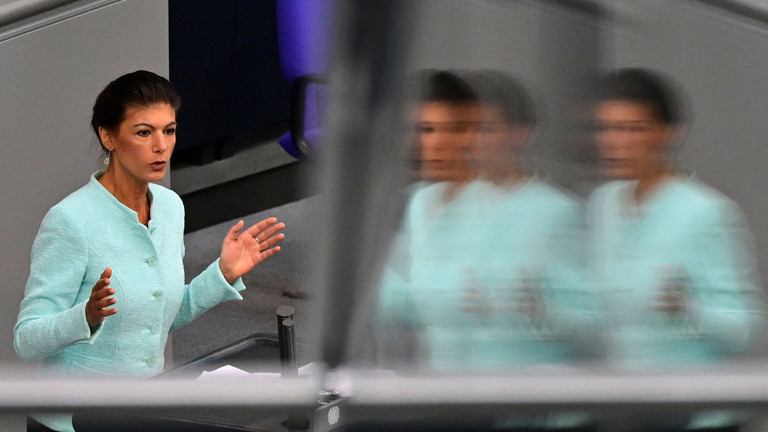
Germany has ‘stupidest government’ in Europe: MP
© AFP / John MacDougall
Samizdat | September 9, 2022
Germany’s government is the “stupidest” in Europe for managing to embroil itself in a full-blown “economic war” with its top energy supplier, Russia, left-wing politician Sahra Wagenknecht said on Thursday.
Speaking in the Bundestag, the former co-chair of the party Die Linke (The Left) urged an end to anti-Russian sanctions and the resignation of the country’s vice chancellor and economy minister, Robert Habeck.
While describing the ongoing conflict in Ukraine as a “crime,” Wagenknecht said the anti-Russian sanctions are “fatal” for Germany itself. With energy prices out of control, the country’s economy will soon “just be a reminder of the good old days,” the MP warned, as she urged canceling the restrictions and engaging in talks with Russia.
“We really have the stupidest government in Europe,” she told the parliament, calling for Habeck to resign.
“The biggest problem is your grandiose idea of launching an unprecedented economic war against our most important energy supplier.”
“The idea that we are punishing Putin by impoverishing millions of families in Germany and destroying our industry while Gazprom is making record profits – how stupid is that?” Wagenknecht wondered.
The controversial speech met quite a mixed reaction, with Wagenknecht’s remarks scoring applause in the Bundestag from MPs of polar opposite political views, including members of the right-wing Alternative for Germany (AfD). However, multiple left-wing politicians rushed to distance themselves from Wagenknecht’s statements and condemn her.
“The party’s position on sanctions against Russia was decided at the last federal party conference. There is no ‘economic war against Russia.’ Russia is at war with Ukraine,” the former co-chair of Die Linke, Bernd Riexinger, tweeted, adding that there must be “no doubt” about whom the party backs in the ongoing conflict.
Former left-wing MP Niema Movassat went even further, taking to Twitter to call for Wagenknecht to be excluded from his parliamentary group. The politician’s remarks contradict “a lot of” what the party agrees on, and she should be punished for “acting against” Die Linke, Movassat suggested.
The West Gives Lip Service to Fighting Hunger
By Vladimir Danilov – New Eastern Outlook – 08.09.2022
Although the energy crisis and the impoverishment of Europe’s population due to the Russophobic sanctions policy of European leaders have been the main themes of the Western media in recent weeks, articles on the fight against hunger nevertheless continue to appear.
Above all, media publications are discussing the consequences of the Istanbul package of documents signed on July 22 to tackle the issue of food and fertilizer supplies on world markets in fighting hunger in several parts of the world. It should be recalled that one of the agreements regulates the procedure for grain exports from Kiev-controlled Black Sea ports, based on the need to urgently address the food crisis in developing countries.
The Director of the World Food Program, David Beasley, who spoke to CNN on August 21, said the daily ships carrying Ukrainian grain would solve problems with access to food around the world, improving the situation in Somalia, Ethiopia, northern Kenya and several other poorer countries where it is most needed.
However, as the German magazine Der Spiegel admitted on September 2, despite the UN’s initial stated aims to fight hunger, only 13 of the 63 cargo ships that had left Ukrainian ports as of early September were carrying wheat. According to the publication, the remaining vessels were mainly carrying corn, used overwhelmingly as animal feed or to produce biofuel. A dozen ships were loaded with soybean or sunflower products, which are also mainly used to feed livestock.
In this regard, the interview given on August 18 to the Rossiya Segodnya news agency by Pyotr Ilyichev, Director of the Russian Foreign Ministry’s Department for International Organizations, was quite remarkable. He stressed in particular that the 16 ships that had left Ukrainian ports up to that day, carrying 535,000 tons of wheat and fodder crops, had, to great surprise, gone not to needy developing countries, but to rich countries. In particular, to the UK, Ireland, Italy, France and the Republic of Korea – in other words, the countries which are not threatened by hunger but which need fodder for livestock. At the same time, many experts emphasize that Ukrainian grain, primarily corn, is mainly fodder grain. And such actions publicly neglect the urgent problems of Africa and other world’s poorest countries.
Mikhail Ulyanov, Permanent Representative of Russia to International Organizations in Vienna, said in August that ships carrying grain from Kiev-controlled Black Sea ports were primarily destined for countries not at all threatened by hunger.
On August 23, Vasily Nebenzia, Permanent Representative of Russia to the UN, pointed out the same fact at a Security Council meeting on conflicts and food security, noting that of all 34 ships with grain that had left Ukraine, only one sailed to Africa, which needs this food. “Here, of course,” Nebenzia pointed out, “it is worth recalling the public image failure of the ‘pioneer’ ship Razoni, which in fact brought to Lebanon not the wheat they had been waiting for, but corn, and at the same time, fodder.” The Permanent Representative of Russia to the UN also stressed that against this background, the reaction to UN Secretary-General António Guterres’ words at the UN Security Council on May 19 that 49 million people in 43 countries are threatened with famine and nearly 140 million people in 10 countries, including Afghanistan, Syria, Yemen and several African states face severe food shortages, raises a lot of questions. As does the statement by the Secretary-General of the world organization in the port of Odessa that “grain exports and lower prices on global food markets will not bring relief to countries in need that cannot afford to buy it anyway.”
Meanwhile, Western politicians and media continue to persist in promoting the view that the main factor driving up grain prices is the restriction of Ukrainian grain supplies to importers, allegedly due to events in that country. However, an analysis of grain production and supply from Ukraine shows that the special operation currently taking place in that country has very limited influence on the situation with grain supply on the global food market. Because of Ukraine’s record 2021 harvest of grains, pulses and oilseeds, the increased supply of Ukrainian reserves further increases the supply of grain on the market and reduces the price of grain.
Overall, an analysis of the global food market shows that the destabilization of the market is not due to a decline in food production and supply, but to more fundamental causes. As Zhang Jun, Permanent Representative of China to the UN, emphasized at the UNSC meeting on May 19, 2022, “the current crisis once again brings to light the structural problems of the global food system. The world food supply and demand pattern is characterized by food production highly concentrated in a few countries, while consumer countries are geographically well dispersed. This makes the balance of food supply and demand highly vulnerable to extreme weather conditions pandemics, armed conflicts, and other emergency and unforeseen factors.”
Igor Kostyukov, Head of Main Directorate of General Staff of Russian Armed Forces, said in August at a Moscow conference on international security that Western countries were provoking a global food crisis by imposing restrictions on Russia. In particular, he stressed that well-functioning mechanisms for supplying grain and fertilizers to global consumers are being disrupted, leading to artificial price rises on world markets. For example, before the sanctions were imposed, Russia supplied more than 20 million tons of crops and about 11 million tons of fertilizers annually to the Middle East and North Africa, including Egypt, Saudi Arabia, Syria and other countries. However, the West’s current Russophobic sanctions policy has disrupted this logistical process.
The pattern of world hunger is therefore not at all what Antony Blinken and Josep Borrell originally painted. The problem is the emergence of food shortages due to declining yields caused by a shortage of fertilizers from Russia and Belarus. And also because of attempts to impose on Russia, which, unlike Ukraine, is actually one of the world’s biggest grain exporters, restrictions in trade in food, including grain.
It is clear to everyone that rich countries will not suffer too much because of the fall in yields, and that they will solve their food problems by raising prices and eliminating certain products. For example, vegetables, which were available all year round thanks to cheap energy and greenhouse facilities, but in an economic crisis they will simply become seasonal again and unaffordable for most of the population during the cold season because of their price. The “civilized world” will try to solve all its global food problems at the expense of poor countries: food exchange prices will rise and it will be the rich who will buy it back to curb inflation in their own countries and contain popular discontent. Poor countries, on the other hand, may simply get nothing in such circumstances. Of course, the G7 leaders will demonstrate their ostentatious concern for the people of poor countries and even invent “humanitarian programs” whereby, for example, several ships carrying food will be sent to starving regions of Africa, presenting it through the Western media “as a massive operation to save Africans from starvation.” But this will save few, for the only thing that can save is a return of the world to adequate trade rules that do not involve the imposition of unilateral sanctions and other restrictions.
Timely assertion of India’s strategic autonomy
BY M. K. BHADRAKUMAR | INDIAN PUNCHLINE | SEPTEMBER 8, 2022
Prime Minister Narendra Modi’s address at the plenary sessions of the Eastern Economic Forum (EEF) at Vladivostok has been a regular feature of the annual event since 2019. But this year’s address on Wednesday was invested with added significance as the PM was speaking for the first time on India-Russia relationship after Moscow’s special military operation in Ukraine began in February.
The backdrop couldn’t have been more dramatic as Modi had Russian President Vladimir Putin and the Chairman of the National People’s Congress of China Li Zhanshu listening to him on the podium in Vladivostok.
The Russian Far East is the world’s last frontier, endowed with vast mineral resources. In the prevailing geopolitical conditions, Moscow has prioritised Asian countries for partnership. India gets a fast track both by virtue of its “Special and Privileged Strategic Partnership” with Russia as well as the warmth and cordiality in the personal equations between Modi and Putin.
The PM was speaking hot on the heels of the G7 decision to endorse the Biden Administration’s latest project to weaken and “erase” Russia by imposing a price cap mechanism on its oil exports. The US hopes to derail Russia’s energy cooperation with China and India, the two big-time players in the global oil market, given the size of their economies and the staggering scale of their future energy needs. China is refusing to play ball. So should India. That makes the G7 project a non-starter.
The power dynamic works this way: Energy security is all about a country’s economic future and world strategy. Economic strength brings influence and respect in international politics and is a vital component of a country’s strategic autonomy and its capacity to pursue independent foreign policies. This co-relation is well understood by everyone.
That is why, the Biden Administration inserted a dagger deep into the heart of the thriving 50-year old energy cooperation between Moscow and Western Europe. What better way to reassert the US’ transatlantic leadership that had been on the wane in the recent decades since the dissolution of the Soviet Union in 1991!
The mediocre, pusillanimous leadership in Europe didn’t resist. Looking ahead, Europe’s subaltern role is useful for the US, which no longer has the capacity to force its will globally.
The conflict in Ukraine is quintessentially a proxy war that the US has imposed on Russia to weaken Russia. The ploy has not worked, but in the process, paradoxically, Russia has turned it back on Europe and is courting the non-western world for partnership. India sees seamless opportunities stemming out of this paradigm.
Today, the Biden Administration is the single biggest impediment to peace talks between Kiev and Moscow. Two top “Russia hands” in previous US administrations who have authored books on Russia (and are well-known “hawks” on Russia) in the strategic community in North America — Fiona Hill and Angela Stent — recently penned an article in Foreign Affairs magazine where they wrote:
“Russian and Ukrainian negotiators appeared to have tentatively agreed (in March) on the outlines of a negotiated interim settlement. Russia would withdraw to its position on February 23, when it controlled part of the Donbas region and all of Crimea, and in exchange, Ukraine would promise not to seek NATO membership and instead receive security guarantees from a number of countries.”
Indeed, the Ukrainska Pravda, citing official sources in Kiev, reported at that time that “Following the arrival of former British Prime Minister Boris Johnson in Kyiv (on April 9), a possible meeting between Ukrainian President Vladimir Zelenskyy and Russian President Vladimir Putin has become less likely… The Russian side was actually ready for the Zelenskyy-Putin meeting.”
Johnson reportedly brought to Kiev a powerful message in two parts: first, that Putin is a war criminal who should be pressured, not negotiated with; and, second, even if Ukraine is ready to sign some agreements on guarantees with Putin, the western powers are not.
Unsurprisngly, the PM’s address at the EEF on Wednesday drew attention for its “messaging” amidst the US’ attempts to isolate, weaken and “erase” Russia. The resuscitation of India’s ties with Russia has been one of the finest legacies of Modi’s foreign policy. The PM made a pointed remark that “Since the beginning of the Ukraine conflict, we have stressed the need to take the path of diplomacy and dialogue. We support all peaceful efforts to end this conflict.” This is exactly the Russian position, too!
The following are salients of the PM’s speech:
“India’s “Act Far-East policy… has become a key pillar of the “Special and Privileged Strategic Partnership” of India and Russia.”
The PM recalled that he pioneered the “Act Far-East policy”. With the rupture in Russia’s ties with the West and its pivot to Asia, vast opportunities are opening up for India to tap into the Far East’s fabulous resources. Beyond a matter of trade and investments, he also envisaged that “the talent and professionalism of Indians can bring about rapid development in the Russian Far East.”
“India is keen to strengthen its partnership with Russia on Arctic issues.”
Modi’s above remark comes only ten days after the sensational statement by the NATO Secretary-General Jens Stoltenberg on August 26 about Russia posing a threat in the Arctic, and his advocacy of the alliance stepping up its presence in the region to counter Russia.
“There is also immense potential for cooperation in the field of energy.”
Ironically, the PM was speaking within the week of the G7 finance ministers’ decision towards disrupting Russia’s income from oil exports! Clearly, the vacation of Western companies from Russia’s energy sector opens up huge opportunities for Indian investment in Russia’s oil and gas fields both in upstream and downstream.
“Along with energy, India has also made significant investments in the Russian Far East in the areas of pharma and diamonds.”
Russia mines nearly a third of the world’s diamonds, according to the US Department of Treasury. As of 2021, Russia’s natural diamond reserves were estimated to be approximately 1.1 billion carats. Russian company Alrosa is the largest diamond mining company in the world and is responsible for 90 percent of Russia’s diamond mining capacity. Of course, India is the world’s largest cutting and polishing centre for diamonds and is rated amongst the fastest growing markets in the world. India’s diamond industry, based in Mumbai and Surat, has an estimated one million-strong work force.
“Russia can become an important partner for the Indian steel industry through the supply of coking coal.”
India has huge need for coking coal (and coking coal mining and washing technology) which is critical for the self-reliance of its steel industry. Russia’s coal reserves rank second in the world and account for about 16% of the world’s total coal reserves, which means it has about 767 years of coal left (at current consumption levels and excluding unproven reserves).
By bringing in an inter alia reference to the Ukraine conflict at the end of his address, PM underscored that India’s determination to pursue the directions of the India-Russia “special comprehensive strategic partnership” is in no way hostage to the proxy war going on in Europe.
The PM touched on the impact of the Ukraine conflict on global supply chains. The fact of the matter is that recent UN-brokered deal to facilitate exports of food grains from Ukraine and Russia and fertilisers from Russia have run into trouble, as the EU and the US have gone back on their promise to remove the restrictions on Russian exports. Meanwhile, it emerges that the West prioritises European needs over Africa’s.
Putin disclosed yesterday that out of the two million tonnes of food grain that left Ukrainian ports in 87 shipments, 97% headed for Europe for consumption in the EU countries and only 3% for the starving millions in the so-called Global South! To quote Putin,
“What I am saying is, many European countries today continue to act as colonisers, exactly as they have been doing in previous decades and centuries. Developing countries have simply been cheated yet again and continue to be cheated.”
A purposive signalling as regards India’s strategic autonomy and the government’s determination to expand and deepen the India-Russia “special comprehensive strategic partnership” regardless of the vicissitudes of international politics was overdue.
Deceiving West, Detached Elites: Highlights of Putin’s Speech at Eastern Economic Forum
The Russian president accused Western leaders of hurting their own people through rank corruption and gross incompetence
Samizdat – September 7, 2022
President Vladimir Putin delivered a lengthy speech at the Eastern Economic Forum in Vladivostok, in Russia’s Far East.
Among other things, he commented on the unfolding crisis in the global economy, which he attributed to the shortsightedness of Western elites. According to Putin, they are trying to cling to global power while it slips from their hands.
Here are some of the key points Putin made in his address…
Western dominance is dwindling
The world is facing serious economic challenges, and unlike the impact of the Covid-19 pandemic, the current turmoil is the result of conscious decisions made by Western nations, Putin said. The West caught “sanctions fever” as it sought to impose its will on other nations.
According to the president, though this is nothing new, the current situation is marked by special circumstances – the US is losing its dominance in the global economy and politics, a “tectonic shift” that Western elites are not willing to acknowledge.
Elites are ‘lashing out’
“Western nations want to preserve the old world order, which benefits only them, to make everyone follow the ‘rules’ they invented themselves and which they regularly break or change to their benefit,” Putin said.
Resistance from other nations “makes Western elites to ‘lash out’ and take shortsighted cavalier decisions affecting world security, politics, and economics” he added.
Western leaders are ‘detached’ from their people
The policies adopted by the leaders of the US and its allies run counter to the public’s interests, which they are supposed to protect – this shows the Western elites are “detached from their own people,” according to Putin.
EU governments are a good example – they decided to decouple their economies from Russia, denying their businesses affordable energy and access to the Russian market, which makes them unable to compete, he said.
Putin predicted that American companies would lead the charge to capture the market shares of businesses based in the EU as a result. “When [the Americans] pursue their interests, they don’t limit themselves or shy away from anything.”
The West deceives poor nations
The global economic crisis will hurt vulnerable nations worst of all, according to the president – for many people, it’s a life-and-death situation, as impoverished countries will have no ability to buy crucial products.
Meanwhile, Western nations pretend they want to help while only doing what is in their own interests, as exemplified by the Ukraine grain export deal, according to Putin. Russia agreed to help ships loaded with grain to leave Ukrainian ports under an arrangement mediated by Turkey and the UN in July. However, most of the ships have gone to EU nations rather than struggling countries, the president said.
“Just two ships out of 87 were loaded [in Ukraine] under the UN Food Program, which works to provide assistance to needy countries… just 3% that were sent to developing nations.”
According to Putin, Western nations have decades and even centuries of experience in plundering colonies, and are using the same approach today. In order to prevent humanitarian disasters, Russia suggests limiting the destinations for Ukrainian grain to change the situation.
Russia is weathering the sanctions
Russia is dealing with the damage caused by the West’s “economic, financial and technological aggression” relatively well, Putin said. He noted that the country’s financial system had been stabilized, inflation is going down, and unemployment is at record lows.
Some companies were indeed hurt, especially those whose business depended on Europe in some way, he said. The Russian government has mechanisms in place to support them.
Asian nations want cooperation
Most of the nations in the Asia-Pacific Region (APAC) reject “the destructive logic of sanctions” and seek to foster business ties and economic growth for the benefit of their people, Putin said. Russia appreciates players that share its attitude to national sovereignty. The abundance of countries like this in APAC is “its great competitive advantage” and a source of long-term development.
Russia did not start the conflict in Ukraine
When asked by the host for comments on how the crisis in Ukraine has affected Russia, he reiterated Moscow’s position that the conflict was forced upon it.
“We did not start anything in terms of military action. We are trying to end it. Military action was started in 2014, following an armed coup in Ukraine by those who did not want normal development and sought to subjugate their own people, carrying out one military action after another, and subjecting Donbass citizens to genocide for eight years.”
Russia decided to use military force eight years later. Doing so was a moral obligation to the people of Donbass, who Moscow could not protect through peaceful means, Putin said. In the end, Russia will emerge from the conflict stronger domestically and internationally, he added.
India May Dodge US-Led Coercive Oil Cartel as Part of ‘Strategic Triangle’ With Russia, China – Prof
By Rishikesh Kumar – Samizdat – 08.09.2022
The US hopes India and China will join a coalition seeking a cap on Russian oil prices to reduce their income. However, Delhi and Beijing have so far refused to bow to the pressure.
The US expectation that China and India would join a coalition of countries seeking to impose a price cap on Russian oil at a cheaper price sounds like an admission of failure to convince its close allies to stop buying Russian energy, an Indian expert says.
Swaran Singh, a professor at India’s Center for International Politics, Organization and Disarmament at the School of International Studies at Jawaharlal Nehru University, said that the refusal to denounce the Russian military operation in Ukraine and increasing Russian commodity imports by India and China “only strengthen their strategic triangle where India is the only exception for keeping close ties with the US.”
On Tuesday, US Deputy Treasury Secretary Wally Adeyemo claimed that countries like China and India would take advantage of the price cap coalition. However, Singh believes the appeal of the US Treasury Secretary defies elementary logic, prompting him to wonder what makes Adeyemo think Beijing is going to do Washington’s bidding.
“While China has no possibilities of joining hands with the US in curbing prices of Russian oil, even India is least likely to join such a cartel. What is interesting is that there may be dissensions even within US alliance partners,” Singh told Sputnik.
On Wednesday, Prime Minister Narendra Modi vowed to increase energy ties with Russia. Modi also underlined India’s interests in the areas of pharma and diamonds.
Nirmala Sitharaman, the country’s finance minister, on September 8 lauded Modi’s decision to increase Russian crude imports even in the face of Western sanctions announced by the US and some of its allies in response to Moscow’s special op.
Highlighting the pace at which India ramped up crude oil purchases at a “discounted price,” the Indian finance minister said that Russian crude accounts for 12-13 percent of the total basket, up from below two percent in February. China is the biggest importer of Russian crude oil.
Professor Singh mentioned that China and India are already beneficiaries of Russia voluntarily offering “deep” discounts.
“Why would they (India, China) try coercion to obtain something they have already been getting?” Singh underlined.
He also highlighted that the US and EU countries are themselves struggling to make up for shortages of oil and gas.
“Russia accounts for over 40% of gas and 30% of oil imports of Europe. And as winter approaches, it is Russia that has the power to dictate rather than the other way around,” Singh stated.
Since June, several US officials have visited New Delhi to pressure India to stop buying discounted crude oil from Russia. US Secretary of State Antony Blinken termed India’s cheap oil purchase from Russia as support for Moscow. Despite this, Delhi has maintained that its crude purchases are meant to ensure the country’s national interests.
Importing Crude From Russia Part of India’s ‘Inflation Management’ Policy, Finance Minister Says
By Dhairya Maheshwari – Samizdat – 08.09.2022
Indian retail inflation in July was roughly 6.7 percent higher than in 2021 in the same month, largely due to volatility in global food and fuel prices triggered by Western sanctions against Russia over its military operation in Ukraine. India’s top bank, the RBI, aims to reduce the overall inflation to below 6 percent.
Indian Finance Minister Nirmala Sitharaman has said that New Delhi’s decision to import crude from Russia despite warnings from Western nations is part of New Delhi’s overall efforts to manage retail inflation in the country.
“Whereas our overall crude imports had just 2 percent or less than two percent of [a] Russian component into our crude basket, it was ramped up to almost 12 to 13 percent. That’s talking about a couple of months,” Sitharaman stated during a speech at the event “Taming Inflation,” organized by the Indian Council for Research on International Economic Relations (ICRIEC).
The minister underlined that India’s overall crude imports from foreign countries was to the tune of 85 percent, with the remaining requirements met from domestic sources of energy.
Sitharaman revealed that the decision to import crude from Russia was made by Prime Minister Narendra Modi, who chairs the Cabinet Committee on Economic Affairs (CCEA).
“At that stage, to take a very strong political decision. I respect the Prime Minister for his courage on this,” Sitharaman said.
“Get it from Russia because they are willing to give you oil at a discount,” she quoted the PM as saying.
She noted that the prime minister made the decision to boost Russian oil imports in spite of the threat of political implications arising from such a move from New Delhi’s Western partners. US President Joe Biden was among those who criticized New Delhi’s purchases of Russian crude back in April.
“And that’s where I give credit to the statesmanship of the prime minister, to make sure that we kept intact our other global relationships yet managed, till today, to get the Russian fuel,” Sitharaman stated.
She further noted that other US allies such as Japan and even EU nations like Italy were continuing to import Russian crude, which have been kept out of six rounds of Western economic sanctions leveled against Moscow by the G7+1 allies, which include US, Canada, Japan, United Kingdom, France, Italy, Germany, as well as the European Union (EU).
During the G7 Leaders’ Summit held in Germany in June, where Prime Minister Modi was invited as the head of one of the “partner countries,” the Indian leader rebuffed the West’s criticism about India-Russia energy trade. At the time, Modi said that India would continue to “ensure its energy security.”
Global crude prices hit a record high of $120 a barrel in June, the highest since the global financial crisis (GFC) in 2008, amid worries over supply-side constraints in the wake of Moscow’s special military operation in Ukraine launched in February this year.
While the EU, traditionally the biggest importer of Russian energy, drew down its import of Russian oil, countries like India and China decided to significantly upgrade their energy ties with Moscow in view of the prevailing high global prices.
US imported $6 billion from Russia as it forces others to quit doing business with Moscow
America keeps importing essential commodities from Russia while pressuring others not to do so
By Drago Bosnic | September 8, 2022
After Russia launched its counteroffensive against NATO aggression in Europe, the US-led political West vowed to “isolate“ Russia and “cripple“ its economy. Yet, the Eurasian giant didn’t only weather the storm largely unscathed, but it even managed to profit while the sanctions boomerang started ravaging Western economies. Russia has been able to maintain its economic strength, powering through the sanctions and even establishing alternative payment systems with major global powers such as China and India. And yet, the US, as the leading Western power, the one which pushed its European and other vassals into an economic war with Russia, with devastating consequences for the EU and other economies, continues doing business with Moscow.
The US is currently importing over $1 billion per month in Russian wood, metals, food and other goods. More than 3,600 ships from Russia have arrived at American ports since February 24, according to statistics cited by the Associated Press. While that is nearly 50% less in shipments over the same period compared to last year, it still amounts to over $6 billion in imports. The sheer quantity of goods and commodities from Russia entering the US suggests the troubled Biden administration is directly involved in a failure to “isolate“ the Russian economy, as the US incumbent president promised in late February. Due to so-called “wind down“ periods that allow companies to complete previous deals, many of the products and commodities continue to be imported into the US long after the Biden administration imposed sanctions on those goods, including Russian oil and natural gas.
However, there are exceptions to this as well. The import of other crucial Russian commodities, such as fertilizer, came at the request of the Biden administration itself, which has urged US companies to make up for shortages. Although the US has ordered the seizure of luxury yachts owned by rich Russians with supposed “ties to Russian President Vladimir Putin“, the AP found that many companies from the US and EU are still importing millions of dollars in metal from a Russian firm that makes parts for VKS (Russian Aerospace Forces) fighter jets, highlighting yet another hypocritical discrepancy in Western sanctions campaign. And yet, Washington is trying to exert diplomatic pressure on others to stop doing business with Moscow. While many have followed the US diktat, others are not only keeping their economic ties with Russia, but are even expanding them. For instance, Turkey, a NATO member since 1952, has doubled its oil imports from Russia this year.
This hypocritical approach has made many other countries, including major global powers, such as India, frustrated, as they are being criticized for their ties with Russia, while the US gets to cherry pick which ties with Moscow it can keep in order to prevent disruptions to its economy. This has nearly nullified the US attempts to strengthen ties with India and get New Delhi into its fold, despite the fact that American troops are currently engaged in military exercises with their Indian counterparts. And yet, just like Turkey, New Delhi has similarly significantly increased energy imports from Russia, despite US pressure not to do so. In addition, the Indian rupee has become a major currency for the diamond trade, allowing buyers to bypass anti-Russian sanctions, pushing India even closer to Moscow in this regard.
Although the failed economic siege of Russia was also meant to diminish the Eurasian giant’s nearly unmatched military might (which only the US can compare to), it has so far been completely inconsequential. Worse yet, it even had an opposite effect, as Russia is now expanding and strengthening its military, including the increase in production of weapons such as the Su-57, which has proven itself in the special military operation against the Kiev-based Neo-Nazi junta. This resilience isn’t limited to the Russian military. With Russian energy exports far exceeding last year’s levels in recent months and the Russian ruble rallying against the US dollar, the Eurasian giant’s economy is also faring far better than those of the EU members.
Still, the question remains, what will the EU and other US vassals do when the winter comes? Will Washington send food, oil, gas and other essential commodities? How will the “moral highground“ of “sticking it to Putin“ help heat homes, feed hundreds of millions of hungry (and angry) citizens and power entire economies and countries? How will the EU and other governments explain to their voters that all this is “worth doing“ so that the “young, vibrant democracy in Kiev“ can survive the “unprovoked brutal Russian invasion“?
And what will Europe look like in 2023 after it goes through a complete political unraveling? Whatever happens to Europe and other US vassals, one thing is certain – America will keep importing essential commodities from Russia while pressuring others not to do it. However, this isn’t necessarily bad, as it will be a perfect litmus test of sovereignty for many around the globe and an excellent indicator of who will get the privilege of joining the new multipolar world of sovereign nations.
Drago Bosnic is an independent geopolitical and military analyst.
Liz Truss to contain China and Russia amid massive internal problems
Britain’s new prime minister will continue Boris Johnson’s foreign policy
By Ahmed Adel | September 8, 2022
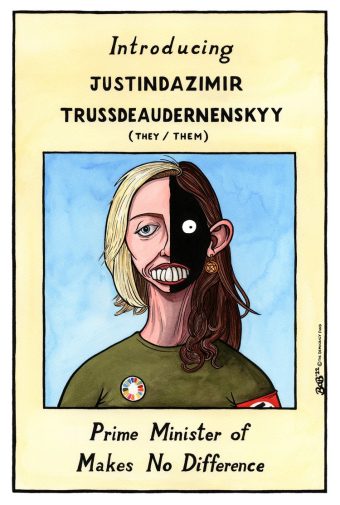 Liz Truss as British Prime Minister does not bode well for peace in the Asia-Pacific region as her stance on foreign policy is quite predictable. During her tenure as Foreign Secretary in Boris Johnson’s cabinet, Liz Truss obviously spoke many times on foreign policy issues, but often in a manner that seemingly appeared she wanted a revival of the British Empire. In fact, the British press called her the most hawkish politician in the Conservative government.
Her so-called toughness is especially evident in her stance towards Russia and China. For Liz Truss, both Russia and China are threats to humanity. Despite having this belief, it is evident that she in fact knows very little about these countries, especially when we consider that she had earlier this year confused Russian regions with Ukrainian territory and even more recently said Ukraine had survived a lot of invasions – “from the Mongols to the Tatars”, without realising Mongols and Tatars are one and the same.
And in this light, it is remembered that a year ago an official British document described China as a “systemic competitor”. With such a view, it is not surprising that London has created a lot of problems in its China policy. The British government condemned Beijing for its human rights violations in its western Xinjiang Autonomous Region, expressed dissatisfaction with Beijing’s “Security Law” for Hong Kong, and even welcomed the visit of American politicians to Taiwan. All of these provocations naturally aggravate Beijing.
This conservative approach could interfere with normal economic and trade relations between the two countries, which are contradictorily important to Britain as China is its third largest trading partner. Rather, by inflating anti-China sentiment, the British government wants to distract people from the country’s massive internal problems: high inflation, rising fuel prices and increasing poverty.
It is clear that Liz Truss will continue the anti-China line of her predecessors. Her newly appointed foreign secretary, James Cleverly, has vowed to take a tough stance on Russia and China.
According to Jonathan Sullivan, director of China programmes at Nottingham University’s Asia Research Institute, Britain’s so-called “pragmatic diplomacy” has lost its reputation.
“In ordinary circumstances, I’d say the new PM would ultimately pursue a more realistic and balanced approach to foreign affairs once in office, but the UK’s reputation for pragmatic diplomacy has taken a battering in recent years,” he said. “Labelling a major trade partner a threat would be a remarkable development, but the fact that it is not totally inconceivable speaks to the uncertainties that exist around Truss and the negative momentum that has built up around UK-China relations.”
None-the-less, it is ridiculous to hear the British talk about a so-called Chinese threat considering the country has not been at war since 1974. Meanwhile, during that period, Britain has battled in the Falklands War, Gulf War, Operation Desert Fox, the invasions of Afghanistan and Iraq, and the Libyan and Syrian wars, among others.
After Brexit, the UK wanted to prove that it was still a great and relevant power without the EU and participate in global processes. One of these points is the South China Sea, where the UK plans to gain a foothold. Under previous Conservative prime ministers, it was expressed that the British Navy needed a regular presence in the South China Sea. They also plan to build UK naval bases in the region, like in Brunei.
So far, there are no permanent bases, but last year the British Navy’s newest and most powerful aircraft carrier, Queen Elizabeth II, sailed through the South China Sea. Certainly, under the Truss government, British warships will patrol these waters only for the sake of provoking China. There is an external reason for this – like the Americans, the British would claim that they are sending their fleet to distant lands to ensure “freedom of navigation” off China.
In addition, the desire to play an important role in the Indo-Pacific region is demonstrated by the UK’s participation in the new military bloc AUKUS, established in September 2021. There is no doubt that the Liz Truss government will continue to commit to its obligations under this alliance with the US and Australia.
All this goes against the vital interests of China and the wider East Asia region. But it is likely that the British prime minister will go in this direction. The question is whether she will be able to achieve her objectives in containing the Rise of China, something that is seemingly unlikely.
It is recalled that only days ago the Indian economy surpassed that of Britain, meaning that the former colonial master has slipped to sixth place in the global GDP ranking, with India rising to fifth place. This also comes as research has found that two-thirds of UK families could be in fuel poverty by January. With compounding economic and societal issues, it appears that Truss will continue in the same mould of Boris Johnson in not dealing with this and instead prioritise the attempt to maintain Britain’s relevancy in the world.
Ahmed Adel is a Cairo-based geopolitics and political economy researcher.
Windfall Profits For Generators Running At £43 Billion A Year
By Paul Homewood | Not A Lot Of People Know That | September 7, 2022
Although rising international prices for natural gas have triggered the massive rise in wholesale electricity prices in the last year or so, they are only directly responsible for part of that rise.
As I have explained before, it is usually gas-fired generation that sets the wholesale price of electricity, which in August averaged £382/MWh:

https://www.catalyst-commercial.co.uk/works/september-2022-energy-market-brief/
As a result of this broken market, non-gas generators are making obscene windfall profits, with the exception of those on CfDs, which receive a fixed price. These generators produced 131 TWh last year, accounting for 45% of total generation:
Type Twh Wind 48 Solar 7 Bio 21 Coal 7 Nuclear 41 Hydro 7
At a price of £382/MWh, compared to a historic price level of around £50/MWh, these generators are raking in an incredible £43 billion. It is true that some generators may have Power Purchase Agreements in place at less than current prices – but this simply means that the purchaser is making the windfall instead. Either way electricity consumers are paying the cost of this on their bills.
The second major issue is the Carbon Price, which has more than doubled since last year and continues to rise>

https://www.catalyst-commercial.co.uk/works/september-2022-energy-market-brief/
The purpose of the Carbon Price is to increase the cost of fossil fuel generation, and thereby encourage the transition to renewables. However reports indicate that the wholesale price of natural gas will be capped, presumably at a much lower price than it is now. It is quite perverse therefore to then add back costs via the Carbon Price onto gas generators.
Based on my earlier calculations, the current Carbon Price of £92.65/tonne is adding £35/MWh to the cost of gas generation, and hence onto the wholesale electricity price. This translates to nearly £5 billion of windfall profit for non-gas generators.
The whole Carbon Pricing system should be suspended until further notice. As I understand it, that would need the unanimous agreement of devolved governments. Given the loons running Scotland and Wales, I would not hold my breath!
9 Russian planes in Iran to receive maintenance: Minister
Press TV – September 7, 2022
Iran’s transport minister Rostam Qassemi says Russia has commissioned Iranian aviation companies for maintenance tasks on its airplanes.
Qassemi said on Wednesday that nine Russian passenger planes were in Iran to receive maintenance as he touted the technology existing in the Iranian civil aviation sector to carry out overhaul and inspection works on various types of aircraft.
“We have been in a good position in recent months in terms of aircraft maintenance,” said the minister without elaborating on the types of the Russian planes under repair in Iran.
The announcement comes amid reports of close cooperation between Iran and Russia to minimize the impacts of foreign sanctions on their economies.
Russian authorities have declared on several occasions that Moscow has been using the experience of Iranian companies and government agencies in dealing with foreign sanctions.
Iran and Russia have signed major deals in recent months to boost their economic, trade and energy cooperation.
Iran came under an inclusive regime of American sanctions in 2018 after Washington unilaterally withdrew from an international deal on Iran’s nuclear program.
The United States and allies imposed a raft of similar and even tougher sanctions on Russia in February after Moscow launched a military operation in Ukraine.
Experts say US sanctions failed to reach their ultimate objective of forcing Iran into major political and military concessions. They insist the bans even created an opportunity for Iran to diversify its economy away from crude revenues and rely more on its domestic resources.
Russian President Vladimir Putin said on Wednesday during an economic forum in Vladivostok that Russia was gaining from Western sanctions, saying Moscow saw more opportunities in entering markets in the Middle East and Iran after the sanctions were imposed.
Featured Video
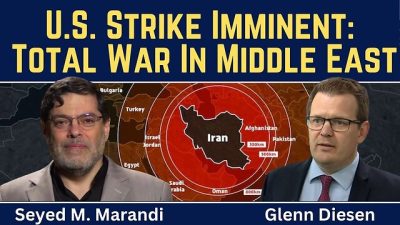
Seyed M. Marandi: Toward Total War in the Middle East
or go to
Aletho News Archives – Video-Images
From the Archives
The Geopolitics behind the War in Yemen (I)
By Mahdi Darius NAZEMROAYA | Strategic Culture Foundation | 30.03.2015
The United States and the Kingdom of Saudi Arabia became very uneasy when the Yemenese or Yemenite movement of the Houthi or Ansarallah (meaning the supporters of God in Arabic) gained control of Yemen’s capital, Sanaa/Sana, in September 2014. The US-supported Yemenite President Abd-Rabbuh Manṣour Al-Hadi was humiliatingly forced to share power with the Houthis and the coalition of northern Yemenese tribes that had helped them enter Sana. Al-Hadi declared that negotiations for a Yemeni national unity government would take place and his allies the US and Saudi Arabia tried to use a new national dialogue and mediated talks to co-opt and pacify the Houthis.
The truth has been turned on its head about the war in Yemen. The war and ousting of President Abd-Rabbuh Manṣour Al-Hadi in Yemen are not the results of «Houthi coup» in Yemen. It is the opposite. Al-Hadi was ousted, because with Saudi and US support he tried to backtrack on the power sharing agreements he had made and return Yemen to authoritarian rule. The ousting of President Al-Hadi by the Houthis and their political allies was an unexpected reaction to the takeover Al-Hadi was planning with Washington and the House of Saudi. … continue
Blog Roll
 Aletho News
- Pakistan-Iran talks secure LNG shipment to Islamabad through Hormuz
- Black Sea grain crisis puts global wheat supplies under pressure
- IRGC air defenses destroy another US MQ-1 drone over Strait of Hormuz
- Imran Khan’s entire immediate family detained in Pakistan ahead of mass protest demanding his release
- EU nation detains former presidential frontrunner
- Leaked: Britain’s Sham Conviction Of Hashim Thaci
- Seyed M. Marandi: U.S. Strike Imminent – Toward Total War in the Middle East
- Russia Voted Under Fire. Washington Is Loading the Tankers.
- 12 Things Your Oncologist Was Trained Not to Tell You
- Anthrax Attacks Paved Way for COVID-Era ‘Junk Drugs and Vaccines’
- If Americans Knew
- An error has occurred; the feed is probably down. Try again later.
- No Tricks Zone
- 2025 Nature Paper Claiming Worsening Global Drought Gets RETRACTED …Heavily Flawed
- New Study: ‘Global Drought Shows No Detectable Recent Acceleration Under Climate Warming’
- Economic Masterminds: German Socialists Suggest Taxing Productivity Gains Stemming From Using AI
- The South China Sea Has Not Been Cooperating With The Climate Change Narrative
- Energy Crisis: Germany Enters Heating Season With Historically Low Gas Reserve Fill Levels
- New Study: The Antarctic Ice Sheet Gained Mass From 2020-2024 Due To Staggering Snow And Ice Accumulation
- Study: Ocean Heating Rates From Thousands Of Years Ago ‘Dwarf’ Modern Ocean Heating Rates
- Climate Extremists Target, Attack Large-Scale Power Grid Infrastructure In Germany!
- New Study: Antarctic Ice Melt Has Contributed Less Than 1 Centimeter To Sea Level Rise In The Last 30 Years
- Fear Of Debate: Alarmist German Climate Scientist Calls On Mainstream Media To Discredit Skeptic Voices
 Aletho News