9 Russian planes in Iran to receive maintenance: Minister
Press TV – September 7, 2022
Iran’s transport minister Rostam Qassemi says Russia has commissioned Iranian aviation companies for maintenance tasks on its airplanes.
Qassemi said on Wednesday that nine Russian passenger planes were in Iran to receive maintenance as he touted the technology existing in the Iranian civil aviation sector to carry out overhaul and inspection works on various types of aircraft.
“We have been in a good position in recent months in terms of aircraft maintenance,” said the minister without elaborating on the types of the Russian planes under repair in Iran.
The announcement comes amid reports of close cooperation between Iran and Russia to minimize the impacts of foreign sanctions on their economies.
Russian authorities have declared on several occasions that Moscow has been using the experience of Iranian companies and government agencies in dealing with foreign sanctions.
Iran and Russia have signed major deals in recent months to boost their economic, trade and energy cooperation.
Iran came under an inclusive regime of American sanctions in 2018 after Washington unilaterally withdrew from an international deal on Iran’s nuclear program.
The United States and allies imposed a raft of similar and even tougher sanctions on Russia in February after Moscow launched a military operation in Ukraine.
Experts say US sanctions failed to reach their ultimate objective of forcing Iran into major political and military concessions. They insist the bans even created an opportunity for Iran to diversify its economy away from crude revenues and rely more on its domestic resources.
Russian President Vladimir Putin said on Wednesday during an economic forum in Vladivostok that Russia was gaining from Western sanctions, saying Moscow saw more opportunities in entering markets in the Middle East and Iran after the sanctions were imposed.
Russian economy back on track – Putin
Samizdat – September 7, 2022
The economic situation in Russia has stabilized, President Putin said at a plenary session of the Eastern Economic Forum (EEF) on Wednesday.
“I would like to note that we believe, both in the government and in the presidential administration, our experts believe that the peak, the most difficult period [for the country’s economy], has passed. The situation is normalizing, and macroeconomic indicators speak of this,” Putin said.
The president indicated that this year’s budget will be in surplus, explaining: “Our state finances have stabilized, I want to note that this year’s budget will be drawn up with a surplus of almost half a trillion rubles, somewhere under 485 billion rubles (almost $8 billion), despite all the gloomy forecasts.”
According to the Russian president, annual inflation in the country is on a downward trend. “I think that according to the results for the year, we will have [inflation] somewhere around 12%, and according to many of our experts, in the first quarter or by the second quarter of next year, we will most likely reach the target indicators – 5% or 6%, and some even project that the level of 4% may be in reach,” Putin said.
The government will do everything to support prices and suppress inflation, the Russian president stressed. Putin pointed out that the ruble and financial markets have also stabilized, while the unemployment rate has reached a historic low of less than 4%.
EU suggests price cap on US LNG
Samizdat – September 7, 2022
Brussels is examining the possibility of a price ceiling on all gas imported into the EU, including liquefied natural gas (LNG), European Commission President Ursula von der Leyen said on Wednesday.
“LNG is scarce and can be rerouted to different regions… We [want to] stay competitive for LNG suppliers but make sure that the prices we pay are not extraordinarily high but in a decent range,” she told reporters. EU countries mostly import the costly LNG from the US and Qatar, using it to diversify gas imports in light of shrinking supplies from Russia. However, some analysts warn that producers might not be eager to supply the fuel to European countries if their profits are capped.
Von der Leyen noted that enacting the proposal is not imminent and that they would be further discussed at a later date.
She did, however, unveil a number of other proposals aimed at tackling the EU’s worsening energy crisis, including a bloc-wide plan to reduce electricity consumption, a price cap on the excess revenues made by companies involved in renewable and nuclear energy, a mechanism to capture the profits that fossil-fuel companies make due to rising prices, a state aid program for utilities businesses, and a price cap on Russian pipeline gas imports.
Commenting on the last of these, she said the mechanism is necessary to “cut Russia’s revenues which Putin uses to finance this atrocious war against Ukraine.” She noted that since Russia launched its military operation in Ukraine, the share of Russian pipeline gas in the EU’s total imports has dropped from 40% to 9%, while Norway has replaced Russia as the bloc’s leading gas supplier.
Moscow sounds alarm over Ukrainian grain deal
Samizdat – September 7, 2022
The grain deal with Ukraine which was supposed to allow Russia to deliver fertilizers and food products to global markets has failed to do so, Vassily Nebenzia, Russia’s permanent representative to the UN, claimed on Tuesday.
Speaking to reporters, Nebenzia revealed that not a single Russian vessel with grain has managed to leave port, despite an earlier UN- and Turkey-brokered agreement that unblocked Ukrainian grain shipments via the Black Sea in exchange for lifting restrictions on Russian exports of the product.
The diplomat hinted that Russia could refuse to extend the deal, given that the provisions on its exports are not being fulfilled. “The agreement was concluded for four months. In other words, it ends in November. In a normal [situation], the deal should be extended. Given the results, or rather the lack of results, I do not rule out anything.”
“We want to see the implementation of the Russian part of the agreement. So far, this hasn’t happened,” Nebenzia said.
His comments echo earlier remarks from Russian Foreign Minister Sergey Lavrov, who said on Tuesday that Western countries had not fulfilled their promise to lift secondary restrictions on Russian grain and fertilizers, impeding their access to the global market.
The deal to unblock grain exports via the Black Sea was signed at UN-brokered talks in Istanbul in late July, aiming to maintain safe transit routes. In late August, Turkish Foreign Minister Mevlut Cavusoglu said there “are no problems” with Ukrainian grain shipments, adding that dozens of vessels have been able to pass through.
Wheat deliveries from Ukraine, a major producer, were disrupted after Russia launched its military operation in the neighboring state in late February. The two sides traded accusations over who was responsible for the stoppage of cargo traffic out of the Ukrainian ports. Since August 1, however, when shipments from the ports resumed, they have delivered around 2 million tons of food products to global markets.
WHO’S DRIVING THE PANDEMIC EXPRESS?
By Dr David Bell and Emma McArthur | PANDA | September 4, 2022
Sceptics of the growing ‘pandemic prevention, preparedness and response’ (PPR) agenda celebrated recently, heralding a perceived ‘defeat’ of the World Health Organization’s (WHO) controversial amendments to the International Health Regulations (IHR). Although the proposed amendments would have undoubtedly expanded the WHO’s powers, this focus on the WHO reflects a narrow view of global health and the pandemic industry. The WHO is almost a bit-player in a much larger game of public-private partnerships and financial incentives that are driving the pandemic gravy train forward.
While the WHO works in the spotlight, the pandemic industry has been growing for over a decade and its expansion accelerates unabated. Other major players such as the World Bank, coalitions of wealthy nations at the G7 and G20 and their corporate partners work in a world less subject to transparency; a world where the rules are more relaxed, and a conflict of interest receives less scrutiny.
If the global health community is to preserve public health, it must urgently understand the wider process that is underway and take action to stop it. The pandemic express must be halted by the weight of evidence and basic principles of public health.
Funding a global pandemic bureaucracy
“The FIF could be a cornerstone in the construction of a truly global PPR system in the context of the International Treaty on Pandemic Prevention, Preparedness and Response, sponsored by the World Health Assembly.” (WHO, 19 April 2022)
The world is being told to fear pandemics. Ballooning socio-economic costs of the COVID-19 crisis are touted as justification for increased focus on PPR funding.
Calls for ‘urgent’ collective action to avert the ‘next’ pandemic are predicated on systemic ‘weaknesses’ supposedly exposed by COVID-19. As the WHO steamed ahead with its push for a new pandemic ‘treaty’ during 2021, G20 members agreed to establish a Joint Finance & Health Task Force (JFHTF) to ‘enhance the collaboration and global cooperation on issues relating to pandemic prevention, preparedness and response’.
A World Bank-WHO report prepared for the G20 joint task force estimates that US$ 31.1 billion will be required annually for future PPR, including US $ 10.5 billion per year in new international financing to support perceived funding gaps in low- and middle-income countries (LMICs). Surveillance-related activities comprise almost half of this, with US $4.1 billion in new funding required to address perceived gaps in the system.
In public health terms, the funding proposed to expand the global PPR infrastructure is enormous. By contrast, the WHO’s approved biennium programme budget for 2022-2023 averages US $3.4 billion per year. The Global Fund, the main international funder of malaria, tuberculosis and AIDS – which have a combined annual mortality of over 2.5 million – currently dispenses just US $ 4 billion annually for the three diseases combined. Unlike COVID-19, these diseases cause significant mortality in lower income countries and in younger age groups, year in, year out.
In April 2022, the G20 agreed to establish a new ‘financial intermediary fund’ (FIF) housed at the World Bank, to address the US $10.5 billion PPR financing gap. The FIF is intended to build upon existing pandemic funding to ‘strengthen health systems and PPR capacities in low-income and middle-income countries and regions’. The WHO is predicted to be the technical lead, landing them with an assured role irrespective of the outcome of current ‘treaty’ discussions.
The establishment of the fund has proceeded with breathtaking speed, and it was approved on June 30 by the World Bank Board of Executive Directors. A short period of consultation precedes an expected launch in September 2022. To date, donations totalling US $1.3 billion dollars have been pledged by governments, the European Commission and various private and non-government interests, including the Bill and Melinda Gates Foundation, Rockefeller Foundation, and the Wellcome Trust. The initial areas for the fund are somewhat all-encompassing, including country-level ‘disease surveillance; laboratory systems; emergency communication, coordination and management; critical health workforce capacities; and community engagement’.
In scope, the fund has the appearance of a new ‘World Health Organization’ for pandemics – to add to the existing (and ever-expanding) network of global health organisations such as the WHO; Gavi; the Coalition for Epidemic Preparedness Innovations (CEPI); and the Global Fund. But is this increased expenditure on PPR justified? Are the escalating socio-economic costs of COVID-19 due to a failure to act by the global health community, as is widely claimed; or are they due to negligent acts of failure by the WHO and global governments, when they discarded previous evidenced-based pandemic guidelines?
COVID-19: failure to act or acts of failure?
In the debate surrounding the growing pandemic industry, much attention is being directed towards the central role of the WHO. This attention is understandable given the WHO’s position as the agency responsible for global public health and its push for a new international pandemic agreement.
However, the WHO’s handling of the response to COVID-19 creates serious doubts about the competency of its leadership and raises questions about whose needs the organisation is serving.
The WHO’s failure to follow its own pre-existing pandemic guidelines by supporting lockdowns, mass-testing, border closures and the multi-billion-dollar COVAX mass-vaccination program, has generated vast revenue for vaccine manufacturers and the biotech industry, whose corporations and investors are major contributors to the WHO. This approach has crippled economies, damaged existing health programs and further entrenched poverty in low-income countries. Decades of progress in children’s health are likely to be undone, together with the destruction of the long-term prospects of tens of millions of children, through loss of education, forced child marriage and malnutrition. In abandoning its principles of equality and community-driven healthcare, the WHO appears to have become a mere pawn in the PPR game, beholden to those with the real power; the entities who are providing its income and who control the resources now being directed to this area.
Corporatizing global public health
Recently established health agencies devoted to vaccination and pandemics, such as Gavi and CEPI, appear to have been highly influential from the beginning. CEPI, is the brainchild of Bill Gates, Jeremy Farrar (director of the Wellcome Trust), and others at the pro-lockdown World Economic Forum. Launched at Davos in 2017, CEPI was created to help drive the market for epidemic vaccines. It is no secret that Bill Gates has major private financial ties to the pharmaceutical industry, in addition to those of his foundation. This clearly places a question mark over the philanthropic nature of his investments.
CEPI appears to be a forerunner of what the WHO is increasingly becoming – an instrument where individuals and corporations can exert influence and improve returns by hijacking key areas of public health. CEPI’s business model, which involves taxpayers taking most of the financial risk for vaccine research and development whilst big pharma gets all the profits, is notably replicated in the World Bank-WHO report.
Gavi, itself a significant WHO donor that exists solely to increase access to vaccination, is also under direct influence of Bill Gates, via the Bill and Melinda Gate Foundation. Gavi’s involvement (alongside CEPI) with the WHO’s COVAX program, which diverted vast resources into COVID-19 mass-vaccination in countries where COVID-19 is a relatively small disease burden, suggests the organisation is tied more strongly to vaccine sales than genuine public health outcomes.
Pandemic funding – ignoring the big picture?
At first glance, increased PPR funding to LMICs may seem a public good. The World Bank-WHO report claims that ‘the frequency and impact of pandemic-prone pathogens are increasing.’ However, this is belied by reality, as the WHO lists only 5 ‘pandemics’ in the past 120 years, with the highest mortality occurring in the 1918-19 H1N1 (‘Spanish’) influenza pandemic, before antibiotics and modern medicine. Apart from COVID-19, the ‘Swine Flu’ outbreak in 2009-10, which killed less people than a normal flu year, is the only ‘pandemic’ in the past 50 years.
Such a myopic focus on pandemic risk will do little to address the most serious causes of illness and death, and it can be expected to make matters worse for people experiencing the most extreme forms of socio-economic disadvantage.
Governments of low-income countries will be ‘incentivised’ to divert resources to PPR related programs, further increasing the growing debt crisis. A more centralised, top-down public health system will lack the flexibility to meet local and regional needs. Transferring support from higher burden diseases, and drivers of economic growth, has a direct impact on mortality in these countries, particularly for children.
The WHO-World Bank report states that the pillars of the global PPR architecture must be built on the ‘foundational principles of equity, inclusion and solidarity’. As severe pandemics occur less than once per generation, increased spending on PPR in LMICs clearly violates these basic principles as it diverts scarce resources away from areas of regional need, to address the perceived health priorities of wealthier populations. As demonstrated by the damage caused by the COVID-19 response, in both high and low-income countries, the overall harm of resource diversion from areas of greater need is likely to be universal. In failing to address such ‘opportunity costs’, recommendations by the WHO, the World Bank, and other PPR partners cannot be validly based in public health; nor are they a basis for overall societal benefit. .
One thing is certain. Those who will gain from this expanding pandemic gravy train will be those who gained from the response to COVID-19.
The pandemic gravy train – following the money
The new World Bank fund risks compounding existing problems in the global public health system and further compromising the WHO’s autonomy; although it is stated that the WHO will have a central ‘strategic role’, funds will be channelled through the World Bank. In essence, it financially side-steps the accountability measures at the WHO, where questions of relative worth can be raised more easily.
The proposed structure of the FIF will pave the way for organisations with strong ties to pharmaceutical and other biotech industries, such as CEPI and Gavi, to gain even greater influence over global PPR, particularly if they are appointed ‘implementing entities’ – the operational arms that will carry out the FIF’s work program at country, regional and global level.
Although the initial implementing entities for the FIF will be UN agencies, multilateral development banks and the IMF, plans are already underway to accredit these other international health entities. Investments are likely to be heavily skewed towards biotechnological solutions, such as disease surveillance and vaccine development, at the cost of other, more pressing, public health interventions.
Protecting public health rather than private wealth
If the world truly wants to address the systemic weakness exposed by COVID-19, it must first understand that this pandemic gravy train is not new; the foundations for the destruction of community- and country-based global public health began long before COVID-19.
It is unarguable that COVID-19 has proved to be a lucrative cash cow for vaccine manufacturers and the biotech industry. The public-private partnership model that now dominates global health enabled vast resources to be channelled into the pockets of corporate giants, through programs they directly influence, or even run. CEPI’s ‘100 days Mission’ to make ‘safe and effective’ vaccines against ‘viral threats’ within 100 days – to ‘give the world a fighting chance of containing a future outbreak before it spreads to become a global pandemic’ – is a permit for pharmaceutical companies to appropriate public money on an unprecedented scale, based on their own assessments of risk.
The self-fulfilment of the ‘increasing frequency of pandemic’ prophecy will be ensured by the push for increased disease surveillance – a priority area for the FIF. To quote the World Bank-WHO report:
“COVID-19 highlighted the need to connect surveillance and alert systems into a regional and global network to detect zoonotic transmission events, raise the alarm early to enable a swift public health response, and accelerate the development of medical countermeasures.”
Like many claims being made about COVID-19, this claim has no evidence base – the origins of COVID-19 remain highly controversial and the WHO’s data demonstrate that pandemics are uncommon, whatever their origin. None of the ‘countermeasures’ have been shown to significantly reduce the spread of COVID-19, which is now globally endemic.
Increased surveillance will naturally identify more ‘potentially dangerous pathogens’, as variants of viruses arise constantly in nature. Consequently, the world faces a never-ending game of seek and ye shall find, with never-ending profits for industry. Formerly once per generation, this industry will make ‘pandemics’ a routine part of life, where rapid fire vaccines are mandated for every new disease or variant that arrives.
Ultimately, this new pandemic fund will help to hook low- and middle-income countries into the growing global pandemic bureaucracy. Greater centralisation of public health will do little to address the genuine health needs of people in these countries. If the pandemic gravy train is allowed to keep growing, the poor will get poorer, and people will die in increasing numbers from more prevalent, preventable diseases. The rich will continue to profit, while fuelling the main driver of ill-health in lower income countries – poverty.
Dr. David Bell is a clinical and public health physician with a PhD in population health and background in internal medicine, modelling and epidemiology of infectious disease. Previously, he was Director of the Global Health Technologies at Intellectual Ventures Global Good Fund in the USA, Programme Head for Malaria and Acute Febrile Disease at FIND in Geneva, and coordinating malaria diagnostics strategy with the World Health Organisation. He is a member of the Executive Committee of PANDA.
Prague: 100,000 citizens protest against government’s energy policy
Free West Media | September 6, 2022
In the Czech capital of Prague up to 100,000 people demonstrated on Saturday against the government policy, which has been leading to skyrocketing energy prices and an impending energy emergency in the Czech Republic. Immediately prior to this, there had already been a motion of no confidence in the government under Prime Minister Fiala in the Czech parliament.
In Prague, as in many European capitals, the government refused to see the protests as a political warning signal, but tried to blame Russian “trolls” for the increasingly irritable mood among the population. Another indication of the development in the country is the fact that a broad alliance of conservatives, right-wingers and communists called for the large rally on Saturday.
In the Czech Republic, the very existence of industry is threatened due to the lack of Russian gas supplies. Despite this, the government fully supports the EU’s sanctions course – and, needless to say, is now feeling the consequences.
The government is pretending to see Russian machinations behind the protests: “It is clear that Russian propaganda and disinformation campaigns repeatedly appear on our territory, and some simply succumb to them,” Prime Minister Fiala declared. Interior Minister Rakušan also saw “Putin” behind the protest: “Dividing society is one of the goals of the hybrid warfare we are dealing with. We can’t let him do that. That is why we are working on solutions that will reduce people’s fears about the future.”
According to the ideas of the organizers of the rally, every Czech household should be entitled to three megawatt hours of free electricity. In addition, one of the demands of the alliance was that its representatives should be authorized to conclude energy supply contracts.
“We’re taking our country back,” they said at the beginning of the three-hour rally. The call for this also included military neutrality and the loss of sovereignty to supranational structures. “The Czech Republic must free itself from direct political subordination to the EU, the WHO and the UN,” it said.
But that’s not all: “If the government doesn’t resign by September 25,” the organizers say, “in accordance with the Czech Republic’s constitution, we will declare the right to protest at a nationwide demonstration and announce measures to force the resignation. We are already negotiating with unions, companies, farmers, mayors, transport companies and other organizations to declare a strike,” they warned.
The same scenario is also possible in Germany. It was not for nothing that Federal Foreign Minister Baerbock warned of “popular uprisings” in the autumn.
In Leipzig left and right unite
The “Hot Autumn” proclaimed by the Left Party was reflected at least in the temperatures as the thermometer rose to 25 degrees on Monday evening in Leipzig’s historic city center. Both left-wing and right-wing parties and alliances have called for rallies at this historic site, based on the Monday demonstrations of 1989/90.
A total of 10,000 participants were expected, but in the end, Augustusplatz was flooded with people. The federal government had presented its new relief package on Sunday to absorb the economic consequences of the sanctions policy against Russia – and to prevent protests like this Monday evening.
The Federal Chair of the Left Party, Janine Wissler, recently expressed doubts on Deutschlandfunk that measures like these could alleviate the displeasure of the population. And the politician defended herself against accusations that her party also offered a platform to “right-wing ideologues” during the Monday demonstrations.
Leipzig’s Greens, for example, recently complained that the Left Party was “damaging Leipzig’s historical heritage” and thwarting “the commitment of Leipzig’s city society for democracy and cosmopolitanism and against right-wing marches in the heart of the city”. Wissler countered that social protests were needed against the “dramatic injustice” in the country. “We will not let the right take the high road. Not on Mondays and not on any other day either.”
Thousands of Germans in Magdeburg also opposed Olaf Scholz’s irrational policy by shouting: “Nord Stream! Nord Stream!” EU sanctions were supposed to weaken Russia’s economy, instead they are destroying Europe’s economy.
Media blackout in France regarding anti-Macron protests
“I almost fell off my chair!” said Florian Philippot, leader of the political party Les Patriotes. Philippot commented on the fact that news outlet LCI fraudulently reported that the demonstration on Saturday in Paris against Macron’s harsh energy policy “did not take place”. LCI further claimed that they were only “fake images” of the protests and “hijacking by Russian television”.
Philippot accused the outlet of lying. “It did take place. There were people there. LCI was informed and invited.”
Macron’s energy repression is the fourth threat that comes on top of the jihadist threat, the police threat (which hovers over the Yellow Vests), and the health threat, said his critics.
“The ecologists who applaud this deindustrialization do not understand that the destructive neoliberalism of the Great Reset is advancing behind a green mask. Even if it is true that overfishing is destroying the seabed and fish stocks, the climate crisis is a sham. The programmed destruction of production in Europe by Schwab and his friends leads inexorably to mass unemployment, impoverishment of the middle class and the extinction of our countries,” noted a critic of the French administration.
“The parasitic system is ready to destroy the societies that host it in order to survive.”
Is Russia “weaponizing” natural gas against the EU?
By Drago Bosnic | September 6, 2022
For years, the political West has been accusing Russia of so-called “weaponization” of its natural resources, particularly gas and oil. Moscow is being blamed for using these essential resources to supposedly “blackmail” the European Union, while Brussels, partly pushed by US imperialist belligerence, partly by its own (neo)colonialist ambition, kept creeping up to Russia’s geopolitical backyard, creating ever-escalating tensions with the Eurasian giant. Moscow would never allow the repeat of the Nazi invasion which took tens of millions of Russian lives, in addition to the unprecedented devastation left in its wake. To make matters worse, “Barbarossa” was yet another on the long list of attempts by the political West to destroy Russia. For over a thousand years, many in Europe have tried to neutralize the Eurasian giant. Russia prevailed each and every time, but it had to do it with the force of arms.
However, in recent decades, Moscow has been trying hard to establish mutually beneficial cooperation with the political West, especially its European portion. This included making long-term deals with the EU, particularly those concerning the supply of essential commodities such as natural gas, oil, food and other raw materials which were helping fuel the growth of entire industries in Europe and elsewhere. Russia’s hope was to establish long-standing ties with the EU and make sure the strategic security on its western borders would be ensured through economic cooperation, not military might. However, Washington DC had other plans and the compliant elites in Brussels followed suit, making sure NATO military infrastructure (especially the strategically impactful US military facilities) kept expanding eastwards, getting ever closer to Russia’s heartland.
Even in this situation, Moscow tried de-escalating. Although it still kept working on ways to counter this crawling encroachment militarily, especially through the development and fielding of strategically unrivaled capabilities, Russia was hopeful that “cooler heads” would eventually prevail in Brussels and other major EU capitals, particularly Paris and Berlin. This hope still somewhat held on even after the disastrous 2014 Maidan coup which brought the Neo-Nazi junta to power in Kiev. For nearly a decade, Moscow kept trying to bring the political West to its senses. Unfortunately, to no avail, since this approach was seen as a weakness in Washington DC and Brussels. On February 24, Russia decided to put a stop to it all.
Now, after months of a failed economic siege of the Eurasian giant, especially after the sanctions boomerang started ravaging Western economies, the political West is trying to play a rather comical blame game, accusing Moscow of “weaponizing” its own natural resources. Faced with the prospect of a disastrous winter, the EU is now caught between its suicidal subservience to Washington DC and the need to simply survive. While the US keeps importing Russian commodities (at a volume of approximately $1 billion per month), it is forcing Brussels to effectively enforce a self-imposed embargo which is causing untold damage to the EU’s already dwindling production sector, causing a cascading effect of economic devastation on other seemingly unrelated industries.
Instead of trying to make a deal with Moscow, Brussels joined the economic war on Russia, prompting the Eurasian giant to respond. Now, when natural gas prices are upwards of 400% higher than just a year ago, EU powers, particularly Germany, are faced with the prospect of a near-complete industrial shutdown. And the burning issue isn’t only coming from soaring natural gas prices, but also the shortages. For months, high prices were bleeding the EU economies dry of cash, but after the Nord Stream stopped pumping natural gas altogether, the issue is exponentially worse, as entire industries are at risk of collapsing completely.
In addition to the production sector shutdown, many EU members are faced with soaring energy prices, which is putting a tremendous amount of pressure on households, which are faced with the prospect of not just bankruptcy, but also freezing, as the cold season in the EU is starting with natural gas storage facilities at their lowest level ever. Thus, the pressure on Brussels is both economic and social. With many EU member states’ governments collapsing, the political instability in the troubled bloc is bound to get much worse in the coming months. In addition to natural gas shortages, there is also the problem of soaring food prices, which also might turn into shortages soon, causing even more social and political instability across the EU.
The question is what will the EU do? Should it ask for help from its overlords in Washington DC? And will the US send food, oil, gas and other essential commodities? Does the US even have enough of those for itself? How will the “moral high ground of sticking it to Putin“ help heat homes, feed hundreds of millions of hungry (and angry) citizens and power entire economies and countries? How will the EU governments explain to their voters that all this is “worth doing“ so that the “young, vibrant democracy in Kiev“ can survive? What will Europe look like in 2023 after it goes through a complete political and social unraveling? Will the EU ever become sovereign enough to realize that whatever happens, the US will continue importing essential commodities from Russia while pressuring others not to do so? The coming winter will be a perfect litmus test of sovereignty and an excellent indicator of who will get the privilege of joining the new multipolar world of sovereign nations.
Drago Bosnic is an independent geopolitical and military analyst.
OPEC+ agrees on oil output cut
BY M. K. BHADRAKUMAR | INDIAN PUNCHLINE | SEPTEMBER 6, 2022
The OPEC+ meeting at Vienna on Monday came amidst two events affecting the oil market — the G7 finance ministers decision to endorse the US proposal regarding price cap on Russia’s oil exports with effect from December 5 and secondly, Gazprom’s announcement on cutting off all gas supplies to Europe indefinitely.
Although notionally these are unrelated events, the fact remains that the energy scene is increasingly fraught with uncertainties and there are many variables at work such as fears of a global recession, the continuing difficulty to conclude a US-Iran deal on JCPOA that would have lifted the sanctions against Iran’s oil exports.
The statement by the OPEC secretariat on Monday’s meeting in Vienna has sent out a powerful message that not only is there not going to be any increased oil production but a token cut of 100,000 bpd has been agreed upon in September to bolster prices that have slid on recession fears. Oil prices jumped after the announcement. US crude rose 3.3%, to $89.79 per barrel, while international benchmark Brent was up 3.7%, to $96.50, after the decision.
This is in the face of attempts by the Biden Administration to push through a decision on an additional increase in production so that oil prices would go down. Saudi Arabia and the UAE did not agree to the US suggestion, saying that it was outside the scope of the OPEC + agreement.
The cut in oil production by 100,000 bpd is largely symbolic because OPEC+ members are estimated to be some 2.9 million bpd behind the collective quotas allotted to them. But the point is, this is the first OPEC+ oil supply cut in more than a year and it shows that the OPEC+ will not hesitate to take preemptive action.
Russian Deputy Prime Minister Alexander Novak said on Monday that expectations of weaker global economic growth were behind the decision by Moscow and its OPEC allies to cut oil output. Novak said the global energy market is characterised by heightened uncertainty at the moment. “We are not talking about price formation, but about the adequacy of supply on the market, so that on the one hand there is no excess, and on the other there is no shortage.”
The Saudi Energy Minister Prince Abdulaziz bin Salman has been more forthright, saying, “This (OPEC+) decision is an expression of will that we will use all of the tools in our kit. The simple tweak shows that we will be attentive, preemptive and proactive in terms of supporting the stability and the efficient functioning of the market to the benefit of market participants and the industry.”
The Saudi Minister was implying that the OPEC+ also faces a market where concerns about the strength of demand have started to outweigh supply fears. In fact, crude futures have lost about 20% in the past three months on the threat of a global economic slowdown.
Besides, OPEC+ weighs in on the likelihood that the negotiations to revive a nuclear accord and remove US sanctions on Iran’s petroleum sales might result in a successful agreement in which case, more than 1 million barrels a day will enter world markets shortly, according to the International Energy Agency.
However, the latest indications are that the Biden Administration may find it politically expedient to postpone the future of the JCPOA (2015 Iran nuclear deal) to the post-midterm election period in the US beyond November 7. Of course, both the US and Iran (as well as the European Union) are interested in reaching an agreement and want to restore the JCPOA on favourable terms.
At any rate, the OPEC+ move on Monday can only be seen as a rebuke from Saudi Arabia, the leading member of OPEC, to the Biden administration’s call for its Middle Eastern ally to increase production at a time of rising inflation and western sanctions on Russia’s energy industry. The OPEC+ decision comes less than two months after US President Joe Biden’s visit to Saudi Arabia when he said he expected the kingdom to take “further steps” to increase the supply of oil in the “coming weeks”.
After the OPEC+ decision, the White House said Biden is committed to shoring up energy supplies and lowering prices. “The president has been clear that energy supply should meet demand to support economic growth and lower prices for American consumers and consumers around the world,” White House press secretary Karine Jean-Pierre said in a statement.
But beyond asking Gulf states to boost production and unleashing crude from emergency stockpiles, western countries have no leverage in the matter, since industry investment and new drilling have lagged behind demand and a significant increase in output is not to be expected.
The OPEC+ has scheduled its next meeting for October 5 but signalled it may hold talks even before that “to address market developments, if necessary.” According to Reuters, Saudi Energy Minister Prince Abdulaziz bin Salman, half-brother of Crown Prince Mohammad Bin Salman, has been empowered to intervene whenever necessary to stabilise crude markets by calling for a meeting at any time.
Quite obviously, things are moving in a direction where the G7 decision to impose a price cap on Russian oil is likely becoming the business of the OPEC+ as well, albeit indirectly. Russia has said it will stop supplying oil to countries that support the G7 idea. Signals from the physical market suggest that supply remains tight and many OPEC states are producing below targets even as fresh Western sanctions are threatening Russian exports following up on the G7 idea.
An unspoken factor is that the G7 move sets a precedent that is a cause of concern for all OPEC countries. Today, the G7 is cracking the whip on Russia over Ukraine, which has technically nothing to do with the oil market. Tomorrow, it could as well be on, for example, democracy deficit in the Gulf states. Simply put, the western powers are straying onto turf that OPEC has jealously guarded as its preserve for the past 62 years since the cartel was established — and it is doing so by politicising the core issue of oil prices by introducing extraneous geopolitical considerations.
At any rate, while speaking on the OPEC meeting’s outcome on Monday, Russian minister Novak said, “We shall examine how the market situation will evolve because there are many uncertainties” not least regarding “the declaration by G7 leaders regarding capping of the price of Russian oil” which will sow “uncertainty” on the global market. (Interestingly, Chinese Foreign Ministry has called on the G7 to reconsider its move: “Oil is a global commodity. Ensuring global energy supply security is vitally important. We hope relevant countries will make constructive efforts to help ease the situation through dialogue and consultation, instead of doing the opposite.”)
The bottom line is that the US entreaties to disband the OPEC+ are getting nowhere. The OPEC meeting in Vienna on Monday underscored in its final statement that “OPEC+ has the commitment, the flexibility, and the means within the existing mechanisms of the Declaration of Cooperation to deal with these challenges (higher volatility and increased uncertainties) and provide guidance to the market.”
The message is loud and clear: Saudi Arabia and Russia who form the axis of the OPEC+ are closely coordinating on shaping the world oil market even as they could be competing for market share.
China rejects West’s call for Russian oil price cap
Samizdat | September 5, 2022
Beijing opposes the decision made by the G7 nations to introduce a price cap on Russian oil, Chinese Foreign Ministry Spokesperson Mao Ning said on Monday.
“Oil is crucial for ensuring global energy security,” she told a briefing, adding: “we hope that the countries concerned… will make constructive efforts, and not the other way around.”
The spokesperson urged the G7 states to instead “fortify dialogue and advance negotiations.”
On Friday, the finance ministers of the G7 (the US, Canada, the UK, Germany, France, Italy, and Japan) agreed to impose a price ceiling on Russian oil, to limit the country’s revenues. The plan includes banning services such as insurance and financing to ships transporting Russian crude above an agreed price threshold.
On Saturday, the European Union urged China and India to join the G7’s price cap initiative. The EU claimed it’s unfair for countries to pay excess revenues to Moscow. China and India have ramped up their purchases of Russian oil lately, benefiting from discounted rates.
Moscow has warned it will suspend supplies of oil and petroleum products to states that decide to enforce a price cap.
Russia to Build Over 150 New Ships for Arctic Fleet, Including 12 Icebreakers

Samizdat – 04.09.2022
Development of the Arctic region is expected to be one of the topics of the Eastern Economic Forum held in the city of Vladivostok on September 5-8.
Moscow plans to boost its Arctic fleet by building 153 new ships, including 12 icebreakers, according to the journal of the Eastern Economic Forum, published by the Roscongress foundation.
At the same time, the publication suggests that Russia aims to up transarctic transportation by creating a new class of cargo vessels for the Northern Sea Route (NSR) by 2035.
According to the new naval doctrine, announced in August, Russia intends to utilize the NSR as its internal waters, using it as a “safe, competitive, year-round national transport route”. The nation also plans to continue leading in icebreaker construction and investing in the infrastructure of the nuclear fleet.
The NSR is a shipping route which lies within Russia’s exclusive economic zone (EEZ), analogous to the Northwest Passage on the Canadian side. It is shorter than the same trip via the Suez Canal Route, but allows traffic only several months per year due to weather conditions.
US biggest winner in Ukraine crisis, which deserves world’s vigilance: Zhao Lijian
Global Times | September 2, 2022
As the initiator of the Ukraine crisis, the US has been its biggest winner, standing on the sidelines while reaping the benefits. This deserves consideration and vigilance from the world, a spokesperson of China’s Foreign Ministry said on Friday.
The remarks came in response to comments by some in the European media who have said that the US is masquerading as a savior while banking huge profits by selling gas to European countries, with the latter facing energy shortages due to sanctions targeting Russia that forced them to buy US natural gas at high prices.
The comments are very reasonable, Zhao Lijian, spokesperson from the Ministry of Foreign Affairs, said on Friday during a regular press briefing.
“The comprehensive escalation of the Ukraine crisis has continued for more than half a year. Facts have once again proved that unilateral sanctions by the US and the West cannot solve the problem. On the contrary, their spillover effects continue to snowball,” said Zhao.
“As the initiator of the Ukraine crisis, the US has now become the biggest winner, reaping the benefits. This is worthy of consideration and vigilance by the whole world,” Zhao warned.
Zhao said that he is aware of reports that the gap between gas prices in the European and US markets is now as much as 10 times, a record high.
Zhao cited George Galloway, former British parliamentarian, who said that the US “is ready to fight to the last drop of Ukrainian blood, in the end, it’s prepared to fight to the last drop of European blood.”
Galloway also said that the working classes of Europe and North America will pay the price of the NATO-crazed suicide-mission against Russia.
According to data published by Business Insider, an American financial and business news website, US companies are making more than $100 million per container ship of liquefied natural gas bound for Europe.
“Obviously, while US arms dealers and grain merchants have been cashing in on the Ukraine crisis, US energy companies have not been left behind. As a result, the public across Europe faces soaring electricity prices, lower heating temperatures and even prescheduled blackouts,” said Zhao.
According to industry statistics, the current import price of natural gas in Europe has increased by over 200 percent from a year earlier.
One of the examples is the Rose and Crown, an award-winning British pub, which on Sunday posted an energy bill on its Twitter account, showing that its annual electricity bill is 61,667.94 pounds ($71,243), or 97.05 pounds per kilowatt-hour. The price in May was 15 pounds per kilowatt-hour, which means an increase of 547 percent.
“Exorbitant Rise In Energy Prices” Forces Europe’s Top Steelmaker To Close Plants
By Tyler Durden | Zero Hedge | September 3, 2022
Even though European power and natural gas prices have subsided this week, Germany, the largest economy in the bloc, still faces historically high energy costs that have forced cuts in industrial output.
The latest example is the world’s largest steelmaker, ArcelorMittal, which released a statement Friday about shutting down two plants and idling one.
Europe’s top steelmaker said two plants in Germany (one in Bremen and the other in Hamburg) would be partially closed at the end of September. A plant in Asturias, Spain, will also be idled.
ArcelorMittal blamed the coming smelter shutdowns on “the exorbitant rise in energy prices,” which is devastatingly impacting the company’s “competitiveness of steel production.” The decision to reduce metal output was also based on “weak market demand and a negative economic outlook” as energy hyperinflation risks sending Europe into a deep recession.
“As an energy-intensive industry, we are extremely affected. With gas and electricity prices increasing tenfold within just a few months, we are no longer competitive in a market that is 25% supplied by imports,” explained Reiner Blaschek, CEO of ArcelorMittal Germany.
Blaschek asked lawmakers to address the historic energy crisis and get prices “under control immediately.” Elevated prices this summer have resulted in a series of smelter closures from other metal-producing companies because high energy costs made production uneconomical.
In Germany, one of every six industrial companies feels forced to reduce production due to high energy prices, a survey by the Association of German Chambers of Industry and Commerce, DIHK, showed at the end of July. Nearly a quarter of the companies forced to reduce production had already done so by end-July, and another one-quarter are in the process of scaling back production due to sky-high energy prices, according to the survey of 3,500 companies from all sectors and regions in Germany.
The energy-intensive industries and firms are particularly hit, as 32 percent of the companies plan to or have already started to reduce production and even halt entire production lines, the DIHK survey showed. — OilPrice.com’s Tsvetana Paraskova
Runaway energy costs were halted this week as German year-ahead electricity futures plunged by half since Monday’s peak above 1,000 euros a megawatt-hour as the EU considers market interventions. EU NatGas prices closed down about 33% from the highs reached on Aug. 25.
However, here’s where things get very dicey. After European markets closed, around the lunch hour in New York, news broke that Russian energy giant Gazprom won’t resume critical NatGas supplies to Europe via Nord Stream 1 tomorrow after an oil leak was detected. There’s no timeframe when NatGas supply will resume to the energy-stricken continent.
Europe’s energy crisis could materially worsen, which means higher NatGas and power prices that will only curb more industrial output. Germany could fall into recession this winter, bringing the rest of the bloc down with it.
Featured Video
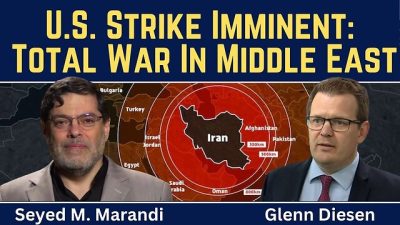
Seyed M. Marandi: Toward Total War in the Middle East
or go to
Aletho News Archives – Video-Images
From the Archives
The Geopolitics behind the War in Yemen (I)
By Mahdi Darius NAZEMROAYA | Strategic Culture Foundation | 30.03.2015
The United States and the Kingdom of Saudi Arabia became very uneasy when the Yemenese or Yemenite movement of the Houthi or Ansarallah (meaning the supporters of God in Arabic) gained control of Yemen’s capital, Sanaa/Sana, in September 2014. The US-supported Yemenite President Abd-Rabbuh Manṣour Al-Hadi was humiliatingly forced to share power with the Houthis and the coalition of northern Yemenese tribes that had helped them enter Sana. Al-Hadi declared that negotiations for a Yemeni national unity government would take place and his allies the US and Saudi Arabia tried to use a new national dialogue and mediated talks to co-opt and pacify the Houthis.
The truth has been turned on its head about the war in Yemen. The war and ousting of President Abd-Rabbuh Manṣour Al-Hadi in Yemen are not the results of «Houthi coup» in Yemen. It is the opposite. Al-Hadi was ousted, because with Saudi and US support he tried to backtrack on the power sharing agreements he had made and return Yemen to authoritarian rule. The ousting of President Al-Hadi by the Houthis and their political allies was an unexpected reaction to the takeover Al-Hadi was planning with Washington and the House of Saudi. … continue
Blog Roll
 Aletho News
- Israeli lobby seeks to bind US fate to ‘Israel’: Araghchi
- Pakistan-Iran talks secure LNG shipment to Islamabad through Hormuz
- Black Sea grain crisis puts global wheat supplies under pressure
- IRGC air defenses destroy another US MQ-1 drone over Strait of Hormuz
- Imran Khan’s entire immediate family detained in Pakistan ahead of mass protest demanding his release
- EU nation detains former presidential frontrunner
- Leaked: Britain’s Sham Conviction Of Hashim Thaci
- Seyed M. Marandi: U.S. Strike Imminent – Toward Total War in the Middle East
- Russia Voted Under Fire. Washington Is Loading the Tankers.
- 12 Things Your Oncologist Was Trained Not to Tell You
- If Americans Knew
- Israeli Attacks in Gaza Kill at Least Seven Palestinians Over Three Days, including Woman and Child
- Trump’s militarization of Washington DC as he pursues Israel’s war against Iran
- Why Israel Fears This Searing New Documentary
- Huckabee aide solicited cash gifts from Israelis
- This isn’t sci-fi, AI is already killing people
- ‘The Most Brutal Thing’: Investigation Reveals Execution of Elderly Woman in Rafah
- Inside Israel’s ‘soft’ ethnic cleansing plan for Gaza through the eyes of its victims
- New online database tracks pro-Israel political donations in the United States
- Israeli president pardons soldier convicted for killing wounded Palestinian
- Singer Ed Sheeran says his ‘heart broken’ by Gaza devastation, addresses Macklemore controversy
- No Tricks Zone
- 2025 Nature Paper Claiming Worsening Global Drought Gets RETRACTED …Heavily Flawed
- New Study: ‘Global Drought Shows No Detectable Recent Acceleration Under Climate Warming’
- Economic Masterminds: German Socialists Suggest Taxing Productivity Gains Stemming From Using AI
- The South China Sea Has Not Been Cooperating With The Climate Change Narrative
- Energy Crisis: Germany Enters Heating Season With Historically Low Gas Reserve Fill Levels
- New Study: The Antarctic Ice Sheet Gained Mass From 2020-2024 Due To Staggering Snow And Ice Accumulation
- Study: Ocean Heating Rates From Thousands Of Years Ago ‘Dwarf’ Modern Ocean Heating Rates
- Climate Extremists Target, Attack Large-Scale Power Grid Infrastructure In Germany!
- New Study: Antarctic Ice Melt Has Contributed Less Than 1 Centimeter To Sea Level Rise In The Last 30 Years
- Fear Of Debate: Alarmist German Climate Scientist Calls On Mainstream Media To Discredit Skeptic Voices
 Aletho News