Iran Needs Lifting of Sanctions, Guarantees From US to Revive Nuclear Deal, Raisi Says
Samizdat – September 16, 2022
Tehran needs the removal of sanctions and guarantees from Washington to restore the nuclear deal, also known as the Joint Comprehensive Plan of Action (JCPOA), Iranian President Ebrahim Raisi said.
“Removal of sanctions should be accompanied with the resolution of safeguards. There are some political and baseless accusations against Islamic Republic of Iran when it comes to safeguard issues,” Raisi told the Al Jazeera broadcaster on the sidelines of the Shanghai Cooperation Organization (SCO) summit in the Uzbek city of Samarkand.
The president noted that it is necessary to finalize these safeguard issues but it is not yet time to have face-to-face talks with the United States as Washington’s sincerity is questionable, according to Al Jazeera.
“Regarding the guarantees, if we have the trustworthy guarantees, and we have the lasting removal of the sanctions, not temporary removal of sanctions, and if there is a lasting solution for the safeguard issues, for sure it is possible to reach agreement,” Raisi added.
The JCPOA deal was sealed in 2015 by China, France, Germany, Iran, Russia, the United Kingdom, and the United States, as well as the European Union. Former US President Donald Trump unilaterally withdrew from the deal in 2018 and reimposed sanctions on Tehran.
Talks between Iran and the global powers to revive the deal and end US sanctions on Iranian oil exports have gained momentum recently. On August 31, Borrell said that an agreement to revive the 2015 nuclear deal will hopefully be reached in the next few days.
On September 2, Iranian Foreign Ministry spokesman Nasser Kanaani said that Tehran sent a “constructive” response to Washington’s proposals on the revival of the JCPOA, while a State Department spokesperson said the US had received Tehran’s response but described it as “not constructive.”
The Green New Deal in Europe is quickly turning into a House of Horrors
By P Gosselin | No Tricks Zone | September 16, 2022
One excellent site with all the late latest energy crisis developments in Germany and Europe is Blackout News. Here are some of the more notable headlines of the past week:
Europe’s largest aluminum plant cuts production by 22% due to energy costs
Deindustrialization
Europe’s largest aluminum smelter, Aluminum Dunkerque Industries France, will cut production by 22% due to rising electricity prices, thus putting the industry’s existence at risk and increasing Europe’s dependency on foreign suppliers.
High energy prices: Municipal utilities running into payment difficulties
Struggling utilities
German municipal utilities, who supply gas and power to their communities, are running into liquidity problems as suppliers of electricity and gas demand large sums as security guarantees before deliveries. Around 200 of the 900 German municipal utilities are affected.
The municipal utilities also “have to reckon with payment defaults by their customers on an unprecedented scale. Consumers have to cope with price increases of over 50% in some cases, which many will not be able to cope with”
Eight to 15% of consumers are expected to not to be able to pay.
It’s a serious danger signal because if they get into trouble, an economic crisis is usually not far away.
Exploding energy costs: economists sound the alarm
Hostile business environment in Germany
The German economy is reeling from exploding energy costs as insolvencies escalate and even once robust companies collapse. A number of industrial companies have imposed production stops or drastically reduced production – because of the skyrocketing energy costs. BDI industry association president Siegfried Russwurm warns that the spiraling energy prices are driving companies away.
In the latest BDI survey, 90% of all companies are severely challenged by the sharp rise in energy and raw material prices. In February 2022, the figure was just 23%.
France plans rolling blackouts this coming winter
Extreme power shortages in France
France normally generates a good 70 percent of its electricity from nuclear power plants but its power supply is massively at risk as 24 of the 56 reactors are off the grid due to repairs and maintenance. The country is now planning rolling blackouts should there be corresponding supply problems.
French utility RTE reports “it is clear that the country will not be able to produce enough electricity during the winter months unless consumers drastically reduce their power consumption.” As a result, the utility expects there may be rolling blackouts during the winter.
==========================
If this keeps up, Europe might quickly turn into a continent of starving and freezing beggars. Watch for Europe to be looking at a new Enabling Act.
Willkommen and bienvenue! Welcome to the Green New Deal!
Iran given roadmap for joining Russia and China in major bloc
Samizdat | September 15, 2022
Iran has signed a memorandum paving the way to transition from its current observer status to full membership of the Shanghai Cooperation Organization (SCO).
The Middle-Eastern nation, which the US has long sought to undermine with diplomatic isolation and economic sanctions, made a formal step on Thursday to become the ninth member of the organization. Among the SCO’s heavyweights are Russia and China, two major powers that are on Washington’s list of geopolitical opponents.
The SCO was created in 2001 as an intragovernmental forum aimed at fostering trust and developing economic and humanitarian ties in Asia.
It currently has eight permanent members: China, India, Kazakhstan, Kyrgyzstan, Russia, Pakistan, Tajikistan, and Uzbekistan. The last is currently hosting the annual summit of the leaders of the member states in the city of Samarkand.
Iran has been an SCO observer since 2005. Its delegation to the summit is headed by President Ebrahim Raisi, who met with senior Uzbek officials on Wednesday.
The memorandum, which spells the commitments that Tehran will undertake to become an SCO member, was signed by Iranian Foreign Minister Hossein Amir-Abdollahian and SCO Secretary-General Zhang Ming, the host country’s foreign ministry reported.
Yury Ushakov, a foreign affairs advisor to Russian President Vladimir Putin, said earlier this week that Iran could qualify for being upgraded to full membership before next year’s SCO summit in India.
Uzbek President Shavkat Mirziyoyev touted this year’s event as a turning point for the organization. He cited the rapidly growing interest of nations in closer involvement with the SCO and said that it served as an example of how a “deep crisis of trust at the global level” can be overcome by parties willing to do so. He also stressed the scale of the group, which accounts for roughly half of the world’s population and a quarter of global GDP.
Belarus, also an SCO observer, is set to start the formal process for full membership this year. Egypt and Qatar formally joined the organization as dialogue partners on Wednesday. Saudi Arabia is scheduled to do the same, while Bahrain, Kuwait, the UAE, Myanmar, and the Maldives are expected to begin their respective paths to receiving the same status.
Wall Street Giants Set to Smash Profit Records Off Global Hunger, Energy Crisis
By Jake Johnson | Common Dreams | September 9, 2022
Russia’s war on Ukraine has wreaked havoc on global commodity markets, driving up energy and food prices and exacerbating hunger emergencies around the world.
“We’re in a market where speculators are driving prices up.”
But while disastrous for the global poor—millions of whom are living on the brink of famine—the chaos has been a major boon for Wall Street giants, according to new data showing that the world’s 100 largest banks are on pace to smash commodity trading profit records this year.
“The 100 biggest banks by revenue are set to make $18 billion from commodities trading in 2022,” Bloomberg reported Friday, citing figures from the London-based firm Vali Analytics. “That would be the highest in the data, which goes back 14 years, and exceed the previous high watermark in 2009.”
“The prediction is the latest evidence that the wild swings in energy prices triggered by the war in Ukraine are delivering a boon to commodity traders, even as they push European nations into crisis,” Bloomberg added. “Vali, an analytics firm that tracks trading business, compiled data that includes the leading five banks in commodity trading: Macquarie Group Ltd., Goldman Sachs Group Inc., JPMorgan Chase & Co., Citigroup Inc., and Morgan Stanley.”
Though the prices of wheat and other food staples have fallen from their peak in recent months, they remain significantly elevated compared to last year, according to the United Nations’ Food and Agriculture Organization, leaving millions vulnerable to hunger and starvation.
The World Food Program estimates that “as many as 828 million people go to bed hungry every night” and “the number of those facing acute food insecurity has soared—from 135 million to 345 million—since 2019.”
Energy prices have also eased but remain high, contributing to cost-of-living crises throughout Europe and other parts of the globe.
“People’s misery makes capitalists’ superprofit,” Salvatore De Rosa, a researcher at the Lund University Center for Sustainability Studies, tweeted in response to Bloomberg‘s reporting. “How do you reform this?”
Wall Street banks have not just benefited from the commodity price increases—they’ve actively helped fuel them, experts say.
“We’re in a market where speculators are driving prices up,” Michael Greenberger, former head of the Division of Trading and Markets at the U.S. Commodity Futures Trading Commission, told Mongabay in July.
“Commodity markets are supposed to be hedging markets for people who are dealing with the commodity involved,” Greenberger said. “In the case of wheat, it would be farmers and people buying wheat. But if we looked at it, there would be banks in there with no interest in what the price of wheat is, writing swaps and controlling this price.”
“It’s too easy to say the war in Ukraine has unbalanced all these markets, [or that] supply chains and the ports are shot, and that there’s a supply and demand reason for these prices going up,” Greenberger added. “My own best guess is anywhere from 10% to 25% of the price, at least, is dictated by deregulated speculative activity.”
Global Oil Output Short of 6Mln BPD Due to Western Policy: Russian Energy Official
Samizdat – 14.09.2022
ST. PETERSBURG, Russia – A significant investment shortage into traditional energy sources caused by the Western sanctions and environmental, social, and governance (ESG) policy has caused a global production deficit of 5-6 million barrels per day, Russian First Deputy Energy Minister Pavel Sorokin said on Wednesday.
“The current situation on the energy market is not a result of the last few months but a consequence of the policy that was being created by the West during the last decade. The sanctions, which were imposed not only on Russia but on other countries, as well as the green agenda and the ESG policy of the last 10-15 years caused a significant shortage of investments into traditional energy sources. It has deprived the world of 5-6 barrels of oil per day, according to our estimates,” Sorokin said at the 11th St. Petersburg International Gas Forum.
The official also said that traditional energy sources are short of at least 250-270 billion euros ($25.1- $27 billion) in investments per year, adding that the slowdown in demand for oil and gas in the developing countries in Latin America, Africa and in the Asia-Pacific region affect the global economy, increasing the risks of economic recession.
The 11th St. Petersburg International Gas Forum (SPIGF), which is taking place from September 13-16 in the Expoforum Convention and Exhibition Centre, is hosting more than 80 events with the participation of 700 speakers from 20 countries. It aims to outline prospects for the further development of the sector, according to the organizers.
Among the main events of the SPIGF 2022 convention program are the international scientific and practical conference “Underground Gas Storage: Reliability and Efficiency” and plenary session “Gas Engine Fuel: a Reliable Solution in the Face of New Social-Economical and Environmental Challenges.”
Europe’s leaders continue to prioritise US interests over citizens’ wellbeing
European protestors demand an end to anti-Russia sanctions to alleviate cost-of-living crisis.
By Ahmed Adel | September 13, 2022
With winter approaching, Europeans are thinking about how their livelihoods will be affected. Rallies, strikes, demonstrations and protests are gaining momentum as the cost-of-living becomes unbearable. Although European media tried to hide this, even paid local propagandists cannot ignore the growing anger amongst Europeans.
Protests have occurred in Prague, Lisbon, London and many other cities, with people belonging to a wide variety of ideologies, including left and right-wing, and even libertarians and anarchists. Although labelled by the media as Putin’s stooges, name-calling is not having the desired effect, especially as people are united by the fear of winter woes, regardless of political affiliation.
Though attempts are being made to blame the continent’s declining economic situation on Russian President Vladimir Putin, Europeans are no longer accepting this excuse. Europeans are realising that anti-Russian sanctions hit them much harder than the Russians.
Forty percent of Austria’s population does not support anti-Russian sanctions, 51 percent of Italians are against them, and 80 percent of Germans believe that Berlin should not send weapons to Ukraine and instead seek a peaceful solution to the conflict in Ukraine. With these ideas, Europeans are rallying across the continent, with people not being deterred despite being accused of serving Putin.
However, it is the US ruining Europe, something which Moscow itself does not want as it would rather see an independent and prosperous continent. None-the-less, the European elite made an unconditional surrender of their countries and peoples to serve the interests of Washington instead.
It is evident that European protestors are completely devoid of common leadership and clear common goals and strategies. These protests are not an organised mass led by a charismatic leader, but small groups of people, and as already mentioned, from varying political ideologies.
Their potential success remains questionable though since citizens cannot change their leaders until the next election cycle. Germans, for example, were outraged when Foreign Minister Annalena Baerbock openly said that she will defend Ukraine’s interests, even against the will of voters. To make matters worse, she made the statement in English, an obvious signalling to Washington. Despite their outrage, Germans cannot remove Baerbock from her post and replace her with another politician until the next election.
Baerbock is hardly alone though when it comes to powerful politicians dismissing the opinion of the people, with only very few exceptions existing in Europe. Hungarian Prime Minister Viktor Orban is one of the few exceptions as he prioritises the welfare of his citizens rather than capitulation to American pressure.
In neighbouring Austria, state leaders are now putting pressure on Vienna and are asking federal authorities to negotiate with Moscow. State leaders have a negative attitude towards sanctions, with Upper Austria Governor Thomas Stelzer saying that “nothing is set in stone”. Austria’s approach to sanctions will have to be changed as “they will cause great damage to our lives”, added Stelzer.
Much will also depend on the results of the Italian elections. It appears that most Italians support Russia-friendly parties. There is a serious chance that at the end of September they will win the election and a coalition of Russia-friendly politicians will appear in the Italian Parliament. Giorgia Meloni of “Brothers of Italy” supported Putin’s re-election as president in 2018, Matteo Salvini of “League” became famous for being photographed in Moscow’s Red Square wearing a t-shirt with an image of Putin, and Silvio Berlusconi is introducing himself as the man to improve European-Russian ties.
More importantly, Europeans are beginning to understand that Washington is not a protector, but a dangerous and unscrupulous state that is prioritising its own interests, not Europe’s. Russia at war, whilst Europe cripples itself by arming Ukraine and imposing anti-Russia sanctions, is an ideal scenario for Washington. In this way, not only is one of Washington’s main adversaries bogged down in the conflict with Ukraine and NATO, but it deepens Europe’s status as nothing more than a submissive protectorate
With frustrations and worries reaching boiling point, and the harsh winter only some weeks away, European leaders need to quickly reach a compromise with Moscow to help alleviate the cost-of-living crisis or else citizens will face a suffering, at least at an economic level, not experienced since World War II.
Ahmed Adel, Cairo-based geopolitics and political economy researcher.
Special Military Operation, Season 2
Big Serge | September 12, 2022
September 9 – 11 will go down in history as a period of great significance in the Russo-Ukrainian war. Both belligerent parties crossed very important thresholds, which taken together suggest that the war is entering a new phase. On the 9th and 10th, Ukraine achieved its first concrete success of the war by retaking all the Russian-held territory in Kharkov Oblast west of the Oskil river, including the western bank of Kupyansk and the transit node of Izyum.
Meanwhile, Vladimir Putin convened an emergency meeting of his national security council, which precipitated Russia’s own escalation on the 11th, when Ukrainian infrastructure was at long last subject to attack, plunging much of the country into darkness.
It seems clear that the war is entering a new phase, and it seems highly likely that both parties will attempt to take decisive action in the near feature. For now, let’s try to parse through the developments of the past week and get a handle on where the war is heading.
At the risk of sounding very pedantic, Ukraine’s counteroffensive in eastern Kharkov Oblast is an excellent demonstration of the difficulties in evaluating military operations. Everyone agrees on the basic geography of what has happened: Ukraine cleared everything west of the Oskil river of Russian forces. Nobody agrees on what this means, however. I have seen all of the following interpretations posited – note, people reached all of these conclusions from the same set of data:
- Russia has drawn Ukraine into a trap and will soon counterattack
- Russia voluntarily withdrew from Kharkov to prioritize other fronts
- Russia drew the Ukrainians out to hit them with artillery
- Russia suffered a massive intelligence failure and did not see or respond to Ukraine’s offensive
- Russia suffered a defeat in battle and was forced to retreat
Let’s do a methodical autopsy and see what we come away with.
The first thing we want to note is that the disparity of forces on this front was absolutely laughable. Ukraine assembled a strike group of at least five full brigades, and aimed at a line of contact which had no Russian regular troops at all. The Russian frontline defenses in the region were manned by allied donbas militia and national guardsmen. It seems there was a lone Battalion Tactical Group (BTG) in Izyum, but little else.
It is undeniable, even for Ukrainians celebrating the advance, that Kharkov oblast had been almost completely hollowed out of Russian troops, leaving little more than a screening force. Two important things flow from this. First, that the Ukrainian shock group was in most places advancing against virtually nonexistent resistance. Secondly, more ominously for Ukraine, the low quality units left behind for screening purposes were able to put up good resistance against the Ukrainians – the Rosgvardiya men in Balakliya held out tenaciously for several days before evacuating through a corridor.
In my previous analysis, conducted while the Ukrainian counteroffensive was just beginning to develop, I noted two important things about the shape of the battlefield.
- I argued that Ukraine would be unable to push across the Oskil and properly exploit their offensive.
- I noted that Ukraine was making rapid advances against thinly manned, hollowed out portions of the front, and that Russia had committed very little to the battle.
Both of these statements were correct. I freely admit, however, that I drew the incorrect conclusion from them. I believed the Ukrainian advance would culminate at the Oskil river, leaving them vulnerable to a Russian counterattack by the arriving reserves. It seems fairly clear now that this is incorrect, and the Russian reserves that were en-route were tasked with stabilizing the defense at the Oskil, not launching a counterattack.
This was not an operational trap by Russia, but neither was it a victory in battle for Ukraine – for the simple reason that there was not much of a battle at all. Russia had already hollowed out these positions, and withdrew the remaining screening forces very quickly. Ukraine covered a lot of ground, but were unable to destroy any Russian units, because there really weren’t any there.
It would be silly to try to talk the Ukrainian side out of their excitement right now. Credit where credit is due, they did manage to put together a good sized shock group, aim it at a weak portion of the front, and regain a good bit of ground. Considering the abject lack of successes for Ukraine in this war, they are rightfully trying to eke every last bit of morale and propaganda out of this.
I do not, however, believe that the territorial losses in Kharkov in any way change the ultimate calculus of the war. Russia hollowed out this front and surrendered ground, but they were able to maul the Ukrainian forces as they advanced with relentless artillery and airstrikes. Ukrainian channels widely report overflowing hospitals. The Russian Ministry of Defense claimed 4,000 killed and 8,000 wounded for Ukraine during their advance – I believe this is high, but even if we reduce the numbers by 50% (leaving us with 6,000 total casualties, reasonable given how much ordnance Russia discharged) it is very clear that the loss ratios in this operation were stacked badly against Ukraine, as they always are.
As I predicted in my last piece, Ukraine has so far been unable to exploit their offensive by reaching the operational depth. They have been totally unable to project forces across the Oskil River. With the advance eastward firmly culminated, they are seeking to maintain their momentum, or at least the appearance of it.
Ukraine’s successful advance in Kharkov Oblast has been augmented with a blitz of fakery and propaganda designed to simulate a total shift in strategic momentum. These include fakes related to Russian domestic politics, such as fabricated calls for Putin’s impeachment, and battlefield misinformation, like claims that the Ukrainian Army has breached the borders of the LNR or stormed Donetsk City. They have also circulated out of context videos (the most popular one shows a Russian vehicle depot in Crimea) purporting to show that the Russians abandoned hundreds of vehicles in Izyum.
The fakery is not important. Ukraine will, however, also attempt to maintain battlefield momentum by piggybacking on the Kharkov operation with additional counteroffensives. They continue to attempt to cross the Donets River in force to storm Lyman, unsuccessfully. They also continue their attacks in the Kherson direction, making little progress and taking high casualties.
The most important development, however, is the claim that a second Ukrainian shock group has been assembled in Zaparozhia. This is an area where the geography actually would allow Ukraine to achieve operational exploitation. A successful drive towards Melitopol or Mariupol would compromise the land bridge to Crimea and threaten to crumble Russia’s entire position in the south.
Unlike Kharkov, however, this is not a hollowed out portion of the front. The newly formed Russian 3rd Corps is concentrated in the south, and Russian convoys have been spotted recently moving through the Mariupol region. Ukraine may very well attempt yet another offensive operation in this direction, but given the strength of the Russian grouping here the results will be more like Kherson than Kharkov.
During the opening months of the war, I argued on Twitter that massed offensives are difficult, and that Ukraine had not yet shown the organizational ability to organize an operational higher than the brigade level. All the attacking action that we saw from Ukraine early on took the form of single brigade – or more often, single battalion – commanders taking initiative.
Well, lo and behold, Ukraine managed to field at least two (Kherson, Kharkov) and perhaps three (Zaporizhia) multi-brigade shock groups, and launch coordinated operations. This was made possible because Ukraine is a pseudo-state, which is supplied, financed, and increasingly managed by NATO. Western agencies cannot resist bragging – Britain identified itself as the party responsible for planning and organizing the Kherson operation, while the USA claims credit for the more successful Kharkov attack.
It is difficult to overstate the extent to which Ukraine is sustained solely by the west. Ukrainian soldiers are trained by NATO officers, armed with NATO weapons, accompanied in the field by NATO soldiers foreign volunteers, and the Ukrainian pseudo-state is kept running by cash injections from the west. Videos from the Kharkov front abound with English speaking soldiers and foreign weapons.
The point isn’t just to point out, yet again, that Ukraine is a failed state – a corpse that is given the illusion of life by outside actors moving its limbs. The point is that Russia understands this and correctly understands itself to be in a civilizational collision with the west. To that end, we must understand that Russian escalation is underway, and think about what that means.
By this point, the idea that Russia needs to mobilize has become a tired old meme, courtesy of the deranged Igor Strelkov. It is certainly true that Russia must escalate, but leaping directly to mobilization (putting the economy on war footing and calling up conscripts) would be a grave mistake. Russia has other, better ways to escalate. The recent Ukrainian advance in Kharkov is an obvious signal to raise the force deployment, and Ukrainian potshots at targets across the Russian border only add to the pressure to take the gloves off.
First, I would like to comment on why I am against mobilization. One of the most important dimensions of this war is the economic front. Europe is being driven to the brink by the energy crisis. The Wall Street Journal keyed in on what I believe to be the most apt descriptor of the crisis, warning of a “new era of deindustrialization in Europe.”
A full mobilization would be very costly for Russia’s economy, risking the edge that it currently holds in the economic confrontation with Europe. This, I believe, is the main reason that the Russian government was quick to quash rumors of mobilization today. There are other steps on the escalation ladder before going to total war footing.
There are already rumors that Russia is planning to change the formal designation of the war, from “Special Military Operation”. While that could mean a formal declaration of war, I think that is unlikely. Rather, Russia will likely give the Ukraine operation the same designation as its operations in Syria, loosening the rules of engagement and beginning to target Ukrainian assets in earnest.
We saw a foretaste of this last night, when Russia wiped out over half of Ukraine’s power generation with a few missiles. There are many more targets that they can go after – more nodes in the electrical grid, water pumping and filtration facilities, and higher level command posts. There is at least some probability that Russia begins targeting the command facilities with NATO personnel in them. Plausible deniability works both ways; because NATO is not officially in Ukraine – only “volunteers” – targeting their personnel is not an overtly aggressive act.
Russia also has many ways to boost its force deployment in Ukraine that fall short of full mobilization. They have a pool of demobilized contract soldiers that they can call up, as well as a pool of reservists that they can raise with a partial mobilization.
The Russian line is hardening. Just in the past 24 hours, Kremlin spokesman Dmitry Peskov said there were “no prospect for negotiations” with Ukraine, and Putin said “Unfriendly forces are targeting us, and we must take initiative in order to succeed in confronting them.” Medvedev went even further just now: “A certain Zelenskyy said that he will not hold a dialogue with those who issue ultimatums. The current ‘ultimatums’ are a warm-up for kids, a preview of demands to be made in the future. He knows them: the total surrender of the Kiev regime on Russia’s terms”
If you believe the Russian government is utterly incompetent and duplicitous, feel free to view statements like this as bluster. But given the warning shot at Ukrainian power generation yesterday, my sense is that Russia is preparing to escalate to a higher level of intensity, which Ukraine cannot match with its indigenous resources. The only other player on the escalation ladder is the United States.
Dark times are ahead for Ukraine – and perhaps for Americans on the other front of this war.
Syria and Ukraine are two fronts in the same war. This is very important to understand. In Syria, the United States has attempted to wreck Russia’s most important Middle Eastern ally and create a Trashcanistan of chaos to suck in Russian resources; in Ukraine, NATO has armed a kamikaze state to hurl at Russia’s western border. In the Russian mind, these wars are inextricably linked.
After the Kharkov counteroffensive, I strongly suspect that Russia will look for a way to strike back at the United States, without crossing red lines that could lead to a more direct confrontation. Syria is the place where this would happen. The United States maintains several illegal bases on Syrian soil, which Russia could strike using its Syrian allies much the same way that the United States is using Ukraine. Russia is in the finishing stage training a new Syrian airborne division. With Russian air cover, an attack on one of the American bases in Syria would be possible – the USA would be forced to choose between shooting down Russian planes and flirting with nuclear war, or humbly accepting the loss of an illegal base that it has worked hard to hide from its own citizens. Given the utter lack of enthusiasm among the American public for yet another war in the Middle East, it seems that the USA would simply have to swallow the loss.
- Russian escalation of attacks on Ukrainian infrastructure and command centers.
- Russian force deployment raised without full mobilization.
- Intensification of Russian efforts to recover DNR territory.
- Possible escalation in Syria, likely in the form of Syrian army attacks on US bases.
US could benefit from EU recession – WaPo
Samizdat | September 12, 2022
White House officials believe the effect of a recession in the EU on the US economy would be “modest,” while some economists suggest that it would actually help America, the Washington Post has reported.
With the European Central Bank raising interest rates by 0.75 points last week amid soaring energy prices and spiking inflation, White House aides believe “the growing likelihood of a recession in Europe is unlikely to change under the current trajectory,” the paper wrote on Sunday.
However, US officials who talked to WaPo on condition of anonymity said they didn’t think that a recession in Europe would necessarily cause one in America.
One senior member of the Biden administration told the outlet that the Treasury Department and the Council of Economic Advisers had estimated that the impact on the US from such an event would likely be “modest and manageable.”
Trade with Europe accounts for less than 1% of US gross domestic product, while the country also has enough of its own natural gas to minimize the impact of a possible stoppage of Russian energy supplies to the EU, the paper pointed out.
In fact, the US economy could actually benefit from the whole situation as it would potentially cause a reduction in global demand for energy, further alleviating price pressures in the US, it added.
“If Europe goes into recession, there’s obviously less demand for a wide range of products. We’re in such a perverse situation here [that] it may actually be positive,” Dean Baker, co-founder of the Center for Economic and Policy Research, told the Washington Post.
However, if Moscow goes further and stops selling its oil and gas not only to the EU, but also to other markets, in response to a proposed price cap on its energy imports, it “would threaten the US economy more,” according to the paper.
“That will push the economy into recession. Gasoline prices will go skyward, back over its record $5 a gallon almost overnight. The economy can’t digest $5 a gallon – that would be overwhelming,” warned Mark Zandi, an economist at Moody’s Analytics.
Germany imports less from Russia but pays more
Samizdat | September 13, 2022
German imports from Russia saw a dramatic 45.8% year-on-year decline in July, data from the Federal Statistical Office of Germany showed on Monday.
However, in monetary terms, German purchases of Russian products surged 10.2% to €2.9 billion ($2.94 billion), data indicates.
The imbalance arose due to soaring prices of oil and gas. The value of energy imports from Russia increased by 1.6% to €1.4 billion, according to the data, despite the much lower volume of purchases compared to the same period a year ago.
At the same time, Germany’s exports to Russia saw a substantial year-over-year drop of 56.8%.
Germany, along with other EU countries, has been seeking to reduce its reliance on imports of Russian fossil fuels, and has stepped up the effort since late February, when Moscow started its military operation in Ukraine.
Earlier this month, Finland’s Center for Research on Energy and Clean Air (CREA) reported that more than half of the €158 billion that Russia earned from oil and gas exports over the past six months was paid by EU countries. The bloc has reportedly imported 54% of all Russian energy exports since late February, worth around €85 billion.
Europe Commits Suicide-by-Sanctions
By Ron Paul | September 12, 2022
A Swiss billboard is making the rounds on social media depicting a young woman on the telephone. The caption reads, “Does the neighbor heat the apartment to over 19 degrees (66F)? Please inform us.” While the Swiss government has dismissed the poster as a fake, the penalties Swiss citizens face for daring to warm their homes are very real. According to the Swiss newspaper Blick, those who violate the 66 degree heating limit could face as many as three years in prison!
Prison time for heating your home? In the “free” world? How is it possible in 2022, when Switzerland and the rest of the political west have achieved the greatest economic success in history, that the European continent faces a winter like something out of the dark ages?
Sanctions.
While long promoted – often by those opposed to war – as a less destructive alternative to war, sanctions are in reality acts of war. And as we know with interventionism and war, the result is often unintended consequences and even blowback.
European sanctions against Russia over its invasion of Ukraine earlier this year will likely go down in history as a prime example of how sanctions can result in unintended consequences. While seeking to punish Russia by cutting off gas and oil imports, European Union politicians forgot that Europe is completely dependent on Russian energy supplies and that the only people to suffer if those imports are shut down are the Europeans themselves.
The Russians simply pivoted to the south and east and found plenty of new buyers in China, India, and elsewhere. In fact, Russia’s state-run Gazprom energy company has reported that its profits have increased by 100 percent in the first half of this year.
Russia is getting rich while Europeans are facing a freezing winter and economic collapse. All because of the false belief that sanctions are a cost-free way to force other countries to do what you want them to do.
What happens when the people see dumb government policies making energy bills skyrocket as the economy grinds to a halt? They become desperate and take to the streets in protest.
This weekend thousands of Austrians took to the streets in a “Freedom Rally” to demand an end to sanctions and the opening of Nord Stream II, the gas pipeline on the verge of opening earlier this year. Last week an estimated 100,000 Czechs took to the streets of Prague to protest NATO and EU policy. In France, the “Yellow Vests” are back in the streets protesting the destruction of their economy in the name of “defeating” Russia in Ukraine. In Germany, Serbia, and elsewhere, protests are gearing up.
Even the Washington Post was forced to admit that sanctions on Russia are not having the intended effect. In an article yesterday, the paper worries that sanctions are inflicting “collateral damage in Russia and beyond, potentially even hurting the very countries that impose them. Some even worried that the sanctions intended to deter and weaken Putin could end up emboldening and strengthening him.”
This is all predictable. Sanctions kill. Sometimes they kill innocents in the country targeted for destruction and sometimes they kill innocents in the country imposing them. The solution, as always, is non-intervention. No sanctions, no “color revolutions,” no meddling. It’s really that simple.
Copyright © 2022 by Ron Paul Institute.
Algeria to discuss joining BRICS with Russia
The BRICS bloc represents an alternative to western economic hegemony, and can serve as a powerful tool to bypass economic sanctions
The Cradle | September 11, 2022
According to media reports on 8 September, the newly appointed Russian ambassador to Algeria, Valeryan Shuvayev, announced that the North African country’s president, Abdelmajid Tebboune, will likely visit Moscow before the end of the year to discuss mutual cooperation between the two countries.
Tebboune’s potential visit will center around Algeria’s desire to join the Brazil, Russia, India, China, and South Africa (BRICS) group of emerging economies.
The BRICS group of nations represents the world’s most prominent economies outside of the western hemisphere.
In his first media appearance outside of the Russian embassy in Algeria, Shuvayev stated that President Tebboune sent a letter to Russia’s President Vladimir Putin regarding his country’s desire to join BRICS.
In May, Russian Foreign Minister Sergey Lavrov visited Algeria and met with President Tebboune, as well as his Algerian counterpart, Ramtane Lamamra, where they discussed a boost in relations between both countries, and the intention to sign a number of agreements in the near future that will further enhance the relationship between Moscow and Algiers.
Two months later, in late July, Tebboune referred to the BRICS group as a significant “economic and political power” which is of interest to the North African state and added that his country holds the necessary criteria to be included into the organization.
In mid-August, former Algerian Industry Minister, Ferhat Ait Ali, said during an interview: “This bloc seeks to attract countries that are neither poor nor very rich, but rather countries that [can serve as an] alternative to Western hegemony.”
The BRICS group “includes two historical allies and partners for Algeria to trust in… namely China and Russia, and other partners who have no problem in the progress of our economic system in parallel with theirs,” the former Algerian minister added.
Algeria and Russia have historically enjoyed a smooth relationship. The Soviet Union was the first country to establish diplomatic relations with Algeria following its independence from French colonial occupation in 1962.
The BRICS group of emerging economies represents a beneficial alternative to the dominant US and western-led economic system, especially for countries negatively affected by western sanctions.
In June, the Islamic Republic of Iran submitted an application to become a member of the BRICS group. Tehran’s Foreign Ministry spokesperson, Saeed Khatibzadeh, said at the time that the bloc’s member countries represent 30 percent of the world’s GDP and 40 percent of the global population.
German President Says Homeless Numbers May Rise Amid Cost-of-Living Crisis
Samizdat – 11.09.2022
More people in Germany may become homeless this winter as soaring costs of living keep adding pressure on vulnerable households, President Frank-Walter Steinmeier warned on Sunday.
Over 300,000 Germans do not have a home, Steinmeier told a conference at his Bellevue residence. Of them, 45,000 are forced to sleep rough on the streets.
“More than 300,000 is a huge figure! And let’s be clear: this number may rise in the coming months. The war and crises may increase the number of people suffering from lack of housing in fall and winter,” he said.
Germany marks the Day of the Homeless on September 11. The German president traditionally invited people who do not have a roof over their head to his Berlin residence in the upscale Tiergarten neighborhood.
Steinmeier said that the problem of homelessness was more acute than ever at this time of crisis. He urged politicians to make sure that “the topic is not relegated to the bottom of the political agenda”.
Germany and other European countries are suffering from soaring inflation and immense energy prices caused by Brussels’ decision to impose sanctions on Russia after the start of the special military op in Ukraine. As a result, gas prices and energy bills at record-high levels have become a major issue for many Europeans.
Featured Video
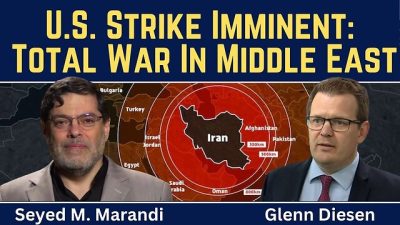
Seyed M. Marandi: Toward Total War in the Middle East
or go to
Aletho News Archives – Video-Images
From the Archives
The Geopolitics behind the War in Yemen (I)
By Mahdi Darius NAZEMROAYA | Strategic Culture Foundation | 30.03.2015
The United States and the Kingdom of Saudi Arabia became very uneasy when the Yemenese or Yemenite movement of the Houthi or Ansarallah (meaning the supporters of God in Arabic) gained control of Yemen’s capital, Sanaa/Sana, in September 2014. The US-supported Yemenite President Abd-Rabbuh Manṣour Al-Hadi was humiliatingly forced to share power with the Houthis and the coalition of northern Yemenese tribes that had helped them enter Sana. Al-Hadi declared that negotiations for a Yemeni national unity government would take place and his allies the US and Saudi Arabia tried to use a new national dialogue and mediated talks to co-opt and pacify the Houthis.
The truth has been turned on its head about the war in Yemen. The war and ousting of President Abd-Rabbuh Manṣour Al-Hadi in Yemen are not the results of «Houthi coup» in Yemen. It is the opposite. Al-Hadi was ousted, because with Saudi and US support he tried to backtrack on the power sharing agreements he had made and return Yemen to authoritarian rule. The ousting of President Al-Hadi by the Houthis and their political allies was an unexpected reaction to the takeover Al-Hadi was planning with Washington and the House of Saudi. … continue
Blog Roll
 Aletho News
- Pakistan-Iran talks secure LNG shipment to Islamabad through Hormuz
- Black Sea grain crisis puts global wheat supplies under pressure
- IRGC air defenses destroy another US MQ-1 drone over Strait of Hormuz
- Imran Khan’s entire immediate family detained in Pakistan ahead of mass protest demanding his release
- EU nation detains former presidential frontrunner
- Leaked: Britain’s Sham Conviction Of Hashim Thaci
- Seyed M. Marandi: U.S. Strike Imminent – Toward Total War in the Middle East
- Russia Voted Under Fire. Washington Is Loading the Tankers.
- 12 Things Your Oncologist Was Trained Not to Tell You
- Anthrax Attacks Paved Way for COVID-Era ‘Junk Drugs and Vaccines’
- If Americans Knew
- An error has occurred; the feed is probably down. Try again later.
- No Tricks Zone
- 2025 Nature Paper Claiming Worsening Global Drought Gets RETRACTED …Heavily Flawed
- New Study: ‘Global Drought Shows No Detectable Recent Acceleration Under Climate Warming’
- Economic Masterminds: German Socialists Suggest Taxing Productivity Gains Stemming From Using AI
- The South China Sea Has Not Been Cooperating With The Climate Change Narrative
- Energy Crisis: Germany Enters Heating Season With Historically Low Gas Reserve Fill Levels
- New Study: The Antarctic Ice Sheet Gained Mass From 2020-2024 Due To Staggering Snow And Ice Accumulation
- Study: Ocean Heating Rates From Thousands Of Years Ago ‘Dwarf’ Modern Ocean Heating Rates
- Climate Extremists Target, Attack Large-Scale Power Grid Infrastructure In Germany!
- New Study: Antarctic Ice Melt Has Contributed Less Than 1 Centimeter To Sea Level Rise In The Last 30 Years
- Fear Of Debate: Alarmist German Climate Scientist Calls On Mainstream Media To Discredit Skeptic Voices
 Aletho News