Ukraine’s Naftogaz Reportedly Requests $5Bln in Government Subsidies to Buy Gas Ahead of Winter
Samizdat – 20.07.2022
Ukraine’s state-run oil and gas company Naftogaz has requested 150 billion Ukrainian hryvnias ($5 billion) in subsidies from the government to purchase enough gas ahead of the heating season, the RBC Ukraine news agency reported on Wednesday, citing the firm’s letter to the government.
Naftogaz had to request budgetary help since raising such massive funds otherwise is neither possible domestically nor internationally, the company wrote in the letter to the cabinet, according to the report.
“In such conditions, the state budget is the only possible source of financing the purchase of imported natural gas… The most favorable option is to increase the authorized capital of Naftogaz of Ukraine,” the letter read, according to the report.
The company suggested increasing its authorized share capital by 150 billion Ukrainian hryvnias, the report said.
On July 12, Naftogaz asked the holders of its Eurobonds to defer interest payments for two years but was not granted such concession, thereby exposing the company to the risk of default.
Ukraine’s former housing and communal services minister, Oleksiy Kucherenko, has accused Naftogaz of forging its profit results in 2021, saying that the breach now has to be patched with 264 billion hryvnias from the budget. The ex-official also noted that Ukraine’s budget is running low, so Kiev may have to request assistance from the United States.
Let the people pay: EU leaders make their citizens suffer the fallout from their failed Russia policy
Samizdat | July 20, 2022
In a Bastille Day interview, French President Emmanuel Macron told citizens to “prepare ourselves for a scenario where we have to do without Russian gas entirely.” At the same time, Macron accused Moscow of using the fuel as a “weapon of war,” echoing the spin emanating from a European Union leadership that obscures the real reason the bloc is facing an energy shortage that’s driving up the cost of living.
This crisis is entirely self-inflicted.
European Commission President Ursula von der Leyen accused Russia of energy “blackmail” at the end of April, citing the state-owned Gazprom’s announcement of a halt in gas deliveries to Poland and Bulgaria for failing to pay for in rubles. What von der Leyen – and now Macron – conveniently omitted was that it was the EU’s own anti-Russian sanctions, adopted in a knee-jerk and ideologically-driven fashion at the outset of the Ukraine conflict, that represent the root cause of these disruptions.
The West quickly adopted a strategy of targeting and sanctioning various aspects of the Russian financial system, including banks and foreign reserves, cutting it off from the SWIFT global transaction system – and then had the gall to complain that Moscow was asking for payment for its gas exports in its own currency to mitigate the hassle of navigating a system from which it was effectively blocked. “Export your gas but good luck trying to get paid,” is hardly a reasonable expectation.
It wasn’t Russian President Vladimir Putin who called on the EU to cut off Russian gas. Rather, it was his Ukrainian counterpart Vladimir Zelensky, who has constantly pushed for ever more Western sanctions on Russian fossil fuels. And the West has only been to happy to recklessly indulge him to the detriment of their own citizens.
Earlier this month, Zelensky even admonished Canada for agreeing to return repaired turbines for reintegration into the Nord Stream 1 gas pipeline that provides gas to Germany, and demanded that Ottawa reverse its decision. Canada had earlier faced the dilemma of violating the West’s own anti-Russian sanctions by virtue of even returning the critical parts – even though the pipeline is so vital to EU industry that the bloc’s leaders have even been freaking out about its scheduled maintenance shutdown.
Why would you be so worried about Russia failing to turn the tap back on when you’ve been saying repeatedly that you’ll gladly do without it “for Ukraine.”
But even in defending the return of the turbines, Canadian Prime Minister Justin Trudeau cited the same ridiculous Western establishment propaganda of Russia’s “weaponization” of gas, when in reality it’s the West’s own sanctions that have wreaked energy havoc and caused all this drama.
“We have seen Russia consistently trying to weaponize energy as a way of creating division amongst the allies,” Trudeau said. So if Canada doesn’t violate its own sanctions and return the turbines to Germany, then Putin wins. The Olympic level rhetorical gymnastics required by Western leaders to justify violating their own failed sanctions are second only to their recent defense of firing up coal plants again, and redefining fossil fuel energy as “green,” amid the current shortages.
EU leaders are calling for an end to Russian energy imports, citing their decision to sanction their own gas supply as a reason to expedite a transition to unproven renewables. But rather than take responsibility for the fact that they set fire to their sails and are now stranded in the middle of the ocean while awaiting the manifestation of their renewable energy transition fantasy, they’re blaming Russia for their own shortsightedness and trying to spin it as a withholding of energy orchestrated by Moscow.
Russia is only too happy to sell its fuel to whomever wants to buy it. And if the EU sanctions were lifted, the Western energy crisis would end. But that would mean admitting to a failed policy. So, instead, we’re being told that it’s all Putin’s fault, but also that the best way to stick it to Vladimir Putin is to take short, cold showers and to reduce “night lighting,” as Macron has recently suggested.
Western leaders aren’t just taking their citizens for credulous fools with their ridiculous propaganda as cover for their own failures, but they’re treating the livelihood of the average person as collateral economic damage in their hopeless bid to isolate Russia. They’ve convinced themselves, from their ideologically-isolated elite bubble, that they represent the entire world. But they’re mostly just fooling themselves.
Even the EU’s chief diplomat, Josep Borrell, admitted to a rude awakening recently at the G20 summit. “The G7 and like-minded countries are united in condemning and sanctioning Russia and in trying to hold the regime accountable,” Borrell said in a statement on the EU’s website. “But other countries, and we can speak here of the majority of the ‘Global South’, often take a different perspective.”
But then Borrell gave away the game. “The global battle of narratives is in full swing and, for now, we are not winning,” he said. “As the EU, we have to engage further to refute Russian lies and war propaganda.” But who’s really peddling the propaganda? On one hand, the EU has been trying to portray the impact of their own irresponsible and devastating sanctions on their own economies and citizens as Putin’s doing even as they try to convince Westerners that their suffering is some kind of a war effort that’s doing harm to Russia.
However, in reality, Russia can pivot to the rest of the entire world and simply leave West Europeans to wallow in their own costly delusions. They may be about to find out whether moral superiority and virtue-signaling will heat the house or feed the kids this winter.
Russia teaches Europe ABCs of gas trade
BY M. K. BHADRAKUMAR | INDIAN PUNCHLINE | JULY 20, 2022
The unthinkable is happening for the second time in five months: Russian gas giant Gazprom writes to German gas companies announcing force majeure effective from June 14, exonerating it from any compensation for shortfalls since then.
The first time shock and awe appeared in German-Russian relations this year was on February 22 when Chancellor Olaf Shloz surprised even hardened political observers by freezing approval process for the newly-constructed Nord Stream 2 gas pipeline. The $11 billion pipeline beneath the Baltic Sea would have doubled the volume of gas sent directly from Russia to Germany, but Scholz instead blocked its commissioning. Those were halcyon days when Berlin talked of “defeating” Russia.
Scholz’s move was in reaction to Moscow’s decision on February 21 to recognise two breakaway regions of Ukraine as independent republics. Russia hawks in Germany applauded his decision. Acclaim came pouring in. Jana Puglierin, head of the European Council on Foreign Relations in Berlin, praised Scholz, saying he was “raising the bar for all other EU countries… this is real leadership at a crucial moment.”
However, in Moscow, which has a thorough understanding of the German energy market, Scholz’s move was seen as an act of deliberate self-harm. Moscow reacted with a flash of sardonic humour. Dmitry Medvedev, former president and deputy head of Russia’s Security Council, tweeted, “Welcome to the brave new world where Europeans will soon be paying €2,000 per 1,000 cubic meters of gas!”
He was alluding to the grim reality that gas accounted for a quarter of Germany’s energy mix, and more than half of it came from Russia. Indeed, it was plain to see that Germany’s reliance on gas could only rise having decided to shelve nuclear power in the aftermath of the 2011 Fukushima disaster in Japan and committed to phasing out coal-fired power by 2030.
But Scholz insisted that Germany would expand solar and wind power capacity “so we can produce steel, cement and chemicals without using fossil fuels.” His confidence actually stemmed from the fact that Germany had a long-term contract with Russia to supply gas at a friendly price via Nord Stream 1.
The first indication that something was going horribly wrong was when the influential Russian daily Izvestia wrote on July 11 quoting industry experts in Moscow that the scheduled routine stoppage of NS1 for annual servicing and repairs from July 11-21 might continue due to Canada holding back, under sanctions against Russia, the turbine that had gone for repair.
The daily went on to forecast that Gazprom might announce force majeure because of western sanctions, as Siemens twice already failed to return equipment to Gazprom after repairs in Canada, which resulted in a reduction in the gas flow from the planned 167 million cubic meters.m to 67 million cubic meters.m per day.
Izvestia noted that the situation would lead to a spike in spot market price for LNG upward of $2,000 per 1,000 cubic meters — perhaps, “even more — up to $ 3,500” — from the July 8 price level of $1800.
Acting on an urgent request from Berlin and recommendation for Washington for waiver of sanctions, Canada since agreed, but, according to Izvestia, even after Siemens returns the turbines to Gazprom, “there will be a long period of testing the turbines to find out how correctly they were repaired. No one wants to install turbines that are at risk of failure after being repaired in an unfriendly country. So the real time for launching turbines and returning SP-1 (NS1) to its design capacity is two to three months.”
That is, gas may flow through NS1 earliest only by September/October. Even then, Gazprom may not be able to utilise more than 60 percent of its capacity, since overhauls are overdue for two more turbines.
Therefore, the experts told Izvestia that problems with gas shortages in the European Union would persist for the next few winters and authorities may have to “limit the supply of hot water, dim street lights, close swimming pools and turn off energy-consuming equipment” and, furthermore, instead of green energy, switch to coal.
Kommersant newspaper reported today that while classic force majeure events could be natural disasters, fires, etc., in the case of Gazprom, “we are talking about a technical malfunction of equipment,” which may lead to litigation — and, “what will be decisive will be whether Gazprom’s actions to cut gas supplies were proportionate to the real scale of the technical problems.”
Evidently, Gazprom is well-prepared. Germans suspect that Gazprom’s alibi of non-delivery of gas turbines from Canada, et al, is bogus. And Kommersant foresees a “lengthy trial.” Now, the catch is, in the long run, we are all dead.
For Germany, however, this is a grave situation, as many industries may have to shut down, and there could be serious social unrest. Germans are convinced that Moscow is resorting to the “nuclear option.” The big question is whether Germany’s solidarity with Ukraine will survive a cold winter.
Scholz’s confidence was predicated on the belief that Russia desperately needed the income from gas exports. But then, Moscow is today generating more income from less exports. Arguably, Russia’s best strategy today would be to reduce gas deliveries without ending them altogether, as even if Russia sells only a third of the gas it sold previously, its revenues do not get affected, since the shortage of LNG globally has exponentially spiked the market price. It’s a fair bet that’s what Gazprom would do.
Putin once disclosed that under the long-term contracts, Russia sold gas to Germany at ridiculously low price — $280 per thousand cubic meters — and Germany was even reselling Russian gas to other customers for a tidy profit!
Where it hurts Germany most is that this is not only about freezing homes, but the implosion of its entire economic model that is over-reliant on industrial exports, thanks to imports of cheap fossil fuels from Russia. German industry is responsible for 36 percent of its gas use.
Germany behaved in an unprincipled way on all aspects of the Ukraine crisis. It pretended to support Zelensky but shied away from giving military support, triggering a nasty diplomatic spat between Kiev and Berlin. On the other hand, when Moscow introduced the new payment scheme for gas exports, making it mandatory to pay in rubles, Germany was the first country to fall in line, knowing well that the new regime undercut EU sanctions.
Thus, Moscow insists that German gas buyers keep euro and dollar accounts at Gazprombank (which is not subject to EU sanctions) and convert the currencies into rubles, since the Russian central bank is subject to western sanctions and can no longer transact in foreign exchange markets!
Russians have made monkeys out of Europeans. Clearly, it is impossible to sanction a country that is sitting on valuable commodities. Russia is the world’s second largest exporter of oil, the largest exporter of gas, and the largest exporter of wheat and fertilisers — plus the range of rare earth metals like palladium.
Both Boeing and Airbus have complained of risks in their supply chain. Airbus imports large quantities of titanium where about 65 percent of the supply of the metal comes from Russia. It has publicly requested the EU not to impose restrictions on the material, which is used to manufacture critical components of aircraft.
Thus, it comes as no surprise that the EU is slowing down the pace of sanctions against Russia. The bureaucrats in Brussels have exhausted the potential for increasing sanctions and the political elites admit that the sanctions were a mistake.
The consequences for European economies are already extremely serious. The rising energy prices are fuelling inflation in all EU countries. According to forecasts, in France inflation will reach 7% this year; in Germany – 8.5-9%; and in Italy – 10%. And this is just the beginning. Most countries will also face a serious drop in GDP next year — from 2 to 4 percent.
US and UK want ‘real war’ between Russia and EU – Lavrov
Samizdat | July 20, 2022
The US and UK want to escalate the Russia-Ukraine conflict into a larger confrontation between Moscow and members of the European Union, Russian Foreign Minister Sergey Lavrov said on Wednesday in an interview with RT and Sputnik.
“Our American counterparts, British counterparts… with active support from Germans, the Polish and the Baltic states, they really want to turn this war into a real war and start a confrontation between Russia and European states,” Lavrov told RT’s editor-in-chief, Margarita Simonyan.
The Western governments are “keeping Ukraine from any constructive steps” towards a peace settlement, Lavrov argued. “[Ukraine is] not just [being] pumped with weapons. They are forced to use these weapons in an increasingly riskier way.”
Russia launched its military operation in the neighboring country in late February. Many countries, including NATO members, imposed sweeping sanctions on Moscow and have been supplying Kiev with heavy weapons. The latest deliveries include US-made M142 HIMARS multiple rocket launchers and M777 howitzers.
Lavrov claimed that the US and Britain were acting to their own advantage in the conflict between Russia and the EU because the economies of the bloc’s members are bearing the brunt of the sanctions. He added that the US has been acting “irresponsibly” by stoking tensions with Russia.
They are playing a very dangerous game. I don’t think they understand it themselves. But then, in Europe, a lot of people are starting to understand that.
US President Joe Biden said last week that Russia must suffer “a strategic failure” in Ukraine and vowed more support for Kiev.
Russia sent troops into Ukraine on February 24, citing Kiev’s failure to implement the Minsk agreements, designed to give the regions of Donetsk and Lugansk special status within the Ukrainian state. The protocols, brokered by Germany and France, were first signed in 2014. Former Ukrainian President Pyotr Poroshenko has since admitted that Kiev’s main goal was to use the ceasefire to buy time and “create powerful armed forces.”
In February 2022, the Kremlin recognized the Donbass republics as independent states and demanded that Ukraine officially declare itself a neutral country that will never join any Western military bloc. Kiev insists the Russian offensive was completely unprovoked.
EU to soften Russia sanctions – Reuters
Samizdat | July 19, 2022
The European Union is planning to amend its sanctions on Moscow to facilitate trade in food and fertilizers, Reuters reported on Tuesday.
The changes will allow EU nations to unfreeze the funds of top Russian banks, which may be required to ease bottlenecks in the global trade of food and fertilizers, Reuters explained, citing a draft document it has seen.
The document said the funds could be released “after having determined that such funds or economic resources are necessary for the purchase, import or transport of agricultural and food products, including wheat and fertilizers,” the agency said.
The revised sanctions will also help facilitate exports of food from Russian ports, which traders had stopped servicing despite food exports being explicitly exempted from the sanctions, Reuters added, quoting an official.
The amendments are expected to be adopted on Wednesday, and will reportedly concern Russian lenders such as VTB, Sovcombank, Otkritie FC Bank, Promsvyazbank, and others.
Russia is the world’s largest exporter of fertilizers and wheat. According to Reuters, the changes follow criticism from African leaders about the negative impact the sanctions have had on the trade of critical commodities. The ongoing conflict in Ukraine and broad restrictions on Russia have led to food-supply shortages, rising grain and fertilizer prices, and have triggered fears of a global food crisis.
China dumping American debt – US Treasury data
Samizdat | July 19, 2022
China’s holdings of US treasury securities dropped below $1 trillion in May for the first time in more than a decade, information released by the US Department of the Treasury shows. Official data is regularly published with a two-month delay.
China, the second largest foreign holder of US government debt, has reduced its holdings for six consecutive months from $1.08 trillion last November to $980.8 billion in May. That’s a decline of nearly $100 billion, or 9%. The last time China held less than $1 trillion of US treasury securities was in May 2010 ($843.7 billion).
Japan, the largest foreign holder of US government debt, has also decreased its holdings recently. In the six months from November to May, it dropped by nearly $116 billion to $1.212 trillion.
The total US national debt was just above $30.4 trillion as of last month. Washington has been struggling to contain skyrocketing inflation that hit a 41-year high at 9.1% in June. The US Federal Reserve hiked its benchmark interest rate by 0.75 of a percentage point in June, triggering warnings of a possible recession. Another increase could be introduced in an upcoming meeting next week.
According to CNBC, rising interest rates have made US treasury securities potentially less attractive, but the decline in China’s share could also be attributed to Beijing working to diversify its foreign debt portfolio.
EU hits back at Hungary over Russia claims
Samizdat | July 18, 2022
The EU’s top diplomat has hit back at those who criticize the Western sanctions slapped on Russia, saying on Monday that he does not believe them to be a mistake, and adding that the bloc will continue to stand by its policies.
“There is a big debate about ‘are the sanctions effective? Are the sanctions affecting us more than Russia?’ Some European leaders have been saying that the sanctions were an error, were a mistake. Well, I do not think they were a mistake, it is what we had to do and we will continue doing,” Josep Borrell, EU High Representative for Foreign Affairs and Security Policy, told reporters prior to the EU Foreign Affairs Council meeting in Brussels.
Borrell’s comments come after Hungarian Prime Minister Viktor Orban castigated EU sanctions against Russia on Friday, claiming they were “miscalculated” and could destroy Europe’s economy. He also noted that the sanctions have failed to destabilize Russia’s economy and haven’t forced Moscow to stop its military operation in Ukraine, instead causing massive damage to the EU’s economic stability.
The senior diplomat also declined to admit that oil prices soared due to the oil embargo that Brussels had imposed on Russia. He said the price of the fuel is now back at the same level as it was before February 24.
“So, how can someone say that it was the ban which has increased the price of oil?” Borrell argued.
Following the start of the Russian military campaign in Ukraine, Brent crude prices skyrocketed, reaching more than $120 per barrel in early March. Later, however, the prices went down, with Brent crude trading now at just above $100 per barrel, despite the EU’s decision on June 3 to impose an embargo on Russian oil.
Borrell said at the Council meeting on Monday that ministers would discuss a new sanctions package against Russia, as well as measures to better implement the restrictions already in place, and added that he had presented new proposals on the matter, including a ban on Russian gold.
Eighty Times More Excess Deaths Associated With Cold Each Year than Heat

BY TOBY YOUNG | THE DAILY SCEPTIC | JULY 17, 2022
Amid all the hysteria about next week’s extreme temperatures – which could climb to 41°, according to the Met Office – it’s worth bearing in mind that many, many more excess deaths in England and Wales are associated with cold each year than with heat. According to a recent study in the Lancet Planetary Health, between 2000 and 2019, there were an average of 65,000 excess deaths per year in England and Wales associated with cold, but fewer than 800 a year associated with heat. In other words, roughly 80 times more deaths per year are associated with cold than heat.
Needless to say, the report’s authors blame these excess deaths on ‘climate change’ in general and have nothing to say about the likelihood of the 65,000 figure increasing next winter as a result of rising energy bills.
The researchers analysed 10.7 million deaths that occurred in England and Wales between 2000 and 2019 across over 37,473 small areas that include around 1,600 residents, also known as lower super output areas (LSOAs). They then linked these data with high-resolution gridded temperature maps and potential drivers of vulnerability to heat and cold, including demographic and socio-economic factors, health and disability, housing and neighbourhood, landscape, and climatological characteristics. This allowed the researchers to characterise differences across small areas and map variation in temperature-related mortality risks across the two countries.
Dr Pierre Masselot, Research Fellow in in Environmental Epidemiology and Statistics at LSHTM and co-author of the study, said: “The results come at a critical time as countries and communities face increasing health impacts due to climate change and need to find effective ways to adapt to changing temperatures. The analytical framework also provides a flexible tool that can be adapted for future studies which aim to model temperature-related risks and impacts at small-area level under different climate change scenarios.”
The authors emphasised that, while the research showed that excess mortality attributed to cold was significantly higher than that attributed to heat, these results should be interpreted with caution as more cold than hot days were recorded throughout the year. Despite this, they highlighted that cold-related mortality is evidently a considerable health burden, particularly in deprived areas, and should be addressed with targeted public health interventions.
Nevertheless, any un-biased person reading this report cannot help but conclude that the rising cost of utility bills caused, in part, by the Government’s pursuit of ‘net zero’ will result in far more deaths than next week’s heat wave.
If you really care about reducing deaths due to extreme temperatures, shouldn’t you focus your energies on getting the Government to scrap its ‘net zero’ target, lift the ban on Fracking and start investing billions in nuclear[?], instead of disrupting traffic and sporting events?
You can read the Lancet Planetary Health study here.
A blow for Brussels: Hungarians are the most satisfied with their government
Free West Media | July 16, 2022
The EU keeps trying to challenge the democratic legitimacy of the Hungarian government. But there is little reason for that: not only was the Orban government in Budapest able to clinch a convincing victory in the most recent parliamentary elections, but the Hungarian population is also happier with their conservative government than voters in other EU countries.
This has now been revealed by a survey by the Hungarian Nézöpont Institute in twelve Central European countries. Accordingly, people in Hungary and Serbia are the most satisfied with the performance of their government.
The percentage of “satisfied” is 61 percent in Hungary and 60 percent in Serbia. In both countries, dissatisfaction was 33 percent. According to the researchers, the fact that satisfaction is higher than the extent of electoral victories indicates that political stability is perceived as an asset by voters, which is by no means self-evident from the examples of other countries.
Dissatisfaction is at 52 percent in Austria, 54 percent in Montenegro, 59 percent in the Czech Republic, 66 percent in Croatia, 67 percent in Poland, 71 percent in Bulgaria and 72 percent in Slovenia. The least satisfied countries included Romania (73 percent) and the region’s leader, Slovakia (74 percent), where only 24 percent of people were satisfied with the government. The survey took place in May and June.
Saudi Arabia outlines what it will do for oil output
Samizdat | July 16, 2022
Saudi Arabia is ready to increase oil production to its maximum of 13 million barrels per day but does not have the capacity to pump out more, Crown Prince Mohammed bin Salman said during his address at the US-Arab summit in Jeddah on Saturday.
“The kingdom has announced an increase in its production capacity level to 13 million barrels per day, after which the kingdom will not have any additional capacity to increase production,” he was quoted as saying by UAE’s newspaper The National.
The crown prince also said that the global community should join forces to support the global economy, but noted that unrealistic policies regarding energy sources would only worsen the situation.
“Adopting unrealistic policies to reduce emissions by excluding main sources of energy will lead in coming years to unprecedented inflation and an increase in energy prices and rising unemployment, and a worsening of serious social and security problems,” he stated.
Mohammed bin Salman’s words come a day after his talks with Joe Biden, who was in Saudi Arabia on his first visit as US president, and urged the kingdom to increase oil production in order to reduce global reliance on supplies from Russia.
Commenting on his trip to the kingdom, Biden said Saudi Arabia’s “energy resources are vital for mitigating the impact on global supplies of Russia’s war in Ukraine.”
Saudi Arabia, one of the globe’s largest oil exporters and the leading producer within the Organization of the Petroleum Exporting Countries (OPEC), currently pumps out more than 12 million barrels of oil per day. The kingdom previously said it plans to reach production capacity of 13 million barrels per day by 2027. The Crown Prince did not reveal whether the timeframe for the boost in capacity has changed.
Following the start of Russia’s military operation in Ukraine, the US and other Western nations have stepped up sanctions on Moscow, calling, among other things, for a boycott on Russian energy supplies. The US stopped importing Russian oil earlier this year, and the EU placed a partial embargo on Russian fuel last month.
Washington is now planning to set a price cap on the Russian commodity, and the US Treasury Secretary Janet Yellen is currently in Asia attempting to garner support for the scheme. The US is especially eager to secure the participation of China and India in the price cap mechanism, as both countries have not only refused to sanction Russia over the Ukraine conflict, but have recently stepped up purchases of Russian oil.
US to Cut Gas Exports in July by 150,000 Tonnes Due to Accident at LNG Plant: Consultancy
Samizdat – 16.07.2022
The United States may reduce the export of liquefied natural gas (LNG) to Europe by 150,000 tonnes in July following the accident at the Texas-based Freeport LNG plant, an energy expert at the Russian company Vygon Consulting, Ivan Timonin, told Sputnik on Saturday.
Freeport LNG, the operator of one of the largest US LNG plants, announced that it would be closed after the explosion and fire occurred on June 8 at the plant for at least three months, while a full restoration of work is not expected until the end of the year. The US energy ministry said in July that the closure of the plant would reduce the country’s LNG export capacity by about 2 billion cubic feet per day or about 17% of total capacity. The ministry lowered its export forecast for the second half of the year to an average of 10.5 billion cubic feet per day, a decrease of 14% compared to the June forecast.
“In total, in the first half of 2022, 65 million tonnes of LNG were sent to Europe, of which 9 million tonnes – in June. Some decrease – within 150,000 tonnes – can be expected in July due to the disposal of the Freeport plant, which managed to send to Europe comparable volumes for the first half of last month,” Timonin said.
Timonin added that in the first half of 2022, Europe was the priority market for the US as about 70% of all LNG produced in the US was sent to the region. In comparison, the amount of exported LNG for the same period last year was 33%, Timonin said.
Hungary probed over fuel subsidies
Samizdat | July 16, 2022
The European Commission announced on Friday the launch of a so-called infringement procedure against Hungary for its locals-only cap of fuel prices.
According to the report, Hungary imposes different fuel prices for vehicles with foreign and local license plates.
“Vehicles with Hungarian number plates, including tractors and agricultural machinery with Hungarian documents, are entitled to lower official fuel prices by 60 to 70%. In contrast, all other vehicles with a foreign number plate cannot benefit from such reduced prices,” the statement reads.
Hungary restricted its 480 forint per liter ($1.20) price cap for gasoline and diesel to locals only in May following an influx of drivers from neighboring countries who were coming to take advantage of the European Union’s cheapest gas. The cap was originally introduced as a measure to help shield consumers from inflation, which is at its highest level in two decades. The price cap is currently in place until October.
The Commission requested that the Hungarian authorities comply with EU law provisions pertaining to “the free movement of goods and services including transport services, the freedom of establishment, the free movement of citizens and workers, the principle of non-discrimination as well as rules on notifications under the Single Market Transparency Directive.”
Featured Video
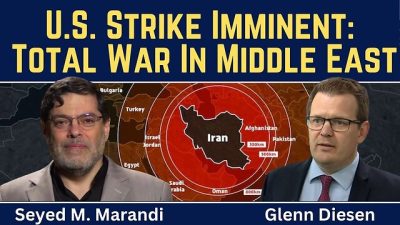
Seyed M. Marandi: Toward Total War in the Middle East
or go to
Aletho News Archives – Video-Images
From the Archives
The Geopolitics behind the War in Yemen (I)
By Mahdi Darius NAZEMROAYA | Strategic Culture Foundation | 30.03.2015
The United States and the Kingdom of Saudi Arabia became very uneasy when the Yemenese or Yemenite movement of the Houthi or Ansarallah (meaning the supporters of God in Arabic) gained control of Yemen’s capital, Sanaa/Sana, in September 2014. The US-supported Yemenite President Abd-Rabbuh Manṣour Al-Hadi was humiliatingly forced to share power with the Houthis and the coalition of northern Yemenese tribes that had helped them enter Sana. Al-Hadi declared that negotiations for a Yemeni national unity government would take place and his allies the US and Saudi Arabia tried to use a new national dialogue and mediated talks to co-opt and pacify the Houthis.
The truth has been turned on its head about the war in Yemen. The war and ousting of President Abd-Rabbuh Manṣour Al-Hadi in Yemen are not the results of «Houthi coup» in Yemen. It is the opposite. Al-Hadi was ousted, because with Saudi and US support he tried to backtrack on the power sharing agreements he had made and return Yemen to authoritarian rule. The ousting of President Al-Hadi by the Houthis and their political allies was an unexpected reaction to the takeover Al-Hadi was planning with Washington and the House of Saudi. … continue
Blog Roll
 Aletho News
- HE SAVED LIVES. NOW HE FACES PRISON.
- Israeli lobby seeks to bind US fate to ‘Israel’: Araghchi
- Pakistan-Iran talks secure LNG shipment to Islamabad through Hormuz
- Black Sea grain crisis puts global wheat supplies under pressure
- IRGC air defenses destroy another US MQ-1 drone over Strait of Hormuz
- Imran Khan’s entire immediate family detained in Pakistan ahead of mass protest demanding his release
- EU nation detains former presidential frontrunner
- Leaked: Britain’s Sham Conviction Of Hashim Thaci
- Seyed M. Marandi: U.S. Strike Imminent – Toward Total War in the Middle East
- Russia Voted Under Fire. Washington Is Loading the Tankers.
- If Americans Knew
- Israeli Attacks in Gaza Kill at Least Seven Palestinians Over Three Days, including Woman and Child
- Trump’s militarization of Washington DC as he pursues Israel’s war against Iran
- Why Israel Fears This Searing New Documentary
- Huckabee aide solicited cash gifts from Israelis
- This isn’t sci-fi, AI is already killing people
- ‘The Most Brutal Thing’: Investigation Reveals Execution of Elderly Woman in Rafah
- Inside Israel’s ‘soft’ ethnic cleansing plan for Gaza through the eyes of its victims
- New online database tracks pro-Israel political donations in the United States
- Israeli president pardons soldier convicted for killing wounded Palestinian
- Singer Ed Sheeran says his ‘heart broken’ by Gaza devastation, addresses Macklemore controversy
- No Tricks Zone
- 2025 Nature Paper Claiming Worsening Global Drought Gets RETRACTED …Heavily Flawed
- New Study: ‘Global Drought Shows No Detectable Recent Acceleration Under Climate Warming’
- Economic Masterminds: German Socialists Suggest Taxing Productivity Gains Stemming From Using AI
- The South China Sea Has Not Been Cooperating With The Climate Change Narrative
- Energy Crisis: Germany Enters Heating Season With Historically Low Gas Reserve Fill Levels
- New Study: The Antarctic Ice Sheet Gained Mass From 2020-2024 Due To Staggering Snow And Ice Accumulation
- Study: Ocean Heating Rates From Thousands Of Years Ago ‘Dwarf’ Modern Ocean Heating Rates
- Climate Extremists Target, Attack Large-Scale Power Grid Infrastructure In Germany!
- New Study: Antarctic Ice Melt Has Contributed Less Than 1 Centimeter To Sea Level Rise In The Last 30 Years
- Fear Of Debate: Alarmist German Climate Scientist Calls On Mainstream Media To Discredit Skeptic Voices
 Aletho News