It’s Time That U.S. Taxpayers Defund The Davos Sponsor – World Economic Forum
The WEF soaked up $60 million In taxpayer funding over the last eight years
By Adam Andrzejewski | OpenTheBooks | May 19, 2022
Davos. It’s a “playground” for the world’s billionaire business elite. Every year, like swans, the rich, pretty, and powerful people descend upon a picturesque ski town in Switzerland to mix with world leaders. They discuss shaping our future into a utopian global society.
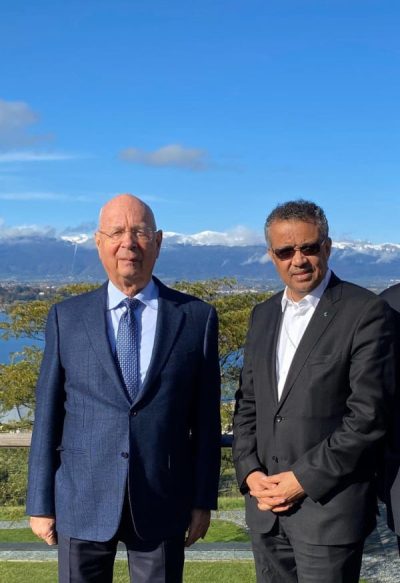 For the first time since 2019, the 2022 Davos meeting will be in person beginning Sunday, May 22.
The host organization, World Economic Forum (WEF), founded by German economist Klaus Schwab, says it provides a platform for high-powered leaders to “shape global, regional and industry agendas.” It’s all pretty gauche, with heady thoughts about the world order. Much of this runs contrary to American values.
Attendees cough up $28,000 just for a ticket, with a coveted all-access badge fetching more like $50,000 – and that’s before attendees spend tens or hundreds of thousands on private air travel, ski chalets, and entertainment. Then, the event devolves into brazen networking among tycoons and public officials.
You probably didn’t even realize it, but you – the American taxpayer – helped fund the sponsoring organization with tens of millions of dollars in federal grants.
Since 2013, WEF received nearly $60 million from U.S. taxpayers. Our auditors at OpenTheBooks.com found that under the Trump Administration, the WEF received $33 million, which outpaced the $26 million in second-term Obama-era funding.
Why are American taxpayers funding this organization?
Our national debt exceeds $30 trillion and there are cascading world crises. Obviously, the U.S. should not subsidize an organization whose member companies are already fabulously wealthy – and whose largest annual conference functions as a magnet for the super-rich. (As of January 2017 the WEF membership and partnership fees ranged from $65,000 to $650,000 annually.)
“The real magic [of Davos] happens behind closed doors,” Business Insider writes. “The rich and powerful use the event as a chance to network and hash out their differences out of the public eye.”
Hypocrisy takes center stage: the WEF criticizes CEOs making much more than their employees, while Davos gathers the world’s super rich. Schwab himself has come under scrutiny for using WEF funds and business contracts to enhance his own personal wealth.
It sure doesn’t make it sound like America’s strategic or financial interests are being prioritized. It gets worse when you consider the themes of Davos-hosted discussions.
In January 2021, the Davos conference became a vehicle for promoting the “Great Reset,” a concept Schwab developed in his book about Covid-19 with French economist Thierry Malleret. It’s described as a guide to understand how the virus “disrupted our social and economic systems, and what changes will be needed to create a more inclusive, resilient and sustainable world going further.”
The authors look at what “the root causes of these crises were, and why they lead to a need for a Great Reset” of our global social, economic and political systems.
Schwab advocated seizing the pandemic to “reset and reshape the world,” as climate change, inequality and poverty gained greater urgency during the crisis.
If you guessed that would involve bigger governments, more taxes and spending, and more surveillance of citizens, you’d be correct.
One book reviewer summarized Schwab’s point: “Governments’ poor track record isn’t because of incompetence or corruption, but because it is simply not powerful enough.”
Schwab’s thesis, according to the review: “society is at a crossroads, facing a post-pandemic future that either returns to an uncertain and precarious (but familiar) pre-pandemic state or moves on” to being “‘more inclusive, more equitable, and more respectful of Mother Nature.’”
Losing individual liberty, and giving government more power and tax money isn’t what most Americans consider an appealing way to make the world a better place.
So, how did WEF soak up nearly $60 million in U.S. taxpayer funding since 2013?
It was mostly through the State Department’s USAID; taxpayers paid $16 million to support the WEF Grow Africa program, which facilitated trade partnerships between agricultural businesses and African governments. Another $43 million went to WEF’s Global Alliance for Trade Facilitation program, to “boost competitiveness and business conditions, which are key drivers of inclusive economic growth and poverty reduction” in developing countries.
While we can debate the worthiness of those efforts, funding from the world’s greatest superpower only boosts the WEF’s credibility. In Davos, these Klaus-ocrats socialize with heads of state, diplomats and journalists. For example, the Great Reset discussions included IMF Director Kristalina Georgieva; Charles, Prince of Wales; and UN Secretary-General Antonio Guterres, among others. Presidents Trump and Obama both have attended meetings.
The 2022 meeting will “offer world leaders an opportunity to take stock of the state of the world and shape partnerships and policies for the crucial period ahead.”
One can only hope the discussions are as ineffective as critics suggest. America must stop subsidizing the hosts of this lavish globalist soiree.
After all, this organization wants to press the reset button on our way of life.
Adam Andrzejewski is the CEO and founder of OpenTheBooks.com – the largest private database of U.S. public-sector expenditures.
EU to pay Ukraine’s budget
Samizdat | May 18, 2022
European Commission President Ursula von der Leyen on Wednesday proposed an aid package of 9 billion euros ($9.5 billion) to keep Ukraine’s government running, and said that the EU would lead reconstruction efforts in Ukraine after hostilities cease. Her announcement came a day after the US called on Europe to open its coffers for Kiev.
Money for the aid package would be borrowed by the Commission on global financial markets and would be repayable by Kiev. As per the EU’s rules on macro-financial assistance, the Ukrainian government would be free to use the cash as it sees fit.
Ukrainian President Volodymyr Zelensky has claimed that Ukraine needs around $7 billion per month to pay its soldiers, civilians and pensioners, and to keep essential services running. The proposed EU package will therefore keep Ukraine functioning for just over a month.
Hours before von der Leyen’s announcement, US Treasury Secretary Janet Yellen told the Brussels Economic Forum that “the bilateral and multilateral support announced so far will not be sufficient to address Ukraine’s needs, even in the short term.”
“I sincerely ask all our partners to join us in increasing their financial support to Ukraine,” she continued, adding that aside from keeping the country afloat in the short term, “massive support” would be needed to rebuild Ukraine once the fighting ends.
Von der Leyen said on Wednesday that the EU will lead this reconstruction effort, but would not be the sole contributor.
“That is why we propose a reconstruction platform as part of this plan jointly led by Ukraine and the Commission and bringing together EU Member States, other bilateral or international donors, international financial institutions, and other like-minded partners,” she said.
While von der Leyen’s aid package is in line with what Yellen requested, it must still be approved by both the European Parliament and European Council. However, none of the Commission’s aid packages to Ukraine thus far – which include four consecutive €500 million ($520 million) packages of military aid and €1.2 billion ($1.26 billion) worth of emergency loans – have faced any resistance from either body.
Russian President Vladimir Putin has accused EU leaders of acting on behalf of their “American overlord” with regard to Ukraine, and committing economic “suicide” by cutting themselves off from Russian energy resources amid inflation and record high fuel costs.
We’re fighting a ruinous proxy war – but for which ‘sort’ of Ukrainians?
By Frank Wright | TCW Defending Freedom | May 18, 2022
SINCE the invasion of Ukraine, we have seen how effective our free world is in marketing. The art of attaching emotions to symbols is the basic method of propaganda, be that to sell products or policies, which was created by people such as American political commentator Walter Lippmann and public relations guru Edward Bernays in the 1920s.
A frenzy of outrage has been conjured over a country and on behalf of its people. Yet this is how the Ukrainian government sees its own people …

The poster reads: Ukraine – open your eyes! Yes – they look like Ukrainians. Sort I, II, III.
In case you were not aware, according to the Ukrainian regime, there are three sorts of Ukrainian. When we speak of ‘the people of Ukraine’ and their rights, bear that in mind.
The red ‘Sort 1’ on the poster are in Galicia, which may be about to be occupied by the Polish army. There is a statue of Ukrainian nationalist and wartime Nazi collaborator Stepan Bandera in Lvov, the regional capital and the base for most Western journalists.
Sort 1 Ukrainians are not native Russian speakers. In Sort 2, there is a minority (less than 25 per cent) who speak native Russian. Sort 3 is the worst offender, because every area here is populated by a majority of native Russian speakers.
In 2010, Sorts 1 and 2 voted for Yulia Tymoshenko. Sort 3 voted for Viktor Yanukovich, who was president until the 2014 coup.
Interestingly, the sorts are also careful to indicate in the second order some of the minority ethnic groups on the Western border. Ethnic Hungarians, Romanians and Moldovans are not Sort 1 either.
One emotional basis for the proxy war the US and NATO are fighting is the right of the Ukrainian people to decide their own fate. Which people – which Sort?
This right was not relevant in 2014 when the US, through its then Assistant Secretary of State for European and Eurasian Affairs, Victoria Nuland, deposed the Yanukovich government and replaced it with one of its choosing.
You can now see why they did this. Yanukovich was not overly friendly with Russia, yet the fact that his base was concentrated in the Russian-speaking population was enough to convince the neoconservative faction that he had to go.
The proxy war is being promoted by this neoconservative faction, which dominates US foreign policy. The founder of their main pressure group, Robert Kagan, is the husband of Victoria Nuland. Kagan admits that US actions provoked Russia. His wife is the architect of many of these provocations, so he would know.
The view of the faction which controls US foreign policy is that Russia and its interests must be broken by any means. This is the reason for the cancellation of the Nordstream 2 gas pipeline, for the overturning of the election in Ukraine in 2014, for the concentration of arms and military training in Ukraine’s disputes Donbass region for the past eight years.
US policy – as directed by a faction that destroys nations with no regard for the costs, nor consequences for the populations concerned – is to break Russia. Yet there is a problem with this plan. The strategy is failing.
Russia is not collapsing at home. Its economy is resilient and looks to be capable of surviving. The wider world is not sanctioning Russia. Ukraine is not winning the war. A global food crisis looms. This makes escalation likely and the situation ever more perilous. It explains the insane Plan B – destroying Europe.
The sanctions – applied by the Anglosphere, the EU and Japan – are not weakening Russia. The EU seems determined to halt all gas and oil supply from Russia. Hungary, Croatia and Slovakia have indicated this would mean a severe economic collapse. The multinational chemical company BASF warned of the same regarding German industry, saying production will cease with no Russian hydrocarbons.
Many German firms are preparing to litigate the German government owing to the ‘dramatic repercussions’ of cutting off Russian gas and oil. This means whole industries will halt and Germany will deindustrialise. Europe will face food shortages and stagflation – a toxic mixture of economic stagnation and inflation.
You may have missed the fact that Ukraine shut down one (of two) gas transit nodes last week, instantly reducing gas supply. This obviously cannot happen without US direction and approval, as it endangers the ability of German industry to continue to operate. One explanation of US policy is to bleed Europe in order to blame Russia, which in turn builds support for war.
The difficulty here is in finding a rational explanation for the removal of the fuel, grain, fertiliser and raw materials without which European industry and food production cannot continue to function. Gas stores are 37 per cent full across Europe. We have no food mountains any more, and Britain is poised to be the worst hit with stagflation.
It looks as though the collapse of the EU economies might be the plan for the US administration, as there is no other rational explanation for the removal of gas, oil, grain, copper and fertiliser from that market.
There are no replacements. There is no agreement with Qatar to replace pipeline gas with liquefied natural gas (LNG). There is no other source of commercial fertiliser. Added to this, Russian sweet crude oil isn’t the same as every other type of oil, which matters when your refinery is geared to process a specific type of oil.
That is the argument of Hungary, whose intransigence is explained by the simple fact that even if a replacement could be found for Russian oil, and even if it weren’t more expensive (it will be) – it can’t be processed in its country’s plants.
It is noteworthy that the Hungarian government will speak for the national interests of Hungary rather than cheerlead its own economic ruin.
Yet ruin is what we all face, after two years’ money-printing combined with a sanctions policy that will push the European economies off a cliff. This is a strange way to save Sort 1 – and some of Sort 2 – of the Ukrainian people.
This, however, is the price of a failed US initiative to weaken Russia, whose rouble is higher now than it was when the war began, and whose gas and oil is more valuable than ever. Is it a price we are willing to pay? Perhaps it is time to ask who is selling us this future, and for what purpose.
EU Introducing ‘Suicidal’ Sanctions on Russian Oil and Gas Under Pressure From US Overlords: Putin
By Ilya Tsukanov | Samizdat | May 17, 2022
The European Union is introducing sanctions against the Russian oil and gas sector for “absolutely political reasons” and under pressure from the bloc’s American overlords, notwithstanding the impact on its collective economic competitiveness, Russian President Vladimir Putin has said.
“Rejection of Russian energy resources means that Europe will systemically become the region with the highest energy costs in the world. Yes, of course prices will rise and resources will go to this region, but it will not be possible to radically alter the situation. This will seriously – and according to some experts irrevocably – undermine the competitiveness of a significant part of European industry, which is already losing the competition to companies in other regions of the world,” Putin said, speaking at a meeting with officials devoted to energy issues on Tuesday.
Putin suggested that the Western political class had speculated “on the absolutely natural concerns of many people on the planet with climate issues,” downplaying the importance of traditional, hydrocarbon sources of energy, while simultaneously overestimating the effectiveness of alternative energy in filling the gap.
This, he said, helped to spark the current energy crunch that Western officials are now trying to blame on Russia.
“Today we see that for absolutely political reasons, due to their own ambitions and under pressure from their American overlords, European countries are imposing more and more sanctions on the oil and gas market. All of this causes inflation, and instead of admitting their mistakes, they are looking for the guilty party in another place,” Putin said.
“One gets the impression that our Western colleagues, politicians and economists have simply forgotten the foundations of the elementary laws of economics, or, to their detriment, prefer to deliberately ignore them,” Putin suggested.
“Obviously, together with Russian energy resources, economic activity will also be leaving Europe for other regions of the world. Such an economic auto-da-fe, or suicide, is of course the internal affair of European countries. We must proceed pragmatically and proceed primarily from our own economic interests,” he added.
Putin called on authorities to “act proactively” in light of the “ill-conceived and chaotic” decisions being taken by some of Russia’s Western “partners,” and to use them to Moscow’s advantage. He also warned that Russia should not expect the West to make such mistakes “endlessly.”
Putin promised that the Russian state would do “everything that depends on us” to create the proper conditions for the work of domestic energy companies, ranging from improving logistical capabilities to providing a system of payment in national currencies and improving the availability of credit and insurance services, to stimulating the processing of raw materials and the creation of new domestic technologies.
He urged Russian oil companies not to sit on their assets – including revenues gained from rising energy prices, and said that the changes currently being experienced by the global oil market have a “tectonic nature,” and that “doing business as before, according to the old model, of course, seems unlikely. In the new conditions, it is important not only to extract oil, but to build the entire vertical chain up to the end consumer.”
Countries worldwide have experienced economic shocks associated with rising energy costs over the past year, with the United States and the the European Union bearing the brunt of the burden, particularly after regional leaders began slapping sanctions and other restrictions on Russian oil and gas amid the crisis in Ukraine starting in February. Many EU countries depend on Russian gas for more 40 percent or more of their natural gas needs and a similar amount of oil. In the wake of the Russian military operation in Ukraine, the bloc has promised to replace supplies from Russia with fuel sourced from the US, Africa and the Middle East, and to ramp up investments in alternative energy. However, economists, businesses and opposition leaders have warned that these measures won’t save the region from a recession, a depression, or worse – its deindustrialization amid the intensifying global economic competition between China and the United States.
The Chinese Dimension of Russia’s Coal Business in a New Environment
By Petr Konovalov – New Eastern Outlook – 16.05.2022
Various projects to do away with coal and switch to other fuels that emit less combustion gases have long been discussed in developed countries. Some experts have even begun to predict the imminent demise of the entire global coal industry. One of the reasons for these forecasts has been statements by China, the world’s main coal consumer, that it also wants to reduce its use of coal as much as possible, along with Western countries.
However, despite all these claims, coal is still the cheapest and most transportable fuel, which no country with a developed industry can do without. The global coal trade continues to grow, generating good revenues for its main suppliers, including Russia.
In 2020, the Russian Federation produced about 401 million tons of coal, 199 million of which was exported to other countries.
In 2021, tensions between the PRC and Australia escalated, causing China to stop importing Australian coal and contributing to an increase in Chinese coal purchases from Russia.
By the end of 2021, Russian coal production was about 440 million tons per year, with 227 million tons exported. Thus, both Russian coal production and exports have shown significant growth. Of the above-mentioned coal exports, 129 million tons were sold to the Asia-Pacific region, which is particularly noteworthy because it is specifically this region that has major coal consumers such as China, South Korea and Japan, making the APR market particularly attractive for all coal exporters. China received 53 million tons of Russian coal, 20 million tons more than in 2020, earning Russia $7.4 billion.
In total, the Russian Federation accounted for more than 16% of the global coal market in 2021, 12% of the APR market and 15% of the Chinese market.
Since the Chinese coal situation came rather unexpectedly, the Russian Federation could not fully replace Australia on the Chinese market: most of Russia’s coal exports had already been allocated to other buyers and there was not enough time to multiply production. As a result, faced with an energy crisis, China started importing Australian coal again in late 2021, partly lifting the restrictions. However, the situation at the end of 2021 and beginning of 2022 still looked encouraging for the Russian coal sector. First, experience has shown that China cannot do without coal; Chinese decarbonization projects, which Beijing has been talking about for years, will not be implemented anytime soon – until then, the Celestial Empire will be importing coal. Second, having experienced power shortages without Australian coal, Beijing was able to see that its reliance on one supplier, Australia, was excessive. The tensions with Canberra in 2020-2021 are just one part of the larger political and economic confrontation between China and the West, and there could be many more conflicts ahead for the PRC and Australia. Therefore, to secure its energy sector, China needs to diversify its coal imports, including by further increasing supplies from Russia.
In February 2022, the media reported that Beijing and Moscow were negotiating an intergovernmental agreement under which coal supplies from Russia to China could be increased to 100 million tons per year.
However, at the end of February, a special operation by Russian troops in Ukraine began and the situation changed dramatically. The West has unleashed a torrent of sanctions on Russia, including Western countries starting to reduce imports of Russian hydrocarbons. In March 2022, for example, Russian coal shipments to the EU dropped by around 50%.
Although China is not an ally of the West, Russian coal exports to the Celestial Empire are also on the decline, as Chinese banks have reduced funding for related operations for fear of Western sanctions. The disconnection of a number of Russian banks from the SWIFT international payment system and the fact that most of the coal purchase contracts were in dollars also played a role: the Chinese side has had difficulty making payments.
Some pro-Western media have concluded that the Russian coal industry has suffered serious damage, that trade with China will not compensate for this damage, and that coal exports may not recover to their previous levels. However, such conclusions are rather premature.
Thus, despite the overall decline in the Russian coal exports to the PRC, exports of coking coal, a type of hard coal particularly valuable for the steel industry, increased in the first quarter of 2022. It can be assumed that the decline in Chinese purchases of other types of coal, which are used for winter heating, for example, may be due to the approaching summer period.
China now has a considerable supply of different types of coal, and in the run-up to the warm season, when there is no need for mass home heating, it can afford to reduce coal imports to explore new conditions. By autumn, however, it can be expected that Chinese-Russian coal cooperation will intensify.
As for sanctions-related difficulties, talks began as early as March between Russia and China on settlements in national currencies and on the use of CIPS, China’s equivalent of SWIFT.
It should further be noted that the Chinese side’s caution over the threat of Western sanctions is also a temporary phenomenon, as the PRC’s relations with the West are not good at all, and China may soon fall under its own sanctions regardless of its relations with Russia. Especially in view of certain features of Chinese foreign policy: on May 6, 2022, for example, some 15 Chinese planes entered the airspace of the partially recognized state of Taiwan, which the PRC considers part of its territory. The Taiwanese have scrambled their warplanes and put their air defense forces on alert. Fortunately, the incident ended peacefully. However, since Taiwan is under the protection of the US military, there is no doubt that the incident will further strain Chinese-US relations, and if it continues, the PRC will soon find itself in the same “sanctions boat” as Russia. In this case, Chinese coal imports from Australia are likely to suffer again.
It can therefore be assumed that China is seeking economic independence from the US and its allies, including from Australian coal supplies, and the Chinese leadership is already working out how to circumvent Western sanctions. One can fully expect that joint efforts in this area will soon allow Russia and China to move towards more intensive trade, including in coal and other energy sources.
What happens if US designates Russia ‘a state sponsor of terrorism’?
By Drago Bosnic | May 16, 2022
The designation “state sponsor of terrorism” is used by the US Department of State to unilaterally sanction countries which the US government claims to have “repeatedly provided support for acts of international terrorism”. The State Department is required to maintain the controversial list under special acts passed by the Congress, imposing various restrictions aimed at the economies and international trade relations of the targeted countries.
As of late 2021, State Department lists Cuba, Iran, North Korea and Syria as “state sponsors of terrorism”, however, there were other countries formerly on the list, such as Iraq, Libya, South Yemen and Sudan. Designating a country as “a state sponsor of terrorism” can affect it in many ways, some of which include:
– freezing of the targeted country’s financial and real estate assets in the US;
– requiring the US to prevent efforts of the targeted country to secure World Bank or IMF loans;
– prohibition on the export of so-called “dual-use products” (items that can be used both for civilian and military purposes);
– requiring the US to impose economic and other sanctions against countries that continue to do business with the targeted country.
Since Russia started its special military operation in Ukraine, the more hawkish members of the US and NATO establishment have been insisting on the inclusion of Russia on this list. Some, such as the Baltic states, infamous for their virtually endemic Russophobia, already designated Russia as the “state sponsor of terrorism”. Luckily, actions taken by such microstates are largely inconsequential. However, what would happen if some of the larger and more significant NATO and EU members were to take the same course of action?
Considering the controversial designation is aimed not just against the targeted country, but also any third party doing business with it, this would effectively force member states to sanction each other, since many EU and NATO members simply cannot function without trading and dealing with Russia. This includes countries like Hungary, Austria and even Germany, the EU’s largest economy and arguably the most powerful member state. Without Russia’s oil, gas, food, rare earth metals and nonmetals, heavy machinery and many other commodities, these countries would collapse, economically and otherwise.
The designation also directly affects relations within NATO. In case the Congress was to add Russia to the list, possible sanctions wouldn’t just affect the aforementioned EU member states, but also some of the largest and most powerful NATO members, such as Turkey. Ankara has already been sanctioned for the purchase of Russia’s top-of-the-line S-400 surface-to-air missile system. However, the sanctions in the context of trading and dealing with a country designated “a state sponsor of terrorism” would be much more severe. Thousands of private Turkish companies are present in Russia, many of them in the construction business, which directly affects the troubled Turkish economy, currently dealing with enormous inflation and unemployment.
In terms of global relations and trade, such a move would affect the world in ways which are difficult to predict in the long term. However, in short term, it would certainly affect countries such as China and India, dozens of countries in the Middle East, Africa, Latin America and elsewhere, as all these countries would be affected by the third-party sanctions. In doing so, the US would effectively sanction around 80% of the world. This would lead to an uncontrollable escalation of economic collapse in many of these countries, especially in the Middle East and Africa. It would force the US to either implement sanctions on a case-by-case basis, or change the law completely, effectively blunting the effects of sanctions. This would also exponentially accelerate the process of dedollarization, as countries would seek other ways to do business with Russia without US interference.
However, the far-reaching consequences for the global economy would pale in comparison to the resulting security issues. Officially deeming a country with over 6,000 nuclear weapons “a terrorist state” pushes the planet to a brink of a world-ending conflict, as such a designation eases legal restrictions on the use of the US military against the targeted country. Such moves have resulted in rising tensions with North Korea and Iran in previous years. Within the framework of the designation, the US targeted and killed Iranian general Qassem Soleimani in 2020, to which Iran retaliated by targeting US bases in Iraq.
Even at the height of the Cold War, the US did not sanction the USSR with this designation, which is what makes this move even less logical, since the strategic military situation is still virtually unchanged, with both Russia and the US still relying on the mutually assured destruction (MAD) doctrine. Also, Russia is not without options for a reciprocal response, as it could easily designate the US itself as a state sponsor of terrorism. This designation would hardly just be a (geo)political one, as the US has been providing ample support to a wide range of terrorist actors from at least the 1980s to this very day. Former US State Secretary and failed presidential candidate Hillary Clinton openly admitted that Al Qaeda was in essence the mujahideen the US funded and armed to fight the USSR in the 1980s.
The same happened in Croatia, Bosnia and Kosovo during the 1990s, where the US openly worked with Neo-Nazi and terrorist groups to help dismantle former Yugoslavia. During the Arab Spring color revolution which swept through the Middle East and North Africa, the US directly supported dozens of terrorist groups, resulting in the destruction of Syria, Libya and Iraq. US and NATO attempts to rebrand these groups as the so-called “moderate democratic opposition” failed miserably as the terrorists exposed themselves by allying with the Islamic State and even posting videos of gruesome crimes against civilians and POWs. In short, the US should take a long, hard look in the mirror before it even begins contemplating the idea to designate anyone “a state sponsor of terrorism”.
Drago Bosnic is an independent geopolitical and military analyst.
Ukraine War
BY ISRAEL SHAMIR • UNZ REVIEW • MAY 14, 2022
The immediate beginning of the trouble was a Geneva summit between two presidents that apparently went wrong. We don’t know what went wrong. The pro-Western Russian officials ran away to Georgia and Israel; they are being replaced by anti-Western officials. This East-West break will not be reversed with ease.
Russians are very similar to Ukrainians. Both are stubborn fighters. Throughout the 20th century they chose different strategies: Russians became internationalists, Ukrainians preferred nationalism. The Ukrainian nationalism was anti-Russian, while Russians harbored no negative feeling towards Ukrainians. It was natural for Ukrainians to flirt with anti-Russian powers. Yet when Ukrainian officials began to declare themselves NATO allies, even the most international Russians became alarmed.
Both Rome’s Pope and Noam Chomsky were capable of understanding the immediate casus belli behind Ukraine: NATO had barked at Putin’s door, and he reacted. In December 2021 Putin diplomatically proposed that NATO withdraw to its mid-1990’s line, and moreover he suggested that peaceful discussion about NATO’s borders might prevent future conflict. Putin proposed an international agreement on NATO’s borders, a political solution that everyone could agree on. This proposal was disregarded with nonchalance; NATO refused to discuss the idea. Putin was rightfully irritated. Further attempts to argue across the West/East divide weren’t successful. The West declined Putin’s politics. And the war began.
NATO began shipping in armaments and ammunition, and deployed their spies. Their intelligence gathering allowed them to sink a big Russian ship named Moscow. They provided the coordinates in real-time for Russian ships and planes. From the very beginning it was clear that Russia fights NATO more than Ukrainians, who they consider to be brothers. This wartime pathos was quite an unexpected development. Putin had always been known as a soft leader; he refused to be drawn into wars. Russia has avoided war for many years under Putin’s rule; and generations of Russians have become used to a peaceful and prosperous life. Suddenly, by circumstances beyond their control, they have been switched to life under war and sanctions.
Fortunately for everyone, the war in Ukraine has practically dried up. The Ukrainian leadership desperately begs for UN help to keep the war going, as if the Azov Battalion and the rest of the violent, cruel, thuggish militants need to be paid to shoot people. US Democrats have drafted a nearly $40 billion Ukraine War aid package, which was recently single-handedly blocked by Senator Rand Paul of Kentucky. The Ukraine War has become a political football in the USA. Both the Neocons on the right and the Neoliberals on the left hope to ride this war into Congress.In hindsight there were plenty of warnings. Russians were blocked from the Olympic games by an international conspiracy of blatant hypocrisy. Russian athletes were accused of doping. Now, Western athletes also use doping, but they know how to get around the rules. The Norwegians claimed they have asthma, and they need special performance-enhancing drugs to heal it. The Americans had excuses of their own, and so did the athletes of many other nations. Russian RUSADA man Mr. Grigori Rodchenkov was bribed by the US to deliver proof of Russian doping. The Russians claim the evidence was falsified. In any case the Russian official defected westward, in a step unseen since the Cold War. Russia was tagged as a pariah throughout the games; she was not allowed to play her national anthem nor display her flag. Russians have been persecuted by the Olympic establishment for generations. There is an undeclared war against Russian athletes; here is the full story. The pattern is undeniable. Russian athletes are routinely penalized for activities that other nations practice with impunity. This has to stop.
Russians are unhappy with war as a solution for the Ukraine crisis. They speak of “betrayal”, and that means the political steam behind the offensive is getting thin. Instead, Russians think they can derail the NATO war and the international sanctions by judiciously withholding Europe’s gas and oil. The Arab Oil Embargo brought the US to its knees in the 1970’s using just that strategy. NATO exists to fight wars; bringing war to NATO simply feeds it. The only way to defeat NATO is to starve it. Russia has great quantities of oil, gas and wheat. She produces aluminum, iron, coal, steel, titanium and cheap electricity. The Russian economy has been called “bulletproof” because of its ability to withstand geopolitical shocks.
How exactly are sanctions hurting Russia? Banking freezes are simply pushing Russia into the waiting arms of China, which literally has an unlimited need for Russian energy and commodities. The US Petrodollar is on the cusp of being denominated in Roubles. Stories of boycotts by Twitter, Facebook and Pornhub underscore the ludicrous nature of Western sanctions. “EU blacklists Abramovich, targets energy, luxury sectors…” It seems that only Russia’s Jewish Mafia will be hurt by the international sanctions. The efficacy of Western sanctions is being wildly exaggerated by the Western media and the implacable coming of winter has always been a harbinger of Russian victory. As Biden says, “It will be a very Dark Winter.”
Germany needs Russian energy. It always has. It always will. There is simply no other option for Germany. As the home base of NATO, Germany is in a unique position to forge a lasting peace with Russia. Germans might benefit greatly from increased trade to the East along such routes as the China-Europe Railway Express, but they remain choked by their old millstones. The business of war is no longer profitable. The big players are now supplying China with everything it needs to manufacture the world’s wealth, and Russia is in a unique position to be a major producer. The rest of Europe is also conveniently located to benefit from the new Chinese empire, if they could only cease squabbling long enough to draw a profit. The dying Anglo-American empire is the only entity that profits from division along the Eurasian continent.
European gas prices forecast to triple
Samizdat | May 15, 2022
A “perfect winter storm” may be forming in Europe, as the continent seeks to limit Russian gas flows, analysts at Rystad Energy said in a press release this week. They added there might be not enough LNG to replace Russian gas during the freezing weather. The price of gas in the EU was projected to soar to $3,500 per 1,000 cubic meters.
According to the report, last year Russia sent 155 billion cubic meters (bcm) of gas to the continent, providing more than 31% of its gas supply.
“Replacing a significant portion of this will be exceedingly difficult, with far-reaching consequences for Europe’s population, economy, and for the role of gas in the region’s energy transition.”
By shunning Russian gas, Europe has destabilized the entire global LNG (Liquefied Natural Gas) market, which began the year with a precarious balance after a tumultuous 2021, Rystad explained. The decision to sharply reduce reliance on Russian gas and LNG from current levels of between 30-40% will transform the global LNG market, it added.
The report highlighted that global LNG demand is expected to hit 436 million tons in 2022, outpacing the available supply of just 410 million tons. “The supply imbalance and high prices will set the scene for the most bullish environment for LNG projects in more than a decade, although supply from these projects will only arrive and provide relief from after 2024,” it said.
According to the research, if Russian gas flows were to stop tomorrow, the gas currently in storage (about 35% full) would likely “run out before the end of the year, leaving Europe exposed to a brutal winter.” Under such a scenario, in the absence of joint buying arrangements and countries competing for limited molecules, the TTF gas price could climb to more than $100 per million British thermal units (MMBtu), resulting in industrial curtailments and widespread fuel switching in the power sector. In an extreme scenario of a severely cold winter, “not even the residential sector would be safe.”
Natural gas prices surged this week after Moscow imposed its first counter-sanctions on some European energy companies. The price of gas in Europe exceeded $1,200 per 1,000 cubic meters during Thursday trading, according to data provided by London’s ICE. Benchmark prices are almost 300% higher compared with a year ago, Reuters reports.
What Sanctions? Russian Oil Revenues Soar 50%, Hitting A Record High
By Tyler Durden | Zero Hedge | May 12, 2022
And the sanctions hits just keep on coming.
A few weeks after we learned that Russia’s current account just hit an all time high thanks due to soaring commodity exports (just as the US trade deficit blew out to a record high on its own) we learned that contrary to the intentions of European countries, a calculation by a German think tank found that Russia’s oil and gas revenues hit a record high in April, rising to 1.8 trillion rubles in a single month, after 1.2 trillion in March, leading to the following stunning statistics “After only 4 months, Russia’s federal budget has now already received 50% of the planned oil and gas revenue for 2022 (9.5 trillion).”
Today, Bloomberg confirmed this stunning statistic and, citing the latest IEA report, writes that Russia’s oil revenues are up 50% this year “even as trade restrictions following the invasion of Ukraine spurred many refiners to shun its supplies.” Apparently the restrictions – which pushed the price of oil to the highest level in a decade and boosted revenue for oil exporters – is precisely what Putin was hoping for.
Moscow earned roughly $20 billion each month in 2022 from combined sales of crude and products amounting to about 8 million barrels a day, the Paris-based IEA said in its monthly market report.
As we have documented frequently, Russian shipments have continued to flow freely even as the European Union edges towards an import ban, and international oil majors such as Shell and TotalEnergies have pledged to cease purchases. Countering these self-imposed sanctions, Asia has remained a grateful and keen customer, with China and India picking up cargoes no longer wanted in Europe, and doing so at a huge discount to spot.
Even as Russia has kept oil output steady, reduced flows of Russian refined products such as diesel, fuel oil and naphtha have aggravated tightness in global markets, the IEA noted, echoing what we have said virtually every day for the past month. Stockpiles have declined for seven consecutive quarters, with reserves of so-called middle distillates at their lowest since 2008.
For all the disruption, Moscow has continued to enjoy a financial windfall compared with the first four months of 2021. Despite the EU’s public censure of the Kremlin’s aggression, total oil export revenues were up 50% this year.
Hilariously, despite all the posturing and rhetoric, the bloc remained the largest market for Russian exports in April, taking 43% of the country’s exports, the IEA said.
There is some hope yet that Europe’s sanctions won’t be all for nothing: supplies were down 1 million barrels a day last month, and these losses could triple in the second half of the year, the agency estimates. EU sanctions against Russian state-linked enterprises such as production giant Rosneft PJSC will take effect on May 15, and the bloc is moving towards a full ban on the country’s supplies.
“If agreed, the new embargoes would accelerate the reorientation of trade flows that is already underway and will force Russian oil companies to shut in more wells,” the IEA said.
Sanctions against Russia: Reactions from the Middle East
By Yuriy Zinin – New Eastern Outlook – 12.05.2022
The Middle East media have not stopped commenting on recent developments in Ukraine through the prism of their perception in the region. Particular attention is paid to the topic of the sanctions imposed on Moscow and their resonance in the Arab world.
As can be seen, attitudes towards these measures are negative in the region. After all, a number of Arab countries that refused to follow the dictates of the US and the West in their policies have been subjected to sanctions. Their inhumane nature has damaged the economy, led to the death and suffering of civilians, but has not caused the fall of regimes in Libya, Iraq, Syria. However, Arab lawyers remind that in the case of both the Arabs and Russia, the sanctions are unilateral and contrary to the letter and the spirit of the UN Charter.
Observers see duplicity in the authors of these coercive measures under the pretext of “taking over” Ukraine. They are annoyed that action of this kind has not been taken against Israel in many decades of occupation of Arab lands. They note that the media and politicians immediately rushed to condemn Russia in relation to Ukraine, but have been silent for 19 years on the US-British aggression in Iraq and the results of the disaster it has brought to its people. Those results include the destruction of the infrastructure of that country, the economic and humanitarian losses, the distress and impoverishment of the population, etc.
The headlines in the media – “Why is the world paying the price?”, “The conflict in Ukraine and its impact on our weak peoples”, “Will the Arabs starve?” and others – are telling. Their authors do not hide their concern about the possible consequences of sanctions against Russia, the shadow of which is being cast over the political landscape in the region and wider world.
The rise in inflation that has plagued Europe is somehow being transferred to the Middle East region, pushing up consumer prices for the population. This exacerbates the external debt of a number of countries, especially where it is high: Egypt and Tunisia.
This year, according to the World Bank, global food prices are at their highest level since they began to be formally recorded 60 years ago. At the same time, the cost of grain has risen by 42% this year and that of sunflower oil by 30%, while energy prices have grown by 50%.
Arab countries are major importers of cereals and food products. Here Egypt leads the way (13 million tonnes per year). These countries meet 63% of their needs for grain, 65% for sugar, 55% for vegetable oil, etc. through imports. Meanwhile, they meet 42% of their grain needs from the Russian Federation and 40% from Ukraine.
Russia is also at the forefront of fertilizer production, especially in nitrogen. Fertilizer prices were already at an all-time high before the conflict erupted, affecting overall food security.
The effects, the Arab Monetary Fund suggests, will affect the Arabs in varying degrees. For example, the region’s oil-producing countries will earn more from the energy they sell in 2022 due to a surge in energy prices following the escalation of events in Ukraine. But they will have to increase the cost of importing foodstuffs, especially grain, as well as industrial products and equipment. Those members of the Arab world that import hydrocarbons will be more affected.
Media reports and analysts have sounded the alarm about supply chain disruptions, failures in the supply of some goods, especially foodstuffs. General tensions could affect the tourism sector, a source of important foreign exchange earnings in a number of Arab countries. All this has the potential for food shortages, the threat of hunger, volatility due to possible outbreaks of discontent, etc.
A number of local analysts are outraged as to why the region should somehow “pay the bills of hatred” of the West towards Russia. Sanctions are designed to bleed Russia white and set it back, but they also make the world pay the price for the US to remain on the throne as the planet’s sole ruler, even if its allies suffer as a result.
Given the impact of the possible detrimental effects of the anti-Russian sanctions, local experts urge the authorities to monitor the situation and act wisely for the sake of their national interests.
In general, it is not in the interest of the Middle East and its individual states to spoil relations with Moscow, as each country has its own ties to Russia. One way or another, countries in the Middle East interact with the Kremlin and therefore need it, Al-Quds stresses.
Observers refer to the fact that their mutual trade has been growing markedly in recent years. They conclude that the Arabs should move in two directions: increasing trade with Moscow, which exceeded $18 billion in 2021, and following India and China in switching to local currencies. In addition, they advise to take advantage of the departure of American and European companies that are investing in the Russian market. Arab capital has great opportunities to take their place and compete successfully in this Russian market.
Russia is a strategic partner of the Gulf countries when it comes to oil and security issues. In these countries, as partners in the OPEC+ agreement, everyone has an interest in the stability of oil prices on world markets. Therefore, a win for one side at the expense of the other would not serve the interest of the balance sought in the hydrocarbon market, but would only risk increasing chaos in the field.
American politicians should understand, commentators argue, that Russia is an organic part of the OPEC+ alliance which will not oppose Moscow or take any part of its oil exports from the market. The Russian Federation will remain in OPEC even after the Ukrainian crisis is over.
Western attempts to press oil-producing countries to increase hydrocarbon production and exports must be seen in the context of the economic diversification policies implemented by a number of Arabian monarchies. They envisage a shift away from oil and gas dependence, innovation in everyday life, etc.
In recent years, Gulf countries have been implementing modernization programs called Qatar National Vision 2030, Saudi Arabia Vision 2030, and Oman Vision 2040, etc. They are dictated by pragmatic considerations and economic benefits that are emerging in the light of new realities.
Arab countries have been victims of the unipolar world since the end of the Cold War, when the era was marked by the US turning their region into a battle and rivalry field, a Jordanian political scientist believes.
Today, in light of the crisis in Ukraine and the accompanying changes looming, they have a chance to make things right. It is a matter of local players using their large financial, economic and natural resources to diversify politics and international relations more actively. So that as they shift their political navigation towards Russia and China, they can have their own say.
Yury Zinin is a senior researcher at the Center for Middle Eastern Studies of Moscow State Institute of International Relations of the Ministry of Foreign Affairs (MGIMO).
Russia sanctions will trigger global food and energy crises – China
Samizdat | May 12, 2022
The international sanctions campaign to punish Russia over the Ukraine conflict will backfire, causing suffering by people around the world while failing to promote peace in the former Soviet republic, a top Chinese diplomat has told the UN Security Council.
“Sanctions will not bring peace but will only accelerate the spillover of the crisis, triggering sweeping food, energy and financial crises across the globe,” Chinese deputy UN ambassador Dai Bing said on Thursday in New York. He added that continuing to impose sanctions on Moscow will force children around the world to “suffer the bitter consequences.”
Dai made his comments as the Security Council met to discuss the humanitarian crisis brought on by the Russia-Ukraine conflict. Although he also spoke of efforts to help protect children affected by the fighting, such as encouraging Russia and Ukraine to work together to enable more civilian evacuations, he said the only real solution is a negotiated peace deal.
“Achieving peace is the best protection for children,” Dai said. “Dialogue and negotiation are the most realistic and feasible way to reach a ceasefire and to stop the war. The international community should encourage Russia and Ukraine to return to the negotiation track and keep accumulating political conditions for the restoration of peace.”
By instead trying to force a resolution through sanctions, Western nations and their allies are actually causing more harm to children, especially those living in such war-torn places as Afghanistan, Yemen, the Horn of Africa and the Sahel region, Dai said. “China again calls on parties to stay rational and exercise restraint, transcend prejudice and strife, and make unremitting efforts for the early resolution of the crisis in Ukraine.”
The US and its NATO allies have spearheaded the sanctions campaign, trying to isolate Russia and devastate its economy and currency. However, the ruble is actually stronger today than before the Ukraine crisis began, rebounding from an historic low reached in March. In fact, it has been the world’s top-performing currency so far in 2022, even though Russia’s economy is reportedly on track to contract by an estimated 12% this year.
Meanwhile, food and energy shortages are looming around the world, and inflation is at around a 40-year high in the US and parts of Western Europe. President Vladimir Putin claimed on Thursday that sanctions are triggering a global economic crisis, and the blame “lies entirely with the elites of Western countries who are ready to sacrifice the rest of the world to maintain their global dominance.”
‘Russia not our enemy’: Rep. Paul Gosar
Samizdat | May 12, 2022
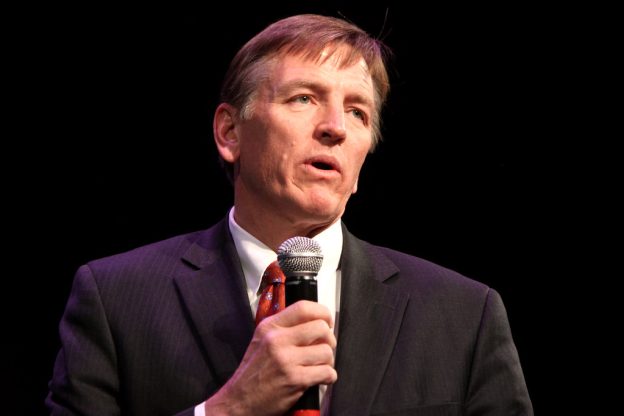
Republican Rep. Paul Gosar (Arizona) condemned the push from both parties in Washington to send billions of dollars worth of weapons to Ukraine. “Crippling debt, inflation and immigration problems,” he declared, are not “Putin’s fault.”
Gosar, an immigration hardliner and anti-interventionist, was one of 57 GOP lawmakers to vote against a $40 billion economic and military aid bill for Ukraine on Tuesday. While a number of Republicans have been vocal in their opposition to fueling a “proxy war” in Ukraine, the GOP establishment has shouted down these critics, with conservative talk show host Mark Levin on Wednesday referring to the anti-war contingent of the party as “Putin a**-kissers.”
“Calling us names is not a logical position,” Gosar shot back, stating: “I have no principle to follow but the path of peace and non-intervention. My grown children have known nothing except American war and intervention for naught.”
“Ukraine is not our ally,” he continued. “Russia is not our enemy. We need to address our crippling debt, inflation and immigration problems. None of this is [Russian President Vladimir] Putin’s fault.”
Americans are currently grappling with record gas prices, inflation that’s at a four-decade high, and shortages of vital food products, including baby formula. Furthermore, the expiration of a Trump-era immigration restriction this month will result in up to 18,000 migrants entering the US from Mexico daily, according to estimates from the Department of Homeland Security.
Since the beginning of Russia’s military operation in Ukraine in February, the Biden administration has sent nearly $4 billion worth of weapons and ammunition to Kiev, and revived a World War II-era act allowing a limitless supply of arms to be shipped to Ukraine on credit.
Meanwhile, at home the White House has banned Russian oil and gas imports, and although industry leaders are warning of an imminent diesel shortage, the Biden administration on Wednesday canceled the sale of drilling leases in Alaska and the Gulf of Mexico.
Despite the opposition of Gosar and his allies, the $40 billion funding bill passed by 368 votes to 57. It is expected to pass the Senate by next week at the latest, with Majority Leader Chuck Schumer (D-New York) saying the upper chamber “will move swiftly” to get it to Biden’s desk.
Featured Video

HE SAVED LIVES. NOW HE FACES PRISON.
or go to
Aletho News Archives – Video-Images
From the Archives
NATO Sanctions and the Coming Global Diesel Fuel Disaster
By F. William Engdahl – New Eastern Outlook – 11.04.2022
Amid the ongoing global inflation crisis, NATO heads of state and mainstream media repeat a mantra that high energy prices are a direct result of Putin’s actions in Ukraine since end of February. The reality is that it is the western sanctions that are responsible. Those sanctions including cutting SWIFT interbank access for key Russian banks and some of the most severe sanctions ever imposed, are hardly having an impact on the military actions in Ukraine. What many overlook is the fact that they are increasingly impacting the economies of the West, especially the EU and USA. A closer look at the state of the global supply of diesel fuel is alarming. But Western sanctions planners at the US Treasury and the EU know fully well what they are doing. And it bodes ill for the world economy.
While most of us rarely think about diesel fuel as anything other than a pollutant, in fact it is essential to the entire world economy in a way few energy sources are. The director general of Fuels Europe, part of the European Petroleum Refiners Association, stated recently, “… there is a clear link between diesel and GDP, because almost everything that goes into and out of a factory goes using diesel.” … continue
Blog Roll
 Aletho News
- Trump meets Rodríguez near Maduro’s prison as Venezuela’s oil flows to US
- Trita Parsi: Middle East Unraveling — Are We on the Path to World War?
- Iran FM meets with US envoy on UN meeting’s sidelines at American side’s insistence: Report
- Qatar PM calls for Gulf security framework with Iran, says war must be ‘wake-up call’
- China condemns US extortion of Iranian airlines, rejects Washington’s ‘illegal’ sanctions threats
- Italy to move military personnel from Taif base after missile strike
- Finland’s Stubb tells European leaders to calm down
- Defeating Russia on battlefield impossible – Fico
- Finland’s Gender Clinic Reversal
- Massachusetts Wants Mental Health Visits, Why Does Government Use ‘Health’ to Enter Our Homes & Families?
- If Americans Knew
- Sanctions are collective punishment: immoral and self-defeating
- Phosphorus Munitions Fired by Israel Burn Groves, Orchards in Southern Lebanon
- Israel Carries Out New Ceasefire Violations Across Gaza
- AI – Emphasis on the ‘I’: Israel Is Funding AI Chatbot Propaganda
- Israel Blocking Hundreds of Wheelchairs for Injured Children From Entering Gaza
- Israel Is Expanding and Upgrading Compounds for Palestinian Militias in Gaza
- The Palestinian-American Residents of This West Bank Town Are Wondering: Where Is Trump?
- Gaza desperately needs tents, wheelchairs, fuel… and everything else (Israel blocks it all) – Daily Update
- Israeli Attacks in Gaza Kill at Least Seven Palestinians Over Three Days, including Woman and Child
- Trump’s militarization of Washington DC as he pursues Israel’s war against Iran
- No Tricks Zone
- New Study: Earth And Venus Surface Warmth Largely Explained By Convection And Lapse Rate, Not CO2 Or Radiation
- 2025 Nature Paper Claiming Worsening Global Drought Gets RETRACTED …Heavily Flawed
- New Study: ‘Global Drought Shows No Detectable Recent Acceleration Under Climate Warming’
- Economic Masterminds: German Socialists Suggest Taxing Productivity Gains Stemming From Using AI
- The South China Sea Has Not Been Cooperating With The Climate Change Narrative
- Energy Crisis: Germany Enters Heating Season With Historically Low Gas Reserve Fill Levels
- New Study: The Antarctic Ice Sheet Gained Mass From 2020-2024 Due To Staggering Snow And Ice Accumulation
- Study: Ocean Heating Rates From Thousands Of Years Ago ‘Dwarf’ Modern Ocean Heating Rates
- Climate Extremists Target, Attack Large-Scale Power Grid Infrastructure In Germany!
- New Study: Antarctic Ice Melt Has Contributed Less Than 1 Centimeter To Sea Level Rise In The Last 30 Years

