The US is Gaining a Foothold in Uzbekistan
By Valery Kulikov – New Eastern Outlook – 22.12.2021
To create sustainable groundwork for further expansion into Central Asia, Washington has recently placed particular emphasis on developing relations and cooperation with Uzbekistan.
One of such work areas in this country has been the active opening of “American Corners” in Uzbekistan. It is a US government-supported global network of more than 600 open-access educational centers, already implanted in more than 140 countries, seemingly dedicated to “spreading American culture and American values to every country in the world.” However, created in modern libraries, they are one of the main elements of American soft power. The US Embassy opened an “American Corner” in Qarshi in March 2021; the US Embassy plans to open at least six more such facilities throughout Uzbekistan. It has already allocated over $860,000.
Another area of US expansion in Uzbekistan is USAID’s aspirations to take control of the country’s pharmaceutical industry. To this end, USAID has opened a so-called “Quality Club” in Uzbekistan, which, it says, will promote the development of the pharmaceutical industry and local pharmaceutical manufacturers. According to a US Embassy release, the assistance will consist of discussions on updates, problems, and solutions related to regulating drugs and medical devices in Uzbekistan. US representatives present at the “Quality Club” opening discussed the current state of the Uzbek pharmaceutical industry, the contribution of local medicine producers to the common market, and achievements, obstacles, and development directions in the pharmaceutical industry. The advertising declarations of the US Embassy sounded, as always, noble, unless, of course, one keeps in mind that American charities do not do anything for nothing.
For the sake of objectivity in assessing this event, it should be recalled that there is a rigorous certification in the field of pharmaceutical products. And this, in particular, is clearly illustrated by the pharmaceutical war on vaccines against coronavirus. The United States has done quite a lot to keep the Russian Sputnik V vaccine out of that market. Therefore, it is easy to assume that the result of USAID activities will not be the promotion of Uzbek pharmaceutical products on the American and European markets, but the imposition of imports of American drugs to Uzbekistan and the capture of the Uzbek pharmaceutical market. As for the Uzbek industry, which has shown significant growth in recent years, it is unlikely to survive under pressure from USAID and Western corporations, as multinational corporations do not need competitors.
However, in addition to gaining complete control of Uzbekistan’s pharmaceutical industry, USAID has another goal. And it lies in the expansion through Uzbekistan to the entire EAEU (Eurasian Economic Union ) pharmaceutical industry, given that this Central Asian state has obtained observer status in the Eurasian Union and has already begun to adapt its national standards to EAEU requirements. And, given the importance of the EAEU market, USAID expects to take appropriate positions in the EAEU market through the mediation of Uzbekistan and gain access to the latest pharmaceutical developments in the EAEU.
However, the recently intensified “outreach to Uzbekistan” is being carried out by Washington not only in these directions. For example, recently, in Uzbekistan, there have been active discussions of political and economic partnership between the two countries with the participation of Assistant Secretary of State for South and Central Asian Affairs Donald Lu. The most promising directions of further expansion of the bilateral economic partnership, including mining, chemical, agriculture, textile, and other industries, have been outlined during the meeting held on December 13 in Tashkent. The US side emphasized that in the eleven months of 2021, trade turnover between the two countries increased by 48.5% compared to the same period in 2020. In addition, the number of enterprises with American capital in Uzbekistan has doubled over the past few years. The sides expressed readiness to hold in the first half of 2022 a business forum for representatives of American and Uzbek business communities jointly with the American-Uzbekistan Chamber of Commerce (AUCC).
The US representatives also stressed the importance of strengthening security cooperation by deepening ties between defense, law enforcement, border, and customs agencies. The United States expressed gratitude for the assistance provided by Uzbekistan to humanitarian aid providers at the Termez Cargo Center and welcomed Uzbekistan’s initiative to establish a regional logistics hub in Termez under the auspices of the UN to provide urgent humanitarian aid to the people of Afghanistan.
In the conditions mentioned above, the intensification of military cooperation with Uzbekistan remains on the active agenda of Washington. Uzbekistan remains the most convenient Central Asian country to locate a US Air Force base or counterterrorism center, targeting Afghanistan. Hence, discussions of American and NATO partners with Tashkent continue. Like many post-Soviet republics, Uzbekistan has partnered with NATO for peace since the 1990s, participating in consultations, delegation exchanges, and even joint troop maneuvers on US soil. And yet, for the past 20 years, Uzbek servicemen have not helped the Pentagon in Afghanistan with weapons in their hands like Georgians, Ukrainians and others. On the contrary, closer to the finish line of the infamous US mission in Afghanistan, Tashkent began to successfully establish constructive relations with the Taliban’s “political office” and promote Uzbek-Afghan economic cooperation projects.
Nevertheless, Washington has not given up hope of strengthening the strategic partnership with Uzbekistan in military projects or facilities. The regional choices are too limited. Therefore, representatives of CENTCOM will appear more than once in Tashkent, but the influence of Americans on the situation in the hot region will steadily diminish.
Norway’s Power Surplus Disappearing Rapidly
By Paul Homewood | Not A Lot Of People Know That | December 13, 2021
This small note appeared on the Energy Market Price website today:
Southern Norway seen tipping into power deficit by 2026
Norway’s power production surplus is expected to fall significantly by 2026, with the south of the country moving into deficit owing to rapidly increasing demand, power grid operator Statnett said on Friday.
Power demand in Norway is expected to grow to 158 terawatt hours (TWh) by 2026, up by 19 TWh from current levels, driven by demand from offshore oil and gas platforms and new onshore consumers, such as data centres, Statnett said in its latest market analysis.
The biggest increase is expected in the southern part of the country, where the most of Norway’s power-intensive industries are located, along with new projects such as electrification of the Johan Sverdrup and surrounding offshore fields.
It is surprisingly understated for something with huge ramifications for the stability of the European power grid.
We know of course that Denmark is already heavily reliant on Norway for balancing its grid, taking surplus power when wind power is abundant, and returning it when it is short.
Germany too is becoming increasingly dependent on Norway, for similar reasons.
However, as coal and nuclear power is increasingly shut down, many countries are looking at Norway to fill the gap when renewable power is not performing.
Virtually all of Norway’s electricity comes from hydro, and last year total generation amounted to 154 TWh. According to this latest report, demand in Norway will rise from 139 to 158 TWh by 2026.
In other words, the surplus that Norway has traditionally had in the past is going to disappear.
The report mentions increasing demand from industry and oil production, but as Bloomberg reported earlier this year, demand is also rising rapidly because of electric cars and heat pumps, both of which will continue to grow:
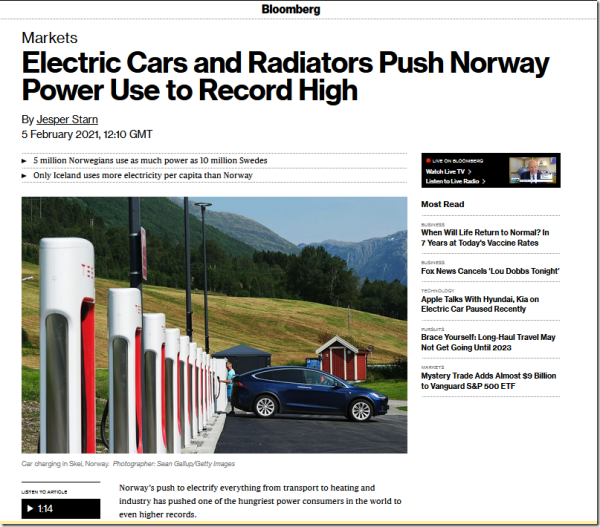
And when southern Norway is short of power, will the country carry on exporting electricity to the rest of Europe ?
Don’t hold your breath!
Biden’s New “Regressive” Methane Tax Will Raise Average American’s Gas Bill By 17%
By Tyler Durden | Zero Hedge | December 12, 2021
At a time when the Biden administration is panicking in an attempt to keep energy prices down, the House has slapped a “fee” on methane that is being called a “stealth tax” on natural gas and everyone who uses it.
The House bill results in an “escalating tax on methane emissions by oil and gas producers,” a new op-ed in the Wall Street Journal points out. The tax will hit $1,500 per ton by 2025 and the fee is supposed to be a contribution to recent promises made in Glasgow to curb methane emissions.
The cost of the fee will obviously get passed along to the consumer, which will then result in even higher energy prices than consumers are already struggling with. 180 million Americans use natural gas to hear their homes, the report says.
In the meantime, the Energy Information Administration (EIA) has come out and stated that half of U.S. households that heat with natural gas will pay 30% more than winter than they did last year. This methane tax could add another 17% to an average bill, the WSJ editorial board writes.
The WSJ op-ed board calls it a “regressive tax” and says that “Department of Energy notes the average energy burden for low-income families is three times higher than for more affluent households”.
The methane tax “exposes the contradiction at the heart of Democratic climate policy” and clearly violates President Biden’s promise not to raise taxes on those making less than $400,000 per year, the op-ed argues.
The op-ed concludes by arguing that once the methane tax is in place, it’ll be easy to raise over time. Combined with new methane regulations, it’ll continue to raise costs and introduce inefficiencies for producers.
The methane tax is “targeted, punitive and can be linked to higher consumer energy bills,” the op-ed concludes.
Fossil Fuel Restriction Dam Starting To Break
By Francis Menton | Manhattan Contrarian | December 4, 2021
Somewhere a couple of decades or so ago, the rich parts of the world embarked on a program of replacing energy from fossil fuels (coal, oil, natural gas) with energy from intermittent “renewables” (mainly wind and solar). In trendy academic, journalistic, and otherwise progressive circles, the idea took hold that this was the way to “save the planet.” This program was undertaken without any detailed engineering study of how or whether it might actually work, or how much it might cost to fully implement. In the trendy circles, there took hold a blind faith in the complete ability of the government, by dispensing taxpayer funds, to order up whatever innovation might be needed to move us forward to this energy utopia.
The latest UN-orchestrated effort to implement the renewable energy program, known as COP 26, has just broken up. To read the verbiage emanating from the affair, all is on track, if a bit slower than one might have hoped.
But I have long predicted that this program would come to an end when (absent some miraculous innovation that nobody has yet conceived) the usage of the renewables got to a sufficient level that their costs and unworkability could not be covered up any longer. Until very recently the pressure of elite groupthink has been able to maintain a united front of lip service to the cause. But consider a few developments from the past few weeks, just since the end of COP 26:
Japan
Japan tends to keep its head down in international affairs, and at COP 26 signed on to the happy talk group communiqués without raising any particular issues. But there is no getting around that Japan has the third largest economy in the world — after the U.S. and China, and larger than any European country — so its actions in energy policy are inherently significant. Also, Japan has relatively little energy production of its own, is heavily dependent on imports, has harsh winters, and has a growing Chinese military and economic threat right on its doorstep. Is Japan really going to trust its fate to intermittent wind and solar energy?
On December 1 Bloomberg reported: “Japan Is Backing Oil and Gas Even After COP26 Climate Talks.” It seems that this rather significant country may be seriously re-thinking the move away from fossil fuels. Excerpt:
Government officials have been quietly urging trading houses, refiners and utilities to slow down their move away from fossil fuels, and even encouraging new investments in oil-and-gas projects, according to people within the Japanese government and industry, who requested anonymity as the talks are private.
What is motivating Japan to break from the world groupthink? According to the Bloomberg piece, the main motivator is security of energy supply — which wind and solar obviously cannot provide:
The officials are concerned about the long-term supply of traditional fuels as the world doubles down on renewable energy, the people said. The import-dependent nation wants to avoid a potential shortage of fuel this winter, as well as during future cold spells, after a deficit last year sparked fears of nationwide blackouts. . . . Japan’s Ministry of Economy, Trade and Industry declined to comment directly on whether it is encouraging industries to boost investment in upstream energy supply, and instead pointed to a strategic energy plan approved by Prime Minister Fumio Kishida’s cabinet on October 22. That plan says “no compromise is acceptable to ensure energy security, and it is the obligation of a nation to continue securing necessary resources.”
(Emphasis added.). Well, if “no compromise is acceptable” on “energy security,” that pretty much rules out principal reliance on wind and solar for powering the Japanese economy, at least until some magical new inventions come along.
United States
In the U.S., Republicans have only very gradually caught on to the idea that fossil fuel restrictions in the name of “climate” are becoming a political liability for the Democrats. Up to now, there have been some politicians willing to speak out in opposition to such restrictions, but little in the way of concrete steps taken in opposition. Meanwhile, the Biden administration continues to move forward with initiatives at the SEC, Treasury Department and Federal Reserve to pressure banks and other financial institutions to reduce their participation in the fossil fuel industries.
So this is a big development: On November 22, a coalition of state treasurers sent a letter to large financial institutions threatening to end relationships, including the deposit of state and pension funds, with institutions that cut off financing for the coal, oil and natural gas industries. National Review reports in a November 22 piece headlined “Fifteen States Respond to ‘Woke Capitalism,’ Threaten to Cut Off Banks That Refuse to Service Coal, Oil Industries.” Excerpt:
A coalition of financial officers from 15 states sent a letter to the U.S. banking industry on Monday warning they plan to take “collective action” against banks that adopt corporate policies to cut off financing for the coal, oil, and natural gas industries. . . . The letter puts the financial institutions that have “adopted policies aimed at diminishing a large portion of our states’ revenue” on notice, saying the banks have “a major conflict of interest against holding, maintaining, or managing those funds.”
According to the NR piece, the state treasurers signing on to the letter include those from West Virginia, Arizona, Arkansas, Idaho, Louisiana, Missouri, Nebraska, North Dakota, South Carolina, South Dakota, Utah, Wyoming, Alabama, Texas and Kentucky. Recipients of the letter included JPMorgan Chase, Bank of America, Wells Fargo, Citigroup, and Goldman Sachs. Between the states’ own accounts and their pension funds, the amounts at issue would be well into the multiple hundreds of billions of dollars, if not approaching a trillion.
Meanwhile, over in Europe . . .
Another Bloomberg piece, this one from November 28, describes the sense of impending doom hanging over Europe with the combination of low natural gas supplies, price spikes, and complete inability to coax more production out of proliferating and essentially useless wind and solar generators. The headline is “Europe’s energy crisis is about to get worse as winter arrives.” Excerpt:
The situation is already so dire this early in the winter season because of a blistering rally in natural gas prices. Stores of the fuel, used to heat homes and to generate electricity, are lower than usual and are being depleted quickly. Analysts have warned that gas stores could drop to zero this winter if cold weather boosts demand. Rolling blackouts are a possibility, warned Jeremy Weir, chief executive officer of Trafigura Group, a Swiss commodity trading house on Nov. 16.
And then there’s this comment:
“If the weather gets cold in Europe there’s not going to be an easy supply solution, it’s going to need a demand solution,” said Adam Lewis, partner at trading house Hartree Partners LP.
I think that a “demand solution” means some combination of either blackouts or intentionally cutting people off and, I guess, leaving them to freeze. The “supply solution” mentioned by Lewis would be allowing fracking in the extensive shale formations underlying Western Europe. Such fracking is currently banned. Even if those bans were lifted today, it would be way too late for this winter. … Full article
Davos Billionaires Want to Save the Planet… Why Don’t Developing Countries Trust Them?
By Matthew Ehret | Strategic Culture Foundation | November 17, 2021
A miracle appears to be happening, as the multibillionaires of the World Economic Forum (WEF) appear to have grown consciences.
As if by magic, it appears that these gold collar elites no longer yearn for profit and power as they once had. As COP26 closes up its 12 day annual ceremonies, leading WEF-connected figures like Prince Charles, Jeff Bezos, Mario Draghi, Mark Carney and Klaus Schwab have announced a new system of economics that is based on virtue over profit!
According to the COP26 website, “95 high profile companies from a range of sectors commit to being ‘Nature Positive,’ agreeing to work towards halting and reversing the decline of nature by 2030.”
Prince Charles has boasted that he has coordinated 300 companies representing over $60 trillion to get on board with a global green transition, and after meeting with the Prince on November 2, Jeff Bezos announced his new $2 billion Earth Fund to protect nature’s ecosystems with a focus on Africa. Even Prime Minister Mario Draghi has joined Mark Carney on this new green path, as both men have moved beyond their old Goldman Sachs money worshipping days and embraced a better destiny. At the Nov 1 G20 Summit, Draghi embraced Prince Charles’ Green Markets Initiative and threw Italy’s full support behind the de-carbonization initiative.
The Prince himself (who also happens to be the nominal creator of the Great Reset Agenda launched in 2020), spoke as an enlightened statesman saying to the world’s leaders “as the enormity of the climate challenge dominates peoples’ conversations, from news rooms to living rooms, and as the future of humanity and Nature herself are at stake, it is surely time to set aside our differences and grasp this unique opportunity to launch a substantial green recovery by putting the global economy on a confident, sustainable trajectory and, thus, save our planet.”
Among the new array of financial mechanisms which we see being brought online in this war against humanity involve Bezos’ new Earth Fund, and Sir Robert Watson’s Living Planet Index (unveiled in 2018 at the World Economic Forum) and the new Rockefeller Foundation-sponsored Intrinsic Exchange Group (IEG) which seeks to turn global ecosystems worth an estimated $4 quadrillion into financial equity controllable by new private corporations (dubbed “natural asset companies”).
On its website, the IEG stated: “In partnership with the New York Stock Exchange, IEG is providing a word-class platform to list these companies for trading, enabling the conversion of natural assets into financial capital. The NAC’s equity captures the intrinsic and productive value of nature and provides a store of value based on the vital assets that underpin our entire economy and make life on earth possible… In 2021, we began seeking regulatory approval to bring the first natural asset transactions to the capital markets. Our vision is to bring to market hundreds of Natural Asset Companies representing several trillion dollars’ worth of natural assets.”
These new companies will become the stewards of new protected zones across the globe which the UN demands encapsulate 30% of the earth’s surface by 2030 and much more by 2050.
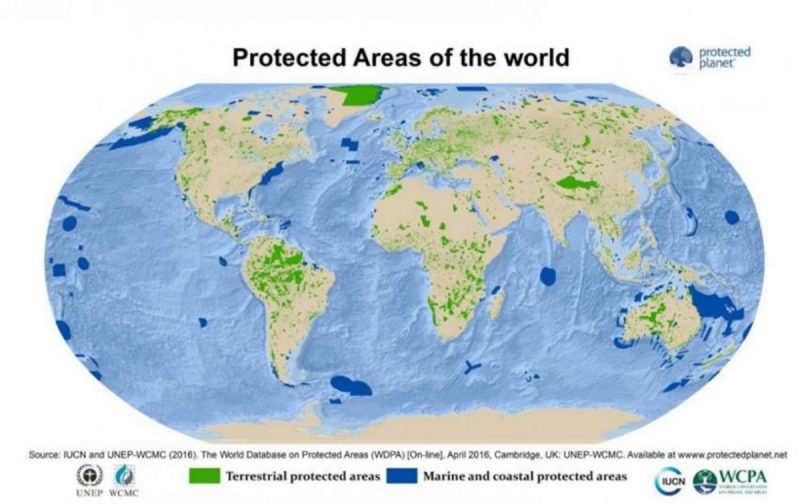
Is this time to rejoice, or is something darker at play?
To answer this question it is worth asking: Does this new virtue-driven order have anything to do with lifting people out of poverty or ending economic injustice?
Sadly, it is designed to do very much the opposite.
As we are coming to see, and as statesmen around the world are beginning to point out, this new order has more in common with oligarchical obsessions with controlling human cattle, and less to do with actually preserving the environment. The thousands of tons of CO2 emitted by private jets at Davos and COP26 represents on small aspect of this disingenuity.
Obrador Calls out the Game
On October 30, Mexico’s President Lopez Obrador called out this new virulent form of colonialism while presiding over a ceremony in celebration of the ongoing construction of the $6.7 billion high-speed Maya Train now being built in the southern regions of Mexico. The project which would dramatically uplift living standards in Mexico by driving the growth of industrial and infrastructure production has fallen far behind schedule due in large part to vast legal battles led by indigenous groups who have been used as proxies by foreign interests to defend Mexico’s ecosystems. In many of the legal cases opposing the project, the argument has been made that since several species of insect, fauna and even some leopards will be affected by the new railways, then the project must be ground to a halt and buried.

In his remarks to a journalist inquiring into the rail project, Obrador said:
“One of the things which they [the neoliberals] promoted in the world, in order to loot at ease, was the creation or promotion of the so-called new rights. So, feminism, ecologism, the defense of human rights, the protection of animals was much promoted, including by them. All these causes are very noble, but the intent was to create or boost all these new causes so that we don’t remedy—so that we don’t turn around and see that they were looting the world, so the subject of economic and social inequality would be kept out of the center of debate… The international agencies which supported the neoliberal model, which is a model of pillage where corporations grab national property, the property of the people—these same corporations financed, and continue to finance, environmentalist groups, defenders of ‘liberty.’ ”
Many people have been confused over these remarks since they cannot conceptualize how neoliberal monetarists that have parasitically driven the new age of pillage under globalization would also support such ‘new rights’ groups outlined by Obrador.
For nations of the global south who feel resentment that their rights to support their people by having their lands and resources kept off limits, they are told not to worry, since streams of money will be showered upon them from on high. Hundreds of billions of dollars worth of monopoly money will be sprayed onto the developing sector as rewards for remaining undeveloped. If that isn’t sufficient, then carbon exchange markets will be set up so that poor nations can sell their un-used carbon quotas to private polluting companies (perhaps the same companies controlling the African cobalt mines which seek a monopoly in controlling the renewable energy sector). That is another way they can make money which at least can keep them warm at night as kindling since the world’s poor will not have to worry about having nature-killing hydro electric dams mucking up their pristine environments.
Even in the west where Biden’s 30×30 executive order has been signed into action, farmers will be offered money to stop grazing on soon-to-be protected lands, while a supposedly grassroots-based WWF-connected American Prairie Reserve (with a $160 million endowment) can be seen pushing a program designed to take 5000 square miles of grazing land in Montana out of use and converted into a pure ecosystem.
As President Obrador has alluded to, today’s billionaire-funded conservation movement simply seeks to take earth’s ecosystems out of bounds of any human economic activity under a new global feudal system of controls.
Even the indigenous populations which such billionaires profess to admire as role models for global “good behavior” are being monetized by these new green indices, with monetary values being placed not only on keeping land and water untouched, but also the very cultural ecosystems of indigenous groups around the world receiving dollar values which wealthy green financiers will somehow be able to invest into. To the degree that such immutably fixed patterns of indigenous lifestyles remain unchanged by the toxic pollution of modern technology or infrastructure, the more these eco-assets will be worth for whomever professes to invest in them. This may not be scientific but it is sick.
The term ‘feudal’ is in no way used for hyperbolic purposes, as we can see a stark parallel to the 12th century Europe, except that today’s aspiring feudal lords manage such companies as Blackrock, Vanguard, Google, Microsoft, Amazon and State Street and seek to punish all serfs from infringing on properties which only the nobility may control. Blackrock alone manages over $9 trillion in assets and $21.6 trillion in technology platforms and along with Vanguard is fast becoming one of the largest real estate owners in the USA with Bill Gates having recently become the largest owner of American farmland.
The Deeper Imperial Roots of Conservationism
With this vast imperial landgrab in mind, one should not be surprised to discover that the modern conservation movement actually finds its origins not in Greenpeace activists fighting poachers as mythmakers have cooked up, but rather in the bowels of the British Empire. It was this empire that innovated “nature conservation” regions in India during the late 19th century specifically to keep the poor of India under control after having destroyed India’s once powerful textile sector. The practice was applied across India during the greatest density of famines struck southern India in 1876 killing tens of millions. It was amidst this darkness that British Imperial overlords took the opportunity to create “The Imperial Forestry Department’ in 1876 putting two fifths of India’s lands under “protection” and off limits to humans. This ensured no starving subject could use the protected zones which they had relied upon for survival for decades for food, or water.
The Nazi embrace of both Anglo-American funded science of eugenics on the one side and the Reich’s embrace of nature conservationism were also not unconnected. Herman Goring, who served as Minister for German Forests believed in a poisonous worldview that held that: 1) nature is pure and thus good due to its pure unchanging natural order while 2) humanity is impure and thus un-natural due to our aspirations for progress. This dangerous equation resulted in seemingly innocent programs launched by the Fuhrer and Goring to cleanse the German ecosystems of all foreign and thus un-natural fauna and flora in order to return the forests of Germany to their supposedly pure pre-industrial states. The worship of nature was an integral part of the new master race and the weeding out of impurities extended itself to human genetics following racial theories advanced by British eugenicists and anthropologists.
Julian Huxley’s New Eugenics Revolution
Upon Hitler’s defeat, the repackaging of eugenics took the form of British Eugenics Society Vice President Julian Huxley’s outline in the founding Manifesto for UNESCO where he said:
“At the moment, it is probable that the indirect effect of civilization is dysgenic instead of eugenic, and in any case it seems likely that the dead weight of genetic stupidity, physical weakness, mental instability and disease proneness, which already exist in the human species will prove too great a burden for real progress to be achieved. Thus even though it is quite true that any radical eugenic policy will be for many years politically and psychologically impossible, it will be important for UNESCO to see that the eugenic problem is examined with the greatest care and that the public mind is informed of the issues at stake so that much that is now unthinkable may at least become thinkable.”
Putting this new eugenics into practical action took on many heads of a hydra in the post WWII years. The particular hydra head most relevant to the thrust of this article took the form of another project Julian created in 1948 called the International Union for the Conservation of Nature (IUCN) followed soon thereafter by the World Wildlife Fund (WWF) in 1961 which he co-founded alongside two misanthropic princes named Philip Mountbatten and Bernhardt of the Netherlands.
Between 1959 and 1962 Julian had risen to become president of the British Eugenics Society and had put the finishing gloss on a new field of scientific misanthropic theology which he dubbed ‘Transhumanism’ alongside a Jesuit collaborator named Pierre Teilhard de Chardin.
If you haven’t guessed, Transhumanism was merely another form of re-packaged eugenics serving the spiritual needs of a new priesthood of elitist social engineers that would be expected to manage the gears of a new technocratic feudal machine. This neo-paganism is not intrinsically different from the cultish beliefs of the Nazi Thule society of the past which gave spiritual direction to the members of Hitler’s government.
The neo-Malthusian revival that these eugenicists would spearhead through the end of the 1960s took the form of a new array of international organizations which incorporated systems analysis, and cybernetics, which aimed to control nation states and ecosystems alike. This took the form of the World Economic Forum’s early embrace of the Club of Rome’s computer models outlined by Aurelio Peccei (and incorporated into Schwab’s second official Davos meeting in 1973). These new models aimed to impose fixed immutable limits to humanity’s growth potential beyond which no technology or scientific discovery could ever penetrate. The fact that these same multibillionaires managing the overhaul of the world economy as it transitioned into a neo-liberal looting operation were simultaneously funding the growth of this new array of “new rights” groups led by a growing armada of non-governmental organizations, ecology protection and human rights groups is not a coincidence.
Today’s involvement of both Julian Huxley’s WWF and IUCN (no renamed Conservation International) as partners with the Intrinsic Exchange Group should not make any honest lover of nature in any way comfortable.
Much more obviously remains to be said both about the history of conservationism, and how it is being used once again to conduct a new age of population control, or how it has been used to disrupt large scale infrastructure projects across the world for over 120 years, or how nature reserves across the global south have supported narco terrorist groups.
However, for the time being, it is sufficient to note that the world’s developing sector is generally not going to accept being sacrificed on the altar of a new Gaia cult managed by a priesthood of Davos billionaires. Based on the momentum we see being driven by the Greater Eurasian Partnership, the Belt and Road Initiative and ambitions from Latin American and African leaders to finally break free of centuries of imperial manipulation, it is becoming increasingly obvious that COP26’s utopic computer models are increasingly breaking down when confronted with the reality of humanity’s creative power to leap outside of the fixed rules of imperial games when a true crisis moves us into action.
Klaus Schwab’s School For Covid Dictators, Plan for ‘Great Reset’
By Michael Lord | RAIR Foundation | November 10, 2021
Economist Ernst Wolff believes that a hidden alliance of political and corporate leaders is exploiting the pandemic with the aim of crashing national economies and introducing a global digital currency.
How is it that more than 190 governments from all over the world ended up dealing with the COVID-19 pandemic in almost exactly the same manner, with lockdowns, mask mandates, and vaccination cards now being commonplace everywhere? The answer may lie in the Young Global Leaders school, which was established and managed by Klaus Schwab of the World Economic Forum, and that many of today’s prominent political and business leaders passed through on their way to the top.
The German economist, journalist, and author Ernst Wolff has revealed some facts about Schwab’s “Young Global Leaders” school that are relevant for understanding world events during the pandemic in a video from the German Corona Committee podcast. While Wolff is mainly known as a critic of the globalist financial system, recently he has focused on bringing to light what he sees as the hidden agenda behind the anti-Covid measures being enacted around the world.
Mysterious Beginnings
The story begins with the World Economic Forum (WEF), which is an NGO founded by Klaus Schwab, a German economist and mechanical engineer, in Switzerland in 1971, when he was only 32. The WEF is best-known to the public for the annual conferences it holds in Davos, Switzerland each January that aim to bring together political and business leaders from around the world to discuss the problems of the day. Today, it is one of the most important networks in the world for the globalist power elite, being funded by approximately a thousand multinational corporations.
The WEF, which was originally called the European Management Forum until 1987, succeeded in bringing together 440 executives from 31 nations already at its very first meeting in February 1971, which as Wolff points out was an unexpected achievement for someone like Schwab, who had very little international or professional experience prior to this. Wolff believes the reason may be due to the contacts Schwab made during his university education, including studying with no less a person than former National Security Advisor and Secretary of State Henry Kissinger. Wolff also points out that while Schwab was there, the Harvard Business School had been in the process of planning a management forum of their own, and it is possible that Harvard ended up delegating the task of organizing it to him.
The Forum initially only brought together people from the economic field, but before long, it began attracting politicians, prominent figures from the media (including from the BBC and CNN), and even celebrities.
Schwab’s Young Global Leaders: Incubator of the Great Reset?
In 1992 Schwab established a parallel institution, the Global Leaders for Tomorrow school, which was re-established as Young Global Leaders in 2004. Attendees at the school must apply for admission and are then subjected to a rigorous selection process. Members of the school’s very first class in 1992 already included many who went on to become important liberal political figures, such as Angela Merkel, Nicolas Sarkozy, and Tony Blair. There are currently about 1,300 graduates of this school, and the list of alumni includes several names of those who went on to become leaders of the health institutions of their respective nations. Four of them are former and current health ministers for Germany, including Jens Spahn, who has been Federal Minister of Health since 2018. Philipp Rösler, who was Minister of Health from 2009 until 2011, was appointed the WEF’s Managing Director by Schwab in 2014.
Other notable names on the school’s roster are Jacinda Ardern, the Prime Minister of New Zealand whose stringent lockdown measures have been praised by global health authorities; Emmanuel Macron, the President of France; Sebastian Kurz, who was until recently the Chancellor of Austria; Viktor Orbán, Prime Minister of Hungary; Jean-Claude Juncker, former Prime Minister of Luxembourg and President of the European Commission; and Annalena Baerbock, the leader of the German Greens who was the party’s first candidate for Chancellor in this year’s federal election, and who is still in the running to be Merkel’s successor. We also find California Governor Gavin Newsom on the list, who was selected for the class of 2005, as well as former presidential candidate and current US Secretary of Transportation Peter Buttigieg, who is a very recent alumnus, having been selected for the class of 2019. All of these politicians who were in office during the past two years have favored harsh responses to the COVID-19 pandemic, and which also happened to considerably increase their respective governments’ power.
Wolff believes that the people behind the WEF and the Global Leaders school are the ones who really determine who will become political leaders, although he stresses that he doesn’t believe that Schwab himself is the one making these decisions but is merely a facilitator. He further points out that the school’s alumni include not only Americans and Europeans, but also people from Asia, Africa, and South America, indicating that its reach is truly worldwide.
In 2012, Schwab and the WEF founded yet another institution, the “Global Shapers Community,” which brings together those identified by them as having leadership potential from around the world who are under 30. Approximately 10,000 participants have passed through this program to date, and they regularly hold meetings in 400 cities. Wolff believes that it is yet another proving ground where future political leaders are being selected, vetted, and groomed before being positioned in the world’s political apparatus.
Wolff points out that very few graduates of the Global Leaders school list it on their CVs. He says that he has only seen it listed on one: namely, that of the German economist Richard Werner, who is a known critic of the establishment. Wolff suggests that the school seems to like to include even critics of the system among its ranks, as another name among its graduates is Gregor Hackmack, the German chief of Change.org, who was in its 2010 class. Wolff believes this is because the organization wants to present itself as being fair and balanced, although it also wants to ensure that its critics are controlled opposition.
Another thing that the Global Leaders graduates have in common is that most of them have very sparse CVs apart from their participation in the program prior to being elevated to positions of power, which may indicate that it is their connection to Schwab’s institutions that is the decisive factor in launching their careers. This is most evident when the school’s alumni are publicly questioned about issues that they have not been instructed to talk about in advance, and their struggles to come up with answers are often quite evident. Wolff contends that their roles are only to act as mouthpieces for the talking points that those in the shadows behind them want discussed in public debate.
Schwab’s Yes Men in Action
Given the growing discontent with the anti-Covid measures put into practice by the school’s graduates who are now national leaders, Wolff believes it is possible that these people were selected due to their willingness to do whatever they are told, and that they are being set up to fail so that the subsequent backlash can be exploited to justify the creation of a new global form of government. Indeed, Wolff notes that politicians with unique personalities and strong, original views have become rare, and that the distinguishing character of the national leaders of the past 30 years has been their meekness and adherence to a strict globalist line dictated from above. This has been especially evident in most countries’ response to the pandemic, where politicians who knew nothing about viruses two years ago suddenly proclaimed that Covid was a severe health crisis that justified locking people up in their homes, shutting down their businesses, and wrecking entire economies.
Determining exactly how the school operates is difficult, but Wolff has managed to learn something about it. In the school’s early years, it involved the members of each class meeting several times over the course of a year, including a ten-day “executive training” session at the Harvard Business School. Wolff believes that, through meeting their classmates and becoming part of a wider network, the graduates then establish contacts who they rely on in their later careers. Today, the school’s program includes courses offered over the course of five years at irregular intervals, which in some cases may overlap with the beginnings of some of its participants’ political or professional careers – meaning they will be making regular visits to Davos. Emmanuel Macron and Peter Buttigieg, for example, were selected for the school less than five years ago, which means it is possible they have been regularly attending Young Global Leaders-related programs while in political office and may in fact still be attending them today.
A Worldwide Network of Wealth & Influence
Graduates from the Young Global Leaders school, and Global Leaders for Tomorrow before them, find themselves very well-situated given that they then have access to the WEF’s network of contacts. The WEF’s current Board of Trustees includes such luminaries as Christine Lagarde, former Managing Director of the International Monetary Fund and current President of the European Central Bank; Queen Rania of Jordan, who has been ranked by Forbes as one of the 100 most powerful women in the world; and Larry Fink, CEO of BlackRock, the largest investment management corporation internationally and which handles approximately $9 trillion annually. By tracing the connections between the school’s graduates, Wolff claims that you can see that they continue to rely on each other for support for their initiatives long after they participated in the Global Leaders programs.
Wolff believes that many elite universities play a role in the process determined by the WEF, and that they should no longer be seen as operating outside of the fields of politics and economics. He cites the example of the Harvard Business School, which receives millions of dollars from donors each year, as well as the Harvard School of Public Health, which was renamed the Harvard T. H. Chan School of Public Health after it received $350 million from the Hong Kong-born billionaire Gerald Chan. The same is true of the Johns Hopkins School of Public Health, which became the Johns Hopkins Bloomberg School of Public Health after media mogul Michael Bloomberg donated $1.8 billion to the school in 2018.
Wolff states that the WEF’s influence goes far beyond those who have passed through the Global Leaders and Global Shapers programs, however, as the number of people who participate in the annual Davos conferences is much larger than many suspect; he mentions being informed that approximately 1,500 private jets bring attendees to the event each year, overloading Switzerland’s airports.
The Alliance of Big Business & Government
The main goal of the WEF’s activities, Wolff believes, is to facilitate and further high-level cooperation between big business and national governments, something which we are already seeing take place. Viviane Fischer, another participant in the Corona Committee podcast, points out that the British-based company Serco processes migrants for the British government and also manages prisons around the world, among its many other activities. The pharmaceutical industry’s international reach is also considerable: Wolff mentions that Global Leaders alumnus Bill Gates, for example, had long been doing business with Pfizer, one of the main producers of the controversial mRNA anti-Covid vaccines, through his Foundation’s public health initiatives in Africa since long before the pandemic began. Perhaps not coincidentally, Gates has become one of the foremost champions of lockdowns and the Covid vaccines since they became available, and The Wall Street Journal has reported that his Foundation had made approximately $200 billion in “social benefits” from distributing vaccines before the pandemic had even begun. One can only imagine what its vaccine profits are today.
Digital technology, which is now all-pervasive, is also playing a prominent role in the elite’s global designs. Wolff highlights that BlackRock, run by Global Leaders alumnus Larry Fink, is presently the largest advisor to the world’s central banks and has been collecting data on the world financial system for more than 30 years now, and undoubtedly has a greater understanding of how the system works than the central banks themselves.
One of the goals of the current policies being pursued by many governments, Wolff believes, is to destroy the businesses of small- and medium-sized entrepreneurs so that multinational corporations based in the United States and China can monopolize business everywhere. Amazon, which was led until recently by Global Leaders alumnus Jeff Bezos, in particular has made enormous profits as a result of the lockdown measures that have devastated the middle class.
Wolff contends that the ultimate goal of this domination by large platforms is to see the introduction of digital bank currency. Just in the past few months, China’s International Finance Forum, which is similar to the WEF, proposed the introduction of the digital yuan, which could in turn be internationalized by the Diem blockchain-based currency network. Interestingly, Diem is the successor to Libra, a cryptocurrency that was first announced by Mark Zuckerberg’s Facebook, indicating that a global currency that will transcend the power of either the dollar or the yuan, and managed through the cooperation of Chinese, European, and American business networks, is currently being discussed. The International Finance Forum’s supervisory board includes such names as the WEF’s Christine Lagarde; Jean-Claude Trichet, the former President of the European Central Bank; and Horst Köhler, the former Head of the International Monetary Fund.
Wolff further explains that the lockdowns and subsequent bailouts that were seen around the world over the past two years left many nations on the verge of bankruptcy. In order to avoid an economic catastrophe, the governments of the world resorted to drawing on 650 billion special drawing rights, or SDRs, which are supplementary foreign exchange reserve assets managed by the International Monetary Fund. When these eventually come due, it will leave these same governments in dire straits, which is why it may be that the introduction of digital currency has become a sudden priority – and this may have been the hidden purpose of the lockdowns all along.
Wolff says that two European countries are already prepared to begin using digital currency: Sweden and Switzerland. Perhaps not coincidentally, Sweden has had virtually no lockdown restrictions due to the pandemic, and Switzerland has taken only very light measures. Wolff believes that the reason for this may be that the two countries did not need to crash their economies through lockdown measures because they were already prepared to begin using digital currency before the pandemic began. He contends that a new round of lockdowns may be being prepared that will finish off the world’s economies for good, leading to massive unemployment and in turn the introduction of Universal Basic Income and the use of a digital currency managed by a central bank. This currency might be restricted, both in terms of what individuals can spend it on as well as in the time frame that one has to spend it in.
Further, Wolff indicates that the inflation currently being seen around the world is an inevitable consequence of the fact that national governments, after taking loans from the central banks, have introduced approximately $20 trillion into the global economy in less than two years. Whereas previous bailouts were directed into the markets, this latest round has gone to ordinary people, and as a result, this is driving up the prices of products that ordinary people spend their money on, such as food.
Democracy Has Been Cancelled
The ultimate conclusion one must draw from all of this, according to Wolff, is that democracy as we knew it has been silently cancelled, and that although the appearance of democratic processes is being maintained in our countries, the fact is that an examination of how governance around the world works today shows that an elite of super-wealthy and powerful individuals effectively control everything that goes on in politics, as has been especially evident in relation to the pandemic response.
The best way to combat their designs, Wolff says, is simply to educate people about what is happening, and for them to realize that the narrative of the “super-dangerous virus” is a lie that has been designed to manipulate them into accepting things that run contrary to their own interests. If even 10% of ordinary citizens become aware of this and decide to take action, it could thwart the elite’s plans and perhaps open a window for ordinary citizens to take back control over their own destinies.
No Peace Dividend Again
By Adam Dick | Ron Paul Institute | November 10, 2021
Back when the Soviet Union fell apart, there was much talk of a peace dividend — a big reduction in the United States government’s spending on militarism. The peace dividend did not arrive. Instead, the US government proceeded to spend big on the military and engage in a series of military actions across the world, including, as the dissolution of the Soviet Union proceeded, the US military’s first of two invasions of Iraq.
Now, about 30 years after the Soviet Union went away, US military members are still stationed across Europe, as well as aboard ships near Russia, ready to counter the ghost of red spread.
Special interests behind the scenes worked overtime in the 1990s to ensure that the money kept flowing to the military-industrial complex. Containment of the Soviet menace evaporated as an excuse, but people came up with new excuses.
Ron Paul explained the transition in his April of 2013 comments upon the founding of his Ron Paul Institute for Peace and Prosperity. Paul stated:
The Cold War, as we now know, was itself largely hyped up by beneficiaries of the military build-up, but at the very least we should have expected at the end of the thousands of missiles pointed at us some sort of peace dividend. Instead, thanks to those whose careers and fortunes depended in some manner on the military industrial complex, we stumbled from the end of the war on communism to the war to control the world. This war has failed.
One big part of the US government’s “war to control the world” that has failed is the Afghanistan War. After a 20-years war with an estimated over two trillion dollars cost that wrought destruction to Afghan infrastructure and lives on a grand scale, the US military left Afghanistan. The invasion and occupation of Afghanistan had failed to achieve promoted “nation building” objectives such as the women’s liberation objective then-First Lady Laura Bush promoted for Afghanistan in a November of 2001 as a substitute for her husband in his weekly presidential radio address and the combatting corruption objective President Barak Obama promoted in a December of 2009 speech. As the US troops left, Afghanistan returned for the most part to its status from before the war began, only worsened by the devastation of war.
But, at least we can obtain some sort of peace dividend due to the ending of the US government’s longest war? Nope. It looks like President Joe Biden and the US Congress are intent on ensuring that the militarism spending continues to increase nonetheless. With the Afghanistan War in the rearview mirror, the Washington, DC politicians and the special interests who gain from foreign interventions, including war, are now focused on new “monsters to destroy,” just as the people running the show in DC were focused when the Cold War wound down.
In a Sunday Intercept article, Peter Maass provided details regarding how politicians in Washington, DC appear to be ensuring there again will be no peace dividend, with legislation making its way through Congress that directs military spending to increase next year despite the ending of the Afghanistan War.
Seizing Everything: The Theft of the Global Commons – Part 2
By Iain Davis | OffGuardian | November 8, 2021
The population problem has no technical solution; it requires a fundamental extension on morality.”
– Garret Hardin, “The Tragedy of the Commons”
In Part 1 we explored the ongoing process of defining of the global commons and the claim of the stakeholder capitalists they they should be the “trustees” both of the commons and society. We are now going to look at how systems have been established to enable those stakeholders to seize them.
We should be mindful of what “global commons” means for the Global Public Private Partnership (GPPP). For them it means possession of everything: every resource on the planet, all land, all water, the air we breath and the natural world in its entirety, including all of us.
PRINCIPLES OF THE GLOBAL COMMONS
The notion of the “global commons” sprang from an amalgam of two principles in International Law. The Tragedy of The Commons (ToC) and the Common Heritage of Mankind (CHM).
In his 1968 paper on the ToC, the U.S. ecologist and eugenicist Garrett Hardin, building upon the earlier work of the 19th century economist William Forster Lloyd, outlined the population and resource problems as he saw them. He said “a finite world can support only a finite population; therefore, population growth must eventually equal zero.”
While logically this is ultimately true, if a whole raft of assumptions are accepted, the point at which zero population growth becomes necessary is unknown. The evidence suggests we are nowhere near that limit. Eugenicists, like Hardin, have claimed and continue to claim that the Earth faces a population problem. There is no evidence to support their view.
Hardin theorised that when a resource, such as land, is shared in “common,” people acting in rational self-interest will tend to increase their use of that resource because the cost is spread among all. He called this type of thinking a tragedy because, if all act accordingly, he maintained that the resource would dwindle to nothing and everyone suffer as a result.
Hardin insisted that this tragedy could not be averted. Therefore, as human beings were, in his eyes, incapable of grasping the bigger picture, the solutions were “managed” access to resources and “population control.”
While Hardin’s elitist ToC concept suggested regulated, enclosed (private) access to “common” resources, the Common Heritage of Mankind (CHM) rejected the idea of enclosure (privatisation). CHM instead advocated that a special group should be created by international treaty as “trustees” of the global commons. Seen as more “progressive,” it was no less elitist that Hardin’s concept.
The philosophical concept of CHM emerged onto the global political stage in the 1950’s but is was the 1967 speech by the Maltese ambassador to the U.N., Arvid Pardo, which established it as a principle of global governance. This eventually led to the 1982 U.N. Convention on Law of the Sea (LOSC).
Citing the CHM, in Article 137(2) of the LOSC, the U.N. declared:
All rights in the resources of the Area are vested in mankind as a whole, on whose behalf the Authority shall act.”
That “Area”, in this case, was the the Earth’s oceans, including everything in and beneath them. The “authority” was defined in Section 4 as the International Seabed Authority (ISA). Article 137(2) of the LOSC is self contradictory.
The legal definition of “vested” implies that the whole of humanity, without exception, has an absolute right to access the global commons. In this instance, those commons were the oceans. While the legal definition speaks of ownership, “vested” seems to guarantee the no one can lay any individual claim to ownership of the oceans or its resources. Access is equally shared by all.
Supposedly, this alleged right can never be “defeated by a condition precedent.” This is repudiated entirely by “on whose behalf the Authority shall act.”
Who among the billions of Earth’s inhabitants gave the ISA this alleged authority? When were we asked if we wanted to cede our collective responsibility for the oceans to the ISA?
This authority was seized by U.N. diktat and nothing more. It is now the ISA who, by a condition precedent, control, limit and license our access to the oceans.
This is the essential deception at the heart of GPPP’s “global commons” paradigm. They sell their theft as stewardship of the resources vested in all humanity, while simultaneously seizing the entirety of those resources for themselves.
SEIZING THE GLOBAL COMMONS: THE OCEANS
When interpreted by International Law, the CHM appears to place the private ownership of the global commons, suggested by the ToC, beyond the reach of government stakeholder partners. They should have no more right to these riches than anyone else. Legal challenge to any claim should be a relatively straight forward process for any concerned individual or group to make one.
This is not even a remote possibility. International Law, as it pertains to the global commons, is a meaningless jumble of inconsistencies and contradictions that ultimately amounts to “might is right.” For anyone to challenge the GPPP’s claim they would need to retain a legal team capable of defeating the UN’s and a judiciary willing to find in their favour.
The “law” is ostensibly designed to leave us imagining that we have “protected” rights and responsibilities towards these shared resources. Whereas, if subjected to any reasonable scrutiny, the legal notion of the global commons looks more like a diversion to facilitate a robbery.
If we look at the ISA’s record of stakeholder engagement we quickly find their Strategic Plan for 2019 – 2020. This succinctly outlines how the scam operates:
In an ever-changing world, and in its role as custodian of the common heritage of mankind, ISA faces many challenges… The United Nations has adopted a new development agenda, entitled ‘Transforming our world: the 2030 Agenda for Sustainable Development.’[…] Of most relevance to ISA is SDG 14 — Conserve and sustainably use the oceans, seas and marine resources.”
The shared resource – global commons – of the Earth’s oceans are not freely accessible to humanity as a whole anymore. Rather, the ISA determine who gets access to oceanic resources based upon Sustainable Development Goals (SDGs). Effectively they have turned access to the global commons into a new market.
The most vital questions we must ask is how these allocation decisions are made and by whom. This will reveal who controls these new highly regulated markets. The ISA state:
States parties, sponsoring States, flag States, coastal States, State enterprises, private investors, other users of the marine environment and interested global and regional intergovernmental organizations. All have a role in the development, implementation and enforcement of rules and standards for activities in the Area”
In addition, the ISA will:
Strengthen cooperation and coordination with other relevant international organizations and stakeholders in order to… effectively safeguard the legitimate interests of members of ISA and contractors… The rules, regulations and procedures governing mineral exploitation… are underpinned by sound commercial principles in order to promote investment… taking into account trends and developments relating to deep seabed mining activities, including objective analysis of world metal market conditions and metal prices, trends and prospects… based on consensus… that allows for stakeholder input in appropriate ways.”
The Global Public Private Partnership (GPPP) of governments, global corporations (other users of the marine environment), their major shareholders (private investors) and philanthropic foundations (private investors) are the stakeholders. They, not us, will have an input to ensure the rules, regulations and procedures will promote investment that will safeguard their interests.
In the space of a few short decades, broad concepts have evolved into principles of International Law which have subsequently been applied to create a regulatory framework for controlled access to the all the resources in the oceans. What was once genuinely a global resource is now the sole province of the GPPP and its network of stakeholder capitalists.
THE GLOBAL COMMONS ARE GLOBAL
We should be wary of falling into the trap of thinking the GPPP comprises solely of the western hegemony. The stories we are fed about the global confrontation between superpowers are often superficial.
While there are undoubtedly tensions within the GPPP, as each player jostles for a bigger slice of the new markets, the GPPP network itself is a truly global collaboration. This doesn’t mean that conflict between nation states is impossible but, as ever, any such conflict will be fought for a reason absent from the official explanation.
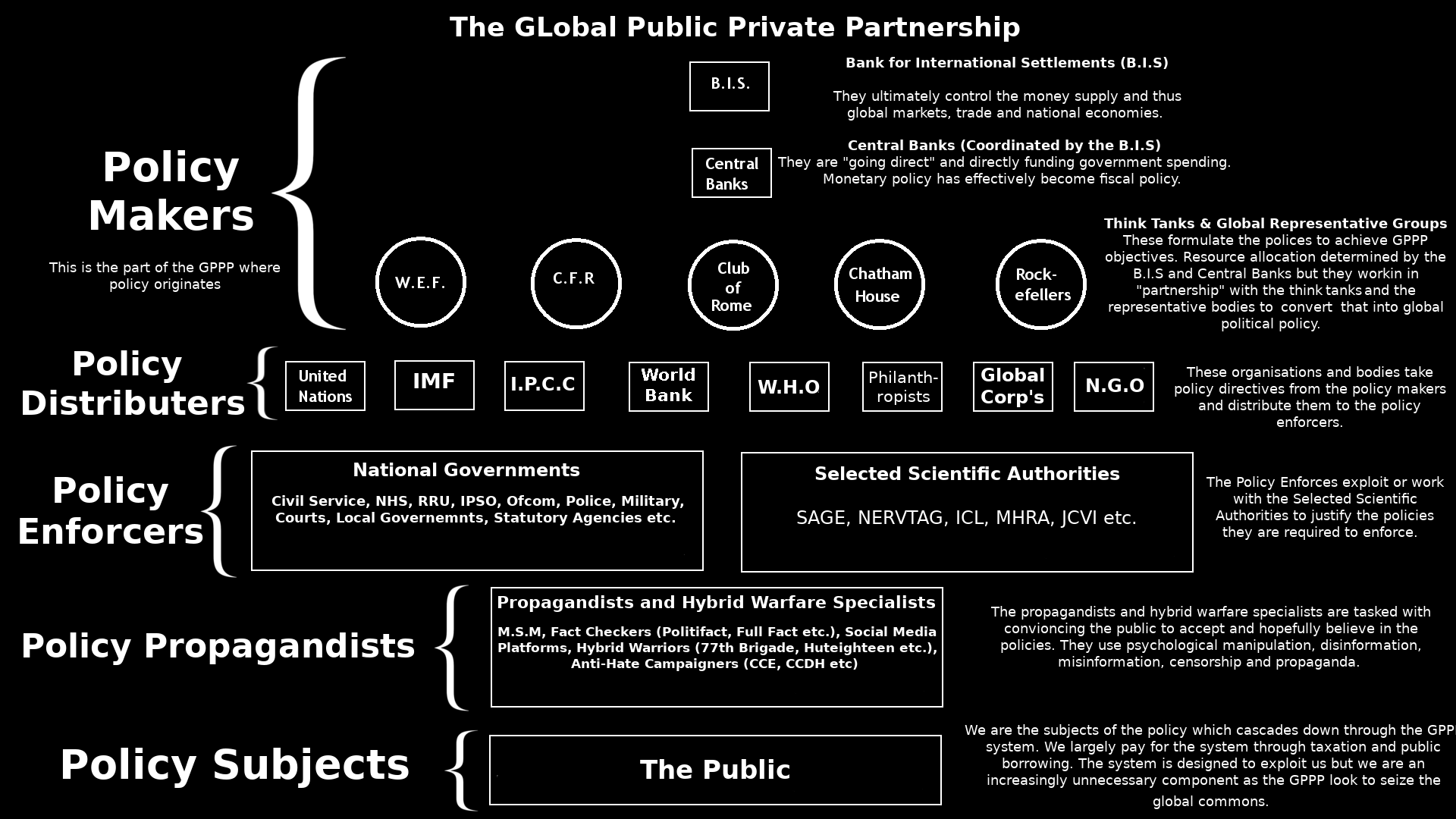
[click to enlarge]
SDG’s led to net zero policies and they stipulate, among a swath of enforced changes, the end of petrol and diesel transport. We are all under orders to switch to electric vehicles (EVs) which the vast majority won’t be able to afford. In turn, this means a massive increase in demand for lithium-ion batteries.
Manufacturing these will require a lot more cobalt which is widely considered to be the most critical supply chain risk for producing EVs. The World Bank estimate that the growth in demand for cobalt between 2018 and 2050 will be somewhere in the region of 450%. To say this is a “market opportunity” is a massive understatement.
The ISA have granted 5 cobalt exploration contracts to JOGMEC (Japan), COMRA (China), Russia, the Republic of Korea and CPRM (Brazil). When located deposits become commercially viable, as they undoubtedly will, the corporate feeding frenzy can begin.
Corporations, such as the weapons manufacturer Lockheed Martin, with its wholly owned subsidiary UK Seabed Resources (UKSR), are also among the many ISA stakeholders. UKSR received their exploration license for the South Pacific in 2013. As an ISA exploration contractor, UKSR stakeholders are free to submit their recommendations for amendments to the ISA regulations governing their own mining operations.
For example, the ISA stated that mining corporations should provide a financial guarantee that would cover “unexpected costs, expenses and liabilities.” Lockheed Martin didn’t like this at all and so suggested a slight change. They recommended the addition of the following:
The Guarantee is not to cover costs, expenses and liabilities incurred as a result of tortious liability for environmental damage.”
This was presumably because, in their pursuit of SDG “protection” of the planet, Lockheed Martin don’t wish to be liable for the environmental damage they will inflict upon it in the process. This risk of this is high because the proposed method for “scraping the seabed” will almost certainly destroy it.
Fortunately for UKSR and other stakeholders like COMRA, the ISA’s is committed to regulations which promote sound commercial principles and safeguard their commercial interests. Destroying the seabed is a risk worth taking but not if you have to pay for it.
When it comes to fighting climate change, human life is even cheaper. Nearly all cobalt is currently mined from Africa’s copper belt and more than 60% of the world supply comes from the Democratic Republic of the Congo. It is clawed from the Earth by tens of thousands of child slaves.
This poisonous torture dramatically shortens the abject misery of their suffering on this Earth. However, it does mean other young people like Greta Thunberg can inspire more fortunate children to mobilise on social media, using their fully charged devices, to save the planet.
Only the commercial viability of deep-sea reserves seems capable of saving the cobalt mine slaves. Alas, it is difficult to envisage how deep see reserves will become viable until land based reserves near exhaustion.
This openly condoned child abuse has been ongoing for years. A fact which the world’s media admits but never mentions when it eulogises about the green revolution.
The estimated 94,000 tonnes of cobalt in the Clarion Clipperton Zone (CCZ) of the Eastern Pacific alone represents 6 times the known land based reserves. With total deep sea reserves estimated to be worth between $8 – $16 trillion, as we progress towards a carbon neutral economy, deep sea mining is an inevitability. Regardless of the environmental cost.
All the real environmental issues are to be ignored as the world embarks upon a transition to a new global economy based upon one highly questionable theory: namely anthropogenic global warming (AGW).
THE GLOBAL COMMONS NEW MARKET(S)
This transition to the green economy will see myriad new markets created as the Earths “common” resources are converted into proverbial investment gold mines. Cobalt scraped from the seabed is just one example, there are thousands more.
The GPPP will have exclusive access, and thus control, over these new, essential resources. The investment opportunities are endless. It is this prospect, not any concerns for the Earth or humanity, that is driving the seizure of the global commons.
The GPPP have recognised that if they can squeeze something into the “global commons” they can then control of it. Consequently, the list of alleged “commons” continues to grow, as the the GPPP seek more control over more of the planet and everything on it.
In 1996 the late John Perry Barlow, from the Electronic Freedom Foundation, presented a Declaration for the Independence of Cyberspace to the annual Davos conference of the World Economic Forum (WEF). It perhaps seems odd that the GPPP wanted to hear this radical, libertarian call for governments around the world to leave cyberspace unregulated.
However, as I stress in my book Pseudopandemic, the intent of ideas, political and economic philosophies or social doctrines is not what interests the GPPP. Rather, it is how those ideologies can be exploited to achieve their goals.
In making his address Barlow was, perhaps inadvertently, laying the groundwork to include cyberspace as part of the “global commons.”
As we shall discuss shortly, the GPPP already had a plan in place to appropriate everything defined as a global commons. It was this prospect which enthralled the assembled Davos (GPPP) crowd.
In their 2015 Davos executive summary the WEF illustrated how the GPPP manipulate narratives to reshape the context of our daily lives.
In this case, the objective was to institute the precepts for their claimed jurisdiction of cyberspace.
What is clear is that we are confronted by profound political, economic, social and, above all, technological transformations… resulting in an entirely ‘new global context’ for future decision-making… The World Economic Forum’s Annual Meeting provides an unparalleled platform for leaders to develop the necessary insights, ideas and partnerships to respond to this new context…
Based on the principle that a multistakeholder, systemic and future-oriented approach is essential in this new context, the issues to be addressed through sessions, taskforces and private meetings at the Annual Meeting 2015 include… The inability to significantly improve the management and governance of critical global commons, most notably natural resources and cyberspace.
We have considered the example of the oceans and their resources, but the process for creating regulated markets for all commons is the same. First something must be levered into the category of the global commons. Once declared to be among the “shared resources all life relies upon,” some GPPP quango is appointed to oversee access to the new regulated market.
This body will be formed to serve the stakeholders capitalists who will then have exclusive access to and control of that resource.
In accordance with the U.N. definition “stewardship of the global commons cannot be carried out without global governance.” Global governance is formally convened via the process of stealing the global commons. The entire operation is founded upon sustainable development.
THE AGENDAS FOR SUSTAINABLE GLOBAL COMMONS
As mentioned previously, this plan has been in-place for decades. Sustainable Development Goals (SDGs) are set in Agenda 2030 as way-points along the path to completion of the plan for the 21st century: Agenda 21.
When GPPP stakeholders say they are committed to SDG’s they mean Agenda 2030, in the short term, and ultimately Agenda 21. Agenda 21 has a lot to say about what it calls “human settlements.” It lays out how they will be planned, constructed and managed by a public-private partnership. However, in constructing human settlements, human beings do not appear very high on the priority list.
Objective 5.29 states:
In formulating human settlements policies, account should be taken of resource needs, waste production and ecosystem health.”
Resource allocation, waste management and environmental protections are the prerequisites for “human settlements.” Not the welfare of humanity.
The GPPP will oversee the construction or allocation of our settlements. Objective 7.30. d. states:
Encourage partnerships among the public, private and community sectors in managing land resources for human settlements development.”
All land, not just the commons, will be managed by the GPPP. Again, subsequent Agenda 2030 SDGs have provided the justification for the land grab.
Objective 10 of Agenda 21 states:
The broad objective is to facilitate allocation of land to the uses that provide the greatest sustainable benefits and to promote the transition to a sustainable and integrated management of land resources”
Clearly this raises issues of private land ownership and use. Not just among householders but by industry, farmers, train companies or any other private land owner. The trick in holding on to land will be to secure its designation as having a “sustainable” purpose. This allocation will need to be agreed by the GPPP, so friends in high places will be key.
Agenda 21 demands, under “Activities” in section 7.29, that all nations must develop:
A comprehensive national inventory of their land resources in order to establish a land information system in which land resources will be classified according to their most appropriate uses and environmentally fragile or disaster-prone areas will be identified for special protection measures.”
If the place where you live is deemed to be environmentally fragile, and we are told the whole planet is, then the GPPP will follow section 7.30. h and implement:
Practices that deal comprehensively with potentially competing land requirements for agriculture, industry, transport, urban development, green spaces, preserves and other vital needs.”
This will involve the creation of “protected areas.” Among many of their authoritarian powers, this means that the GPPP will have control of all drinking water. Water sources automatically become “protected areas” under Agenda 21, for the good of our “health.”
Activity 18.50 it states:
All States, according to their capacity and available resources, and through bilateral or multilateral cooperation, including the United Nations and other relevant organizations as appropriate, could implement the following activities:.. Establishment of protected areas for sources of drinking-water supply.”
By exploiting the deception of “sustainable development” a planetary system of global governance, under the auspices of the GPPP, is currently being established. This is “build back better,” the “Great Reset,” the “Green New Deal” or whatever the GPPP choose to sell it as.
It means GPPP dominion over absolutely everything. We truly will own nothing, although it seems unlikely that many of us will be happy about it.
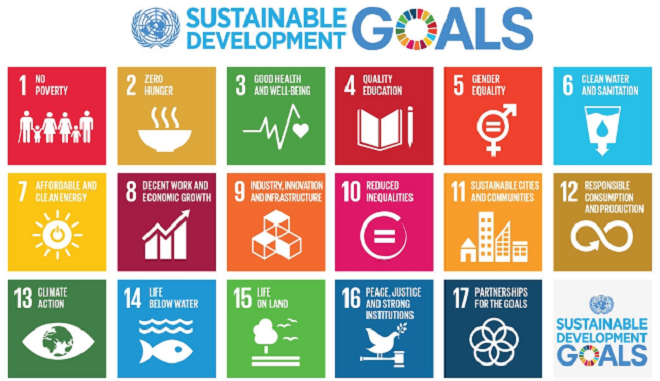
Those who do not understand, or do not wish to admit the reality of this global coup d’état, are quick to point out that Agenda 21 – and 2030 – are not legislation. Nation-states are not compelled to go along with any of it. This observation fails to appreciate what “global governance” is.
Global governance is not the setting of either policy or legislation. It is the creation of policy agendas which individual nation states may or may not implement as policy or subsequent legislation. It can only have teeth if nation states comply.
The problem we face is that nation states are “partner organisation,” some might say junior partners, within the GPPP. While they remain sovereign entities they do not act as such. We only need look at how global markets are created by Agenda 21 to see how all nation states have willingly collaborated in the sustainable development scam.
In Agenda 21 the declared “Basis for Action” at section 8.41 states:
A first step towards the integration of sustainability into economic management is the establishment of better measurement of the crucial role of the environment as a source of natural capital… A common framework needs to be developed whereby the contributions made by all sectors and activities of society, that are not included in the conventional national accounts, are included… A programme to develop national systems of integrated environmental and economic accounting in all countries is proposed.”
The clearly stated plan, written in 1992, was to create “natural capital” to shift “sustainability into economic management.” All sectors and all society will be involved in this effort to transform nature into economic capital.
This will include the oversight of the “activities of society,” such as our use of cyberspace, which are “not included in the conventional national accounts.” The global commons in other words.
It doesn’t matter if Agenda 21 (2030) has legislative authority or not. All the matters is the complicity of legislative authorities. They are in full compliance.
Agenda 21 proposed the development of “national systems of integrated environmental and economic accounting in all countries.” This was envisaged to complete the transformation of the Earth and all of its natural resources into a centralised system of economic control.
As Whitney Webb explored in her excellent article, Wall Street’s Takeover of Nature Advances with Launch of New Asset Class that is precisely what has happened. By once again misusing the concept of the global commons, the GPPP has created Natural Asset Companies (NACs). These will allegedly:
Preserve and restore the natural assets that ultimately underpin the ability for there to be life on Earth.”
This allusion to caring for the global commons all sounds wonderful but when we consider its impact upon the oceans depths, for example, it is really just the creation of new markets. Concern for environmental destruction barely registers.
THE METRICS OF THE GLOBAL COMMONS
Clearly, the objective of NACs is to secure GPPP stakeholder’s exclusive access to resources which, hitherto, weren’t “owned” by anyone. Michael Blaugrund, the Chief Operating Officer of the New York Stock Exchange, admitted as much:
Our hope is that owning a natural asset company is going to be a way that an increasingly broad range of investors have the ability to invest in something that’s intrinsically valuable, but, up to this point, was really excluded from the financial markets.”
To put this into perspective, the current, total GDP of the whole planet is approximately $94 trillion. By converting the Earth into an asset portfolio, nature is projected to be worth $4000 trillion. More than 40 times world GDP. Needless to say, this is one hell of an investment opportunity.
The transformation of the global economy is well underway. The entire GPPP is, understandably, committed to the project. What disagreements that exist only extend to who gets what. There is no opposition to the new global economic model. As Webb pointed out:
The ultimate goal of NACs is not sustainability or conservation – it is the financialization of nature, i.e. turning nature into a commodity that can be used to keep the current, corrupt Wall Street economy booming under the guise of protecting the environment and preventing its further degradation.”
NACs will enable investors to acquire assets primarily in developing nations, as multinational corporations and financial funds hoover up former global commons and other resources. However, the financialization of nature is global, transforming the Globe into a bull market.
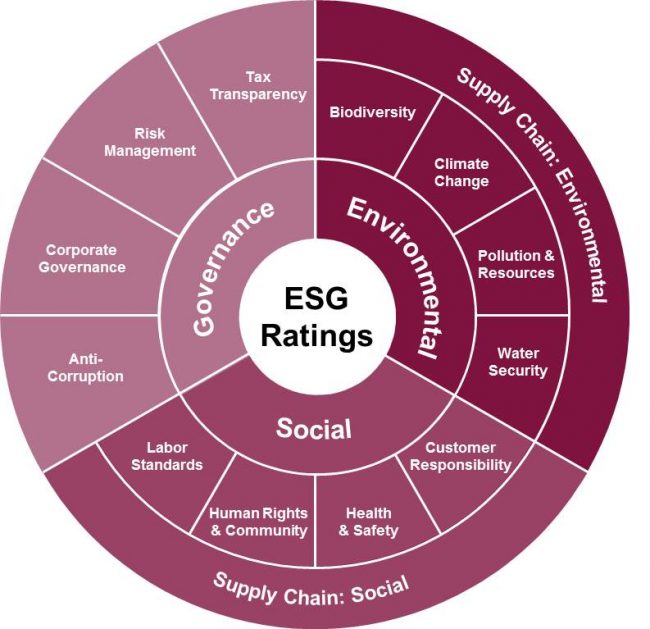
This will be achieved using Stakeholder Capitalism Metrics. Assets will be rated using environmental, social and governance (ESG) benchmarks for sustainable business performance. Any business requiring market finance, perhaps through issuing climate bonds, or maybe green bonds for European ventures, will need those bonds to have a healthy ESG rating.
A low ESG rating will deter investors and the project or business venture won’t get off the ground. A high ESG rating will see investors rush to put their money in projects which are backed by international agreements. In combination, financial initiatives like NACs and ESGs are converting SDG’s into market regulations.
This centralises authority over the global economy, placing it in the hands of the GPPP. Speaking in July 2019, then Governor of the Bank of England (BoE) and soon to be U.N. special envoy for Climate Action, Mark Carney, simply stated:
Companies that ignore climate change and don’t adapt will go bankrupt without question.”
Later, speaking at the Green Horizons Summit in November 2020, jointly hosted by The City of London Corporation, the Green Finance Institute and the World Economic Forum, Carney, acting in another role as UK Prime Ministerial Finance Adviser on COP26, said:
“Transition plans will reveal the leaders and laggers on the road to Glasgow… We will not get to net zero in a niche, it requires a whole economy transition.”
The leaders in the new global economy will be those selected by the GPPP through the appropriate rating of their issued securities. The laggers will be weeded out via the same mechanism. They will go bankrupt without question.
All business, not just global corporations, will be required to “adapt” to the new SDG based economic system. This isn’t some projection of what the future global economy will look like, it has already happened. While the world has been obsessing over the pseudopandemic the GPPP has initiated a global revolution.
At the eventual COP26 summit in Glasgow, Mark Carney, allegedly speaking as the U.N envoy – or perhaps as a Board Trustee of the World Economic Forum, it’s hard to say – launched something he called GFANZ:
The architecture of the global financial system has been transformed to deliver net zero. We now have the essential plumbing in place to move climate change from the fringes to the forefront of finance so that every financial decision takes climate change into account … [This] rapid, and large-scale, increase in capital commitment to net zero, through GFANZ, makes the transition to a 1.5C world possible.”
The UK Chancellor of the Exchequer, Rishi Sunak, followed up Carney’s statement with the declaration of the Glasgow Financial Alliance for Net Zero (GFANZ). The plan is to initially “align,” (force) 40% of the world’s current financial assets, amounting to $130 trillion, to commit to the transition towards a decarbonised global economy. The UK government press release reported:
The UK has convened over 30 advanced and developing countries from across 6 continents and representing over 70% of global GDP to back the creation of a new global climate reporting standards by the IFRS Foundation to give investors the information they need to fund net zero.”
All this is necessary, according to Carney, Sunak and all the other GPPP leaders, to control the Earth’s climate. They really imagine, or rather want you to imagine, that they can tweak the temperature of the Earth by centralising their authority over the world’s economy.
As Whitney Webb accurately observed on Twitter:
GLOBAL GOVERNANCE OF EVERYTHING
GFANZ is largely based upon double accounting and financial slight of hand. There isn’t really any commitment to actually reducing GHG emissions. The major banks will still be free to invest in fossil fuels while it remains profitable.
Once again the mainstream critics, or at least those reported by the financial MSM, utterly fail to understand what they are looking at. They fantasise that it is all about “saving the planet” or creating a greener economy for the good of all.
It is not, and it never was. It is about centralising financial and economic power.
It doesn’t matter if the numbers don’t add up. The real environmental impact is totally irrelevant. All that matters is that a mechanism is created by which the upper echelons of the GPPP hierarchy can firstly rescue and then extend their authority and control. That is the primary objective and until the pet economists and media commentators grasp this, they will never see that which is staring them in the face.
Presumably they still believe it is just an incalculable coincidence that this transformation has occurred just in time to save the failed IMFS (international monetary and financial system.) The GPPP have simply struck lucky. Saving the planet just happens to require exactly the same economic and financial restructuring needed to cover up the complete collapse of their former control structure.
At the 2019 annual G7 bankers symposium in Jackson Hole, Wyoming, just four months before the first cases of COVID 19 were reported, the second largest investment management firm in the world, BlackRock, presented their report Dealing With The Next Downturn to the gathered G7 central bankers. They reported:
Unprecedented policies will be needed to respond to the next economic downturn. Monetary policy is almost exhausted as global interest rates plunge towards zero or below. Fiscal policy on its own will struggle to provide major stimulus in a timely fashion given high debt levels and the typical lags with implementation… Conventional and unconventional monetary policy works primarily through the stimulative impact of lower short-term and long-term interest rates. This channel is almost tapped out.”
Unable to either spend or tax their way out of trouble, BlackRock admitted that, for the GPPP, the existing IMFS was a finished. This was the source of their power and therefore, if they were to retain their “authority,” a new system was required.
Mark Carney, on this occasion speaking as the governor of the BoE, affirmed BlackRock’s assessment:
Most fundamentally, a destabilising asymmetry at the heart of the IMFS is growing… a multi-polar global economy requires a new IMFS to realise its full potential. That won’t be easy… the deficiencies of the IMFS have become increasingly potent. Even a passing acquaintance with monetary history suggests that this centre won’t hold… I will close by adding urgency… Let’s end the malign neglect of the IMFS and build a system worthy of the diverse, multipolar global economy that is emerging.”
All agreed that a new IMFS was urgently needed. There was no time left to lose. In their paper BlackRock suggested that the new financial order could be created by “going direct:”
Going direct means the central bank finding ways to get central bank money directly in the hands of public and private sector spenders… enforcing policy coordination so that the fiscal expansion does not lead to an offsetting increase in interest rates.”
This was a revolutionary concept. Central banks theoretically served solely as the bank for commercial banks and government. Their official role was to invest in government bonds and manage settlements between commercial banks using central banks reserves called “base money.” The money you and I use every day is “broad money.” It had always circulated in the economy separately from base money.
Base money had never before been used to directly stimulate or manipulate broad money markets (in theory). With their going direct plan BlackRock were suggesting a mechanism by which it could. Effectively placing central banks in charge (enforcing policy coordination) of government fiscal policy: government taxation and spending.
Going direct represents a fundamental change in the nature of our political systems. It suggests that elected governments are no longer in charge of spending. It appears to be the establishment of taxation without representation: the end of any notion of democracy.
BlackRock added that going direct would be required if an “unusual conditions” arose. The center couldn’t hold, an extraordinary catalyst was needed to bring about the transformation.
In yet another remarkable and, for the GPPP, incredibly fortuitous coincidence, the U.S. “repo market” floundered just a month later. This delivered the necessary unusual condition, triggering BlackRock’s plan.
Things became extremely unusual just a few months later as the world was plunged into a global pseudopandemic. In response, by March 2020, going direct went into overdrive.
BlackRock said that going direct would only be required while the “unusual condition” persisted, although the nature of the arrangement would require a “permanent set-up.” Once fiscal policy objectives were achieved, which were also monetary policy objectives, the temporary permanent set-up could then move on to the “exit strategy” placed on the “policy horizon”.
We now know what that policy horizon is. It is the transformation of the IMFS, the seizure of the global commons, the financialization of nature and the establishment of a central financial body that rules it all. This process is more commonly referred to a “sustainable development” or the contruction of the green economy.
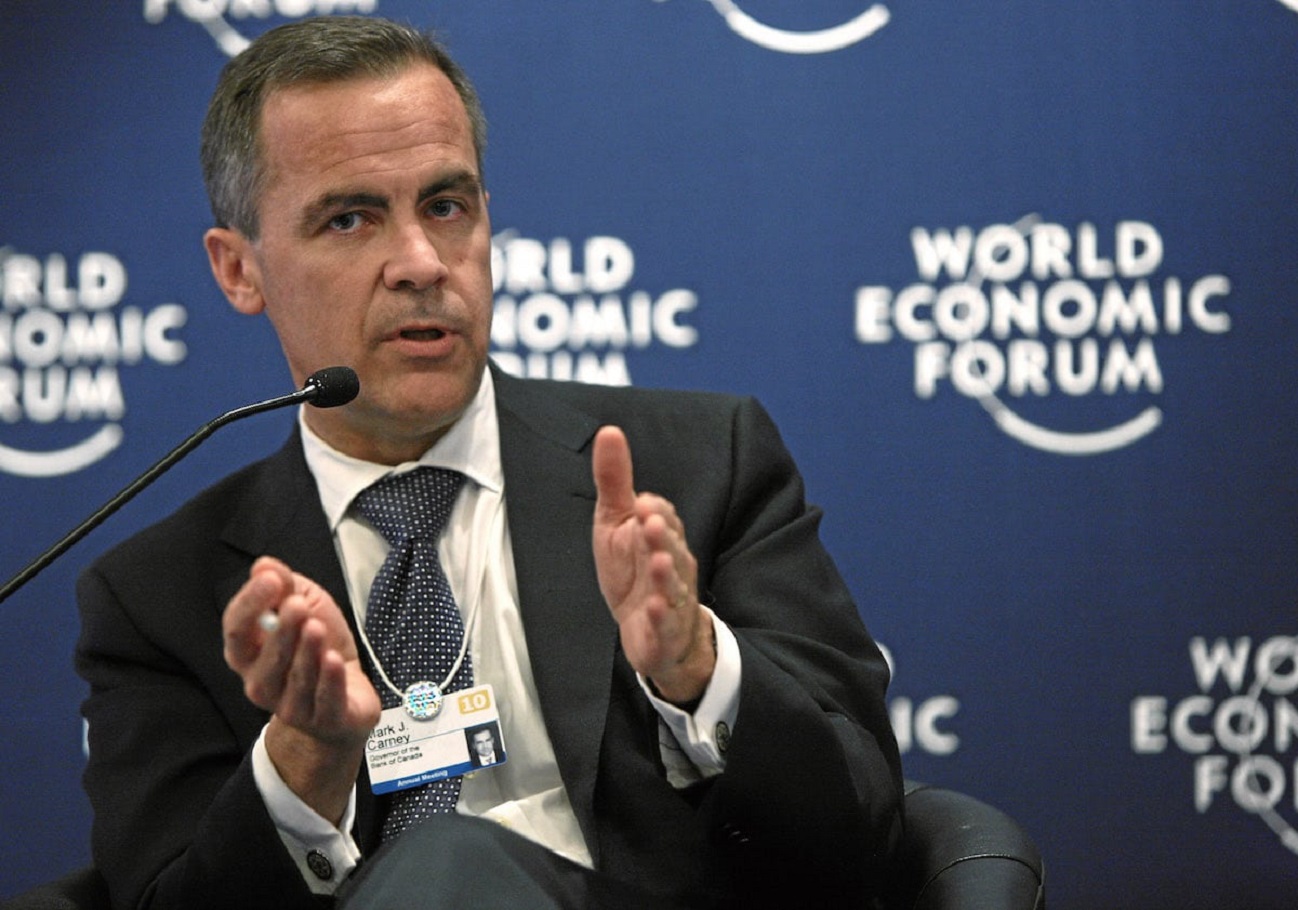
Mark Carney – formerly of Goldman Sachs & the Bank of England
ONE RING TO RULE THEM ALL
Prior to his GFANZ proclamation, in November 2020, Rishi Sunak stated that the UK intended to issue the world’s first sovereign green bond. The UK Government decreed that it would make reporting to the Task Force on Climate-related Financial Disclosures (TFCD) mandatory for all UK businesses by 2025. Sunak added that this would encourage investment in new technologies “like stablecoins and Central Bank Digital Currencies”.
The UK Government added:
The UK will become the first country in the world to make Task Force on Climate-related Financial Disclosures (TCFD) aligned disclosures fully mandatory across the economy by 2025… The UK will also implement a green taxonomy — a common framework for determining which activities can be defined as environmentally sustainable.”
The UK government’s pretence that it was in control of this initiative was comical. The Stakeholder Capitalism Metrics which determine ESG asset ratings, and the development of NACs, aren’t managed by the UK, U.S. or any other elected government. These financial levers are firmly rooted in the private sector.
GPPP leaders like the Bank for International Settlements, national central banks, BlackRock, Vanguard and WEF partners like Deloitte, PwC, McKinsey and KPMG are controlling these investment strategies. Governments are just junior, facilitating partners in the Global Public-Private Partnership.
The TCFDs are evaluated in response to a company’s “sustainability report.” According to the Financial Stability Board (FSB), the sustainability report “describes a company’s or organization’s impact on society, often addressing environmental, social, and governance issues.”
The TDFD assessment determines the ESG rating of its assets. This will be the deal maker, or breaker, whenever it wants to raise capital investment.
The sustainability report standards are set by the International Financial Reporting Standards (IFRS) foundation. The IFRS foundation states that it is a non profit, public-interest organisation.
It sets agreed accountancy standards in 140 jurisdictions for both public and private organisations. Its jurisdictions include the U.S., the EU, the UK, Canada, Australia, New Zealand, China and Russia.
However its claim to operate in the “public interest” is not supported by its own statements. The IFRS foundation also reports:
IFRS Standards are set by the International Accounting Standards Board and are used primarily by publicly accountable companies—those listed on a stock exchange and by financial institutions, such as banks.”
The International Accountancy Standards Board (IASB) is a private-sector organisation. Currently 12 people supposedly decide upon the IFRS standards which stipulate the sustainability report requirements for businesses and other organisations, including governments, across the planet.
Under the chairmanship of Mark Carney – he’s a busy man – the Financial Stability Board (FSB) created the TCFD in 2015:
The Financial Stability Board (FSB) announced today it is establishing an industry-led disclosure task force on climate-related financial risks.. The Task Force on Climate-related Financial Disclosures (TCFD) will develop voluntary, consistent climate-related financial risk disclosures for use by companies in providing information to lenders, insurers, investors and other stakeholders.
Five years later it was again Carney who, knowing that the “center cannot hold,” announced the consolidation and unification of the whole system at the COP26 summit. Inline with GFANZ, the IFRS announced the next step in the process, with the creation of its International Sustainability Standards Board (ISSB.)
The head auditor at PwC, Hemione Hudson, said:
The launch today of the International Sustainability Standards Board is an important step towards achieving a global common approach to ESG related disclosure standards. Harnessing the power of the financial markets to play a leading role in the transition to a net zero economy… Reporting standards are a critical component to achieving this”
We can now see how the whole system will work.
Every business, every project they wish to embark upon, every initiative they plan and every policy they pursue must adhere to SDGs. Their compliance to the agreed agenda will be measured via their “sustainability report.”
The Task Force on Climate-related Financial Disclosures (TCFD) will judge their performance. Their ESG subcommittees, such as the International Sustainability Standards Board, will approve the relevant ESG rating for that business.
The private investment ratings agencies like Deloitte who are “members” of the IFRS and, by definition, the GPPP, will effectively control every business’s investment strategy and thus their operations. Deep-sea mining, cybersecurity, digital currency innovation, exploitation of the global commons and anything else ordained as “sustainable” will receive the corresponding ESG rating.
All of this is centrally controlled through the TCFD system, operated by the FSB. They will be able to select who prospers and who doesn’t. The FSB secretariat is “hosted” and funded by the Bank for International Settlements (BIS) and is based at BIS headquarters in Basel, Switzerland.
Not only are the central banks, under the authority of the BIS, going direct and funding global fiscal policy, they are intent upon controlling all business, all commerce and all finances. They are seizing the global commons, financializing nature and moving beyond the old IMFS to establish true global governance.
If we don’t act. If we simply allow the puppets in our so-called governments to maintain their GPPP positions then the BIS, the central banks and other “valued stakeholders” are going to seize everything on this Earth. We will be beholden to them for the resources that “all life relies upon.”
If we allow that to happen then, just like the forgotten souls abandoned to the brutality of the cobalt mines, we will all be slaves.
Featured Video

Trita Parsi: Middle East Unraveling — Are We on the Path to World War?
or go to
Aletho News Archives – Video-Images
New Book
Trans agenda is ‘normalization of sadism’ – US author

RT | September 23, 2026
The US Democratic Party has embraced a transgender agenda that amounts to “the normalization of sadism,” author A.J. Rice has said, warning that radical trans policies would return if the party is allowed to regain power.
Speaking to RT’s America First host Scotty Nell Hughes about his new book, ‘The Curse of the Bearded Lady: How the Trans Mafia Whacked American Sanity’, Rice argued that activists have gained significant influence in schools, medicine, and corporate America while people who questioned the agenda have faced pressure to stay silent.
The author described the “trans mafia” as the sprawling network of people and institutions that have helped the movement gain influence. He singled out parts of academia, wealthy backers, and corporations, and stated that providers of transition-related treatment also have a financial incentive to keep young people in their care indefinitely.
Rice argued that the consequences of these policies ultimately fall on children who are being drawn toward gender-affirming medical treatments and on girls who are expected to share locker rooms or compete in sports with biological males.
He noted that while voters rejected the Democrats’ approach to gender in 2024, the party, which has been “captured by madness,” has since only doubled down and is seeking what is effectively “the normalization of sadism.” … Full report
Blog Roll
 Aletho News
- German chemicals giant reveals details of downsizing
- Refaat Al-Areer Was The Canary In The Coal Mine In Israel’s War On The Truth
- Israeli election committee bars candidate from Knesset race over Gaza war opposition
- French-Lebanese man files war crimes complaint over Israeli attacks
- Mahan Air Flight Lands in China Despite US Threat against Iranian Airlines
- US eyes $10bn fund to rebuild war-battered Gulf infrastructure
- Trump meets Rodríguez near Maduro’s prison as Venezuela’s oil flows to US
- Trita Parsi: Middle East Unraveling — Are We on the Path to World War?
- Iran FM meets with US envoy on UN meeting’s sidelines at American side’s insistence: Report
- Qatar PM calls for Gulf security framework with Iran, says war must be ‘wake-up call’
- If Americans Knew
- Caught on Tape: AIPAC CEO Boasted of Controlling Trump’s National Security Officials
- Why Hamas Attacked Israel in October 2023 – Israeli professor Ilan Papé
- They see them, then kill them: Israeli quadcopters track, deliberately target civilians in Gaza
- Winter could turn Gaza’s treacherous, war-damaged buildings into deathtraps
- Majority of Democratic Voters Want to Prosecute Both Biden and Trump Administration Officials Over Gaza
- As Gaza languishes, world leaders gather at the UN – Daily Update
- Sanctions are collective punishment: immoral and self-defeating
- Phosphorus Munitions Fired by Israel Burn Groves, Orchards in Southern Lebanon
- Israel Carries Out New Ceasefire Violations Across Gaza
- AI – Emphasis on the ‘I’: Israel Is Funding AI Chatbot Propaganda
- No Tricks Zone
- New Study: Earth And Venus Surface Warmth Largely Explained By Convection And Lapse Rate, Not CO2 Or Radiation
- 2025 Nature Paper Claiming Worsening Global Drought Gets RETRACTED …Heavily Flawed
- New Study: ‘Global Drought Shows No Detectable Recent Acceleration Under Climate Warming’
- Economic Masterminds: German Socialists Suggest Taxing Productivity Gains Stemming From Using AI
- The South China Sea Has Not Been Cooperating With The Climate Change Narrative
- Energy Crisis: Germany Enters Heating Season With Historically Low Gas Reserve Fill Levels
- New Study: The Antarctic Ice Sheet Gained Mass From 2020-2024 Due To Staggering Snow And Ice Accumulation
- Study: Ocean Heating Rates From Thousands Of Years Ago ‘Dwarf’ Modern Ocean Heating Rates
- Climate Extremists Target, Attack Large-Scale Power Grid Infrastructure In Germany!
- New Study: Antarctic Ice Melt Has Contributed Less Than 1 Centimeter To Sea Level Rise In The Last 30 Years

