Germans protest to stop nuclear train
Press TV – November 6, 2010
Demonstrators in Germany have been met by riot police as they attempt to stop a train carrying 123 tons of radioactive nuclear waste from France into Germany.
Tens of thousands of people gathered at the north German town of Gorleben to protest the arrival of the highly-radioactive nuclear waste.
Meanwhile, police forces used truncheons and mace against an estimated 150 activists who were attempting to dig a hole under a railway track to prevent the shipment.
Some of the protestors threw stones at security forces, while others blocked the road using tractors.
Around 16,500 police officers have been sent to quell the unrest, DPA reported.
Other reports indicated that trains were delayed as the activists chained themselves to the tracks. According to AFP, they were eventually removed and arrested by the police.
“This nuclear convoy, the most radioactive ever, exposes the population to excessive risks. There is a risk to lives in the short term in case of an accident, but also a long-term risk to their health,” a spokesperson for the anti-nuclear group Sortir du Nucleaire (Get out of Nuclear) said.
The waste is being shipped from La Hague in France by the state-controlled nuclear engineering company Areva.
Chancellor Angela Merkel labeled the move by the activists as, “not a peaceful demonstration, but a criminal offence.”
The so-called Castor trains — cask for storage of radioactive material — have been met by mass demonstrations for the past 30 years. The protests began when they first started to dump nuclear waste at the Gorleben facility.
Eleven steel containers holding the nuclear waste are expected to reach their destination on Sunday.
The protests are also directed at Merkel’s center-right government, which recently passed legislation to extend the life span of Germany’s 17 nuclear power stations beyond the previous deadline of 2022.
MARINE MAMMALS AND OTHER SEA LIFE TO BE DECIMATED
Navy Proposed Warfare Training Range
TIME IS RUNNING OUT! The Final Environmental Impact Report was released September 10, 2010, and according to the Navy’s project contact person Kimberly Kler, all comments will continue to be forwarded to the decision-making body until the Record of Decision is filed, which is expected in late October.
GET INVOLVED: Contact the Navy’s representative Kimberley Kler at 360–396–0927, and demand an extension for additional comments on the several thousand page document. You can write to your local newspapers to get more media attention, contact your congressional representatives*, board of supervisors, and other elected officials and make the case that these operations are unnecessary and would cause an undetermined amount of harm to marine life on our coast.
Click here to sign the Petition to Stop the Navy
By Rosalind Peterson | NewsWithViews.com | August 11, 2009
The United States Navy will be decimating millions of marine mammals and other aquatic life, each year, for the next five years, under their Warfare Testing Range Complex Expansions in the Atlantic, Pacific, and the Gulf of Mexico. The National Marine Fisheries Service (NMFS under NOAA), has already approved the “taking” of marine mammals in more than a dozen Navy Range Warfare Testing Complexes (6), and is preparing to issue another permit for 11.7 millions marine mammals (32 Separate Species), to be decimated along the Northern, California, Oregon and Washington areas of the Pacific Ocean (7).
U.S. Department of Commerce – NOAA (NMFS) Definition: “TAKE” Defined under the MMPA as “harass, hunt, capture, kill or collect, or attempt to harass, hunt, capture, kill or collect.” Defined under the ESA as “to harass, harm, pursue, hunt, shoot, wound, kill, trap, capture, or collect, or to attempt to engage in any such conduct.” Definition: Incidental Taking: An unintentional, but not unexpected taking (12).
The total number of marine mammals that will be decimated in the Atlantic, Pacific and the Gulf of Mexico for the next five years is unknown. […]
Earlier this year, June 8th through June 16, 2009, a delegation from Connecticut and California spent time walking the halls of the U.S. Senate and U.S. House of Representatives. We left petitions, color fliers, and information about saving our marine mammals, requested a postponement and U.S. Congressional Hearings. Ninety-nine senate offices were visited and 2/3 of offices in the U.S. House of Representatives. The silent response from our elected officials regarding these two requests has been zero…one U.S. Congressman even stated that citizens would be “laughed out of the halls of the U.S. Congress for suggesting that we protect our marine mammals”. Corporate paid “Lobbyists”, who hand out money by the $Millions, on the other hand, are always accepted at hearings, give testimony, and are welcomed in the halls of Congress…apparently the voices of citizens of the United States are not given the same status.
These virtually unregulated Navy Warfare Testing Programs already approved are now taking a toll on marine mammals, the fishing and ocean tourism industries, and on all aquatic life. Many U.S. Senators and Congressmen are ignoring these issues by pretending that they don’t exist even though they have been informed in advance of these programs.
A brief history of the Navy Warfare Testing Program is needed to understand the full implications of this Pentagon/Navy Warfare Testing Program. In 2004, the Bush Administration signed a bill weakening U.S. Environmental Laws (1), with regard to the U.S. Navy. And then in 2008, President Bush signed an executive order allowing the Navy to be exempt from environmental laws which protects endangered and threatened species (2-4). The Navy Southern California Complex was the first one to benefit from this executive order. Soon other Navy Range Complexes were obtaining exemptions from the NMFS with little or no oversight or significant mitigation measures (5).
A partial listing of known Navy Range Complexes (6), shows the amazing scope of the disaster. According to U.S. Congressman Waxman in a letter dated March 12, 2009: “…The Navy estimates that its sonar training activities will “take” marine mammals more than 11.7 million times over the course of a five-year permit…The sonar exercises at issue would take place off the Atlantic and Pacific coasts, Hawaii, Alaska and in the Gulf of Mexico – affecting literally every coastal state. In many regions, the Navy plans to increase the number of training exercises or expand the areas in which they may occur. Of particular concern are biologically sensitive marine habitats off our coasts, such as National Marine Sanctuary and other breeding habitats…In all, the Navy anticipates that its sonar exercises will “take” marine mammals more than 2.3 million times per year, or 11.7 million times over the course of a 5-year permit….” This statement was made in response to public inquiries regarding the Navy Northwest Training Range schedule for Northern California, Oregon, Washington, and Idaho.
KTVU Oakland San Francisco Television Station is the only television station to investigate and air a story about this U.S. Navy program (13), on May 18, 2009. It took a great deal of courage, in the face of the fact that no other major television networks would carry this story. A few courageous radio stations are also helping to get the word out to the public.
Published in the United States Federal Register on March 11, 2009:
The United States Navy published an application, as an addendum to their expanded Warfare Testing program, in the U.S. Federal Register, dated March 11, 2009. This application from the Navy “…requests authorization to take individuals of 32 species of marine mammals during upcoming Navy Warfare testing and training to be conducted in the NWTR areas (off the Pacific coasts of Washington, Oregon, and northern California) over the course of 5 years…”
The Navy Warfare Testing Program will “…utilize mid- and high frequency active sonar sources and explosive detonations. These sonar and explosive sources will be utilized during Antisubmarine Warfare (ASW) Tracking Exercises, Mine Avoidance Training, Extended Echo Ranging and Improved Extended Echo Ranging (EER/IEER) events, Missile Exercises, Gunnery Exercises, Bombing Exercises, Sinking Exercises, and Mine Warfare Training…” (More listed in Navy E.I.S.)
The “taking” of marine mammals negatively impacts the entire ecology of our oceans and the life in them which feeds large numbers of people and other species around the world. It should be noted that the list of toxic chemicals that the Navy proposes to use is a long one as noted in the Navy E.I.S. Depleted uranium, red and white phosphorus, mercury, lead, and a whole host of chemicals known to be toxic not only to man, but to marine life, are being served up on the “Navy Warfare Chemical Menu” that will contaminate our air, water, and soil.
On May 28, 2009, U.S. Congressman Mike Thompson from California, in a Press Release to NOAA, made the following statements which could be directed toward any ocean Navy testing range:
“…I am concerned about the United States Navy’s ability to properly review the environmental impacts of proposed enhancements in its Northwest Training Range Complex (NWTRC)… I am particularly concerned that NOAA’s existing mitigation measures may not be best suited for the protected marine mammals and endangered salmonids present in the Pacific Northwest… I am also concerned about proposed changes to current levels of activity in the NWTRC that focus on training for new aircraft and ship classes and physical enhancements to the training range. The Navy’s Environmental Impact Statement (EIS) acknowledges that these changes, particularly those related to its increased use of mid-frequency sonar, are likely to have measurable impacts on 32 protected marine mammal species known to inhabit the NWTRC…”
Congressman Thompson continues:
“…As the Navy moves forward with plans to train on new weapons systems, it is essential that NOAA identifies the environmental impacts of these new aircraft, ships and submarines – and their accompanying mitigation measures – specifically with reference to the productive ocean habitats and species that define the Pacific Coast… I am not aware of any specific elements included in the evaluation and am concerned that the review will be inadequate to address the Navy’s EIS with respect to protection of Pacific Coast ocean ecosystems.
NOAA’s comprehensive review is particularly important given that the Navy has estimated shipboard visual monitoring for marine mammals – the most commonly employed sonar mitigation measure – to be effective only 9% of the time. It is important that NOAA take immediate steps to validate its comprehensive review of mitigation measures. Specifically, I request that you provide my office with an outline of the comprehensive review process and answers to the following questions:
1. What mitigation measures will be reviewed during NOAA’s process?
2. What data will NOAA use to identify those mitigation measures best able to protect marine species?
3. How will your agency’s recommendations target specific species, habitats or training activities of concern?
4. How will NOAA’s recommendations address sonar impacts to species other than marine mammals?
5. How will NOAA or the Navy establish performance standards to ensure that recommended mitigation measures are functioning as intended?…”The public should also be informed of any information received by Congressman Thompson’s office. In addition, there are a few more questions which need to be answered:
1. What are the synergistic and cumulative effects of all the permits that have been issued in the last two years to Naval Range Complex requests?
2. Bomb blasts and toxic chemicals are also being tested by the Navy and NOAA reviews are not including information on the Navy Hazardous Waste and Toxic Chemicals sections of the Navy E.I.S., such as bioaccumulation of chemicals in the food chain, death from exposure to toxic chemicals and bomb blasts.
3. The Navy will also be conducting classified future warfare testing. Since the public is not to be informed of those tests, chemicals being used, electromagnetic weapons systems, and other air or land based tests, who is protecting sea life, human health, water, soil, and air from pollution and other experimental tests?
4. Human health from airborne pollutants, toxic debris, and shoreline contamination from toxic chemicals should also be considered in the NMFS evaluation. The protection of cruise ships, fishermen, ocean tourists, U.S. Coastguard personnel, and the public who swim in the ocean should also be considered in their evaluations. This is not just a marine mammal issue.
It is now time for all of us to weigh in with regard to these warfare programs which will devastate our marine mammals, pollute our air and water, and have negative impacts on human health. We should have U.S. Congressional Hearings and a postponement of these programs until such time as the public can be informed about these issues.
For more information contact: Rosalind Peterson (707) 485-7520 Or, E-mail: info@californiaskwatch.com
Website: californiaskywatch.com
Website: agriculturedefensecoalition.org
Additional Information:
1- Bill Signed into Law by President Bush Summary. 108th Congress H.R. 1588, 2004
2- Associate Press January 18, 2009 – “…President Bush’s decision to exempt the Navy from an environmental law so it can continue using high-power sonar in its training off Southern California _ a practice they say harms whales and other marine mammals…”
3- Los Angeles January 16, 2009- Associated Press President Bush Executive Order Undermining Environmental Laws.
4- U.S. Department of Defense News Release January 16, 2009 Navy Warfare Testing Southern California Range Complex-Use of Sonar.
5- No Significant Mitigation Measures for all of the Navy Range Complexes Listing on this U.S. Map.
6- Partial Listing of known Navy + Air Force Range Complexes:
NOAA Listing (NMFS) August 9, 2009
A – Northwest Training Range Complex – California, Washington, Idaho, Oregon
B – Southern California Training Range Complex, and here
C – Cherry Point Training Range Complex and here
D – U.S. Air Force Eglin Gulf Test+Training Range EGTTR Strike Weapons Tests 2004-5 Years
E – Hawaii Training Range Complex and here
F – Jacksonville, Florida Navy Complex Training Range E.I.S. – Marine Mammal Disaster 2008
G – Virginia Capes EIS/OEIS and see here and here
H – Gulf of Mexico Range Complex EIS/OEIS and Map
I – Atlantic Fleet Active Sonar Training. See This and This
J – Mariana Islands Range Complex EIS/OEIS
K – NSWC Panama City Division: EIS/OEIS
L – NAVSEA NUWC Keyport Range Complex EIS/OEIS
M – Navy Undersea Warfare Training Range Complex. Also see this
7- California, Washington, Idaho, Oregon Decision Pending
8- Navy Cherry Point Range Complex, Table of Contents Environmental Impact Statement – Finalized April 23, 2009, Weapons Systems Descriptions – Note Section on Red and White Phosphorus Hazards, 2003 GAO Report Navy
9- Public Comment Deadline NOAA National Marine Fisheries Service August 12, 2009, Information here for how to file your protest and comments, 2009
10- California, Oregon, Washington & Idaho Navy Environmental Impact Statement
11- NOAA “Take” Requests and Permit Authorization-Note Military & Other Types of Organizations
12- NOAA Glossary of Terms – 2009 Definition: Incidental Taking: An unintentional, but not unexpected taking. More Terms, and
13- KTVU Channel 2 Investigation U.S. Navy Warfare Testing Program May 18, 2009
14- President Obama Restored Species Act Consultation-U.S. Department of Commerce & Interior
© 2009 – Rosalind Peterson
Sign Up For Free E-Mail Alerts
E-Mails are used strictly for NWVs alerts, not for sale
In 1995, Rosalind, now retired, became a certified California United State Department of Agriculture (USDA) Farm Service Agency Agriculture Crop Loss Adjustor working in more than ten counties throughout California. Rosalind has a BA degree from Sonoma State University in Environmental Studies & Planning (ENSP), with emphasis on using solar power, photosynthesis, agriculture, and crop production.
Between 1989 and 1993 Rosalind worked as an Agricultural Technologist for the Mendocino County Department of Agriculture. After leaving Mendocino County she took a position with the USDA Farm Service Agency as a Program Assistant in Mendocino, Sonoma, and the Salinas County Offices, where she worked until becoming certified as a crop loss adjustor for the State.
E-Mail: info@californiaskywatch.com
Nuclear Testing and the Rise of Thyroid Cancers
The Public Was Never Warned About the Risks
By ROBERT ALVAREZ | CounterPunch | October 15, 2010
According to a recent New York Times article, thyroid cancer in the U.S. has been on the rise for nearly 40 years.
The long-standing explanation that this is due to better diagnostics is no longer accepted. This also means that the impacts of radioactive iodine fallout from nuclear weapons testing and Chernobyl cannot be so readily ruled out.
With a half-life of 8.5 days, Iodine-131 rapidly contaminates air, vegetation and milk supplies. Because it is absorbed mostly in the body’s thyroid, radioactive iodine has been linked to thyroid cancer and other types of thyroid damage in humans for several decades. It takes about 90 days for the radioactivity of I-131 to diminish to very small levels. Thyroid cancer can have a latency period as long as 38 years.
According to the National Cancer Institute in 1992, about 150 million curies of radioactive iodine was released in open air from nuclear testing in Nevada, causing heavy contamination of the nation’s milk supplies from the early 1950’s to the early 1960’s. This is more than 20 times the amount estimated to have been released by the Chernobyl nuclear accident in 1986. At the time of open air testing, millions of children were drinking this contaminated milk.
In the early 1950s when radioactive fallout was over-exposing film in cardboard made with contaminated straw, the Eastman Kodak company secretly complained and was given routine warnings by the U.S. Atomic Energy Commission. The public was never warned by the U.S. government about the dangers of consuming milk it was contaminating in its quest to amass a nuclear arsenal.
After the ratification of the Limited Test Ban Treaty in 1963, the U.S. Food and Drug Administration established “Protective Action Guides” for Iodine-131 that triggered removal of dairy products from human consumption following nuclear accidents. Had these limits been in place during the open air nuclear testing in the 1950’s and early 1960’s, the NCI study indicates that milk supplies would have had to be removed from the markets for months at a time.
The NCI admitted in testimony before the U.S. Congress in 1998, after an investigation by the U.S. Senate Governmental Affairs Committee, that it suppressed this study for 5 years. The NCI also conceded this may have caused as many as 212,000 excess thyroid cancers.
With trust in the U.S. government sinking like a stone, it’s time for greater transparency about the price paid for nuclear weapons. As former Senator John Glenn (D-OH), a staunch supporter of the military, warned, “What good is it to protect ourselves with nuclear weapons, if we poison our people in the process?”
Robert Alvarez, an Institute for Policy Studies senior scholar, served as senior policy adviser to the Energy Department’s secretary from 1993 to 1999.
The Case Against Fluoride: Toxifying the Tap
By Rady Ananda | Global Research | October 15th, 2010
In July of this year, the United Nations declared access to clean water a human right. The United States was among 41 nations that abstained from supporting the resolution. Since October 15th is Blog for Water Day, a close inspection of a common US practice – fluoridating city water supplies – is in order.
The subject of water fluoridation has been controversial for decades, but a new book, The Case Against Fluoride, won the accolades of a Nobel Laureate:
Sweden rejected fluoridation in the 1970s and, in this excellent book, these three scientists have confirmed the wisdom of that decision. Our children have not suffered greater tooth decay, as World Health Organization figures attest, and in turn our citizens have not borne the other hazards fluoride may cause. In any case, since fluoride is readily available in toothpaste, you don’t have to force it on people.
~ Arvid Carlsson, Nobel Laureate in Medicine or Physiology (2000) and Emeritus Professor of Pharmacology, University of Gothenburg
Published on October 7th, “The Case Against Fluoride: How Hazardous Waste Ended Up in Our Drinking Water and the Bad Science and Powerful Politics That Keep It There,” by Paul Connett, James Beck, and Spedding Micklem, warns that water fluoridation “receives no oversight from the Food and Drug Administration, and the Environmental Protection Agency takes no responsibility for the practice.”
Carl Hays (a Booklist Online reviewer) also applauded the book:
On the eve of the new millennium, the Centers for Disease Control (CDC), listed water fluoridation as one of the twentieth-century’s 10 greatest public-health achievements. Yet according to the authors of this painstakingly researched expose of fluoridation’s overall ineffectiveness and toxicity, endorsements such as these from the CDC and other health organizations are motivated more by face-saving politics than credible research.
Fluoridation advocates who have previously branded detractors as conspiracy theorists and shills for junk science will be hard pressed to debunk the hundreds of peer-reviewed studies and sound scientific reasoning presented here.
In March of this year, the issue again made news when workers in the Amesbury, Massachusetts water plant found that the bags of fluoride the city had bought from China contained an unknown, non-soluble substance. It comprised 40% of the product.
This month, the video caught the attention of bloggers who focused on the warning label on the sodium fluoride bag seen in the video:
TARGET ORGANS: Heart, Kidneys, Bones, Central Nervous System, Gastrointestinal System, Teeth. Do not get in eyes or on skin. Do not ingest or inhale.
Why are they putting this in our water?
Many scientists oppose adding such a toxic substance to our main drinking supply, yet powerful forces keep our water fluoridated. A short 30-minute film, Professional Perspectives on Water Fluoridation, provides some chilling information.
Even assuming that the given reason for fluoridating our water – to prevent tooth decay – is legitimate, pharmacologists, toxicologists, dentists, and medical doctors explain how mass drugging a population violates medical ethics since it lacks informed consent.
Among the 2,000-plus professionals who call for the ban of this practice, Dr Carlsson states: “It’s absolutely obsolete.” Modern pharmacology recognizes that individuals react differently to the same dosage of a given drug.
Now in this case, you have it in the water and people are drinking different amounts of water. So you have huge variations in the consumption.
Dr Phyllis Mullenix concurs. “The whole name of the game [of pharmacology] is to deliver the right dose to the right person at the right time. And that’s not what fluoridation does.”
Any benefit from fluoride on teeth is only topical. As one scientist put it, “If you want to prevent sunburn, you don’t drink suntan lotion. You put it on your skin.”
Yet, fluoridated municipal water exposes our internal organs to a toxic substance. Children are especially vulnerable, because the blood-brain barrier is not fully developed. Fluoride lowers intelligence. One in three US adults has arthritis, which is a symptom of skeletal fluorosis. Fluoride also causes depression and lethargy, they report.
The World Health Organization advised that a third of US children suffer from dental fluorosis caused by too much fluoride intake.
Professionals in the film also cite a 2006 report by the National Research Council, which urges the U.S. Environmental Protection Agency to reduce the maximum amount of fluoride allowed in drinking water.
In the Amesbury news report, we saw bags of sodium chloride. But the form of fluoride added to most municipal water supplies is hexafluorosilicic acid, a waste product of the agricultural phosphate industry. It is not pharmaceutical grade sodium fluoride.
Both the book, The Case Against Fluoride, and the film, Professional Perspectives on Water Fluoridation, provide citizens with sound science to use when demanding that city officials end this “unethical, unnecessary, ineffective and dangerous” practice.
Meanwhile, fluoride filtration systems can be purchased for home installation, ranging from around $50 a year to several hundred dollars.
Click here for more information.
The Case Against Fluoride
How Hazardous Waste Ended Up in Our Drinking Water and the Bad Science and Powerful Politics That Keep It There
By Paul Connett, James Beck, Spedding Micklem – Chelsea Green
“Sweden rejected fluoridation in the 1970s and, in this excellent book, these three scientists have confirmed the wisdom of that decision. Our children have not suffered greater tooth decay, as World Health Organization figures attest, and in turn our citizens have not borne the other hazards fluoride may cause. In any case, since fluoride is readily available in toothpaste, you don’t have to force it on people.”—Arvid Carlsson, Nobel Laureate in Medicine or Physiology (2000) and Emeritus Professor of Pharmacology, University of Gothenburg
When the U.S. Public Health Service endorsed water fluoridation in 1950, there was little evidence of its safety. Now, six decades later and after most countries have rejected the practice, more than 70 percent of Americans, as well as 200 million people worldwide, are drinking fluoridated water. The Center for Disease Control and the American Dental Association continue to promote it–and even mandatory statewide water fluoridation–despite increasing evidence that it is not only unnecessary, but potentially hazardous to human health.
In this timely and important book, Dr. Paul Connett, Dr. James Beck, and Dr. H. Spedding Micklem take a new look at the science behind water fluoridation and argue that just because the dental and medical establishments endorse a public health measure doesn’t mean it’s safe. In the case of water fluoridation, the chemicals that go into the drinking water that more than 180 million people drink each day are not even pharmaceutical grade, but rather a hazardous waste product of the phosphate fertilizer industry. It is illegal to dump this waste into the sea or local surface water, and yet it is allowed in our drinking water. To make matters worse, this program receives no oversight from the Food and Drug Administration, and the Environmental Protection Agency takes no responsibility for the practice. And from an ethical standpoint, say the authors, water fluoridation is a bad medical practice: individuals are being forced to take medication without their informed consent, there is no control over the dose, and no monitoring of possible side effects.
At once painstakingly documented and also highly readable, The Case Against Fluoride brings new research to light, including links between fluoride and harm to the brain, bones, and endocrine system, and argues that the evidence that fluoridation reduces tooth decay is surprisingly weak.
About the Authors

Paul Connett
Dr. Paul Connett is the Director of the Fluoride Action Network (FAN), and the Executive Director of its parent body, the American Environmental Health Studies Project (AEHSP). He has spoken and given more than 2,000 presentations in forty-nine states and fifty-two countries on the issue of waste management. He holds a bachelors degree from the University of Cambridge and a Ph.D. in chemistry from Dartmouth College and is a retired professor of environmental chemistry and toxicology at St. Lawrence University. He lives in Canton, New York.

James Beck
Dr. James S. Beck is a Professor Emeritus of Medical Biophysics at the University of Calgary and holds doctorates in medicine from Washington University School of Medicine and biophysics from the University of California, Berkeley. He lives in Calgary, Alberta, Canada.
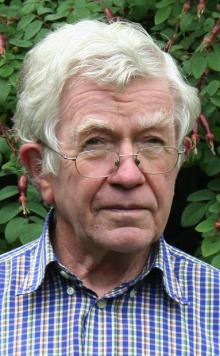
Spedding Micklem
H. Spedding Micklem is a Professor Emeritus in the School of Biological Sciences at the University of Edinburgh. He holds a D.Phil from the University of Oxford. He lives in Edinburgh, Scotland.
Genetic Engineering Has Failed to Significantly Boost U.S. Crop Yields Despite Biotech Industry Claims
Increases over last decade largely due to traditional breeding and conventional agricultural improvements
Union of Concerned Scientists | April 14, 2009
For years, the biotechnology industry has trumpeted that it will feed the world, promising that its genetically engineered crops will produce higher yields.
That promise has proven to be empty, according to a new report by the Union of Concerned Scientists (UCS). Despite 20 years of research and 13 years of commercialization, genetic engineering has failed to significantly increase U.S. crop yields.
“The biotech industry has spent billions on research and public relations hype, but genetically engineered food and feed crops haven’t enabled American farmers to grow significantly more crops per acre of land,” said Doug Gurian-Sherman, a biologist in the UCS Food and Environment Program and author of the report. “In comparison, traditional breeding continues to deliver better results.”
The report, “Failure to Yield: Evaluating the Performance of Genetically Engineered Crops,” is the first to closely evaluate the overall effect genetic engineering has had on crop yields in relation to other agricultural technologies. It reviewed two dozen academic studies of corn and soybeans, the two primary genetically engineered food and feed crops grown in the United States. Based on those studies, the UCS report concluded that genetically engineering herbicide-tolerant soybeans and herbicide-tolerant corn has not increased yields. Insect-resistant corn, meanwhile, has improved yields only marginally. The increase in yields for both crops over the last 13 years, the report found, was largely due to traditional breeding or improvements in agricultural practices.
The UCS report comes at a time when food price spikes and localized shortages worldwide have prompted calls to boost agricultural productivity, or yield—the amount of a crop produced per unit of land over a specified amount of time. Biotechnology companies maintain that genetic engineering is essential to meeting this goal. Monsanto, for example, is currently running an advertising campaign warning of an exploding world population and claiming that its “advanced seeds … significantly increase crop yields….” The UCS report debunks that claim, concluding that genetic engineering is unlikely to play a significant role in increasing food production in the foreseeable future.
The biotechnology industry has been promising better yields since the mid-1990s, but “Failure to Yield” documents that the industry has been carrying out gene field trials to increase yields for 20 years without significant results.
“After more than 3,000 field trials, only two types of engineered genes are in widespread use, and they haven’t helped raise the ceiling on potential yields,” said Margaret Mellon, a microbiologist and director of UCS’s Food and Environment Program. “This record does not inspire confidence in the future of the technology.”
“Failure to Yield” makes a critical distinction between potential—or intrinsic—yield and operational yield, concepts that are often conflated by the industry and misunderstood by others. Intrinsic yield refers to a crop’s ultimate production potential under the best possible conditions. Operational yield refers to production levels after losses due to pests, drought and other environmental factors.
The study reviewed the intrinsic and operational yield achievements of the three most common genetically altered food and feed crops in the United States: herbicide-tolerant soybeans, herbicide-tolerant corn and insect-resistant corn (known as Bt corn, after the bacterium Bacillus thuringiensis, whose genes enable the corn to resist several kinds of insects).
Herbicide-tolerant soybeans, herbicide-tolerant corn and Bt corn have failed to increase intrinsic yields, the report found. Herbicide-tolerant soybeans and herbicide-tolerant corn also have failed to increase operational yields, compared with conventional methods.
Meanwhile, the report found that Bt corn likely provides a marginal operational yield advantage of 3 to 4 percent over typical conventional practices. Since Bt corn became commercially available in 1996, its yield advantage averages out to a 0.2 to 0.3 percent yield increase per year. To put that figure in context, overall U.S. corn yields over the last several decades have annually averaged an increase of approximately 1 percent, which is considerably more than what Bt traits have provided.
In addition to evaluating genetic engineering’s record, “Failure to Yield” considers the technology’s potential role in increasing food production over the next few decades. The report does not discount the possibility of genetic engineering eventually contributing to increase crop yields. It does, however, suggest that it makes little sense to support genetic engineering at the expense of technologies that have proven to substantially increase yields, especially in many developing countries. In addition, recent studies have shown that organic and similar farming methods that minimize the use of pesticides and synthetic fertilizers can more than double crop yields at little cost to poor farmers in such developing regions as Sub-Saharan Africa.
The report recommends that the U.S. Department of Agriculture, state agricultural agencies, and universities increase research and development for proven approaches to boost crop yields. Those approaches should include modern conventional plant breeding methods, sustainable and organic farming, and other sophisticated farming practices that do not require farmers to pay significant upfront costs. The report also recommends that U.S. food aid organizations make these more promising and affordable alternatives available to farmers in developing countries.
‘Uranium rush’ prompts Grand Canyon fears
By Leana Hosea – BBC News – 24 September 2010
A new “gold rush” is under way in the American West, but this time the prospectors are out for another metal: uranium.
The Grand Canyon region in the US state of Arizona holds one of the nation’s largest concentrations of high grade uranium, the fuel for nuclear power.
As global demand for nuclear power has increased so has interest in the metal and, across the south-west, companies are seeking permission to restart uranium mining.
In the US, President Barack Obama has called for an increase in nuclear power to help reduce the country’s dependence on foreign oil.
The US government is currently weighing the costs and benefits of mining, with Arizona Congressman Raul Grijalva proposing a ban on mining near the Grand Canyon.
But with the increase in uranium exploration come concerns about the future of the Grand Canyon, a Unesco World Heritage Site and one of America’s foremost natural wonders.
And Native American populations living near uranium mines fear exploration could contaminate their drinking water.
For now, the sole active uranium mine near the Grand Canyon’s northern rim is run by Denison Mines Corporation, a Canadian firm.
The Arizona 1 mine employs 30 miners, and the firm says it goes to great lengths to protect them in the hazardous environment.
Among other precautions, large fans pump clean air into the mine and suck out most of the radioactive radon gas, while workers spray water across the site to keep down potentially harmful dust. The firm also says past accidents were swiftly and effectively cleaned up.
On a recent trip into the mine, none of the miners wore masks, and their hands and face were caked with uranium ore.
“It washes off,” miner Cody Behuden, 28, told the BBC while licking his ore-caked lips.
Vice-president of US operations Harold Roberts said the miners were under no danger from ingesting uranium.
Dr Lee Grier, a biologist at University of California at Riverside, said exposure to uranium can be harmful, and the Navajo Native American reservation nearby is still grappling with contamination from previous uranium mining and milling done by other companies. Those companies now no longer exist.
“The danger with long term exposure is that people breathe it, ingest it or it seeps through the skin,” he said.
“These particles start bombarding tissues and cause wild uncontrolled cell growth like cancer.”
Water supply
After the ore is hauled from the mine, Denison Mines ships it north to a mill in the US state of Utah where the uranium is extracted by dissolving the ore in acid. The resulting product, called yellow cake, is then used in nuclear fuel rods.
The waste from the milling process is 80% more radioactive than yellow cake and has a half-life of 4.7 billion years. Thousands of tonnes of waste are buried in containers lined with 60mm (2.4in) of plastic.
Federal law requires the company to design the facility to last more than 200 years, and an insurance bond ensures funds will be available to maintain the facility.
The US Geological Survey (USGS) has been investigating mining risks in the Grand Canyon area in a six-month study.
Its research focuses on whether during mining, uranium could contaminate the area and seep into ground water.
The Colorado River supplies drinking water to some 30 million people from Los Angeles to Las Vegas.
“Theoretically uranium could get into the water supply,” said Andrea Alpine, senior adviser on the USGS uranium project.
Geologist Jim Otton, who contributed to the survey, said mining results in increased contamination.
When uranium comes into contact with oxygen it becomes soluble in water, which increases the chance of contamination. Radioactive dust can also be blown away by the wind or washed away by rain.
This is what Carletta Tilousi of the Havasupai Indian tribe fears most. The Havasupai live on the bottom of the Grand Canyon and derive water from the rim.
“Mining companies are pursuing uranium for their own profit,” she said.
“But the only benefit that we are going to get is a source of contamination. We are concerned about the future of our children, that’s why we fight this.”
Jeff Halper to Pete Seeger: Ditch the JNF and honor the boycott
By Jeff Halper | Mondoweiss | September 8, 2010
Dear Pete,
All the best from your friends in Israel/Palestine. In that spirit, I was surprised to hear of your planned participation in With Earth and Each Other: A Virtual Rally for a Better Middle East. While at first blush it might seem to have something in common with the work of ICAHD and other Israeli and Palestinian peace groups — attempting to build bridges between peoples — it is actually something quite different.
One of the lead partners in the effort is the Jewish National Fund, which is responsible for the allocation of land in Israel. As such, it is a mainstay of the ever-increasing apartheid system there. Among their most recent activities has been the planting of a forest to cover a Bedouin village in the Negev from which the residents have been forcibly removed. They are in fact engaged in various tree-planting exercises that brand them as an environmental organization, when in fact their purpose is to secure the land of Israel, if not all of Palestine, for Jews only. That is their historical role, and so it remains. Efforts to paint Israel as environmentally concerned are mere greenwashing. Israel has repeatedly torn down Palestinian neighborhoods by declaring them green zones.
As you know, Israel has doggedly pursued a policy of settlement expansion, home demolition, and gradual ethnic cleansing of Palestinians throughout Israel proper and its occupied territories. Millions of Palestinians languish in internal and external refugee camps. In the wake of brutal assaults on Gaza and aid flotillas, the world is increasingly outraged.
A broad array of Palestinian civil society groups called in 2005 for a program of boycotts, divestment and sanctions to pressure Israel to conform to international law and stop blocking justice for Palestinians. This call has received widespread support. But the boycott includes a cultural and academic boycott as well. The purpose of this effort is to deny Israel the ability to brand itself as a normal nation while flouting the law and suppressing an occupied people. Brand Israel is their strategy; ours is to insist on no business as usual with the regime, as was done successfully in the struggle against apartheid South Africa.
In recent months, increasing numbers of artists have decided to forego performing in Israel. Gil Scott-Heron and Elvis Costello have explicitly stated that they will not participate in the whitewashing, greenwashing, or any washing of this rogue regime. Many others have quietly scuttled their planned tours.
I hope that you will decide to join these artists of conscience and once again make a bold stand for justice. The movement is gathering strength, the violators of civilized norms are fearful, and change is in the air.
Thanks for giving me a hearing,
Jeff Halper
Jeff Halper is the Coordinator of the Israeli Committee Against House Demolitions (ICAHD).
Poison gas leak from Sydney nuclear reactor spark cover up claims
By Linda Silmalis | The Sunday Telegraph | August 29, 2010
- Gases spread from Sydney to Melbourne
- Public not told for fear of spreading alarm
- Reactor insists gas was not public threat
POTENTIALLY dangerous radioactive gases have been secretly pumped into the atmosphere from Lucas Heights and have spread hundreds of kilometres from the nuclear reactor – but the public have never been told.
The release of the highly volatile radioxenon over several months last year was so concentrated that the plumes were detected in Melbourne up to two days later.
Other plumes were dragged out to sea by winds before drifting back over Sydney.
The Sunday Telegraph understands the Australian Nuclear Science and Technology Organisation (ANSTO) decided against releasing a public statement at the time to avoid causing alarm.
Scientists at a nuclear testing station in Melbourne traced the source of the radioactive gases to Sydney after they picked up 10 specific events between November, 2008 and February last year.
The Comprehensive Test Ban Treaty Organisation International Monitoring System site in Melbourne contacted Lucas Heights after detecting the radioxenon isotope Xe-133.
They were told that 36 hours earlier the first “hot commissioning trials” at ANSTO’s Lucas Heights radioisotope facility for Molybdenum-99 had taken place.
Molybdenum-99 is produced by the fission technique – the intense neutron-bombardment of a highly purified uranium-235 – and is used in nuclear medicine.
While the nuclear reactor – and the government body that oversees it – insists the release of the radioxenon by-product were no threat to public safety, no one, including neighbours of the suburban Sydney plant, were informed.
“Xenon gases are highly volatile and, being inert, they are not susceptible to wet or dry atmospheric removal mechanisms,” a scientific report obtained by The Sunday Telegraph says.
“Consequently, once released to the atmosphere they are simply transported down-wind while radioactively decaying away.”
Significant amounts of the main gas detected – Xenon-133 – can be released during a nuclear reaction or a nuclear explosion.
While it is used in medical procedures, specialists are urged not to administer it to pregnant women and children.
Side effects of its use in medical procedures can include allergic reactions such as itching or hives, swelling of the face or hands, swelling or tingling in the mouth or throat, chest tightness, and trouble breathing.
The report into the release from Lucas Heights says the doses were “well below the annual limit for public exposure”.
Officials from the Australian Radiation Protection and Nuclear Safety Agency said it was notified at the time and that the emissions were within public safety guidelines.
In 2006, ANSTO was forced to allay public fears after a leaked memo revealed xenon and krypton were released into the atmosphere following the rupture of a pipe.
GATES FOUNDATION INVESTS IN MONSANTO
Both will profit at expense of small-scale African farmers
AGRA Watch | August 25, 2010
Seattle, WA – Farmers and civil society organizations around the world are outraged by the recent discovery of further connections between the Bill and Melinda Gates Foundation and agribusiness titan Monsanto. Last week, a financial website published the Gates Foundation’s investment portfolio, including 500,000 shares of Monsanto stock with an estimated worth of $23.1 million purchased in the second quarter of 2010 (see the filing with the Securities and Exchange Commission). This marks a substantial increase from its previous holdings, valued at just over $360,000 (see the Foundation’s 2008 990 Form).
“The Foundation’s direct investment in Monsanto is problematic on two primary levels,” said Dr. Phil Bereano, University of Washington Professor Emeritus and recognized expert on genetic engineering. “First, Monsanto has a history of blatant disregard for the interests and well-being of small farmers around the world, as well as an appalling environmental track record. The strong connections to Monsanto cast serious doubt on the Foundation’s heavy funding of agricultural development in Africa and purported goal of alleviating poverty and hunger among small-scale farmers. Second, this investment represents an enormous conflict of interests.”
Monsanto has already negatively impacted agriculture in African countries. For example, in South Africa in 2009, Monsanto’s genetically modified maize failed to produce kernels and hundreds of farmers were devastated. According to Mariam Mayet, environmental attorney and director of the Africa Centre for Biosafety in Johannesburg, some farmers suffered up to an 80% crop failure. While Monsanto compensated the large-scale farmers to whom it directly sold the faulty product, it gave nothing to the small-scale farmers to whom it had handed out free sachets of seeds. “When the economic power of Gates is coupled with the irresponsibility of Monsanto, the outlook for African smallholders is not very promising,” said Mayet. Monsanto’s aggressive patenting practices have also monopolized control over seed in ways that deny farmers control over their own harvest, going so far as to sue—and bankrupt—farmers for “patent infringement.”
News of the Foundation’s recent Monsanto investment has confirmed the misgivings of many farmers and sustainable agriculture advocates in Africa, among them the Kenya Biodiversity Coalition, who commented, “We have long suspected that the founders of AGRA—the Bill and Melinda Gates Foundation—had a long and more intimate affair with Monsanto.” Indeed, according to Travis English, researcher with AGRA Watch, “The Foundation’s ownership of Monsanto stock is emblematic of a deeper, more long-standing involvement with the corporation, particularly in Africa.” In 2008, AGRA Watch, a project of the Seattle-based organization Community Alliance for Global Justice, uncovered many linkages between the Foundation’s grantees and Monsanto. For example, some grantees (in particular about 70% of grantees in Kenya) of the Alliance for a Green Revolution in Africa (AGRA)—considered by the Foundation to be its “African face”—work directly with Monsanto on agricultural development projects. Other prominent links include high-level Foundation staff members who were once senior officials for Monsanto, such as Rob Horsch, formerly Monsanto Vice President of International Development Partnerships and current Senior Program Officer of the Gates Agricultural Development Program.
Transnational corporations like Monsanto have been key collaborators with the Foundation and AGRA’s grantees in promoting the spread of industrial agriculture on the continent. This model of production relies on expensive inputs such as chemical fertilizers, genetically modified seeds, and herbicides. Though this package represents enticing market development opportunities for the private sector, many civil society organizations contend it will lead to further displacement of farmers from the land, an actual increase in hunger, and migration to already swollen cities unable to provide employment opportunities. In the words of a representative from the Kenya Biodiversity Coalition, “AGRA is poison for our farming systems and livelihoods. Under the philanthropic banner of greening agriculture, AGRA will eventually eat away what little is left of sustainable small-scale farming in Africa.”
A 2008 report initiated by the World Bank and the UN, the International Assessment of Agricultural Knowledge, Science and Technology for Development (IAASTD), promotes alternative solutions to the problems of hunger and poverty that emphasize their social and economic roots. The IAASTD concluded that small-scale agroecological farming is more suitable for the third world than the industrial agricultural model favored by Gates and Monsanto. In a summary of the key findings of IAASTD, the Pesticide Action Network North America (PANNA) emphasizes the report’s warning that “continued reliance on simplistic technological fixes—including transgenic crops—will not reduce persistent hunger and poverty and could exacerbate environmental problems and worsen social inequity.” Furthermore, PANNA explains, “The Assessment’s 21 key findings suggest that small-scale agroecological farming may offer one of the best means to feed the hungry while protecting the planet.”
The Gates Foundation has been challenged in the past for its questionable investments; in 2007, the L.A. Times exposed the Foundation for investing in its own grantees and for its “holdings in many companies that have failed tests of social responsibility because of environmental lapses, employment discrimination, disregard for worker rights, or unethical practices.” The Times chastised the Foundation for what it called “blind-eye investing,” with at least 41% of its assets invested in “companies that countered the foundation’s charitable goals or socially-concerned philosophy.”
Although the Foundation announced it would reassess its practices, it decided to retain them. As reported by the L.A. Times, chief executive of the Foundation Patty Stonesifer defended their investments, stating, “It would be naïve…to think that changing the foundation’s investment policy could stop the human suffering blamed on the practices of companies in which it invests billions of dollars.” This decision is in direct contradiction to the Foundation’s official “Investment Philosophy”, which, according to its website, “defined areas in which the endowment will not invest, such as companies whose profit model is centrally tied to corporate activity that [Bill and Melinda] find egregious. This is why the endowment does not invest in tobacco stocks.”
More recently, the Foundation has come under fire in its own hometown. This week, 250 Seattle residents sent postcards expressing their concern that the Foundation’s approach to agricultural development, rather than reducing hunger as pledged, would instead “increase farmer debt, enrich agribusiness corporations like Monsanto and Syngenta, degrade the environment, and dispossess small farmers.” In addition to demanding that the Foundation instead fund “socially and ecologically appropriate practices determined locally by African farmers and scientists” and support African food sovereignty, they urged the Foundation to cut all ties to Monsanto and the biotechnology industry.
AGRA Watch, a program of Seattle-based Community Alliance for Global Justice, supports African initiatives and programs that foster farmers’ self-determination and food sovereignty. AGRA Watch also supports public engagement in fighting genetic engineering and exploitative agricultural policies, and demands transparency and accountability on the part of the Bill and Melinda Gates Foundation and AGRA.
The Sierra Club: How Support for Industrial Wind Technology Subverts Its History, Betrays Its Mission, and Erodes Commitment to the Scientific Method
Jon Boone | April 18, 2010
Between the Gush for Wind and the Hard Place of Reality
The physical nature and enormous size of industrial wind projects has caused a lot of blowback. Between Maryland and West Virginia, for example, there is potential for around 2000 wind turbines, each nearly 500-feet tall; they would be placed atop 400 miles of the Allegheny Mountain ridges. About 20 acres of forest must be cut to support each turbine—4-6 acres to accommodate the free flow of the wind per turbine; one or more large staging areas for each wind project; access road construction; and a variety of substations and transmission lines. Cumulatively, about 40,000 acres of woodlands would be transformed into an industrial energy plant far larger than any conventional facility. Most of this montane terrain contains rare habitat and many vulnerable wildlife species.
How can such a looming industrial presence be reconciled with the goals of maintaining choice natural habitat while reducing the impact of human activity? For the Sierra Club, the answer is: The use of siting guidelines and wildlife assessment studies that would restrict limited liability wind companies from placing their huge machinery in the most sensitive places and away from rare and threatened species of plants and animals. If the war on carbon is to be won, and if skyscraper-sized wind turbines are part of the price for winning that war, then accommodation must be made. In the words of one wind developer, “some will have to sacrifice if we’re to have the clean, green energy from the wind” replacing coal and putting a stop to mountaintop removal coal extraction practices.
More than a few Sierra Club members and local chapters have resisted the national organization’s encyclicals on wind precisely because such hulking intrusion seems inimical to environmental common sense. The chair of the Maryland Chapter’s Conservation Committee, one of the nation’s leading naturalists, resigned in large part because of this concern. In response to such dissidents, the Club’s national leadership insists that it, and not its member chapters, be the final arbiter of what wind projects meet its standards: “It is important for the Club to speak with a unified, clear voice in its reaction to wind energy projects. It will not be good for the Club if one chapter is focusing totally on concerns about impacts on birds while the chapter in the next state is urging the public to support wind projects as a crucial element in reversing the impacts of global warming.” The organization enforces its authority under threat of expulsion, as was the case when its executive chairman, Carl Pope, in the wake of another controversy, excommunicated the entire Florida 35,000-memmber chapter for four years.
To “manage the negative environmental impacts of wind,” the Sierra Club, The Nature Conservancy, the American Bird Conservancy, Greenpeace, and the Audubon Society all recommend guidelines that, if followed, provide wind projects with their environmental seal of approval. Even on public lands. And with no evident sense of irony for the Sierra Club—since this is a policy taken from Gifford Pinchot’s playbook. John Muir is likely turning in his grave.
Siting guidelines that appear to make the wind industry more environmentally friendly, cognitively dissonant as the prospect seems to be, make sense only if the premise behind the policy is true, only if the technology can back down coal and offset significant amounts of carbon emissions.

Reality Bites
What is the scientific evidence that age-old technologies like wind, dressed up in high couture fashion, can provide clean, reliable, affordable, secure electricity to the masses, as the ruminations of Jacobsen and the optimism of the Department of Energy suggest?
Astonishingly, with 35,000 industrial wind turbines extant on this continent, no coal farms have closed because of the wind technology, and there is no empirical evidence there is less coal or natural gas burned per unit of electricity produced as a specific consequence of it. Contrary to the hopes of the Sierra Club, wind evidently is not an alternate energy source.
When the provisional ideas of ongoing scientific inquiry become politicized and then supported by a concatenation of groups seeking to profit from the ideas, both financially and ideologically—when science meets James Cameron and becomes entertainment for the masses in order to sell soap or sophistry, then we’ll get flying pigs, everywhere. Wind is not progressive, cutting edge, or effective, as the Sierra Club maintains. It is rather antediluvian, uncivil, and dysfunctional.
As a justification for wind promotion, science has become, for the Sierra Club and nearly all prominent environmental groups, not a method of seeking truth, but rather propaganda employed to prosecute its war on carbon. They routinely confuse engineering mechanics with science, and publish all kinds of techno-gismo birth announcements about saving the earth from those badass Big Oil/Big Coal corporations. But rarely do they provide the consequent obituaries. Or demand measurement of actual wind performance, which is the essence of scientific inquiry.
Promoting siting guidelines for such a rude, intrusive, shaggy beast of a technology implies that if wind machines were properly situated—somewhere, just not in the Sierra Club’s neck of the woods—they might actually do some good. This is the thinking behind the movement known as Responsible Windpower—an oxymoron at virtually every descriptive level, for it does little more than give a second-story burglary ring a ladder and an alibi.
Citizen wind opposition to the outsized nature of the technology began as a “not-in-my-backyard” phenomenon, eventually becoming a prod for the Sierra Club’s current wind siting guidelines. Responsible Windpower campaigns gave succor to those who support wind as a credible energy source, allowing them to save face with mainline environmental groups while protecting hearth and home, and vulnerable wildlife, from the worst of wind’s gigantic presence.
The wind industry perversely encourages discussion about wind plant siting and wildlife studies, much in the way cigarette manufactures once encouraged health-warning labels. But debate over set backs, noise levels, proximity to vulnerable flora and fauna, etc, distracts from the central issue: whether the technology provides the benefits claimed for it. Even as this discussion takes place, however, limited liability wind companies routinely ignore siting prescriptions, knowing there’s virtually no enforcement against wrongdoing. Siting guideline discussions and he said/she said bird studies foster a lot of dithering.
At the very least, support for massive wind technology betrays sound environmental and scientific precepts, ideas that many knowledgeable environmentalists hold dear, while putting at risk vulnerable species and valuable habitat and furthering the cause of civil discord. Every environmental group has expressed grave concern about bird mortality and cell towers. Wind projects are much more problematic.
See also:
Toward a Better Understanding of Industrial Wind Technology
Michael Morgan | Allegheny Treasures | October 26, 2009
Featured Video

“Historic Russia”: The Land Putin Will Not Give Back
or go to
Aletho News Archives – Video-Images
From the Archive
How Ukraine Tortured and Slaughtered Donbass
By Kit Klarenberg | Al Mayadeen | July 11, 2024
Almost immediately after the proxy war erupted, ISIS-tier footage of the torture and murder of Russians in Ukrainian custody emerged.
On July 6th, the New York Times published an astonishing investigation: In Ukraine, Killings of Surrendering Russians Divide an American-Led Unit. The article documents in grim detail how Chosen Company, an international volunteer battalion for Kiev, routinely executes Russian prisoners of war. It is the very first mainstream admission that this practice – a brazen breach of the Geneva Conventions, and a grave war crime – is widespread among Ukraine’s fighters, both foreign and homegrown. … continue
Blog Roll
 Aletho News
- Burnham tackles Britain’s poverty with aggression in Yemen
- Peace in Ukraine: the easy way – or the hard way
- Trump & the Rrrrussians
- US taxpayer money laundered back through Ukraine – Musk
- Before COVID, an NIH lab chief proposed making a SARS-like bat virus more infectious
- Gates, Bourla on Trial in Netherlands Accused of ‘Great Reset’ Scheme at Vaccine Injury Hearing
- BRITAIN’S WARNING: PREPARE FOR WAR
- “Historic Russia”: The Land Putin Will Not Give Back
- How the Cambridge Analytica scandal still haunts Mark Zuckerberg
- The Ongoing Cancellation Campaign Against a Dissenting Academic in Norway
- If Americans Knew
- An error has occurred; the feed is probably down. Try again later.
- No Tricks Zone
- Two New Studies Find Thwaites Glacier Melt Cannot Be Driven By Human Activity Or A Warming Ocean
- E-Cars Reduce CO2 Emissions By Only 41% Compared To Internal Combustion Engine Vehicles
- Predictions Made By Renowned Climate Professor Over Past Decades Have Been Proven To Be Poor
- New Study Suggests Large Regions Of The Pacific Ocean Have Been Cooling For The Last 80 Years
- Germany’s Green Energy Debacle: High Energy Costs Force Kahla Porzellan to Close After 182 Years!
- New Study: 50 Years Of The Most Aggressive ‘Net Zero’ Policies Can Only Affect The Global Climate By 0.03°C
- US September “Heat” Was No Record…Many Records Set Decades Ago
- Latest European Green Energy Debacle; Portugal’s Largest Flagship Solar Park Insolvent!
- Green Energy Debacle: German Expert Professor Fritz Vahrenholt Warns Of Severe Economic And Social Consequences
- Two More Paleo Reconstructions Affirm Meters-Higher Sea Levels Across Ireland, Brazil 7000-6000 Years Ago

