Israel pressures Egypt to accept Gaza refugees for foreign debt relief
The Cradle | November 1, 2023
Israeli Prime Minister Benjamin Netanyahu is seeking to pressure Egyptian President Abdel Fattah al-Sisi to take in refugees from the Gaza Strip and has offered that the World Bank write off Egypt’s large foreign debt in return, Israel’s Yediot Ahronoth reported on 31 October.
Recently, Israel also turned to international leaders and asked them to try to convince Egyptian President Sisi to accept refugees in Egypt’s Sinai. Sisi refused the idea, saying that Sinai would become a base for Palestinian resistance groups to attack Israel, creating security problems for Cairo.
Egypt is vulnerable to Israeli pressure as it has suffered from record inflation and foreign currency shortages in recent years, making it difficult for the North African country to repay its external debts and pay for crucial imports, including wheat.
“What is happening now in Gaza is an attempt to force citizens to take shelter and immigrate to Egypt – and we will not accept that,” Sisi emphasized.
Sisi said that if Israel wants to keep Palestinians in Gaza safe from an expected large-scale Israeli ground assault, they should be allowed to evacuate to Israel’s southern Negev desert region and then return after Hamas is defeated.
He added: “Egypt opposes any attempt to resolve the Palestinian issue through military means or through the forced displacement of Palestinians from their land – whatever will be at the expense of the countries of the region.” Sisi said that if his citizens were called upon to do so, millions of them would take to the streets and demonstrate against the passage of Gazans to Sinai.
About 2.4 million Palestinians live in the Gaza Strip. At the beginning of the war, many of them flocked towards the Rafah crossing, which was closed.
Netanyahu’s offer to Sisi comes after the Israeli Ministry of Intelligence recommended on 13 October that Israel use the war with Hamas to forcibly transfer Gaza’s 2.3 million residents to Egypt’s Sinai as refugees and prevent them from ever returning, in a repeat of the 1948 Nakba.
The plan was leaked by activists from the Likud party to gauge Israeli and international opinion over such a plan. The Ministry of Intelligence is headed by Gila Gamliel of Likud.
IN 2010, Gamliel and Netanyahu asked then Egyptian president Hosni Mubarak to implement the same plan. Mubarak rejected the idea and was deposed in January 2011 following street protests organized and supported by Egyptian activists working in concert with the US State Department.
Netanyahu made a similar request to Mubarak’s successor, Mohammad Morsi, in 2012, which Morsi also rejected.
Sisi then deposed Morsi in 2013. In 2014, Netanyahu made a similar proposal to Sisi in which Israel would annex settlements in the West Bank and Palestinians would receive part of northern Sinai.
Israel’s settlement movement has sought to reconquer Gaza and re-establish the Gush Katif settlement there ever since then prime minister Ariel Sharon ordered the evacuation of Jewish settlers from the strip in 2005. Israel has maintained a suffocating economic and military siege on Gaza since that time.
Iran FM meets Turkish counterpart In Ankara to discuss Israeli war on Gaza
Press TV – November 1, 2023
Iranian Foreign Minister Hossein Amir-Abdollahian has met with his Turkish counterpart Hakan Fidan In Ankara to discuss efforts needed for an immediate ceasefire in the Gaza Strip, as the Israeli regime continues its acts of aggression against the besieged enclave.
The two foreign ministers held a meeting behind closed doors in the Turkish capital on Wednesday, to exchange views on finding a solution to secure a ceasefire in Gaza and an immediate end to the Israeli crimes in Gaza, as they discuss the latest developments in the region and some issues of mutual interest.
Amir-Abdollahian and Fidan will participate in a joint press conference after the meeting.
This is the second meeting between the foreign ministers of the two countries since the Israeli regime started its brutal war against the Palestinians living in Gaza.
Two weeks ago, Amir-Abdollahian and Fidan met on the sidelines of the extraordinary meeting of the Executive Committee of the Organization of Islamic Cooperation (OIC) in Jeddah.
In the meeting, the two sides discussed the current Palestinian developments, especially the disastrous situation in Gaza, and ways of ending the merciless killing of Palestinians by the Israeli regime.
Amir-Abdollahian arrived in Ankara early on Wednesday a day after he took a trip to the Qatari capital of Doha and held meetings with senior Qatari officials, including the Arab country’s Emir, to continue his diplomatic efforts to help find a solution to the crisis in Palestine.
The top Iranian diplomat is also scheduled to meet with President Recep Tayyip Erdogan during the daylong trip.
Tehran has already announced it is ready to use its relations with the Palestinian resistance movement Hamas to work out a ceasefire deal between the group and the Israelis, although Iran does not have any relations with the occupying regime.
Israel launched the war on Gaza on October 7 after Hamas waged the surprise Operation Al-Aqsa Storm against the occupying entity in response to the Israeli regime’s decades-long campaign of bloodletting and devastation against Palestinians.
The aggression has so far killed 8,610 Palestinians and left more than 23,000 wounded.
UN official resigns protesting world body’s failure to prevent genocide in Gaza
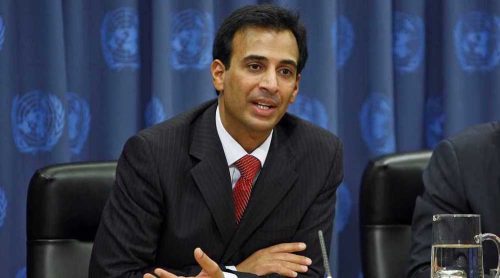
Craig Mokhiber, former director of the New York chapter of the Office of the UN High Commissioner for Human Rights
Press TV – October 31, 2023
The director of the New York chapter of the Office of the UN High Commissioner for Human Rights has resigned, protesting the world body’s failure to prevent underway genocide in the Gaza Strip, which has come under a brutal Israeli war.
Craig Mokhiber submitted his resignation to the UN High Commissioner for Human Rights Volker Turk in a letter dated October 28. Reactions began to pour in across social media platforms, including X on Tuesday.
“Once again we are seeing a genocide unfolding before our eyes and the organization we serve appears powerless to stop it,” Mokhiber wrote, referring to the United Nations.
He was referring to the October 7 present war that the Israeli regime has been waging against Gaza in response to an operation launched by the territory’s resistance movements against the occupied territories.
The ongoing Israeli massacre has killed more than 8,600 Palestinians and left over 23,000 others wounded.
Mokhiber cited the United States, the UK, and much of Europe as “wholly complicit in the horrific assault,” referring to the Western allies’ consistent political and military support for the Israeli regime, which has bubbled up even throughout the war.
“This is a textbook case of genocide. The European, ethno-nationalist, settler colonial project in Palestine has entered its final phase, toward the expedited destruction of the last remnants of indigenous Palestinian life in Palestine,” the letter read.
The letter went on to call for an end to the Israeli regime’s occupation of the Palestinian territories, supporting the establishment of a “single, democratic” state “in all of historic Palestine, with equal rights for Christians, Muslims, and Jews.”
Is Government the Cash Cow for Politicians?
Ambition Should Be Tempered by Love of Country, not of Money!

BY PHILIP GIRALDI • UNZ REVIEW • OCTOBER 31, 2023
The conflict in Israel-Gaza illustrates perfectly how the United States government runs on corruption, with the deep pocketed Jewish and Israeli lobbies able to buy every national level politician that matters to give the loathsome Benjamin Netanyahu a carte blanche both in terms of a free pass on committing war crimes while also having unlimited access to the US Treasury and the contents of military arsenals. Given that the media is also in the hands of the same malefactors the poorly informed American public can only respond to the pablum that they are being fed about what is going on the world, i.e. Ukraine and Israel good, Russia and Palestine bad.
I am certainly not the first observer of politics in the United States who has noticed how this deterioration has come about in my lifetime, where a country that once upon a time believed in meritocracy has now been corrupted by money, with a ruling class, such as it is, that seems to be wallowing in the green stuff even as it pretends to be promoting policies that help the average American. Right now, the witless President Joe Robinette Biden is working on his latest fraud, consisting of bundling all the money that will be dumped on Israel and Ukraine into a package with Taiwan so it will pass effortlessly through Congress given its hostility both to Russia and China and its deep abiding love for all things Israeli. $100 billion is all Joe wants, $10 billion for Israel immediately and the rest to be doled out, mostly to good old boy Volodymyr Zelensky and a bit for the Taiwanese.
And it might be observed that part of the vast ocean of money somehow seems to stick to the fingers of the pampered residents of Capitol Hill. How, one might ask, did Biden, a blue-collar boy from Scranton Pennsylvania who has spent his entire adult life in government employment and who is married to a school teacher wind up with a net worth in the $9 million dollar range? Of course, it now appears that he received a notable assist from a son named Hunter who is something like a one-man cocaine snorting corruption machine who was more than willing to share his largesse with dad in exchange for a little assistance with foreign despots here and there.
One recalls how back in the seventies there was at least some speculation regarding how President Lyndon Baines Johnson, who spent his entire working life in government, started out raised in poverty and wound up being worth an estimated $15 million at his death in 1973 after he left the presidency, at a time when that was serious money, equal to about $100 million today. He was known to be well-wired into Texas Jewish and pro-Israel circles and appeared to have all the right contacts for making private investments that he did not have to publicly declare.
But no one figured out how to milk the system like the Clintons and I still chuckle when I recall how they tried to take the White House silver with them when they departed the residence. Upon leaving the presidency in 2001 they claimed to be completely broke and even in debt, but adroit manipulation of their Clinton Foundation since that time has produced a windfall of more than $300 million in today’s dollars. It was a pattern imitated by Barack Obama who left office with more cash in hand through the usual mechanism of largely unreadable books ghost written on their behalf that were then hawked in large numbers to Democratic Party constituents to support the cause. Barack’s cash value is now estimated to be in the $70 million range and he also owns substantial properties in Washington, Chicago and, of course, on Martha’s Vineyard, where he has a 29 acre estate valued at $12 million.
Of course, to a certain extent the misbehavior of presidents, at least while they are still in office, is not as egregious as it is for members of Congress and even Supreme Court Justices. Presidents are very visible and surrounded by staff and media witnesses of whatever they are up to while the sins of other senior government officials are more anonymous and they can engage in practices like taking bribes and insider trading based on their prior knowledge of legislation or expenditures that are pending that might produce a windfall profit if one is canny enough to buy the right stock. Congressmen are also well placed to use family members to carry out the trades, avoiding scrutiny of their own banking and investment activities. That has, indeed, been claimed in a number of cases where government officials have been able to accumulate large fortunes while holding office.
And there is no doubt that corruption of one form or another is the game that is played in Congress and elsewhere including at state and local levels. In a sense, it is all around us. The recent exposure of Senator Bob Menendez of New Jersey’s apparent tendency to accept bribes was a particularly lurid tale in part because much of the loot consisted of $480,000 in cash stuffed into jacket pockets, closets and in a safe, along with 13 gold bars, two of them marked as 1 Kilogram in weight to the value of more than $100,000. In the garage was an upscale $60,000 Mercedes-Benz convertible that was a gift to Menendez’s then girlfriend, who had wrecked her own vehicle in an accident in which she had struck and killed a pedestrian. The car came from one of the New Jersey businessmen currently involved in the corruption and bribery investigation and no one can quite explain how an accident in which someone had died was never properly investigated by police. Menendez had allegedly helped the businessman by arranging to block a criminal investigation into his company’s activities.
Menendez, a Cuban American regarded as a political hardliner from his bully pulpit as Chair of the Senate Foreign Relations Committee, has been investigated before over charges of possible corruption, but he has beaten the rap each time. He has currently resigned his chairmanship but has refused to leave the Senate and he claims he is innocent, of course. And as he’s inevitably been a major promoter of Biden’s war on Russia the White House will presumably do everything it can to protect him, but only up to a certain point.
There has been some discussion of the wealth of certain congressmen due to the recent death of 90 year-old Dianne Feinstein, Senator from California, who was regarded as both the wealthiest and oldest of all Senators. She was, in fact, born into a prominent Jewish family in San Francisco and acquired even more money and property from her three husbands, all of whom were also wealthy. It has never been suggested that she exploited her positions as Mayor of San Francisco and in Congress to illegally or otherwise obtain more money, to her credit, possibly because she was already rich. Nevertheless, her death was preceded by some high tone media coverage of the nature of her fortune and the family quarrel that is taking place regarding how all the money and the multiple high end properties will be divided up. By some accounts, Feinstein became a billionaire upon the death of her final husband financier Richard C. Blum in 2022, though who is entitled to what remains of the estate will now undoubtedly be determined through either litigation or negotiation involving her own daughter Katherine and the three daughters sired by Blum in a previous marriage. Far from getting rich off of politics, Blum and Feinstein were major donors to the Democratic Party.
More to the point if one is asking “How did they get so rich?” is the trajectory of former Speaker of the House of Representatives Nancy Pelosi and her husband Paul Pelosi. Nancy was one of six children born and raised in an intensely political environment, though having otherwise modest circumstances, in Baltimore. Her father was Baltimore mayor and congressman Thomas D’Alesandro, who was at one time investigated by the FBI but never convicted regarding association with criminals.
Nancy Pelosi and Hubbie Paul moved to California in 1969 after college and six years spent in New York City. She quickly became involved in local Democratic Party politics while he established himself as a businessman, specializing in real estate and high-tech investment, aided by his brother Ronald Pelosi who was a member of the San Francisco city and county Board of Supervisors. Nancy and Paul have five children. Nancy, who is 83 years old, initially won her congressional seat in a special election in San Francisco in 1987. She became first woman Speaker, though she lost her position recently as a result of the swing of the House to the Republicans in the 2020 election. She has announced that she will not be running for office in 2024 and will retire. She and her husband have indicated that they will live in their mansion in the upscale Pacific Heights district of San Francisco, though they have a vineyard in Napa Valley and additional properties in San Francisco. They are staying in the city in spite of an incident in October 2022, while Pelosi was in Washington, DC, in which an intruder entered their home demanding to know her whereabouts. He then attacked Paul Pelosi, with a hammer. Police arrested the attacker, 42-year-old David DePape, and he has been charged with assault and attempted kidnapping.
As of 2021, Pelosi’s net worth, as revealed by her government financial disclosure forms and other sources, was estimated to be at $120 million, more than doubling her $58 million valuation in 2009 and making her the 6th richest person in Congress. She indicated on her disclosure form that her principal source of income was her government salary, which peaked at $223,500 when she was speaker. She and her husband hold properties “worth at least $14.65 million, including the St. Helena vineyard in Napa Valley worth at least $5 million” and commercial properties.
According to investigative journalist Glenn Greenwald, the Pelosis have traded $33 million worth of tech stocks over the past two years, including Apple, Amazon, Microsoft, Facebook, and Google. In May and June 2021, Pelosi’s husband purchased stocks in tech companies such as Alphabet, Amazon, and Apple, netting a gain of $5.3 million, while Nancy was working on anti-trust legislation to better regulate the tech industry, which many considered to be a clear conflict of interest as well as a case of potential insider trading. Tim Cook, the CEO of Apple, had actually called Pelosi to lobby her in opposition to the new proposed regulations and, in their discussion, she openly opposed increasing regulations on stock trades by members of congress, stating that “we’re a free market economy” and congresspeople “should be able to participate in that”.
This comment attracted strong criticism including from some Democrats: “Rep. Abigail Spanberger (D-Va.) tweeted: ‘No. It cannot be a perk of the job for Members to trade on access to information.’ Rep. Dean Phillips (D-Minn.) – one of the wealthiest members of Congress thanks to his business career that included leading his family’s distillery as well as the gelato brand Talenti – echoed: ‘I disagree with the Speaker.’ And Rep. Andy Kim (D-N.J.), who represents one of the most competitive districts in the nation, wrote that ‘I disagree strongly’ with Pelosi’s stance. ‘Americans are losing trust in government and we need to show we serve the people, not our personal/political self-interest.’ Rep. Alexandria Ocasio-Cortez (D-N.Y.), who has said that she doesn’t hold individual stocks or digital assets, reiterated late Friday that she thinks letting members of Congress trade individual stocks is a bad look. ‘There is no reason members of Congress should hold and trade individual stock when we write major policy and have access to sensitive information,’ Ocasio-Cortez said. ‘There are many ways members can invest w/o creating actual or appeared conflict of interest, like thrift savings plans or index funds.’”
So evidently Nancy Pelosi and many other congressmen believe that it is just fine to be regulating industries and also allowing the regulators to benefit materially when it is anticipated that the measures taken will improve those industries’ stock market standing or profitability. Doing so is a well-established principle referred to as insider trading and hers is an interesting viewpoint. It perhaps explains why there are so many multi-millionaires and possibly even a billionaire or two in Congress!
Philip M. Giraldi, Ph.D., is Executive Director of the Council for the National Interest, a 501(c)3 tax deductible educational foundation (Federal ID Number #52-1739023) that seeks a more interests-based U.S. foreign policy in the Middle East. Website is councilforthenationalinterest.org, address is P.O. Box 2157, Purcellville VA 20134 and its email is inform@cnionline.org.
NYT Writes about the Israeli Intel Failures on Hamas
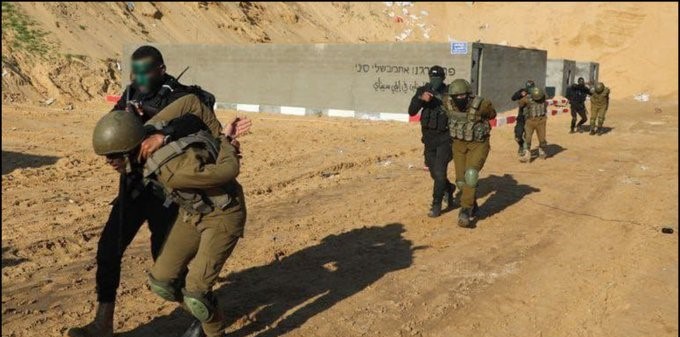
Palestinian resistance fighters capture Israeli occupation soldiers during an attack on a militray post in the Gaza envelope as part of Op. Al-Aqsa Flood (October 7, 2023).
Al-Manar – October 31, 2023
The Israeli occupation military’s 8200 signal intelligence unit stopped listening in to the handheld radios of Hamas operatives in Gaza a year ago, deciding it was a “waste of effort,” The New York Times reported noting that this was one of a series of failures that led to the shocking success of the Oct. 7 Operation Al-Aqsa Flood.
In an extensive report on the intelligence failures, the paper also said on Sunday that US spy agencies had largely stopped collecting information on Hamas in recent years, believing that ‘Israel’ had contained the threat from the Palestinian resistance group.
Monitoring that network might have helped Ronen Bar, the director of the Israel Security Agency, or Shin Bet, realize at 3 a.m. on Oct. 7, a few hours before the attack, that the unusual activity he was seeing on the Gaza border wasn’t just another Hamas “military” exercise, the Times noted.
Israeli military also placed its confidence in “The Barrier,” the nearly 40-mile-long concrete wall that plunges underground to prevent tunneling. It included a high-tech surveillance system that relies on cameras, sensors and remote-controlled machine guns.
“Senior Israeli military officials believed that the combination of remote surveillance and machine-gun systems with the formidable wall would make it almost impossible to infiltrate Israel, and thus reduce the need for a large number of soldiers to be stationed at the bases,” the newspaper reported.
Hamas’s attack put paid to the idea that concrete and technology could be relied on. The Hamas fighters blew up cellular antennas and remote shooting systems along the fence with explosives precisely dropped from drones.
“In a conversation with military investigators two weeks after the attack, soldiers who survived the assault testified that the Hamas training was so precise that they damaged a row of cameras and communication systems so that ‘all our screens turned off in almost the exact same second,’” the Times reported.
There simply were not enough Israeli soldiers to fill the gaps once the technology was destroyed and the security barrier breached. Hamas terrorists [resistance fighters] poured through.
“We started receiving messages that there was a raid on every reporting line,” one soldier at the Gaza Division base told an Israeli news site.
“The forces did not have time to come and stop it. There were swarms of terrorists, something psychotic, and we were simply told that our only choice was to take our feet and flee for our lives.”
The Hamas rampage across western Negev communities went on for hours, with the Israeli soldiers’ response shockingly slow, (Something that has still not been explained).
After the fighting, Israeli soldiers found hand-held radios on the bodies of some of the Hamas fighters, “the same radios that Israeli intelligence officials had decided a year ago were no longer worth monitoring,” the Times reported.
‘Turning Gaza into ashes’: Israel propaganda vs the world
By Ramzy Baroud | MEMO | October 31, 2023
Gaza has changed the political equation in Palestine. Moreover, the repercussions of the ongoing devastating war are likely to alter the political equation in the entire Middle East and to re-centre Palestine as the world’s most urgent political crisis for years to come.
Since the establishment of Israel in 1948, facilitated by Britain and protected by the United States and other Western countries, the priorities have been entirely Israeli. “Israel’s security”; Israel’s “military edge”; “Israel’s right to defend itself”, and much more, are the mantras that have defined the West’s political discourse on the Israeli occupation and apartheid in Palestine.
This bizarre US-Western understanding of the so-called conflict, that an oppressor has “rights” over the oppressed; the occupier has “rights” over the occupied, has enabled Israel to maintain a military occupation over Palestinian territories that has lasted for over 56 years. Indeed, many would argue that it is for more than 75 years.
It has also empowered Israel to neglect the roots of this “conflict”, namely the ethnic cleansing of Palestine in 1948, and the long-denied, and very legitimate, Right of Return for Palestinian refugees.
Within this context, every Palestinian-Arab overture for peace was rejected. Even the supposed “peace process”, namely the Oslo Accords, turned into an opportunity for Tel Aviv to entrench its military occupation, expand its illegal settlements and corral Palestinians in Bantustan-like spaces, humiliated and racially segregated.
Some Palestinians, whether enticed by American handouts or shattered by a lingering sense of defeat, lined up to receive the US-Israeli peace dividends: pitiful crumbs of false prestige, empty titles and limited power, granted and denied by Israel itself.
However, the Israeli war against the Palestinians in Gaza is already changing much of this painful status quo. The occupation state’s constant insistence that its deadly war is against Hamas, against “terror”, against Islamic fundamentalism, and all the rest, may have convinced those who are ready to accept the Israeli version of events at face value. However, as the bodies of thousands of Palestinian civilians, including thousands of children, began piling up at Gaza’s hospital morgues and, tragically, in the streets, the narrative began changing.
The pulverised bodies of Palestinian children, of whole families who perished together, stand witness to the brutality of Israel; to the immoral support of its allies; and to the inhumanity of an international order that rewards the murderer and reprimands the victim.
Of all the biased statements made by US President Joe Biden, the one where he suggested that Palestinians are lying about the body count of their own dead was perhaps the most inhumane. Washington may not realise this yet, but the repercussions of its unconditional support for Israel will prove to be disastrous in the future, especially in a region that is fed up with war, hegemony, double standards, sectarian divisions and endless conflict.
The greatest impact, though, will be felt in Israel itself. When Palestinian Ambassador to the UN Riyad Mansour gave a powerful, emotional speech on 26 October, he could not hold back his tears. International delegations at the UN General Assembly clapped non-stop, reflecting the growing support for Palestine, not only at the UN, but also in hundreds of towns and cities, and on countless street corners around the world.
When the Israeli Ambassador to the UN, Gilad Erdan, who had promoted many of the lies communicated by Tel Aviv, especially in the early days of the war, finished his speech, not a single person clapped. The contempt was palpable.
The Israeli narrative had clearly crumbled into a thousand pieces. Israel has never been so isolated. This is definitely not the “New Middle East” that Netanyahu had prophesised in his UN General Assembly speech on 22 September.
Unable to fathom how the initial sympathy with Israel turned so quickly into outright disdain, the settler-colonial state resorted to old tactics. On 25 October, Erdan demanded that UN Secretary-General Antonio Guterres should resign for being “unfit to lead the UN”. The UN chief’s supposedly unforgivable crime was to suggest that “the attacks by Hamas did not happen in a vacuum”. Which, of course, they didn’t.
As far as Israel and its American benefactors are concerned, however, no context is allowed to taint the perfect image that the Israelis have created for its genocide in Gaza. In this perfect Israeli world, no one is allowed to speak of military occupation; of siege; of the lack of political prospects; of displacement; of the absence of a just peace for Palestinians.
Even though Amnesty International has said that both sides have committed “serious violations of international humanitarian law, including war crimes”, Israel still attacked it, accusing the organisation of being “anti-Semitic”. In Israel’s thinking, even the world’s leading international human rights group is not permitted to contextualise the atrocities in Gaza or dare suggest that one of the “root causes” of the conflict is “Israel’s system of apartheid imposed on all Palestinians”.
Israel is no longer all-powerful, as it wants us to believe. Recent events have proven that its “invincible army” — a branding that allowed Israel to become, as of 2022, the world’s tenth-largest international military exporter — turned out to be a paper tiger.
This is what is infuriating Israel the most. “Muslims are not afraid of us anymore,” former Knesset member Moshe Feiglin told Arutz Sheva-Israel National News. To restore this fear, the extremist politician called for burning “Gaza to ashes immediately.”
But nothing will turn Gaza into ashes. Not even the more than 12,000 tons of high explosives dropped on the Strip in the first two weeks of war which have already incinerated at least 45 per cent of its housing units, according to the UN’s humanitarian office.
Gaza will not die because it is a powerful idea that is deeply entrenched within the hearts and minds of every Arab, of every Muslim and of millions of people around the world. This new idea is challenging the long-held belief that the world needs to cater to Israel’s priorities, security, selfish definitions of peace and all of the other illusions.
The focus should now be on where it should have always been: the priorities of the oppressed, not the oppressor. It is time to speak about Palestinian rights, Palestinian security and the Palestinian people’s right — in fact, obligation — to defend themselves.
It is time for us to speak about justice — real justice — the outcome of which is non-negotiable: equality, full political rights, freedom and the right of return.
Gaza is telling the world all of this, and much more. And now it is time for us to listen.
Israel has killed 133 babies under a year old since 7 October
MEMO | October 31, 2023
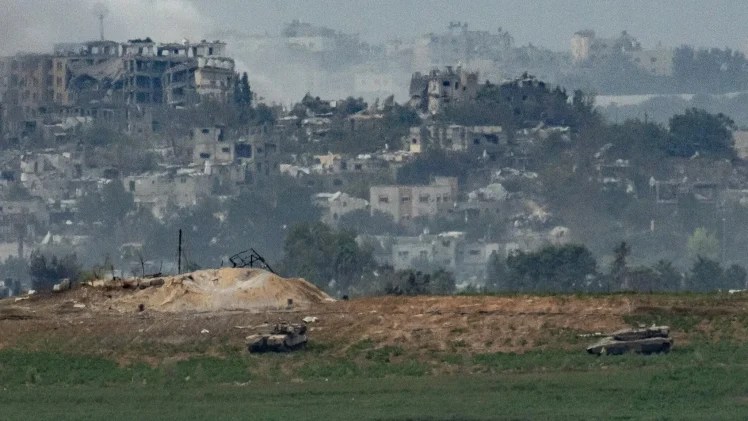
Since 7 October, at least 133 infants less than one year old have been killed in the Gaza Strip, which Israel has now been bombing for over 24 days, Anadolu Agency reports.
On 26 October, the Palestinian Health Ministry in Gaza released a 212-page report that lists the names, identification, and ages of those killed in Israel’s attacks on the strip since 7 October, when the current conflict began.
According to the report, 2,913 of the 7,280 people killed in the Israeli attacks were children.
In the Israeli attacks, 444 babies were killed, including 133 under one year old, 153 one-year-olds and 158 two-year-olds.
Israel’s bombing also killed 171 three-year-olds, 1,527 pre-school to primary school aged children (ages 4-13), and 523 high-schoolers, age 14 to 17.
Of the casualties, 2,262 were women and 462 were over the age of 60.
The report also said that the identities of 281 of the victims have not been confirmed.
63 UN employees and 36 journalists killed
The UN Agency for Palestinian refugees, or UNRWA, announced on 30 October that 63 of its staff members had been killed in the Israeli attacks.
Since the start of the Israeli attacks on 7 October, 35 journalists have been killed in Gaza and one in Lebanon.
The armed wing of Hamas, the Izz Ad-Din Al-Qassam Brigades, launched a comprehensive attack on 7 October in response to ongoing Israeli violations against Palestinians and their holy sites, including the Al-Aqsa Mosque.
The Israeli army responded with a relentless campaign of airstrikes on the Gaza Strip and seems now to have started a long-expected ground offensive.
University of Arkansas imposes Israel ‘loyalty test’ on Jewish author and cancels event
MEMO | October 31, 2023
Academic freedom is under fire in the US as Jewish author silenced for stance on Israel. American- Jewish scholar, Nathan Thrall, has faced censorship from the University of Arkansas, which banned his speaking event over his refusal to sign a pledge affirming loyalty to Israel. Thrall was set to discuss his ground-breaking new book exposing Palestinian life under Occupation, before the University invoked a repressive anti-boycott law to cancel the talk.
“I was just told that I cannot speak at @UArkansas unless I sign a pledge that I will not boycott Israel or its occupation,” Thrall said on X yesterday revealing that he had refused the demand. “A 2017 state law requires @UArkansas to impose this McCarthyist requirement. A reminder that the current effort to quash free speech is not new.”
Thrall also revealed that events for the book were called off on NPR and the BBC’s American platforms due to listener complaints. “I’m quite sure that a book advocating for Israel would not have had its advertisements pulled,” Thrall added. “There’s an atmosphere that is wholly intolerant of any expression of sympathy for Palestinians under Occupation.”
Over 30 US states have adopted legislation aimed at suppressing the Boycott Divestment and Sanctions (BDS) movement. These anti-BDS laws, promoted by pro-Israel lobbying groups, prohibit state entities from contracting with or investing in any company that boycotts the apartheid state. Some even require individuals and businesses to sign a pledge not to boycott Israel as a condition of obtaining state contracts.
Critics argue that this amounts to an unconstitutional political litmus test that requires declaring loyalty towards Israel and its policies, at the expense of free speech and political dissent. The American Civil Liberties Union has called anti-BDS laws a “profound violation of the First Amendment” that chill activism by making people prove they do not support boycotts for Palestinian rights.
High-profile cases like the cancellation of author events over refusal to sign anti-BDS pledges highlight how the laws censor Israel critiques and activism. Rights groups contend basic democratic principles are undermined when states act as “enforcers” of Israeli policy, demanding ideological purity on this polarising issue as a prerequisite for contracts.
Despite the dubious legality of anti-BDS legislation, the trend continues spreading across states seeking to please pro-Israel interests by cracking down on activism.
In February, the US Supreme Court declined to review the law in the State of Arkansas requiring every government contractor to pledge loyalty to Israel. The justices turned away a challenge to the anti-boycott pledge by the Arkansas Times.
Read also:
Al-Aqsa Flood gives Israeli economy ‘COVID-19 like symptoms’
The Cradle | October 30, 2023
The historic Al-Aqsa Flood operation has not only battered Israeli settlements and the security forces, but the war has also taken flight against the Israeli market.
Economists are looking at the operation that hit the $520 Billion economy with memories of the COVID-19 effects, saying that orders for schools, offices, and building sites to close or only open for a few hours are like the days of the pandemic.
Adding to the affected workforce, the Israeli government amassed 350,000 reservists for its much-awaited ground invasion, draining about eight percent of the Israeli workforce.
Mizrahi-Tefahot, a top Israeli bank, says that the mass mobilization order and partial economic freezes are costing the government the equivalent of $2.5 billion per month. The Israeli central bank has said that the economic state will only worsen as the war goes on.
Israeli stocks are the world’s worst performing since the beginning of the war. The Shekel is at its weakest level since 2012, despite the $45 billion emergency package or the selling off of $30 Billion in foreign reserves to try and save the currency from sinking further.
Markets won’t fair well with a long war, but Israeli Prime Minister Benjamin Netanyahu has warned of a “long war” as he prepares for a ground invasion.
JPMorgan Chase & Co., the US multinational financial services firm, has said that they believe the Israeli economy is shrinking 11 percent on an annualized basis, saying that their initial projections about the economic impact were “too optimistic.”
The financial firm’s projections are among Wall Street’s most cynical, but investors have been selling off Israeli assets heavily.
“Gauging the impact of the war on Israel’s economy remains difficult both due to still very high uncertainty about the scale and duration of the conflict and the lack of high-frequency data at hand,” JPMorgan analysts said.
Having one of the strongest economies in the world, Israel hasn’t seen an economic hit this bad since the 2006 war between them and Hezbollah, the physical damage cost of which has already been topped by the Palestinian factions.
The Israeli business press has said the nation has entered a recession. Israeli daily The Market has previously written that “Israel has entered the war, and it is in a recession, and trade is currently zero.”
Chinese tech giants cancel Israel
RT | October 31, 2023
Israel can no longer be found on China’s leading online digital maps on platforms including Baidu and Alibaba, the Wall Street Journal reported on Monday, citing web users.
According to the report, Baidu’s Chinese language maps still show the borders of both Israel and the Palestinian territories, as well as key cities in the region. However, they no longer identify Israel by name.
Alibaba’s Amap also no longer displays the name of Israel on its maps. According to the report, the platform is usually known for its attention to details, with even small countries like Luxembourg clearly labeled.
The companies did not respond to media requests for comment. According to the publication, it is unclear when exactly the name Israel disappeared from their maps, but web users have apparently been discussing the development since the escalation of the Israel-Hamas conflict earlier this month.
According to local reports, the Chinese internet has been overflowing with anti-Semitic [sic] comments over the past month, which may be the reason behind the disappearance of Israel’s name from the maps. The Israeli Embassy in China was recently forced to close the comment section under its official account on China’s X-like platform Weibo, after a slew of verbal attacks from users.
The Chinese government has not taken sides in the Mideast conflict, calling on the belligerents to end the hostilities and condemning attacks on civilians. However, Beijing has a long history of supporting Palestine. It recognized the Palestine Liberation Organization in 1964 and Palestinian sovereignty in 1988, and later established full diplomatic relations with the Palestinian Authority in 1989.
During his visit to Saudi Arabia in 2022, Chinese President Xi Jinping called the fact that the global community still largely does not recognize Palestine as a country a “historical injustice,” and said China will support the establishment of a Palestinian state with East Jerusalem as its capital.
Featured Video

New positive ivermectin evidence
or go to
Aletho News Archives – Video-Images
From the Archives
Fanatical Followers of the Covid Regime: A Jim Jones-Style Cult?
By Professor Roger Watson and Dr. Niall McCrae | The Daily Sceptic | November 15, 2021
As scholars at leading British universities over recent decades, we witnessed the replacement of critical thinking and debate by narrative: facts are discrimination and scientific method is imperialism; truth, instead, is derived from ‘progressive’ values. This educational trend may be a major contributory factor to the ease in which society has been inculcated to the Covid ‘new normal’ of masking, testing, and repeated doses of vaccines for a disease of similar risk to severe influenza.
One doesn’t need much critical reasoning to observe the flawed logic of some vaccination enthusiasts, such as people who respond to experiencing any side effects, however debilitating, by saying “at least I know it’s working”, or, after contracting the disease despite their promised inoculation (over 90% effective, according to initial drug company claims), “I’d have been worse off without the jab.” … continue
Blog Roll
 Aletho News
- ‘Grave, alarming’: Iran mission on Trump’s UNGA ‘annihilation’ threats
- Najaf airport to reopen to Iranian flights within 24 hours: Ambassador
- From ‘How Will This End For Iran’ to ‘When America Walks Away’: A tale of two Economist covers
- Tehran blasts ‘baseless’ speculation linking Iran to alleged bomb plot at UK air base
- The Rise And… Rise Of ‘Color Revolutions’
- The Coming GOP Bloodbath?
- Arctic Scare Stories Melt Away
- Wrong, Euronews: Climate Change Has Not Created a Food, Energy, and Economic “Meta-Crisis”
- New positive ivermectin evidence
- Met Office Caught Fabricating Daily Temperature Record Claims
- If Americans Knew
- An error has occurred; the feed is probably down. Try again later.
- No Tricks Zone
- New Study: Earth And Venus Surface Warmth Largely Explained By Convection And Lapse Rate, Not CO2 Or Radiation
- 2025 Nature Paper Claiming Worsening Global Drought Gets RETRACTED …Heavily Flawed
- New Study: ‘Global Drought Shows No Detectable Recent Acceleration Under Climate Warming’
- Economic Masterminds: German Socialists Suggest Taxing Productivity Gains Stemming From Using AI
- The South China Sea Has Not Been Cooperating With The Climate Change Narrative
- Energy Crisis: Germany Enters Heating Season With Historically Low Gas Reserve Fill Levels
- New Study: The Antarctic Ice Sheet Gained Mass From 2020-2024 Due To Staggering Snow And Ice Accumulation
- Study: Ocean Heating Rates From Thousands Of Years Ago ‘Dwarf’ Modern Ocean Heating Rates
- Climate Extremists Target, Attack Large-Scale Power Grid Infrastructure In Germany!
- New Study: Antarctic Ice Melt Has Contributed Less Than 1 Centimeter To Sea Level Rise In The Last 30 Years

