Daily Mail lies: Oct 7 victim saved from rape by non-existent Muslim prohibition on violating scarred women

By Wyatt Reed | The Grayzone | May 24, 2026
In one of its most brazen disinformation efforts in years, the British tabloid The Daily Mail has published a fake news story claiming that an Israeli woman who was permitted to leave by Hamas militants only avoided being sexually assaulted by showing her captors her scar.
According to the woman in question, May Hayat, she had been taken prisoner by “terrorists” at the Nova music festival on October 7, 2023, when she began to detect “an energy and look in their eyes that every woman knows what’s going to happen next.”
However, she insists the men declined to rape her because Muslims subscribe to a belief system under which “a scar like [hers] means a strong woman,” and “if something happened to her because of them, the 72 virgins they are promised will not come looking for them in heaven.”
This claim contradicts all known Islamic jurisprudence, including the mainstream Sunni doctrine espoused by Hamas – which forbids fighters (and men more generally) from carrying out sexual violence against women, and which does not in any way single out women with scars for special treatment.
But The Daily Mail article, entitled “October 7 survivor reveals how a childhood scar saved her from Hamas terrorists,” fully endorses Hayat’s extraordinarily suspicious claim. Hayat, the outlet states credulously, was later “told that such scars have a spiritual significance in the eyes of the terrorists.”
Hayat’s story, in which she now claims she narrowly avoided being raped, has changed significantly over the years. One month after the attack, Hayat alleged that she escaped her supposed Hamas captors, telling Reuters: “I could see how they were fighting over whether to kill me or not, and I ran away.”
Now, however, The Daily Mail writes that Hayat was actually freed when “the leader” of a Hamas cell acknowledged her scar, and “shook his head at his fellow terrorist before telling May she was free to go.”
It’s not The Daily Mail’s first attempt to launder Israeli rape hoax propaganda. In June 2024, The Grayzone revealed that what the tabloid billed as an “exclusive” story confirming Palestinians raped Israeli women on October 7 actually consisted of coerced confessions which were so full of contradictions about nonexistent victims that they are all but guaranteed to be false.
The author of that debunked report, Natalie Lisbona, has been photographed smiling with Israeli prime minister Benjamin Netanyahu, who is currently wanted by the International Criminal Court for his involvement in war crimes in Gaza.
The latest article comes amid ongoing efforts by Israeli propagandists to downplay media coverage of the country’s documented systematic rape of kidnapped Palestinians by reviving the false narrative that Hamas members engaged in widespread sexual violence on October 7.
The Ivanka Trump Assassination Plot Distraction
Last ditch effort to derail peace deal between the US and Iran
By Kurt Nimmo | Another Day in the Empire | May 24, 2026
On May 22, Rupert Murdoch’s New York Post floated a story claiming Iran attempted to murder Ivanka Trump, the president’s daughter. In the first paragraph of the Post story, the Islamic Revolutionary Guard Corps (IRGC) is blamed for the aborted attack. The sensationalist newspaper sources the claim to the Justice Department.
“Mohammad Baqer Al-Saadi had ‘pledged’ to target Ivanka Trump in retaliation for the assassination of his mentor Qasem Soleimani,” the Post reported.
Al-Saadi is said to be a high-ranking figure in Iraq-Iran terror circles, arrested in Turkey on May 15 and extradited to the US where he is charged with 18 attacks and attempted attacks throughout Europe and the United States, per the Department of Justice.
Al-Saadi is apparently a very ambitious and active terrorist. He is accused of attacking US and Jewish targets, including the firebombing of the Bank of New York Mellon in Amsterdam, the stabbing of two Jews in London, taking potshots at the US consulate building in Toronto, the firebombing of a synagogue in Liège, Belgium, the arson of a temple in Rotterdam, and “various other foiled counter-attacks in the US in response to the current conflict in the Middle East,” according to the Justice Department.
Sources cited in the reports alleged that Al-Saadi possessed a blueprint of Ivanka Trump’s Florida residence and had shared threatening messages online referencing surveillance of the property. Former Iraqi military official Entifadh Qanbar claimed that Al-Saadi openly spoke about avenging [IRGC officer Qasem] Soleimani’s death by targeting Trump’s family. [Qasem Soleimani was assassinated on 3 January, 2020 in Baghdad by a drone strike ordered by President Trump.]
Prosecutors say Al-Saadi is a commander for the Iraqi Shia militia Kata’ib Hezbollah, a US designated terrorist group allegedly linked to a little known group, Harakat Ashab al-Yamin al-Islamiya (the Islamic Movement of the Companions of the Right, a Qur’anic phrase), described as a “pop up” network that surfaced in March.
Details on the group came from Israel’s Ministry for Diaspora Affairs and Combating Antisemitism, an organization that specializes in targeting and defaming supposed anti-Semites, including popular podcasters such as Tucker Carlson, Candace Owens, Ian Carroll, the Swedish activist Greta Thunberg, and anti-Zionist political candidate Dan Bilzerian.
The Ministry cannot be trusted. It stands accused of launching a months-long campaign to covertly influence American lawmakers through AI-generated social media posts by fake users, according to The New York Times.
Critics argue Ministry programs like Voices of Israel, formerly known as Kela Shlomo and Concert, use bots and AI-generated content to attack opponents, influence public opinion, lobby for favorable legislation in the US and UK, and organize protests.
A central tactic involves deliberately amplifying anti-Muslim narratives, such as claims of “Islamic invasion,” “Sharia law,” and terrorism, in order to incite hostility between Christians and Muslims. This strategy aims to keep everyday Americans and Europeans divided and distracted with hate, encouraging them to view Muslims as the primary enemy rather than scrutinizing Israeli policies or lobbying efforts.
Therefore, it is not a stretch to assume Israel’s Ministry for Diaspora Affairs and Combating Antisemitism would either invent or exaggerate the claim Al-Saadi and Harakat Ashab al-Yamin al-Islamiya (HAY) are behind antisemitic attacks, especially at a critical juncture in the US-Israel war against Iran. The alleged targeting of Ivanka provides Trump with an excuse to restart the war and fulfill Benjamin Netanyahu’s desire to destroy Iran.
Netanyahu is afraid Trump will agree to a deal with Iran. Although Trump has stated on more than one occasion that he is not concerned about the financial burden his war has placed on the American people, he is, however, worried about the global economy as a depression would undoubtedly destroy the stock market and reduce valuations across the board. Israel, of course, is not concerned about this. It has a single objective—destroy Iran at all costs, even if billions of people suffer. Any deal Trump makes, any action short of bombing Iran, will short-circuit this objective.
A few hours after the story broke, Benjamin Netanyahu was reportedly “highly concerned and ‘worried’ President Trump will make a deal with Iran” and the Israeli PM “urged US to launch another round of strikes,” according to Axios.
By the afternoon of May 23, Trump posted to Truth Social: “Agreement has been largely negotiated, subject to finalization between the United States of America, the Islamic Republic of Iran.” It was the first time the president called Iran the “Islamic Republic of Iran.” Netanyahu reacted predictably, convening an urgent meeting with coalition leaders and Israeli security chiefs over what Channel 12 described as a “very bad” interim Iran deal.
“Final aspects and details of the Deal are currently being discussed, and will be announced shortly. In addition to many other elements of the Agreement, the Strait of Hormuz will be opened,” Trump posted.
RT reported the deal includes: an end to the war on all fronts, including Lebanon; several billion dollars of frozen Iranian assets unlocked; when the US blockade is lifted, the Strait of Hormuz will open; US bases and forces in the vicinity of Iran withdrawn; and a 30 day period to seal the nuclear deal.
Iran said Trump’s claim about the Strait of Hormuz “returning to normal” was false. It insisted on full control of the strait, including routes, timing, permits, and passage rules. Iran emphasized that no nuclear commitments were discussed during the meeting. They also claimed that US officials informed them that Trump’s posts are primarily intended for domestic media and political purposes, according to the Fars News Agency. A source told Fars that Trump “has realized that Iran is not one to give concessions” and sends word through intermediaries that his statements “should not be paid attention to.”
In what has become a pattern, the United States and Israel are reportedly collaborating behind the scenes to destroy any peace deal by assassinating supreme leader Mojtaba Khamenei, while weighing “whether his survival provides manageable stability or whether his removal could weaken Iran’s ruling structure further, per Israel Hayom.” Iranian MP and member of the negotiation delegation Mahmoud Nabavian “states that if Iranian leaders are assassinated in any attack, all of the complicit despots in the Persian Gulf will be killed and their palaces destroyed,” according to Seyed Mohammad Marandi.
On May 24, Benny Gantz, the Zionist Minister of Defense, posted to X that he believes it is “absolutely forbidden under any circumstances to accept the ceasefire in Lebanon as part of a deal with Iran,” thus signaling that Israel will continue murdering people and stealing land in southern Lebanon regardless of any deal between the United States and Iran.
Meanwhile, the conveniently timed and supposedly foiled assassination of Ivanka Trump is fading into noise, having done little more than prompt MAGA to ventilate on social media and elicit calls to “finish the job” of slaughtering Iranians. Ivanka Trump was never in danger and the plot has all the earmarks of previous concocted plots for which Trevor Aaronson covered more than a decade ago in his book, The Terror Factory: Inside the FBI’s Manufactured War on Terrorism.
Fars debunks NYT claims ‘Israel’ was exempted from US-Iran agreement
Al Mayadeen | May 24, 2026
Claims that President Donald Trump exempted “Israel” from commitments under a potential agreement with Iran appear to be baseless, Fars News Agency revealed, based on a review of the final draft text.
Fars reported that The New York Times had alleged “Israel” was granted an exemption from the obligations outlined in the emerging draft MoU with Tehran.
However, an examination of the explicit wording of the prospective agreement shows the opposite. According to the draft text, should the agreement be finalized, the United States and its allies would be bound not to launch any form of aggression against Iran or its allies.
In return, Iran has committed that neither it nor its allies would carry out preemptive military strikes against the United States and its allies.
Consequently, the media outlet’s claim that “Israel’s” regime is exempt from any commitments toward Iran directly contradicts the explicit provisions of the final agreement, rendering the assertion false and unfounded.
US and Iran reportedly near agreement
This closely follows a report by Axios citing a US official familiar with the talks, stating that the United States and Iran are nearing a draft agreement that would reopen the Strait of Hormuz, ease pressure on global oil markets, and launch a new round of talks over Tehran’s nuclear program.
The proposed deal, which mediators and President Donald Trump have suggested could be announced as early as Sunday, would establish a 60-day ceasefire framework that could later be extended by mutual consent. However, officials cautioned that talks remain ongoing and the agreement could still collapse before being finalized.
According to the US official, both sides would sign a memorandum of understanding under which Iran would reopen the Strait of Hormuz, remove naval mines deployed in the waterway, and allow unrestricted maritime traffic to resume. In return, Washington would lift its blockade on Iranian ports and issue sanctions waivers enabling Tehran to freely export oil.
The official acknowledged that the arrangement would provide a major boost to Iran’s economy, but argued that it would also stabilize global energy markets by restoring oil flows through one of the world’s most strategically important shipping lanes.
Taking Iran’s lead, a global resistance front is needed against US-backed Israeli war machine
By Dina Y. Sulaeman | Press TV | May 24, 2026
The Israeli navy does not ask for your passport before opening fire. They don’t care whether your country’s government has diplomatic relations with Tel Aviv or not. They also don’t care if your country is secretly starting to soften its attitude toward Israel for the sake of a more comfortable relationship.
They capture, detain, injure, even kill – then wait for the world to look away.
The “Global Sumud Flotilla,” a global humanitarian activist movement to send food to Gaza by sea, has proven one thing indisputably: any country that sends its citizens on humanitarian missions to Gaza must accept insults from Israel.
South Korea, Greece, France, Brazil, Canada, Australia, the United Kingdom, and Sweden all have good relations with Israel. But their citizens are still detained by Israel in international waters.
Similar missions have been carried out for over a decade, and they always end the same way: activists are arrested or even killed. In the 2010 Mavi Marmara tragedy, for instance, ten Turkish activists were killed by regime forces, yet no meaningful accountability ever followed.
The pattern is very clear. Israel operates on the assumption that the world will condemn and then forget. And so far, that assumption has proven to be true, at least until recently.
No “right diplomatic tone”
Indonesia’s experience is both interesting and painful. In recent years, Jakarta has shown signs of change in its approach to the Palestinian issue. In fact, the President of Indonesia once issued a statement, “peace can only come if everyone recognizes, respects, and guarantees the security of Israel.”
Indonesia even joined the Board of Peace formed by Trump, of which there is Israel as a member, while the official representative of the Palestinian Authority was not accepted.
The tone of Indonesia’s diplomacy has changed, from a principled confrontation to a more cautious and accommodating approach.
And what does Indonesia get in return? Four Indonesian soldiers who were members of UNIFIL were killed by Israeli forces in Lebanon. Most recently, five Indonesian citizens who joined the Global Sumud Flotilla were held hostage by Israel in international waters.
Israel has sent its message that accommodation does not produce security. Israel reads diplomatic leniency not as goodwill, but as weakness and as a green light to go further.
The economics of genocide: Who finances aggression?
To understand why Israel acts with impunity as it does now, we must look at the support architecture that allows impunity to take place, and that architecture is primarily economic.
The United States provides about $3.8 billion in annual military aid to Israel, plus an emergency aid package that made total fund transfers increase much larger during the Gaza genocide. But military aid is only the most visible layer.
Israel is supported by an arms supply chain by American arms manufacturers such as Boeing, Lockheed Martin, Elbit Systems, and L3 Technologies that provide bombs, drones, and surveillance technology used in Gaza. There is financial exposure from BlackRock, Vanguard, and major Western banks that have significant stakes in Israeli arms companies and bonds that finance their genocidal aggressions from Gaza to Beirut to Tehran.
There is technological support from Amazon Web Services and Google that provides cloud infrastructure for the Israeli military and intelligence through “Project Nimbus”, despite major protests from their own employees.
Some companies are proven to operate in illegal Israeli settlements or support Israeli military recruitment, but remain free to operate in the Global South market.
There are notorious militias that carry out genocide in Sudan, with arms supplies from Israel through the hands of the United Arab Emirates, in order to control the gold mines. And more.
They all form a system of financial immunity to a colonial project and that system works through the daily consumption choices of billions of people around the world.
The Israeli-American axis is not just a bilateral alliance. It is a system that was designed to maintain a certain global order, in which some lives are deemed worthy of protection while others are deemed to be sacrificeable.
Urgent need to form a global resistance front
Here, we need to review the global situation more comprehensively. Iran’s resistance and that of the axis of resistance against the US and Israel have led to a marked decline in US power.
The bullying carried out by the US and Israel has had a global impact. It’s time we talk about a global resistance front. The world needs to come together to harness all the legitimate instruments at the disposal of sovereign states and civil society to make Israel’s impunity costly.
The instrument is actually available. What has been lacking so far is the political will to use it simultaneously and on a large scale. For example, every member state of the Rome Statute is obliged to execute an ICC arrest warrant and Netanyahu’s arrest warrant already exists.
The genocide lawsuit brought by South Africa at the International Court of Justice (ICJ) is a historic intervention that needs more supporters. More countries should join, file amicus briefs, or at least express official support. In this way, legal isolation works.
On the economic front, countries should stop procurement contracts with companies that supply dual-use weapons or technology to Israel, remove Israeli military bonds from sovereign wealth fund portfolios, and implement BDS principles as state policy, not just the aspirations of civil society.
Currently, more than 140 countries have recognized Palestine. Supposedly, this should not stop as empty symbolism. Any recognition should be used as a basis for a real change in the position of Palestinian international law. If Palestine is officially admitted as a member state of the United Nations, it has the right to build up a military and receive military assistance from countries when it is attacked by Israel (Article 51 of the UN Charter).
Boycotts of Israel from sporting events, music competitions, and others also need to be done. Because Israel is so dependent on international legitimacy, that’s where its vulnerability lies.
What Gaza needs is no longer just an expression of sympathy or verbal condemnation. What is needed is a front of countries and world societies that together decide that the cost of silence is much more expensive than the cost of resistance.
Iran has carried out its duties in the military arena against the US and Israel. Other countries need to show real progress on various fronts because Israel can only be stopped if it is really pressured from multiple directions, simultaneously, with real consequences.
Dina Y. Sulaeman is an Assistant Professor of International Relations at Universitas Padjadjaran, Indonesia
Over 50 countries continued to arm Israel during genocide of Palestinians in Gaza: Report
The Cradle | May 23, 2026
An Al-Jazeera investigation published on 23 May revealed that military-grade products from at least 51 countries and self-governing territories kept entering Israel even after the International Court of Justice (ICJ) issued a provisional ruling over the genocide of Palestinians in Gaza.
In January 2024, the UN’s top court ordered Israel to take all measures to prevent genocidal acts in Gaza. By then, Israel’s brutal bombing of Gaza had killed more than 26,000 Palestinians, most of them women and children.
However, countries across the globe continued to provide weapons and military assistance to the Israeli military, the Al-Jazeera report found.
Using Israeli Tax Authority (ITA) import data, customs records, and freedom of information requests, the Al-Jazeera investigation found the military-related goods were shipped to Israel from countries across Europe, Asia, North America, and South America, including from many that have signed the genocide convention.
In some cases, the military supplies originated from countries that had publicly imposed arms embargoes on Israel or had at least partially suspended arms supplies to the country.
According to the ITA data, Israeli arms imports increased after the ICJ ruling, in particular munitions imports.
The five biggest military suppliers to Israel—namely the US, India, Romania, Taiwan, and the Czech Republic—all boosted their shipments of military equipment to Tel Aviv following the ruling.
ITA data showed that 2,603 consignments of military-related goods valued at $885 million were sent to Israel between October 2023 and October 2025. Of those, $805 million worth came after the January 2024 ruling.
The consignments included ammunition, explosive munitions, weapons parts, and armored vehicle components.
According to Stephen Humphreys, professor of international law at the London School of Economics, there was “ample evidence that countries arming Israel may be complicit in international crimes, including war crimes and crimes against humanity.”
“The most recent ‘ceasefire’ did not change this,” stated Gerhard Kemp, a professor of criminal law at the University of the West of England.
Since the ceasefire reached in October 2025, Israel has continued killing Palestinian civilians in Gaza and creating conditions of life that could destroy the group in whole or in part, Kemp said.
This indicates that states still have an obligation to stop supporting Israel’s war on Palestinians in Gaza, which has now killed at least 72,000 people. Tens of thousands more remain buried under the rubble of buildings Israel has bombed.
“Some states have a very narrow understanding of the duty to prevent genocide and are waiting for a judicial determination that there is a genocide in Gaza,” Kemp said. “But the ICJ will likely take several years to make such a determination. The better view is to look at domestic legal obligations … and international legal obligations and legal tools triggered by available evidence.”
Though the ICJ has not issued its final ruling, the UN Independent International Commission of Inquiry on the Occupied Palestinian Territory published a report in September 2025 concluding that Israel “committed a genocide against the Palestinians in Gaza.”
The UN report asserts that “states are obliged to take steps to ensure the prevention of conduct that may amount to an act of genocide … including the transfer of weapons that are used or likely to be used by Israel to commit genocidal acts.”
IDF Militants Mass Raped And Tortured Global Sumud Flotilla Activists
The Dissident | May 22, 2026
Israel has mass raped and tortured detained activists with the Sumud Flotilla, who were attempting to bring aid to Palestinians in Gaza, multiple victims have revealed.
On Tuesday, Israel kidnapped “430 people onboard 50 ships in international waters”.
Israel’s National Security Minister Ben Gvir released a video showcasing Israeli abuse of the detainees, including by forcing them to kneel while the Israeli national anthem played.
Democracy Now noted , “The video shows dozens of men and women kneeling in rows, with their foreheads to the ground and their hands zip-tied behind their backs at the port in Ashdod”.
Now, released activists from around the world have detailed mass rape, sexual abuse, and torture that Israeli forces unleashed on them while in detention.
A Press release from the Global Sumud Flotilla documented that, “Participants from the Global Sumud Flotilla, now in Istanbul, have begun providing harrowing testimony about widespread abuse, assault and torture: rubber bullets fired at close range, tasers to the face and upper body, stun grenades thrown into groups of detainees, stress positions held for hours under permanent bright light, hijabs (Muslim religious headcovers) forcibly removed, as well as various forms of sexual violence including: humiliating strip searches, sexual taunting, groping and pulling of genitals, and multiple accounts of rape.”
It added, “Some of the most horrifying accounts centre on a single vessel that participants call the ‘torture boat.’ This specific israeli naval vessel with a makeshift prison constructed of barbed wire and metal shipping containers became the primary site of intense violence following the interception; this reflects a small fraction of the patterns of systemic violence and sexual abuse against the Palestinian people at the hands of the israeli regime for decades.”
The activist organization has documented “At least 15 cases of sexual assaults, including rape” along with activists “shot with rubber bullets at close range” and “tens of people’s bones broken”.
Adrien Jouan, one activist with Global Sumud Flotilla, showed evidence of brutal torture, with severe bruising all over his body.
Another activist on Instagram live showcased severe bruising on his leg.

Released Brazilian activist Thiago Ávila revealed that , “there is no easy way to say it, but I have to say it, people got raped at the Global Sumud Flotilla. These monstrous soldiers raped our participants. It was not one, not two, not three, it’s many cases of sexual violence against our participants on the prison boat on the way to the port of Ashdod, where they got once again beaten up, many people with broken ribs, many people with broken bones in the arms, the collar bone, the ribs”.
Independent journalist Alex Colston, who was part of the Sumud Flotilla, revealed , “I just got out of Israeli prison … I saw people shot point blank with rubber bullets, I myself, I can’t feel my hands because they are all scarred up because they would take the cuffs and they would yank my hand over and over again. When I would be tied or cuffed, they would step on my cuffs. They kicked me in the ribs more times than I can count. I passed out at least one time. … even if you plead for them to stop … Israeli guards were getting obvious pleasure from hurting us as much as they could”.
Another participant in the flotilla , testifying to the torture she went through, said:
Handcuffs on my hands and feet. Dragged me. When I couldn’t walk, they dragged me on the ground.
They hit us. Hurt all of us a lot. Handcuffs so tight my hands lost feeling
They laughed all the time. Super sadistic.
Took off my shirt. Took pictures. Mistreated us all night long
Another activist testified that , “I had my hands zip-tied behind my back for so long and it was so tight I almost started vomiting, they slammed my head into a table several times and degraded me as I was strip-searched. They had me in handcuffs for 19 hours to the point my skin had begun to swell around them.”
Australian activist Juliet Lamont revealed , “We had people who were tasered in the face. People were syringed with unknown sedatives. I was put down, cable tied. They put so much water under me for an hour that I thought I was going to drown. I was sexually assaulted in this kind of torture chamber. And five men were bashing me and smashing my face”.
Italian economist, Luca Poggi, who was with the Flotilla activists revealed that “We were stripped, thrown to the ground, kicked. Many of us were Tasered, some were sexually assaulted, and some were denied access to a lawyer”.
Another German activist with serious injuries revealed that , “Israel beat her daily”.
The barbaric torture of the Sumud Flotilla activists is just another example of the brutal torture, sexual violence, and rape that Israeli forces unleash on Palestinian detainees daily.
UNRWA staff smuggled millions of Nakba records out of Gaza during Israel’s genocide: Report
The Cradle | May 22, 2026
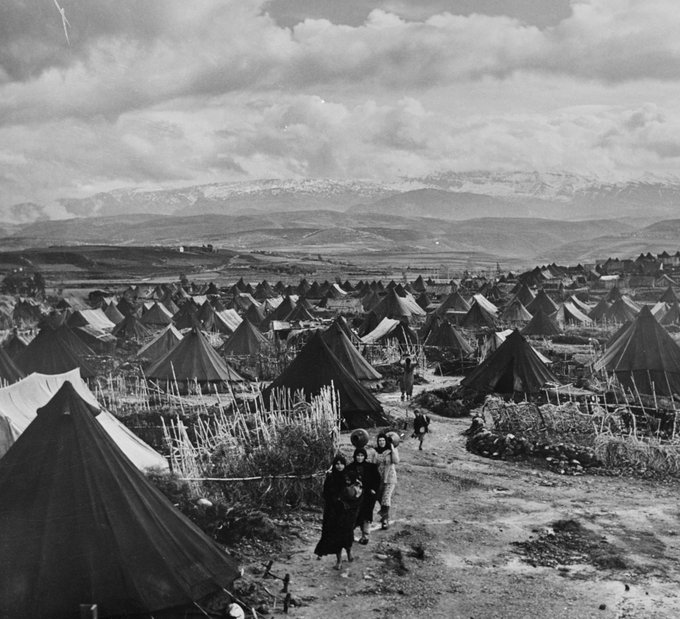
A 10-month-long covert operation by staff of the UN Agency for Palestinian Refugees (UNRWA) retrieved millions of historical documents from Gaza and occupied East Jerusalem, preserving legal and historical records dating back to 1948 of Israel’s ethnic cleansing and land theft campaign, The Guardian reported on 14 May.
Dozens of staff across four countries carried documents past border checkpoints, airlifted boxes on military planes, and raced Israeli tanks to Rafah to save what could never be replaced.
The archive, kept inside UNRWA’s Gaza City compound, contained the original registration cards of Palestinians who sought refuge in Gaza during the Nakba, alongside birth, marriage, and death certificates spanning generations.
“There are testimonies of how people were forced to flee in 1948, where they came from, where their property was, what was destroyed,” said Jean-Pierre Filiu, a professor specializing in West Asian studies.
“Two hundred thousand came to Gaza in between 1948 and 1949, from all over Palestine.”
The operation began days after Israeli forces ordered the evacuation of UNRWA’s Gaza City offices at the start of its assault on Gaza, with International staff being forced to leave on very short notice, with no time to take the documents.
After their forced evacuation, a small team returned and made three trips, driving trucks back through active bombardment to move the records south to a food warehouse in Rafah.
Evacuating the records from Gaza was further complicated as Egyptian authorities required Israeli approval before allowing the archives to cross the border, approval that UNRWA officials were certain would either be denied or used to seize the documents.
Meanwhile, UNRWA had been facing concurrent cyberattacks that threatened to wipe the agency’s servers and the digitized historical records.
“We genuinely thought we could see both the originals destroyed and any digital copies we had made. Then everything would have been gone for good,” said Roger Hearn, the senior UNRWA official who oversaw the rescue.
The documents were collated in Egypt and then airlifted to Amman aboard Jordanian military planes returning from aid deliveries, with the final cargo departing just two weeks before Israeli forces invaded Rafah in May 2024.
A parallel operation extracted a second set of archives from UNRWA’s East Jerusalem compound, which by early 2024 had become the target of arson attacks and mounting Israeli pressure to expel the agency.
Staff secretly transferred those records to Jordan over several months. In January 2025, new Israeli legislation formally barred UNRWA from operating in Israel and Israeli-occupied Palestine.
In Amman, more than 50 staff are currently scanning nearly 30 million documents by hand in a cramped basement facility, funded primarily by Luxembourg, with the digitization effort estimated to take another two years.
“Their destruction would have been catastrophic,” Hearn said. “If there is ever a just and durable solution to this crisis, then this is the only evidence people can use to show there were once Palestinians living in a particular place.”
Israel’s war on Gaza has amounted to a systematic assault on Palestinian cultural existence, targeting the physical and historical foundations of Palestinian identity in an apparent attempt to erase the people’s collective memory and presence from the land.
The destruction of mosques, churches, heritage sites, libraries, manuscripts, museums, cemeteries, and archival records forms part of a broader campaign to sever Palestinians from their history and national continuity.
These repeated attacks on the documentary and material traces of Palestinian life have turned cultural erasure itself into a weapon of war, with UNESCO verifying damage to scores of cultural and historical sites across Gaza since the genocide began in October 2023.
‘Board of Peace’ plan accused of turning Gaza disarmament into Israeli land grab
MEMO | May 22, 2026
A proposed roadmap for Gaza has been condemned as an attempt to give Israel through diplomacy what it failed to achieve through more than two years of genocide: the disarmament of Hamas and other Palestinian factions, without guaranteeing a full Israeli withdrawal from the besieged enclave.
The plan, circulated by Nickolay Mladenov, the Board of Peace’s high representative for Gaza, comes despite Israel’s repeated violations of the ceasefire and its failure to complete even the first phase of the agreement. Critics say Washington and Tel Aviv are now trying to force Palestinians into surrendering their weapons while Israel expands its military control inside Gaza, including along the so-called Yellow Line.
However, critics say the roadmap demands Palestinian disarmament while failing to guarantee Israel’s full withdrawal from Gaza. Palestinian analyst Muhammad Shehada warned that the proposal could allow Israel to retain around 18 per cent of the Strip, including some of Gaza’s most fertile agricultural land, even after weapons and militias are removed.
The Arabic text of the roadmap states that Israeli forces would withdraw in phases only after verified progress in the “identification, restriction and collection” of weapons. Even in the final phase, Israel would withdraw “except for a security perimeter” until Gaza is deemed secure from any renewed threat. The plan does not define the size of this perimeter, raising fears that Israel could turn a temporary security zone into a permanent occupation.
Those concerns are reinforced by Israel’s conduct since the ceasefire. Israel has repeatedly violated the truce, continued attacks and failed to meet its own obligations during the first-stage, while still demanding that Hamas proceed with disarmament. Hamas has rejected the Board of Peace’s framing, arguing that it ignores Israeli violations and unfairly demands disarmament while Israel remains inside Gaza. Hamas insists that the question of arms must be linked to Israel’s withdrawal from the territory.
Mladenov himself has warned the UN Security Council that Gaza’s current division risks becoming permanent, with more than two million Palestinians crowded into less than half of the Strip while Israel maintains troops in around 60 per cent of Gaza.
The roadmap places the entire transition under an Implementation Verification Committee, a body tasked with deciding whether each stage of the plan has been completed before the next stage can begin. However, critics warn that the mechanism could leave the entire process effectively subject to Israeli approval.
According to the text, the committee would be established by the high representative for Gaza and include representatives of the guarantors, the International Stabilisation Force and the Peace Council.
In practice, critics say this gives Israel and its US-backed allies sweeping control over the pace and outcome of the process. Movement from one phase to the next would not be automatic. It would depend on the committee confirming that the previous stage had been completed, including the collection of weapons, dismantling of military infrastructure and restoration of security conditions acceptable under the plan.
The roadmap also states that Israel’s withdrawal would be phased and tied directly to verified progress in the process of “identifying, restricting and collecting” weapons. This means Israel would not be required to leave Gaza first. Instead, Palestinians would be asked to disarm while Israeli forces remain inside the enclave, with further withdrawal dependent on outside verification.
Even the final phase does not guarantee a complete Israeli withdrawal. The text says Israeli forces would leave Gaza except for a “security perimeter”, where they would remain until Gaza is deemed secure from any renewed threat. The roadmap does not define the size of this perimeter or set a firm deadline for Israel to leave it.
Hunter Biden Tells Candace Owens His Father Blackmailed by Israel

By Kurt Nimmo | Another Day in the Empire | May 22, 2026
Hunter Biden, the crack addict son of the former president, told Candace Owens the Zionists were out to get him and his father. Despite the fact Joe Biden proudly considers himself a Zionist, the real Zionists threatened and blackmailed him into allowing a genocide in Gaza, according to Hunter.
Left unmentioned is the fact Joe Biden provided Israel with what it needed to eliminate Palestinians in Gaza. AIM-120C-8 AMRAAM air-to-air missiles for fighter jets, 155mm artillery shells, Hellfire AGM-114 missiles for attack helicopters, 2,800 MK-82 500-lb. bombs, JDAMs, small diameter bombs, and bomb fuzes worth $8 billion. He arranged the shipment of thousands of Joint Direct Attack Munition (JDAM) kits and hundreds of small diameter bombs worth $680 million. His Pentagon authorized the “deployment of a Terminal High-Altitude Area Defense (THAAD) battery and associated crew of U.S. military personnel to Israel.”
During the Biden regime, “an analysis published by the medical journal The Lancet estimated that the actual number of Palestinian deaths in Gaza, including those decomposing beneath the rubble of bombed-out hospitals, schools, and densely packed refugee camps, is likely more than 186,000.”
Evidence of “genocide, starvation, ethnic cleansing, and forced displacement was clearly available to the Biden administration, yet it lied to the American public to hide its own criminal culpability in the war crimes, crimes against humanity, and genocide.”
By June [2024], the Biden administration had sent Israel at least 14,000 massively deadly 2,000-pound MK-84 bombs, made in Oklahoma and dropped on hospitals, apartment blocks, and crowded refugee camps. In addition, it sent 6,500 500-pound bombs, 3,000 Hellfire precision-guided air-to-ground missiles, 1,000 bunker-buster bombs, 2,600 air-dropped small-diameter bombs, and other munitions.
Democracy for the Arab World Now (DAWN) produced a 172-page document submitted to the International Criminal Court accusing President Biden, former Secretary of State Antony Blinken, and former Defense Secretary Lloyd Austin of committing war crimes. The filing “details how the US officials provided ceaseless military and diplomatic support to Israel despite being aware that its aid was being used to commit the type of alleged war crimes for which the ICC issued warrants against Israeli leaders,” Zeteo reported.
Such US support has included at least $17.9 billion of weapons transfers, intelligence sharing, and targeting assistance – and the US abstaining from, voting against, and vetoing several UN resolutions calling for a ceasefire and hostage deal or increased humanitarian aid over the course of 15 months. It’s also included repeatedly sending weapons to Israel without congressional review.
Biden not only gave Israel everything it wanted, he was also part of Prime Minister Benjamin Netanyahu’s war cabinet. “While there certainly is a time-honored tradition of a ‘special relationship’ between the U.S. and Israel, Biden has gone where no other U.S. president ever has gone during one of Israel’s wars—not only physically but also politically and strategically,” TIME Magazine reported.
“Biden’s connection to Israel is deeply engrained in his political DNA,” argues Aaron David Miller, a former Middle East negotiator. “I don’t believe you have to be a Jew to be a Zionist, and I am a Zionist,” Biden declared when he met with Netanyahu and his war cabinet during a visit to Israel.
During his long career, Biden voiced unwavering support for Israel. “America must insure Israel’s existence,” he declared in 1972 by “ensur[ing] that Israel receives whatever weapons she needs.” In 1975, he admitted that the “interest groups that I hear from are the Jewish interest groups concerned about Israel. And they’ve always been reasonable when they’ve come to me, they’ve never threatened me in any way. Maybe it’s because I tend to vote their way.”
Since his political career began as a senator in 1973, Biden has consistently supported the Jewish state. He affirmed Israel’s right to defend itself throughout the Yom Kippur War and the October 7 prison break, earning him the nickname of the most pro-Israel president in American history.
Hunter is attempting to salvage his father’s reputation, but he cannot hide the fact the elder Biden consistently supported the illegal invasion of Iraq, and that of Afghanistan. He supported the 78-day bombing of Serbia in 1999 (he called for “a Japanese-German-style occupation” of the country).
“Biden’s imperial outlooks,” writes Gerald Sussman,
drawn from Washington’s and the mainstream media’s commitments to maintaining US hegemony in the world, has placed him among the world’s leading war criminals, alongside those, Kennedy, Johnson, and Nixon, who led the genocide in Vietnam, where millions of people were bombed, gassed, maimed, and disfigured by chemical weapons.
While the former president’s disgraced son insists his father was setup by the Zionists, he cannot escape the fact his old man is a war criminal that “continuously and unconditionally provid[ed] political support and military support to Israel while being fully aware of the specific crimes committed by Netanyahu, Gallant, and their subordinates” while providing over $17.9 billion in military aid and arms transfers to the criminal government of Israel.
The logic of victory: Iran’s principled terms for end to imposed war define a new strategic reality
Press TV | May 22, 2026
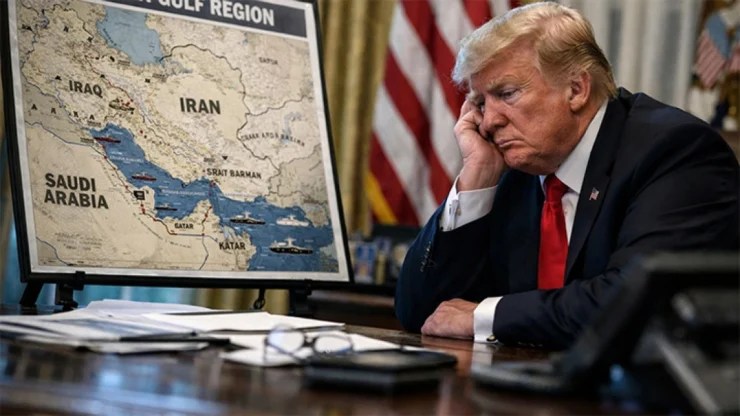
Nearly 40 days of all-out military aggression, shadow warfare, and economic blockade have given way not to Iran’s surrender, but its emergence with a strategic upper hand.
The “Ramadan War” – an unprovoked and illegal military aggression that came amidst Oman-mediated nuclear diplomacy – ended in a way Washington and Tel Aviv never anticipated. Iran did not collapse, its alliances did not fracture and its military deterrent remained intact. And now, as the guns have fallen silent, it is Iran – not the US – that is setting the terms.
Iran’s end-of-war conditions are not maximalist bargaining ploys. Rather, they are the logical, rational, and legally grounded demands of a victor who has proven, on the battlefield and in the diplomatic arena, that aggression against a resilient nation produces only defeat.
Tehran is not asking for charity. It is demanding what is rightfully owed to a nation that has been wrongfully attacked, illegally sanctioned, economically terrorized, and yet emerging stronger, more cohesive, and more confident.
The foundational logic of ending an imposed war
The first and most critical point in Iran’s strategic calculus is remarkably simple: in any war, the side that requests a ceasefire is the side that is losing. Iran did not request a ceasefire; it was the American side. This single fact upends the conventional Western narrative that portrays Iran as an isolated, pressure-cooked “regime” desperate for a deal.
Iran’s logic is rooted in the universal, time-tested rationality of all wars. Wars do not end because both sides grow weary simultaneously. They end when one side realizes that continued fighting will produce worse outcomes than accepting the other side’s terms.
In the 40-day imposed war and its aftermath, the American-Zionist enemy – an alliance of the world’s most advanced militaries, intelligence agencies, and economic powers – failed to achieve its stated objectives. There was no “regime change.” Iran’s nuclear infrastructure remains intact. The Axis of Resistance did not collapse. And critically, Iran emerged stronger.
Had America possessed the capacity to defeat Iran militarily, it would have done so. It would not have sought a ceasefire and opened back channels for negotiation.
The very act of seeking an end to war is an admission of strategic failure. Therefore, the enemy has no right to obtain through diplomacy – through the end of war – what it could not obtain through indiscriminate force, cowardly acts of terror, and state-sponsored criminality.
This is a strategic logic and it dictates everything that follows.
The aggressor pays: Restitution, withdrawal, and end of sanctions
Because the US is the aggressor – having initiated an unprovoked war against the Iranian nation through assassinations, sabotage, cyberattacks, and direct military strikes – it must bear the full cost of the cowardly aggression.
Iran’s conditions are therefore not punitive fantasies but standard provisions in any post-war settlement where the aggressor ends up on the losing side.
Iran demands full payment of war damages and compensation for all victims of American and Israeli aggression; return of all Iranian assets and properties illegally blocked or seized; complete withdrawal of US forces from military bases surrounding Iran; termination of the illegal naval blockade that in itself constitutes an act of war; a comprehensive end to aggression on all fronts, including against Iran’s allies in the Axis of Resistance; full and verifiable lifting of all illegal sanctions against Iran, including the revocation of UN Security Council sanction resolutions and a signed end-of-war agreement enshrining these terms.
These demands are not opening bids but the minimum acceptable outcome for Iran. The enemy may negotiate over the sequencing or technical details of implementation, but the substance is non-negotiable. The aggressor pays, withdraws and lifts its illegal economic siege.
Diplomacy as a continuation of war by other means
Iran has already demonstrated its superiority in diplomacy. By forcing the American side to accept its framework for ending the illegal and unprovoked war, Tehran has demonstrated that Washington is the frustrated, failed and isolated party in this war.
The US assembled the most powerful military coalition in modern history, planned for years to overthrow the Islamic Republic or force it into fundamental concessions, and came away with nothing. None of the military objectives came to fruition and everyone acknowledges that.
Any future negotiations after the end of this imposed war will be conducted from a position of Iranian strength. Iranian negotiators will have no need to link those talks to wartime pressures. And make no mistake: Iran will enforce compliance.
Any shortcoming by the enemy in fulfilling its obligations will be met with Iranian responses below the threshold of full-scale war – a domain in which Iran operates with even greater ease and lethality. The enemy has already tested Iran in conventional war and suffered a crushing reputational, military, political, and strategic defeat. It has no appetite for a second round.
Strait of Hormuz – A prize already won by Iran
Perhaps no single issue illustrates Iran’s strategic upper hand more clearly than the Strait of Hormuz. Western analysts habitually frame the strait as a point of vulnerability for Iran, a choke point that Iran threatens to close. This is exactly backward.
Iran’s position is that the Strait of Hormuz is already an Iranian gain from the war. It is a legal, principled, and logical right that is presently in Iran’s hands. Unlike blocked assets or sanctions, which require active enemy reversal control over this strategic waterway located between the Persian Gulf and Gulf of Oman – requires no new action from Iran. It is a fait accompli.
Iran’s enhanced control over the Strait of Hormuz serves three concrete objectives.
- Security: Guaranteeing Iran’s security in the Persian Gulf against future American or Persian Gulf Arab aggression.
- Economic justice: Preventing blackmail by regional governments and securing material rights of the Iranian nation through tolls and transit fees.
- Strategic deterrence: Creating a new normal in which any future aggression against Iran must account for Tehran’s tightened grip over global energy chokepoints.
The status of the strait after the war is fundamentally different from before the war. Iran will not return to the previous order. That order – in which the US patrolled freely, imposed sanctions, and threatened Iran with impunity – is effectively dead. Iran’s permanent sovereignty over the waterway is not a demand but a reality that the enemy must accept.
Iran is not acting unilaterally or recklessly in this regard. Agreements with neighboring Oman, based on mutual interests, are necessary to consolidate Iran’s control. Iran’s diplomatic apparatus is actively pursuing these agreements.
This is not an act of belligerence but an act of responsible statecraft, embedding Iran’s strategic gain within a framework of regional cooperation.
Finally, the strait carries profound symbolic weight. Iran’s unchallenged sovereignty over the Strait of Hormuz represents the heavy penalty and fine that the aggressor must pay for having invaded Iranian territory – directly or by proxy. Every tanker that transits under terms acceptable to Tehran is a reminder that the US miscalculated catastrophically.
And if the enemy ever indulges in the fantasy of another war on Iran, it will now have to factor in Tehran’s expanded maritime and land sovereignty as a permanent, inescapable variable.
The nuclear file – Deferred but not diminished
Western media frequently portrays Iran’s nuclear program as the central point of leverage against Tehran. It is not a point of weakness, but an area of demonstrated Iranian resilience.
Throughout its long history of peaceful nuclear activities, including temporary, voluntary transparency measures, Iran has never abandoned its principles or its legal rights.
International law recognizes Iran’s right to possess the full nuclear fuel cycle. America has no authority to override international organizations and treaties and it is not the world’s nuclear policeman. The US defeat in the recent war has stripped it of any pretense to that role.
Both the US and the Zionist regime tried to force Iran’s nuclear surrender through unprovoked war and bombing campaigns, but catastrophically failed. They will also fail in any future negotiations to strip Iran of its inalienable nuclear rights. Iran’s nuclear decisions – regarding enrichment levels, research, development, and even the scope of its program – are Iran’s own business.
They are not tied to the recent war, from which Iran emerged victorious in preserving its nuclear materials, facilities, and, most critically, its scientific and engineering knowledge.
The bomb question: A clear doctrine, not an ambiguity
Donald Trump and members of his war cabinet, including war secretary Pete Hegseth, repeatedly claim that preventing Iran from obtaining a nuclear bomb is their primary objective. But here again, Iran’s position is clear and has been stated repeatedly: a nuclear bomb has no place in Iran’s defense and security doctrine.
This is not a new or ambiguous position. It is a matter of public record, reinforced by the martyred Leader of the Islamic Revolution, Ayatollah Seyyed Ali Khamenei’s fatwa (religious decree) against the development and use of nuclear weapons.
Trump cannot claim victory on an issue where no threat existed. The embattled American president does not get to factor the nuclear bomb myth as his personal achievement.
If, in the future, with changed regional circumstances and potentially a revised fatwa, Iran’s doctrine evolves, that is a matter for another time. But today, in the present, the doctrine has not changed. Iran possesses all the knowledge required to complete the nuclear cycle for peaceful development, and it will continue to exercise its inalienable rights.
The invalidity of Trump’s deadline threats
Throughout the recent war and its aftermath, Trump repeatedly resorted to a worn-out, theatrically bankrupt tactic: the artificial deadline. “Iran must agree by X date, or else.” This gimmick failed at least five times. Each time, the US president backpedaled.
This deadline threat is a psychological warfare technique designed to induce panic, haste, and unforced errors from the Iranian side. Iran has shown that it will not be rushed and it will take all the time necessary to draft a meticulous, robust end-of-war document that closes every loophole and secures national and strategic interests.
The deadline is fundamentally a threat of war. But war has already been tried. War brought the enemy nothing but humiliation, and re-entering a war cannot produce anything different.
The enemy is bluffing with a hand it has already shown and lost. Iran’s diplomatic apparatus must remain vigilant against this trick, but it need not lose sleep over it.
The Bab el-Mandeb incidents – A warning across the sea
Recent explosions and security incidents reported in the Bab el-Mandeb Strait and around Socotra Island, including a temporary shutdown of the strait for several hours, have been met with conspicuous silence from the US, the Israeli regime, and Western media outlets.
That silence is not accidental. It is the silence of an enemy that understands it has been outmaneuvered.
These incidents constitute a clear and explicit warning from the broad Axis of Resistance. If the American-Israeli enemy resumes its military adventurism against Iran, the war this time will not remain contained to the Persian Gulf. It will expand to include the Red Sea and the Gulf of Aden. Bab el-Mandeb, another global energy chokepoint, will become an active front.
Even during active negotiations to end the war, the hand of the resistance front is not tied. Iran and its allies have many available options, any of which can make conditions harder for the enemy. The message is unambiguous: military escalation will be met with geographical expansion of the war, not with Iranian retreat.
These security incidents may well be a prelude to the extra-regional translation of the war against the Islamic Republic of Iran, as previously alluded to in warnings from the Islamic Revolution Guards Corps (IRGC). In other words, the battlefield is no longer limited to Iranian soil, the Persian Gulf, or even West Asia. Iran’s enemies are being served notice that their own vulnerabilities – far from their shores – are well within reach.
American refineries – The cyber dimension
The recent chain of explosions and fire incidents in at least five American refineries and petrochemical complexes across different regions of the United States has also been underreported and underexamined by American authorities. This, too, is no accident.
These incidents demonstrate a strategic evolution that should terrify Iran’s enemies. The world has reached a stage where knowledge based on information technology has grown so advanced that it can replace physical military action in specific geographies.
Cyber capabilities, wielded by unknown actors anywhere in the world, can achieve the same results as armed assault, but without the high costs, missile range limitations, or legal and international liabilities.
Iran’s adversaries have long relied on their ability to project conventional military power globally. The refinery incidents suggest that this advantage is being nullified. An actor with sophisticated cyber capabilities can now impose severe economic costs on the American homeland without the need to fire a single missile or cross any border.
The lesson for the enemy is stark: your critical infrastructure is vulnerable. Your refineries, your grids, your financial systems – all are potential targets in a domain where traditional military superiority offers no protection. If you wage another war on Iran, you will not be safe anywhere.
Trump’s Gaza ‘peace’ board in turmoil as funding pledges fail to materialise
MEMO | May 21, 2026
Donald Trump’s controversial “Board of Peace” for Gaza has warned that a gap between pledged funds and money actually disbursed must be closed urgently, raising fresh doubts over the US-led scheme already widely viewed as the president’s vanity project rather than a serious plan to rebuild the besieged Palestinian enclave.
A report submitted to the United Nations Security Council said: “The gap between commitment and disbursement must be closed with urgency.” It warned that funds pledged but not transferred mark “the difference between a framework that exists on paper and one that delivers on the ground for the people of Gaza.”
Trump established the Board of Peace to oversee his plan to end Israel’s genocide on Gaza and rebuild the territory, large parts of which have been reduced to rubble after more than two years of bombing. The reconstruction effort is estimated to cost around $70 billion, while $17 billion has reportedly been pledged to the board so far.
The board had previously denied that it faced funding constraints, insisting that it was an “execution-focused organisation that calls capital as needed.” However, its own report to the Security Council now urges countries that have made pledges to accelerate disbursement and calls on non-member states and international organisations to contribute without delay.
The United States, Saudi Arabia, the United Arab Emirates and Qatar are among the states said to have pledged funds, alongside Kuwait, Morocco and Uzbekistan. Yet the future of Gulf commitments now appears more uncertain following Trump’s war on Iran, which has deepened regional instability and exposed the fragility of US-led security arrangements in the Middle East. The Iran war has widened rifts between Washington and its allies, with European leaders saying they were not consulted before US-Israeli strikes on Iranian leadership and infrastructure.
The funding concerns add to longstanding criticism that the Board of Peace is less a credible reconstruction mechanism than an exercise in Trumpian self-promotion. The initiative is widely seen as “aggrandising theatre” and warned that it erases Palestinian political rights while recasting Gaza as a development site rather than an occupied territory whose people are entitled to freedom, dignity and self-determination.
The board was created after Trump’s broader Gaza plan, which placed the US president at the centre of the transitional initiative. It is chaired by Trump and tasked with supervising a still-to-be-formed Palestinian technocratic government and reconstruction under the second phase of the ceasefire deal.
Critics say the plan fails to confront the root causes of Gaza’s destruction: Israel’s occupation, siege and military assault. Analysts have pointed out that Gaza does not need a branding exercise or a donor board dominated by Washington and its allies, but a political settlement rooted in Palestinian sovereignty and international law.
The board’s report says 85 per cent of Gaza’s buildings and infrastructure have been destroyed and that around 70 million tonnes of rubble must be cleared. Despite an October ceasefire, Israel has kept troops in a large part of Gaza and continued air strikes, while the second phase of Trump’s plan — including broader Israeli withdrawal, reconstruction and the disarmament of Palestinian factions — has not been implemented.
Many states remain reluctant to channel reconstruction funds through Trump’s board because of concerns over transparency, oversight and political control. Under the board’s charter, member states reportedly hold three-year terms unless they pay $1 billion to fund its activities and secure permanent membership, raising further questions over whether Gaza’s reconstruction is being treated as a humanitarian obligation or a pay-to-play diplomatic platform.
Featured Video
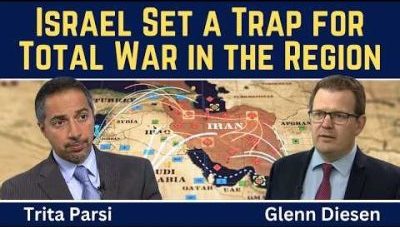
Trita Parsi: Israel Set a Trap for Total War in the Region
or go to
Aletho News Archives – Video-Images
From the Archive
Zionism’s Violent Legacy
By Donald Neff | Washington Report On Middle East Affairs | January 1996
On January 4, 1948, Jewish terrorists drove a truck loaded with explosives into the center of the all Arab city of Jaffa and detonated it, killing 26 and wounding around 100 Palestinian men, women and children.[1] The attack was the work of the Irgun Zvai Leumi – the “National Military Organization,” also known by the Hebrew letters Etzel – the largest Jewish terrorist group in Palestine. The Irgun was headed by Revisionist Zionist Menachem Begin and had been killing and maiming Arabs, Britons and even Jews for the previous ten years in its efforts to establish a Jewish state.
This terror campaign meant that at the core of Revisionist Zionism there existed a philosophical embrace of violence. … continue
Blog Roll
 Aletho News
- Trita Parsi: Israel Set a Trap for Total War in the Region
- Trump’s Iran war is on an Israeli leash
- Saudi oil boss issues global supply warning
- Riyadh Says Its Oil System Is Intact. The Numbers Say Otherwise.
- Trump and Netanyahu Want to “Finish the Job” on Iran
- US ‘one-sided dictation’ not Iran’s beliefs makes rational talks impossible: Baghaei
- Iran’s Next Strike May Not Explode. It Could Shut You Down /Col Doug Macgregor
- Iran: US political targets legitimate if assassinations return
- Iraq shuts key border crossing with Iran under US pressure: Report
- Undersea Internet cables could be targeted in retaliation for attacks on Iran: IRGC deputy chief
- If Americans Knew
- The Israel Lobby’s Changing Fortunes
- AIPAC has become such a political liability that it’s shifting to a more “nimble” approach to buying politicians
- At least 160 Israeli settler attacks in 2 weeks
- Will Gaza’s Ancient Christian Community Disappear Forever?
- Israel’s vision of regional security rests on keeping Arab states weak
- Heidi Levine recounts how Palestinian youths helped save her in settler attack
- DAILY UPDATE: Latest essential news on Palestine, Israel, & region
- Trump’s Intensifying Sabotage of the ICC, for Israel’s Sake
- Israeli military detain US and UK volunteers in West Bank including Democratic NY politician Brad Lander
- Americans at National Conservatism Conference held in Israel this year criticize Israel
- No Tricks Zone
- E-Cars Reduce CO2 Emissions By Only 41% Compared To Internal Combustion Engine Vehicles
- Predictions Made By Renowned Climate Professor Over Past Decades Have Been Proven To Be Poor
- New Study Suggests Large Regions Of The Pacific Ocean Have Been Cooling For The Last 80 Years
- Germany’s Green Energy Debacle: High Energy Costs Force Kahla Porzellan to Close After 182 Years!
- New Study: 50 Years Of The Most Aggressive ‘Net Zero’ Policies Can Only Affect The Global Climate By 0.03°C
- US September “Heat” Was No Record…Many Records Set Decades Ago
- Latest European Green Energy Debacle; Portugal’s Largest Flagship Solar Park Insolvent!
- Green Energy Debacle: German Expert Professor Fritz Vahrenholt Warns Of Severe Economic And Social Consequences
- Two More Paleo Reconstructions Affirm Meters-Higher Sea Levels Across Ireland, Brazil 7000-6000 Years Ago
- New Study: Earth And Venus Surface Warmth Largely Explained By Convection And Lapse Rate, Not CO2 Or Radiation


