‘Israel’ kills Azzam al-Hayya, son of Hamas chief Khalil al-Hayya
Al Mayadeen | May 7, 2026
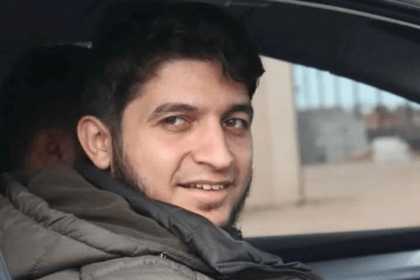
Azzam al-Hayya, the son of Khalil al-Hayya, leader of the Hamas Resistance movement in Gaza, was martyred on Thursday after succumbing to wounds he sustained in an Israeli attack on Gaza City on Wednesday evening, according to Al Mayadeen’s correspondent.
The correspondent reported on Wednesday night that Hamza al-Sharbasi was killed and Azzam Khalil al-Hayya was injured in an Israeli airstrike near the Jabalia bus stop in the al-Daraj neighborhood, in central Gaza City.
PIJ condemns assassinating Resistance forces, their leaders
The Palestinian Islamic Jihad movement condemned the assault, saying, “The government of war criminals in the occupying entity continues to escalate its crimes against the Gaza Strip.”
In a statement, the movement noted that “the occupation army is carrying out ongoing assaults aimed at assassinating Resistance forces and their leaders, particularly within Islamic Jihad and Hamas.”
It further highlighted that the latest in these assassinations was “the treacherous airstrike that targeted Hamza al-Sharbasi, a leader in the al-Qassam Brigades, yesterday.”
“The attack also injured several others, including the martyr Azzam, the son of Khalil al-Hayya, the head of the Hamas movement in Gaza, who succumbed to his wounds this morning,” the movement added.
The PIJ accused “Israel” of using the strikes to impose its terms on Gaza, evade agreed-upon ceasefire commitments, block reconstruction efforts, and continue committing massacres, including by disrupting the Rafah crossing.
‘Israel’ continues its genocide amid so-called ceasefire
In a separate incident on May 6, and as part of ongoing Israeli violations, several Palestinians were wounded when an Israeli strike targeted a displacement camp in Gaza City’s al-Zaytoun neighborhood.
Further south, police colonel Naseem al-Kalzzani was killed and others were injured after an Israeli strike targeted his vehicle in the al-Mawasi area of Khan Younis.
Hamas said the escalation by the Israeli occupation forces, which continued to target civilians in Gaza, constituted a clear violation of the ceasefire agreement. The movement called on the United States administration and the guarantor states of the Sharm el-Sheikh agreement to intervene immediately to restrain Israel.
Despite the ceasefire reached in October 2025, Israeli forces have continued near-daily aggression across the Gaza Strip.
According to Gaza’s Ministry of Health, the death toll has risen to 837, with 2,381 wounded and 769 bodies of martyrs retrieved since the ceasefire took effect.
The cumulative toll since the start of the Israeli genocide on 7 October 2023 has reached 72,619 killed and 172,484 injured.
What has Guterres supported in Gaza?
By Ramona Wadi | MEMO | May 7, 2026
In March this year, UN Secretary General Antonio Guterres had stated that the UN is “cooperating actively with structures created by the Board of Peace.” By the time Guterres made his statement, US Board of Peace High Representative for Gaza Nickolay Mladenov had already warned, in February this year, that Hamas bears the burden of Israel’s full resumption of genocide in Gaza if it fails to disarm.
In a letter that was quoted yesterday in Israeli media, Mladenov and senior US official Aryeh Lightstone warned the Palestinian technocratic government, “Failure by Hamas to accept the framework within a reasonable timeframe, as determined by the Board of Peace and after consultation with the parties, shall render such commitments null and void.”
Two days before Mladenov’s warning was made public, a senior military official said that it was inevitable that Israel would resume “fighting” in Gaza if Hamas refuses to disarm. Israel has in fact not stopped colonising Gaza through violence – what we are seeing now is a slower form of genocide in the aftermath of a very visible genocide which world leaders and diplomats preferred to watch rather than stop.
Mladenov is aware that Israel kept killing Palestinians in Gaza after the ceasefire came into effect, that more buildings were detonated, that the Yellow Line keeps expanding in Gaza besides already occupying more than half of its shrinking territory.
Therefore, the pretence of a before and after the ceasefire does not hold. It is merely a convenient veneer for the Board of Peace’s next rhetorical step that asserts its agreement with genocide.
Israel violated the October 2025 ceasefire multiple times, so in a way the letter is not a warning of novelty. However, the text of the October ceasefire does not stipulate that Hamas should disarm for the ceasefire to hold; that was a clause for the second phase of the ceasefire. The US Board of Peace is therefore saying that Israel is exempt from upholding its obligations stipulated in Phase One if Hamas does not agree to a clause from Phase Two.
In the entire Western narrative of Israel’s genocide in Gaza, Mladenov is not employing a new tactic when blaming Hamas for refusing to disarm. However, exploiting the ceasefire text, which was based on the resumption of humanitarian aid and the return of Israeli hostages, is insightful in terms of how institutions hold the power to manipulate the parameters of international law, accountability and impunity. The October 2025 ceasefire text, which was not dependent on Hamas disarming, can now be discarded simply because the focus is on Phase Two and diplomacy will not check the specific stipulations of Phase One.
Mladenov and Lightstone, therefore, are legitimising institutional complicity with genocide.
This is one clear admission in which a body supposedly tasked with rebuilding Gaza and its governance will not hold Israel accountable for continuing to commit genocide.
By stepping back, the spectator tactic has now been fully employed by Mladenov and the so-called Board of Peace.
When has genocide even been advocated for so smoothly among diplomats? Guterres should take note of what he and the UN have supported.
Texas has an Israel Investment Problem
By Adam Dick | Peace and Prosperity Blog | May 6, 2026
Investing is generally understood to be about seeking to preserve and grow wealth. But the Texas government seems to be making an exception to that understanding in buying the bonds of the Israel government and enabling other government entities in Texas to do so as well.
In February, Acting Comptroller Kelly Hancock touted in a press release that the state government was doubling its holdings of Israel bonds “from approximately $140 million to $280 million, marking the largest one-time investment in Israel bonds in Texas history and elevating the state from the sixth-largest to the second-largest U.S. state investor in these securities.”
That is a significant investment action. How did Hancock describe that the action was taken to best preserve and grow the wealth held by state government? He did not. Instead, Hancock provided a political justification in the press release:
‘Texas proudly stands with Israel,’ Hancock said. ‘This expanded investment reinforces our long-standing relationship and shared commitment to faith, freedom and economic opportunity. Texas and Israel have built a partnership that stretches beyond finance, and this step reflects both our solidarity and our belief in what we can accomplish together.’
This sort of reasoning does not bode well of the finances of the state. Liking a government is not a valid investment reason for buying its bonds. Is Hancock next going to “invest” in truckloads of puppies because he thinks they are adorable?
The state government, in addition to piling up Israel bonds, has also decreed that government entities in Texas can buy Israel government bonds but are forbidden from buying bonds of any other foreign government. This special permission to purchase Israel government bonds is provided in chapter 2256 of the Texas Government Code (the Public Funds Investment Act). There the listed “authorized investments” for government entities in Texas include “bonds issued, assumed, or guaranteed by the State of Israel” but no similar investments related to any other foreign government.
Is there any reason to think that the bonds of Israel are uniquely good investments when compared to the bonds of every other foreign nation? It seems the answer to that question is “no.” Consider that in May of 2025 Daniel Liberto reported at Investopedia that then “10 countries had perfect credit ratings from all three rating companies” — Fitch Ratings, Moody’s Investors Service, and S&P Global Ratings. Israel did not make the list. Yet, Israel’s bonds are determined by the Texas government to be an acceptable investment while these other bond options that have been rated safer are verboten.
It looks like the Texas government, through its preferred treatment of Israel bonds, is ensuring that politics triumphs over sound investing.
‘Project Freedom’ perishes in 48 hours as Trump retreats under the wall of Iran’s asymmetric deterrence
Press TV | May 6, 2026
In a dramatic and entirely predictable turn of events, US President Donald Trump early on Wednesday announced the immediate suspension of “Project Freedom,” the high-stakes naval offensive launched 48 hours ago with the stated goal of forcing open the Strait of Hormuz.
This is not an isolated tactical pause, as he wants the world to believe, but the third strategic retreat by the United States in less than a month – a sequence of capitulations that reveals a profound and irreversible shift in the balance of power in the Persian Gulf.
The first retreat was the ceasefire following the devastating 40-day full-scale war against Iran, in which the US-Israeli war machine failed to achieve even a single strategic objective.
The second retreat was the unilateral extension of that ceasefire after the first round of Islamabad negotiations. The third, and most telling, is the suspension of an operation whose very continuation would have inevitably reignited full-scale Iranian retaliation.
At its core, this decision exposes a singular, undeniable truth: Trump has belatedly realized that he holds no cards, no good options, no viable coalition, and no appetite for the catastrophic confrontation to challenge Iran’s legal sovereignty over the strategic waterway
The quiet abandonment of the so-called “Project Freedom” is not a strategic pivot, but a crushing defeat. It marks yet another failure for the US war machine, following closely on the heels of the 40-day war imposed on the Islamic Republic, and confirms that the era of unilateral American naval intimidation in the Persian Gulf is effectively over.
The immediate and decisive Iranian response
The suspension of the so-called “Project Freedom” was not born of American goodwill, but of raw, immediate, and overpowering Iranian military deterrence.
Within hours of its commencement 48 hours ago, Iran’s armed forces delivered a response that was as calculated as it was lethal in its messaging. Serious warning shots were directed squarely at US warships – a level of direct confrontation that Washington has historically sought to avoid.
Furthermore, the targeting of a South Korean vessel that violated the new maritime rules defined by the Islamic Republic served as an unambiguous signal: Iran will enforce its sovereign rights with kinetic action. Finally, a clear and serious ultimatum issued to the United Arab Emirates shattered any illusion that the war could be contained to international waters.
Iran showed that it will not cower under the shadow of American airpower. It is fully prepared for, and in some ways inviting, a decisive engagement. The message was unmistakable: Iran would not merely defend the Strait of Hormuz, but it would hunt aggressors within it.
The speed and severity of this response forced the war hawks in the Pentagon into a defensive crouch, demonstrating that the threshold for Iranian retaliation is far lower – and far more dangerous – than Washington had anticipated.
Perhaps the most ingenious move was the sudden, asymmetric expansion of the war’s geography. Extension of the definition of the Strait of Hormuz to encompass the entire territory of the UAE, specifically designating the port of Fujairah as lying within the Strait’s operational limits, is deemed a masterstroke of strategic redefinition.
For the US and its allies, this has come as an unexpected shock. The port of Fujairah, located on the Gulf of Oman outside the narrow choke point of the Strait of Hormuz, had long been considered a secure fallback. But the dynamics have changed now.
The impotence of American intimidation
The 48 hours of the doomed “Project Freedom” laid bare a critical strategic reality: America has completely lost its ability to intimidate Iran. The torrent of threats that emanated from Washington – warnings of “unmatched force” and “severe consequences” – landed on Tehran with the weight of a spent cartridge.
For Iran’s armed forces, American threats, regardless of their hyperbolic grandeur, no longer constitute actionable intelligence and execution. They are now understood as little more than psychological operations and media theater.
With this premature suspension, the US implicitly confessed that it still fears the risk of re-entering a war with Iran, particularly after the harrowing experience of the 40-day war.
This fear is not abstract but rooted in the traumatic memory of Iran’s deadly strikes against American forces and their allies during those 40 days, impacts whose full scale and intensity remain deliberately under-disclosed by the Pentagon.
The psychological scar tissue from those engagements is so deep that Washington has been forced to abandon all its prior claims regarding “Epic Fury.” US Secretary of State Marco Rubio confirmed that the operation had ended – without anything in hand.
That campaign is effectively over. The US has declared, through its actions, that it will not risk a conventional military exchange with an Iran that has proven willing to draw blood. The credibility of American military threats has essentially evaporated.
The Pakistani intermediary – A pretext for surrender
Perhaps the most humiliating detail of this episode is the official reason offered for the suspension of the 48-hour offensive. According to Trump’s own social media post, the decision to halt “Project Freedom” came in response to a request from the army chief of Pakistan.
Let that sink in. A self-styled “superpower,” possessing the largest and most technologically advanced navy in history, abandons a prestigious military operation – one framed as vital to global energy security – at the behest of a foreign military commander.
This transparent pretext reveals two deeper truths. First, the US is in a state of urgent, almost frantic, need for negotiations with Iran. As became evident during Foreign Minister Abbas Araghchi’s recent trip to Pakistan, the Americans are not just open to talks, but they are counting the moments to re-engage.
Second, the Trump administration is willing to seize upon the smallest request from any intermediary – even one as peripheral as a Pakistani general – to manufacture an exit ramp from a disastrous escalation.
The eagerness for a diplomatic off-ramp is directly proportional to the fear of war. America is not stepping back out of generosity but out of terror at the alternative.
The lonely superpower – No coalition for war
In essence, the failure of “Project Freedom” was sealed long before the first warning shot was fired. It was sealed when America discovered that it was entirely alone and cornered.
Shipping companies, the lifeblood of global trade, ignored the American proposal. Insurance firms, the arbiters of risk, refused to underwrite vessels sailing under the American flag in the troubled zone. Key regional allies, fearful of Iranian retaliation on their own soil and economic infrastructure, distanced themselves from the American offensive.
The American Empire is no longer capable of forming a coalition to open the Strait of Hormuz. Its scenario-planning has devolved into solitary fantasizing. This isolation is not a temporary diplomatic hiccup, but a structural reality.
The world’s biggest navies and commercial fleets have observed Iran’s previous responses and concluded that the cost of aligning with Washington exceeds any conceivable benefit. Trump finds himself commanding a fleet of one.
The triple crossroads: Trump’s impossible choices
Now, after this third and latest retreat, the most humiliating one, Trump stands at a very dangerous triple crossroads. Each path is clogged with thorns. He can choose to continue the war – an effectively impossible option, given the lack of coalition support and the certainty of Iranian asymmetric retaliation.
He can choose to accept Iran’s principles for ending the war – an option that would represent a total strategic surrender. Or he can choose to continue the naval blockade and await results.
The blockade is a particularly ambiguous gamble for Trump. On one hand, he urgently needs time to stabilize global energy markets before the upcoming meeting with Chinese President Xi Jinping and the November midterm congressional elections.
The volatility of oil prices is a political enemy he cannot afford. On the other hand, it is entirely unclear – and virtually impossible – that continuing the blockade will force Iran to submit. All evidence from the past two months suggests the opposite: the blockade is hardening Iran’s resolve, not breaking it. Trump is trapped in a cycle where inaction hurts his domestic timetable, and action guarantees a wider war. He has no good options because he holds no cards.
Negotiations to end the war: Iran’s non-negotiable principles
With the back-and-forth exchange of draft principles now underway, under the Pakistani mediation, it is essential to clarify the fundamental and obvious conditions Iran has laid out to end the war. These are not bargaining points but structural realities of a new Persian Gulf order.
Iran’s sovereignty over the Strait of Hormuz: Iran’s management of the strategic waterway, even after the war, is permanent. This is not about temporary wartime measures. Iran must guarantee its own security in the Persian Gulf, a right that includes obtaining material compensation from vessel passage.
The recent wars have proven that the Strait has been used to equip and strengthen Iran’s enemy. Therefore, enforcing Iranian rules is a natural act of self-defense. Furthermore, effective sovereignty over the Strait can nullify the effects of sanctions.
The Strait is not a bargaining chip but an undeniable right of the Iranian nation. As the Leader of the Islamic Revolution has clarified, Iran’s new management of this strategic waterway is permanent and non-negotiable. There will be no return to the pre-war status quo.
Withdrawal of American forces: The complete withdrawal of American military forces from the Persian Gulf region is a definitive requirement. As the aggressor and perpetrator of unprovoked and devastating war against Iran, the US presence is the only remaining obstacle to peace.
As long as these forces remain in the region, the shadow of war will persist.
Reparations for damages: Iran’s damages from the third imposed war and before that the 12-day war represent an undeniable right of the Iranian nation. Every single Iranian citizen has been harmed by American aggression. Any shortfall in achieving this condition is unacceptable.
Inclusion of the Resistance Front: The terms of ending the ongoing war must include Iran’s allies on the resistance front, especially in Lebanon. This does not negate the right to legitimate resistance against occupation; rather, it codifies the reality that Iran’s security architecture is regional. Any peace that ignores Iran’s partners is no peace at all.
Negotiation from the position of victory: Iran’s post-war doctrine
The collapse of the so-called “Project Freedom” effectively closes the military chapter. What opens now is the diplomatic one – but on Iran’s terms alone. As the new doctrine makes clear, negotiation has no intrinsic value. Only its achievable objectives matter.
First, negotiation is only acceptable if it prevents the repeat of a new war of aggression, not causes it. After repeated American betrayals, Iran will not accept talks that merely delay the next war. The bar is absolute and clear – enduring peace or nothing.
Second, Iran negotiates from the position of the victorious party in the third full-scale imposed war. The goal is not to restore the pre-war status quo but to secure additional concessions not previously held, which includes full sovereignty over the Strait of Hormuz, expulsion of all American forces from the region, and protection of the resistance front.
Third, reparations are not a concession but a basic and inviolable right. The aggressor must pay for the damages of the imposed war. This is non-negotiable.
Fourth, any concession in any domain is forbidden. The enemy is defeated by all accounts. To concede what the enemy failed to win on the battlefield – whether in the 40-day war or the 12-day war before that – would be to validate its aggression.
Inalienable Iranian rights, including nuclear and defense capabilities, are entirely off the table.
Fifth, concessions guarantee future war. If the US learns it can extract through talks what it could not take by force, it will launch another war. Each retreat from an Iranian right is a green light for the next catastrophe – more martyrs, more disasters like the Minab school massacre.
Sixth, the current negotiation must achieve 100 percent of its objectives. Without full realization of Iran’s goals, no further negotiation of any kind will happen. There would be no phased deals, or interim frameworks, or endless talks without result.
Israel threatens Gaza flotilla activists with death after abduction

Press TV – May 5, 2026
Israeli forces have threatened two Gaza-bound humanitarian flotilla activists, seized in international waters last week, with death or long prison terms, according to a rights group representing them.
The two pro-Palestinian activists, Saif Abu Keshek and Thiago Avila, were among dozens detained during an Israeli raid on the Gaza-bound Global Sumud Flotilla in international waters off Greece on April 30.
On Tuesday, an Israeli court extended their detention until Sunday, May 10.
The legal rights centre Adalah, which represents the pair, said they have been subjected to psychological abuse and held in solitary confinement. According to the group, Israeli officers threatened to kill them or imprison them “for 100 years.”
Both men remain in “total isolation,” subjected to 24/7 high-intensity lighting in their cells and kept blindfolded whenever they are moved, including during medical examinations. They are also being held in very low temperatures, the group added.
Adalah said the court’s decision to prolong the detention “amounts to judicial validation of the regime’s lawlessness.” No charges have been filed, but the two face accusations including affiliation with a “terrorist organisation” and contact with “foreign agents,” which the legal centre described as “baseless.”
According to the group, the activists are continuing their hunger strike, consuming only water since their abduction.
Meanwhile, the flotilla’s organisers demanded their release in a post on X, urging the international community to intervene.
They said the activists were “forcefully brought against their will to occupied Palestine, where they have been subjected to interrogations, death threats, sleep deprivation and medical neglect.”
The governments of Spain and Brazil issued a joint statement on Friday describing the detention of Avila and Abu Keshek as illegal.
During the raid on the Global Sumud Flotilla, Israeli forces attacked 22 of the 58 aid boats heading toward the besieged Gaza Strip and detained 175 activists.
Testimonies indicate that the activists were tortured while in Israeli custody following their abduction.
Met refuses to probe British nationals accused of war crimes in Gaza
Al Mayadeen | May 5, 2026
The Metropolitan Police has refused to open an investigation into ten British nationals accused of committing war crimes and crimes against humanity during the genocide in Gaza. According to Novara Media, the decision follows the submission of a 240-page dossier of evidence by the Palestinian Centre for Human Rights and the Public Interest Law Centre.
The Met stated that the material provided “did not meet the threshold required” to launch a formal investigation. This decision came despite support from more than 70 legal experts and proof of the targeted killing of civilians, attacks on hospitals, and the forced displacement of Palestinians involving the nationals between 2023 and 2024.
Human rights barrister Michael Mansfield KC condemned the Met’s refusal as a denial of accountability and a misapplication of legal standards, and legal representatives stressed that the police applied the wrong test by requiring evidence sufficient for prosecution before even opening an investigation.
Concerns over lack of accountability
Consequently, legal advocates have raised concerns about accountability for British dual nationals involved in the aggression against Gaza. The case has intensified debate over how UK authorities handle cases involving international crimes committed abroad by British citizens.
Raji Sourani of the Palestinian Centre for Human Rights accused the British establishment of politicizing international law and shielding perpetrators from accountability.
Human rights groups involved in the case say the refusal reflects a wider pattern of inaction by UK authorities regarding crimes in Gaza.
The Metropolitan Police decision comes amid concerns about the UK government’s approach to monitoring breaches of international law abroad. Reports have also pointed to the closure of a Foreign Office unit previously tasked with tracking such cases.
UK shuts down unit tracking Israeli violations of International Law
The Metropolitan Police decision comes amid concerns about the UK government’s approach to monitoring breaches of international law abroad.
Recently, the Foreign Office unit responsible for tracking potential breaches of international law by “Israel” in Gaza and, more recently, Lebanon has been closed as part of departmental spending cuts, according to The Guardian. The closure follows a review led by Olly Robbins, the permanent secretary at the Foreign Office, who was dismissed last week by the prime minister over the Peter Mandelson scandal.
The decision comes just weeks after Foreign Secretary Yvette Cooper said that respect for international law would be a cornerstone of the department’s work under her leadership. The shutdown of the international humanitarian law cell appears to contradict that stated policy direction.
The closure also ends funding for the Conflict and Security Monitoring Project run by the Centre for Information Resilience, which carried out large-scale open-source monitoring of incidents in occupied Palestine and Lebanon. The programme was the only UK-based system collecting and analysing human rights and conflict data in these areas, supporting assessments on potential breaches of international humanitarian law and informing decisions on issues such as arms export licensing to “Israel”.
Hezbollah denies activity in Syria amid persistent and false claims
Al Mayadeen | May 5, 2026
Hezbollah’s Media Relations categorically denied the false accusations issued by the Syrian Interior Ministry, which claimed to have dismantled a “Hezbollah-affiliated cell” that was planning to carry out security operations inside Syrian territory.
In a statement issued on Tuesday, Hezbollah noted the repeated accusations issued by the Syrian government despite the resistance’s consistent assertions that it maintains no activity in Syria.
It further said that the repetition of such allegations “raises serious questions and confirms that there are those seeking to ignite tension and discord between the Syrian and Lebanese peoples.”
Consequently, Hezbollah said it wishes only well for Syria and its people, and that any threat to Syria’s security would also constitute a threat to Lebanon’s security. It also reiterated that it never sought and would never seek to destabilize the security of any state, stressing that its confrontation remains against the Israeli entity and its expansionist project.
“Hezbollah has been and will remain in a defensive position in confronting the Zionist enemy and its expansionist projects, an enemy of Lebanon and Syria that occupies their lands and covets their resources and the wealth of their peoples,” the statement concluded.
Hezbollah urges vigilance
Several statements have been issued by Syria’s transitional leadership accusing Hezbollah of operating inside its territories, which have been consistently rejected. This is also a trend that stretches beyond Syria, with recent fabricated allegations coming out of Bahrain and Kuwait.
Hezbollah has warned against such narratives, urging the countries to remain vigilant in the face of what appears to be a foreign plot to ignite tensions between Arab nations and the Axis of Resistance.
Melkite bishops concerned over Israeli demolitions in South Lebanon
Al Mayadeen | May 5, 2026
The Council of Melkite Greek Catholic Bishops in Lebanon urged on Tuesday both the Lebanese government and the United Nations to take measures to protect civilian property and religious institutions.
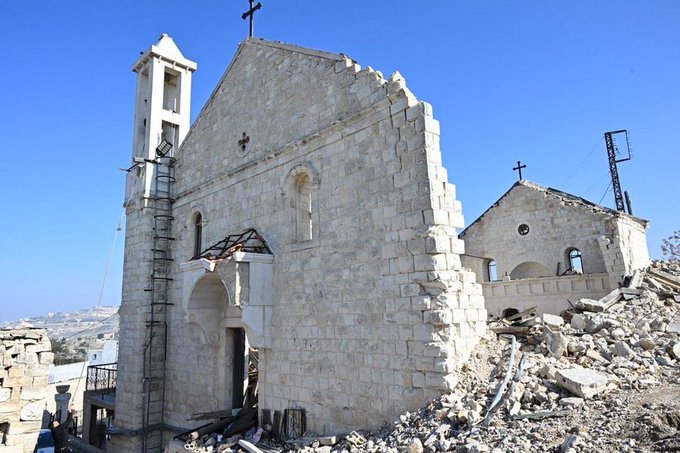
The bishops specifically cited Yaroun, where local officials and community representatives say a Melkite convent was destroyed earlier this month alongside other structures, describing the destruction of the buildings as “a deep wound in the national and human conscience”.
According to Christian community figures in Yaroun, the convent belonging to the Melkite tradition was bulldozed by Israeli occupation forces in southern Lebanon.
Adib Ajaka, a local Christian community leader, said the structure was part of a religious complex that also included nearby facilities. He disputed claims that the convent remained intact, stating that rubble near adjacent buildings indicated its destruction.
In turn, the French Catholic charity L’Oeuvre d’Orient condemned the “deliberate act of destruction of a place of worship and the systematic destruction of homes in southern Lebanon aimed at preventing the return of civilian populations”.
The organization called for the protection of religious heritage sites and civilian housing, warning of long-term consequences for displaced communities.
This isn’t an isolated case; the desecration of religious sanctities is a recurrent activity for Israeli forces. From Gaza to South Lebanon, numerous videos and photos were posted by Israeli soldiers themselves showing them shooting pointlessly at mosques, desecrating churches, and destroying statues of religious figures.
Last month, a photo circulating on social media showed an Israeli occupation soldier using a sledgehammer to strike the head of a statue of Jesus on a crucifix that had fallen from a cross.
Israel’s Obliteration Ecocide from Gaza to Lebanon and Beyond
By Dan Steinbock | Palestine Chronicle | May 3, 2026
Lebanon accuses Israel of committing ecocide in country since 2023. It is an extension of Israel’s destruction of Gaza – and its obliteration doctrine.
Israeli military aggression has “reshaped both the physical and ecological landscape” of southern Lebanon, according to the Lebanese report (which does not consider the impacts of Israel’s latest barrage of attacks this spring).
In her foreword, Lebanon’s minister for the environment, Tamara el Zein, notes: “The scale and intentionality of the damage to forests, agricultural lands, marine ecosystems, water resources, and atmospheric quality constitute what must be recognized as an act of ecocide, with consequences that extend far beyond immediate destruction.”
Obliteration ecocide in Lebanon
Released by the country’s National Council for Scientific Research and presented by the environment ministry, the report accuses Israel of “ecocide” during the 2023–2024 war and subsequent escalations. It frames environmental destruction not as incidental “collateral damage” but as a systematic transformation of ecosystems.
Key findings are damning. They include:
- 5,000 hectares of forest destroyed
- Massive agricultural losses ($118m direct infrastructure damage; much larger indirect losses)
- Soil contamination (including high phosphorus levels)
- Air pollution from repeated strike cycles
- Destruction of orchards and irrigation systems
Minister el Zein characterizes this as “intentional ecological destruction” affecting food systems, public health, and the long-term viability of southern Lebanon’s rural economy.
International reporting on the same dossier highlights an estimated total damage burden of over $25 billion when recovery costs and economic losses are included. The figure is a combined total from the assessments by the Lebanese report and the World Bank Rapid Damage and Needs Assessment (RDNA) 2025.
This framing aligns with a growing legal discourse around “ecocide” as a potential international crime, particularly where environmental damage is widespread, long-term, and strategically embedded in military operations.
It is also aligned with UN reporting on the broader Israel–Lebanon escalation, confirming extensive infrastructure destruction, civilian displacement, and strikes affecting residential areas.
As the ecocide of Gaza has gone effectively unpunished by the international community, the Netanyahu government is extending the environmental devastation into Lebanon and the proximate region.
Obliteration Doctrine in Gaza
In The Obliteration Doctrine (2025), related commentaries and excerpts, I define this doctrine as the lethal mix of scorched earth policy, collective punishment, and civilian victimization, coupled with massive indiscriminate bombardment and systematic use of artificial intelligence (AI).
The concept is vital because it connects the dots between military strategies, aerial bombardment, lethal deployment of artificial intelligence (AI) and international law, particularly the Geneva Conventions and the Genocide Convention. As Professor William Schabas, a leading scholar of genocide, notes, “the Obliteration Doctrine” “adds a new term to the lexicon on genocide, notably in the application of international law and its judicial mechanisms.”
Modern warfare in Gaza is no longer just counterinsurgency but systems-level destruction of the environmental and infrastructural substrate of life—water, soil, agriculture, energy, and urban continuity.
This interpretation overlaps with empirical reporting on Gaza’s environmental collapse:
- Satellite analysis shows 38–48% of tree cover and farmland destroyed
- Severe contamination of soil and groundwater
- Large-scale destruction of greenhouses and irrigation systems
- Air pollution from sustained bombardment and debris burning
These patterns are described in independent investigations as producing conditions of near-uninhabitability in many parts of Gaza.
Warfare is no longer bound by battlefield geography. It becomes the restructuring—or “obliteration”—of ecological systems that sustain civilian life.
Ecocide here is not merely the destruction of nature, but the destruction of life-support systems as a purposeful strategy. It is another word for cultural genocide.
Lebanon and the Gaza template
The Lebanese report and international commentary suggest strong structural parallels between Gaza and southern Lebanon operations:
- Destruction of orchards, especially olive groves (long-lived economic ecosystems)
- Targeting of water infrastructure and rural supply systems
- Repeated airstrikes generating soil and atmospheric contamination
- Displacement of civilian populations from ecologically productive zones, which can be seen as a form of ethnic cleansing
International media reports that Israel is applying a “Gaza playbook” in Lebanon: expulsion orders, infrastructure targeting, and village-level destruction patterns.
Lebanon is now an adjacent theatre where similar operational logics are extended across a different ecological terrain:
- Gaza: dense urban-agricultural mosaic under blockade conditions
- Southern Lebanon: dispersed agro-ecological rural system with forested and orchard economies
In both cases, ecological assets are not collateral but structurally embedded in livelihood and resistance capacity – and that makes them strategic targets under the high-intensity obliteration doctrine.
Consequences beyond Lebanon (and for Israel)
The environmental consequences of such conflict patterns are not geographically contained. Three spillover trajectories are particularly important.
First of all, regional ecological degradation. Soil contamination, wildfire damage, and agricultural collapse are not confined to strike zones. Windborne particulates, water contamination, and long-term soil chemistry changes affect broader cross-border ecosystems.
Second, economic fragility and food-system insecurity. Both Lebanon and Israel depend on regional agricultural stability and water systems. Repeated infrastructure destruction increases food import dependence, rural depopulation and long-term land degradation in border zones.
Third, internal Israeli environmental vulnerability. A less discussed but critical dimension is the simple reality that prolonged warfare conditions can feed back into Israel’s own ecological systems vis-à-vis air quality deterioration from sustained military operations, water system strain under security infrastructure expansion, fire ecology disruption in northern regions. long-term land-use militarization effects.
In this sense, “obliteration” generates mutual ecological degradation across interconnected landscapes. It is an ecological version of MAD – mutually assured destruction.
Diffusion of Doctrine
The key concern is not just localized destruction but doctrinal diffusion. Methods of high-intensity ecological disruption normalize across theaters. And let’s keep in mind that the first test of the obliteration doctrine occurred in Dahiya, the predominantly Shia enclave of Beirut.
US military legacy in Iraq and Syria already includes extensive infrastructure and ecosystem disruption under counterinsurgency and airpower doctrines. These features include water system destruction in Iraq, oil field fires, atmospheric contamination, and urban siege warfare effects in Raqqa and Mosul via coalition partners.
Such precedents create a shared operational vocabulary where environmental damage is treated as secondary to strategic objectives.
In a potential Israel–Iran escalation scenario, ecological infrastructure becomes strategically central through water scarcity systems in Iran’s arid regions, oil and petrochemical infrastructure vulnerability, and agricultural basins dependent on irrigation networks.
Under the obliteration logic, these become dual-use environments—civilian life-support systems that also acquire military significance.
Finally, there is the regional systemic risk. This implies a shift from territorial warfare to ecosystem-targeted coercion, where water, soil, energy, and agriculture become primary pressure points. Meanwhile, environmental degradation is exploited as a form of strategic leverage and recovery cycles extend beyond political timelines into generational horizons.
From Battlefield to Biosphere as a Target
The Lebanese charges, Gaza environmental destruction data, and the doctrine of obliteration converge on a structural transformation in modern conflict.
The object of war is increasingly not just territory or armed forces, but the ecological infrastructure that makes civilian life possible. In this way, destruction of that infrastructure is a prelude to ethnic cleansing and displacement.
For military doctrines, this may be framed as an incidental or operational necessity. But for Lebanon and environmental analysts, this constitutes potential ecocide under international law. In view of the obliteration doctrine, it represents a systemic shift in the practice of warfare itself, from the battlefield to the biosphere as a target.
What happens in Gaza won’t stay in Gaza. What happens in Lebanon won’t stay in Lebanon. The stage is being set for obliteration ecocides wherever they are seen as effective necessities.
Ecological systems are now central to both the conduct and consequences of war.
– The author of The Fall of Israel (2024) and The Obliteration Doctrine (2025), Dr Dan Steinbock is the founder of Difference Group and has served at the India, China and America Institute (US), Shanghai Institute for International Studies (China) and the EU Center (Singapore). For more, see https://www.differencegroup.net/
Palantir touts record expansion and ‘battlefield’ AI value
RT | May 4, 2026
Palantir Technologies reported a blowout first quarter, saying revenue rose 85% year on year to $1.63 billion as its US business more than doubled, driven by rapid growth across both commercial and government customers.
The company said in its Q1 report, published Monday, that US revenue jumped 104% to $1.28 billion, with commercial revenue up 133% to $595 million and government revenue up 84% to $687 million. The results beat Wall Street estimates, and the company also raised its full-year guidance, saying it now expects 2026 revenue of up to $7.66 billion, implying annual growth of about 71%.
CEO Alex Karp, who has increasingly framed Palantir’s AI tools as central to Western military and industrial power, said the “twin pistons of our US business are now firing in sync.”
“We believe it is not hyperbolic to say that nearly all AI workflows that actually create value – especially on the battlefield – are built on Palantir,” Karp wrote in an accompanying letter to shareholders, stating that the company “was founded to strengthen US national security, to protect Americans and their freedom.”
Palantir – named after the obsidian seeing-stones from Tolkien’s The Lord of the Rings, through which the dark lord Sauron keeps watch on his underlings – is a software firm primarily serving the defense and intelligence sectors.
Palantir’s flagship product is a system called Gotham, which pulls together and analyzes satellite footage, human intelligence from the CIA, signals intelligence from the NSA, and other data that might otherwise take days to sift through. Gotham and MOSAIC – another Palantir target-identification program that pulls digital data, including surveillance footage and IP addresses, from a target area – use AI to label the most effective targets for military strikes.
The US has acknowledged using these programs to select targets during its ongoing war on Iran, but insists that humans make the final decision to fire. Abroad, Palantir’s technology is used by the British Ministry of Defence, the Israel Defense Forces, and the Armed Forces of Ukraine.
The company’s earnings update came weeks after Palantir drew criticism for a 22-point manifesto summarizing themes from Karp’s book The Technological Republic. The manifesto argued that Silicon Valley has an “obligation” to participate in national defense, that “hard power” will be built on software, and that AI weapons are inevitable. Critics labeled it a blueprint for “technofascism.”
New KC-46 Supertankers Promise Israel Conventional Samson Option Strike Сapability
Sputnik – 04.05.2026
The first of six customized, Boeing KC-46 ‘Gideon’ tankers has completed its maiden flight in the US, and will be delivered to Israel in about a month’s time, the Israeli Defense Ministry has announced.
The twin-engined ‘next-gen stealth tanker’ aircraft feature:
- standard 767 airframe married to new tech
- remote vision
- fly-by-wire refueling boom
- anti-jamming and secure datalinks
- the ability to refuel multiple jets (including F-35Is) simultaneously
- one tanker can support up to a dozen combat aircraft.
KC-46s can also be customized for refueler, cargo or passenger roles, and have a standard range of 11.8 k km and a 29.5k kg cargo or 96.3k kg fuel payload. They can also tap into their own fuel cargo, effectively giving them a global range.
Jpost says the planes will be a “game-changer in providing Israel much greater independence” to target Iran, Yemen, “and any other potential distant adversaries in the future, even if some later US administration may oppose such a strike.”
The planes could also provide Israel with something equivalent to a conventional Samson Option – a non-nuclear variant of a scary scenario where the IDF lashes out at enemies and allies alike if its home defenses are overrun.
Separately this week, Israel approved the purchase of additional F-35s and F-15s to double existing stockpiles from 50-100 and 25-50, respectively.
How ‘Israel’s’ Iran regime change plot failed – again
By Kit Klarenberg | Al Mayadeen | May 4, 2026
An investigative report by Israeli outlet Ynet has laid bare the embarrassing cataclysm not only of the US-Israeli war on Iran, but the Zionist entity’s effort throughout to end the Islamic Republic via covert and overt military and intelligence operations. Violent Mossad-orchestrated protests, the murder of Leader Sayyed Ali Khamenei, and a Kurdish invasion were intended to produce regime change and “total victory” over Tehran. Yet, as Ynet concludes: “what started as a far-reaching Israeli move, rich in imagination, final in its solution, ends in heartache.”
In granular detail, the investigation tracks how the Zionist entity’s deranged scheme germinated in the minds of Israeli intelligence, military, and political chiefs, before the Trump administration was comprehensively sold on the plot. Along the way, Ynet exposes extraordinary and dangerous levels of delusion and imperial hubris at the highest levels of Tel Aviv and Washington. For example, Benjamin Netanyahu sincerely – and entirely falsely – believed “Israel’s” criminal September 2024 assault of Lebanon, and the June 2025 12-Day War, had decimated Hezbollah and Iran.
This perspective was shared by Mossad, which had been building a vast, dedicated anti-government army in Tehran since 2022. The Zionist entity was delusionally convinced it had the power to collapse the entire Islamic Republic. “Fostering mass protest” and encouraging “armed resistance of minorities” – specifically, Kurds within and without Iran – in “parallel” with assassinating Leader Sayyed Ali Khamenei was part of a three-pronged coup d’etat strategy. Netanyahu believed “total victory” over the Resistance was in grasp in every theatre. Ynet reports:
“Overthrowing the regime was the heart of Israel’s overall war plan.”
The operation was intended to be put into action this June. Yet, in January, with “tens of thousands” of Mossad-directed insurrectionists in the streets of Tehran and other Iranian cities, the Zionist entity believed conditions had sufficiently “ripened” to make a decisive move. Mossad’s “influence organization” was birthed in 2022, reaching “operational maturity two and a half years ago.” Ynet bleakly boasts of the “effort and sophistication” of the Zionist entity’s armed clandestine army of anti-government rioters in Tehran:
“Israel has established its own poison machine. This is a serious weapon system that, if fully operational, can be fatal.”
Mossad pitched its braindead regime change plan directly to the CIA, Pentagon Central Command was informed of it by visiting Zionist Occupation Forces chief of staff Eyal Zamir, while Trump got personally lobbied by Netanyahu. The President – “convinced there were no limits to the capabilities of the military system at his command” after Nicolas Maduro’s January 3rd kidnap – and his administration were a highly receptive audience. Trump indicated his endorsement of the conspiracy on January 13th, publicly informing Iranians “help is on its way.”
A vast US military buildup in West Asia immediately began, while supposed peace talks with Tehran were ongoing. The negotiations were of course a con, intended to lull the Resistance into a false sense of security before the next phase of “Israel’s” intended palace coup commenced. On February 28th, Zionist-American airstrikes rained down on Tehran. “Israel” and the US firmly believed Iran’s leadership had been eliminated or scattered, and the Islamic Republic’s command and control system was “severely beaten.” But then, catastrophe started to erupt.
‘Popular Uprising’
While Sayyed Khamenei was killed – in an assassination demonically celebrated by Western media as “the assassination of the century” – sending Iran’s leadership temporarily underground, “an orderly change of government, in accordance with Khamenei’s will,” was successfully executed. Iran’s command and control system wasn’t significantly disrupted, returning to full capacity within hours. No defections were forthcoming. Still, “euphoria” abounded in Washington and Tel Aviv. Trump – who privately “welcomed the Israeli hit” – issued a video statement urging the Iranian people to take power by violence, warning:
“To the members of the Islamic Revolutionary Guard, the armed forces and all of the police. I say tonight that you must lay down your weapons and have complete immunity, or in the alternative, face certain death.”
Netanyahu joined the insurrectionary call. Problematically though, “the crowd chose to stay home,” in no small part because of genocidal US-Israeli bombardment from the skies. A deliberate strike on a primary school killed 165 young girls, sparking fiery international condemnation, vengeful mourning throughout West Asia, and UN investigations. Iranians instead took to the streets in sizeable numbers to grieve Khamenei, while celebrating his son Mojtaba’s ascension to Leader. Immediately, the IRGC moved to blockade the Strait of Hormuz.
Despite the closure being an absolutely inevitable upshot of criminal Zionist-American aggression against Iran, which Western intelligence assessments universally long-forecast, Ynet reports the US was “not ready for this move and its devastating economic consequences.” Trump’s threats not to blockade the Strait were ignored. The riddle of why Washington was so caught off guard is perhaps best answered by Netanyahu’s assurances to Trump that the Islamic Republic would collapse in mere days. Astonishingly, there was no contingency plan beyond that.
In the meantime, another cog of the Zionist-American regime change operation in Tehran was also fatally faltering. “After 100 hours of air activity… a ground invasion from Kurdish militias based in Iraq” was supposed to commence. An invasion force had been training there over prior weeks, preparing “to reach the Kurdish region of Iran” and link up with fighters locally before a “mass march” to Tehran. For inspiration, Tel Aviv looked to Damascus being overwhelmed by MI6-supported HTS forces in mere days in December 2024.
However, Ynet reports Iranian intelligence quickly learned “in advance about the planned invasion,” and supposedly informed Turkey, prompting Recep Erdoğan to personally demand Trump call it off. The entire proposal was, in any event, manifest insanity. After reports emerged in early March of the CIA working with Kurdish militants “with the aim of fomenting a popular uprising in Iran,” even Zionist think tank pundits and diaspora activists warned such action was a recipe for disaster, which would unite Iranians of every extraction in opposition.
Still, Kurdish invasion remained a fundamental component of “Israel’s” regime change strategy in Tehran during the war. When a tentative ceasefire was struck on April 7th, after 40 days of devastating Iranian strikes, Ynet reports Israeli officials wondered why the invasion never came to pass. Did the US not believe in the operation in the first place? Perhaps Trump changed his mind after Erdoğan picked up the phone? Or was “the whole idea a fantasy, with no chance of being realised?”
‘Inadvertent Effects’
That the Zionist entity was so convinced its self-evidently misguided mission could possibly succeed is all the more damning, given the contents of a July 2025 report from the highly influential, Tel Aviv-based Institute for National Security Studies. A withering appraisal of the 12-Day War, the think tank acknowledged Iranian regime change had been an avowed Zionist objective from the conflict’s inception, which failed spectacularly. Nonetheless, the report still advocated for the Zionist entity to pursue the Islamic Republic’s destruction, via a palace coup.
However, INSS explicitly warned against employing precisely the regime change tactics depended upon by the ZOF and Mossad during the latest Zionist-American war on Iran to achieve that end. For one, the think tank correctly predicted any Israeli military effort – including civilian bombing – intended to ignite mass anti-government protests had no chance of success. Such actions during the 12-Day War had in fact produced an intense “anti-Israel wave” among Iranians, who “exhibited a notable degree” of “rallying around the flag” in response.
Iranians’ determination “to defend their homeland at a critical moment against an external enemy” endured after the 12-Day War ended, to the extent all traces of public dissent in the Islamic Republic “almost completely disappeared” in the conflict’s wake. INSS likewise vehemently cautioned against encouraging “separatist tendencies” in Iran – such as Kurdish militancy. Due to “heightened public sensitivity to any perceived foreign attempts to promote ethnic fragmentation,” separatist insurrection, let alone invasion, would unite “large segments” of the Iranian public “against Israel.”
Moreover, an eerily prophetic portion of INSS’ report explicitly warned against assassinating Leader Sayyed Ali Khamenei, as doing so “would not necessarily result in regime change,” and inevitably backfire. The think tank precisely foretold Tehran “would likely have little difficulty selecting a successor, who could prove to be more extreme or more capable.” INSS likewise predicted the Iranian government instead being strengthened, and anti-Zionist sentiment skyrocketing in Iran and beyond, leaving any subsequent “efforts to destabilize the regime through popular protest” dead on arrival.
All these humiliating outcomes came to pass. As yet, INSS’ forecast that military-driven Israeli regime change efforts in Iran would compel the Islamic Republic to seek nuclear weapons capability “as an existential insurance policy” hasn’t materialised, although Western officials now widely fear it may. Meanwhile, ever since the ceasefire was implemented, talks between Washington and Tehran have been stuck in a seemingly implacable stalemate. While US officials remain committed to imposing sharp limits on Iran’s nuclear research, the Islamic Republic refuses to even negotiate the issue.
Furthermore, Tehran has made clear its chokehold over the Strait of Hormuz will only be loosened when the Empire stops blockading the country, and ends the conflict. While Netanyahu still harbours reveries of shattering the Islamic Republic, the Empire lacks the requisite economic and military muscle. Meanwhile, overextended Tel Aviv has blundered into a colossal trap in Lebanon, and the Resistance is waiting and watching intently. In recklessly seeking self-evidently unattainable regime change in Iran, the Zionist entity has only hastened its own permanent destruction.
Featured Video
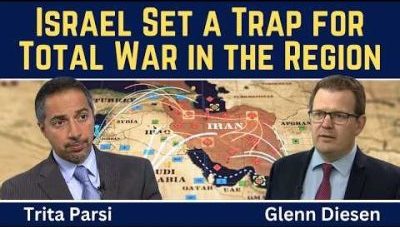
Trita Parsi: Israel Set a Trap for Total War in the Region
or go to
Aletho News Archives – Video-Images
From the Archive
Zionism’s Violent Legacy
By Donald Neff | Washington Report On Middle East Affairs | January 1996
On January 4, 1948, Jewish terrorists drove a truck loaded with explosives into the center of the all Arab city of Jaffa and detonated it, killing 26 and wounding around 100 Palestinian men, women and children.[1] The attack was the work of the Irgun Zvai Leumi – the “National Military Organization,” also known by the Hebrew letters Etzel – the largest Jewish terrorist group in Palestine. The Irgun was headed by Revisionist Zionist Menachem Begin and had been killing and maiming Arabs, Britons and even Jews for the previous ten years in its efforts to establish a Jewish state.
This terror campaign meant that at the core of Revisionist Zionism there existed a philosophical embrace of violence. … continue
Blog Roll
 Aletho News
- Trita Parsi: Israel Set a Trap for Total War in the Region
- Trump’s Iran war is on an Israeli leash
- Saudi oil boss issues global supply warning
- Riyadh Says Its Oil System Is Intact. The Numbers Say Otherwise.
- Trump and Netanyahu Want to “Finish the Job” on Iran
- US ‘one-sided dictation’ not Iran’s beliefs makes rational talks impossible: Baghaei
- Iran’s Next Strike May Not Explode. It Could Shut You Down /Col Doug Macgregor
- Iran: US political targets legitimate if assassinations return
- Iraq shuts key border crossing with Iran under US pressure: Report
- Undersea Internet cables could be targeted in retaliation for attacks on Iran: IRGC deputy chief
- If Americans Knew
- The Israel Lobby’s Changing Fortunes
- AIPAC has become such a political liability that it’s shifting to a more “nimble” approach to buying politicians
- At least 160 Israeli settler attacks in 2 weeks
- Will Gaza’s Ancient Christian Community Disappear Forever?
- Israel’s vision of regional security rests on keeping Arab states weak
- Heidi Levine recounts how Palestinian youths helped save her in settler attack
- DAILY UPDATE: Latest essential news on Palestine, Israel, & region
- Trump’s Intensifying Sabotage of the ICC, for Israel’s Sake
- Israeli military detain US and UK volunteers in West Bank including Democratic NY politician Brad Lander
- Americans at National Conservatism Conference held in Israel this year criticize Israel
- No Tricks Zone
- E-Cars Reduce CO2 Emissions By Only 41% Compared To Internal Combustion Engine Vehicles
- Predictions Made By Renowned Climate Professor Over Past Decades Have Been Proven To Be Poor
- New Study Suggests Large Regions Of The Pacific Ocean Have Been Cooling For The Last 80 Years
- Germany’s Green Energy Debacle: High Energy Costs Force Kahla Porzellan to Close After 182 Years!
- New Study: 50 Years Of The Most Aggressive ‘Net Zero’ Policies Can Only Affect The Global Climate By 0.03°C
- US September “Heat” Was No Record…Many Records Set Decades Ago
- Latest European Green Energy Debacle; Portugal’s Largest Flagship Solar Park Insolvent!
- Green Energy Debacle: German Expert Professor Fritz Vahrenholt Warns Of Severe Economic And Social Consequences
- Two More Paleo Reconstructions Affirm Meters-Higher Sea Levels Across Ireland, Brazil 7000-6000 Years Ago
- New Study: Earth And Venus Surface Warmth Largely Explained By Convection And Lapse Rate, Not CO2 Or Radiation

