Israeli MP: Tel Aviv aiding Takfiris in Syria
Press TV – September 12, 2016
An Israeli lawmaker has criticized the Tel Aviv regime for supporting Takfiri terrorists who are fighting in Syria to topple the government of President Bashar al-Assad.
In a Facebook post on Sunday, Akram Hasson said the Fateh al-Sham terrorist group, formerly known as al-Nusra Front, is operating in Syria with “unprecedented logistical and medical” support from Israel.
He said Israel’s recent escalation of attacks on the Syrian army positions in the Golan Heights are aimed at paving the way for the terrorist group to gain more grounds.
Golan belongs to Syria, and the international community has never recognized Israel’s occupation of around 1,200 square km (460 square miles) of the territory during the 1967 Six-Day War and its annexation later.
Scores of illegal settlements have been built in the area over the years while the Israeli regime has used the area to launch attacks against the Syrian government and its allies.
Israel has recently intensified its airstrikes on the Golan Heights, targeting the Syrian army and the Lebanese resistance movement Hezbollah, which is assisting Damascus in the fight against Takfiri terrorists.
The Israeli lawmaker further said that the Fateh al-Sham terrorist group is bombing the Syrian Druze village of Khadr, with the support of Israeli Minister of Military Affairs Avigdor Lieberman.
“This new strategy led by Lieberman since he took office has strengthened the Nusra Front and it’s raising its head to attack our brothers,” Hasson wrote.
Citing eyewitnesses, Hasson said the Takfiri terrorist group is using advanced technological equipment, adding Israel’s strategic support has been broadened over the past few months.
Syria has been gripped by foreign-backed militancy since March 2011. UN Special Envoy for Syria Staffan de Mistura estimates that over 400,000 people have been killed in the conflict.
Damascus has blamed regional players, including Saudi Arabia and Israel, for supporting Takfiri militants inside the country.
Is Bibi A Lizard?
By Gilad Atzmon | September 12, 2016
Netanyahu’s recent ethnic-cleansing video offers us a spectacular glimpse into Jewish identity politics and the ease with which the Jews morph between ideology and political stance. In the video below, PM Netanyahu accuses the Palestinians and their supporters, by making it a condition of peace that Israel withdraws its illegal settlement, of leanings towards ethnic cleansing.
I am not here going to argue with Netanyahu’s ridiculous idea. I am obviously in total agreement with Gideon Levy and others who have taken the trouble, time and again, to prove that Israel is the only ethnic cleanser between the river and the sea.
But if Israel is the only ethnic cleanser in Palestine, then all Bibi is doing is simply projecting i.e. attributing his own racist symptoms onto the Palestinians and their supporters. Now, I’m no great fan of Freud and even less enthusiastic about his terminology, but he sure did help us understand the Jew or, shall we say, the Jewish psychological nature. Seemingly, projection is at the core of the Jewish psyche. Jews see racism everywhere, simply because they attribute their own racism to others. So, Netanyahu, in accusing others of ethnic cleansing, is simply projecting his own symptoms onto the Palestinians.
But it goes further. The concern with people being ethnically cleansed is a humanist, empathic position, traditionally associated within Left and progressive thought. It is in fact totally foreign to the Lebensraum, racist ideology that drives the Zionist precept of which PM Netanyahu is a devout follower.
So one may wonder how Bibi managed to transcend himself from oppressor to victim? How does he manage to so abruptly switch sides from being a practitioner of Lebensraum into a ‘progressive voice’? The answer is devastatingly simple. For a Jew to switch sides, to move from the hard right into the poetic left and vice versa is a mere verbal exercise. This capacity of metamorphosis is embedded within Jewish identity politics and I guess that Kafka was the first to point us towards it.
So, with a little help from Binyamin Netanyahu, Israelis mange to simultaneously be oppressors as well as victims. But are the anti Zionists that different?
How long did it take Max Blumenthal to morph from being an enthusiastic Zionist Nazi Hunter into a pro- Palestinian who only occasionally hates Germans for being White. The same can be said about pretty much every Jewish Left and anti-Zionist organisation. They preach anti-racism in the name of the most enlightened liberal and progressive ideologies but at the same time, they themselves operate within racially inclusive political cells.
The so-called ‘antisemites – those who hate Jews for being Jews, used to refer to Jews as chameleons. They simply could not understand the lack of integrity at the heart of Jewish politics. They could not grasp how Jews switch allies so rapidly.
Netanyahu’s video this morning certainly made me wonder at how comfortable he seems lying compulsively in front of the camera. But what, I wonder, happens to Bibi when he faces himself, alone in the morning in front of the mirror? Who (or what) does he see in front of him? Is it the head of the Likud party? Is it a progressive humanist? Or is it simply a lizard, a chameleon who morphs constantly as it moves along.
I guess David Icke has, more than once, attempted to address this question…
How Israel Stole the Bomb
By James DiEugenio | Consortium News | September 11, 2016
In 1968, CIA Director Richard Helms was presented with a disturbing National Intelligence Estimate (NIE) stating that Israel had obtained atomic weapons, a dangerous development that occurred earlier than the CIA had anticipated.
It was particularly dangerous because just the year before, the Six Day War had marked the beginning of open hostilities between the Israelis and Arab nation states. To prevail, Israel had launched preemptive air attacks against Egypt, Jordan, Syria and Iraq at the start of the conflict. Considering that violent backdrop, Helms immediately arranged a meeting with President Lyndon Johnson to inform him of this troubling milestone.
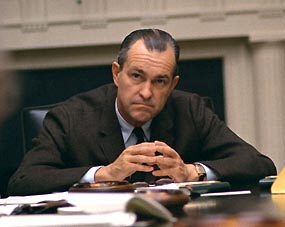
CIA Director Richard Helms
The man who had prepared the NIE and gave it to Helms was the CIA’s chief science and technology officer, Carl Duckett. After Helms met with Johnson, the CIA Director told Duckett about the President’s rather odd reaction. LBJ did not get upset, and he did not order an investigation into how it happened. Further, he did not tell Helms to let both the Defense Department and State Department know about it so they could establish intelligence inquiries or consider sanctions.
Instead, Johnson did the opposite. He told Helms to keep the news secret and specifically told the Director not to let the secretaries of State or Defense know about it.
Helms obeyed the orders of his Commander in Chief, but he decided to talk to the FBI about how this development had occurred earlier than expected. Thus begins Roger Mattson’s Stealing the Atom Bomb: How Denial and Deception Armed Israel, the riveting story of duplicity, betrayal, cover-ups and deceit.
As the book shows, the cover-ups and duplicity did not just come from Israel and its agents in America. The deceit also came from men inside the American government who, for whatever reasons, decided to cast a blind eye on what was really happening under their jurisdiction, even after they had been alerted to it.
What Mattson reveals is no less than an atomic heist – one that could have been prevented if men in high positions had done their duty.
Highly Enriched Uranium
After Johnson told Helms not to tell State or Defense, the CIA Director called Attorney General Ramsey Clark, because what made this news even more ominous — and a potential crime — was what the CIA had discovered when it conducted a chemical test around the Israeli nuclear reactor at Dimona, in the Negev desert.

U.S. AG Ramsey Clark with Lyndon Johnson in 1967
Duckett had concluded that Israel had something that they should not have possessed at that time: HEU, or highly enriched uranium, which could only be produced by one of the five major powers that already had nuclear weapons.
But the test had also revealed characteristics that showed the material had originated in the United States. (Mattson, p. 97) Specifically, the HEU came from Portsmouth, Ohio and then was further processed at a plant in Apollo, Pennsylvania.
The importance of this information was that the HEU was processed to such a degree – well over 90 percent U 235 – that it was classified as weapons grade uranium. The technical term for it is the acronym SNM, or Special Nuclear Material, meaning that it is fissile: it can easily be split with neutrons. Although the Portsmouth plant is shut down today, beginning in 1956 it did produce weapons-grade uranium.
It was in Apollo, Pennsylvania, that the trail of the SNM and the crime of its diversion becomes exceedingly suspect. The plant that did the further processing of HEU, and the ultimate shipping, was named Nuclear Materials and Equipment Corporation, or NUMEC, and there were a number of reasons why suspicion had centered on NUMEC even before Helms called Clark.
First, NUMEC had a rather unreliable record when it came to keeping track of HEU and other materials that had been given to it through the Atomic Energy Commission (AEC). The way the system worked is that the particular company would forward its business requests — from either private or governmental agencies — to the AEC. The AEC would then estimate how much nuclear material NUMEC would need to fulfill the contract. If a company was using up more material than the AEC properly estimated, that company would be fined quite a lot of money. If the shortages persisted, the AEC and the FBI could then open up an investigation.
With CIA’s discoveries, the possibility presented itself that a diversion of the nuclear material could be taking place. Either someone from the outside was stealing the material, or someone on the inside was embezzling it.
As Mattson shows with charts, graphs and testimony, NUMEC had an extraordinarily bad record in this regard. The company was eventually fined over $2 million for missing materials, which, with inflation factored in, would be about $15 million today. Mattson adduces that from 1959 to 1977, about 345 kilograms of HEU went missing from NUMEC, which translates to well over 700 pounds. (ibid, p. 286)
Explaining the Deficits
In just one year, there was a loss of over 56 kilograms (or about 123 pounds). The company made up all sorts of rationales as to why this much HEU was missing, including losses during the mechanical processing. But as the author points out, there are two problems with this accounting.
First, no other plant in America reported losses of this magnitude. The AEC concluded that the losses at Apollo were more than double what they were at any other comparably sized atomic plant in the U.S. (ibid, p. 65)
Secondly, even if one chalks up some of the missing HEU to a processing loss, that still does not account for the entire record of NUMEC. Mattson figures that, even giving the company the benefit of the doubt, it still leaves about 200 pounds of missing HEU. (ibid, p. 67) That’s enough for about six atomic bombs, larger than the one used on Hiroshima.
As Mattson reports, what makes NUMEC an even more intriguing suspect is the fact that the company had some legitimate business transactions with Israel, concerning the irradiation of plants. And these legitimate packages were sent at about the time the HEU went missing. Further, the inventory records at NUMEC were extremely sloppy and some appear to have been destroyed in direct violation of the AEC code, meaning NUMEC should have been cited, but wasn’t. (ibid, p. 75)
That brings us to the founders of the NUMEC plant in Apollo, Pennsylvania, a small town of approximately 1,600 people that lies about 30 miles northeast of Pittsburgh. In 1955, the Apollo Steel Plant was purchased by David Lowenthal. Two years later, Lowenthal and Zalman Shapiro cooperated in forming NUMEC.
Shapiro, a very accomplished metallurgist who lived next door to Lowenthal, had been employed for a number of years at the nearby Bettis Atomic Power Laboratory, which supported the AEC’s Office of Naval Reactors.
In May 1958, Lowenthal merged Apollo Steel with the San Toy Mining Company in Maine. San Toy then changed its name to Apollo Industries, with the main operating officers of this new corporation Morton Chatkin, Ivan Novick and Lowenthal. (ibid, p. 43)
The board comprised these three men plus Shapiro, and later others. In the early 1960s, the steel plant’s name was changed to Raychord Steel, but with the decline of the steel industry, Raychord became a subsidiary company to Apollo.
Ties to Zionist Groups
Novick, one of Apollo’s officers, later served as national president of the Zionist Organization of America, in which Chatkin, another officer, also held a leadership role. The ZOA was a member group of the American Zionist Council, which later became the American Israel Public Affairs Committee, which today is considered to be the leading lobbying group for Israel and one of the most powerful lobbying groups in Washington.
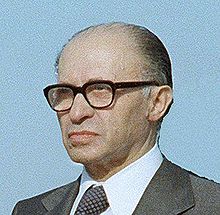
Israeli Prime Minister Menachem Begin
Novick also later served as a personal liaison between Ronald Reagan’s White House and the administration of Israeli Prime Minister Menachem Begin.
Lowenthal, who was born in Poland in 1921, came to America in 1932 and served in the American armed forces in World War II, eventually becoming a citizen in 1945. After the war, he worked with the Haganah, the Jewish paramilitary force inside Palestine, on the Zionist mission to ferry Jews into Palestine in 1947 on board the boat SS Exodus.
Since almost none of the passengers had legal immigration certificates to enter Palestine, the British Royal Navy, which ran the Palestinian Mandate, seized the ship and deported its passengers back to Europe. Lowenthal’s mission was a practical failure, but a tremendous propaganda success for the Zionist cause. The event was novelized by author Leon Uris in the number-one best-selling book Exodus, which was published in 1958 and was made into a movie two years later by director Otto Preminger, starring Paul Newman.
Lowenthal later served on board the ship Pan York, which also attempted to evade the British quarantine but was captured in Cyprus with the crew arrested, including Lowenthal. He escaped and fled to Palestine where he served with the Haganah during the war that broke out there in 1948 after the British abandoned the mandate early. (ibid, p. 44)
Lowenthal ended up serving under the legendary Meir Amit, the leading intelligence officer in Israel during the 1960s. Lowenthal was also personally acquainted with future prime ministers David Ben Gurion and Golda Meir.
Nuclear Experience
Shapiro, who had advanced degrees in chemistry and metallurgy from Johns Hopkins, worked for Westinghouse and the Navy on the nuclear reactor that powered America’s first atomic submarine, the Nautilus. Shapiro also helped develop the fuel for the first commercial nuclear reactor, the Shippingport Atomic Power Station in Pennsylvania.
Like Lowenthal, Novick and Chatkin, Shapiro also was active in supporting Israeli causes, although his activities had a slightly educational tone. He was a member of the Technion Society, which supported advances in Israeli science and technology. Indeed, he became an Honorary Life Member of the group.
He also was a Director of Hillel, an international organization that tries to acquaint Jewish students with each other on campuses and organize student trips to Israel. Like Novick and Chatkin, he was a member of the Zionist Organization of America. Many years later, it was discovered that Shapiro was on the Board of Governors of the Israeli Intelligence Center, which honors spies for Israel who clandestinely advanced the interests of the state. (Mattson, p. 84)
Beyond the individual backgrounds of these four men, there was also something else which should have attracted the U.S. intelligence community’s attention prior to Helms’s meeting with President Johnson. While running NUMEC, both men – Shapiro and Lowenthal – were taking trips to Israel and had contacts with high officials of Israeli intelligence as well as Israel’s version of the AEC.
Further, NUMEC had a guest worker, an Israeli metallurgist, in its plant, as part of an agreement NUMEC had with Israel to serve as a training consultancy which resulted in the formation of a joint company with Israel called ISORAD that initially was to deal with irradiation of citrus fruits through gamma rays. But the FBI later discovered that NUMEC also had contracts with Israel for the development of plutonium oxide as fuel elements in nuclear reactors. (Mattson, pgs. 80-81)
Since Lowenthal had so many acquaintances in high positions, he often visited Israel, including a most curious instance at about the time he purchased Apollo Steel in 1956. It was at this time that Israel was making decisions about foreign sourcing for nuclear materials and technology.
A year later, NUMEC was formed and Shapiro immediately applied for a license from the AEC to process uranium fuel in a building formerly occupied by Apollo Steel. John Hadden, CIA station chief in Tel Aviv, later noted the unusual coincidence of these events on two continents. (ibid, p. 45)
Israeli Visits

Israel’s Dimona nuclear weapons plant
But declassified FBI files reveal that the visitations were not just one way, i.e. from Apollo, Pennsylvania, to Israel. There were also visits and meetings of Israeli officials who went to Apollo.
At the time of those meetings, there were four main branches of Israeli intelligence. The Shin Bet corresponded with the Federal Bureau of Investigation; the Mossad with the Central Intelligence Agency; the Aman roughly with the Defense Intelligence Agency; and the LAKAM, which was responsible for security at Dimona and for procuring scientific and technological data from Western sources. (Mattson, p. 108)
In the mid-1960s, France started scaling back its support for the Dimona reactor, which was supposedly a research facility. With France’s pullback, LAKAM began seeking out and purchasing parts and supplies from other sources to complete the project.
LAKAM’s job included concealing the reactor’s true function – the development of a nuclear bomb – from American inspections. (ibid) During an American inspection in 1964, LAKAM even created a “Potemkin village” control room to deceive the visitors.
Unlike American intelligence, Israel also had a special operations unit that served all branches. Established in 1957, it was run by Rafi Eitan and his deputy, Avraham Bendor. (In the 1980s, Eitan became notorious for the Jonathan Pollard spy case, in which Pollard, a navy intelligence employee, was paid tens of thousands of dollars to spy for Israel in the United States with Eitan his ultimate control agent.)
In September 1968, the AEC told the FBI that they were giving permission to NUMEC for a visit by four Israelis, including Eitan and Bendor. However, in the application to the AEC, the occupations of the two were disguised. Eitan was said to be a chemist in the Defense Ministry; Bendor supposedly worked for the electronics division. (ibid, p. 110)
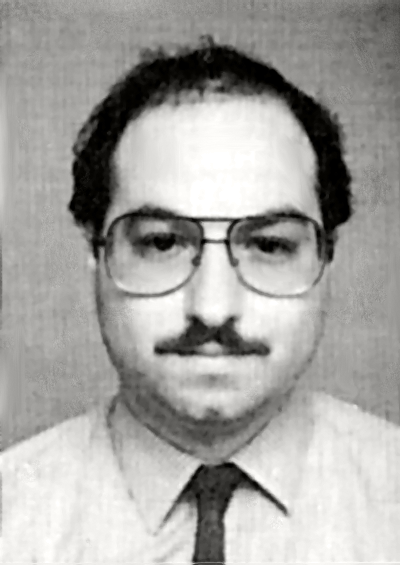
Convicted Israeli spy Jonathan Pollard
The other two men were Avraham Hermoni, who was billed as a Scientific Counselor in the Israeli Embassy in Washington, and Dr. Ephraim Biegun, described as working in the Division of Electronics for Defense. Again, this was misleading. Hermoni did, at times, work out of Washington’s Israeli Embassy, but his prime and most important function was overseeing and planning Israel’s nuclear weapons program, which he did from 1959-69. Biegun was actually head of the technical division of the Mossad from 1960-70.
CIA Suspicions
After the visit, NUMEC reported that the four men were in Apollo to buy thermo-electrical generator systems. (ibid, p. 119) Why Eitan and Bendor had to be there for that purpose is not readily apparent.
CIA officer John Hadden thought the real reason for the visit was that Shapiro was divulging top-secret technical information about plutonium manufacture – and that he was aided in this by the visiting Israeli scientist working at NUMEC. The FBI later came to agree that this was most likely the true reason for the visit. (ibid, p. 120)
Hermoni revisited Shapiro in November 1968, but the capstone to the visits to Apollo came later that month. As noted previously, France had cut back on its support for Dimona in the mid-1960s, halting the supply of uranium fuel in 1967.
In late November 1968, the Mossad arranged a covert operation called Operation Plumbat, which employed a front company in West Germany to purchase 200 tons of uranium yellowcake from Belgium. The transaction was approved by Euratom, the European organization controlling such transactions, but once the transport ship set sail for the port of Genoa, Italy, it was intercepted by another ship used by the Mossad. When the original ship reached port, the hull was empty.
The timing of this operation, on the heels of the mysterious visits by Israeli intelligence agents to Apollo, seems to constitute powerful circumstantial evidence of Israeli intentions.
Then, right after the completion of the Plumbat mission, who arrived in Israel? None other than Zalman Shapiro. The FBI discovered that in November 1968, in addition to the personal visits, Shapiro was in frequent phone contact with a number of Israeli intelligence agents, including Hermoni. (Mattson, p. 126)
A Longstanding Goal
Israel’s long trail of subterfuge and duplicity was part of a longstanding goal. As early as 1948, David Ben-Gurion, Israel’s first prime minister, stated that what Einstein, Teller and Oppenheimer did for America, they could easily do for Israel, since they were all Jews. In fact, he offered Einstein Israeli citizenship, which the great man declined. (ibid, p. 22) Ben-Gurion then had two meetings with Oppenheimer and numerous ones with Teller.
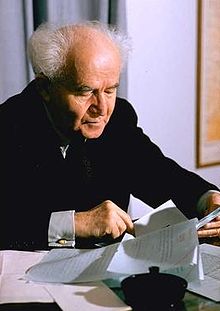
David Ben-Gurion, Israel’s first PM
Ultimately, Israel settled on David Bergmann, a brilliant chemist whom Ben-Gurion appointed first chief of the Israel Atomic Energy Commission in 1952. By 1955, Bergmann was essentially running the day-to-day operations of Israel’s atomic program.
In a conversation with the American ambassador, Bergmann said the Israeli science education program was adequate in physics and chemistry but weak in engineering and non-existent in metallurgy. He also revealed that the design he had laid out for a reactor was the same as the one at Shippingport, Pennsylvania, an intriguing clue because Shapiro was a metallurgist and had worked on the Shippingport power station.
Indeed, Shapiro eventually met Bergmann and the two became close friends and colleagues, serving on the board of ISORAD, which was a joint venture of NUMEC and the IAEC. Bergmann made his first visit to America for IAEC in 1956, the year before Lowenthal turned Apollo Steel into NUMEC.
There were two significant investigations of Shapiro and NUMEC. The first was instigated by Dick Helms’s call to Ramsey Clark in 1968 and the discovery of the highly enriched uranium at Dimona. (Mattson, p. 99) The second began in 1976 when Jim Conran, a whistleblower at the Nuclear Regulatory Commission, voiced complaints about the background and actions of Shapiro. Conran was a security officer and his warnings eventually got the attention of the White House. (ibid, p. 161)
During the first investigation, the FBI could not find enough evidence to justify a violation by Shapiro of the Foreign Agents Registration Act, which mandates that any person in the U.S. who is representing a foreign country’s interests has to register with the Justice Department. But the FBI did recommend cancelling Shapiro’s security clearances, based on wiretaps that revealed Shapiro in close contact with Israeli intelligence officials and with members of the IAEC. (ibid, p. 138)
During these calls Shapiro reportedly said he would help Israel in any way that he could. He also expressed frustration with the new ownership at NUMEC, which had been purchased by ARCO. But his Israeli contacts said he was too valuable to leave and encouraged him to stay there. (ibid, p. 139)
FBI Surveillance
One of the most curious episodes that the FBI surveillance revealed was a meeting between Shapiro and a man named Jeruham Kafkafi, a suspected Mossad officer working under diplomatic cover. He had left Washington by air on the morning of June 20, 1969, and met Shapiro at the Pittsburgh airport for about an hour. He then left and flew back to Washington.
As a result of that surveillance, Shapiro was interviewed by the AEC in August 1969, with some of Shapiro’s answers to questions rather dubious. For instance, he said he did not know Hermoni was in charge of the Israeli nuclear development program and thought he was a university professor. Shapiro said his discussions in September and October 1968 with the Israeli officers were about water contamination, saboteur detection and military activities.
When asked why the Israelis could not have talked to the Defense Department about those topics, Shapiro had no answer. The interviewer wrote in his summary that Shapiro was cool and calm throughout except when the Kafkafi meeting was brought up. At first, Shapiro said he could not recall it, even though it happened just two months earlier. He then said he did remember it, claiming it was about an overdue invoice and a power supply resource. (p. 142)
The AEC investigators did not find the last reply credible, since it did not seem to justify an airline flight from Washington to Pittsburgh and back. Shapiro adjusted his answer by saying that there was some discussion of an investigator whom he knew from America who was going to visit Israel. He also added the figure of $32,000 as to how much Israel owed NUMEC. As Mattson notes, again, this explanation does not seem to justify an air flight and an hour-long meeting with a clandestine Mossad officer.
Closing the Inquiry
The man who ultimately decided to close this initial inquiry was Glenn Seaborg, head of the AEC. Not only did he not see any civil or criminal charges as being viable, but when President Richard Nixon’s Attorney General John Mitchell recommended revoking Shapiro’s security clearances, Seaborg balked at that also.
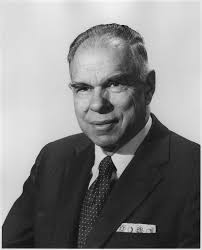
Glenn Seaborg, chairman of the AEC
Mattson clearly sees Seaborg as being a villain in the piece. Late in the book, he explicitly accuses him of running a cover-up. (see p. 297) And, there is evidence to back up this charge. It was later discovered, during the second inquiry, that Seaborg had a close personal friendship with Shapiro. (ibid p. 268)
Earle Hightower, assistant director of safeguards at AEC, explicitly stated that the whole case regarding NUMEC was rigged because it was known that Seaborg would not take action. Little more than three years after Seaborg left the AEC, it was dissolved in 1975 and was replaced by the Nuclear Regulatory Commission, in part, because critics accused the AEC of an insufficiently aggressive regulatory program.
The second, much longer, and more vigorous inquiry into NUMEC and Shapiro came about at the creation of the NRC when Jim Conran was tasked with reviewing the record of how safeguards had worked previously for the AEC so they could be strengthened in the future. In that review process, he came across the case of Shapiro and NUMEC.
When Conran asked to see more files on both, he was denied access, causing him to go up the NRC ladder to Chairman William Anders, who was briefed by, among others, Carl Duckett of the CIA. Since Anders was about to leave for a diplomatic post, he took his concerns to James Connor at President Gerald Ford’s White House.
In March 1976, the CIA’s Duckett addressed an informal gathering of pilots and astronauts, saying there was little doubt Israel had about 20 nuclear warheads. Although this was supposed to be off the record, the information leaked. In April 1976, Time reported that this claim was accurate, except the newsmagazine put the size of the arsenal at 13 bombs and added that the warheads could be delivered by Phantom jets or Jericho missiles.
Duckett wrote a memo to CIA Director George Bush in which he said he suspected that the Israeli program was jumpstarted by a diversion of enriched uranium from the NUMEC plant. (p. 165) He attached various appendices to the memo to show the results of previous inquiries into NUMEC and explain why his belief was justified.
One of the appendices consisted of a paper by John Hadden in which he expressed the suspicion that NUMEC was actually a shell company the Israeli government had set up for the express purpose of diverting materials, technology and information that Israel needed to speed up and facilitate its longstanding quest for atomic weapons. (ibid, p. 166)
A New Investigation
Attorney General Edward Levi was then sent a summary of the FBI’s previous investigation of NUMEC. Levi alerted Ford that he thought NUMEC was culpable for several crimes and, with Ford’s permission, he wished to begin a criminal inquiry. Since Ford’s close adviser James Connor was also disturbed by these findings, the President approved the investigation.
What followed was a tedious bureaucratic battle between the CIA and FBI. The FBI felt it did not have direct proof that a diversion had taken place, while the CIA had the proof — the chemical tests at Dimona — but was reluctant to reveal the intelligence to the FBI. Also, the CIA did not want to furnish the FBI with technical experts to help educate the investigating agents so they could effectively cross-examine important witnesses. Thus, the FBI’s inquiry dragged on through three presidents: Ford, Jimmy Carter and Ronald Reagan.
But even with these obstructions, the FBI did eventually find witnesses to a diversion from the Apollo plant. It turned out that the FBI did not do enough interviews of plant employees in its initial inquiry because there were at least four of them willing to talk. Those witnesses form the climax of Mattson’s book.
In 1980, one witness said that when he read newspaper accounts about the losses of enriched uranium at Apollo, he had to chuckle to himself. When asked why, he replied that in 1965 or 1966, he was walking near the loading dock at Apollo and saw people loading containers – the dimensions that were used for HEU packets – into equipment boxes. He noticed that the shipping papers for the boxes revealed that the packages were destined for Israel. This witness then suggested some other workers at the plant who had seen similar activity. (Ibid, p. 272)
Suspicion Shipment
One of these witnesses saw a flatbed truck backed up into the loading dock area with Shapiro pacing around the area while the driver was loading “stove pipes” into a cabinet on the truck. This struck the witness as odd because the plant had regularly assigned workers for loading duties during the day but this shipment was being prepared in the evening. He explained that “stove pipes” were cylindrical containers that the plant used to pack enriched uranium inside. Each stove pipe usually contained three or four packets of HEU.
When he glanced at the clipboard resting on a package, he saw the destination was Israel. The clipboard then was yanked away and an armed guard escorted him off the dock. He also said it was unusual to see Shapiro in this area of the plant, and further, that Shapiro was very seldom there at night. (ibid, p. 275)
There were two other witnesses who told the FBI about similar events. The FBI also interviewed an NRC inspector named James Devlin, who told the agents that, contrary to what Shapiro had said, the security at the Apollo plant was below par and that NUMEC did not employ a professional security force. The company had one regular armed guard and Devlin happened to know who he was, since he was also a deputy for the township. The only other guards were unarmed and non-uniformed. (ibid, pgs. 272-73)
By this time, the FBI did not want to continue the investigation, believing that nothing would come of it, although the Justice Department urged the investigators on. But the FBI was correct since, as Mattson notes more than once in his book, the last president who really wanted to stop Israel from becoming a nuclear power was John F. Kennedy. (See pgs. 38-40, p. 256)
Richard Helms’s conversation with a disinterested President Johnson underscores how that attitude changed after Kennedy’s death. As Mattson further notes, opposition to Israel’s nuclear-weapons program was more or less negated by President Richard Nixon’s meeting with Prime Minister Golda Meir in 1969 when he agreed that the U.S. would not make any public statements revealing Israel’s nuclear arsenal nor demand that it sign the Non-Proliferation Treaty, as long as Israel did no testing and made no public threats.
Even that policy was probably violated in 1979 with the Vela Incident: a suspected Israeli nuclear test done in the Indian Ocean.
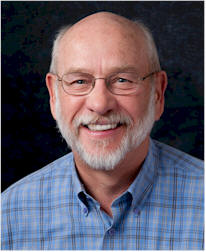
Author Roger Mattson
Author Roger Mattson was part of the inquiry about the illegal transfer of atomic secrets to Israel, working in the NRC’s safeguards department when Conran first voiced his fears about a diversion at NUMEC. Thus, Mattson became part of an internal review of the Shapiro case, seeing firsthand how certain intelligence agencies were, by accident or design, obstructing the investigation.
Mattson concludes his important book by stating that this policy of casting a deliberate blind eye towards a nuclear heist by Israel places the U.S. in a compromised position when trying to enforce a policy of non-proliferation on other nations because of the obvious double standards.
To point out one paradox, the U.S. government executed Julius and Ethel Rosenberg for purportedly supplying nuclear secrets to the Soviet Union with less evidence. Plus, the tinder box of the Middle East is probably the last place where America should have allowed atomic weapons to proliferate, but it did.
Because of that, the U.S. has little or no moral authority on the issue today.
James DiEugenio is a researcher and writer on the assassination of President John F. Kennedy and other mysteries of that era. His most recent book is Reclaiming Parkland.
Netanyahu’s Ethnic Cleansing Blood Libel
By Richard Silverstein | Tikun Olam | September 10, 2016
The pro-Israel crowd love to trot out anti-Semitic memes to smear their opponents. One of them, used widely by Alan Dershowitz and the like is the term “blood libel.” Accuse Israelis of killing Palestinians indiscriminately and it’s a blood libel because, of course, a Jew shedding non-Jewish blood is the same as Jews murdering Christian babies to use their blood in making matzah for Passover. Got that?
Bibi Netanyahu’s latest outrage is this video in which he ever so innocently professes bafflement that Palestinians would oppose Israeli settlements. Why, he asks, if 2-million “Arabs” (the actual number is 1.8-million) live in Israel proper, can’t Jews live in Palestine?
There is a wee-small problem with this analogy: approximately 600,000 Israeli Jews live in settlements. But they have lived in them for at best a generation, while Palestinians have lived in Israel for centuries. The vast bulk of settlers moved to Palestine since 1967, while Palestinians have lived in Israel over a vastly longer span. Nor have Palestinians displaced anyone over this period. While Israeli settlers have literally stolen the land out from under the Palestinian natives.

Ethnic cleansing Israel-style: yet another Palestinian home bulldozed
Bibi’s general argument is not new. He and his supporters have advanced it for years. But he added a new and even more outrageous twist this time: Palestinian opposition to Israeli settlements was akin to ethnic cleansing because it meant no Palestinian would ever accept any Jew living anywhere on Palestinian land.
There are numerous outrageous elements to this charge worth parsing. The first, and most obvious is that it’s Israel, rather than Palestine, that’s engaged in ethnic cleansing. Israel has destroyed a record number of Palestinian homes over the past year, leaving their inhabitants homeless. It has enacted draconian definitions of Palestinian residency which render tens of thousands of Palestinians stateless if they live outside areas like East Jerusalem for any length of time. Israel also depopulates Palestinian neighborhoods of East Jerusalem through forcible eviction and theft of homes. Israel maintains a stranglehold over the West Bank economy so that stifles innovation, independence and development that might sustain the population. The final coup de grâce is the siege of Gaza, which has forced thousands of Gazans to flee their imprisonment by any means possible.
So which Israeli Jew has ever been ethnically cleansed from Palestine? None. Further, the claim that Palestinians will never accept Jews living in Palestine is a hoax perpetrated by none other than Netanyahu himself and his followers. In fact, those like Rabbi Menachem Froman, who lived in the Tekoah settlement before his untimely death, denounced the idea of Israeli national sovereignty in the West Bank. He argued that he would happily live under Palestinian jurisdiction. What was important to him was not which nation owned the land on which he lived. Rather, he believed God owned the land and his allegiance was to Him and not to any particular nation.
Such an approach offered a way for Jews to remain in Palestine after a peace agreement was signed. Undoubtedly, the lion’s share of settlers would return to Israel, rather than remain under Palestinian sovereignty. But to those who really sought to uphold the vision of Abraham and the Bible to live in this Holy land, they could live there as Palestinian (or Israeli) citizens.
The final hypocrisy of Bibi’s video is his refusal to reciprocate with Palestinians regarding Jewish settlers in Palestine. If you truly believe that Jews must live there, then it’s self-evident that Palestinians should be permitted to return to their homes in pre-48 Israel. Jewish settlers see their return to their ancestral homeland as a fulfillment of sacred Biblical texts and a divine promise. The Palestinian return to their homelands from which they were expelled by Israel in 1948 is no less compelling to them. It is, to them, reparation for the Original Sin committed against them by Ben Gurion in the establishment of the State.
So if Bibi wants to argue that Jews who returned to ancient sites like Hebron or Tekoah or Bethlehem must be permitted to remain there, I say fine: then let’s talk about the return of the original refugees expelled in the Nakba and their direct descendants.
The U.S. government was none to happy with Bibi’s incitement against Palestinians. The State Department, in its typical milquetoast fashion, called the comments “inappropriate and unhelpful.” This sort of language is akin to taking a pebble to a gunfight. It’s one thing when David faces off against Goliath with a slingshot. But this is like David blowing bubbles at his well-armed nemesis. Indeed, the motto for U.S. policy toward Israel should be an inversion of the famous military slogan: “always outnumbered, always outgunned.”
NOTE: I’ve just published a new piece at Mint Press News, Israel Ramps Up Its War on BDS. It exposes an official Israeli campaign of death threats and intimidation against Palestinian activists and NGOs.
Israel launches new airstrikes on Syria’s Golan
Press TV – September 10, 2016
Israeli military aircraft have launched yet more strikes on the Golan Heights in southwest Syria.
The Israeli military said Saturday that “artillery positions” were hit in Golan after “a projectile” coming from Syria hit the Israeli-occupied part of the territory.
The projectile caused no injuries or damage, the Israeli military said.
Similar attacks had been carried out against Syrian military positions on Thursday under the same pretext. Attacks had also been carried out in July and before.
An Israeli military spokeswoman said the firing of projectile from Syrian-controlled Golan was most likely unintentional, calling it “spillover” from the fighting in the Arab country.
Golan belongs to Syria, and Israel’s occupation of around 1,200 square kilometers (460 square miles) of the territory during the 1967 Six-Day War and its later annexation have never been recognized by the international community.
Tens of illegal settlements have been built in the area over the years while the regime in Tel Aviv has used the area to launch attacks against the Syrian government and its allies.
Such attacks have intensified over the past years as groups like Lebanese resistance movement Hezbollah, which have a history of fighting against Israel, have become more active in Syria to assist Damascus in the fight against terrorists.
Despite official statements claiming that Israel has remained on the sidelines of the war in Syria, there have been numerous reports that Israel is offering weapons and medical care to militants through Golan.
Reports say most of these arms and assistance are delivered to groups like Nusra Front, an offshoot of al-Qaeda which recently changed its name to Jabhat Fateh al-Sham.
Syria’s state television said later that an army outpost was targeted in the Israeli raid on Saturday. A Syrian military source said the attack was meant to help the militants in their offensive against the government near Golan.
The source elaborated by saying that militant groups recently launched an operation against Syrian troops in the southern province of Quneitra and Israeli airstrikes on the army post were aimed at facilitating the militants’ push.
Israel demolishes home in occupied Syrian Golan Heights
WAFA | September 8, 2016
MAJDAL SHAMS, GOLAN HEIGHTS – Israel, for the first time, demolished on Wednesday a home in the Israeli-occupied Syrian Golan Heights claiming it was built without a permit, a Golan-based human rights group said on Thursday.
Al Marsad, the only human rights group operating in the Golan Heights, said in a statement that hundreds of Israeli police accompanied bulldozers as they proceeded to demolish the home of Bassam Ibrahim in Majdal Shams, the largest town in the occupied Syrian Golan, under the pretext it was built without a permit.
“This is the first time that the Israeli authorities have demolished a home in Majdal Shams,” said Al Marsad. “The destruction of this home marks the adoption of a new systematic policy of home demolitions by the Israeli authorities in the remaining Syrian villages in the Occupied Syrian Golan. The Syrian owners of dozens of other homes have been threatened with similar action,” it said.
Al Marsad accused Israel of preventing the Syrian population from building in their cities while encouraging and facilitating the construction and expansion of illegal Israeli settlements in the Golan Heights.
“As a result of the severe restrictions imposed by Israeli planning and construction committees, it is close to impossible for the Syrian population to obtain the necessary building permits. Therefore, the Syrian population is forced to build homes without building permits, as this is the only way to meet their housing needs given unprecedented levels of overcrowding,’ said Al Marsad.
Israel occupied the Golan Heights in the June 1967 war.
Increased Israeli attacks on civilians in Gaza endanger two-year-old ceasefire
MEMO | September 8, 2016
Israeli forces markedly increased their attacks on Palestinian civilians in the Gaza Strip during the second quarter of 2016, United Nations (UN) data has revealed, with concerns that such violence endangers the viability of the ceasefire that ended ‘Operation Protective Edge’ in 2014.
During the period April-June, there were an average of more than 90 shooting incidents per month by Israeli forces in Gaza’s so-called access restricted areas (ARA) – some 60 on land, and 30 at sea. This is more than double the equivalent average figures for the last six months of 2015.
Israeli forces have long attacked farmers, fishermen and other civilians in Gaza’s ARA. As the UN described in July, Israel’s unilaterally-imposed access restrictions are “enforced by firing direct or warning live ammunition, the destruction of property, arrests and the confiscation of equipment.”
Presenting the latest figures in a quarterly update published last month, the UN’s Office for the Coordination of Humanitarian Affairs (OCHA) in the Occupied Palestinian Territory (OPT) described “the use of force by Israel” in the ARA as a “particular cause for concern.”
According to James Heenan, head of office at the Office of the United Nations High Commissioner for Human Rights in the occupied Palestinian territory, “there are almost daily shooting incidents by Israeli forces into Gaza, often resulting in injury and even death as well as destruction of property.”
In most cases, Heenan told Middle East Monitor, “there are no indications that Israeli forces were in any imminent threat to have justified the level of force employed, including use of firearms. Often victims are farmers, fishermen, children, and demonstrators.”
On April 3, the Israeli authorities announced an expansion of the permitted fishing zone off the southern Gaza coast from six to nine miles (note that the Oslo Accords stipulate a 20-mile limit). However, on June 26, less than three months later, the six-mile limit was re-imposed.
By July, according to OCHA, more than 90 fishermen had been arrested and detained, “the highest figure in any year since records began in 2009.” Over nine days in August, for example, Israeli forces attacked Palestinian fishermen on six different occasions (Aug. 21, 23, 25, 27, 28, 29).
In May, meanwhile, it was reported that the Israeli army would allow farmers to access land close to the border fence, under the supervision of the International Committee of the Red Cross (ICRC). Since 2014, the ICRC has been helping Gaza’s farmers to rehabilitate land and secure access.
While some farmers have clearly benefited, a Jerusalem-based ICRC spokesperson declined to comment on Israeli forces’ continued attacks in the ARA, saying that “any issues of concern are addressed as part of our confidential and bilateral dialogue with all parties to the conflict.”
As one farmer told activists recently: “My lands are relatively close to the fence, so I cannot set foot in them between 6pm and 6am without getting shot at. What can I do if the electricity does not come before 6pm? I have to leave my land without watering, risking the loss of the crop.”
The violence used by Israeli forces against Palestinian civilians in the Gaza Strip is vastly under-reported in the English-language Western media. The majority of attacks on fishermen, farmers, and demonstrators do not even get a mention.
Such attacks, however, cannot be divorced from the bigger picture in the Gaza Strip, including the ‘security’ dimension that is typically understood by journalists, analysts, and policy-makers in terms of projectile fire and Israeli military responses.
According to Fawzi Barhoum, a Gaza-based Hamas spokesperson, Hamas views Israeli forces’ routine use of violence against Palestinians in the ARA as a violation of the 2014 ceasefire. “Hamas records all the violations, and updates the regional sponsors of the ceasefire accordingly”, he said.
Furthermore, Barhoum added, such attacks by Israeli forces “endanger the status quo.”
Each time, Hamas discusses what happens with the other Palestinian factions, who evaluate together what is the best response to the Israeli violation in question; whether it is silence, condemnation, warnings, firing short-range rockets, unleashing snipers on the borders, etc.
Thus, aside from the cost for farmers and fishermen of Israel’s policy of violently enforcing a ‘no-go zone’ inside Gaza, such attacks, clearly on the rise, also risk further undermining a ceasefire agreement that brought ‘calm’ for Israel, but nothing like it for Palestinians.
Call to action: Olive Harvest 2016
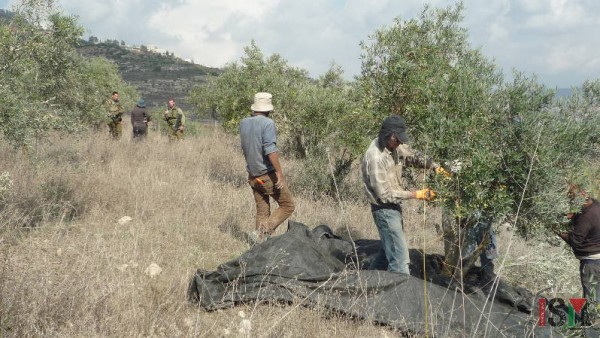
Palestinian farmer and internationals discussing picking permit with Israeli forces.

Nablus: Olive tree cut down by settlers
Starbucks CEO declares support for Hillary Clinton

Starbucks “proudly serving” the occupation of Afghanistan
Press TV – September 8, 2016
Howard Schultz, the founder and CEO of Starbucks, announces support for US Democratic presidential nominee Hillary Clinton.
In an interview with CNN, Schultz let slip which way he was voting, saying, “I’m hopeful that after the election – and hopefully Hillary Clinton will be elected president – that we will begin to see a level of unity and people coming together.”
When asked if he had officially backed Clinton with that statement, the CEO responded “I guess I just did. I think it’s obvious Hillary Clinton needs to be the next president.”
Starbucks, which has over 22,500 coffee stores, is one of the companies anti-Israel activists boycott.
Throughout her campaign for the 2016 US presidential race, Clinton has advocated herself as a champion for Israel. Zionist voters have in turn showed their support to her.
According to inminds.co.uk research:
Howard Shultz, the chairman of Starbucks is an active Zionist.
In 1998 he was honoured by the Jerusalem Fund of Aish HaTorah with “The Israel 50th Anniversary Friend of Zion Tribute Award” for his services to the zionist state in “playing a key role in promoting close alliance between the United States and Israel”. The Jerusalem Fund of Aish HaTorah funds Israeli arms fairs chaired by the butcher of Jenin – General Shaul Mofaz, and the Zionist propaganda website honestreporting.com.[1]
His work as a propagandist for Israel has been praised by the Israeli Foreign Ministry as being key to Israel’s long-term PR success [2].
Recently whilst the Israeli army was slaughtering Palestinians in Jenin, Nabulus and Bethlehem he made a provocative speech blaming the Palestinians of terrorism, suggesting the intifada was a manifestation of anti- Semitism, and asked people to unite behind Israel [3].
At a time when other businesses were desperately pulling out of Israel, Starbucks decided to help Israel’s floundering economy and invest in Israel – a joint venture with Israeli conglomerate Delek Group for Starbucks outlets in Israel (Shalom Coffee Co).[4][5][6]. A bad business decision – Starbucks had heavy losses and in April 2003 Starbucks were forced to announced that all 6 Starbucks cafes in Israel will be shut down and its partnership with Delek end.[14]
It has been revealed that Starbucks still continues to support Israel by sponsoring fundraisers for Israel.[15]
See [11] for suggested action against Starbucks.
Oxfam has misguidedly partnered with Starbucks in return for £100,000 – please support our “Campaign Against Oxfam Agreement with Starbucks“.
Starbucks fully supports Bush’s war of terror and has opened a Starbucks in Afghanistan for the US invaders – they like to do their bit to help the occupation.[17]
ADDITIONAL INFO & REFs :
| [1] | Israel 50th Anniversary Friend of Zion Tribute Award
Howard Schultz was presented with “The Israel 50th Anniversary Friend of Zion Tribute Award” by the The Jerusalem Fund of Aish HaTorah in August 27, 1998. [a][e] According to the Jerusalem Fund of Aish HaTorah “The Friends of Zion award salutes leaders who have played key roles in promoting close alliance between the United States and Israel”[e] Awards Page Mystery
Its interesting that the Israel 50th Anniversary Award given to Howard Schultz was once displayed with pride on the Starbucks website on the company’s “Awards and Accolades” page but since the boycott started biting it has mysteriously disappeared from the page![a]
The Jerusalem Fund of Aish HaTorah 1. The Jerusalem Fund of Aish HaTorah sponsors Israeli military arms fairs chaired by the butcher of Jenin – General Shaul Mofaz, Israel’s Minister of Defense. It aims to “strengthen the special connection between the American, European and Israeli defense industries” and “to showcase the newest Israeli innovations in defense”.[f] 2. The Jerusalem Fund of Aish HaTorah also sponsors the Zionist propaganda website “honestreporting.com“.[g] 3. The Aish HaTorah, the main beneficiary of The Jerusalem Fund of Aish HaTorah, whilst described as an apolitical international network of Jewish education centres, produces propaganda material for Israel. One video they produce by Rabbi Ken Spiro titled “The Islamic Connection to Jerusalem” starts “The Islamic connection begins in the 7th century, thousands of years after the original Jewish connection.” and continues to belittle Jerusalem’s Islamic heritage – propaganda to justify Israeli occupation of Jerusalem.[b] Also featured on their site is “The Occupied Territories – A Primer” which denies the status of the West Bank and Gaza as “occupied” and argues that they be called “disputed territories”.[c] No wonder they were praised by Israeli Prime Minister Binyamin Netanyahu: “I congratulate Aish HaTorah for what they’re doing, where they’re doing it, and for whom they’re doing it.”[d] [a] http://www.starbucks.com/aboutus/recognition.asp |
||
| [2] | Jerusalem Report
Losing the Media Battle (April 22, 2002) “… The key to Israel’s long-term PR success, Meir(*) believes, is on the campuses of North America and Europe. Wealthy Jews like Howard Schultz, the owner of the Starbucks chain, are helping with student projects, including seminars held in both Israel and North America, in which students hear Israeli presentations on the crisis…” (*) Gideon Meir, the official in charge of the Israeli Foreign Ministry’s PR effort. |
||
| [3] | Starbucks CEO says anti-Semitism on the rise
Howard Shultz warns American Jews against complacency 04/04/2002 Reported by Elisa Hahn, KING 5 SEATTLE – Divisions within the Jewish community were on display Thursday in Seattle as Starbucks CEO Howard Schultz criticized Palestinian inaction in the Middle East while others protested the Israeli occupation of Palestinian lands. “If you leave this synagogue tonight and go back to your home and ignore this, then shame on us,” Howard Schultz told a crowded temple of Jewish Americans on Seattle’s Capitol Hill. Schultz warned other Jews against sitting back and doing nothing. “What is going on in the Middle East is not an isolated part of the world. The rise of anti-Semitism is at an all time high since the 1930’s,” he said. “The Palestinians aren’t doing their job they’re not stopping terrorism.” While reaction inside the temple to Schultz’s remarks grew from a warm reception to a standing ovation, the mood outside the temple was different. A handful of Jews gathered there to protest the Israeli government’s actions of late and their occupation of Palestinian lands. There were similar sentiments Thursday at Seattle’s Westlake center. “We only get the side that talks about Palestinians as terrorists. As if all the civilians right now living in a state of siege and terror are terrorists and they’re not,” said protestor Alethea Mundy, whose younger brother is in Bethlehem doing relief work for Palestinian refugees. She’s worried about her brother, but realizes that everything is relative. “This is what the Palestinians live with every day, two weeks is nothing for my brother,” |
||
| [4] | American-Israel Chamber of Commerce, Southeast Region e-Newsletter
JULY-AUGUST-SEPTEMBER 2001 Starbucks will open its first two cafes in Tel Aviv during the first week of September and plans to open another three branches in the area by the end of the year with 15 more throughout Israel by the end of 2002. Israel-based Delek, which recently purchased a chain of US convenience stores and established its US headquarters in Nashville, Tennessee, will be the majority shareholder in Starbucks Israel. see [13] for more on Delek’s US connection. |
||
| [5] | Starbucks next market: Israel
Starbucks Coffee Co. chairman Howard Schultz loves a challenge. He opened the Japanese market during the depths of that country’s spectacular recession, and now he’s set his sights on conflict-ridden Israel. The stores will be built through a joint venture company, Shalom Coffee Co., which will be owned by publicly traded Israeli conglomerate Delek Group and Starbucks Coffee International, Starbucks’ internationally focused wholly-owned subsidiary. No word yet on how many Starbucks stores are planned for the tiny Middle Eastern nation, which has been plagued by escalating violence between Palestinians and the Israeli military since last fall. … http://seattle.bizjournals.com/seattle/stories/2001/04/16/daily31.html |
||
| [6] | Jerusalem Post, Sunday, April 22 2001
Starbucks to open here later in year According to the agreement, which is expected to be signed in the next few weeks, Delek will hold 80.5 percent of the coffee chain, while Starbucks Coffee International will hold the remaining 19.5%. Starbucks will have the option to increase its share to 50% at a later date. Originally Delek and Burger King co-owner Yair Hason were negotiating for a 40% share each in a venture with Starbucks, but a few months ago the deal was cancelled. The announcement that Starbucks will be coming is expected to be welcomed by local coffee lovers who have long been awaiting the rumored arrival of the chain which has with 3,600 stores in the US. According to the Delek Group the plan is “to open dozens of stores.” The first stores are expected to open late this year. “We expect Israel to be an excellent market for Starbucks, with great growth opportunities,” said Peter Masien, president of Starbucks Coffee International. Delek’s investment in the coffee chain is part of its strategy to expand into new areas, said Giora Sarig, president of Delek’s Israel Fuel Corporation, one of the three subsidiaries of the Delek Group. “We are delighted to become partners with such a world-class brand as Starbucks,” he said. The coffee shops will not be connected to the Delek gas stations. The local competition is not overly concerned about the entrance of the well known chain. Aroma’s operating manager Ben Balbinder told The Jerusalem Post that “more coffee stores will raise the awareness of coffee drinking.” He added that according to his personal experience in the US, Starbucks coffee is not on the same level as that of Aroma. Aroma, which sells one and half tonnes of coffee a month, currently has eight cafes with another three are to be opened in the next two months. Balbinder said that the local coffee market is continuing to grow and has contributed to a decision to expand aggressively in the next year and a half. Starbucks , which has been traded on Nasdaq since 1992, has a current market capitalization of $7.8 billion, with more than 4,500 retail locations in the US, Europe, the Middle East, and the Pacific Rim. It is well represented in the Middle East with stores in Bahrain, Saudi Arabia, Kuwait, Lebanon, Qatar, and the United Arab Emirates. The company was founded in 1971 and also sells tea, pastries, ice creams, other food and beverages, and coffee accessories. The company also has an on-line store as well as selling directly to restaurants, businesses, airlines, and hotels. The Delek Group, which was founded in 1951, has three major subsidiaries: Israel Fuel Corporation, Delek Real Estate, and Delek Investments & Properties, a holding company for activities in automotive distribution and retailing, oil and gas exploration, biochemical manufacturing, convenience stores, and other retail operations. Delek is traded on the Tel Aviv Stock Exchange at a value of NIS 2.8b. |
||
| [7] | Two “Standard replies” activists are receiving from Starbucks when they complaint about the recent speech Howard Schultz made:
First:
Second:
|
||
| [8] | Starbucks Coffee have partnerships with:
Source: http://www.starbucks.com/aboutus/friends.asp |
||
| [9] | Starbucks Coffee has 4,709 locations around the world in the following countries (Mulsim countries are shown in bold)
Australia Source: |
||
| [10] | To locate your nearest Starbucks (internationally) see: | ||
| [11] |
|
||
| [12] | According to Yahoo Finance :
Howard Shultz’s annual pay as Chairman of Starbucks is $2.2 Million, and last year he received an additional $22.6 Million from the value on options excercised in the fiscal year.[a] Howard Shultz also has interests in the following companies:
[a] http://biz.yahoo.com/p/S/SBUX.html |
||
| [13] | Boycott Mapco Express & East Coast store-gas stations
An activist has pointed out that Delek (Starbucks Israeli partners) owns Mapco Express filling stations and convenience stores in Tennessee (198 stores) and East Coast convenience store-gas stations in Virginia (36 stores). These should be boycotted. Source: Alexander’s Gas and Oil Connections Company News, Delek completes acquisition of Mepco Express filling stations [31-05-01] Delek Group said that it has completed its acquisition of 234 gas stations and convenience stores in the US for $ 234.5 mm. The acquisition consists of 198 Mapco Express filling stations and convenience stores in Tennessee in consideration for $ 147 mm and 36 East Coast convenience store-gas stations in Virginia for $ 36.5 mm The concerns will continue to carry their respective brands names following the transaction. Delek also announced that it is in the process of establishing Delek USA, a wholly owned US-based subsidiary which will conduct the company’s American operations. The investment marks the Netanya-based company’s first entrance into the overseas retail gasoline markets. Company president Avinoam Finkelman said that the decision to enter international markets is mostly due to eroding returns in the domestic market, a product, he believes of increased competition and government regulatory activity. |
||
| [14] | Starbucks Exits Israel
April 2, 2003 All six Starbucks cafes in Israel will be shut down at the end of the week, Starbucks Coffee International and the Delek Group said as they announced the end of their brief partnership. All 120 of the coffee chain’s employees in Israel will be laid off. According to Israel’s Haaretz, poor sales and Delek’s failure to find an investor to bail it out of a losing venture caused the decision to shut down the expensive coffeehouses. Starbucks Corp., the parent of Starbucks Coffee International, told Haaretz that its decision to dissolve the joint venture was driven by “market challenges,” an allusion, the newspaper said, to “Israel’s severe recession and security problems.” |
||
| [15] | Starbucks Sponsers Israel Fundraiser
Bowl 4 Israel Starbucks sponsors “bowl 4 Israel”, one of the fund raisers for Israel organised by Elie Haller. Her last fund raiser was a barbecue that “raised $15,000 for a paratrooper unit in the Israel Defense Forces”.[a] This time the money raised – some $50,000 was to be distributed to families of “Israeli terror victims” by the Israel Emergency Solidarity Fund (OneFamily).[a] [d] Innocent enough you may think, but you’d be wrong – apparently their definition of “terror victim” includes Israeli soldiers who were killed whilst they were butchering Palestinian women and children during the Jenin massacre (April 2002). For April 2002, their spending record includes the following entry:
So the fund rewards the families of war criminals for a job well done!
No wonder the page on the web-site for bowl4israel which showed Starbucks as the sole sponsor is now mysteriously showing a blank space where Starbucks appeared.[b] A peek at the html code for the page reveals that Starbucks name and logo are still there but have been hidden – commented out – no doubt to protect it from the boycott.
[a] http://www.bowl4israel.org/article_heilman.jsp [b] http://www.bowl4israel.org/sponsors.jsp [c] http://www.onefamilyfund.org/OF_Right_2.asp?ID=377 [d] Israel Emergency Solidarity Fund(IESF) raises money in the US and its Israeli counterpart OneFamily spends it in Israel, the two organisations have officially merged together. |
||
| [16] | ADL vouches for Starbucks Zionist credentials
After Starbucks closed down its cafes in Israel[14], many Zionists were upset and accused Starbucks of succumbing to the boycott. Some even suggested boycotting Starbucks:
Its interesting to observe that it was the ultra-Zionist Anti-Defamation League (ADL) that came to Starbucks rescue[b] and put down the Zionist backlash against it. (For those unaware of the activities of the ADL see http://www.inminds.co.uk/boycott-news-0313.html ). As the New York Times put it:
It also quoted Starbucks chairman Howard Shultz, describing him as “a Jewish American who has long been supportive of Jewish organizations and causes in the United States and in Israel”, saying that the company will return to Israel in due course.[a] See also [17] for another Zionist defence of Starbucks. Many other Zionist groups also came to Starbucks defence including the Jewish Council for Public Affairs whose alert[d] states:
[a] http://urbanlegends.about.com/library/bl-starbucks_israel.htm [b] http://www.adl.org/rumors/starbucks_rumors.asp [c] New York Times, “New Economy” by Sherri Day Monday, June 2, 2003 [d] http://www.e-guana.net/organizations.php3?action=printContentItem&orgid=54& |
||
| [17] | Starbucks support War of Terror
Starbucks has donated a store to the US army to help in the occupation of Afghanistan. See photos below from Afghanistan of US troops thanking Starbucks for their donation:
Source: NB: Boycott Watch is a Zionist organisation[a] which provides the above photos as part of their campaign to support Starbucks from any possible Zionist boycott for closing its stores in Israel. [a] “Boycott Watch and the Zionist Organization of America (ZOA) are Source: http://www.boycottwatch.org/abi/divest001.htm Also according to the American Forces Press Service Nov.9 2004:
Source: Starbucks, Red Cross ‘Bring a Bit of Home’ to Overseas Troops, by Gerry J. Gilmore, American Forces Press Service, Nov. 9, 2004 |
||
| [18] | Starbucks Leaflet
One of our readers has designed a leaflet on Starbucks: Please note that we cannot take responsibility for the contents of the leaflet as we did not produce it, it does however seem to be based on the research above (thanks NEdo Sul) |


Israeli minister says Brits will ‘pay the price’ for ‘anti-Semitic’ boycotts

RT | September 7, 2016
Israel’s Public Security Minister Gilad Erdan is in London this week meeting British officials hoping to agree on a joint plan to tackle Boycott, Divestment and Sanctions (BDS) activism in the UK.
The Likud politician has recently been made responsible for a new task force launched to tackle the movement, which calls for the boycott of Israeli goods in protest against the illegal settlement of Palestinian land.
“Great Britain is the world center of the anti-Israel BDS campaign,” Erdan claimed ahead of his visit.
BDS supporters “would have no rest” under his watch and should “pay the price” for their actions.
In February, a new law brought in by the Tory government banned public bodies from supporting BDS initiatives, arguing that the actions undermined “community cohesion” and “Britain’s economic and international security.”
The policy was enforced on local authorities without a parliamentary vote.
“I’m going [to Britain] to battle the boycott and delegitimization in every arena, and to discuss with members of the British government – which is also committed to fighting boycotts – ways to strengthen our cooperation against the anti-Semitic boycott campaign,” Erdan told the Jerusalem Post.
“I will meet with government officials and law enforcement in order to form a front of democratic countries against the worldwide threat, which includes targeted action against incitement on the Internet.”
His talks with Communities and Local Government Minister Sajid Javid were condemned by the BDS movement and pro-Palestinian campaigners.
“Mr Erdan’s visit to London raises some serious questions about the UK’s relationship with Israel and its complicity in Israel’s violations of Palestinian rights and international law,” War on Want senior militarism and security campaigner Ryvka Barnard said.
“Erdan’s sinister talk of human rights defenders having to ‘pay the price’ for their actions is a dangerous incitement to violence. The UK government has a serious case to answer when it rolls out the red carpet to someone whose threatening behaviour is endangering the lives of human rights defenders.”
Israel resorting to ‘black ops’ tactics
Veteran Israeli intelligence analyst Yossi Melman has described his country’s efforts to eliminate BDS as something akin to military operations.
Writing for the daily Maariv last weekend, Melman said Erdan’s ministry is leading “defamation campaigns, harassment and threats to the lives of activists” in a way more similar to “black ops” or “special operations” than an intelligence-handling ministry.
Israel’s Public Security and Strategic Affairs Ministry director general Sima Vaknin-Gil has also recently said she wants to “build a community of warriors” to resist campaigns like BDS.
The ministry’s most recent recruitment push has been fully classified, with the role of its 25 new employees hidden from Israeli taxpayers and the international community.
It is also unclear how much of the department’s large budget has been allocated to anti-BDS work.
Featured Video

Genocide-linked firm handles Britons’ NHS data
or go to
Aletho News Archives – Video-Images
Book Review
Book review: Boiling Point, How America Brought War to Ukraine
By Tim Kirby | Strategic Culture Foundation | November 14, 2026
Did Vladimir Putin just wake up one day on the wrong side of the bed and decide to invade Ukraine in February of 2022 or is there a lot more to this single decision that has been reshaping the 21st century geopolitical landscape?
Obviously, from the way that I just posed the question you can see that I am on the side that views the causes for the war in Ukraine to be very deep, long-term, historical and consciously nefarious, and most importantly, not from within the halls of the Kremlin. So it was a pleasure to take a look at the book “Boiling Point, How America Brought War to Ukraine” by author Stephen Kinzer, who like myself, also believes that the real reasons behind military conflicts around the world are not what CNN and the BBC have been telling you. The main thesis of this book was stated clearly by its creator; the war “may have been illegal, but it was definitely not unprovoked.” … continue
Blog Roll
 Aletho News
- NATO cancels 2027 leaders’ summit
- IAEA’s politicized use of safeguards undermines its impartiality: Russian envoy
- UK must be ready to strike Russian Arctic – ex-PM
- Fico’s Two Red Lines: Russian Energy and the Next Ukraine Loan
- Thousands rally for banned NATO-skeptic presidential candidate
- Ukraine Settlement and New European Security Architecture Must Go Hand in Hand – Kremlin
- Book review: Boiling Point, How America Brought War to Ukraine
- Israel Revives The ‘Iranian Assassination Threat Against Trump’ Deception In A Desperate Bid To Restart The War
- US rewrites history to dodge blame for illegal war on Iran: Foreign Ministry spokesperson
- TURBO CANCER DATA from Ontario, Canada (OHIP Insurance Billing Data)
- If Americans Knew
- No, Christians did not invent Zionism
- Hakeem Jeffries & Chuck Schumer: Conduits for Israel Lobby Dark Money
- DAILY UPDATE: Latest essential news on Palestine, Israel, & region
- Aid organizations in Gaza are pulling back, leaving hundreds of thousands of Palestinians without food
- 1.4 Million People in Gaza Live in Tents. Winter Storms Can Be a Death Sentence.
- Israel Used a U.S.-Made Missile to Kill Six at Gaza’s Nasser Hospital
- Congress Might Sneakily Use Lame Duck to Deeply Intertwine the U.S. and Israeli Militaries
- DAILY UPDATE: Latest essential news on Palestine, Israel, & region
- 9-month-old baby dies from severe cold in Gaza, 1st cold-related death this winter: Health Ministry
- Israel Kills over 12, Injures Many Across Gaza
- No Tricks Zone
- New Study: Barents Sea Temperatures Were Warmer And Sea Ice Less Extensive In The 1700s Than Today
- German Authorities Start Initiative To Evaluate Public Register For Climate “Disinformation” Spreaders!
- Zonal Asymmetry of Temperature Change in the Antarctic Circumpolar Current
- New Study: The Net Fossil Fuel Contribution To Rising Atmospheric CO2 Has Been Zero For 500 Years
- Germany’s Green Energy Transition Becoming Increasingly Expensive…Another 6 Trillion Euros!
- Sudden Stratospheric Warming, Powerful El Niño Combination May Lead To Extreme Europe Cold, Energy Crisis!
- Two New Studies Find Thwaites Glacier Melt Cannot Be Driven By Human Activity Or A Warming Ocean
- E-Cars Reduce CO2 Emissions By Only 41% Compared To Internal Combustion Engine Vehicles
- Predictions Made By Renowned Climate Professor Over Past Decades Have Been Proven To Be Poor
- New Study Suggests Large Regions Of The Pacific Ocean Have Been Cooling For The Last 80 Years

